

If you run a small business, social media rarely fails because you “don’t post enough.” It fails because the work is fragmented: a quick idea here, a rushed caption there, a week with no follow-through, and no clear link between effort and revenue.
A social media management company for small business owners exists to turn that chaos into a repeatable system—one that protects your time, keeps your brand consistent, and makes performance measurable without forcing you to become a full-time content creator.
Article Outline
- What a Social Media Management Company for Small Business Owners Actually Does
- Why Social Media Management Matters for Small Businesses
- Framework Overview
- Core Components
- Professional Implementation
What a Social Media Management Company for Small Business Owners Actually Does

At its simplest, a social media management company for small business teams is an outsourced operating system for your social presence. Instead of “posting when you remember,” you get a structured workflow that plans content, produces it, publishes it, engages with customers, and reports on what moved the needle.
That matters because social platforms are now a discovery layer for almost everything people buy. The scale alone explains why consistency wins: the global audience is massive, with estimates of 5.24 billion social media user identities at the start of 2025, reported across DataReportal’s Digital 2025 overview, the We Are Social Global Digital Report 2025 PDF, and Hootsuite’s social media statistics roundup.
But “management” isn’t just content. A good partner also owns the unglamorous work that small teams usually can’t sustain: keeping brand voice consistent, responding to comments and messages quickly, maintaining a publishing cadence, coordinating approvals, tracking performance, and making monthly decisions based on what’s actually happening.
Why Social Media Management Matters for Small Businesses
Small businesses don’t lose on social because they lack ideas. They lose because the work competes with everything else: sales calls, inventory, staffing, customer issues, and the daily surprises that come with staying afloat. Without a system, social becomes “extra,” and anything extra gets cut first.
Professional management changes the economics of attention. Instead of spending scattered hours creating one-off posts, you invest in a pipeline that produces assets you can reuse: a set of recurring content formats, a clear content calendar, and a rhythm that compounds over time. That compounding is the real advantage—every month of consistent output makes your next month easier and more effective.
It also reduces risk. When a brand posts inconsistently, customers notice the gaps and assume the business is either too busy, not stable, or not paying attention. The opposite is also true: steady, on-brand activity signals reliability, which is especially valuable when your business depends on trust and referrals.
Finally, management turns “social” into a business function rather than a creative hobby. With reporting and iteration, you stop guessing. You can see which posts drive clicks, which topics generate qualified conversations, which offers attract the right customers, and which platforms deserve your limited attention.
Framework Overview
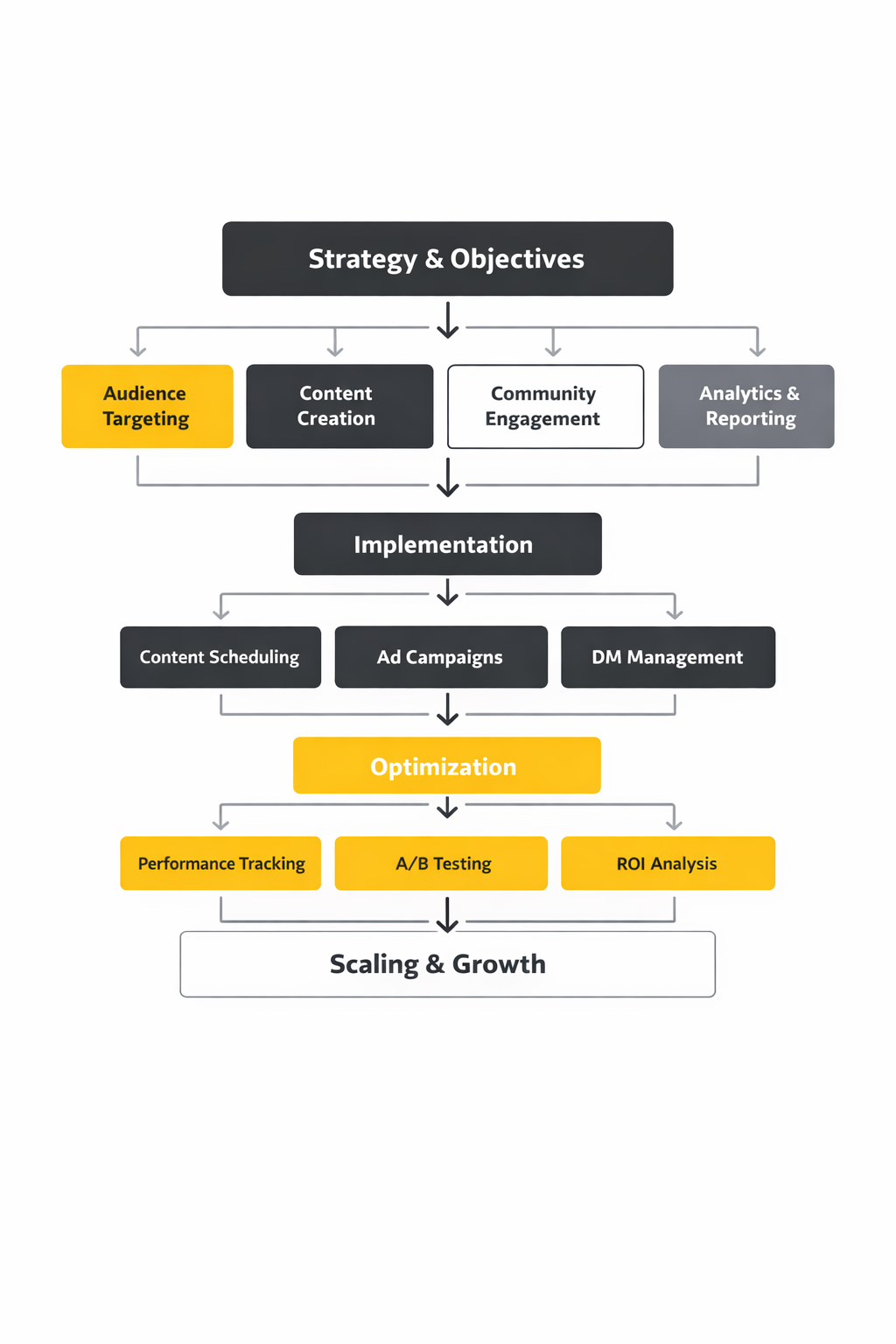
When you evaluate a social media management company for small business needs, look for a framework that moves in one direction: from clarity to consistency to conversion.
A practical framework has five stages that loop monthly:
- Positioning and goals: Who you serve, what you want social to achieve, and what “good” looks like in 90 days.
- Content system: A set of repeatable content formats tied to customer questions, offers, and proof.
- Distribution and engagement: Publishing cadence, community management, and response guidelines.
- Growth levers: Lightweight experiments (collabs, UGC, short paid boosts where appropriate) to accelerate what’s already working.
- Measurement and iteration: A monthly performance review that results in concrete changes to the next month’s plan.
The important detail is the loop. If the work doesn’t feed back into better decisions, you’re buying output, not management.
Core Components
Strategy That Fits Real Small-Business Constraints
The strategy shouldn’t read like a brand handbook written for a global company. It should be built around your constraints: your available time, your offer, your sales cycle, your busiest season, and what you can realistically deliver.
A strong strategy also makes trade-offs explicit. It’s often better to do one platform well than three platforms poorly. The best plans choose a primary channel for consistency and a secondary channel for repurposing.
A Content System, Not Random Posts
Consistency becomes easy when content is productized. That usually means a few recurring formats your audience can rely on: customer FAQs, behind-the-scenes process, quick wins/tips, proof and testimonials, and offer-based posts that clearly invite the next step.
The goal is to build a library. Over time, your business ends up with a set of evergreen posts and short-form videos that can be refreshed, re-posted, and adapted for new offers without starting from scratch each week.
Community Management That Protects Your Reputation
People don’t just “watch” social content—they use it to decide whether a business is responsive and trustworthy. Replies, DMs, and comment handling are part of the product you’re selling, because they shape the buying experience.
A professional setup includes response guidelines, escalation rules (what needs the owner’s input), and a clear target for response time so customers don’t feel ignored.
Production Workflows That Don’t Stall
Most small businesses don’t need cinematic production. They need dependable production: clean graphics, readable captions, on-brand templates, and short videos that are simple to film and quick to edit.
What matters is throughput and reliability: a predictable monthly volume, an approval process that takes minutes (not days), and a content calendar that removes decision fatigue.
Reporting That Leads to Better Decisions
Good reporting isn’t a dashboard screenshot. It’s a short explanation of what happened, why it likely happened, and what changes next month because of it.
For most small businesses, the most useful reporting focuses on three layers: audience growth and reach (are we being seen?), engagement quality (are we attracting the right people?), and action metrics (clicks, inquiries, bookings, or sales tied to social).
Professional Implementation
Even the best framework fails if implementation is sloppy. A social media management company for small business clients should have a professional onboarding process that gets you to “first month live” without constant back-and-forth.
Onboarding That Captures the Truth of Your Business
Effective onboarding gathers the essentials quickly: what you sell, who buys, what objections show up in sales conversations, what outcomes customers actually want, and what you refuse to promise. This is where your voice is defined, your visual direction is set, and your boundaries are documented.
If onboarding is just “send us your logo,” expect generic content later.
An Approval System That Keeps You Moving
Small business owners don’t have time for endless revisions. The cleanest approach is template-driven: you approve direction early (formats, tone, visual style), then approvals become quick yes/no checks on a scheduled batch of posts.
Look for clear rules around revision rounds, turnaround times, and what counts as a “scope change,” so you don’t end up stuck in a loop.
Clear Ownership of Tools and Access
Professional management includes secure access to your social accounts, defined roles, and a single source of truth for assets and drafts. It also includes a content calendar that you can understand at a glance and that maps content to goals, not just dates.
Success Metrics Set Before Posting Starts
Before the first month goes live, you should agree on what success means for your business stage. A brand-new account might focus on consistent publishing and baseline reach. A mature account might prioritize inquiries, bookings, or conversions from specific offers.
When the metrics are set upfront, reporting becomes a decision tool instead of a justification exercise.
Step-by-Step Implementation
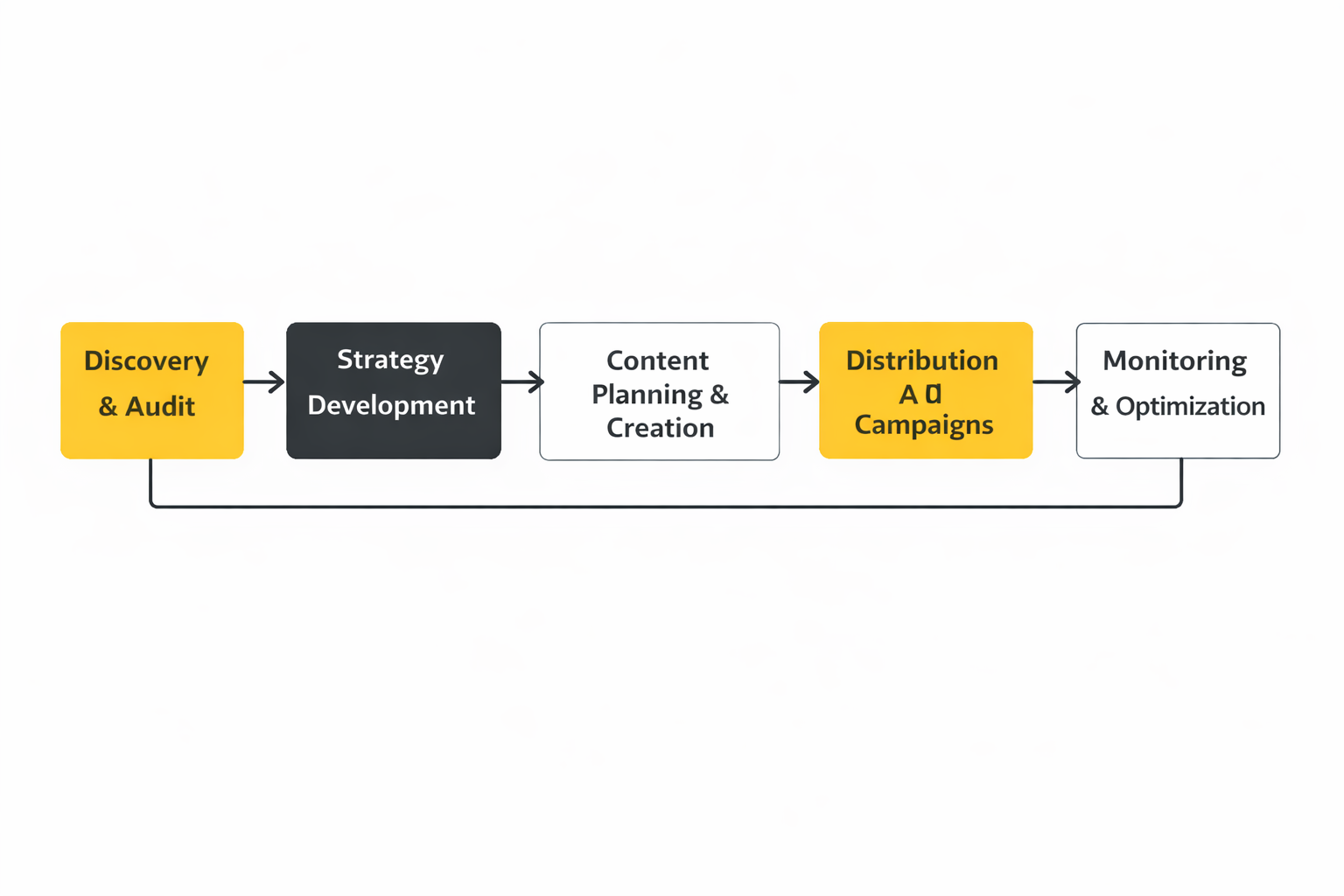
The fastest way to implement a social media management company for small business growth is to stop thinking in “posts” and start thinking in a monthly production cycle. When the cycle is clear, the work becomes predictable, approvals get easier, and results become easier to improve.
Step 1: Audit the Reality and Set a Baseline
Start with a short audit that tells the truth: what you publish today, what formats you can realistically produce, which platforms are actually driving conversations, and where your time gets wasted. A quick baseline snapshot matters because it prevents “optimization theater” later—when people change five things at once and can’t tell what worked.
Save the baseline in one place and treat it like a before/after marker. Even a simple benchmark like “average weekly inbound messages” or “clicks from bio link” gives your next month a clear target.
Step 2: Lock Your Audience, Your Offer, and Your One Next Step
Most small businesses accidentally create content for “everyone,” which means the message lands with no one. Define one primary audience group, one offer you’re pushing this month, and one next step you want people to take (book, call, visit, buy, DM).
When you keep the goal simple, your creative becomes simpler too. You’re no longer guessing what to post—you’re answering the same customer questions in different ways until the message sticks.
Step 3: Build a Content Pillar System You Can Repeat
Pick three to five content pillars that match how customers actually decide. A common set that works for many small businesses is: “proof” (results, reviews, before/after), “process” (how you do what you do), “education” (answers to FAQs), “personality” (your values and voice), and “offer” (what you want them to buy next).
A content calendar becomes more useful when it’s built around pillars instead of random themes. Academic work on small-business content planning often highlights that brand guidelines, content pillars, and calendars reduce overlap and make creation easier to sustain over time. Research on content pillars and calendars for small businesses
Step 4: Create a Four-Week Calendar with Batching Built In
Build a four-week calendar that includes what you’ll publish, when you’ll publish it, and what asset each post requires (photo, short video, testimonial, product shot, quote graphic). Put the content into batches: one block for writing, one block for design/editing, one block for approvals, and one block for scheduling.
This is the part that saves owners from the daily “what should we post today?” problem. A calendar is not just a planning tool—it’s a stress-reduction tool when it’s tied to a production rhythm. How a social media calendar supports consistent publishing
Step 5: Produce Assets Fast with Templates and Simple Shooting Rules
Speed comes from standardization. Templates for carousels and story graphics, a repeatable caption structure, and a simple filming checklist (lighting, audio, framing) can cut production time dramatically.
If short-form video is part of your plan, keep it practical: one hook, one idea, one proof point, one clear next step. You can get more sophisticated later, but you can’t optimize content that never gets published.
Step 6: Approve and Schedule in One Sitting
Approvals should feel like checking a flight plan, not rewriting the entire trip. The goal is to approve a batch—ideally a week or two at a time—so publishing becomes automatic.
Once posts are scheduled, the team’s energy shifts to engagement and improvement instead of scrambling to create. That’s when social starts compounding.
Step 7: Set Engagement Rules and Response Targets
Before you scale publishing, decide how you’ll handle comments and DMs. Who replies, what tone you use, what gets escalated to the owner, and what counts as a sales lead that needs a fast response.
Response time is not a vanity metric. Consumer research shared in Sprout Social’s reporting shows that nearly three-quarters of people expect a brand response within 24 hours or sooner. Customer response-time expectations on social
Step 8: Measure Weekly, Decide Monthly, Improve Relentlessly
Weekly check-ins keep the machine healthy: are posts going out, are DMs being handled, and are the best-performing formats repeating? Monthly reviews are where you make actual decisions: double down on what worked, cut what didn’t, and plan next month around evidence.
Timing guidance can be helpful early, especially when you’re still building consistency. Sprout Social publishes network-level posting-time patterns that can help you choose a starting point, then refine based on your audience’s behavior. Best times to post by network (starting benchmarks)
Execution Layers
When a social media management company for small business clients executes well, you can usually see it in layers. Each layer adds stability and reduces the chance that the entire system falls apart when the owner gets busy.
Layer 1: Foundation
This layer is your brand voice, visual direction, access setup, and your content pillar map. It also includes the boring-but-critical decisions like role-based permissions and partner access, so nobody is sharing passwords in a panic.
If the foundation is weak, every month becomes a reinvention. If it’s strong, the rest of the work becomes easier.
Layer 2: Production
This layer is the weekly engine: writing, design, editing, and assembling posts into a calendar that can actually be shipped. Good production is less about artistry and more about throughput without sacrificing brand clarity.
Most small businesses don’t need more creativity. They need a workflow that reliably turns ideas into published assets.
Layer 3: Distribution
Distribution is publishing discipline plus smart reuse. A single short video can become a Reel, a TikTok, a YouTube Short, a Story cutdown, and a carousel that pulls the key points into text.
This is where small teams get leverage: you create once, then distribute with intention across the channels that actually matter.
Layer 4: Conversation
Conversation is community management, DMs, and comment handling with clear rules. It’s also where social becomes sales support: people ask questions, you reply quickly, and the buying journey moves forward.
If you want social to drive revenue, you need this layer to run daily—because that’s where buying intent shows up first.
Layer 5: Proof and Iteration
This layer is reporting that leads to changes. It’s the difference between “here are the numbers” and “here’s what we’re doing next month because of the numbers.”
When this layer is present, your content improves over time instead of staying flat.
Optimization Process
Optimization should feel like tuning a machine, not throwing darts. The goal is to change one or two meaningful variables at a time, keep what works, and build a library of proven formats that your team can repeat.
Optimize the Creative Structure Before You Chase Trends
Start by improving the structure of your content: stronger hooks, clearer value, and a cleaner next step. Trends are optional; clarity is not. If people don’t understand what you’re offering and why it matters, no trend will save the post.
Trend reports are still useful for spotting how audiences behave, especially on platforms like TikTok. The TikTok “What’s Next 2025” report outlines themes around community, identity, and creative formats that can inspire experiments without turning your brand into a trend-chasing mess. TikTok What’s Next 2025 Trend Report (PDF)
Optimize Posting Cadence with a Simple Test
Instead of guessing “how often should we post,” run a four-week cadence test. Keep topics and formats consistent, then adjust only frequency and timing in week three and four.
This keeps you from overreacting to a single bad week. You’re looking for direction over time, not perfection on one post.
Optimize Engagement Workflows for Speed and Quality
Speed matters, but quality matters too. The goal is to respond quickly while still sounding human and helpful, especially when a comment is negative or emotionally charged.
Sprout Social’s writing on balancing speed and quality reinforces that fast replies alone aren’t enough—people want personalized, useful responses that solve the problem. How to balance speed and quality in social customer care
Optimize Measurement and Attribution So You Can Defend the Budget
If you can’t tie effort to outcomes, social becomes the first budget line to get cut. Use UTM tracking for links, track inbound leads by source, and keep a simple monthly scoreboard: reach, engagement quality, and action metrics like clicks, calls, bookings, or purchases.
When measurement is consistent, you can make smarter decisions about what to produce, what to boost, and what to retire.
Implementation Stories
SweetyTreatyCo’s Pivot from “Organic Luck” to a Repeatable System
The first time paid ads worked, it felt like a rush—and then panic hit immediately. Orders started coming in, attention spiked, and the team realized they didn’t actually have a repeatable way to scale what was happening. If they guessed wrong on the next campaign, the momentum could vanish as quickly as it appeared. SweetyTreatyCo’s TikTok for Business case study
SweetyTreatyCo is a family-owned freeze-dried candy business founded in 2021 by Megan Steck. The brand had already built organic traction on TikTok, which gave them confidence that the product could win in public. But confidence isn’t a workflow, and organic momentum doesn’t automatically translate into predictable sales. How SweetyTreatyCo approached TikTok ads
The wall showed up as soon as they tried to move from “posting and hoping” to “planning and scaling.” They needed guidance on what to do first, what to track, and how to spend without burning cash. They also had to prove that ads weren’t just creating views—they were creating purchases they could attribute. The problem they were trying to solve
The epiphany was that their best ads weren’t new ads at all. They could turn their strongest organic videos into paid creative instead of reinventing content under pressure. TikTok’s case study describes how they leaned into Spark Ads specifically to build on existing organic performance rather than starting from scratch. Why Spark Ads mattered in their approach
The journey became a simple, disciplined implementation: follow a starter framework, boost proven organic posts, and install measurement so results weren’t guesswork. They implemented the TikTok Pixel to track events along the buyer journey, optimized toward “Complete Payment,” and started with a modest daily budget before scaling spend once performance became clear. That’s the kind of decision-making a social media management company for small business clients is built to protect—small steps, measured outcomes, then scale. Their step-by-step setup (pixel, Spark Ads, budget)
Then the final conflict arrived, the one every small team hits: scaling spend adds pressure, because mistakes get expensive fast. Increasing daily budget forces you to trust your tracking, trust your creative, and hold your nerve when performance fluctuates. They had to keep the system stable while increasing spend, which is exactly where many small businesses overreact and break what was working. How they scaled budget after early results
The dream outcome was a set of results that didn’t just look good—they were measurable and attributable. The case study reports a 20% decrease in CPA, over 14,000% growth in total conversions, and 70 complete payment events in the first week, which turned “organic luck” into a system they could run again. More importantly, they walked away with a repeatable stack: organic testing, boosted winners, and tracking that let them scale without guessing. SweetyTreatyCo’s reported results
Clyn Thailand’s Week of Chaos—and the DM System That Turned It into Sales Conversations
They didn’t need more likes. They needed more conversations that could turn into real customers, and they needed them fast. When your product is right but attention is scattered, the pressure feels personal—every quiet day looks like failure. That’s the moment many small businesses start throwing random content at the wall. Clyn Thailand’s TikTok Direct Messaging Ads case study
Clyn Thailand is a Thai small business in the beauty space, and they ran a clear test in March 2024: could TikTok Direct Messaging Ads drive more conversations at a lower cost than a clicks-optimized approach? The goal wasn’t vague awareness—it was measurable, intentional outreach that created a pipeline of DMs. They targeted Thai customers aged 25 to 55+ and treated conversations as the core conversion event. Their March 2024 objective and setup
The wall was the usual one: clicks are easy to buy, but clicks don’t automatically become customers. If people tap and vanish, you don’t get the chance to answer questions, handle objections, or guide them toward a purchase. For a small team, that gap is exhausting because it feels like effort without progress. So the test had to prove that “conversation-first” could actually outperform. Why they tested conversations vs clicks
The epiphany was to treat DMs as the funnel, not an afterthought. Instead of optimizing toward clicks and hoping people reached out later, they optimized toward “Conversations” and used Maximum Delivery to prioritize users likely to take action. They also built creative that made it easy to message: product benefits, testimonials, and promotions that created a reason to start a chat immediately. How they used Maximum Delivery and creative variations
The journey looked like a clean implementation sprint: launch multiple creative angles, keep the CTA focused on messaging, and track outcomes over a short, intense window. This is the kind of sprint a social media management company for small business clients should be able to run—fast learning cycles that produce a clear next decision. Within a week, the test produced enough data to compare performance against a control campaign and other channels. Their one-week test window and reporting approach
The final conflict was operational, not strategic: conversations only help if you can handle them. When DMs spike, you either reply quickly and convert, or you drown and waste the opportunity. That’s why the “conversation-first” model forces a real process: inbox ownership, response scripts, and escalation rules so the team can keep up when demand rises. Why fast responses matter when conversations increase
The dream outcome was a clear proof point that conversations could be bought more efficiently than clicks for their goal. The case study reports a 22.5% conversion rate, over 900 total conversations within a week, and a 67% lower cost per conversation versus a clicks-optimized control campaign, plus a three-fold increase in total conversations. For a small business, that’s not just performance—it’s a system: ads that create DMs, and DMs that create sales opportunities. Clyn Thailand’s reported results
Secure Access and Role Discipline
Use partner access and role-based permissions so the business stays in control. When access is structured, you can onboard help quickly and remove access cleanly later without drama.
This isn’t paranoia—it’s basic operational hygiene for any brand that treats social as a real business channel.
Document the System So It Survives Busy Weeks
Professional teams document how content moves: naming conventions, approval rules, publishing standards, and response guidelines. When a key person is sick or traveling, the work still ships because the process is written down.
This is also how quality stays consistent as the team grows. Without SOPs, every new contributor accidentally changes your brand voice.
Run a Monthly Review That Produces Clear Actions
Every month should end with decisions, not just numbers. What content formats are you repeating next month, what are you cutting, what experiment are you running, and what is the one business outcome you’re prioritizing?
When that rhythm exists, social stops being chaotic. It becomes a managed system that a small business can sustain—and improve—without burning out.
Statistics and Data
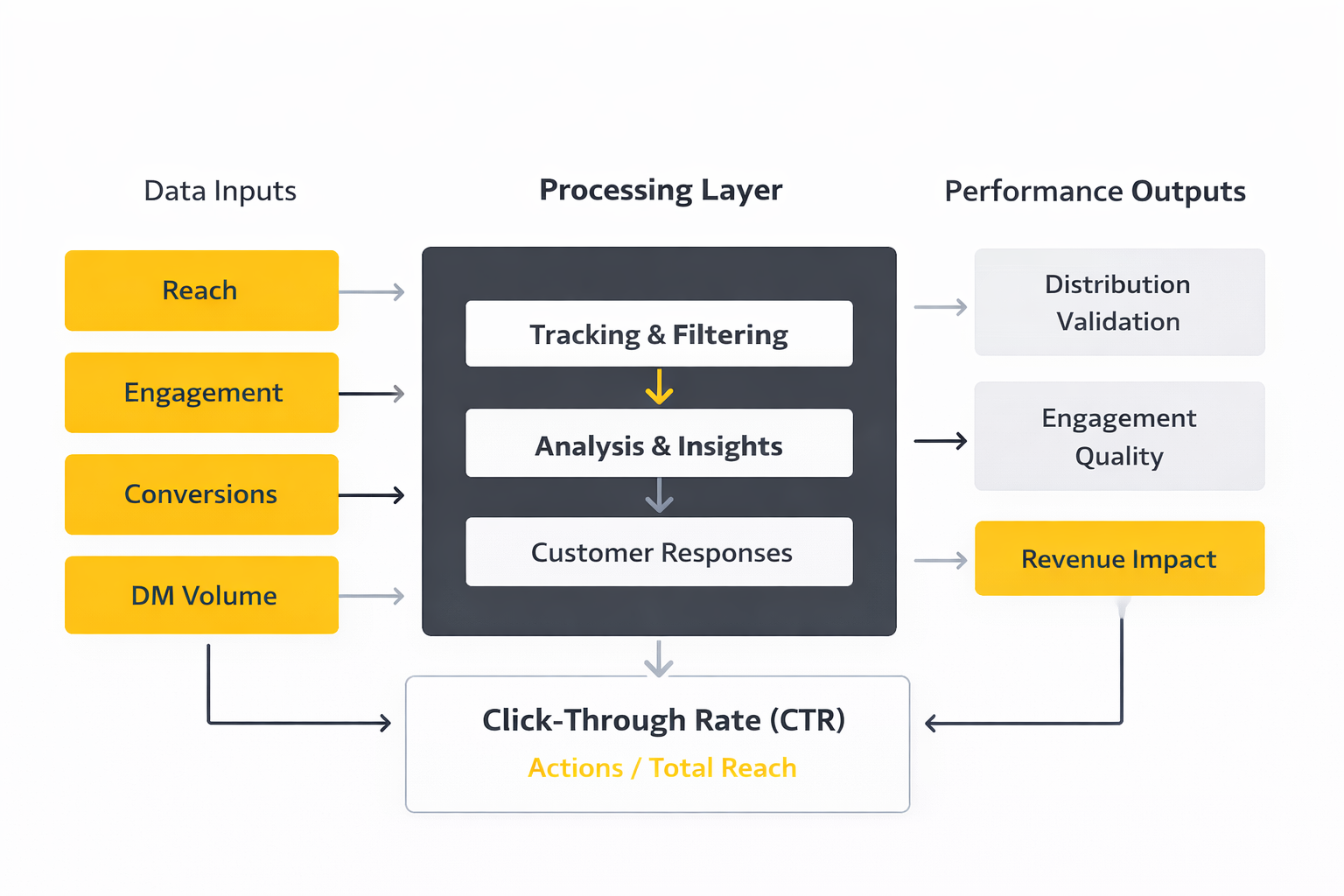
When a social media management company for small business clients is doing its job properly, numbers stop being “nice to know” and become the steering wheel. Data won’t replace good creative, but it will tell you where your creative is landing, where it’s being ignored, and where it’s quietly turning into revenue.
The scale is why measurement matters. Digital 2026 reporting shows social media has reached a massive share of the global population, which means your customers are already there; the only question is whether your content consistently reaches the right people. Digital 2026: Global Overview Report
Money is following that attention. WARC’s 2025 forecasts put global social media ad spend in the hundreds of billions, and the direction is clear: businesses are competing harder for the same feeds, so “post and hope” becomes more expensive every year. WARC’s social media 2025 outlook
Meanwhile, expectations for responsiveness keep rising. Social customer care research highlights that most people expect brands to reply within 24 hours, which turns your inbox into a performance channel, not just a support task. Social media customer service expectations
Performance Benchmarks
Benchmarks are useful when you treat them like a compass, not a scoreboard. They help you sanity-check performance and spot platform shifts, but your account’s trend line matters more than any global average.
Engagement Rate Benchmarks (Use as Direction, Not Judgment)
If your engagement feels “low,” make sure you’re comparing apples to apples: platform, format, and follower size all change the baseline. Socialinsider’s 2026 benchmarks show a wide spread across platforms, with TikTok engagement substantially higher than Instagram and Facebook in their reporting. 2026 social media benchmarks
If you want a second viewpoint, Rival IQ’s 2025 benchmark report also tracks platform-level engagement movement year over year, showing how quickly baselines can shift. 2025 social media industry benchmark report
Short-Form Video Benchmarks and Format Mix
Short-form video keeps taking a bigger share of publishing volume, but performance varies by platform and metric. Emplifi’s 2025 benchmarks report discusses format distribution and reach engagement dynamics across Reels and TikTok, which is helpful when you’re deciding whether to prioritize Reels, TikTok, or both. Emplifi Social Media Benchmarks Report 2025 (PDF)
Industry Context: The Only Fair Comparison
A salon, a dentist, a B2B consultancy, and a local bakery should not expect the same engagement patterns. Hootsuite’s industry engagement analysis (spanning late 2024 into 2025) is useful as a starting point when you need to explain why “your cousin’s brand gets more likes” is not a strategy. Average engagement rates by industry (Hootsuite)
Sprout Social also publishes industry benchmark guidance that can help frame expectations when you’re reporting to stakeholders who want instant growth across every channel. Social media benchmarks by industry
Response Time Benchmarks (Because Inboxes Convert)
For many small businesses, the fastest path from social to revenue is a good conversation. Consumer research summarized by Sprout Social shows that nearly three-quarters of people expect a response within 24 hours or sooner, which turns response time into a credibility metric. Social customer service statistics
Analytics Interpretation
Analytics becomes powerful when you stop reading it like a report card and start reading it like a story about customer behavior. A social media management company for small business growth should be able to explain not just what happened, but why it likely happened and what changes next.
Reach: Are You Getting a Real Chance to Be Seen?
Reach is your top-of-funnel oxygen. If reach is flat, it’s rarely because your business is “boring.” It’s usually because your formats aren’t being distributed, your posting cadence is inconsistent, or your hooks aren’t strong enough for the first two seconds.
Use reach to validate distribution choices: which platforms are actually pushing your content, and which formats consistently earn exposure. If reach rises but everything else stays flat, that’s a signal to tighten targeting and messaging rather than posting more.
Engagement Quality: Are the Right People Leaning In?
Not all engagement is equal. A post that gets light likes from random viewers can look “good” but do nothing for the business. A post that earns fewer interactions but produces thoughtful comments and DMs can quietly outperform.
This is why benchmarks are only a starting point. Platform averages move, and engagement baselines can fall even while revenue improves, which is exactly the kind of nuance you can point to when using broader benchmark research like Rival IQ’s annual reporting. Rival IQ benchmark context
Actions and Conversions: Did Social Create Momentum You Can Count?
Conversion tracking doesn’t need to be complicated, but it needs to be consistent. Pick one or two actions that reflect real intent: calls, bookings, “get directions,” checkout events, qualified DMs, or form submissions. Then track them monthly, using the same definitions every time.
When you run paid campaigns, optimization choices matter. TikTok case studies often show large swings in cost and volume when campaigns optimize for the right objective, which is a useful reminder that “views” and “results” are not the same thing. Stepful TikTok Lead Generation case study
Inbox Analytics: The Overlooked Revenue Signal
If you want a metric that small businesses can improve quickly, watch message volume and response speed. A rising DM count is often a leading indicator that your content is finally speaking to real needs, and speed matters because buyers don’t stay warm forever.
Consumer expectation research on response time makes it easier to justify the operational work of inbox management when someone asks why your team spends time replying instead of posting more. Why response speed matters on social
Case Stories
Stepful’s Lead Flood, the Wall They Hit, and the Metric That Changed Everything
The campaign looked like it was working—and that was the problem. Impressions were climbing, clicks were arriving, and the team could feel attention building, but the cost of turning that attention into real leads still didn’t feel predictable. Every day became a tightrope walk: keep spending and hope performance holds, or pull back and risk losing momentum. In a small team, that kind of uncertainty is exhausting because the stakes are personal.
Stepful is an education brand focused on career training, and they were already running TikTok campaigns. They didn’t start from zero; they started from experience that still wasn’t producing the efficiency they needed. Their challenge was practical: scale lead volume while making the economics work, not just generate views that looked impressive on a slide.
The wall showed up in the metric that actually matters when you’re buying growth: cost per acquisition. If CPA stays too high, lead volume becomes a vanity win that drains budget, and you can’t scale without fear. They needed a way to keep lead flow strong while lowering the cost, because growth without efficiency just creates a bigger problem later.
The breakthrough came from shifting the campaign objective to match the outcome they really wanted. Instead of treating TikTok like a traffic channel and hoping people converted later, they leaned into Lead Generation as the core objective. That decision changed what the platform optimized for and what the team judged success by.
The journey became a disciplined implementation: build lead forms that reduce friction, run campaigns optimized for submissions, and measure success in form completions rather than surface-level engagement. The case study describes a large jump in form submissions once the objective aligned with lead capture, paired with a substantial reduction in CPA versus their previous approach. That’s the kind of system change a social media management company for small business clients should chase: fewer moving parts, clearer measurement, more repeatability.
Then the messy part arrived: volume creates operational stress. When leads surge, you have to respond quickly, qualify properly, and follow up consistently, or the opportunity evaporates. Even great campaign efficiency can backfire if the team can’t handle the pipeline, which is why marketing and operations have to move together when growth accelerates.
The outcome reported in the case study is the kind of “dream math” teams want because it combines scale and efficiency: tens of thousands of web form submissions and a CPA drop from $23 per lead to $13.29 after switching objectives. It’s not a story about a magic creative; it’s a story about choosing the right objective, measuring the right thing, and building an execution loop that can scale. Stepful’s reported TikTok results
Professional Promotion
Data is persuasive when it feels grounded in reality, not inflated into marketing theater. If you’re working with a social media management company for small business growth, the most professional “promotion” you can do internally is to make the results easy to understand and hard to argue with.
Build a One-Page Monthly Scoreboard
Keep it simple: one page, the same metrics every month, and short notes explaining what changed and why. Use a small set of numbers that map to the business: reach, engagement quality, inbound conversations, and a conversion action like bookings or purchases.
When stakeholders want context, pull in benchmarks as a reference point rather than a weapon. A quick link to current benchmark reporting can calm the “why aren’t we growing faster?” conversation and refocus it on your account’s trend line. Benchmarks for cross-platform context
Use Proof That Matches Buying Behavior
When you present results, don’t lead with vanity metrics. Lead with proof: screenshots of customer DMs, a handful of customer comments that show intent, and a simple chart of actions taken from social links.
If you want to justify community management time, connect it to customer expectations. People expect brands to respond fast on social, and failing to do that can push them to competitors, which makes responsiveness part of revenue protection, not just “good service.” Response expectations and competitive risk
Turn Reporting Into a Plan, Not a Postmortem
End every report with decisions: what you’re repeating next month, what you’re stopping, and one experiment you’ll run. This keeps social from feeling like an endless content treadmill and turns it into a managed system that improves with time.
That’s what professionalism looks like in practice: fewer guesses, clearer priorities, and a monthly rhythm that makes growth feel controllable.
Advanced Strategies
Once the basics are stable, a social media management company for small business growth starts playing a different game. The goal stops being “post consistently” and becomes “compound attention into predictable demand.” That shift comes from a handful of advanced strategies that make your content easier to discover, easier to trust, and easier to convert.
Build Social SEO Into Every Post
People increasingly use social platforms like search engines, especially for local businesses and product discovery. The strategy is simple: write captions the way customers ask questions, put the answer in the first lines, and repeat the phrases customers actually use on calls and in DMs.
To keep this grounded in real buyer behavior, PwC’s 2024 consumer research highlights that 67% of consumers use social media to discover new brands and 70% seek reviews to validate a company before purchasing, which is exactly why searchable, question-based content performs so well over time. PwC Voice of the Consumer Survey 2024 (social discovery and reviews)
Turn Creator Partnerships Into a System, Not a One-Off
Creator partnerships scale best when they’re repeatable. Instead of paying for a single post and hoping it hits, build a roster of creators you can brief quickly, ship product to regularly, and rehire for multiple exposures across months.
Budgets are moving this way for a reason. IAB projects U.S. creator ad spend will reach $37B in 2025, up 26% year over year, which reflects how central creator-led distribution has become for modern growth. IAB Creator Economy Ad Spend & Strategy Report 2025 (PDF)
Build a UGC Proof Engine That Feeds Your Calendar
UGC works when it’s operationalized. The play is to build a lightweight system that captures customer photos, reviews, and short testimonials, then routes them into your content calendar as proof posts you can publish every week.
This strategy matches how people actually buy. PwC’s 2024 research found influencers have influenced 41% of consumers to make a purchase, and social media is increasingly used for discovery and validation, which is exactly what UGC does at scale. Consumer purchasing influence and social behavior (PwC 2024)
Use Paid Amplification as Fuel, Not a Crutch
Advanced teams don’t boost random posts. They boost posts that already proved themselves organically, because you’re paying to scale a message the market already responded to.
This approach is especially powerful for small businesses because it reduces creative risk. TikTok’s guidance around Spark Ads consistently emphasizes leveraging proven organic posts, which is a practical way to scale distribution without reinventing your content under pressure. TikTok case study guidance on Spark Ads and proven posts
Turn the Inbox Into a Sales Channel With Rules
When your content starts working, DMs spike first. The advanced move is to treat DMs like pipeline: response targets, scripts that still sound human, and an escalation rule for anything that needs an owner’s input.
Speed matters because expectations are high. Social customer care research shows most people expect a brand response within 24 hours, which means “we’ll reply tomorrow” can quietly lose a sale today. Response-time expectations in social customer care
Use Live Shopping for High-Trust Launches and Limited Drops
Live shopping is not just for giant brands anymore. It works for small businesses because it compresses the buying journey: people watch, ask questions, see real-time proof, and purchase with less hesitation.
Projections around live commerce growth are aggressive, with research cited in industry coverage forecasting live commerce outside China could reach nearly $2 trillion by 2030. Live commerce growth projections to 2030
Scaling Framework
Scaling is where most small businesses break their social momentum. They either add too many platforms, chase too many trends, or increase output without improving the system underneath. A social media management company for small business scaling should expand in layers, with clear guardrails that prevent the “more content, more chaos” trap.
Layer 1: Repeatable Formats That You Can Ship Weekly
Start by standardizing a small set of formats that already perform. If you have two post types that reliably drive comments and DMs, scale those before you introduce new ideas.
Repeatability is what creates output without burnout. It also makes performance easier to diagnose because you’re comparing like with like.
Layer 2: Distribution Multipliers
Once content is stable, expand distribution. That means repurposing the same idea across formats and platforms, collaborating with creators, and using paid amplification selectively to scale winners.
If you’re deciding where to allocate partnership budget, it helps to know the market is shifting quickly: IAB’s 2025 report frames creator advertising as a fast-growing channel, which explains why creator-led distribution is increasingly treated like a core growth lever, not a side tactic. IAB summary of 2025 creator ad spend growth
Layer 3: Conversion and Proof
Scaling requires proof that reduces hesitation. Build a steady stream of customer validation: reviews, reactions, results, and behind-the-scenes credibility that shows you can deliver what you promise.
This aligns with real consumer behavior. PwC’s 2024 survey highlights that social media is heavily used for reviews and validation, which is exactly why proof-based content tends to become more effective as you scale it. Why reviews and validation matter in social-driven buying
Growth Optimization
Optimization is where growth becomes sustainable instead of chaotic. The goal is to keep the system stable while you improve performance, so every month feels more controlled than the last.
Run One Experiment at a Time
When small businesses try to optimize, they often change everything at once: posting cadence, creative style, offers, hashtags, and platforms. That creates noise, not learning.
Pick one variable per month. Treat it like a real experiment with a clear hypothesis, a defined timeframe, and a simple success metric you can defend.
Build a Creative Library You Can Reuse
Scaling gets easier when you stop reinventing creative. Save your top-performing hooks, opening lines, story structures, and proof formats in a shared library.
Then reuse them with new angles. This is one of the fastest ways a social media management company for small business growth can increase output without increasing stress.
Upgrade Measurement Before You Upgrade Spend
As you scale, the cost of mistakes rises. If you add paid amplification, creator partnerships, or live commerce without clean tracking, you can’t tell which lever worked.
At a market level, measurement is becoming more urgent as budgets rise. IAB and PwC both highlight how money and influence are flowing through social channels, which is exactly why teams that can measure cleanly can scale confidently while others hesitate. IAB/PwC Internet Ad Revenue Report (Full Year 2024, PDF)
Protect Operations When Demand Spikes
Growth stress usually shows up in operations first: delayed replies, sloppy fulfillment, and missed opportunities in DMs. That’s why optimization includes staffing the inbox and tightening response workflows, not just improving content.
Responsiveness is not cosmetic. People expect fast replies on social, and slow responses can quietly turn a hot lead into a lost sale. Why response speed shapes outcomes
Scaling Stories
Mav’s Top Buns: From a U-Haul Hustle to a Million-Dollar Run Powered by Instagram
They were selling cinnamon buns out of a U-Haul, and the pressure was relentless. Every batch was time, money, and energy that could disappear if nobody showed up. Then a post would hit, a line would form, and the emotional whiplash would kick in: relief, panic, and the fear that tomorrow could be quiet again. The Business Insider story on how Mav’s Top Buns scaled with Instagram
Nikki and Mike Ashkar didn’t start with a polished brand team or a big marketing budget. They started with a family recipe, a small operation, and Nikki’s marketing instincts about what people actually share. They leaned into bold, quirky Instagram content because it felt honest to who they were, even when it made them nervous about being “too much.” How Nikki shaped the brand voice and content style
The wall was sustainability. Going viral is exciting, but it’s also unforgiving when you’re making a labor-intensive product and juggling real life at the same time. They were building attention faster than the business could comfortably fulfill, which is where many small businesses crack: content creates demand, demand creates overload, and overload kills consistency. The operational strain behind the growth
The epiphany was that their “unfiltered” content wasn’t a liability—it was the engine. Instead of trying to sound like a brand, they sounded like themselves, and the audience rewarded the authenticity with attention and loyalty. They didn’t need more polish; they needed a repeatable rhythm of posts that matched what made people care in the first place. Why the edgy, authentic tone became the advantage
The journey became a scaling loop: post consistently, keep the tone unmistakable, and let the content drive real-world demand in a way people could see. They shared the behind-the-scenes reality of the work, which made the product feel earned, not manufactured. That kind of transparency turns customers into promoters, because people don’t just buy the bun—they buy the story they feel part of. Mav’s Top Buns sharing the growth story directly on Instagram
The final conflict was burnout and constraint. When attention spikes, the work gets heavier, not lighter, and the system gets tested at its weakest points: production capacity, staffing, and consistency. The story describes moments of exhaustion while still needing to keep quality high, which is exactly why scaling social without operational planning can become painful even when the marketing is “working.” The stress and burnout reality behind the success
The dream outcome was the kind of growth small businesses fantasize about because it’s both emotional and measurable. The story reports they generated over $1 million in sales since early 2024 and scaled into a New Jersey bakery producing up to 1,000 buns on peak weekends. It’s not a fairy tale about a single viral post; it’s a story about a distinct voice, consistent publishing, and a business that learned to carry the weight of its own attention. Reported growth milestones for Mav’s Top Buns
Promote the Story of Growth, Not Just the Metrics
Numbers matter, but narrative moves budgets. Pair your monthly metrics with a short story: what customers responded to, what questions showed up in DMs, and what changed in the business because of social.
This is especially persuasive when you tie it to validated consumer behavior, like the way PwC’s 2024 research connects discovery, reviews, and influencer impact directly to purchasing. Consumer behavior signals that support social investment
Use Proof Assets That Make Growth Feel Real
Stakeholders believe what they can see. Include screenshots of DMs, customer comments, review snippets, and examples of UGC that show genuine demand.
Proof assets also help you defend time spent in community management, because fast replies are part of the buyer experience, not a “nice-to-have.” Why fast responses protect revenue
Make the Investment Case With Market Signals
If you’re asking for more budget—creator partnerships, paid amplification, better tools—anchor the request to market reality. Creator advertising is expanding quickly, with IAB projecting $37B in U.S. creator ad spend in 2025, which signals where competition is heading. Creator economy budget growth (IAB 2025 PDF)
Then keep the ask practical: what you’ll spend, what you’ll test, and what you’ll measure. Professional promotion isn’t hype; it’s clarity that earns trust while you scale.
Future Trends
The next wave of social growth won’t be won by whoever posts the most. It’ll be won by the small businesses that run social like an operating system: faster feedback loops, stronger proof, and tighter connection between content, conversations, and conversions.
AI Becomes the Default Co-Pilot for Creation and Customer Care
AI is shifting from “nice tool” to baseline expectation. Social teams are increasingly using AI to draft variations, repurpose winners, and answer customer questions faster—especially in DMs, where speed can decide whether a customer buys or bounces.
That operational shift is visible in mainstream platforms too. HubSpot’s Breeze Agents rollout shows how major systems are pushing AI into everyday marketing workflows, from content support to customer response. HubSpot Breeze Agents coverage
The DM Economy Grows as People Prefer Conversation Over Clicking
Customers are increasingly using social as their “front desk.” They message first, compare later, and buy when they feel understood. For small businesses, this is an advantage because you can win with helpful, human replies even without a huge ad budget.
Consumer expectation research consistently reinforces that brands are judged by responsiveness on social, which makes DM workflows part of your growth strategy, not a side task. Social response-time expectations
Social Commerce Expands from Trend to Default Shopping Behavior
Social commerce keeps maturing into a normal way people buy, especially when the content itself answers questions, reduces hesitation, and shows proof. If you sell a product, your content strategy will increasingly overlap with your merchandising strategy.
DHL’s 2025 reporting highlights that a large share of shoppers already buy on social, and many expect it to become a primary channel over time. DHL social commerce trends
AI Shopping Assistants Push Discovery Into “Ask and Buy” Flows
Discovery is being compressed into chat-like experiences. Instead of scrolling for 20 minutes, people will increasingly ask for what they want and get curated options back—often powered by creators and affiliate-style content ecosystems.
That direction is already visible in social shopping platforms, including LTK’s move into an AI chatbot experience designed for conversational product discovery. LTK’s AI shopping chatbot
Platform Volatility Makes “Systems” More Valuable Than “Tactics”
Algorithms shift, formats change, and attention moves. The businesses that keep winning are the ones that can adapt quickly because their workflow is stable: pillars are clear, production is repeatable, and reporting drives monthly decisions.
Hootsuite’s Social Media Trends 2026 frames this reality clearly by focusing on agility, AI-assisted workflows, and rapid iteration as the new baseline for competitive social performance. Hootsuite Social Media Trends 2026
Strategic Framework Recap

A social media management company for small business growth works best when it runs a complete ecosystem, not a posting schedule. The goal is to create a machine that keeps working even when the owner is busy, the team is stretched, or the market shifts.
1) Clarity
Define who you serve, what you sell, and what the “next step” is for customers. When your next step is clear, your content stops being random and starts guiding people somewhere.
2) Consistency
Build repeatable content pillars and a production rhythm you can sustain. Consistency is what turns sporadic attention into compounding trust.
3) Conversation
Make community management a daily habit. Speed and tone in your replies shape trust, and trust is what turns attention into purchases.
4) Conversion
Track actions that matter: calls, bookings, purchases, qualified DMs, or form submissions. Your reporting should connect effort to outcomes without guesswork.
5) Continuous Improvement
Use monthly reporting to decide what to repeat, what to cut, and what to test next. That’s how your social strategy becomes stronger over time instead of staying flat.
FAQ: Social Media Management Company for Small Business Complete Guide
What does a social media management company for small business owners actually handle?
Most handle strategy, content planning, production coordination, publishing, community management, and reporting. The best ones also set up workflows for approvals, secure account access, and monthly optimization so your results improve over time.
How quickly can a small business expect results?
Many businesses feel a difference in consistency and inbound conversations within the first 30 days if posting and engagement become reliable. Revenue impact often takes longer because trust compiles over time, especially for higher-ticket offers, but monthly reporting should show clear leading indicators.
Which platforms should a small business focus on first?
Start where your customers already pay attention and where your team can stay consistent. Many small businesses do best with one primary channel for creation and one secondary channel for repurposing, instead of spreading thin across five platforms.
How many posts per week is “enough” for a small business?
Enough means “sustainable and improving.” A smaller schedule that ships every week beats an ambitious plan that collapses after two weeks. Posting frequency should be tied to your production capacity and measured outcomes, not guilt.
Does replying to comments and DMs really matter that much?
Yes, because responsiveness is part of the buying experience. Many people expect a brand response within 24 hours, which means a slow reply can quietly lose a warm lead. Social response-time expectations
What metrics should a small business track?
Track what matches your business model: reach (distribution), engagement quality (signals that the right people care), and one or two action metrics (calls, bookings, purchases, qualified DMs). A monthly scoreboard is more useful than a complicated dashboard no one reads.
Should a small business run paid ads alongside organic posting?
Often yes, but only after you have a few organic winners. The most practical approach is to amplify posts that already earned attention and conversations organically, so you’re scaling a proven message rather than guessing.
What tools should a small business have in place?
At minimum: a scheduling tool, a simple approval workflow, and a way to track conversions from social (UTMs, link tracking, or platform pixels when you run ads). Security matters too—use partner access and role-based permissions instead of sharing passwords.
How do you choose the right social media management company for small business needs?
Choose the team that can explain its system: onboarding, pillars, production, approvals, engagement, and reporting. Ask how they handle DMs, how they decide what to test next month, and how they prove outcomes without hiding behind vanity metrics.
What should a contract or scope include?
Clear deliverables (volume and formats), who owns community management, turnaround times, revision limits, reporting cadence, and who owns creative assets. The scope should also include secure access practices and what happens if you pause or cancel.
Can a small business do this in-house instead of hiring a company?
Yes, especially if you can dedicate consistent time weekly and build a simple system. Many businesses still hire support because the opportunity cost of the owner doing everything is high, and consistency is easier when someone owns the workflow end to end.
Work With Professionals
Most marketing freelancers know the feeling: you’re good at the work, but finding steady clients can feel like a second full-time job. You pitch into the void, negotiate through layers, and lose momentum to platforms that take a cut or bury opportunities behind friction.
That’s why marketplaces that remove the “middle layer” can be a real advantage. MarkeWork is built around direct communication between clients and marketers, so you can message, negotiate, and move faster without being trapped in endless gatekeeping. MarkeWork’s direct communication positioning
The model is designed to stay simple. The platform highlights no commissions and predictable monthly plans, so you’re not giving away a percentage of your earnings just for getting introduced. MarkeWork’s “No commissions” and monthly plans
If you’re thinking, “Sure, but is there enough demand?” the broader market signals are hard to ignore. Remote sales and marketing roles are consistently published across major job boards, and large marketplaces routinely show thousands of listings at any given time, which reflects how many companies are actively hunting for marketing help right now. Remote sales and marketing jobs volume
MarkeWork also uses a token-based access model so you can apply or unlock opportunities on demand, which can be useful when you want to push hard for two weeks and then ease off when you’re deep in delivery. MarkeWork token model overview
If you want a cleaner path to your next client—one where you keep the relationship direct, keep the economics predictable, and spend more time doing the work you’re paid for—start by building your profile and browsing opportunities here:
markework.com Filip Konecny Enterprises