
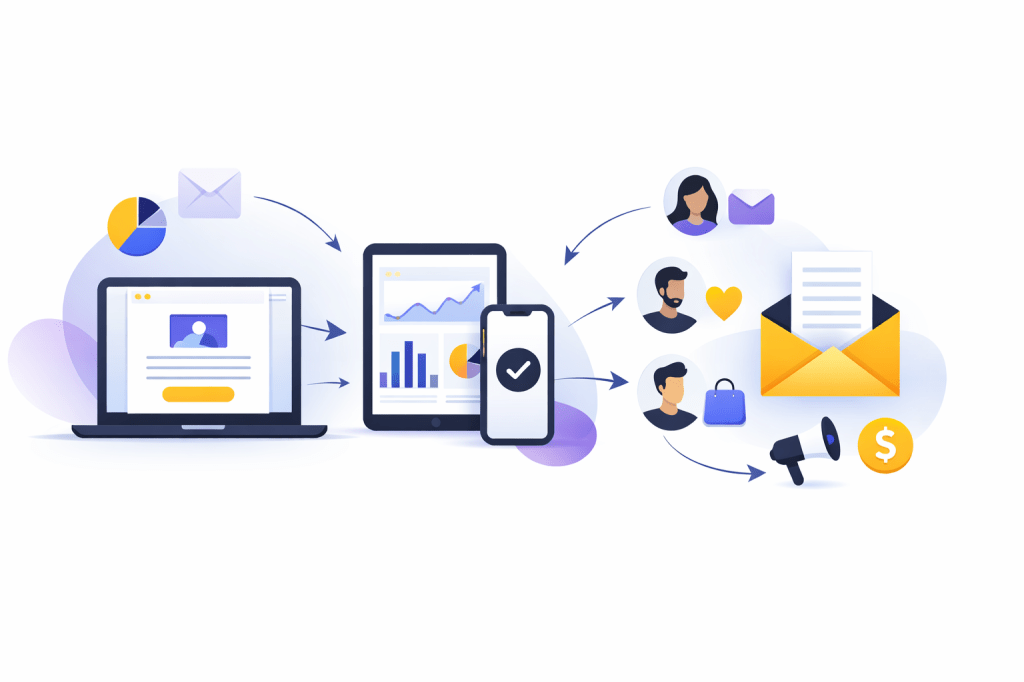
Most people treat newsletters like an afterthought. That is a mistake. The inbox is still one of the few places where you can build an audience you actually own, and DataReportal’s 2025 global review shows just how durable email remains, with Gmail still reaching roughly 2 billion handsets each month.
That reach would not matter much if people had mentally abandoned the inbox, but they have not. Sinch Mailgun’s multi-country consumer survey found that about 75% of consumers prefer email for promotional messages from brands, while Optimove’s 2025 consumer fatigue report also placed email well ahead of social media as the channel people prefer when brands market to them online. That is why writing newsletters well is not a vanity exercise. It is a direct way to strengthen an owned relationship before an algorithm decides to bury you.
There is a business case for taking the craft seriously too. HubSpot’s 2025 marketing data ranked email as the best ROI channel for B2C brands, and Litmus reported in 2025 that many marketing leaders still see returns between 10:1 and 36:1 from email. But those returns do not come from sending random updates whenever you remember. They come from writing newsletters with a clear promise, a recognizable voice, and a structure that makes readers want the next issue before they even finish the current one.
Article Outline
This article is organized into six parts so readers can jump straight to the section they need and then come back for the rest.
- Why Newsletter Writing Matters
- A Practical Framework for Writing Newsletters
- Core Components of a Strong Newsletter
- Professional Newsletter Implementation
- Newsletter Analytics and Optimization
- The Newsletter Ecosystem and FAQ
Why Newsletter Writing Matters
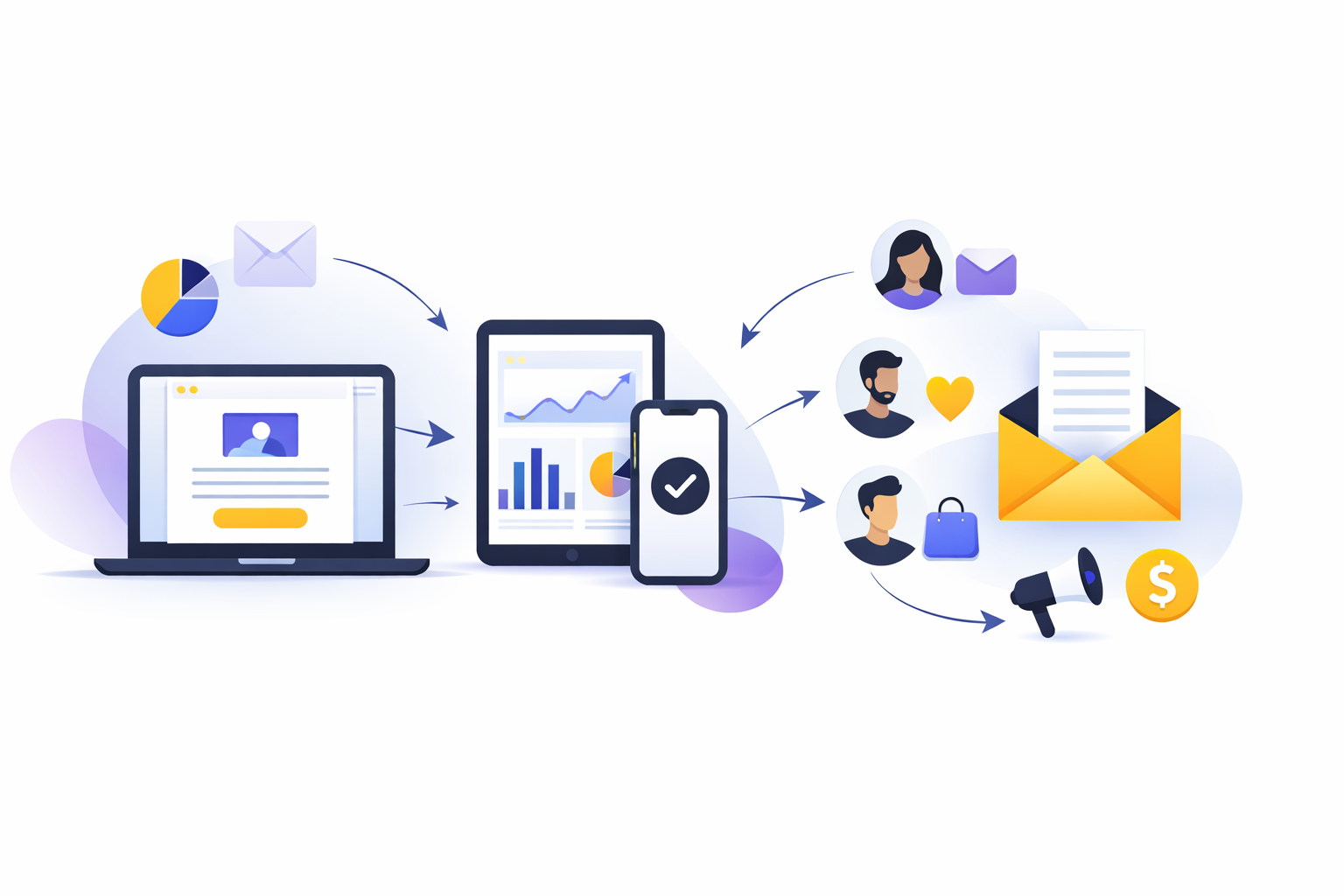
The reason newsletter writing matters so much right now is that attention is getting more expensive everywhere else. Social feeds are crowded, search behavior is shifting, and audiences are harder to reach consistently on rented platforms. A newsletter gives you a repeatable chance to show up in a place people still check every day, and it lets you do that without begging an algorithm for visibility.
That only works, though, if the writing is good enough to deserve a place in somebody’s inbox. Sinch Mailgun’s research found that 71.5% of consumers most often view emails on a smartphone, which means your newsletter is usually being judged on a small screen, in a busy moment, with very little patience. When the subject line is vague, the opening drags, or the body rambles, readers do not study it and give you the benefit of the doubt. They delete it, ignore it, or unsubscribe.
Strong newsletter writing solves that problem by making the message immediately useful. It tells readers what this email is, why it matters now, and what they should do or think differently after reading it. That is also why newsletters can outperform flashier channels over time: they reward consistency, trust, and clarity more than novelty.
There is another reason this topic matters: results do not come from opens alone anymore. beehiiv’s 2025 newsletter report noted that email open rates have been in flux since April 2024, and Inbox Collective’s reporting on 2025 bot-click activity showed why click data also needs more careful interpretation than it used to. In other words, weak writing cannot hide behind vanity metrics for long. The newsletter has to feel valuable to a real human being, or the numbers eventually expose it.
A Practical Framework for Writing Newsletters
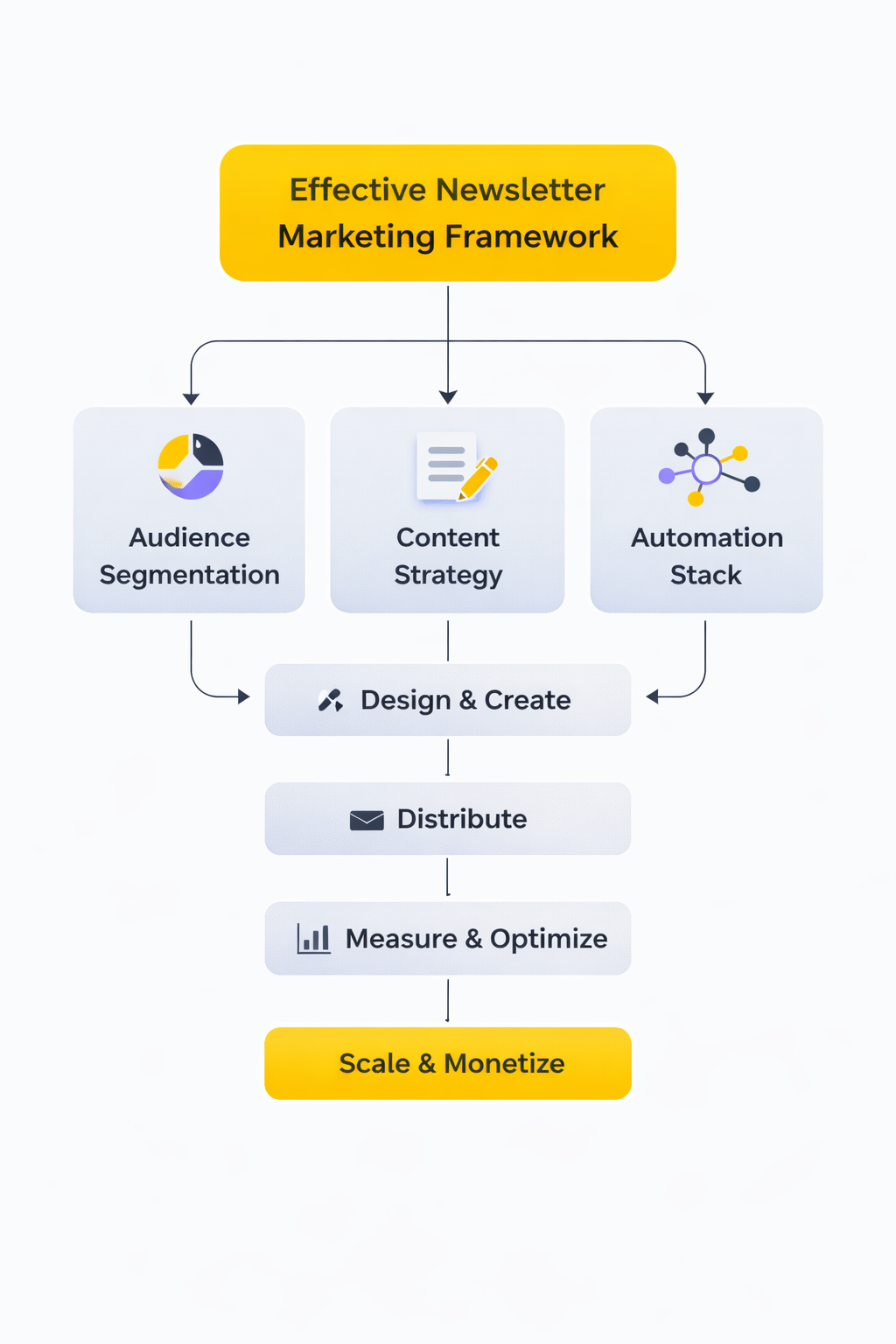
The easiest way to think about writing newsletters professionally is through five decisions: promise, pattern, personality, proof, and path. The promise is what the reader expects every time your name lands in the inbox. The pattern is the repeatable shape of the email, so readers do not have to relearn how to read you every week. The personality is the voice, taste, and point of view that make the issue feel like it came from a person instead of a content machine. The proof is the evidence, reporting, examples, or insight that make the email worth trusting. The path is the next step you want the reader to take.
Most newsletters fail at the first step because the promise is blurry. If the reader cannot explain in one sentence why they subscribed, your writing will feel random no matter how polished the paragraphs are. The best newsletters make a very specific deal with the audience: “I will help you understand this market faster,” “I will filter the noise for you,” or “I will give you one practical action you can use this week.” That kind of clarity makes every future writing choice easier.
Pattern matters just as much because consistency lowers friction. Readers do not want to decode a new format every time you send. They want a familiar rhythm: a sharp lead, a clear main idea, a few well-chosen supporting points, and a finish that moves them somewhere useful. When the structure is stable, the writing can feel more confident because it is working inside a dependable system instead of improvising from scratch.
Personality and proof are what keep the newsletter from becoming forgettable. Plenty of tools can draft passable copy now, and Litmus’s 2025 discussion of AI in email workflows makes a strong case that automation can remove production friction. But the differentiator is not whether you can produce more words faster. The differentiator is whether readers can feel a real editorial mind behind those words. That means making judgments, connecting dots, and supporting claims with real specifics instead of generic filler.
The final piece is path. Every issue should gently direct the reader somewhere, whether that is a reply, a click, a sale, a read, a booking, or a change in perspective. The path does not need to be aggressive. It just needs to be obvious. A newsletter without a path may feel pleasant in the moment, but it rarely compounds into meaningful business or audience growth.
Core Components of a Strong Newsletter
A strong newsletter issue is built from a few core components that do very different jobs. The subject line and preview text earn the open. The opening lines confirm that opening the email was the right decision. The body delivers the main value. The close creates momentum. If any one of those pieces fails, the whole issue feels weaker than it really is.
The opening is where many newsletters lose the reader. Mailchimp’s guidance on email opening lines gets this exactly right: the subject line may earn the open, but the first sentence has to keep the reader moving. That is why the lead should never sound like throat-clearing. Do not spend three sentences warming up. Show the tension, the takeaway, or the useful idea immediately, then build from there.
The body of the newsletter should usually do one main thing well instead of five things poorly. That could mean delivering one sharp insight, curating a small number of links with real commentary, teaching one tactic, or telling one meaningful story. What it should not do is dump a pile of disconnected updates into the inbox and hope the reader does the interpretation work for you. Your job is not just to send information. Your job is to shape it.
Proof is what gives the body weight. That can be reporting, firsthand observation, internal data, market context, or links to source material. It is also one reason curation-only newsletters often plateau: if the writer adds no judgment, there is no real reason to keep reading that writer instead of opening a news app. The more you can combine useful information with clear interpretation, the more your newsletter starts to feel indispensable.
The close matters more than people think. When industry-wide click performance is still relatively modest, with the DMA’s 2025 benchmark report showing a 2.3% unique click rate and MailerLite’s 2025 benchmark analysis putting average click rates around 2.09%, you do not improve outcomes by stuffing in more links. You improve them by giving the reader one clear next step that feels relevant to the promise you made in the first place.
Professional Newsletter Implementation
Professional newsletter writing is never just about the words on the page. It is also about the system around those words: list quality, send cadence, mobile readability, approval workflow, deliverability, and measurement. If that system is sloppy, even strong writing can disappear into spam folders or arrive looking broken on the device where most people read it.
That is why technical fundamentals are now part of professional implementation, not some optional extra for “later.” Google’s sender guidelines require all senders to use SPF or DKIM, require bulk senders to use SPF, DKIM, and DMARC, and require one-click unsubscribe for subscribed and marketing messages. Google also recommends keeping spam rates below 0.10% and avoiding 0.30% or higher, while its sender requirements FAQ notes that Gmail increased enforcement on non-compliant traffic starting in November 2025. In plain English, that means you can no longer separate “good writing” from “good sending.” The market will not let you.
The writing itself also has to respect the device and the moment. Since most consumers in Sinch Mailgun’s survey said they usually read email on mobile, dense walls of text and weak formatting choices are not just stylistic problems. They are conversion problems. Professional implementation means tighter paragraphs, clearer transitions, stronger hierarchy, and a rhythm that works when somebody is reading between meetings, on a train, or while half-distracted by ten other tabs.
It also means using tools the right way. Litmus’s 2025 guidance on AI and workflow argues that automation is most useful when it reduces production friction and frees teams to think more strategically. That is the correct mindset. Use AI to brainstorm angles, sharpen drafts, or speed up production steps if it helps, but do not let it flatten your voice or replace your judgment. Readers do not subscribe because they want more average writing at scale. They subscribe because they want your filter, your taste, and your way of making sense of the noise.
Once that foundation is in place, newsletter writing gets a lot more powerful. You are no longer improvising issue by issue. You are building a repeatable publishing asset that can earn trust, generate traffic, support offers, and strengthen your brand over time. In the next sections of this article, that foundation becomes even more practical when we move into analytics, optimization, and the wider ecosystem that turns a good newsletter into a real growth engine.
Newsletter Analytics and Optimization
You cannot improve what you misunderstand, and that is exactly where a lot of newsletter operators get into trouble. The dashboard looks full of numbers, but not every number deserves equal trust anymore. In Braze’s 2025 guide to email metrics, the company makes the point plainly: the days of judging email performance by open rate alone are over, and that shift matters even more when you are writing newsletters that are supposed to build habit, trust, and action over time.
That does not mean analytics became less important. It means the job got more demanding. The 2025 DMA benchmark report still found a 35.9% open rate and a 2.3% unique click rate across 2024 email performance, while MailerLite’s 2025 benchmark analysis put average click rates at 2.09%, click-to-open rates at 6.81%, and unsubscribe rates at 0.22%. Those numbers are useful for perspective, but they only become valuable when you understand what kind of engagement they actually represent and where they can mislead you.
That is why writing newsletters professionally is not just a creative discipline. It is an editorial discipline tied to measurement. A good issue is not the one that looks impressive in isolation. It is the one that moves the right people in the right direction and keeps doing that consistently enough for the newsletter to compound.
Open Rates Still Matter, But Only in Context
Open rates are not worthless, but they are no longer strong enough to carry your interpretation by themselves. Mailchimp’s Apple MPP guidance explains why: Apple Mail can preload tracking pixels even when the contact has not actively opened the email, which inflates and distorts open data. Twilio’s 2025 MPP guide reaches the same conclusion from a different angle, noting that senders can still use click tracking, but open tracking no longer gives a clean picture of real engagement.
That matters because many newsletter writers still react emotionally to opens. A high open rate makes them think the issue worked, while a lower one makes them panic and rewrite the whole strategy. But when Mailchimp also warns that bot activity can falsely inflate both opens and clicks, the smarter move is to treat opens as a directional signal instead of a final verdict.
Used correctly, open rate still has a role. It can help you spot broad shifts in subject-line appeal, audience fatigue, or deliverability problems when compared against your own history rather than somebody else’s benchmark. The key is not to worship the metric. The key is to place it where it belongs: near the top of the funnel, useful for context, but too fragile to be the final judge of whether your newsletter writing is actually working.
Measure Business Outcomes, Not Vanity Metrics
If you want cleaner answers, you have to move closer to outcomes. Braze’s 2025 reporting framework pushes marketers toward metrics tied to customer action, campaign goals, and long-term value, and Mailchimp’s MPP documentation is even more direct when it says clicks and purchases are stronger signs of engagement than opens. That is the right mindset for newsletters, whether you are monetizing with products, services, sponsorships, affiliate relationships, or simply trying to build a loyal audience that keeps coming back.
In practice, that means every newsletter should have one primary success signal. Sometimes that is clicks to a sales page. Sometimes it is replies, booked calls, demos, downloads, or purchases. Sometimes it is the percentage of readers who reach a key article and then continue into a second action. The point is that the metric should reflect what the newsletter is trying to do, not just what the email platform makes easiest to display.
This is also where click-to-open rate becomes more useful than many people realize. MailerLite’s 2025 dataset showed click-to-open rate rising to 6.81%, and Braze’s explanation of click-to-open rate makes clear why it matters: it shows how well the body of the email and the call to action matched the promise that got the reader to open in the first place. In other words, it tells you whether the writing inside the newsletter delivered on the curiosity created outside it.
When writing newsletters, that distinction is huge. A subject line can win a moment of attention. Only the body can earn trust. If the subject line pulls people in but the body fails to move them, you do not have a writing success. You have a temporary curiosity spike.

List Health Shapes Every Result You See
A lot of newsletter operators obsess over copy while ignoring the condition of the list itself. That is backwards. If the list is unhealthy, your analytics become noisy, your deliverability slips, and even a strong issue can underperform for reasons that have nothing to do with the quality of the writing. Validity’s 2025 deliverability report frames this clearly by pointing out that inbox placement became tougher in 2024, while Google’s sender guidelines FAQ says senders should keep spam rates below 0.1% and prevent them from ever reaching 0.3% or higher.
That is why unsubscribes, complaints, bounces, and inactive segments are not side metrics. They are performance metrics. Mailchimp’s bot-filtering documentation explicitly recommends using bounces, unsubscribes, and conversions alongside open and click data, because those supporting signals tell you whether the newsletter is reaching the right people and whether the audience still wants the relationship. MailerLite’s 2025 benchmark update adds another useful warning sign here: the average unsubscribe rate more than doubled year over year to 0.22%, partly because Gmail has made unsubscribing easier.
There is a healthy way to read that trend. Do not treat unsubscribes as proof that the newsletter is failing. Treat them as a signal about fit. Sometimes a higher unsubscribe rate means the writing is getting sharper, the promise is getting clearer, and people who were never the right audience are finally opting out. That can improve the list, improve deliverability, and make the remaining engagement more meaningful.
The dangerous reaction is trying to reduce unsubscribes by becoming bland. That usually creates a weaker newsletter, not a stronger one. People do not stay subscribed because the writing is harmless. They stay because it keeps proving it was worth inviting into the inbox in the first place.
Test Ideas, Angles, and Calls to Action
When people talk about newsletter optimization, they often mean subject-line testing and little else. That is far too narrow. Mailchimp notes that A/B tests based on open rates may not be accurate for Apple MPP users, which means the old habit of declaring a winner based only on opens has become a weaker practice than it used to be. If the metric underneath the test is unstable, the lesson you take from the test can be unstable too.
A better approach is to test the parts of newsletter writing that actually shape reader behavior after the open. Test whether a curiosity-led opening beats a direct one. Test whether a shorter issue outperforms a longer, more essay-driven format. Test whether one bold call to action earns more movement than a menu of smaller options. Test whether a plain-text-style issue creates more replies than a polished template. Those are not cosmetic experiments. They get closer to how the reader experiences the newsletter.
You should also test at the segment level whenever possible. A newsletter sent to recent subscribers often behaves differently from one sent to long-time readers, and a list built through a lead magnet can respond differently from a list built through a founder-led content engine. Braze’s emphasis on goal-specific measurement across the customer lifecycle supports that way of thinking, because the whole point of reporting is to understand which message worked for which audience and why.
That is how optimization becomes strategic instead of mechanical. You are no longer chasing random lifts in dashboard percentages. You are learning how your readers think, what kind of writing earns their attention, and which path turns that attention into action.
The newsletters that grow strongest over time are rarely the ones with the prettiest reports in any single week. They are the ones that learn faster than everyone else. When you measure the right things, interpret them honestly, and keep adjusting the writing around real behavior instead of vanity metrics, the newsletter stops feeling like a gamble and starts behaving like an asset.
The Newsletter Ecosystem

A newsletter should never live on an island. If it does, you will keep writing emails, keep hoping they perform, and keep wondering why the business impact feels smaller than the effort. The better way to think about writing newsletters is to treat the newsletter as the center of an ecosystem that connects attention, trust, audience data, offers, and long-term retention.
That shift changes everything. Instead of asking whether one issue got a decent open rate, you start asking whether the newsletter is turning borrowed attention into owned attention, whether it is deepening the relationship after someone first finds you, and whether it is making the rest of your business stronger. That is the point where newsletter writing stops being “content” and starts becoming infrastructure.
Owned Media Is the Real Asset
The biggest reason newsletters matter inside a broader ecosystem is ownership. Social reach can disappear, search traffic can swing, and platform rules can change without asking your permission first. But when somebody joins your list, you have a direct line to them, and Mailchimp’s explanation of first-party data makes the value of that relationship clear: first-party data comes directly from your own audience, through their actions, preferences, and interactions with your brand.
That is what makes writing newsletters strategically different from posting on social media. A social post might help you get discovered, and that matters, but the newsletter is where the relationship becomes durable. It is where you learn what people click, what they ignore, what they buy, what they reply to, and what kind of promise keeps them coming back.
This is also why the strongest newsletters are usually connected to a bigger owned-media system. They point readers back to a website, a product, a service, a community, a membership, a podcast, or a body of work that gets more valuable with repeated contact. The email is not the whole business by itself. It is the connective tissue that keeps the business alive between moments of discovery.
Acquisition Should Feed the List
A lot of people build content channels backwards. They pour all their effort into social growth, chase platform momentum, and then act surprised when the business still feels fragile. A healthier model is to use social media, search, partnerships, podcasts, video, and guest appearances to bring people into your newsletter, because that is where the relationship becomes measurable and repeatable.
That logic is even more important in a fragmented media environment. Reuters Institute’s 2025 Digital News Report described a landscape where traditional publishers are struggling to maintain engagement while audiences keep shifting across platforms, and HubSpot’s 2025 and 2026 marketing data still shows email holding a top-tier ROI position for many marketers. Put those two realities together and the lesson becomes obvious: rented attention can be useful, but it becomes far more valuable once you convert it into a direct audience you can actually reach again.
The newsletter is where that conversion should happen. Every short-form video, carousel, podcast clip, webinar, and article should answer one question: what is the natural path from this piece of attention into the email relationship? When that path is missing, you may still get views. You just do not build much leverage from them.
This is one reason platform-reported newsletter growth can happen surprisingly fast when the acquisition path is clear. In beehiiv’s 2026 newsletter report, new launches built on owned audiences reached a median of 482 subscribers in their first month. That number is not a universal guarantee, but it does show what happens when a newsletter is treated as the destination rather than a side project.
Your Newsletter Needs a Content Flywheel
Writing newsletters becomes much easier when the newsletter is part of a flywheel instead of a blank page you face every week. One issue can become a thread, a LinkedIn post, a short video, a podcast talking point, a sales email, or a longer article on your site. Then those channels can bring new readers back into the next issue, where the cycle continues.
That does not mean thoughtless repurposing. It means smart adaptation. HubSpot’s marketing statistics page notes that many marketers already reuse and adapt content across platforms, and the most effective newsletter operators do the same with discipline instead of laziness. They do not copy and paste one message everywhere. They reshape one core idea so it fits the channel while still pointing people toward the newsletter, where the deeper relationship lives.
This is where many writers save themselves a huge amount of stress. Instead of inventing a completely new idea every time the send date gets close, they build an editorial engine. They collect observations, test angles publicly, see what resonates, and then bring the strongest version into the newsletter with more depth, more clarity, and a stronger call to action.
That process also improves the writing itself. When an idea has already been tested in conversation, in public content, or in client work, the newsletter version tends to feel sharper because the writer already knows where the tension is and where readers lean in. The issue becomes less about filling space and more about delivering a refined point of view.
Monetization Works Best After Trust
Once the ecosystem is working, monetization becomes much more natural. That does not mean every newsletter should become a paid subscription product on day one. It means the newsletter should strengthen the trust that makes any monetization model more effective, whether that model is consulting, courses, software, premium subscriptions, memberships, sponsorships, or product sales.
The creator economy gives you more options here than it used to. Substack says that, on average, 86% of subscription revenue goes directly to publishers after platform and payment fees are accounted for, and that subscribers have already paid out hundreds of millions of dollars to writers and creators. That does not mean paid newsletters are automatically the best choice for everyone. It does mean the business model is established enough that you can think beyond “send free emails and hope something happens.”
The smarter move is to let the newsletter earn the right to monetize. If the free issue keeps showing judgment, usefulness, and consistency, readers become more willing to buy the next step. If the free issue feels thin, no monetization tactic will save it for long. Trust has to come first, because a newsletter is one of the clearest places where readers can feel whether you are trying to help them or merely extract value from them.
This is also where writing discipline protects the business. A newsletter full of aggressive pitches can damage the ecosystem just as much as a newsletter with no commercial path at all. The goal is not to hide the offer. The goal is to make the offer feel like a logical extension of the value the reader has already experienced in the inbox.
Relevance Keeps the Ecosystem Alive
The final piece of the ecosystem is relevance. A newsletter only compounds when people keep feeling that it belongs in their inbox. That sounds obvious, but Pew Research’s February 2026 study on newsletters showed that three in ten U.S. adults at least sometimes get news from newsletters, yet among newsletter readers, 62% say they do not end up reading most of the newsletters they receive. The opportunity is real, but so is the competition for attention inside the inbox itself.
Pew’s research also found that 71% of newsletter readers subscribe to fewer than five newsletters. That is a powerful reminder that the goal is not simply to get subscribed. The real goal is to become one of the very small number of emails a person genuinely makes time for. That only happens when the writing stays useful, the promise stays clear, and the content reflects what the audience actually cares about rather than what the sender felt like publishing that day.
Segmentation helps here, but judgment matters even more. You can tag readers, personalize paths, and refine flows, and those are valuable moves. But none of them replace the basic editorial responsibility to understand your audience deeply enough that your newsletter keeps feeling relevant in the first place.
When all of these pieces work together, the newsletter becomes more than a recurring email. It becomes the place where your audience relationship is protected, deepened, and monetized with intention. That is the real ecosystem behind writing newsletters well, and it is also why the writers who take this seriously end up building something much bigger than an inbox habit.
Statistics and Data

There is no shortage of newsletter data right now, but the raw numbers only help when you understand what they are actually telling you. Some statistics show how strong email still is as a channel, some show where performance is getting harder, and some expose why average newsletter writing no longer gets much room for error. When you put those signals together, the message is clear: writing newsletters well is still worth it, but the standard for being read, clicked, and remembered has gone up.
Email Still Has Scale and Preference
The first set of numbers matters because it answers a basic question: is email still big enough to justify serious effort? DataReportal’s 2025 analysis says Gmail’s mobile app still reaches roughly 2 billion handsets each month, while Sinch Mailgun’s consumer survey found that 72.1% of participants had a Gmail account. That kind of scale is one reason newsletters remain such a powerful owned channel even while other platforms keep shifting under people’s feet.
Preference data makes the case even stronger. Sinch Mailgun found that 75.4% of consumers prefer email for promotional messages, and Sinch’s 2025 generational breakdown showed that 77% of consumers across age groups would choose email as one of their preferred channels for promotions. That matters because it means the problem is usually not that people hate email. The problem is that they hate receiving emails that waste their time.
For anyone writing newsletters, that is a very different challenge from trying to rescue a dead channel. The audience is still there, the habit is still there, and the preference is still there. What the numbers are really saying is that the inbox rewards relevance and punishes lazy writing faster than ever.
Engagement Benchmarks Are Useful, but Not Sacred
Average performance data can help you benchmark your newsletter, but it should never replace judgment. The DMA’s 2025 benchmark report found a 35.9% open rate, a 2.3% unique click rate, and a 98% delivery rate across 2024 email performance, while MailerLite’s 2025 benchmark study reported a 43.46% average open rate, a 2.09% click rate, a 6.81% click-to-open rate, and a 0.22% unsubscribe rate. Those numbers are useful for orientation, but they are not laws of nature.
The reason they are not sacred is that newsletter format changes how those metrics behave. A newsletter packed with links will often produce a different click pattern than an essay-style issue that mostly builds trust and only asks for one action at the end. A highly engaged niche audience can beat the averages by a mile, while a broad, weakly qualified list can sit below benchmark and still tell you something important about where the writing or offer is falling apart.
The smarter use of benchmarks is diagnostic rather than emotional. If your open rate drops sharply, that may signal subject-line weakness, list fatigue, or a deliverability issue. If your open rate looks fine but your clicks or replies are flat, the problem is usually inside the newsletter itself, where the writing failed to convert attention into movement.
Open Rates Are Less Clean Than They Look
This is where the data gets more complicated. Mailchimp’s Apple MPP guidance explains that Apple Mail can preload tracking pixels even when a subscriber has not actively opened the email, which inflates reported open rates and weakens open-based A/B tests, automation logic, and segmentation. Twilio’s 2025 Apple MPP guide makes the same point from a different angle, noting that open tracking is no longer a dependable standalone measure for evaluating engagement.
That is why the most useful newsletter metrics now sit closer to action. Mailchimp recommends focusing on clicks, bounces, unsubscribes, conversions, and attributed revenue, and MailerLite’s own benchmark write-up says click rate is now the most accurate broad indicator of newsletter engagement because it does not rely on open tracking. In plain English, a subject line can still win the first battle, but the body of the newsletter has to win the war.
That is a healthy change for serious writers. Inflated opens can make weak issues look better than they are for a while, but action-based metrics force you to be more honest. When the data is cleaner, your editorial decisions usually get cleaner too.
Mobile and Deliverability Numbers Change the Way You Write
The next group of statistics affects the actual shape of your newsletter on the screen. Sinch Mailgun’s customer experience research found that 71.5% of consumers most often view emails on a smartphone or mobile device, while fewer than a quarter primarily check personal email on desktop. That means long-winded intros, oversized blocks of text, and weak formatting are not just aesthetic mistakes. They are performance mistakes.
Deliverability numbers raise the stakes even more. Google’s sender guidelines FAQ says senders should keep spam rates below 0.1% and prevent them from ever reaching 0.3% or higher, while Google’s sender requirements require one-click unsubscribe for marketing and subscribed messages sent by bulk senders. At the same time, Validity’s 2025 deliverability report says inbox placement got tougher in 2024 as privacy changes, mailbox requirements, and shifting behavior made it harder for legitimate senders to land where they wanted.
That combination changes what “good newsletter writing” really means. It is not enough to write something interesting in the abstract. The writing has to respect the device, respect the reader’s patience, and fit inside a sending system that keeps you in the inbox long enough for the words to matter.
Growth and Revenue Data Show Both Opportunity and Pressure
The commercial side of newsletter data is encouraging, but it is not simple. Litmus reported in 2025 that 35% of companies see between $10 and $36 in return for every $1 spent on email, 30% see between $36 and $50, and 5% see more than $50, while newsletters were identified as the highest-ROI email type for D2C brands and for agencies and professional services. HubSpot’s 2026 marketing statistics page also places email at the top of ROI rankings for B2C brands.
Newsletter-specific revenue data points in the same general direction. HubSpot’s 2025 State of Newsletters report found that 25% of respondents saw substantial profit growth over the previous year, 45% expect newsletter profits to increase significantly over the next 12 months, and 46% believe newsletters generate ad revenue more quickly than podcasts, videos, or websites. Those are serious numbers, and they explain why so many brands, creators, and operators keep investing in the format.
At the same time, the growth story comes with pressure. The same HubSpot report found that 42% ranked direct recommendations from current subscribers as the most effective growth strategy, while beehiiv’s 2026 newsletter report said new launches on its platform reached a median of 482 subscribers in their first month. That sounds exciting, but Pew Research’s February 2026 study also found that 62% of newsletter readers do not end up reading most of the newsletters they receive. So yes, newsletters can grow and monetize. They also have to compete harder for actual attention once they arrive.
That tension is the most honest statistic in the whole category. The opportunity is real, which is why more people keep entering the space. The pressure is also real, which is why writing newsletters with a clear promise, clean structure, and strong editorial judgment matters so much more than simply sending more often.
Common Newsletter Writing Mistakes
There is a point where writing newsletters stops being a creativity problem and starts becoming a discipline problem. A lot of newsletters do not stall because the writer lacks talent. They stall because the writer falls into habits that slowly make the email less relevant, less wanted, and easier to ignore.
This matters because the inbox is still full of opportunity, but it is also full of competition. That means small mistakes compound fast. If you want the newsletter to become a serious asset, you have to catch those mistakes early and replace them with habits that make the writing stronger over time.
Sending More Often Without More Value
One of the fastest ways to damage a newsletter is to increase frequency before you increase usefulness. More sends can absolutely work, but only when the writing keeps giving readers a reason to care. When frequency rises and value stays flat, the audience feels the mismatch almost immediately.
The data around this is pretty blunt. In Mailgun’s 2025 unsubscribe research, 19.8% of consumers said they unsubscribe because they receive too many emails from a brand, while 17.3% leave because the content feels irrelevant. Optimove’s 2025 consumer fatigue report adds even more pressure to that point, showing that 78% appreciate fewer but more targeted messages and 70% had recently unsubscribed from at least three brands because of excessive messaging.
That does not mean you should send less by default. It means you should earn the right to send more. If you cannot honestly say that each issue has a clear payoff for the reader, increasing frequency is usually not a growth strategy. It is just a faster way to teach people that your newsletter can be skipped.
Confusing Personalization With Cosmetic Tricks
A lot of newsletter operators still think personalization means dropping a first name into the subject line and calling it a day. Readers are far more sophisticated than that. They do not care that your software knows their name nearly as much as they care whether the newsletter understands their situation, interests, and timing.
Optimove found in 2025 that 75% of respondents consider personalization important, and 81% are more likely to open an email tailored to their interests rather than one that simply includes their first name. That is a huge distinction. It tells you that better writing newsletters is not about fake intimacy. It is about editorial relevance.
So if your newsletter feels generic, the answer is usually not a clever merge tag. The answer is sharper positioning, better segmentation, and writing that clearly reflects what this reader cares about right now. When the message feels made for the reader’s actual context, the newsletter starts to feel useful again instead of mass-produced.
Ignoring Reader Control
Another mistake that quietly kills performance is acting like the only choice a reader should have is to stay subscribed or leave. That mindset is lazy, and it makes it much harder to keep good subscribers around. People do not all want the same cadence, the same topics, or the same level of promotional intensity.
The strongest evidence for this comes from Optimove’s 2025 report, where 90% of respondents said they want the ability to customize message frequency and message type. That should completely change how you think about newsletter operations. Preference management is not just a compliance detail. It is part of writing newsletters in a way that respects the audience.
In practical terms, that means giving readers options before they hit unsubscribe. Let them choose fewer emails. Let them choose only certain topics. Let them move from a broad newsletter into a tighter niche segment if that is what they actually want. When you give people a way to shape the relationship, you often save subscribers who would otherwise disappear.
Turning the Newsletter Into a Promo Loop
A newsletter can absolutely sell, and it should sell when there is a real offer that fits the audience. But there is a big difference between a newsletter that occasionally sells and a newsletter that feels like the same promotion with slightly different wording every week. Once readers feel trapped in that loop, trust starts to erode.
The unsubscribe data points in the same direction. Optimove reported that 54% of respondents unsubscribe because they are bombarded with repeated promotions for the same product, while 57% said they had switched to competitors because they felt overwhelmed by marketing messages. Those are not small warning signs. They are direct evidence that repetition without renewed value becomes self-sabotage.
That is why the safest commercial approach is not softer selling. It is stronger writing. If every issue teaches, filters, interprets, or clarifies something meaningful, readers are far more willing to hear about the paid next step. If the issue exists mainly to push the offer, the audience feels that too, and the relationship gets weaker even when the product itself is good.
Writing Without an Editorial System
One of the least glamorous mistakes is also one of the most destructive: writing every issue from scratch with no repeatable system behind it. That usually creates uneven quality, inconsistent cadence, and a lot of avoidable stress. It also makes the newsletter harder to grow because the audience never fully understands what they can count on from you.
beehiiv’s 2026 newsletter report offers a useful clue here: top earners on the platform tend to publish weekly, offer a clear transformation or utility, and use segmented content to move free readers toward deeper engagement. That does not mean weekly is magically correct for everyone. It does mean the winners tend to operate with clarity, rhythm, and a strong promise rather than improvising endlessly.
This is where sustainable newsletter writing really comes from. You need a repeatable process for collecting ideas, deciding what belongs in the issue, shaping the lead, tightening the body, and choosing the one action that matters most. When that system is in place, the writing gets better because you are no longer wasting energy reinventing the basics every single time.
If you want a newsletter that lasts, this is the part you cannot skip. Fancy tactics come later. First, you build the habit of showing up with something worth reading, in a format readers recognize, at a cadence you can actually sustain. That is how writing newsletters turns from a sporadic task into an asset that keeps getting stronger.

FAQ for This Complete Guide
By this point, you have seen the strategy, the structure, the metrics, and the mistakes that shape whether writing newsletters actually pays off. What follows is the practical layer most people still want after reading a full guide: the direct answers to the questions that come up when it is time to sit down, write the issue, and hit send. These are the answers that help turn newsletter theory into something you can actually use.
How often should I send a newsletter?
You should send as often as you can reliably deliver something worth opening. That may be weekly, twice a week, or monthly, but it needs to be consistent enough that readers remember you and strong enough that they do not regret seeing your name in the inbox. Pew Research found in February 2026 that 71% of newsletter readers subscribe to fewer than five newsletters and 62% do not end up reading most of what they receive, which tells you two things at once: people are selective, and they are quick to tune out when the value is not obvious.
How long should a newsletter be?
There is no perfect word count, and chasing one usually makes the writing worse. A good newsletter is as long as it needs to be to deliver one clear idea, one useful takeaway, or one well-shaped sequence of links and commentary without wasting the reader’s time. That is especially important because Mailjet’s 2025 guidance on mobile-friendly newsletters points to research showing that 71.5% of consumers most often check email on a mobile device, which means your issue usually needs to work on a small screen first.
Are open rates still useful?
They are still useful, but they are no longer clean enough to act like a final verdict. Apple’s Mail Privacy Protection documentation explains that Mail can download remote content in the background regardless of whether a person actively engages with the email, which is one reason open data can look healthier than real reader behavior. So yes, watch open rates for directional changes, but do not let them fool you into thinking a weak newsletter is strong just because the dashboard looks friendly.
Which metrics matter most now?
The metrics that deserve the most trust now are the ones closest to action: clicks, click-to-open rate, replies, conversions, unsubscribes, complaints, and revenue tied to the email. MailerLite’s 2025 benchmark report puts average click rate at 2.09%, click-to-open rate at 6.81%, and unsubscribe rate at 0.22%, which gives you a useful frame for judging whether the body of your newsletter is doing real work after the open. The deeper lesson is simple: when writing newsletters, the best metric is the one that shows whether the reader actually moved.
Should every newsletter have a call to action?
Yes, but that does not mean every newsletter needs a hard sell. It means every issue should leave the reader with a next step, even if that step is just to reply, read a linked article, explore a resource, or think differently about something important. Since average click rates are still relatively modest in MailerLite’s 2025 data, most newsletters perform better when they give readers one clear path instead of a cluttered menu of weak options.
Should I write newsletters for mobile first?
Yes, because that is where most readers are meeting your work. Mailjet’s 2025 article highlights research showing that 71.5% of consumers most often check email on mobile, and that single fact should change how you write opening lines, paragraph length, formatting, and link placement. If the issue only feels readable on a large desktop screen, it is not really finished yet.
How personal should a newsletter feel?
Personal enough to sound like a real person is writing it, but not so casual that the usefulness disappears. The strongest newsletters usually feel like they are written by somebody with a point of view, a standard, and a sense of responsibility to the reader rather than by a brand voice committee. That matters even more because Optimove reported in 2025 that 78% of consumers prefer fewer but more targeted messages, which means relevance and fit matter more than shallow personalization tricks.
Can AI help me write newsletters?
Yes, and the smartest way to use it is as a multiplier, not a replacement. Litmus reported in early 2026 that AI is speeding up email workflows dramatically, and HubSpot’s 2025 State of Newsletters report says 42% of newsletter pros who use AI save between one and three hours a week on average. But the same HubSpot report also shows how crowded and AI-shaped the future is becoming, which is exactly why human judgment, taste, and originality are becoming more valuable rather than less.
How do I grow my subscriber list without attracting the wrong people?
The healthiest growth usually comes from recommendation, relevance, and a clear promise, not from generic giveaways that fill your list with people who never wanted the newsletter in the first place. HubSpot found in 2025 that 42% of newsletter pros ranked direct recommendations from current subscribers as the most effective growth strategy, which tells you a lot about what really works. If readers genuinely find the newsletter useful, they will talk about it, and that kind of growth tends to bring in people who already understand why they should care.
When should I clean my list?
You should clean your list before decay starts quietly distorting your performance and hurting delivery. Watch for long-term inactivity, rising unsubscribes, weak clicks, and any signs that the audience you are sending to no longer matches the audience that actually wants the content. Google’s sender guidelines FAQ says senders should keep spam rates below 0.1% and prevent them from ever reaching 0.3% or higher, so list hygiene is not just a neatness issue anymore. It is part of protecting inbox placement.
Do I need to make unsubscribing easy?
Yes, and trying to trap readers is one of the worst long-term mistakes you can make. Google’s sender requirements say bulk senders of marketing and subscribed messages must support one-click unsubscribe, and Google also notes that making it easy to opt out can improve sending efficiency. A clean goodbye is far better than a frustrated reader who stays on the list just long enough to report your email as spam.
Is email still worth the effort in 2026?
Yes, but only if you treat it like a serious channel instead of a dumping ground for updates. Litmus reported in 2025 that 35% of marketing leaders see between $10 and $36 in return for every $1 spent on email, 30% see between $36 and $50, and 5% see more than $50. Those returns do not come from writing newsletters lazily. They come from building trust, sending consistently, respecting the inbox, and making each issue useful enough to deserve its spot.
What actually makes a newsletter worth reading?
A newsletter becomes worth reading when it helps the reader do something better, understand something faster, or see something more clearly than they would without it. That can come through reporting, curation, analysis, teaching, storytelling, or sharp opinion, but it has to feel intentional. Since Pew’s 2026 research shows that most newsletter readers keep their subscriptions limited, your real competition is not every newsletter on earth. It is the small handful the reader has already decided are worth their attention.
Work With Professionals
There comes a point where trying to do everything alone slows you down. Maybe you can write the ideas but not shape them into a consistent editorial product. Maybe you have the audience but not the system, the segmentation, the deliverability setup, or the workflow to turn writing newsletters into something that compounds.
That is where working with professionals can change the game. The right strategist, editor, email marketer, or automation specialist can help you tighten the promise, improve the writing, protect deliverability, and make the newsletter feel like a serious asset instead of one more task sitting on your calendar. If the newsletter matters to your business, getting expert help is not overkill. It is often the move that finally makes the whole thing work the way it should.
Explore 10K+ Remote Marketing Contracts on MarkeWork.com
Most marketers spend too much time chasing clients, competing on crowded platforms, and losing a percentage of every project to middlemen.
MarkeWork gives you a better way. Browse thousands of remote marketing contracts and connect directly with companies desperate to hire skilled marketers like you without platform commissions and without unnecessary gatekeepers.
If you’re serious about finding better opportunities and keeping 100% of what you earn, you can explore available contracts and create your profile for free at MarkeWork.com.
 Filip Konecny Enterprises