
ManyChat can feel like a bargain or a money pit, and the difference usually comes down to one thing: are your DMs already part of how you sell? If Instagram, WhatsApp, or Messenger already bring you leads, customers, or bookings, the price gets easier to justify because you are paying to stop doing repetitive inbox work by hand.
The confusing part is that ManyChat’s public pricing page and the newer March 2026 help docs are not showing the exact same pricing structure. The public page still shows Free, Pro, and Elite, while the current subscription guide now describes a five-plan model for newer accounts in supported regions.
That matters because the first question is not just “how much is ManyChat?” It is “which version of ManyChat pricing applies to me, and will this tool actually save me enough time or win enough sales to earn its keep?”
ManyChat pricing at a glance
The short version is simple. ManyChat is no longer one of those tools where you can glance at one number and instantly know what you will pay long term.
The public-facing pricing page still presents the older ladder with Free at $0, Pro starting at $15 per month, and Elite as custom pricing. The newer help-center rollout, introduced in March 2026, adds Essential, Pro, Business, and Advanced, with pricing based on plan level, annual billing discounts, and Active Contact limits.
That does not automatically make ManyChat a bad buy. It just means a fair review has to start by clearing up the pricing picture before talking about value, because a creator testing Instagram automations and an agency managing thousands of conversations are looking at very different bills.
See current pricingThe newer ladder also makes the buying decision clearer. Free is tiny and mainly for testing, Essential is for early traction, Pro is where multichannel selling starts to look serious, and the higher tiers are clearly built for teams and agencies rather than solo creators playing around with comment replies.
That is also where ManyChat starts to separate itself from doing everything manually. A good comment-to-DM flow, lead capture sequence, or FAQ automation does not just save time. It keeps you from missing the people who were ready to click, buy, book, or ask for the link while you were offline.
If your inbox is quiet, paying for that is overkill. If you are already getting flooded with the same questions and losing leads in the mess, waiting usually costs more than the software does.
This is the kind of simple automation that makes ManyChat appealing in the first place. Someone comments, the conversation moves into DM, and the handoff happens without you sitting there copying and pasting replies all day.
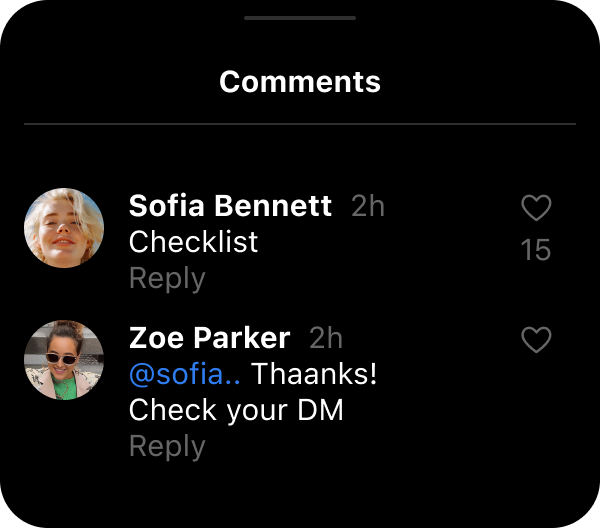
Image source: ManyChat Instagram product page
Article outline
This review is split into three clean sections so you can jump straight to the part that helps you decide fastest. The goal is not to admire features on a sales page. The goal is to figure out whether ManyChat pricing makes sense for your business right now.
- ManyChat pricing at a glance — the fast answer on what the platform costs today, why pricing looks different depending on the page you land on, and why that matters before you buy.
- What you get and when it starts paying off — the free trial, the features that actually matter, the good stuff, and where the value starts to justify the monthly bill.
- Alternatives and final verdict — when ManyChat is the right move, when a cheaper tool is smarter, and when a broader all-in-one platform may fit better.
Keep reading if you already sell through social DMs, want to capture leads from comments, or are tired of answering the same questions by hand. If you mainly need email marketing, a simple scheduler, or a lighter tool with a lower monthly commitment, the comparison later in the review will probably save you money.
What you get and when it starts paying off
ManyChat is easy to undersell if you only look at the monthly number. The real question is whether faster replies, lead capture, and organized DMs will make you money or save you enough time to justify the bill.
What you get in the free trial
The useful trial is on Essential and Pro. Both give you 14 days to see whether your audience actually responds to automations before you pay for a real month.
Essential is the cheaper test if you mainly want to turn Instagram or Messenger engagement into leads. It gives you unlimited automations, lead capture, tags, Google Sheets sync, and up to 250 Active Contacts, but it still keeps you on just 2 channels and leaves out WhatsApp, SMS, and Email.
Pro is the one that matters if social DMs already drive sales for you. It bumps you to 2,500 Active Contacts, 3 channels, 3 users, 2 Inbox seats, AI-powered automation, integrations, WhatsApp, SMS, Email, and more serious Inbox controls.
Business and Advanced do not include a free trial. That makes sense for bigger teams, but it also means smaller buyers should squeeze everything they can out of Pro before they jump higher.
One catch matters here. The ManyChat AI add-on is not included in the free trial, so if AI is the whole reason you are interested, test the core automation first and treat AI as an extra cost rather than assuming it comes bundled.
Image source: ManyChat official site
That comment-to-DM move is a big reason people pay for ManyChat in the first place. It takes public engagement and turns it into a private conversation without you sitting there replying one person at a time.
The good stuff
ManyChat earns its price when you already have attention and need a faster way to turn that attention into action. It is built for the boring work that quietly kills sales when you do it manually: repeating the same answers, sending the same links, asking the same qualifying questions, and forgetting to follow up.
Link delivery is a simple example, but it matters because it removes delay. When someone comments for a guide, coupon, or product link, you can send it immediately instead of hoping you remember later.
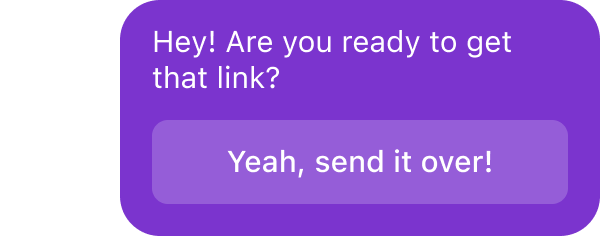
Image source: ManyChat official site
FAQ handling is another place where this tool stops feeling optional. Pro adds AI-powered automation, and even before you touch AI, the standard flows, tags, conditions, and routing are enough to answer common questions, sort leads, and push better conversations into your inbox.

Image source: ManyChat official site
Pro also gets more attractive the second WhatsApp enters the picture. If your sales flow starts on Instagram but closes better in WhatsApp, Pro is where ManyChat starts to feel like a real revenue tool instead of a nice little convenience.
The follow-to-DM and follower-check style automations are useful for creators and sellers who want to gate offers, reward followers, or keep promotional conversations cleaner. They are not magic, but they are a practical way to turn casual engagement into a more deliberate funnel.
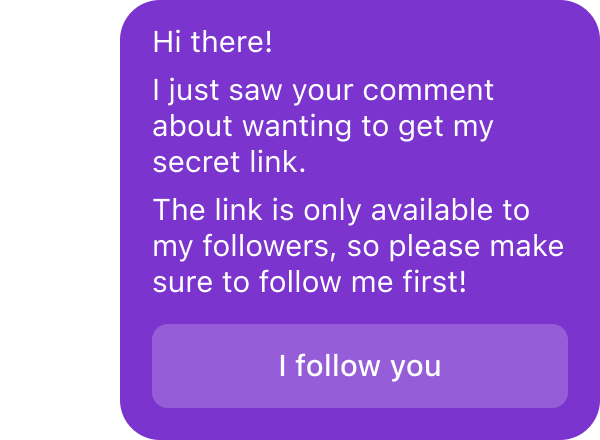
Image source: ManyChat official site
Here is the catch. ManyChat is not the best buy if you do not already get messages, comments, or story replies worth automating.
Free is for testing, not serious growth. It gives you 25 Active Contacts per month, 1 user, 1 Inbox seat, up to 2 channels chosen from Instagram, TikTok, Facebook Messenger, and Telegram, and only 4 live automations, so you hit the ceiling fast if your content starts moving.
Check the official free trialPricing and how it compares to other tools you could buy instead
ManyChat pricing makes the most sense when social DMs are already part of your sales process. If your audience is active and you keep sending the same replies manually, Pro is not hard to justify because one missed sale can cost more than a month of software.
The newer plan model also gets one important thing right: it bills around Active Contacts, not your full follower count. That makes the price feel more fair for buyers who want automation without paying for every passive follower who never messages them.
If you mainly want to schedule posts and keep social publishing cheap, Buffer is the lighter buy. Its paid plans start at $5 per month per channel, and that is a better deal if your real problem is publishing consistency rather than converting comments and DMs into leads.
If your business is more funnel-first than DM-first, Systeme.io is the cheaper all-in-one. It starts free, then moves to $17, $47, and $97, so it can be a smarter fit when you care more about pages, email, courses, and checkout flows than Instagram automation.
If you want the broader agency stack with CRM, phone, email, sub-accounts, and more back-office control, GoHighLevel is much bigger and much heavier. Its pricing starts at $97 per month, which makes ManyChat look focused and affordable by comparison if your real priority is social messaging rather than replacing half your marketing stack.
If email is still the center of your business and chat is secondary, Brevo is easier to defend. It is built around email, SMS, and broader campaign management, while ManyChat is strongest when conversations on Instagram, Messenger, WhatsApp, or TikTok are where buying intent actually shows up first.
Why buying now can make sense
ManyChat is a strong buy when you already have an offer, people are already messaging you, and your current process feels messy. That is the moment when software stops being a shiny extra and starts being the thing that keeps opportunities from slipping through your fingers.
Waiting makes sense if you are still figuring out your offer or barely get any inbound engagement. Buying early will not create demand for you, and free or manual methods are still good enough when you do not have enough conversations to automate.
Buying now makes sense if you are serious about turning engagement into leads and sales instead of letting it sit in your inbox. Get started with ManyChat when replies are already taking too long, you are losing track of interested people, or you know your DMs should be doing more work than they are right now.
Alternatives and final verdict
ManyChat is not the automatic winner just because you get DMs. It wins when those DMs already lead to sales, bookings, or warm leads and you are tired of handling the same conversations by hand.
The pricing question gets easier once you compare it to what you would buy instead. Some tools are cheaper, some are broader, and some are better only if your business is built around email, funnels, or agency CRM work instead of social messaging.
Alternatives worth looking at
ManyChat is strongest when comments, story replies, and DMs are the front door to your business. If your real problem is something else, another tool may be the smarter buy.
Image source: ManyChat official site
That is the core use case you are paying for. If your sales do not start there, ManyChat pricing can feel high faster than it should.
The table below uses entry pricing and focuses on buyer fit, not feature dumping. The ManyChat row is the messy one because older accounts may still see the classic pricing ladder, while newer accounts in supported regions may see the March 2026 rollout with extra plan tiers.
Check the official free trialChoose ManyChat if conversations inside Instagram, WhatsApp, Messenger, or TikTok already matter to your sales process. Choose a cheaper option like Buffer or Systeme.io if you are still early and your bigger problem is posting consistently or building a basic funnel.
Choose GoHighLevel if you want a much broader CRM and client-management setup. Choose Brevo if email is where most of your revenue comes from and social DMs are not the center of your workflow.
My honest take
ManyChat pricing is worth it for the right buyer, and that buyer is not hard to spot. You probably fit if people already comment for links, ask product questions in DMs, reply to stories, or message you often enough that speed and consistency change results.
The best thing about ManyChat is focus. It does not try to be everything, and that is exactly why it can feel more useful than a bigger system when your real goal is simple: reply faster, capture more leads, and stop letting warm conversations die in the inbox.
Image source: ManyChat official site
That kind of fast reply is exactly what makes the price easier to defend. You are paying for fewer missed moments, less manual work, and a cleaner path from interest to action.
The main downside is not the base price. The real downside is that growth can make the bill climb, so viral content and rising DM volume are good for revenue but not always gentle on your software cost.
That does not make ManyChat a bad deal. It just means it is best once you already know your conversations are valuable, not when you are still guessing whether anyone wants what you sell.
Common questions
Is ManyChat too expensive for beginners?
It can be. If you barely get any inbound messages or you do not have an offer ready, the free plan is enough for testing and a paid plan is probably early.
Does ManyChat replace email software?
Not for most businesses. It can collect emails and move people into other channels, but an email-first business will still want something like Brevo or a broader all-in-one like Systeme.io depending on the rest of the stack.
Image source: ManyChat official site
Is it hard to set up?
Basic use cases are not hard. A comment-to-DM flow, simple FAQ reply, or lead capture sequence is much easier to launch than a full CRM setup, which is one reason ManyChat feels less intimidating than GoHighLevel.
Should you buy now or wait?
Buy now if conversations already lead to revenue and manual replies are slowing you down. Wait if you still need traffic, a clearer offer, or a cheaper starter setup before automation will really matter.
Should you start now?
Start now if your inbox is already doing sales work and you want those conversations handled faster and more cleanly. Waiting usually means more manual replies, more missed leads, and more time lost to repetitive tasks that software can handle for you.
Wait if you are still at the stage where you are forcing yourself to buy tools before you have enough traffic or a real offer. ManyChat is strong, but it is not the thing that creates demand out of thin air.
Image source: ManyChat official site
For the right buyer, ManyChat is absolutely worth trying. If your current setup feels messy and social messages already move people toward a sale, see current pricing and test whether the trial saves you enough time to make the decision obvious.
Get started with ManyChat Filip Konecny Enterprises