

If you are searching for ManyChat enterprise pricing, you are probably not wondering whether a basic Instagram auto-reply is possible. You are trying to figure out whether this is still a lightweight creator tool or something your brand, team, or agency can actually lean on when message volume gets serious.
The pricing is a little messier than it should be. The public pricing page still shows Free, Pro, and Elite, while the plans and pricing help section now also lists a newer structure with Free, Essential, Pro, Business, and Advanced, and the billing FAQ makes it clear that plan availability can vary by region and by when the account was created.
That matters because enterprise buyers do not care about a cute starting price by itself. You care about channel access, team seats, support, onboarding, and whether ManyChat saves enough manual DM work to justify paying more instead of stitching together cheaper tools and hoping nobody misses a hot lead.

Image source: ManyChat homepage
What the pricing looks like right now
Here is the simple version. If you just want self-serve automation, ManyChat still presents a low entry point, but its enterprise-style offer sits under Elite, which is the sales-led tier built for bigger operations that want more guidance and a less DIY setup.
See current pricingThe most important takeaway is that ManyChat does have an enterprise-style path, but it is not the kind of platform that shouts fixed enterprise pricing from the rooftop. If you want a neat public enterprise rate card, you will not get that here, and that is usually a sign that the bigger deal is shaped around support, complexity, and team needs rather than just message volume.
That can be a good thing or a bad thing. It is good if you want a custom rollout and someone to help your team get value faster, but it is bad if you are still small and mainly need a stronger paid plan, because chasing the enterprise conversation too early will probably waste time and money.
Article outline
This review is built to answer one buying question at a time. By the end, you should know whether ManyChat is the right next step, whether the enterprise route makes sense, or whether a cheaper alternative is the smarter move for now.
- First, we will look at whether ManyChat is worth trying at all, who the higher-end setup is actually for, and how the pricing picture looks right now.
- Next, we will break down what you get on the paid plans, the good stuff that makes ManyChat appealing, whether the price feels fair, and why waiting too long can keep you stuck doing this manually.
- Finally, we will compare the best alternatives, land on a straight final verdict, and wrap with a quick FAQ so you can decide whether to buy now, wait, or skip it.
That is the right order for this kind of product. ManyChat gets more attractive once you understand what problem you are paying to remove, and less attractive when you realize you are reaching for enterprise help before your business actually needs it.
What you get when you move past the free plan
ManyChat gets a lot more useful once you stop looking at it as a simple auto-reply tool. Paid access is where it starts behaving like a real lead capture and conversion system instead of a nice little DM shortcut.
The trial situation is a little messy, so here is the clean version. The legacy self-serve setup still points people to ManyChat Pro from $15 per month, and ManyChat’s own support docs say new users can still get a 14-day Pro trial.
On the newer 2026 pricing model for eligible accounts, Essential includes a 14-day free trial, while Business does not. That matters if you were hoping to “test enterprise” without spending anything first.
What you are really paying for is broader channel access, better automation depth, cleaner segmentation, analytics, integrations, and more room for a team. The public comparison page shows paid ManyChat unlocking things like WhatsApp, SMS, email, unlimited growth tools and keywords, unlimited tags and fields, analytics, and integrations you do not really get on the free setup in a serious way.

Image source: ManyChat Instagram product page
That is the real payoff. If people are already commenting for links, asking product questions, or replying to story offers, paid ManyChat turns those little bursts of attention into a repeatable flow instead of another pile of manual work.
The newer Business tier is where ManyChat starts feeling closer to an enterprise-style buy even if it is not branded that way on the main pricing page. It includes 5 users, 3 Inbox seats, unlimited channels, unlimited automations, and lead routing or Inbox controls that make more sense for a team than for a solo creator.
The good stuff
ManyChat is easy to understand once you look at the actual jobs it does well. It is strong when someone comments, sends a DM, asks a repeat question, wants a link, wants a coupon, or needs a fast first response before a human takes over.
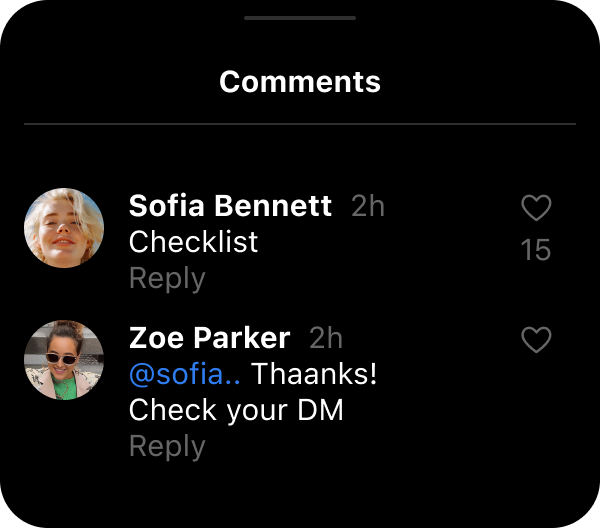
Image source: ManyChat Instagram product page
That sounds simple, but it is exactly why people buy it. Most social teams do not need another giant dashboard first; they need fewer missed DMs, fewer repetitive replies, and a faster path from comment to lead.
The second big win is that ManyChat does not force you to replace your whole stack on day one. The integrations page shows it can feed data into tools like Google Sheets, HubSpot, Klaviyo, and more, so your chat automation can slot into the rest of your marketing instead of forcing a total rebuild.

Image source: ManyChat Instagram product page
The third win is team usability. On the newer Business plan, ManyChat adds enough seats, channels, and Inbox controls to stop feeling like a creator toy and start feeling like something a brand or small agency can run without everything living in one person’s brain.
There is a catch, though. ManyChat is still living inside platform rules, so it cannot magically bypass Meta restrictions, and the help docs are very clear that promotional messaging outside allowed windows can still get you into trouble if you use the tool badly.
How the pricing feels once you look past the headline number
ManyChat enterprise pricing is not one neat public line item. It is really two different pricing stories right now: the legacy public Free, Pro, and Elite setup, and the newer Essential, Pro, Business, and Advanced model that ManyChat says is only available to certain eligible accounts depending on region and account timing.
Check the official pricingThe headline price is not the whole story. ManyChat’s own docs make it clear that WhatsApp pricing is separate and market-based, the AI add-on is not included in the free trial, and extra email usage can kick in through the wallet after the free monthly allowance.
ManyChat also has a separate Inbox product that starts at $99 with 3 seats on the older setup, while the newer Business tier already includes 3 Inbox seats. That is exactly why some buyers think ManyChat is cheap and others think it gets expensive fast.
Compared with GoHighLevel, ManyChat is the cheaper and cleaner buy when your main problem is social messaging automation, not replacing your CRM, funnels, calendars, and the rest of your stack. Compared with Systeme.io, ManyChat is usually the better choice for Instagram, Messenger, WhatsApp, and comment-triggered workflows, while Systeme.io is the better cheap all-in-one if your business is more email, pages, courses, and checkout than DM-heavy selling.
Compared with Buffer, this is not even the same category once you get serious. Buffer is cheaper for scheduling and publishing, but it is not the tool you buy when you want comments and DMs to turn into leads without a human babysitting every step.
Why buying now can make sense for the right team
ManyChat is easiest to justify when your inbox is already proving demand. If people are asking for links, asking product questions, or commenting on content you are trying to monetize, waiting usually means you keep doing repetitive work by hand and keep missing warm moments that should have been automated weeks ago.
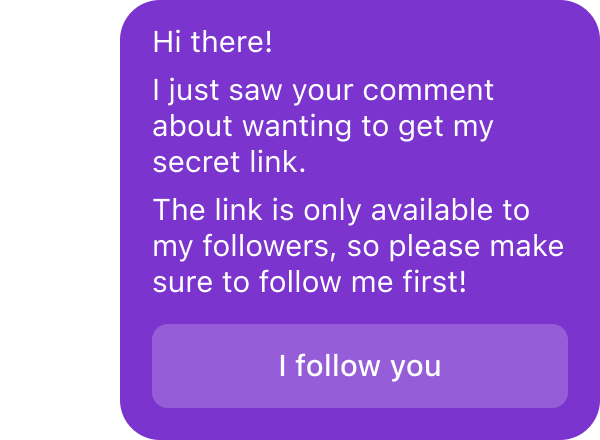
Image source: ManyChat Instagram product page
That does not mean everyone should jump into the higher plans. If you do not have a clear offer, do not get steady inbound engagement, and mostly just want an all-in-one business system for pages and email, ManyChat enterprise pricing is probably a conversation for later, not today.
The right buyer is already feeling the pain manually. For that person, ManyChat is not really a software expense first; it is a speed, response-time, and follow-up upgrade that can make a messy social selling process feel organized fast.
My honest take is simple. Start sooner if DMs already matter to revenue, stay smaller if you are still testing, and only chase Elite or the team-heavy plans when the message volume and internal complexity are real enough to deserve them.
Alternatives worth checking before you buy
ManyChat is strong, but it is not the automatic winner for everyone. The best choice depends on whether your main bottleneck is social conversations, a full business stack, or simple content scheduling.
Image source: ManyChat Instagram product page
ManyChat wins when comments and DMs are already turning into leads or sales. If that is not your core problem, a broader or cheaper tool can make more sense.
Check ManyChat pricingChoose ManyChat if social conversations are already part of how you sell. Choose Systeme.io or Buffer if you mainly want a cheaper setup, and choose GoHighLevel if you want a bigger all-in-one system instead of a conversation-first tool.
My honest final take
ManyChat is worth it for the right buyer. If Instagram, Messenger, or WhatsApp conversations already drive attention to your offer, this can save you time fast and help you stop dropping warm leads in the cracks.
ManyChat enterprise pricing is the annoying part. The public pricing still points to Free, Pro, and Elite, while newer help docs also describe account-specific tiers like Essential, Business, and Advanced, so larger buyers should expect a quote or at least a more sales-led conversation instead of one neat public enterprise plan.
That does not make it a bad buy. It just means the tool is easier to recommend when you already know what kind of message volume, team access, and channel mix you need.

Image source: ManyChat Instagram product page
Buy now if your team is already answering the same DMs, comments, or pre-sale questions over and over. Wait if you are still figuring out your offer, still trying to get your first real engagement, or mostly need funnels and email before chat automation.
Skip it if your business barely gets social messages and you are chasing the software before the demand exists. ManyChat earns its price when conversation volume is real, not when you are hoping the subscription itself will create demand.
If you are already using a broader platform, ManyChat still makes sense when social automation is a revenue channel on its own. If it is just a side task, adding another tool can be overkill.
FAQ
Image source: ManyChat Instagram product page
Is ManyChat enterprise pricing public?
Not in a simple way. The public page still shows Free, Pro, and Elite, while ManyChat help docs also describe newer team-focused tiers for some accounts, so bigger buyers should expect pricing to depend on setup, eligibility, and support needs.
Can ManyChat replace GoHighLevel or Systeme.io?
Not fully. ManyChat is much better at replacing manual DM work than it is at replacing your whole CRM, funnel, checkout, and email stack.
Should beginners pay for ManyChat right away?
Only if inbound messages already matter to your business. If nobody is commenting, messaging, or asking for links yet, you probably need offer clarity and traffic before you need higher ManyChat pricing.
Is Elite the only enterprise-style path?
No. Elite is still the obvious custom-quote option on the public pricing page, but newer help docs also describe higher plans like Business and Advanced for eligible accounts, which makes the pricing picture feel split instead of perfectly clean.
Will ManyChat feel expensive later?
It can. Contact-based pricing, channel add-ons, and team needs can make the cheap starting number less meaningful once you grow, so the best way to judge it is by how much manual conversation work it replaces for you now.

Image source: ManyChat Instagram product page
ManyChat makes the most sense when you are serious about converting social attention into actual leads and sales. If that is already happening in your business, waiting usually just means more manual replies, more missed follow-ups, and more revenue left sitting in your inbox.
Explore ManyChat Filip Konecny Enterprises