
HighLevel vs Zoho CRM is one of those comparisons that looks simple until you actually try to buy. One is much closer to an all-in-one growth platform with funnels, booking, messaging, and agency-friendly white-label options, while the other is a more traditional CRM that starts cheaper and feels more focused on day-to-day sales work.
That difference matters because a lot of people end up shopping for the wrong thing. If you mostly need a clean CRM to manage leads, deals, workflows, and reporting, Zoho CRM can save you money fast, but if you are trying to run lead generation, automate follow-up, book appointments, and keep more of your stack in one place, HighLevel starts to look much more convincing.
This review is here to help you make the call without wasting another week comparing feature lists that do not answer the real question. By the end, you should know whether HighLevel is worth the higher price, whether Zoho CRM is the smarter buy for your setup, and whether you should move now or hold off.
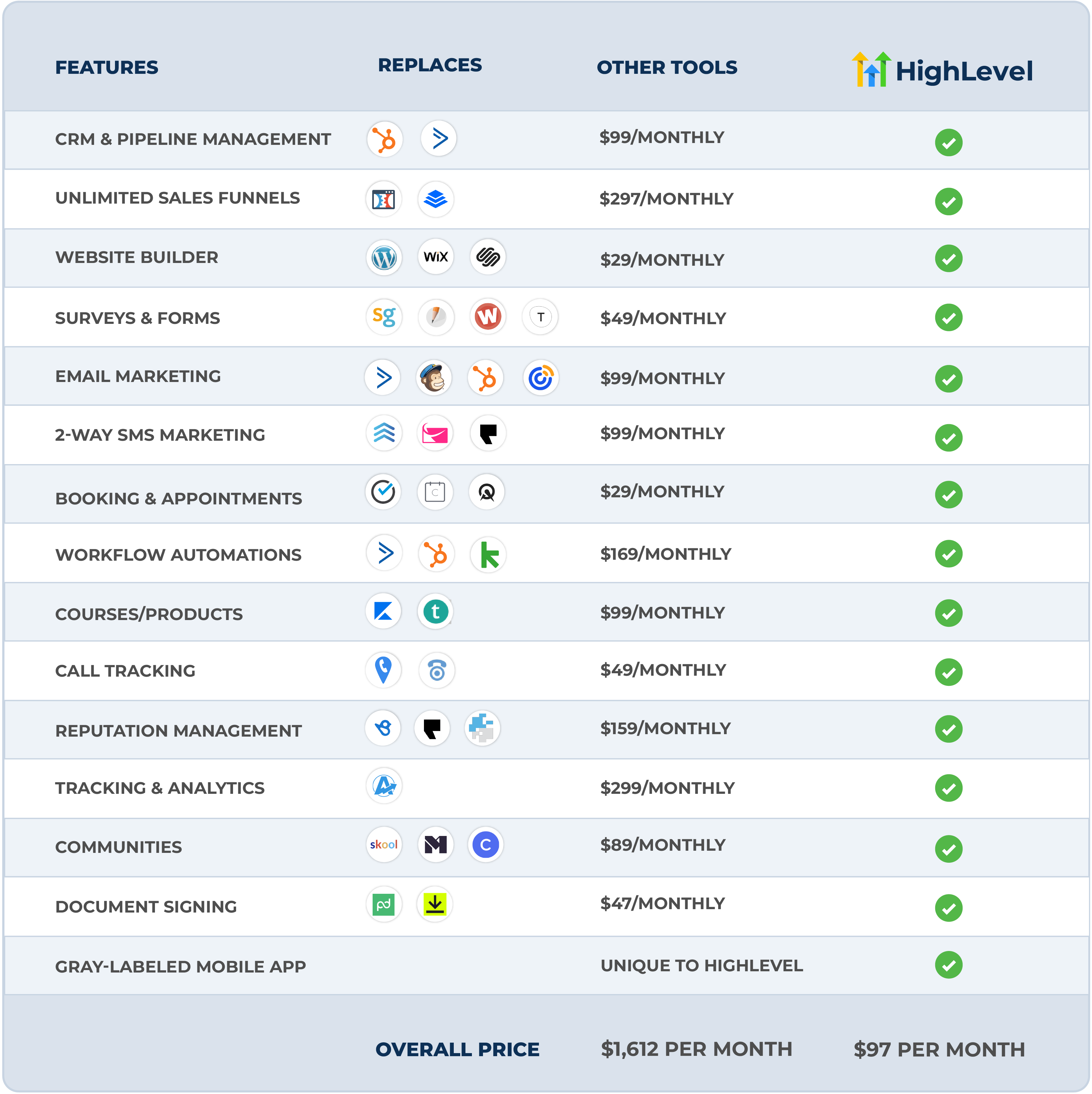
Image source: HighLevel
HighLevel vs Zoho CRM in one minute
HighLevel is the stronger pick when your business runs on lead capture, follow-up, calendars, funnels, and client accounts. It costs more up front, but it can replace enough separate tools that the higher monthly price stops looking so scary once you are actually using the platform properly.
Zoho CRM makes more sense when you want a serious CRM without paying for a bigger marketing stack on day one. It gives you a real free plan, a lower paid entry point, strong workflow automation, broad integrations, and the kind of CRM depth that feels more natural for sales teams than for agencies trying to resell software.
So the short version is this: HighLevel usually wins on consolidation, while Zoho CRM usually wins on cost control. The right answer depends less on which logo you like and more on whether you want a lower-cost CRM or a heavier all-in-one system that can take more manual work off your plate.
Check the official free trialArticle outline
This comparison is split into three simple parts so you can jump straight to the section that matters most. The goal is not to drown you in feature clutter, but to help you decide whether HighLevel is worth paying for over Zoho CRM.
- What you get right away and the good stuff — the trial experience, the core tools, and where HighLevel starts to feel bigger than a normal CRM.
- Pricing and value and why paying more can still make sense — the real cost question, what each platform replaces, and where buyer hesitation usually shows up.
- Alternatives worth looking at, the final verdict, and FAQ — who should choose HighLevel, who should go with a cheaper or simpler option, and whether now is the right time to switch.
Most people comparing these two are not really choosing between equal products. They are choosing between a cheaper CRM that stays in its lane and a more aggressive all-in-one platform that tries to take over far more of the customer journey.
That is why HighLevel can look expensive for five minutes and then look reasonable once you count the other tools it may replace. It is also why Zoho CRM can look like the smarter deal if your funnel builder, website stack, booking flow, and messaging setup are already working fine without another big migration.
The next section gets into the part most buyers care about first: what you actually get when you open the account and start testing it. That is where this comparison stops being theoretical and starts getting useful.
What you get in the trial
HighLevel gives you a 14-day free trial on any plan, and that is enough time to see whether this is a real upgrade or just a more expensive CRM. You are not testing a stripped-down shell either, because the platform lets you get into funnels, calendars, pipelines, automations, and messaging quickly.
Zoho CRM is easier to test with less risk because it gives you a 15-day trial and a free plan for up to 3 users. If you only need a traditional CRM, that lower-cost entry is a real advantage in the HighLevel vs Zoho CRM decision.
HighLevel starts at $97 per month on Starter, includes 3 sub-accounts, and does not cap contacts or users on the base plan. That setup makes a lot more sense for agencies, multi-location businesses, and service companies than Zoho’s cheaper per-user model, but only if you plan to use more than the CRM.
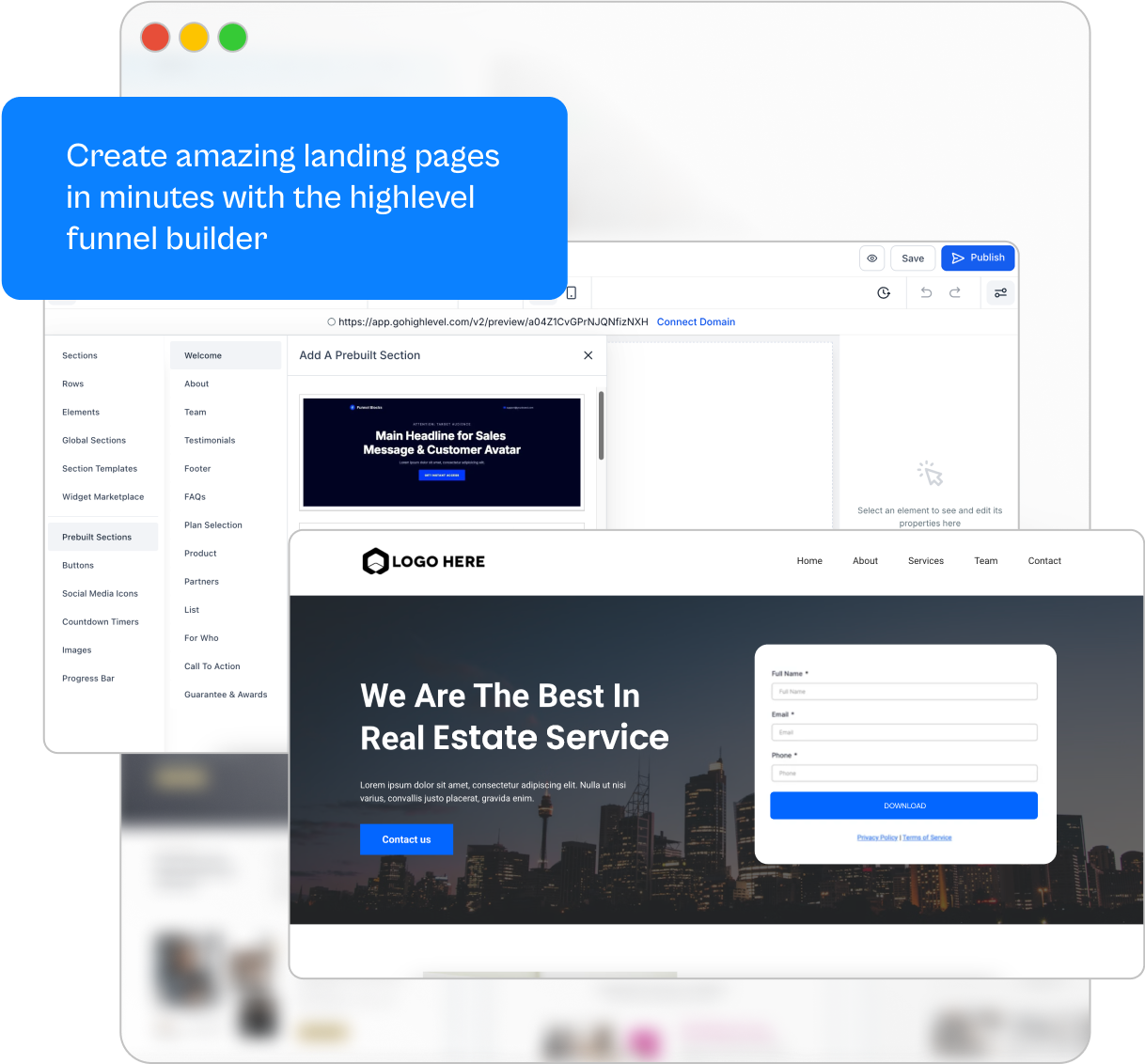
Image source: HighLevel
The smartest way to use the trial is to build one real workflow instead of clicking around for ten minutes and guessing. If HighLevel can capture a lead, move that lead into a pipeline, send the follow-up, and book the appointment without extra tools, you will know fast whether the higher price is justified.
- Build one landing page or funnel for a real offer.
- Set up one pipeline and one calendar.
- Create one automation for lead follow-up.
- Check whether that replaces enough of your current stack to beat Zoho on value.
The good stuff
HighLevel earns attention because it goes well beyond normal CRM territory. You are not just buying lead records and deal stages here, because the platform also gives you pages, funnels, forms, surveys, calendars, payments, conversations, automation, reputation tools, courses, and white-label options.
That matters in a HighLevel vs Zoho CRM review because Zoho is still the cleaner choice for classic sales management, while HighLevel is built for businesses that want lead capture and follow-up tied together. If your pain point is that your CRM sits in one place and the rest of your marketing stack sits somewhere else, HighLevel attacks that problem more directly.
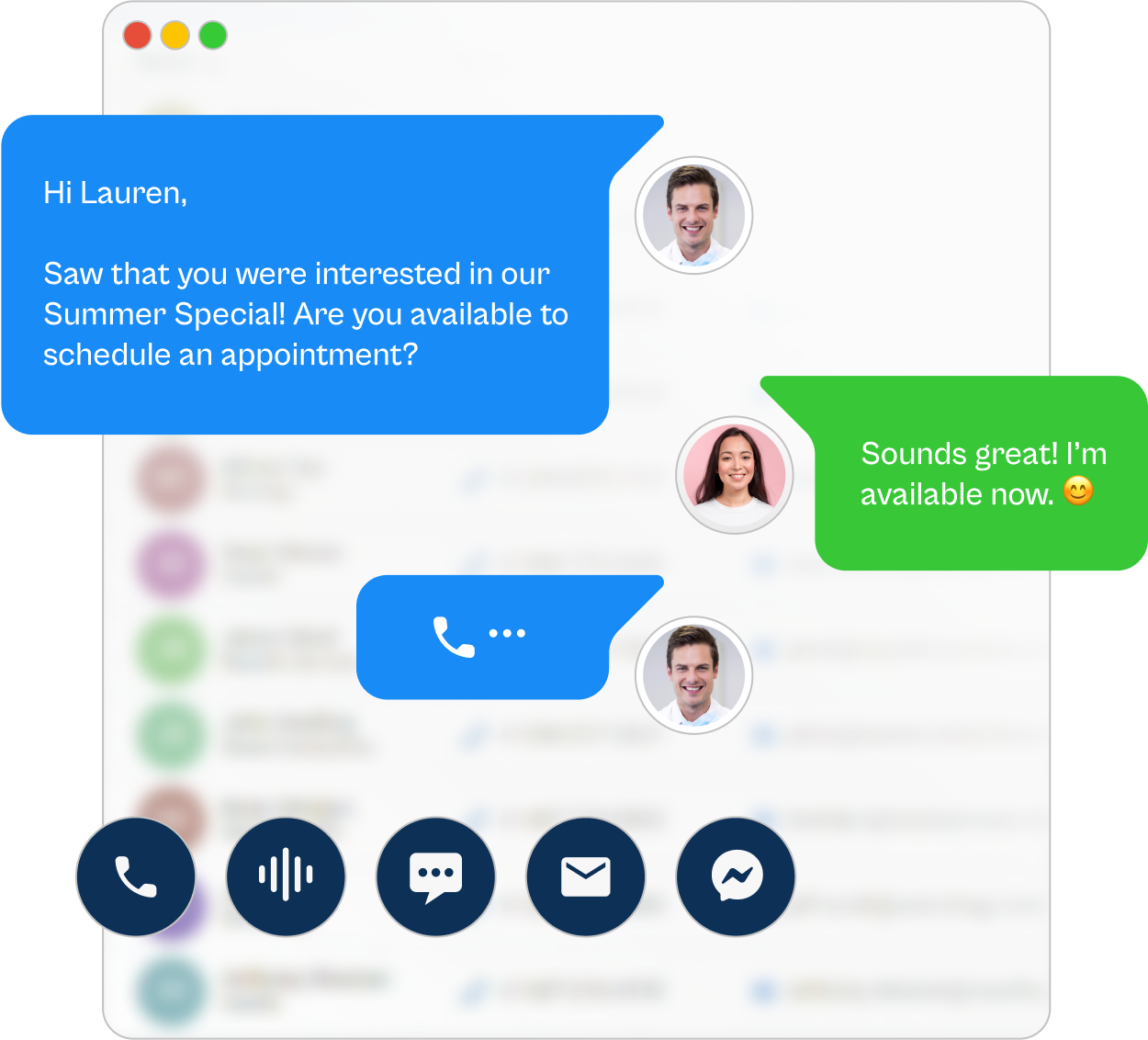
Image source: HighLevel AI
The follow-up side is where HighLevel starts to feel different from cheaper CRM options. The platform connects conversations across SMS, email, phone, and other channels, and its AI tools keep pushing further into chat, reviews, funnels, and workflows instead of leaving those jobs to outside apps.
Zoho CRM is not weak on automation, and that is important to say clearly. Zoho gives you workflows, cadences, AI features through Zia, and more serious CRM customization than a lot of cheaper tools, but it still feels more like a CRM first and an all-in-one growth stack second.
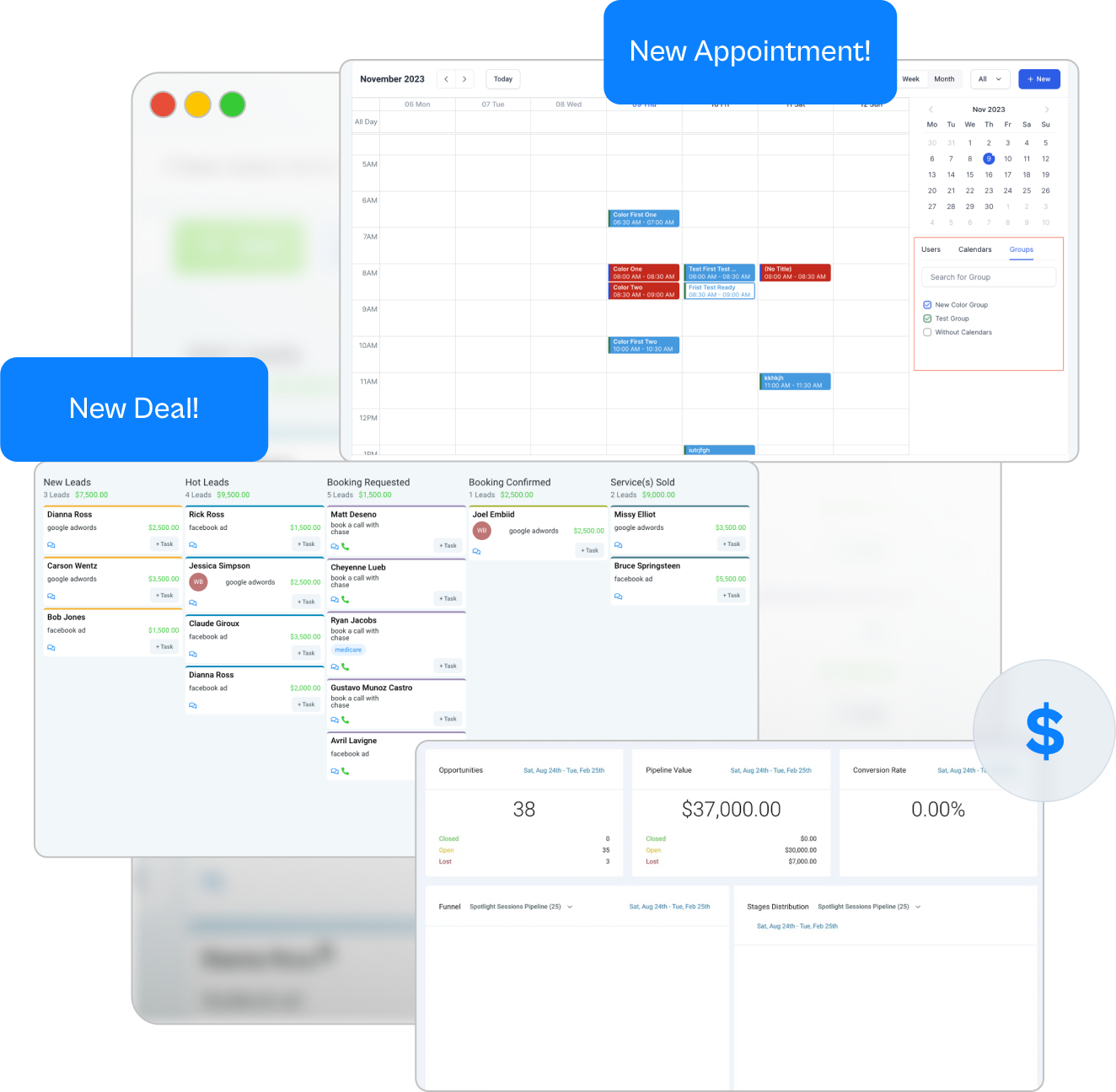
Image source: HighLevel
Booking and pipeline management also help HighLevel punch above its price. When the same system handles the page, the form, the appointment, the pipeline stage, and the follow-up, you spend less time babysitting handoffs between tools and more time fixing the actual sales process.
That does not mean HighLevel is easier on day one. Zoho CRM will usually feel more familiar if your team already thinks in terms of records, modules, forecasting, dashboards, and structured sales operations.
Pricing and value
Price is where most people freeze, and I get it. Zoho CRM looks safer because it has a free plan for 3 users and paid pricing that starts far below HighLevel, while HighLevel starts at $97 a month and climbs fast if you need unlimited sub-accounts or SaaS mode.
The catch is that sticker price is only half the story. HighLevel makes more sense when you are comparing it against a messy stack of CRM, funnel builder, calendar tool, messaging tool, automation software, and maybe reputation or course software, while Zoho wins when you mainly want a CRM and do not mind using other apps for the rest.
Check the official free trialWhy HighLevel can still be worth the higher price
HighLevel is worth real attention when your current setup feels patched together and slow. If you are already paying for multiple tools or losing leads because follow-up, booking, and pipeline management live in different places, this platform can save time fast and make the higher monthly price easier to defend.
That is also why delaying the move can cost more than people think. Waiting usually means you keep paying the hidden tax of disconnected tools, slower response times, and more manual work than you need.
Image source: HighLevel
I would not push HighLevel on someone who just wants a cheaper CRM for a small team. Zoho CRM is the more sensible buy in that situation, and Systeme.io is the better answer if the budget is tight and you mostly care about simple funnels and email.
I would push HighLevel harder on agencies, local service businesses, coaches, consultants, and appointment-driven businesses that want one system to capture, nurture, book, and close. For that buyer, this is absolutely worth trying because the platform is built for speed, consolidation, and client-facing growth work rather than just record management.
If you already have an offer, a sales process, or a booking flow ready, the 14-day trial is not hard to justify. You can tell pretty quickly whether HighLevel feels like overkill or the upgrade that finally gets your stack under control.
Explore HighLevelAlternatives worth looking at
HighLevel is not the automatic winner just because it does more. In a real HighLevel vs Zoho CRM decision, the better pick depends on whether you need a stronger all-in-one setup or a cheaper CRM that stays focused on sales management.
That is why alternatives matter. They make the choice cleaner, and they stop you from paying for extra weight you will never use.
Image source: HighLevel
Check the official free trialChoose HighLevel if you want the broader all-in-one route and you are tired of stitching together separate tools. Choose Zoho CRM if you mainly need a cheaper CRM, choose ClickFunnels if funnels are the whole game, and choose Systeme.io if price matters more than depth.
Image source: HighLevel
Final verdict
HighLevel wins this comparison for the right buyer. If your business depends on capturing leads, following up fast, booking appointments, moving deals through a pipeline, and keeping more of that process inside one system, it is the more powerful choice than Zoho CRM.
Zoho CRM is still the smarter buy for plenty of people. If you mainly want a lower-cost CRM with solid automation, a free plan, and a more traditional sales setup, paying extra for HighLevel can feel unnecessary.
The real question is not whether HighLevel has more features. The real question is whether those extra features replace enough manual work and enough separate tools to justify the jump from a cheap CRM to a much bigger system.
Image source: HighLevel
For agencies, consultants, coaches, local service businesses, and appointment-based companies, the answer is often yes. HighLevel starts to earn its price once the same system handles the page, the form, the messages, the calendar, the pipeline, and the follow-up without making you patch five tools together.
For a small team that only needs a CRM, the answer is usually no. Zoho CRM is cheaper, easier to justify, and less likely to feel like overkill.
Setup is the biggest catch with HighLevel. You need to be ready to build at least one real workflow, because this tool only looks expensive on paper until you actually use the parts that replace the rest of your stack.
Waiting too long usually means the messy setup stays messy. If you already have an offer, a sales process, or a booking flow that needs better follow-up, the faster move is usually to view plans and features and decide whether the trial can clean that up now.
Image source: HighLevel
My honest take is simple. HighLevel vs Zoho CRM is not really a close fight when you want a serious all-in-one lead-gen machine, but it is absolutely the wrong upgrade if all you need is a dependable CRM and a lower bill.
FAQ
Is HighLevel better than Zoho CRM for a small business?
Only if that small business needs more than CRM. If you need funnels, booking, follow-up automation, and messaging in the same system, HighLevel is stronger, but if you mainly want contact management and pipeline tracking, Zoho CRM is usually the cheaper and more practical choice.
Is HighLevel overkill if I only need a CRM?
Yes, for most buyers it is. HighLevel makes sense when you want the wider stack, not when you only want lead records, deal stages, and basic automation.
Can HighLevel replace other tools?
That is the main reason people buy it. The bigger win is not just having a CRM, but cutting down how many separate tools you need for pages, forms, calendars, follow-up, messaging, and client management.
Should you start the trial now?
Start now if you already have a real offer or a real sales process to test. Wait if you are still figuring out what you sell, because HighLevel is much easier to justify when you can plug it into something real on day one.
If you are serious about replacing tool chaos with one system, this is worth a real look. If you are already close to switching, the next smart step is to stop comparing screenshots and see the official free trial for yourself.
Get started with HighLevel Filip Konecny Enterprises