
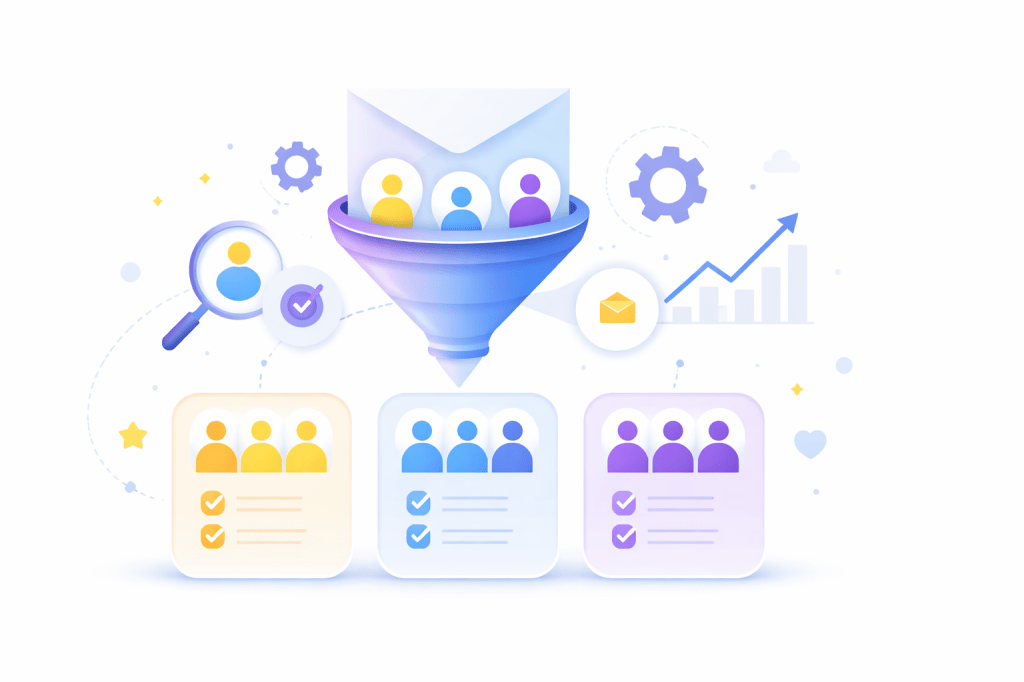
Email segmentation best practices are not about building a hundred tiny lists just because your software can. They are about sending the right message to the right people at the right moment, so your email program feels useful instead of noisy. That standard is getting harder to ignore when 64% of consumers say they prefer to buy from companies that tailor experiences to their wants and needs, 71% say they abandon irrelevant experiences, and consumers spend an average 54% more on brands that personalize experiences well.
There is a technical side to this too, and it is just as important as creative strategy. Google’s sender requirements, Google’s one-click unsubscribe guidance, and Validity’s 2025 deliverability benchmark showing one in six legitimate marketing emails fails to reach the inbox all push in the same direction: generic batch-and-blast sending is a liability now, not a shortcut. The brands that keep winning are the ones that use segmentation to improve relevance, protect deliverability, and respect customer preferences without crossing the line into creepy personalization.
Article Outline
- Why Email Segmentation Matters
- Email Segmentation Framework Overview
- Core Components of Email Segmentation
- Professional Email Segmentation Implementation
- Email Segmentation Analytics and Optimization
- Email Segmentation Ecosystem and FAQ
Why Email Segmentation Matters
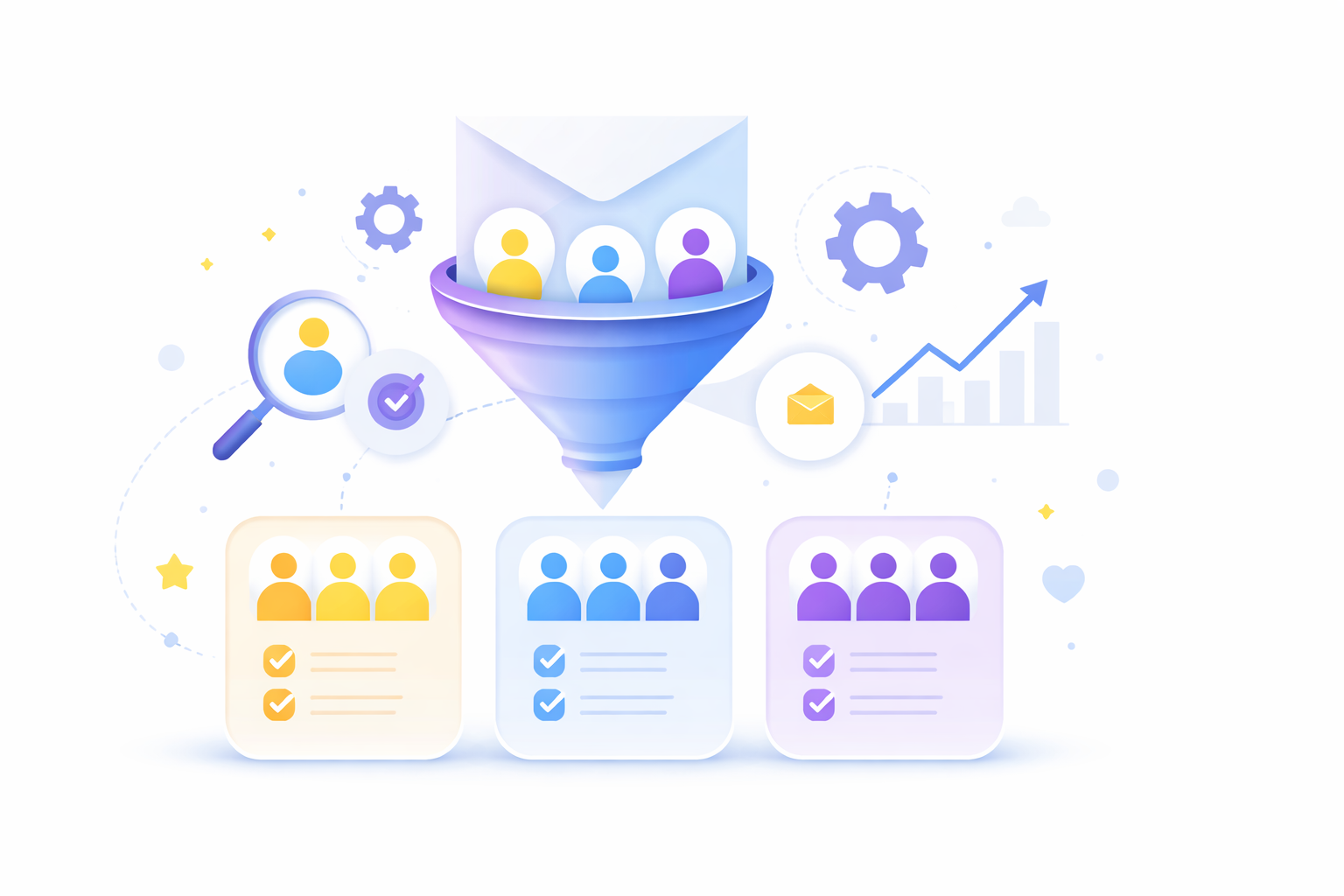
This is the part too many teams skip. They treat segmentation like a nice extra they will add later, after they build the list, set up a template, and start sending campaigns. In reality, segmentation is what decides whether your email program feels like a helpful conversation or an interruption people tolerate for a few weeks before they tune out.
The market is telling us that relevance is not optional anymore. Qualtrics found that 64% of consumers prefer companies that tailor experiences to their wants and needs, while Twilio reported that 88% are more likely to buy when engagement is personalized in real time. At the same time, Salesforce found that 83% of marketers recognize the shift toward personalized, two-way messaging, which tells you this is not a fringe tactic anymore. It is the standard serious teams are trying to reach.
Segmentation also protects the part of email most marketers only notice when it breaks: deliverability. Google requires bulk senders to authenticate with SPF, DKIM, and DMARC and to keep spam rates below 0.3%, while its one-click unsubscribe rule points senders to RFC 8058 list-unsubscribe headers. That matters because Validity’s 2025 benchmark put global inbox placement at 83.5%, with spam placement at 6.7% and missing mail at 9.8%. When your targeting is sloppy, you are not just risking weak engagement. You are training mailbox providers to trust you less.
Benchmarks make the case even clearer. DMA’s 2025 report showed 98% delivery, 35.9% open rates, and 2.3% unique click rates, while Mailchimp’s current benchmark page shows all-user averages of 35.63% opens, 2.62% clicks, and 0.22% unsubscribes. Those numbers are useful, but the bigger lesson is not to chase a single universal average. The real job is to build segments that let you beat your own control group because the message is more relevant, the timing is tighter, and the offer matches what that subscriber actually cares about.
Email Segmentation Framework Overview

A strong segmentation framework is not a random collection of filters. It is a clear system for deciding which data deserves to shape a send, which messages belong to which stage of the customer journey, and which subscribers should be excluded even when the campaign looks tempting. That kind of discipline is what separates a professional program from a list that gets hammered with one promotion after another.
The easiest way to think about the framework is in four layers. First comes permission, because none of this works without consent, list hygiene, and a trustworthy unsubscribe experience. Next comes profile, which covers the stable details that help you understand who the subscriber is. Then comes behavior, which usually matters more than static fields because clicks, visits, purchases, and inactivity reveal intent. Finally, there is journey stage, where you decide whether someone is new, evaluating, buying, onboarding, loyal, drifting away, or ready for a win-back sequence.
This kind of structure matters because most teams do not struggle from lack of data. They struggle from lack of clarity. Salesforce says only one in four marketers are satisfied with how they use data to power personalized moments, and Twilio’s personalization research found that 72% of companies are using customer data platforms while 54% are implementing stronger privacy controls in AI data environments. In plain English, the tools are getting more advanced, but the winning move is still simple: build a framework that tells your team what to send, when to send it, and when to leave people alone.
Once that framework is in place, email segmentation stops feeling messy. You are no longer asking whether to segment every campaign from scratch. You are working from a system that already knows how to prioritize relevance, control frequency, and keep the inbox relationship healthy over time.
Core Components of Email Segmentation
The first core component is clean, permission-based data. That means verified opt-ins, sensible source tracking, and fields you can actually maintain without constant manual cleanup. Efficy’s 2025 benchmark report makes the point well by tying email’s ROI strength to targeting based on demographics, behaviors, interests, and past interactions. Segmentation gets powerful when your data model is simple enough to stay accurate and rich enough to support a smarter send.
The second component is behavioral intent. A subscriber who clicked three product emails in ten days should not get the same message as someone who has not opened in four months. That sounds obvious, yet many brands still flatten both people into the same promotion calendar. Higher Logic’s 2025–2026 benchmark found that smaller, targeted lists consistently outperformed broad distributions, which is exactly what you would expect when behavior drives targeting instead of database size driving ego.
The third component is lifecycle stage. Segmentation works best when it reflects where the subscriber is in the relationship, not just who they are on paper. Customer.io’s 2025 lifecycle research surveyed more than 600 brands across acquisition, onboarding, retention, expansion, and win-back, and that is the right way to think about email strategy. A welcome-series subscriber, a first-time buyer, and a high-value repeat customer should not be hearing the same brand story in the same tone with the same call to action.
The fourth component is restraint. Not every signal should be used just because you can collect it. Qualtrics found global comfort with location-based personalization at 18% and social-media-based personalization at 17%, which is a useful reminder that relevance and trust are not identical. The best segmentation programs lean hardest on first-party behavior, transparent preferences, and purchase context because those signals tend to feel helpful rather than invasive.
How to Implement Segmentation Professionally
The professional way to implement segmentation is to start smaller than your ambition. Do not begin with thirty overlapping audiences and a spreadsheet nobody can explain two months later. Start with a short set of high-value segments that map directly to revenue and retention, such as new subscribers, active browsers, first-time buyers, repeat buyers, at-risk customers, and disengaged subscribers. That gives your team enough structure to create relevance without drowning in complexity.
From there, define the business rules behind each segment. Decide what qualifies someone for entry, what event moves them out, what message they should receive next, and what suppression rules protect them from over-sending. Higher Logic found automated campaigns and personalized content generated stronger engagement than one-time, untargeted sends, and that is exactly why professional implementation depends on documented logic rather than last-minute campaign guesses.
You also need a governance layer, especially now that expectations around trust are getting sharper. Twilio reports that 84% of consumers want control over their personalization settings, while 49% say they would trust a brand more if it disclosed how customer data is used in AI-powered interactions. So the professional standard is not just better targeting. It is better targeting with preference controls, transparent data use, clear unsubscribe paths, and a plan for when a subscriber stops engaging.
That last point matters more than most teams admit. Mailgun’s deliverability report found that 48% of senders cite staying out of spam as a top challenge, which is why good segmentation always includes exclusions, frequency limits, and sunset logic for tired audiences. When you implement segmentation professionally, you do not just improve campaign performance. You build an email program that can scale without burning trust, damaging deliverability, or training your audience to ignore you.
This is where email segmentation best practices stop sounding smart in a strategy deck and start changing what people actually receive in their inbox. A framework is helpful, but it does not do much until you decide which audiences deserve different messages, different timing, and different suppression rules. The good news is that you do not need fifty segments to make email work better. You need a small group of segments built on behavior, lifecycle stage, and consent signals that are strong enough to change the send.
Build Engagement Segments Around Recency First
A lot of teams start with profile data because it is sitting there in the CRM, but recency is usually the better opening move. Mailchimp points out that engagement patterns vary by audience, intent, and lifecycle stage, and that timing should adapt to opens, clicks, and inactivity, which is exactly why active subscribers, cooling subscribers, and dormant subscribers should not be lumped together. This matters even more now that Google calculates spam rate daily and tells bulk senders to stay below 0.1% and avoid ever reaching 0.3%. When you keep sending the same promotion to people who have clearly gone cold, you are not being persistent. You are training mailbox providers and subscribers to trust you less.
Use Purchase And Browsing Data Before You Reach For Creepy Signals
This is one of the cleanest ways to make email segmentation best practices feel helpful instead of invasive. Qualtrics found that consumers are most comfortable with brands using purchase history for personalization at 45% and website visits at 42%, while comfort drops to 18% for location data and 17% for social media posts. That gives you a very practical line to follow. Segment heavily around what someone bought, what they browsed, what they abandoned, and what category they keep returning to, because those signals are both useful to the business and easier for the customer to accept. That caution is worth taking seriously when 61% of consumers say they do not believe brands use their data in their best interest.
Let Subscribers Tell You What They Want
There is a reason preference centers keep showing up in serious email programs. Litmus recommends using preference centers and zero-party data from surveys and polls to make personalization easier, and the same report shows 24% of marketers say inadequate data is their biggest challenge in personalizing emails. That is why a simple set of choices like product interest, content format, role, use case, and preferred frequency can do more for segmentation than another giant enrichment project. It also lines up with what customers want, because 84% say they want control over their personalization settings. When subscribers tell you what matters to them, your segments get cleaner, your copy gets sharper, and your sends feel less like guesses.

Treat Suppression And Frequency Rules Like Core Segments
This is the part many brands do not want to talk about because it feels less exciting than building a new campaign. But real email segmentation best practices are not just about deciding who should get the message. They are also about deciding who absolutely should not get it yet. Google requires one-click unsubscribe for promotional mail from bulk senders and ties delivery health to authentication and spam-rate discipline, while Mailgun reports that 49.5% of senders who knew about the Yahoo and Google changes updated their programs around authentication, one-click unsubscribe, and keeping complaints below the 0.3% threshold. That caution makes sense when Validity’s 2025 benchmark shows global inbox placement at 83.5%, with 6.7% landing in spam and 9.8% going missing. If someone just bought, just complained, has not engaged in months, or has already received three promos this week, that person belongs in a protected segment, not in your next blast.
Create A Shared Lifecycle Taxonomy Before The List Turns Into Chaos
A segmentation strategy starts breaking the moment different teams describe the same audience in different ways. Salesforce says 69% of marketers struggle to respond promptly because they cannot access the context they need, and only 58% have complete access to service data, 56% to sales data, and 51% to commerce data. That is why your segments need a shared language that does not depend on which platform someone happens to be using. A smart structure usually follows the lifecycle that Customer.io outlines across acquisition, onboarding, retention, expansion, and win-back. Once those stages are clearly named and owned, your email platform stops being a pile of disconnected filters and starts becoming a system the whole business can actually use.
Define Entry, Exit, And Decay Rules Up Front
A segment is only useful when you know how someone gets in, what keeps them there, and what moves them out. Litmus found that 35% of marketers want to create more automated or triggered email, while 21% say improving data management is a top priority, which tells you the real bottleneck is not creativity. It is structure. That is why the best implementation work happens before the first send: define the qualifying action, define the expiration window, define the pause conditions, and define the handoff to the next lifecycle stage. The payoff is real because Higher Logic found that smaller, targeted lists consistently outperformed broad distributions and that automated campaigns with personalized content generated stronger engagement than one-time untargeted sends.
Match The Type Of Email To The Depth Of The Segment
Not every send deserves the same level of targeting, and that is where a lot of good teams either overcomplicate things or get lazy. A regular newsletter can still go to a broad permission-based audience, but high-intent moments like product-category browsing, renewal windows, repeat purchase patterns, or onboarding milestones deserve tighter segmentation and a much clearer next step. Google makes a clear distinction between promotional mail and transactional mail for unsubscribe requirements, and that same distinction is useful strategically because the closer an email is to a real task or customer event, the more precise the segment should become. This is where email segmentation best practices start to look professional. The segment is no longer just a list filter sitting quietly in the background. It becomes the rule that decides message type, cadence, creative angle, and when that subscriber should stop receiving that sequence.
This is where email segmentation best practices either become a real competitive advantage or collapse under the weight of messy data and rushed execution. Strategy sounds great in theory, but the inbox is not forgiving when the system behind the strategy is sloppy. That is a big reason implementation matters so much when Validity’s 2025 benchmark found global inbox placement at 83.5%, with 6.7% landing in spam and 9.8% going missing. If your segmentation rules are built on weak data, the damage shows up fast in engagement, complaints, and revenue.

Create One Clean Customer Record Before You Layer On Logic
A lot of segmentation problems are really data problems wearing a marketing costume. Salesforce reports that 84% of marketers use first-party data, but only 31% are fully satisfied with their data unification ability, which tells you exactly where many programs break down. The team has the data, but it lives in too many places, updates at different speeds, and is interpreted differently by different tools. If you want email segmentation best practices to work in the real world, start by deciding what your core record includes, how often it refreshes, and which system is trusted when fields conflict.
This gets even more important when marketers now use an average of 10 customer engagement channels, while high-performing teams fully personalize experiences across an average of 6 channels. Once email has to coordinate with the site, paid media, SMS, support, and in-product messaging, bad data stops being a nuisance and starts becoming expensive. A subscriber who already bought should not keep getting acquisition copy, and a customer support issue should not sit completely disconnected from your next campaign. Clean segmentation starts with one usable customer view, not with clever copy.
Instrument Events Before You Build Journeys
The next mistake teams make is building campaigns before defining the events that should trigger them. Customer.io frames lifecycle marketing around acquisition, onboarding, retention, expansion, and win-back, and that is useful because it forces you to think in moments rather than vague audiences. A person does not magically become “high intent” because someone on the team says so. They become high intent when they complete a sequence of meaningful actions like subscribing, viewing a product category repeatedly, starting checkout, making a first purchase, or going quiet for a specific number of days.
This sounds simple, but it is where implementation gets technical. Litmus found that only 44% of marketers use lifecycle emails, and the report makes it clear that the work is more complex than sending one-off promotions. That is why you need a documented event taxonomy before you build flows. Define the event, define the properties attached to it, define the time window that matters, and define what action the email system should take when the event fires. When that groundwork is done well, your segments stop being static lists and start acting like living signals.
Turn Segments Into Triggered Workflows Instead Of Static Lists
Once the events are clear, the smartest move is to connect them to automation instead of constantly exporting lists and improvising campaigns. Litmus shows that 35% of marketers want to create more automated or triggered email and 29% want to expand how they use personalization. That is not surprising. Triggered workflows let you respond to what the subscriber just did, which is exactly when email tends to feel most relevant.
The pressure to get this right is getting stronger. Twilio found that 88% of consumers are more likely to buy when engagement is personalized in real time, yet only 44% of brands say they are executing at that level. That gap is where better implementation wins. Instead of relying on a weekly calendar alone, connect your segments to journeys that react to entry rules, delays, exclusions, branch logic, and goal completion. That is how email segmentation best practices start producing sends that feel timely instead of generic.
Separate Promotional Logic From Service And Transactional Messaging
Not every email should be governed by the same rules, and this is a place where disciplined implementation protects both customer experience and deliverability. Google says one-click unsubscribe is required for marketing and promotional messages, while transactional messages such as password resets, reservation confirmations, and form submission confirmations are excluded. That distinction matters because these message types serve completely different jobs. A password reset or order confirmation should not be managed like a weekend discount blast, and a promotional sequence should not inherit the urgency or trust assumptions of an operational email.
The technical rules are just as clear. Google requires senders of more than 5,000 messages per day to Gmail accounts to use SPF, DKIM, and DMARC, align the visible From domain with SPF or DKIM for DMARC alignment, and support one-click unsubscribe for subscribed and marketing mail. On top of that, Google says senders should keep spam rates below 0.1% and prevent them from reaching 0.3%. So the implementation lesson is straightforward: separate your messaging logic, keep your promotional targeting disciplined, and never let revenue pressure blur the line between essential communications and optional campaigns.
Quality-Assure Dynamic Email Experiences Like A Product Release
Dynamic segmentation looks powerful in a demo, but it can fall apart fast when the data is incomplete or the rules collide. Litmus found that 24% of marketers struggle with inadequate data to personalize effectively, while 17% say technical expertise is a blocker. Those numbers make sense because dynamic email depends on more than creative. It depends on logic paths, fallback content, clean merge fields, reliable links, and a clear understanding of what should appear when the data is missing.
The practical answer is to treat segmented email like a product release, not just a campaign asset. Preview every major segment, test the fallback state, confirm exclusion rules, check timing collisions across active journeys, and make sure the message still makes sense when a personalization token is blank. This is one of those areas where disciplined teams quietly make a fortune because they prevent embarrassing mistakes before subscribers ever see them. Sophisticated segmentation is not impressive when it looks smart in the platform. It is impressive when it still works perfectly at scale.
Build Preference And Sunset Loops Into The System
The final implementation layer is restraint, and this is where a lot of brands still get careless. Twilio reports that 84% of consumers want control over their personalization settings, while Qualtrics found that only 33% of consumers trust companies to use their personal information responsibly. That is a warning sign. Even strong segmentation can backfire if people do not understand why they are receiving certain emails or feel like the brand is tracking more than it needs.
This is why the best implementation plans include preference updates, re-engagement paths, and clear sunset rules from day one. Consumers are most comfortable with brands using purchase history at 45% and website visits at 42% for personalization, which is a strong signal to prioritize useful first-party behavior over creepier inputs. And Google explicitly recommends confirming recipients want to stay subscribed and considering unsubscribing recipients who do not open or read messages. That means a mature segmentation system does not just decide who gets the next email. It also knows when to reduce frequency, ask for updated preferences, try one clean recovery sequence, and then step back before trust gets damaged.
Statistics And Data

This is the point where email segmentation best practices either become measurable or stay stuck in theory. A lot of marketers talk about relevance, personalization, and lifecycle targeting, but the only way to know whether those ideas are actually working is to look at the right numbers in the right order. And that matters more than ever because the inbox is getting stricter, privacy protections are making some familiar metrics less reliable, and generic campaigns are easier for subscribers to ignore.
Benchmark Ranges Worth Using
If you want a realistic picture of how email is performing right now, it helps to look across several serious benchmark sets instead of grabbing one random average and treating it like law. DMA’s 2025 benchmarking report put delivery at 98%, opens at 35.9%, and unique clicks at 2.3%. That lines up surprisingly well with other broad datasets, because the GDMA International Email Benchmark 2025 reported a 98.7% acceptance rate, a 32.5% unique open rate, and a 2.9% click-through rate, while Higher Logic’s 2025–2026 benchmark showed a 33.54% open rate and a 2.68% click rate across associations.
That range is useful because it tells you what normal looks like without pretending every industry behaves the same way. In practice, email segmentation best practices are not about forcing every campaign to hit one universal open-rate target. They are about using segmentation to outperform your own broad-send baseline, especially on clicks, conversions, and revenue per recipient, where relevance tends to show up more clearly.
Deliverability Data Comes Before Engagement Data
The first numbers worth watching are not glamorous, but they decide everything that comes after. Validity’s 2025 deliverability benchmark found global inbox placement at 83.5%, spam placement at 6.7%, and missing mail at 9.8%, which means a meaningful share of legitimate marketing mail still never reaches the inbox at all. So if a segment looks weak, the problem may not be the creative or the offer. The real issue may be that the mail is landing in spam, disappearing, or getting filtered differently across providers.
This is exactly why mailbox-provider rules matter inside your analytics dashboard. Google requires bulk senders to use SPF, DKIM, and DMARC, and tells senders to keep spam rates below 0.10% while avoiding 0.30% or higher. That gives you a clean measurement order for segmented email: first watch authentication, complaint rate, inbox placement, and bounces, and only after that start judging creative performance. If the plumbing is broken, the engagement numbers will lie to you.
Open Rates Need Context Now
Open rates are still useful, but they are not the clean truth some marketers want them to be. DMA explicitly notes that 35.9% opens reflect a post-Apple MPP environment and calls 2022 the new year-zero benchmark, which is a polite way of saying old comparisons can be misleading. Google is even more direct, because its sender guidelines state that Google does not track open rates and cannot verify the accuracy of open rates reported by third parties.
That is why clicks, downstream actions, and conversion outcomes matter so much in segmented email. Higher Logic says open rates still have directional value, but clicks are becoming a more reliable indicator of intent and value as inbox privacy protections evolve. In other words, if one segment opens more but another segment clicks more, converts more, and unsubscribes less, the second segment is often healthier even if the headline open rate looks less impressive.
What The Data Says About Personalization
The clearest case for segmentation is not just performance. It is relevance. Twilio’s 2025 State of Customer Engagement report found that 71% of consumers abandon purchases when experiences fall flat, while 88% are more likely to buy when engagement is personalized in real time. That is a huge gap, and it explains why broad, one-size-fits-all email calendars feel weaker now than they did a few years ago.
But there is a second number that matters just as much, because not all personalization signals are equally welcome. The same Twilio report found that 84% of consumers want control over their personalization settings and 61% do not believe brands use their data in their best interest. That caution lines up with Qualtrics research showing consumers are most comfortable with purchase-history-based personalization at 45%, while comfort drops sharply for more invasive data types. So the best data for segmentation is usually the data that feels obviously relevant to the customer: what they bought, what they browsed, what they clicked, and what they asked for.
ROI And Commercial Impact
Email still earns serious respect because it can drive measurable returns without the same media costs that weigh down other channels. Efficy’s 2025 benchmark highlighted returns of 45€ for retail, ecommerce, and consumer goods, 42€ for marketing and advertising agencies, 36€ for software and technology, and 32€ for media and publishing for every 1€ spent on email marketing. Those numbers do not prove that every email program is automatically profitable, but they do show why serious operators keep investing in segmentation, automation, and data quality.
The more practical lesson is that segmented email should be judged against business outcomes, not vanity metrics. If one audience generates more revenue per send, better repeat purchase behavior, or stronger retention with fewer complaints, that segment is doing its job even if the creative looks less flashy. This is where email segmentation best practices become incredibly powerful, because they move the conversation away from “Did this campaign get opens?” and toward “Which audience generated more value, more trust, and less waste?”
How To Read Segment Performance Correctly
The smartest way to read segmented performance is to compare like with like. Compare new subscribers against other new subscribers, repeat buyers against repeat buyers, and re-engagement audiences against prior re-engagement waves. When you do that, the numbers start telling a much clearer story about timing, message fit, and offer relevance.
That is also why you should never let one benchmark run your whole strategy. DMA, GDMA, and Higher Logic all show slightly different engagement levels because their audiences, volumes, and sending environments are different. The right way to use statistics is not to chase someone else’s exact number. It is to use good external data to set realistic expectations, then use your segment-level data to find the audiences, messages, and moments that create the strongest business result.
Email Segmentation Analytics And Optimization
This is where email segmentation best practices either turn into real profit or quietly become busywork. Building segments feels productive, but the real money shows up only when you can prove that one segment, one timing rule, or one workflow change created better results than the version you were running before. That is why optimization matters so much. It keeps you from confusing activity with progress and gives you a much clearer view of what your email program is actually doing.
Measure Lift, Not Just Reported Engagement
A lot of teams still optimize segmented email by staring at opens and calling it a day. That is risky now because Litmus notes that Apple Mail Privacy Protection accounted for 55% of opens as of March 2024, which makes open-rate readings far less clean than they used to be. So the smarter move is to use opens as a rough directional signal and then put far more weight on clicks, downstream conversions, revenue per recipient, repeat purchase behavior, and complaint rates by segment.
This is also where email segmentation best practices become much more disciplined. You are no longer asking whether a campaign “did well” in a vague way. You are asking whether a specific audience created more incremental value after receiving a more relevant message than it would have created without that message.
Use Holdout Groups To Find Incremental Value
This is one of the most important optimization habits you can build, and too many marketers skip it because it feels inconvenient. Oracle explains holdout groups as small percentages of subscribers who are deliberately withheld from campaigns so marketers can compare engagement, revenue, and profit against the audience that received email. That is a much stronger standard than simply comparing one send against another because it gives you a clearer read on whether the email caused the result or merely showed up alongside it.
The strange part is that this kind of testing is not exactly exploding. Oracle’s 2025 trends recap says universal holdout groups suffered the biggest decline in adoption, falling 7%. That tells you something important. Many teams want better optimization, but fewer are willing to run the kind of disciplined tests that reveal the true value of a segment. If you want better answers from your email program, holdouts are one of the cleanest ways to get them.
Watch Segment Health, Not Just Campaign Wins
One strong campaign can hide a segment that is actually getting weaker over time. That is why optimization has to move beyond one-off results and start tracking health signals by audience. Google’s Postmaster Tools dashboards break out spam rate, IP reputation, domain reputation, authentication, and compliance status, and Google’s sender FAQ says spam rates and related data points are calculated and updated daily. That means you can monitor whether a segment is helping your program stay trusted or pushing it toward more complaints and worse placement.
The key is to read these numbers together instead of in isolation. If a segment clicks well but also generates rising spam complaints, faster unsubscribes, or weaker domain reputation, that segment is not as healthy as it first appears. Good optimization is not just about squeezing more conversions out of the next send. It is about protecting the long-term ability to reach the inbox while still growing revenue.
Optimize Frequency By Audience, Not By Calendar
This is where a lot of email programs still leave easy wins on the table. They decide a weekly or twice-weekly cadence for everyone and then wonder why some subscribers disengage while others never seem to get enough. Efficy’s 2025 email benchmark explicitly recommends testing sending day, time, and frequency, and pairs that with testing sender name and subject-line variables. That is a useful reminder that optimization is not just about content. Timing and volume are part of the message too.
This matters because different segments do not behave with the same urgency or patience. A new lead evaluating a product, a repeat buyer returning to reorder, and a cold subscriber who has not clicked in months do not need the same cadence. When you optimize frequency by segment, email starts feeling more responsive and less repetitive. And that usually helps both engagement and complaint control at the same time.
Fix The Data Before You Overcomplicate The Model
A lot of optimization problems are blamed on creative when the real issue is data quality. Salesforce says 88% of marketers use analytics and measurement tools, but only 31% are fully satisfied with their data unification ability. That gap matters because a segment is only as useful as the events, attributes, and exclusions feeding it. If purchase states are delayed, if product views are missing, or if lifecycle stages are defined differently across systems, your testing results are going to mislead you.
The same pattern shows up in lifecycle teams that are doing this work every day. Customer.io found that 53% of marketers struggle with disconnected systems and 48% struggle with measuring success. That is why smart optimization often starts with cleanup. Tighten event definitions, unify the customer record, fix reporting gaps, and only then start layering on more advanced decisioning. Otherwise, you are building sophisticated experiments on top of shaky ground.
Use Postmaster Thresholds As Operating Guardrails
Optimization gets dangerous when teams chase short-term gains without respecting inbox rules. Google tells bulk senders to keep spam rates below 0.10% and avoid ever reaching 0.30% or higher, and Google’s top sender issues guidance repeats that staying under 0.1% helps reduce spam classification pressure. Those numbers are not abstract. They should function like hard operating guardrails while you test offers, frequency, and segment expansion.
That is one more reason to judge every optimization idea by the downside as well as the upside. If a broader segment gives you a temporary lift in clicks but also pushes up complaints, it is not a true win. The best version of email segmentation best practices is aggressive about learning, but it is careful about reputation. That balance is what lets a program keep improving without burning the trust it took years to earn.
Build An Optimization Rhythm You Can Actually Maintain
The final piece is consistency. Optimization should not happen only when performance drops or when a quarter ends badly. It works best when it becomes part of the operating rhythm: one meaningful holdout test, one frequency review, one suppression review, one segment cleanup, and one dashboard readout that forces the team to decide what changes next.
This sounds simple, but it is exactly where momentum is won or lost. Litmus says that when nearly 1,000 marketers were surveyed about lifecycle email, expanding personalization and improving data management both ranked near the top of their priorities. That tells you the opportunity is huge, but it also tells you where the work really is. The teams that win with segmented email are not just the teams with the fanciest tools. They are the teams that keep measuring, keep adjusting, and keep making the inbox experience more relevant over time.
Email Segmentation Ecosystem And FAQ

Email segmentation best practices do not live inside one dashboard. They sit inside an ecosystem that includes your CRM, email platform, website analytics, customer data layer, preference center, and deliverability monitoring. That matters because marketers now use an average of 10 customer engagement channels, yet only 31% say they are fully satisfied with their data unification ability. If those systems do not work together, segmentation starts breaking in ways that are easy to miss and expensive to clean up later.
The healthiest setup is not necessarily the most complicated one. It is the one that keeps one reliable customer record, routes useful behavior data into your email platform, respects preferences, and watches inbox health closely enough to catch trouble early. That is also why 84% of consumers wanting control over their personalization settings and Google calculating spam rate daily and pushing bulk senders to stay below 0.1% and avoid 0.3% or higher should shape your system design just as much as your campaign ideas do.
FAQ Built For The Complete Guide
What Are Email Segmentation Best Practices?
Email segmentation best practices are the rules and workflows that help you send more relevant emails to groups of subscribers based on who they are, what they have done, and where they are in the customer journey. The best programs rely more on first-party behavior, lifecycle stage, and preference data than on random profile fields that never affect the message. That approach lines up with 2025 Qualtrics research showing consumers are most comfortable with personalization based on purchase history and website visits, which is exactly the kind of data that tends to make email feel useful instead of invasive.
What Segment Should I Build First?
The smartest first segment is usually based on recent engagement or lifecycle stage, not on demographics. Start with groups like new subscribers, active readers, recent buyers, and inactive contacts because those segments immediately change what message should be sent next. That strategy also fits the performance reality that smaller, targeted send lists consistently outperform broader distributions, which is a much stronger starting point than building dozens of weak audience slices.
How Many Segments Should I Start With?
Most teams should start with five to eight meaningful segments, not twenty. The goal is to create groups that clearly change message, timing, or suppression rules, because extra segmentation is pointless when it does not lead to better decisions. If your team is still dealing with the disconnected systems and measurement problems that 53% and 48% of lifecycle marketers say they struggle with, keeping the model simpler will usually produce better results faster.
Is Demographic Segmentation Enough?
No, not on its own. Demographic data can help with tone, geography, language, or role-based messaging, but behavior almost always tells you more about current intent than a static field collected months ago. When someone clicks a category repeatedly, abandons a cart, renews a subscription, or stops engaging, that behavior gives you a much clearer signal about what they need next than age bracket or job title ever will.
Are Open Rates Still Useful?
They are still useful as a rough health signal, but they are no longer strong enough to lead your decision-making by themselves. Litmus notes that Apple Mail Privacy Protection accounted for 55% of all opens as of March 2024, which means a huge share of open activity is now obscured. That is why segmented email should be judged more heavily by clicks, conversions, revenue per recipient, unsubscribe trends, and complaint rates.
What Data Should I Use For Personalization?
Use the data that is both useful to the subscriber and easy to justify if they ask how you got it. Purchase history, browsing behavior, email engagement, stated preferences, and lifecycle milestones are usually the safest and strongest starting points. That approach matches what Qualtrics highlights as the most acceptable personalization inputs and helps avoid the trust problem that appears when brands lean too hard on signals that feel creepy or overly invasive.
Do I Need A Preference Center?
Yes, if you want segmented email to scale without irritating people. A good preference center lets subscribers choose topics, cadence, and sometimes even channel, which lowers the chances that they feel trapped between opening everything and unsubscribing completely. That is especially important when 84% of consumers say they want control over their personalization settings, because control is part of what makes personalization feel fair.
How Do I Protect Deliverability While Scaling Segmented Campaigns?
Protecting deliverability starts with sending only to people who want your messages, authenticating your domain properly, and suppressing audiences that have gone cold. Google’s sender FAQ says spam rates are calculated daily, recommends keeping them below 0.1%, and warns senders not to reach 0.3% or higher. It also helps to remember that Google’s Postmaster guidance recommends confirming recipients want to stay subscribed and even considering unsubscribing people who do not open or read your messages, which is a much healthier mindset than endlessly mailing inactive contacts.
When Should I Move Someone Into A Win-Back Segment?
Move someone into a win-back segment when their inactivity has become meaningfully different from normal behavior for that audience. For one brand that could be 30 days without a click, and for another it could be 90 days without a purchase, so the threshold should match the buying cycle and the sending cadence. The key is to make the transition rule explicit so the segment is driven by behavior, not by someone on the team guessing that the audience “feels inactive.”
Can Small Businesses Use Segmentation Without A Customer Data Platform?
Absolutely. A small business can do a lot with a solid email platform, basic ecommerce or CRM integrations, and a short list of dependable triggers like signup date, last click, last purchase, category interest, and inactivity. You do not need a giant stack to practice email segmentation best practices. You need clean data, clear rules, and the discipline to keep the model simple until the business genuinely needs more complexity.
What Metrics Prove Segmentation Is Working?
The best proof is lift in business outcomes, not just prettier dashboard numbers. Look at click rate, conversion rate, revenue per recipient, repeat purchase behavior, reduced unsubscribe pressure, and lower complaint rates by segment. That is also why lifecycle teams are increasingly being pushed to prove activation, retention, and expansion impact instead of reporting engagement alone, because real segmentation should improve business performance, not just email vanity metrics.
How Often Should I Review My Segments?
Review your most important segments at least monthly and your underlying taxonomy at least quarterly. Behavior changes, inbox rules evolve, products shift, and audience intent drifts over time, so even a strong segment can quietly go stale if nobody checks the logic behind it. This is one of those habits that separates serious programs from messy ones, because segmentation works best when it is actively maintained rather than admired once and forgotten.
Should I Use Holdout Groups For Segmented Email?
Yes, especially for major lifecycle flows, promotional segments, and re-engagement campaigns where you want to know whether the email actually caused the result. Holdout groups give you a cleaner way to measure incremental impact instead of assuming every conversion that happened after a send was created by that send. That kind of discipline matters even more now that attribution is messy and many lifecycle marketers still say measurement is one of their biggest blockers.
Work With Professionals
If you want email segmentation best practices to produce real revenue, stronger retention, and healthier deliverability, there comes a point where guessing stops being enough. The brands that usually win here are the ones that bring strategy, data discipline, and execution together instead of treating segmentation like a few filters inside an email tool. Working with professionals can shorten that learning curve fast and help you build a system that holds up under real sending pressure.
Explore 10K+ Remote Marketing Contracts on MarkeWork.com
Most marketers spend too much time chasing clients, competing on crowded platforms, and losing a percentage of every project to middlemen.
MarkeWork gives you a better way. Browse thousands of remote marketing contracts and connect directly with companies desperate to hire skilled marketers like you — without platform commissions and without unnecessary gatekeepers.
If you’re serious about finding better opportunities and keeping 100% of what you earn, you can explore available contracts and create your profile for free at MarkeWork.com.
 Filip Konecny Enterprises