
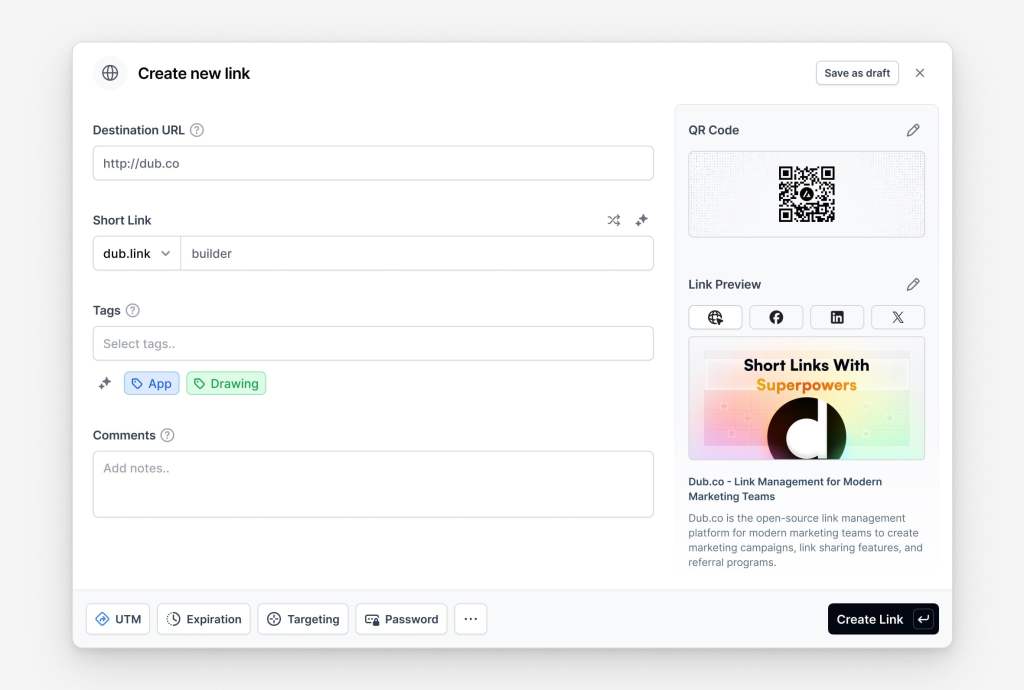
RedTrack and Dub both help you track what happens after a click, but they are not trying to win the same buyer in the same way. RedTrack leans hard into paid-media attribution, conversion signals, and campaign control, while Dub is built around short links, partner programs, and clean attribution that feels much lighter to set up.
That difference matters because the wrong choice will either feel too limited or way too heavy. If you run serious paid traffic across multiple ad channels, RedTrack can justify its higher price fast, but if you mainly want better link tracking, branded short links, affiliate or referral workflows, and a cheaper way to get started, Dub usually looks easier to say yes to.
This review is here to help you make that call without wasting time. By the end, you should know whether to try RedTrack now, start with Dub, or hold off until your setup is more mature.
Article outline
- Quick take: who each tool makes sense for
- What you get before paying: free plan vs free trial
- The good stuff: what each platform does well
- Pricing and value: where the money starts to make sense
- Why waiting can slow you down
- Alternatives worth looking at before you decide
- My final verdict
- FAQ
Quick take: who each tool makes sense for
Here is the simple version. RedTrack is the stronger fit for performance marketers, media buyers, ecommerce teams, and agencies that need server-side tracking, attribution, ad-platform signals, and deeper control over paid traffic data.
Dub makes more sense when you want a modern link platform that also handles conversion tracking and partner programs without making setup feel like a project. It is easier to justify for creators, startups, SaaS teams, and lean marketing teams that want branded links, analytics, referral tracking, and room to grow without jumping straight into enterprise-style complexity.
Price is the first objection most people have here, and it should be. RedTrack asks for a much bigger commitment, so it only makes sense when better tracking can protect real ad spend or improve decisions across a more complex funnel.
Dub is easier to test because the barrier is lower. A free plan, lower paid entry point, and an open-source self-hosting path make it attractive for buyers who want flexibility without locking themselves into an expensive tracking stack too early.
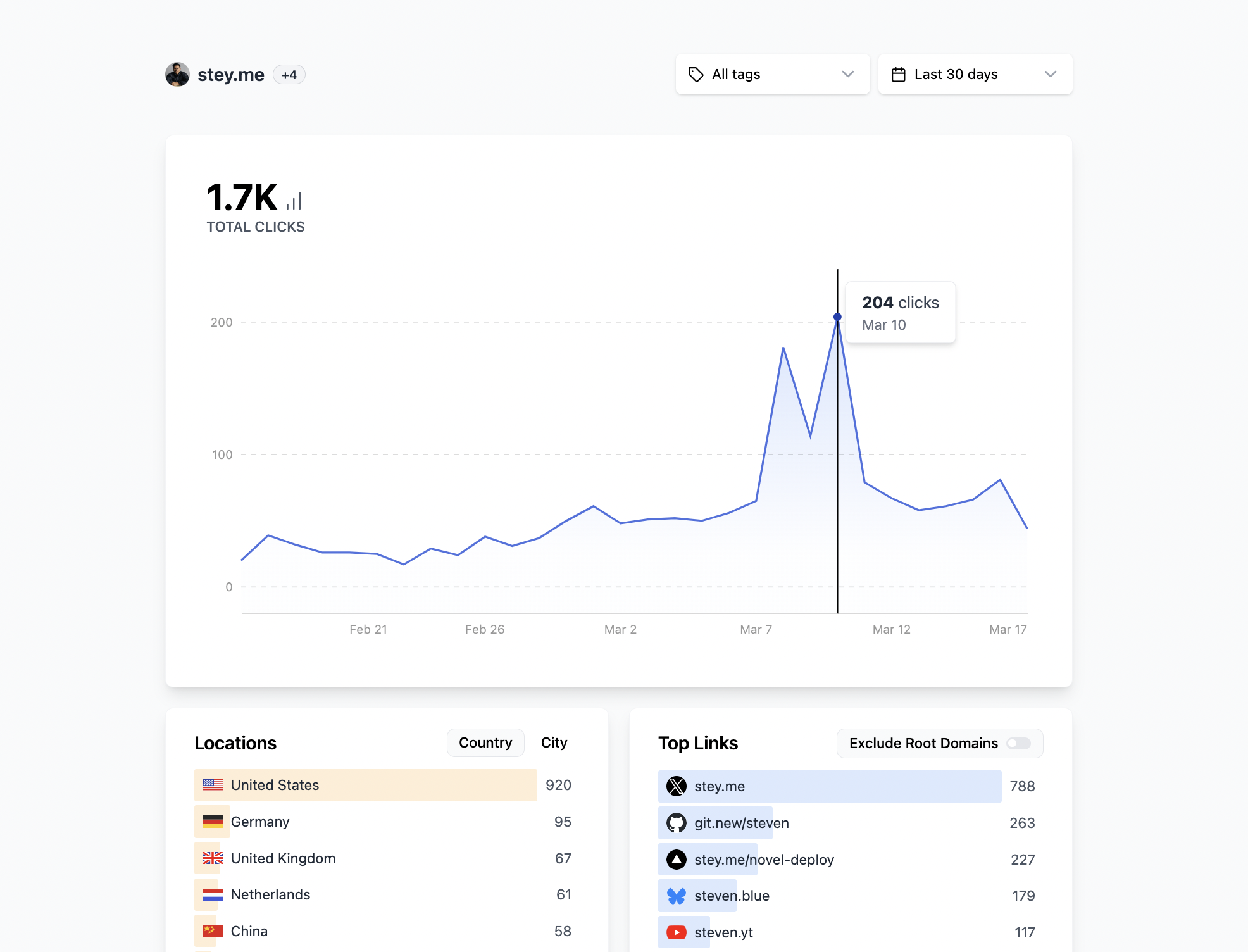
Image source: Dub analytics update
The image above shows why Dub gets attention from smaller teams and modern SaaS companies. The product feels clean, readable, and built for people who want answers quickly instead of spending half the day configuring a reporting environment.
RedTrack is not trying to win on that kind of simplicity. It wins when you need deeper paid-traffic infrastructure, stronger attribution logic, and more confidence that cost data, conversion signals, and optimization inputs are all speaking the same language.
So the early verdict is pretty straightforward. Choose RedTrack if broken attribution is already costing you money, and choose Dub if you want a more approachable platform that still gives you real tracking, branded links, and partner-program upside without the same financial jump.
What you get before paying
RedTrack gives you a 14-day free trial with all features unlocked and no credit card required. Dub takes a different angle and gives you a real free plan, which is easier to live with if you want to test the product slowly instead of rushing through two weeks.
That difference changes the buying decision more than it first seems. RedTrack is better for buyers who already have paid traffic running and need a serious test fast, while Dub is better if you want room to experiment before you commit.
RedTrack lets you test the full thing quickly
RedTrack’s trial is built for people who already know what they want to track. You can test the platform’s attribution, S2S tracking, paid traffic tracking, first and last-click attribution, and its conversion API setup without putting a card down first.
That sounds generous, but there is a catch. If you do not already have active campaigns, conversion events, and at least some idea of how your tracking should work, two weeks can disappear fast and leave you more confused than convinced.
RedTrack makes the most sense when broken attribution is already hurting your decisions. If your Meta, Google, TikTok, or affiliate traffic setup feels messy, the trial is long enough to see whether cleaner tracking will actually help you spend smarter.
Dub is easier to try because the free plan is actually usable
Dub’s free plan includes 1,000 tracked events per month, 25 new links per month, real-time analytics, API access, 3 custom domains, UTM templates, QR codes, and 30-day analytics retention. That is not a fake free plan built to frustrate you in five minutes.
This is a big reason Dub feels more approachable in a RedTrack vs Dub decision. You can create links, watch traffic, test attribution basics, and see how the interface feels before you ever touch a paid plan.
The limitation is simple. If you want Dub Partners seriously, the more advanced partner-program features and program analytics start making sense on higher plans, especially Business.

Image source: Dub analytics overview
This is where Dub wins on first impression. The dashboard is clean, the data is easy to read, and it feels more like a product you can start using today instead of a tool you need to study first.
The good stuff
RedTrack and Dub both solve attribution problems, but they feel very different in day-to-day use. RedTrack is stronger when your world revolves around paid media accuracy, while Dub is stronger when you want tracking, link management, and partner workflows in one simpler setup.
Why RedTrack still stands out
RedTrack earns its price when you need campaign-level control. Its pricing and product pages show paid traffic tracking, partner and referral traffic tracking, direct and organic traffic tracking, S2S tracking, conversion API integrations, and frequent cost-sync updates built for real media buying work.
That matters because manual attribution falls apart once you spread spend across multiple networks. If you are trying to judge real performance across Meta, Google, TikTok, Snapchat, Microsoft, and other channels, RedTrack is closer to infrastructure than a nice-to-have tool.
RedTrack is also better when you care more about accuracy than elegance. Dub looks cleaner, but RedTrack is the one I would lean toward if ad spend is high enough that bad data is now an expensive problem.
Why Dub is so appealing
Dub feels lighter, but it is not lightweight in a bad way. Its docs show short links, conversion tracking, partner programs, real-time analytics, event webhooks, REST API access, and native SDKs all living in one product.
The payoff is obvious if your current setup is scattered. You can manage branded links, measure conversions, track customer journeys, and run referral or affiliate motion without stitching together a shortener, an affiliate tool, and a separate analytics layer.
That does not mean Dub replaces RedTrack for every paid-media buyer. It means Dub is easier to justify if you want modern attribution and partner tracking without buying something as specialized as RedTrack right away.
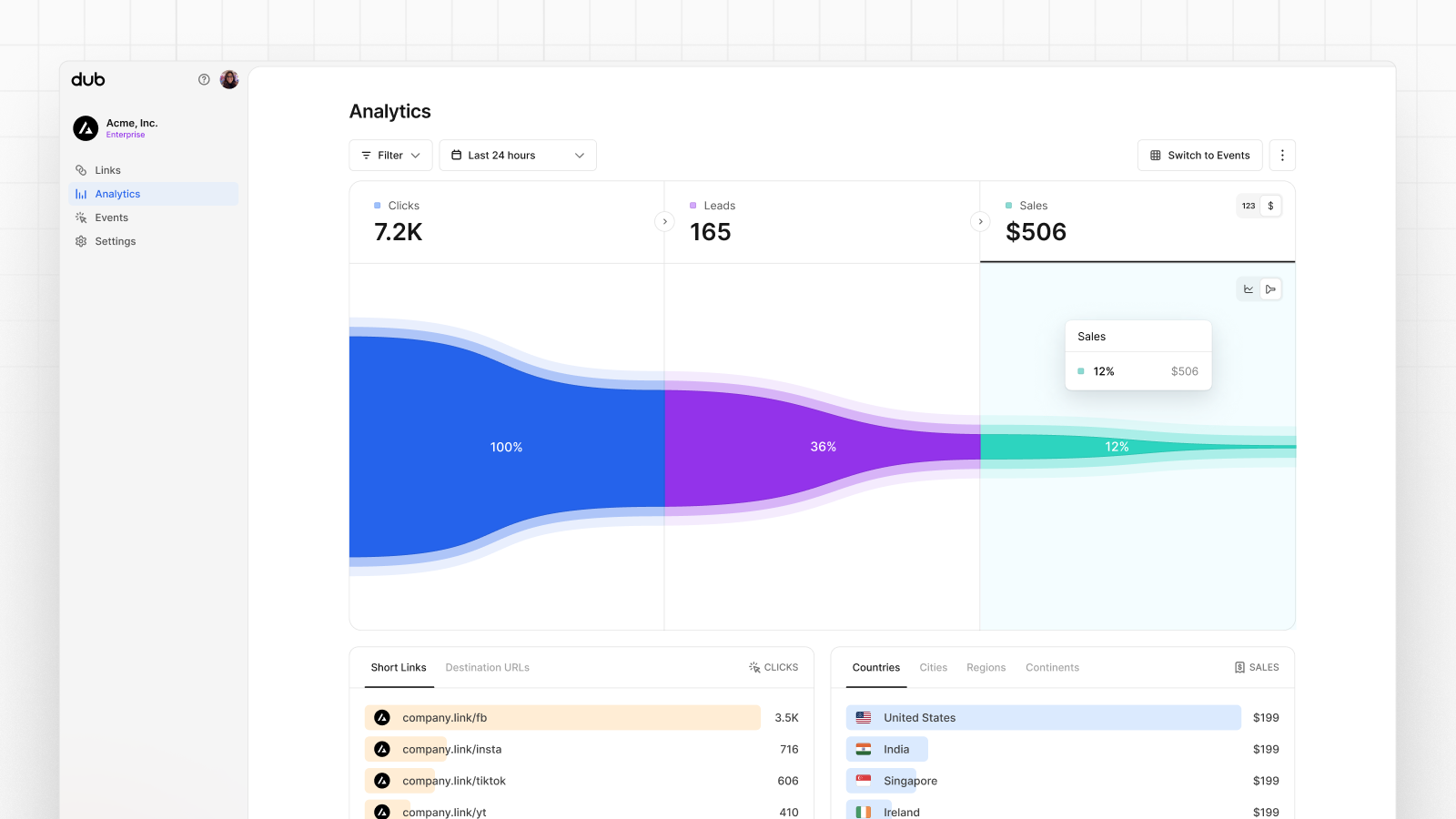
Image source: Dub conversion tracking guide
The conversion view above explains why Dub is more than a link shortener. It can show the drop from click to lead to sale, which is exactly the kind of visibility smaller SaaS teams and creators usually want before they start paying for a heavier attribution stack.
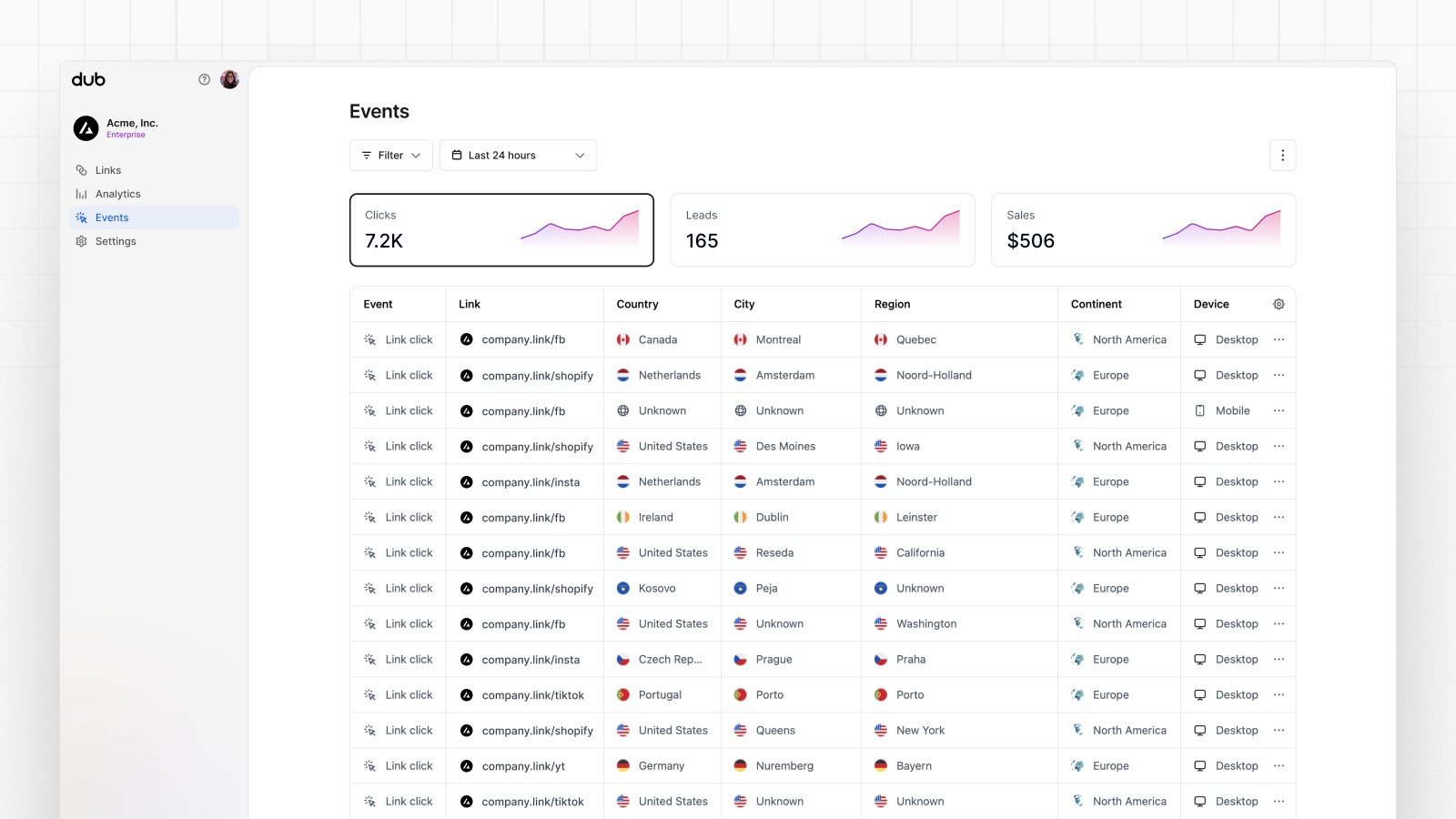
Image source: Dub events tracking view
Dub also gives you a live events stream, which helps when you want to see what is happening now instead of waiting for a laggy report. For smaller teams, that kind of visibility often feels good enough without stepping into RedTrack territory.
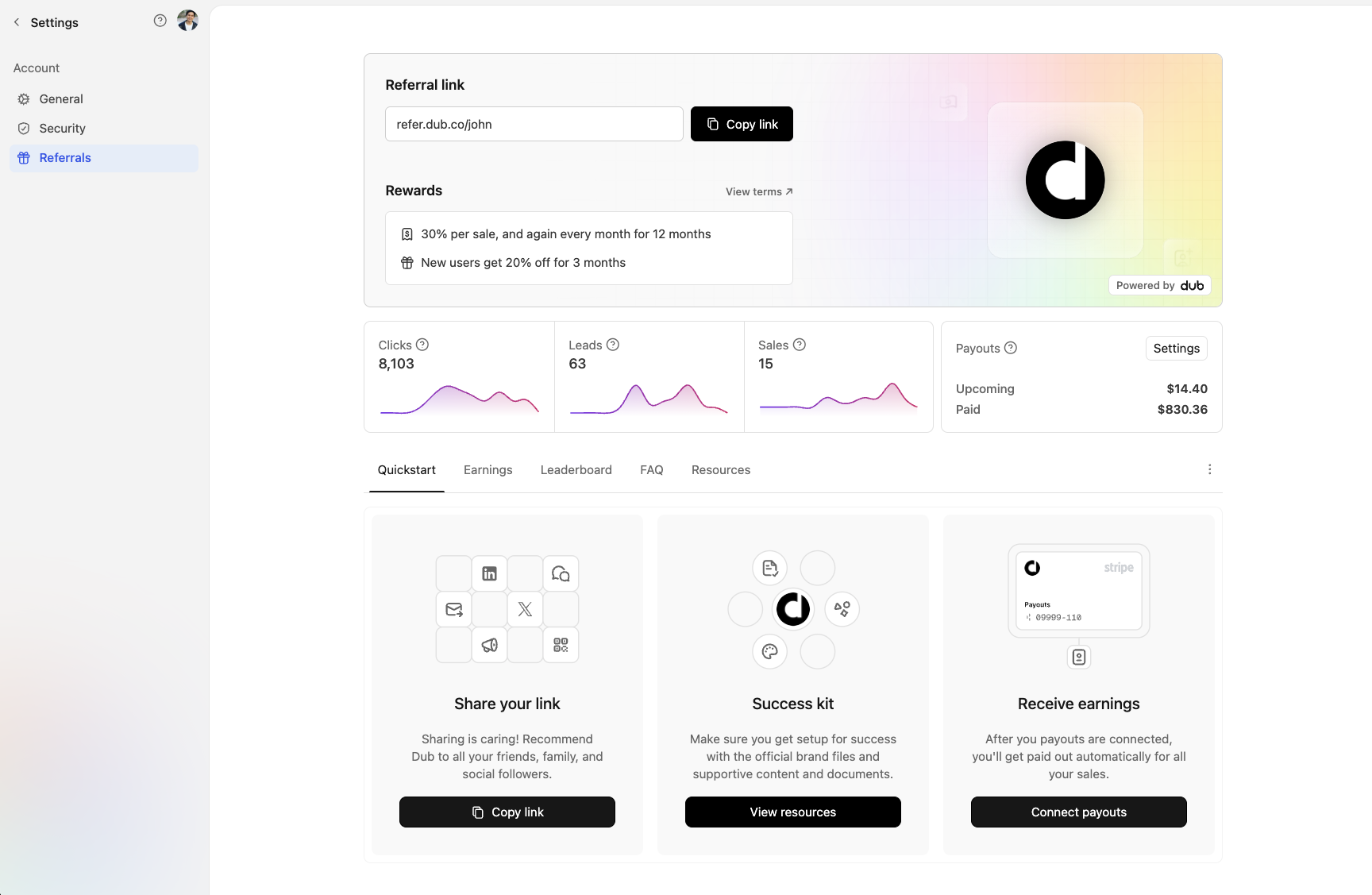
Image source: Dub referral dashboard example
This screenshot is the bigger reason many people will pick Dub over RedTrack. If you care about referral programs, affiliate motion, creator links, and conversion visibility in one place, Dub looks a lot easier to say yes to.
Pricing and value
Price is where the gap gets real. RedTrack starts at $149 per month on Solo, while Dub gives you a free plan and starts paid plans at $25 per month for Pro, with Business at $75 and Advanced at $250.
That does not automatically make Dub the better deal. It makes Dub the easier buy for most smaller teams, while RedTrack only becomes worth it when the cost of bad attribution is already higher than the subscription.
Explore DubThis table makes the decision cleaner. Buy RedTrack when ad performance tracking is the main problem, buy Dub when you want strong attribution plus partner and link workflows at a much easier starting cost, and pick GoHighLevel or Systeme.io when you care more about broader marketing tools than attribution depth.
Why waiting can cost you more than the tool
Waiting makes sense if you have no traffic, no offer, and nothing to track yet. Waiting does not make much sense if you are already sending clicks and still making decisions from incomplete data, scattered spreadsheets, or half-connected tools.
That is why the RedTrack vs Dub choice should really come down to how expensive your mess already is. If you are spending serious money on ads, RedTrack can pay for itself by giving you cleaner attribution faster, and if you are still building but want tracking that does not feel flimsy, Dub is a smart step before the problem gets bigger.
For the right buyer, Dub is the easier next move because the risk is lower. You can start free, prove the workflow, and upgrade once the data starts showing that better tracking and partner visibility are actually helping.
For the right paid-media buyer, RedTrack can still be the stronger option. It is just not the one I would push on someone who is still early, still price-sensitive, or mainly wants a cleaner way to manage links and referrals without buying an ad-tech-heavy system.
Alternatives worth looking at before you decide
RedTrack vs Dub gets easier once you stop pretending they are for the exact same buyer. RedTrack is the stronger pick for teams that live inside paid ads and need deeper attribution control, while Dub is the better fit for people who want modern tracking, branded links, and partner workflows without jumping straight into a heavier setup.
You should still compare them against a couple of broader or cheaper options. That keeps the decision honest and makes it easier to see whether you need a tracking-first tool, an all-in-one, or just a lower-cost way to get moving.
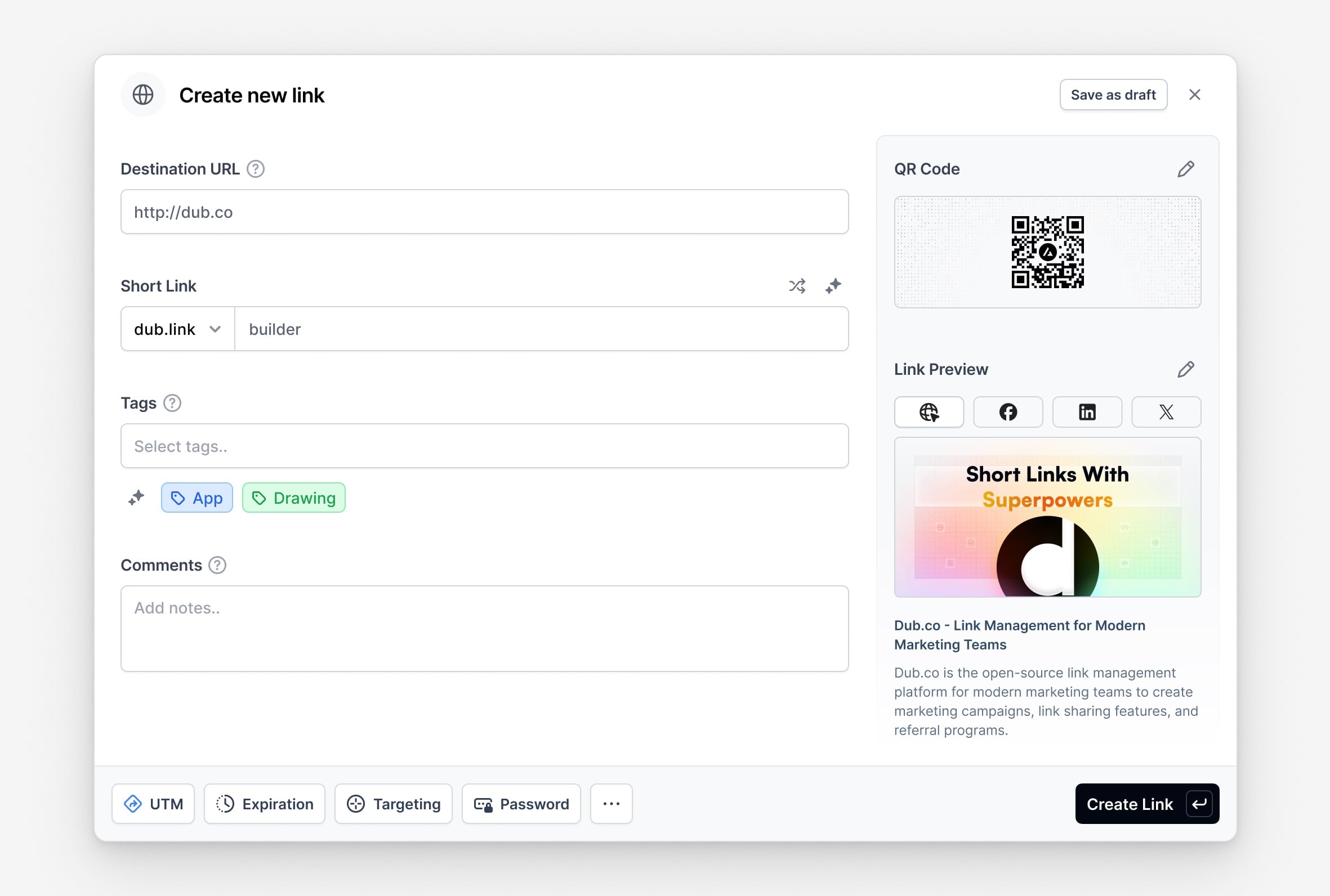
Image source: Dub official site
This is one reason Dub keeps pulling smaller teams in. The product feels simple enough to start fast, but it still gives you serious control over links, domains, QR codes, previews, and campaign settings.
Image source: Dub official site
The analytics view matters because basic link shorteners usually stop at click counts. Dub goes further and gives you a cleaner picture of what links, locations, and traffic patterns are actually doing.
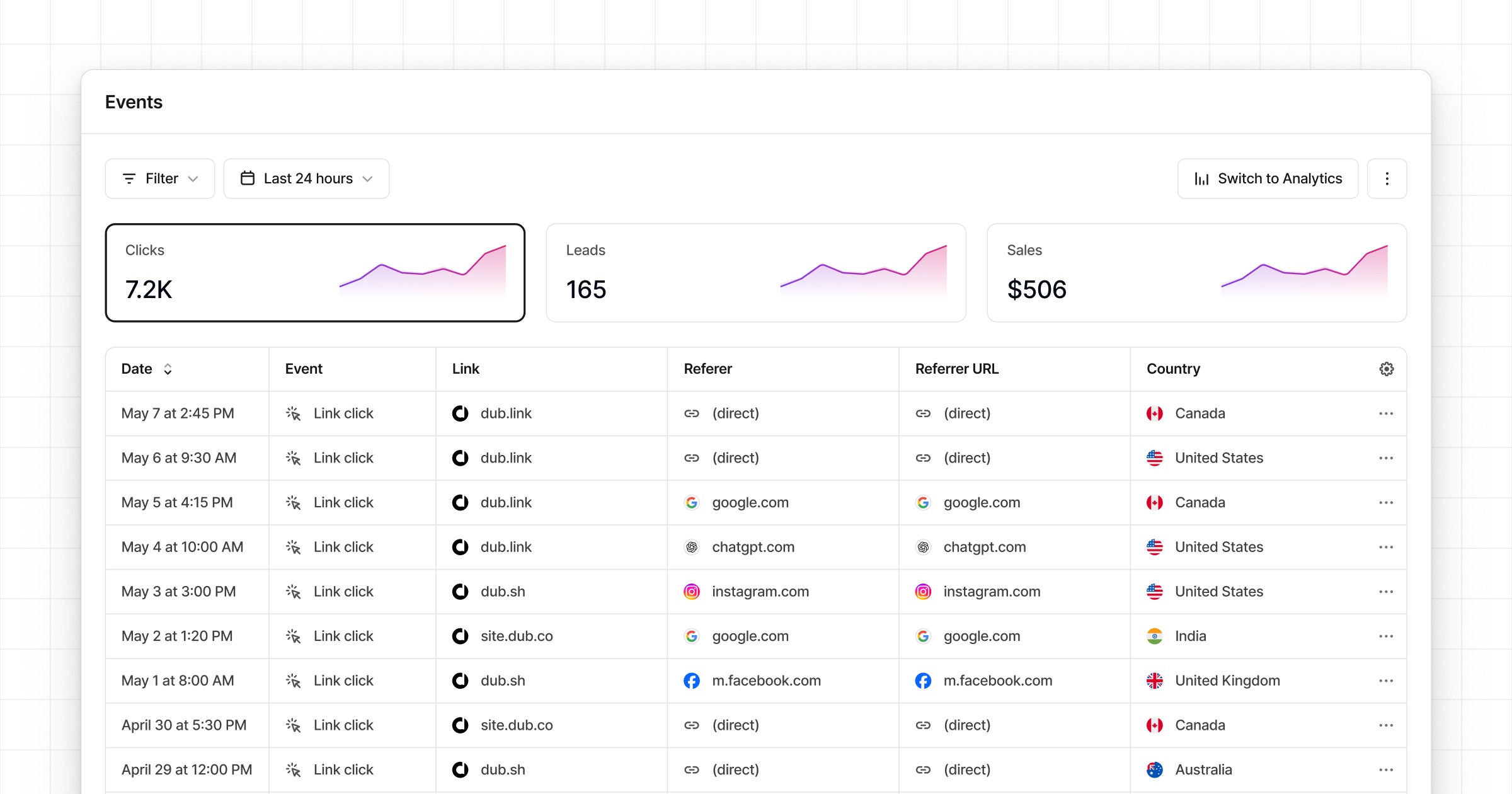
Image source: Dub official site
The events stream is another big advantage for buyers who want more than vanity stats. You can actually watch activity come in and see enough detail to make faster decisions without buying a much more technical stack.

Image source: Dub official site
This is the part that separates Dub from a plain link tool. If partner programs, referrals, or affiliate tracking matter to you, Dub starts looking much more useful than something built only for short links or only for paid-media attribution.
Check out DubChoose RedTrack if you already run enough paid traffic that attribution mistakes hurt. Choose a cheaper option like Systeme.io if you are still very early, and choose a broader tool like GoHighLevel if you want CRM and automation to matter more than link analytics.
Most people comparing RedTrack vs Dub will land in the middle, and that is where Dub looks strongest. It gives you far more than a short-link tool without forcing you into the same price and setup depth as RedTrack.
My final verdict
Dub is the better buy for most people reading this. The lower starting cost, usable free plan, cleaner interface, and built-in partner workflows make it easier to adopt without feeling like you bought too much tool too soon.
RedTrack is still the better choice for a specific buyer. If your whole world is paid acquisition, attribution accuracy, cost syncing, and campaign optimization across multiple networks, RedTrack can absolutely be worth the extra money.
That is why I would not frame this as RedTrack losing to Dub. I would frame it as Dub winning for more buyers, while RedTrack wins for the more advanced paid-media operator.
If you already have an offer, traffic, or an early partner motion, Dub is worth trying now. Waiting usually means you keep using weaker tracking, keep guessing which links matter, and keep delaying the cleaner setup you were probably going to need anyway.
If you have no real traffic yet, you can wait. If you do have traffic and want a practical step up without committing to a heavy attribution stack, Dub is the one I would start with.
FAQ
Is Dub better than RedTrack?
Dub is better for more people, not for every use case. It is the stronger fit when you want link attribution, partner tracking, and a cleaner product at a lower price, while RedTrack is stronger for heavier paid-media attribution work.
Should beginners pick RedTrack or Dub?
Beginners should usually start with Dub or even a cheaper all-in-one like Systeme.io. RedTrack makes more sense once ad spend and attribution complexity are already real problems.
Is RedTrack worth the price?
Yes, for the right buyer. If better attribution can protect or improve enough ad spend, the monthly cost is easier to justify, but it is overkill for many smaller teams.
Can Dub replace other tools?
Dub can replace a basic link shortener and, for some teams, part of the stack used for referral tracking or partner management. It will not replace a full all-in-one CRM stack like GoHighLevel, and it will not fully replace a specialized paid-media attribution setup for every large advertiser.
Should you start now or wait?
Start now if you already have traffic, links to track, or a partner program in mind. Wait if you are still at the idea stage and would not use the product enough yet.
My take: if you want the cleaner, lower-risk choice in a RedTrack vs Dub comparison, Dub is usually the smarter next move.
Start with Dub Filip Konecny Enterprises