
Other options worth considering before you commit
ManyChat is not the only option here, and it is not always the best move. The right choice depends on whether your focus is social DMs, full marketing automation, or something cheaper to start with.
If you are comparing a ManyChat alternative to Tidio, this is where things usually become clear. Most tools either go deeper into social automation like ManyChat, or they go broader into full business systems.
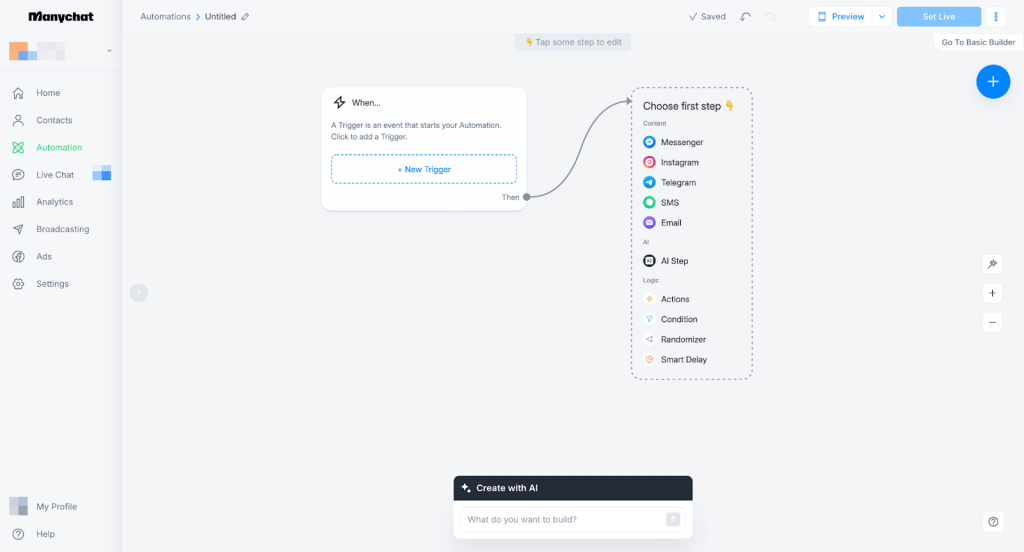
Image source: ManyChat automation builder guide
Get started with ManyChatPick ManyChat if your business depends on conversations happening inside Instagram, Messenger, or WhatsApp. Pick Systeme.io or Brevo if your strategy is email-first and you just need something cheaper to get started.
Pick GoHighLevel if you are building a full system with funnels, CRM, and automation all in one place and you are ready to handle the extra setup and cost.
Image source: ManyChat Instagram ads trigger guide
My honest take
ManyChat is not trying to replace Tidio completely. It replaces the part of your workflow where conversations turn into leads and sales, especially on social platforms.
It is absolutely worth trying if people already message you on Instagram or WhatsApp and you feel like you are constantly playing catch-up. That is where this tool pays for itself quickly because it turns messy conversations into structured flows that actually move people toward a decision.
It is not worth it if your main need is website chat, customer support tickets, or AI answering basic questions across your site. In that case, Tidio or a similar support-focused tool is still the better fit.
Most people hesitate because of setup or price. Setup is easier than it looks once you build one working flow, and the price is small compared to the cost of missed conversations if you are already getting inbound attention.
If your DMs already feel busy, waiting usually just means more missed follow-ups. If your DMs are empty, wait and focus on traffic first.
Image source: ManyChat Instagram features page
Should you try it now or wait?
Start now if you already have people interacting with your content and asking for links, prices, or more details. That is the exact moment where ManyChat starts saving time and capturing leads you would otherwise lose.
Wait if you are still figuring out your offer or you are not getting consistent engagement yet. Automation without demand just adds complexity you do not need.
Skip it if your entire business runs through your website chat and support inbox. That is not what ManyChat is built for, and forcing it into that role will feel frustrating.
For the right buyer, this is one of the easiest upgrades you can make. You stop reacting to messages and start guiding them.
Check the official free trialWhat you actually get for the money
ManyChat wins the low-risk test. The official pricing page shows a real free plan for up to 1,000 contacts, and Pro starts at $15 per month, which makes it much easier to try without overthinking the purchase.
Chatfuel takes the opposite approach. Its pricing page pushes a 7-day free trial and then a $69 per month plan that bundles all channels, AI replies, and the website widget into one offer.
That price gap matters more than most feature lists do. If you just want Instagram automation that can capture leads, send links, and follow up, ManyChat is easier to justify fast. If you need a broader messaging setup from day one, Chatfuel can make sense, but only if you will actually use that extra breadth.
Image source: ManyChat
What you can test before paying
ManyChat gives you more room to experiment before you feel real pressure to upgrade. The free plan includes Instagram Direct Messages, Facebook Messenger, basic automation, and enough contact capacity to prove whether automated conversations are actually helping your business.
That is a big deal for beginners. You can build a real flow, connect comment keywords to DMs, and see whether people actually move from curiosity to action before paying more than zero.
Chatfuel gives you less cheap experimentation but more “everything in one place” positioning. Its main pitch is that WhatsApp, Instagram, TikTok, website widget, and the AI assistant are bundled together, which sounds great if you already know you need all of that.
Here is the catch. Most smaller businesses do not need all of that on day one, which makes ManyChat the easier buy unless your messaging workflow is already pretty serious.
Image source: ManyChat
The good stuff
ManyChat feels more obvious for Instagram growth. Its official help docs and pricing pages make the use case clear: comment-to-DM automations, keyword triggers, drip sequences, growth tools, analytics, and integrations that help you turn replies into leads without handling everything manually.
That matters because it is easier to picture the payoff. Someone comments on a post, gets a DM, sees the link, answers a question, gets tagged, and moves into a follow-up path without you or your team babysitting the inbox.
Chatfuel feels more like a messaging hub for service businesses. Its official site leans hard into WhatsApp and Instagram, AI responses, booking help, follow-ups, and keeping client details together so businesses do not lose leads inside messy message threads.
That is strong if you run a clinic, salon, local service business, or appointment-driven company where WhatsApp matters a lot. It is less compelling if most of your value comes from social engagement campaigns and simple lead magnets, where ManyChat is usually cleaner and cheaper.
ManyChat also has an ease-of-use advantage in public reviews. G2 and Capterra feedback regularly point to the flow builder and easier onboarding as strengths, while Chatfuel reviews more often praise capability but mention setup confusion or pricing watch-outs.
That does not make Chatfuel bad. It just means ManyChat usually feels less heavy for the average buyer who wants results without a bigger learning curve.
Image source: ManyChat
Pricing and the smarter buy for different budgets
This is where the decision gets practical. ManyChat starts cheap and grows with your contact count, while Chatfuel starts much higher but tries to justify it by bundling more channels and AI into one plan.
See current pricingThat table usually makes the buying decision easier. ManyChat is the better buy for most people who want to start lean, while Chatfuel makes more sense when WhatsApp and bundled AI matter enough to justify the bigger monthly bill.
Why you would buy ManyChat now instead of waiting
ManyChat is easiest to justify when messages are already happening. If people comment on your posts, ask for links, reply to Stories, or DM you after content goes live, waiting usually means you keep losing speed, consistency, and follow-up quality.
Manual replies feel cheap until they start costing attention. At some point, slow response times and messy inbox habits cost more than the software does, especially when one good lead can cover a month of ManyChat several times over.
Skip both tools for now if you have no traffic and no repeat conversations yet. Buy ManyChat first if your goal is clear Instagram or Messenger automation without paying enterprise-style pricing before you are ready.
That is why ManyChat is the stronger first choice in this comparison. It does not try to be everything, but for the right buyer, that is exactly why it is the smarter buy.
Better alternatives if neither feels right
ManyChat vs Chatfuel is a useful comparison, but both tools sit in a pretty specific category. If you want something cheaper, simpler, or more “all-in-one,” there are better fits depending on how you run your business.
This table makes the decision easier if you’re stuck between them or wondering if you should go in a completely different direction.
Try ManyChatChoose ManyChat if your goal is simple: turn comments and DMs into leads without building a complicated system. Choose Chatfuel if messaging across multiple platforms is already part of your daily operations.
Pick a cheaper tool like Systeme.io if you are still figuring things out. Go with something like GoHighLevel if you are already juggling multiple tools and want everything under one roof.
Image source: ManyChat
Should you start now or wait?
Start now if you already have engagement. Even a small number of comments or DMs is enough to justify automation, because the time savings and consistency add up quickly.
Wait if you have zero traffic or no conversations happening yet. In that case, your problem is content and audience growth, not automation.
For everyone else, the free plan removes most of the risk. You can explore ManyChat here and decide based on actual results, not guesswork.
Image source: ManyChat
Check the free plan Filip Konecny Enterprises