
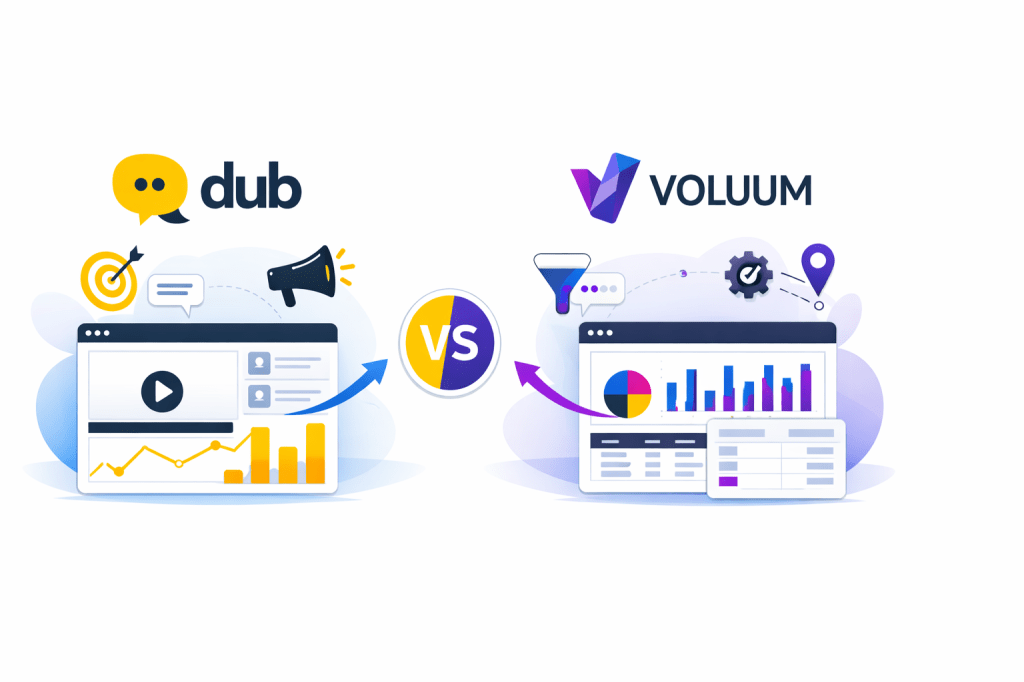
Dub and Voluum solve a similar problem from very different angles. One feels like a modern link attribution platform that is easy to like quickly, while the other is a deeper performance tracker built for people who live inside paid traffic, offers, and campaign optimization every day.
That difference matters because the wrong pick gets expensive fast. If you buy Voluum when you only need branded links, attribution, and partner tracking, you can end up paying for way more complexity than you will use. If you choose Dub when your whole business depends on advanced media-buying controls, anti-fraud tooling, and AI traffic routing, you may hit the ceiling sooner than you want.
My early take is simple. Dub looks better for startups, SaaS teams, creators, and brands that want short links, conversion tracking, partner programs, and clean reporting without turning setup into a project. Voluum makes more sense for serious affiliate marketers and media buyers who care more about campaign control than a polished, lightweight experience.
My quick take before we get into the details
The easiest way to think about this comparison is to ask what you are really trying to track. Dub is strong when links, attribution, referrals, and partnership-driven growth are the center of the job. Voluum is stronger when you are buying traffic aggressively, testing paths, working with multiple offers and landing pages, and need a tracker that behaves like a campaign operating system.
Price changes the decision too. Dub starts with a real free plan and then moves into paid tiers at a level that feels accessible for smaller teams, while Voluum starts much higher and clearly assumes that your campaigns already justify dedicated tracking software.
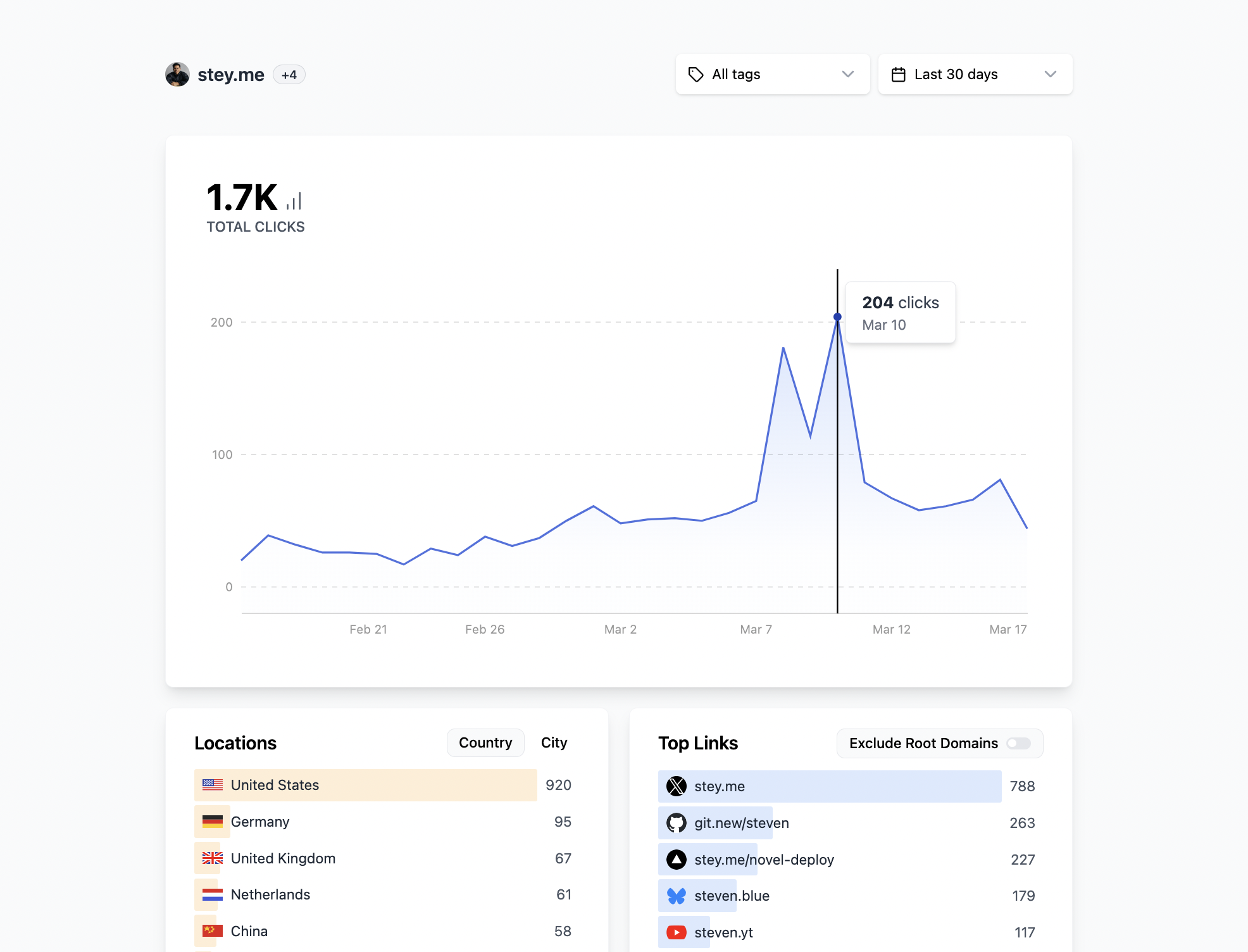
Image source: Dub analytics update
Explore DubThat table is the short version. Dub wins on accessibility, cleaner onboarding, and a much lower-risk starting point. Voluum wins when optimization depth matters more than ease, and when your revenue model can already support a premium tracker.
Article outline
I split this review into three clear sections so you can jump to the part that helps you decide faster. If you already know you want either the pricing angle, the feature angle, or the final recommendation, use the page jumps below.
- Quick verdict and who each tool fits best
- Features, pricing, and where each platform earns its cost
- Alternatives, final verdict, FAQs, and the best next step
The next section is where the decision usually gets easier. I am going to break down what you actually get, where Dub feels like the smarter buy, where Voluum still has the stronger hand, and when paying more now probably saves you from patching together a messy stack later.
What you actually get (and where each tool earns its price)
Dub and Voluum both track clicks and conversions, but the experience feels completely different once you start using them. One is built to help you move fast and keep things simple, the other is built to give you control over every part of a campaign.
What you get with Dub
Dub focuses on link-level tracking, attribution, and partnerships. You create branded short links, track clicks and conversions, and see where traffic is coming from without needing a full tracking setup.
The useful part is how quickly it works. You can set up a link, attach tracking parameters, and start collecting data in minutes instead of spending hours configuring campaigns and flows.
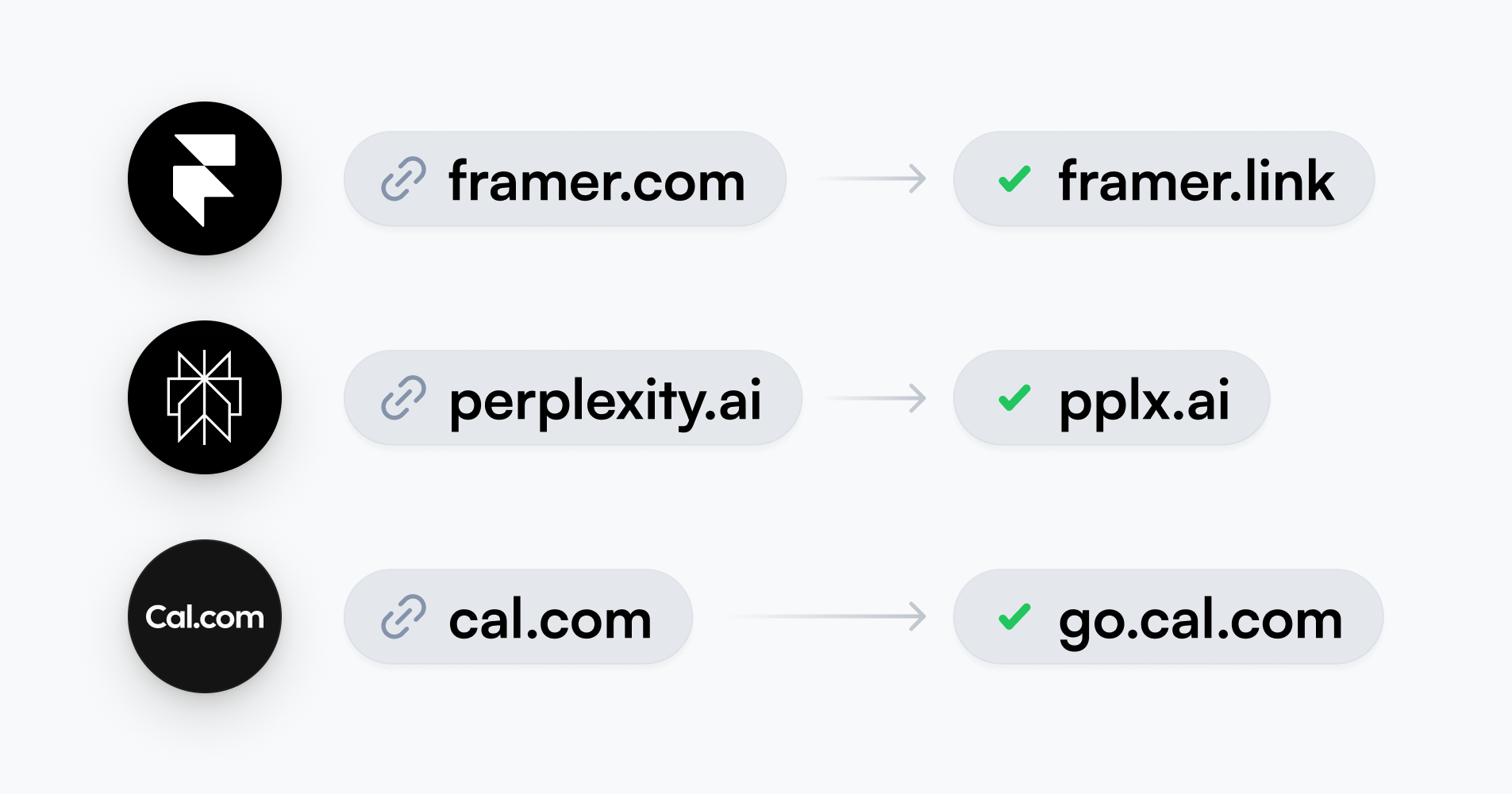
Image source: Dub custom domains feature
You also get partner tracking built in. That matters if you run referrals, affiliates, or creators promoting your links, because you can track performance without stacking separate tools.
The catch is depth. If you want advanced traffic routing, multi-step funnel tracking across offers, or heavy paid traffic optimization, Dub is not trying to compete there.
What you get with Voluum
Voluum is built for performance marketing. You can track campaigns, split test landing pages, rotate offers, detect bot traffic, and optimize traffic distribution based on real-time data.
That level of control is why media buyers use it. You are not just tracking links, you are controlling how traffic flows through your campaigns.

Image source: Voluum features overview
The downside is obvious once you open the dashboard. There is more to learn, more to configure, and more that can break if you do not understand how tracking works.
If you are not already running paid campaigns, Voluum feels like overkill. If you are, it starts to feel necessary.
Ease of use vs control (this is the real tradeoff)
Dub wins on speed. You can go from zero to tracked links in minutes, and the interface does not fight you.
Voluum wins on control. You can fine-tune traffic, filter bad clicks, and optimize campaigns in ways that a lighter tool cannot match.

Image source: Dub partner tracking feature
This is where most people decide. If your priority is clean tracking and fast setup, Dub feels like the smarter move. If your priority is squeezing more profit out of paid traffic, Voluum gives you tools Dub does not try to offer.
Pricing and what you are really paying for
Check Dub pricing and featuresDub is easier to justify early because you can start for free and upgrade only when you need more. That removes most of the risk.
Voluum expects results from day one. The price only makes sense if your campaigns already generate revenue or you are about to scale them.
Why this decision matters more than it looks
Tracking is one of those things that quietly affects everything. If your setup is messy, you lose data, misread performance, and make slower decisions.
Using something like Dub replaces spreadsheets, manual link tracking, and guesswork. You see what is working without building your own system.

Image source: Dub analytics feature
Delaying this decision usually means you keep working without clear attribution. That slows down growth more than most people expect.
If you already have offers, traffic, or partnerships running, getting proper tracking in place now is usually the better move than waiting.
Alternatives that make sense if Dub is not the obvious pick
Dub is the easiest recommendation for teams that want branded links, conversion tracking, and partner attribution without turning setup into a side project. Still, it is not the only reasonable option.
Voluum is stronger for serious paid traffic. GoHighLevel is broader if you want funnels, CRM, follow-up, and affiliate tools in one place. Buffer is the simpler and cheaper pick if you mostly care about social publishing and light link handling, not real partner infrastructure.

Image source: Dub
Explore DubChoose Dub if you want the cleanest balance of speed, tracking, and partner features. Choose Buffer if budget matters more than attribution depth, and choose GoHighLevel if you want a broader all-in-one system even if it is less focused.
Who should start now, wait, or skip it
Start now if you already have traffic, affiliates, referral partners, or campaigns running. Waiting usually means another month of messy reporting and weaker attribution.
Wait if you still do not have an offer, a channel, or a reason to track anything yet. Software does not fix that stage.
Skip Dub if your whole business depends on advanced media-buying control. Voluum is the better fit there, even though it costs more and asks more from you.

Image source: HighLevel
My final take
Dub is the better buy for more people. It gives you the parts that actually matter for link attribution and affiliate growth without making the product feel like work.
Voluum is still the stronger tool for hardcore performance marketers. I would not talk someone out of it if they already know they need AI traffic distribution, anti-fraud tools, and heavy campaign optimization.
Most readers comparing Dub vs Voluum are probably not in that camp. They want clean tracking, partner visibility, faster setup, and a price that does not punish them for getting started, which is why Dub is the easier recommendation.

Image source: Buffer
FAQ
Is Dub better than Voluum for beginners?
Yes, for most beginners it is. Dub is easier to set up, easier to understand, and much easier to justify on price.
Is Voluum worth the price?
Yes, but only when advanced campaign control is already part of your business. If you are not actively optimizing paid traffic at a serious level, the extra cost is hard to justify.
Can Dub replace other tools?
It can replace a messy mix of short-link tools, spreadsheets, and basic partner tracking setups. It will not replace a full CRM or a deep media-buying tracker.
Should you switch from Voluum to Dub?
Switch if your current setup feels too heavy for what you actually do. Stay with Voluum if advanced routing, optimization, and paid traffic control are still central to your workflow.
Should you try Dub now?
If you already have something to track, yes. Dub is one of those tools that earns its keep quickly because it helps you stop guessing.
If you are still piecing together your offer, wait a bit and come back when the data matters. If your current setup already feels messy, though, this is a smart time to fix it.
Get started with Dub Filip Konecny Enterprises