
If you’re looking for Dub similar tools, you probably already know the basic problem: a plain link shortener is easy to replace, but a tool that handles branded links, conversion tracking, QR codes, and affiliate tracking in one place is harder to swap out. That is why this review is not just about whether Dub looks good on the surface. It is about whether it is actually the right buy for the way you work.
Dub makes a strong first impression because it is built for people who care about more than raw click counts. You can create branded short links, track conversions, use custom domains, generate QR codes, and move into partner or affiliate tracking without stitching together a messy stack. That makes it attractive fast, especially if Bitly feels too limited for attribution or if your current setup is spread across too many tools.
The catch is simple. Not everyone needs this much tool, and not every buyer should rush in just because Dub looks modern. This article is built to help you decide whether Dub is worth trying now, whether a cheaper option would do the job, and which alternative makes more sense if Dub feels too advanced or too specific for what you need.
Quick look before you read the full review

Image source: Dub homepage
The reason Dub stands out is easy to see in the product itself. It is not just shortening a URL. The interface is built around adding campaign logic to the link from the start, including UTM controls, QR code generation, social preview customization, expiration settings, targeting rules, and conversion tracking.
That matters because this is where most “similar tools” split apart. Some are fine for basic branded links. Some are better for social publishing. Some are broader all-in-one marketing platforms. Dub starts to make sense when your links are tied directly to revenue, partner programs, or campaign attribution and you do not want that data scattered across separate tools.
Check the official pricingThat quick snapshot already tells you a lot. Dub is easy to try because there is a real free plan instead of a short trial clock, but the serious value shows up once you need attribution and scale, not just short links. If you already have traffic, offers, or partnerships to manage, waiting too long usually means you keep working with a setup that hides the real performance picture.
If you only need a lightweight link shortener, you may not need Dub yet. If you want cleaner attribution, branded links, better partner tracking, and fewer moving parts, Dub gets a lot more interesting.
Article outline
Use these page jumps to skip straight to the part that matches where you are in the buying process.
- Is Dub actually worth paying for?
- What you get before you pay
- The good stuff that makes Dub stand out
- Pricing, value, and where the cost starts to make sense
- Why buying now can make more sense than waiting
- Dub alternatives and who should pick them instead
- My final verdict
- FAQ
The next section gets straight into the core decision: whether Dub earns its price, who will feel the value fastest, and who should probably stick with a cheaper tool for now.
Is Dub actually worth paying for?
Dub is worth paying for when your links are tied to revenue, not just traffic. If you care which creator, campaign, email, QR code, or partner actually drove the signup or sale, Dub gives you a lot more than a basic shortener.
The cheapest way to handle links is still doing almost nothing. You can paste long URLs into posts, use a simple shortener, and track results in a messy mix of UTM tags, spreadsheets, and platform analytics, but that usually falls apart once you start running several campaigns at once.
Dub starts to earn its price when you want one place for branded links, analytics, QR codes, attribution, and partner tracking. If you are already selling, promoting, or sending traffic regularly, this can save time fast and give you cleaner numbers than a patched-together setup.
Here’s the catch. Dub is not the obvious pick for everyone. If you only need a social scheduler, Buffer is a better fit. If you want funnels, CRM, email, appointments, and automation in one stack, GoHighLevel is broader. If budget matters most, Systeme.io is much cheaper.
What you get before you pay
Dub does not really push a short free trial. It gives you a real free plan, which is better for most buyers because you can test the workflow without a countdown hanging over you.
The free plan includes 1K tracked events a month, 25 new links a month, 3 custom domains, API access, QR codes, link tags, UTM templates, one user, and 30-day analytics retention. That is enough to figure out whether the interface clicks for you and whether branded links matter in your day-to-day work.
The free plan also shows you the limits quickly. Dub keeps the default logo on QR codes unless you move to Pro, so you can test QR creation, but you will not get full brand control until you upgrade.
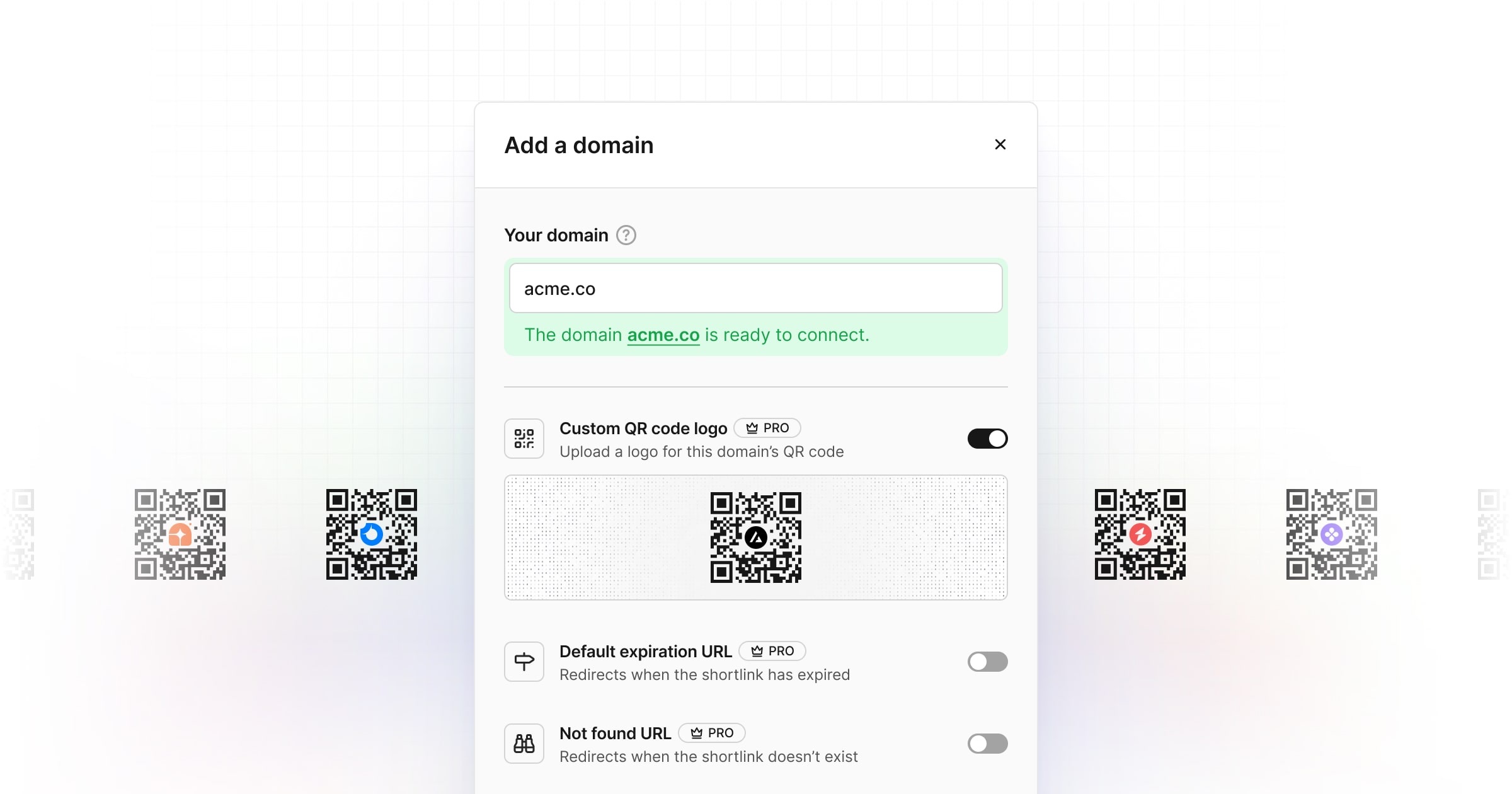
Image source: Dub custom QR code help page
That limit matters because it tells you who the free plan is really for. It is good for testing Dub, setting up branded links, and checking whether the analytics feel better than what you use now. It is not the version that fully sells the product.
If you are serious about using Dub for campaigns, brand control, or performance reporting, you will outgrow the free plan pretty fast. That is not a bad thing. It just means the free plan is a proving ground, not the full payoff.
The good stuff
The analytics are stronger than most people expect from a link tool
Dub gets more compelling once you stop thinking of it as just a short-link tool. The platform is built around attribution, so you can track clicks, leads, and sales instead of stopping at top-of-funnel vanity numbers.
That is a big reason people end up choosing Dub over simpler options. A basic shortener can tell you whether someone clicked. Dub is built to help you see whether those clicks turned into something useful.
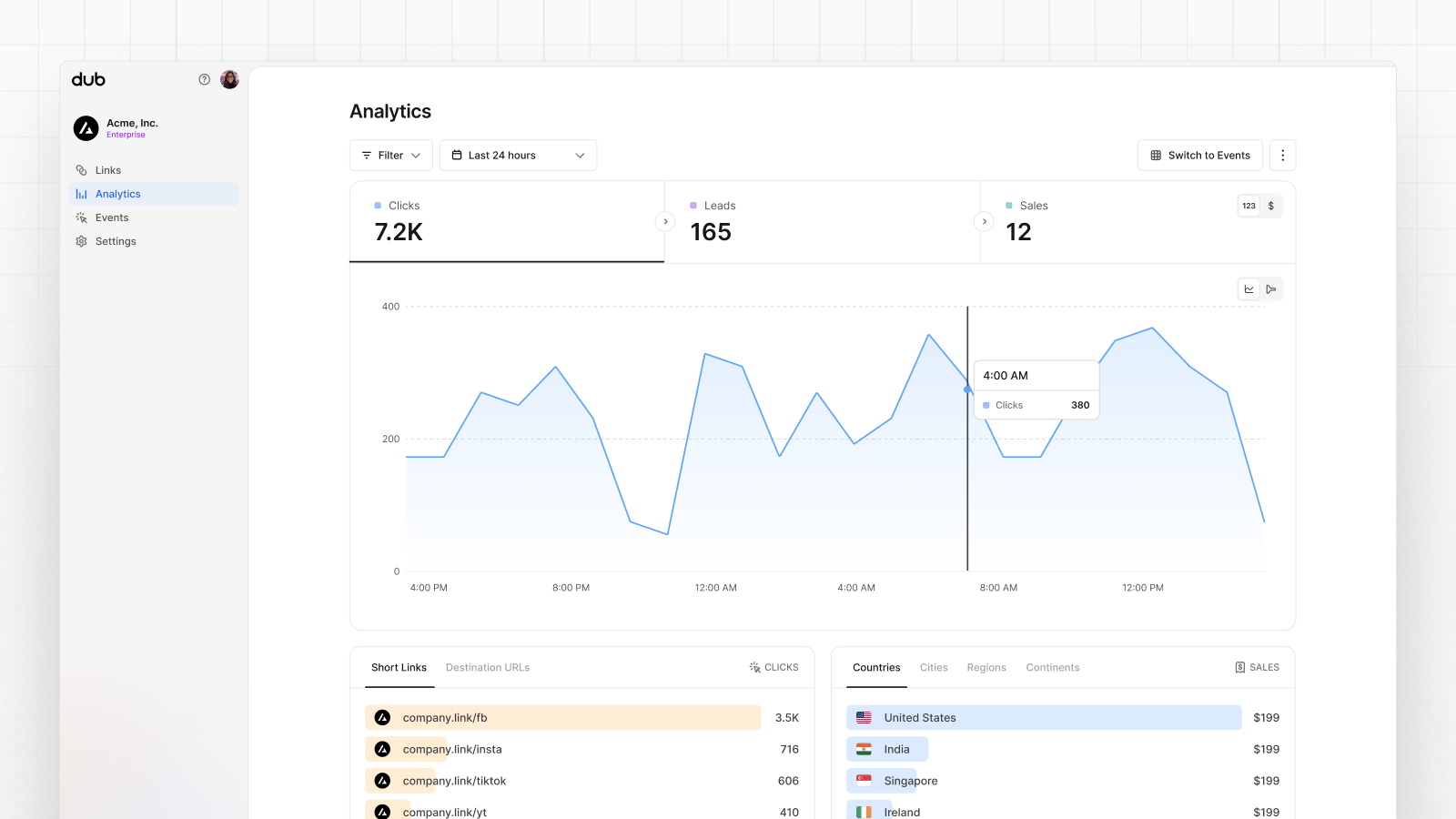
Image source: Dub conversion tracking guide
The event view makes campaign decisions easier
Dub also gives you a real-time events stream, which is useful when you need more than summary charts. You can see link activity in a way that feels closer to a real campaign dashboard than a generic analytics report.
That helps when you are checking link performance across countries, devices, locations, or campaigns and do not want to bounce between tools. If your current setup feels scattered, this alone can make Dub look a lot more attractive.
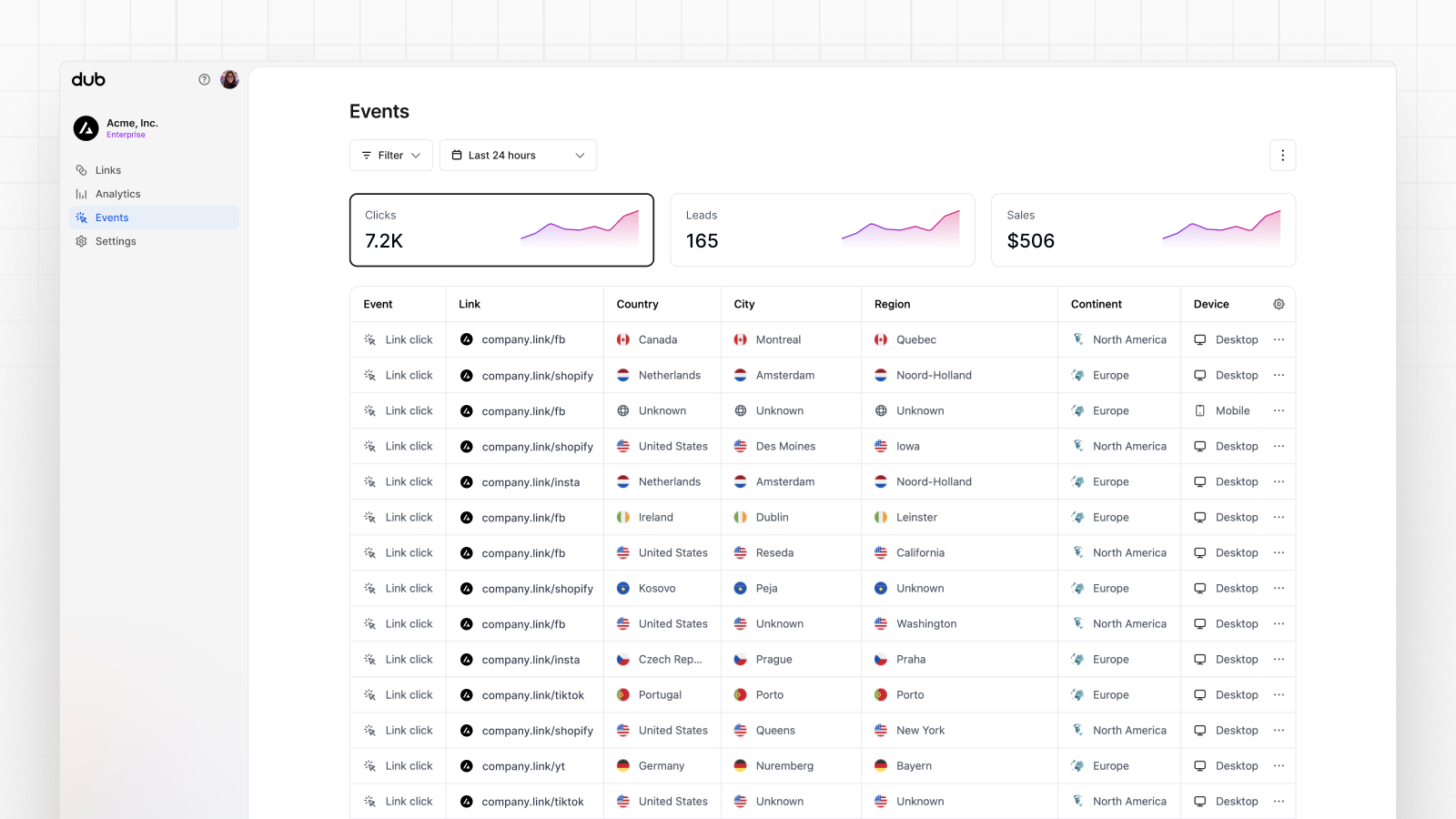
Image source: Dub events stream documentation
Dub grows into partner and referral tracking without changing tools
This is where Dub separates itself from a lot of similar tools. It is not only about branded links and analytics. Higher plans also pull in Dub Partners, which means affiliate, influencer, and referral tracking can live inside the same stack.
That matters if you are tired of buying one tool for links and another for partner management. For the right buyer, this is the point where Dub starts feeling less like a utility and more like a real growth tool.
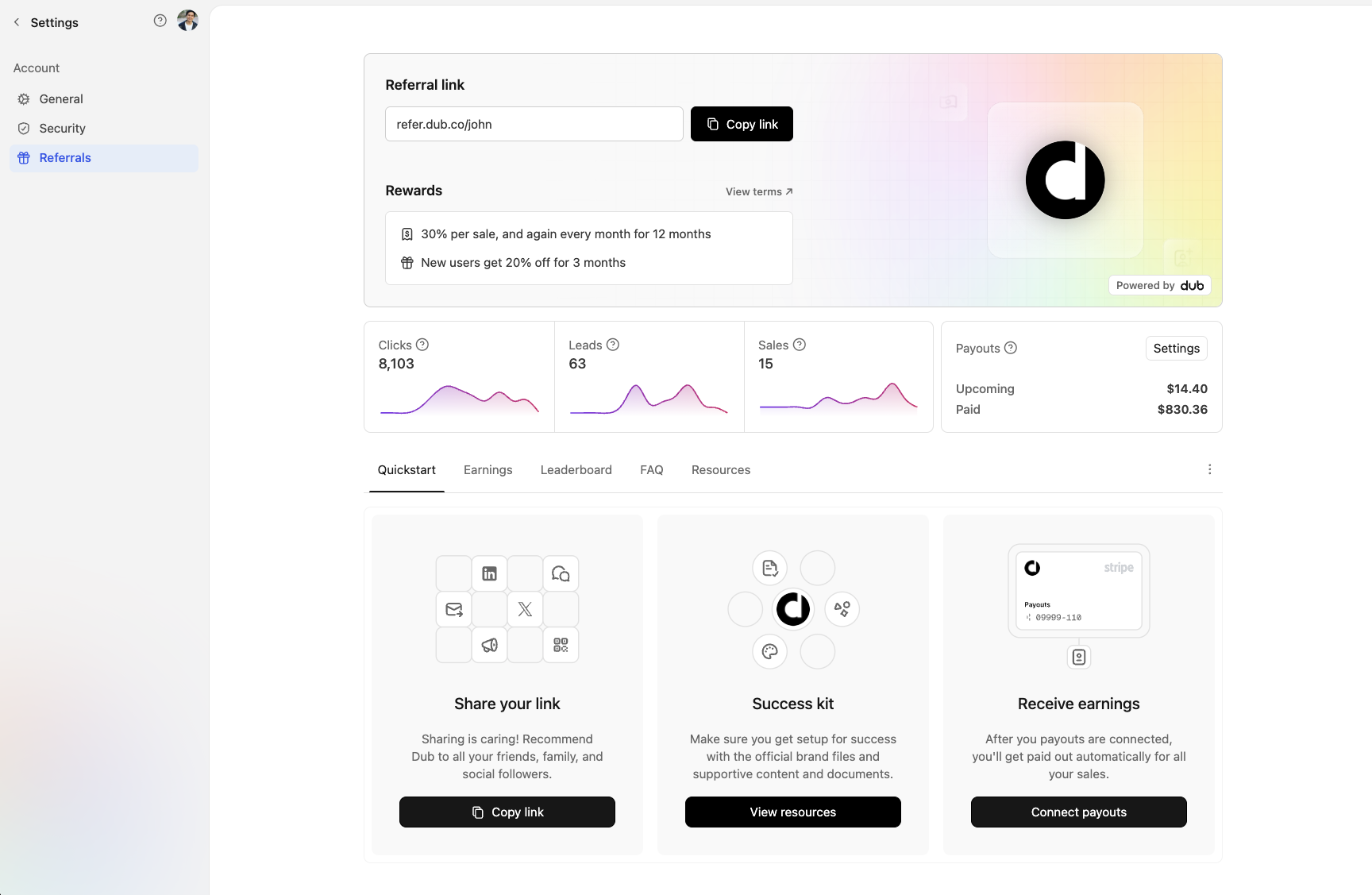
Image source: Dub referral dashboard example
Pricing and value compared to other tools
Dub’s pricing is pretty easy to read once you break it into two stages. Free is for testing. Pro at $25 per month billed yearly is where advanced link features and bigger limits kick in. Business at $75 per month billed yearly is where conversion tracking, A/B testing, customer insights, event webhooks, and Dub Partners start making the price easier to justify.
That also tells you where people get confused. Dub can look expensive if you compare it to cheap publishing or funnel tools one feature at a time. It looks much more reasonable if you compare it to the cost of buying one tool for links, another for attribution, and another for referral tracking.
See current Dub pricingDub wins this comparison when links are the actual engine of your growth. If your business lives on partnerships, creator campaigns, affiliate traffic, or tracked outbound campaigns, Dub is the most focused option here.
Buffer wins when your real problem is publishing content. Systeme.io wins when price is your biggest concern and you want a cheap all-in-one. GoHighLevel wins when you want the broadest stack and can handle a much bigger setup.
Why buying now can make more sense than waiting
Waiting makes sense if you are still figuring out what you are selling. Waiting does not make much sense if you already have campaigns running and you still cannot clearly tell which links, creators, or channels are producing revenue.
That is where manual tracking gets expensive in a quiet way. You spend time cleaning up UTM links, checking multiple dashboards, guessing which source deserves credit, and missing chances to double down on what is already working.
Dub helps most when you already have motion. If traffic is coming in, offers are live, or partners are sending clicks, starting now gives you better data sooner. Delaying usually means you keep making decisions with partial information.
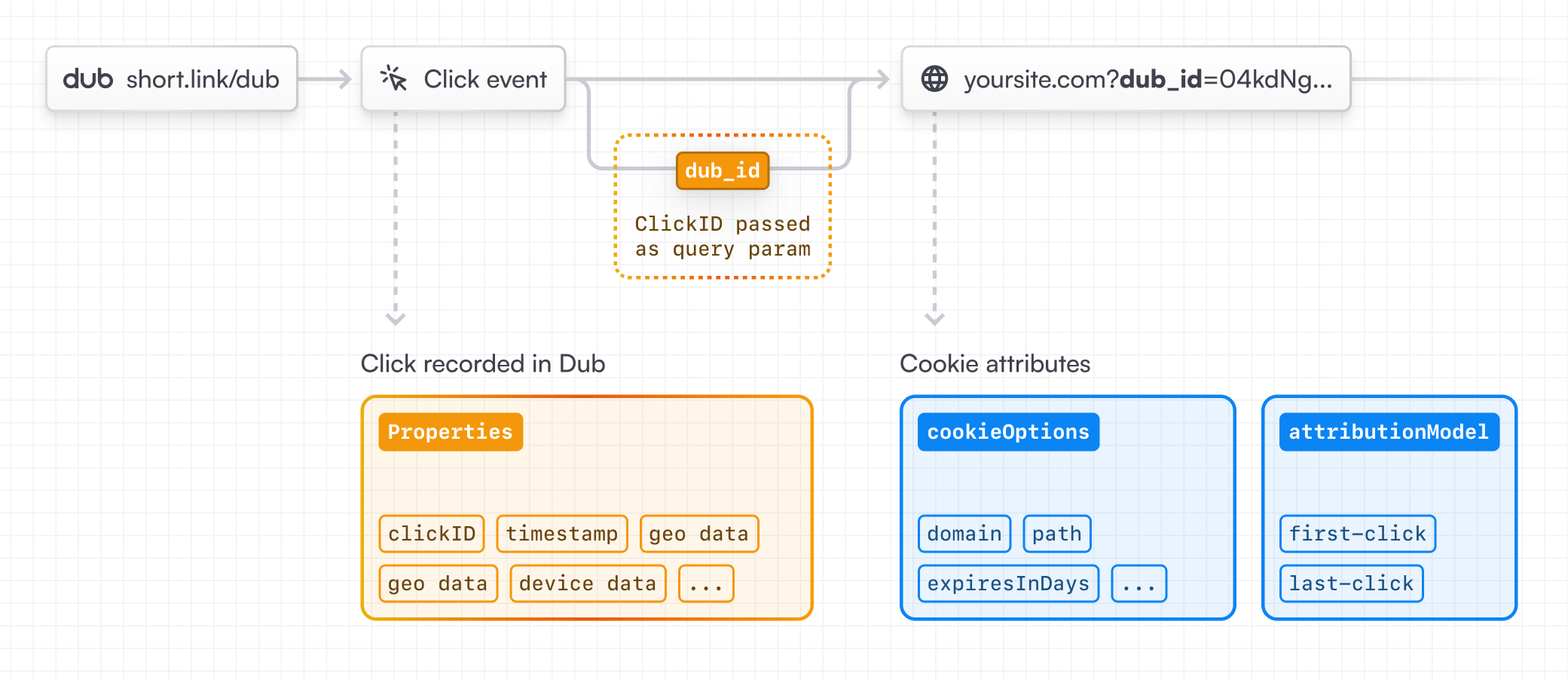
Image source: Dub attribution documentation
For the right buyer, this is absolutely worth trying now. Not because of fake urgency, but because attribution only becomes useful once it starts collecting data. The earlier you set it up, the earlier your reports stop being guesswork.
The next section gets into the most important trust check of all: which Dub alternatives are genuinely worth considering, who should skip Dub, and where a cheaper or broader tool may be the smarter buy.
Dub alternatives that are actually worth considering
Most “Dub similar tools” fall into three buckets. You either get something simpler and cheaper, something broader and heavier, or something that overlaps partially but does not replace it completely.
The mistake most people make is comparing features line by line instead of asking what job they actually need done. The table below makes that decision easier.
Explore DubDub is the better choice when tracking matters more than publishing or building funnels. If you care about knowing exactly which link, creator, or campaign produced results, Dub is hard to replace.
Pick Buffer if you just need content out consistently. Pick Systeme.io if your budget is tight and you want a simple all-in-one. Pick GoHighLevel if you are building an agency stack and links are just a small part of the system.
My honest take
Dub is not trying to be everything, and that is exactly why it works. It focuses on links, attribution, and tracking, then expands into referrals and partnerships without turning into a bloated platform.
The biggest strength is clarity. You can see what is working faster, which means you can scale faster or cut what is not performing without guessing.
The limitation is just as clear. If your business is not at the point where links directly connect to revenue or campaigns, you will not feel the full value yet.

Image source: Dub product overview
For the right buyer, this is absolutely worth trying. If you already have traffic, campaigns, or partners sending clicks, Dub makes your decisions sharper almost immediately.
If you are still experimenting with what to sell or how to get traffic, you can wait. You will not lose much by sticking with simpler tools until your setup gets more serious.
FAQ
Is Dub better than Bitly or basic link shorteners?
Yes, but only if you need more than click counts. Dub goes further with conversion tracking, branded links, QR codes, and referral tracking. If you only need short links, simpler tools are still enough.
Is Dub hard to set up?
No, the basic setup is straightforward. You can create links quickly, and advanced features like conversion tracking take more time, but they follow a clear structure.
Can beginners use Dub?
Yes, but beginners will not always need it yet. It becomes more useful once you have traffic, campaigns, or partners to track.
Does Dub replace other tools?
It can replace multiple smaller tools around link tracking, QR codes, and attribution. It does not replace full marketing platforms like CRMs or funnel builders.
Is the free plan enough?
It is enough to test the platform. Most serious users will need Pro or Business to unlock the features that make Dub stand out.
Should you try Dub now?
If you are already running campaigns, sending traffic, or working with partners, trying Dub now makes sense. The sooner you track properly, the sooner your decisions improve.
If your setup still feels early or experimental, you can wait. Dub becomes much more valuable once there is real data to track.
Check the official free plan Filip Konecny Enterprises