
Dub looks like a link shortener on the surface, but that undersells it. It is closer to a modern link attribution platform that also gives you branded short links, conversion tracking, and partner-program tools in one place.
That matters if your current setup feels patched together. When one tool shortens links, another tracks conversions, and a third handles affiliates, Dub starts to look less like a nice extra and more like a cleaner way to run the whole thing.
It will not be the right buy for everyone. If you only need a basic short URL and do not care about attribution, partner payouts, or deeper reporting, you may be happier saving money and using something simpler.
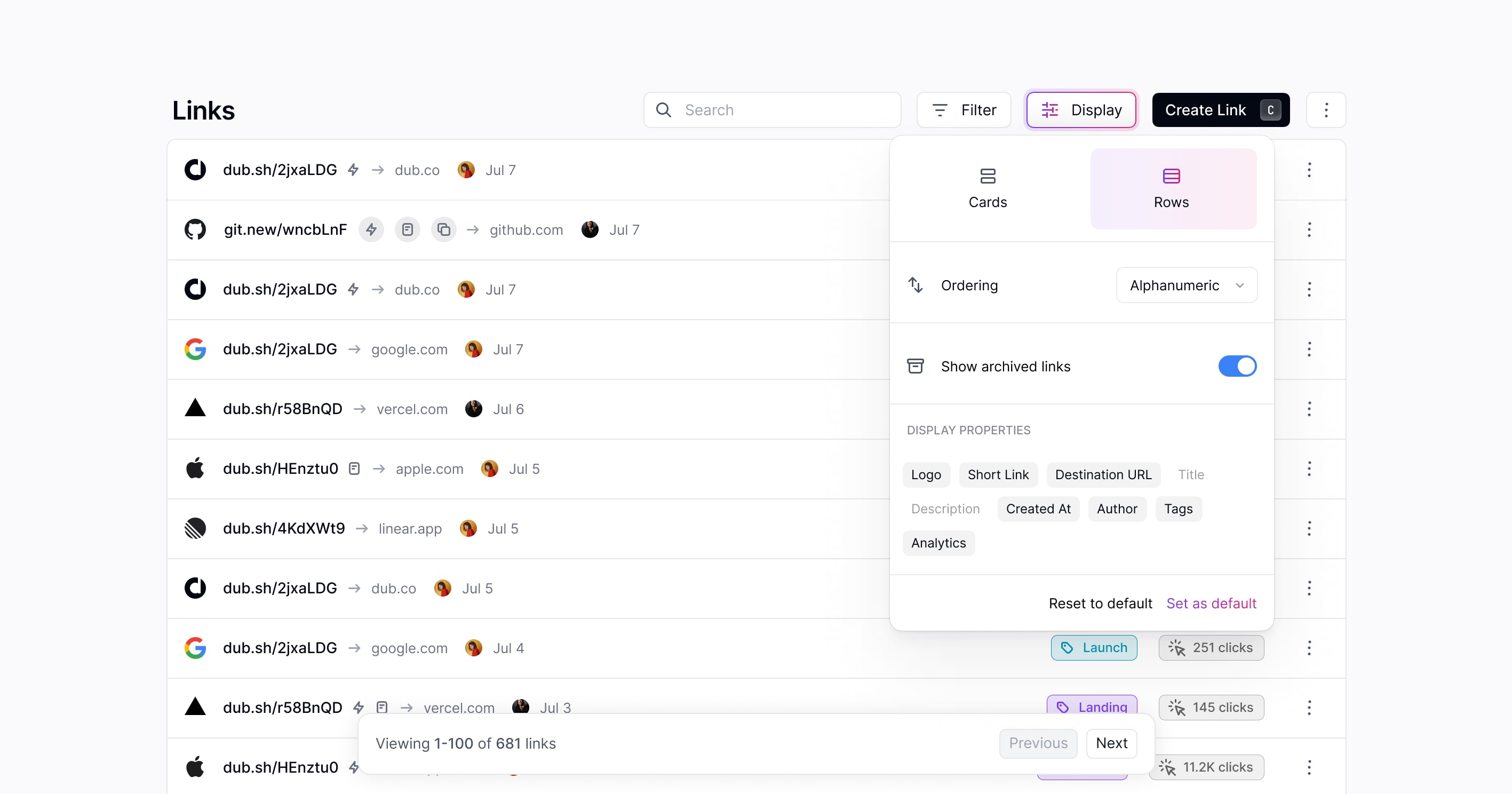
Image source: Dub links dashboard update
Article outline
Here is how this Dub review is structured so you can jump straight to the part that matters most to your decision.
- Dub at a glance — the quick snapshot of what it does, what it costs, and who should pay attention.
- What you get in the free trial, the good stuff, and pricing and value — the practical part of whether the platform earns its price.
- Alternatives, final verdict, and FAQ — who should buy, who should wait, and when another tool makes more sense.
Dub at a glance
Dub makes the strongest case for itself when you need more than vanity click numbers. The platform is built around short links, real-time analytics, conversion attribution, and affiliate or referral workflows instead of treating those as separate add-ons.
The official Dub homepage and product docs position it for three clear buyers: marketers who want better attribution, founders running partner programs, and developers who want link analytics inside their own product. That is a wider brief than a normal short-link tool, and it is the main reason Dub can feel like a smart upgrade instead of just another subscription.
That table is the short version of the decision. Dub is easiest to justify when you already have traffic, offers, or partners to track, because that is when better attribution and fewer moving parts start saving real time.
The catch is simple. If you are still at the stage where you are barely sending any traffic and do not need more than a branded link plus basic clicks, Dub can feel like buying the better tool before you actually need the better tool.
Still, the value case is stronger than it first appears. The official pricing page, analytics page, and integrations overview show that Dub is trying to replace several separate jobs at once, not just give you prettier short links.
That is why this review leans positive for the right buyer. If you are already serious about attribution, growth campaigns, or affiliate tracking, waiting too long usually means you keep juggling extra tools and keep delaying a cleaner setup.
What you get in the free trial
Dub gives you enough on the free plan to figure out whether the product clicks for you. You get 1,000 tracked events per month, 25 new links per month, 3 custom domains, API access, QR codes, link tags, UTM templates, and 30-day analytics retention.
That is a real test drive, not a fake teaser. If your goal is to create branded links, watch traffic, and see whether the dashboard feels better than the clunky tools you have used before, the free plan is generous enough to make that decision without paying first.
The limit shows up when you want serious attribution. Conversion tracking, customer insights, and A/B testing sit higher up the pricing ladder, so the free plan is best for basic link management and early validation, not full-funnel measurement.
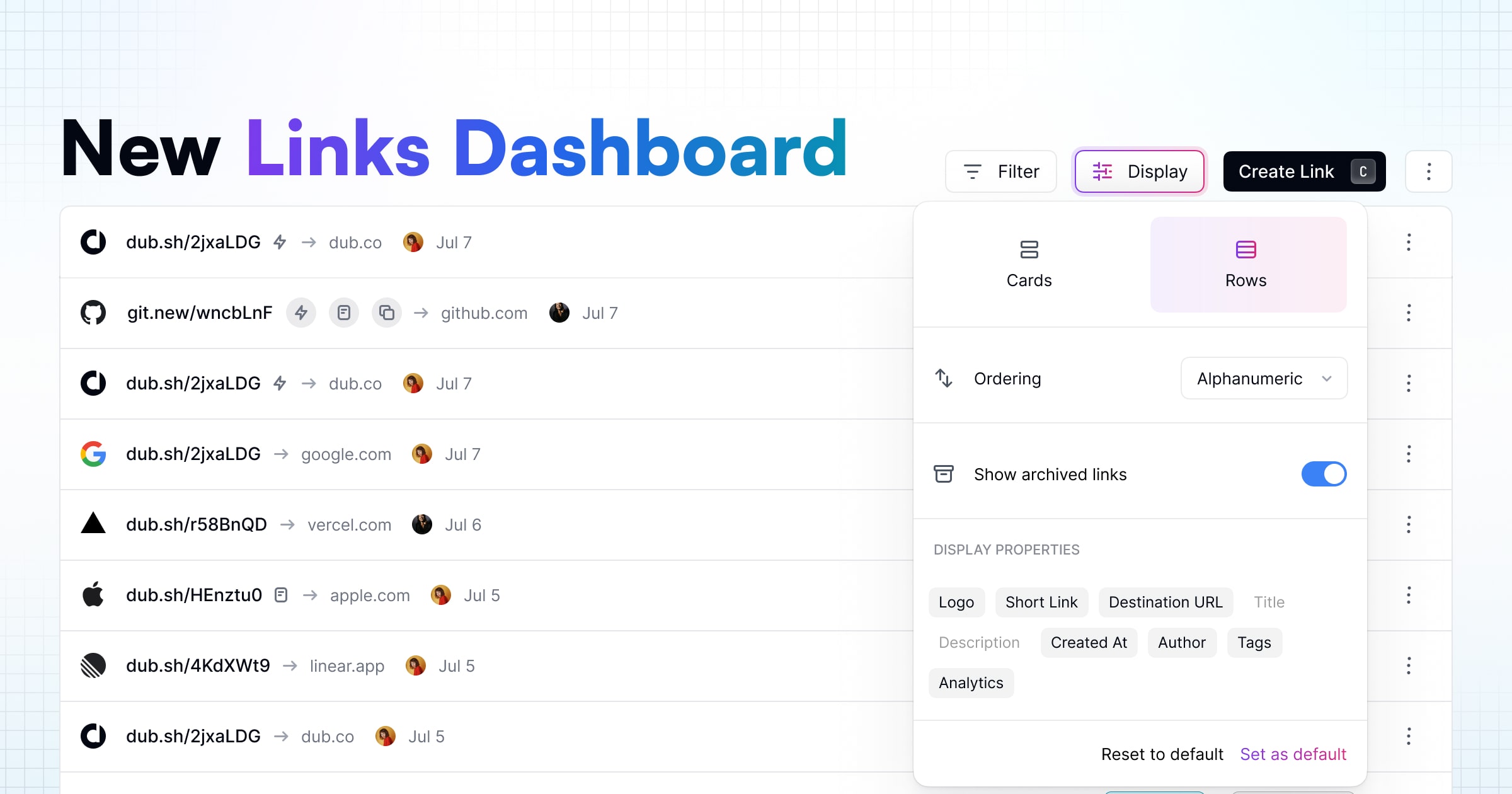
Image source: Dub links dashboard update
That setup makes Dub easy to recommend for cautious buyers. You can start free, connect a custom domain, build a few links, and see the reporting for yourself before deciding whether the paid plans will actually save you time.
The good stuff
Dub earns attention because it does more than shorten links. The platform combines short links, real-time analytics, conversion tracking, partner programs, webhooks, API access, and integrations like Stripe, Shopify, HubSpot, GTM, Segment, and Zapier inside one product.
That matters because separate tools create separate headaches. When link creation, attribution, and partner tracking live in the same place, you spend less time stitching reports together and more time seeing what is actually working.
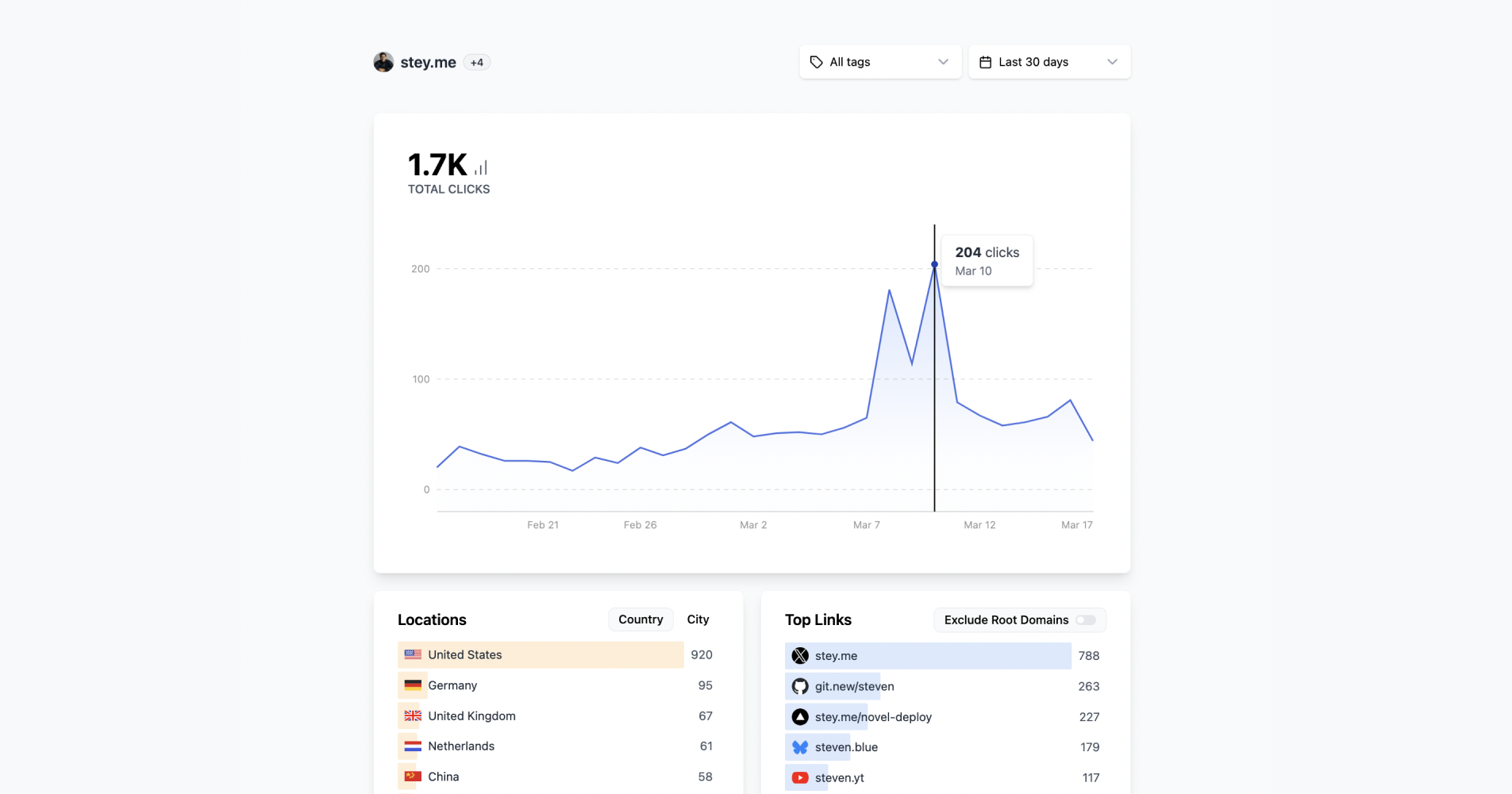
Image source: Dub analytics dashboard update
Cleaner reporting than most link tools
Dub’s reporting is one of the main reasons to pay attention. The analytics product is built around real-time click data, location and device filters, public dashboards, event tracking, and customer journey visibility instead of stopping at basic click counts.
That makes Dub more useful for marketers who care about outcomes, not just traffic. If you are trying to connect campaigns to leads or sales, the platform makes a much stronger case than a simple shortener that only tells you how many people clicked.
Partner program tools that go beyond link tracking
Dub gets more interesting once you look at Dub Partners. On Business plans and above, you can run affiliate and referral programs with flexible reward structures, one-click payouts, tax-compliance support, dual-sided incentives, fraud detection, and even an embedded referral dashboard.
That is a big deal if you were planning to bolt affiliate software onto a separate link tracker later. Dub gives you a way to keep attribution and partner management under the same roof, which is easier to justify than paying for disconnected tools once your program starts growing.

Image source: Dub Partners overview
The catch
Dub is not the cheapest way to create short links. G2 feedback also points to the same pattern: users like the modern interface, easy setup, and support, but some still want deeper analytics in places and more flexible pricing as usage climbs.
That does not kill the value. It just means Dub makes the most sense when you already have traffic, campaigns, or partners worth measuring, because that is when better attribution starts paying for itself.
Pricing and value
Dub’s pricing is easy to understand once you separate testing from serious use. Free is for basic link management, Pro starts at $25 per month billed yearly with 50,000 tracked events and 1-year retention, and Business starts at $75 per month billed yearly with 250,000 tracked events plus conversion tracking, A/B testing, customer insights, and event webhooks.
Business is where Dub starts to justify its cost for growth teams. If you only want branded links, the free plan may be enough, but if you want to see clicks turn into leads and sales, that higher tier is where the product starts feeling like real infrastructure instead of a convenience tool.
See current pricingDub also looks better when you compare it with broader tools instead of just cheap shorteners. GoHighLevel starts much higher but gives you CRM, funnels, automation, and agency tools, while Systeme.io is far cheaper if your real need is building funnels, emails, and simple affiliate flows inside one budget-friendly stack.
That does not make Dub overpriced. It means Dub wins when attribution is the job, while those other tools win when you need a broader business stack and are willing to accept weaker link-specific depth.
The same logic applies if you are looking at Buffer. Buffer is cheaper for social publishing and scheduling, but it is not trying to be your link attribution engine or partner-program backbone.
Why you should get it
Dub is easiest to justify when your current setup feels messy. If you already have campaigns running, links spread across channels, or plans to launch a referral or affiliate motion, this tool can save you time fast because it puts attribution and link ops in one place.
You probably should wait if you are still at zero and just need a free short link once in a while. A simpler tool will do the job until you have enough traffic, sales activity, or partner interest to make deeper reporting worth paying for.
For the right buyer, though, this is absolutely worth trying now. Delaying usually means you keep patching together links, analytics, spreadsheets, and payout tools when you could already be building on a setup that is cleaner from day one.
Check the official free trialAlternatives worth looking at
Dub is not the only tool in this lane, and that is exactly why it is easier to trust when it still comes out looking strong. The main question is not whether Dub exists in a vacuum, but whether it is the best fit for the kind of job you actually need done.
Dub wins when attribution is the point. If you mainly care about short links, conversion visibility, partner tracking, and keeping that all in one clean system, it feels far more focused than broader all-in-one tools that treat links as a side feature.

Image source: Dub Partners overview
Broader tools can still make more sense for some buyers. GoHighLevel is the better pick if you want CRM, funnels, appointment booking, automation, and client management in one place, while Systeme.io is the easier recommendation if you want the cheapest path into funnels, email, courses, and basic affiliate management.
Then there is Buffer, which solves a different problem well. Buffer is for social publishing and scheduling, not for link attribution depth, partner payouts, or revenue tracking across campaigns.
Check the official free trialChoose Dub if your problem is messy attribution, scattered links, or a partner program that needs cleaner tracking. Choose Systeme.io if money is tight and you need a broader starter stack, and choose GoHighLevel if you want a much bigger operating system for sales and client work.
Choose Buffer if your real need is social scheduling. It is cheaper for that job, but it is the wrong comparison if you are actually trying to measure which links, partners, and campaigns create revenue.
Image source: Dub Partners analytics
My honest take
Dub is a strong buy for the right person. It gives you a cleaner way to manage links, see what converts, and run partner motion without stacking a bunch of separate tools that barely talk to each other.
It is not the universal answer. If you only need a simple short link now and then, or you are still so early that you do not have traffic worth measuring, paying for Dub too soon can be overkill.
The value shows up fast once you already have traffic, campaigns, or affiliates in play. That is where the better analytics, longer retention, payout tools, and conversion tracking stop feeling like nice features and start feeling like time saved and blind spots removed.
I would not push every beginner into this. I would push serious marketers, SaaS teams, and founders with active growth channels to look closely, because patching together cheap tools often costs more in delay and confusion than the subscription you were trying to avoid.

Image source: Dub partner payouts dashboard
That is the real recommendation here. Start Dub now if attribution matters to you already, wait if you are still too early to benefit from it, and skip it only if your needs are so simple that basic link shortening is genuinely enough.
FAQ
Is Dub worth it for beginners?
Sometimes, but not always. Beginners with real traffic or a live offer can benefit from starting clean, while beginners with no meaningful traffic yet can usually wait and stay on the free plan or use a simpler tool first.
Does Dub replace other tools?
It can replace more than a link shortener. Dub can cover branded links, analytics, conversion tracking, and partner-program work that might otherwise be spread across several tools.
Is Dub better than GoHighLevel?
Dub is better when attribution and partner tracking are your main needs. GoHighLevel is better when you want CRM, funnels, scheduling, and a broader all-in-one setup for agency or client work.
Is Dub better than Systeme.io?
Dub is better for focused link attribution and partner operations. Systeme.io is better when budget matters most and you need funnels, email, and general business tools more than deep link analytics.
Should you start with the free plan or pay right away?
Start with the free plan if you want to validate the workflow first. Move to a paid plan once you need more tracked events, longer analytics retention, or the higher-end conversion and partner features.
Get started with Dub Filip Konecny Enterprises