
If you are searching for a Dub promo code, the bigger question is whether Dub is worth paying for in the first place. A discount helps, but only if the tool actually saves you time, cleans up your tracking, or gives your partner program enough control to justify the bill.
Dub looks much better than a basic link shortener once you care about attribution, branded links, conversion tracking, and partner payouts in one place. If all you need is a simple short link now and then, this is probably more tool than you need.
The live offer that stands out most is the official partner deal that gives new users 20% off their first 3 months, which is better than gambling on random coupon sites. That makes this review useful for one decision only: should you grab the deal and test Dub now, or keep your setup cheap and simple for a little longer?
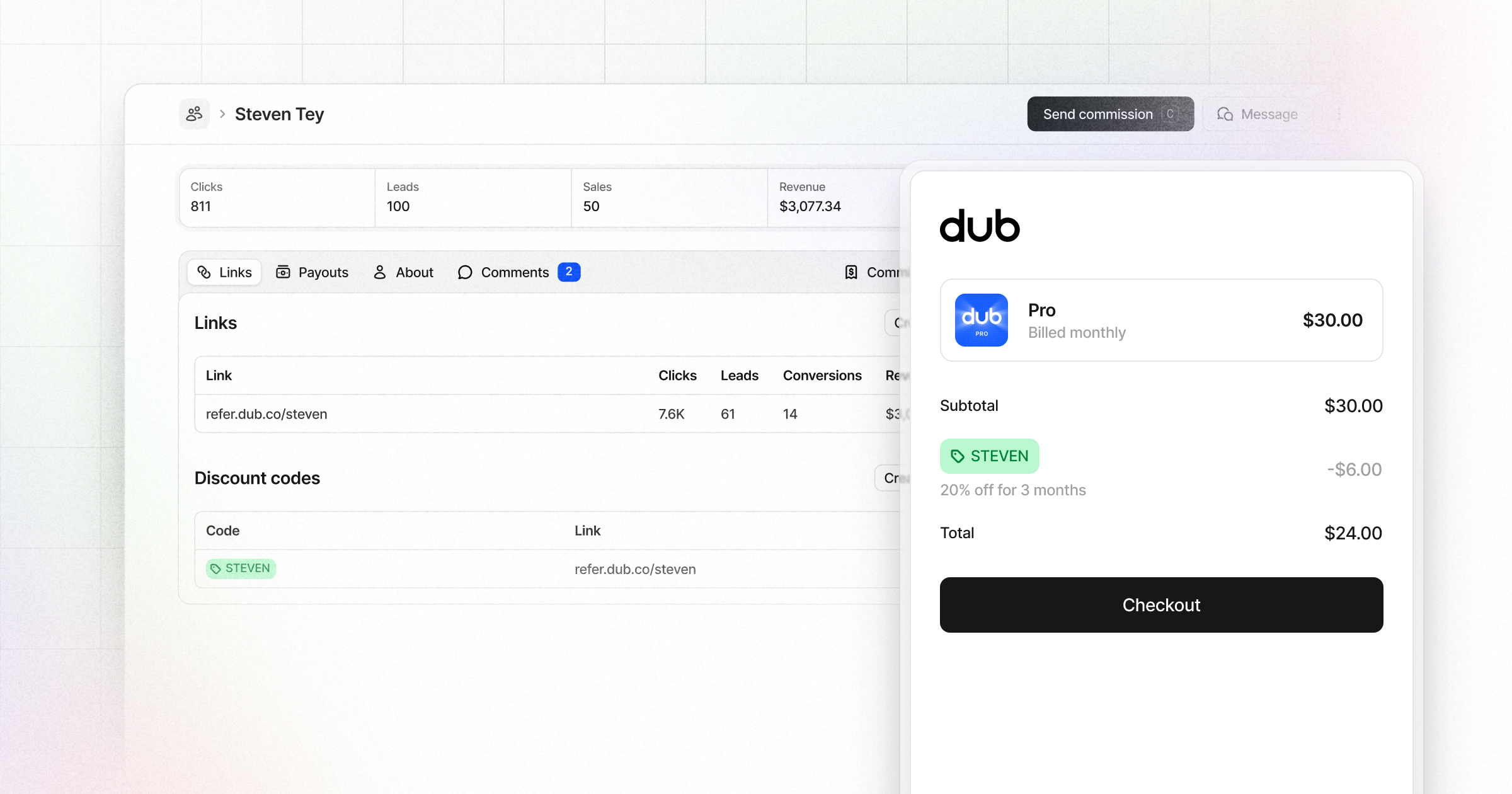
Image source: Dub partner discount codes update
My quick take
Dub is easiest to recommend to SaaS teams, creators, agencies, and growth-focused brands that already care about where clicks turn into leads or revenue. It becomes a much harder sell for casual users because the real value is not “shorten a link,” it is “track what happened after the click and manage partners without stitching together extra tools.”
That is also why a Dub promo code matters less than it sounds. The discount is nice, but the real reason to try Dub is that it can replace messy workarounds, give you cleaner attribution, and make partner offers feel much more controlled than running everything manually.
I also would not buy this just because there is a deal floating around. I would buy it because you already have traffic, links, campaigns, or partners worth tracking, and the discount simply lowers the cost of testing whether Dub fits your workflow.
Check the current Dub dealArticle outline
I kept this review focused on one thing: helping you decide whether chasing a Dub promo code is actually worth your time. The structure below walks from the fast decision, into the product details, and then into the final buy-or-skip call.
- Start here: is Dub actually worth trying, and who should care about a promo code?
- Before you pay: what you get, what stands out, and how the pricing compares
- Before you commit: the best alternatives, my final verdict, and the common questions that matter
Is Dub actually worth trying?
For the right buyer, yes. Dub makes the most sense when you are already past the stage of asking, “How do I shorten this link?” and you are now asking, “Which links drive leads, sales, and partner revenue, and how do I manage that without a pile of tools?”
Its free plan is generous enough to get a feel for the product, but the paid tiers are where Dub starts behaving like a serious marketing tool. That matters because a promo code only helps if you are going to use features that basic free shorteners do not handle well, like deeper analytics, longer retention, conversion tracking, A/B testing, custom domains at scale, and partner-focused incentives.
Dub is not the cheapest route, and that is the catch. If your links are low stakes, your traffic is small, or your current setup is not causing pain yet, waiting is reasonable.
But once you are already running campaigns, working with creators, or trying to prove which links convert, delaying usually means you keep doing messy tracking by hand. At some point, that costs more than the software.
What you get in the free trial
Dub does not really sell itself with a flashy long free trial. The lower-risk entry point is the free plan, and that matters because you can test the product without adding a card or rushing through setup.
The free plan is enough to tell you whether Dub fits how you work. You get real-time analytics, API access, QR codes, UTM templates, 3 custom domains, 25 new links per month, 1 user, and 30 days of analytics retention.
That is plenty if your goal is simple: create a few branded links, watch the data come in, and decide whether the jump to Pro or Business makes sense. It is not enough if you already need deep reporting for a team, longer data retention, or serious conversion tracking tied to revenue.
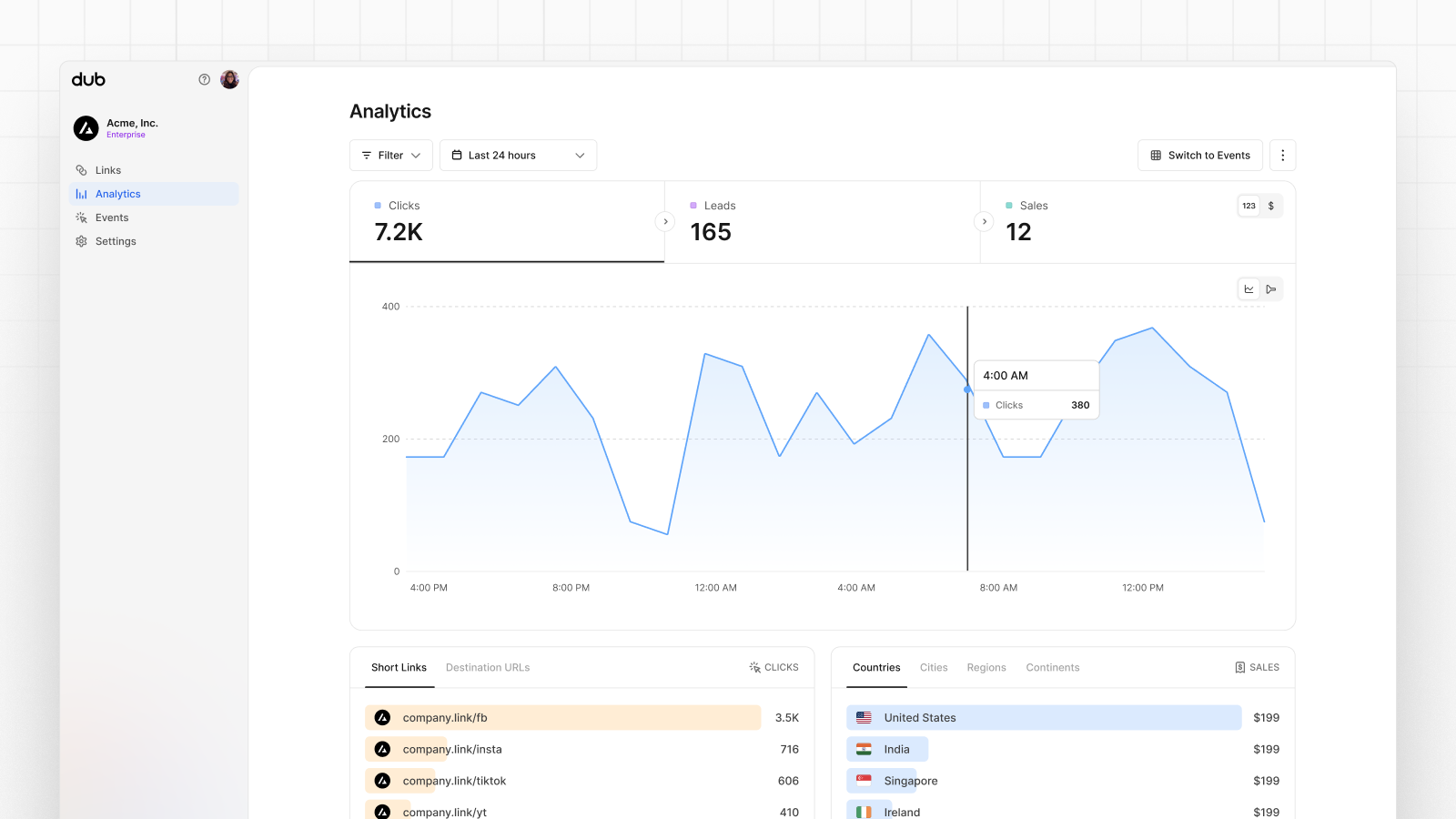
Image source: Dub conversions overview
Paid plans are where Dub starts acting like a serious growth tool instead of just a polished shortener. Pro adds higher limits and advanced link features, while Business adds conversion tracking, A/B testing, customer insights, event webhooks, and access to Dub Partners.
That makes the Dub promo code more useful for people who are already close to buying. If you only want to shorten links, the free plan is enough to make your decision fast.
The good stuff
Dub looks good because it keeps the surface simple while still doing work that basic link tools do not. You can create branded links, organize them cleanly, and then track what happened after the click without feeling like you opened a giant enterprise dashboard.
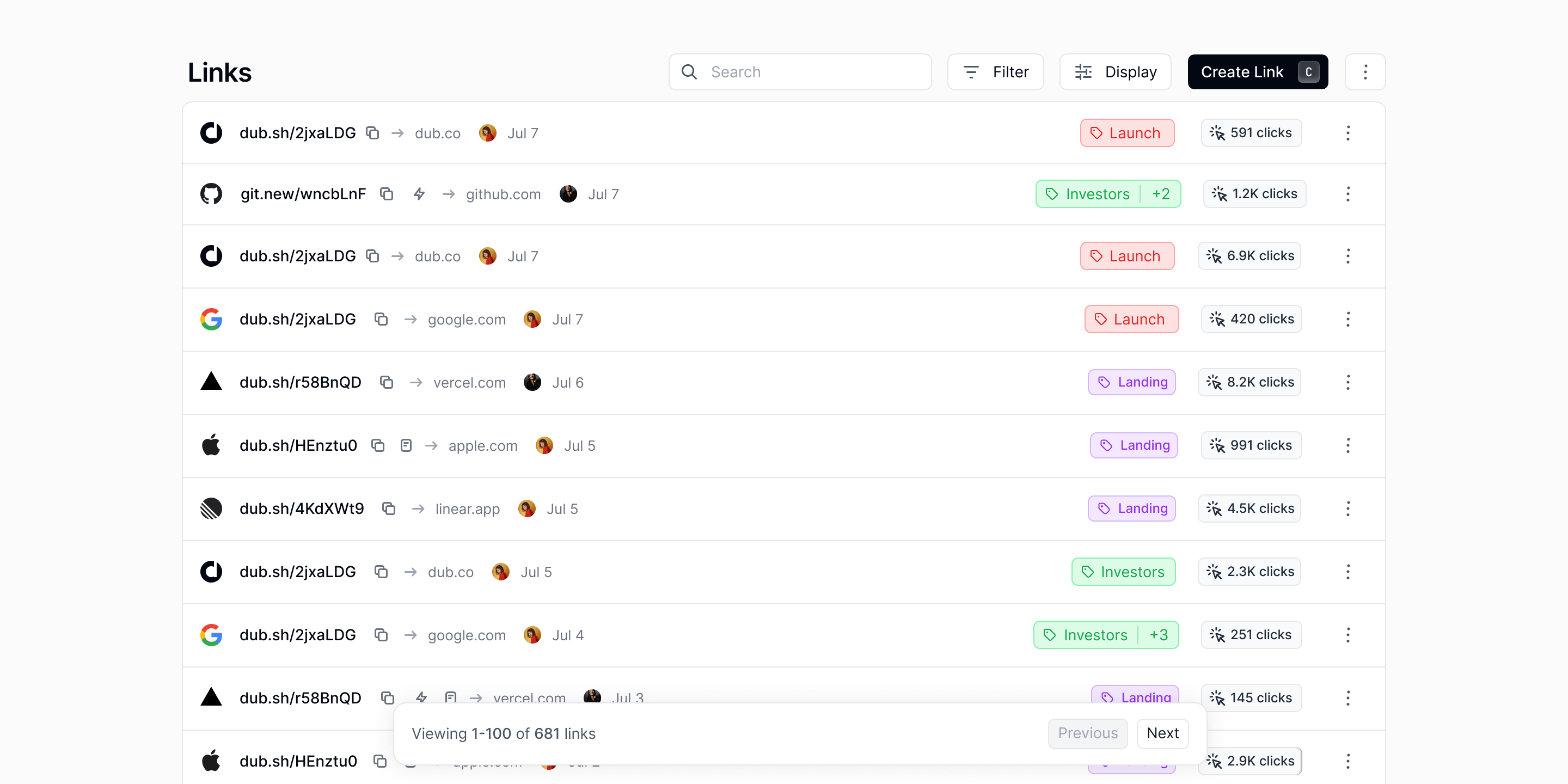
Image source: Dub links comparison page
The biggest strength is that Dub does not stop at click counts. On Business and above, the product starts connecting the click to leads, sales, refunds, churn, and partner performance, which is exactly where cheaper tools usually fall apart.
That payoff is practical, not theoretical. If you run paid traffic, creator campaigns, referral programs, or product-led growth loops, better attribution helps you stop guessing which links are worth keeping alive.
Dub Partners is another reason the platform stands out. You are not just handing out links and hoping for the best; you can manage referral or affiliate workflows, support incentives, and keep partner performance in the same system instead of bolting on another app later.
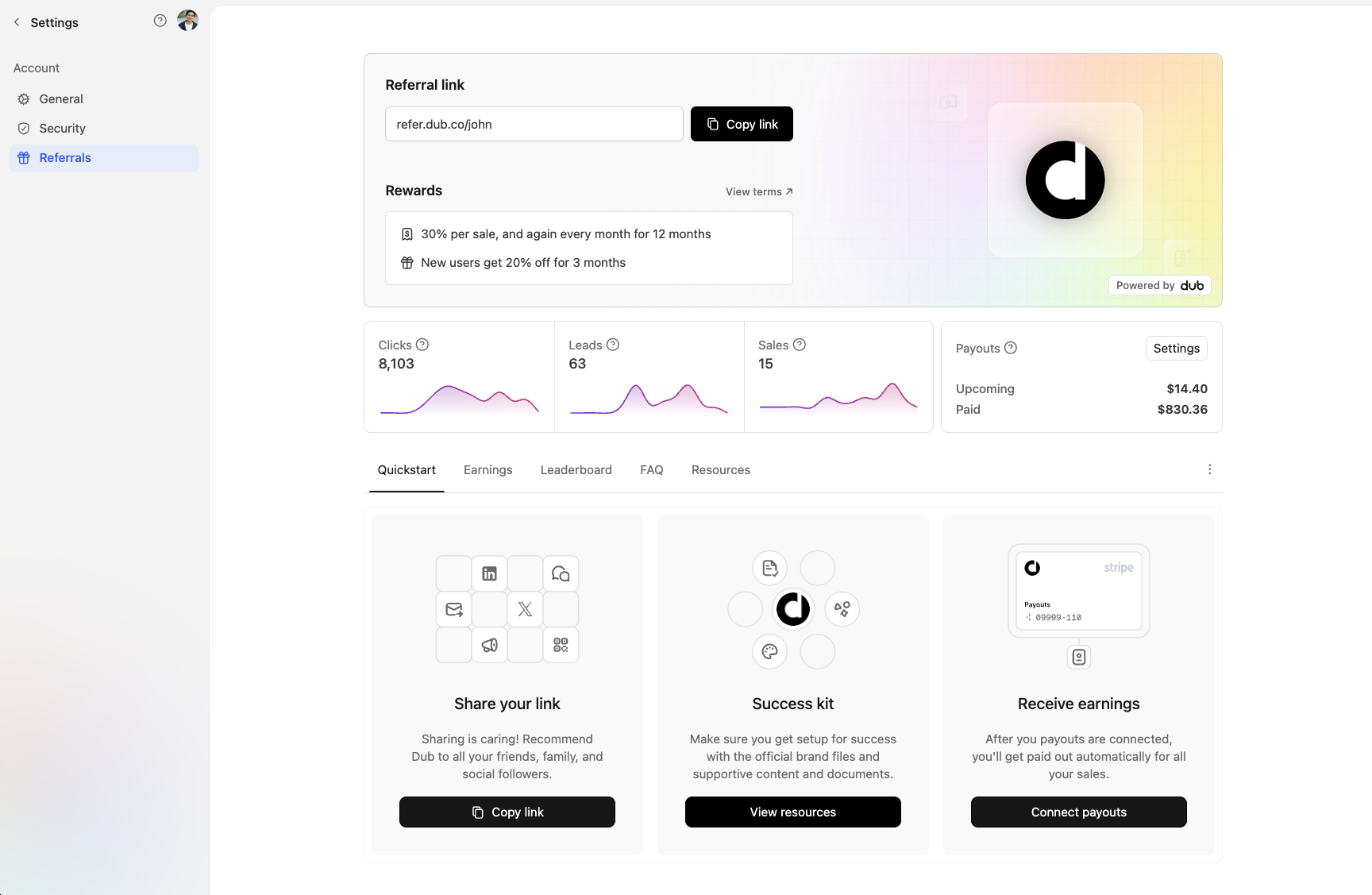
Image source: Dub referral dashboard example
The Stripe side is strong too. Business plans and above can track one-time payments, recurring subscriptions, free trials, refunds, cancellations, and other sales events through the Stripe integration, which makes Dub much more useful if revenue tracking is the whole reason you are shopping.
Here is the catch. Dub is great for some people and overkill for others.
If you are a solo creator who just wants a neat bio link or simple scheduling, this can feel too advanced. If you already have traffic, a product, and partners to track, the extra depth starts to justify the price very fast.
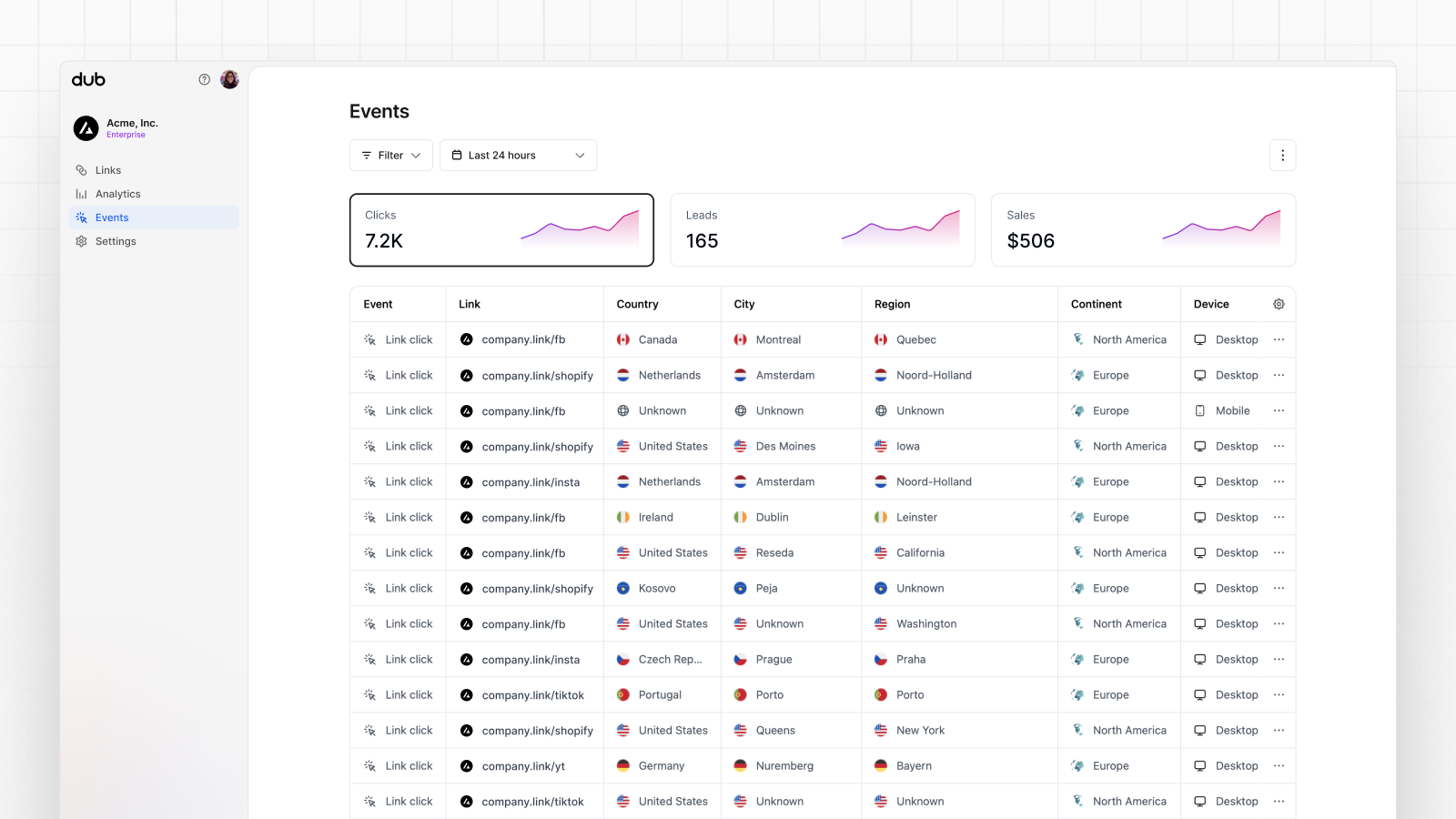
Image source: Dub real-time events dashboard
Pricing and comparison with other tools
Dub starts free, Pro starts at $25 per month on annual billing, and Business starts at $75 per month on annual billing. That puts it well above a lightweight social tool like Buffer, but below the price and complexity of a broader system like GoHighLevel.
The important thing is not which one is cheapest. The important thing is what job you are actually trying to solve.
See current Dub pricingDub wins when your problem is attribution and partner growth, not general marketing management. Buffer is cheaper if you just need publishing, and GoHighLevel makes more sense if you want an all-in-one CRM and automation stack.
Why you should get it
You should buy Dub when your current setup already feels messy. Spreadsheets, random short links, weak attribution, and disconnected partner tracking usually cost more in wasted decisions than the monthly fee.
You should probably wait if you have no real traffic yet, no offer, and no partner motion to measure. A Dub promo code does not magically make the tool useful before you are ready for it.
The sweet spot is simple. If you already have campaigns running and you care where leads or revenue actually come from, Dub is one of those tools that becomes easier to justify the minute you stop treating links like throwaway assets.
That is also why the 20% off offer is worth using if you are already close to action. Waiting usually means you keep delaying proper tracking, and that delay tends to hide which channels deserve more budget.
For the right buyer, this is absolutely worth trying now. The free plan lets you test the basics, and the paid plans make the strongest case once you are serious about attribution, partner revenue, and cleaner reporting.
Get started with DubDub vs alternatives: which one actually makes more sense?
Dub sits in a weird middle ground. It is more advanced than simple link tools, but much lighter than full marketing platforms.
That is good if you want clean attribution and partner tracking without building a full CRM stack. It is not ideal if you either want something extremely cheap or something that replaces your entire marketing system.

Image source: Dub vs Bitly comparison
Try Dub hereChoose Dub if tracking links, partners, and conversions in one place is your priority. Choose Buffer if you just need to post content, Systeme.io if you want cheap funnels, and GoHighLevel if you want to rebuild your entire marketing stack.
If your current setup already feels scattered, Dub is the clean middle option. If you are still early and testing ideas, a cheaper tool will probably do for now.
My honest take
Dub is not a “must-have” for everyone. It becomes a strong buy only when you actually care about what happens after someone clicks your link.
The free plan removes most of the risk, which is why trying it is easy to justify. The paid plans are where it earns its price, especially if you are tracking revenue, referrals, or partner performance.
The biggest mistake is buying it too early. If you have no traffic or offers yet, you will not feel the benefit.
The second mistake is waiting too long once your setup becomes messy. At that point, not tracking properly usually costs more than the subscription.

Image source: Dub dashboard overview
For the right buyer, this is absolutely worth trying. If you already have campaigns running, the Dub promo code just makes the decision easier, not necessary.
FAQ
Is there a working Dub promo code right now?
The most reliable offer is the partner deal that gives around 20% off the first 3 months. Random coupon sites are inconsistent, so the official referral route is usually the safest option.
Is Dub free to use?
Yes, there is a free plan with limited links, domains, and analytics retention. It is enough to test the product before upgrading.
Is Dub better than Bitly?
Dub goes further than basic shortening. If you only need simple links, Bitly or similar tools are fine. If you want conversion tracking and partner workflows, Dub is more useful.
Is Dub hard to set up?
Basic link creation is simple. Advanced tracking, custom domains, and integrations take more effort, but that is expected if you want deeper data.
Should you start now or wait?
Start now if you already have traffic, offers, or partners. Wait if you are still figuring out your first product or channel.
Should you try it now?
If you are serious about tracking what actually converts, this is one of those tools that quickly pays for itself in better decisions. If you are not there yet, keep things simple and revisit it later.
The free plan makes the first step easy, and the current deal lowers the cost of testing the paid features properly.
Explore Dub and check the current offer Filip Konecny Enterprises