
Dub looks cheap at first, then a lot more serious once you see what it is actually trying to replace. This is not just a link shortener with nicer branding. It is built for people who care about attribution, conversion tracking, partner programs, and not losing the thread between a click and a sale.
That matters because the Dub price only makes sense if you need more than basic short links. If all you want is a prettier URL, you can spend less. If you want branded links, real-time analytics, conversion tracking, partner payouts, and a cleaner system than stitching tools together by hand, Dub starts to look a lot more reasonable.
My quick take is simple: Dub is worth a real look for SaaS teams, creators with meaningful traffic, and brands already doing affiliate or referral growth. If you are still testing your first offer or barely getting clicks, you should probably wait before paying for it.
Article outline
- Is Dub actually worth the price?
- Who Dub is best for
- What you get in the free plan and paid plans
- The good stuff
- Dub pricing and value
- Why buying now can make sense
- Alternatives worth comparing
- My final verdict
- FAQ
Is Dub actually worth the price?
For the right buyer, yes. Dub has a free plan with 1,000 tracked events per month, 25 new links per month, three custom domains, API access, QR codes, and 30-day analytics retention, so you can test the core product without paying upfront.
The paid plans start getting more interesting fast. Pro starts at $25 per month billed yearly, adds 50,000 tracked events, 1,000 new links per month, a free .link domain, link folders, and deeper link features, while Business jumps to $75 per month billed yearly and adds conversion tracking, A/B testing, customer insights, and event webhooks.
That is the real dividing line. Dub is not a “should I shorten links?” tool. It is a “do I want attribution, partner tracking, and cleaner growth operations without patching together five tools?” tool.

Image source: Dub Analytics
Who Dub is best for
Dub makes the most sense for teams that already have traffic, campaigns, or partners to track. The platform is built around end-to-end attribution, affiliate and referral programs, and integrations with tools like Stripe, Shopify, Google Tag Manager, Zapier, HubSpot, and Segment.
That makes it easier to justify if you are already running a SaaS product, newsletter sponsorships, creator campaigns, or a partner program. It is harder to justify if you are just trying to make a few short links for social bios and simple promotions.
I also like Dub more for people who hate messy setups. When one platform can handle short links, analytics, customer insights, and affiliate infrastructure, the price starts competing against the cost of multiple subscriptions and the time you waste making them talk to each other.
See current Dub pricingThe part people usually miss
The Dub price becomes easier to defend once you stop comparing it Chyba v toku zpráv Opakovat
What you get in Dub before you pay
Dub price starts well because the free plan is not a fake teaser. You get 1,000 tracked events per month, 25 new links per month, real-time analytics, API access, QR codes, 3 custom domains, UTM templates, and 30 days of analytics retention.
That is enough to tell whether you even like the product before you spend anything. If you are a solo creator, early-stage founder, or marketer testing short links across a few campaigns, the free plan gives you real signal instead of forcing an upgrade after five minutes.
The catch is simple. Free is limited to one user, the link volume is small, and the retention window is short, so serious teams will outgrow it fast.
The good stuff
Dub gets interesting when you care about attribution, not just shortening URLs. A basic shortener can tell you a link got clicks, but Dub pushes deeper with conversion tracking, customer insights, event webhooks, deep links, and public analytics sharing on the higher plans.
That matters because messy marketing stacks waste time. If you are still stitching together one shortener, one spreadsheet, one analytics tool, and one half-working attribution setup, Dub starts to feel like the cleaner move.
You can actually see what is happening
The analytics view is a big reason Dub feels worth paying for. You are not just looking at raw clicks, because the platform also breaks things down by devices, geography, top links, and conversions when your setup is ready for that.
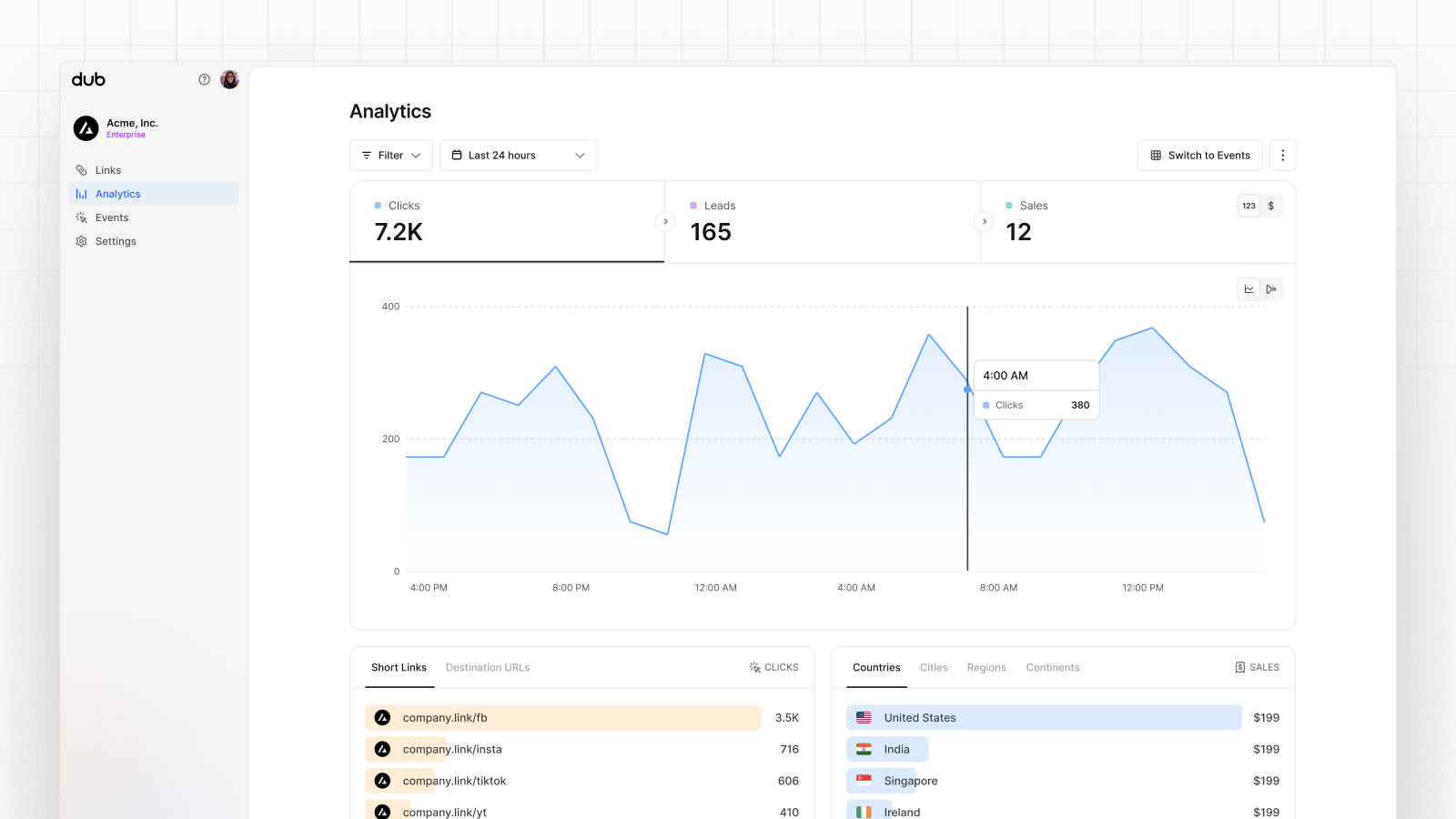
Image source: Dub
If your current setup tells you almost nothing after the click, Dub looks a lot more attractive. That is especially true if you are running newsletter sponsorships, creator campaigns, affiliate links, or product-led growth experiments where every click needs context.
The funnel view makes the price easier to justify
Dub is stronger than a bare-bones shortener when you want to follow the path from click to lead to sale. Business plans add conversion tracking, A/B testing, customer insights, and event webhooks, which is where the platform starts to earn its price for real teams.
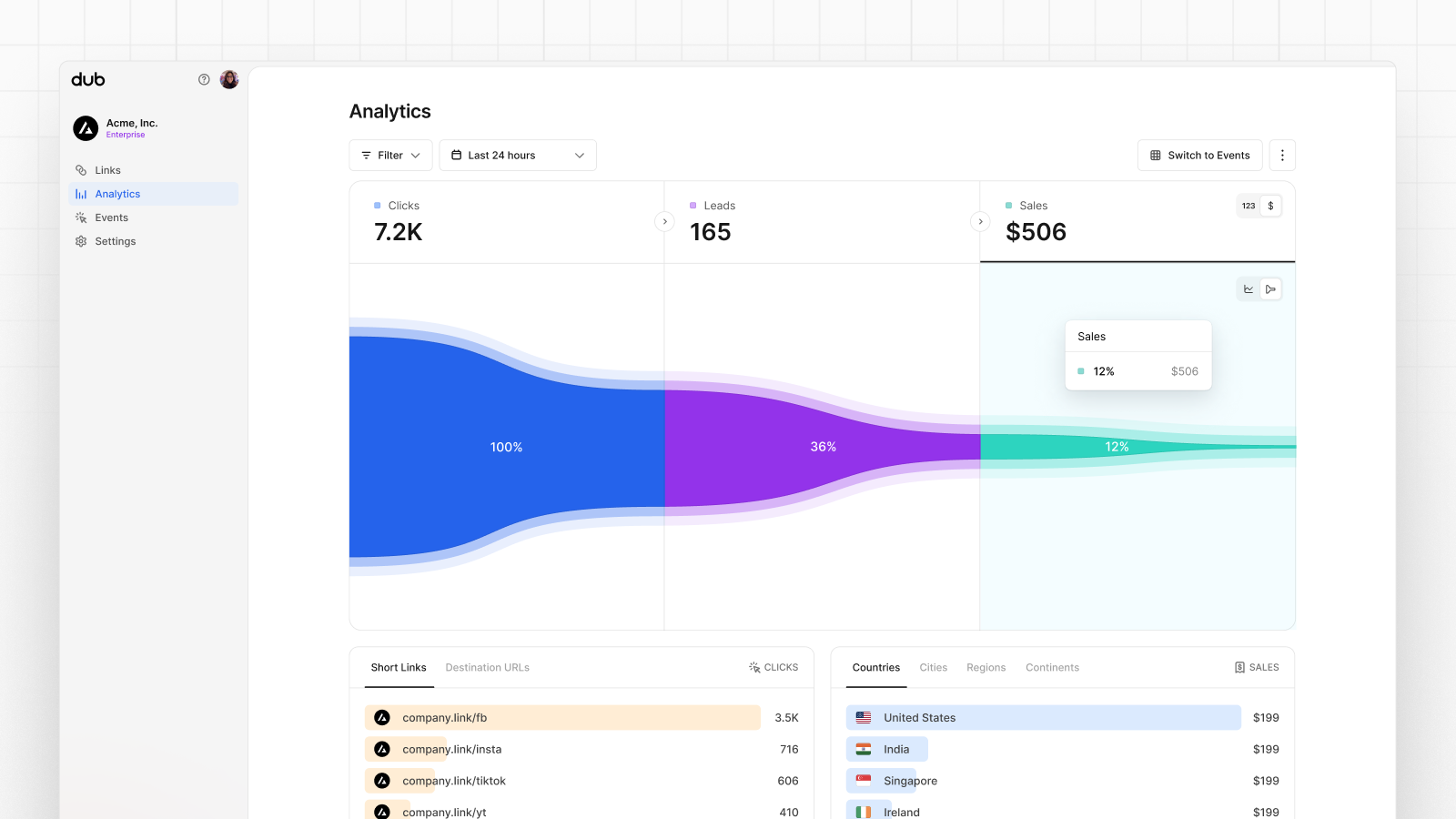
Image source: Dub
That does not mean every buyer needs it. If you only want prettier short links for social posts, Dub can be overkill and a simpler tool will feel cheaper for a reason.
The event stream is useful when you move fast
Real-time visibility is one of the strongest reasons to upgrade. Dub’s events stream lets you see what is happening now, which is useful when you launch a campaign, a creator shoutout goes live, or you are testing multiple offers at once.
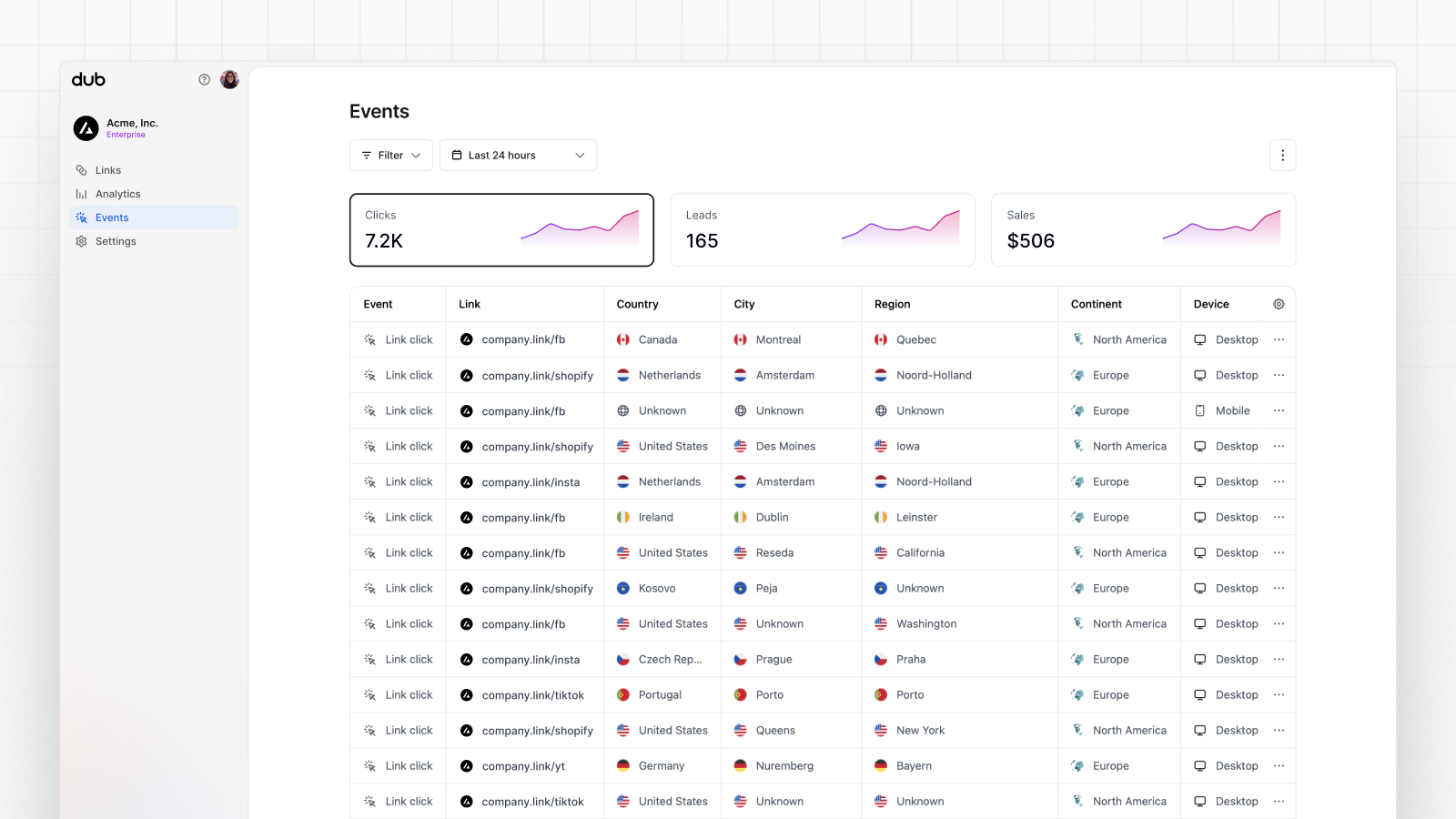
Image source: Dub
Speed matters here. Waiting too long to clean up your tracking usually means you keep guessing which channel is working, and that costs more than the software once spend starts stacking up.
Dub price and value
Dub price is pretty reasonable if you compare it to the kind of buyer it is built for. The free plan costs nothing, Pro starts at $25 per month billed yearly, Business starts at $75 per month billed yearly, Advanced starts at $250 per month billed yearly, and Enterprise is custom.
The jump from free to Pro makes sense once your link volume grows or you want longer analytics retention. The jump from Pro to Business is the real decision point, because that is where conversion tracking, A/B testing, customer insights, event webhooks, and Dub Partners become part of the package.
See current pricingHere is the honest read. Pro looks fair if you mainly want better limits and cleaner analytics, but Business is where Dub turns from nice-to-have into a serious growth tool.
There is another pricing detail I like. If you go over your tracked event limit, your links keep working and Dub does not bill overages, but you do need to upgrade to keep viewing analytics.
Compared with broader tools, Dub stays more focused. GoHighLevel makes more sense if you want CRM, automation, funnels, and client management in one place, while Buffer is the simpler pick if your main problem is social scheduling and lightweight link sharing.
Dub wins when link attribution is the thing you care about most. If you already have a site, traffic, and campaigns running, specialized tracking usually beats trying to force a general tool to behave like an attribution product.
Why getting Dub now can make sense
You should get Dub now if you already have links going out into the world and you are tired of half-blind reporting. That includes SaaS teams, affiliate programs, creator-led brands, and marketers who need clean data without building a custom setup.
You should wait if you have no real traffic yet, no offer, and no reason to care about conversions beyond curiosity. In that case, the free plan is enough, and paying early will probably feel heavier than helpful.
For the right buyer, though, this is worth trying. Once marketing spend or partner traffic starts growing, keeping everything manual usually costs more than Dub price does.
Get started with DubDub vs alternatives
Dub price makes sense if link tracking is your main problem. If you need something broader or cheaper, there are solid alternatives worth looking at before you decide.
The difference comes down to focus. Dub is built for attribution, while tools like CRMs or marketing platforms try to cover everything at once.

Image source: Dub
Try DubChoose Dub if you already have traffic and want clarity on what actually converts. Choose Systeme.io if you are just starting and want something cheaper, or GoHighLevel if you want an all-in-one system instead of a focused tool.
My honest take on Dub price
Dub price is fair for what it actually does. You are not paying for a generic shortener, you are paying for clean attribution and visibility into what your links are doing.
The value shows up once you care about conversions, not just clicks. If your current setup is messy or you are guessing which channel works, Dub starts to feel like a smart upgrade pretty quickly.
It is not for everyone though. If you are still figuring out your offer or you barely have traffic, the free plan is enough and paying early will not magically fix that.

Image source: Dub
For the right buyer, this is absolutely worth trying. If you already have something live and you want better data, waiting usually just means you keep guessing longer than you should.
Quick answers before you decide
Is Dub worth the price?
Yes, if you need real tracking and attribution. No, if you only want basic short links for casual use.
Is Dub good for beginners?
The free plan is beginner-friendly, but the paid features make more sense once you already have traffic and campaigns running.
Does Dub replace other tools?
It replaces link shorteners and some tracking setups, but not full marketing platforms like CRMs or funnel builders.
How fast will you see value?
Almost immediately if you already have links getting clicks. If not, you will not feel much difference yet.
Should you try Dub now?
Try it if you already care about where your traffic comes from and what converts. Skip the paid plans for now if you are still early and just testing ideas.
If you are serious about improving your tracking, this is one of the cleaner tools to do it without building everything yourself.

Image source: Dub
Get started with Dub Filip Konecny Enterprises