

Dub makes the strongest case for itself when a basic short-link tool is no longer enough. If you need branded links, cleaner analytics, and a better way to connect clicks to signups, sales, or partner performance, this starts to look like a serious upgrade instead of just another URL shortener.
That does not mean it is for everyone. If all you want is a cheap way to shorten links and glance at a few click counts, Dub will probably feel more ambitious than you need, and paying for the higher plans too early could be hard to justify.
This review is built to answer the only questions that matter before you spend money: whether Dub is a smart buy, who it fits best, where the limits show up, and whether you should start now or wait. The short version is simple: Dub looks most compelling for marketers, SaaS teams, and growth-focused brands that care about attribution enough to act on it.
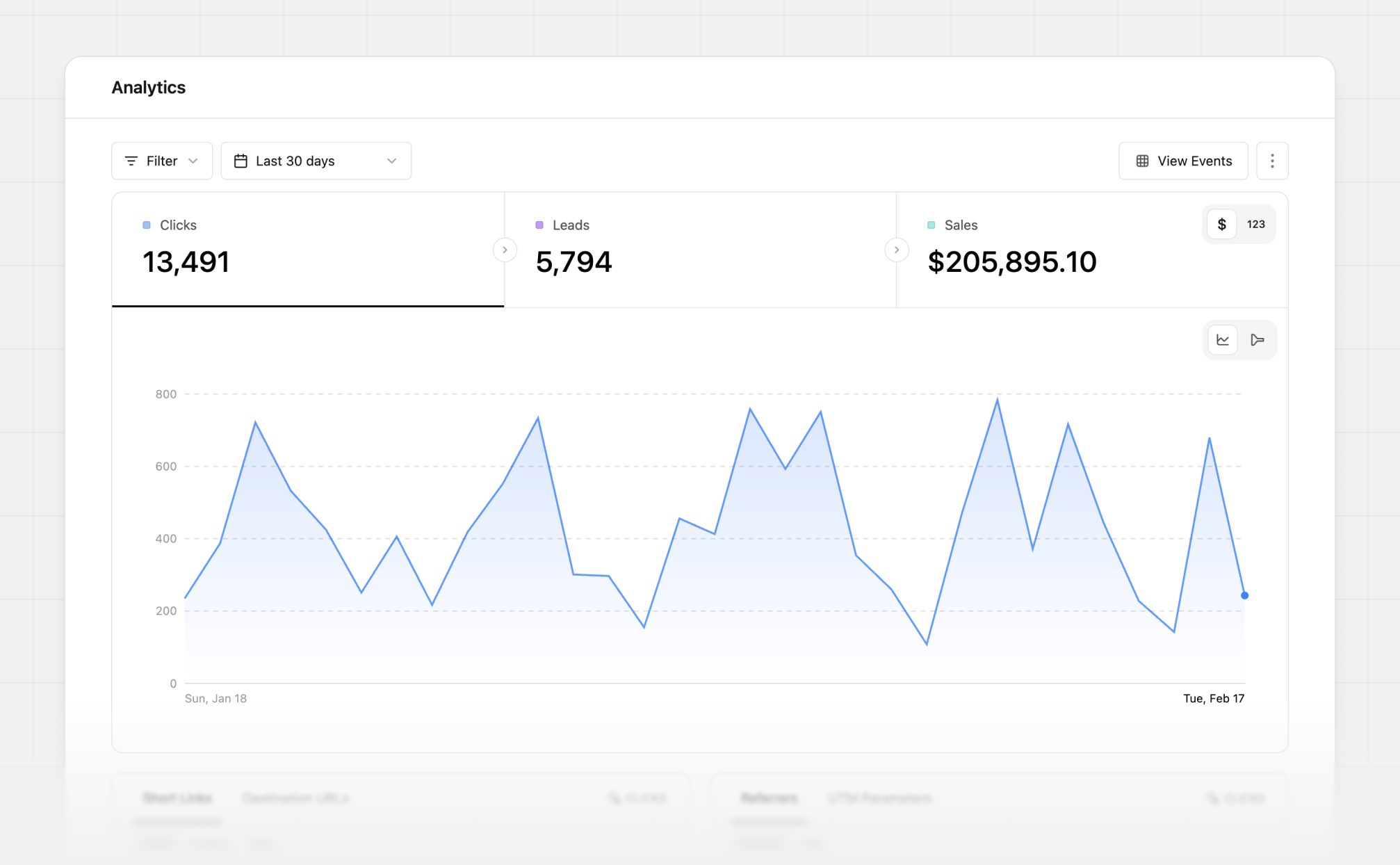
Image source: Dub analytics overview
Check the official free trialThat table tells you almost everything you need for a fast first decision. Dub is easiest to justify when link performance affects revenue, not just vanity metrics, because that is where its analytics, conversion tracking, and partner tools can replace a messy stack of separate tools and spreadsheets.
The part that stands out is how tightly the product story fits modern SaaS and growth teams. Dub is not only pitching short links; it is pitching a way to see which campaigns, channels, creators, and partner links actually turn into signups and sales, with official support for workflows like Stripe conversion tracking, Shopify sales tracking, and partner management through Dub Partners.
That is also where the buying decision gets easier. If you are already spending on paid traffic, creator partnerships, or affiliate growth, waiting too long usually means you keep collecting clicks without a clean picture of what those clicks are worth.
Article outline
I split this review into three clear sections so you can jump straight to the part that matches where you are in the buying process. If you already know you are interested, skip to pricing and the payoff; if you are still unsure, the alternatives section later will make the decision easier.
- First look: who Dub makes sense for, who should probably skip it, and the fast verdict
- What you get, what it costs, and why the paid plans can be worth it
- Alternatives, final verdict, FAQs, and the best next step
First look: who Dub makes sense for
Dub makes the most sense for three types of buyers. The first is a marketing team that wants branded links and better reporting, the second is a SaaS company that cares about attribution past the click, and the third is a business building an affiliate or referral motion that is getting too manual.
The product feels less convincing for solo users who just need a simple link shortener. The free plan is generous enough to test, but the real reason to pay for Dub only shows up when you need longer retention, advanced link controls, conversion tracking, or partner infrastructure.
That distinction matters because it keeps you from buying too early. If you already have campaigns running, offers live, or partners sending traffic, Dub is worth real consideration now; if you are still at the idea stage, a cheaper basic tool may be enough until the tracking problem becomes real.
The next section gets into the part most buyers care about: what you actually get beyond short links, how the plans stack up, and when the upgrade starts paying for itself. That is where Dub either earns the price or loses the case.
What comes next in the review
Next, I will break down the free plan, the standout features, the pricing logic, and how Dub compares with a few other tools in the same orbit. After that, I will show where a cheaper option makes more sense and where Dub is the better bet if you want better attribution instead of more patchwork.
The final section later on
The last section will not be a soft landing. It will compare Dub against relevant alternatives in a buyer-friendly table, then make the call on whether you should start now, wait until you are more ready, or pick something simpler.
What you get, what it costs, and when Dub earns the price
Dub is easier to judge once you stop thinking about it as a link shortener. The real value is getting branded links, cleaner reporting, and conversion data in one place so you are not stitching together spreadsheets, UTM guesses, and half-useful click counts.
That matters most if traffic already affects revenue for you. If you are running campaigns, creator deals, referrals, or affiliate links right now, Dub can pay for itself faster than a broader tool you barely use or a cheap shortener that tells you almost nothing.
What you can actually test before paying
Dub gives you a real free starting point instead of forcing an immediate paid commitment. The free plan includes 1,000 tracked events a month, 25 new links a month, 3 custom domains, API access, UTM templates, QR codes, real-time analytics, and 30-day analytics retention.
That is enough to answer the first buying question without much risk. You can build branded links, watch traffic come in, and see whether the analytics are useful enough to justify upgrading later.
The catch is volume and retention. If you need longer lookback windows, heavier traffic tracking, or partner-program features, the free plan will feel like a test drive, not the long-term setup.
Image source: Dub analytics help page
The good stuff
The first strong point is that Dub gives you the link layer and the attribution layer together. You are not just shortening URLs; you are adding custom domains, link previews, deep links, QR codes, targeting, folders, tags, and analytics that are much more useful than a raw click total.
The second strong point is how much filtering and event detail it exposes once you move beyond basic reporting. Dub’s analytics views cover time-series reporting, top links, referrers, countries, cities, devices, browsers, date ranges, exports, and an events stream, which makes it much easier to spot which links are pulling real weight.
That is where this starts to feel worth paying for. You get closer to the answer every marketer actually wants, which is not “did people click?” but “which link, channel, or partner turned into leads and sales?”
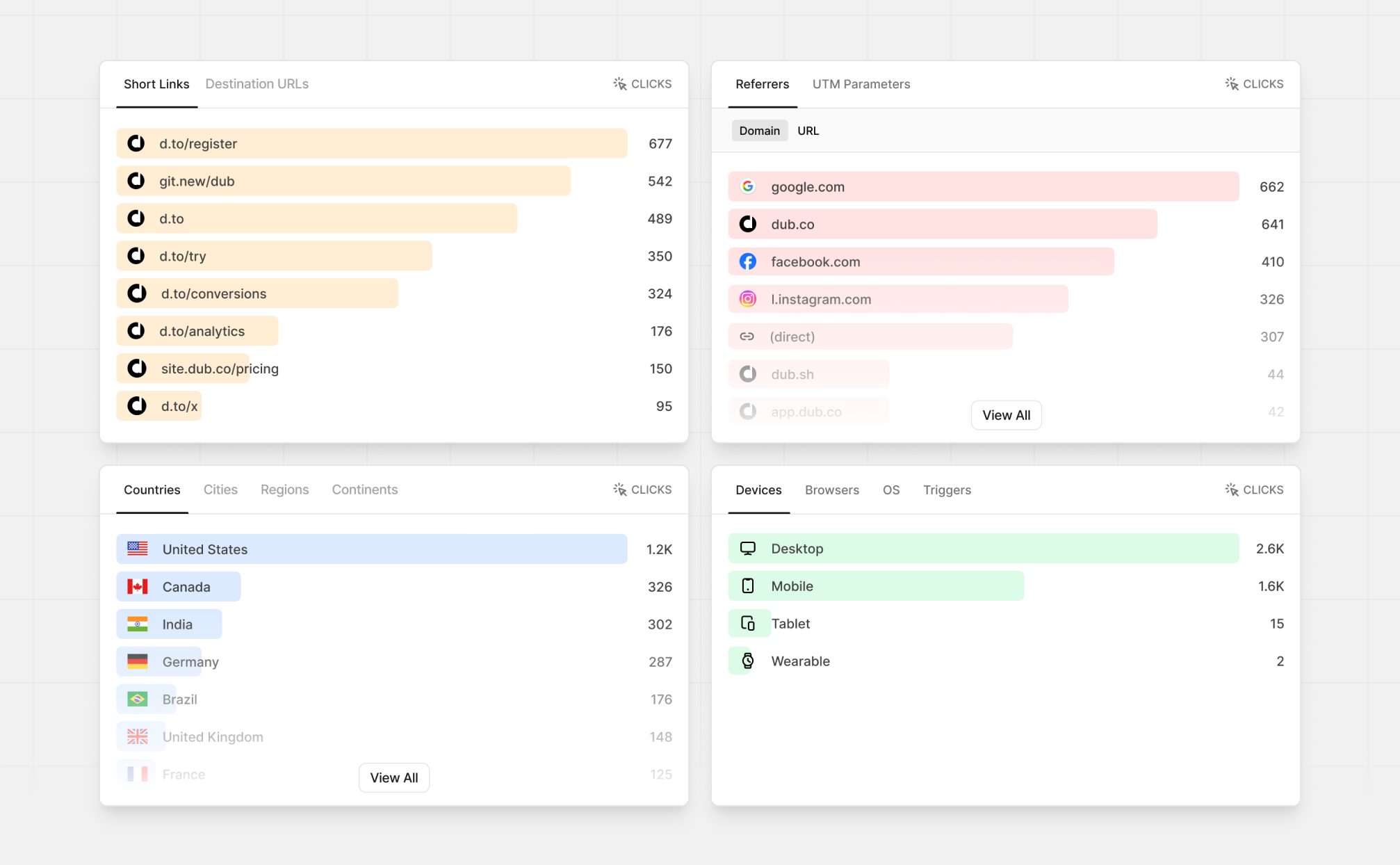
Image source: Dub analytics overview
The third big selling point is conversion tracking. Dub’s client-side analytics script is lightweight, stores the click identifier as a first-party cookie, and can attribute later conversion events back to the original link, which is exactly the kind of thing that makes a simple short-link tool feel too limited once you start caring about revenue.
Setup still looks more natural for technical teams than complete beginners. A solo creator can use Dub without being a developer, but the deeper payoff shows up faster when you already have a site, checkout flow, or app where you can plug tracking in properly.

Image source: Dub client-side analytics docs
The plan snapshot that matters most
Most buyers do not need every plan explained. You mainly need to know whether the free plan is enough, whether Pro covers serious marketing use, and whether Business is the point where Dub starts replacing separate attribution and partner tools.
See current pricingHow the price feels next to other tools you could buy instead
Dub looks cheap next to a broader tool like GoHighLevel if your real problem is attribution, branded links, and partner tracking. GoHighLevel starts at $97 a month with a 14-day free trial, but it is built as a much bigger CRM and agency platform, so it only makes more sense when you actually want the whole stack.
Dub also looks more specialized than Buffer. Buffer is great if your main need is social publishing, collaboration, and content scheduling, but it is not the cleaner buy if what you really need is link attribution and partner-level performance data.
That is why Dub’s pricing lands well for the right buyer. You are paying less than a full all-in-one platform while getting something much more focused than a general social tool, which is often exactly what a growth team wants.

Image source: Dub Partners overview
Why waiting can cost more than the software
Dub is easy to postpone because links feel simple until the reporting gets messy. Then you realize you are still counting clicks while guessing which campaign, creator, or referral actually produced the lead or sale.
That delay gets expensive once traffic is already flowing. Manual attribution wastes time, broad tools cost more than you need, and cheap shorteners keep you stuck with data that does not help you make better decisions.
If you already have an offer live, traffic coming in, or a partner motion you want to grow, Dub is worth a real look now. If you are still too early for that, stay on the free plan or wait, but once attribution matters, this is one of the more sensible upgrades you can make.
Check the official free planAlternatives, final verdict, and the smartest next move
Dub is not the only option in this space, and that is exactly why the buying decision gets easier here. A good alternative section should not just praise the main tool; it should show you when Dub is the better pick, when a broader platform makes more sense, and when a simpler tool is enough.
Dub keeps winning when attribution matters more than breadth. If you want branded links, clean tracking, partner management, and conversion visibility without buying a much bigger stack, it lands in a very attractive middle ground.
Image source: Dub Partners overview
How Dub stacks up against the main alternatives
The easiest mistake here is comparing tools that solve different problems and pretending they are identical. Dub is closer to a link attribution and partner-growth tool than a social scheduler, and it is much narrower than a full all-in-one CRM stack.
That is why price alone can mislead you. Paying less for Buffer is not automatically better if you need attribution, and paying more for GoHighLevel is not automatically smarter if you mostly want better links, cleaner analytics, and a partner engine you can actually use.
Check the official free trialChoose Dub if you want a focused tool that gives you better attribution without forcing you into a giant marketing suite. Choose Buffer if cheap, easy social scheduling is the real need, and choose GoHighLevel if you are ready for the broader all-in-one route and will use far more than link tracking.

Image source: Dub conversions overview
My honest take
Dub is worth it for the right buyer. That buyer is already running traffic, already sharing links, or already building partnerships, and wants better answers than a basic shortener can give.
The strongest reason to buy is not the link shortening. It is the combination of branded links, cleaner analytics, conversion tracking, partner features, and the fact that you can grow into it without jumping straight into a massive CRM bill.
The main limitation is that Dub is not instant magic. You still need to set up tracking properly, and if you have zero traffic or no offer yet, the platform will feel more impressive than useful.
That is why the best next move depends on your stage. Buy now if attribution already matters, wait if you are still early, and skip it only if your needs stop at shortening a few links and checking clicks once in a while.

Image source: Dub referral dashboard example
FAQ
Is Dub hard to set up?
Basic link creation is not hard at all. The more advanced payoff comes when you set up conversion tracking and partner workflows, so the setup feels easier for teams that already have a site, product, or campaign flow in place.
Is Dub overkill for beginners?
It can be. If you are still choosing your offer or you barely have traffic, the free plan is enough to explore, but paying early can feel unnecessary until attribution starts affecting real decisions.
Can Dub replace other tools?
It can replace part of a messy stack, especially if you are juggling branded links, basic reporting, and partner tracking in separate places. It will not replace a full CRM or social scheduler, which is why it fits best as a focused growth tool rather than an everything app.
Image source: Dub conversion tracking docs
Should you start now?
Start now if you already have something live and you are tired of guessing which links, channels, or partners actually produce results. Waiting usually means more messy reporting, more manual work, and more time lost before you fix the attribution problem.
Wait if you are still too early to use the data. Dub gets more valuable the moment traffic and revenue start touching each other, and that is exactly when it stops feeling optional.
Get started with Dub Filip Konecny Enterprises