
If RedTrack feels powerful but a little too heavy, too ad-buyer focused, or too expensive to justify right now, Dub is one of the most interesting alternatives worth looking at. It handles link attribution, conversion tracking, partner programs, and short links in a much cleaner package.
That does not automatically make Dub better. RedTrack still goes deeper for serious paid media teams that need ad automation, traffic distribution, and a lot more campaign control across channels.
Most people comparing the two are really asking a simpler question: do I need a full performance marketing command center, or do I just need clean attribution and partner tracking without the extra complexity? That is the decision this review is here to help with.
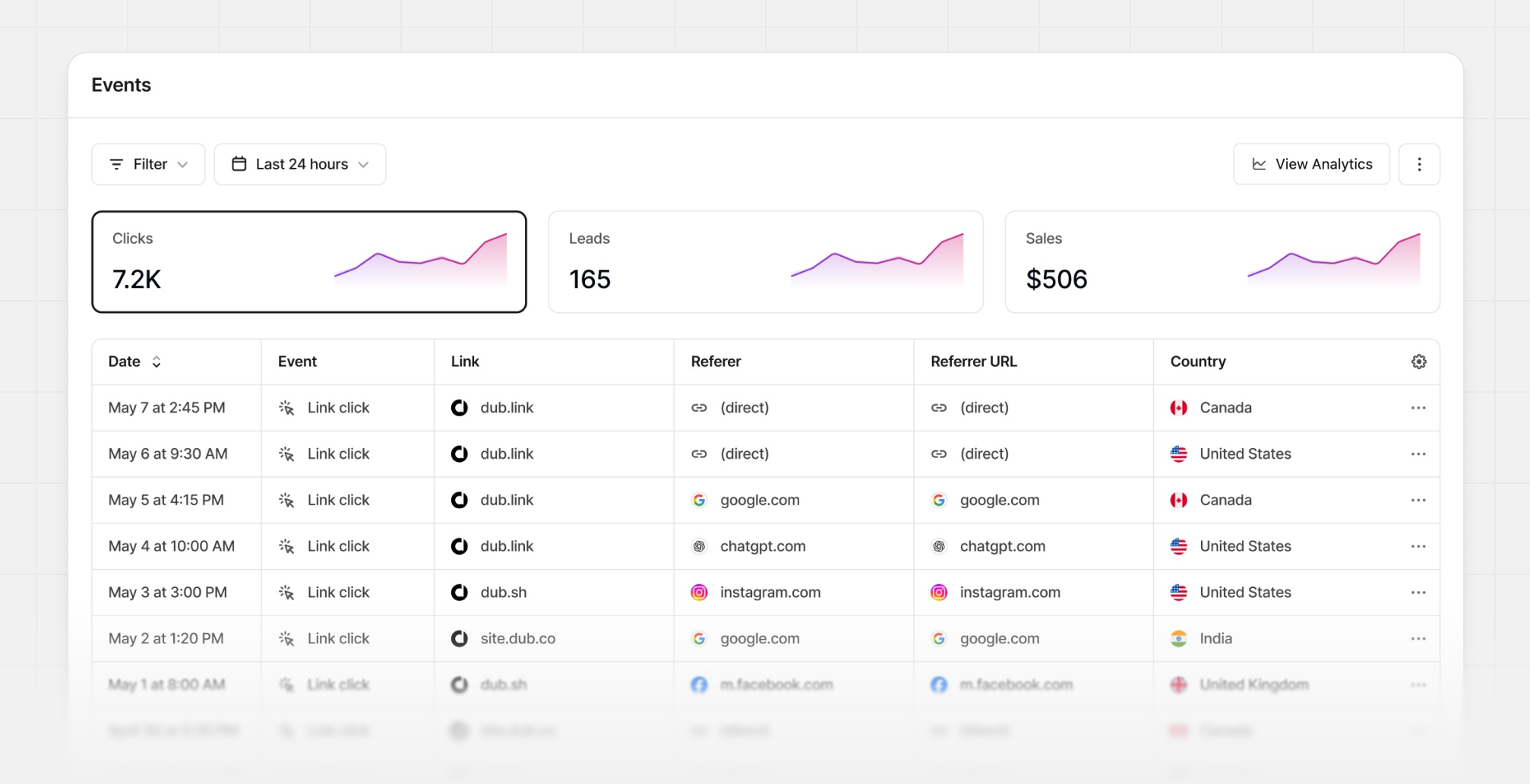
Image source: Dub analytics help page
Article outline
- Is Dub actually worth trying instead of RedTrack?
- What you get with Dub
- The good stuff
- Pricing and value
- Why buying now may make sense
- Alternatives to consider
- Final verdict
- FAQ
Is Dub actually worth trying instead of RedTrack?
For the right buyer, yes. Dub looks especially strong if you care more about attribution, affiliate or referral tracking, short links, and a cleaner user experience than you do about squeezing every possible paid-media automation feature out of one platform.
Dub’s own product positioning is much broader than basic link shortening. Its docs and pricing pages show conversion tracking, customer insights, event webhooks, partner programs, API access, and analytics on paid plans, while RedTrack’s product pages lean much harder into ad tracking, automation, media buying, bot blocking, and campaign control.
That difference matters because it saves you from buying the wrong tool. If your day revolves around affiliate tracking, creator partnerships, referrals, and clean revenue attribution, Dub will probably feel easier to live with.
If your day revolves around paid traffic at scale, postbacks, funnel routing, ad rules, and deep ad-platform optimization, RedTrack still has the more specialized setup. Dub can replace a messy patchwork for a lot of growth teams, but it is not pretending to be RedTrack with a prettier dashboard.
Price is another reason Dub gets attention here. Dub has a free plan, then paid plans starting at $25 per month, while RedTrack starts much higher on its main pricing page, with Solo at $149 per month for advertisers and Brand at $199 per month for ecommerce and DTC use cases.
Explore DubThat quick snapshot is why Dub stands out as a RedTrack alternative in the first place. It gives you a much cheaper entry point and a product that feels easier to understand without dropping the core things many teams actually need.
Dub also has a free plan with 1,000 tracked events per month, 25 new links per month, API access, three custom domains, and 30-day analytics retention. RedTrack offers a free trial, but its real paid entry point is still much steeper once the trial ends.
There is a catch. Some of Dub’s more advanced protection and reporting features, including fraud detection, only show up on higher plans, so you should not assume the cheapest plan gives you everything that RedTrack power users expect.
That still does not kill the case for Dub. It just means Dub is strongest when you want cleaner execution, faster adoption, and enough attribution to make smarter growth decisions without paying for a whole media-buying machine you may never fully use.
My early take is simple: Dub is probably the better buy if RedTrack feels like overkill, especially for SaaS, creator-led brands, referrals, affiliate programs, and modern growth teams that want fewer moving parts. If you already know you need traffic routing, advanced ad automation, and very deep paid acquisition controls, Dub will feel lighter because it is lighter.
What you get with Dub
Dub gives you more than a basic short-link tool. The paid plans add conversion tracking, customer insights, event webhooks, deeper analytics retention, and Dub Partners, which is the piece that makes this feel closer to a real RedTrack alternative instead of just another link shortener.
The free plan is useful, but it is not where the product really proves itself. You get 1,000 tracked events per month, 25 new links per month, API access, 3 custom domains, QR codes, UTM templates, and 30-day analytics retention, which is enough to test the interface and see whether the workflow clicks for you.
The first plan that feels serious is Pro at $25 per month billed yearly. That jumps to 50,000 tracked events per month, 1,000 new links per month, 1-year analytics retention, advanced link features, a free .link domain, folders, and deep links, which is a much better starting point if you are already sending meaningful traffic.
Business at $75 per month is where Dub starts looking more competitive for teams that care about outcomes, not just clicks. That plan adds 250,000 tracked events per month, 10,000 new links per month, 3-year retention, conversion tracking, A/B testing, customer insights, event webhooks, and access to Dub Partners.

Image source: Dub
That matters because RedTrack buyers are usually not looking for pretty click charts. They want to see which links, campaigns, partners, or channels actually lead to signups and sales, and Dub clearly moves in that direction once you get past the free tier.
Setup also looks lighter than a traditional performance-tracking stack. Dub supports client-side conversion tracking, first-party cookies, API access, and event tracking without pushing you straight into a giant ad-ops workflow, which is a big reason this will feel easier for SaaS teams, creators, and referral-heavy businesses.
The good stuff
The cleanest win is simplicity. Dub makes short links, attribution, partner tracking, and reporting feel connected instead of bolted together, so you spend less time babysitting tools and more time looking at what actually drove revenue.
The interface looks modern for a reason. That sounds cosmetic, but it matters when a product is supposed to be checked every day by founders, marketers, or partnerships teams who do not want to dig through an ad-tech maze just to find the right report.
Customer insights are another big plus. Dub shows a customer-level view with events, referral sources, UTM data, sale amounts, and lifetime value context, which makes it much easier to understand what happened after the click instead of stopping at surface-level traffic numbers.
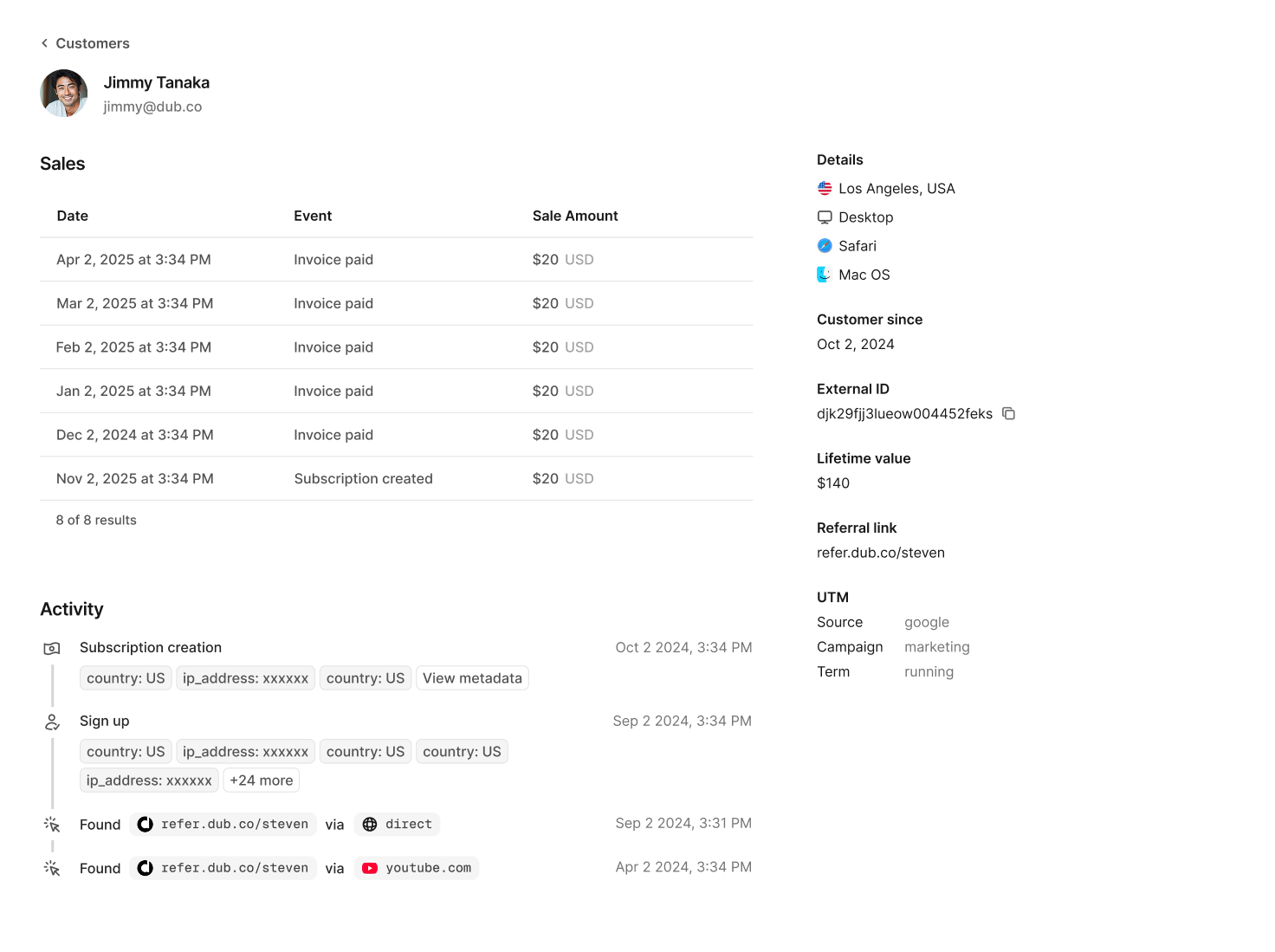
Image source: Dub
Real-time visibility is strong too. Dub’s events stream shows click, lead, and sales activity as it happens, which is helpful when you are launching a campaign, checking partner traffic, or trying to catch bad links before they quietly waste time.
The product also makes sense if you hate tool sprawl. A lot of teams end up using one tool for short links, another for attribution, another for referral tracking, and then a spreadsheet to make sense of the mess, while Dub is clearly trying to collapse that into one place.
Here is the catch. Dub still looks lighter than RedTrack for heavy paid-media operations, especially if you need deeper traffic distribution, ad automation, broad media-buying controls, or the kind of setup large performance teams expect from dedicated campaign infrastructure.
That is not a deal-breaker unless you are buying for that exact use case. If you mostly care about partnership traffic, creator links, referrals, SaaS attribution, and cleaner reporting, Dub’s lighter feel is actually part of the appeal.
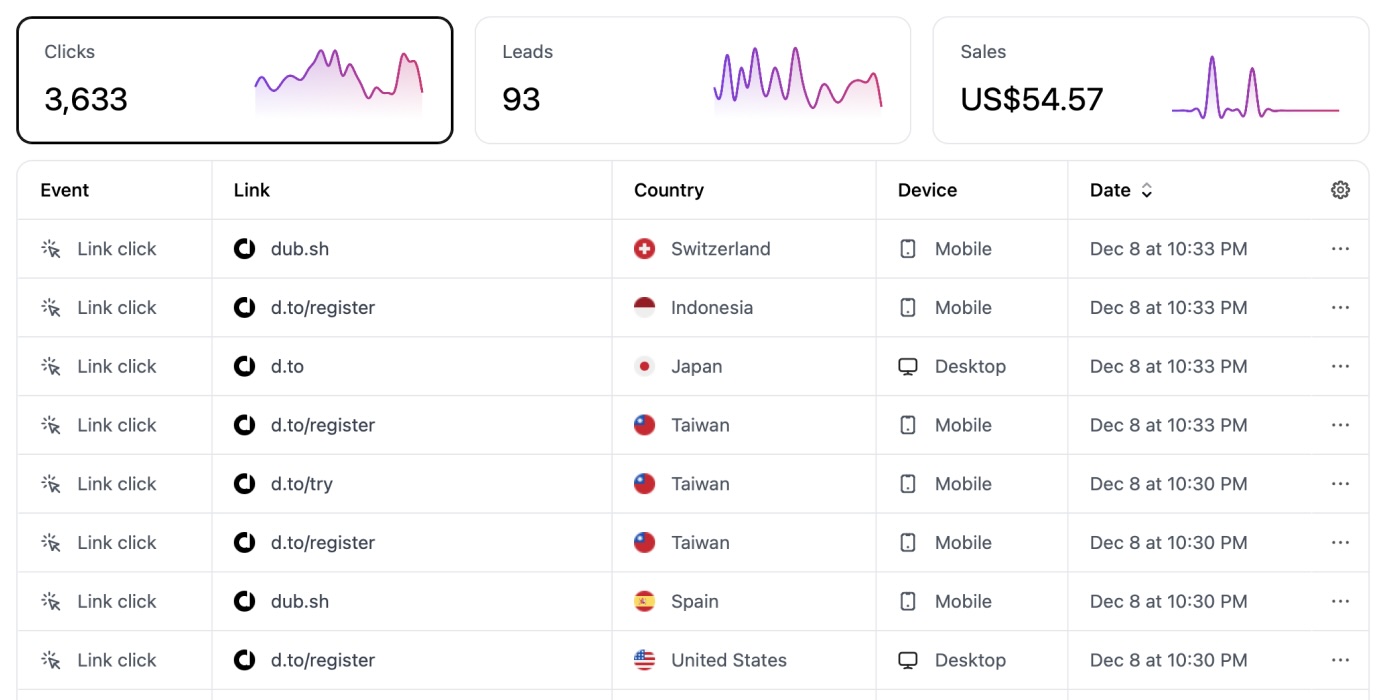
Image source: Dub
Pricing and value
Dub is much easier to justify than RedTrack if price is your main hesitation. RedTrack starts at a far higher level, while Dub gives you a real free plan and a paid entry point at $25 per month, which lowers the risk of trying it.
That does not mean Dub is automatically the best value for every buyer. If you need a broader all-in-one sales and CRM stack, GoHighLevel may replace more tools, and if you just want the cheapest simple funnel builder plus email setup, Systeme.io can be cheaper.
See current pricingDub wins that comparison if your main job is tracking what happened after the click without buying a full CRM or funnel machine. Systeme.io wins if you need the cheapest way to launch basic pages and email, while GoHighLevel wins if you want a broader business operating system and can live with more complexity.
Why buying now may make sense
Waiting usually means you keep guessing longer. If your team is still passing links around, checking scattered analytics, and manually piecing together partner performance, you are probably losing time every week that a cleaner attribution setup would save.
Dub makes the most sense when you already have traffic or partnerships worth measuring. If people are already clicking your links, signing up, buying, or referring others, the platform has enough reporting and conversion depth to help you make better decisions fast.
Beginners do not need to force this purchase. If you have no traffic yet and no offer yet, the free plan is enough to get familiar, and a cheaper all-in-one like Systeme.io may be the more practical first step.
Buyers who already know RedTrack feels like too much should pay attention here. Dub gives you a cleaner path into attribution and partner tracking without making you commit to a giant ad-tech workflow from day one.
That is why this feels like a smart next step for the right buyer. If your current setup is messy and you are serious about seeing which links and partners actually drive revenue, Dub is worth a real look now instead of six months from now.
Alternatives you should actually consider
Dub is a strong RedTrack alternative, but it is not the only option worth looking at. The right choice depends on whether you care more about attribution, full marketing automation, or just getting something live quickly.
This table makes the decision easier without overcomplicating it.
Try DubDub makes the most sense if your focus is clean attribution, partner tracking, and understanding what actually drives revenue. You will feel the benefit quickly if your current setup is scattered.
Pick Systeme.io if you just need to launch something cheap and simple. Pick GoHighLevel if you want a full business system and are fine with more complexity.
Stick with RedTrack if you are deep into paid traffic and already rely on advanced campaign automation. That is where it still wins.
My honest take
Dub is one of the cleanest RedTrack alternatives right now. It strips away a lot of complexity and focuses on what many teams actually care about: knowing which links, partners, and campaigns lead to real outcomes.
The biggest advantage is how quickly it becomes usable. You do not need to set up a full performance marketing system just to track links and conversions, which is exactly why it feels like a better fit for SaaS, creators, and referral-driven businesses.
The limitation is obvious. If you are running large paid traffic operations and need deep automation, traffic routing, and granular ad control, Dub will feel lighter because it is lighter.
For the right buyer, this is absolutely worth trying. If your current setup feels messy and you want clarity without adding more tools, Dub is a smart move.

Image source: Dub
FAQ
Is Dub really a good alternative to RedTrack?
Yes, but only for certain use cases. It works best for attribution, link tracking, and partner programs, not for deep paid-media automation.
Is Dub cheaper than RedTrack?
Yes. Dub has a free plan and starts at a much lower monthly price, which makes it easier to test without a big commitment.
Can beginners use Dub?
Yes. The interface is much simpler than traditional tracking tools, and the free plan is enough to get familiar before upgrading.
When should you not use Dub?
Skip it if your main focus is advanced paid advertising workflows. Tools like RedTrack are still stronger for that type of setup.
Does Dub replace other tools?
It can replace multiple smaller tools like link shorteners, basic analytics tools, and partner tracking systems. It will not replace a full CRM or marketing automation platform.

Image source: Dub
Check the official free plan Filip Konecny Enterprises