
People usually search for a Dub alternative for one of two reasons. They either want something cheaper, or they are trying to figure out whether Dub is genuinely better than the usual link-shortening stack before they move everything over.
That decision matters more than it looks. Once your short links, branded domains, analytics, and attribution setup are spread across campaigns, switching later gets annoying fast.
Dub keeps showing up in these comparisons because it combines branded links, QR codes, conversion tracking, partner tools, and developer-friendly docs in one place on the official product site. The bigger question is whether that makes it the right buy for you, or just a nice-looking tool that costs more than you need.
Article outline
- Is Dub worth considering if you are looking for an alternative?
- Quick fit snapshot
- What comes next in this review
Is Dub worth considering if you are looking for an alternative?
Yes, for the right buyer, it absolutely is. Dub looks strongest when you want more than a basic shortener and you are tired of piecing together branded links, QR codes, analytics, and attribution from separate tools.
The biggest thing working in Dub’s favor is that it is not trying to win on vanity alone. Its branded links feature page shows free custom domains on all plans, while the QR code page confirms QR generation is built in instead of treated like an expensive add-on.
That matters because a lot of “alternatives” are only cheaper if you stay basic. The moment you want better analytics, branded domains, deeper targeting, or actual conversion visibility, the low monthly price starts to look less impressive.
Dub also feels more serious than a simple social link tool. Its analytics documentation covers click, lead, and sales events, and the conversion tracking docs show that Dub is built for people who care about what happens after the click, not just how many clicks they got.
That said, Dub is not the automatic best choice for everyone. If all you need is a handful of branded links and basic click counts, paying for advanced attribution can be overkill.
This is also not the cheapest route once your needs stay simple for months. The value starts to make sense when you already have campaigns running, an offer to sell, traffic to track, or a partner program you want under the same roof.

Image source: Dub homepage
Quick fit snapshot
Before getting into features and pricing, here is the fast read. This table is based on Dub’s current pricing page, the main product overview, and its feature pages for branded links, QR codes, and analytics.
See current pricingWhat comes next in this review
The next part gets into the buying questions that actually decide this. I will break down what you get for free, where Dub starts to earn its price, and how it stacks up against cheaper tools and broader all-in-one options.
The final part is where the decision gets easy. I will compare Dub against the most relevant alternatives in one table, show who should buy now, who should wait, and who should skip it entirely.
If you already know you want a link platform that can do more than shorten URLs, Dub is off to a strong start. If your needs are basic, keep reading before you pay for more tool than you will actually use.
What you get before you pay
Dub does not really pitch a classic free trial. It gives you a real free plan, which is better for cautious buyers because you can test the product without a countdown hanging over your head.
The free plan currently includes 25 new links per month, 1,000 tracked events per month, real-time analytics, QR codes, API access, UTM templates, link tags, AI assistant access, 3 custom domains, and 30 days of analytics retention. That is enough to see whether Dub fits your workflow before you move serious traffic into it.
That setup is a strong start if you are comparing a Dub alternative and do not want to gamble on a paid plan too early. You can test branded links, basic analytics, and QR code use cases without needing a card first.

Image source: Dub
The catch is simple. The free plan is good for evaluation, not for serious scale.
If you are already running multiple campaigns, tracking leads and sales, or managing lots of fresh links each month, you will hit the ceiling pretty quickly. That is not a flaw so much as a signal that Dub expects paid users to be active marketers, not just people shortening the occasional URL.
The good stuff
Dub gets interesting once you care about what happens after the click. A lot of cheaper tools can shorten links, but they stop being useful when you want to connect clicks to leads, signups, and revenue.
That is where Dub earns attention. The paid plans add conversion tracking, A/B testing, customer insights, event webhooks, and longer analytics retention, which makes the platform a lot more useful for real campaign decisions instead of vanity reporting.
Brand control is another real strength. You get custom domains, QR codes, custom previews, deep links, device targeting, geo targeting, and link organization in the same product, so you are not bouncing between three or four small tools to do one job properly.
That matters more than it sounds. Once your links live in paid ads, creator partnerships, emails, and print materials, scattered tools get annoying fast.
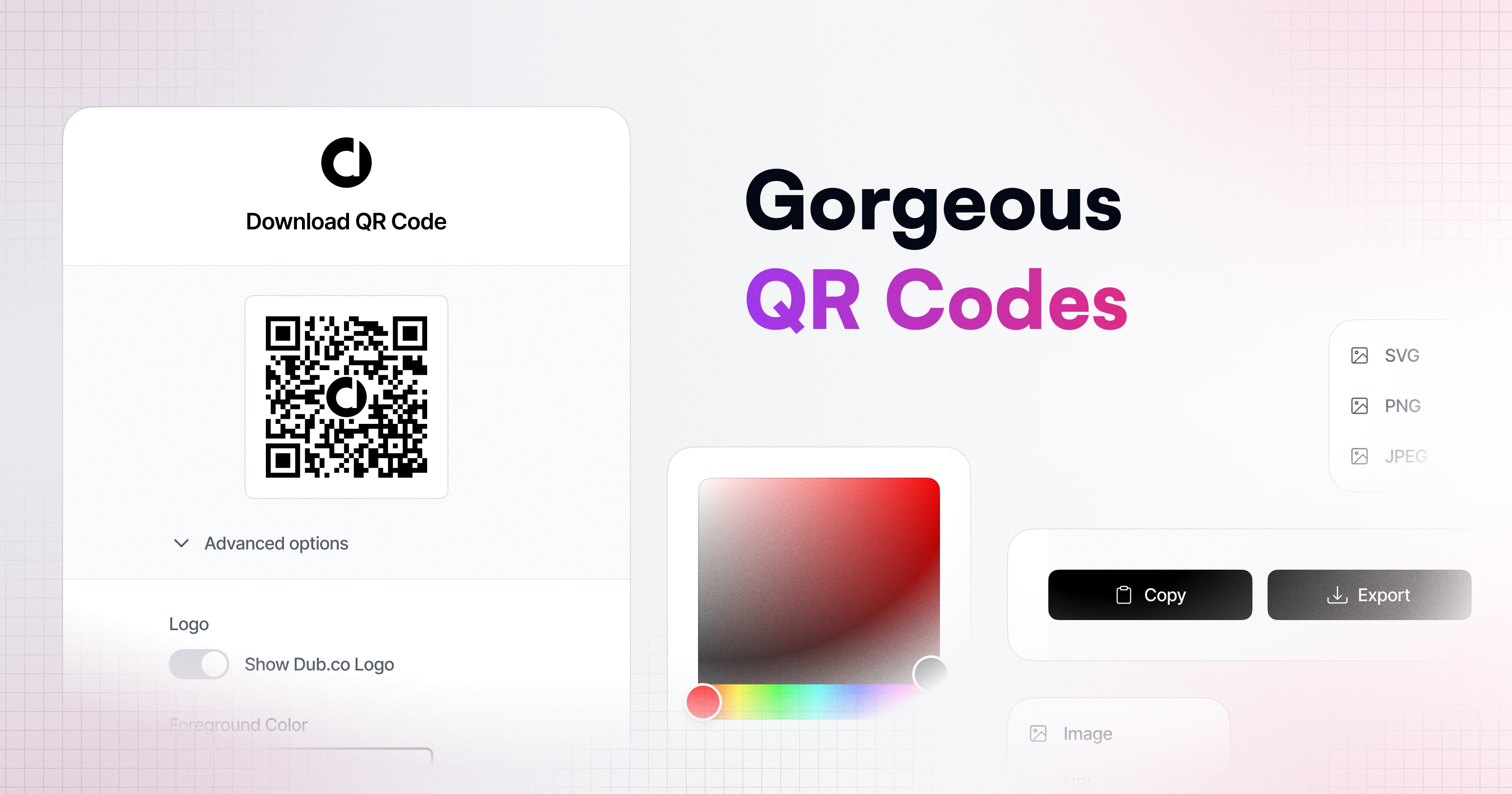
Image source: Dub
Dub also looks stronger than many basic link tools if you work with partners. That is a big deal if you run referral campaigns, affiliate programs, or creator deals and want the attribution side to live close to the link layer instead of being patched together later.
This is not the easiest possible tool for someone who only wants “make short link, count clicks, move on.” If that is all you need, Dub can feel like more product than you will actually use.
That is the honest dividing line. Dub is best when links are tied to money, not just traffic.
Image source: Dub
Pricing and the cheaper options
Dub starts free, then moves to paid plans that begin at $25 per month billed yearly for Pro, $75 per month billed yearly for Business, and $250 per month billed yearly for Advanced. That pricing makes sense when you actually need attribution, testing, and longer retention.
It feels expensive if you just want a budget-friendly marketing stack. That is where broader tools like Systeme.io or GoHighLevel can look more attractive, because they do a lot more than link attribution.
Still, those are not clean one-to-one swaps. Dub is a specialist, while Systeme.io and GoHighLevel are broader business platforms that happen to overlap with parts of your workflow.
If you are comparing by pure monthly price, Dub will not always win. If you are comparing by how well it handles branded links, QR codes, attribution, and link-level reporting, Dub starts to look much more justified.
Explore DubThat table usually clears up the hesitation fast. Buy Dub if your links are part of revenue tracking, pick Systeme.io if you want the cheapest broader stack, and look at GoHighLevel if you need a much bigger operating system for a business or agency.
Why getting it now can make sense
Waiting is reasonable if you do not have campaigns running yet. If you already have traffic, offers, or partner links out in the wild, waiting usually means you keep collecting incomplete data.
That is the real cost. You keep sending people through links without the clean attribution, testing, and reporting that would tell you what is actually working.
Dub makes the most sense when your current setup feels messy. If you are juggling a shortener, a QR tool, and half-baked campaign tracking, this is exactly the kind of purchase that can simplify the stack and make your reporting more believable.
If you are still early and just testing ideas, the free plan is enough for now. If you are already serious about traffic and conversions, the paid plans become much easier to justify.
For the right buyer, this is absolutely worth trying. Dub is not the cheapest answer, but it is one of the clearer ones if your links are supposed to do more than sit there and count clicks.
Get started with DubAlternatives that are actually worth comparing
Most people looking for a Dub alternative are not asking the same question. Some want the closest specialist competitor, some want the cheapest decent option, and some want a much broader tool that replaces half their stack.
That is why a simple “Dub vs X” answer usually misses the point. The better question is which tool matches the kind of work you are doing right now.

Image source: Dub
Dub is strongest when links are tied to revenue, partner tracking, QR campaigns, or proper attribution. If you just want short branded links and basic reporting, paying for Dub can feel like buying more machine than you need.
Check the official free planChoose Dub if you want links to tell you which campaigns, creators, or channels actually produce leads and sales. Choose a cheaper specialist like Short.io if you mainly care about branded links, and go with a broader all-in-one like GoHighLevel or even Systeme.io if links are only one small part of a much bigger stack problem.
My honest take
Dub is not the universal winner. It is the right buy when better attribution changes how you spend money, run campaigns, or manage partners.
That is why this tool can look expensive to one person and cheap to another. If it helps you spot which channels or partners are actually driving revenue, the price stops looking like the main story.
The weak spot is also easy to understand. If you are still early, have tiny traffic, or mostly want prettier short links, you probably do not need Dub yet.

Image source: Dub
That does not make Dub a bad deal. It just means the platform is better for people who already have something worth tracking.
If your current setup feels messy, this is the kind of software that can clean up the reporting side fast. If your setup is still simple, you can wait without missing much.
Final verdict
Dub is a strong pick if you came here looking for a Dub alternative and realized you do not actually want “an alternative.” You want a tool that makes branded links, QR campaigns, and attribution easier to trust.
For that buyer, Dub is absolutely worth a real look. It gives you more depth than the basic shortener tools and less clutter than a giant all-in-one that was built for completely different jobs.
Skip it for now if you are only shortening links once in a while. Start with Dub if you already have campaigns running and you are tired of guessing what happens after the click.

Image source: Dub
FAQ
Is Dub better than Bitly?
Dub looks better for buyers who care about attribution, customer insight, and partner-driven growth. Bitly still makes sense if you want a more familiar general-purpose tool and do not need Dub’s deeper revenue tracking angle.
Is Dub too expensive for small businesses?
It can be, if the business is only using short links casually. It becomes much easier to justify once links are tied to paid traffic, partnerships, or sales tracking.
Should beginners use Dub?
Beginners can use the free plan without much risk. Paying early only makes sense when you already have enough traffic or activity to benefit from the extra reporting and attribution features.
Does Dub replace other tools?
It can replace a shortener, a QR code tool, and part of your attribution stack. It does not replace a full CRM or funnel builder, which is why broader platforms like GoHighLevel or Systeme.io are still worth considering for different needs.
Should you start now?
Start now if you already have traffic, offers, or partnerships and your current link tracking feels half-blind. Waiting usually means you keep collecting click data without the cleaner attribution that tells you what to do next.
Wait if you are still at the idea stage and have almost nothing live yet. Dub is better once there is something real to measure.
Get started with Dub Filip Konecny Enterprises