
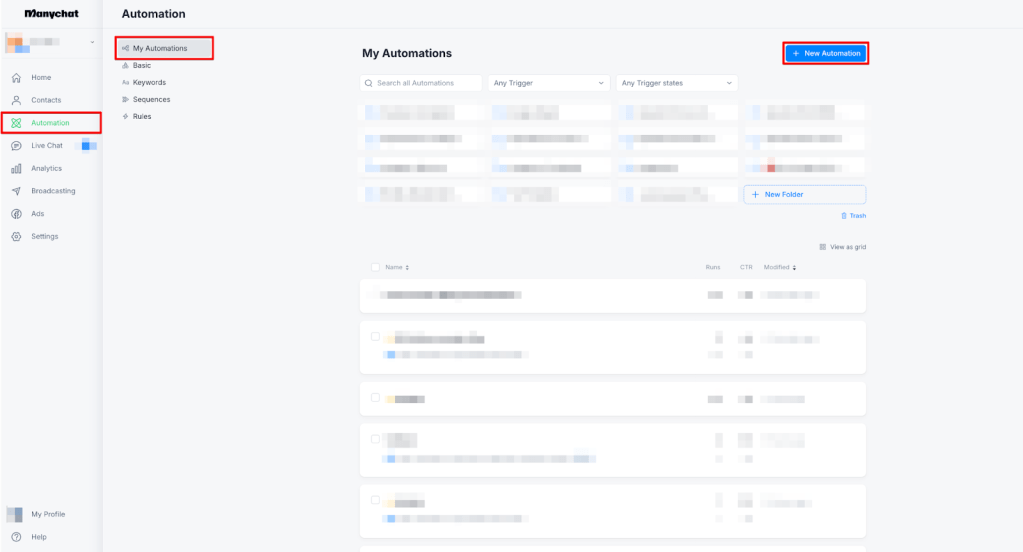
Choosing between Manybot vs ManyChat gets easier once you stop treating them like direct equals. Manybot is still useful if all you want is a simple Telegram bot with basic commands, menus, and posting, but ManyChat has moved far beyond that into a bigger automation platform built for Instagram, WhatsApp, Facebook Messenger, TikTok, email, SMS, and Telegram.
That difference matters because the better tool is not the one with the longest feature list. The better tool is the one that fits how you actually plan to get leads, answer questions, and turn chats into sales without babysitting everything yourself.
If you mainly need a lightweight Telegram setup and you do not care about broader marketing automation, Manybot can still make sense. If you want a tool that can handle modern social DMs, grow with your audience, and replace a bunch of manual follow-up work, ManyChat is the one worth looking at first.
Image source: ManyChat help article on building automations
My quick take
Manybot feels like a narrower tool from an earlier stage of bot building. It is centered on Telegram and basic bot management, which is fine if that is the whole job, but it is a weak fit for someone trying to build a serious lead gen or sales workflow across the channels people actually use now.
ManyChat is easier to justify when you already sell through DMs, comments, or messaging apps. Its free entry point is low enough to test without much risk, and the paid plans start making sense fast if automation replaces even a small chunk of repetitive customer replies, lead capture, or follow-up.
The catch is simple. ManyChat is better for growth, but it is also more software than some people need, so this comparison only ends in a clear win if you want more than a basic Telegram bot.
You should keep reading if any of these sound familiar: you are tired of manually replying to the same questions, you want comments or messages to trigger follow-ups automatically, or your current setup feels stitched together with too many tools. That is exactly where ManyChat starts to earn its price and where Manybot starts to feel limited.
You should probably wait if you do not have an offer, audience, or real need for automation yet. Paying for a bigger platform too early is not smart, and a simple Telegram-only bot can be enough when you are still testing the basics.
For the right buyer, though, this is not a close call. ManyChat gives you more room to grow, more useful channel support, and a much better shot at turning conversations into actual business results instead of just automated replies.
Check the official free trialArticle outline
I built this review to answer the only questions that really matter before you commit to a bot platform. Can it do the job you need, is it worth paying for, and should you start now or keep looking.
- What you get — a direct look at what ManyChat gives you right away, including the parts that matter most if you are comparing it with a more basic tool like Manybot.
- The good stuff — the features that make ManyChat easier to justify, especially if you care about leads, automation, and not doing everything by hand.
- Pricing and value — where the cost starts to make sense, where it can feel expensive, and how it stacks up against other tools you might buy instead.
- Alternatives — the tools worth considering if ManyChat feels too advanced, too broad, or not the best fit for your channel mix.
- Final verdict — the plain answer on who should pick ManyChat, who should stick with something simpler, and who should wait.
- FAQ — quick answers to the objections most people have before they click.
That structure matters because Manybot vs ManyChat is not really a feature checklist fight. It is a decision about whether you want a simple Telegram helper or a more complete automation platform that can handle real marketing and sales workflows.
That is also why I would not rush to say Manybot is bad. It is just much narrower, and for a lot of buyers, narrower turns into limiting pretty fast once you want to collect leads, segment contacts, build flows, or connect more than one channel.
ManyChat looks like the smarter buy when you already know conversations are part of your growth plan. If that sounds like you, the next section is where the decision starts getting practical instead of theoretical.
What you get with ManyChat
ManyChat gives you a real free starting point, but it is not just a toy plan. The free version includes custom chatbot flows, basic growth tools, up to 1,000 contacts, limited tags, limited keywords, and access to Instagram DMs, Facebook Messenger, and TikTok, while Pro starts at $15 per month and adds WhatsApp, SMS, email, unlimited growth tools, advanced segmentation, analytics, integrations, and no branding.
That already shows the real gap in Manybot vs ManyChat. Manybot is still mostly about basic Telegram bot creation, custom commands, menus, and sending content, while ManyChat is built for businesses that want conversations to turn into leads, replies, bookings, or sales instead of just bot interactions.
You feel that difference fastest when you want more than one channel. If Telegram is your whole world, Manybot can still be enough, but if you want Instagram comments to trigger DMs, unanswered messages to get a fallback reply, or AI to handle common questions, ManyChat is playing a different game.
Image source: ManyChat
The free plan is enough to answer one important buying question: can this actually save me time? For a lot of small creators, coaches, local businesses, and ecommerce brands, that answer comes pretty quickly once the first automated reply starts handling the same repeated questions you were doing by hand.
The limitation is obvious too. The free plan is good for testing, but serious usage usually pushes you toward Pro once your contacts grow, you want cleaner branding, or you need the broader channel mix that makes ManyChat worth paying for.
The good stuff
ManyChat is easier to recommend because the best features are tied to real business outcomes, not just nice software language. You can trigger automations from Instagram comments, story replies, mentions, and DMs, which means one post can turn into a lead capture or sales conversation without you being glued to your inbox.
That matters more than it sounds. Manual replying works when volume is tiny, but once you start getting repeated questions about price, availability, links, or offers, the manual version gets slow fast and people drop off while waiting.
Image source: ManyChat
Default Reply is another feature that makes ManyChat feel more practical than flashy. Instead of losing people when they send something outside your exact keyword setup, you can keep the conversation moving across Instagram, Facebook, WhatsApp, and Telegram with a fallback response that feels intentional instead of broken.
That is a big deal if you hate the idea of bots sounding dumb. A lot of people avoid automation because they assume it will create robotic conversations, but ManyChat gives you enough control to guide people toward the next step instead of letting the chat die.
Image source: ManyChat
AI features make ManyChat more appealing than a simple Telegram bot builder, but there is a catch. They are more useful if you already get enough inbound questions to justify them, and they are not the reason I would buy ManyChat first.
The real reason to buy is still automation that saves time and captures leads. AI is a nice add-on once you already know the platform fits your business.
Image source: ManyChat
Ease of use is another reason ManyChat usually wins this comparison for the right buyer. The visual builder, channel-based triggers, and basic automation templates make it much easier to build something useful without writing code, and that lowers the odds that you buy the tool and never actually launch anything.
Manybot still has one honest advantage here. If you only want a Telegram bot with basic commands and posting tools, it can feel simpler because it does less, and sometimes less is exactly what a beginner needs.
That is why Manybot vs ManyChat is not just about which one has more features. It is about whether you want the simplest possible Telegram setup or a tool that can actually grow into a real marketing system once your audience gets bigger and your inbox gets busier.
Pricing and value
ManyChat becomes easier to justify once you stop comparing it to “free” and start comparing it to your time. Pro starts at $15 per month, and if that replaces even a small amount of daily manual replying, lead chasing, or missed DMs, it stops looking expensive pretty quickly.
The harder objection is whether it replaces enough tools to be worth switching. For some buyers, the answer is yes because ManyChat can cover social DM automation, lead collection, basic segmentation, follow-ups, and channel triggers in one place instead of forcing you to patch together separate tools.
For others, it is still overkill. If you only need a landing page plus simple email capture, something like Systeme.io may be cheaper and simpler, and if you want a much broader agency-style CRM and automation stack, GoHighLevel may make more sense.
See current pricingManyChat is the better buy when conversations drive revenue for you. If people ask for links, prices, availability, offers, or next steps inside DMs and comments, this is the kind of tool that can turn that traffic into something measurable instead of leaving money sitting in your inbox.
Waiting can be smart if you are still figuring out your offer. Waiting is usually not smart if you already have people messaging you and you keep answering the same things manually, because at that point the delay costs time every single week.
My honest read is simple. Manybot can still be fine for a narrow Telegram use case, but ManyChat is the stronger choice for anyone who wants automation that actually helps grow a business instead of just running a basic bot.
If you are serious about using DMs as part of your sales process, getting started with ManyChat now makes more sense than waiting until your inbox becomes a mess. You do not need everything on day one, but you do need a tool that can keep up once your audience starts responding.
Alternatives worth looking at
Manybot vs ManyChat only feels like a close decision if your needs are very small. Once you want Instagram, WhatsApp, Facebook Messenger, email, SMS, or AI-assisted replies in the mix, ManyChat pulls away and starts competing with broader marketing tools instead of basic Telegram bots.
That does not mean ManyChat is always the right buy. Some people need a cheaper all-in-one tool, some need a heavier CRM stack, and some really do just want a simple Telegram setup without paying for features they will never touch.
Image source: ManyChat
ManyChat makes the strongest case when your business already gets messages and comments that need follow-up. If people ask for product links, pricing, booking info, discount codes, or next steps in chat, ManyChat gives you more ways to turn that attention into an actual lead or sale.
Manybot stays relevant for one narrow reason. Telegram-first users who want simple commands, menus, and broadcasts may not need a bigger tool, and paying for more software than that can be a waste.
Check the official free trialChoose ManyChat if chat is already part of how people buy from you. Choose Manybot if you only need a small Telegram bot, choose Systeme.io if price matters more than chat automation, and choose GoHighLevel if you need a broader business operating system.
Image source: ManyChat
My honest take
Manybot vs ManyChat stops being a hard choice once you decide what job the software needs to do. Manybot is fine for a narrow Telegram use case, but ManyChat is the better buy for almost anyone who wants automation tied to real lead generation, customer support, or sales conversations.
ManyChat is not the cheapest path and it is not the simplest tool in this category. It wins because it gives you room to start small on the free plan, then grow into more serious automation without rebuilding everything later.
That matters if you are already getting traction. Waiting too long usually means you keep answering the same messages by hand, missing follow-ups, and delaying the setup you were probably going to need anyway.
I would skip ManyChat for one type of buyer. If you have no offer yet, no audience yet, and no incoming messages yet, you probably do not need a chat automation tool right now.
I would lean toward ManyChat for the buyer who is already selling, already posting, or already getting DMs and comments that need a response. That is when the platform starts to earn its price and when the manual version starts costing you more than the subscription.
Image source: ManyChat
FAQ
Is ManyChat worth paying for over Manybot?
Yes, if your business needs more than a simple Telegram bot. ManyChat becomes worth paying for when automated DMs, comment triggers, WhatsApp workflows, or lead capture save you enough time to justify the monthly cost.
Should beginners start with ManyChat or wait?
Beginners can start with ManyChat if they already have an offer and people are messaging them. Beginners who are still figuring out what they sell should probably wait and keep the stack simpler for now.
Does ManyChat replace other tools?
It can replace some of the manual work and a few point solutions around social messaging automation. It usually does not replace a full funnel builder, full CRM, or full email platform for every business, which is why some buyers end up pairing it with tools like Systeme.io or moving to GoHighLevel later if they need a broader stack.
Is Manybot cheaper and simpler?
It is simpler in the sense that it does less. That is useful if Telegram is your only priority, but it is also the reason Manybot becomes limiting faster once your marketing expands beyond one channel.
Should you start now or come back later?
Start now if your inbox already creates work for you and you know conversations matter to your sales process. Come back later if you are still at the stage where a chatbot would mostly sit there unused.
Image source: ManyChat
ManyChat is not the right tool for everyone, but it is the stronger choice for the buyer who wants messages to turn into something useful instead of piling up. If that sounds like you, clicking through now is a pretty reasonable next step.
Get started with ManyChat Filip Konecny Enterprises