
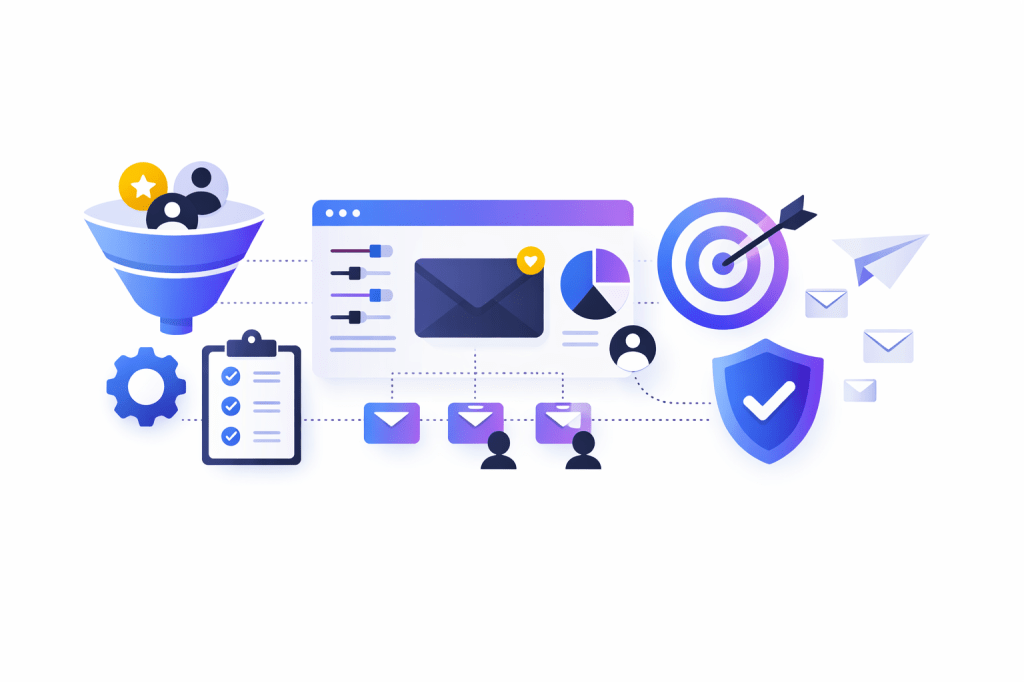
Most brands do not have an email problem. They have a relevance problem. The inbox is still one of the strongest places to build a relationship, with 75.4% of consumers choosing email for promotional messages, 69% of consumers worldwide naming email as their preferred brand channel, and 79% of global consumers preferring email for promotions and sales. That is exactly why generic blasting is such a waste. When a channel this valuable is treated carelessly, the downside shows up fast in lower engagement, higher complaints, and weaker trust.
That is where targeted email lists come in. Done properly, they are not rented databases or random exports stitched together from half a dozen tools. They are permission-based audience groups built around declared interests, behavior, lifecycle stage, and source quality, which fits much better with the standards laid out by the European Commission for third-party marketing data, the ICO guidance on electronic mail marketing, and the FTC’s CAN-SPAM compliance guide.
The timing matters too. Research from Acquia, IAB, and Adobe keeps pointing in the same direction: privacy pressure, signal loss, and customer expectations are pushing marketers toward first-party data and tighter governance. So when this article talks about targeted email lists, it is talking about a serious business asset you can segment, protect, and scale without turning your brand into background noise.
Article Outline
This article is structured as a six-part walkthrough, so you can jump straight to the section that matches the problem you are trying to solve right now. The order matters, though, because targeted email lists only work when strategy, compliance, list design, and execution all support each other.
- Part 1: Why Targeted Email Lists Matter
- Part 2: Framework Overview
- Part 3: Core Components
- Part 4: Professional Implementation
- Part 5: Analytics and Optimization
- Part 6: The Wider Ecosystem and FAQ
Why Targeted Email Lists Matter
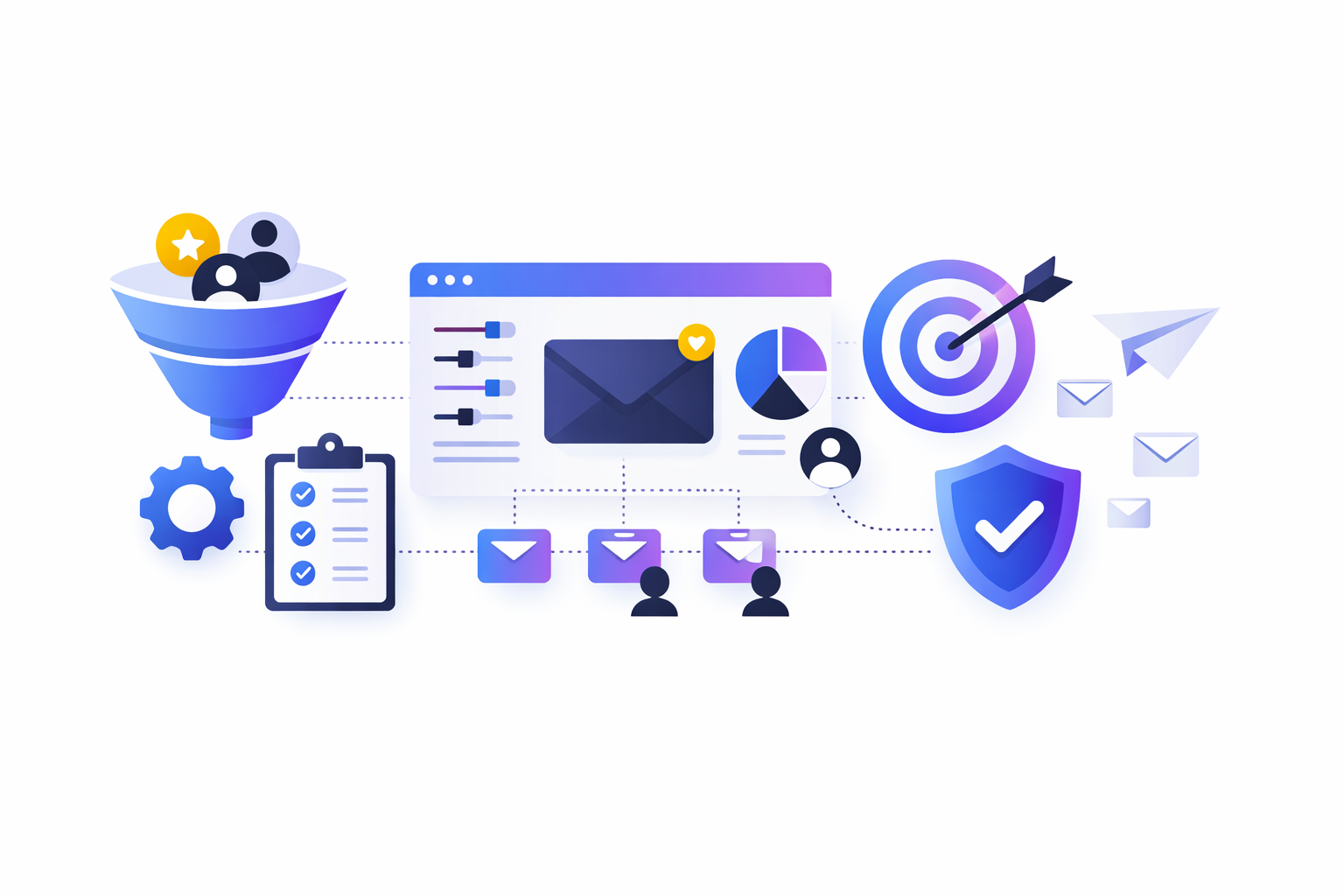
A bigger list can look impressive in a dashboard and still quietly hurt the business. Once messages feel generic, people ignore them, delete them, flag them, or unsubscribe, and mailbox providers pay attention to all of that behavior. Google’s sender requirements now tie inbox access to authentication, low spam rates, and proper unsubscribe handling, while the Gmail FAQ makes it clear that bulk senders should stay below a 0.1% spam rate and never drift up to 0.3%, which is why deliverability research from Sinch Mailgun keeps circling back to hygiene, authentication, and better opt-in practices.
That changes the economics of email in a very practical way. A targeted list lets you send fewer irrelevant campaigns, protect complaint rates, and give engaged subscribers more of what they actually signed up to receive. It also creates room for higher-intent flows like demo follow-ups, lead nurturing, abandoned cart recovery, onboarding, and reactivation without punishing the rest of your audience with messages that were never meant for them in the first place.
The deeper reason is trust. When people can see why they are receiving a message, and when the content matches the promise that got them onto the list, the relationship feels useful instead of invasive. That balance between relevance and restraint shows up again and again in work from Adobe, OneTrust, and Acquia, and it is one of the biggest reasons targeted email lists matter so much right now. Relevance is no longer just a conversion tactic. It is part of deliverability, compliance, and brand credibility all at once.
Framework Overview
The easiest way to understand targeted email lists is to stop thinking about them as one spreadsheet and start thinking about them as a four-layer system. The first layer is permission, which answers whether you have a clear, lawful, well-explained reason to contact this person. The second layer is identity, which captures the few details that genuinely improve messaging, such as role, product interest, geography, business type, or customer stage.
The third layer is behavior. This is where form submissions, purchases, category clicks, webinar attendance, pricing-page visits, booked calls, and support interactions turn a static contact record into something your team can act on intelligently. The fourth layer is orchestration, where segments, exclusions, cadence rules, and automations make sure the right message reaches the right person without flooding everyone else.
This framework works because it matches the broader shift away from weak third-party assumptions and toward owned data systems described by IAB’s privacy-by-design research, Acquia’s first-party data findings, and European guidance on direct marketing data. It also saves teams from making the classic mistake of treating segmentation like a filter added at the end, when in reality it should be built into collection, storage, and campaign design from the start.
Core Components

If you want targeted email lists that keep working as the business grows, you need structure that survives scale, handoffs, and stricter inbox rules. This is not administrative fluff. These are the pieces that keep your data useful when campaigns become more frequent, offers become more specific, and the cost of getting segmentation wrong gets much higher.
- Source and consent tracking: Every contact should carry a clear record of where they came from, what they signed up for, and what permissions apply. That makes compliance easier and stops your team from treating a newsletter signup, a product demo lead, and a checkout opt-in like the same kind of contact.
- Profile fields that actually change the message: Keep the fields that help you make better decisions and remove the ones that only create clutter. Job title, industry, use case, product category, budget range, or region can be valuable, but only when they affect what you send next.
- Behavioral signals with real intent: Opens are too weak to carry the whole system, especially as privacy changes make tracking less precise. Stronger targeting comes from signals like category clicks, downloads, form completions, bookings, repeat purchases, and renewal activity.
- Lifecycle stages: New leads, active prospects, first-time buyers, repeat customers, dormant subscribers, and former customers should not sit in one undifferentiated pool. Lifecycle structure gives every campaign a reason to exist and makes your follow-up feel timely instead of random.
- Exclusions and suppressions: Good targeting depends as much on who should not receive a message as who should. Complaint-prone contacts, recent unsubscribers, disqualified leads, irrelevant product groups, and customers already deep in another flow should be easy to exclude before the campaign ever leaves draft mode.
- Deliverability safeguards: Authentication, bounce handling, preference management, and unsubscribe processing are part of list architecture now, not technical chores you leave for later. Google and the Gmail enforcement FAQ have made that impossible to treat as optional.
When these components are in place, segmentation becomes faster and more reliable because the system already knows how to separate interest from noise. When they are missing, every campaign turns into manual cleanup, uncertain compliance, and guesswork about who should receive what. That is why strong targeted email lists feel clean on the back end long before they feel impressive on the front end.
Professional Implementation
The smartest way to implement targeted email lists is to begin with one acquisition path and one business goal. Pick a single promise, such as a newsletter, a product waitlist, a consultation request, or a lead magnet, and make the opt-in language match the follow-up exactly. That simple discipline keeps your emails aligned with the standards around clear disclosure, honest messaging, and valid opt-out handling described by the FTC and the ICO.
From there, build a clean handoff between collection, storage, and activation. For example, you can use Fillout to capture richer intent at the form level, route contacts into an email platform like Brevo or Moosend, and use a broader funnel stack like Systeme.io or ClickFunnels when landing pages, upsells, and automation paths all need to work together. If your sales process depends on rep visibility, a CRM layer such as Copper can help keep segmentation from getting trapped inside the email tool.
What makes the implementation professional is not the number of tags you create on day one. It is the discipline to label contacts correctly, suppress them when necessary, review complaints before they become a reputation problem, and expand only after the first few segments are behaving the way they should. Use the Gmail compliance guidance as your floor, not your ceiling, and treat list quality like infrastructure. The brands that win with targeted email lists are not the ones sending the most messages. They are the ones doing the best job of turning permission into context and context into timing.
Start With Permission, Not Volume
If the first question in your framework is “How many addresses can we add?” you are already drifting in the wrong direction. The first question has to be “Why are we allowed to contact this person, and what exactly did we promise when they joined?” That is much closer to the standard laid out in the ICO’s rules on electronic mail marketing, which say you should not send email marketing to individuals unless they specifically consented or qualify under the soft opt-in for existing customers.
This is also where many marketers get into trouble with purchased or shared data. European Commission guidance on third-party data for marketing is clear that if a list came from another organization, the buyer must be able to show the data was collected in a GDPR-compliant way and that the original consent covered transfer for another party’s direct marketing. So the framework should record source, consent language, date captured, intended use, and any channel limits from day one. That may sound strict, but it gives you a clean foundation that does not collapse later when a contact asks why you are emailing them in the first place.
Collect Signals That Actually Change the Message
The next part of the framework is deciding which data deserves a place in your list logic. This is where many teams overcomplicate things by stuffing forms with fields they never use or by hoarding data that does nothing to improve the next message. A better approach is to collect only the signals that change the message itself, the offer, the timing, or the suppression rule.
That usually means combining declared information with observed behavior. IAB’s 2024 data report highlights the types of first-party inputs teams are building around now, including interests, location, transaction history, and content consumption, while Litmus points to progressive profiling, CDPs, and dynamic content as signs of more mature email programs. So instead of asking for everything upfront, you can use a smarter form layer like Fillout to capture one or two high-value details at signup and then learn the rest through clicks, purchases, booked calls, or content preferences over time.
That keeps your targeted email lists usable. A field like industry matters if it changes the examples you send. A field like product interest matters if it changes the sequence. A field that never affects any message is just clutter wearing a name tag.
Separate Entry Segments From Revenue Segments
One of the smartest moves in this framework is separating how someone entered your world from where they are in the buying journey now. The source of signup still matters because a webinar registrant, a pricing-page lead, a newsletter reader, and a customer support contact did not raise their hands for the same reason. But if you freeze them in that original label forever, your targeting gets stale fast.
That is why targeted email lists need two layers of segmentation at the same time. The first layer is the entry segment, which tells you the promise that brought the person in. The second layer is the revenue segment, which tells you what they are ready for now based on actions such as repeat visits, category clicks, demo requests, trial activity, purchases, renewals, or inactivity. Adobe’s 2025 performance marketing research shows that many marketers still do not feel prepared on first- and zero-party data and that martech integration remains a major challenge, which is exactly why this separation matters: without it, the same contact gets pulled into unrelated campaigns and your list stops feeling targeted even when the tags look sophisticated.
Build Movement Rules Before You Build Campaigns
This is the part most people skip, and it is the part that quietly determines whether the framework survives scale. A segment is not just a condition for entry. It also needs a rule for movement, a rule for exclusion, and a rule for exit. Without those rules, contacts keep receiving messages that matched something they did weeks ago, not something they care about now.
A clean movement model usually answers five questions. What action moves someone into a higher-intent segment? What action moves them out? What makes them temporarily ineligible because they are already in another flow? When do they become inactive? When should they be suppressed entirely? Those are not theoretical questions anymore. Mailgun’s 2025 deliverability research shows senders reacting to the Gmail and Yahoo changes by tightening authentication, monitoring spam complaints more closely, improving hygiene, adjusting sending frequency, and even changing opt-in processes. That is exactly what movement rules are supposed to prevent: stale segments, unnecessary sends, and rising complaint risk.
So before you launch another campaign, decide how long someone can stay in a nurture stream without clicking, how recent buyers should be excluded from top-of-funnel promotions, and when unengaged subscribers should be cooled down, reactivated, or retired. That is what makes targeted email lists feel sharp instead of bloated.
Connect the Stack Without Losing Context
The final layer is operational, and it matters more than people think. Your framework is only as strong as the handoff between the place where data is captured, the place where it is stored, and the place where it is used. If the form knows the source but the email platform does not, or if the CRM knows the lifecycle stage but the automation tool does not, then your targeting breaks in the exact moment it needs to be trusted.
This is why the best framework for targeted email lists is usually boring in the best possible way. The same contact record should carry source, consent status, intent signals, current lifecycle stage, suppression flags, and the last meaningful action across the stack. That can be done with a form system like Fillout, an email platform such as Brevo or Moosend, a CRM like Copper, and funnel infrastructure such as Systeme.io or ClickFunnels when the journey includes opt-in pages, sales steps, and automated follow-up.
The point is not to use more software. The point is to keep context intact as a contact moves. When the stack preserves that context, your targeted email lists stop acting like a batch-and-blast channel and start acting like a real communication system, which is exactly what modern inbox rules, privacy expectations, and customer standards demand.
Consent and Source Quality
The first core component is the one too many marketers try to rush past: where the contact came from and what they agreed to when they got there. If that part is muddy, everything built on top of it becomes fragile. You can segment beautifully and still run into trouble if the original acquisition was vague, misleading, or based on a list you never had a clean right to use.
That is why targeted email lists need source integrity built right into the record. The ICO guidance on electronic mail marketing makes it clear that marketing emails to individuals generally require specific consent unless a narrow soft opt-in applies to your own existing customers, and the European Commission’s guidance on third-party data for marketing makes bought or transferred lists much harder to justify than many people assume. So every contact should carry a visible record of source, consent language, collection date, and intended use.
This is also where your intake tools matter. A simple form built in Fillout, a lead flow built through ClickFunnels, or a leaner acquisition path inside Systeme.io can all work well, but only if the promise on the page matches the emails that come next. That alignment is what turns a signup into permission instead of friction waiting to happen.
Profile Design and Intent Signals
The second core component is profile design, and this is where a lot of teams quietly sabotage themselves. They collect far too much information too early, then discover later that most of it never changes a single message. Targeted email lists work better when the profile contains fewer fields, but better ones.
The fields worth keeping are the ones that actually change what happens next. That could be product interest, job role, use case, geography, customer type, or budget range, but only if those details alter the offer, the sequence, the examples, or the timing. Acquia’s current guidance on first-party data strategy emphasizes the need for a deliberate plan to gather and act on customer data while staying compliant, which is another way of saying you should collect data with a purpose instead of collecting it because the form builder makes it easy.
Behavioral signals belong here too. A category click, pricing-page visit, demo request, repeat purchase, or onboarding milestone usually tells you much more than a passive open ever could. That is one reason targeted email lists become far more useful when they are connected to an email platform like Brevo or Moosend, because the list stops being a static database and starts behaving like a living audience shaped by what people actually do.
Segmentation Rules and Exclusions
The third core component is the logic that decides who gets included and who gets left out. Most people focus only on inclusion, which sounds reasonable until the wrong customer gets the wrong campaign three times in one week. Strong targeted email lists are built just as much on exclusions as they are on segments.
Every serious segment should answer four questions. What qualifies someone to enter it? What makes them leave it? What should block them from entering because they are already in a more relevant flow? What should suppress them completely because continued sending would be a bad idea? That is the difference between list management that looks organized and list management that actually protects the business.
This is where a CRM can become incredibly useful. When your email platform is connected to something like Copper, targeted email lists can respond to sales-stage movement, deal outcomes, support issues, and customer status instead of guessing based only on newsletter behavior. That keeps campaigns from colliding with each other and helps your list act like part of the revenue system rather than a side channel no one fully trusts.
Preference Centers and Cadence Control
The fourth core component is control, and this is the one marketers tend to underestimate until unsubscribes spike. People do not always want to leave your world entirely. Very often they just want fewer emails, different topics, or a different rhythm. If targeted email lists do not offer that flexibility, the only remaining option is the exit door.
That is why preference management deserves to be treated as a core part of list design instead of an afterthought. Adobe’s research on privacy and personalization shows the tension clearly: people want brands to understand them better, but they also want more transparency and more control over how their data is used. When you give subscribers the chance to choose topics, frequency, or content type, your targeting becomes more accurate because it is partly based on what they explicitly told you, not only what you inferred.
This is also one of the smartest ways to reduce fatigue. The problem with most weak email programs is not that they lack content. It is that they keep sending content after relevance has already expired. A good preference center helps targeted email lists stay welcome longer because it lets people reshape the relationship before they decide to end it.
Authentication, Hygiene, and Monitoring
The fifth core component sits closer to infrastructure, but it has direct consequences for performance. You can have great offers, sharp segmentation, and strong copy, but if the list is dirty or the sending setup is weak, the whole system starts leaking value. This is where targeted email lists either mature into a durable channel or slowly become a deliverability liability.
Google’s announcement of its bulk sender protections spelled out the new reality very clearly: senders pushing more than 5,000 messages to Gmail addresses in a day need stronger authentication, easy unsubscription, and lower spam complaints. The detailed Gmail sender guidelines add the practical layer, including SPF, DKIM, DMARC alignment, visible unsubscribe handling, and the recommendation to confirm recipients actually want your mail and to consider unsubscribing people who no longer engage. On the U.S. compliance side, the FTC’s CAN-SPAM guide still requires truthful headers, honest subject lines, a valid physical address, and opt-out handling within 10 business days.
In plain English, list hygiene is not a cleanup task you do when someone remembers. It is one of the core components of targeted email lists because it protects sender reputation, keeps dead weight from piling up, and stops your campaigns from training inbox providers to distrust you. The list should be reviewed, cooled down, trimmed, and requalified on purpose, not only when performance gets ugly enough to force the issue.
Why These Components Work Together
Each of these components matters on its own, but the real power shows up when they reinforce each other. Clear consent makes your source quality stronger. Better profile design makes your segments more believable. Good exclusions reduce fatigue. Preference controls reduce complaints. Hygiene and authentication help the messages that remain reach the inbox more reliably.
That is why targeted email lists should never be treated like a single tactic. They are a connected system. When one component is weak, the rest eventually feel it, and when the whole system is strong, the list becomes one of the most dependable growth assets your business can own.
Statistics and Data

The most useful data around targeted email lists is not the flashy stuff. It is the data that tells you whether people still want your messages, whether mailbox providers still trust your domain, and whether your segmentation is creating more relevance instead of more pressure. That is why the numbers below matter so much: they shape what a professional email program has to pay attention to before it tries to scale anything.
What the Inbox Providers Are Watching
Google has made the baseline a lot clearer than it used to be. Since February 1, 2024, all senders to personal Gmail accounts have had to meet core sender requirements, and anyone sending close to 5,000 Gmail messages in a 24-hour period is treated as a bulk sender. That matters because targeted email lists are not just about who you send to anymore. They are also about whether your authentication, unsubscribe handling, and complaint levels show Google that you deserve to keep landing in the inbox.
The complaint thresholds are especially important. Google says bulk senders should keep spam rates below 0.1% and prevent them from ever reaching 0.3% or higher, while the sender guidelines also require SPF, DKIM, DMARC alignment for bulk senders, a visible unsubscribe link, and one-click unsubscribe for marketing and subscribed messages. Even the unsubscribe timing is explicit now, because unsubscribes are expected to be honored within 48 hours. In plain English, targeted email lists have to be narrow enough, permission-based enough, and clean enough to keep complaint rates down before inbox placement starts sliding.
Why Delivery Rate Is Not Enough
One of the biggest mistakes in email reporting is assuming that delivery rate tells you whether your messages actually reached the inbox. It does not. Sinch Mailgun’s State of Email Deliverability 2025 found that almost 88% of senders could not correctly define what delivery rate measures, which is a huge problem because delivery only tells you whether a receiving mail server accepted the message, not whether it landed in the primary inbox instead of spam or junk.
The same report shows why that distinction matters so much. Only 13.3% of respondents use inbox placement reports to measure deliverability, even though inbox placement is the metric that shows where delivered mail actually ends up. So if your targeted email lists are being judged only by delivered percentage, you can feel good about a number that hides a serious inbox problem. Professional teams track both acceptance and placement, because one tells you the server said yes, while the other tells you whether a human ever had a fair chance to see the message.
The Personalization Numbers That Actually Mean Something
There is also a strong case for why targeted email lists deserve better data instead of broader reach. Litmus found that more than 80% of respondents saw at least some performance improvement from subject line personalization, live or real-time content, and personalization using dynamic content. That tells you something important: better list intelligence is not just a nice extra for advanced marketers. It directly affects how well the message performs once it gets in front of the subscriber.
The channel itself is still worth the effort too, which makes better targeting even more valuable. Twilio reports that nearly four in five global consumers prefer email for loyalty program updates and sales notifications, Mailgun’s consumer research found 75.4% choose the email inbox for promotional messages, and EMARKETER highlighted that 69% of consumers worldwide say email is their preferred communication channel with brands. When you put those numbers together, the message is pretty obvious: email is still a top channel, but generic email is not what people are asking for. They want relevant email from brands they recognize and trust.
The Data Readiness Gap Behind Most Email Problems
A lot of weak email performance is really a data problem wearing a creative disguise. Adobe found that only half of marketers feel prepared when it comes to first- and zero-party data, and that martech integration is seen as an important challenge by more than 70% of survey respondents. That helps explain why so many brands talk about personalization while still sending campaigns that feel broad, repetitive, or badly timed.
The wider market data points in the same direction. IAB’s State of Data 2024 found that 95% of decision-makers expect continued legislation and signal loss, 82% say their organizations have already been impacted operationally, and 71% are increasing their first-party datasets. That is exactly why targeted email lists matter so much right now. When third-party certainty keeps shrinking, your own permission-based data becomes one of the few assets you can still improve, govern, and activate with confidence.
The Monitoring Gap You Cannot Ignore
There is another uncomfortable number hiding in the research: a surprising chunk of marketers still are not watching deliverability closely enough. Litmus reports that 15% do not monitor deliverability at all and another 15% are not even sure whether they do. That is not a small reporting miss. It is the kind of blind spot that lets list fatigue, spam complaints, authentication failures, and segment decay build up quietly until performance starts dropping for reasons nobody can clearly explain.
That matters because targeted email lists need feedback loops. If one segment is producing more complaints, lower click depth, or weaker inbox placement than another, the list design needs to reflect that quickly. Waiting until revenue drops is a terrible measurement strategy. By then, the damage is usually already spreading into reputation, not just campaign performance.
Build a Scoreboard That Separates Health From Revenue
The smartest way to measure targeted email lists is to split your scoreboard into two layers. The first layer is list health: complaint rate, unsubscribe rate, bounce rate, inbox placement, active subscriber share, and segment fatigue. The second layer is business movement: demo requests, reply rate, trial starts, repeat purchases, influenced pipeline, and revenue per relevant recipient.
That separation keeps you from chasing vanity metrics. A segment can look strong on raw opens and still be too broad, too stale, or too risky if complaints are rising underneath the surface. On the other hand, a smaller segment can look modest in volume and still be one of your best assets if it consistently drives replies, booked calls, or sales. Tools like Brevo, Moosend, Copper, and Fillout can help connect collection, segmentation, and reporting, but the real win comes from knowing which numbers belong in which layer of the scoreboard.
That is the discipline professional implementation requires. Targeted email lists should be measured like a living asset, not a static list of contacts and not a one-off campaign result. When the data is organized that way, you can finally see whether your targeting is making the inbox healthier, the audience more engaged, and the business more profitable at the same time.
Analytics and Optimization
This is where targeted email lists either start compounding or start quietly falling apart. A lot of marketers think optimization means testing a new subject line every Friday and calling it progress. Real optimization goes deeper than that because the biggest gains usually come from improving who gets the message, when they get it, and why they were still on that list in the first place.
That is also why this part matters so much after the numbers in Part 4. Once you know what to watch, the next move is deciding how to improve it without creating more fatigue, more complaints, or more noise. Targeted email lists get stronger when optimization is built around audience quality, not just campaign creativity.
Optimize the List Before the Email
The fastest way to waste time is to keep rewriting campaigns for the wrong audience. If a segment is stale, overbroad, or built on weak intent signals, even a great email will struggle because the problem started before the copy was ever written. That is why targeted email lists should be optimized from the contact level upward, not only from the campaign level downward.
A simple example makes this clear. If a segment contains people who downloaded a guide six months ago, recent buyers who no longer need the offer, and fresh leads who clicked pricing yesterday, you do not have one audience. You have three very different situations pretending to be one segment. The better move is to split by recency, intent, and status first, then write the email after that.
This is also more consistent with how inbox providers want senders to behave. Google says giving people an easy way to unsubscribe can improve open rates, click-through rates, and sending efficiency, which tells you something important: less friction and better targeting are part of performance, not a tradeoff against it. In other words, list discipline is already an optimization strategy.
Test Segments, Not Just Subject Lines
Subject line testing can help, but it is often treated like the whole game when it is really just one small lever. If you want targeted email lists to improve in a meaningful way, test the audience rules as aggressively as you test the copy. Sometimes the winning move is not a new headline at all. It is narrowing the segment to recent category clickers, excluding people already in a sales conversation, or splitting one broad list into separate use-case groups.
This matters because better relevance often beats cleverer writing. Litmus found that more than 80% of respondents saw at least some improvement from subject line personalization, live or real-time content, and dynamic content personalization, which is a strong signal that richer audience context can create better results than surface-level tweaks alone. The point is not to personalize everything. The point is to test the parts of your list logic that change the message into something more useful.
So instead of running endless headline experiments on one giant segment, test smaller strategic decisions. Compare a segment built from declared interest against one built from recent behavior. Compare recent leads against older leads. Compare a pricing-page group against a content-consumption group. That is how targeted email lists move from looking organized on paper to producing meaningfully different outcomes in practice.
Treat Suppression Like a Growth Tool
This is one of the biggest mindset shifts in email optimization. Most marketers treat suppression as a defensive move, something they do only when they are afraid of complaints or forced by compliance rules. In reality, targeted email lists often grow stronger when you become more willing to leave people out.
That can mean excluding recent buyers from top-of-funnel promotions, removing inactive subscribers from regular campaigns, pausing sends to people in sensitive support situations, or cooling down segments that have not engaged in a meaningful way. It can also mean building temporary exclusions so one person does not get hit by a newsletter, a nurture sequence, a promo push, and a sales reminder at the same time. None of that reduces sophistication. It increases it.
The deliverability logic supports this approach too. Google tells bulk senders to keep spam rates below 0.1% and prevent them from ever reaching 0.3% or higher, and the sender guidelines explicitly suggest considering unsubscribing recipients who are not opening or reading your messages. That is a strong reminder that targeted email lists improve not only by adding the right people, but also by removing the wrong sends.
Build a Real Re-Engagement Path
If someone has gone quiet, blasting them with more of the same usually does not count as re-engagement. It just proves you noticed the problem and made it worse. A smarter approach is to build a specific path for contacts whose behavior has changed, with lighter frequency, a clearer reason to respond, and a real chance to reset preferences or leave cleanly.
That re-engagement path should feel different from your normal campaigns. The message can acknowledge the gap, offer a simpler choice, and ask the subscriber what they still want instead of assuming you already know. This is where tools like Brevo or Moosend can be useful, because targeted email lists become much easier to manage when you can automate entry, frequency changes, and exit rules without turning the whole system into a mess of manual filters.
The important thing is that re-engagement should end somewhere. If a subscriber still does not respond after a fair attempt, keeping them in the main flow is usually a sign that the list is being measured by size instead of value. Strong targeted email lists care much more about active relevance than passive accumulation.
Let Acquisition Learn From Email Behavior
Another huge optimization opportunity gets missed all the time: using email performance to improve the way subscribers enter the system. If a certain lead source brings in people who never click, never buy, and complain more often, the problem may not be your email at all. It may be the page promise, the form design, the offer quality, or the targeting upstream.
That is why targeted email lists should feed insights back into your acquisition stack. If a shorter form creates lower-intent subscribers, test a qualifying field. If a vague lead magnet attracts people who never move closer to revenue, tighten the promise. If one source generates stronger downstream behavior, send more attention there. A form tool like Fillout, a funnel system such as ClickFunnels or Systeme.io, and a CRM like Copper can make that learning loop much easier to maintain.
This is one reason first-party data strategy matters so much now. IAB’s State of Data 2024 shows organizations increasing their first-party datasets as legislation and signal loss continue to reshape marketing. When that shift is happening everywhere, targeted email lists become even more valuable because they are one of the clearest places where your own data can teach you how to acquire better subscribers next time.
Turn Optimization Into a Routine
The final piece is rhythm. Optimization usually breaks down when it depends on inspiration instead of a routine. If the team only looks closely when results dip, the fixes come late and the same problems keep sneaking back into the system.
A better approach is to review targeted email lists on a steady cadence. Check which segments are getting broader without a reason, which ones are aging out, which acquisition sources are underperforming, which automations are colliding, and which suppressions need to become permanent rules. That kind of review is not glamorous, but it is the work that keeps the channel healthy enough to scale.
This is also where a lot of teams discover that the problem was never “email” in the abstract. It was one tired segment, one weak source, one missing exclusion, or one old assumption that should have been updated weeks ago. Once you start treating targeted email lists like a living system that deserves regular tuning, optimization stops feeling random and starts becoming one of the most reliable levers in the business.
The Wider Ecosystem and FAQ

Targeted email lists do not live inside one tool. They sit inside a bigger ecosystem that includes the form where interest is captured, the CRM where context is stored, the email platform that handles segmentation and automation, and the deliverability layer that protects sender reputation when the list starts to scale. If one part of that ecosystem is weak, the whole system gets sloppy fast, and that is when relevance drops even if the campaigns still look polished on the surface.
In practice, the stack is usually pretty simple when you keep it focused. You might capture and qualify leads with Fillout, run campaigns and automations through Brevo or Moosend, keep pipeline context organized in Copper, and use Systeme.io or ClickFunnels when the journey includes landing pages, offers, and multi-step follow-up. If deliverability is already turning into a bottleneck, a specialist option like ScaledMail can make more sense than trying to patch every inbox problem after the damage is done.
That is the bigger picture. Targeted email lists are strongest when every tool in the system protects the same goal: permission, relevance, timing, and trust. With that in place, the FAQ below becomes much easier to answer in a way that actually helps.
FAQ for a Complete Guide
What makes targeted email lists different from a regular email list?
A regular email list is often just a collection of contacts. Targeted email lists are built around clear signals such as source, interests, lifecycle stage, behavior, and exclusions, so the message feels matched to the subscriber instead of blasted at everyone. That difference matters because Google now ties better email performance to practices like easy unsubscribing and healthier sending behavior, which means relevance is no longer just a conversion tactic.
Are targeted email lists still worth building?
Yes, and the case is still very strong. Mailgun found that 75.4% of consumers chose the email inbox as a preferred channel for promotional messages, EMARKETER highlighted that 69% of consumers worldwide prefer email from brands, and Twilio reported that nearly four in five global consumers prefer email for loyalty updates and sales notifications. The opportunity is still there, but the reward goes to brands that send smarter, not just more often.
Should you ever buy targeted email lists?
That is usually a bad move. The European Commission says that if you acquire a contact list from another organization, that organization must be able to show the data was collected lawfully and that consent covered transfer for direct marketing, and the ICO warns that using other people’s contact details for electronic marketing creates serious compliance risk. Even when a seller claims a list is “targeted,” that does not mean the recipients expect to hear from you.
What data should you collect first?
Start with the few fields that genuinely change the next message. Source, consent status, main interest, and one strong qualifier such as use case or company type will usually do more for targeted email lists than a long form full of questions nobody uses later. Once the relationship is real, behavior such as clicks, purchases, demo requests, and replies will often tell you more than extra form fields ever could.
How often should you email each segment?
There is no universal number that fits every business, and that is exactly why targeted email lists matter. A hot segment that just requested pricing can usually handle a very different cadence from a casual newsletter reader, and a recent buyer should often be excluded from heavy promotional pressure altogether. Google’s sender guidance explicitly says that making it easy for people to unsubscribe can improve open rates, click-through rates, and sending efficiency, which is a good reminder that a safer cadence is often a smarter cadence too.
What metrics matter most?
The numbers that matter most are the ones that separate list health from business impact. For health, watch complaint rate, unsubscribe rate, bounce rate, inbox placement, and active engagement; for business impact, watch replies, demo requests, purchases, renewals, and revenue from each segment. That distinction matters because Mailgun’s deliverability research shows many senders still confuse delivery with actual inbox placement, while Google tells bulk senders to stay below a 0.1% spam rate and avoid ever reaching 0.3%.
Should you remove inactive subscribers?
In many cases, yes. A proper re-engagement attempt comes first, but if a subscriber keeps ignoring your emails, leaving them in the main flow can drag down both performance and sender reputation. Google’s sender guidelines even suggest considering unsubscribing recipients who are not opening or reading your messages, which tells you that pruning a list is not failure. It is part of keeping targeted email lists healthy.
Do targeted email lists work for B2B as well as B2C?
Absolutely, but the logic usually changes a little. In B2B, the strongest targeted email lists are often built around role, pain point, buying stage, company profile, and sales activity rather than around broad consumer interests. The legal side still matters, though, so the same discipline around permission, truthful messaging, and opt-out handling from the FTC’s CAN-SPAM guide and the ICO’s guidance on electronic mail marketing still belongs in the process.
What tools do you actually need to manage targeted email lists well?
You do not need a giant stack. You need a clean stack. A smart form layer such as Fillout, an email platform like Brevo or Moosend, a CRM such as Copper, and funnel infrastructure like Systeme.io or ClickFunnels will cover most serious use cases. The goal is not tool count. The goal is keeping source, intent, lifecycle, and suppression logic connected.
How do you stay compliant when building targeted email lists?
Keep the rules boring and obvious. Make sure recipients understand what they are signing up for, keep your sender identity honest, make opt-outs easy, and store clear records of consent and source. The FTC requires accurate headers, non-deceptive subject lines, a valid physical address, and opt-out processing, the ICO explains what PECR requires for direct marketing by electronic mail, and the European Commission outlines the extra care needed when data comes from third parties. If those basics are messy, the rest of the system is standing on weak ground.
When should you bring in professionals instead of doing it all yourself?
You should seriously consider it when targeted email lists start touching multiple tools, multiple audiences, or meaningful revenue. That is the moment when weak segmentation, inconsistent consent handling, or poor deliverability habits can become expensive very quickly. If you are already spending time fixing automations, cleaning data manually, and guessing why performance is slipping, professional help is usually cheaper than letting the mess keep growing.
Work With Professionals
There comes a point where doing everything yourself stops being efficient and starts becoming a bottleneck. Targeted email lists can absolutely create incredible leverage, but only when the strategy, systems, and execution all move in the same direction. If your forms, CRM, automations, deliverability setup, and campaign calendar are all pulling in different directions, it makes sense to work with people who can tighten the whole machine up.
That does not only apply if you are hiring an agency. It also applies if you are looking for a specialist who can help with lifecycle strategy, CRM cleanup, email operations, audience architecture, or deliverability. The right operator can save you from months of trial and error by fixing the system at the root instead of patching symptoms one campaign at a time.
Explore 10K+ Remote Marketing Contracts on MarkeWork.com
Most marketers spend too much time chasing clients, competing on crowded platforms, and losing a percentage of every project to middlemen.
MarkeWork gives you a better way. Browse thousands of remote marketing contracts and connect directly with companies desperate to hire skilled marketers like you without platform commissions and without unnecessary gatekeepers.
If you’re serious about finding better opportunities and keeping 100% of what you earn, you can explore available contracts and create your profile for free at MarkeWork.com.
 Filip Konecny Enterprises