
PLR Funnels grabs attention fast because the pitch is simple: get access to ready-to-launch funnels, swap in your payment link, and start selling without building everything from scratch. That sounds great if you are tired of staring at a blank page and you want a faster path to getting an offer live.
The catch is that speed is not the same thing as simplicity. PLR Funnels can look like an easy shortcut, but the real question is whether it is a smart shortcut for you or just another shiny offer that still leaves you with setup work, software costs, and a business model that is not as hands-off as the headline makes it sound.
This review is here to help you make that call before you waste time. I am going to show you where PLR Funnels looks attractive, where the limitations start to matter, and when it makes more sense to move now versus wait and use something cheaper or more flexible.

Image source: PLR Funnels official page
Article outline
- First look: why PLR Funnels gets attention so quickly
- The limitations you should understand before buying into the promise
- Who should keep reading and who should probably skip it
- What you get next: the free trial and what is actually included
- The good stuff: where this offer can save real time
- Pricing and value: what it really costs once the full setup is involved
- Alternatives worth comparing before you commit
- Final verdict: buy now, wait, or skip it
- FAQ
PLR Funnels looks tempting for a reason
Most people do not want to build a funnel from zero, write all the emails, put together upsells, and then figure out how to connect the checkout. PLR Funnels sells the opposite of that pain, which is why people click.
That appeal is real. If you already have some traffic, an audience, or even just the discipline to launch quickly, a done-for-you starting point can be worth a lot more than another course telling you to “just create value” for six weeks.
PLR Funnels also hits a specific desire that a lot of beginners have: selling something without creating a product from scratch. That is a big reason this offer can feel easier than opening a blank funnel builder and trying to invent an entire business model on your own.
The limitations you should understand before you get excited
The first limitation is dependence on another platform. The official pitch points you toward ClickFunnels, so PLR Funnels is not really a standalone solution if your goal was to avoid extra software.
The second limitation is that templates do not remove the need for judgment. You still need to choose the right funnel, understand the offer, connect payments, and avoid launching something that looks generic or mismatched to your audience.
The third limitation is business durability. PLR-style assets can help you move faster, but they do not automatically give you a differentiated brand, a loyal audience, or a strong reason for people to buy from you instead of someone else using similar materials.
None of that makes PLR Funnels bad. It just means the strongest pitch around convenience should be balanced against the fact that convenience does not replace strategy, positioning, or execution.
Who should keep reading and who should probably skip it
Keep reading if you want speed more than originality, and you are comfortable using a funnel platform to get offers live faster. PLR Funnels makes the most sense for people who are close to action and want a shortcut to deployment, not a theory lesson.
Keep reading if your current problem is execution bottleneck, not lack of ideas. If you already know you need a funnel and you are tired of piecing together pages, copy, and follow-up systems manually, this kind of offer becomes much more interesting.
You should probably skip it if you hate recurring software costs, want a fully original product angle from day one, or you are still at the stage where even a template feels overwhelming. In that case, a simpler tool or a cheaper setup may be the better move until you are actually ready to launch something.
What you actually get before you spend real money
PLR Funnels is not a free software plan. It starts with a free demo on the PLR Funnels page, and the pitch is built around 52 ready-to-launch funnels that already include products, salesletters, upsells, email sequences, and ads.
That is the part that makes the offer compelling. You are being shown a faster path than building the product, pages, and follow-up from scratch, and the page even frames it like you can swap the payment link and move fast.
That does not mean you are getting a complete business without extra moving parts. One of the biggest PLR Funnels limitations is that the funnels are built for ClickFunnels, so the moment you want to use the assets properly, software cost stops being optional.
That matters more than the headline. ClickFunnels starts at $97 per month on the current Launch plan, so you should judge this offer as a launch shortcut tied to a paid funnel stack, not as a free business in a box.
The good stuff
Speed is the best part of this offer. If you already know you want to sell digital products and you hate building the funnel, upsell flow, and follow-up emails from zero, PLR Funnels can remove a lot of dead time.
That is also where it beats doing everything manually. Building one decent funnel from scratch can eat days or weeks if you are writing copy, designing pages, figuring out the offer structure, and connecting the backend by yourself.
The offer also makes more sense than another course if your real problem is execution. Templates do not magically create demand, but they can stop you from wasting another month thinking about what to build instead of launching something.
The strongest buyer for this is not the person who wants a perfect original brand on day one. It is the person who wants a proven-looking starting point, already has some traffic source in mind, and would rather customize than invent everything from a blank screen.
That is why the limitations do not kill the offer. They just narrow the right buyer, and that is a good thing because this becomes a lot easier to justify when you know you are paying for speed, not magic.
Pricing and value: this is where the limitations become real
The smart comparison is not PLR Funnels versus doing nothing. The smart comparison is PLR Funnels plus ClickFunnels versus cheaper or broader all-in-one tools you could use instead.
That is the point where PLR Funnels limitations start to matter. You are not only deciding whether the funnels look useful, you are deciding whether the extra speed is worth the monthly platform cost and the dependency on someone else’s funnel structure.
Explore PLR FunnelsThat table is the decision point. Choose PLR Funnels if speed matters more than flexibility, choose Systeme.io if monthly cost matters more than speed, and choose GoHighLevel if you want a broader business stack that can replace more tools over time.
Systeme.io is the cheaper fallback
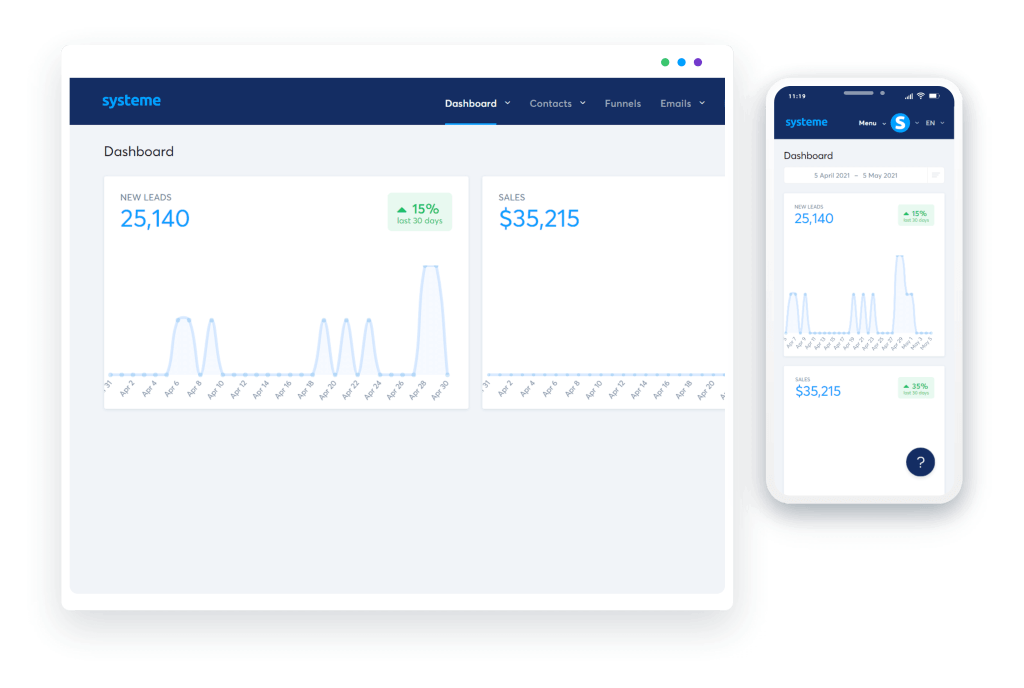
Systeme.io is the most obvious cheaper alternative because the free plan is real, the $17 Startup plan is still inexpensive, and the platform already includes funnels, email marketing, automation, courses, and checkout tools. That makes it the better choice if you are interested in the business model but not ready to take on ClickFunnels-level recurring cost yet.

Image source: systeme.io official site
The trade-off is that PLR Funnels is being sold as a ClickFunnels-centered shortcut. If you go with Systeme.io, you are usually saving money in exchange for more adapting, more rearranging, and less of that “swap the link and go” feeling.

Image source: systeme.io official site
GoHighLevel makes more sense if you want a bigger stack
GoHighLevel becomes the more attractive option if you are not just buying funnel speed. It gives you CRM, funnels, calendars, payments, and automation in a way that makes more sense for agencies, service businesses, or anyone who wants one platform to handle more of the backend.
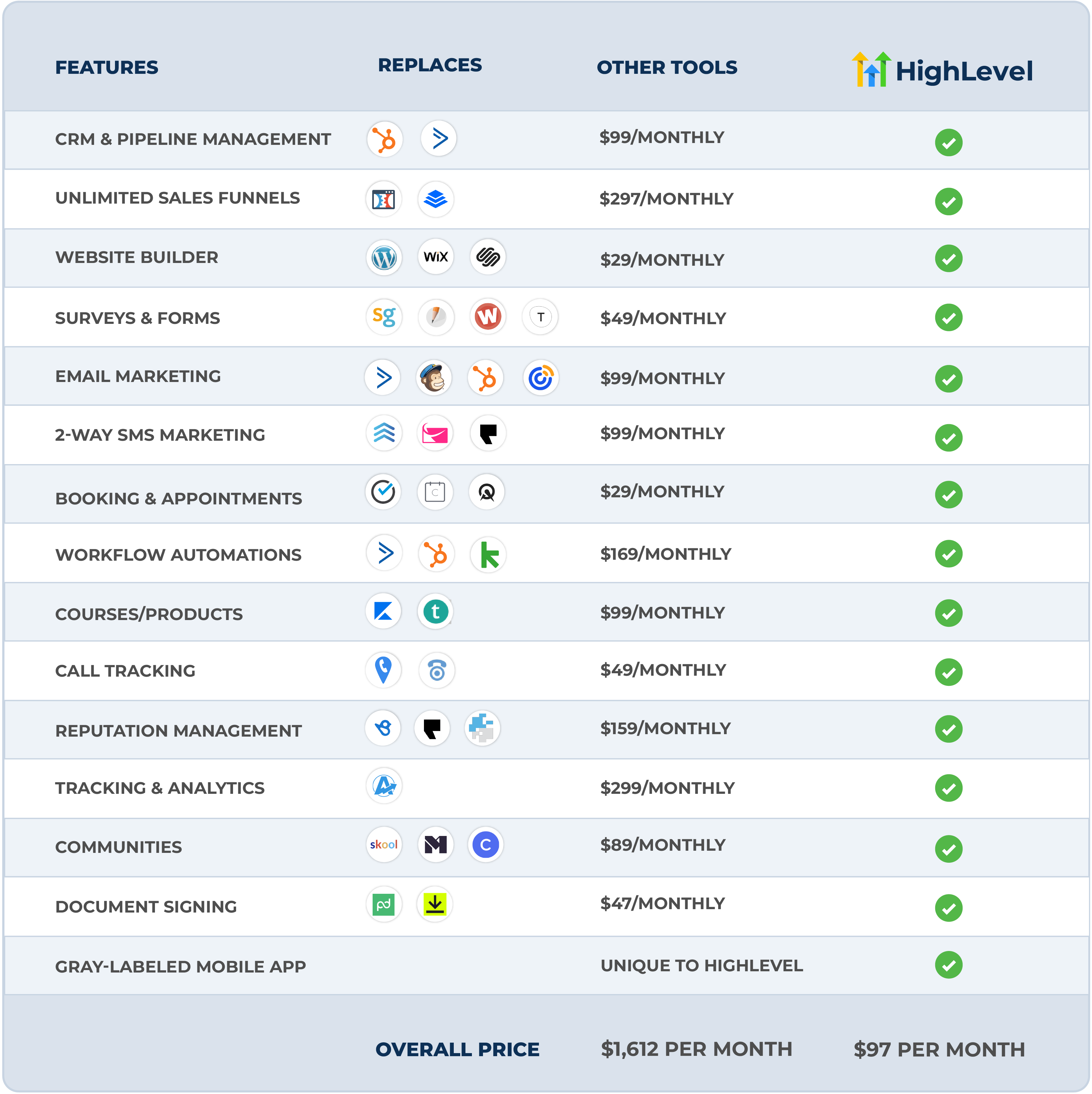
Image source: GoHighLevel official site
The downside is setup weight. If you are only trying to get one PLR-driven funnel live fast, GoHighLevel can feel like a bigger system than you need, even if the $97 starting price looks similar on paper.
Why buying sooner can make sense for the right person
If you already have an audience, a traffic source, or a clear niche, waiting usually means you keep delaying the actual launch. That is exactly the kind of bottleneck a product like PLR Funnels is supposed to fix.
If you are still broke, confused, and hoping a template will think for you, wait. You will get more value from a cheaper setup like Systeme.io or from spending time validating the angle before you buy into speed.
For the right buyer, though, this is easier to justify than it first looks. If manual setup is what keeps stopping you, and you are comfortable paying for ClickFunnels, then PLR Funnels can be a smart shortcut instead of just another digital promise.
Alternatives worth looking at before you commit
PLR Funnels is not the only way to get moving faster. The biggest PLR Funnels limitations are the builder dependency, the monthly software cost, and the fact that done-for-you assets still do not fix weak positioning or weak traffic.
That is why the best comparison is not “PLR Funnels or nothing.” The real comparison is PLR Funnels versus a cheaper builder, a broader all-in-one system, or just buying the funnel software first and skipping the PLR angle until you know what you want to sell.
If you only want the builder, ClickFunnels on its own is cleaner
ClickFunnels makes more sense than PLR Funnels when your main goal is learning the builder, setting up your own offer flow, and keeping full control over the structure. You lose the ready-made PLR shortcut, but you also avoid paying for assets you may never use properly.
That is a better path for people who already have a product, a service, or a lead magnet. If you just need the funnel stack, the ClickFunnels offer is easier to justify than buying PLR assets before your offer is dialed in.
Systeme.io is the cheaper way to test the business model
Systeme.io is the obvious fallback if the monthly cost is what bothers you most. The free plan gives you a place to test the funnel idea, and the paid plans start at $17 per month, which is a much lighter decision than paying for a builder that starts at $97 per month.
Image source: systeme.io official site
That does not mean it copies the PLR Funnels experience one-to-one. PLR Funnels is sold as a shortcut built around ClickFunnels, so using Systeme.io usually means you are trading some convenience for lower recurring cost.
That trade is worth it for beginners who are still proving demand. It is also the better choice if you know you tend to overbuy tools before you have traffic or a real sales process.
Image source: systeme.io official site
GoHighLevel is broader, not simpler
GoHighLevel is the better alternative if you want a bigger system around the funnel, not just the funnel itself. It starts at $97 per month like ClickFunnels, but the pitch is broader because you get CRM, booking, automation, messaging, payments, and client-style account management in one place.
That makes it stronger for agencies, service businesses, and operators who want one stack for lead capture, follow-up, and sales management. It is weaker for someone who only wants to launch a simple PLR-based offer without learning a bigger backend.
Image source: GoHighLevel official site
This is why GoHighLevel is not the default recommendation for everyone. It can replace more tools over time, but it is still more platform than many PLR Funnels buyers actually need on day one.
Here is the cleanest side-by-side way to look at it.
Explore PLR FunnelsChoose PLR Funnels if speed is the bottleneck and you are fine paying for the builder that makes the shortcut work. Choose Systeme.io if money is tight and you need a cheaper way to test the model, and choose GoHighLevel if you want a broader all-in-one stack instead of a PLR launch shortcut.
My honest take
PLR Funnels is worth a real look for the right buyer. That buyer already wants to launch, already understands the basic market they are going after, and mainly wants to save time on the build instead of proving whether the business idea makes sense.
The limitations are real, though. You still need ClickFunnels, you still need traffic, and you still need enough taste to avoid launching something that feels generic and lazy.
That means this is not a “buy it because you are stuck” product. It is a “buy it because you are ready to move and you want a shorter path to launch” product.
Buy now if you already have a niche, a traffic source, or an offer angle and your main problem is execution speed. Wait if you are still confused about what you want to sell, and go cheaper with Systeme.io if recurring cost is the objection you cannot get past.
That is the clean answer. For the right buyer, PLR Funnels can save time fast, but it is not the right first purchase for everyone who likes the headline.
FAQ
Is PLR Funnels a standalone tool?
No. The offer is positioned around ready-made funnel assets, but you still need the software stack that makes those assets usable, and that is where the builder cost starts to matter.
Is PLR Funnels good for beginners?
It can be, but only if the beginner is ready to launch and can follow through on setup. If you are still figuring out your niche, message, or traffic source, a cheaper platform is usually the safer first move.
What is the biggest limitation?
The biggest limitation is not the templates themselves. It is the gap between “done for you” and “ready to sell,” because you still need software, customization, and enough business judgment to make the funnel fit what you are actually trying to offer.
When should I skip PLR Funnels?
Skip it when you hate recurring software costs, want a fully original brand from the start, or are hoping a template will replace strategy. In those cases, waiting or using a cheaper builder is usually the smarter call.
What should I do if I mainly want the funnel builder?
Start with ClickFunnels by itself. That is the cleaner option when you already know what you want to sell and do not need the PLR shortcut.
What should I do if price is my main objection?
Systeme.io is the easier answer. You can test funnels and follow-up without taking on the same monthly commitment right away.
Should you start now or hold off?
Start now if you are serious about launching and manual setup keeps slowing you down. Hold off if you are still hoping the product will tell you what to sell, because that is not what it does.
That is why the decision is actually pretty simple. If speed is worth paying for, PLR Funnels is worth exploring, and if you need the cheaper or broader route, the alternatives above are better fits.
Check the official PLR Funnels page Filip Konecny Enterprises