
Market analysis sounds straightforward until real money is on the line. A category can look crowded and still be wide open in the right segment, or it can look full of promise right up until pricing pressure, weak demand quality, and stronger-than-expected competitors crush the economics. That is why smart businesses do not treat market analysis like a school exercise. They treat it like decision insurance.
That matters even more now because buyers move faster than old planning cycles do. U.S. e-commerce sales reached $1.2337 trillion in 2025 and 16.4% of total retail sales, the matching FRED series built from Census data shows the same 16.4% share, and business e-commerce sales across 43 countries climbed nearly 60% from 2016 to 2022 to reach $27 trillion. On the B2B side, decision makers now use an average of ten channels during the buying journey, while 61% prefer a rep-free buying experience and 73% actively avoid irrelevant outreach. When discovery, comparison, and buying behavior keep shifting, guesswork gets expensive fast.
A strong market analysis process helps you see what is actually happening underneath the headline trend. It tells you whether demand is real or inflated, whether the category is growing for the right reasons, which customers are worth prioritizing first, and where competitors are stronger than they look from the outside. Most importantly, it gives you a repeatable way to update your decisions before the market updates them for you.
Article Outline
- Part 1: Why Market Analysis Matters
- Part 2: Market Analysis Framework Overview
- Part 3: Core Components Of Market Analysis
- Part 4: Professional Implementation Of Market Analysis
- Part 5: Tools, Data Sources, And Common Mistakes
- Part 6: Turning Market Analysis Into Strategic Action
Why Market Analysis Matters
At its core, market analysis lowers the cost of being wrong. The SBA’s market research guidance puts the essentials in plain language: demand, market size, economic indicators, location, saturation, and pricing. That checklist still works because it forces a business to answer the questions that actually determine whether a market is attractive, reachable, and profitable.
It also matters because buyers do not move through a neat funnel anymore. McKinsey’s 2025 consumer research, based on responses from 25,998 consumers in 18 markets, shows that digital habits formed during the pandemic have hardened into lasting behavior, while 62% of U.S. TikTok users say they use the platform for product reviews or recommendations. If your market analysis still assumes customers discover offers the way they did five years ago, your channel choices and messaging will be late before you even launch.
Then there is the competitive layer. The latest Economic Census release now includes concentration-of-largest-firms data at detailed NAICS levels, which is far more useful than casually saying a market is “crowded.” Serious market analysis does not stop at naming rivals. It asks who controls distribution, who owns the customer relationship, who has pricing power, and which substitutes could quietly steal the demand you think belongs to your category.
Market Analysis Framework Overview
Most weak market analysis fails for a simple reason: it mixes together market size, customer behavior, and competitive strength as if they were the same thing. They are not. A big market can still be hard to penetrate, a fast-growing market can still be structurally unprofitable, and a market with mediocre headline growth can still be a goldmine if one segment is underserved and willing to pay.
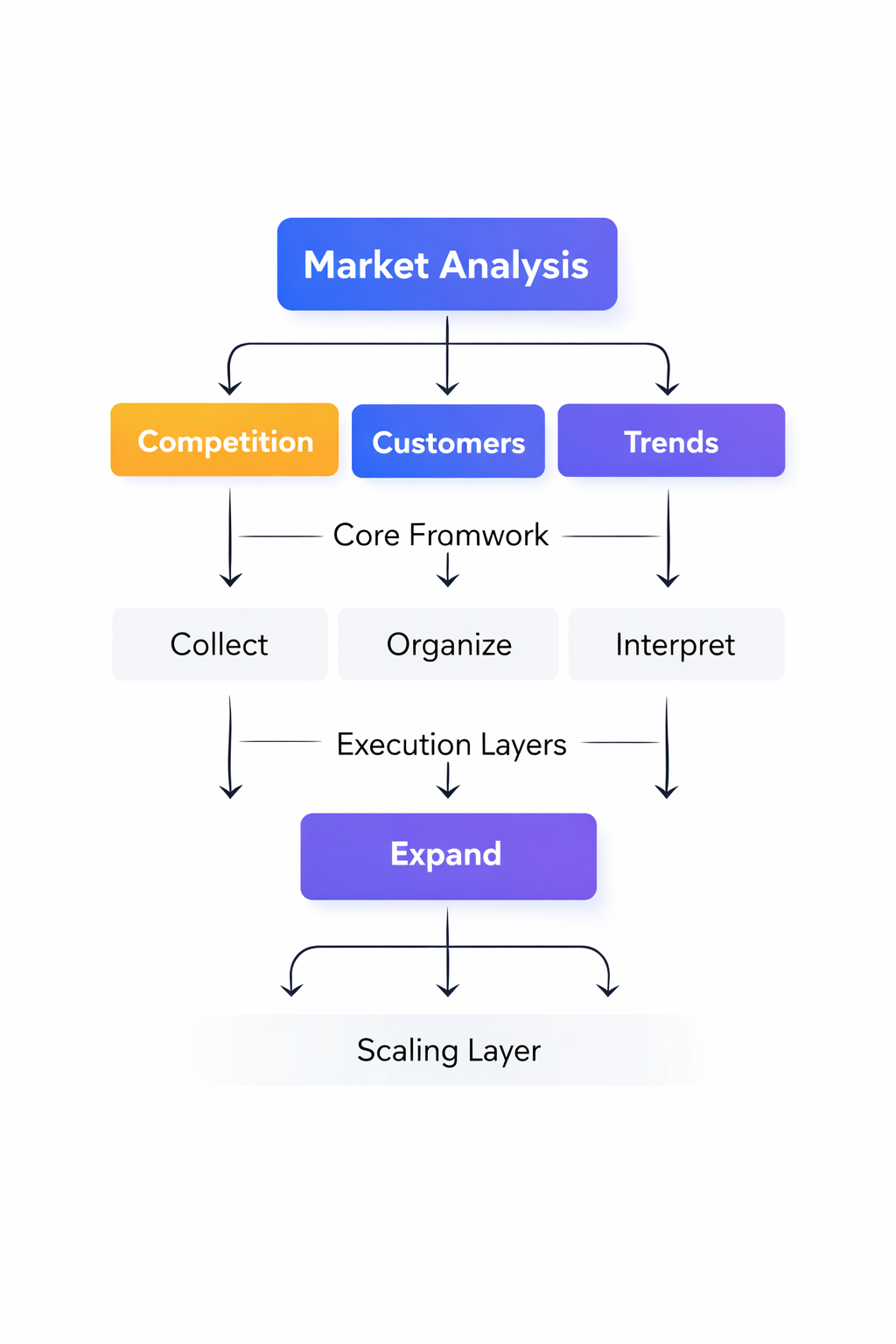
The framework in this article moves in a deliberate sequence so you can separate signal from noise. First, define the market boundary clearly enough to see substitutes, use cases, and geographic limits. Second, measure demand and growth. Third, understand customer segments and buying behavior. Fourth, map competitors and concentration. Fifth, test pricing, channel fit, and economic reality. Sixth, turn those insights into decisions, experiments, and a review cadence that keeps the analysis alive.
That order matters because it stops you from jumping straight to tactics. The SBA’s business-plan guidance makes the same point in a simpler way: you need to understand industry outlook, target market, competitor strengths, and the patterns that explain why winning offers work. Once you follow that sequence, your marketing plan, product roadmap, and sales priorities stop being isolated guesses and start working from the same evidence base.
Core Components Of Market Analysis
Market Size And Demand Quality
Market size is useful, but only after you ask what kind of demand is sitting inside the number. The SBA’s checklist pushes you to look at desire, reach, income, employment, location, and saturation, which is exactly how you separate surface-level interest from commercial potential. A good market analysis also tracks how demand is shifting across channels and formats, which is why sources such as BEA spending data, Census retail data, and global digital commerce data from UNCTAD belong in the same conversation instead of sitting in separate reports.
Customer Segments And Buying Behavior
Strong market analysis looks at buyers as groups with different triggers, risks, and channel preferences rather than one giant audience bucket. McKinsey’s 2024 B2B Pulse research shows that decision makers use more channels, expect smoother omnichannel movement, and are increasingly comfortable buying at higher values through remote and self-serve options. In consumer markets, product discovery now happens inside social platforms for large portions of the audience, so customer segmentation has to include where trust is formed, not just who the buyer is on paper.
Competition, Substitutes, And Market Power
Competitive analysis is not a beauty contest between brands with similar websites. It is a study of who owns attention, who owns distribution, who can absorb price pressure, and who can respond fastest when conditions change. The Economic Census and its updated size and concentration tables are especially valuable here because they let you move beyond anecdotes and inspect how revenue, firm size, and concentration are structured. That grounded view is far more useful than counting logos on a competitor slide and pretending that tells you who actually has power.
Pricing, Channels, And Economic Reality
Even a market with real demand can disappoint if pricing logic and channel strategy are weak. Gartner found that 68% of consumers feel taken advantage of when brands use dynamic pricing, which is a reminder that price is not just a revenue lever but also a trust signal. Channel assumptions need the same scrutiny, because AI-driven and zero-click discovery patterns are reshaping how people learn and decide, and that means a channel that looked efficient last year may now be intercepting buyers too late.
Professional Implementation Of Market Analysis
Professional market analysis is not about producing a prettier document. It is about building a system that keeps collecting evidence, updating assumptions, and translating those changes into better choices. Once you see it that way, implementation becomes much less mysterious and much more operational.
Build A Repeatable Source Stack
A lean team can run serious market analysis without building a giant research department, but it does need a clean operating rhythm. One practical setup is to collect interview requests and structured survey responses through Fillout, schedule conversations through Cal.com, pull public competitor pages into a searchable workflow through Firecrawl, and keep contacts, notes, and follow-up organized in Copper. The tools are not the strategy, but they do make the research trail easy to revisit when assumptions need to be challenged.
Validate With Live Demand Tests
The fastest way to improve market analysis is to force it to meet real buyer behavior. When a segment looks promising, a lightweight validation funnel in Systeme.io or ClickFunnels can tell you whether interest turns into opt-ins, booked calls, or purchases. That matters because stated demand and actual demand are often miles apart, and nothing sharpens a market view faster than watching what people really do when an offer goes live.
Create A Market Intelligence Rhythm
Once the system is running, the next job is making sure the analysis changes decisions instead of sitting in a folder. Bain reports that more than 90% of the 1,300 commercial executives it surveyed have already scaled at least one AI use case, but BCG found only 26% of companies have built the capabilities needed to move beyond pilots and generate tangible value. That gap is the warning every leadership team should hear: insight only compounds when it shows up in pricing, forecasting, product priorities, and channel allocation on a regular cadence.
The best implementations tie market analysis to operating reviews instead of treating it like a one-time strategy project. BCG’s work on planning and forecasting shows that better data and AI can make planning cycles 30% faster and forecasts 20% to 40% more accurate, which is exactly the kind of discipline market analysis should support. When evidence moves faster through the business, the business starts making fewer emotional decisions and more profitable ones.
Tools, Data Sources, And Common Mistakes
This is where market analysis gets real. Anybody can throw together a few trend lines, skim some competitor websites, and call it research, but that is usually how bad assumptions survive long enough to become expensive decisions. The teams that do this well build a simple process for collecting evidence, checking it from multiple angles, and updating it before the market moves again.
The good news is that you do not need a giant research department to do serious work here. What you need is a clean source stack, a way to organize what you find, and enough discipline to separate facts from opinions, noise from demand, and polished competitor messaging from actual market power. Once you do that, market analysis stops feeling abstract and starts helping with pricing, positioning, channel choices, and growth bets.

Start With Public Data Before You Buy Tools
One of the most common mistakes in market analysis is paying for fancy software before exhausting the sources that are already public, current, and highly useful. The SBA’s market research guidance is still one of the best starting points because it forces you to look at customer demand, industry conditions, pricing, saturation, and competitor positioning before you start romanticizing your idea. That is not glamorous, but it is exactly how smart analysis begins.
From there, the strongest public stack usually includes the Census Bureau’s retail and e-commerce releases, BEA industry data, BEA input-output and industry accounts, BLS price data, and the SEC’s filing search tools. Together, those sources tell you whether a category is expanding, where price pressure is building, how industries connect to one another, and what public competitors are saying when they have to speak under real scrutiny instead of pure marketing spin. When you put those layers together, market analysis becomes much harder to fake.
Use Tools To Organize Evidence, Not Replace Judgment
Once the raw sources are in place, software should make the process cleaner, not lazier. A practical setup might use Firecrawl to capture competitor pages and monitor offer changes over time, Fillout to collect structured survey responses or customer interview requests, and Copper to keep account notes, segment patterns, and follow-up actions in one place. For content and messaging tracking, teams often pair that research work with tools like Buffer or Brevo so they can see how campaigns, positioning, and audience response shift over time.
That said, tools do not do the thinking for you. They can help you collect pages, send forms, tag patterns, and keep the workflow moving, but they cannot tell you whether demand is durable, whether a segment is worth pursuing first, or whether a competitor’s latest offer is a sign of strength or desperation. Good market analysis still depends on human judgment, especially when different sources disagree and somebody has to decide which signal deserves more weight.
Balance Top-Down Sizing With Bottom-Up Proof
A lot of weak market analysis comes from asking one type of data to answer every question. Top-down sources are great for understanding the size and direction of the arena, but they do not automatically tell you where your best opening is or which customers are most likely to move first. That is why a serious framework always pairs public market data with bottom-up evidence such as customer interviews, inbound demand patterns, sales objections, win-loss notes, and buying behavior from live tests.
This matters even more because the buyer journey is getting harder to read with one lens. McKinsey’s recent B2B growth research shows how decision makers now move across far more channels during the buying process, Gartner’s sales research points to a strong preference for rep-free buying in many situations, and Pew’s platform research shows how product discovery and recommendation behavior now happens inside social environments that many older frameworks still underrate. If your market analysis only looks at broad market size and ignores where trust is actually built, you can end up aiming at the right market with the wrong go-to-market motion.
Watch Market Structure, Not Just Market Noise
Another mistake is confusing visible activity with real market strength. A competitor that posts constantly, runs lots of ads, or shows up everywhere on social media can still be weak on margins, retention, or channel economics. On the other hand, a company that looks quiet from the outside can be deeply entrenched because it owns distribution, has long-term contracts, controls switching costs, or benefits from industry concentration that newer entrants underestimate.
That is why structural data matters so much. The latest Economic Census size and concentration release and the related Economic Census data tables are far more valuable than casual competitor roundups because they reveal how revenue and firm size are distributed inside industries. Market analysis gets sharper when you stop asking who is loudest and start asking who is hardest to dislodge.
The Common Mistakes That Ruin Good Analysis
The first big mistake is defining the market too narrowly around your product category instead of the customer problem. Buyers rarely care about your internal label for the solution. They care about getting a job done, reducing risk, saving time, making money, or avoiding pain, and that means your real competition often includes substitutes that do not look like you at all.
The second mistake is mistaking interest for intent. Traffic, impressions, social engagement, and even email signups can be useful signals, but they are not the same thing as willingness to buy, stay, and refer others. The third mistake is running market analysis once, filing the deck away, and assuming it will still be true six or twelve months later even while pricing, channels, buying behavior, and category narratives are changing in public view.
Refresh The Analysis On A Working Cadence
The best market analysis is not a one-time project. It is a rhythm. Public sources update, competitors change offers, customers raise new objections, and channel economics can shift long before most companies formally acknowledge that anything is different.
That is why a monthly signal review and a deeper quarterly reset usually works better than one oversized annual research sprint. BCG’s recent work on dynamic steering in planning and forecasting makes the broader point well: when companies update assumptions more frequently and build better decision systems around fresh evidence, planning gets faster and forecasting gets more reliable. Market analysis should support that kind of operating discipline, not sit in a folder looking impressive while the market quietly moves on.
When you build the right source stack, use tools the right way, and avoid the obvious traps, market analysis becomes much more than background research. It becomes a practical edge. And once that edge is in place, the next step is turning what you have learned into concrete choices about positioning, offers, experiments, and where to push hardest for growth.
Start With A Clear Market Hypothesis
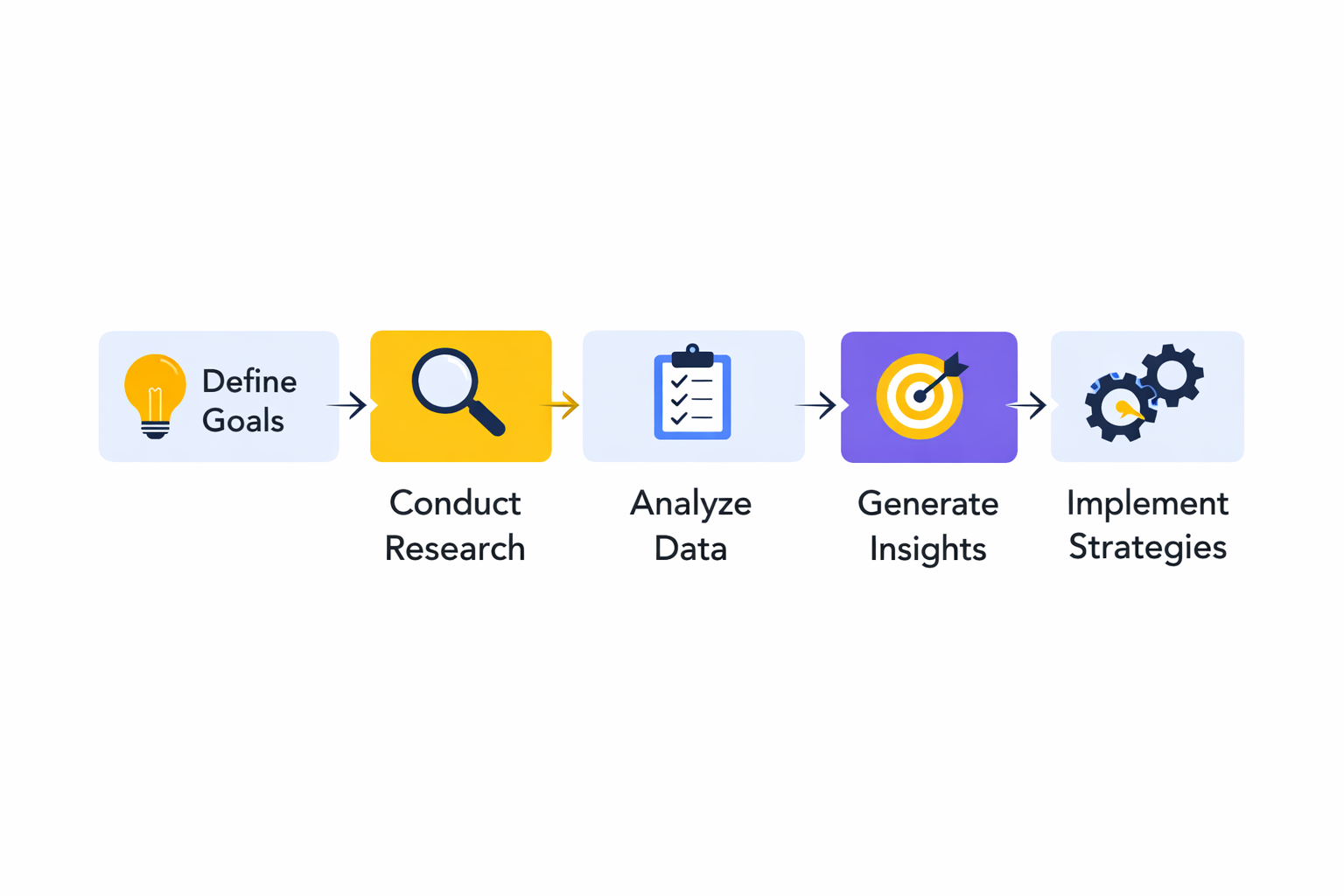
Professional implementation begins with writing down what you believe is true before you start collecting more data. That means defining the market, the customer segment you think matters most, the pain point you believe is urgent, the alternatives buyers are using now, and the reason your offer should win. It sounds simple, but that discipline matters because market analysis gets messy fast when the team is not even testing the same idea.
A good starting checklist already exists in the SBA’s market research and competitive analysis guidance and the SBA’s business-plan framework. Those pages push you to look at target customers, pricing, saturation, trends, and competitor strengths before you get lost in tactics. That is exactly the right order, because a working market analysis process should clarify what to test, not just collect random information.
Build A First-Party Learning Loop
Once the hypothesis is clear, the next step is building a steady flow of first-party learning. That usually means gathering interview requests, survey responses, customer objections, onboarding questions, churn reasons, and sales notes in one place so patterns start to reveal themselves. The point is not to collect more data for the sake of it. The point is to hear buyers in their own words before your team starts speaking for them.
A simple setup can go a long way here. You can use Fillout to collect structured market feedback, Cal.com to make interviews easy to book, and Copper to keep notes, segment tags, and follow-up actions connected to actual opportunities. That kind of system is not complicated, but it gives market analysis something it badly needs: a reliable stream of direct evidence from the people you want to serve.
Validate Demand With Small Live Tests
The fastest way to improve market analysis is to force it to face real behavior. A segment can sound perfect in interviews and still fail when the offer is live, the price is visible, and somebody has to decide whether to click, book, or buy. That is why implementation should always include small demand tests before a business commits serious money to product changes, ad spend, or a new channel strategy.
This is where lightweight execution tools become useful. A quick landing page or funnel built in ClickFunnels or Systeme.io, followed by email follow-up in Brevo or Moosend, can tell you very quickly whether attention turns into action. That matters because market analysis becomes much more trustworthy once it is connected to real opt-ins, booked calls, sales conversations, and buying resistance instead of guesswork.
Turn Competitor Monitoring Into A Routine
Competitor research only becomes useful when it is continuous. One-off audits tend to capture a frozen moment, but markets do not stay frozen. Offers change, pricing shifts, positioning evolves, and competitors often reveal more than they mean to through product pages, hiring signals, investor materials, and risk disclosures.
A practical workflow might use Firecrawl to capture and compare competitor pages over time, then pair that with what the SEC explains you can learn from a 10-K when public companies are involved. It also helps to look at structure instead of surface noise, which is why the latest Economic Census release on establishment and firm size and the related focus on concentration of the largest firms can be so valuable. That combination gives market analysis a much stronger foundation than simply counting who posts the most on social media.
Connect Market Analysis To Planning
Implementation is not finished until market analysis starts changing the way decisions get made. The insights need to show up in pricing reviews, sales priorities, channel allocation, product sequencing, and forecasting. Otherwise, the research may be accurate and still be useless because nobody is using it when resources get assigned.
That is why the best teams put market analysis on a fixed operating cadence. BCG has shown that more dynamic planning systems can make planning cycles 30% faster and forecasts 20% to 40% more accurate, while Bain found that more than 90% of roughly 1,300 commercial executives have already scaled at least one AI use case. The lesson is not that technology magically fixes strategy. The lesson is that market analysis becomes far more powerful when it is reviewed often, owned clearly, and tied directly to the decisions that shape growth.
Keep The System Simple Enough To Last
This is the part many teams overlook. They build a research process that looks impressive for a month, then abandon it because it takes too much time, too many meetings, or too much manual cleanup. A professional market analysis system should be strong, but it should also be light enough that people will actually keep using it when business gets busy.
The smartest implementation is usually not the most complex one. It is the one that makes it easy to collect buyer signals, compare competitor moves, test live demand, and review the evidence on a steady rhythm. When that happens, market analysis stops being a one-time project and starts becoming part of how the business thinks, adapts, and wins.
Statistics And Data
Data is where market analysis either becomes trustworthy or falls apart. Plenty of articles throw numbers at you, but the real question is whether those numbers help you understand demand, buyer behavior, competitive pressure, and the speed at which the market is changing. That is the standard that matters, because a stat is only useful when it changes the quality of your decisions.
The strongest market analysis usually combines four types of evidence: market-size data, customer-behavior data, competitive-structure data, and operating data from your own business. When those layers line up, you can stop relying on opinion and start seeing where the market is moving, where buyers are getting harder to reach, and where the biggest risks are starting to build.
Market-Size Benchmarks That Actually Matter
The easiest data to find in market analysis is headline growth, but it still needs context. U.S. e-commerce sales reached $1.2337 trillion in 2025 and accounted for 16.4% of total retail sales, which tells you two important things at once: digital demand is still massive, and physical retail is still larger than many people assume. That is why good market analysis does not just ask whether a market is growing. It asks where the demand is showing up, which channels are capturing it, and whether the shift is strong enough to change your go-to-market plan.
The same pattern shows up globally at a much larger scale. UN Trade and Development reported that business e-commerce sales across 43 economies grew nearly 60% from 2016 to 2022, reaching $27 trillion, which is a reminder that digital trade is not a side story anymore. When market analysis uses numbers like these well, it stops treating online demand as a trend and starts treating it as a structural force that can reshape distribution, pricing, and category boundaries.
Buyer-Behavior Data Is Now Non-Negotiable
This is where market analysis has changed the most. It is not enough to know that demand exists. You also need to know how people discover products, how they compare options, and how much human contact they want before making a decision.
The latest buyer data makes that impossible to ignore. McKinsey found that B2B decision makers now use an average of ten interaction channels during the buying journey, while Gartner found that 61% prefer an overall rep-free buying experience. On the consumer side, 62% of U.S. TikTok users say they use the platform for product reviews or recommendations. Those numbers matter because they show that market analysis can no longer treat discovery, evaluation, and trust-building as separate from the market itself. They are part of the market now.
Search And Attention Data Tell You Where Traffic Is Going
One of the biggest mistakes in market analysis is assuming that demand works the same way it did a couple of years ago. It does not. Search behavior is changing fast, and that changes how businesses should measure visibility, authority, and conversion opportunities.
Bain found that 80% of consumers rely on AI-written or zero-click results for at least 40% of their searches, and the firm ties that shift to an estimated 15% to 25% reduction in organic web traffic. That changes the meaning of traffic data inside market analysis. A drop in clicks does not always mean falling interest anymore. Sometimes it means the market is still searching, but the answer is being delivered before the click ever happens.
Competitive-Structure Data Reveals Who Really Holds Power
A market can look busy and still be tightly controlled. That is why good market analysis should not stop at naming competitors or comparing messaging. It should also examine concentration, firm size, and structural power, because those are the things that tell you how difficult a market will be to enter and how long it might take to win meaningful share.
The Economic Census serves as the official five-year measure of American businesses, and the newer Establishment and Firm Size Statistics release adds a much more useful lens for reading market structure. When you pair that with the Census focus on concentration of the largest firms, market analysis becomes much better at spotting whether a category is genuinely fragmented or only appears fragmented on the surface. That distinction matters because entering a fragmented market is a very different challenge from trying to pry buyers away from a handful of dominant players.
Operating Data From Your Own Business Closes The Gap
External statistics are powerful, but they still need to meet your own numbers. The best market analysis always brings in first-party data such as conversion rates by segment, sales-cycle length, win-loss notes, churn reasons, average deal size, and the language customers use when they describe the problem in their own words. Without that layer, even strong outside research can stay too abstract to guide real decisions.
This is why disciplined collection matters. If you want cleaner primary-market inputs, a form tool like Fillout can help standardize surveys and interview intake, while a system like Copper can keep segment patterns and account-level notes organized as the evidence builds. Market analysis gets stronger when outside statistics and inside signals are read together instead of living in separate documents.
Forecasting Data Keeps Market Analysis Alive
A final point that gets overlooked far too often is that market analysis is not a one-time snapshot. It is a living system, and it gets much more valuable when it feeds planning, forecasting, and scenario work on a regular basis. Static analysis may look smart in a presentation, but markets do not stay still long enough for that to be enough.
BCG reports that companies using AI and dynamic steering in planning can make planning cycles 30% faster and forecasts 20% to 40% more accurate, while only 26% of companies in BCG’s 2024 AI adoption research had built the capabilities needed to move beyond pilots and create tangible value. That combination says a lot. Businesses know they need better data systems, but many still struggle to turn information into action. The companies that solve that gap are usually the ones whose market analysis keeps getting sharper while everybody else is still working from stale assumptions.
That is the real role of statistics and data in market analysis. They are not there to make your article, pitch deck, or strategy memo look more credible. They are there to help you see what is changing, what is holding, and where the smartest next move actually is.
Turning Market Analysis Into Strategic Action
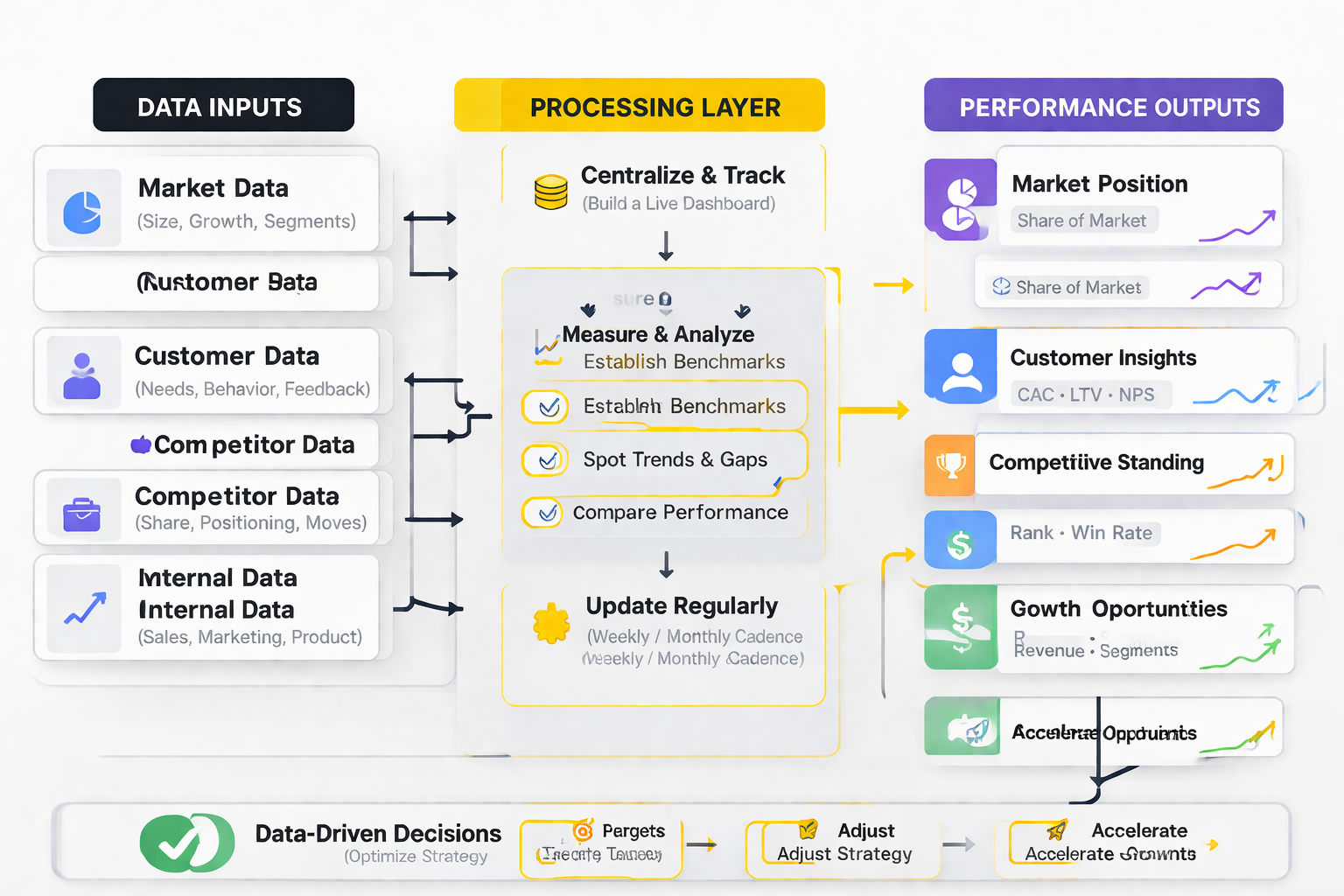
A strong market analysis is not finished when the research is complete. It is finished when the business starts making better decisions because of what the research revealed. That means sharper positioning, better segment choices, more realistic pricing, cleaner channel priorities, and a much clearer understanding of where growth is actually likely to come from.
This matters because the market is moving too fast for static thinking. U.S. e-commerce sales reached $1.2337 trillion in 2025 and accounted for 16.4% of total retail sales, B2B buyers now use an average of ten interaction channels during the buying journey, and 61% prefer a rep-free buying experience while 73% actively avoid irrelevant outreach. When buying behavior changes this quickly, market analysis has to feed action on a regular cadence or it loses most of its value.
The practical move is simple, even if it is not always easy. Turn your findings into decisions, turn those decisions into live tests, and then use the results of those tests to sharpen the next round of market analysis. That is how research stops being a document and starts becoming an edge.
FAQ For A Complete Guide To Market Analysis
What Is Market Analysis, Really?
Market analysis is the process of understanding demand, customer behavior, competition, pricing pressure, and growth conditions before you commit serious time or money. It is not just about estimating market size or naming a few competitors. The real job of market analysis is to help you make better decisions with fewer blind spots.
Why Is Market Analysis So Important Before Launching Or Scaling?
Because it lowers the cost of being wrong. The SBA’s market research guide keeps the focus on the essentials that actually protect a business: demand, customer needs, pricing, market saturation, and competitor positioning. When you skip that work, you usually end up guessing on offers, channels, and timing, and those guesses get expensive fast.
How Is Market Analysis Different From Market Research?
Market research is one major input, while market analysis is the broader interpretation layer built on top of it. Research gathers the evidence through interviews, surveys, economic reports, competitor reviews, and first-party data. Market analysis turns that evidence into a view of what the market means and what your business should do next.
How Often Should You Update Market Analysis?
You should treat market analysis like a living system, not an annual ritual. A lightweight monthly review and a deeper quarterly reset usually works well because buyer behavior, competitor offers, and channel economics can shift much faster than old planning cycles assume. The point is not to rewrite everything every month, but to catch meaningful changes before they turn into missed opportunities or bad bets.
What Data Should A Good Market Analysis Include?
A useful market analysis usually combines four data layers: market-size data, buyer-behavior data, competitor-structure data, and first-party operating data from your own business. That mix matters because a market can look attractive from the outside while still being hard to penetrate, poorly priced, or crowded with stronger substitutes than you expected. The best analysis does not rely on one source type to answer every question.
How Big Does A Market Need To Be To Be Worth Pursuing?
There is no universal number that makes a market worth entering. A smaller market with urgent pain, weak competition, and strong pricing power can be far more attractive than a giant market where buyers are hard to reach and margins are thin. Market analysis should help you judge quality of demand, not just quantity of demand.
Does Market Analysis Still Matter When AI Is Changing Search And Discovery?
It matters more than ever. Bain found that about 80% of consumers rely on zero-click or AI-generated results for at least 40% of their searches, which means old assumptions about traffic, discovery, and content performance are already under pressure. Market analysis helps you adjust before those shifts quietly damage your pipeline.
How Do You Analyze Buyer Behavior Today Without Falling Behind?
You have to look at where trust is formed, not just where transactions happen. McKinsey’s recent B2B research shows that decision makers move across more channels than before, and Pew found that 62% of U.S. TikTok users use the platform for product reviews or recommendations. A modern market analysis has to account for discovery behavior, self-serve behavior, and platform-native recommendation behavior all at once.
What Are The Most Common Market Analysis Mistakes?
The biggest mistake is defining the market around your product instead of the customer problem. Another major mistake is confusing attention with intent, because clicks, impressions, and even signups do not automatically mean strong demand or willingness to pay. A third mistake is treating competitor visibility like competitor strength, even though the loudest players are not always the hardest ones to beat.
Should Small Businesses Bother With Market Analysis, Or Is It Mostly For Larger Companies?
Small businesses need market analysis just as much, and often more. Larger companies can sometimes survive a weak decision because they have more margin for error, bigger budgets, and more brand recognition. Smaller businesses usually do not get that luxury, which makes disciplined analysis one of the cheapest forms of protection they can buy.
Can You Do Market Analysis Without Expensive Paid Tools?
Yes, absolutely. The SBA’s business planning guidance, the Economic Census, the Census retail e-commerce reports, and public company filings already provide a strong foundation. Paid tools can speed things up, but they are most useful after you already know what you are trying to learn.
How Do You Turn Market Analysis Into Actual Business Action?
Start by converting your findings into decisions rather than leaving them as observations. That means choosing the segment you want to target first, refining the message that matches the pain most clearly, testing pricing more intentionally, and deciding which channel deserves more focus. Market analysis becomes powerful when it changes what the business does this month, not just what the team talks about this quarter.
When Should You Bring In Professionals To Help?
You should bring in professionals when the stakes are high, the market is moving quickly, or your internal team keeps collecting information without turning it into clarity. That is especially true when you are entering a new category, repositioning an offer, changing pricing, or trying to build a reliable demand engine from scratch. Outside help is most valuable when it gives you sharper questions, stronger execution, and a faster path from evidence to action.
Work With Professionals
You do not need more random data. You need better judgment, cleaner systems, and a faster way to turn market analysis into revenue-producing moves. That often means working with people who understand how to connect buyer research, positioning, channel strategy, conversion testing, and ongoing analysis instead of treating each one like a separate project.
If you are serious about growth, this is not the time to guess your way through the next stage. The market is already telling you what buyers want, how competitors are moving, and where opportunities are opening up. The real question is whether you have the right people around you to read those signals well and act on them fast enough.
Explore 10K+ Remote Marketing Contracts on MarkeWork.com
Most marketers spend too much time chasing clients, competing on crowded platforms, and losing a percentage of every project to middlemen.
MarkeWork gives you a better way. Browse thousands of remote marketing contracts and connect directly with companies desperate to hire skilled marketers like you without platform commissions and without unnecessary gatekeepers.
If you’re serious about finding better opportunities and keeping 100% of what you earn, you can explore available contracts and create your profile for free at MarkeWork.com.
 Filip Konecny Enterprises