
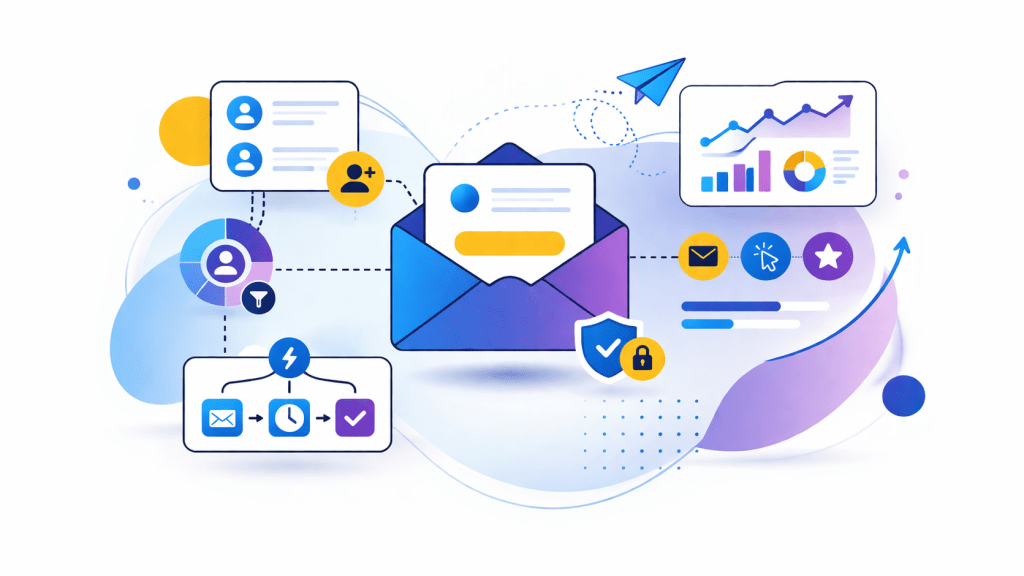
If you searched for email marketing strategie, you probably are not looking for another pile of vague tips. You want a system that helps you earn permission, send messages people actually welcome, and turn attention into revenue without burning deliverability in the process. That is exactly what this article is built to do.
Email still punches above its weight because it is direct, measurable, and owned. But the channel is also less forgiving now, with Gmail tightening enforcement for bulk senders, Yahoo requiring stronger sender standards, and first-party data becoming more important as third-party data gets less dependable. A serious strategy has to connect growth, compliance, creative, and operations from day one.
Article Outline
The structure below moves from fundamentals to execution so the whole article feels like a system instead of a checklist. We will start with why the channel matters, then move into the framework, the core components, implementation, measurement, and long-term scaling. Use the page jumps to move straight to the part you need.
- 1. Why Email Marketing Strategy Matters
- 2. Framework Overview
- 3. Core Components
- 4. Professional Implementation
- 5. Measurement and Analytics
- 6. Ecosystem and FAQ
Why Email Marketing Strategy Matters
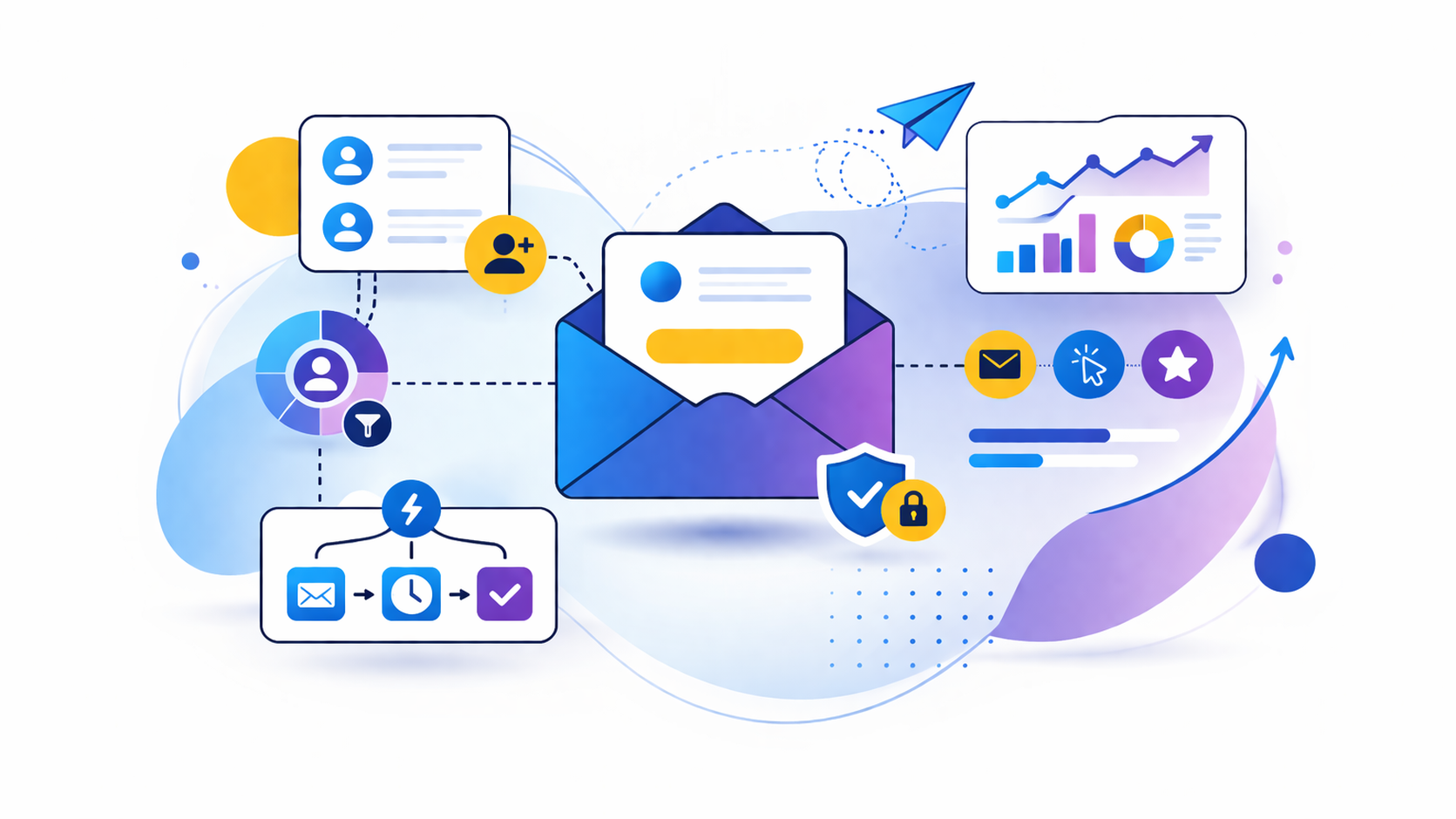
An email marketing strategy matters because email sits closer to the customer relationship than most rented channels ever will. When someone gives you permission to show up in their inbox, you are not borrowing reach from an algorithm. You are building a direct line you can measure, refine, and improve over time.
The performance data still gives the channel real weight. Recent benchmark datasets show meaningful engagement even after privacy changes, with MailerLite reporting a 2025 average open rate of 43.46% and a click rate of 2.09%, GetResponse reporting 39.64% opens and 3.25% click-through rates, and Brevo’s 2025 benchmark across more than 44 billion emails showing 31.22% opens and 3.64% click-through rates. Those numbers are not identical, and that is exactly why strategy matters so much, because platform methodology, audience quality, and send type can change the picture fast.
There is also a defensive reason to get this right. Gmail treats senders at roughly 5,000 messages a day as bulk senders, requires authentication and one-click unsubscribe for marketing mail, and expects spam rates to stay below 0.1% and never reach 0.3%. Yahoo is moving in the same direction, with its postmaster team requiring one-click unsubscribe, SPF and DKIM, and a published DMARC policy for bulk senders, which means strategy now protects reach as much as it drives revenue.
Privacy is part of the story too. Recent research on personal data strategies in digital advertising points to first-party data as a viable substitute as third-party availability shrinks, and Deloitte’s 2025 marketing trends briefing puts first-party data and hyper-personalized experiences at the center of modern growth. That makes email more valuable, not less, because a strong program turns consented customer behavior into useful insight instead of anonymous traffic.
The ROI conversation still matters as well, but it only matters when it is earned. Litmus reports that 35% of companies see email ROI of 36:1 or more, while efficy’s 2025 benchmark places several industries between 32€ and 45€ per euro invested. That kind of return does not come from random blasts, though. It comes from treating email like an operating system for customer relationships rather than a place to dump promotions.
Framework Overview
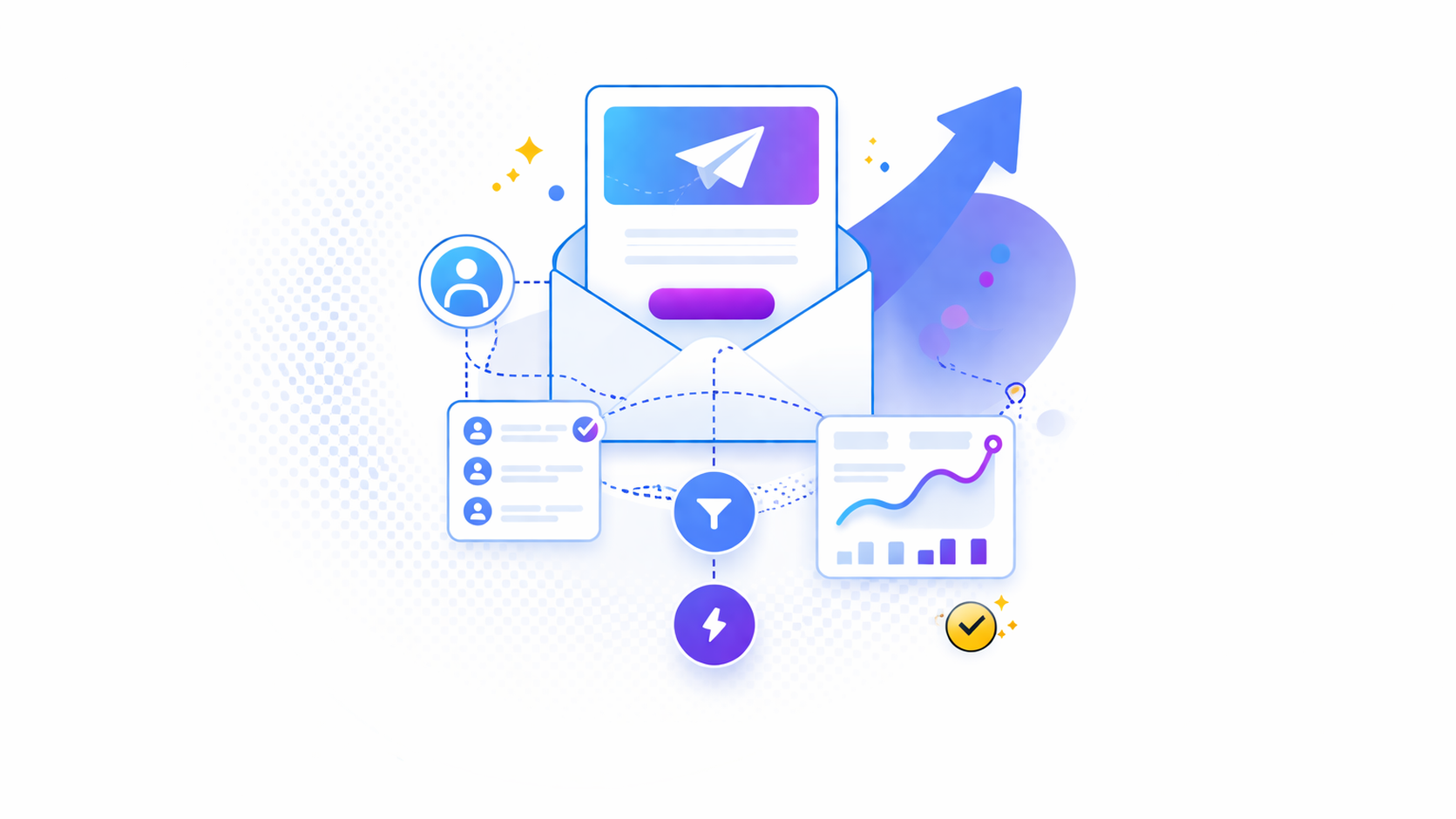
The cleanest way to think about strategy is to stop viewing email as a calendar filled with campaigns. A professional email marketing strategy works like a system with six connected layers: consent, customer understanding, lifecycle design, message architecture, technical delivery, and measurement. When one layer is weak, the whole program gets noisy fast.
This framework also keeps teams from chasing the wrong fix. If opens are soft, the problem may be reputation or targeting rather than subject lines. If clicks are flat, the issue may be the offer, the CTA, or the landing-page experience rather than the email template itself.
In practice, the framework works in a simple order. First, you collect permission cleanly and organize subscribers by intent and behavior. Then you map emails to lifecycle moments, build messages around one clear next action, protect deliverability with solid infrastructure, and judge success by business outcomes instead of vanity metrics.
Core Components
The core components are simple to name and much harder to execute well: audience quality, segmentation, lifecycle logic, creative relevance, technical trust, and measurement discipline. Most weak programs do not fail because the team lacks ideas. They fail because one of those components gets ignored until the numbers start dropping.
Audience and Consent Foundation
A healthy list beats a huge list every single time. Your acquisition points should make the value exchange obvious, set expectations about frequency and content, and hand new subscribers into the right path from the first interaction. That approach is also safer legally, because the EDPB’s 2024 guidance says unsolicited direct marketing by email under the ePrivacy framework requires prior consent, while the ICO makes clear that electronic-mail marketing carries specific compliance duties under PECR.
That is why bought lists and vague opt-ins are such expensive shortcuts. They do not just create legal risk. They poison engagement, increase complaints, and make every later optimization harder than it needs to be.
Segmentation and Lifecycle Design
Segmentation is where strategy starts to feel intelligent. Instead of sending the same message to everybody, you group subscribers by source, intent, product interest, purchase stage, geography, engagement level, or some combination that actually reflects how they buy. Good segmentation makes the inbox feel personal without becoming creepy, because the message matches a real signal the subscriber already gave you.
Lifecycle design gives those segments momentum. Welcome, nurture, browse, cart, post-purchase, replenishment, win-back, and reactivation emails should exist for a reason, not because somebody copied a template library. Each one needs a job, a trigger, a decision point, and a measurable next action.
Creative Offers and Calls to Action
Creative is not decoration. In a serious email marketing strategy, the subject line sets the promise, the preview text sharpens it, the body delivers it, and the CTA reduces friction around one clear next step. The email should feel like a helpful continuation of the customer relationship, not a sudden demand for attention.
This is also where volume usually gets mistaken for progress. MailerLite’s 2025 benchmark notes that unsubscribe rates rose as Gmail made opting out easier, which is a healthy reminder that inbox placement is not won by sending more. It is won by making each send feel expected, relevant, and easy to act on.
Professional Implementation
Professional implementation is where good ideas either survive contact with reality or fall apart. You need clear ownership of list growth, content, QA, automation logic, deliverability, analytics, and compliance, because email problems rarely stay inside one department for long. When those responsibilities are fuzzy, performance stalls and nobody can tell whether the issue lives in the data, the creative, or the infrastructure.
Technical and Compliance Layer
Start with the boring foundation, because it stops feeling boring the moment revenue depends on it. Google requires SPF or DKIM for all senders and DMARC alignment for direct email, requires one-click unsubscribe for marketing and subscribed messages above the bulk threshold, and recommends honoring those unsubscribe requests within 48 hours. In the United States, the FTC’s CAN-SPAM guide still treats unsubscribe rights and message accuracy as baseline obligations, so the technical layer and the legal layer have to work together.
That means authentication records, suppression logic, sender-domain governance, preference management, and QA are not optional extras. They are part of the strategy itself. Ignore them, and even strong creative will keep losing ground.
Workflow, Tools, and Team Rhythm
The team also needs a repeatable publishing rhythm. Build briefs before you build emails, define one primary KPI for each send, test rendering before launch, and review outcomes with the landing page and offer in view rather than blaming the email alone. That kind of discipline is what separates a professional program from a busy one.
When you start comparing platforms, keep the shortlist tied to your workflow instead of brand hype. For a simple stack review, you can compare Brevo, Moosend, and Systeme.io against the way your team handles list building, automation, and campaign production. The best choice is the one that makes segmentation, sending, and reporting easier to execute every week without creating operational debt.
Measurement and Analytics
If you are building an email marketing strategie for real growth, measurement is where optimism meets reality. This is the part where you stop asking whether a campaign looked good in the editor and start asking whether it moved clicks, conversions, revenue, retention, and list health in the right direction. Without that discipline, even a busy program can drift for months while the team keeps mistaking activity for progress.
The first thing to understand is that no single metric can carry the whole story anymore. Mailchimp’s current benchmark page places all-user averages at 35.63% opens, 2.62% clicks, and 0.22% unsubscribes, DMA’s 2025 benchmarking report puts the market at 35.9% opens, 2.3% unique clicks, and 98% delivery, and MailerLite’s 2025 benchmark reports 43.46% opens, 2.09% clicks, a 6.81% click-to-open rate, and a 0.22% unsubscribe rate. Those ranges are useful, but they are only useful when they are treated as context rather than a scoreboard you blindly chase.
Metrics That Actually Matter
Open rate still has value, but it is now a directional signal, not a final verdict. Apple says Mail Privacy Protection hides a user’s IP address and prevents senders from seeing whether an email was opened, which means inflated or distorted opens can make weak campaigns look healthier than they really are. On top of that, Apple Intelligence now places short summaries under messages in the inbox and can summarize long threads, so the way your message is previewed matters even before the body copy gets a real chance to work.
That is why strong teams watch open rate, but they lean harder on click rate, click-to-open rate, conversion rate, revenue per recipient, unsubscribe rate, complaint rate, bounce patterns, and downstream behavior after the click. A spike in opens with flat clicks usually means the subject line did its job and the offer did not. A lower open rate with stronger revenue can still be a win if the campaign reached the right people and moved them closer to purchase or renewal.
The deeper lesson is simple: measure the action that matches the job of the email. A welcome email should be judged by activation and first meaningful engagement, not just curiosity. A cart sequence should be judged by recovered revenue and time to purchase, while a newsletter should be judged by repeat visits, assisted conversions, and subscriber retention over time.
Attribution and Reporting Discipline
Attribution falls apart faster than most teams expect. If links are tagged inconsistently, naming conventions change from one campaign to the next, or revenue data lives in a separate system nobody reconciles, the dashboard will tell a story that sounds precise while being directionally wrong. That is why reporting discipline is not a side task for analysts; it is part of the strategy itself.
Google’s URL builder documentation makes clear that UTM parameters are what let Analytics identify campaigns that refer traffic, and Google also recommends setting all relevant UTM fields, especially utm_source, utm_medium, utm_campaign, utm_id, and utm_source_platform. Once that foundation is in place, GA4 campaign data import can combine email and other non-Google campaigns with revenue and key events, which gives you a far cleaner view of what your emails actually contributed after the click.
That setup changes how decisions get made. Instead of arguing about whether the open rate was good enough, you can compare campaign traffic quality, conversion depth, assisted revenue, and the difference between one-off spikes and repeatable results. That is when the analytics stop being decorative and start becoming operational.

Email Ecosystem and Long-Term Growth
Email works best when it is not forced to do every job by itself. The strongest programs treat email as one part of a broader communication system that includes CRM data, on-site behavior, customer support signals, mobile channels, and sometimes SMS or push when urgency matters. That does not mean piling on channels because everybody else is doing it; it means giving each channel a clear role so the customer experience feels connected instead of chaotic.
You can see that shift in the way major platforms now frame performance. Klaviyo’s 2026 benchmark report is explicitly omnichannel and draws on data from more than 110,000 brands, Brevo’s 2025 benchmark is built around email, chat, WhatsApp, SMS, push notifications, and mobile wallets, and Braze’s 2026 Global Customer Engagement Review surveyed more than 2,200 marketing leaders and analyzed upwards of 6 billion data points across 750-plus brands. The market is telling you something pretty clearly here: email still matters a lot, but it performs even better when it works inside a joined-up customer journey.
Give Each Channel a Clear Job
Email is usually the best home for explanation, storytelling, product education, post-purchase guidance, launch depth, and relationship building over time. SMS is better for urgency, quick reminders, short deadlines, and time-sensitive nudges that do not need paragraphs of context. On-site personalization, loyalty tools, and CRM data then keep those messages aligned so the customer does not get hit with three disconnected prompts that all feel like they were written by different companies.
That channel discipline makes your communication feel smarter without making it feel invasive. A welcome email can carry the brand story and expectations, an SMS can handle the short reminder before an offer closes, and a post-purchase series can reduce regret, answer objections, and increase repeat buying. When the ecosystem is working, every message feels like the next logical step rather than one more interruption.
This is also where many brands waste opportunity. They collect useful signals from sign-up forms, purchases, browsing, support tickets, and content consumption, then fail to let those signals shape what gets sent next. The result is not just lower engagement; it is a slower learning loop that keeps the whole marketing system less intelligent than it should be.
Scale Without Burning the List
Long-term growth does not come from squeezing more sends out of the same audience until the numbers crack. It comes from better segmentation, stronger creative logic, cleaner automation, and a steadier understanding of what different subscriber groups actually want. The brands that compound results are usually the ones that learn how to send more relevant email, not simply more email.
Mailgun’s State of Email Deliverability 2025 notes that improving deliverability takes attention from both technical and marketing teams, which is exactly why mature growth requires shared ownership rather than isolated campaign production. The copy has to earn the click, the data has to power the segmentation, the infrastructure has to protect inbox placement, and the reporting has to show what really changed after the send. When even one of those pieces slips, scale starts looking productive on the surface while becoming fragile underneath.
That is the real finish line for a professional email program. You are no longer sending because the calendar says it is Tuesday. You are sending because the customer signal is clear, the message has a job, the channel choice makes sense, and the measurement can tell you what to improve next.
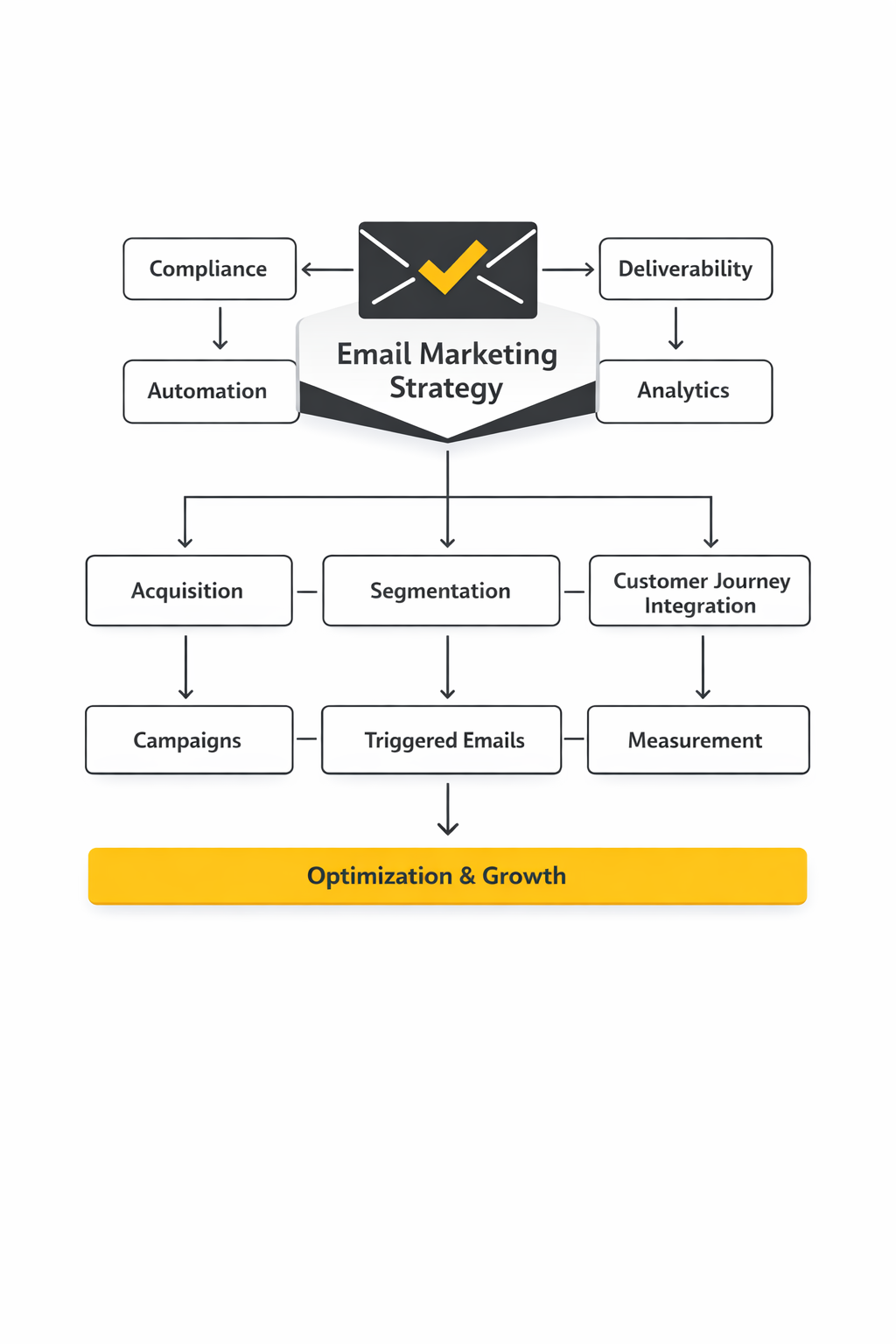
Build the Roadmap Before You Build the Emails
This is the point where your email marketing strategie stops sounding smart in a document and starts proving itself in the real world. Most teams get this backward because they open the email builder first, pick a template, and then try to figure out the logic afterward. That approach feels productive for a few days, but it usually creates messy automations, weak reporting, and a calendar full of sends that nobody can clearly justify.
A better rollout starts with the foundation: where subscribers come from, what data you capture at sign-up, which events matter, how contacts are segmented, and what should happen after each important customer action. That order lines up well with Klaviyo’s 30-day implementation sequence, which starts with syncing data and collecting sign-ups before building flows, sending campaigns, and optimizing performance. It also gives your team something most email programs desperately need, which is a clean chain of cause and effect from form submission to automation trigger to conversion reporting.
Do not underestimate how much easier everything becomes when the system is mapped before the creative is written. You can spot missing fields, weak triggers, and dead ends before they start costing you revenue. More importantly, you stop treating email like a pile of one-off campaigns and start treating it like an operating system that can grow with the business.
Start With the Flows That Usually Carry the Most Weight
You do not need twenty automations on day one. You need the few that reliably carry the load, and recent platform data keeps pointing to the same shortlist: welcome, abandoned cart, browse abandonment, and post-purchase. Klaviyo literally uses those four flows as the starting point in its implementation guide, and Omnisend’s 2025 ecommerce report found that automated emails drove 37% of sales from just 2% of email volume.
That is not a small edge. The same Omnisend report says one in three people who click an automated message make a purchase, compared with one in eighteen for scheduled messages, while Klaviyo’s benchmark-led process guide says abandoned cart and post-purchase flows can generate up to 30x more revenue per recipient than campaigns. When the timing is right and the message is tied to an obvious customer signal, the email does not have to fight for relevance because the relevance is already built in.
This is why implementation should start with behavior-triggered flows before the team gets obsessed with sending more newsletters. A strong welcome sequence sets expectations and gets the relationship moving in the right direction. A strong cart and browse system recovers demand that was already there, and a strong post-purchase flow turns one sale into a better chance of a second one.
Design Each Flow Like a Journey, Not a Sequence of Random Sends
Once you know which flows to build, the next mistake to avoid is treating every automated email like an isolated touchpoint. A proper email marketing strategie gives each flow a job, a starting trigger, a branching rule, a stop condition, and a clear handoff into the next stage of the customer relationship. Without that logic, even well-written emails can feel repetitive because they are reacting to a timer instead of responding to behavior.
Take the welcome flow as an example. The first email should confirm the value of joining, the second should deepen trust, and the next message should move the subscriber toward the first meaningful action, whether that is browsing, booking, buying, or consuming content. The same discipline matters in cart and post-purchase flows too, because the customer should feel guided rather than chased.
That journey mindset matters more now that inbox experiences are changing. Google makes it clear that senders only become eligible for top-of-message unsubscribe presentation and mitigation when they meet bulk sender requirements and implement correct one-click unsubscribe headers, which means you cannot afford to trap people in sloppy sequences they no longer want. Good implementation respects momentum, but it also respects exits.
Set a Campaign Rhythm Your Team Can Actually Sustain
After the core flows are live, campaigns become much easier to manage because the automations are already handling the most time-sensitive moments. That frees your team to use campaigns for launches, promotions, content distribution, seasonal pushes, and relationship-building instead of trying to do all of that manually every week. Klaviyo’s rollout guide moves into weekly campaigns only after the foundation and automation layers are in place, and that sequencing makes a lot of sense.
This is where discipline beats ambition. It is far better to send one sharp campaign a week that is clearly targeted, properly tagged, and worth opening than to flood the list with half-planned messages because the calendar has empty slots. Once your team proves it can maintain a reliable rhythm, then you can add complexity with more segments, more dynamic content, and more nuanced promotion windows.
The easiest way to keep that rhythm healthy is to build a repeatable production process. Start with a brief, decide the single action the email should drive, confirm who should and should not receive it, and make sure the landing page can carry the promise the email makes. That sounds basic, but basic done every week is what turns a messy program into a dependable one.
Protect Every Send With Ruthless QA
Email is one of those channels where small mistakes travel fast. A broken link, wrong segment, missing suppression rule, or sloppy unsubscribe setup can damage trust far more quickly than most teams expect. That is why pre-send quality control is not admin work at the edge of the process; it is part of the process.
Google requires marketing and subscribed messages above the 5,000-per-day threshold to support one-click unsubscribe, and Google’s FAQ says body links alone do not satisfy that requirement, proper List-Unsubscribe headers do. On top of that, Litmus’ 2025 testing playbook argues that QA should begin long before launch and should cover the whole workflow, not just the final preview. In other words, serious implementation means checking rendering, links, UTMs, segmentation logic, suppression rules, personalization fields, and unsubscribe behavior before anything goes live.
This is one of those areas where being obsessive actually saves time. A strong QA checklist reduces panic, protects your sender reputation, and gives the team more confidence to move faster later. When you know the process catches mistakes early, you stop treating every launch like a gamble.
Choose a Stack That Removes Friction
You do not need a giant stack to implement email well. What you need is a stack that captures clean data, moves contacts into the right paths, lets you build automations without duct tape, and shows you what happened after the send. If your tools force your team into workarounds every single week, the strategy will look weaker than it really is because the execution layer keeps slowing it down.
For many businesses, a lean setup is enough. You can run sign-up forms and data collection through Fillout, manage campaigns and automations in Brevo, Moosend, or Systeme.io, and use ClickFunnels when your funnel structure needs more control around pages and conversion paths. The best stack is not the one with the longest feature list. It is the one your team can actually use every week without losing speed, clarity, or data integrity.
That is the real test of implementation. If the strategy makes execution cleaner, faster, and more measurable, you are on the right track. If the strategy creates confusion, more manual work, and more chances to break things, it is time to simplify before scaling any further.
Statistics and Data
What the Current Benchmark Ranges Actually Say
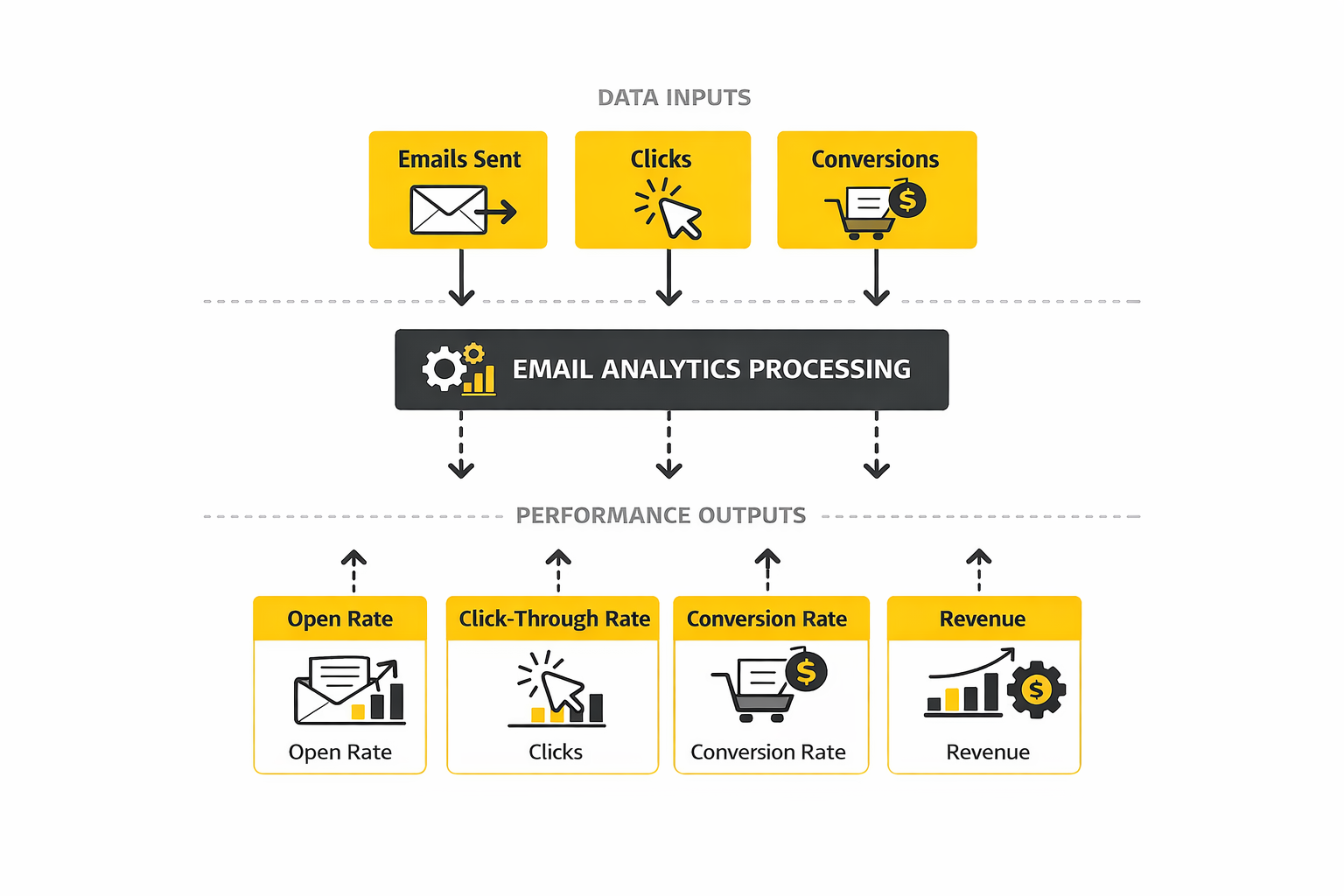
If you want your email marketing strategie to stay grounded, start by accepting one thing: there is no single universal benchmark that tells the whole truth. Mailchimp’s current all-user data shows a 35.63% open rate, a 2.62% click rate, and a 0.22% unsubscribe rate, while DMA’s 2025 email benchmarking report puts the market at 98% delivery, 35.9% opens, and 2.3% unique clicks. At the same time, MailerLite’s 2025 benchmark reports 43.46% opens, 2.09% clicks, a 6.81% click-to-open rate, and a 0.22% unsubscribe rate, which tells you right away that methodology, region, industry mix, and list quality all shape the headline number.
That is why smart teams do not chase one magic percentage. They use outside benchmarks to see whether they are roughly healthy, then they compare those ranges against their own segments, send types, and lifecycle stages. If your numbers are a little lower than a benchmark but revenue per recipient is climbing and unsubscribe pressure is stable, your program may be healthier than it looks at first glance.
You also need to pay attention to how providers define the metric. Brevo’s 2025 benchmark, built on more than 44 billion emails, shows how much results can vary by region and industry, with EMEA averaging 33.21% opens and 4.05% click-through rates and ecommerce averaging 38.58% opens and 2.08% click-through rates. In other words, a number that looks average in one category can look weak or unusually strong in another, so context always beats vanity.
Why Open Rates Need More Caution Than They Used To
Open rate still deserves a place on the dashboard, but it no longer deserves blind trust. Apple says Mail Privacy Protection downloads remote content in the background by default and prevents senders from learning information about Mail activity, which means a tracking pixel can fire even when a human never meaningfully engaged with the message. That alone is enough to stop treating opens as the final measure of success.
The distortion is not theoretical. Postmark explains that Apple Mail preloads and caches images, which can create artificially inflated open rates, and Brevo notes that its reporting now includes system-detected opens such as Apple Mail Privacy Protection and bot activity unless you filter them out. So when someone says a campaign “won” because open rate jumped, that claim is incomplete unless clicks, conversions, and downstream behavior moved too.
This is exactly where a strong email marketing strategie separates itself from shallow reporting. You still watch opens because they can flag subject-line strength, inbox placement changes, or audience fatigue. But the deeper truth lives in click quality, conversion depth, and whether the message pushed the subscriber toward something that actually matters to the business.
The Deliverability Numbers Most Teams Ignore
Some of the most important email data does not live in campaign reports at all. It lives in sender reputation, spam complaints, authentication, and inbox placement, which is why deliverability data has become central to strategy rather than some technical afterthought. Google defines a bulk sender as anyone sending close to 5,000 messages or more to personal Gmail accounts in 24 hours, and Google’s sender guidelines say spam rates reported in Postmaster Tools should stay below 0.30%.
The stricter number is even more revealing. Google’s own Gmail sender-issues guidance says spam rates should stay below 0.1%, while the Gmail FAQ says bulk senders above 0.3% lose mitigation eligibility until rates improve for seven consecutive days. That means complaint control is not a nice extra. It is a core performance lever that determines whether the rest of your email program even gets seen.
The inbox placement data backs that up in a pretty unforgiving way. Validity’s 2025 deliverability benchmark puts global inbox placement at 83.5%, which means roughly one in six legitimate marketing emails still fails to land in the inbox, and the same benchmark says Gmail fell from an average 89.8% inbox placement in 2024 to 84.2% by Q4. Even worse, Microsoft sat at 75.6%, making it the toughest major mailbox provider in the benchmark, while Europe led globally at 89.1%. Those are the kinds of numbers that should change how you think about list hygiene, segmentation, and frequency immediately.
Why the Best Revenue Data Keeps Pointing Back to Automation
Campaigns matter, but the numbers keep showing that automation does a ridiculous amount of the heavy lifting when the flows are built well. Omnisend’s 2025 ecommerce report says automated emails drove 37% of sales from just 2% of email volume, and one in three people who click an automated email make a purchase, compared with one in eighteen for scheduled campaigns. That is not a small optimization. That is a structural difference in how buyers respond when timing and intent line up.
The same dataset makes the priority even clearer. Abandoned cart, welcome, and browse abandonment emails accounted for 87% of all automated orders in the report, which is a strong reminder that some flows are simply too important to leave half-built or under-tested. When the customer has already raised a hand through behavior, the job of the email is not to create demand from scratch. It is to remove friction and help the customer finish what they were already close to doing.
ROI data points in the same direction. Litmus’ 2025 survey of nearly 500 marketing professionals shows that 35% see a return of $10 to $36 for every dollar spent on email, 30% see $36 to $50, and 5% see more than $50. What is even more interesting is that 21% still do not measure ROI at all, which tells you a lot about why so many teams end up guessing where growth is actually coming from.
How to Use the Data Without Lying to Yourself
The right way to use all this data is not to grab the prettiest number and throw it into a slide deck. It is to build a dashboard that connects engagement, deliverability, and business outcomes so you can see whether the program is becoming more efficient or just louder. Google’s campaign URL guidance makes it clear that UTM parameters are what let Analytics identify which campaigns referred the traffic, so if your links are not tagged consistently, your reporting is probably weaker than you think.
This is where the strongest email marketing strategie usually wins. It knows the difference between a campaign that looked popular and a campaign that produced meaningful action. It also knows that a soft quarter is not always a creative problem, because the real issue could be list quality, sender reputation, frequency pressure, or sloppy attribution.
If your current stack makes that harder than it should be, compare how Brevo, Moosend, ScaledMail, and ClickFunnels surface campaign, automation, and conversion data before you decide to send more volume. More sends do not fix weak visibility. Better visibility fixes weak decisions.
Turn Reporting Into Weekly Decisions
The best email marketing strategie does not just collect numbers and admire them. It uses those numbers to make one or two sharp decisions every single week, such as changing audience logic, tightening frequency, rewriting an offer, or removing a weak segment from the next send. That is how reporting stops being a vanity exercise and starts becoming the control panel for growth.
A healthy review rhythm is simple. Look at engagement, conversion, unsubscribe pressure, complaint signals, and landing-page performance together, then ask what changed and why. When teams review those signals in isolation, they usually fix the wrong problem and keep wondering why the next campaign underperforms in exactly the same way.
Test One Variable at a Time and Follow the Result Past the Click
Testing is where a lot of marketers sabotage themselves without even realizing it. They change the subject line, the hero copy, the offer, and the CTA at the same time, then pretend the result proved something useful. Litmus’ 2025 testing guidance recommends starting with a clear objective, testing one variable at a time, and tracking the impact beyond inbox metrics into conversion behavior, which is exactly how serious optimization should work.
This matters because subject lines can lift opens without lifting revenue, while a quieter subject line can still drive better outcomes if it sets stronger expectations for the message and the landing page. The point of testing is not to win a tiny metric battle. The point is to learn what makes the customer move, and then roll that learning back into the next campaign, flow, or segment.
If your current stack makes that kind of testing awkward, compare how Brevo, Moosend, and ClickFunnels handle experiments, segmentation, and campaign-to-page alignment. The smoother the testing workflow is, the more often your team will actually use it.
Protect List Health Before Revenue Starts Slipping
Revenue does not usually collapse all at once. It softens first through weaker engagement, rising complaints, old segments that keep getting mailed long after they stopped caring, and a sender reputation that erodes quietly in the background. That is why list health belongs inside your email marketing strategie from the beginning instead of being treated like cleanup work for later.
Mailgun’s 2025 deliverability report warns that many senders still neglect regular list hygiene, and Validity’s guidance on Microsoft’s 2025 bulk sender rules highlights list hygiene, bounce management, and clear opt-out practices as practical necessities. That is a strong reminder that stale contacts are not harmless. They lower engagement quality, waste volume, and make it harder for your best emails to reach the people who still want them.
So watch the quiet warning signs before they become expensive. If clicks flatten, conversions slow, and unsubscribe pressure rises inside the same segment, do not just blame the copy. That pattern often means the audience definition, cadence, or expectation-setting is off, and fixing those issues early is a lot cheaper than repairing a damaged sender reputation later.
Build a Sunset Policy That Respects the Subscriber
One of the smartest things you can do is decide in advance when a subscriber should stop receiving regular promotional mail. That sounds counterintuitive when you are trying to grow revenue, but the opposite approach is usually what drains performance. Keeping disengaged people on the main list forever makes the whole program noisier, less relevant, and harder to deliver.
Mailgun’s 2025 report specifically calls out sunset policies as one of the most effective ways to manage list quality. In practice, that means defining inactivity windows, sending a short re-engagement sequence, and then suppressing people who still show no meaningful response. It is not punishment. It is respect for the inbox and protection for the subscribers who are still genuinely interested.
This also gives your brand a more honest feedback loop. When only engaged people remain in the core audience, campaign results become easier to interpret and optimization gets sharper. You stop guessing whether performance fell because the idea was weak or because too much of the list had already gone cold months earlier.
Future-Proof the Program With Better Data, Accessibility, and Clearer Roles
The next level of email performance is not just about clever copy or fancier automation. It comes from cleaner customer data, better coordination across channels, accessible creative, and a technical setup that protects different types of traffic. Mailgun notes that more than half of high-volume senders separate promotional and transactional traffic across different subdomains or sending infrastructure, which makes sense because a password reset should not suffer because a promotional campaign got too aggressive last week.
The customer side matters just as much. McKinsey’s 2025 work on personalized marketing argues that customer expectations keep rising as brands use AI and better data to tailor interactions, and Deloitte’s 2025 personalization guidance makes the same basic point from a technology-stack angle. If your data is messy, your segmentation will stay shallow, and shallow segmentation eventually makes every email feel more generic than it should.
There is also a compliance and usability layer that too many teams still overlook. Mailgun’s 2025 recap of the European Accessibility Act notes that from June 28, 2025, digital services including emails need to be accessible for people with disabilities. That means readable hierarchy, meaningful alt text, clear CTA language, and layouts that do not fall apart in assistive technologies are no longer “nice to have” details. They are part of what a modern, professional email program looks like.
Email Ecosystem, FAQ, and Next Steps
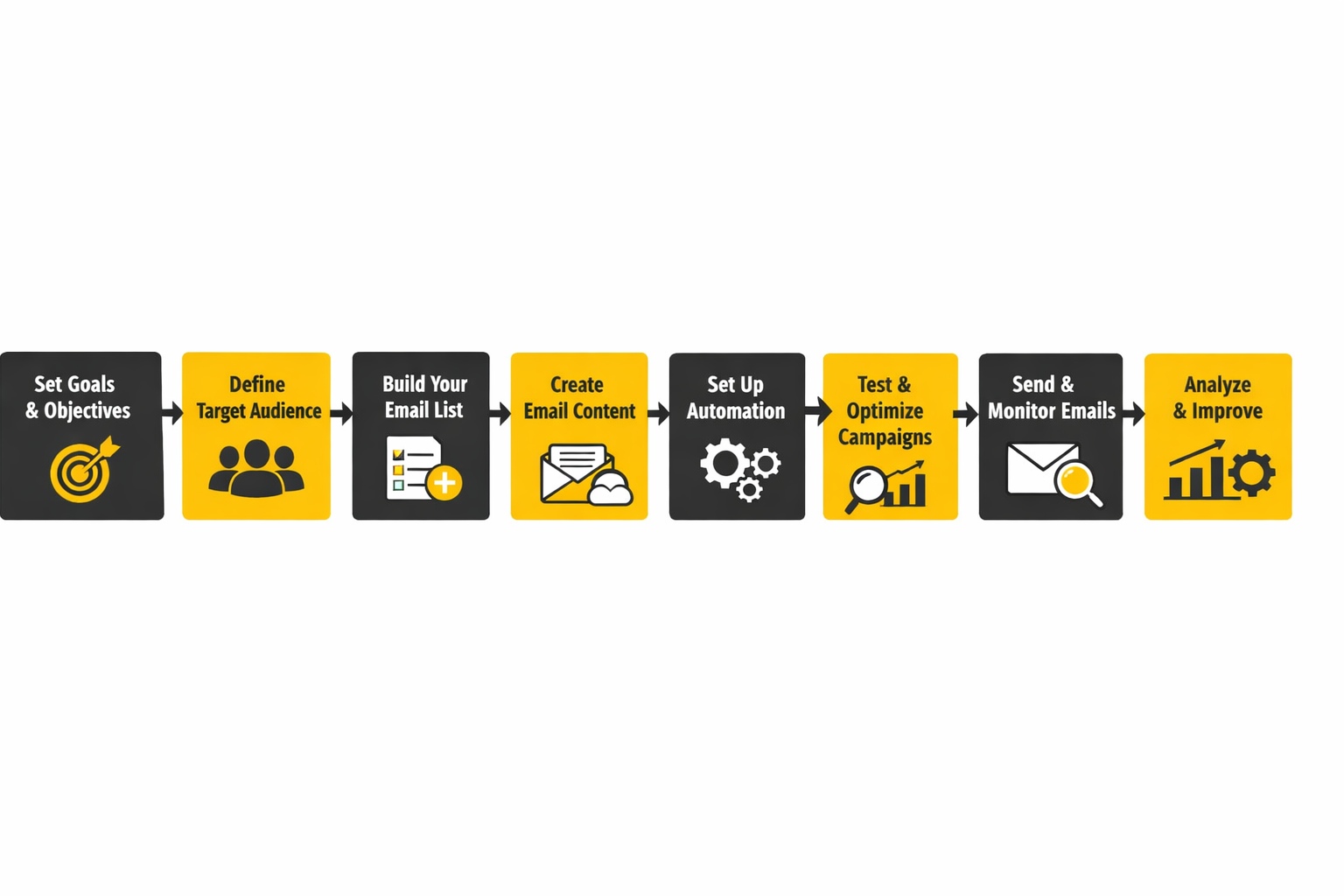
A strong email marketing strategie does not end when the campaign is sent. It keeps working through compliance, deliverability, automation, analytics, and the way email connects to the rest of your customer journey. This final section ties those moving parts together, answers the practical questions most teams still have, and helps you decide when it is time to bring in extra firepower.
FAQ for This Complete Guide
Is email marketing still worth it now that inboxes are more crowded?
Yes, but only when you treat it like a system instead of a megaphone. Recent benchmark work from MailerLite, Brevo, and Mailchimp still shows healthy engagement ranges across industries, while Litmus’ 2025 ROI data shows many companies still see strong returns from the channel. The opportunity is still there, but lazy sending is getting punished harder than ever.
What is the real difference between an email marketing strategy and just sending campaigns?
Campaigns are individual sends, but a strategy decides why those sends exist, who should receive them, what behavior should trigger them, and how success will be judged. That difference matters because Omnisend’s 2025 ecommerce report shows that automated messages can drive outsized results when timing and intent are aligned, which does not happen by accident. A strategy connects acquisition, segmentation, automation, compliance, and measurement so the program compounds instead of starting over every week.
How often should I email my list?
There is no universal number that magically works for every list. The better rule is to send as often as you can stay relevant without pushing complaint rates, unsubscribes, and fatigue in the wrong direction, and that matters because Google now treats anyone sending around 5,000 messages or more to personal Gmail accounts in 24 hours as a bulk sender. Frequency should come from subscriber expectations, buying cycle, and content quality rather than a random rule you copied from another brand.
Are open rates still reliable enough to guide decisions?
They are useful, but they are no longer trustworthy enough to stand on their own. Apple’s Mail Privacy Protection downloads remote content in the background, and both Postmark and Brevo explain that this can inflate opens and distort reporting. That means your email marketing strategie should use opens as a directional signal, then lean harder on clicks, conversions, revenue per recipient, complaint rates, and post-click behavior.
Which automations should I build first?
Start with the flows that usually carry the most commercial weight: welcome, abandoned cart, browse abandonment, and post-purchase. Omnisend’s 2025 report shows that automated emails drove 37% of sales from just 2% of email volume, and that abandoned cart, welcome, and browse abandonment emails were responsible for 87% of all automated orders. That is why a serious email marketing strategie usually builds the triggered foundation before spending too much time polishing one-off newsletters.
Do I need double opt-in?
Not always as a legal requirement, but it is often a smart quality-control move. Validity’s 2025 deliverability benchmark noted that the US inbox placement rate sat six percentage points lower than select countries that require double opt-in methods, which strongly suggests cleaner consent can support better inbox outcomes. If your list quality is mixed, your acquisition sources are broad, or you are protecting a valuable sender reputation, double opt-in is usually worth serious consideration.
What legal and platform rules matter most for marketing email?
The basics are not glamorous, but they are what keep the channel viable. The FTC’s CAN-SPAM guidance says commercial email must follow rules around identification and opt-outs, while the ICO’s guidance on electronic mail marketing makes it clear that PECR imposes legal requirements for direct marketing by electronic mail. On top of that, Google requires one-click unsubscribe for marketing and subscribed messages sent above its bulk-sender threshold, so legal compliance and deliverability compliance now overlap much more than they used to.
Does accessibility really need to be part of the strategy?
Yes, because accessibility is both a user experience issue and an operational one. AccessibleEU notes that the European Accessibility Act came into effect on June 28, 2025, and Mailgun’s 2025 EAA recap explains why email now needs to be accessible for people with disabilities when those services fall within scope. Clear hierarchy, readable copy, meaningful alt text, and logical CTA wording do not just reduce risk; they usually make the email better for everyone.
What metrics matter most if I want better decisions, not just prettier dashboards?
The most useful metrics are the ones tied to the job of the email. Google’s Analytics guidance on UTM parameters exists for a reason, because if your links are not tagged consistently, you cannot reliably connect email traffic to what happened after the click. In practice, the strongest email marketing strategie watches clicks, conversion rate, revenue per recipient, complaint rate, unsubscribe rate, and list health together, then uses open rate as supporting context rather than the headline act.
When should I remove inactive subscribers from regular sends?
You should do it before disengagement starts dragging the rest of the program down. Validity’s 2025 benchmark says one in six legitimate marketing emails fails to reach the inbox and also points to spam complaints as the single biggest factor that degrades sender reputation, with best-practice programs aiming to stay below 0.1%. That means inactive segments are not harmless dead weight, because they can quietly weaken inbox placement for the people who still want to hear from you.
What tools should a beginner or lean team start with?
Start with the simplest stack that lets you collect clean data, build flows, tag campaigns, and report outcomes without a mess of manual work. A practical shortlist to compare is Brevo, Moosend, Systeme.io, ClickFunnels, and Fillout if forms and lead capture are part of your setup. The right choice is the platform your team can actually use consistently, because a complicated tool that nobody fully operates well will weaken the strategy faster than a modest tool used properly.
When should I bring in professionals instead of trying to manage everything in-house?
You should bring in help when the cost of mistakes becomes bigger than the cost of expert support. That usually happens when deliverability starts slipping, automations become harder to maintain, attribution is unclear, or the team no longer has time to keep strategy, execution, and compliance aligned. A good professional does not just send prettier emails; they help your email marketing strategie become more profitable, more reliable, and far less fragile.
Work With Professionals
There comes a point where doing everything yourself stops being efficient and starts becoming expensive. If your list is growing, your automation map is getting more complex, and your reporting is still not telling a clear story, that is usually the sign that outside help can speed things up instead of slowing them down. The right specialist can tighten your segmentation, repair weak flows, protect deliverability, and make your entire email marketing strategie feel far more intentional.
This also matters if you want to turn your own marketing skills into paid work. Businesses still need people who can build systems, not just send blasts, and that demand is strongest when you can combine creative judgment with data discipline and platform know-how. In other words, the more you understand the moving parts in this guide, the more valuable you become.
If you want to sharpen your setup or expand what you offer clients, it also makes sense to keep testing the tools that fit this kind of work best. For funnel-heavy projects, you can review ClickFunnels or PLR Funnels, and for list growth or campaign management you can keep comparing Brevo, Moosend, and Systeme.io. Tools do not replace strategy, but the right ones can remove a lot of friction once the strategy is clear.
Explore 10K+ Remote Marketing Contracts on MarkeWork.com
Most marketers spend too much time chasing clients, competing on crowded platforms, and losing a percentage of every project to middlemen.
MarkeWork gives you a better way. Browse thousands of remote marketing contracts and connect directly with companies desperate to hire skilled marketers like you without platform commissions and without unnecessary gatekeepers.
If you’re serious about finding better opportunities and keeping 100% of what you earn, you can explore available contracts and create your profile for free at MarkeWork.com.
 Filip Konecny Enterprises