
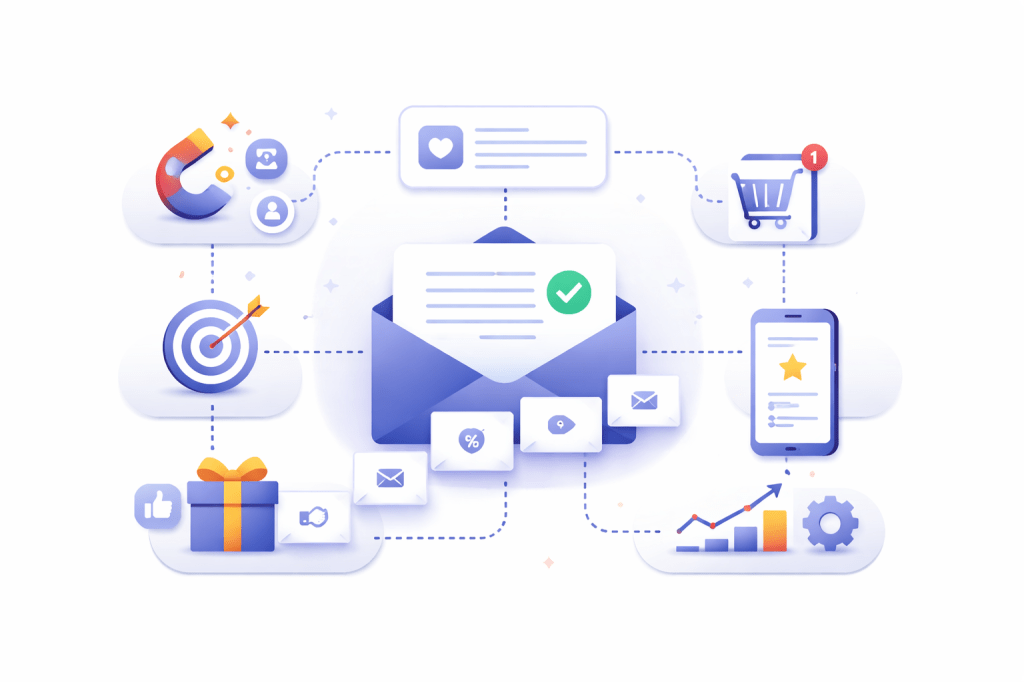
An email marketing autoresponder looks simple from the outside, but the truth is that it sits right at the intersection of revenue, trust, and timing. When it is built well, it welcomes new subscribers, moves leads toward the next step, keeps customers engaged, and does it without forcing you to hit send every single day. When it is built badly, it creates dead air, trains people to ignore your messages, and quietly damages deliverability.
That is why this article is not about tossing a few emails into a sequence and hoping for the best. We are going to break the topic into six clear parts so you can build an autoresponder that feels intentional, stays compliant, and keeps producing results long after the first campaign goes live.
Article Outline
- Why an Email Marketing Autoresponder Matters
- Framework Overview
- Core Components
- Professional Implementation
- Analytics and Optimization
- Ecosystem and Long-Term Scale
Why an Email Marketing Autoresponder Matters
The mailbox providers have already made it clear that automation is no longer just a convenience play. Google’s bulk-sender update and the current sender guidelines FAQ require authentication, easy unsubscribes for promotional mail, and tight control over spam complaints, while Yahoo’s sender best practices push brands to separate marketing traffic from transactional email. That pressure shows up in real inbox performance too, because Validity’s 2025 benchmark report found Gmail inbox placement averaged 89.8% in 2024 but had dropped to 84.2% by Q4.
The business case is just as strong. Mailchimp’s automation data says users of its marketing automation flows generated 9x more revenue than bulk email users, and lifecycle teams still keep email near the center of the mix, with Customer.io highlighting that 83% of teams cite email as their proven ROI channel. The benchmarks also tell you why strategy matters more than generic advice: Mailchimp’s benchmark page shows all-user averages of 35.63% opens and 2.62% clicks, Omnisend’s 2025 ecommerce report reports 26.6% opens and 1.22% clicks, and HubSpot’s 2025 roundup places the cross-industry average open rate at 42.35%.
That gap is exactly why a serious email marketing autoresponder cannot be built around vanity numbers or random “best time to send” advice. It has to be built around intent, because the moment someone subscribes, clicks, books, buys, or goes quiet is the moment your messaging has the best chance of being useful. In other words, the autoresponder matters because it is where timing turns into leverage.
Framework Overview
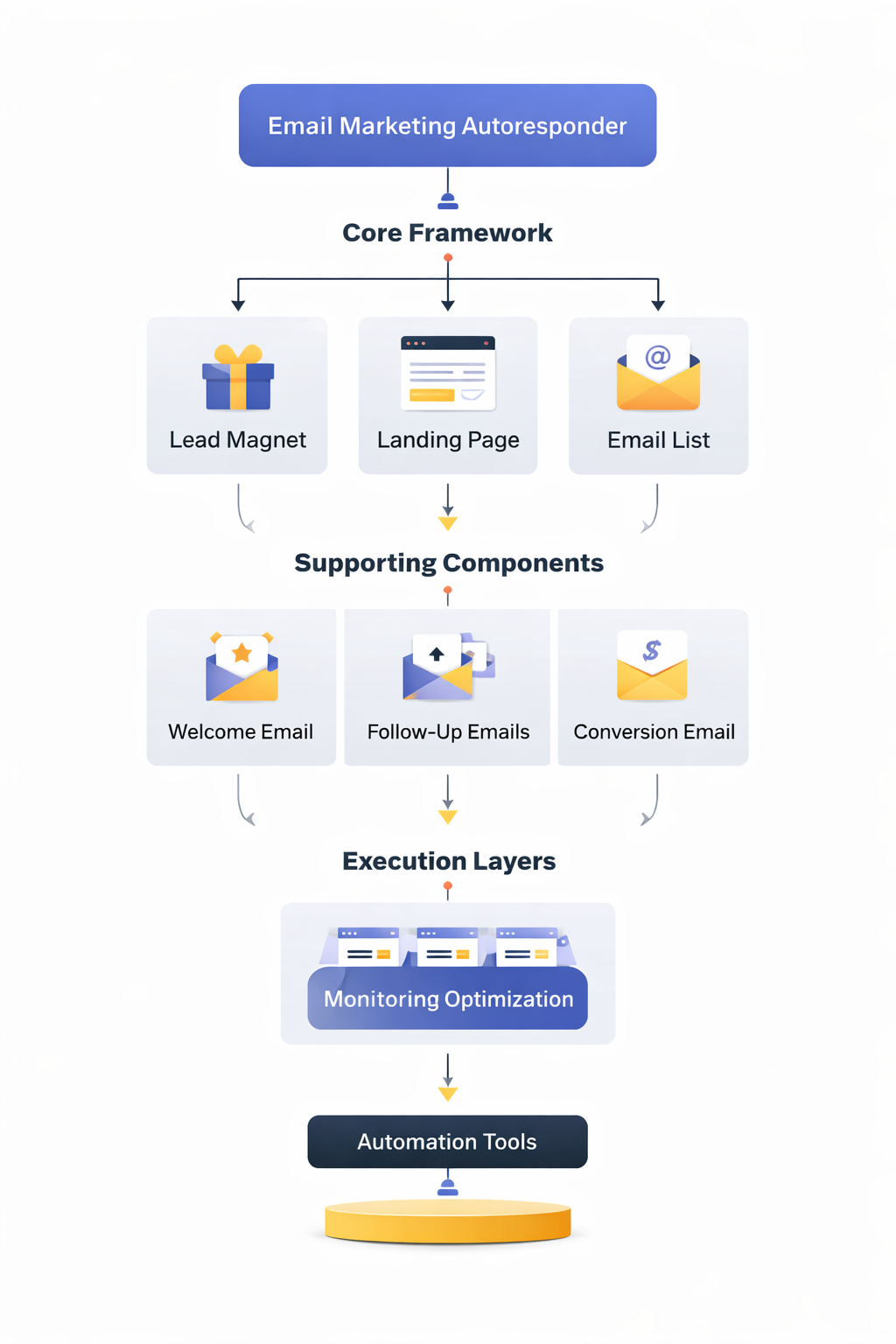
A strong email marketing autoresponder framework is not a pile of delayed emails. It is a response system that starts with a specific entry point, matches the message to the subscriber’s current level of intent, and moves that person toward one clear next action. That action might be a purchase, a booked call, a profile completion, a product activation, or simply the next meaningful click.
This is why high-performing lifecycle teams treat email as a connected journey instead of a disconnected newsletter habit. Customer.io’s lifecycle strategy guidance focuses on behavioral triggers, segmentation, and journey optimization, and HubSpot’s marketing automation overview frames automation as a way to deliver personalized experiences at scale instead of repeating manual tasks. When you look at it that way, the framework becomes much easier to understand: trigger the sequence, deliver relevance fast, gather behavior, branch intelligently, and guide the subscriber to the next stage.
So before you write a single subject line, you want to know three things. First, what event starts the sequence. Second, what outcome proves the sequence worked. Third, what should happen if the subscriber ignores, clicks, converts, or opts out. That is the real framework, and once you have it, the copy becomes much easier to write.
Core Components
Every professional autoresponder is built on a small set of parts that have to work together. You need a trigger, a defined audience, a promise, a message path, a conversion step, and an exit rule. Remove any one of those pieces and the sequence starts acting like a glorified broadcast instead of a system that adapts to real behavior.
The trigger is the event that starts the automation, such as a form submission, a lead magnet download, a cart abandonment, a product purchase, or a trial signup. The audience layer decides who should receive the sequence and who should be excluded, which is where tags, segments, and suppression lists start doing real work. The promise is what the subscriber expects to get from the sequence, and that promise has to stay visible from the first email to the final call to action.
Then comes the message path itself. Each email should do one job, the spacing between emails should reflect urgency instead of habit, and the sequence should branch when subscriber behavior tells you the next message should change. Finally, the exit rule protects both performance and user experience, because people who buy, unsubscribe, bounce, or stop qualifying should not keep receiving the same promotional flow forever.
Professional Implementation
The professional way to implement an email marketing autoresponder is to start smaller than your ambitions. Pick one entry point, one audience, and one business goal, then map the entire sequence before you touch the software. If you cannot explain why each email exists, what action it should create, and what happens next when the subscriber does or does not respond, the automation is not ready.
A clean first build usually works better than an overengineered one. Start with the immediate response, follow it with the most useful education or proof, then create a decision point that either advances the subscriber, recycles them into a slower nurture, or removes them from the sequence when they have already converted. That approach is easier to test, easier to maintain, and much more likely to survive once your list, team, and product line get bigger.
Your tool stack should support that logic instead of complicating it. If you want an all-in-one setup that connects pages, funnels, and follow-up in one place, ClickFunnels and systeme.io are practical ways to get moving fast. If you want a more email-centered setup, Brevo and Moosend fit naturally into autoresponder work, and once sender reputation becomes part of the operating plan, a deliverability-focused helper like ScaledMail starts making a lot more sense than adding another layer of design complexity.
Trigger Logic Defines the Whole Sequence
The best email marketing autoresponder begins with an event that actually means something, not with a vague label like “new lead.” A subscriber who downloads a guide, abandons a cart, starts a trial, books a demo, or places a first order is signaling a very different level of intent, and your first message should match that moment instead of forcing every contact into the same nurture path. That is why behavior-based automation keeps outperforming generic scheduling, with Omnisend showing automated emails drove 37% of sales from just 2% of email volume and Shopify publishing abandoned-cart benchmarks of 41.18% opens, 9.50% clicks, and $5.81 revenue per recipient.
That does not mean every business should begin with the same automation. It means your trigger should connect directly to the next decision the subscriber is most likely to make, because timing only creates leverage when the email arrives while the context is still fresh. A lead magnet subscriber usually needs clarity and trust first, while a trial user needs activation, and a new customer needs reassurance, onboarding, or product education before seeing another offer.
Segmentation and Data Keep the Message Relevant
Once the trigger is clear, the next job is deciding who should and should not receive the sequence. Segmentation in an email marketing autoresponder works best when it uses practical signals such as acquisition source, product interest, purchase status, geography, or engagement level rather than bloated profiles full of fields you will never use. That discipline pays off because Mailchimp reports segmented campaigns average 23% higher opens and 49% higher click rates than unsegmented campaigns, while Litmus notes that efficient content production, data collection, and measurement are still the biggest personalization bottlenecks.
In practice, this means you do not need dozens of micro-segments to make automation feel personal. You need a small set of distinctions that actually change the message, such as first-time lead versus returning lead, free user versus paying customer, or browsed category A versus browsed category B. When a segment changes the promise, proof, objection handling, or call to action, the autoresponder starts feeling relevant instead of robotic.

Sequence Design Should Move One Step at a Time
A strong sequence does not try to close every sale in the first email and it does not treat every message like a miniature newsletter. Each email in an email marketing autoresponder should do one job well, whether that is delivering the promised asset, helping the subscriber use what they just signed up for, resolving one core objection, presenting proof, or asking for one clean next click. That structure is why Omnisend found welcome, abandoned-cart, and browse-abandonment messages generated 87% of automated orders, and why Klaviyo continues to highlight welcome emails as stronger than average flows and campaigns.
The sequence also needs pacing. If the subscriber just requested something, the first reply should usually be immediate, because delay weakens intent and creates friction. After that, spacing should reflect urgency and buying cycle rather than some arbitrary rule like sending every two days, because the best autoresponders feel like a guided conversation instead of a timer going off in the background.
Exit Rules and Suppression Protect Performance
An email marketing autoresponder is not complete until you define when it stops. Subscribers who buy, cancel, book a call, or move into another lifecycle stage should exit the original flow fast, because continuing to push the same sequence after the goal is already complete is one of the easiest ways to create spam complaints and distrust. The mailbox providers are forcing that discipline too, with Google requiring one-click unsubscribe for promotional bulk mail and warning that user-reported spam rates should stay below 0.1% and never reach 0.3%, while Yahoo sets the same 0.3% complaint ceiling, requires easy unsubscribe, and recommends honoring opt-outs within two days.
Suppression rules are just as important as send rules. If someone becomes inactive, hard bounces, complains, or no longer qualifies, the sequence should route them out instead of pretending more pressure will solve the problem. Yahoo’s sender guidance also urges marketers to keep marketing mail separate from transactional or user mail, which is smart operationally because it protects the messages people genuinely need from the reputation swings caused by promotional volume.
Start with One Goal and One Sequence
The biggest implementation mistake is trying to build the whole automation universe at once. Start with one revenue-critical sequence that has a clear finish line, such as a welcome flow for new leads, a trial activation flow for SaaS, or a post-purchase onboarding sequence for a core product. That approach is easier to validate, easier to edit, and much more aligned with the way marketing automation platforms are built to turn behavior-based triggers into measurable campaigns instead of acting like a dumping ground for every email idea your team has ever had.
When you start small, you also learn where the real friction is. Sometimes the problem is the copy, but just as often it is the wrong trigger, weak segmentation, or an offer that arrives before the subscriber has enough context to trust it. One focused sequence gives you a clean feedback loop before you add more moving parts.
Map the Journey Before You Touch the Software
Professional implementation starts on paper or in a simple document, not inside the automation builder. Write down the trigger, the qualification rules, the emails in order, the delays, the branch conditions, the exit rules, and the success event before you build anything. That may sound slower, but it is usually faster because it keeps you from creating a maze of half-finished branches that nobody on your team can confidently debug later.
This is also the moment to decide where your data comes from and which fields actually matter. Mailchimp’s segmentation documentation shows how quickly segments can expand once purchase, engagement, and integration data are available, and its behavioral targeting guidance is a useful reminder that automations should follow the actions that truly move your business, not the ones that merely look interesting in a dashboard.
Choose Tools That Match Your Complexity
The right platform for an email marketing autoresponder depends on what else has to happen around the email. If you need pages, forms, funnels, and follow-up living under one roof, ClickFunnels or systeme.io can simplify the stack. If your priority is building cleaner workflows around email and contact data first, Brevo and Moosend are easier fits for many teams that want to get automation live without rebuilding the rest of the marketing system at the same time.
The important thing is not chasing the platform with the longest feature list. It is choosing software that supports the logic you already mapped, because an autoresponder gets profitable when the sequence is clear, the data is reliable, and the team can actually maintain it after launch.
Build Deliverability In from Day One
Deliverability is not a cleanup task for later. The moment your email marketing autoresponder starts sending at scale, authentication, unsubscribe handling, complaint monitoring, and list quality stop being technical side notes and become part of performance itself. Google requires SPF or DKIM for all senders to Gmail, SPF and DKIM plus DMARC for higher-volume senders, TLS for transmission, and complaint rates below 0.3%, while Yahoo asks for the same core foundation and explicitly recommends confirmed opt-in, list cleaning, and separating email by function.
There is a good reason to take that seriously before you scale. Validity’s 2025 deliverability benchmark shows Gmail inbox placement averaged 89.8% in 2024 but fell to 84.2% by Q4, and the same report ties that pressure to bulk-sender enforcement, one-click unsubscribe, DMARC adoption, and complaint rates. If you want help tightening the sending side of the operation as volume grows, a tool like ScaledMail is far more useful than guessing why a sequence that looked fine in staging suddenly underperforms in the real inbox.
This is the point where an email marketing autoresponder stops being an idea on a whiteboard and starts becoming a real system people will actually experience. A lot of marketers lose the plot here because they rush into the automation builder, stack a few delays together, and call it done. That usually creates more cleanup work later, because implementation is where consent, copy, logic, design, and deliverability all collide.
Capture the Right Subscriber Before the Sequence Starts
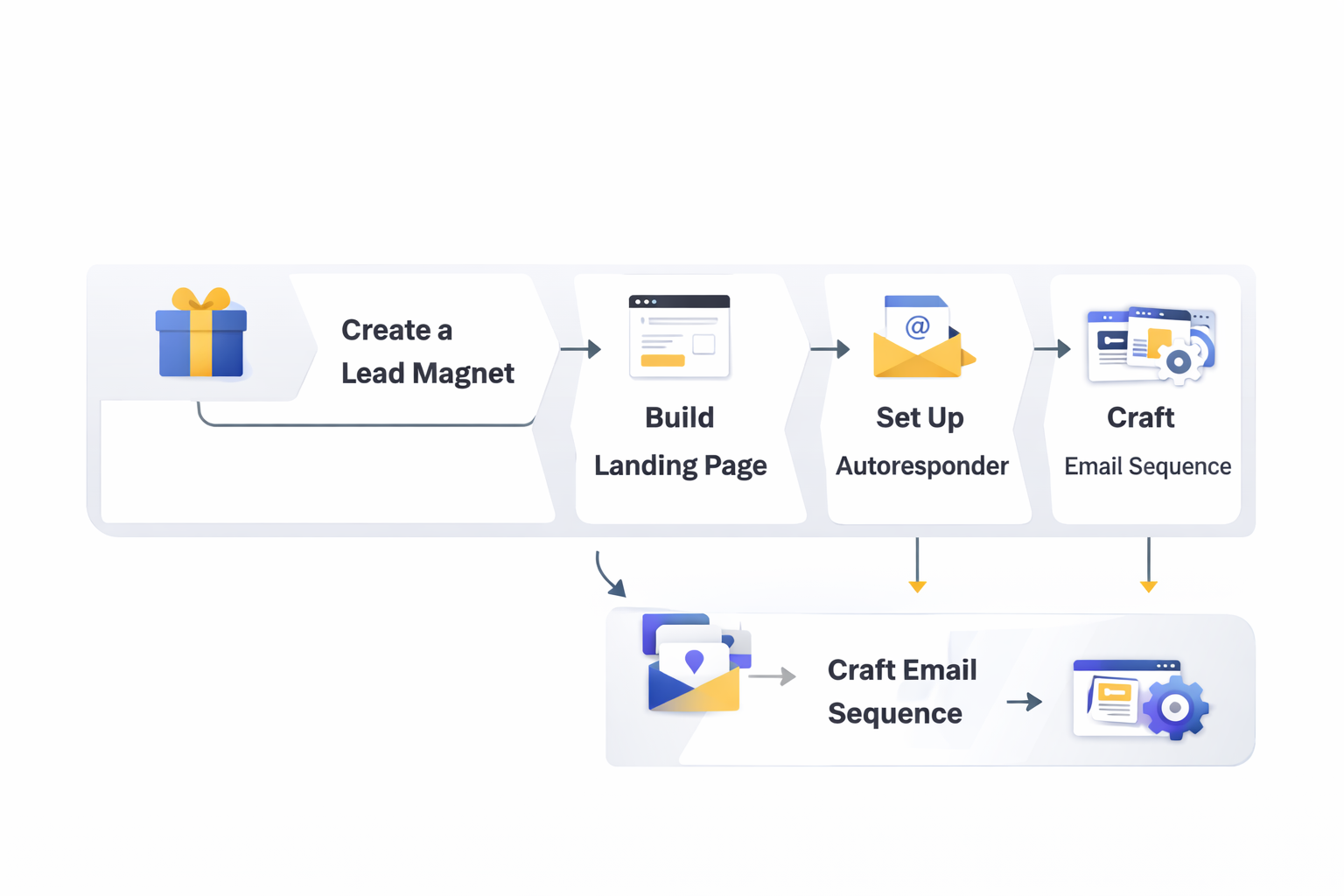
The first implementation step is not writing the email. It is making sure the person entering your email marketing autoresponder actually understands what they are signing up for, why they are signing up, and what will happen next. That is why the opt-in page, the form language, and the confirmation process matter so much, especially now that Google requires stronger sender authentication and tighter bulk-sender practices and Yahoo expects clearly visible unsubscribe options, low complaint rates, and prompt opt-out handling.
This is also where double opt-in can save you from a lot of hidden problems. Mailchimp explains that double opt-in helps catch fake, mistyped, and accidental signups, and its guidance on single versus double opt-in recommends the extra confirmation step when engagement is low, abuse complaints are a concern, or regulations in your market are stricter. If you want your email marketing autoresponder to start with better data instead of bad addresses and weak intent, that extra step is often worth it.
The promise on the form has to match the promise in the first email. If someone signs up for a free template, they should not land in a vague “weekly updates” sequence that has nothing to do with what they wanted. The more tightly you connect the entry point to the next message, the easier it becomes to keep trust high and complaints low.
Build the First Sequence Before You Add Complexity
The smartest way to implement an email marketing autoresponder is to build one clean path before you add extra branches. Start with the first sequence that matters most to revenue or activation, write every message in order, and make sure each email has one job. That could mean delivering the promised asset, helping the subscriber take the first useful step, showing proof, answering an objection, and then asking for a clear next action.
This matters because automated email works best when the path is simple enough to maintain and strong enough to move people forward. Omnisend’s 2025 report shows that automated emails generated 37% of email-driven sales from just 2% of send volume, and Klaviyo’s automation benchmarks highlight how much stronger triggered flows can be than standard campaigns when the timing and intent are aligned. Those numbers are not a reason to build a giant automation maze on day one. They are a reason to get one high-value flow right before you multiply the moving parts.
If you want a practical rule, write the entire sequence in a document before you touch the platform. Once the copy, order, and decision points make sense in plain language, implementation becomes much easier because you are building a system you already understand instead of improvising inside the software.
Use Branching Only When It Changes the Next Decision
A lot of autoresponders become messy because marketers confuse more logic with better logic. Branching should only exist when subscriber behavior genuinely changes what they need to see next, such as clicking a pricing link, starting a trial, completing a purchase, or ignoring the first few emails. If the branch does not change the next useful decision, it is probably unnecessary.
This is where modern automation tools can help or hurt you. Mailchimp’s flow builder documentation describes starting points, rules, and actions that shape the pace and path contacts take, while its segmentation options make it easy to keep layering conditions on top of each other. That flexibility is powerful, but an email marketing autoresponder stays easier to optimize when each branch exists for a real business reason rather than because the builder made it possible.
A good test is simple. Ask whether the click, purchase, or inactivity event changes the subscriber’s level of awareness, urgency, or qualification. If the answer is yes, build the branch. If the answer is no, keep the path cleaner and focus on making the core sequence stronger.
Run QA Like the Inbox Is Trying to Break Your Work
Implementation is not finished when the sequence is technically live. It is finished when the emails render correctly, the links work, the personalization fields behave, the fallbacks make sense, and the mobile experience is clean enough that real people can act on it without friction. That is why Litmus’s 2025 testing playbook treats pre-send testing and QA as a workflow that starts before launch rather than a box you tick at the end.
Accessibility belongs in that process too, not as a nice extra but as part of professional execution. Litmus’s 2025 accessibility guide and its accessibility checklist push marketers to state the purpose early, use descriptive link text, keep language plain, and think about how the message will be experienced by screen-reader users. That discipline also makes the email marketing autoresponder clearer for everyone else, which is exactly what you want when each message has one specific job.
In practical terms, QA should include subject lines, preview text, merge tags, image loading, dark-mode checks, mobile spacing, and every call to action in the sequence. You do not need a glamorous checklist. You need one that catches preventable mistakes before your subscribers do.
Roll Out Slowly Enough to Protect Reputation
Even a well-written sequence can struggle if the sending setup is shaky. An email marketing autoresponder should launch on top of authenticated sending, clear suppression rules, and realistic volume expectations, because mailbox providers care about sender behavior far more than marketers sometimes want to admit. Google’s sender guidelines require SPF or DKIM for all senders, plus SPF, DKIM, and DMARC for bulk senders, and Google’s FAQ makes it clear that one-click unsubscribe and low spam rates are now part of the operating baseline.
Yahoo’s best-practices page reinforces the same reality with its recommendation to keep complaint rates below 0.3%, support one-click unsubscribe, and honor opt-outs within two days. That is why rollout should include list hygiene, suppression for inactives and complainers, and a close eye on what happens when the sequence starts sending at scale. Litmus’s 2025 deliverability guide makes the same distinction many teams miss: delivery is not the same thing as inbox placement, and an autoresponder only wins when messages are both accepted and actually seen.
If deliverability starts wobbling as your volume grows, do not guess. Tighten the foundations, audit consent sources, clean segments, and get help from tools built for sender health. That is where something like ScaledMail becomes a much better investment than just sending more email and hoping the inbox forgives you.
Choose a Stack Your Team Can Actually Run
The final implementation question is not “What is the most advanced platform?” It is “What can we run consistently without breaking the workflow every time we need to edit a form, launch a page, or update a sequence?” If your business needs pages, offers, funnels, and follow-up tied together in one place, ClickFunnels or systeme.io can make the operational side easier because they reduce the number of handoffs between tools.
If the core need is email-first automation with cleaner contact management and faster deployment, Brevo and Moosend are more natural fits for many autoresponder builds. The point is not to cram every feature into your stack. The point is to choose a setup your team can maintain week after week, because the email marketing autoresponder that wins is the one that stays clean, relevant, and reliable long after launch day.
Once this implementation layer is solid, the conversation naturally shifts from building the sequence to measuring whether it is actually doing its job. That is where optimization gets more interesting, because now you are no longer guessing what should happen inside the autoresponder. You are watching the data tell you where the next gains are hiding.
Statistics and Data
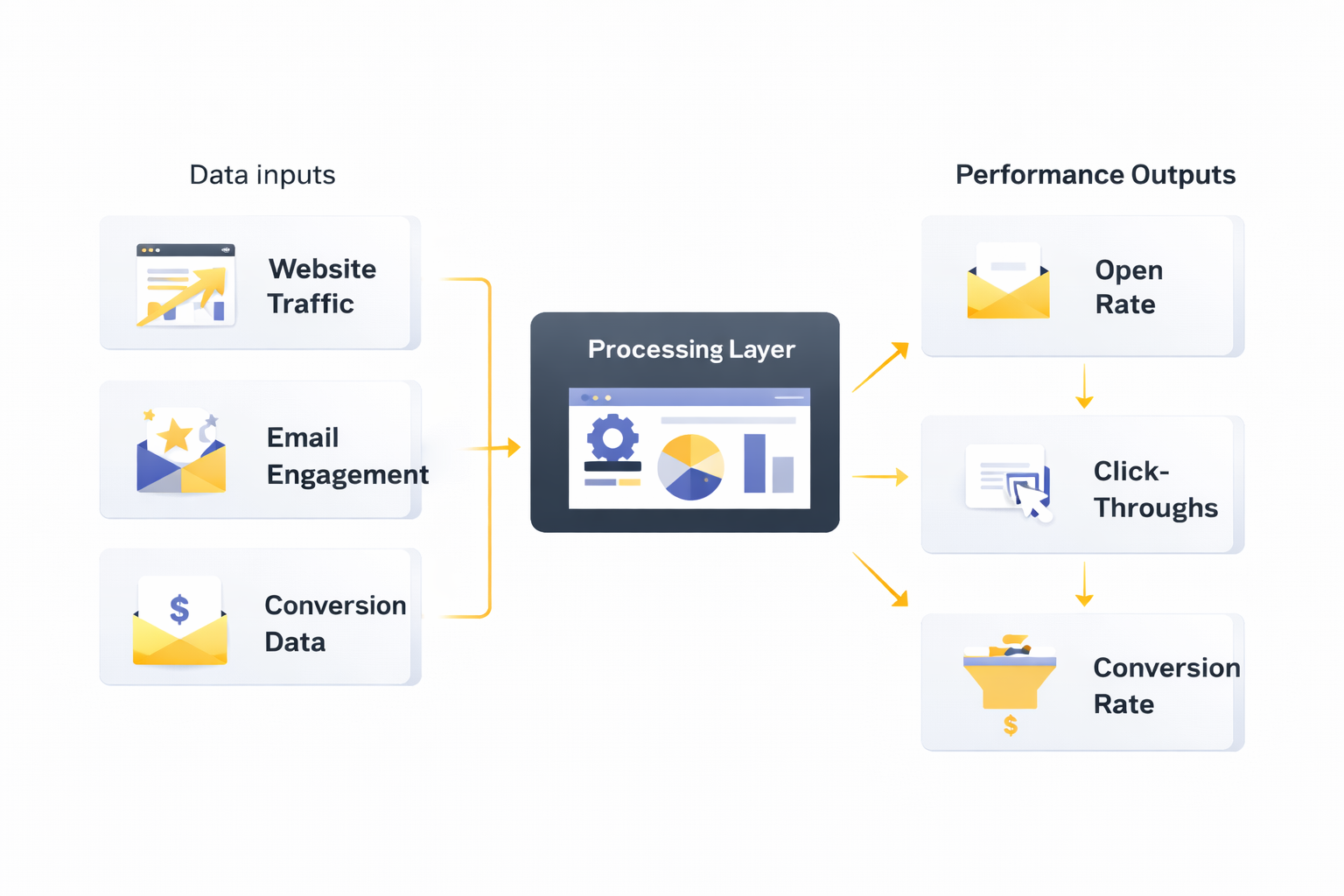
Once an email marketing autoresponder is live, the numbers tell you whether it is actually moving people forward or just filling a dashboard. This is where a lot of marketers get fooled, because a sequence can look healthy on the surface and still do very little for revenue, retention, or activation. The smart move is to read the data in layers, starting with visibility, then engagement, and finally the business outcome the sequence was built to create.
Benchmark Ranges Matter More Than One Magic Number
The first thing the data teaches you is that there is no single “normal” result for an email marketing autoresponder. MailerLite’s 2025 benchmark dataset puts the average open rate at 43.46%, the average click rate at 2.09%, the average click-to-open rate at 6.81%, and the average unsubscribe rate at 0.22%. Omnisend’s 2025 ecommerce report paints a different picture for retail-focused sends, with a 26.6% open rate and a 1.22% click rate, while ActiveCampaign’s 2026 benchmark report based on 2025 customer campaigns reports a 39.26% average open rate and a 6.21% average click rate across its platform.
That spread is not a problem. It is the point. Different platforms, industries, and campaign mixes produce different baselines, which means your email marketing autoresponder should be judged against the right peer set and the right goal rather than some random screenshot somebody posted on social media.
Open Rates Still Help, but They Cannot Be the Final Verdict
Open rate is still useful for directional context, but it is no longer clean enough to carry the whole evaluation by itself. Litmus shows that more than half of email opens now happen on a device with Apple Mail Privacy Protection activated, which means many opens are recorded even when a human never meaningfully viewed the message. That is exactly why Litmus’s 2026 guide to email metrics separates business impact metrics from basic engagement metrics instead of pretending that a high open rate proves the sequence worked.
So yes, you should still watch opens. They can tell you whether subject lines, sender identity, and inbox visibility are moving in the right direction. But the moment you start optimizing an email marketing autoresponder only for opens, you risk polishing the wrong part of the machine.
Flow Performance Data Shows Where the Real Money Usually Sits
The most useful data in autoresponder work usually comes from triggered flows, not one-off campaigns. Omnisend found that automated emails generated 37% of email-driven sales from just 2% of total email volume, and the same report says abandoned cart, welcome, and browse abandonment emails were responsible for 87% of all automated orders. That should immediately change how you prioritize your build order, because it tells you that a small number of well-timed automations can outperform a much larger pile of scheduled sends.
The pattern shows up in other recent datasets too. Klaviyo’s 2025 welcome email data says welcome series average a 51% open rate, while top-performing welcome emails reach click rates of 15% and placed order rates close to 10%. Klaviyo’s abandoned-cart benchmarks add another important signal, with abandoned-cart flows averaging $3.07 revenue per recipient and a 2.68% placed order rate. In plain English, the data keeps rewarding sequences that show up exactly when intent is already present.
Deliverability Metrics Decide Whether the Rest of the Data Even Matters
Before you celebrate engagement, make sure the emails are actually reaching the inbox. Validity’s 2025 deliverability benchmark report shows that Gmail inbox placement averaged 89.8% in 2024 but had fallen to 84.2% by the fourth quarter, which is a sharp reminder that strong copy cannot rescue weak sender health. The same report ties that pressure to changes around authentication, one-click unsubscribe, and complaint control, which means deliverability is now part of autoresponder strategy, not just technical maintenance.
The mailbox providers are saying the same thing in much blunter language. Google’s sender guidelines require authentication, TLS, and spam rates below 0.3%, and Yahoo’s sender best practices tell bulk senders to keep complaint rates under the same 0.3% threshold. That is why an email marketing autoresponder should always be evaluated with reputation metrics in view, because the most profitable sequence in the world stops being profitable the moment inbox placement starts to slide.
If you want cleaner reporting and easier visibility into what is happening inside your system, using a platform with stronger built-in automation reporting such as Brevo or Moosend can make the optimization process much less frustrating. And when the problem is not reporting but pure sender health, ScaledMail is the kind of tool that makes more sense than guessing why a previously solid sequence suddenly starts underperforming.
The Best KPI Stack Connects Email Activity to Business Outcomes
The most important analytics shift is moving from “What happened in the email?” to “What changed after the email?” Customer.io’s 2026 lifecycle metrics guide makes that case clearly by separating activation, retention, and expansion metrics from opens and clicks. That is a much better fit for an email marketing autoresponder, because a welcome sequence should reduce time to value, an onboarding sequence should increase feature adoption, a win-back sequence should reactivate dormant users, and an upsell sequence should generate upgrades or larger orders.
This is where the dashboard gets more honest. A 40% open rate on a trial onboarding flow sounds fine, but if nobody activates the product, the sequence is not doing its job. A click spike on a post-purchase series looks exciting for a day, but if repeat purchase rate, average order value, or support load do not improve, then the autoresponder still needs work.
Good Data Comes from Controlled Testing, Not Wishful Thinking
One reason autoresponder analytics get messy is that marketers often compare one version of a sequence to nothing at all. Customer.io recommends holdout groups and direct comparison against similar users who did not receive the campaign, because that is the only reliable way to see whether the sequence changed behavior or whether the subscriber would have converted anyway. Once you start looking at results through that lens, the quality of your decisions improves fast.
That is why the best testing in an email marketing autoresponder usually focuses on the decisions that change outcomes, not vanity tweaks. Test the trigger, the first email angle, the delay before the second message, the proof element, the offer timing, and the exit condition. Those are the levers that can move revenue, retention, and activation in a meaningful way.
So when you read the statistics around an email marketing autoresponder, do not ask for one perfect benchmark to chase. Ask whether your sequence is reaching the inbox, earning real clicks, changing behavior, and producing the exact outcome it was designed to create. That is the data that separates a sequence that looks busy from one that quietly drives growth month after month.

FAQ – Built for a Complete Guide
By this point, you have seen how an email marketing autoresponder works, what makes it profitable, and where most businesses get it wrong. The final step is clearing up the questions that keep coming up once people move from theory to execution. These answers are built to help you make better decisions faster, especially if you are trying to turn automation into something that actually drives revenue instead of just sending more messages.
What is an email marketing autoresponder, really?
An email marketing autoresponder is a sequence of emails that sends automatically after a specific action or condition is met. That trigger might be a signup, a lead magnet request, a purchase, a trial start, or a cart abandonment event, and the emails then follow a logic path you define inside the platform. The reason this matters so much is that Omnisend found automated emails generated 37% of email-driven sales from just 2% of send volume, which tells you that timing and intent usually beat sheer volume.
How many emails should a good autoresponder include?
There is no magic number, and that is exactly why so many weak sequences underperform. A welcome flow might only need three to five emails if the offer is simple, while onboarding or post-purchase education can justify a longer sequence because the subscriber needs more context before the next action feels natural. The better question is whether each email earns its place, because the strongest automations are rarely the longest ones and Klaviyo’s abandoned-cart data keeps showing that focused flows can produce excellent revenue without turning into a marathon.
What sequence should most businesses build first?
Most businesses should start with the one sequence closest to revenue or activation. For many brands that means a welcome series, an abandoned-cart flow, or a post-purchase onboarding sequence, because those moments already carry clear intent and the subscriber is still paying attention. That is why Omnisend reports that welcome, abandoned-cart, and browse-abandonment emails generated 87% of automated orders, while Mailchimp says users of its marketing automation flows generated 9x more revenue than bulk email users.
Should you use single opt-in or double opt-in?
If list quality and compliance matter more than growing the list at any cost, double opt-in is usually the smarter move. Mailchimp recommends double opt-in when you have dealt with low open rates, abuse complaints, or stricter market regulations, and its double opt-in guide explains that the extra confirmation step helps catch fake emails, mistyped addresses, and accidental signups. In other words, double opt-in can slow growth a little, but it often improves the health of the email marketing autoresponder from the very first message.
How often should autoresponder emails go out?
The right frequency depends on urgency, not on habit. If someone just requested a resource or started a trial, the first email should usually arrive immediately because the context is still fresh and the chance of action is highest in that moment. After that, your spacing should reflect the buying cycle and the decision you are trying to influence, because a fast-moving abandoned-cart sequence and a slower educational nurture sequence should never feel like they came from the same timer.
What metrics matter most in an email marketing autoresponder?
The answer depends on the job of the sequence, but clicks, conversions, revenue per recipient, activation rate, and unsubscribe or complaint trends usually tell you more than opens alone. Customer.io’s lifecycle metrics framework for 2026 pushes teams to look at business outcomes such as time to value, feature adoption, retention, and churn by cohort, which is a much better fit for automation than obsessing over vanity metrics. Open rate still has value as a directional signal, but an email marketing autoresponder should ultimately be judged by what happens after the click.
Are open rates still reliable enough to optimize around?
They are useful, but they are not reliable enough to carry your whole evaluation on their own. Litmus says more than half of email opens now happen on a device with Apple Mail Privacy Protection activated, which inflates open tracking and makes it harder to know how many of those opens reflect real human attention. That is why a smart email marketing autoresponder uses opens for context, then leans more heavily on clicks, downstream behavior, and conversion events when real money is on the line.
What counts as a good benchmark for performance?
You should never judge performance using one random number pulled from a screenshot. MailerLite’s 2025 benchmark data shows a 43.46% average open rate, a 2.09% click rate, and a 0.22% unsubscribe rate, while Mailchimp’s benchmark page lists all-user averages of 35.63% opens, 2.62% clicks, and 0.22% unsubscribes. Those differences are exactly why the only sensible way to benchmark an email marketing autoresponder is to compare it to the right industry, audience quality, and sequence type rather than treating every list like it should perform the same way.
How do Google and Yahoo rules affect autoresponder campaigns?
They affect them a lot more than many businesses realize. Google defines bulk senders as those sending roughly 5,000 or more messages a day to personal Gmail accounts and requires one-click unsubscribe for promotional mail, while its sender guidelines also require authentication and keeping spam complaints below 0.3%. Yahoo sets the same 0.3% complaint ceiling and asks senders to authenticate mail, support easy unsubscribe, and keep marketing traffic operationally clean, which means your email marketing autoresponder now lives inside a stricter sender environment than it did just a few years ago.
How quickly do unsubscribe requests need to be honored?
Fast is best, but there is also a legal floor you cannot ignore. The FTC’s CAN-SPAM compliance guide says opt-out requests must be honored within 10 business days, and the same guidance makes it clear you cannot force someone to pay a fee, answer unnecessary questions, or jump through extra hoops just to stop receiving marketing email. In practice, a good email marketing autoresponder should process opt-outs automatically the moment they happen, because waiting until the legal deadline is technically possible but strategically dumb.
Should transactional and promotional emails be separated?
Yes, and the reason is bigger than simple organization. Google’s FAQ makes it clear that one-click unsubscribe applies to promotional messages, while transactional messages such as password resets and confirmations are excluded, and Yahoo explicitly recommends separating marketing mail from transactional or user mail. When you keep those streams distinct, your email marketing autoresponder is easier to manage, your reputation is easier to protect, and the messages people truly need are less likely to get dragged down by promotional performance issues.
Can AI help build and optimize an email marketing autoresponder?
Yes, but only if you use it to speed up thinking instead of replacing thinking. AI is excellent for drafting variants, clustering objections, summarizing customer language, and helping you test message angles faster, but the strategy still has to come from a human who understands the customer journey. That is also where tooling starts to matter, because if you want to pair automation with funnels and pages in one place, ClickFunnels and systeme.io can make execution simpler, while Brevo and Moosend are practical choices when the email system itself is the center of gravity.
When should you bring in professionals instead of trying to do everything yourself?
You should bring in help when the autoresponder becomes important enough that guessing starts costing real money. If complaint rates rise, inbox placement drops, the flow logic becomes hard to manage, or the copy is no longer matching the sophistication of your offer, that is the moment to stop pretending another tutorial will solve it. And if the technical side of sender reputation is the real bottleneck, ScaledMail is much closer to the real problem than redesigning the email template for the tenth time.
Work With Professionals
An email marketing autoresponder can absolutely start as a lean internal project, but there comes a point where the stakes get higher. Once the sequence is responsible for lead flow, customer activation, repeat purchases, or retention, the margin for error shrinks fast because every weak email, broken branch, or deliverability issue starts leaking money. That is when professional help stops feeling optional and starts feeling like common sense.
The good news is that you do not need a giant agency just to get this right. Sometimes you need a strategist who can map the customer journey, sometimes you need a copywriter who can turn intent into action, and sometimes you need a specialist who can fix authentication, inbox placement, or platform setup before your metrics get worse. The smartest move is to identify the real bottleneck first, then bring in the right person or stack to solve that exact problem.
If you are building from scratch and want the infrastructure to move fast, ClickFunnels and systeme.io are practical ways to connect pages, forms, offers, and follow-up. If your main need is a cleaner email engine, Brevo and Moosend are better fits for many teams. And if the real battle is sender reputation and inbox placement, ScaledMail is the kind of focused help that can protect the whole system.
Explore 10K+ Remote Marketing Contracts on MarkeWork.com
Most marketers spend too much time chasing clients, competing on crowded platforms, and losing a percentage of every project to middlemen.
MarkeWork gives you a better way. Browse thousands of remote marketing contracts and connect directly with companies desperate to hire skilled marketers like you — without platform commissions and without unnecessary gatekeepers.
If you’re serious about finding better opportunities and keeping 100% of what you earn, you can explore available contracts and create your profile for free at MarkeWork.com.
 Filip Konecny Enterprises