
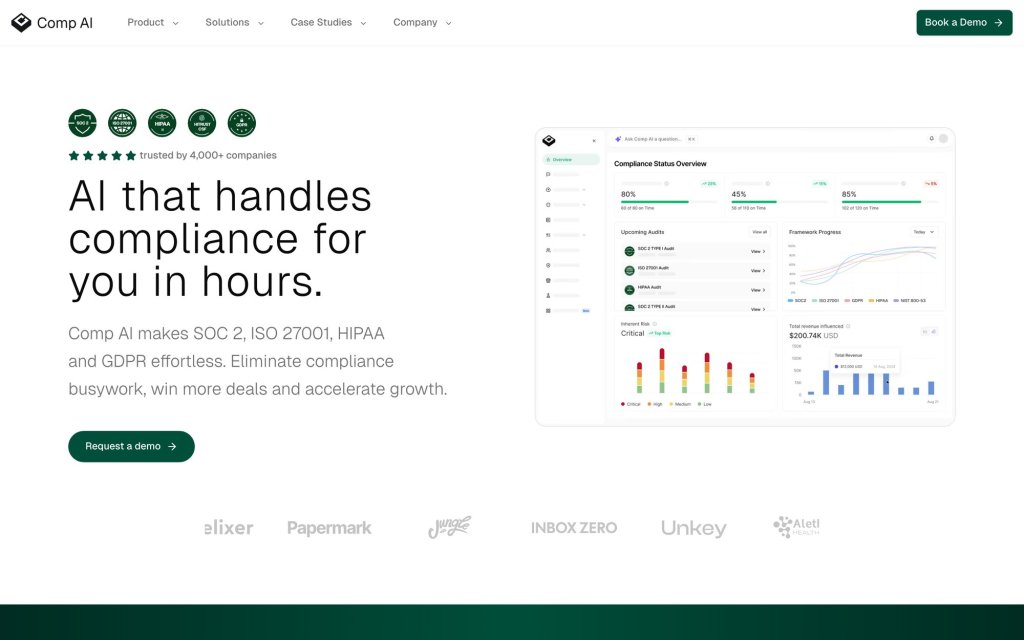
Comp AI looks appealing for one simple reason: it promises to turn compliance from a slow, expensive project into something your team can actually keep moving without hiring a full security department. If you need SOC 2, ISO 27001, HIPAA, or GDPR support and your current setup feels like screenshots, spreadsheets, and random follow-ups, that pitch lands fast.
The catch is that compliance software always sounds easier in the sales pitch than it feels in real life. Comp AI does a lot right, but it is not magic, and the biggest question is not whether it has useful features. The real question is whether it saves enough time, stress, and outside spend to justify using it now instead of pushing the problem down the road again.
This review is here to help you make that call. I’ll show you where Comp AI looks strong, where the limitations show up, and whether it makes more sense to start now, wait until you are further along, or choose something cheaper.

Image source: Comp AI
Quick verdict
Comp AI makes the most sense for startups and lean teams that need to get compliant without building an internal compliance machine from scratch. It looks especially strong when you want automation, guided support, and a platform that can cover more than one framework instead of treating every audit like a separate headache.
It looks less attractive if you want a polished enterprise platform with years of product maturity, or if your team is so early that compliance is still a distant problem. Some users clearly like the speed and support, but setup friction and occasional product rough edges still show up often enough that you should expect some work on your side.
Explore Comp AIArticle outline
I split this review into three clear parts so you can jump straight to the section that matters most to your buying decision. If you already know compliance is on your roadmap, the most useful sections will probably be pricing, limitations, and the tool comparison near the end.
- Part one: Is Comp AI actually worth considering, and where do the biggest limitations show up first?
- Part two: What you get, what the platform does well, what it costs, and why some teams will want to move now instead of waiting.
- Part three: Alternatives, final verdict, and the easiest way to decide whether to buy, wait, or skip it.
Is Comp AI actually worth considering?
Yes, for the right buyer it is. Compliance software only feels worth paying for when the cost of doing it manually starts to hurt more than the software bill, and Comp AI seems built exactly for that moment.
That usually means you are already selling into larger customers, answering security questionnaires, or getting pushed toward SOC 2 and ISO 27001 earlier than you wanted. At that point, dragging your feet usually does not save money. It usually just delays the audit, slows deals, and keeps your team stuck doing work that should be automated.
Comp AI’s strongest angle is not “look at all these features.” It is that the platform tries to replace a messy mix of manual evidence gathering, policy drafting, framework tracking, and back-and-forth support with one system that feels more realistic for a small team.
That matters because a lot of founders do not need a giant governance suite. They need a practical way to get audit-ready, stay organized, and avoid turning one security hire into a full-time spreadsheet operator.
The limitations matter too, and they matter early. Comp AI still looks like a newer product compared with bigger names in the category, which means some buyers should expect a little more setup work, occasional bugs, and a product experience that may not feel as polished in every corner.
That does not kill the deal. It just means you should buy it for speed, support, and cost leverage, not because you expect a flawless plug-and-play experience on day one.
That tradeoff will be fine for some teams and annoying for others. If you care more about getting compliant quickly without overspending, Comp AI gets more interesting fast. If you care more about deep enterprise maturity and fewer rough edges, you may end up leaning toward a more established alternative even if it costs more.
The next section gets into what you actually get, because that is where the value case either becomes obvious or falls apart. You can continue to see what you get with Comp AI when you are ready.
What you get with Comp AI
Comp AI is trying to do more than give you a dashboard with a few checklists. The package is built around evidence collection, framework mapping, policy drafting, risk tracking, vendor management, trust-center style proof, and direct support that helps you keep moving instead of guessing what to do next.
That matters because compliance gets expensive fast when the work is split across docs, screenshots, spreadsheets, and outside consultants. Comp AI looks strongest when you want one place that keeps the project organized and pushes the manual work down as much as possible.
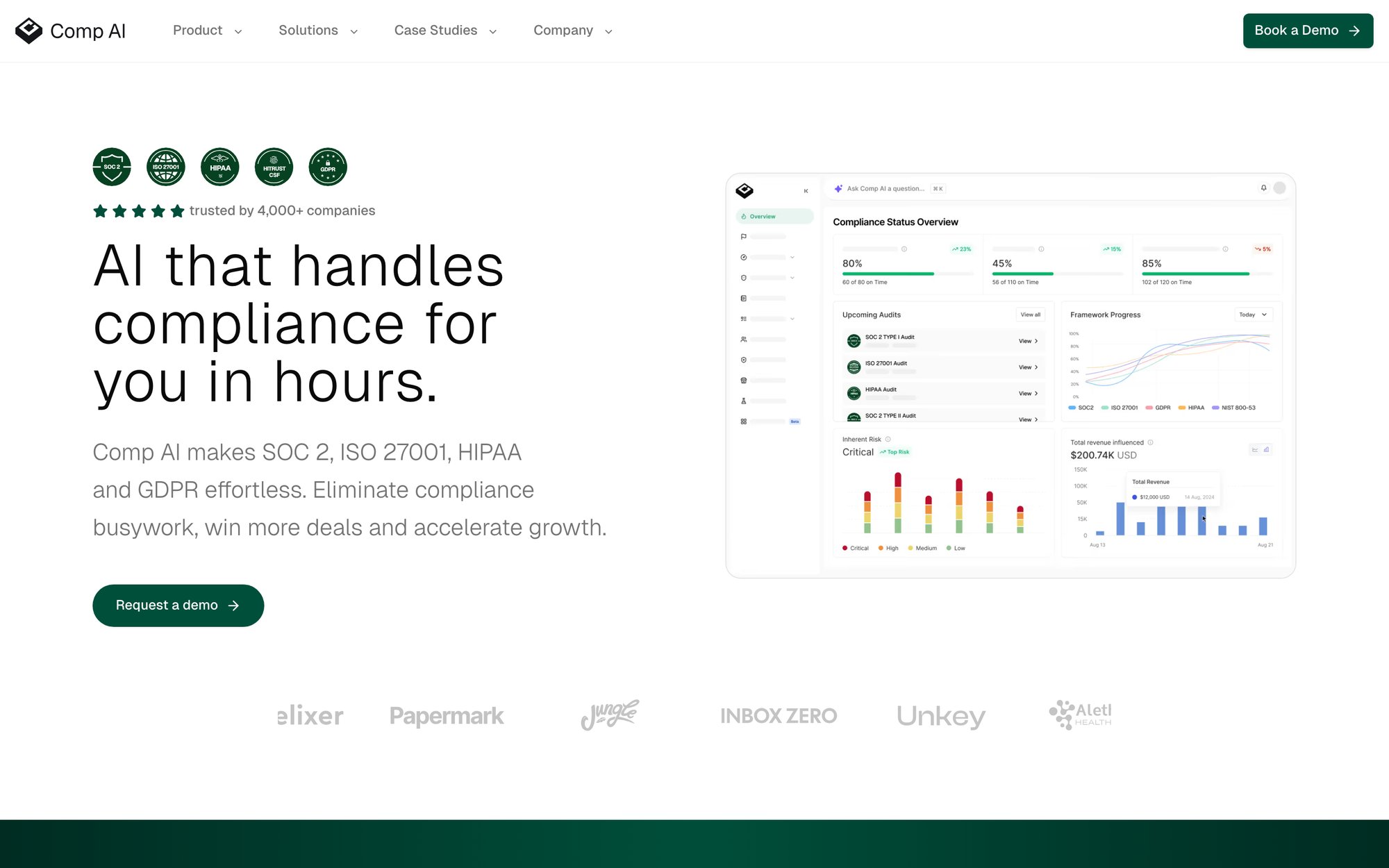
Image source: Comp AI
- Support for the frameworks most early teams actually care about first, including SOC 2, ISO 27001, HIPAA, and GDPR.
- Automated evidence collection tied to your stack, so you are not rebuilding the same paper trail every time an auditor or buyer asks for proof.
- Questionnaire and policy help that should make recurring security paperwork much less painful.
- A stronger support layer than you get from a lot of self-serve SaaS tools, especially through the shared Slack model.
- A trust and audit-readiness angle built for teams trying to close enterprise deals sooner, not just “be compliant someday.”
The best version of this product is simple: you connect the right systems, the platform keeps collecting evidence, and your team stops treating compliance like a side project that never ends. That is the real payoff, not the feature list by itself.
Comp AI limitations still show up here, though. The public material makes the platform sound very broad, but you should still verify your exact stack before buying, especially if you use legacy tools or uncommon workflows that usually break “automated” promises.

Image source: Comp AI
The good stuff
Automation is the main reason to care. Reviews keep coming back to the same pattern: less spreadsheet work, clearer visibility into progress, easier evidence collection, and better odds of getting through SOC 2 or ISO 27001 without turning the process into a full-time job.
Support looks like a real strength too. Comp AI pushes 1:1 Slack support hard, and that matters because setup questions, policy decisions, and framework edge cases are exactly where buyers get stuck and start regretting the purchase.
Image source: Comp AI
The product also looks more startup-friendly than a lot of older compliance tooling. That is not just because of price. It is because the messaging, support model, and implementation pitch all lean toward speed and practicality instead of making you feel like you need a giant governance team before you can even begin.
The weaknesses are real too. Some users mention onboarding friction, limited flexibility for niche policies or non-standard workflows, rough edges in AI behavior, and cases where integrations or questionnaire flows needed tweaking before everything felt solid.
That is the honest tradeoff. You are buying a faster, more affordable path for the right team, not a perfectly mature enterprise suite with zero learning curve.
Another thing worth checking before you sign is integration depth. The homepage talks about a much broader tool universe than the public verified integration list you see on review sites, so it is smart to confirm the exact tools you care about instead of assuming every evidence source is plug-and-play on day one.
Pricing and how it compares
Pricing is where Comp AI gets a little less clean than the sales pitch. Public pages point to entry pricing starting around $3,000, but the broader official content also breaks out different all-in cost ranges depending on scope, audit setup, and how much service is bundled, so you should expect a quote-driven conversation instead of a simple self-serve checkout.
That does not automatically make it bad value. It just means you need to judge Comp AI against the cost of delayed deals, manual work, audit prep, and outside help, not against cheap marketing software that solves a completely different problem.
The legal terms add one more important catch: subscriptions are handled through an order form and carry a 12-month commitment. The money-back guarantee helps reduce the risk, but this still is not the kind of tool you buy casually and cancel next week.
This table is not an apples-to-apples category comparison. It is a budget reality check against other affiliate tools you might also be considering, so you can decide whether your next dollar should go into compliance, sales infrastructure, or a cheaper all-purpose online business stack.
See current pricing for Comp AIComp AI is the expensive option only if you compare it to the wrong thing. Against sales software, yes, it costs more. Against months of internal busywork, consultant fees, and enterprise deals slipping because your security answers are weak, it can look a lot more reasonable.
Why buying now can make sense
Waiting usually feels cheaper because the software bill disappears from view. What stays hidden is the cost of delayed audits, slower procurement reviews, extra engineering interruptions, and the drag of having your team hunt for proof every time a bigger customer asks hard questions.
Comp AI becomes much easier to justify once compliance is attached to real revenue. If you are already getting enterprise pushback, or you know SOC 2 or ISO 27001 is going to become mandatory soon, buying early is usually smarter than waiting until the pressure becomes urgent.
This is also where Comp AI limitations become more tolerable. A bit of onboarding friction or some product rough edges are easier to live with when the platform is still saving your team weeks of manual work and helping you get through security reviews faster.
You probably should not rush into it if you are very early, have no compliance pressure, and would be buying mostly out of fear. In that case, a cheaper tool stack or no purchase at all may be the better move until the need becomes real.
For the right buyer, though, this looks like the kind of purchase that removes a bottleneck instead of adding another tool. If compliance is already on your back, putting it off usually means you keep paying for the problem in slower ways.
Get started with Comp AIComp AI alternatives and who should choose them instead
Comp AI is not the only serious option in this category, and that is good news for you. A review only helps if it tells you when the product wins, when it loses, and when a different tool makes more sense.
The short version is simple. Comp AI looks strongest for lean teams that need compliance fast, care about cost, and do not want to pay enterprise-tool prices just to get SOC 2 or ISO 27001 moving.
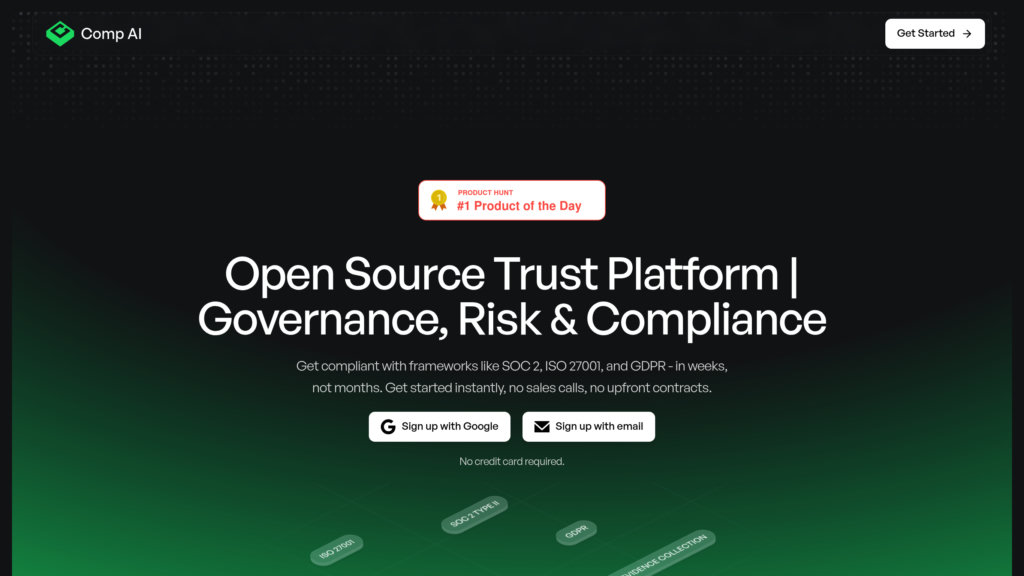
Image source: Comp AI
Vanta, Drata, and Secureframe are the names most buyers compare against. They are more established in the market, but they also push you into the usual quote-based pricing flow, and that can get expensive fast once you add frameworks, services, and implementation.
Check Comp AIChoose Comp AI if you want the lowest-friction path to real compliance work without jumping straight to bigger-platform pricing. Choose a cheaper alternative only if your timeline is loose and you are willing to do more manual work or deal with self-hosting headaches.
Choose a broader all-in-one tool like GoHighLevel only when compliance is not your actual bottleneck. If your real problem is lead capture, CRM, and follow-up, a broader business stack may matter more than a compliance platform right now.
Image source: Comp AI
My honest take
Comp AI looks worth buying for the right buyer. That buyer is not “anyone interested in security.” It is the team that already feels real pressure to prove trust, pass security reviews, or get an audit moving without wasting months on manual busywork.
Comp AI limitations are real, but they are mostly the kind you can live with if the business need is urgent. You still have to review AI-generated output, the official terms say the company does not guarantee AI recommendations are accurate, and you should expect some setup and validation instead of a magical one-click result.
The contract side matters too. The current terms describe a 12-month minimum commitment with auto-renewal unless you give notice, so this is not a casual little trial purchase even though the money-back guarantee lowers the risk.
Self-hosting sounds attractive if you want to save money. The open-source angle is real, but a recent GitHub issue documented documentation gaps, Docker problems, and environment-variable confusion around self-hosting, so I would not treat that route like an easy shortcut unless your team is comfortable getting hands dirty.
This is great for some people and overkill for others. If enterprise buyers are already asking for SOC 2, ISO 27001, HIPAA, or similar proof, Comp AI looks like a smart next step. If compliance is still theoretical and no deals depend on it yet, waiting is probably the better move.
My verdict is simple. Buy now if compliance is blocking deals or creating obvious internal drag. Wait if you are still too early. Skip it only if you need a more mature enterprise vendor, or if your actual bottleneck has nothing to do with compliance in the first place.
Image source: Comp AI
FAQ
Is Comp AI actually good for startups?
Yes, that is where it looks strongest. Lower entry pricing, automation, and direct support are a much better fit for lean teams than giant compliance suites built around bigger budgets and longer buying cycles.
Does Comp AI replace an auditor?
No. It helps with evidence, policies, tracking, and readiness, but it does not remove the need for the actual audit step or your responsibility to validate important outputs.
Is self-hosting the cheap answer?
Only if your team is technical enough to handle it. The open-source angle is appealing, but self-hosting has already shown enough friction that I would not pick it just because it sounds cheaper on paper.
Should you buy now or wait?
Buy now if customer trust questions, audits, or procurement slowdowns are already showing up. Wait if compliance is still a future problem and you would only be buying because it feels vaguely important.
If you are already close to action, this is one of those purchases that can save more time than it costs. The people who get the most value are usually the ones who stop delaying the compliance build and start using a tool that keeps the work moving.
Get started with Comp AI Filip Konecny Enterprises