

If you’re checking Comp AI price, you’re probably trying to answer one thing: is this actually an affordable compliance platform, or is it another demo-first SaaS that looks cheap until the quote lands. Comp AI looks cheaper than the usual compliance stack, and for the right buyer that alone makes it worth a serious look.
Its public pages repeatedly point to entry pricing around $3,000, broader ranges like $3,000-$8,000, and all-in packages around $5,000-$10,000 depending on scope. That is a very different vibe from the vendors that give you almost nothing before the sales call.
The catch is that the numbers are scattered across different pages instead of one clean pricing grid. So yes, the public signals are promising, but no, I would not treat one number as your final quote until you see the official demo.
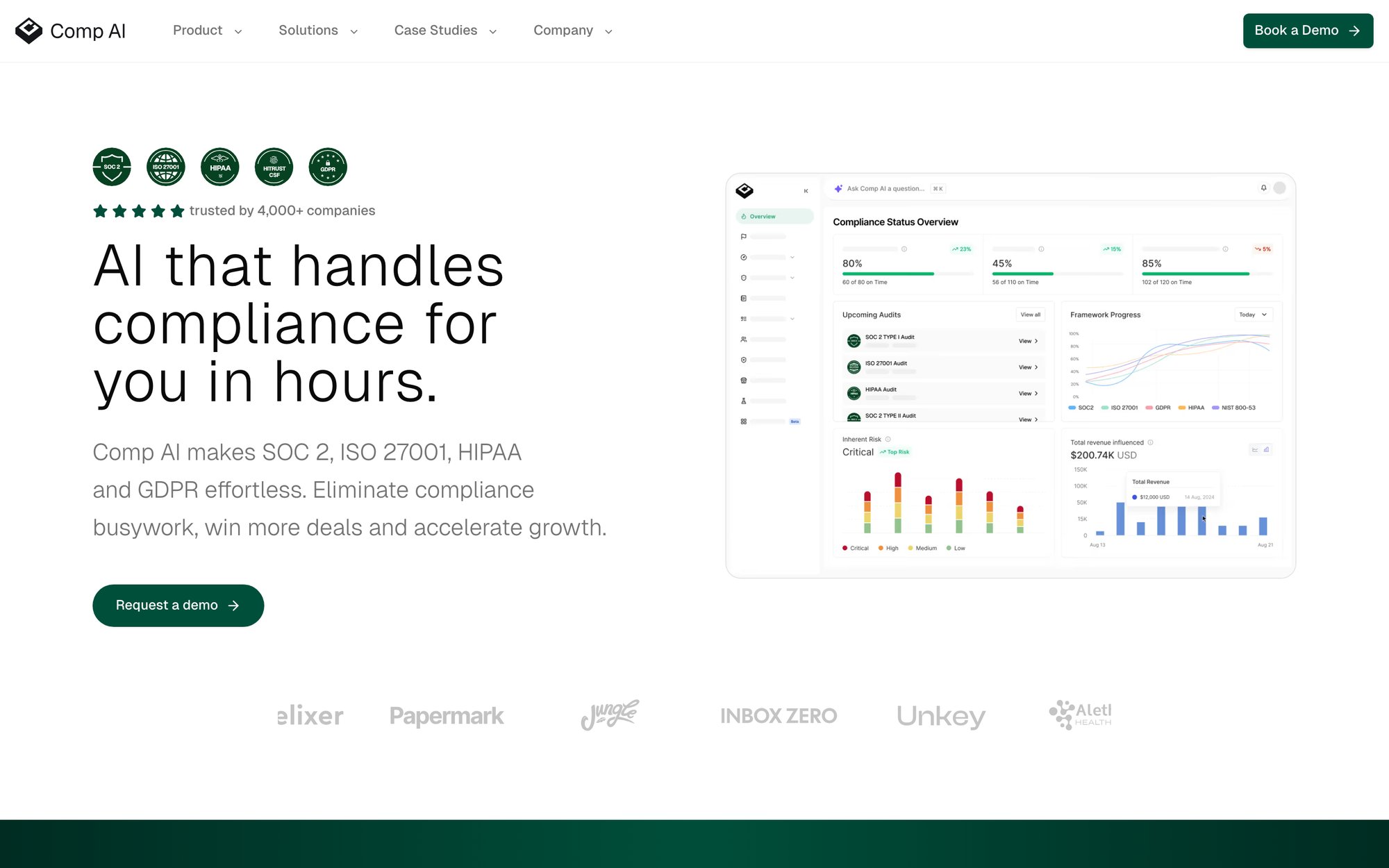
Image source: Comp AI automated compliance guide
Article outline
- Quick verdict and Comp AI price at a glance
- What you get for the money, the good stuff, pricing vs other tools, and why buying now may make sense
- Alternatives, final verdict, and FAQ
Quick verdict
Comp AI is most appealing when compliance is already slowing deals, procurement, or fundraising. When the pain is real, a lower-priced tool that also tries to replace manual evidence collection, policy work, monitoring, and audit prep starts to make financial sense fast.
What makes the price story stronger is that Comp AI is not only selling “cheaper.” It is also pushing buyer-friendly points at the same time: 270+ integrations on the homepage, a bring-your-own-auditor setup, an open-source angle, and a money-back guarantee that lowers some of the usual fear around buying a compliance platform.
That said, this is not a blind yes. If you are months away from needing SOC 2, ISO 27001, HIPAA, or GDPR, even a cheaper platform can still be too early.
If enterprise buyers are already asking security questions, waiting usually means you keep burning internal time on spreadsheets, screenshots, and ad hoc policy work. That is where Comp AI price starts to feel less like software spend and more like a shortcut.
Comp AI price at a glance
See current Comp AI pricingMy honest read is that Comp AI looks price-aggressive, but not perfectly transparent. I like the lower public entry point and the bundled language around audits, but I would like the pricing story more if it lived on one clean page instead of being scattered.
That does not make it a bad buy. It just means the smart move is different depending on where you are: book the demo now if compliance is already tied to revenue, or wait if you are still casually researching and do not have a real deadline yet.
That is also why this review is worth finishing. The next section gets into what you actually get for the money, how much manual work this can realistically replace, and whether Comp AI price still looks good once you compare it to the alternatives.
Comp AI alternatives
Comp AI is not the only way to get compliant, and that is exactly why the price conversation matters. If you only look at the sticker price, you can miss the bigger question: which tool gets you audit-ready fast enough without forcing you into a heavier contract than you need.
Comp AI looks strongest when you want a lower-cost path into SOC 2, ISO 27001, HIPAA, or GDPR and you do not care about buying the biggest name in the category. The bigger incumbents still make sense for some teams, but they usually ask for a sales conversation before you get real pricing, and that alone tells you this market is not exactly self-serve.
See current Comp AI pricingChoose Comp AI if price is a major part of your decision and you still want a real compliance platform, not a patchwork of docs and spreadsheets. Choose Vanta or Drata if you care more about category reputation, buyer familiarity, or broader trust workflows, and choose Secureframe or Sprinto if you want a heavier all-in-one compliance motion and you are comfortable with quote-led pricing.
No obvious cheaper full-suite alternative stood out from the live public pricing pages. If even Comp AI feels early for your business, the smarter move is usually to wait until compliance starts affecting deals, not jump into a more expensive incumbent just because it is better known.
My honest take
Comp AI price looks good because it sits in the part of the market most founders actually want: serious enough to replace manual compliance work, but not obviously priced like an enterprise contract from day one. That alone makes it more interesting than the tools that hide everything behind a demo and then hope you are already too committed to compare.
The biggest reason to buy is speed. If security reviews are slowing deals, compliance is already costing you money, and paying for a tool that automates evidence collection, policy work, control mapping, and ongoing maintenance usually makes more sense than dragging the process out by hand.
The biggest reason to wait is timing. If you do not have customer pressure, procurement friction, or a real compliance deadline yet, even a cheaper platform can still be overkill.
I would not call Comp AI the safest pick for every company. Bigger teams with more complex trust-center needs, larger budgets, or a strong preference for category leaders may still feel better with Vanta, Drata, Sprinto, or Secureframe.
I would call it one of the more compelling picks for startups and growth-stage teams that want the job done without paying incumbent pricing. For that buyer, Comp AI price is not just reasonable, it is one of the clearest reasons to take the demo seriously now instead of keeping compliance stuck on the to-do list.
- Buy now: compliance is blocking deals, enterprise questionnaires keep piling up, or you already know SOC 2, ISO 27001, HIPAA, or GDPR is coming fast.
- Wait: you are still very early, compliance is not tied to revenue yet, and you would mostly be paying for future problems instead of current ones.
- Skip for another option: you want the biggest brand, deeper enterprise workflow complexity, or a broader trust suite and you are comfortable paying more.
FAQ
Is Comp AI actually cheaper than Vanta and Drata?
Public Comp AI pages repeatedly frame it that way, and the price references on those pages are much lower than the competitor ranges shown in Comp AI’s own comparison content. The honest caveat is that Vanta and Drata still sell through quotes, so you should treat the comparison as a strong signal, not a universal guarantee for every company size.
Does Comp AI price include the audit?
Comp AI’s public cost pages say audit costs can be bundled into the subscription. That is a big deal because some buyers see a lower software number elsewhere and then realize the real bill gets bigger once audit, setup, and extra frameworks show up.
Is Comp AI too advanced for a small team?
No, but it can still be too early. Small teams that already need compliance can benefit from the automation fast, while small teams with no buyer pressure may be better off waiting until the certification path is tied to actual revenue.
Should you buy now or wait?
Buy now if delaying means more lost time, slower deals, and more manual evidence chasing. Wait if compliance is still hypothetical and you would struggle to give the tool an owner internally.
What is the main risk with Comp AI?
The main risk is not that it looks expensive. The main risk is that the pricing story is still more sales-led than fully self-serve, so you need to confirm your exact scope, frameworks, and renewal expectations before you commit.
Explore Comp AI Filip Konecny Enterprises