
If compliance is already slowing deals, vendor reviews, or security questionnaires, the Comp AI free trial looks more interesting than most offers in this category. The product is not pitching itself as a tiny checklist tool; it is pitching a broader compliance workflow built around automation, AI assistance, and faster audit readiness.
That matters because compliance software can waste a lot of time before it saves any. A trial only has value when it helps you figure out whether the product will replace manual work you are already tired of doing.
This review is here to help you make a clean decision. You will see whether Comp AI looks worth trying now, whether you should wait until your team is more ready, or whether a simpler path makes more sense first.
Article outline
- Start here: quick verdict.
- Before you commit: what you get in the free trial, the good stuff, pricing and value, and why you may want to start now.
- Before you decide: alternatives worth looking at, final verdict, and FAQ.
Is the Comp AI free trial even worth your time?
Yes, for the right buyer it is worth a real look. Comp AI makes the most sense when compliance is tied to revenue, procurement, or trust, and you want something heavier than templates but lighter than building a messy stack of spreadsheets, docs, screenshots, and follow-up tools.
The public product pages make a strong first impression because they do not pitch just one narrow feature. The current offer centers on 270+ integrations, open-source positioning, bring-your-own-auditor flexibility, and a published money-back guarantee, which makes the platform feel like it is trying to remove both the workload problem and the purchase-risk problem at the same time.
The free trial itself looks legitimate because current product pages use direct trial language instead of acting like everything starts with a vague sales call. The catch is that the public-facing pages are still lighter on clean self-serve pricing detail than many SaaS buyers would want, so the trial works best when you already know what you need to test.

Image source: Comp AI trust access documentation
Comp AI also looks broader than a simple evidence collector. The official docs point to an AI Policy Editor, Automated Evidence, a Device Agent, Security Questionnaire workflows, penetration tests, and trust access tools. That is a better sign than a shiny homepage alone because it suggests there is real depth behind the sales pitch.
This will not be the right fit for everyone. If you are still very early, do not have enterprise pressure yet, and mostly need estimates, templates, or a readiness gut-check, the brand’s own free tools and policy templates may be the smarter first step.
Check the official free trialThe biggest reason to try Comp AI now is simple. If your team is already answering security questionnaires by hand, chasing evidence across tools, or getting stuck on enterprise procurement, waiting usually means you keep paying the manual-work tax every week.
The main reason to wait is also simple. If compliance is still a future problem instead of a current blocker, you may get more value from the free calculators, readiness tools, and templates before you step into a full platform decision.
My early take is positive, but not blindly positive. Comp AI looks most compelling when you already have something real to sell, a buyer who cares about trust, and a messy compliance process you want to stop duct-taping together.
That is why the free trial matters here. It gives the right buyer a chance to test whether the product feels like a real shortcut to audit readiness, not just another expensive dashboard with nice words around it.
What you get in the free trial
The Comp AI free trial looks useful because the product is already showing you the important parts of the platform before you pay. The public pages and docs make it clear that this is not just a policy template library pretending to be software.
You can already see the shape of the product from the live feature pages. Comp AI is pitching one place for frameworks, controls, evidence, policies, vendors, integrations, and a trust center, with 600+ companies shown on the homepage, 100% open-source positioning, and 250 to 270+ integrations depending on which current page you look at.
That matters because a trial only helps if you can test the jobs you actually care about. Comp AI’s public docs already point to an AI Policy Editor, Automated Evidence, a Device Agent, Security Questionnaire workflows, penetration tests, and Trust Access for sharing compliance materials with outside reviewers.
What to test first
Start with the work that normally eats your week. Connect a few real systems, see whether evidence starts flowing into the right controls, and check whether the policy editor gives you something usable instead of generic filler.
Then test the buyer-facing side. If your sales team keeps getting slowed down by vendor questionnaires and trust requests, the combination of AI questionnaire answers and controlled trust access is one of the easiest ways to tell whether this tool will pay for itself.
The weak spot is that Comp AI still does not make every trial detail painfully obvious on the public site. You can see that a trial exists and that the product has depth, but you still need to use the trial with a real checklist in mind instead of hoping the software magically proves itself.
The good stuff
Comp AI looks strongest when you stop thinking of it as “compliance software” and start thinking of it as a way to stop doing compliance work manually. That is where the value starts to feel real.
- It covers the core jobs in one place: frameworks, controls, evidence, policies, vendors, integrations, and trust materials.
- It is not locked into one narrow framework. The homepage currently lists eight frameworks, including SOC 2, ISO 27001, HIPAA, GDPR, PCI DSS, ISO 42001, ISO 9001, and NEN 7510.
- It gives technical teams more comfort than a typical black-box SaaS pitch because the brand leans hard into being open source and flexible about auditors.
- It is clearly built for teams that need to prove trust to buyers, not just pass an internal checklist once and forget about it.
The AI Policy Editor is a good example of where Comp AI can beat the manual route. Writing and revising policies from scratch is slow, boring, and easy to mess up, so a tool that lets you describe the change and review a visible diff is a lot easier to justify than another dashboard with vague “AI” branding.
The evidence side also looks practical instead of decorative. Automated Evidence and the integrations story matter because evidence collection is the part almost nobody wants to keep doing by hand once the company grows.
Trust and procurement are another big plus. A live trust center and controlled document access can help remove some of the back-and-forth that slows security reviews, which makes the product easier to justify for revenue teams, not just compliance owners.
There is also more downside protection here than you usually get from a smaller SaaS tool. Comp AI currently publishes a money-back guarantee, a 99.5% uptime SLA, and a current subprocessor list. That does not make the buying decision automatic, but it does make the platform feel less flimsy.
Here’s the catch. Public pricing is still less transparent than I would like, and one recent review on G2 specifically mentioned that some integrations can be a little complicated, so this is not a magic “click once and you are compliant” purchase.
If you are still tiny, do not have active enterprise pressure, and mostly need a starting point, this can be overkill. Comp AI becomes easier to justify when a deal, a customer questionnaire, or an audit timeline is already pushing you to act.
Pricing and value
Pricing is where I would not buy blind. The product looks serious, but the cleanest public pricing picture still comes from third-party listings rather than a simple on-site pricing page.
What you can piece together right now is still enough to make a decision. G2 shows Comp AI as free and open source with a free trial available, and public software listings currently point to cloud pricing around $199 per month for Starter and $997 per month for Pro.
See current pricing and trial optionsThe value case gets stronger once you compare Comp AI to doing this with spreadsheets, docs, screenshots, manual evidence hunts, and random point tools. At some point, the software cost is smaller than the cost of your team dragging compliance work around for months.
If you only need one tiny piece of the puzzle, go cheaper. A form tool like Fillout or a lightweight AI assistant like Chatbase can cost far less, but neither one is trying to replace a real compliance workflow.
That is why Comp AI is great for some people and overkill for others. If you just need a couple of documents, skip it for now, but if you need framework mapping, evidence, policies, vendor workflows, and buyer trust in one place, the price starts to make more sense fast.
Why you may want to start now
Waiting makes the most sense when compliance is still theoretical. Waiting is expensive when deals are already slowing down because your team is answering questionnaires by hand and chasing evidence across ten tools.
Comp AI looks like a smart next step when you already have something to sell and a reason to prove trust. The trial is easiest to justify when you can connect a few systems this week and immediately see whether the product cuts real work out of your process.
I would not push a beginner with zero compliance pressure into this yet. I would push a growing B2B team with buyer scrutiny, audit pressure, or repeated security reviews to check the official free trial now, because that is where you find out whether this becomes a shortcut or just another subscription.
If you are not ready for the full platform, start smaller with the brand’s free compliance tools and come back when the pain is real. If the pain is already real, delaying the trial usually just means you keep paying for the mess you already have.
Alternatives worth looking at
Comp AI is not the only serious option here. If you are close to buying, the real question is not whether compliance software matters. It is whether Comp AI is the right kind of compliance software for your team.
Comp AI looks strongest when you want open-source flexibility, AI-heavy workflows, and a product that feels built for fast-moving B2B teams. It looks weaker if you want the most established default brand in the category, fully public pricing, or a giant vendor that already fits your procurement comfort zone.

Image source: Comp AI
Check the official free trialChoose Comp AI if you want open-source flexibility, a real trial, and a product that looks designed to cut manual compliance work fast. Choose a cheaper path only if you are still early and can get by with free tools, templates, or manual effort for now.
Choose Vanta, Drata, or Secureframe if you prefer a more established quote-led buying motion and you are less sensitive to vendor lock-in or unclear pricing. That does not make them better. It just makes them a different kind of buy.
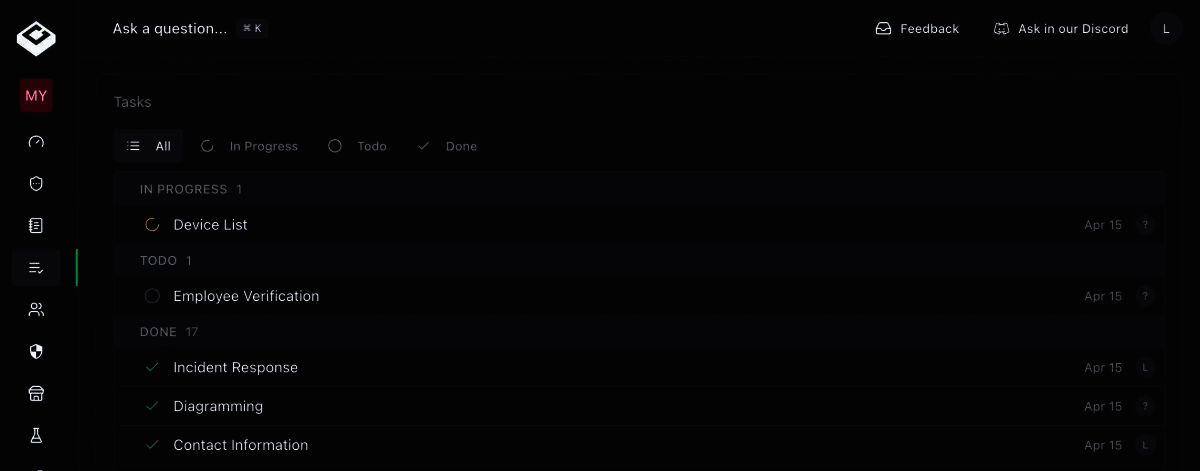
Image source: SoftwareSuggest
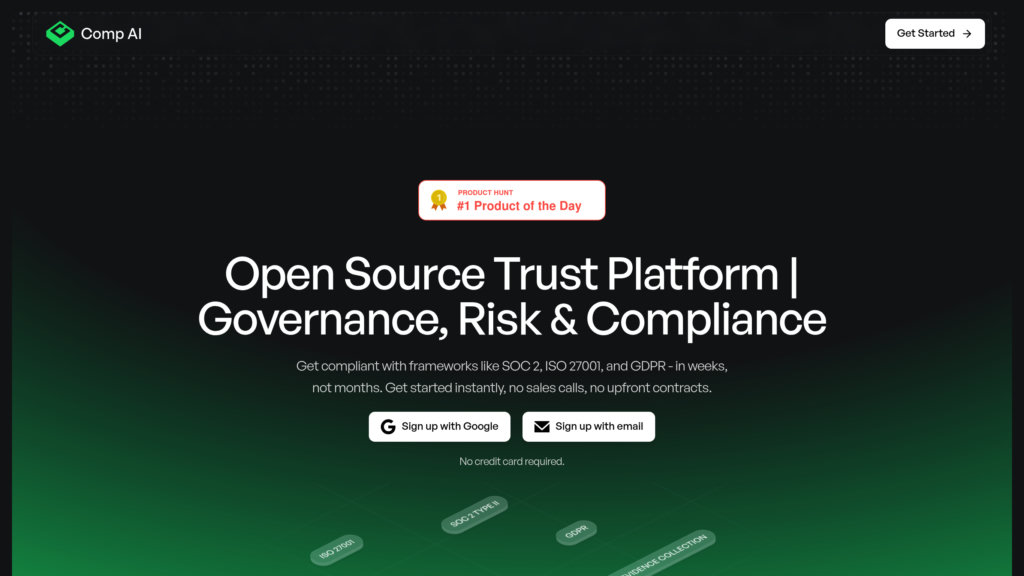
Image source: MOGE
My honest take
For the right buyer, the Comp AI free trial is absolutely worth trying. The product looks most compelling when you already have deals, questionnaires, or audit pressure pushing you to clean up a messy process.
Comp AI earns serious points for the stuff that actually affects a buying decision. The trial is public, the platform leans into open source, official pages highlight bring-your-own-auditor flexibility, and the legal pages now spell out a 100% money-back guarantee plus a 99.5% uptime SLA.
The biggest catch is commitment after the trial. The official terms say paid subscriptions come with a minimum 12-month commitment period, so you should treat the trial like a real evaluation window and not a casual click-around.
That makes the decision pretty simple. If you are already serious about getting compliant and your current setup feels patched together, this looks like a smart next step.
If you are still guessing whether compliance even matters for your business yet, wait. Use free tools or a lighter manual setup first, then come back when the pain is real enough to justify a platform decision.
I would not call Comp AI the safest buy for everyone. I would call it one of the more interesting buys for founders and lean teams that want faster movement, more control, and fewer expensive surprises than the usual compliance stack.
Comp AI free trial FAQ
Is the Comp AI free trial enough to tell if it is a fit?
Yes, if you use it with a real checklist. Connect the systems you actually use, test evidence collection, review the policy workflow, and see whether questionnaires and trust sharing would save your team time.
Is Comp AI cheaper than Vanta or Drata?
Public pricing is still clearer on the lower end for Comp AI than it is for most of the bigger names, but it is not perfectly transparent yet. What is clear is that Vanta, Drata, and Secureframe all push you into quote-led pricing, while Comp AI still gives you a visible trial path and a free or open-source angle.
Can beginners handle it?
Beginners can use it, but that does not mean they should buy it immediately. If you have no active compliance pressure, this can feel like too much tool for the stage you are in.
Should you start the trial now or wait?
Start now if enterprise deals, procurement reviews, or audit prep are already slowing you down. Wait if you are still months away from needing a serious compliance motion and would rather keep the process light for now.
Does the money-back guarantee make the paid plan risk free?
It lowers the risk, but it does not erase the need to read the terms. The guarantee applies during the first year, but the official terms also include onboarding and timing requirements, and paid subscriptions still carry a 12-month commitment.
That is why the best move is not to overthink it. If compliance is already costing you time, deals, or focus, use the trial to see whether Comp AI actually replaces enough manual work to justify the switch.
Get started with Comp AI Filip Konecny Enterprises