
If you are searching for a Comp AI coupon, the blunt answer is simple: I could not verify a public promo code on the official site, the demo flow, or the product docs. That matters because this is not the kind of tool that usually wins you over with a quick 10% discount at checkout.
Comp AI is being sold more like a fast path through painful compliance work than a cheap self-serve app. The official positioning leans on 600+ companies, a money-back guarantee, support for multiple frameworks, and a bring-your-own-auditor model rather than a flashy coupon page.
That does not make it overpriced by default, but it does change the question. Instead of asking, “Can I find a Comp AI coupon,” the smarter question is, “Will this save enough time, deal friction, and consultant pain to be worth buying without one?”
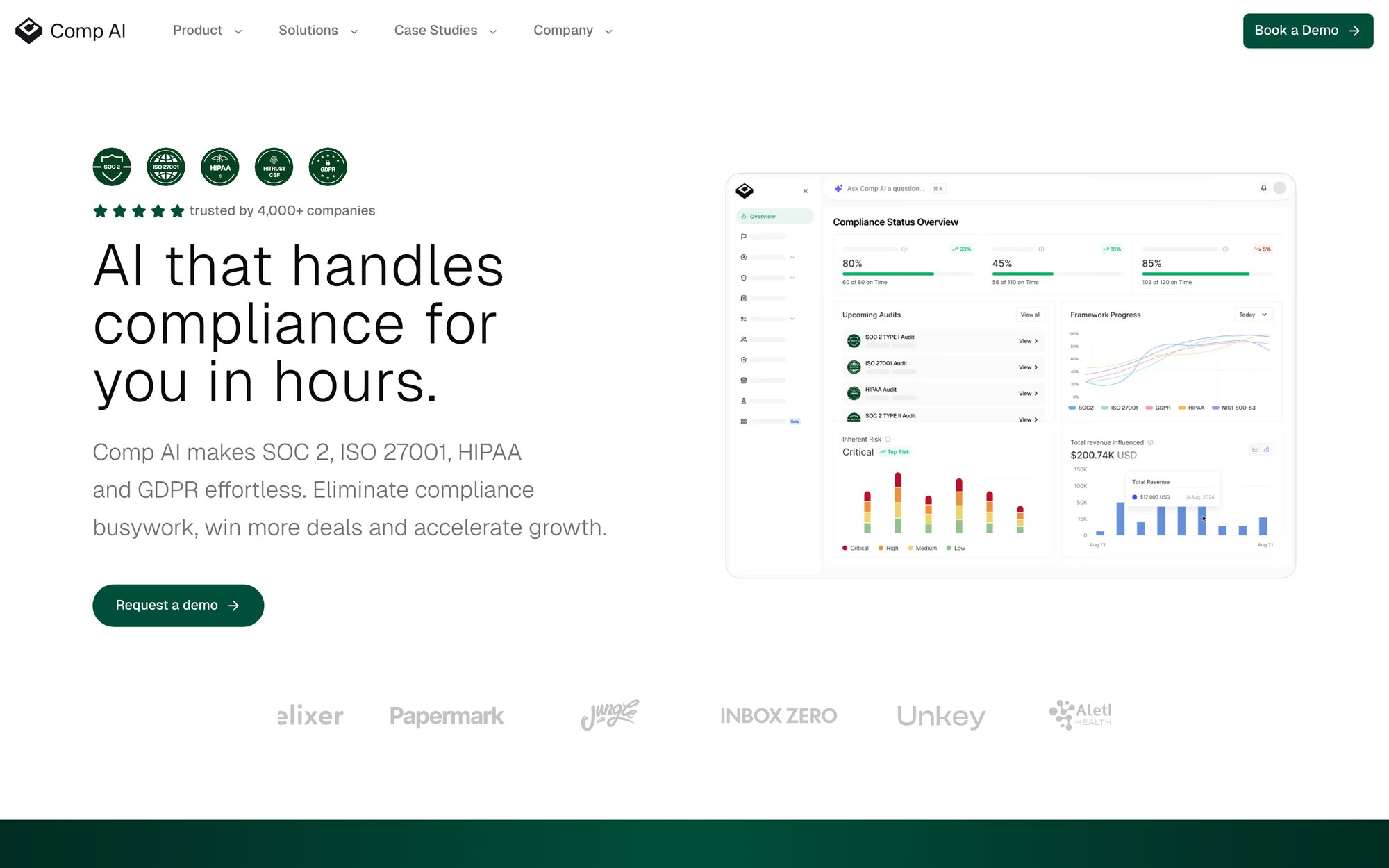
Image source: official product overview
Quick take before you scroll
Comp AI looks strongest for founders, security leads, and ops teams who already know compliance is blocking deals. If that is you, a missing coupon probably matters less than getting evidence collection, policy work, auditor prep, and monitoring out of your team’s way faster.
It looks weaker for tiny teams that are still pre-revenue, not selling into larger buyers yet, or just want the cheapest way to say they are “working on compliance.” If your real goal is to spend as little as possible and figure the rest out later, you will probably care more about cheaper alternatives than a Comp AI discount hunt.
That table is the real setup for this review. You are not deciding whether to save a few dollars on a casual SaaS subscription; you are deciding whether skipping manual compliance work is worth more than the discount you hoped to find.
Check the official demoArticle outline
- Start here: quick verdict so you can tell fast whether this is even in your price and complexity range.
- Next: what you actually get before you buy, the good stuff, pricing and value, and why waiting can cost you time.
- Then compare: alternatives to Comp AI so you can see when a cheaper or broader tool makes more sense.
- Finish the decision: my honest take and FAQ if you still have objections around price, setup, or whether this is overkill.
Here is the lens I am using for the rest of the review. If Comp AI helps you get audit-ready faster, removes a pile of manual evidence work, and helps you stop losing enterprise momentum, it can be worth paying for even without a coupon.
If you mostly want a low-cost checkbox tool, this may feel too hands-on, too sales-led, or simply too much product for where you are right now. That split matters more than the discount question, and it is exactly what the next sections will sort out.
What you actually get before you buy
Comp AI does not feel like a normal self-serve free trial with a coupon box and a quick checkout. The current flow is built around a guided demo, which is honestly the better setup for a tool this technical.
The official demo flow promises a 30-minute walkthrough, a live product demo, an integration walkthrough, and a custom compliance roadmap for your team. The current pages also lean hard on speed, support for more than 250 integrations, a live trust center, and the option to bring your own auditor.
Image source: official Comp AI materials
- A closer look at the dashboard, evidence collection, and framework progress.
- A walkthrough of how your cloud, engineering, HR, and payment tools connect.
- A realistic timeline for your specific framework mix.
- A chance to see whether this replaces enough manual work to justify the cost.
That matters if you are searching for a Comp AI coupon because the real value here is not a tiny discount. It is getting a useful answer on whether this will actually get you audit-ready faster without turning your team into part-time compliance operators.
The downside is obvious. If you just want anonymous pricing and a quick sandbox, Comp AI is more sales-led than product-led, and that will annoy some buyers.
The good stuff
Comp AI looks strongest when the problem is not “I need another dashboard.” It looks strongest when the problem is “my team is buried in evidence requests, policy work, security questionnaires, and deal friction.”
The core promise is pretty clear across the current pages: connect your systems, let the agents collect and organize evidence, generate policies faster, keep monitoring running, and hand an auditor a cleaner workspace. That is the kind of payoff that makes a compliance tool feel worth paying for.
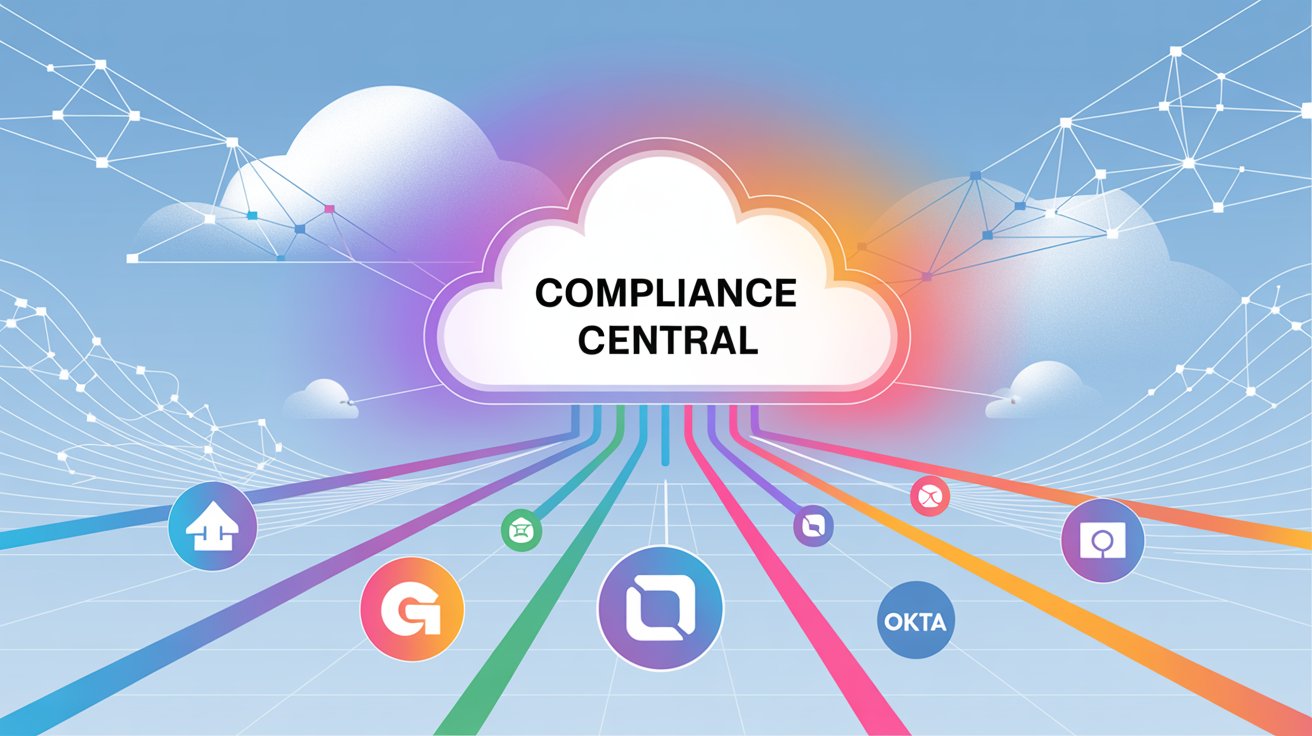
Image source: official Comp AI materials
A few things stand out. Open source is a real differentiator, bring-your-own-auditor lowers lock-in, and the trust center angle is useful if enterprise buyers keep asking for proof before they move forward.
The browser automation piece is also interesting because Comp AI says its agents can collect evidence from tools without APIs. That is one of those details that sounds small until you remember how much compliance work still dies in screenshot hell.
This is not magic, though. You still need someone internally to own the process, review what the platform generates, and make decisions when controls or policies need real human input.
Comp AI also makes the most sense when compliance is attached to revenue. If larger customers are already asking for SOC 2, HIPAA, ISO 27001, or GDPR proof, this starts to look a lot more useful than another year of spreadsheets, docs, and consultant back-and-forth.
Pricing and value
Pricing is where the catch shows up. Comp AI does not give you a clean self-serve pricing page, and the legal terms make it clear fees are handled through an order form, subscriptions carry a minimum 12-month commitment, and renewals roll forward unless canceled in time.
That sounds heavy if you are used to month-to-month SaaS. It sounds a lot more reasonable if you are comparing it to a messy first-year compliance budget that usually includes software, auditor fees, pen tests, setup help, and a painful amount of internal time.
Comp AI’s own current comparison content repeatedly frames the product as lower-cost than the usual compliance stack, with some pages mentioning starting from $3,000 and others framing many SOC 2 scenarios in the $5,000 to $10,000 range. The safer takeaway is simple: expect quote-based pricing, but expect the pitch to be “all-in and faster” rather than “cheap monthly app.”
Here is the more honest comparison with cheaper affiliate tools you might be tempted to use instead. They can absolutely help with pieces of the job, but they do not replace a real compliance platform.
Explore Comp AIThat table is the clearest way to think about value. If you are trying to solve compliance with cheaper general tools, you can absolutely save money up front, but you will still be the one stitching together the process they do not cover.
For the right buyer, this is where Comp AI starts to earn its price. It is not the cheapest tool in the room, but it can be the cheaper decision once manual work, audit prep, and lost sales momentum are part of the equation.
Why getting this sooner can make sense
Waiting usually does not save you much if compliance is already blocking growth. It usually means your team keeps doing the slow version of the work while the deal clock keeps moving.
Comp AI’s current pages keep selling speed for a reason. The demo page lists roughly 10 days as an average path to audit-ready, and several comparison pages push the same idea that audit readiness can move in days or weeks instead of the usual drag.
Image source: official Comp AI materials
That does not mean the audit itself becomes magic. Type II still has a real observation period, auditors still need to do their job, and your team still has to follow through on the controls that matter.
The better reason to move now is simpler than that. If enterprise buyers are already asking for proof and your current setup feels scattered, every month you delay probably costs more in internal drag than a missing Comp AI coupon ever would.
The money-back guarantee helps here too. The current guarantee says subscription fees paid during the first year can be refunded if the eligibility rules are met, which lowers the risk more than a shallow promo code would.
I would not rush into this if you are very early, have no buyer pressure, and mainly want the lowest possible cost. I would take a serious look now if you are already selling into customers who keep asking security questions and you are tired of treating compliance like a side project.
Get started with Comp AIAlternatives to Comp AI
Comp AI is not the only serious option here, and you should compare it before you buy. The real split is simple: do you want a lower-friction, all-in option with open-source flexibility, a bigger trust platform with demo pricing, or a service-heavy vendor that bundles more of the audit motion itself.
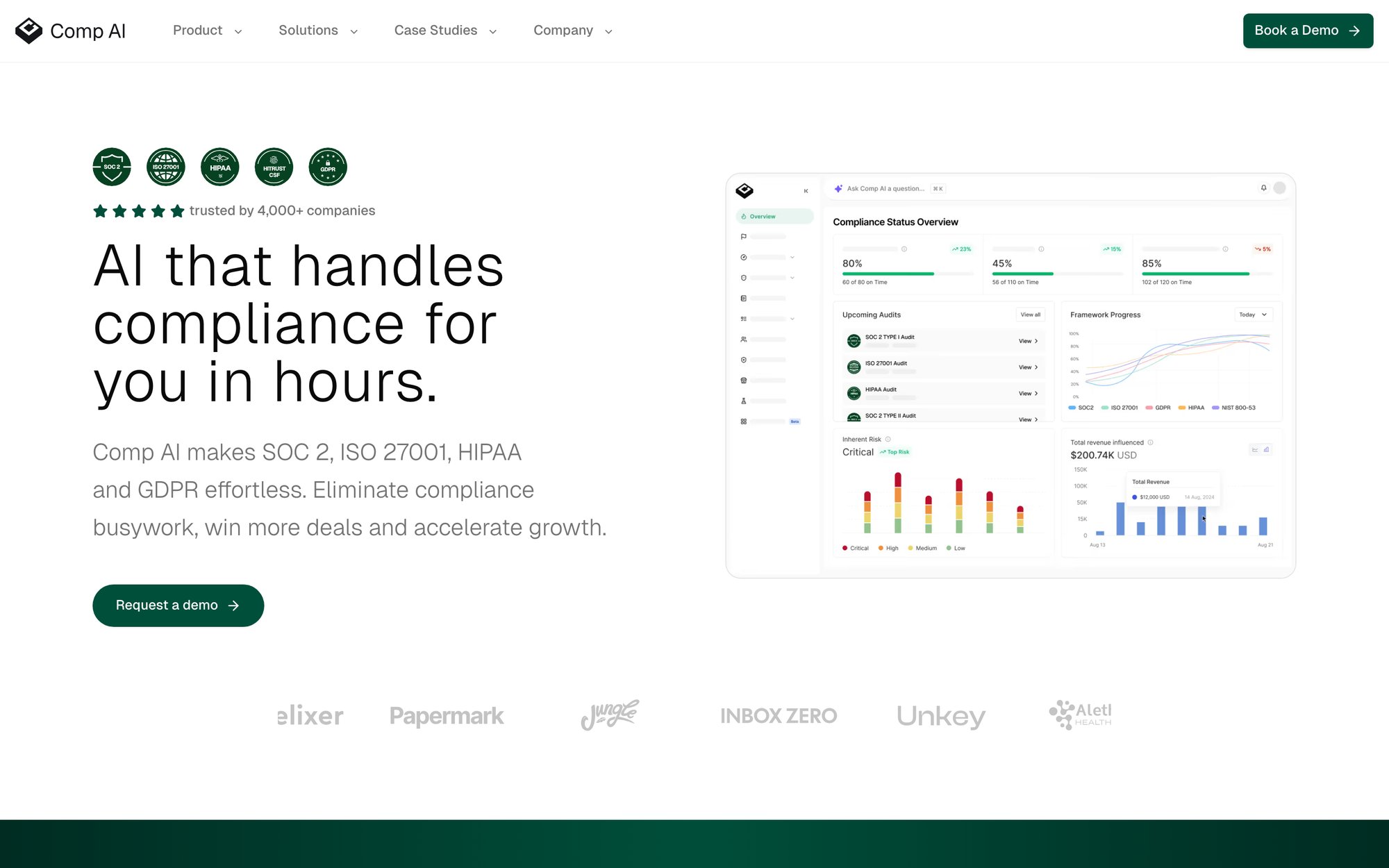
Image source: official Comp AI overview
This is where the missing Comp AI coupon matters less than people think. Once you compare the buying model, the setup style, and how much manual work each option leaves on your team, the decision gets a lot clearer.
Check the official demoChoose Comp AI if you want the most practical shot at getting compliant without building a mini compliance department inside your company. Choose a cheaper alternative or even a manual path if you are very early, not under buyer pressure yet, and mostly trying to spend as little as possible.
Choose a broader all-in-one alternative like Thoropass if you want a vendor that is more deeply tied into the audit motion itself. Choose Vanta or Drata if brand familiarity, larger-platform feel, or internal GRC depth matter more to you than getting the leanest all-in deal.
My honest take
Comp AI looks worth it for the right buyer even without a coupon. The right buyer is a team that already knows compliance is slowing deals down and wants a faster path without paying for more vendor sprawl.
Image source: official Comp AI materials
The best part of the offer is not the headline promise. It is the combination of evidence collection, policy help, framework coverage, ongoing monitoring, auditor flexibility, and a guarantee that lowers the risk of trying it.
The catch is still real. You are not buying a cheap swipe-your-card tool, and you should expect a serious sales conversation instead of a casual trial with a Comp AI coupon code.
That does not make it a bad buy. It makes it a tool you should buy only when the business case is obvious, which usually means revenue, security reviews, procurement friction, or audit prep are already costing you time every week.
If that sounds like your situation, I would not keep waiting for a better discount. I would see current pricing and the live demo flow and decide whether the all-in quote beats the manual mess you are dealing with now.
If you are still pre-pressure and mostly curious, wait. If customers are already asking for proof and your team is tired of doing compliance the hard way, this looks like a smart time to move.
FAQ
Image source: official Comp AI materials
Is there a real Comp AI coupon?
I could not verify a public coupon or promo code path that looks like a normal SaaS discount. Comp AI sells more through quote-based positioning, bundled value, and the guarantee than through checkout promos.
Is Comp AI still worth it without a coupon?
Yes, if compliance is already tied to revenue, procurement, or audit deadlines. No, if you are only browsing and do not have a real reason to speed this up yet.
Does Comp AI replace an auditor?
No. It is better to think of it as the tool that gets your evidence, controls, policies, and monitoring into a shape an auditor can work with faster.
Is this overkill for a tiny startup?
Sometimes, yes. If you are very early and no buyer, partner, or regulator is pushing for compliance yet, a full platform can be premature even if the product is good.
Does the guarantee make the decision easier?
It helps because the guarantee is more meaningful than a tiny one-time discount. It still comes with eligibility rules, and it is limited to subscription fees paid during the first 12 months.
That is the cleanest way to look at the Comp AI coupon question. A promo code is probably not the lever that matters here; the bigger lever is whether this gets you compliant faster for less total pain than the other routes on the table.
Get started with Comp AI Filip Konecny Enterprises