
Comp AI cost only matters when you compare it to the work it replaces. If the platform gets your team audit-ready faster, cuts manual evidence chasing, and helps you stop losing momentum with bigger buyers, the price can make sense much faster than a cheap-looking DIY route.
Comp AI looks appealing because it is being positioned as a lower-cost way to handle SOC 2, ISO 27001, HIPAA, GDPR, and related compliance work without dragging your team through months of manual prep. The catch is simple: public pricing signals are out there, but you still are not getting a perfectly clean self-serve pricing page that tells every buyer exactly what they will pay.
That makes this a very specific kind of purchase. If compliance is already tied to enterprise deals, vendor reviews, or customer trust, delaying the decision can cost more than the software. If you are still early, still validating your offer, or nowhere near serious buyer security questionnaires, this could be too much too soon.
Article outline
Use these page jumps if you already know what you want to check first.
- Start with the money question: go to the quick verdict if you want the fast answer on whether the Comp AI cost looks justified at all.
- Then look at the actual offer: jump to what you get, the good stuff, pricing and value, and why buying sooner can make sense.
- Finish with the decision: jump to alternatives, the final verdict, and the FAQ if you are close to choosing between Comp AI and something cheaper or broader.
Quick verdict before you keep reading
Comp AI is easiest to justify when compliance is already slowing down sales, onboarding, or procurement. It looks built for teams that want the platform, the workflow, and real support together instead of stitching together templates, spreadsheets, and outside help.
The pricing story is strong, but it is not perfectly transparent. Official product content repeatedly points to packages that start around $3,000, while software directories still push buyers toward contacting sales for exact pricing.
That is not automatically a deal-breaker. It just means Comp AI feels more like a guided purchase than a swipe-your-card SaaS product, which is fine for serious compliance buyers and annoying for people who only want a fast public plan page.
Who this review is for
This review is for founders, operators, security owners, and technical teams trying to decide whether the Comp AI cost is lower than the cost of dragging compliance out for another quarter. It is also for buyers who are comparing it against Vanta, Drata, Secureframe, Sprinto, or a manual path.
If you only need a few policy documents or a lightweight starting point, this may be overkill. If your team keeps hearing “send your SOC 2” or “complete our security review” from prospects, Comp AI becomes much easier to take seriously because speed starts to matter more than sticker price.
The screenshot below makes the pitch easier to understand. Comp AI is not trying to be a tiny checklist tool. It is trying to be the place where frameworks, evidence, monitoring, policies, and audit prep live together so your team is not babysitting the process by hand.
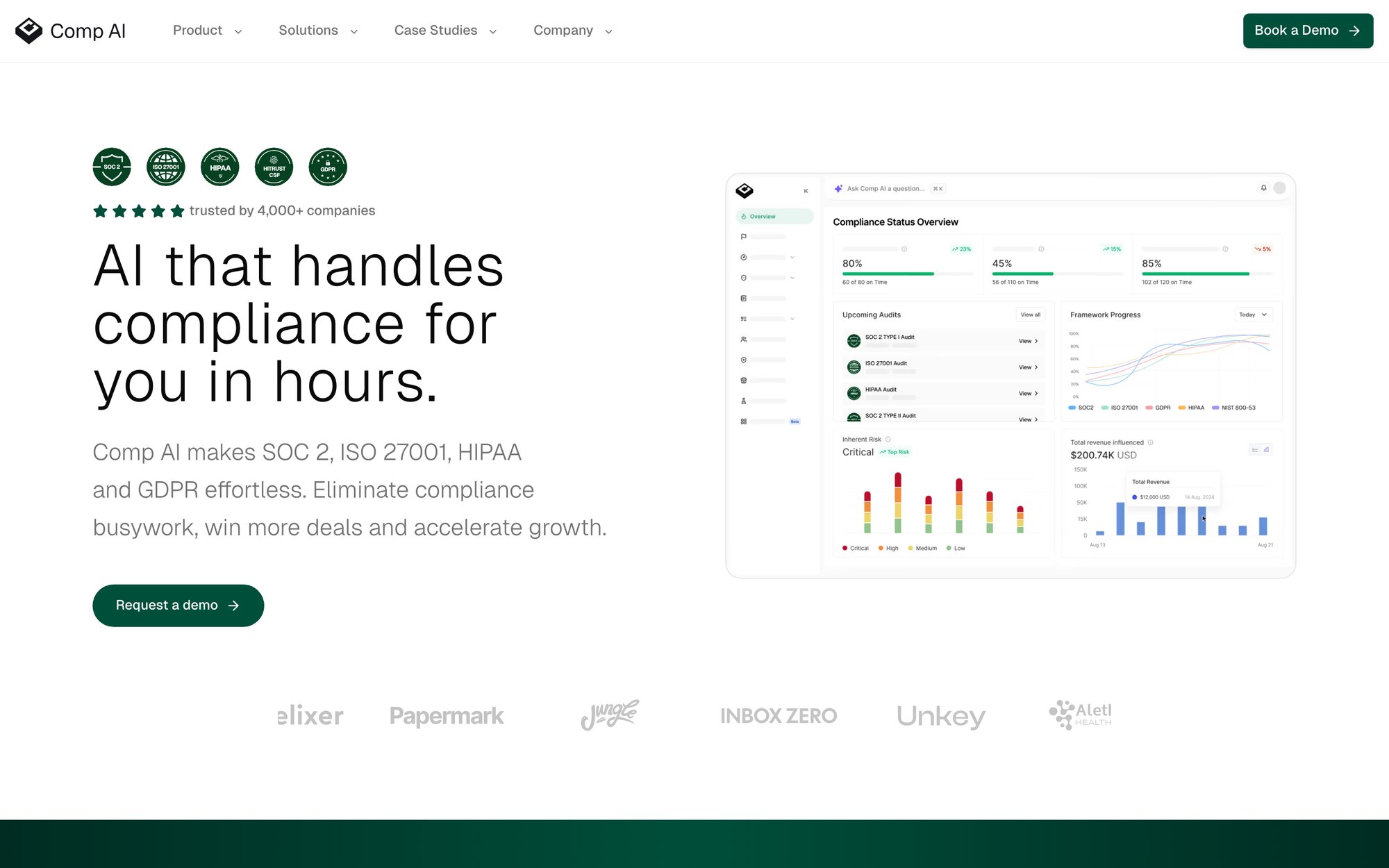
Image source: Comp AI
So the opening answer is pretty simple. Comp AI looks most worth it for teams that already know compliance is a bottleneck and want to pay to move faster. Next, I’ll break down what you actually get for the money, where the product earns its price, and where a cheaper option may still be the smarter buy.
What you actually get before you pay
Comp AI does not look like a typical swipe-your-card SaaS trial. The public-facing experience leans demo-first, while product directory listings still describe a free trial and free open-source access, so most serious buyers should expect a guided evaluation instead of a polished self-serve sandbox.
That matters because the paid value is not just the software. You are really evaluating whether Comp AI can take evidence collection, policy work, monitoring, vendor reviews, audit prep, and buyer-facing trust workflows off your team’s plate fast enough to justify the spend.
If you were hoping for a simple “try it free for 14 days and poke around” setup, this may feel less convenient than mainstream SaaS. If you want hands-on help and a faster path to a real compliance outcome, the guided approach is easier to justify because you are judging the service and speed, not just the interface.
The visible product scope is strong. Current public materials point to AI-powered evidence collection, policy generation, risk and vendor management, monitoring, training, a trust center, and support for the big frameworks most teams actually care about first, including SOC 2, ISO 27001, HIPAA, and GDPR.
Image source: Comp AI
The good stuff
Speed is the biggest reason Comp AI starts to earn its price. Official product content keeps pushing the same basic promise: get audit-ready much faster than the normal spreadsheet-plus-consultant mess, which is exactly what the right buyer wants to pay for.
That payoff is practical, not abstract. Instead of chasing screenshots, exporting settings, updating policies by hand, and trying to remember what changed since the last review, the platform is built to keep collecting evidence and monitoring your environment in the background.
That can replace a surprising amount of painful work. If your security lead, founder, or engineer is still acting like an unpaid compliance coordinator, this is the part of the Comp AI cost discussion that matters most.
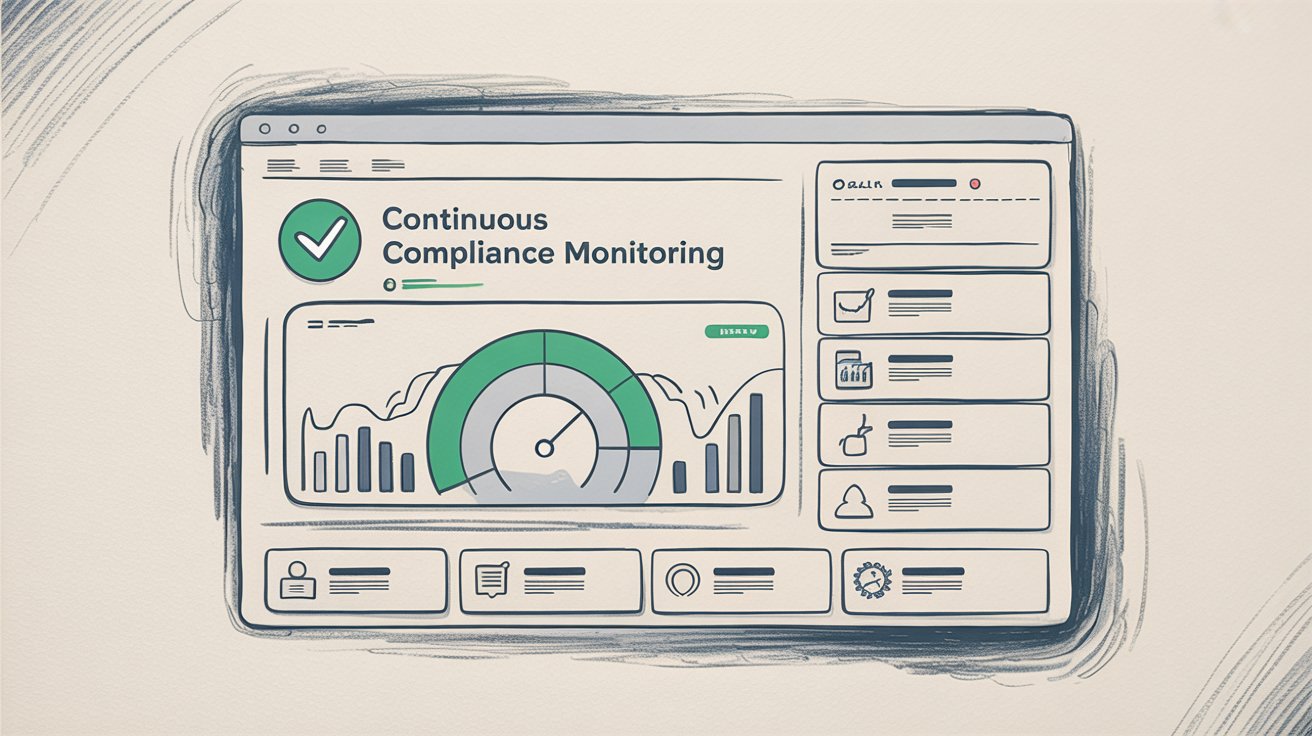
Image source: Comp AI
The other strong point is that Comp AI is not pitching a dashboard alone. Public feature pages keep stacking software with white-glove help, bring-your-own-auditor flexibility, and a money-back guarantee, which makes the offer easier to take seriously if you care more about getting compliant than tinkering with settings.
The trust center angle is also more useful than it sounds. A live buyer-facing portal and questionnaire help can save your team from repeating the same security answers over and over, which means the tool is helping with sales friction, not just audits.
Open-source positioning is another real plus for technical buyers. If you hate black-box compliance vendors and want more visibility into what you are adopting, Comp AI looks more appealing than a platform that asks for trust while showing you very little.
There are still limits. You still need someone internally to own decisions, scope controls, and fix real security gaps, and one recent G2 review praised the value but said some integrations were a little complicated.
That is an important reality check. Comp AI can shrink the admin burden hard, but it does not magically remove the need to do serious security work when your environment is messy.
Image source: Comp AI
Pricing and value
Comp AI is cheaper-looking than a lot of the quote-led compliance market, but the public pricing story is still a little messy. Official Comp AI pages repeatedly point to entry pricing around $3,000 and often frame the all-in cost for common SOC 2 paths in the $5,000 to $10,000 range, while Vanta and Drata still keep official pricing behind a sales conversation and recent market estimates put their starting points meaningfully higher.
See current pricingThis is where Comp AI gets compelling. If the product really lands near the lower end of its current public pricing signals for your scope, it can undercut the usual software-plus-audit-plus-consultant stack by a lot.
The catch is that the exact number still depends on your situation. If you want a perfectly transparent checkout page, Comp AI is not there yet, and that hesitation is fair.
Still, the value case is easy to see for the right buyer. You are not paying just to have a dashboard; you are paying to stop burning senior team time on repeatable compliance chores and to get through security reviews faster.
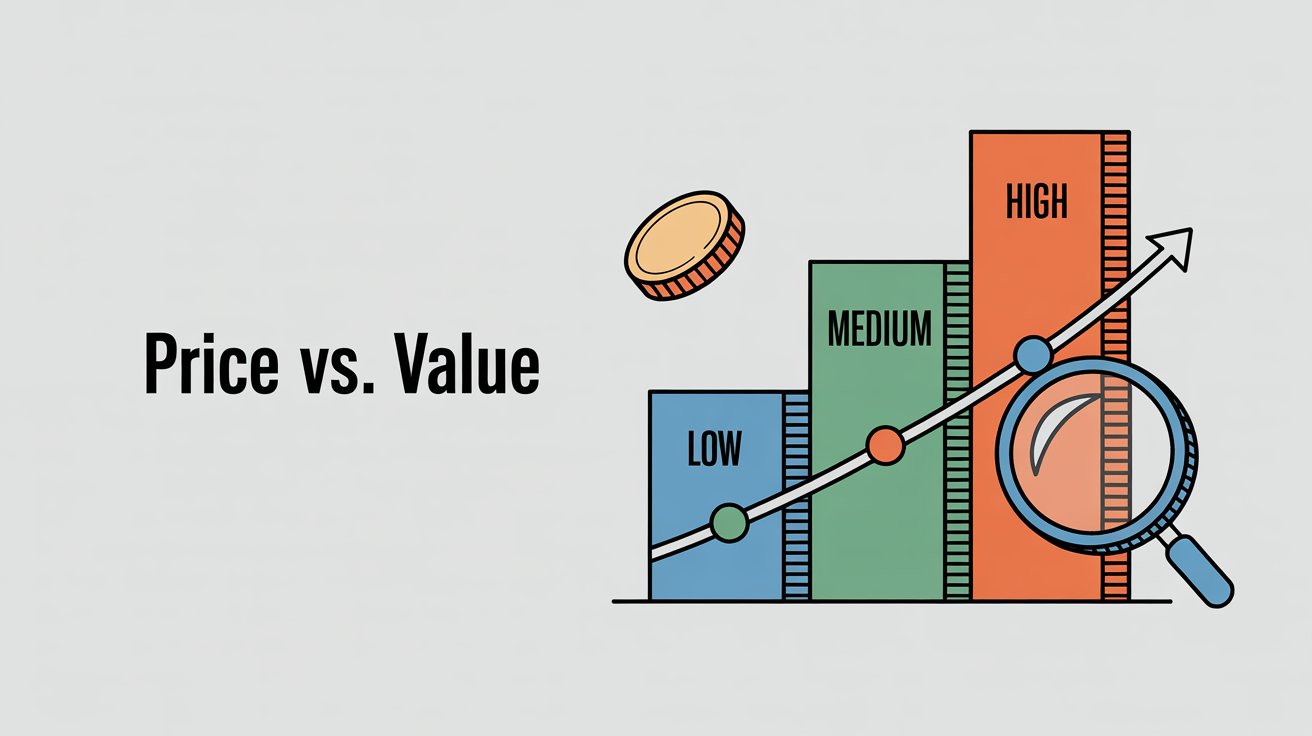
Image source: Comp AI
Why buying sooner can make sense
Waiting is expensive when compliance is already tied to revenue. If prospects are asking for SOC 2, security questionnaires, or proof of controls right now, every extra month of manual prep keeps sales, legal, and engineering stuck in the same loop.
That is where the Comp AI cost can look small next to the delay. At some point, the drag from stalled deals, repeated evidence requests, and engineer time costs more than the software does.
The ongoing side matters too. A platform built around continuous evidence and monitoring is easier to justify than a one-time scramble because renewals and future audits do not start from zero again.
You should still wait if you are too early. If no buyer, partner, investor, or regulator is pushing you toward formal compliance yet, paying now may be premature and a lighter manual setup could be enough for the moment.
You should move now if compliance is already on the critical path. In that situation, getting started with Comp AI is easier to justify because the software is not just a nice-to-have tool anymore; it is part of getting deals unstuck.

Image source: Comp AI
Explore Comp AIAlternatives worth looking at before you decide
Comp AI is not the only way to handle compliance automation, and pretending otherwise would make this review less useful. The better question is whether the Comp AI cost gives you the fastest clean path to audit readiness for your stage, budget, and sales pressure.
The strongest alternatives are Vanta, Drata, and Secureframe. They all solve the same big problem in different ways, but they do not all make the same sense for a startup or lean team trying to get serious about SOC 2, ISO 27001, HIPAA, or GDPR without swallowing a painful enterprise bill.
Explore Comp AIChoose Comp AI if you want the strongest mix of speed, lower visible cost, and hands-on compliance help without jumping straight into a bigger enterprise-style vendor. Choose a cheaper manual route only if you are still early and can live with slower progress, and choose a broader enterprise-style option like Vanta, Drata, or Secureframe if brand familiarity and internal procurement comfort matter more than getting started at the lowest realistic cost.
My honest take on the Comp AI cost
Comp AI looks worth the money for the right buyer. If compliance is already affecting enterprise sales, security reviews, partnerships, or renewals, the Comp AI cost feels easier to defend because the product is trying to replace tedious work, not just give you another dashboard to babysit.
The strongest part of the offer is the balance. You get automation, multi-framework support, a trust-center angle, open-source transparency, bring-your-own-auditor flexibility, and public pricing signals that look more startup-friendly than several well-known alternatives.
The weakest part is the buying experience. Comp AI still does not give you the kind of perfect self-serve pricing clarity some buyers want, so cautious teams will probably need a real conversation before feeling fully comfortable.
That does not kill the deal. It just means this is better for buyers who care more about getting compliant fast than they do about browsing a neat pricing calculator alone on a Friday night.
I would not push this on a founder who is months away from needing formal compliance. If you do not have customer pressure yet, the smarter move may be to wait, keep your security basics clean, and come back when the need is tied to revenue instead of curiosity.
I would take a much harder look if security reviews are already eating team time. At that point, waiting usually means you keep paying for the same delay in labor, lost focus, and slower deals.
So here is the clean answer. Comp AI cost is easiest to justify when compliance has moved from “someday” to “right now,” and it looks like one of the more compelling options for teams that want a serious result without defaulting to the biggest-name vendor first.
For that buyer, this is not a maybe. Comp AI looks like a smart next step.
FAQ
Is Comp AI actually cheaper than Vanta or Drata?
Public Comp AI materials point to lower entry pricing and lower common all-in cost ranges than what many buyers expect from Vanta or Drata. Vanta, Drata, and Secureframe still keep official pricing behind a quote process, so Comp AI looks cheaper on current public signals, but your exact scope still matters.
Is Comp AI too much for a very early startup?
Yes, it can be. If nobody is asking for SOC 2, ISO 27001, HIPAA, GDPR, or a real trust workflow yet, paying now may be premature and a lighter manual path can be enough for the moment.
Can Comp AI replace consultants and auditors completely?
No. It looks designed to reduce a lot of the manual compliance work, but you still need internal ownership and you still need an auditor for the formal audit piece.
Should you buy now or wait?
Buy now if compliance is already tied to closing deals, passing vendor reviews, or answering security questionnaires faster. Wait if you are still early, still validating your offer, and have no real compliance pressure yet.
Get started with Comp AI Filip Konecny Enterprises