
Anything gets harder to judge the minute you stop looking at it like a fun AI builder and start asking the real buyer question: what will this cost once the app matters? The self-serve pricing is public and easy enough to follow, but the actual Business or Enterprise side is much less transparent, and that changes whether this feels like a quick yes or a frustrating maybe.
That matters more than it sounds. If you are a founder, operator, or small team that can test on a public plan first, Anything looks fairly approachable. If you need a clean enterprise quote, procurement-friendly predictability, and all the extras spelled out before anyone touches the product, you are going to hit friction fast.
This review is here to make that decision easier. I’m going to show you where the pricing looks fair, where the lack of public enterprise detail becomes a real downside, and whether Anything is smart to try now, better to revisit later, or easy to skip if your buying process is more rigid.
Article outline
Here is how this review is structured so you can jump straight to the part that matches how close you are to buying.
- Start here: the quick verdict on pricing — I’ll break down what is publicly listed, what is not, and whether the missing public enterprise quote should bother you.
- Next: what you actually get for the money — the paid plans, the useful stuff, the real value, and how the price compares with other tools that can solve a similar problem.
- Last: alternatives and the final call — who should choose Anything, who should go cheaper, and whether now is the right time to move.
My quick take on Anything enterprise pricing
Anything is easier to like when you judge it as a platform you can grow into instead of a tool that should hand you a polished enterprise quote on day one. The public plans give you a real starting point, which already puts it ahead of products that force you into a demo just to learn whether the budget is even in range.
The catch is simple. The company publicly lists Free, Pro, Max, and top-off credit pricing, but it pushes buyers toward contacting the team for Business or Enterprise plans, custom credit limits, or team needs. That means the pricing story is clear enough for a trial and still incomplete for a formal enterprise buying process.
For the right buyer, that is not a deal-breaker. It actually makes the platform easier to test because you can prove whether the product saves enough time before you bother with a larger contract. For the wrong buyer, it is annoying because the missing enterprise detail slows down internal approval before the real evaluation even starts.
Who this pricing model already fits
Anything makes the most sense for people who want to move before they hold a six-week buying committee. A founder building a real MVP, a small internal team replacing manual processes, or a company testing whether one platform can cover design, backend, database, payments, hosting, and publishing can get enough pricing clarity to make a sensible first decision.
It makes less sense for buyers who need seat-based math, public enterprise packaging, and a polished compliance-heavy sales motion before a pilot starts. Those teams may still end up liking the platform, but the missing public enterprise details create extra work, and extra work slows deals down.
That is why the rest of this review matters. A vague enterprise quote is easier to tolerate when the product replaces enough tools and busywork to justify the spend fast. It is much harder to tolerate when the feature set looks nice on paper but does not actually remove much from your stack.
What you get before you pay
There is no classic free trial here. Anything’s subscription page frames it as a free tier with 3K credits and daily message limits, which is enough to see how the builder thinks without committing to a paid plan.
That setup is better than a short seven-day trial if your goal is simple validation. It is worse if you want to stress-test a serious product, because the free tier is there to prove the concept, not to carry a real build all the way to launch.
Paid access starts to feel real on Pro. The public plan details say Pro adds private projects, App Store publishing, custom domains, and payments with Stripe and RevenueCat, which is the point where this stops being a toy and starts looking like a launch tool.
Mobile matters here. Anything’s mobile getting-started guide says you need a Pro account to build mobile apps, so the cheapest paid plan is effectively the minimum if your project needs to live on a phone instead of just in a browser.
The bigger Max tiers are not vague “contact sales” mystery boxes. Anything lists them publicly, starting at Max 200k for $199 annually or $239 monthly and climbing through larger credit bundles up to Max 900k, which helps you estimate serious usage before you ask about a team deal.
If you came here specifically looking for Anything enterprise pricing, that is the practical answer. The public tiers show you the ceiling for self-serve buying, and the credits docs say custom credit limits or team plans require reaching out directly.
The good stuff
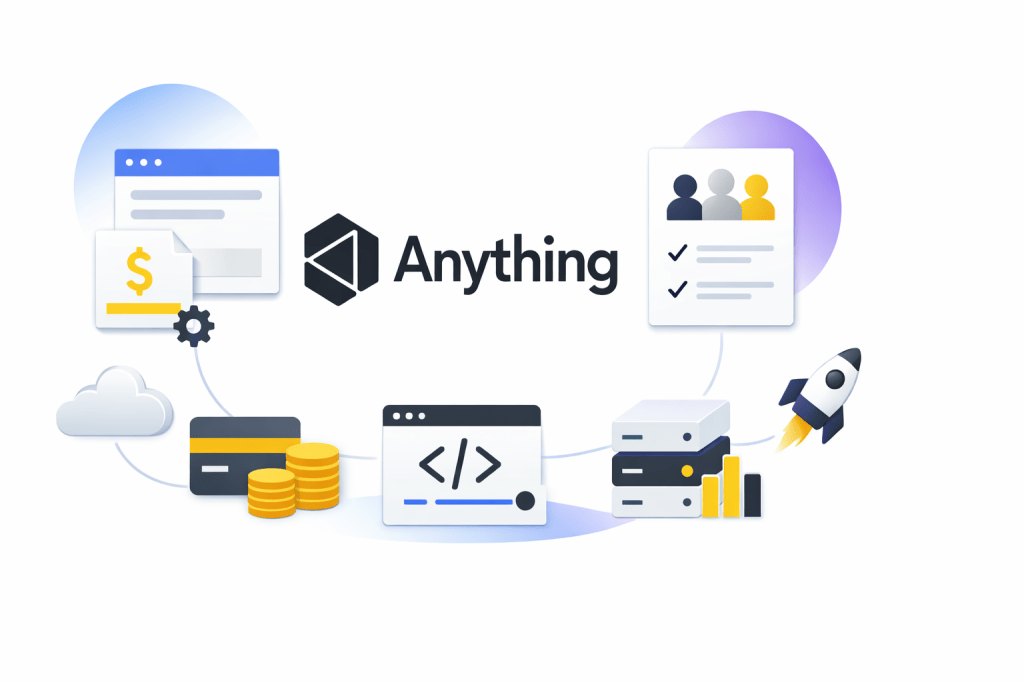
Anything gets interesting because it does more than generate pretty screens. The launch post and the product docs keep coming back to the same payoff: frontend, backend, auth, payments, database, uploads, hosting, and integrations are built into the workflow instead of being separate projects.
That is the real reason the price can make sense. You are not just paying for an AI chat box; you are paying to skip a lot of setup that normally eats time before the app even becomes usable.
Testing is another strong point. Anything’s testing guide says the iPhone app gives you a native preview with camera, location, notifications, and other device features, which is much more useful than guessing from a browser preview and hoping the mobile build behaves later.
The iOS launch path also looks more thought through than a lot of prompt-based builders. Its mobile docs describe a built-in App Store review check, and the same page notes the Apple Developer Account requirement at $99 per year, so the platform is at least honest that shipping a paid app still has real-world costs outside the subscription.
Monetization is built in well enough to matter. Stripe docs cover web payments, and RevenueCat docs cover mobile subscriptions, which means you can go from idea to charging users without stitching together a separate payments stack first.
Code export helps with trust. Anything says you can download your source code anytime, which matters if you hate the idea of getting trapped in a builder you can never leave.
The weak spot is credit burn. Anything explains that more advanced modes and more complex prompts consume more credits, and that is the part that can make the product feel cheap at first and expensive a week later if your prompts are messy or your project scope keeps growing.
Android is also not fully polished yet. The Android publishing docs say integrated publishing is still coming and manual Expo-based publishing is the current route, so iOS buyers get the cleaner experience today.
How the price stacks up against other tools you could buy instead
This comparison matters because a lot of buyers are not choosing between Anything and “nothing.” They are choosing between building a real product, buying a funnel tool, buying a CRM-heavy all-in-one, or keeping things simple with a cheaper online business stack.
The entry prices are not even in the same category. Anything Pro 20k is listed at $19 annually or $24 monthly, while ClickFunnels starts at $97, GoHighLevel Starter starts at $97, and Systeme.io starts free and moves to $17 on Startup.
The table makes the decision easier. Anything is the better buy when you need a real product, client portal, or mobile app, not just a funnel or CRM setup.
Systeme.io is the obvious cheaper option if your business mostly needs pages, email, checkout, and simple automations. ClickFunnels or GoHighLevel make more sense when selling and client management matter more than product building.
Why buying now can make sense
Anything is easier to justify now than later if you already know what you want to build. The public pricing is low enough on Pro that you can test serious fit without pretending you need an enterprise contract before you have even shipped one useful thing.
Waiting usually keeps you in the same loop. You keep patching spreadsheets, forms, manual follow-up, and half-finished prototypes instead of building the thing that tells you whether the idea is real.
I would not rush into Max unless you already feel the ceiling on Pro. The credit rules and the tier breakdown make it pretty clear that bigger plans are best for people already building often, not for curious dabblers.
The cleanest move for most buyers is simple. Start on free if you are still kicking the tires, move to Pro when the project is real, and only start the team or custom-plan conversation once your usage pattern proves that the public tiers are too small.
That is what makes Anything’s pricing easier to live with than it first appears. You do not have to solve the whole enterprise question on day one, but you can still move fast enough to know whether this is worth scaling.
Alternatives worth looking at
Anything is not the obvious best choice for every buyer. It wins when you want to build an actual product fast, but it loses some appeal when your real need is a funnel stack, a CRM-heavy system, or the cheapest possible way to sell online.
That is why the pricing question matters so much here. If you are comparing Anything enterprise pricing against tools that solve a different problem, you can end up calling it expensive or cheap for the wrong reason.
Choose Anything if you need to build a real product and want one tool to cover more of the stack. Choose Systeme.io if price matters most and your business is basically pages, email, and checkout. Choose GoHighLevel if you run client operations, and choose ClickFunnels if your money is made through funnels rather than software.
My honest take
Anything looks strongest when you judge it against the work it can replace. If your alternative is hiring developers sooner than you want, juggling separate hosting, payments, auth, and deployment tools, or dragging an MVP out for months, the price becomes much easier to defend.
The biggest objection is still fair. Anything enterprise pricing is not fully public, so larger teams that need exact upfront numbers, procurement-friendly packaging, or a neat enterprise comparison page are going to feel some friction.
That does not make it a bad buy. It just means the platform is easier to recommend to fast-moving founders and smaller teams than to slow, process-heavy companies that want every contract detail spelled out before a test even starts.
I would not push this on someone who only needs a landing page and a checkout form. I would push it on someone who already knows they need a product, wants to stop patching tools together, and would rather get the build moving now than keep talking about it for another month.
That is where this starts to earn attention. For the right buyer, Anything is not just cheaper than custom development; it is also simpler than turning a stack of unrelated software into a fragile substitute for an actual product.
Is it worth trying now?
Yes, if your project is real. The public self-serve pricing is low enough to test serious fit before you go anywhere near a bigger plan, and that lowers the risk more than a vague enterprise sales pitch usually does.
No, if you are still in browsing mode and do not know what you want to build. Credit-based tools get expensive faster when the prompts are random, the scope keeps changing, and you are treating the platform like entertainment instead of a build environment.
Wait if your company cannot move without a formal enterprise quote, security review, and internal sign-off first. In that situation, the missing public enterprise detail is not a small annoyance; it becomes a real buying obstacle.
Start now if you already have the product idea, the use case, and the willingness to ship. Waiting usually means you stay stuck in manual work, half-built prototypes, or endless tool comparisons while someone else gets their version live first.
FAQ
Does Anything have public enterprise pricing?
Not in a fully detailed way. The public pricing page shows the self-serve plans clearly, but team or custom pricing is still a contact-sales conversation.
Is Anything expensive?
It is cheap if it replaces a lot of setup and helps you launch faster. It feels expensive if you only need a simple funnel, a basic marketing stack, or you waste credits on messy experiments that never turn into a product.
Is this good for beginners?
Beginners can use it, but the better question is whether the beginner has a real project. If you do, the platform makes more sense. If you do not, a cheaper and simpler tool is usually the smarter move.
Should I pick Anything or a cheaper tool?
Pick Anything when you need product-building depth. Pick a cheaper tool like Systeme.io when your real goal is just selling through pages, email, and automations without building an actual app.
What is the best alternative if Anything is not the right fit?
That depends on what you are buying for. ClickFunnels is stronger for funnel selling, GoHighLevel is stronger for agency operations, and Systeme.io is stronger if your main goal is keeping software costs low.
Should you move on this?
Anything is worth a real look if you are serious about building, not just researching. The strongest case for buying is simple: you want to move faster, keep more of the stack in one place, and stop delaying the product because the setup feels bigger than the idea.
Skip it if you need a cheap funnel tool or a fully transparent enterprise quote before you touch the product. Everyone else should at least see how far the platform gets them before ruling it out.
 Filip Konecny Enterprises