
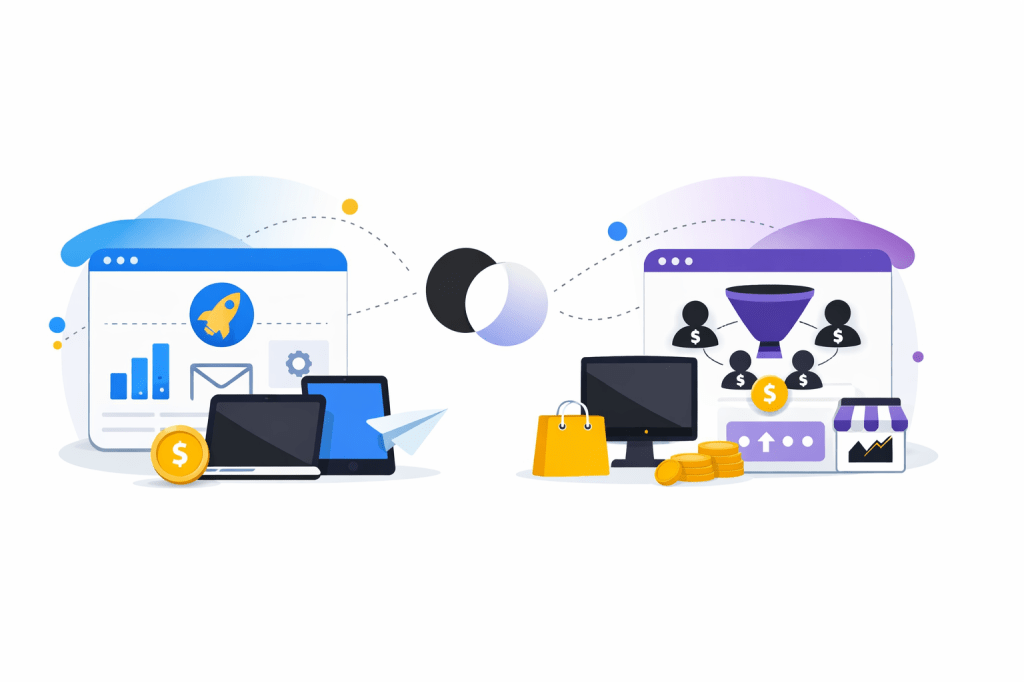
Choosing between systeme.io and ClickFunnels is not a tiny software decision. It changes how you build funnels, collect leads, send emails, deliver courses, manage affiliates, and control your costs month after month. When one platform becomes the operating system for your online business, switching later is possible, but it is rarely painless.
That is why this comparison needs to go deeper than surface-level feature lists. Systeme.io now says it powers 500,000+ entrepreneurs, while ClickFunnels positions its current plans around unlimited funnels and higher contact allowances. On top of that, recent G2 comparison data shows reviewers leaning toward systeme.io for meeting business needs and ongoing support, which immediately tells you this is not just a price comparison. It is a philosophy comparison: simplicity and affordability on one side, deeper expansion and sales infrastructure on the other.
Article Outline
- Part 1: Why It Matters
- Part 2: Framework Overview
- Part 3: Core Components
- Part 4: Professional Implementation
- Part 5: Analytics and Optimization
- Part 6: Final Verdict and FAQ
Why It Matters
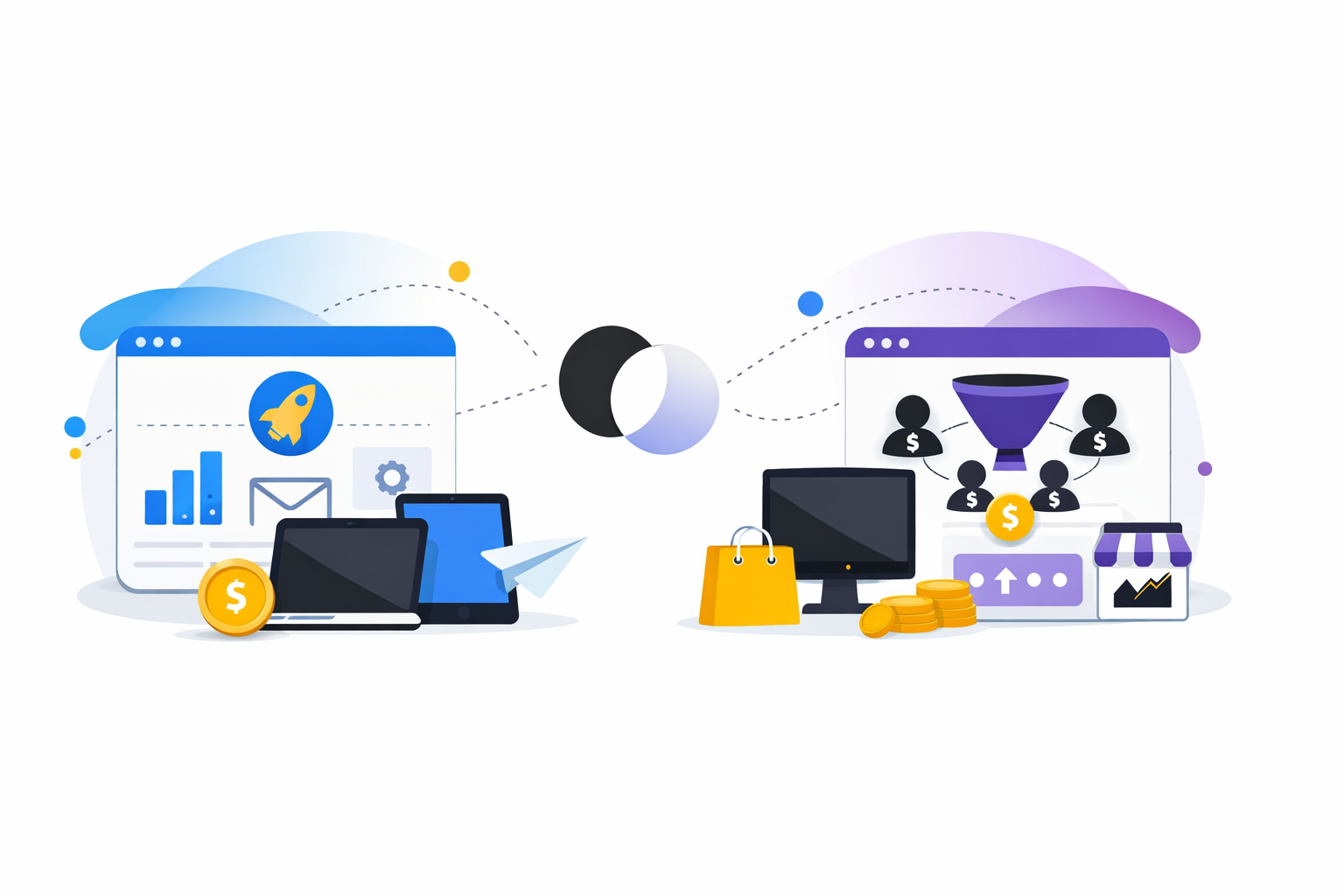
The reason this comparison matters so much is simple: both platforms promise to replace a pile of separate tools, but they do it with very different tradeoffs. Systeme.io includes unlimited email sending, no transaction fees, unlimited students, and its own affiliate program across all plans, which makes it immediately attractive if you care about keeping overhead low while still running funnels, courses, and email from one dashboard. That matters most for solo operators, creators, consultants, and small teams that do not want their software stack eating their margins before the funnel even works.
ClickFunnels matters for a different reason. Its current pricing page shows the entry plan at $97 per month, with 10,000 contacts, 50,000 emails per month, three courses, and unlimited funnels, and the platform has expanded far beyond the old image of a simple page builder. Its Opportunities app, built-in analytics environment, and native affiliate center on higher tiers make it a more serious contender for businesses that want to organize pipeline visibility, revenue tracking, and partner-led growth inside the same ecosystem.
There is also a practical credibility angle here. Systeme.io holds a 4.8-star rating on G2 from 744 reviews, while ClickFunnels shows a 4.5 overall rating on Capterra from 665 reviews. Those numbers do not decide the winner for you, but they do tell you something important: both platforms are established enough that your decision should be based on fit, not hype.
Framework Overview
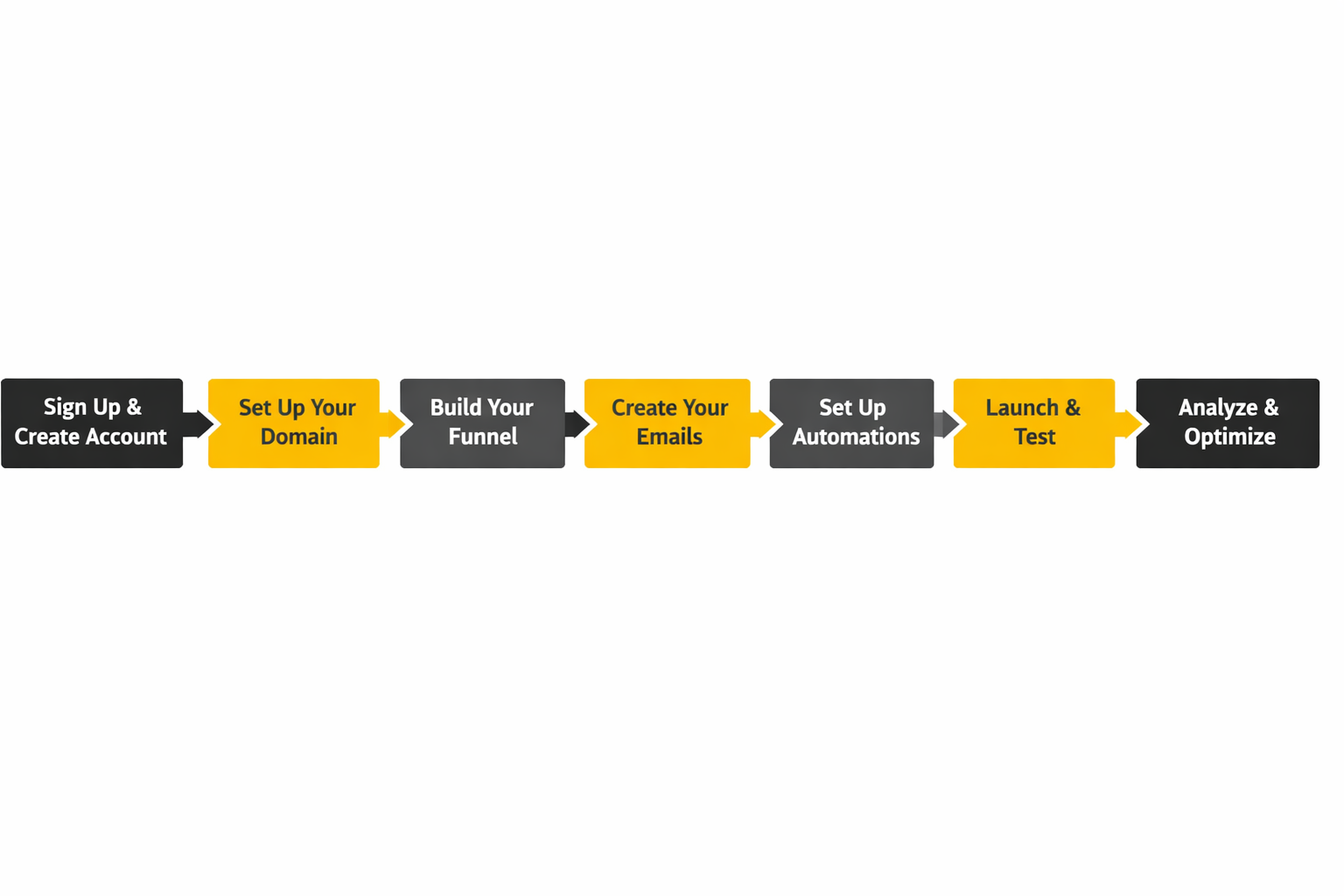
The clearest way to compare systeme.io vs ClickFunnels is to use a simple framework: cost structure, core revenue workflow, operational complexity, and scaling headroom. Once you look at the platforms through those four lenses, the right choice usually becomes obvious.
Start with cost structure. Systeme.io leads with a free plan and then steps up gradually, while ClickFunnels starts at a premium level because it assumes you are willing to pay for a broader business engine from day one. If your business is still validating offers, testing messaging, or building a first email list, that price gap is not cosmetic. It changes how much pressure your funnel has to absorb before it becomes profitable.
Next comes the core revenue workflow. Systeme.io is built around getting one person from page visit to email capture to checkout to course or membership access without adding much friction. Its own help documentation shows native paths for courses, blogs, workflows, and even evergreen webinars. ClickFunnels, by contrast, has evolved into a broader sales operating system with courses, pipeline management, analytics, and A/B testing, checkout, memberships, and workflow tools that point toward more layered selling environments.
Operational complexity is where many buyers make the wrong choice. A richer platform is not automatically better if you are the one building everything yourself. G2 reviewers currently say systeme.io better meets their needs and offers stronger ongoing support, which fits the product’s reputation for being easier to adopt. On the other hand, a company that already has sales staff, multiple offers, or a need for tighter pipeline oversight may find ClickFunnels worth the extra cost because its structure maps more naturally to a growing operation.
The last lens is scaling headroom. If you only need funnels, email, simple automations, and digital product delivery, systeme.io often gives you enough room for far less money. If you are building a business where affiliate management, analytics visibility, sales opportunities, and a more segmented environment matter every day, ClickFunnels begins to justify itself not as a luxury, but as infrastructure.
Core Components
The first core component is funnel building itself. Both platforms can handle landing pages, opt-in pages, checkout flows, upsells, and course delivery, so the real question is not whether they can build funnels. The question is how much operational weight you want the funnel builder to carry for the rest of the business. Systeme.io bundles the essentials into every plan, while ClickFunnels ties more advanced layers to plan depth and volume capacity.
The second core component is email and automation. Systeme.io makes a strong budget case because unlimited emailing is listed across all plans, and its knowledge base shows active support for automation rules, workflows, and behavior-based triggers such as email link clicks. ClickFunnels includes email allowances by plan, but it counters with a more expansive internal business stack, including funnel analytics and visual opportunity tracking, which can matter more than raw sending volume for teams focused on sales visibility.
The third component is digital product and course delivery. Systeme.io has a straightforward native course flow, with official documentation covering course creation and course completion triggers for automations. ClickFunnels also supports online courses inside its platform, but the strategic difference is that ClickFunnels frames courses as one piece of a wider selling machine rather than the center of a lean creator stack.
The fourth component is affiliate and partner growth. This area matters more than many people expect because referral-led growth can quietly become one of the cheapest acquisition channels in an online business. Systeme.io includes an affiliate program in all plans, and its public affiliate page highlights lifetime tagging for referred leads. ClickFunnels offers a stronger dedicated affiliate environment through its Affiliate Center, but the official app page states that availability is tied to higher plans, which can make the decision straightforward if you need advanced affiliate infrastructure without moving up the pricing ladder.
Professional Implementation
Professional implementation starts by being honest about your current business stage, not your future fantasy. If you are a solo founder, coach, consultant, or creator who needs to launch pages, collect leads, email subscribers, sell an offer, and maybe host a course without fighting a huge learning curve, systeme.io is usually the more rational first move. Its free entry point and broad built-in toolkit make it easy to test an offer before software costs start demanding performance.
If that sounds like your situation, the smartest move is often to start with a free systeme.io account, build one lead magnet funnel, connect one offer, and automate only the follow-up sequence that directly affects revenue. That approach keeps the system lean. It also prevents the common mistake of overbuilding a stack before the market has proved it wants what you are selling.
ClickFunnels becomes more compelling when the business is already selling and the bottleneck has shifted from launch to coordination. A team that wants funnel performance data, clearer opportunity tracking, more sophisticated sales infrastructure, and a platform designed to carry more internal business functions will see the value faster. In that case, reviewing the current ClickFunnels offer or the standard ClickFunnels signup flow makes sense if you already know you need a heavier-duty sales environment.
The professional way to implement either platform is to keep the first build narrow. One audience. One traffic source. One lead capture mechanism. One core offer. Then you let the platform prove whether it can support real sales behavior instead of just looking impressive in the dashboard. That is where the systeme.io vs ClickFunnels debate stops being theoretical and starts becoming useful.
Analytics and Optimization
This section continues in Part 5.
Final Verdict and FAQ
This section continues in Part 6.
Framework Overview: The Decision Lens That Actually Helps
Most people compare systeme.io vs ClickFunnels the wrong way. They look at templates, page editors, and whatever flashy feature happens to be on the homepage that day, then they make a decision that feels smart for about a week. The better move is to compare them through the lens of what your business needs to do every single day, because that is where the real winner shows up.
Here is the truth: both platforms can help you build funnels and sell online, but they do not ask you to build your business the same way. Systeme.io presents itself as an all-in-one platform for 500,000+ entrepreneurs, and that positioning matters because it explains why the product keeps pushing simplicity, consolidation, and lower overhead. ClickFunnels, on the other hand, frames itself around funnels, stores, CRM, email marketing, and courses inside one ecosystem, which signals a broader operating environment for businesses that want more moving parts under one roof.
So instead of asking which platform is “better,” ask which platform matches the stage, pressure, and complexity of your business right now. That is the framework that keeps you from buying too much software too early or boxing yourself into a setup you outgrow faster than expected.
1. Cost Architecture Changes The Whole Decision
The first lens is cost architecture, and this is where systeme.io vs ClickFunnels becomes very clear very fast. Systeme.io starts with a free plan, then moves to $17, $47, and $97 monthly tiers. ClickFunnels starts at $97 per month for Launch and $297 per month for Scale, with its pricing built around higher contact capacity, more team access, and broader internal business tools.
That difference is not just about saving money. It changes how much pressure your funnel has to carry before it becomes worth keeping. When you are still validating an offer, finding your message, and figuring out whether your traffic can convert at all, a cheaper platform buys you time and lowers the emotional weight of every experiment you run.
That is exactly why systeme.io tends to attract creators, consultants, coaches, and first-time funnel builders who want to keep things lean. If that is where you are right now, opening a free systeme.io account is a practical way to test your funnel without turning software into a monthly stress point.
2. Your Revenue Model Should Pick The Platform
The next lens is revenue model fit. This is where too many reviews stay shallow, because they talk about features without talking about how money actually moves through the business. If your model is simple lead generation, digital product sales, course delivery, email follow-up, and occasional upsells, systeme.io is built for that kind of clean path from traffic to conversion.
Systeme.io’s official help pages show dedicated funnel creation paths, native course creation, workflows for automations, and evergreen webinar funnels on higher plans. That combination tells you exactly who the product is for: someone who wants to capture leads, sell knowledge, and automate follow-up without stitching together five different subscriptions.
ClickFunnels fits a different revenue model. Its courses app, Opportunities pipeline, automations app, and analytics environment make more sense when the business has multiple offers, a sales process that needs visibility, and more than one person touching the customer journey. In other words, ClickFunnels makes more sense when the funnel is not just a page sequence but a real commercial system.
3. Ease Of Use Versus Expansion Is The Real Tradeoff
People often talk as if ease of use and business power naturally come together. They do not. Most of the time, when a platform becomes capable of doing more, it also becomes heavier to manage. That is why the systeme.io vs ClickFunnels decision is really a tradeoff between staying light and gaining expansion room.
Recent G2 comparison data says reviewers find systeme.io easier to use, easier to set up, and easier to administer than ClickFunnels. That lines up with what the platform is trying to be. It is not obsessed with impressing you with business sprawl. It is trying to help you launch, automate, and sell without turning the backend into a second job.
ClickFunnels earns its place when expansion matters more than minimalism. Its site builder, community features, affiliate center, and sales-focused app structure create a bigger operating environment. That can be incredibly useful, but only if you are ready to use it. Otherwise, you end up paying for headroom you are not using and complexity you do not need.
4. Email And Automation Reveal The Philosophy Behind Each Tool
Email is where the platform philosophy becomes impossible to miss. Systeme.io lists unlimited emails on every plan, and its documentation now covers not just campaigns and workflows but also link-click triggers, SMS through Twilio integration, and direct Google Sheets integration without Zapier. That tells you the company wants to remove hidden operational costs wherever it can.
ClickFunnels takes a different route. Its Launch plan includes 50,000 emails per month and 10,000 contacts, which is plenty for many businesses, but it is still a usage-framed environment rather than a fully open sending promise. What ClickFunnels gives back in return is a more interconnected commercial stack, where automations, pipeline tracking, analytics, and other business functions are meant to work together instead of acting like separate utilities.
So if your biggest concern is building a lean machine that can email freely as the list grows, systeme.io has a very strong argument. If your concern is coordinating a broader sales environment where email is one part of a larger revenue system, ClickFunnels starts looking stronger.
5. Affiliate Leverage Matters More Than Most Reviews Admit
One of the smartest ways to judge systeme.io vs ClickFunnels is to ask how much you care about partner-driven growth. Affiliate leverage can stay invisible for months and then suddenly become one of the best customer acquisition channels in the business. When that happens, the quality of your built-in affiliate tools stops being a side note and starts becoming a serious strategic factor.
Systeme.io publicly states that it has paid more than $5,000,000 in commissions and offers 60% lifetime commissions on referred subscriptions. Its help center also shows support for configuring your own affiliate program and sending affiliate links to partners. That is a serious amount of built-in leverage for a platform that still keeps pricing relatively low.
ClickFunnels absolutely takes affiliates seriously too. Its Affiliate Center is designed around tracking, commissions, payouts, and performance metrics, but the official app page makes it clear that this feature is included on higher plans. That means the decision is not just about whether you want affiliate capabilities. It is about whether you want them from day one at a lower cost or you are comfortable paying more for a broader sales ecosystem around them.
If you already know affiliate growth will be central to your plan, reviewing ClickFunnels directly makes sense. But if you want affiliate functionality without immediately stepping into premium pricing, systeme.io has a much easier on-ramp.
6. Who Should Choose What?
If you are earlier in the journey, value speed, want to keep costs under control, and need one clean place to build funnels, send emails, sell courses, and automate follow-up, systeme.io is usually the smarter choice. It is built to help you move without getting buried in setup. That matters a lot more than people think, because momentum is often the difference between a funnel that gets launched and one that stays trapped in drafts forever.
If you are further along, have more moving parts, want deeper sales infrastructure, and see your platform as the center of a more serious commercial system, ClickFunnels makes a stronger case. The higher price only feels painful when you are not using the extra structure. Once you actually need those layers, the bigger ecosystem can save more than it costs.
That is the real framework overview for systeme.io vs ClickFunnels. One platform is usually the better move for keeping things simple, profitable, and under control. The other is usually the better move when you are ready for a heavier setup that can support a wider business machine. The key is being honest about which season of business you are in right now, because choosing for the business you wish you had instead of the one you actually run is how software turns into a burden instead of an advantage.
Funnel Building And Page Creation
The first core component is the funnel builder itself, because if the pages are hard to create, the rest of the stack barely matters. Systeme.io is built around sales funnels, email marketing, websites, and course delivery inside one dashboard, and that simplicity is a big part of its appeal. The platform is clearly designed for people who want to get from idea to published funnel without hiring a developer or spending days inside settings panels.
ClickFunnels still has a strong edge in how aggressively it centers the funnel as the heart of the business. Its homepage positions the platform around building, marketing, selling, and delivering products online without relying on a tech team. That matters because ClickFunnels is not treating the funnel like one feature among many. It is treating it like the commercial engine around which everything else is organized.
So in the systeme.io vs ClickFunnels debate, the page-building difference is less about whether both can do it and more about what kind of experience you want while doing it. Systeme.io feels lighter and more direct. ClickFunnels feels more like a sales machine that happens to start with pages.
Email Marketing And Follow-Up
Email is one of the most important components in this whole comparison because a funnel without follow-up usually leaves money on the table. Systeme.io makes a very strong argument here because its pricing page lists unlimited emails even on the free plan, with usage limits focused more on contacts, funnels, rules, and domains. That is a huge deal for businesses that want to nurture leads aggressively without feeling like every campaign is using up part of a meter.
Its product pages reinforce that same philosophy. Systeme.io markets its email tool around newsletters, campaigns, templates, and automations, which makes it clear that email is not an add-on afterthought. It is part of the platform’s central promise that you can run the core of an online business without bolting on separate email software.
ClickFunnels handles email differently. Its Launch plan includes 50,000 emails per month and 10,000 contacts, which is a healthy allowance for many businesses, but it still reflects a more tiered, usage-aware model. In practice, that means systeme.io usually feels friendlier for operators who want email freedom, while ClickFunnels feels better suited to businesses that care less about unlimited sends and more about the broader commercial stack around those sends.
Automation And Workflow Depth
Automation is the component that quietly determines whether your business scales cleanly or becomes dependent on constant manual work. This is where systeme.io has become more serious than many people realize. Its official workflow documentation shows visual automations that let you connect triggers, actions, and business logic inside the platform, and its newer help content around triggering automations from email link clicks shows the company is still expanding how behavioral actions can drive follow-up.
There is a practical side to this that matters. When the person opting in, opening emails, clicking links, buying products, and entering a course can all trigger native actions inside the same system, you reduce the need for third-party glue. That saves money, but even more importantly, it reduces the number of places where the customer journey can break.
ClickFunnels counters with a more business-wide automation philosophy. Its automations app is built to connect customer behavior with actions across the broader ClickFunnels environment, which makes sense if your funnel is only one piece of a larger sales process. So if you want straightforward automation inside a lean all-in-one tool, systeme.io is hard to ignore. If you want automation that sits inside a broader commercial operating system, ClickFunnels starts to make more sense.
Courses, Memberships, And Delivery
A lot of buyers underestimate this component until the first sale comes in and they realize the backend delivery experience matters just as much as the page that made the sale. Systeme.io is very clearly built for people selling knowledge, access, and education. Its official course-creation guide walks users through building and structuring an online course, while its public course page emphasizes membership access, student management, and free entry into course building.
That matters because course businesses do not just need checkout pages. They need product delivery that is good enough to protect the trust created during the sale. If the content experience is clumsy, the funnel may convert well and still damage the brand afterward.
ClickFunnels also plays in this space in a serious way. Its Courses app is positioned as a native way to build, promote, and sell online courses without third-party tools. The difference is that ClickFunnels treats courses as one monetization layer inside a bigger selling system, while systeme.io often feels like it was designed with course creators and digital sellers much closer to the center.
Affiliate Management And Partner Growth
Affiliate management is one of those components that seems optional until you realize how powerful it can become once you have a product people want to recommend. Systeme.io punches far above its price here. Its affiliate program page says the company pays out more than $100,000 in monthly affiliate commissions and keeps referred leads tagged for life. That tells you two things at once: the company takes affiliate-driven growth seriously, and it understands how valuable long-term attribution is for partners.
On the product side, systeme.io also supports creators who want to run their own partner programs. Its help center walks through setting up and configuring an affiliate program, which is a strong inclusion for a platform that still competes heavily on affordability. In the systeme.io vs ClickFunnels conversation, that is one of the most underrated advantages systeme.io has.
ClickFunnels is no lightweight here either. Its Affiliate Center is designed around commissions, tracking, payouts, and performance metrics, but the official page also makes clear that this feature is included on Optimize and Dominate plans. That means ClickFunnels may offer a more dedicated affiliate environment at the high end, while systeme.io offers broader accessibility for businesses that want partner growth without upgrading into premium pricing first.
Analytics, CRM, And Pipeline Visibility
This is one of the places where the personality of each platform really comes through. Systeme.io absolutely gives you the essentials needed to run a business, but ClickFunnels has been building more aggressively toward sales visibility and pipeline control. Its Opportunities app is positioned as a visual sales pipeline for tracking and closing deals, and its Analytics app focuses on conversions, engagement, revenue, trend analysis, and forecasting across the funnel system.
That matters a lot once the business stops being just pages and email sequences. The moment you have multiple offers, a sales conversation, follow-up stages, or a team that needs to know exactly where revenue is getting stuck, pipeline visibility becomes a real operational advantage. This is one area where ClickFunnels feels like it is moving beyond the traditional “funnel builder” category into something closer to a sales operating platform.
Systeme.io has made meaningful progress here too. Its pricing structure now references CRM pipelines starting on paid plans, which shows it is expanding beyond the original lightweight funnel-and-email positioning. But when analytics depth and pipeline management are central to how you sell, ClickFunnels currently looks more purpose-built for that style of business.
Integrations And Stack Control
No all-in-one platform is truly all-in-one for every business, so integrations still matter. Systeme.io’s advantage is that it tries to make integrations less necessary in the first place. That is a huge reason people choose it. When email, funnels, courses, blogs, automation, affiliate management, and core delivery live inside one subscription, the stack gets cleaner and the chances of technical friction drop.
At the same time, systeme.io has been adding useful integration paths where they genuinely help. Its direct Google Sheets integration and Twilio-based SMS setup show that the platform is willing to extend outward without losing its simplicity-first identity.
ClickFunnels approaches the stack from the opposite direction. It wants to be the hub of a broader online selling environment, which is why its app structure feels larger and more segmented. If you want the platform to cover more business categories internally, ClickFunnels has the stronger case. If you want fewer moving parts and a system that keeps the stack under control by default, systeme.io stays incredibly compelling.
Which Components Matter Most For Your Business?
If you strip away the marketing language, the systeme.io vs ClickFunnels decision usually comes down to which core components matter most in your current season of business. If your biggest priorities are affordable funnel building, generous email capacity, smooth course delivery, and keeping the whole machine simple enough to run without friction, systeme.io has the stronger practical argument. It gives you the pieces most small and mid-sized digital businesses actually use, without making you pay premium prices for infrastructure you may not touch yet.
If your priorities lean toward pipeline visibility, broader sales infrastructure, higher-end affiliate tooling, and a platform that is trying to become the center of a more complex commercial operation, ClickFunnels becomes a more serious contender. It asks more from your budget, but it also aims to carry more of the business once complexity starts rising.
That is why the “best” platform is rarely universal. The best platform is the one whose core components line up with the way you make money right now. Get that right, and the software supports growth. Get it wrong, and you end up fighting your tools instead of letting them help you sell.
Statistics And Data

When you get serious about systeme.io vs ClickFunnels, you eventually reach the point where opinions stop being enough. At that stage, you need to look at the numbers that actually shape the decision: pricing, contact limits, email allowances, review volume, and the way real users rate ease of use, support, and value. That is where the comparison becomes less emotional and a lot more useful.
The first thing the data makes obvious is that these platforms are not trying to win with the same pricing philosophy. Systeme.io still leads with a free plan and paid tiers at $17, $47, and $97 per month, while ClickFunnels starts at $97 per month for Launch, with Scale at $197 and Optimize at $297. That gap is not some minor detail buried in the footer. It directly affects how fast a new funnel has to perform before the software starts feeling justified.
Pricing Data Tells You Who Each Platform Is Built For
Pricing is where the clearest separation shows up. Systeme.io’s free plan includes core website, funnel, email, blog, course, and automation functionality with entry-level usage limits, which makes it unusually accessible for beginners and lean operators. It is hard to overstate how powerful that is when you are still validating an offer and do not want recurring software costs draining your runway before the funnel even proves itself.
ClickFunnels is clearly targeting a different buyer. Its Launch plan includes unlimited funnels, 10,000 contacts, 50,000 emails per month, 3 courses, 5 custom domains, and 2 team members. That package gives you a lot more capacity from the start, but it also assumes that you are willing to pay premium pricing for a platform that wants to function more like business infrastructure than a lightweight launchpad.
So the pricing data alone already gives you a real clue. Systeme.io is trying to remove the barrier to entry. ClickFunnels is trying to justify a larger commercial environment from day one. That single difference shapes almost everything else you experience after signup.
User Review Volume And Ratings Matter More Than People Think
A platform can promise almost anything on its own site, which is why review data matters. It is not perfect, but it does reveal patterns that are hard to fake at scale. On Capterra, Systeme.io currently holds a 4.8 overall rating based on more than 2,100 user reviews, while ClickFunnels shows a 4.5 overall rating based on 665 reviews. That does not automatically crown a winner, but it does suggest that systeme.io has built unusually strong satisfaction relative to its price point.
G2 adds another layer to that picture. Systeme.io’s G2 profile shows more than 740 reviews, and ClickFunnels also has a substantial review footprint on G2. The key point is not just that both are established. It is that systeme.io is not a tiny outsider anymore. It has enough review depth across major software platforms that strong user sentiment should be taken seriously.
In plain English, the data says both tools are real players. But it also says systeme.io has built a stronger reputation for satisfaction among a large body of reviewers, especially when people factor in affordability and simplicity.
Ease Of Use Data Favors Systeme.io
This is one of the most useful data points in the whole systeme.io vs ClickFunnels conversation because ease of use sounds soft until you are the one building pages at midnight, connecting automation rules, and trying to make a checkout flow work without breaking something else. G2’s side-by-side comparison says reviewers found systeme.io easier to use, easier to set up, and easier to administer than ClickFunnels. That is not a vague compliment. That is operationally important.
Why does that matter so much? Because friction compounds. A platform that is only a little harder to set up can become a lot harder to maintain once you add more pages, more emails, more products, and more automations. Over time, ease of use is not just about convenience. It affects launch speed, testing speed, and how likely you are to actually use the tools you are paying for.
That is exactly why the ease-of-use data pushes many smaller businesses toward systeme.io. They do not need the most layered environment. They need a platform they can actually move with.
Email And Contact Limits Show A Different Philosophy
Email capacity is another place where the numbers reveal the underlying strategy behind each platform. Systeme.io advertises unlimited emails across all plans, which is one of the strongest value signals in its entire offer. That kind of policy is especially attractive if you plan to use email aggressively for lead nurture, course launches, product promotion, or evergreen follow-up without watching a sending meter every week.
ClickFunnels takes a more measured approach. Its Launch plan includes 50,000 emails per month for up to 10,000 contacts, with higher plans increasing allowances and operational room. For many businesses, that is plenty. But it still reflects a structured capacity model, whereas systeme.io is using unlimited sending as a competitive weapon.
This data point matters because it tells you how each company thinks about growth. Systeme.io is trying to make expansion feel inexpensive and frictionless. ClickFunnels is trying to package growth inside tiered business capacity. Neither model is automatically wrong, but they fit different buyers.
Feature Breadth Data Shows ClickFunnels Is Building A Bigger Operating System
If you only look at price and user ratings, it becomes easy to assume systeme.io simply wins. That would be too shallow. The feature data shows why some businesses still choose ClickFunnels despite the higher cost. The current ClickFunnels app ecosystem includes landing pages, survey workflows, community, store, opportunities, analytics, short links, and affiliate center tools. That is a much broader environment than the old “page builder” label suggests.
Even more importantly, some of those tools are positioned as included inside the plan structure. The Opportunities app is included for free in every plan, and the Community app is also listed as included for free in every plan. That means ClickFunnels is not just charging more for pages. It is asking you to buy into a larger system for managing lead flow, customer engagement, and sales progression.
Systeme.io also has wide native scope, but its public positioning stays more focused on the essentials. Its official homepage centers funnels, email marketing, websites, courses, affiliate management, and automation. That is broad enough for most digital businesses, but the data suggests ClickFunnels is pushing more aggressively toward becoming a heavier business operating platform.
Affiliate Economics Are Strong On Both Sides, But In Different Ways
Affiliate growth is one of those areas where the hard numbers instantly make the comparison more interesting. Systeme.io says it pays more than $100,000 in monthly affiliate commissions, and its help documentation states that affiliates can earn 60% lifetime commissions by promoting the platform. That is a serious partner offer, especially for a tool that also competes heavily on affordability.
ClickFunnels comes at the same territory from a different direction. Its Affiliate Center focuses on referrals, commissions, future payouts, and real-time program visibility. The platform is not simply saying, “Yes, we have affiliates.” It is making affiliate performance a visible management function inside the product ecosystem, which is more attractive for businesses that want a more structured partner-growth environment.
So the numbers do not just tell you that both platforms care about affiliate growth. They tell you how they care about it. Systeme.io leans into generous economics and accessibility. ClickFunnels leans into infrastructure and management visibility.
What The Numbers Really Mean
The most important takeaway from all this data is not that one platform has a lower entry price, or that one has higher-tier infrastructure, or that one has stronger review averages. It is that the numbers are consistent with the story each company is telling. Systeme.io’s stats keep pointing toward affordability, simplicity, generous email economics, and high user satisfaction. ClickFunnels’ stats keep pointing toward broader operational scope, more layered commercial tooling, and pricing built for businesses that want that bigger system.
That is why raw statistics are only useful when you connect them back to the business model. If you are trying to keep overhead low while still getting funnels, email, automations, and course delivery in one place, the data behind systeme.io is incredibly persuasive. If you want a platform that is increasingly built around pipelines, analytics, affiliate oversight, and a broader online selling machine, ClickFunnels has the numbers to justify why it costs more.
In the end, data does not eliminate judgment. It sharpens it. And in a systeme.io vs ClickFunnels decision, that is exactly what you want.
What You Actually Need To Track
The smartest way to approach optimization is to stop chasing every metric and focus on the ones that move revenue. In a systeme.io vs ClickFunnels setup, the first numbers that deserve your attention are page conversion rate, checkout completion rate, email engagement, average order value, refund pressure, and where people disappear in the journey. If you do not know where people are dropping, you do not really know what to fix.
ClickFunnels has been leaning hard into this side of the equation. Its Analytics app is built around conversions, engagement, revenue tracking, trend analysis, and forecasting, which tells you exactly how the company wants users to think. It does not want you guessing. It wants you looking at the funnel as a measurable sales system.
Systeme.io is less flashy in how it presents analytics, but it gives you the core data most lean businesses actually need. Its split-testing documentation is built around comparing funnel page variants inside the same funnel, which is a very practical signal that the platform wants optimization to stay connected to direct conversion events instead of drifting into vanity metrics.
Split Testing Is Where Real Improvement Starts
If you only take one optimization idea seriously, make it split testing. Most funnel problems do not come from a completely broken offer. They come from a page headline that is too weak, a checkout page that creates hesitation, a button label that loses urgency, or an email sequence that asks for the sale too early. Those are the kinds of problems that opinions rarely solve well, but testing does.
Systeme.io has made this process more accessible than many people expect. Its official March 2026 guide shows how to create two page variants inside one funnel and run an A/B test between them. That matters because it lowers the barrier between noticing a problem and actually testing a better version.
ClickFunnels also treats testing as a core conversion activity rather than a side feature. Its A/B testing page focuses on fine-tuning pages, offers, and messaging with data instead of guesses. For businesses that plan to optimize aggressively, this reinforces a bigger truth in the systeme.io vs ClickFunnels debate: both can support improvement, but ClickFunnels wraps testing into a more expansive performance environment, while systeme.io keeps it closer to a simpler funnel workflow.
Email Behavior Tells You More Than Page Metrics Alone
A lot of people obsess over landing pages and forget that follow-up often decides whether the funnel is truly profitable. Someone can opt in, leave, ignore the first pitch, and still become a customer days later because the email sequence did its job. That is why email behavior deserves its own place in your optimization process.
Systeme.io has a real advantage here because it still lists unlimited emails on every plan, which makes it easier to nurture leads without second-guessing whether more follow-up will inflate your costs. It has also added more behavior-based control over time. Its help documentation now shows how automations can be triggered by clicks on email links, which opens the door to much smarter segmentation and follow-up logic.
ClickFunnels can absolutely support email-based optimization too, but the way it frames the problem is different. Its entry plan includes 50,000 emails per month, and that is more than enough for many businesses. The difference is philosophical: systeme.io is pushing freedom and cost control, while ClickFunnels is pushing structured capacity inside a larger system.
Pipeline Visibility Changes Everything For More Complex Sales
Not every funnel is a simple opt-in-to-checkout machine. Some businesses need calls booked, leads qualified, follow-up stages managed, and offers closed after multiple touchpoints. In those cases, optimization is not just about whether a page converted. It is about where the lead sits inside a broader sales process.
This is one of the strongest reasons a growing business may choose ClickFunnels. Its Opportunities app is built around visual pipeline tracking so you can see where every deal stands. That matters because once the sale depends on movement through stages rather than one immediate checkout, a classic funnel view becomes incomplete.
Systeme.io has been expanding beyond its original lightweight image, and its pricing page now references CRM pipelines on paid plans. That is meaningful progress. But if pipeline visibility is central to the way you sell, ClickFunnels still feels more intentionally built for that kind of optimization work.
How To Optimize Without Making A Mess
The biggest optimization mistake is changing too many things at once. When that happens, you may get a better result, but you do not know why it improved. Or worse, you may hurt the funnel and have no idea which change caused the drop. The right way to optimize systeme.io vs ClickFunnels funnels is slower, but it is far more profitable.
Start with the biggest pressure point. If traffic is landing but not opting in, test the headline, lead magnet framing, or page structure. If leads are opting in but not buying, test the bridge between the opt-in and the offer, the credibility on the sales page, or the first sales emails. If leads are reaching checkout and abandoning, the problem is likely trust, clarity, price framing, or friction at the point of payment.
That is why platform choice matters. A simpler environment like systeme.io can be powerful because it keeps you focused on the essential variables. A broader environment like ClickFunnels can be powerful because it lets you optimize not just the page, but the wider commercial process around the page. The best choice depends on how complex your sales motion really is.
Which Platform Is Better For Optimization?
If your idea of optimization is straightforward and conversion-focused, systeme.io is extremely hard to dismiss. You can build the funnel, send the emails, run split tests, automate follow-up, and improve performance without dragging a giant stack behind you. For a solo operator or a lean team, that simplicity can be a serious competitive advantage because it keeps attention on selling instead of system maintenance.
If your business needs deeper analytics visibility, pipeline management, and a wider commercial framework where funnel data connects to broader sales activity, ClickFunnels has the stronger argument. Its analytics environment, pipeline tracking, and survey-based workflow tools show a platform that wants to optimize more than just page conversions.
So the real answer is not that one platform is “good at optimization” and the other is not. The real answer is that systeme.io is better when you want optimization to stay lean, direct, and easy to act on. ClickFunnels is better when optimization needs to reach across a larger sales machine.
The Real Goal Of Optimization
The goal is not to become obsessed with dashboards. The goal is to make better decisions faster and earn more from the traffic and leads you already have. That is why analytics matters so much in the systeme.io vs ClickFunnels conversation. You are not buying charts. You are buying the ability to see what is working, what is leaking, and what deserves your next move.
If you keep that mindset, either platform can help you grow. But if you ignore it, even the best funnel software in the world will not save you. A funnel that is never measured is just a guess wearing good design.
FAQ For This Complete Guide
Which platform is better for beginners: systeme.io or ClickFunnels?
For most beginners, systeme.io is the easier choice. G2 reviewers say systeme.io is easier to use, easier to set up, and easier to administer, and its free plan gives new users a way to start building without creating immediate monthly pressure. That combination is hard to beat when you are still learning how funnels, email sequences, and offer delivery actually work.
Is ClickFunnels worth the price?
It can be, but only when you actually need what it is built to do. ClickFunnels starts at $97 per month, which is a meaningful jump from systeme.io, but it also gives you a broader operating environment with unlimited funnels, higher structured capacity, and access to tools like Opportunities and Analytics. If you are still validating an offer, it can feel expensive. If you are already managing a more serious sales machine, it can feel justified.
Does systeme.io really have a free plan?
Yes, it does. Systeme.io’s official pricing page lists a free plan, and that is one of the biggest reasons it keeps showing up in this comparison as the value-first option. The free tier is not just a gimmick. It is a real entry path for people who want to build and test before they commit to paid software.
Can both platforms build full sales funnels?
Yes, both can. That is why the systeme.io vs ClickFunnels debate is not about whether either platform can create landing pages, checkout flows, upsells, or follow-up. It is about how they approach the rest of the business around those funnels. Systeme.io focuses on keeping funnels, email, courses, and automation in one simple dashboard, while ClickFunnels frames the funnel as part of a bigger sales ecosystem that includes CRM, store, email, and course delivery.
Which one is better for email marketing?
If email sending freedom matters most, systeme.io has a huge advantage. Its plans list unlimited emails, which makes it very attractive for operators who want to nurture aggressively without tracking a send allowance. ClickFunnels includes email too, but its Launch plan is capped at 50,000 emails per month, so it is working with a more structured capacity model from the start.
Which platform is better for selling courses?
Both can handle courses, but they feel different. Systeme.io has native course creation and tends to feel more naturally aligned with creators, educators, and digital sellers who want a lean backend. ClickFunnels also has a dedicated Courses app, but it feels more like one monetization layer inside a broader commercial system rather than the center of a minimalist creator stack.
Does ClickFunnels have better analytics?
For many businesses, yes. ClickFunnels has a dedicated Analytics app focused on conversions, engagement, revenue, trend analysis, and forecasting. That does not mean systeme.io lacks useful data, but ClickFunnels is clearly investing more heavily in analytics as a central part of the platform experience. If deeper visibility is a major priority, that can matter a lot.
Does systeme.io support split testing?
Yes. Systeme.io’s help documentation shows how to create split tests inside a funnel, which means you can compare page variants and improve conversion rates without leaving the platform. That is one of the most important optimization tools any funnel builder can offer, and it makes systeme.io much more serious than people sometimes assume.
Which platform is better for affiliate marketing?
That depends on what you mean by “better.” Systeme.io promotes strong affiliate economics, including 60% lifetime commissions and more than $100,000 in monthly affiliate payouts, which makes it very attractive from an accessibility and incentive standpoint. ClickFunnels has a more dedicated Affiliate Center focused on tracking, commissions, payouts, and performance visibility. So systeme.io often wins on affordability and accessibility, while ClickFunnels may win for businesses that want a more structured affiliate management environment.
Which platform scales better as a business grows?
That depends on what kind of growth you are expecting. If growth means more leads, more emails, more courses, and more funnels without wanting a bloated setup, systeme.io scales surprisingly well for the price. If growth means more team coordination, more pipeline management, broader analytics, and a more layered commercial backend, ClickFunnels has the stronger argument because that is exactly the direction its product ecosystem is moving.
Should I switch from ClickFunnels to systeme.io?
You should consider it if you feel like you are paying for complexity you are not really using. Businesses often make this move when they realize their revenue engine is actually simpler than their software stack. If your core model is pages, emails, automations, and product delivery, and you do not need the heavier internal structure, moving to systeme.io can reduce costs and simplify operations at the same time.
Should I switch from systeme.io to ClickFunnels?
You should think about it when your business starts needing more than a lean all-in-one setup can comfortably support. If you want stronger pipeline visibility, more extensive analytics framing, and a platform that is increasingly trying to function like a full online sales operating system, ClickFunnels becomes a serious upgrade path. The key is not switching because of hype. It is switching because the business has genuinely become more complex.
What is the best overall choice in systeme.io vs ClickFunnels?
For the majority of solo operators and lean online businesses, systeme.io is the better overall value. It is easier to start with, costs dramatically less, and still covers the core functions most businesses need. ClickFunnels is the better overall choice only when you truly want the larger ecosystem and can justify paying for that extra structure. That is why there is no universal winner, but there is usually a right winner for the business model sitting in front of you.
Work With Professionals
If reading this guide made one thing obvious, it is that software alone does not build the business. The offer has to be sharp, the messaging has to connect, the funnel has to convert, and the follow-up has to do its job. Even the best platform in the world cannot rescue weak execution.
That is why working with people who understand funnels, email, lead generation, and conversion strategy can change everything. A strong marketer does not just help you pick between systeme.io vs ClickFunnels. They help you make either platform actually produce revenue instead of just sitting there looking organized.
Explore 10K+ Remote Marketing Contracts on MarkeWork.com
Most marketers spend too much time chasing clients, competing on crowded platforms, and losing a percentage of every project to middlemen.
MarkeWork gives you a better way. Browse thousands of remote marketing contracts and connect directly with companies desperate to hire skilled marketers like you without platform commissions and without unnecessary gatekeepers.
If you’re serious about finding better opportunities and keeping 100% of what you earn, you can explore available contracts and create your profile for free at MarkeWork.com.
 Filip Konecny Enterprises