

Most people do not lose money on marketing software because the tool is terrible. They lose money because they stack too many separate tools, pay too much before they have traction, and end up spending more time connecting software than selling anything. That is exactly why a serious systeme.io review in 2026 matters: the platform is still positioning itself as an all-in-one stack for funnels, email, courses, websites, automation, and affiliate management, and its official feature set keeps expanding through tools like websites, funnels, email marketing, automation, courses, and affiliate management.
What makes systeme.io interesting right now is not just the feature list. It is the price-to-coverage ratio. The platform still offers a free plan plus paid tiers that start at $17 per month, which puts it in a very different conversation from funnel-first competitors such as ClickFunnels, where paid plans start at $97 per month. That gap alone explains why creators, consultants, and small teams keep taking another look at it.
This first part is going to help you make sense of the platform before we get into deeper comparisons. We will start with the structure of the full article, then break down why systeme.io matters in 2026, how to evaluate it properly, which core components deserve the most attention, and how to approach implementation without creating a mess on day one.
Article Outline
- Part 1: Why systeme.io matters in 2026
- Part 2: Framework for evaluating systeme.io in 2026
- Part 3: Core components you should review first
- Part 4: How to implement systeme.io professionally
- Part 5: Pricing, strengths, weaknesses, and alternatives
- Part 6: Final verdict and FAQ

Why systeme.io Matters in 2026
systeme.io matters in 2026 because a lot of online businesses still do not need a giant martech stack. They need a place to capture leads, send emails, sell a product, deliver the product, and automate the next step without paying for four or five subscriptions before revenue is stable. systeme.io is still built around that promise, and the company continues to present the platform as a single place to run email marketing, funnels, courses, websites, and automations.
The other reason it matters is practical, not theoretical. The platform has remained aggressive on pricing, with a free plan and low-cost paid tiers, while user-review platforms continue to show unusually strong value scores, including 4.8 out of 5 on Capterra with more than 2,000 reviews, 4.8 out of 5 on G2 with hundreds of verified reviews, and a large review footprint on Trustpilot. That does not automatically make it the best platform for everyone, but it does tell you the product has moved well beyond “cheap beginner tool” territory.
At the same time, this is exactly where many reviews get lazy. A platform can be affordable and still be the wrong choice if your business depends on deep design freedom, highly specialized commerce workflows, or a large team with complex permissions and handoffs. So the real question is not whether systeme.io is good in general. The real question is whether its all-in-one tradeoff works in your favor.
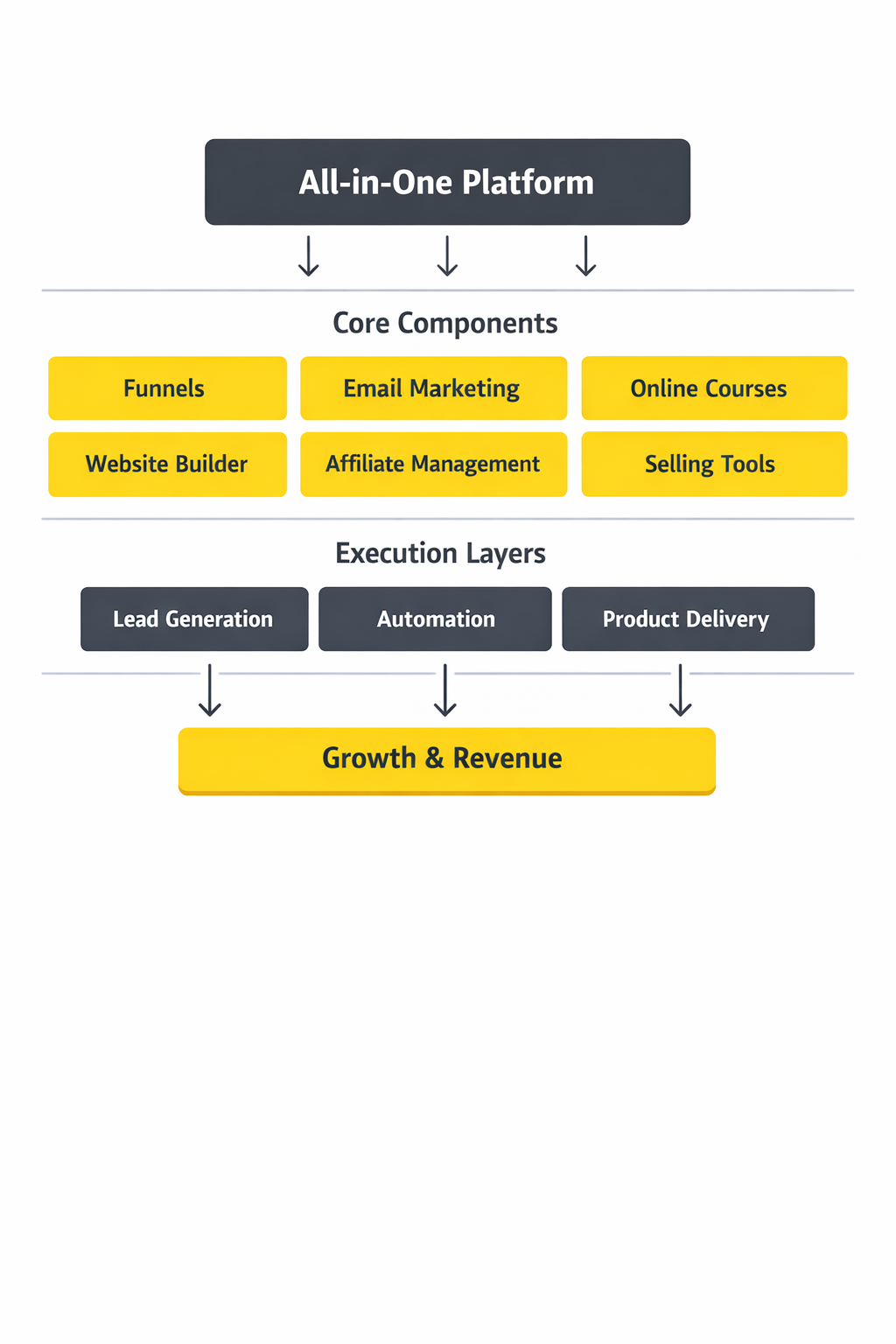
Framework Overview
The right way to review systeme.io is to judge it through a business-operating lens, not through a feature checklist alone. A long checklist can make any platform look impressive, but what matters more is whether the tools work together cleanly enough to shorten your path from traffic to lead to sale to delivery. systeme.io leans hard into that integrated workflow through funnel building, email campaigns and sequences, course delivery, and trigger-based automations.
That means a useful review framework should focus on six questions. First, how quickly can you publish something that is good enough to sell from. Second, how much of your customer journey can stay inside one system. Third, where do you hit capability ceilings. Fourth, how reliable and realistic is setup for non-technical users. Fifth, what does the platform force you to do manually. Sixth, how expensive is the alternative if you replace it with separate software.
This framework matters because systeme.io is not trying to beat every specialist tool on its home turf. It is trying to win by reducing software sprawl. If that is your priority, a leaner platform with slightly less polish can still be the stronger business decision than a prettier stack that costs several times more and takes longer to manage.
Core Components
The first component to review is the funnel and page builder, because this is where systeme.io either saves you time or frustrates you first. The company still emphasizes proven templates, a simple editor, and built-in connections to payments, email, and course delivery, which is the practical core of the offer. For most solo operators and small businesses, that connection matters more than having the most advanced visual builder on the market.
The second component is email and automation. systeme.io continues to support rule-based automations with triggers and actions, more advanced workflows, and newer behavior-based actions such as automation after a contact clicks a link in an email. That is important because an all-in-one platform stops being useful the moment your follow-up logic becomes too shallow to segment buyers, leads, and no-shows properly.
The third component is product delivery and monetization. systeme.io supports courses and membership-style delivery, upsells and downsells, order bumps, your own affiliate program, and even newer commerce-adjacent options such as a creator store. But this is also where you need to stay honest: if your business depends on physical-product logistics, systeme.io itself states in its help documentation that physical product delivery must be handled externally, which is a real limitation, not a minor footnote.
Professional Implementation
The fastest way to get poor results from systeme.io is to treat it like a toy because it is inexpensive. A professional implementation starts with one clear revenue path: one offer, one lead capture mechanism, one email sequence, one checkout flow, and one post-purchase delivery path. That is where a low-friction all-in-one platform can genuinely shine, especially once you connect a custom domain through the platform’s current domain setup process and authenticate sending properly, which systeme.io says is mandatory for email sending from your own domain.
It also helps to think in layers. The first layer is your offer and page structure. The second layer is automation, where tags, rules, and workflows do the real work. The third layer is content and trust, which may include a website, blog, or creator store depending on your business model, and systeme.io now supports all three through its help documentation for websites, blogs, and creator stores.
If you want the simplest way to test the platform while reading this review, the official systeme.io free account is the logical starting point because it lets you validate the workflow before paying. If you already know you want a more funnel-heavy ecosystem for side-by-side comparison, it also makes sense to look at ClickFunnels here and weigh whether the extra cost buys you something you will actually use. In the next part, we will use that exact lens and evaluate systeme.io feature by feature instead of settling for a vague “good for beginners” verdict.
Core Components You Should Review First
By this point in the systeme.io review 2026, we have already established the big idea: this platform is trying to win by replacing a messy software stack with one cleaner operating system for an online business. That sounds great on paper, but this is the point where the review needs to get real. You do not buy a platform because the homepage says “all-in-one.” You buy it because the most important components are strong enough to help you attract leads, close sales, deliver what you sold, and keep the customer relationship moving forward.
That is why Part 3 matters so much. Instead of jumping around randomly, we are going to focus on the components that carry the most weight inside systeme.io. These are the parts that will either make the platform feel incredibly practical or expose where it starts to feel too limited for the way you do business.
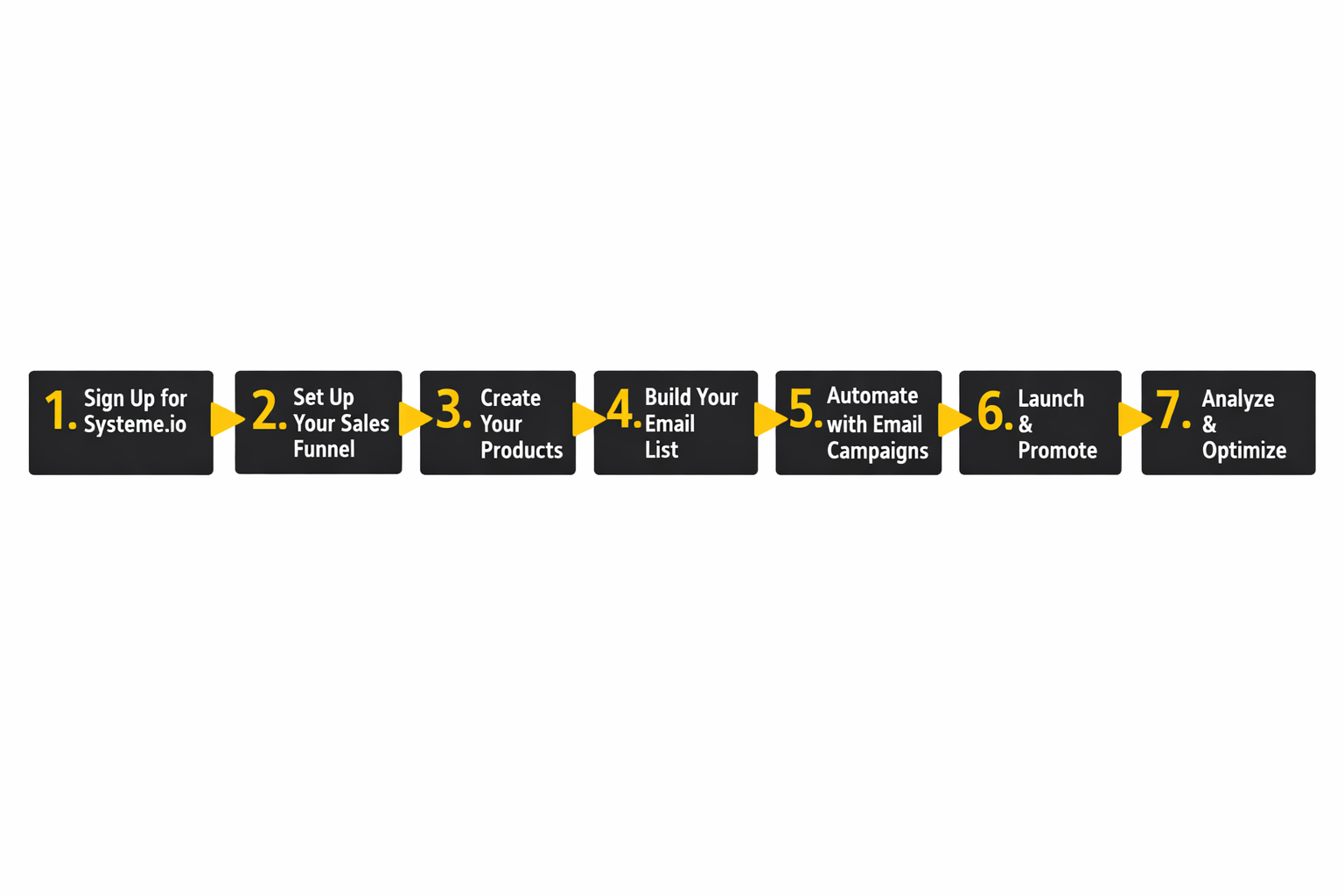
The Funnel and Page Builder
The first thing you should inspect in any serious systeme.io review in 2026 is the funnel builder, because that is the front door to almost everything else. If the platform cannot help you publish a strong opt-in page, sales page, checkout page, or simple website fast enough, the rest of the toolset becomes much less valuable. systeme.io is very clearly built around speed here, with its official funnel pages emphasizing an easy editor, proven templates, and direct connections to payments, email lists, and course access.
This is one of the areas where systeme.io makes its strongest case. Instead of treating the funnel as a separate object that has to be pushed into another email platform and then handed off to yet another delivery tool, the platform keeps everything close together. That may not sound glamorous, but it matters a lot in the real world because every extra handoff is another chance for leads to fall through the cracks or for the setup to become a headache you keep postponing.
The tradeoff is fairly obvious too. If you are obsessed with endless design control, animation polish, or highly custom page behavior, you may eventually feel the edges of a simpler builder. But if your real goal is to launch pages that convert, connect them to follow-up, and start selling without wasting a week on setup, this component is one of the strongest reasons systeme.io keeps getting attention.
Email Marketing and Automation Engine
This is where a lot of platforms either prove themselves or completely fall apart. It is easy to throw “email marketing” on a feature page. It is much harder to give users an automation engine that helps them segment contacts, respond to behavior, and keep conversations moving after the first click. systeme.io has continued to build this area out through automation rules, more structured workflows, and behavior-based actions that can trigger after a subscriber clicks a link inside an email.
That matters because the money is rarely in the first page view. It is in the follow-up. It is in what happens when someone opts in but does not buy, buys but does not consume, clicks but does not book, or joins but never finishes onboarding. A platform that can react to those moments intelligently becomes much more than an email sender. It becomes part of how the business actually operates.
For many creators, coaches, and small operators, systeme.io looks strong enough here because it gives them what they truly need without the heavy complexity that comes with enterprise-style marketing automation tools. The honest caveat is that very advanced teams may still outgrow it. But for the audience this platform is clearly targeting, the automation engine is not just “good enough.” It is one of the biggest reasons the all-in-one promise feels believable.
Course Hosting and Digital Product Delivery
If your business sells knowledge, access, templates, memberships, or digital products, this component deserves close attention. systeme.io is not just trying to help you generate the sale. It is trying to help you fulfill it inside the same environment, and that changes the economics of the platform in a very meaningful way. The official course pages describe integrated course hosting, membership control, drip delivery, and direct connections between payments and access, which is exactly the kind of workflow digital-first businesses care about.
This is a big deal because delivery problems can quietly destroy the customer experience even when marketing is working. If someone pays and then ends up waiting on manual access, broken email instructions, or a clunky handoff to another platform, the entire brand feels less trustworthy. systeme.io reduces a lot of that friction by keeping product access tied closely to the funnel and checkout flow.
That said, fit still matters. This component is strongest when what you sell is digital and structured enough to live comfortably in a course area, member area, or gated delivery flow. If your business depends on complex ecommerce operations, inventory movement, or physical-product fulfillment, systeme.io itself makes clear in its help documentation that physical product delivery is handled outside the platform, so you should not judge it by the standard of a full ecommerce operations stack.
Checkout Optimization and Revenue Expansion Tools
A lot of reviews talk about funnels and never spend enough time on monetization mechanics, which is a mistake. It is not enough for a platform to help you collect a payment. It should also help you raise average order value, create better offer sequencing, and expand revenue without making the buying experience feel clumsy. systeme.io has built this layer into the platform with support for order bumps, upsells and downsells, and your own affiliate program.
This is one of those components that can look small until you think about what it actually does for a business. A simple order bump can turn a low-ticket offer into a healthier acquisition engine. A well-placed upsell can make paid traffic far more tolerable. An affiliate program can create leverage that would otherwise require a larger ad budget or a more aggressive outbound sales effort.
That is why systeme.io can punch above its price point. It is not only giving users a place to build pages and send emails. It is also giving them some of the most commercially important mechanics needed to increase revenue from the same audience without always needing more traffic. That makes the platform more practical than many “cheap alternatives” that look fine until you try to scale monetization inside them.
Website, Blog, and Brand Infrastructure
Another component worth looking at closely is the broader brand infrastructure around the funnel itself. A lot of businesses do not want to live entirely on isolated landing pages forever. They also want a website, a blog, and an owned place where the brand feels more complete. systeme.io has been expanding this side of the platform too, with official documentation for websites and blogs, which is an important signal that the company is not thinking only in short-term funnel terms.
This matters because trust is often built outside the checkout flow. Prospects want to read, browse, explore, and make sense of who they are buying from. If a platform can support not just the campaign but also the brand environment around the campaign, that makes it more viable as a long-term home base rather than a temporary funnel tool you eventually outgrow.
Still, this is another place where expectations need to stay realistic. systeme.io is strongest when you want a practical, integrated home for your business. It is not necessarily the first choice for someone who wants a deeply customized publishing setup with every design freedom that a more specialized CMS might offer. But for entrepreneurs who want speed, consistency, and fewer moving parts, this component adds more value than people often realize.
User Experience and Day-to-Day Usability
A platform can have strong components on paper and still be annoying enough in daily use that people stop trusting it. That is why usability belongs in the core-components conversation too. This is not just about whether the dashboard looks clean. It is about whether ordinary users can build, connect, edit, and troubleshoot without feeling like every small task requires technical rescue.
systeme.io continues to get strong public feedback on that front, including positive sentiment on Capterra and high ratings on G2, where ease of use, affordability, and all-in-one convenience come up over and over again in user feedback. Those public trust signals are not everything, but they do matter because they reflect what happens after the sales page is gone and the real work begins.
This part is easy to underestimate, but it should not be. Complicated software has a hidden cost: it slows down execution, creates setup fatigue, and quietly makes people avoid the very tasks that would grow the business. A platform that feels usable every day can create more business momentum than a more powerful tool that constantly gets in your way.
What These Components Tell You
When you step back and look at these components together, the picture becomes a lot clearer. systeme.io is not trying to beat every specialist platform in every category. It is trying to cover the most important parts of an online business well enough that you can actually move fast, stay organized, and keep your software bill under control.
That is why the platform makes the most sense for people who sell digitally, rely on funnels and email, care about monetization mechanics, and do not want to build their whole business around a pile of disconnected tools. If that sounds like the way you operate, the core components are stronger than many people expect when they first look at the price. And if you want to test that workflow for yourself, the easiest next step is to open a free systeme.io account here and see how the pieces fit together in a live setup.
In the next part, we will shift from components to execution and look at how to implement systeme.io professionally so that the platform actually works for your business instead of becoming just another half-finished tool in your stack.
Statistics and Data
A serious systeme.io review 2026 has to spend time on statistics and data, because this is where a platform stops being “easy to use” and starts proving whether it can actually help you make better decisions. Plenty of tools let you build pages and send emails. The real question is whether you can see enough of what is happening to improve results without exporting everything into a separate analytics mess.
systeme.io gives you a practical analytics layer rather than an enterprise-style reporting warehouse, and that distinction matters. The platform’s current help documentation shows built-in tracking around open rate, click rate, bounce rate, and spam report rate, while newer help pages also explain how to use UTM parameters and how to connect Facebook Pixel and events. That tells you a lot about the platform’s philosophy: keep the essentials inside the system, then let you extend tracking outward when you need deeper attribution.
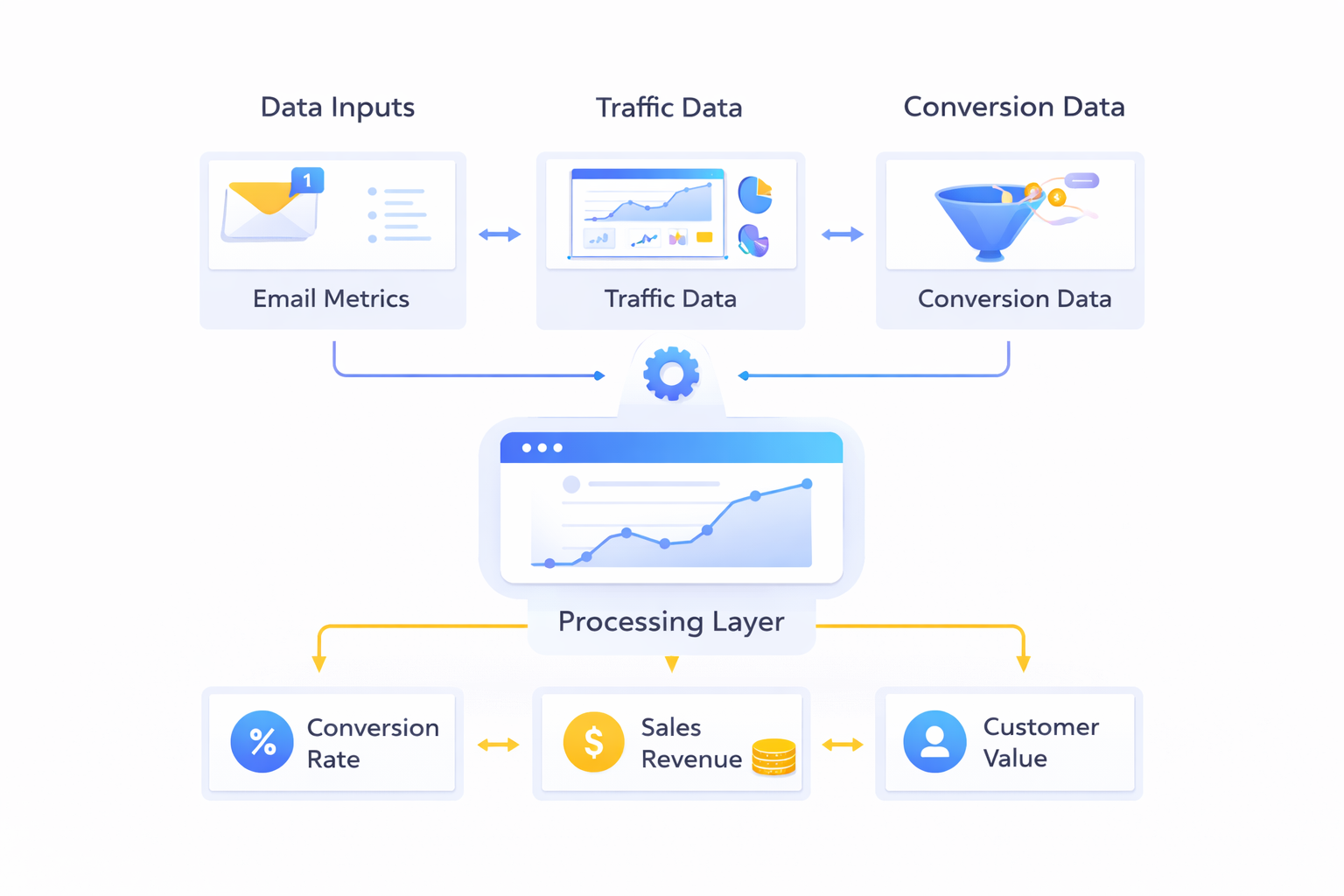
What systeme.io Lets You Measure
The first thing to understand is that systeme.io is not blind once your campaign goes live. On the email side, the platform explicitly tells users to monitor open rate, click rate, bounce rate, and spam report rate, which are the core numbers that tell you whether your list is healthy and whether your message is landing. That matters because bad data hygiene can quietly destroy performance long before you notice revenue slipping.
It also helps that systeme.io does not pretend those numbers should be read in a vacuum. Its deliverability guidance explains that the reported data can vary depending on device behavior, ISPs, and privacy changes, especially on Apple devices, which is an important reminder that no single email dashboard should be treated like a perfect mirror of reality. In other words, the platform gives you useful directional numbers, but you still need to interpret them like an operator rather than a tourist.
That is actually a good sign, not a weakness. When a company is willing to tell users that measurement has limits, it usually means the platform is being presented more honestly. For most users, the data systeme.io exposes is enough to spot what is working, what is underperforming, and where the next fix should happen.
Why Email Metrics Matter So Much
If you only watch one category of data inside systeme.io, email performance would be the smartest place to start. Revenue usually does not disappear all at once. It leaks. It leaks through weak subject lines, exhausted lists, bad sender reputation, poor segmentation, and follow-up sequences that stop matching buyer intent. That is why email statistics are not just “nice to have.” They are the early warning system for your entire funnel.
systeme.io’s own help content leans into that point. The platform explains that high bounce rates threaten deliverability, and its more advanced deliverability guidance pushes users toward authenticated domains, list quality, and ongoing analysis of email statistics. That means the platform is not just giving you a dashboard and walking away. It is telling you which metrics can damage or improve the business if you ignore them.
There is also a useful scale signal here. systeme.io states in a recent help article that it uses its own infrastructure to send more than 5.2 million emails every 30 days to a list of 600,000-plus contacts. You should never take a vendor claim as the only truth you believe, but it does show the company is actively positioning email performance and volume handling as part of its credibility story in 2026.
UTM Tracking and Source Clarity
One of the easiest ways to waste money is to generate leads and then have no clean way to tell where they came from. systeme.io gives users a workable answer here through its support for UTM parameter tracking, which lets you tag links and understand which traffic source or campaign produced the opt-in. That may sound simple, but it is exactly the kind of simple that saves you from making dumb budget decisions.
This matters because a funnel rarely lives in one channel. You may be running organic content, email promotions, partner links, paid ads, and social traffic at the same time. Without source-level clarity, it becomes very easy to overvalue the loudest channel and undervalue the one that is quietly producing the best leads.
UTM tracking does not make systeme.io a full attribution platform, and it should not be described that way. What it does do is give you a much cleaner picture of how traffic enters the system. For small and mid-sized online businesses, that is often enough to improve decision-making dramatically without buying another analytics subscription.
Pixel, Event Tracking, and Paid Traffic Feedback
If you use paid traffic, then a systeme.io review 2026 cannot ignore event tracking. Paid acquisition gets expensive fast, and once money is on the line, vague reporting stops being acceptable. systeme.io addresses this through official guidance on connecting Facebook Pixel and event setup, which allows marketers to push conversion signals into ad platforms and build a more reliable feedback loop.
This is one of the most practical ways to judge the platform. A good all-in-one tool should not trap you inside its own reporting. It should let you combine its internal numbers with ad-platform data so you can evaluate the journey from click to lead to sale with more confidence. systeme.io appears to understand that, which is why these integrations remain part of the current documentation rather than an afterthought.
The right way to think about this is straightforward. Internal platform stats tell you what happened inside the system. Pixels and events help your ad platform understand what kind of behavior to optimize toward. When both are working together, you stop flying blind.
How to Read the Data Without Fooling Yourself
This is where a lot of marketers get themselves into trouble. They look at one dashboard, see one encouraging number, and suddenly believe the whole funnel is healthy. That is rarely true. The better approach is to treat metrics as a chain. If opt-ins are strong but clicks are weak, the problem may be message quality. If clicks are healthy but sales are weak, the problem may be offer positioning or checkout friction. If sales exist but deliverability is falling, future revenue may already be under threat.
systeme.io gives you enough information to think this way if you are disciplined about it. Its help content around deliverability, bounce management, and workflow behavior creates a very practical framework: watch the contact source, watch the email response, watch the conversion path, and fix the part of the system that is actually broken instead of guessing. That sounds simple, but it is how smart operators separate themselves from people who keep changing random things and hoping for the best.
The important point is that no single metric deserves hero status. Open rates can be noisy. Click rates can flatter weak offers. Revenue can hide list quality problems until they get painful. The real value is in connecting the numbers and understanding how one stage of the funnel is affecting the next.
Where systeme.io Analytics Are Strong and Where They Are Not
The strength of systeme.io’s analytics is that they are close to the work. You can launch a page, run traffic, capture leads, send email, watch the basic outcomes, and improve the campaign without needing a stack of separate reporting tools just to understand the basics. For many creators, consultants, course sellers, and digital businesses, that is exactly the right level of depth.
The limitation is that systeme.io is still designed as a practical all-in-one business platform, not as a dedicated BI environment. If your team needs advanced attribution modeling, deep cohort analysis, complex revenue reporting across many sales motions, or highly customized dashboards for multiple departments, you will eventually want to pair it with more specialized measurement tools. That is not a flaw unique to systeme.io. It is simply the reality of where an all-in-one platform is strongest.
So the fairest conclusion is this: systeme.io gives you enough statistics and data to manage, optimize, and grow a lean online business intelligently. It does not try to be everything. It tries to give you the numbers that matter most to action, and for the audience it serves best, that is often the smarter tradeoff.
How to Use the Data Professionally
The professional way to use systeme.io data is to build a simple review rhythm. Check traffic sources, check opt-in performance, check email response, check conversion flow, and then make one clear improvement based on what the numbers actually suggest. That keeps the platform working as an operating system rather than a collection of disconnected features you only touch when something breaks.
It also helps to remember that clean data usually begins with clean setup. Use a custom domain, authenticate it properly, track traffic with UTM tags, connect your event tracking when you are running ads, and watch list quality before deliverability problems start multiplying. systeme.io’s own documentation keeps reinforcing those habits because the platform works better when the business running on top of it is disciplined.
If that kind of measured, practical workflow is what you want, systeme.io becomes very compelling. And if you want to test the reporting and campaign flow in a live environment, you can start with a free systeme.io account here. In the next part, we will step back from implementation and data, then look at pricing, strengths, weaknesses, and the alternatives that deserve a real comparison.
Final Verdict and FAQ
If you have made it this far through this systeme.io review 2026, you already know the real answer is not “this platform is perfect” and it is not “this platform is only for beginners.” The truth is more useful than either of those lazy takes. systeme.io is one of the strongest low-cost all-in-one platforms for creators, consultants, coaches, affiliate marketers, and digital-first businesses that want to launch fast, keep their stack lean, and avoid paying premium-software prices before the business actually demands it.
That is where systeme.io keeps winning in 2026. It brings together funnels, email marketing, automations, course delivery, websites, blogs, affiliate management, and selling tools in one environment, while still keeping the barrier to entry low through a free plan and paid options that remain far below many competing platforms. When you combine that with strong public sentiment on Capterra, G2, and Trustpilot, it becomes very hard to dismiss the platform as just a cheap alternative.
At the same time, you should not buy it for the wrong reason. If you need deep enterprise analytics, unusually advanced ecommerce operations, or endless design freedom, you may outgrow it or prefer a more specialized stack. But if your goal is to get leads, sell digital products or services, automate follow-up, and keep execution clean, then systeme.io is absolutely worth serious consideration. And if you want to test it without making a painful commitment, the smartest move is to start with the free systeme.io plan here and see whether the workflow fits the way you actually do business.

FAQ – Built for the Complete Guide
Is systeme.io still worth it in 2026?
Yes, for the right type of business it absolutely is. systeme.io is still worth it in 2026 if you want one platform that can handle the core jobs of online selling without forcing you into a bloated monthly software bill. The combination of broad feature coverage, a free entry point, and comparatively low paid pricing makes it especially attractive for lean businesses that care more about execution than software prestige.
Who is systeme.io best for in 2026?
It is best for creators, coaches, consultants, affiliate marketers, educators, and small online businesses that sell digital products, services, memberships, or lead-generation funnels. The platform is especially compelling when you want your pages, email, automation, and delivery flow to live together instead of being spread across multiple tools. That makes systeme.io a strong fit for people who need momentum more than maximum customization.
Is systeme.io good for beginners?
Yes, but that answer needs a little nuance. systeme.io is good for beginners because it is simpler than many premium alternatives and gives users one place to build the most important parts of an online business. But it is also good for experienced operators who are tired of overpaying for software they do not fully use and want a more efficient setup.
Can you build a full business on systeme.io?
In many cases, yes. You can use systeme.io for funnels, websites, blogs, courses, affiliate management, and automation workflows, which means many digital-first businesses can run most of their operation inside one platform. The important caveat is that “full business” depends on the business model. Digital and service-driven models fit it much more naturally than complex physical-product operations.
Is systeme.io better than ClickFunnels?
It depends on what you value most. systeme.io is better for many users when affordability, simplicity, and all-in-one operating efficiency matter more than premium branding or extra funnel-specific polish. ClickFunnels may still appeal to people who are willing to spend more for its ecosystem and funnel-focused experience, but with ClickFunnels starting at $97 per month and systeme.io offering a free plan plus lower paid tiers, systeme.io often wins the value argument very quickly.
Does systeme.io have email marketing and automation?
Yes, and that is one of the main reasons the platform is taken seriously. systeme.io includes email broadcasts, sequences, automation rules, visual-style workflows, and event-based actions such as triggering automations after an email link click. For a lot of small and midsized online businesses, that is enough automation power to run a meaningful customer journey inside one platform.
Can systeme.io host courses and memberships?
Yes. systeme.io is built to support online courses and digital delivery, which makes it a natural option for educators, coaches, experts, and digital-product sellers. One of the biggest advantages here is that payment, access, and follow-up can stay connected, which reduces the kind of friction that often appears when course delivery is handled in a completely separate system.
Does systeme.io work for physical products?
Only up to a point, and this is where people need to stay realistic. You can still use funnels and checkout-related tools to market physical offers, but systeme.io’s own documentation notes that physical product delivery must be managed outside the platform. That means it is not the strongest choice if your business depends heavily on fulfillment logistics, inventory complexity, or a robust ecommerce backend.
Does systeme.io have good analytics?
It has practical analytics, which is the more useful way to describe it. systeme.io gives users access to meaningful operational data, including email performance guidance around open rate, click rate, bounce rate, and spam report rate, plus the ability to use UTM tracking and connect pixel events. That is more than enough for many lean businesses, even if it is not a replacement for deep enterprise BI tools.
Is systeme.io reliable for email sending?
The platform appears to take this seriously, and that matters a lot. systeme.io publishes deliverability guidance around bounce control, domain authentication, and sender quality, and it also states in a recent help article that it sends more than 5.2 million emails every 30 days to over 600,000 contacts on its own infrastructure. That does not mean every user will automatically get perfect results, but it does suggest the company is operating at meaningful scale and is actively thinking about deliverability performance.
Can you use your own domain with systeme.io?
Yes, and you should if you want to operate professionally. systeme.io provides documentation for connecting a domain and also makes clear that domain authentication is required for sending emails from your own domain. That is not a minor technical detail. It is one of the foundations of trust, deliverability, and brand consistency.
Does systeme.io have an affiliate program feature?
Yes, and that is one of the most commercially useful parts of the platform. systeme.io allows users to set up their own affiliate program, which can give a business more distribution without immediately increasing ad spend. For creators and digital sellers, this can be a very practical way to expand reach and sales.
What is the biggest strength of systeme.io?
Its biggest strength is that it reduces software sprawl without stripping away the features that most online businesses actually need. You can build pages, collect leads, send email, automate follow-up, sell offers, and deliver digital products without needing a patchwork setup. That kind of simplicity can be worth more than extra bells and whistles that look impressive but slow down execution.
What is the biggest weakness of systeme.io?
Its biggest weakness is that its simplicity can become a limitation for businesses with highly specialized needs. If you need deep ecommerce operations, advanced enterprise reporting, or extremely custom design and workflow behavior across many teams, you may eventually feel constrained. systeme.io is strongest as a practical business operating system, not as the most customizable platform in every category.
Should you try systeme.io before paying?
Yes, that is the smartest way to approach it. Because systeme.io offers a free plan, you can test the builder, email flow, automation structure, and product setup before deciding whether the paid tiers make sense. That gives you a much better answer than reading ten more reviews, because you get to see whether the workflow fits your business in practice.
Work With Professionals
If reading this systeme.io review 2026 has done one thing, it should have made the bigger picture obvious: tools matter, but the people using them matter even more. A strong platform can help you move faster, sell more cleanly, and reduce unnecessary complexity. But when you want better campaigns, stronger funnels, sharper copy, higher-performing email sequences, or smarter growth strategy, the fastest shortcut is often working with people who already know how to make those things happen.
That is why it makes sense to think beyond software. Whether you use systeme.io, ClickFunnels, or another stack entirely, results usually come from clear strategy, execution discipline, and the willingness to work with marketers who know how to turn traffic and attention into revenue. If you want that kind of edge while still keeping your options open, you can also compare ClickFunnels here and decide which ecosystem best supports the way you want to build.
Explore 10K+ Remote Marketing Contracts on MarkeWork.com
Most marketers spend too much time chasing clients, competing on crowded platforms, and losing a percentage of every project to middlemen.
MarkeWork gives you a better way. Browse thousands of remote marketing contracts and connect directly with companies desperate to hire skilled marketers like you without platform commissions and without unnecessary gatekeepers.
If you’re serious about finding better opportunities and keeping 100% of what you earn, you can explore available contracts and create your profile for free at MarkeWork.com.
 Filip Konecny Enterprises