

A legendary marketer is not just someone who knows how to run ads, write copy, or publish content on schedule. The real difference is that this kind of marketer understands how attention turns into trust, how trust turns into demand, and how demand turns into durable growth that keeps paying off long after a campaign ends. That matters even more now, because Edelman’s 2025 brand trust research shows people increasingly judge brands through personal relevance, optimism, and practical value rather than empty positioning.
That shift is why the phrase legendary marketer deserves a higher standard than internet hype usually gives it. A legendary marketer sees the full system, from message to market timing, from audience psychology to measurement discipline, and from creative instinct to operational consistency. This article breaks that system into six parts so you can understand what makes a marketer unforgettable, useful, and commercially dangerous in the best possible way.
Article Outline
- Part 1: Why Legendary Marketers Matter
- Part 2: Framework Overview
- Part 3: Core Components
- Part 4: Professional Implementation
- Part 5: Analytics and Optimization
- Part 6: Ecosystem, Longevity, and FAQ
Why It Matters

The reason a legendary marketer matters is simple: markets are noisier, faster, and less forgiving than they used to be. Google’s reporting on AI-powered search behavior shows that people are asking longer, more complex questions and moving from discovery to decision with less patience for vague messaging. In that environment, average marketing gets ignored, while precise positioning and memorable brand signals compound.
Legendary marketers also matter because companies cannot rely on tactics alone anymore. Nielsen’s 2025 Annual Marketing Report emphasizes the need to balance brand building with performance and to measure media in a more holistic way, which means the marketer who can connect long-term brand value with short-term revenue becomes enormously valuable. That person is not just producing marketing assets; they are shaping the commercial engine of the business.
There is another layer to this as well. Kantar’s recent work on brand strength keeps coming back to the same core idea: the brands that win create connections that are meaningful, different, and salient. A legendary marketer knows how to build all three at once, which is why their work travels farther, sticks longer, and creates stronger demand than campaigns that chase clicks without creating memory.
Framework Overview
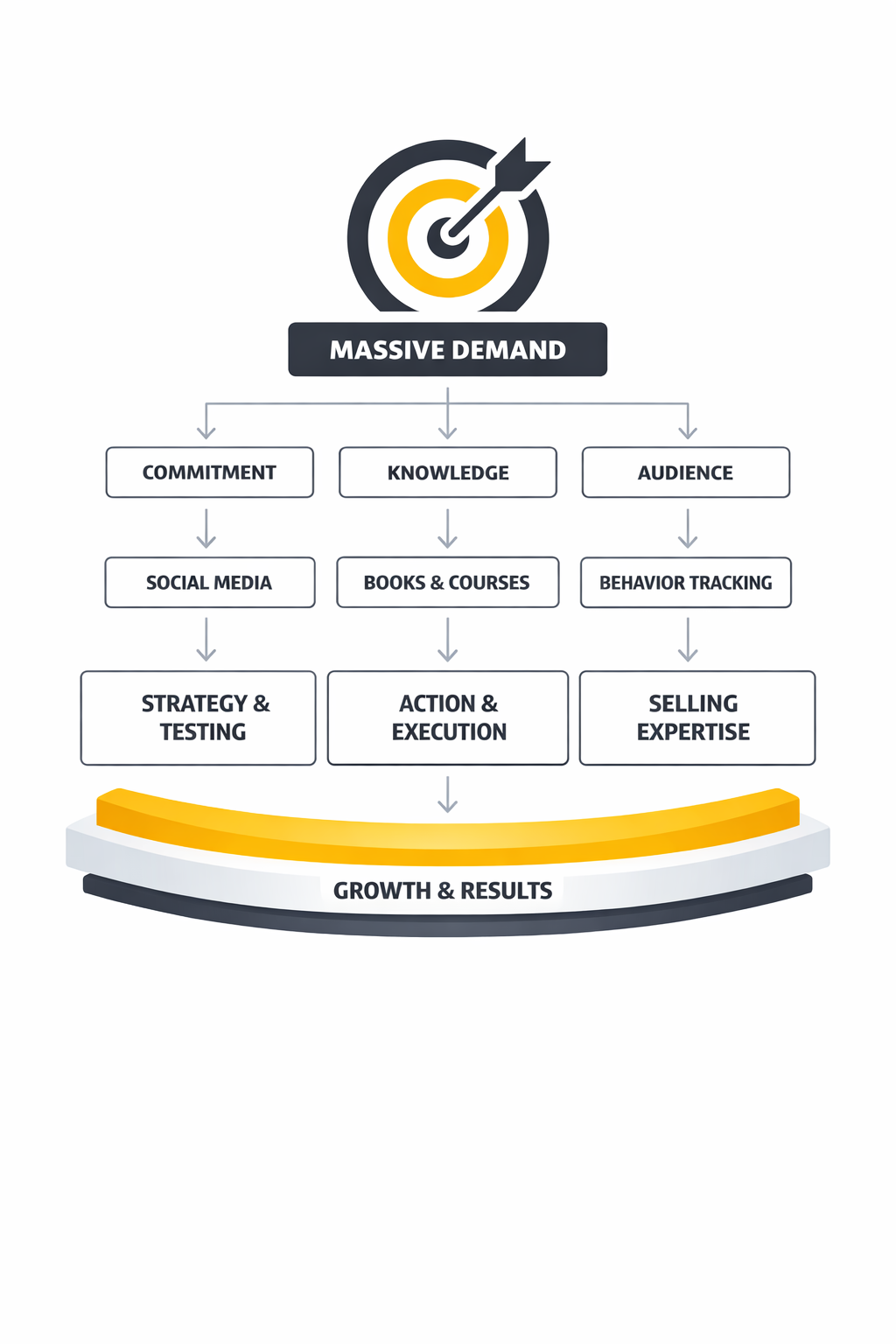
The easiest way to understand a legendary marketer is to stop thinking in terms of isolated channels and start thinking in terms of a connected framework. At the highest level, that framework has six layers: audience insight, market positioning, message architecture, distribution strategy, conversion design, and measurement feedback. When those layers work together, marketing stops feeling random and starts feeling inevitable.
Audience insight comes first because no one becomes legendary by talking louder than everyone else. They become legendary by seeing the customer more clearly than everyone else, then turning that understanding into language and offers that feel immediately relevant. That is why McKinsey’s latest work on personalized marketing matters so much here, because it highlights how tailored experiences are becoming a larger part of competitive advantage rather than a nice extra.
From there, the framework moves into positioning and distribution. Positioning tells the market why you matter, while distribution makes sure the market actually sees it in the moments that count. The legendary marketer is the one who understands that creativity without reach is invisible, reach without clarity is wasted, and measurement without judgment can still lead a business straight into expensive mediocrity.
Core Components
The first core component is strategic clarity. A legendary marketer knows exactly who the brand is for, what tension it resolves, why the offer is different, and what the audience should remember after one encounter. That sounds basic, but it is surprisingly rare, which is why so much marketing looks busy on the surface while saying almost nothing underneath.
The second core component is narrative control. Legendary marketers do not leave meaning to chance, because they understand that markets reward the brand that frames the conversation before competitors do. As HubSpot’s latest State of Marketing report explains, trust and distinct point of view are becoming more valuable as AI floods the internet with interchangeable content, which makes original perspective a serious commercial asset.
The third core component is disciplined adaptability. The best marketers do not panic every time platforms change, but they also do not cling to old habits when audience behavior moves. They watch for shifts in search behavior, media efficiency, buyer expectations, and creative fatigue, then adjust the execution while protecting the core brand signal that makes the work recognizable.
Professional Implementation
Professional implementation is where the idea of a legendary marketer becomes practical instead of inspirational. In real work, that means turning strategy into repeatable systems for capture, nurture, conversion, and follow-up so that results do not depend on guesswork every single week. A strong operator might build landing pages in ClickFunnels or Systeme.io, collect richer intent data through Fillout, and connect email follow-up through Brevo or Moosend.
Execution also has to be sustainable, because legendary marketing is not built on random bursts of motivation. Marketers who publish consistently and keep their calendar, workflows, and communication clean have a structural edge, which is why tools like Buffer, Cal.com, Dub, and Wispr Flow can support the operating rhythm behind high-level strategy. The tools themselves do not make someone legendary, but they do remove friction so more energy can go into thinking, creative direction, and sharper offers.
One more thing separates professionals from dabblers: they build assets, not just campaigns. That can include lead magnets from PLR Funnels, community commerce through iMallin, conversational qualification with Chatbase, outbound infrastructure through ScaledMail, and workflow support from Firecrawl or Comp AI. The legendary marketer thinks like an owner, which means every asset should either strengthen trust, improve conversion, increase speed, or widen the moat around the business.
Market Reality Comes Before Marketing Action
The first move in the framework is brutal honesty about market reality. You need to know what customers care about right now, what they ignore, what they distrust, and what they are trying to solve when they search, scroll, compare, and hesitate. That matters even more today because Google’s latest look at AI-powered search behavior shows people are using longer, more complex queries and moving from discovery to decision faster than many brands are prepared for.
That shift changes the job of a legendary marketer. It is no longer enough to blast broad messages and hope repetition does the rest. You have to understand intent at a deeper level, because the audience is showing up with more specific questions, sharper expectations, and less patience for vague claims that sound polished but say nothing.
This is also why customer understanding cannot be outsourced to a dashboard alone. Numbers can show you where attention drops or where conversions rise, but they cannot fully explain why a buyer felt safe, curious, skeptical, or ready to act. The legendary marketer uses research, pattern recognition, customer language, and behavioral data together so the market becomes clear before the campaign even begins.
Positioning Is the Center of the Framework
Once market reality is clear, positioning becomes the center of everything. A legendary marketer decides what role the brand will play in the customer’s mind, what tension it resolves, and what the audience should instantly associate with it after one good interaction. That is the difference between a brand people vaguely recognize and a brand people actively remember when money is on the line.
This is where the framework stops being theoretical and starts becoming commercial. Kantar’s 2025 BrandZ work keeps pointing back to the same winning pattern: strong brands create connections that are meaningful, different, and salient. In plain English, that means the brand has to matter, feel distinct, and come to mind at the right moment. Miss one of those three, and even a big budget can underperform.
A legendary marketer understands that positioning is not a slogan workshop. It shapes what kind of content gets published, what kind of offer gets made, what kind of partnerships make sense, and even what kind of customers the business is willing to disappoint. That last part matters more than most people admit, because clarity usually means choosing who you are not trying to impress.

Message Architecture Turns Positioning into Momentum
After positioning comes message architecture, which is where a legendary marketer earns their reputation. Anybody can write a headline, throw together a reel, or post a clever opinion. What separates the top tier is the ability to create a message system where the core promise stays consistent while the expression adapts across channels, audiences, and buying stages without losing its identity.
This matters because customers rarely meet a brand in a neat, linear sequence. They might see a short-form video, then a founder post, then a landing page, then an email, then a retargeting ad, then a testimonial, and only after all of that decide whether the brand feels coherent or chaotic. A legendary marketer makes those touchpoints feel like parts of one conversation rather than random fragments produced by different people who never talk to each other.
Trust plays a huge role here. Edelman’s 2025 brand trust research shows that trust in brands is tied closely to practical value, ease, optimism, and confidence in the company behind the offer. That means the message cannot just sound exciting. It has to reduce uncertainty, make the next step feel sensible, and prove that the brand understands what the customer actually needs.
Distribution Decides Whether the Framework Lives or Dies
One of the biggest myths in marketing is that great creative naturally finds its audience. Sometimes it does, but most of the time it does not. A legendary marketer treats distribution as a strategic decision, not an afterthought, because even the best message dies quietly if it never reaches the right people with the right frequency and context.
This is exactly why so many brands feel busy but stay forgettable. They produce content without a distribution thesis, publish offers without considering timing, and launch campaigns without knowing whether the channel matches the customer’s state of mind. Nielsen’s 2025 Annual Marketing Report and its related analysis on data-driven marketing decisions both reinforce the same point: what looks easy to measure is not always what produces the strongest business outcome.
A legendary marketer knows the channel is never the strategy by itself. Search captures demand that already exists. Social can create familiarity and emotional connection. Email deepens relationships and drives return behavior. Partnerships borrow trust. Direct outreach can accelerate decision-making. The framework works when each channel has a job and each job supports the same commercial objective.
A Real Example of Framework Thinking Under Pressure
The pressure was public, familiar, and hard to hide. Burger King had spent years watching rivals feel sharper, more culturally alive, and more trusted while its own brand carried the weight of inconsistency, weak execution, and fading relevance. By the time the company leaned into a more candid tone during the 2026 Oscars, it was not trying to create a cute moment. It was trying to prove that it had understood the problem deeply enough to rebuild from it.
The backstory matters here because this was not a one-week creative stunt. Burger King’s parent company had already detailed its multi-year Reclaim the Flame investment plan in its 2024 results, building on the earlier official announcement of the strategy and its spending on advertising, digital, remodels, and operations through the company’s own turnaround blueprint. That is the important part. The framework was bigger than the ad. The ad was simply the visible expression of a broader decision about positioning, experience, and trust repair.
The wall was obvious. You cannot message your way out of operational weakness forever, and you cannot revive a major brand just by sounding louder. Burger King had to deal with the hard fact that attention without proof would only create more skepticism. That is why the story is useful for this framework: it shows that legendary marketing is not about pretending the flaws do not exist. It is about aligning the narrative with a real attempt to fix what broke in the first place.
The epiphany seems to have been that honesty could work only if the rest of the system moved with it. Recent coverage of the Oscars campaign in Business Insider and The Drum shows a brand willing to acknowledge past mistakes rather than hide behind polished brand language. That is framework thinking in action: reposition the brand around self-awareness, make the customer central to the story, and connect the creative expression to a broader operational reset.
The journey was not clean. Turnarounds never are. Even with investment, media attention, and a recognizable brand name, Burger King still had to earn its way back through better execution, stronger consistency, and repeated proof that the promise was no longer just a promise. That is the part too many marketers skip when they study famous campaigns. They look at the surface-level creative and miss the years of system-building underneath it.
The outcome is still unfolding, which makes the lesson even more valuable. Restaurant Brands International’s 2025 results pointed to progress in Burger King U.S. comparable sales, but the bigger takeaway for this article is not the single number. It is the structure. The brand had a market problem, clarified the positioning challenge, invested in the customer experience, then used creative to express a system-wide comeback. That is much closer to what a legendary marketer does than simply launching one flashy ad and praying it becomes a headline.
Execution Systems Keep the Framework from Falling Apart
Frameworks sound impressive until they meet real work. That is why the next layer is execution discipline: the systems that keep messaging, capture, follow-up, and conversion moving without constant chaos. A legendary marketer respects creativity, but they also know creative momentum disappears fast when the operation underneath it is sloppy.
This is the point where tools start to matter, but only because they support the strategy already in place. Someone might build funnel logic in ClickFunnels or Systeme.io, simplify lead capture with Fillout, keep communication flowing through Brevo or Moosend, and maintain publishing consistency through Buffer. None of those tools create strategic clarity on their own, but they can absolutely protect it from being lost in day-to-day mess.
The legendary marketer also builds assets instead of renting all their momentum from algorithms. That might mean stronger lead magnets, better audience qualification, cleaner CRM follow-up, smarter scheduling, or faster research workflows through tools like Copper, Cal.com, Chatbase, or Firecrawl. The principle stays the same: every system should make it easier for the right person to move forward with less friction and more confidence.
The Framework Only Works When It Closes the Loop
The final layer in this overview is feedback. A legendary marketer does not just launch, celebrate, and move on. They close the loop by studying what actually happened, what the market responded to, where trust increased, where attention collapsed, and where the offer created resistance that was invisible during planning.
This matters because modern marketing gets dangerous when performance data is interpreted too narrowly. Salesforce’s latest State of Marketing research highlights how much pressure marketers face around unified data, personalization, and trustworthy AI usage, while McKinsey’s recent work on personalized marketing makes it clear that relevance is becoming a bigger competitive advantage. That means feedback cannot stop at vanity metrics. It has to reveal whether the brand is becoming more useful, more memorable, and easier to choose.
And that is really the framework in one sentence. A legendary marketer studies the market with honesty, claims a position with courage, builds messages with consistency, distributes them with intent, supports them with systems, and then learns fast enough to improve before the market moves again. That is the blueprint the rest of this article will keep unpacking, because once you understand the structure, the tactics finally have somewhere powerful to go.
Customer Empathy That Goes Beyond Surface Data
The first core component of a legendary marketer is real customer empathy. Not fake empathy dressed up as demographic slides, and not a lazy persona document written once and forgotten. Real empathy means understanding what people fear, what they desire, what they compare you to, what they are confused by, and what would make them feel safe enough to take the next step.
This sounds obvious until you look at how much marketing still talks at people instead of with them. The reason that fails is simple: buyers do not reward brands for being busy. They reward brands that feel relevant. That is exactly why McKinsey’s recent work on personalized marketing puts so much emphasis on stronger data, decisioning, design, distribution, and measurement. Better personalization is not just about inserting a first name in an email. It is about understanding context deeply enough that the message feels like it belongs in the moment.
A legendary marketer listens for emotional language, not just transactional language. They study the comments, the objections, the hesitation points, the repeated questions in sales calls, the tone of reviews, and the words customers use when they describe success in their own life. That is where the real gold is, because the market tells you what matters all the time if you care enough to pay attention.
Positioning That Creates Separation
The second core component is positioning. This is where a legendary marketer decides what the brand will stand for in the customer’s mind and, just as importantly, what it will not try to be. Without this, everything starts to blur. The campaigns may be polished, the posts may get engagement, and the site may look modern, but the brand still feels interchangeable because nobody knows why it should be chosen over the alternatives.
Great positioning creates separation. It gives the audience a reason to care and a reason to remember. That is one of the clearest lessons running through Kantar BrandZ 2025 and the company’s newer work on meaningful difference in practice. Brands that feel meaningful, different, and easy to recall are not just admired more. They are more likely to grow, hold pricing power, and stay resilient when the market gets crowded or uncertain.
This is where weaker marketers get nervous, because positioning forces trade-offs. It forces a brand to stop trying to impress everybody. A legendary marketer embraces that tension. They know that a brand that tries to sound relevant to every buyer usually ends up sounding forgettable to the exact people it most needs to win.
Creative Distinction That Builds Memory
The third core component is creative distinction. Legendary marketers know that a message can be accurate, useful, and still completely forgettable if it does not create memory. That is why they obsess over the angle, the phrasing, the character of the brand, the emotional charge of the idea, and the consistency of how it shows up over time.
This is not about being weird for the sake of being weird. It is about making sure the work earns attention and leaves a trace. In a market flooded with AI-assisted content, safe content is often invisible content. Edelman’s 2025 trust findings and the related special report on brand trust point toward a world where people increasingly value usefulness, optimism, and personal relevance. That makes creative distinction even more important, because brands need to feel human, memorable, and credible at the same time.
A legendary marketer knows how to do that without becoming messy. They do not chase novelty just to chase it. They build recognizable patterns. Over time, the audience starts to sense the brand before it even processes the logo, and that is when creative stops being decoration and starts becoming commercial leverage.
Commercial Clarity Around the Offer
Another core component is commercial clarity. This is where a legendary marketer separates themselves from people who are great at attention but weak at getting results. The audience has to understand what is being offered, why it matters now, what outcome it can expect, and what it should do next. If the offer is fuzzy, trust drops. If the next step feels hard, momentum dies. If the promise sounds inflated, skepticism takes over.
Legendary marketers respect how fragile buying intent really is. They know that confusion is expensive. That is why they tighten the promise, reduce friction, answer objections early, and make the path forward feel simple. Even the best content strategy in the world will disappoint if the conversion path is clumsy or the offer sounds like it was written by someone more impressed with themselves than with helping the customer.
This is also the point where good systems help. A marketer might shape a cleaner buyer journey with ClickFunnels, simplify follow-up with Systeme.io, qualify leads with Fillout, or strengthen nurture sequences through Brevo and Moosend. The tools are not the point. The point is that a legendary marketer never lets operational friction quietly kill demand that the creative already earned.
Distribution Discipline and Timing
Next comes distribution discipline. A legendary marketer understands that the same message can look brilliant in one channel and ineffective in another simply because the context is wrong. Timing matters. Format matters. Audience state of mind matters. The distance between first exposure and buying readiness matters. This is why distribution is not a publishing problem. It is a strategic problem.
Most average marketing falls apart right here. The team makes something strong, then spreads it everywhere with the same language and the same expectations. But search, email, short-form video, communities, referral programs, creator collaborations, and landing pages do not do the same job. A legendary marketer assigns each channel a role, then designs the message so the pieces reinforce each other instead of cannibalizing each other.
That kind of discipline has become more valuable as media choices keep multiplying. Nielsen’s 2025 release on global marketer behavior shows how many brands are still wrestling with budget pressure, channel allocation, and measurement clarity. Legendary marketers do not escape that pressure. They simply handle it better because they know where the message belongs and what each touchpoint is supposed to accomplish.
Measurement With Judgment, Not Just Dashboards
The next core component is measurement with judgment. This is where the modern legendary marketer really separates from the crowd, because today there is no shortage of data. There is a shortage of interpretation. You can drown in dashboards and still learn almost nothing if you are measuring the wrong things or reading the right things too superficially.
Legendary marketers know what numbers are directional, what numbers are diagnostic, and what numbers actually matter to the business. They care about conversion quality, repeat behavior, branded search lift, retention, pricing power, and the strength of customer response over time. They also know that some of the most important signals arrive slowly. Brand memory and trust rarely announce themselves in one clean column on a weekly report.
That is exactly why Salesforce’s latest State of Marketing research and Nielsen’s 2025 guidance on data-driven decisions are so relevant. The challenge now is not whether marketers can collect numbers. It is whether they can turn those numbers into better judgment before the next round of spend, creative, and positioning decisions goes live.
Operational Consistency Under Real Pressure
Another core component that does not get enough credit is operational consistency. Legendary marketing is rarely built by people who only perform when inspiration hits. It is built by people who can keep the standard high when deadlines stack up, when campaigns underperform, when leadership wants answers, and when the market changes faster than the playbook.
This is where systems become part of craft. Publishing rhythm, internal communication, scheduling, research workflows, CRM hygiene, and handoff clarity all matter because inconsistency leaks trust inside the company before it ever damages trust outside the company. A legendary marketer builds enough structure to move fast without turning the whole operation into a fire drill every week.
That might mean using Buffer to keep distribution disciplined, Copper to strengthen relationship follow-up, Cal.com to reduce scheduling friction, Chatbase to improve conversational qualification, or Firecrawl to speed up research and monitoring. Again, no tool makes someone legendary on its own. But strong operating systems protect the quality of the work when pressure is high and patience is low.
A Real Story That Shows These Components Working Together
The tension was visible long before the market started calling it a success story. Duolingo had an iconic mascot, a growing product, and a tone that felt wildly different from the usual education brand, but that did not automatically guarantee durable commercial performance. It still had to prove that irreverent social attention could coexist with serious growth, real retention, and a business strong enough to keep compounding instead of burning bright for a moment and fading.
The backstory is what makes this example worth studying. Duolingo did not build its reputation by acting like a traditional corporate marketer. Its public filings describe a model that leaned for years on organic growth and word-of-mouth, then used brand marketing to amplify that base rather than replace it through brute-force paid acquisition, as shown in its 2024 annual report filed with the SEC and reinforced in the company’s 2025 Form 10-K. That matters because it shows a real strategic spine. The personality was not random. It was connected to an actual growth model built around virality, awareness, and engagement.
The wall came when the brand had to scale without losing the thing that made people care in the first place. That is harder than it looks. Once a brand becomes known for social creativity, the temptation is to keep pushing for louder moments just to prove you still have it. But louder is not always better. Duolingo needed the voice to stay culturally sharp while still supporting product trust, user growth, and a more mature business story.
The epiphany seems to have been that the community itself could help guide the brand, not just consume it. In Adweek’s 2025 look at Duolingo’s social-first strategy, the team described the comment section as part of the brief, which is one of the clearest examples of a legendary marketer’s mindset you will find in the wild. That is customer empathy, creative distinction, and distribution intelligence working together instead of sitting in separate departments pretending they are unrelated.
The journey kept moving as the company expanded the brand into bigger cultural moments and broader business infrastructure. It experimented with partnerships like the Love Island USA activation in 2025, explored new audience hooks such as the Bad Bunny campaign ahead of Super Bowl 60 in 2026, and even began building more direct advertising capabilities through its in-house ad platform initiative. That progression matters because it shows the brand maturing from social cleverness into a broader commercial system without abandoning the identity that made it distinctive.
The final conflict was the one every admired brand faces: proving that attention can translate into numbers that survive scrutiny. Creativity earns headlines, but investors and operators still want evidence. Duolingo had to show that the brand was not just entertaining the internet. It had to show that the work helped the business grow with real discipline behind it.
The outcome is why the story belongs in this section. Duolingo’s full-year 2025 results and the related shareholder materials reported strong year-over-year gains, including DAU growth of 30% in the fourth quarter of 2025. That does not mean every funny post directly caused a revenue line to rise. It means the company built the much harder thing: a brand system where customer empathy, positioning, creative distinction, distribution discipline, and commercial clarity all fed the same engine. That is what a legendary marketer is really trying to build.
Why These Components Have to Work Together
The biggest mistake people make is trying to borrow one component while ignoring the rest. They want the bold creative without the customer empathy. They want the funnel without the positioning. They want the brand voice without the measurement discipline. That almost never holds up, because the power comes from the combination.
A legendary marketer becomes legendary when the market feels that combination all at once. The brand feels sharp because the positioning is clear. The message feels relevant because the customer understanding is deep. The conversion feels natural because the offer is well-structured. The growth feels durable because the team measures with judgment and operates with consistency. None of these pieces should be treated like extras.
That is why these core components deserve so much attention. They are not just the habits of famous marketers. They are the foundation that turns good work into work that compounds, and turns marketing from a department people tolerate into a force that shapes the future of the business.
Statistics and Data
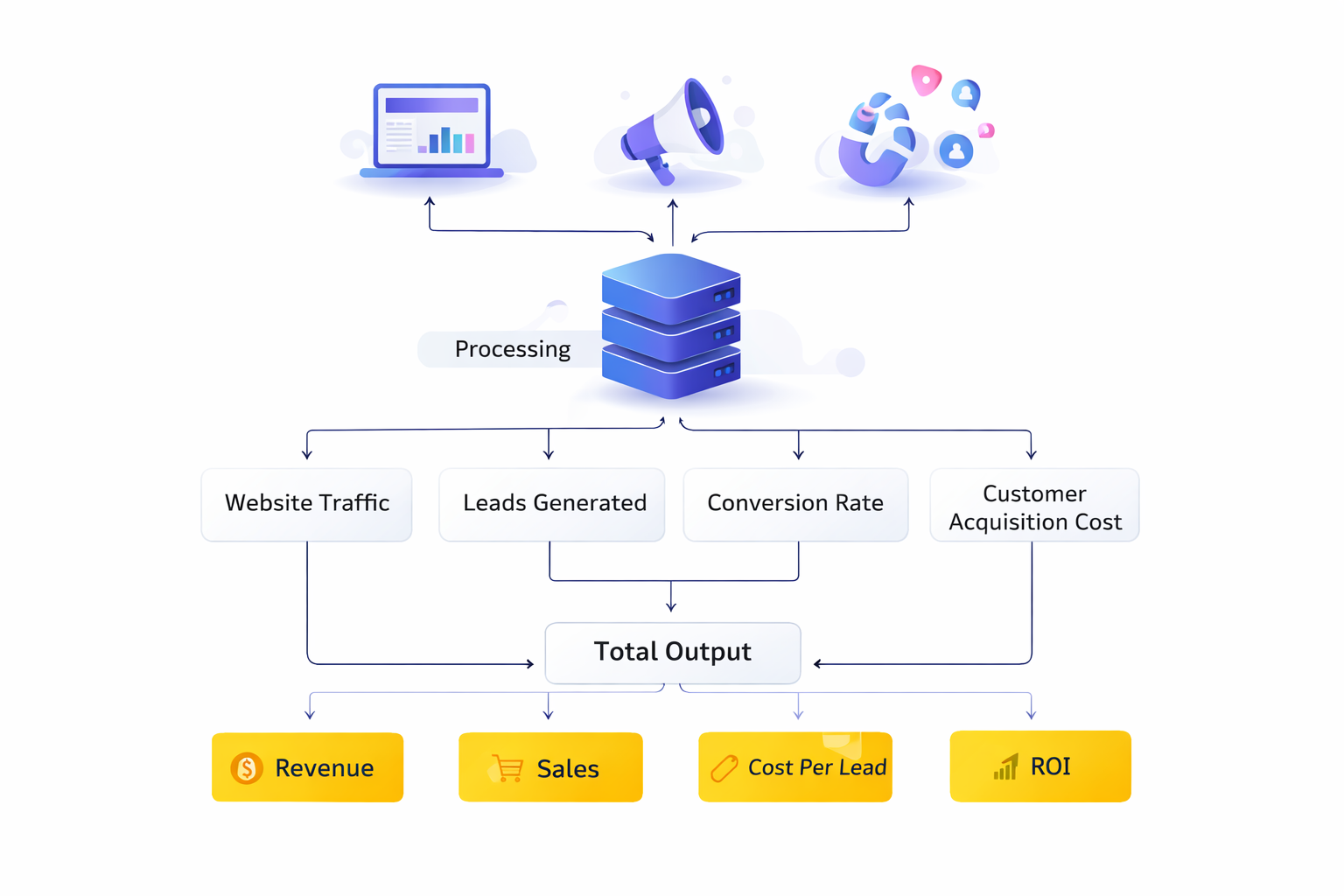
A legendary marketer does not hide behind vague momentum. They know how to read the numbers without becoming hypnotized by them, and that is a bigger skill than most people realize. Plenty of marketers can open a dashboard. Far fewer can tell the difference between a metric that looks impressive in a meeting and a metric that actually reveals whether demand, trust, and revenue are getting stronger.
This is where statistics and data become useful instead of distracting. The point is not to collect as many numbers as possible. The point is to use the right numbers to see whether the brand is earning attention, whether the offer is converting that attention, and whether the system is becoming more efficient over time. That is exactly how a legendary marketer stays grounded when trends get noisy and platforms keep changing the rules.
The Numbers That Reveal Marketing Maturity
The first thing a legendary marketer understands is that mature marketing teams measure more than one type of success at once. That is why Nielsen’s 2025 Annual Marketing Report is so revealing: its global survey of 1,400 marketers with budgets of at least $1 million shows that most marketers are trying to balance both ROI and reach rather than obsessing over one in isolation. In other words, the market is slowly admitting what legendary marketers have known for a long time: performance without brand gets fragile, and brand without commercial proof gets ignored.
That balance is not a soft idea. It is operational. In the same Nielsen report, the global average on cross-media measurement shows 60% focusing on both reach and ROI, while a much smaller share focus on ROI alone or reach alone. That matters because the legendary marketer is not trying to win a dashboard beauty contest. They are trying to build a business that can create demand now and stay memorable later.
The data also shows why weak marketers often get trapped. They measure the easiest thing, then treat it like the most important thing. A legendary marketer does the opposite. They begin with the business outcome, then work backward to the metrics that help explain whether the current strategy is helping or hurting that outcome.
Why Personalization Data Is Now a Serious Divide
One of the clearest statistical gaps in modern marketing is the space between what teams know they should be doing and what they can actually execute. Salesforce’s Tenth Edition State of Marketing, built from responses from nearly 4,500 marketing leaders worldwide, found that 83% of marketers recognize the shift toward personalized, two-way engagement, yet only one in four are satisfied with how they use data to power those moments. That is not a small efficiency problem. It is a strategic gap.
A legendary marketer pays attention to that kind of gap because it explains why so much modern marketing feels technically advanced but emotionally generic. The tools are there. The data is there. The intent is there. But the experience still often feels like the brand is guessing rather than understanding. When a marketer can close that gap, relevance goes up, trust gets easier to earn, and conversion often improves without needing louder claims.
This is also where legendary marketers become more valuable than people who just know software. The software can automate, segment, and predict. But it still takes judgment to decide what a customer should hear, when they should hear it, and what kind of message would actually feel useful instead of invasive. Data becomes powerful only when it passes through intelligent interpretation.
The Metrics That Actually Deserve Your Attention
If you want to think more like a legendary marketer, stop treating every metric like it deserves equal respect. It does not. The most useful metrics are the ones that tell you whether the business is getting closer to profitable demand, stronger retention, and higher trust. That is one reason HubSpot’s latest marketing statistics roundup is helpful. It shows marketers increasingly prioritizing lead quality, conversion, ROI, and customer acquisition cost over fluffier measures that look exciting but explain very little.
Some of the most practical numbers in that HubSpot data are the ones that force discipline. The report notes that 40% of marketers named lead quality and marketing qualified leads as their most important success metric, while 93% reported that personalization improves leads or purchases. Those numbers do not tell you to worship personalization as a buzzword. They tell you that a legendary marketer should care about whether the right people are moving closer to purchase, not just whether more people happened to click.
That mindset changes how campaigns are built. Once you care more about lead quality than cheap volume, your copy gets sharper, your offer gets tighter, your forms get smarter, and your follow-up becomes less desperate. That is not just better reporting. It is better strategy disguised as measurement discipline.
What Channel Data Is Telling Us Right Now
Channel data matters, but only when you understand what the channel is supposed to do. A legendary marketer does not choose channels because everybody else is talking about them. They choose them because the behavior inside the channel matches the job that needs to be done. HubSpot’s recent video marketing analysis and its broader 2026 marketing statistics page both point in a similar direction: short-form video continues to lead on reported ROI, and video remains central to how marketers think about attention and education.
That does not mean every brand should mindlessly pump out clips all day. It means a legendary marketer reads the signal underneath the number. People want clarity fast. They want proof quickly. They want a reason to care before they spend time reading further. That is why strong marketers treat short-form video as an entry point into a larger journey rather than pretending a single format should carry the entire growth engine.
Search behavior is shifting in the same direction. Google’s recent work on AI-powered search behavior explains that queries in AI-driven experiences are becoming longer and more complex, and that the time from discovery to decision may shorten as a result. The legendary marketer reads that and immediately understands the implication: messaging has to answer richer intent faster, and content has to be ready for customers who arrive more informed than they did a year ago.
Brand Value Data Proves Memory Still Pays
There is another layer of data that a legendary marketer never ignores, and that is brand value. Direct-response marketers sometimes act as if only immediate conversion matters, but the largest brands in the world keep proving otherwise. Kantar BrandZ 2025 reported that the Top 100 global brands reached a record value of $10.7 trillion, and the ranking draws on the views of more than 4.3 million respondents across 21,000 brands and 532 categories.
That scale matters because it reminds you that brand is not a fluffy extra. It is economic power. It supports preference, pricing, resilience, and recall. A legendary marketer knows that if the audience remembers you more easily, trusts you more naturally, and understands your role more quickly, then every later conversion activity gets lighter, cheaper, and more effective.
This is one reason mediocre marketing often feels so expensive. The business is constantly paying to reintroduce itself because it never built enough mental availability in the first place. Legendary marketers use data not only to improve immediate outcomes, but also to strengthen the memory structures that make future outcomes easier to win.
A Real Case Where the Data Backed the Marketing
The pressure on e.l.f. Beauty was not subtle. Once a brand gets praised for culture, speed, and digital instincts, the expectations stop being fair. The market wants proof that the creative energy is more than internet applause. It wants to see whether the numbers underneath the brand are strong enough to survive investor scrutiny, category competition, and the brutal reality of scaling while staying distinctive.
The backstory is part of why this case matters so much. e.l.f. did not build its rise by behaving like a sleepy beauty incumbent. It pushed hard on affordability, distribution, product innovation, cultural relevance, and digital-first brand building, and that posture showed up clearly in its filings and earnings materials. In its 2025 annual report, the company disclosed $318.8 million in marketing and digital expense for the fiscal year ended March 31, 2025, which was about 24% of net sales. That is not passive marketing. That is commitment.
The wall, of course, is that spending more does not automatically make the marketer legendary. It only raises the stakes. When a company invests at that level, the pressure to prove that the marketing is driving real growth becomes intense. Plenty of brands can talk about culture. Far fewer can connect that cultural presence to serious commercial movement.
The epiphany in e.l.f.’s case was not one magical campaign. It was the decision to make brand energy and business performance work together instead of pretending they live in separate worlds. The company kept leaning into distinctive marketing while also expanding distribution and product relevance. That is what makes the data meaningful here. It was not showing isolated creative success. It was showing coordinated execution.
The journey was long enough to matter. e.l.f. kept building in public, kept reinforcing its personality, and kept investing in digital and community-driven growth instead of toning itself down into generic beauty language. You can see the commercial result in the company’s full fiscal 2025 results, where net sales grew 28% and U.S. market share increased by 190 basis points. Those are the kinds of numbers that turn a fun brand story into a serious marketing case study.
The final conflict is the one every admired brand eventually meets: can you keep the identity sharp while getting bigger? Scale loves sameness. Committees love safe language. Growth can tempt a company to flatten the very edge that helped it rise. That is why so many once-exciting brands become less memorable as they grow.
So far, e.l.f. has shown why data matters to a legendary marketer. The numbers gave the brand permission to keep being bold because the boldness was clearly tied to results. That is the dream outcome in this section. Not vanity. Not noise. Real performance that lets the marketer defend great work with evidence instead of hope.
How a Legendary Marketer Reads a Dashboard
When a legendary marketer opens a dashboard, they are usually asking a tighter set of questions than everyone else in the room. Is attention getting more qualified? Is demand becoming easier to convert? Is the message creating stronger response from the right segment? Is the brand being remembered more easily over time? Is the funnel leaking because the promise is weak, the offer is confusing, or the follow-up is slow?
That kind of reading turns data into decision-making. It is also why better systems matter. Strong marketers often connect reporting with operations so they can act quickly when patterns emerge, whether that means improving capture flows with Fillout, tightening conversion paths in ClickFunnels, streamlining nurture inside Brevo or Moosend, and keeping channel execution consistent through Buffer. The tools are secondary. The point is that the data should trigger action, not just commentary.
And that is really the heart of statistics and data in the hands of a legendary marketer. The numbers are there to sharpen judgment, not replace it. When used well, they tell you what deserves more fuel, what needs repair, and what should be cut before it quietly wastes another quarter of your time and money.
The Short List of Metrics Worth Respecting
- Lead quality because weak-fit leads make the whole funnel look busier than it really is.
- Conversion rate by source because traffic without buying intent can flatter a bad channel mix.
- Customer acquisition cost because growth that gets steadily more expensive is often hiding a strategic problem.
- Retention and repeat behavior because the market tells the truth after the first purchase.
- Branded search and direct demand because stronger memory usually makes future selling easier.
- Revenue contribution by campaign or segment because activity only matters when it connects to business outcomes.
If you keep coming back to those kinds of numbers, you start thinking less like a content machine and more like a legendary marketer. That is the real shift. The goal is not to worship data. The goal is to use data to become impossible to fool, especially when the market gets loud and everybody else starts mistaking motion for progress.
Analytics and Optimization
This is the stage where a legendary marketer either proves they are the real deal or gets exposed. Anybody can launch something and call it momentum. The harder job is looking at the response with clear eyes, finding out what is actually driving growth, and then making the business sharper without breaking the parts that already work.
That is why analytics and optimization matter so much. They are not the boring cleanup step after the “fun” creative work. They are the discipline that keeps great marketing from turning into expensive self-deception, especially now that Google’s 2025 launch of Meridian and its more recent push around incrementality testing in 2026 are pushing marketers toward more causal, less comfortable ways of measuring what truly moves a business.
A legendary marketer does not optimize just to look busy. They optimize to improve the economics of attention, trust, conversion, and retention. That means the real question is never, “Did one number go up?” The real question is, “Did the business get stronger because of what we changed?”
Optimization Starts With the Right Question
One of the easiest ways to ruin optimization is to begin without a clear commercial question. Teams start changing targeting, copy, offers, follow-up, and landing pages all at once, then they stare at the result like it should somehow explain itself. A legendary marketer does not work like that. They decide what they are trying to improve before the first test even begins.
That question could be about acquiring better customers, reducing waste in a specific channel, improving conversion from qualified traffic, or increasing the percentage of first-time buyers who come back. Once the question is sharp, the whole optimization process becomes more honest. You stop chasing random lifts and start looking for changes that actually matter to the business.
This sounds simple, but it is one of the biggest reasons average marketing gets stuck. People confuse motion with progress. A legendary marketer stays grounded by making every optimization answer a question that the business actually cares about.
Legendary Marketers Trust Experiments More Than Assumptions
The next part of the process is experimentation. A legendary marketer does not assume a campaign worked just because the platform says it did, and they do not panic just because one metric dips for a week. They set up tests that can isolate what changed and what that change really did to the outcome they care about.
That is exactly why Google’s recent work on marketing experimentation matters. It explains why incrementality testing helps answer the uncomfortable question most teams avoid: would those conversions have happened anyway? That question alone can save a company from months of false confidence.
A legendary marketer loves that kind of pressure because it reveals truth. If a campaign is genuinely incremental, it deserves more fuel. If it is merely taking credit for demand created somewhere else, it deserves a very different conversation. That is how optimization starts protecting profit instead of just flattering dashboards.
Budget Allocation Is Part of the Craft
A lot of people still act as if budget allocation is mostly a finance issue. It is not. It is one of the most important creative and strategic decisions a legendary marketer makes, because where money goes determines which messages get reach, which channels get reinforced, and which customer behaviors get shaped over time.
This is one reason Nielsen’s 2025 Annual Marketing Report is so valuable. It shows marketers trying to balance immediate return with broader reach, which is exactly the tension a legendary marketer manages every day. If you put too much money into bottom-funnel capture, you can harvest demand while starving future demand. If you spend too loosely on awareness without strong follow-through, you can create recognition without enough revenue to justify it.
Legendary marketers know budget optimization is rarely about cutting one loser and scaling one winner. Very often, the real job is understanding how channels work together. A search campaign might look brilliant because another channel did the harder work of creating desire earlier. A top-tier marketer sees that relationship before the budget gets misallocated.
Personalization Is Really an Optimization Problem
When people talk about personalization, they often make it sound like a separate discipline. In practice, it is one of the clearest forms of optimization. A legendary marketer is always trying to reduce the distance between what the customer needs in a given moment and what the brand actually delivers in that moment.
That is why McKinsey’s 2025 work on the next frontier of personalized marketing matters so much. The core message is not that technology will magically fix relevance. It is that companies now have more power to tailor experiences, but they still need judgment to decide what should be personalized, when, and for whom.
Salesforce’s Tenth Edition State of Marketing reinforces that pressure from another angle, drawing on insights from nearly 4,500 marketers worldwide. The opportunity is huge, but so is the operational challenge. A legendary marketer understands that personalization only works when the data, message, sequencing, and offer are all aligned well enough that the customer feels understood rather than processed.
You Do Not Optimize Ads, You Optimize Systems
One of the clearest mindset shifts in a legendary marketer is this: they do not stop at the ad. They know a strong hook can pull someone in, but it cannot rescue a weak system forever. If the landing page is confusing, the form is annoying, the email follow-up is flat, or the offer creates friction at the exact moment the customer wants certainty, then the ad is being forced to carry too much weight.
That is why serious marketers optimize full journeys. They improve lead capture with Fillout, tighten the buying path in ClickFunnels or Systeme.io, improve nurture through Brevo or Moosend, and keep channel execution cleaner through Buffer. The point is never to collect tools for the sake of it. The point is to remove friction anywhere it is slowing down trust or revenue.
This is where weaker marketers usually give up too early. They see the cost of traffic rising and assume the market got harder. Sometimes it did. But sometimes the real problem is that the system underneath the traffic was never sharp enough to deserve scale in the first place.
Creative Optimization Still Matters More Than People Admit
Another mistake people make is treating optimization as if it is purely numerical. It is not. A legendary marketer knows that many performance problems are really creative problems hiding inside spreadsheets. The hook is weak. The proof is forgettable. The tone feels safe when it should feel bold. The message explains the product without making the buyer feel the urgency or relief that would move them to act.
This is why creative quality still carries so much commercial weight. Kantar’s 2025 Creative Effectiveness Awards and its broader thinking on connected brand-building keep pointing back to the same truth: creative that earns attention and creates memory matters because it changes the response to everything that follows. A legendary marketer does not optimize creative only to improve a media metric. They optimize it to make the whole commercial journey feel more compelling and easier to believe.
That takes taste, which is one reason optimization is never purely mechanical. The marketer still has to decide whether the work feels flat, whether the tension is strong enough, whether the proof is landing, and whether the audience is being given a real reason to care right now instead of later.
A Real Story of Optimization Under Pressure
The pressure on Airbnb did not come from obscurity. It came from scale. Once a company becomes globally recognized, people stop grading on effort and start grading on outcomes. Every product change, every marketing investment, and every quarter gets judged much harder because the assumption is that a mature company should already know what it is doing.
The backstory is what makes Airbnb such a strong example for this section. In its 2024 annual report filed with the SEC, the company describes a business that relies on a mix of performance marketing, brand marketing, direct traffic, and unpaid channels. That already tells you something important. Growth was never supposed to come from one lever. The system had multiple moving parts, which made optimization both harder and more valuable.
The wall was not simple. Airbnb had demand, brand recognition, and enormous awareness, but that does not mean every user journey was converting as well as it could. When a company operates at that scale, even small points of friction create massive commercial consequences. Search relevance, merchandising quality, payment flexibility, and booking confidence all start to matter in ways that are easy to underestimate from the outside.
The epiphany showed up in Airbnb’s own reporting. In its Q4 2024 financial results, the company said that enhanced search functionality, better merchandising, flexible payment options, and the launch of local payment methods had collectively contributed to higher conversion rates. That is optimization in the real world. Not a trendy hack. Not a cosmetic refresh. A serious company improving the actual mechanics of how demand becomes booked revenue.
The journey did not stop there. In its Q4 2025 results, Airbnb said disciplined execution and continued improvements in search, merchandising, payment and booking options, and simplified fees supported double-digit top-line growth across key metrics in the fourth quarter. That is exactly how a legendary marketer thinks. Keep improving the system. Keep tightening the experience. Keep making it easier for earned demand to convert.
The final conflict was the one every mature brand faces: proving that the optimizations are not just internally satisfying, but commercially meaningful. Product teams can celebrate cleaner flows. Marketing teams can celebrate better conversion. But the market still wants proof that the improvements are changing the business at a meaningful level.
The dream outcome is why Airbnb belongs here. In that same Q4 2024 release, the company reported that nights growth accelerated in Q4 compared with Q3, making it the highest-growth quarter of the year, while full-year revenue surpassed $11 billion. The lesson for a legendary marketer is not to copy Airbnb blindly. It is to understand that the best optimization happens when product, measurement, marketing, and conversion design all move together instead of fighting for credit separately.
What a Legendary Marketer Does After the Results Arrive
Once the numbers come in, a legendary marketer does not rush to defend every decision. They study the outcome long enough to understand what really happened. Then they decide what deserves more investment, what needs to be rewritten, what should be simplified, and what should be cut before it drains more time and budget.
This is also where experience starts to compound. A weaker marketer looks at results and asks whether the campaign won or lost. A legendary marketer asks what the market just revealed about attention, trust, friction, memory, and timing. That creates a much deeper optimization loop because every result becomes intelligence for the next decision.
And that is the real heart of analytics and optimization. They are not separate from great marketing. They are part of the craft itself. A legendary marketer launches with intent, measures with honesty, learns with speed, and returns with a stronger system the next time around.
Ecosystem, Longevity, and FAQ

A legendary marketer eventually stops thinking only in campaigns and starts thinking in ecosystems. That means building a brand people remember, a message people trust, systems that keep working when the founder is offline, and a body of proof that keeps lowering resistance over time. The marketers who last are not just good at launching. They are good at creating momentum that keeps feeding itself.
This matters because the market is getting harder to fool and easier to lose. Edelman’s 2025 brand trust research shows that people increasingly expect brands to feel personally relevant, useful, and confidence-building, while Kantar BrandZ 2025 continues to reinforce how much brand value is tied to meaning, difference, and memory. A legendary marketer understands that if those pieces are not connected, short-term wins rarely turn into long-term power.
The ecosystem mindset also changes how you build a career. You stop asking, “How do I get one result right now?” and start asking, “How do I become so useful, so sharp, and so commercially effective that great opportunities start looking for me?” That is the shift that makes the word legendary feel earned instead of exaggerated.
FAQ – Built for a Complete Guide
What makes a legendary marketer different from a good marketer?
A good marketer can execute a channel well, run a campaign, and help a business grow. A legendary marketer does that while also shaping positioning, building trust, creating memory, and improving the system underneath the results so the business keeps winning after the first success. The difference is not just skill level. It is the ability to combine strategy, creativity, measurement, and commercial judgment into one force.
Can someone become a legendary marketer without a big personal brand?
Yes, absolutely. A personal brand can speed up visibility, but legendary marketers are often made by the results they create, the businesses they sharpen, and the markets they understand better than competitors do. The market eventually notices people who can reliably turn confusion into clarity and attention into revenue, even if they are not the loudest voice online.
Is a legendary marketer born or built?
Built, without question. Some people may start with stronger instincts for language, pattern recognition, or persuasion, but legendary marketing is still the result of repetition, customer empathy, testing, reading, building, failing, and refining judgment under pressure. It is far closer to craft than talent, which is good news because craft can be developed.
Which skills matter most right now?
The strongest mix right now is strategic thinking, creative distinction, data interpretation, customer understanding, and the ability to work with AI without sounding like AI. That aligns with LinkedIn’s 2025 Skills on the Rise analysis, which highlights how quickly job skills are changing, and with Salesforce’s latest State of Marketing report, which shows how much pressure marketers face around personalization, data quality, and execution. A legendary marketer is rarely weak in only one direction. They become powerful by connecting these skills instead of treating them like separate careers.
How important is AI for a legendary marketer?
AI matters, but not in the shallow way people usually talk about it. It can speed up research, ideation, testing, content production, and analysis, but it does not replace taste, positioning judgment, or a deep feel for what makes a buyer trust a message. A legendary marketer uses AI to move faster and see more, not to outsource the thinking that gives the work its edge.
Does a legendary marketer focus more on brand or performance?
They focus on both, because separating them too aggressively usually creates weak decisions. Nielsen’s 2025 Annual Marketing Report makes it clear that many marketers are trying to balance ROI and reach at the same time, and legendary marketers have been thinking that way for years. Brand makes performance easier over time, and performance gives brand-building commercial discipline. The real advantage comes from knowing how the two support each other.
How long does it take to become a legendary marketer?
Longer than most people want, but faster than most people fear if they work with intention. It usually takes years of studying markets, building campaigns, learning to write clearly, improving judgment, and seeing enough real-world results to understand what travels across industries and what does not. The good part is that the process compounds. Each client, campaign, offer, and failed experiment can make the next decision better if you actually pay attention.
What is the biggest mistake that keeps marketers average?
The biggest mistake is confusing activity with leverage. Average marketers often do more and more while learning very little about what truly makes a customer move, trust, remember, or buy. A legendary marketer slows down enough to understand the forces underneath the outcome, which is why their work starts to feel more precise and more profitable over time.
Do legendary marketers need to master every platform?
No, and trying to do that usually wastes years. What they need to master is customer psychology, offer clarity, distribution logic, and the mechanics of attention and trust. Platforms change, formats evolve, and algorithms keep shifting, but the marketer who understands how markets respond can adapt much faster than someone whose whole identity depends on one platform staying fashionable.
How do legendary marketers keep improving?
They stay close to customers, close to performance data, and close to reality. LinkedIn’s 2025 Workplace Learning Report highlights how valuable strategic skills remain and how quickly important capabilities can erode or shift, which is exactly why legendary marketers never assume they are finished learning. They read, test, study businesses, review losses honestly, and keep sharpening the parts of their game that the market is actually paying for.
Is copywriting still a core skill?
Yes, because clear language still moves money. Even when video, AI, automation, and design tools become more powerful, a marketer still needs to express value in a way that feels sharp, human, and believable. Legendary marketers know that great copy is not decoration. It is compressed strategy, emotion, and commercial clarity in a form the market can respond to quickly.
What should a beginner focus on first?
Start with three things: understanding customers, learning how offers work, and writing clearly enough that people instantly understand why something matters. Those three skills will make every later tactic more useful, whether you move into email, paid media, content, funnels, CRM, or brand strategy. A legendary marketer is rarely built from platform tricks first. They are built from understanding people first.
Can you be legendary without working at a famous company?
Yes, because legendary status comes from effectiveness, not logos on a résumé. Working at a big company can expose you to scale, but smaller brands often teach faster lessons about offers, sales, customer pain, and the real cost of weak marketing decisions. If you can help a business grow in the real world, that skill travels.
What does a legendary marketer career look like in 2026?
It looks more flexible, more skills-driven, and more hybrid than the old ladder model. LinkedIn’s official marketing trends analysis described remote options as becoming standard across much of marketing, and that fits the broader direction of the field as companies search for adaptable people who can think strategically and execute fast. A legendary marketer is increasingly someone who can build across tools, channels, and teams without needing constant hand-holding.
Work With Professionals
Once you understand what makes a legendary marketer, the next step is obvious: get around people who think and operate at that level. That could mean hiring a specialist, joining a stronger team, learning from operators with real commercial results, or putting yourself in rooms where weak marketing gets challenged instead of excused. Growth speeds up when your standards do.
This is also why career environment matters so much. If you are surrounded by people who only care about surface metrics, bland messaging, and safe decisions, your growth will slow down no matter how talented you are. But when you work with professionals who care about positioning, systems, trust, measurement, and better offers, you get sharper much faster because the market stops being abstract and starts becoming real.
And that is the final takeaway from this entire guide. A legendary marketer is not simply somebody with clever ideas. It is somebody who commits to understanding people, building systems, earning trust, measuring honestly, and improving until the work becomes hard to ignore. That is the standard worth chasing, because once you reach it, you do not just make marketing better. You make businesses stronger.
Explore 10K+ Remote Marketing Contracts on MarkeWork.com
Most marketers spend too much time chasing clients, competing on crowded platforms, and losing a percentage of every project to middlemen.
MarkeWork gives you a better way. Browse thousands of remote marketing contracts and connect directly with companies desperate to hire skilled marketers like you — without platform commissions and without unnecessary gatekeepers.
If you’re serious about finding better opportunities and keeping 100% of what you earn, you can explore available contracts and create your profile for free at MarkeWork.com.
 Filip Konecny Enterprises