
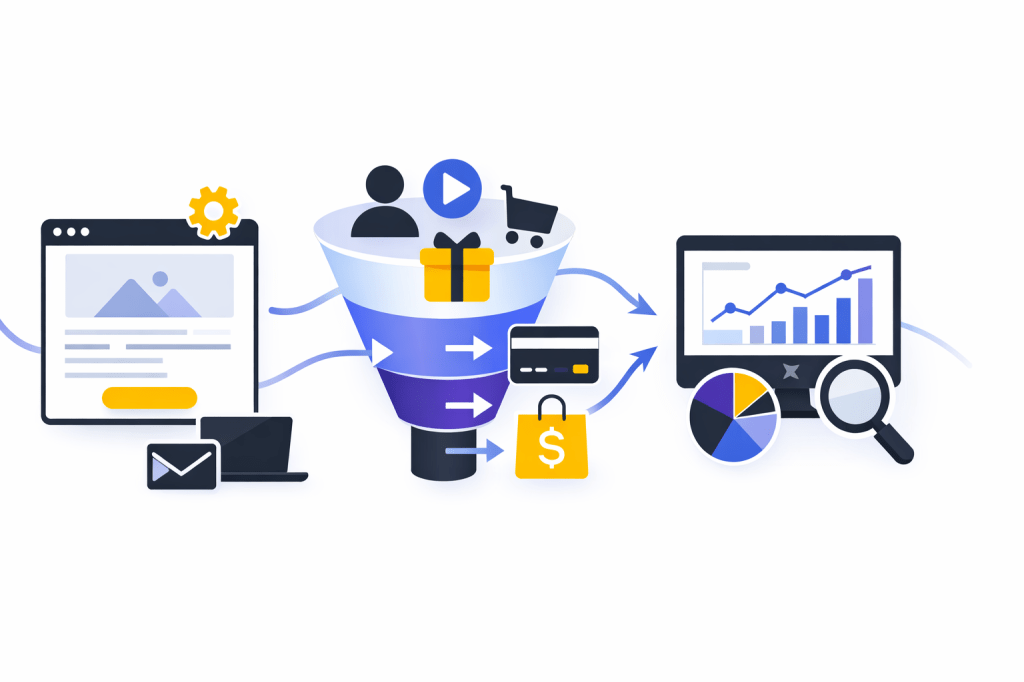
Most ClickFunnels reviews either gush about funnels like they are magic or complain about the price and stop there. That is not good enough when you are trying to decide whether this platform can actually help you build pages that convert, manage offers, and keep your marketing stack from turning into a pile of disconnected tools. This review takes a more useful angle: not whether ClickFunnels is famous, but whether its landing page builder earns its keep in a real business.
That matters because landing pages are no longer a side project. Unbounce’s latest benchmark analysis puts the median landing page conversion rate across industries at 6.6%, while its SaaS benchmark lands at 3.8%, which tells you two things fast: good pages still move revenue, and average pages leave a lot of money on the table. Add the fact that 83% of landing page visits now happen on mobile, and a builder is no longer just about drag-and-drop convenience. It has to help you make sharper decisions about clarity, speed, testing, checkout flow, and follow-up.
If you want to evaluate the platform while you read, you can open the ClickFunnels offer page or go straight to the current signup flow. If you are comparing it to a leaner all-in-one stack, it is also worth keeping Systeme.io open in another tab, because the real buying decision is usually not “builder or no builder.” It is whether ClickFunnels gives you enough funnel depth to replace enough other tools to make the higher monthly spend make sense.
Article Outline
- Part 1: Why This ClickFunnels Review Matters
- Part 2: Framework Overview
- Part 3: Core Components
- Part 4: Professional Implementation
- Part 5: Analytics and Economics
- Part 6: Final Verdict and FAQ
Why This Review Matters
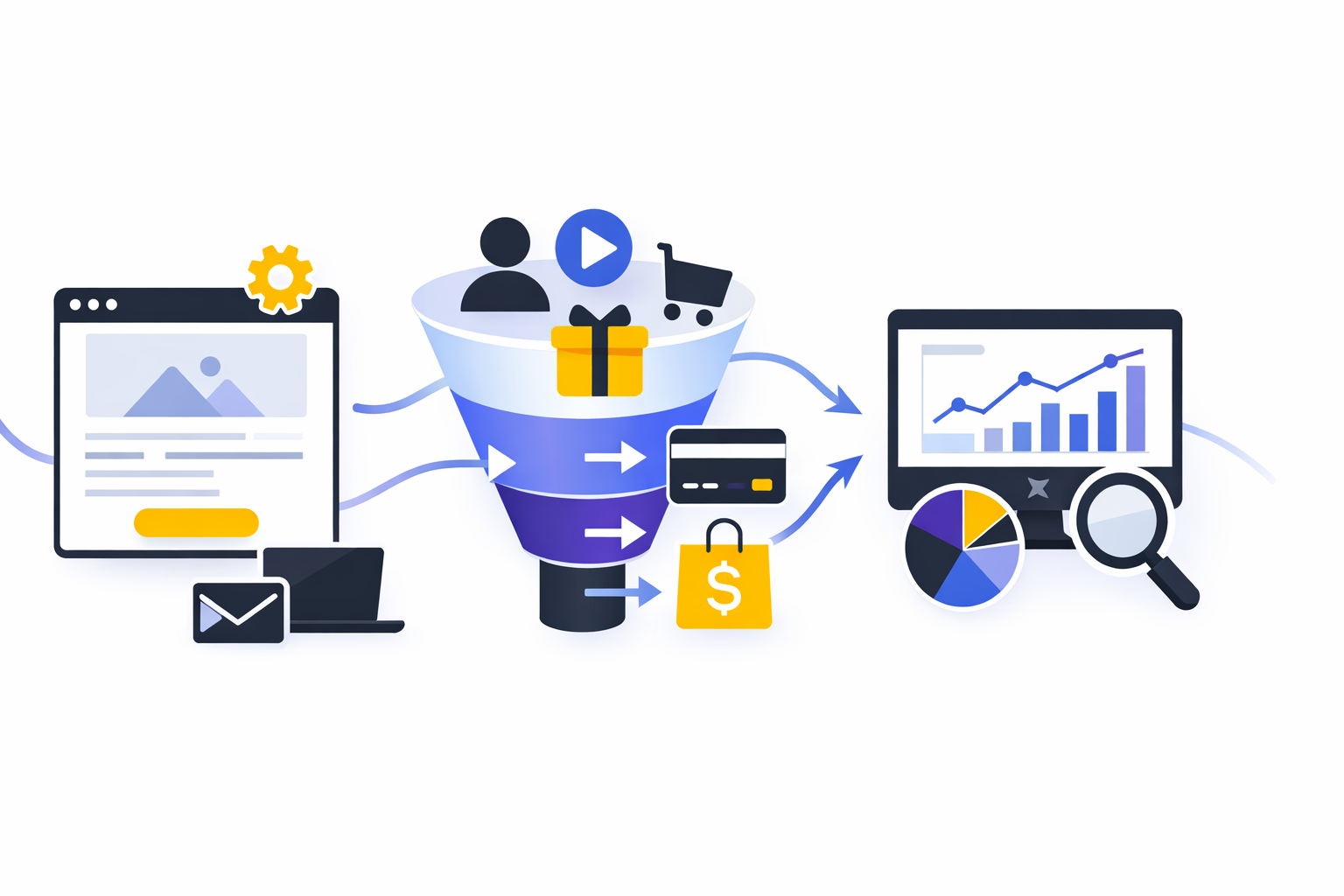
A ClickFunnels landing page builder review only becomes useful when it starts with the economic reality behind the software. Traffic is getting more expensive, not cheaper. Contentsquare’s 2026 Digital Experience Benchmarks says 59% of sites saw traffic decline in 2025 while cost per visit rose 9% year over year and 30% over three years, so every wasted click now hurts more than it did a short while ago.
That makes the builder itself part of your profit equation. If your pages are hard to launch, clumsy on mobile, or disconnected from checkout and follow-up, you are not simply losing design polish. You are paying to attract visitors and then letting friction do the rest. Portent’s conversion research still shows a dramatic gap between pages that load in one second and those that load in five, and Google’s “Milliseconds Make Millions” report found that even a 0.1-second speed improvement can lift engagement and spending outcomes.
So the right question is not whether ClickFunnels can publish a page. It clearly can. The sharper question is whether it helps you build a page that matches how people actually buy today: on mobile, in a hurry, with low patience for clutter, and with a strong preference for smooth next steps. That is where this platform starts to get interesting, because ClickFunnels is not trying to be a pure page builder. It is trying to make the page only one step in a larger conversion system.
That broader scope is the main reason people either love it or bounce off it. On the positive side, ClickFunnels positions itself as one place to market, sell, and deliver products without leaning on a tech team, and its current pricing page shows an entry plan at $97 per month, or $81 per month billed annually, with a 14-day free trial and 30-day money-back guarantee after the trial. On the negative side, recent G2 reviews and recent Capterra feedback keep circling the same tension: users like the all-in-one power, but beginners can still feel the weight of the learning curve and the price.
Framework Overview
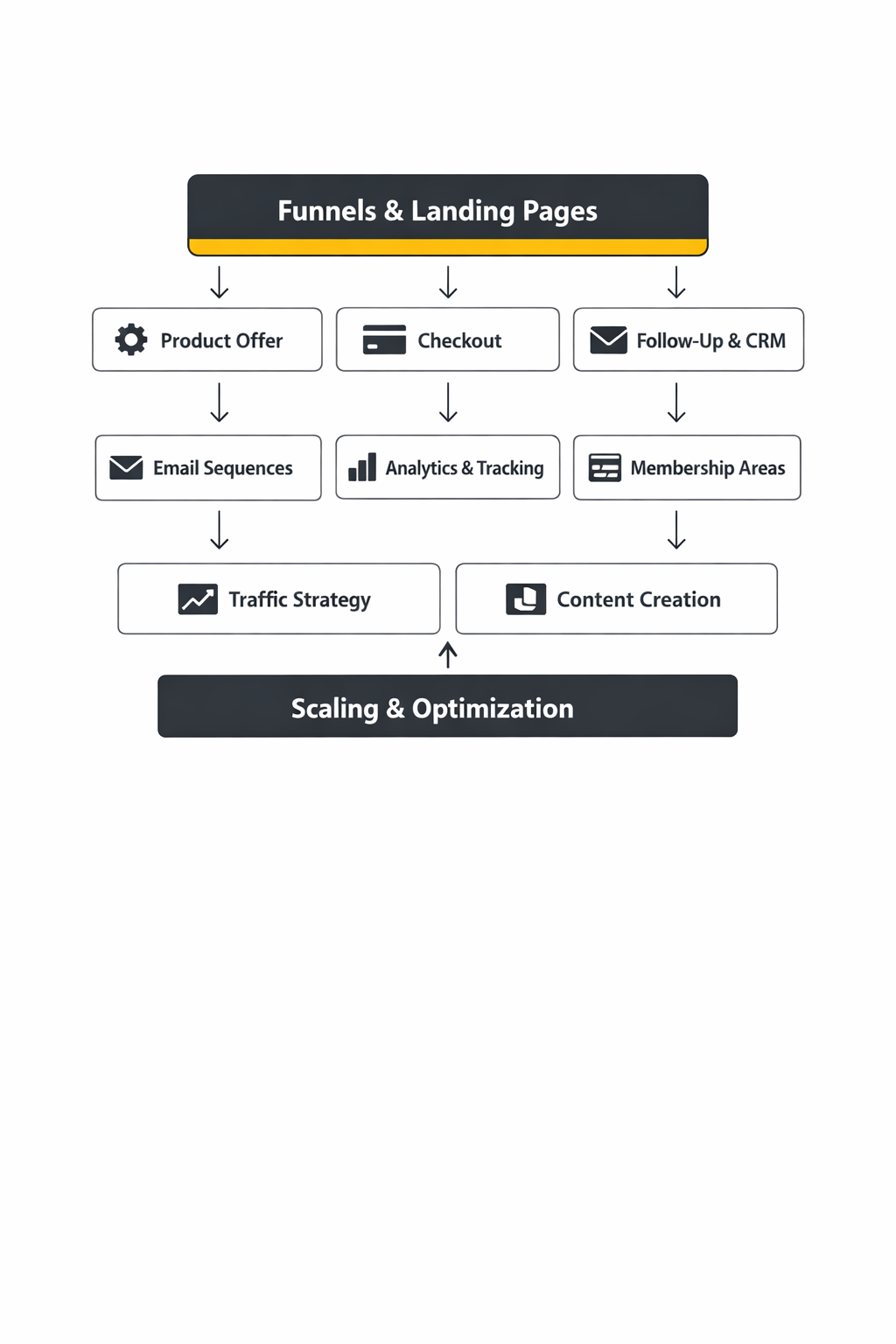
To judge ClickFunnels fairly, you need a framework that goes beyond “easy to use” and “has templates.” That kind of shallow checklist misses the whole point of this category. A landing page builder should be scored across six practical areas: page creation speed, conversion-focused design control, checkout and offer flow, CRM and automation handoff, testing capability, and cost relative to the number of tools it replaces.
ClickFunnels does unusually well when you review it through that lens because the platform is built around funnels first, not pages first. Its drag-and-drop editor is the visible part, but the more important layer is the way it connects pages to checkout, A/B testing, opportunity tracking, automations, and third-party integrations. That is why the builder can feel more strategic than a standalone page tool, even when its interface is not always the lightest in the market.
The trade-off is that you are not buying the cleanest single-purpose landing page app. You are buying a conversion environment that wants you to think in sequences. That can be a strength if you sell services, courses, coaching, events, memberships, or physical products through guided offers. It can be overkill if all you need is a very fast campaign page with minimal workflow logic behind it.
This review will keep coming back to one central test: does each ClickFunnels feature make the landing page more profitable or just more complicated? That matters because software bloat can quietly eat the gains you expected from an all-in-one tool. As Nielsen Norman Group’s usability principles keep reminding us, people trust interfaces that make status, next steps, and outcomes clear. A builder packed with features only wins when those features reduce uncertainty instead of multiplying it.
Core Components
At the page-building level, ClickFunnels has the essentials you would expect from a serious landing page product. The editor is built for drag-and-drop creation, template-led setup, and no-code customization, which is exactly what many buyers want when they need to get an offer live without waiting on design or development. For a business owner who values speed over pixel-perfect custom engineering, that part of the product is doing the right job.
The Editor and Page Creation Flow
The editor is one of ClickFunnels’ clearest strengths because it is designed around outcomes, not around abstract design freedom. You start with a page or funnel type, choose a structure that already leans toward conversion, and then swap in your messaging, proof, forms, media, and offer components. That is a better workflow than staring at a blank canvas, especially when your real bottleneck is launching consistently, not expressing some grand design vision.
Checkout, Offers, and Monetization Logic
Where ClickFunnels starts separating itself from simpler builders is the monetization layer. The platform ties landing pages directly into Smart Checkout, Add to Cart, and Store Funnels, which means the page does not have to stop at lead capture. It can continue straight into checkout logic, order value expansion, and post-click revenue generation without bolting on another stack of plugins.
That matters because friction near the money step is where too many pages fall apart. Baymard’s latest checkout benchmarking shows that most leading ecommerce sites still perform mediocre or worse on checkout UX, which is a strong reminder that getting the page click is not the same as getting the sale. In practical terms, ClickFunnels is strongest when you need the landing page and the buying path to behave like one connected system.
CRM, Follow-Up, and Backend Depth
A page builder becomes much more valuable when it does not dump every new lead into a dead-end spreadsheet. ClickFunnels now connects pages to its Opportunities CRM, automation tools, email workflow capabilities, and survey workflows, so the backend can respond differently depending on what a prospect did. That creates better conditions for segmentation, follow-up relevance, and handoff into a sales process.
This is also where the platform becomes more than a landing page tool and starts acting like an operating system for direct response marketing. That is powerful, but it is also the source of complexity. If your business will never use automation, pipelines, memberships, or multi-step offers, some of this depth will feel like extra furniture in a room that was already full.
Professional Implementation
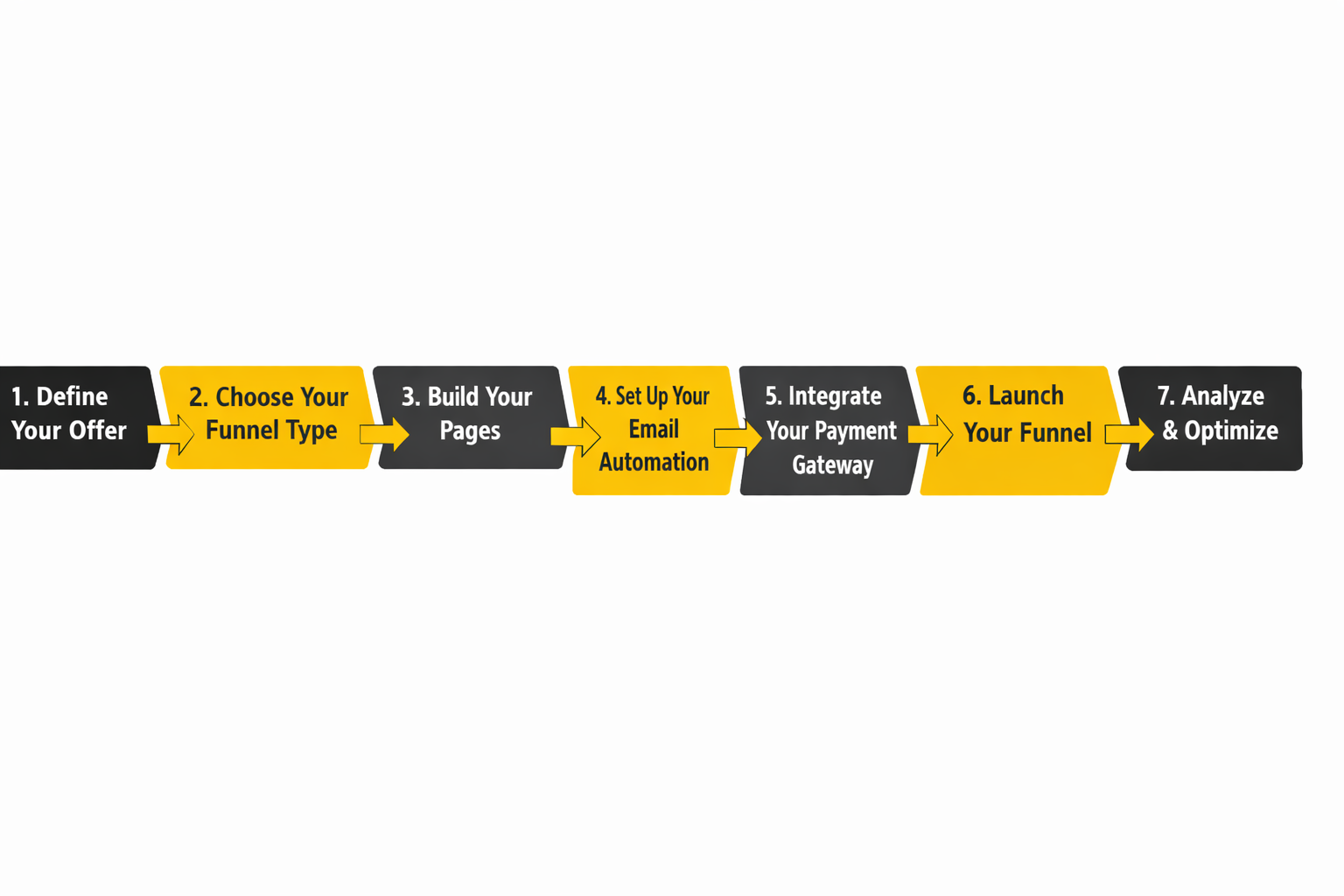
The most professional way to use ClickFunnels is not to rebuild your whole business inside it on day one. It is to start with one offer, one traffic source, one conversion event, and one follow-up path. That sounds simple because it is simple, and that is exactly why it works: it gives the builder a fair chance to prove whether it can improve the economics of a real campaign instead of burying you in a giant setup project.
A practical implementation usually starts with a narrow funnel. You build a single landing page around one promise, connect it to one form or one checkout step, add one email sequence or one sales follow-up rule, and then run traffic long enough to learn from behavior. From there, ClickFunnels becomes more valuable because its built-in A/B testing, lead tracking, and integration library let you improve the path instead of starting over each time.
This is also the point where budget discipline matters. If your business needs only a page, a form, and a couple of emails, a lighter platform may be the smarter call. But if you are paying separately for page software, checkout tools, email automation, simple CRM functions, and patchwork integrations, ClickFunnels can start to look less expensive than it seems at first glance, especially if you use enough of the stack to eliminate other subscriptions.
That is why a serious clickfunnels landing page builder review cannot end with “good” or “bad.” The better conclusion is that ClickFunnels is strongest for businesses that sell through structured offers and want the landing page tightly connected to revenue mechanics, not floating by itself. In the next part, we will keep pressure-testing that claim by looking at analytics, testing discipline, and the numbers that decide whether this platform is actually paying for itself.
The Decision Lens That Makes This Review Useful
A lot of people read a clickfunnels landing page builder review hoping for a quick yes-or-no answer, but that is exactly how they end up choosing the wrong tool. A landing page builder should not be judged like a theme marketplace or a simple website editor. It needs to be judged by how well it turns attention into action, and how much friction it removes between the first click and the final sale.
That is why the framework in this section focuses on outcomes instead of shiny features. The median landing page conversion rate across industries sits at 6.6%, which sounds decent until you realize that many businesses are buying traffic in an environment where 59% of sites saw traffic decline in 2025 while cost per visit rose 9%. When every visit costs more and fewer people show up, a builder that makes it easier to launch weak pages is not helping you. It is just helping you lose money faster.
So the right lens is simple: does ClickFunnels help you create a page that is easier to understand, easier to act on, and easier to connect with the rest of your funnel? If it does, the higher price can be justified. If it does not, then even a cheaper monthly entry point like the ClickFunnels starter offer becomes expensive in the only way that really matters: lost opportunities.
Speed Versus Control Is the First Real Test
The first thing to measure is how fast you can go from idea to live page without wrecking the message. ClickFunnels clearly leans into speed. Its drag-and-drop editor is designed to help non-technical users build pages, swap sections, and structure offers without hiring a developer every time they want to test a new hook.
That speed matters, but only when it does not create sloppy execution. The reason this balance is so important is that users do not give you much time to recover from confusion. Nielsen Norman Group’s usability guidance keeps coming back to the same principle: people trust interfaces that make status and next steps obvious. In plain English, your page builder should help you make the path feel clear, not merely make it easy to drag boxes around.
ClickFunnels does a solid job here when you stay disciplined. It gives you enough structure to move fast, but not so much creative freedom that every page becomes a design experiment. That is good news for business owners who need momentum more than artistic control, and it is one of the reasons the platform continues to appeal to people selling offers instead of building brochure websites.
Funnel Depth Matters More Than Most Reviews Admit
This is where most reviews get lazy. They talk about the page editor and stop right before the part that actually affects revenue. A landing page builder is much more valuable when it can connect the page to checkout, follow-up, segmentation, and reporting without forcing you to duct-tape five extra tools together.
ClickFunnels is built around that deeper logic. The platform ties pages into Smart Checkout, its built-in CRM and opportunity tracking, automation workflows, and a broad integrations library. That matters because checkout friction still destroys an incredible number of otherwise promising sessions, and Baymard’s checkout usability research shows that 65% of sites still perform at a mediocre level or worse while only 2% reach a truly good experience.
So the real value of ClickFunnels is not that it lets you publish a page. Plenty of tools can do that. The real value is that it tries to make the page behave like part of a selling system, which is exactly what you want when your offer needs more than a single email capture box and a thank-you page.

Mobile Performance and Page Speed Cannot Be an Afterthought
It is easy to fall in love with templates on a desktop monitor and completely miss what happens once real visitors arrive on their phones. That is dangerous, because landing pages now live or die in mobile conditions. Unbounce’s landing page research shows that mobile accounts for the huge majority of landing page visits, which means the builder has to support short attention spans, clean hierarchy, and friction-free calls to action.
Speed is part of that conversation, not a separate technical issue. Google’s summary of the Deloitte “Milliseconds Make Millions” research found that a 0.1-second mobile speed improvement increased retail conversion rates by 8.4% and travel conversion rates by 10.1%. That is a brutal reminder that small delays can quietly erase a lot of clever copywriting.
So when you evaluate ClickFunnels, do not just ask whether the page looks good in the editor. Ask whether the page remains clear when trimmed down for mobile, whether the sections are truly necessary, and whether the funnel keeps moving once somebody taps the button. A builder that encourages bloated pages will eventually punish you, no matter how polished the interface feels while you are creating them.
The Economics Only Work When the Tool Replaces Real Costs
ClickFunnels always attracts debate on price, and honestly, that debate is fair. The current official pricing page shows plans beginning at $97 per month, or $81 per month billed annually. That is not pocket change for a solo creator or a small business still proving an offer.
But price alone is not the right metric. The better question is whether the platform removes enough other costs to make the subscription feel reasonable. If ClickFunnels is handling your page building, checkout flow, basic CRM motion, email automation, and part of your reporting stack, then the math looks very different from the math of using it as an expensive form builder with a fancy reputation.
This is exactly why some businesses should absolutely compare it with alternatives before committing. If you are leaning toward a simpler and cheaper all-in-one setup, Systeme.io is worth putting side by side with the current ClickFunnels signup flow. The winner is not the tool with the longest feature list. It is the one that gives you the highest margin after you account for software costs, team time, and the quality of the customer journey.
Who This Framework Favors and Who It Does Not
This review framework naturally favors businesses that sell through sequences, not businesses that just need a pretty page online by the end of the day. If you are running webinars, coaching offers, digital products, service funnels, membership sales, or multi-step checkout flows, ClickFunnels has a much stronger case. It is trying to solve a bigger problem than page design, and for that kind of business, that can be exactly the right move.
On the other hand, if your needs are extremely light, the platform can feel like showing up to a weekend errand in a delivery truck. You may still appreciate the power, but you are also paying for systems you are not using. That is why a good clickfunnels landing page builder review should not try to impress you with complexity. It should help you decide whether your business model can actually make use of the complexity without getting buried by it.
That is the framework we are going to keep using from here. Not hype. Not blind loyalty. Just the hard question every serious buyer has to answer: does this builder help you move faster, convert better, and simplify your stack enough to make the investment worth it?
The Core Components That Actually Shape Results
When people read a clickfunnels landing page builder review, they usually want to know whether the builder has enough substance behind the glossy marketing. That is the right question, because a landing page tool is only as good as the systems sitting behind the page itself. ClickFunnels becomes much easier to judge once you stop asking whether it has features and start asking whether those features help you move a prospect from curiosity to action without adding extra friction.
The platform’s core strength is that the landing page builder is not sitting alone. It connects to checkout tools, contact management, automations, product delivery, and integrations inside the same environment. That does not automatically make it the best choice for everyone, but it does explain why people who sell through structured funnels often stay with it longer than people who only needed a basic page editor.
The Editor Experience Is Built for Momentum
The first core component is the ClickFunnels editor, and this is where most users decide within minutes whether the platform feels empowering or overwhelming. The editor is drag-and-drop, section-based, and clearly designed for marketers who want to launch without waiting for a developer. That matters more than it sounds, because hesitation kills testing speed, and slow testing usually means slower growth.
What makes the editor useful is not that it gives you endless freedom. In fact, too much freedom is often the problem with page tools. ClickFunnels does better when it nudges users toward proven funnel layouts, tighter messaging flow, and page structures that are clearly trying to move someone toward a next step instead of just looking impressive. In a practical sense, that means the builder is strongest for businesses that value fast deployment and conversion-focused structure over total design experimentation.
If that is the kind of workflow you want, the current ClickFunnels signup path is worth exploring because it shows how aggressively the company positions the platform around action, not just design. That philosophy carries into the editor itself. You are not being invited to build a digital art project. You are being pushed to build a page that gets somebody to do something.
Templates and Structure Give You a Better Starting Point
A builder becomes more powerful when it reduces the number of bad decisions available to beginners. That is one reason ClickFunnels templates matter. They give users a starting structure for sales pages, opt-in pages, webinar funnels, product pages, and related flows, which is far more useful than opening a blank canvas and hoping instinct will carry the day.
This is important because landing page performance still swings wildly depending on clarity, relevance, and flow. Unbounce’s 2025 benchmark analysis puts the median landing page conversion rate at 6.6% across industries, which is a helpful reminder that “good enough” page structure is not actually good enough when paid traffic is involved. A template cannot save a weak offer, but it can stop you from making basic structural mistakes before you even get to testing.
That is the real value here. ClickFunnels gives you a faster path to a credible first version. Then the real work begins: improving the headline, tightening the proof, simplifying the call to action, and making sure the page does not collapse under the weight of too many sections. The builder is useful because it shortens the time between idea and live page, which gives you more opportunities to improve the thing that matters most: actual performance.
Checkout Tools Turn the Page Into a Selling System
This is where ClickFunnels starts pulling away from simpler landing page tools. The platform’s Smart Checkout and Add to Cart functionality make the landing page part of the purchase path instead of a disconnected entry point. That is a very big deal if your business depends on selling now, not just collecting leads for later.
Checkout quality still has an enormous effect on revenue, and Baymard’s latest checkout UX benchmark found that 65% of leading ecommerce sites perform at a mediocre level or worse, while only 2% reach a “good” standard. That tells you just how easy it is to lose sales after somebody already said yes in principle. A page builder that flows cleanly into checkout is not a luxury. It is often the difference between interest and income.
This is also the part of the platform that makes the pricing easier to justify for the right business. If your landing page, offer presentation, order step, upsell motion, and part of your customer journey are being handled in one environment, ClickFunnels starts to look like infrastructure instead of software overhead. That is exactly why the 3 months for $99 offer gets attention from people who want to test the full system rather than just the editor.
CRM and Follow-Up Tools Keep Leads From Going Cold
A landing page builder becomes much more valuable when it does not abandon the lead the moment the form is submitted. ClickFunnels ties its pages into the Opportunities CRM and automation workflows, which means the backend can respond to what the prospect actually did. That gives the platform more strategic depth than a page tool that simply passes data to an inbox and calls the job finished.
This matters because speed of follow-up and relevance of follow-up often decide whether your funnel keeps moving. A clean opt-in page is nice, but a clean opt-in page with tagging, automated responses, sales pipeline visibility, and appointment support is much more useful for a service business or a higher-ticket offer. ClickFunnels is clearly trying to be that kind of system, and for the right operator, that can remove a serious amount of tool sprawl.
Of course, there is a trade-off. The more backend power a platform includes, the more setup discipline it requires. If you are not willing to think through stages, automations, and what should happen after the click, you will not get the full value out of this part of the stack. But that is not really a weakness of ClickFunnels. It is the reality of any tool built for funnel operations instead of one-page simplicity.
Integrations Expand the Builder Without Forcing a Full Rebuild
No serious business wants to be trapped inside one platform forever, so integrations matter more than vendors like to admit. ClickFunnels addresses that fairly well through its integrations library, which connects the builder to email tools, CRMs, ecommerce apps, and related services. That flexibility is important because even buyers who want an all-in-one setup usually still have one or two systems they do not want to replace.
This is one of the healthier parts of the ClickFunnels value proposition. You can use more of the native stack if it helps you move faster, but you are not forced to rebuild your entire business architecture overnight. That lowers the switching risk, which matters a lot when the biggest hidden cost in software is not the subscription fee. It is the time and friction required to change the way your team works.
For buyers who are still comparing options, that flexibility is also where alternative tools come back into the conversation. Systeme.io can make more sense when simplicity and lower cost are the top priorities, while ClickFunnels makes more sense when funnel depth and monetization control matter more. That is the honest comparison. It is not about which brand sounds bigger. It is about which stack fits the way you actually sell.
The Bottom Line on the Core Feature Set
The core components in ClickFunnels make the most sense when you need your landing pages to do more than collect a name and email. The editor helps you move fast. The templates reduce bad structural choices. The checkout tools bring the money step closer. The CRM and automations keep leads alive. And the integration layer gives you room to keep the rest of your business intact while you decide how deep you want to go.
That combination is why this platform still deserves serious attention in any clickfunnels landing page builder review. It is not the lightest builder in the market, and it is definitely not the cheapest. But when the business model depends on guided selling, follow-up logic, and a tighter connection between page and revenue, those core components start to feel less like extras and more like the whole point.
Statistics and Data
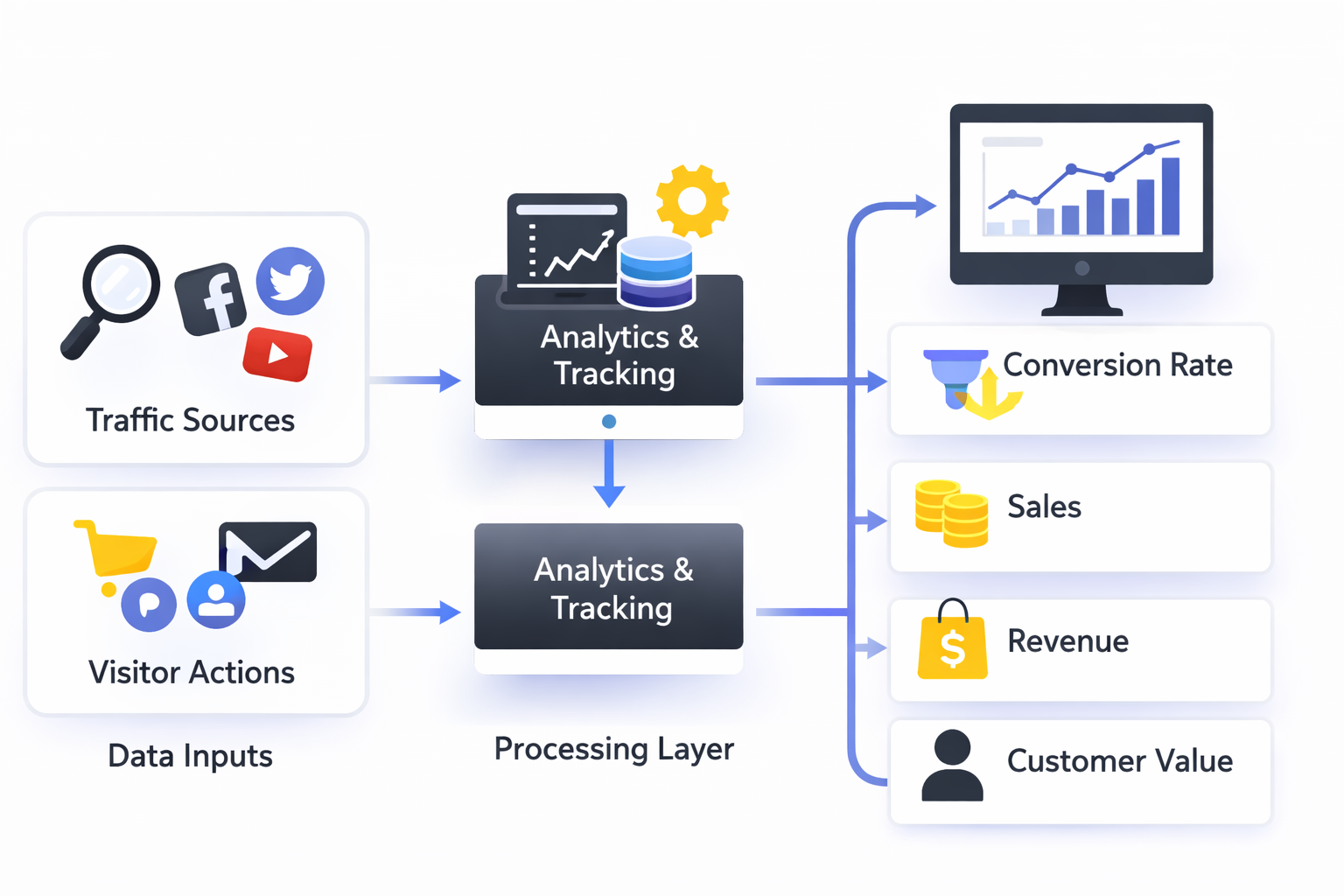
The numbers around landing pages make this clickfunnels landing page builder review a lot easier to judge. The median landing page conversion rate across industries sits at 6.6%, based on Unbounce’s analysis of 464 million visits, 41,000 pages, and 57 million conversions. That is a useful baseline because it keeps you from calling a weak page “fine” just because a few leads came in. If your page is far below that line, the problem is rarely traffic alone. It is usually a mix of offer clarity, mobile friction, page speed, weak follow-up, or all four at once.
The mobile picture makes the situation even more intense. 83% of the visits in Unbounce’s benchmark came from mobile devices, yet desktop still converted 8% better. That gap is brutal because it means most of your visitors are arriving through the experience that tends to underperform. A builder that makes mobile optimization clumsy is not just inconvenient. It is directly eating into the majority of your opportunity.
That is one reason ClickFunnels keeps getting serious attention. Its value is not simply that it can publish pages. Its value is that it tries to connect page design, conversion flow, and backend follow-up in one place. When the traffic is expensive and mobile-heavy, that kind of connected system matters a lot more than another pretty template library.
Speed and Friction Have Real Revenue Consequences
The fastest way to misunderstand landing page performance is to treat speed like a technical detail instead of a sales variable. A Google and Deloitte summary of the “Milliseconds Make Millions” study shows that a 0.1-second improvement in mobile speed lifted retail conversion rates by 8.4% and travel conversion rates by 10.1%. That is a tiny performance gain on paper, but it translates into a very real difference once you multiply it across paid traffic, checkout starts, and completed orders.
That is why page builder decisions matter more than they seem. Heavy layouts, bloated sections, and messy mobile rendering do not just make a page look sloppy. They slow the funnel down at the exact moment when the visitor is deciding whether to trust you enough to keep going. ClickFunnels is clearly aware of this, which is why its Smart Checkout positioning leans so hard into reducing drop-offs instead of talking only about design freedom.
The checkout step itself is still one of the easiest places to lose money. Baymard’s checkout usability research shows that 65% of sites perform at a mediocre level or worse in checkout UX, while only 2% are rated good. So when ClickFunnels pushes the idea that the page builder should sit close to the checkout experience, that is not just product marketing. It lines up with the wider reality that too many businesses still lose buyers after the hard part of getting the click is already done.
Clearer Copy Still Beats Clever Copy
A lot of landing page tools promise better results through design, but the copy data is just as important. Unbounce’s benchmark report found that pages written at a 5th to 7th grade reading level converted at 11.1%, which was 56% higher than pages written at an 8th to 9th grade level and more than double the conversion rate of professional-level writing in the same analysis. That is a huge reminder that the best-converting pages usually do not sound impressive. They sound obvious.
The same report found a -24.3% correlation between difficult words and conversion rates. That is one of those findings that should change how you build pages immediately. If a visitor has to decode your message, they are already drifting away. A landing page builder should help you make the message easier to absorb, not tempt you into burying the offer under oversized sections, fluffy copy, and too many competing ideas.
This is where ClickFunnels can work in your favor if you stay disciplined. The platform makes it easy to structure pages around a single offer and a clear next step, which is exactly what most pages need. But the builder will not save you from unclear thinking. If the message is muddy, no amount of drag-and-drop convenience is going to rescue the page.
The Traffic Economics Make Efficiency More Important Than Ever
Software decisions always feel more serious when the traffic environment gets harsher, and that is exactly what is happening now. Contentsquare’s 2026 Digital Experience Benchmarks, based on 99 billion sessions across more than 6,000 sites, found that 59% of sites saw traffic decline in 2025 while the cost per visit rose 9% year over year and 30% over three years. That is the backdrop behind every serious landing page decision now. Fewer visits and higher costs leave less room for guesswork.
The same benchmark also shows that engagement dropped 10% year over year, which means visitors are not hanging around to be convinced. They are arriving with tighter patience and sharper expectations. So a clickfunnels landing page builder review that talks only about templates and ease of use is missing the real story. The bigger issue is whether the tool helps you make the visit count before the visitor leaves.
That framing actually helps explain ClickFunnels pricing. The official pricing page currently starts at $97 per month, or $81 per month billed annually. That is not cheap for a simple page builder. But if the platform helps you tighten the page, improve the checkout path, speed up testing, and reduce the number of extra tools you are paying for, the conversation shifts from “Is it cheap?” to “Does it protect margin better than the alternatives?”
User Sentiment Shows the Trade-Off Clearly
The public review data around ClickFunnels tells a fairly consistent story. On Capterra, the platform holds a 4.5 out of 5 rating from 665 reviews, with individual sub-scores of 4.3 for ease of use, 4.5 for functionality, and 4.1 for value for money. That spread is revealing. Users generally respect the platform’s capability, but they are more mixed when the conversation turns to price.
The same pattern appears in fresh review commentary. Recent G2 feedback highlights ease of use and speed once the system is understood, while other recent G2 comments point out that advanced functionality can still take time to configure well. That is about as honest a summary as you are going to get. ClickFunnels is not a toy, and that is both its advantage and its cost.
So the data does not point to a magical winner. It points to a strong fit for a certain kind of operator. If you want a landing page tool that stays close to checkout, automation, and funnel logic, the numbers around performance and user sentiment make ClickFunnels look like a serious option. If you only need a light page builder and a form, that same data makes it much harder to justify the spend.
What the Numbers Really Mean for Buyers
All of these statistics point to one conclusion: the market is getting less forgiving. Mobile dominates traffic. Speed changes revenue. Checkout friction still wrecks too many sales. Simpler copy converts better. Traffic costs are climbing. When you put those realities together, the right landing page builder is not the one with the longest feature list. It is the one that helps you adapt to those realities without creating new bottlenecks of its own.
That is the lens that makes this clickfunnels landing page builder review useful. ClickFunnels looks strongest when you need more than page publishing. It makes the most sense when your business depends on offer flow, checkout performance, follow-up logic, and a tighter connection between page activity and revenue outcomes. That is also why many buyers compare the current ClickFunnels signup flow with lighter options like Systeme.io before they commit.
And that is the real takeaway from the data. ClickFunnels is not automatically worth it because it is well known. It becomes worth it when the structure of your business lets you use the parts that affect conversion, not just the parts that look good in a product demo.
Analytics, Economics, and the Real Cost of Choosing Wrong
This is the part where a clickfunnels landing page builder review either becomes useful or turns into another pile of surface-level opinions. A landing page tool is not a good investment because it has a drag-and-drop editor, a few templates, or a recognizable brand. It is a good investment when the numbers work in your favor after you pay for the software, buy the traffic, spend the time setting it up, and live with the workflow long enough to see whether it helps you grow.
That is why the economics matter so much. ClickFunnels currently starts at $97 per month, or $81 per month billed annually, which means nobody should buy it casually just because they like the pitch. You need a real reason. The right reason is not “I want more features.” The right reason is “I need my landing pages, checkout flow, follow-up, and funnel logic to work together well enough that the combined result makes more money than the software costs me.”
That sounds obvious, but a lot of people still miss it. They compare software prices without comparing the cost of weak follow-up, messy checkout flow, slow page iteration, or disconnected reporting. Those hidden losses are usually far more expensive than the monthly subscription itself, which is exactly why the wrong builder can quietly cost a business much more than the right builder ever would.
Total Cost Matters More Than Monthly Price
The easiest mistake buyers make is acting like software price is the whole conversation. It is not. The real number is total cost, and that includes the time it takes to build pages, the extra tools you still need, the hours spent gluing systems together, and the revenue lost when the customer journey breaks between one step and the next.
ClickFunnels tries to win that argument by doing more in one place. The platform combines its page editor, checkout tools, CRM features, automations, and integrations into one system. If you would otherwise pay separately for those functions, the higher entry price starts looking a lot more reasonable. If you would not use most of them, the same price starts looking heavy very quickly.
That is why the right question is never “Is ClickFunnels expensive?” The better question is “Compared to what?” Compared to a cheap page builder plus separate email software, checkout tools, CRM layers, and extra setup time, it may not be expensive at all. Compared to a lighter all-in-one option for a very simple business, it absolutely can be.
Traffic Pressure Makes Conversion Efficiency More Valuable
The economics get tougher once you look at the traffic environment businesses are operating in now. Contentsquare’s 2026 Digital Experience Benchmarks found that 59% of sites saw traffic decline in 2025, while the cost per visit rose 9% year over year and 30% over three years. That changes the math fast. When traffic gets more expensive, conversion efficiency is not a nice bonus anymore. It becomes the whole game.
This is where a connected funnel platform can earn its keep. If your page builder helps you launch faster, tighten the buying path, and follow up more effectively, it can protect margin in a tougher market. If it just adds complexity while your conversion rate stays stuck, then the extra features become dead weight. That is why a clickfunnels landing page builder review has to talk about economics, not just capability.
The numbers around landing pages reinforce the same point. Unbounce’s benchmark analysis put the median landing page conversion rate at 6.6%, which means there is a massive difference between a page that performs close to average and one that performs well above it. Once you multiply that gap across paid campaigns, webinars, appointment funnels, or product offers, even small improvements in conversion flow can change the financial picture of a tool very quickly.
Where ClickFunnels Usually Wins the Economics Argument
ClickFunnels usually makes the strongest economic case when the offer itself needs a guided path. That includes coaching offers, consulting funnels, courses, memberships, webinar registrations, product launches, and service businesses that rely on lead capture followed by structured follow-up. In those cases, the landing page is not the end of the story. It is the beginning of a sequence, and that is exactly the environment ClickFunnels was built for.
In that kind of business, the page builder is valuable because it sits close to revenue events. The form is connected to automation. The page is connected to checkout. The lead is connected to a pipeline. The testing process is connected to the rest of the funnel instead of floating in isolation. That connectedness is the reason many buyers see enough value in the ClickFunnels introductory offer to test the system properly instead of dismissing it from a distance.
It also helps that the platform is built with direct response thinking in mind. You are not being asked to invent every page structure from scratch. You are being pushed toward pages and funnel flows that are supposed to move people to a clear next step. That is not glamorous, but it is usually better for business than endless freedom.
Where ClickFunnels Can Lose the Economics Argument
Not every business needs this much platform. That is important to say plainly because too many reviews try to make every buyer sound like a perfect fit. If all you need is a landing page, a form, and a couple of simple emails, ClickFunnels can be more system than you actually need. In that case, the higher monthly cost and the broader setup environment may work against you instead of for you.
This is especially true when the team is small, the offer is still unproven, or the operator does not want to manage funnel logic at all. A powerful platform in the wrong hands often turns into a distraction machine. Instead of focusing on offer quality, messaging, and traffic strategy, the business starts fiddling with workflows it never really needed in the first place.
That is where it makes sense to compare ClickFunnels with a leaner alternative like Systeme.io. A simpler tool can absolutely be the smarter buy when ease, affordability, and lower operational overhead matter more than deeper funnel infrastructure. The better choice is not the one with the louder reputation. It is the one that matches the actual complexity of your business.
The Hidden Variable Is Operational Discipline
There is one more layer to the economics, and hardly anyone talks about it honestly enough. A platform like ClickFunnels rewards operational discipline. If you launch one offer, track behavior, simplify the message, improve the call to action, and keep iterating, the platform can become extremely useful. If you keep adding steps, piling on automations, and building new funnels before the first one is working, the software will expose every bad habit you already had.
That is not really a flaw in the tool. It is the cost of using software designed for real conversion systems instead of one-page convenience. The people who get the most from ClickFunnels are usually the ones who know that page building is not the business. Testing, learning, simplifying, and improving the funnel is the business.
This is also why public reviews show a split between appreciation and frustration. On Capterra, ClickFunnels holds a 4.5 out of 5 rating from 665 reviews, and that pattern makes sense. Users who actually want the depth often value the power. Users who wanted a lighter experience often feel the weight of the system more than the upside.
The Economic Verdict Before the Final Conclusion
So here is the honest economic read before we move into the final verdict. ClickFunnels makes sense when your business sells through steps, not just pages. It makes sense when the page is tied closely to checkout, follow-up, testing, and revenue tracking. It makes sense when replacing multiple tools or eliminating handoff friction will save enough money and time to justify the subscription.
It makes less sense when your operation is simple, your offer is early, or your team does not want a broader funnel environment. In those cases, a lighter platform can deliver a better return because the system stays out of your way. That is the real answer most buyers need, and it is the answer a serious clickfunnels landing page builder review should give them.
In the final part, we will bring all of this together, look at who should buy ClickFunnels, who should pass, and answer the practical questions that usually come up right before somebody decides whether to commit.
Final Verdict and FAQ

After looking at the editor, the funnel structure, the checkout layer, the CRM depth, the analytics picture, and the economics behind the monthly cost, the answer is pretty clear. ClickFunnels is not the best landing page builder for everybody, and that is exactly why this review matters. It is best for businesses that sell through guided offers and need the page to connect tightly with follow-up, checkout, and revenue tracking instead of sitting on its own like a pretty but isolated asset.
If that is your world, ClickFunnels deserves a serious look. The platform’s current pricing starts at $97 per month, or $81 per month billed annually, which is high enough that you should expect real operational value in return. For businesses running webinars, service funnels, coaching offers, digital products, memberships, or multi-step product sales, that value can absolutely be there, especially when using the platform replaces other tools and reduces handoff friction across the funnel.
If your needs are lighter, the verdict changes. When all you really need is a simple page, a basic form, and a light email sequence, ClickFunnels can feel like more machine than mission. In that case, a leaner platform such as Systeme.io may be the smarter choice, while businesses ready to test the deeper funnel stack may prefer opening the current ClickFunnels signup flow or the introductory offer and judging the system with a real campaign instead of a casual demo. That is the honest close to this clickfunnels landing page builder review: strong tool, real power, real trade-offs, and a very clear best-fit buyer.
FAQ for the Complete Guide
Is ClickFunnels actually good for building landing pages?
Yes, but the fuller answer is that it is good for building landing pages inside a selling system. The editor is built to help users launch quickly, and the surrounding funnel tools make the page more useful than a standalone builder when you need checkout, follow-up, and automation tied together. That is why the platform makes more sense for conversion-focused businesses than for people who simply want a lightweight design tool.
Is ClickFunnels worth the price?
It can be, but only when you use enough of the stack to justify it. The official pricing page shows plans starting at $97 per month, so the platform needs to either help you convert better or replace enough other tools to make the economics work. If you only use it for one simple page and a form, it becomes much harder to justify.
Does ClickFunnels work for beginners?
It does, but beginners need to be realistic about what they are buying. The page builder itself is approachable, yet the platform becomes broader once you move into checkout logic, automations, CRM workflows, and funnel sequencing. A beginner with one offer and a willingness to learn can do well with it, but somebody looking for the absolute simplest possible setup may find it heavier than necessary.
Is ClickFunnels better than standalone landing page builders?
Sometimes yes, sometimes no. It is usually better when the landing page is only one part of a bigger revenue path and you want the builder close to checkout, follow-up, and funnel logic. It is usually not better when your only priority is fast page publishing with as little operational overhead as possible.
How does ClickFunnels compare to Systeme.io?
ClickFunnels generally offers deeper funnel infrastructure and a more established direct-response ecosystem, while Systeme.io often wins on simplicity and lower cost. The better choice depends on your business model. If you need heavier funnel logic and tighter monetization control, ClickFunnels has the stronger case. If you need a lean all-in-one system without as much complexity, Systeme.io is often easier to live with.
Can ClickFunnels handle checkout as well as the page itself?
Yes, and that is one of its biggest strengths. The platform’s Smart Checkout layer is a big reason people choose it over simpler page tools. Since checkout friction still hurts a huge number of businesses, keeping the buying step close to the landing page can create a much smoother customer journey.
Does ClickFunnels include CRM and follow-up tools?
Yes. ClickFunnels connects its pages with an Opportunities CRM and automation workflows, which helps keep leads from going cold after the initial opt-in or purchase step. That backend depth is one of the main reasons the platform appeals to service businesses, coaches, consultants, and higher-ticket sellers.
Is ClickFunnels a good choice for mobile traffic?
It can be, but only if you build with mobile discipline. That matters because 83% of landing page visits in Unbounce’s benchmark came from mobile, while desktop still converted 8% better. The builder gives you the tools to create a solid mobile experience, but it will not stop you from making pages too long, too cluttered, or too slow.
What kind of business should use ClickFunnels?
ClickFunnels is strongest for businesses that sell through sequences rather than one-off pages. That includes coaching, consulting, courses, memberships, webinars, lead generation funnels, and product offers that benefit from upsells, follow-up, or multi-step checkout. If your business depends on moving people through a journey instead of a single click, the platform is much more likely to fit.
What kind of business should skip ClickFunnels?
Businesses with very simple needs should think carefully before signing up. If you only need a lightweight landing page, a contact form, and a couple of simple emails, there is a good chance you will not use enough of the platform to justify the cost or complexity. In that case, a lighter tool often delivers a better return simply because it stays out of your way.
Does ClickFunnels help with testing and optimization?
Yes. ClickFunnels includes A/B testing capabilities, which is important because testing is where better funnels are really built. A page builder becomes far more valuable when it does not just help you launch a page, but also helps you improve that page over time based on how real visitors behave.
Are the templates enough to get good results?
No, but they can give you a far better starting point than a blank page. Templates help with structure, momentum, and layout decisions, yet they do not fix a weak offer, muddy copy, or poor traffic targeting. The best use of templates is to shorten the time between idea and launch so you can test faster and improve what matters.
Should I try ClickFunnels before making a full commitment?
Yes, that is the smartest way to evaluate it. Open the current ClickFunnels signup flow or test the introductory offer with one real funnel instead of trying to judge the platform by reputation alone. A short test with a real offer will tell you far more than ten generic reviews ever could.
Work With Professionals
If reading this clickfunnels landing page builder review made one thing obvious, it is that tools do not create results by themselves. Pages still need clear messaging, stronger structure, disciplined testing, and people who know how to turn traffic into revenue. That is why the businesses that win are usually not the ones with the most software. They are the ones with the best operators.
If you want help from marketers who understand funnels, landing pages, positioning, and conversion strategy at a professional level, it is smart to work with people who already live in that world. That does not just save time. It can save you from burning months on the wrong setup while the market keeps getting more competitive and your traffic keeps getting more expensive.
Explore 10K+ Remote Marketing Contracts on MarkeWork.com
Most marketers spend too much time chasing clients, competing on crowded platforms, and losing a percentage of every project to middlemen.
MarkeWork gives you a better way. Browse thousands of remote marketing contracts and connect directly with companies desperate to hire skilled marketers like you without platform commissions and without unnecessary gatekeepers.
If you’re serious about finding better opportunities and keeping 100% of what you earn, you can explore available contracts and create your profile for free at MarkeWork.com.
 Filip Konecny Enterprises