
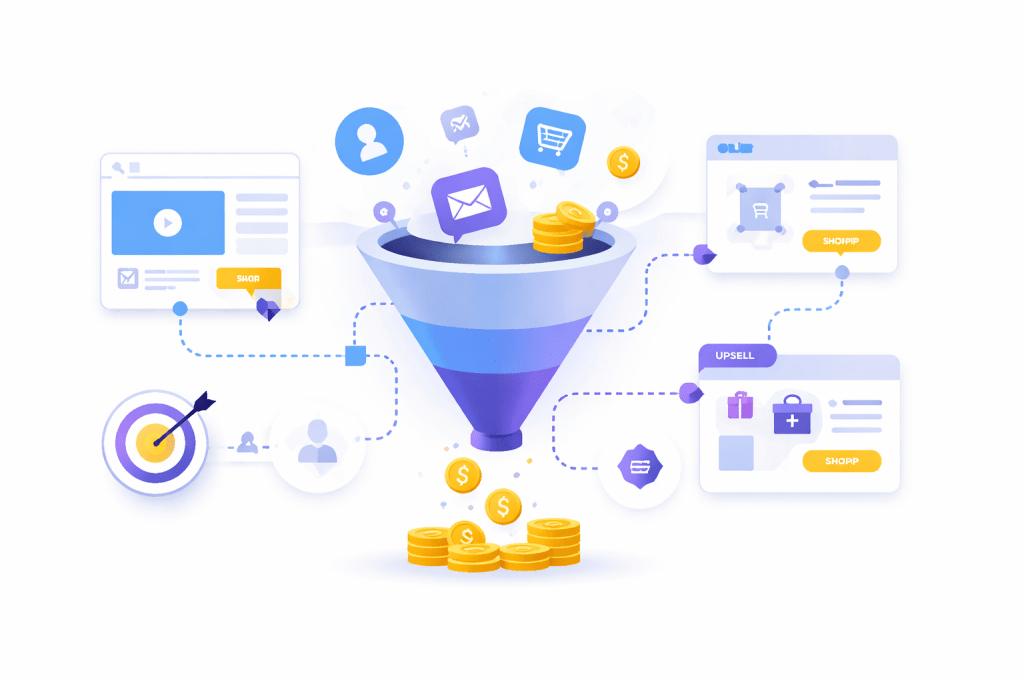
Most people go looking for ClickFunnels funnel examples because they do not want more theory. They want to see what an actual funnel should look like when it is built to move a stranger from curiosity to trust and then to a sale. That is the right instinct, because a funnel is not just a stack of pages. It is a sales conversation with structure, timing, and a clear next step on every screen.
The problem is that a lot of examples online are either too vague to be useful or so complicated that they make the whole process feel harder than it needs to be. A better approach is to study a few proven funnel patterns, understand why each one exists, and then match that pattern to the offer you are selling. Once that clicks, ClickFunnels stops feeling like a page builder and starts feeling like a system you can actually use to grow something real.
In this guide, we are going to break down the most useful ClickFunnels funnel examples in a way that makes sense for beginners and still respects what experienced marketers care about. We will look at why funnel examples matter, how the overall framework works, which components keep showing up in the strongest funnels, and what professional implementation looks like when you want more than a pretty page. Along the way, you will also see where tools like ClickFunnels, Systeme.io, and prebuilt funnel assets can fit into the process without replacing strategy.
Article Outline
- Part 1: Why ClickFunnels Funnel Examples Matter
- Part 2: ClickFunnels Funnel Framework Overview
- Part 3: Core Components Of Winning ClickFunnels Funnels
- Part 4: Professional Implementation Of ClickFunnels Funnels
- Part 5: Analytics And Optimization For ClickFunnels Funnels
- Part 6: The ClickFunnels Ecosystem And Long-Term Scaling
Why ClickFunnels Funnel Examples Matter
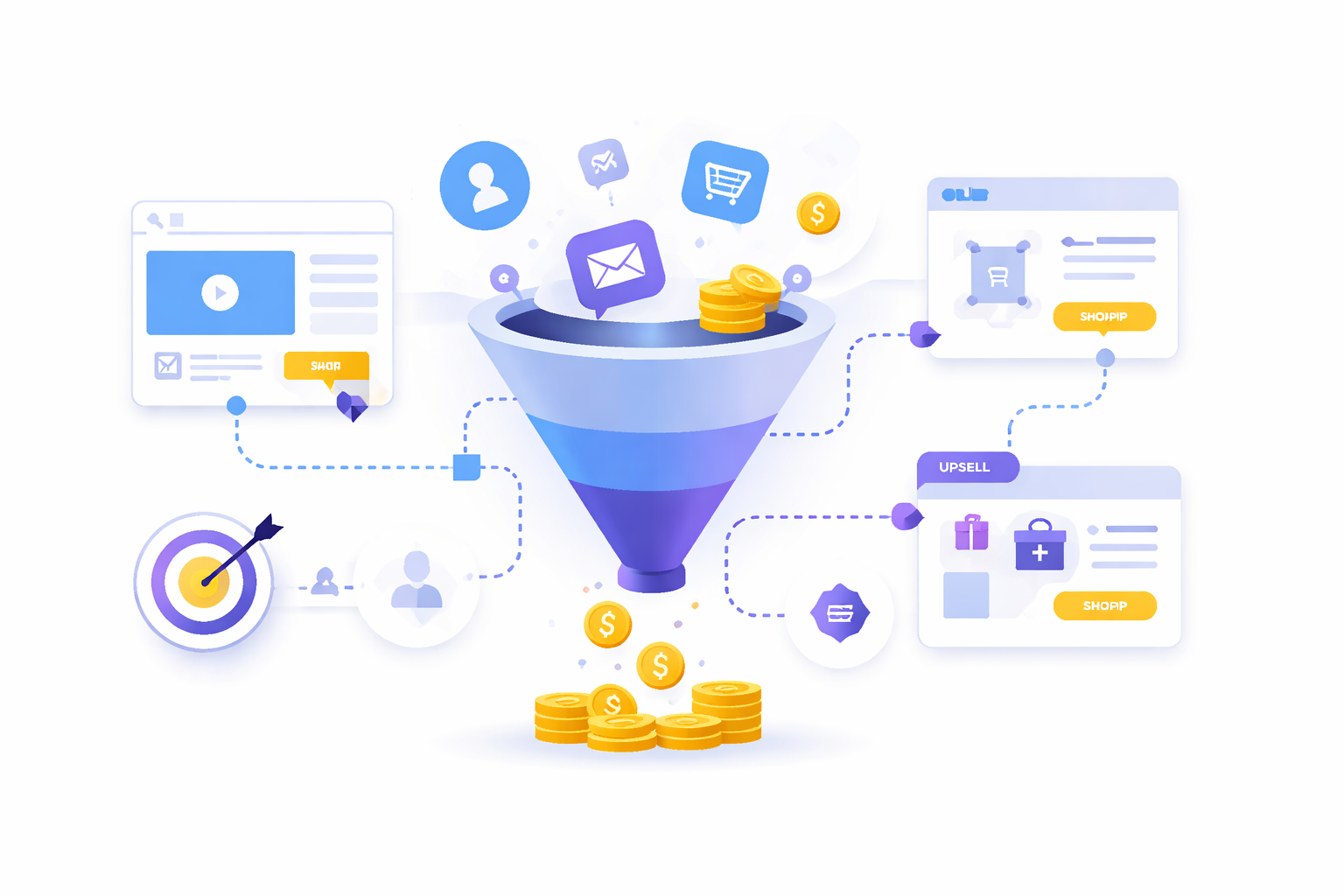
Looking at ClickFunnels funnel examples matters because funnels are easier to understand when you can see the logic in motion. A lead magnet funnel, for example, is not trying to do the same job as a webinar funnel or an application funnel. The first one is built to capture attention and contact details quickly, while the others add more education, qualification, and commitment before the offer appears.
That difference is a big deal when real money is involved. Unbounce’s landing page benchmark data puts the median conversion rate across industries at roughly 6.6%, which means even small improvements in message clarity or page flow can change the economics of a campaign fast. And when Baymard’s checkout research still shows about 70.19% of shoppers abandoning carts on average, it becomes obvious that the structure after the click matters just as much as the ad or email that drove the visit in the first place.
Examples also protect you from building the wrong kind of funnel for the wrong kind of offer. If you are selling a simple low-ticket product, a short sales page with an order bump may make perfect sense. If you are selling a premium service, an application funnel that filters prospects before the call is often the smarter move, which lines up with how ClickFunnels describes application funnels as a way to qualify leads before a higher-ticket sale.
There is another reason this matters. HubSpot’s current marketing data shows that lead-to-customer conversion remains one of the most important KPIs marketers watch, so the job is not merely to collect opt-ins and celebrate vanity metrics. The job is to build a path that turns attention into revenue, and the fastest way to learn that path is by studying funnel examples that already match the type of offer you want to sell.
Framework Overview
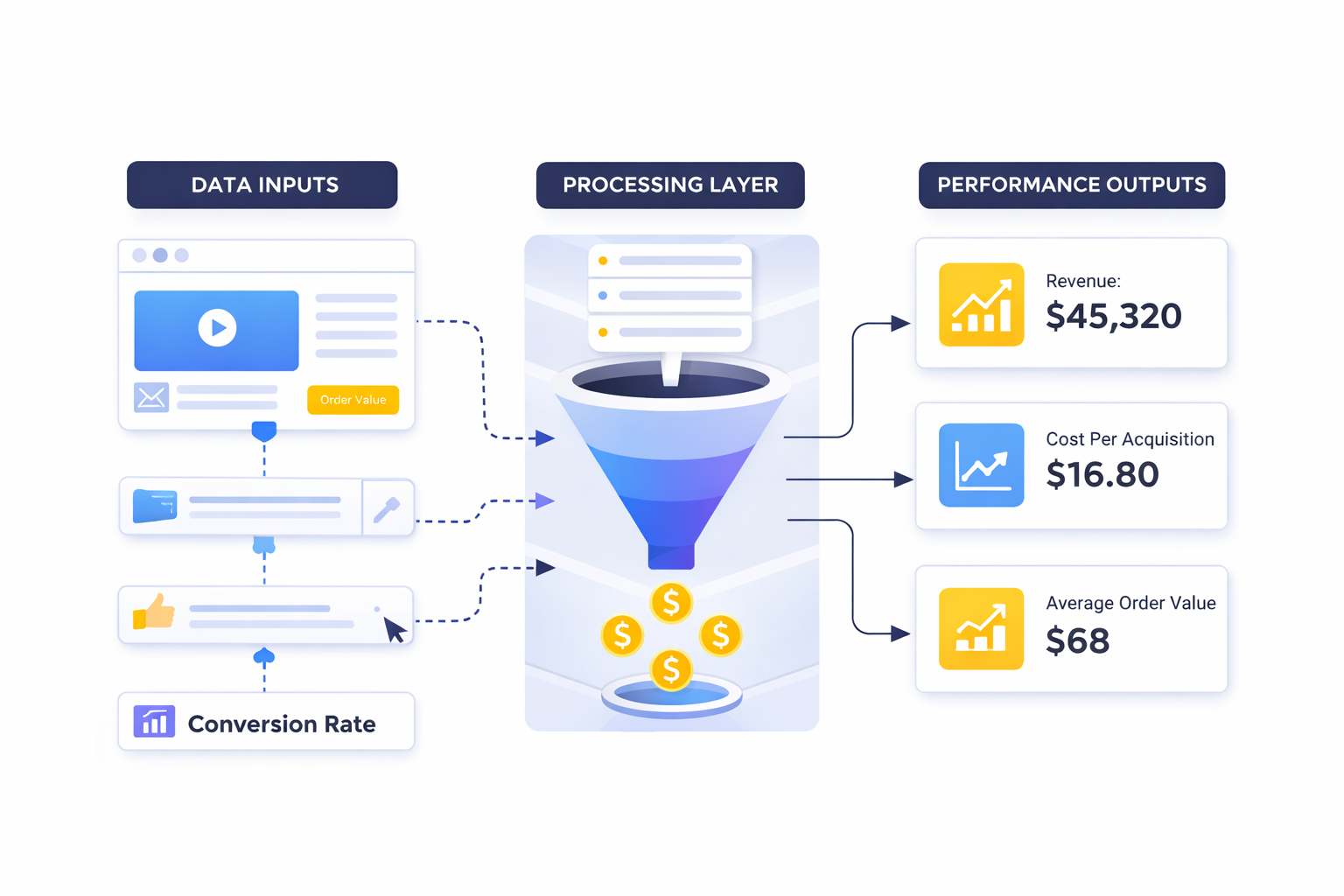
The easiest way to make sense of ClickFunnels funnel examples is to think in stages instead of pages. Every strong funnel starts by attracting the right person, then gets that person to take a micro-commitment, then builds desire, then presents an offer, and finally follows up based on what happened. When you see funnels this way, the page count becomes less important than the job each step is doing.
That is why the official ClickFunnels funnel type documentation is useful. It organizes funnels into clear categories and explains that different funnel types exist for different outcomes, including lead collection, presentations, offers, and feedback-driven campaigns. In other words, the best ClickFunnels funnel examples are not random page designs. They are business models translated into a sequence.
A simple squeeze funnel usually follows a short path: promise, opt-in, thank-you, and follow-up. A webinar funnel stretches the middle of the journey because the prospect needs more education before buying. A sales funnel for a digital product often compresses the decision by moving from headline to proof to checkout quickly, while a high-ticket funnel slows the process down with an application, qualification questions, and a booking step.
The framework becomes even more powerful when you understand what should happen after the pages are published. ClickFunnels now puts a strong emphasis on tracking opt-ins, sales, pageviews, and conversion rates inside its analytics overview dashboard, which tells you something important: a funnel is not finished when it looks good. It is only finished when you can see where people move, where they hesitate, and where they leave.
Core Components Of Winning ClickFunnels Funnels
Once you study enough ClickFunnels funnel examples, a pattern starts to show up. The strongest funnels usually have a sharp promise, one clear action, believable proof, a smooth transition to the next step, and follow-up that matches the buyer’s level of intent. Those pieces can look different from funnel to funnel, but they keep reappearing because they are doing the heavy lifting.
The promise is first. If the headline does not make the offer feel specific and relevant, the rest of the page has almost no chance to work. That is one reason Unbounce’s broader conversion benchmark research, built on tens of millions of conversions, keeps pointing marketers back to clarity and message quality rather than cosmetic design tweaks alone.
The next component is friction control. In practical terms, that means you only ask for what the next step requires. A free checklist funnel does not need a long questionnaire. A consultation funnel probably does. ClickFunnels itself highlights this by separating funnel types like squeeze pages, webinars, and applications in its template and training ecosystem, because each one asks for a different level of commitment at a different moment in the buying journey.
Then comes proof and momentum. That can include testimonials, outcome-based copy, offer framing, urgency, or a clean explanation of what happens after the click. Professional marketers also pay close attention to the handoff between steps, because a beautiful opt-in page can still underperform if the thank-you page, email sequence, or checkout experience feels disconnected. That is especially important today, when Salesforce’s latest State of Marketing research shows marketers continuing to prioritize personalization, data quality, and coordinated customer journeys rather than isolated campaigns.
Professional Implementation
Professional implementation starts with matching the funnel to the offer before you touch the design. Too many people pick a template because it looks impressive, then try to force their business into it. The smarter move is the reverse: choose the shortest path that still gives the prospect enough belief, enough proof, and enough confidence to move forward.
That is where real ClickFunnels funnel examples become useful in a practical way. A creator growing an email list may start with a squeeze funnel and a lightweight follow-up sequence. A coach selling a premium package may be better off with an application funnel. A brand launching a workshop or demo may find that a presentation funnel makes more sense, especially since ClickFunnels’ own resources continue to frame webinar and presentation funnels as education-first paths for more complex offers.
Professional implementation also means thinking beyond the page builder. You need traffic strategy, email automation, measurement, and a realistic plan for iteration. That is why some businesses pair ClickFunnels with tools for scheduling, CRM, or email delivery, while others test alternatives like Systeme.io if they want a different all-in-one stack.
Most importantly, professional implementation respects the idea that funnels are built in rounds. The first version proves the concept. The second version sharpens the message. The third version usually fixes the friction you missed at the start. When you approach ClickFunnels funnel examples with that mindset, you stop asking, “Which template should I copy?” and start asking the better question: “Which funnel structure gives this offer the best chance to win?”
Squeeze Page Funnel Example
One of the most useful ClickFunnels funnel examples for a beginner is still the squeeze page funnel because it teaches the discipline of making one promise and asking for one action. You are not trying to explain your whole company there. You are simply giving people a compelling reason to raise their hand, which is why this format is often the cleanest starting point for a lead magnet, a checklist, a mini training, or a short free workshop.
This kind of funnel works best when the value is immediate and the next step is obvious. A headline that speaks to a specific pain, a short block of copy that makes the benefit tangible, and an opt-in form with as little friction as possible usually beat a page stuffed with distractions. That logic lines up with the latest landing page benchmark data showing a 6.6% median conversion rate across industries, because pages that convert tend to keep the visitor focused on one decision instead of five competing ones.
What makes this one of the strongest ClickFunnels funnel examples is what happens after the opt-in. The thank-you page can move the lead into a low-ticket offer, a booking step, or a simple email sequence that starts building trust. ClickFunnels’ own funnel type documentation keeps emphasizing that the right funnel is the one that matches the goal, and for fast list growth, the squeeze funnel remains hard to beat.
Sales Page Funnel Example
Another of the most practical ClickFunnels funnel examples is the straight sales page funnel for a low-ticket or mid-ticket product. This is the funnel you use when the offer is strong enough to stand on its own without a long qualification process. Instead of spreading attention across multiple pages, you let the visitor move from curiosity to conviction and then directly into checkout.
The key here is not writing more. It is writing in the right order. The headline needs to frame the desired result, the body needs to show why the offer is different, the proof needs to make the promise believable, and the checkout step needs to feel like the natural continuation of the conversation rather than a jarring jump. That matters even more when Baymard’s checkout research still shows cart abandonment hovering around 70.19%, because every extra bit of confusion or hesitation after desire has been created gives a prospect room to disappear.
When people study ClickFunnels funnel examples, this is often the point where they realize that page design is only half the job. Offer structure matters just as much. A well-placed order bump, a clean explanation of what happens after purchase, and a checkout page that does not raise fresh objections can change the economics of the funnel in a very real way.
Webinar Funnel Example
Some offers simply need more time. That is where webinar-style ClickFunnels funnel examples become so valuable. If you are selling something that requires education, objection handling, and a stronger emotional shift before the purchase makes sense, a webinar funnel gives you the room to do that work without forcing the sale too early.
A good webinar funnel usually begins with a registration page that sells the transformation, not just the event. From there, the reminder sequence becomes part of the funnel itself, because attendance is not a side issue. It is the bridge between interest and belief. ClickFunnels continues to position presentation and webinar funnels as a distinct category in its current funnel framework, which makes sense because these funnels are less about quick capture and more about guided persuasion.
This also fits the bigger direction of modern marketing. Salesforce’s latest State of Marketing research built from nearly 4,500 marketers worldwide keeps pointing to personalization, connected journeys, and better use of first-party data. A webinar funnel naturally creates more context around the lead, because registration behavior, attendance, watch time, and follow-up engagement all tell you how warm that prospect really is.
Application Funnel Example
When the offer is high-ticket, one of the smartest ClickFunnels funnel examples to study is the application funnel. This is not about creating more hoops for the sake of it. It is about protecting your time, filtering for fit, and making sure the sales conversation starts with someone who understands the value of what you do.
An application page works best when it feels selective but not hostile. You want the prospect to feel that there is a reason for the questions, whether that reason is to qualify for a call, customize a solution, or avoid sending the wrong people into a sales process that will waste both sides’ time. ClickFunnels supports this kind of flow through both its application-oriented funnel structures and the broader workspace tools that help route qualified leads into the next step.
This is also where implementation gets more serious. Once a prospect applies, the funnel needs to connect with scheduling, follow-up, and pipeline tracking. ClickFunnels now supports lead and deal handling through its Opportunities workflow, which gives businesses a cleaner way to move from form submission to active sales process instead of leaving valuable leads stranded in an inbox.
From Template To A Tailored Funnel Build
The biggest mistake people make with ClickFunnels funnel examples is assuming the example itself is the strategy. It is not. A template can save time, and that is exactly why ClickFunnels keeps promoting prebuilt sales funnel templates for different outcomes, but a template only gives you structure. It does not give you market fit, sharp positioning, or an offer people actually want.
The professional move is to borrow the skeleton and rewrite the conversation around your buyer. That means changing the promise, tightening the proof, reworking the call to action, and making sure each step reflects the level of awareness and trust your audience already has. A funnel that works for a free checklist, for example, should not be copied word for word for a premium consulting package because the emotional stakes and decision length are completely different.
This is why the best ClickFunnels funnel examples are studied, not copied. You are looking for patterns that repeat across winners. You are looking for how they open loops, where they reduce friction, how they sequence proof, and when they ask for commitment. Once you see that clearly, the software becomes much more powerful because you stop decorating pages and start engineering decisions.
Connecting The Rest Of The Stack
Professional implementation also means respecting the fact that a funnel is rarely just a funnel anymore. It is usually connected to email, automations, reporting, payment handling, scheduling, and sometimes course delivery or CRM tracking. ClickFunnels has pushed further in that direction through tools like its workflow system, courses feature, and reporting section, which means the platform is increasingly about the whole sales path rather than just isolated pages.
That matters because the visitor does not experience your business in pieces. They experience one journey. If the opt-in works but the email sequence feels generic, the funnel leaks. If the application page converts but the booking step is clunky, the funnel leaks there too. And if the sale happens but onboarding feels sloppy, you lose the compounding value that should have come from the customer relationship after the first conversion.
Some businesses will keep all of that inside ClickFunnels. Others will prefer to pair it with tools like Brevo, Cal.com, or Copper depending on how their operation is set up. The point is not which stack sounds coolest. The point is that the funnel should feel seamless to the buyer from first click to final follow-up.
Where Implementation Usually Breaks
Most funnels do not fail because the software cannot do the job. They fail because the builder asks the page to solve problems that really belong to the offer, the traffic source, or the follow-up sequence. When you study ClickFunnels funnel examples with a more experienced eye, you start noticing that weak funnels often carry too much confusion into the first screen and too much friction into the last one.
That is exactly why analytics matter so much once a funnel goes live. ClickFunnels’ funnel analytics dashboard tracks metrics like views, opt-ins, sales, recurring sales, and earnings per view, which gives you a much clearer picture of where the breakdown is happening. If views are strong and opt-ins are weak, the message or offer probably needs work. If opt-ins are healthy and sales are flat, the problem may sit in the transition, the sales page, or the post-opt-in nurturing.
The businesses that get the most from ClickFunnels funnel examples are usually the ones that treat version one as a draft, not a masterpiece. They launch, watch behavior, adjust, and keep going. That approach is less glamorous than endlessly tweaking a template, but it is also how real funnels turn into reliable revenue systems instead of staying stuck as unfinished ideas.
Professional Implementation Of ClickFunnels Funnels

Seeing ClickFunnels funnel examples is helpful, but professional implementation is where things get real. This is the stage where a funnel stops being a nice-looking mockup and starts acting like a revenue system. If the messaging is off, the checkout is clunky, or the follow-up path breaks after the first opt-in, even a beautiful funnel will struggle.
The strongest builders think beyond the page itself. They look at how the offer is packaged, how the lead is segmented, how the payment step feels, and what happens the minute someone says yes. That bigger view is exactly why ClickFunnels keeps expanding into analytics, workflows, payments, and opportunity management instead of treating the funnel as a standalone asset.
Match The Funnel To The Offer First
The first professional move is choosing a funnel structure that matches the offer instead of forcing the offer into whatever template looks the most exciting. A short checkout-focused funnel can work beautifully for a low-ticket digital product, while a premium consulting service often needs qualification, scheduling, and more context before a sale makes sense. That is why the current ClickFunnels funnel type documentation separates lead funnels, presentation funnels, cart funnels, and application-style journeys rather than pretending one structure fits everything.
This matters because every additional step introduces friction. If you ask for too much too early, the funnel slows down before trust has been built. On the other hand, if you try to sell a more expensive offer without enough proof or qualification, you get activity without the kind of conversions that actually grow a business.
That is the real lesson behind strong ClickFunnels funnel examples. They are not random page arrangements. They are carefully matched buying paths, and the structure works because it respects the amount of trust a buyer needs before they are ready to move.
Build The Checkout Experience Carefully
Checkout is where a lot of promising funnels quietly fall apart. A visitor may be convinced by the headline, interested in the offer, and emotionally ready to buy, but if the purchase step feels confusing or bloated, momentum disappears fast. That is why ClickFunnels now treats checkout as a dedicated product area, with its Smart Checkout element designed to collect payment directly inside the page and streamline the path to completion.
This is not a small detail. Baymard’s latest checkout usability research still puts average cart abandonment at 70.19%, which means the handoff from desire to purchase is one of the most fragile parts of the funnel. In practical terms, that makes every extra distraction, unclear field, or awkward layout more expensive than it looks.
Professional builders also think about average order value while protecting the buying experience. ClickFunnels supports that directly through product configuration, and its product setup guidance makes it clear that an order bump sits on top of a main product rather than replacing it. That matters because the bump should feel like a logical enhancement, not a random side offer that makes the buyer second-guess the purchase.
Use Upsells With Strategy, Not Greed
Some of the most effective ClickFunnels funnel examples use upsells extremely well, but the key word there is well. A one-click upsell is powerful because it keeps the buyer in motion right after commitment, when trust and attention are at their peak. Used badly, though, it can make the whole funnel feel like a trap instead of a guided buying path.
ClickFunnels continues to support this model through its one-click upsell and downsell setup, which is useful because it lets businesses increase average order value without sending the buyer back through a full checkout experience. The smart move is to make the upsell an obvious extension of the original purchase. If someone buys a core course, an upsell might be templates, implementation help, or a faster path to the same result. If the upsell feels disconnected, conversion drops because the buyer has to mentally restart the decision.
That is why professional implementation is part psychology and part sequencing. The buyer should feel like each next offer makes sense because it solves the next obvious problem. When ClickFunnels funnel examples get praised for converting well, this is often one of the hidden reasons why.
Connect Automation To Real Behavior
A funnel becomes much more valuable when the next step changes based on what the lead or customer actually does. Someone who opted in but did not buy should not get the same follow-up as someone who already purchased. Someone who abandoned checkout should not stay in a generic nurture sequence if the real job is to recover that sale.
This is where ClickFunnels has become much more serious on the operations side. Its workflow system now supports automated lead handling, and its Conditional Split Path, Conditional Goal, and Trigger Another Workflow steps make it possible to build follow-up that reacts to purchases, tags, and behavior instead of blasting everyone with the same sequence.
That kind of segmentation matters more than ever because modern buyers notice when communication feels generic. The latest State of Marketing research from Salesforce, based on nearly 4,900 marketers, shows just how much attention is going into personalization, data use, and connected journeys. In other words, professional funnel implementation now includes behavior-based automation by default, not as a bonus.
Test The Funnel After It Goes Live
One of the biggest differences between amateur and professional funnel builders is what happens after launch. Amateurs often assume the funnel is done once the pages are published. Professionals know the first version is only the starting point, because real performance data is what tells you whether the message, structure, and offer are actually working.
ClickFunnels supports that process directly through its A/B split testing tools in funnel steps and its workflow split test functionality. That matters because even a strong funnel idea can underperform if the headline misses the buyer’s biggest pain, the CTA is too soft, or the checkout transition asks for trust too soon. Testing gives you a way to improve the funnel based on response rather than opinion.
This is where good benchmarks help keep expectations grounded. Unbounce’s latest landing page benchmark analysis, based on 464 million visits and 57 million conversions, puts the median conversion rate at 6.6% across industries. That does not tell you what your funnel should convert at, but it does remind you that small improvements in page clarity, offer framing, and follow-up can create meaningful gains once traffic volume builds.
Measure What Happens Between Click And Cash
Professional implementation is impossible without measurement, because you cannot fix what you cannot see. It is not enough to know that revenue is lower than expected. You need to know whether the problem starts with low opt-ins, weak checkout conversion, poor upsell acceptance, or a follow-up sequence that fails to close warm leads.
That is exactly why the ClickFunnels Funnel Analytics Dashboard tracks views, opt-ins, sales, recurring sales, conversion rates, and earnings per click. Those numbers let you read the funnel as a sequence rather than as a single pass-or-fail outcome. If the page gets traffic but not opt-ins, the front-end message probably needs work. If opt-ins are healthy but purchases lag, the breakdown is likely deeper in the buying path.
This is also where a lot of ClickFunnels funnel examples finally make sense. What looks simple on the surface is usually backed by careful measurement and multiple rounds of refinement. The funnel wins not because somebody found a magic template, but because they kept tightening the weak spots until the whole path from first click to final sale felt natural and easy to follow.
Turn A Funnel Into A Sales System
The end goal is not to publish a funnel. The end goal is to build a system that consistently turns attention into leads, leads into buyers, and buyers into higher-value customers over time. That usually means connecting pages, payment, automation, and pipeline visibility so nothing important gets lost between marketing and sales.
ClickFunnels has clearly leaned into that direction with tools like Opportunities, which help manage leads and deals after the form submission or purchase event. That matters most for businesses selling services, coaching, consulting, or anything else where the sale does not always happen in a single screen. In those cases, the funnel is not the whole business, but it is the engine that moves prospects into the next stage with more context and less manual chaos.
That is why the best ClickFunnels funnel examples are never just about page design. They show what happens when offer structure, checkout flow, automation, testing, and measurement all work together. Once those pieces line up, the funnel stops feeling like a marketing experiment and starts acting like a business asset you can actually scale.
Analytics And Optimization For ClickFunnels Funnels
Statistics And Data

If you spend time studying ClickFunnels funnel examples, you eventually realize something important. The funnels that win are not the ones that look the fanciest. They are the ones where somebody watched the numbers closely, found the friction, and kept improving the path until the experience felt almost effortless for the buyer.
That is exactly why data matters so much here. It keeps you from guessing. Instead of saying a funnel feels weak, you can see whether the real problem is low page engagement, soft opt-in rates, poor checkout completion, weak upsell acceptance, or follow-up that never pulls the lead back into motion.
The Baseline Most Builders Need To Understand
A lot of people start with unrealistic expectations, and that makes optimization harder than it needs to be. The latest Unbounce benchmark built from 464 million visits, 41,000 landing pages, and 57 million conversions puts the median landing page conversion rate at 6.6% across industries. That does not mean every funnel should convert there, but it does give you a grounded starting point when you are evaluating ClickFunnels funnel examples instead of blindly trusting hype.
The bigger lesson is that small percentage gains matter. If a funnel moves from 4% to 6%, that does not sound dramatic at first glance, but it can completely change how much traffic you can afford to buy, how aggressively you can scale, and how much room you have for testing. That is why experienced builders obsess over the front end of the funnel so much.
There is also a useful warning hidden inside those numbers. The 6.6% figure is a median across many industries and many kinds of offers, so it should push you to benchmark intelligently, not lazily. A free guide, a webinar registration, and a paid product page are doing different jobs, which means the right comparison is always tied to the stage of the funnel you are measuring.
Where Buying Intent Often Collapses
One of the most painful parts of any funnel sits right near the money. A prospect can be interested, warmed up, and ready to buy, and then still disappear at checkout if the experience feels slow, distracting, or uncertain. That is why Baymard’s current checkout research still puts average cart abandonment at 70.19%, which is a brutal reminder that desire alone does not finish the sale.
This matters even more when you are reviewing ClickFunnels funnel examples for ecommerce offers, low-ticket digital products, or any funnel that moves straight into payment. The job is not only to create demand. The job is to preserve momentum all the way through the transaction, because hesitation at the last step is incredibly expensive.
That is also why platforms keep investing so much in cleaner payment flows. ClickFunnels now supports tracking and analysis through tools like its Funnel Analytics Dashboard and checkout-focused features that let you see how views, opt-ins, sales, and earnings relate to one another instead of leaving you to stitch the story together manually.
Which ClickFunnels Metrics Actually Matter
The most useful data is the kind that tells a story from one step to the next. ClickFunnels’ own Analytics Overview Dashboard highlights orders, opt-ins, pageviews, and conversion rates in one place, while the more detailed funnel-level analytics add metrics like recurring sales and earnings per click. Those numbers matter because they show whether the funnel is building value or simply creating activity that looks impressive but does not turn into revenue.
For most businesses, pageviews tell you whether traffic is arriving, opt-ins tell you whether the first promise is landing, and sales tell you whether belief turned into commitment. Earnings per click is especially useful because it pulls the whole front-end experience into a single business metric. If that number rises, you are not just getting prettier dashboards. You are making each visitor more valuable.
The reason this matters so much in ClickFunnels funnel examples is simple. Many funnels fail quietly in the middle. Traffic may be fine and sales may exist, but the relationship between those numbers reveals the truth. Once you read the funnel as a sequence instead of as a vanity snapshot, the weak spot becomes much easier to fix.
What Broader Marketing Data Says About Funnel Performance
Funnels do not live in isolation. They sit inside a broader customer journey that includes traffic sources, retargeting, email, messaging, and the quality of the on-site experience. That is one reason the latest Salesforce State of Marketing report, based on 4,500 marketing leaders worldwide, stands out. It shows that 83% of marketers recognize the shift toward personalized, two-way messaging, yet only one in four are satisfied with how they use data to power those moments.
That gap matters for ClickFunnels funnel examples because it explains why some funnels feel alive and others feel generic. Personalization is not just about inserting someone’s first name into an email. It is about building journeys that react to what people did, what they bought, what they ignored, and how close they are to a decision.
There is another signal worth paying attention to. Salesforce’s broader 2026 marketing statistics page notes that marketers now use an average of 10 customer engagement channels, while high-performing teams fully personalize experiences across an average of 6 channels. In practical terms, that means your ClickFunnels build gets stronger when it connects cleanly with email, follow-up, retargeting, and CRM logic instead of acting like a standalone page collection.
What Experience Data Adds To Funnel Analysis
Raw conversion numbers are essential, but they do not always explain why performance moved. That is where experience data becomes powerful. The 2025 Contentsquare benchmark release reported that frustrating digital experiences were tied to a 6.1% drop in conversions, and the newer 2026 Digital Experience Benchmark Report shows conversion rate as one of the core signals brands should track alongside traffic, engagement, frustration, and bounce rate.
That matters because some ClickFunnels funnel examples underperform for reasons that basic page metrics only hint at. Maybe the page technically loads, but the reading flow feels awkward. Maybe the CTA is visible, but the sequence of proof does not reduce anxiety soon enough. Maybe mobile visitors are encountering friction that desktop numbers hide.
When you combine funnel metrics with behavior-focused thinking, optimization gets much sharper. You stop asking abstract questions like whether a page is good and start asking practical ones like where attention drops, where hesitation rises, and where belief fails to carry into action.
How A-B Testing Turns Data Into Growth
Data becomes far more valuable when it changes what you do next. That is where A/B testing earns its place. ClickFunnels supports this directly through its split testing for funnel steps and its workflow split test tools, which let you compare versions instead of arguing about them.
This is one of the clearest differences between casual builders and serious operators. Casual builders keep redesigning based on instinct. Serious operators isolate a variable, test the change, and let the response decide. Sometimes the winning move is a stronger headline. Sometimes it is a shorter form. Sometimes it is a better transition from opt-in to offer. The point is that the decision gets grounded in behavior rather than wishful thinking.
That is exactly why the numbers inside ClickFunnels funnel examples should never be treated as decoration. They are signals. Once you start testing against those signals, the funnel becomes something you can improve with discipline instead of something you just hope will work harder next month.
Email And Follow-Up Data Still Decide A Lot
A funnel does not end when somebody leaves the page. In many businesses, especially lead generation, consulting, coaching, and digital education, the real conversion path continues through follow-up. ClickFunnels reflects that with analytics for email activity, and its broadcast performance reporting tracks opens, clicks, unsubscribes, and attributed revenue after sends go out.
That is a big deal because a lot of supposedly weak funnels are not weak at all. They simply rely on follow-up to do the closing. If the emails are vague, mistimed, or disconnected from the promise that got the lead in, the whole system feels softer than it should. On the other hand, if the sequence continues the same conversation with precision, the funnel often looks much stronger a week later than it did on day one.
This is also where additional tools can make sense depending on the stack you want to run. Some businesses keep it inside ClickFunnels, while others connect their funnel flow with platforms like Brevo for email operations or start the whole build inside ClickFunnels and expand from there as data gets clearer.
How To Read ClickFunnels Funnel Examples Like An Operator
The smartest way to study ClickFunnels funnel examples is not to copy the design and hope for the same result. It is to ask what the metrics behind that funnel probably looked like and what the builder likely changed to improve them. A page that looks simple may be the result of ten rounds of testing. A short checkout may only exist because data showed people were dropping when asked for more than they needed to give.
That perspective changes everything. Instead of chasing secret templates, you start paying attention to signal quality, step-by-step conversion, revenue per visitor, and the smoothness of the path between actions. That is how a funnel starts becoming a business asset rather than a one-time marketing project.
And that is really the heart of this whole section. Numbers are not the opposite of creativity. They are what protect creativity from turning into expensive guesswork. When you combine strong messaging with clean analytics, the best ClickFunnels funnel examples stop being mysterious and start becoming repeatable.
The ClickFunnels Ecosystem And Long-Term Scaling
Once you move past basic ClickFunnels funnel examples, the real question changes. It stops being about how to build a page and starts being about how to build an ecosystem that can handle more leads, more customers, and more moving parts without turning into chaos. That is where a lot of businesses either level up or hit the wall, because scaling is never just about getting more traffic. It is about making the whole system hold together when volume rises.
ClickFunnels has clearly been moving in that direction. Its current platform setup now stretches beyond page building into workflows for automation, opportunities for pipeline management, Customer Center for post-purchase access and self-service, and a broader workspace structure described in the current getting started documentation. That matters because serious growth usually happens when acquisition, sales, delivery, and follow-up stop living in separate disconnected tools.
Why Scaling Needs More Than Pages
A funnel can produce sales long before the business behind it is truly ready to scale. Then the cracks show. Leads arrive, but nobody follows up properly. Customers buy, but the handoff is sloppy. Support questions pile up, renewals get ignored, and the experience starts feeling fragmented even if the front-end funnel still looks polished.
That fragmentation is expensive because customer expectations are not getting simpler. Salesforce reports that 79% of customers expect consistent interactions across departments, while 55% say it often feels like they are communicating with separate departments instead of one company. When you look at ClickFunnels funnel examples through that lens, the best ones are not just conversion assets. They are the front door to a smoother customer journey.
That is why scaling requires structure after the click. The page gets attention, but the system keeps trust alive. And once you understand that, you stop seeing the funnel as the business and start seeing it as the trigger that moves people into the right next experience.
How Workflows Support Growth
Automation is one of the first places where scale becomes practical. ClickFunnels’ workflow system is built to automate tasks, send communications, and trigger actions based on customer behavior, which is exactly what you need once manual follow-up starts slowing everything down. The platform also supports adding workflows directly to funnel steps, so the funnel does not end at the opt-in or purchase event. It becomes the starting signal for what happens next.
This matters because a growing business cannot keep treating every contact the same way. Someone who downloaded a lead magnet should not receive the same path as someone who booked a call or bought an offer. That is why automation is not just about saving time. It is about keeping relevance high while volume grows.
The broader market is moving the same way. Salesforce’s newest sales statistics highlight how teams are leaning harder into automation and AI to manage more complex customer journeys, and the 2026 State of Sales report shows that sales leaders increasingly view these systems as essential for meeting business demands. In practical terms, that means the strongest ClickFunnels funnel examples are usually tied to automation that keeps momentum moving after the first conversion point.
Where Pipeline Management Enters The Picture
As soon as the sale becomes more consultative, the ecosystem has to do more than collect leads. It has to manage them. ClickFunnels addresses that with its Opportunities app, which gives businesses a built-in CRM-style way to organize contacts through pipelines and stages. It also supports workflow steps that create or move opportunities automatically, which is a huge shift from simply dumping form fills into a list and hoping somebody handles them later.
This is one of the clearest differences between a small funnel setup and a scalable revenue engine. When opportunities move based on real actions like opting in, booking, or purchasing, the business can respond with more speed and more context. That usually means fewer dropped leads, cleaner accountability, and a much better chance that the right person follows up at the right time.
It also makes ClickFunnels funnel examples easier to evaluate in the real world. A funnel for high-ticket services is not just judged by opt-ins. It is judged by whether qualified prospects actually move through the pipeline and close. Once you think that way, your definition of funnel performance gets much more mature.
Post-Purchase Experience Is Part Of Scaling
A lot of businesses put almost all their energy into getting the sale and then wonder why growth feels harder than it should. The truth is that post-purchase experience has a massive effect on retention, referrals, upsells, and long-term trust. ClickFunnels has been building more around that through features like the Customer Center, which centralizes access to courses, digital downloads, communities, account details, and subscription management in one place.
That matters because scaling gets much easier when customers can find what they bought, manage their account, and stay engaged without creating unnecessary support friction. It also gives the business a cleaner foundation for recurring relationships instead of one-off transactions. If you are studying ClickFunnels funnel examples and only looking at the front-end pages, you are missing one of the biggest reasons some businesses compound faster than others.
This is also where ecosystem thinking becomes more valuable than template thinking. A great funnel wins the first yes. A strong post-purchase system makes the next yes easier, whether that means a renewal, an upgrade, or a referral that brings somebody new into the top of the funnel.
Frameworks And Reusable Systems
One of the smartest ways to scale is to stop rebuilding the same assets from scratch. ClickFunnels supports that directly through Frameworks, which package funnels, workflows, courses, themes, and related components into reusable systems. That is a big deal for agencies, consultants, operators with multiple brands, and businesses that want repeatable deployment instead of one-off builds every time a new offer appears.
This changes how you think about ClickFunnels funnel examples. Instead of treating each funnel like an isolated project, you can treat strong setups as templates for operational thinking. The more reusable your logic becomes, the easier it is to launch faster without losing consistency.
That is usually what scaling actually feels like behind the scenes. Not glamour. Not magic. Just fewer reinventions, clearer systems, and more confidence that the next campaign will run on an infrastructure you already trust.
Recurring Revenue Changes How You Build
As soon as a business adds subscriptions, memberships, continuity offers, or ongoing service retainers, funnel design changes. You stop thinking only about the first purchase and start thinking about retention quality, expansion revenue, and the lifetime value of the customer. That is why Salesforce defines annual recurring revenue as a key measure of predictable income from subscriptions, renewals, and upgrades. Predictability changes how aggressively a business can invest in traffic, hiring, and operations.
This is where some ClickFunnels funnel examples become much more interesting. A funnel may break even on the first sale and still be excellent if it reliably feeds a recurring revenue model behind the scenes. On the other hand, a funnel that looks profitable up front can still be weak if customers churn quickly because the delivery system does not support the promise.
That is why long-term scaling is not only about conversion rate. It is also about what happens after the conversion. The more your backend retains and expands value, the more freedom you gain on the front end.
How Content And Follow-Up Strengthen The Ecosystem
Not every sale happens on the first visit, and scalable businesses know that. That is why content, nurture, and follow-up continue to matter so much even in highly structured funnel environments. HubSpot’s current marketing statistics page shows that marketers still see content as a major driver of demand and lead nurturing, which fits perfectly with how good funnel ecosystems actually work. The funnel starts the relationship, but education and trust-building often carry the weight between awareness and purchase.
Some businesses will run that follow-up almost entirely inside ClickFunnels. Others will connect outside tools depending on their preferred stack, whether that means using Brevo for email, Cal.com for booking, or Copper for additional CRM depth. The specific tool matters less than the principle. The buyer should feel like the journey is one connected experience, not a patchwork of disconnected steps.
That is really the heart of scaling. The funnel attracts attention, the automation keeps momentum alive, the pipeline organizes action, and the post-purchase system creates room for repeat value. When those pieces work together, ClickFunnels funnel examples stop looking like page collections and start looking like what they really are: operating systems for growth.
FAQ For This Complete Guide

By this point, you have seen how ClickFunnels funnel examples work at the page level, the offer level, and the system level. What usually comes next are the practical questions. And that makes sense, because once you stop looking for theory and start looking for results, the small decisions become a lot more important.
The answers below are built to help you make better decisions faster. They focus on what actually matters when you are choosing a funnel type, setting expectations, connecting the rest of your stack, and deciding whether to build everything yourself or move faster with the right tools and people.
What Is The Best Funnel Type For Beginners?
For most beginners, the best starting point is a simple lead capture funnel or a straightforward sales funnel with one offer and one goal. That gives you the fastest path to understanding the real mechanics behind ClickFunnels funnel examples without drowning in too many moving parts. A beginner usually learns more from one clean funnel that actually gets traffic than from a complex build that never gets finished.
This approach also fits the broader benchmark reality. The latest Unbounce landing page benchmark found a median conversion rate of 6.6% based on 464 million visits and 57 million conversions, which is a useful reminder that clarity beats complexity. When you are new, the win is not building the fanciest funnel. The win is building one that makes the next step obvious.
Do I Need A Different Funnel For Each Offer?
Not always, but you do need the right structure for the buying decision you are asking someone to make. A free guide, a $27 product, a webinar registration, and a premium consulting package do not ask for the same level of trust, so they should not all be forced through the same path. That is why the current ClickFunnels help center separates different funnel functions and supporting features instead of treating every journey the same way.
The smarter way to think about it is this: different offers need different amounts of explanation, proof, and commitment. Once you understand that, ClickFunnels funnel examples become much easier to read. You stop copying page designs and start matching funnel depth to buyer intent.
How Many Pages Should A Good Funnel Have?
A good funnel should have as many pages as it needs and no more. That might sound simple, but it is one of the most important ideas in the whole guide. Every extra page introduces another chance for the visitor to hesitate, get distracted, or leave.
That is one reason checkout and path design matter so much. Baymard’s cart and checkout research still places average cart abandonment at 70.19%, which tells you that even interested buyers drop off when the experience becomes heavier than it should be. So the right number of pages is not a design preference. It is a conversion decision.
Are Templates Enough To Build A Profitable Funnel?
Templates can save time, but they are not a substitute for positioning, offer clarity, or good sequencing. They give you structure, not strategy. A strong template can absolutely help you launch faster, especially if you are using proven layouts inside ClickFunnels, but the template still has to be rewritten around your buyer and your offer.
This is where a lot of people get stuck. They assume successful ClickFunnels funnel examples worked because of the page design alone, when the real reason is usually tighter messaging, better proof, cleaner transitions, and stronger follow-up. The template helps. The thinking is what makes it profitable.
Should I Use ClickFunnels For Low-Ticket Or High-Ticket Offers?
It can work for both, but the funnel path should change with the offer. Low-ticket offers often perform well with shorter sales paths and faster checkout logic. High-ticket offers usually need more trust-building, stronger qualification, and often a call booking or application step before the sale happens.
That is why studying ClickFunnels funnel examples by price point is so useful. The offer value changes how much explanation the buyer needs. And once the sale becomes more consultative, features like automation, follow-up, and lead handling become much more important than the page layout alone.
What Metrics Should I Watch First?
Start with the metrics that tell the story of movement. Watch pageviews to confirm traffic is arriving, opt-in rate to see whether the first promise is landing, sales conversion to understand whether desire became commitment, and revenue per visitor if you want the clearest business view of the whole path. The ClickFunnels support documentation shows how its analytics tools are built around exactly this kind of step-by-step visibility.
The reason this matters is simple. A funnel can look busy and still be weak. When you read it as a sequence instead of a dashboard snapshot, weak points become visible faster and you can improve with much more confidence.
Is Email Still Important If The Funnel Page Is Good?
Absolutely. In many cases, email is what turns a decent funnel into a profitable one. A lot of people will not buy on the first visit, and some offers are not supposed to close immediately anyway. That means follow-up is not extra. It is part of the funnel.
This lines up with the broader market as well. The latest Salesforce State of Marketing report shows marketers continuing to focus heavily on connected journeys, personalization, and better use of data. A funnel page can open the conversation, but email often carries the trust-building that closes it. If you want more flexibility in that area, some businesses keep everything inside ClickFunnels while others connect tools like Brevo to expand email operations.
Can I Run My Whole Business Inside ClickFunnels?
For some business models, yes. ClickFunnels now stretches far beyond simple page creation, with platform areas covering automation, customer access, analytics, and opportunity management. The company’s own product pages, including its Customer Center, make it clear that the platform is trying to support more of the full customer journey rather than only the front-end funnel.
That said, whether you should run everything inside one platform is a strategic decision, not a moral one. Some businesses love the simplicity. Others prefer a more modular stack that includes scheduling, CRM, and email tools outside the core funnel builder. The right answer depends on how your business sells, delivers, and grows.
When Should I Add Upsells And Order Bumps?
Add them when the extra offer is a natural extension of the original purchase, not when you are just trying to squeeze more money out of the visitor. A good order bump feels like the obvious companion to the first offer. A good upsell feels like the next logical step after commitment has already happened.
This is one of the places where the best ClickFunnels funnel examples separate themselves from average ones. The extra offer should reduce friction for the buyer, not create a new wave of confusion. If it feels random, it usually converts like something random.
How Long Does It Take To Optimize A Funnel?
Longer than most people hope and less dramatically than social media makes it sound. Optimization usually happens in rounds. You launch, gather behavior, find the biggest bottleneck, improve it, and repeat. That process can move quickly if traffic is strong, but it still depends on data volume and disciplined testing.
That is another reason benchmarks matter. The Unbounce conversion benchmark report gives useful context for what “normal” conversion can look like across industries, but your real progress comes from comparing your current funnel to your last version. The goal is not to chase a fantasy number. The goal is to keep improving the economics of the path you actually have.
Do I Need A CRM If I Already Have A Funnel?
If you are selling anything that involves follow-up, qualification, consultative selling, or multi-step decisions, a CRM-style workflow becomes incredibly helpful. A funnel collects and moves interest. A CRM helps you manage what happens next. Once leads start piling up, that difference matters a lot.
ClickFunnels has pushed into that territory through features like opportunities and lead handling, but some businesses still prefer outside systems depending on how complex their sales process is. That is where tools like Copper can make sense for teams that want additional CRM depth around the funnel layer.
Is ClickFunnels Worth It If I Am Just Starting?
It can be, especially if speed and simplicity matter more to you than building a custom stack from scratch. If the platform helps you launch faster, test real offers sooner, and learn how buyers respond, that learning speed alone can be valuable. On the other hand, if your budget is tight and your funnel needs are simple, a leaner all-in-one platform like Systeme.io may be worth comparing before you commit.
The real question is not whether the tool is universally worth it. The real question is whether it helps you get to a working funnel faster, with less friction, and with a clearer path to revenue. If it does, then it is doing its job.
What Is The Biggest Mistake People Make With Funnels?
The biggest mistake is expecting the funnel to fix an unclear offer. If the market does not want the thing being sold, or if the message does not make the outcome feel valuable and believable, the funnel cannot rescue it. It can only reveal the weakness faster.
That is why the strongest ClickFunnels funnel examples always start with offer-market fit and message clarity. The pages matter. The automation matters. The analytics matter. But they all work best when the promise itself already deserves attention.
Work With Professionals
At some point, there is a decision every serious business owner and marketer has to make. You can keep piecing things together through trial and error, or you can shorten the learning curve by working with people who already understand how to structure offers, build the right path, and tighten the weak spots faster. That does not mean handing everything off blindly. It means getting real support where experience creates the biggest advantage.
This is especially true when ClickFunnels funnel examples start turning into real campaigns with traffic, automation, follow-up, CRM logic, and backend delivery attached. The more moving parts you add, the more expensive bad implementation becomes. Sometimes the fastest path to better results is not another template. It is a better operator, strategist, or marketer in your corner.
If you are serious about building a stronger funnel, improving conversions, or finding people who can help you execute at a higher level, it makes sense to look where skilled marketers are already gathering. That is one of the smartest ways to move from ideas to actual momentum.
Explore 10K+ Remote Marketing Contracts on MarkeWork.com
Most marketers spend too much time chasing clients, competing on crowded platforms, and losing a percentage of every project to middlemen.
MarkeWork gives you a better way. Browse thousands of remote marketing contracts and connect directly with companies desperate to hire skilled marketers like you — without platform commissions and without unnecessary gatekeepers.
If you’re serious about finding better opportunities and keeping 100% of what you earn, you can explore available contracts and create your profile for free at MarkeWork.com.
 Filip Konecny Enterprises