
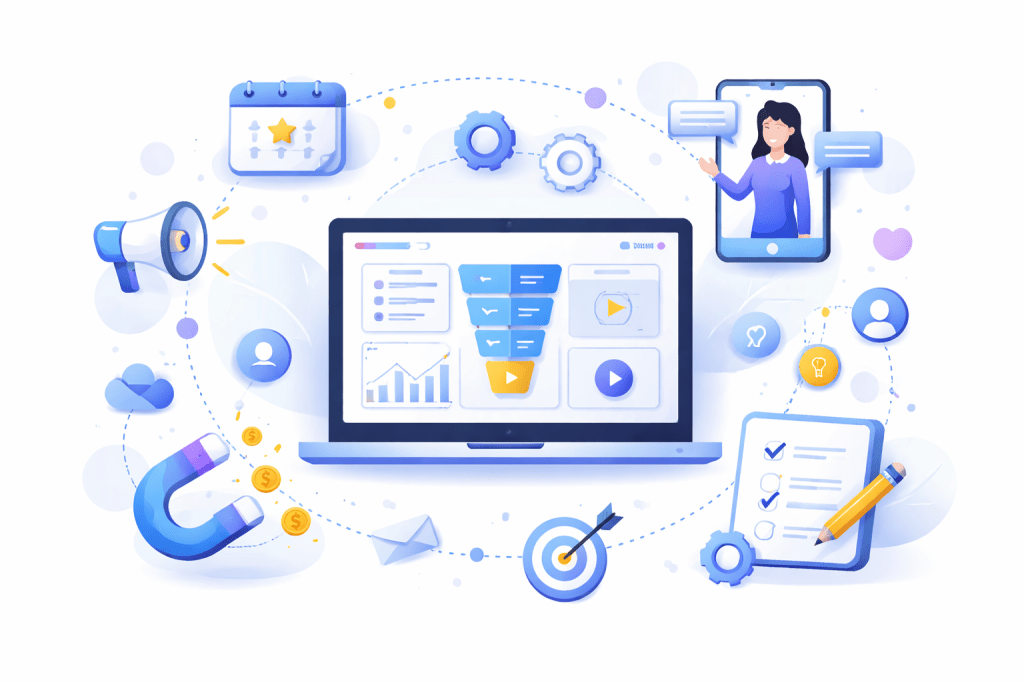
Coaching is growing fast, but growth by itself does not make client acquisition easier. The latest ICF Global Coaching Study shows the profession has expanded to 122,974 coach practitioners worldwide and generated an estimated $5.34 billion in annual revenue, which means coaches are entering a market with real opportunity and much louder competition at the same time.
That is exactly why so many service-based businesses are moving away from random posting, scattered links, and manual follow-up. A platform like ClickFunnels can give coaches one place to capture leads, qualify prospects, book calls, nurture trust, and deliver paid offers without stitching together a pile of separate tools that never quite talk to each other.
For coaches, the real win is not having “a funnel” just to sound sophisticated. The win is building a client journey that feels natural from the first click to the first session, while still giving you the tracking, automation, and delivery systems needed to grow without burning out.
Article Outline
- Part 1: Foundation and Platform Fit
- Part 2: Offer Positioning and Funnel Strategy
- Part 3: Lead Capture, Pages, and Conversion Flow
- Part 4: Sales Calls, Follow-Up, and Client Conversion
- Part 5: Measurement, Optimization, and Performance Improvement
- Part 6: Scaling, Ecosystem Decisions, and Final Recommendations
This first part focuses on the foundation. We are going to look at why ClickFunnels matters for coaches, how the framework works, which components matter most, and how to implement it professionally so your funnel supports your coaching business instead of distracting you from it.
Part 1: Foundation and Platform Fit
Why ClickFunnels Matters for Coaches
Most coaches do not lose potential clients because their service is weak. They lose them because the path from curiosity to commitment is full of friction: a social post sends people to a homepage, the homepage sends them to a generic contact form, the form leads nowhere clear, and follow-up depends on whether the coach remembers to send a message later that day.
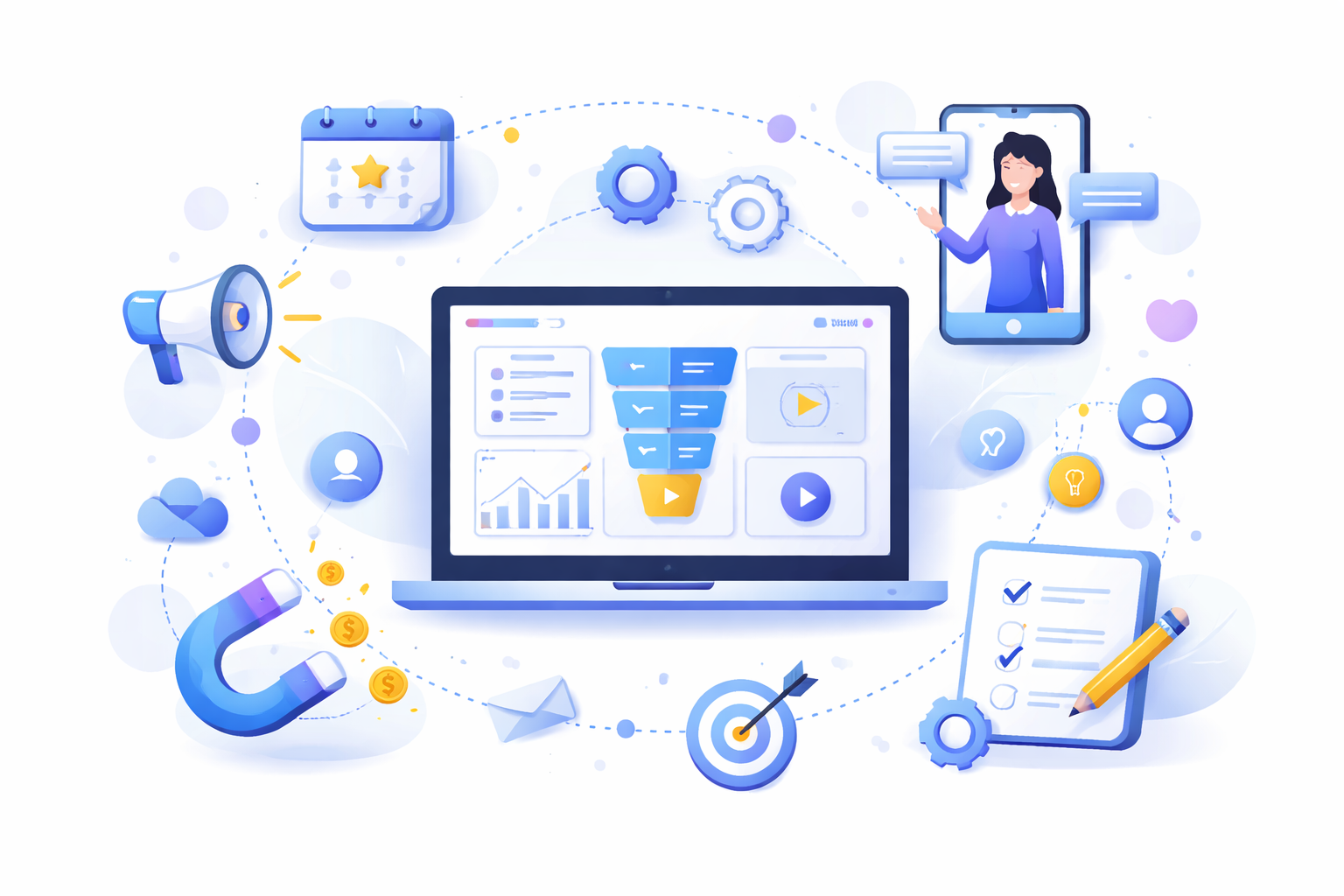
ClickFunnels matters because it replaces that broken path with a guided one. On the official platform, ClickFunnels positions itself as a system that lets you market, sell, and deliver your products and services online, and that matters to coaches because coaching is not just a sale; it is a relationship that starts before the first call and continues after payment.
The market is also moving in a direction that rewards coaches who operate digitally. Grand View Research estimates the U.S. life coaching market at $1.98 billion in 2024, while its research on digital health coaching puts that segment at $10.99 billion in 2024 with projected 12.5% annual growth through 2030. When more buyers are comfortable discovering, evaluating, and buying support online, coaches need an infrastructure that meets that behavior instead of resisting it.
There is also a trust layer here that many people overlook. Coaching is personal, so your funnel has to do more than collect an email address. It has to communicate authority, reduce uncertainty, and make the next step feel safe, whether that next step is joining your list, booking a call, or buying a starter offer.
Framework Overview
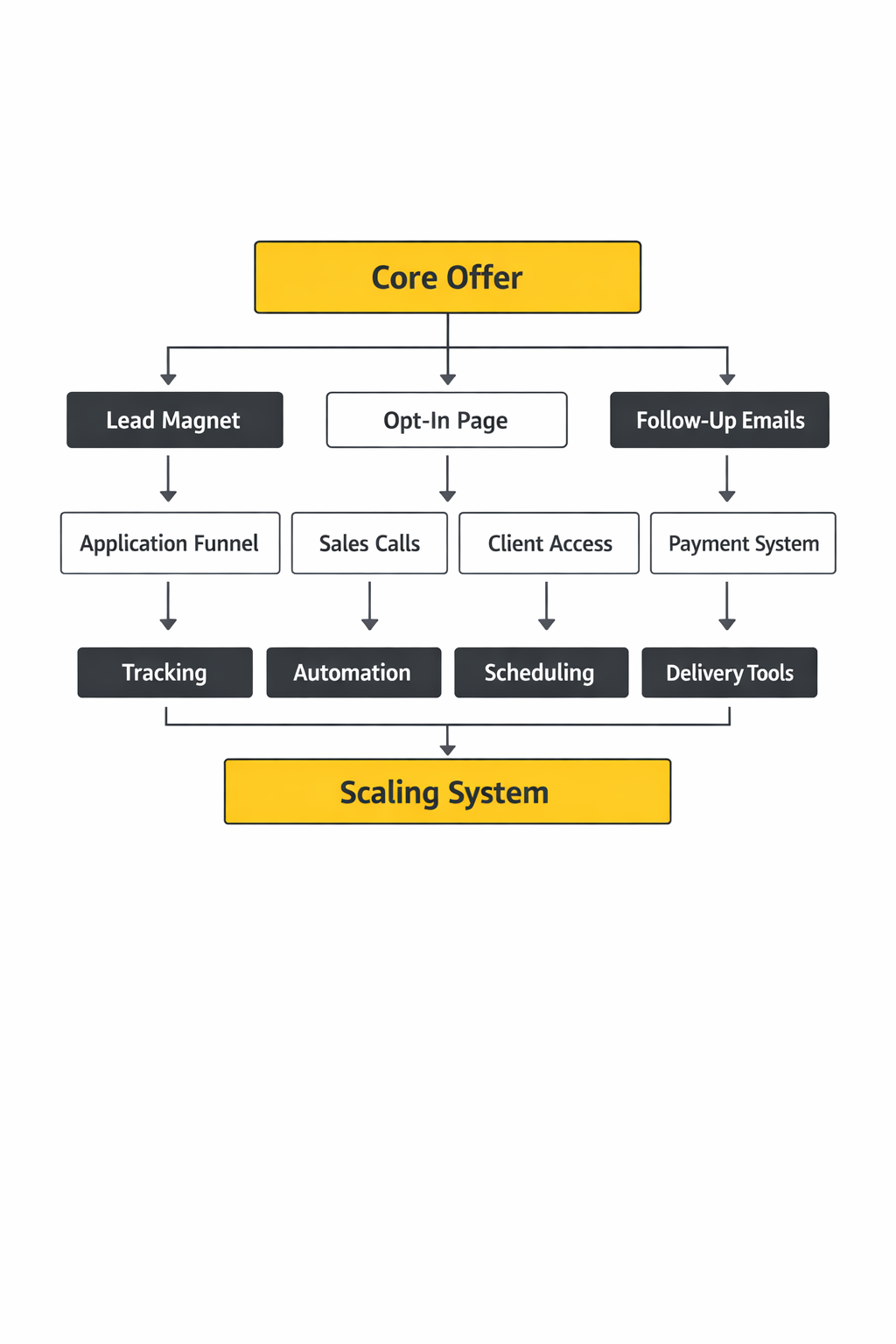
The easiest way to think about clickfunnels for coaches is to stop thinking about pages and start thinking about momentum. A strong coaching funnel moves people through four connected stages: attention, trust, action, and continuation. If one of those stages is weak, the whole system feels heavier than it should.
Attention is where a prospect discovers you through search, social content, referrals, podcast interviews, or paid traffic. Trust is built on the landing page, the lead magnet, the story you tell, the clarity of your promise, and the proof that shows you understand the problem better than the prospect can explain it. Action happens when that prospect opts in, applies, books, or buys. Continuation is what happens next through email follow-up, appointment reminders, onboarding, and delivery.
This is why an all-in-one setup can be so attractive for coaches. ClickFunnels has expanded beyond simple landing pages into CRM, appointments, opportunities, and messaging tools, which means the platform is increasingly built around the full client journey rather than the old idea of a single squeeze page and a thank-you screen.
That broader framework is especially useful for coaches with high-ticket offers. A coaching business usually needs content that pre-sells the call, forms that qualify the lead, scheduling that removes back-and-forth, emails that reduce no-shows, and onboarding that keeps new clients confident. When those steps live inside one system, you spend less time patching holes and more time improving the message that actually drives revenue.
Core Components
The first core component is the offer page or landing page, because this is where vague interest becomes focused interest. Your page needs a clear promise, a defined audience, a realistic outcome, and a next step that fits the temperature of the lead. If you ask a cold visitor to buy expensive coaching immediately, you usually create resistance. If you ask them to take one easy, relevant step, you create momentum.
The second core component is lead capture and qualification. HubSpot’s guidance on lead capture forms and its product direction around form shortening both point toward the same principle: collect what you truly need, not every detail you might someday want. Coaches benefit from this more than most businesses because the wrong form can kill emotional momentum before the conversation even starts.
The third core component is email nurture. Not every qualified prospect is ready on day one, and that is normal. Mailchimp’s benchmark data shows email still produces measurable engagement across industries, which is why coaches should treat email as a trust-building channel rather than a backup plan. A short welcome sequence, a credibility sequence, and a booking reminder sequence can do a huge amount of selling without sounding pushy.
The fourth core component is scheduling and follow-up. ClickFunnels now highlights its Appointments App with automated reminders and follow-ups, and that matters because coaches do not just need more calls; they need the right calls, at the right time, with enough context to make those calls productive. A booking link on its own is not a funnel, but a booking step inside a properly sequenced funnel can become a powerful conversion point.
The fifth core component is delivery and continuity. ClickFunnels also supports courses and membership-style delivery, which is useful for coaches who sell hybrid offers such as a coaching package plus recordings, templates, worksheets, or a client community. That structure helps you increase client value without turning every interaction into another live session on your calendar.
Professional Implementation
Professional implementation starts with matching the funnel to the business model instead of copying a template blindly. A life coach selling one-to-one calls, a business coach selling strategy intensives, and a health coach selling a hybrid membership all need different funnel flows, different proof, and different follow-up logic. The platform can support each of those models, but the strategy has to come first.
It also helps to be realistic about operations. ClickFunnels’ current pricing shows entry-level access at $97 per month on the Launch plan, with annual discounts available, so coaches need to look at the platform as an investment that should replace tool clutter or improve conversion enough to justify the cost. For coaches who want to test the platform more aggressively before committing, this ClickFunnels trial offer is often a more practical starting point than building everything from scratch on disconnected tools.
Professional implementation also means respecting the future of coaching, not just the present. The ICF has been clear that technology and AI are becoming part of the coaching profession, but that does not mean automation should replace judgment. It means a coach should automate the repetitive parts of the journey so more energy can go into listening, diagnosing the real problem, and delivering transformation that actually earns referrals.
If you approach clickfunnels for coaches this way, the platform stops being a shiny object and becomes a business system. You are not buying pages. You are building a cleaner path to trust, a smoother path to conversion, and a more scalable path to delivery.
Part 2: Offer Positioning and Funnel Strategy
If Part 1 was about building the foundation, this part is about making sure that foundation is pointed at the right offer. This is where a lot of coaches get stuck. They build pages, forms, and automations, but the actual offer is still too vague, too broad, or too difficult for a prospect to say yes to without more clarity.
That is why clickfunnels for coaches works best when the funnel is built around one clear promise for one clear type of person. The platform can handle the mechanics, but it cannot rescue weak positioning. If your message is fuzzy, the funnel just delivers that fuzziness faster.
Offer Positioning for Coaches
The strongest coaching offers usually do not sell “access to me.” They sell a specific transformation, in a defined context, for a defined kind of buyer. That might be helping agency owners fix delivery bottlenecks, helping executives communicate with more authority, or helping women in midlife rebuild strength and energy through structured coaching. The tighter the positioning, the easier it becomes to write a landing page that actually sounds like it understands the person reading it.
This matters even more now because the coaching industry is getting more crowded, not less. The 2025 ICF Global Coaching Study shows the profession has grown to 122,974 coach practitioners, and 59% expect revenue growth next year. That is encouraging, but it also means more coaches are competing for the same attention, so a generic promise like “I help you become your best self” usually gets ignored.
Positioning also affects price resistance. When a coach sounds broad, the prospect compares them to every other coach they have ever seen. When a coach sounds precise, the prospect starts to feel that this person might actually understand the exact problem they are dealing with right now. That emotional shift is what makes the rest of the funnel easier to convert.
Choose the Right Funnel Type
Not every coach needs the same funnel. A newer coach with a modest audience usually does better with a lead magnet funnel, a workshop funnel, or a simple application funnel. A more established coach with strong proof and a premium offer can often go straight to an application or strategy-session funnel because the market already has enough context to justify that next step.
ClickFunnels itself leans into this distinction with its Application Funnels guide, where it describes application funnels as a fit for high-ticket offers and breaks the flow into a case study page, an application page, and a homework page, supported by email lists and follow-up sequences. That is a useful lens for coaches because it shows the real job of the funnel: not just generating leads, but preparing better conversations with better-fit prospects.
There is also a big difference between cold traffic and warm traffic. If someone discovers you through a short-form video, a podcast interview, or a guest article, they often need more trust before they are ready to book a call. The latest Wyzowl video marketing data shows that 63% of people most want to learn about a product or service through a short video, which is one reason coaches should seriously consider video sales letters, welcome videos, or short explainer videos inside the funnel. A warm lead may only need a booking page. A cold lead usually needs a bridge.
That bridge can be a lead magnet, a mini training, a webinar, a challenge, or a quiz. The important thing is not picking the “most advanced” funnel. The important thing is picking the funnel that matches how much trust the audience already has when they arrive.

Map the Client Journey Before You Build
One of the smartest things you can do before touching the page builder is write down the exact path a prospect should follow. Where are they coming from? What problem are they aware of? What proof do they need before they trust you? What is the easiest next step they can say yes to today? Those questions matter more than colors, sections, or templates.
For most coaches, the journey works best when it moves through five simple stages: discovery, resonance, proof, commitment, and continuation. Discovery is where the person first finds you. Resonance is where they feel seen. Proof is where they start to believe your process works. Commitment is the opt-in, application, or purchase. Continuation is the follow-up sequence that keeps the relationship moving instead of letting the lead go cold.
This is where clickfunnels for coaches becomes much more powerful than a single landing page. The platform now includes automations that can trigger messages, enroll contacts into courses, and move people to the next step based on behavior. It also includes the Opportunities App, which lets you manage leads in a visual pipeline rather than losing track of who applied, who booked, and who still needs a follow-up message. That is a serious advantage for coaches who are trying to scale without turning their inbox into a mess.
The easiest mistake to make here is asking for too much too soon. A lead who just watched one Instagram reel probably should not be pushed into a long sales application on the next click. A lead who has already consumed your podcast, watched your training, and followed you for six months might be ready for exactly that. The best journey respects the temperature of the buyer.
Use Forms and Questions Strategically
Forms are not just admin. They shape how the prospect experiences your brand. A bloated form makes the process feel heavy, invasive, and transactional. A smart form makes the process feel focused and professional, while quietly giving you the information you need to qualify the lead and personalize the next step.
HubSpot’s lead form guidance makes a useful point here: stronger forms are not just about collecting more leads, but about collecting higher-quality leads. The article also stresses that forms should clearly communicate value and that placement and structure affect performance. For coaches, that means every question needs a reason to exist. If a question does not help you qualify, segment, or prepare for the conversation, it probably should not be there.
ClickFunnels is increasingly built for this kind of logic. Its Survey Workflows app is designed to collect audience data and automatically guide someone to the right offer inside the funnel. That is especially useful for coaches with multiple offers, such as a low-ticket course for beginners, a group program for mid-level clients, and a private offer for qualified high-ticket buyers. Instead of forcing everyone through the same path, you can route people more intelligently.
That kind of routing is not just convenient. It protects your positioning. A prospect who is not ready for one-on-one coaching should not feel pressured into it. A prospect who is obviously qualified should not be buried under beginner-level messaging that makes your offer feel less premium than it is.
Package the Offer So It Sells
Once the funnel type is chosen, the next job is packaging. Coaches often think packaging means adding more bonuses, more calls, more worksheets, and more access. In reality, better packaging usually means making the offer easier to understand and easier to imagine using in real life.
A strong coaching package answers a few questions immediately. What is included? How long does it last? What kind of support is inside it? Who is it for, and who is it not for? What result is it designed to help create? When those answers are obvious, the prospect can focus on whether they want the outcome. When those answers are muddy, the prospect gets stuck trying to decode the offer itself.
This is one reason hybrid offers are becoming more attractive. ClickFunnels highlights that its Courses app is built to turn expertise into structured learning, which gives coaches a practical way to combine live coaching with recorded lessons, exercises, onboarding modules, or client resources. That can make delivery more scalable and can also make the offer feel more complete without stuffing the calendar with extra live calls.
The best packaging also reduces hidden anxiety. If your coaching offer includes a clear onboarding process, a defined curriculum, milestone check-ins, and a simple path to get started, prospects feel less like they are buying an abstract promise and more like they are stepping into a real process. That is exactly what a good funnel should do: make the path feel clear enough to trust.
Build for Clarity Before Complexity
There is always a temptation to make the funnel more advanced than it needs to be. Coaches see quizzes, branches, upsells, downsells, SMS sequences, and member areas, and they assume they need all of it on day one. Usually they do not. Usually they need one clear offer, one clear page, one clear next step, and one solid follow-up sequence that does not let warm leads disappear.
That is why it often makes sense to start with the most practical version of the system. ClickFunnels’ current plans begin at $97 per month, or $81 per month when billed annually, and the platform includes landing pages, surveys, automations, appointments, and course tools in the ecosystem. For a coach who wants to move fast and keep everything in one place, that can be enough to get the machine running. For someone who wants to explore the platform before going all in, this ClickFunnels offer is one of the easier ways to test whether the system fits the business.
And that is the real point of Part 2. Before you worry about page sections, button colors, or fancy automations, make sure the offer is positioned correctly and the funnel strategy matches the level of trust your audience already has. When that part is right, the rest of the build becomes dramatically easier.
Part 3: Lead Capture, Pages, and Conversion Flow
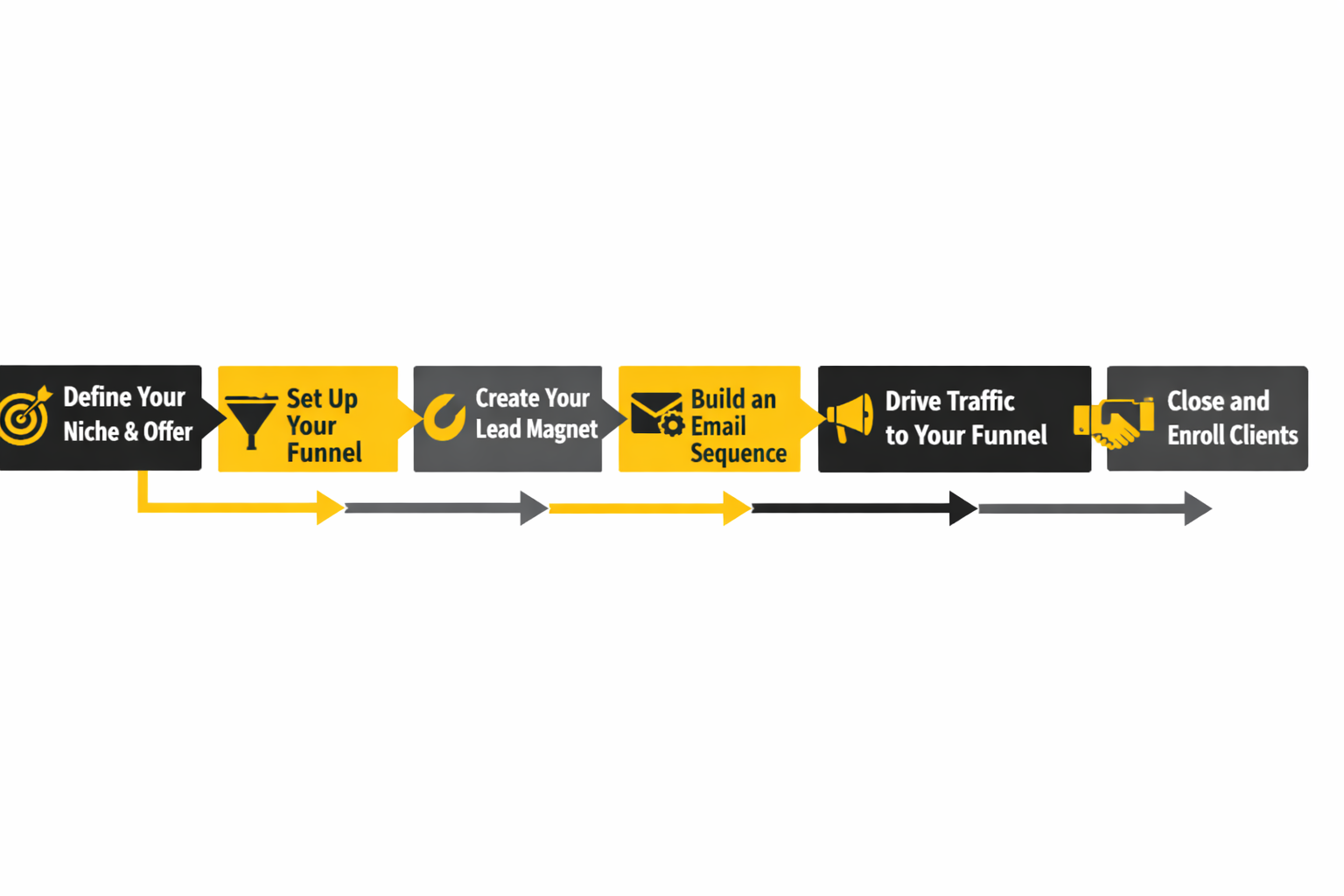
Now we get into the part most coaches picture first when they think about funnels: the actual pages. This is where clickfunnels for coaches stops being a business idea and starts becoming something a real prospect can move through. And this is also where a lot of coaches accidentally sabotage themselves by building pages that look busy, sound generic, and ask for commitment before trust has had time to form.
A good funnel page does not try to say everything. It says the right thing in the right order. The visitor should feel pulled forward, not buried under options, because confusion is one of the fastest ways to kill momentum in a coaching funnel.
Build Landing Pages That Match Intent
The biggest mistake coaches make on landing pages is talking to every possible prospect at once. A page built for a cold visitor from social media should not feel the same as a page built for someone who already watched your webinar or heard you on a podcast. Intent matters, and your page needs to reflect how much awareness the visitor already has when they arrive.
That is why the first job of the page is not design. It is alignment. The headline, subheadline, proof, and call to action need to feel like a direct continuation of the ad, video, email, or referral that sent the person there in the first place. When that message matches, the page feels natural. When it does not, the visitor instantly feels friction, even if they cannot explain why.
ClickFunnels is built for exactly this kind of page flow. On its main platform page, the company describes itself as a system that helps businesses market, sell, and deliver products and services online, and for coaches that only works when each page is built around a specific stage of belief rather than a generic “learn more” experience.
What Every Coaching Page Needs
Strong coaching pages usually have a few things in common. They identify the problem clearly, make the result feel tangible, reduce uncertainty, and present one logical next step. That does not mean every page has to be long, but it does mean every section should earn its place.
A coaching page gets stronger when it answers the silent questions already running through the prospect’s head. Is this for someone like me? Does this coach really understand the problem? Is the result realistic? What happens next if I click? Those questions are emotional before they are logical, so the page has to create relief, clarity, and trust before it asks for commitment.
That is one reason video often helps. The latest Wyzowl research shows that 89% of businesses use video as a marketing tool and 82% say video has directly increased sales. For coaches, a short video above the fold can do something written text often struggles to do on its own: transfer tone, presence, and emotional credibility fast enough to keep the right person engaged.
Lead Magnets That Attract the Right People
A lead magnet should not exist just to collect email addresses. It should act like a filter. The right lead magnet attracts people who are serious about the problem you solve, while gently pushing away people who only want free information with no real intention to move forward.
That means generic freebies usually underperform in coaching. A broad checklist with a vague title might bring in opt-ins, but those opt-ins often do not turn into booked calls or paid clients. A stronger lead magnet is usually narrower, more urgent, and more connected to the paid offer that comes later. It gives the prospect a quick win, but it also makes the next step feel more necessary.
This is where clickfunnels for coaches becomes especially useful. A coach can create a lead magnet page, a thank-you page, a short nurture sequence, and a booking invitation inside one connected flow instead of sending people into a dead end. ClickFunnels also highlights its Automations app as a way to trigger follow-up based on what the lead does next, which matters because a free resource without thoughtful follow-up is usually just a missed sales opportunity wearing a nice design.
Forms That Increase Conversion Without Killing Momentum
Forms are where a lot of funnels quietly break. Coaches add too many fields, ask questions in the wrong order, or turn a simple opt-in into something that feels like an interrogation. Once that happens, even interested prospects start dropping off because the energy that brought them to the page gets interrupted.
The best forms feel light, but they are still strategic. A simple lead magnet form might only need a first name and email. An application form for a premium coaching program needs more, but even then the questions should feel purposeful. Every field should help qualify the lead, segment the follow-up, or prepare the coach for a more productive sales conversation.
This is consistent with the logic behind HubSpot’s guidance on lead capture forms, which emphasizes clarity, value exchange, and asking only for information that supports the conversion goal. Coaches benefit from that discipline because every unnecessary field creates one more reason to leave. In a funnel, reducing drag is often more important than adding persuasion.
Thank-You Pages That Keep the Funnel Moving
Most thank-you pages are wasted. They confirm the opt-in, say something polite, and then stop. That may feel finished from the coach’s side, but from the prospect’s side it often feels like the momentum suddenly disappeared.
A better thank-you page keeps the relationship moving. It can tell the person to check their inbox, invite them to book a call, introduce the next training, or explain what to do before the next step. It should feel like a bridge, not a receipt. The prospect already said yes once, and the thank-you page is often the easiest place to earn the next micro-commitment.
This is especially important in coaching because buying behavior is emotional and layered. A prospect may not be ready to purchase immediately, but they may be ready to watch a short case-study video, answer a survey, or schedule a low-pressure discovery call. ClickFunnels supports this kind of guided flow through tools like the Survey Workflows app and the Appointments app, which makes it easier to turn a simple opt-in into a structured next step.
Booking Pages That Turn Interest Into Conversations
A booking page is not just a calendar widget sitting on an empty page. For coaches, it is one of the most important conversion pages in the entire funnel because it sits right at the point where interest either becomes a real conversation or disappears into procrastination.
That page should reassure the prospect that booking is worth it. It should tell them who the call is for, what will happen on the call, what will not happen on the call, and why showing up matters. A little clarity here can dramatically improve show-up quality because it removes the uncertainty that leads people to book casually and cancel later.
ClickFunnels presents its Appointments app as a way to let leads book directly through funnels and sync that booking into the workflow. That matters because coaches do not just need more booked calls. They need better-fit prospects arriving with the right expectations, enough context, and enough commitment to take the conversation seriously.
Write Page Copy Like a Coach, Not a Template
One of the fastest ways to weaken a funnel is to write in abstract marketing language that could belong to almost anyone. Coaching buyers are unusually sensitive to this because the purchase is relational. If the page sounds like it was copied from a generic internet template, the coach immediately feels less trustworthy.
The copy should sound like a real person who understands a real struggle. That does not mean it needs to be casual for the sake of being casual. It means the language should be specific enough to feel grounded in the actual problem and confident enough to make the next step feel safe.
This is where the earlier work on positioning pays off. When the offer is sharp, the copy usually becomes sharper too. Instead of promising transformation in vague language, the page can describe the kind of progress the prospect actually wants to see. And when that happens, clickfunnels for coaches stops sounding like software and starts feeling like a client acquisition system built around trust.
Connect Pages, Email, and Pipeline Management
A page on its own is never the whole system. Once someone opts in, applies, or books, they need to move into follow-up that feels immediate and relevant. That is where the funnel either begins compounding or starts leaking value.
Mailchimp’s current benchmark page shows that across all users, average email engagement is still meaningful, with an average open rate of 35.63% and an average click rate of 2.62%. Those numbers matter because they show email still has a job to do after the page conversion happens. For coaches, email should confirm the action, reinforce the value of the next step, and keep the relationship warm while the lead decides, prepares, or waits for the appointment date.
ClickFunnels has been expanding beyond pages into a broader system, including the Opportunities app for managing leads in a visual pipeline. That is a serious advantage for coaches who are tired of losing track of who downloaded a guide, who started an application, who booked a call, and who needs a personal follow-up before they disappear. When pages, follow-up, and pipeline visibility work together, the funnel starts behaving like a business asset instead of a collection of disconnected steps.
Keep the Conversion Flow Simple
It is tempting to keep adding steps because each new page feels like progress. But every extra step is also one more chance for the prospect to drift away, get distracted, or decide they will come back later. Later usually means never.
That is why the best coaching funnels often feel simpler than expected. One clean page. One clear form. One useful thank-you page. One relevant email sequence. One booking step. One pipeline to track what happens next. Simple does not mean weak. It means the system respects the reality of how people make decisions online.
If you build Part 3 well, the rest of the funnel gets easier. You are no longer hoping that interest somehow becomes revenue. You are creating a path where each page earns the next click, each step deepens trust, and each action moves the prospect closer to becoming the right kind of client.
Part 4: Sales Calls, Follow-Up, and Client Conversion
At this point, the funnel is built to attract leads and move them into action. But this is the part that decides whether the business actually grows. For most coaches, revenue is not made when someone opts in. It is made when the right person shows up, has the right conversation, and feels enough trust to move forward.
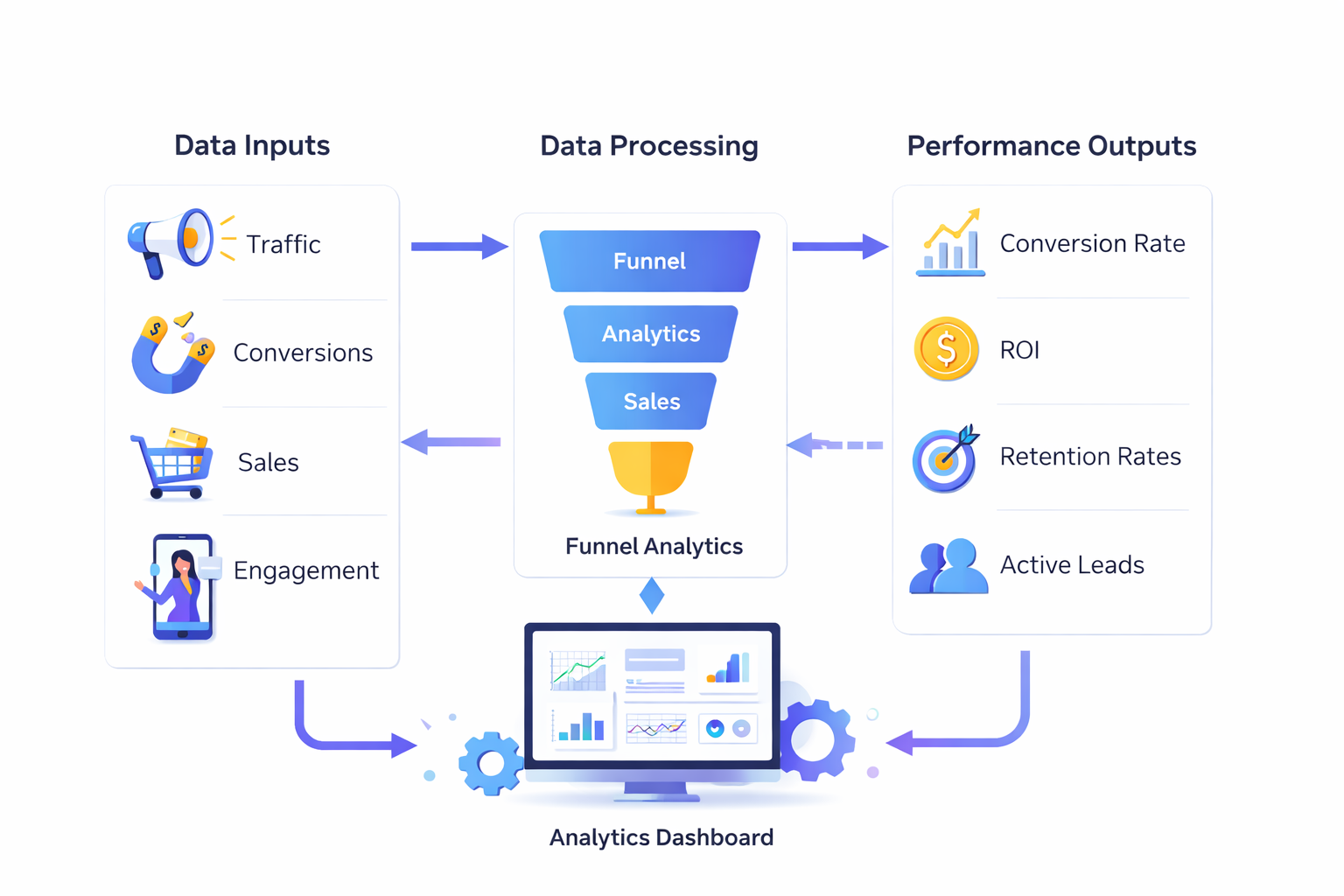
That is why clickfunnels for coaches cannot stop at pages and forms. The sales process matters just as much as the landing page because the funnel is supposed to create qualified conversations, not just vanity metrics that look exciting in a dashboard and do nothing for cash flow.
Statistics and Data
There is a reason coaches should take this stage seriously. The 2025 ICF Global Coaching Study puts the profession at 122,974 coach practitioners worldwide and $5.34 billion in annual revenue. When a market gets bigger and more professional, sloppy follow-up becomes more expensive because prospects have more options and less patience.
Email still matters here more than many coaches think. Mailchimp’s current benchmark data shows an average open rate of 35.63% and an average click rate of 2.62% across email marketing campaigns. Those numbers are not just trivia. They are a reminder that follow-up after an opt-in, an application, or a booked call is still one of the easiest places to win back attention that would otherwise be lost.
On the appointment side, HubSpot’s sales appointment benchmarks note that average meeting show rates often range from 65% to 80%. That range matters because it shows how much revenue can disappear when a coach treats scheduling as a simple calendar link instead of a guided process with reminders, confirmation, and expectation-setting built in.
There is also a strong case for using video and richer pre-call content before the meeting happens. The latest Wyzowl data shows that 98% of people have watched an explainer video to learn about a product or service. For coaches, that makes pre-call video one of the smartest ways to warm the lead, explain your framework, and make the actual conversation more focused and more productive.
Turn Bookings Into Better Conversations
A booked call is not the goal. A high-quality call is the goal. Those are not the same thing, and coaches who confuse them usually end up with calendars full of conversations that feel busy but rarely convert.
The difference comes from preparation. A serious funnel should tell the prospect what the call is for, what they should expect, and what kind of person the call is best suited for. That alone improves the quality of the people who book, because it filters out casual browsers and helps committed prospects arrive ready to talk honestly about the problem they want solved.
This is where ClickFunnels has become more useful for service businesses. Its Appointments app is designed to let leads book meetings through the funnel, while the Opportunities app gives coaches a visual pipeline to see where each lead stands. That combination matters because one tool handles the booking, while the other makes sure the lead does not disappear into chaos after the booking happens.
Use Follow-Up to Protect Revenue
Most coaches do not need dramatically more leads. They need to stop losing the leads they already paid for, created content for, or worked hard to attract. That is why follow-up is not a nice extra. It is one of the main ways to protect revenue already sitting inside the funnel.
A good follow-up system should do three things. First, it should confirm the action the person already took, whether that was opting in, applying, or booking. Second, it should increase the prospect’s confidence in taking the next step. Third, it should reduce the chance that they drift away simply because life got busy and your offer fell off their radar.
ClickFunnels positions its Automations app as the glue that connects pages, appointments, courses, and messaging. For coaches, that means reminder emails, pre-call preparation, missed-call recovery, and post-call follow-up can all sit inside the same ecosystem. That is a major operational win, because the less manual the process becomes, the more consistently it actually gets done.
Run Sales Calls Like Diagnosis, Not Pressure
Coaching sales calls convert best when they feel like diagnosis, not performance. The prospect should feel that the conversation is helping them think more clearly, not just pushing them toward a scripted close. When that happens, the call becomes an extension of the coaching experience itself, which is exactly what should happen in a trust-based service business.
That does not mean the call should be loose or improvised. It should have structure. A strong coaching sales call usually clarifies the current problem, uncovers the cost of staying stuck, identifies what the prospect has already tried, and then explores whether your process is genuinely the right fit. Structure creates confidence. Pressure creates resistance.
This matters even more in a market where buyers are more informed. Coaches are no longer selling into a world where the audience has never heard of coaching. They are selling into a world where prospects have likely seen multiple offers already. The winning call is not usually the one with the most hype. It is the one that feels the most grounded, credible, and specific.
Track the Right Conversion Metrics
Once the funnel starts running, the next temptation is to stare at whatever numbers are easiest to find. Page views, click counts, and raw lead volume can be useful, but they often create false confidence when they are disconnected from sales outcomes. Coaches need to track the metrics that explain business health, not just activity.
The most useful numbers usually sit across the full conversion path. How many visitors become leads? How many leads become applications? How many applications become booked calls? How many booked calls actually show up? How many show-ups become clients? When those numbers are visible, the weak point in the funnel becomes much easier to diagnose.
ClickFunnels now highlights its Analytics app as a tool for tracking conversions, engagement, revenue, trend analysis, and forecasting across the funnel. That is valuable because coaches often do not need more raw data. They need a clearer picture of where momentum is dying so they know whether to improve the page, the email sequence, the qualification step, or the sales conversation itself.
Find Drop-Off Points Before Scaling
One of the most expensive mistakes a coach can make is pouring more traffic into a funnel that already has an obvious leak. It feels productive because more leads are entering the top, but the math underneath is still broken. Scaling a broken funnel usually just creates faster disappointment.
This is why drop-off analysis matters. If the opt-in page converts well but almost nobody books, the problem is probably in the bridge between lead and appointment. If plenty of people book but too many fail to show, the issue may be weak reminders or unclear expectations. If show-up rates look fine but closes are poor, then the sales process or offer fit likely needs work.
The ClickFunnels Analytics app is designed for exactly this kind of visibility, and the company’s broader platform messaging centers on giving businesses the data they need to grow. For coaches, that means the numbers should guide the next decision. Do not guess what is wrong. Look for the stage where commitment starts collapsing and fix that stage first.
Improve Show Rates With Better System Design
No-shows are rarely random. They usually happen because the lead was underqualified, the booking felt too casual, the reminder system was weak, or the person never fully understood why the meeting mattered in the first place. That is good news, because those are process problems, not mysterious bad luck.
Calendly’s scheduling guidance emphasizes reminder workflows and follow-ups as ways to reduce no-shows and keep attendees engaged. Even though many coaches may choose to keep everything inside ClickFunnels, the principle still applies. Better reminders, better confirmation, and better pre-call context almost always lead to more held meetings and better conversations.
This is where clickfunnels for coaches starts behaving like a professional client acquisition system instead of a page builder. When the funnel qualifies leads, the booking step frames the value, the reminder sequence keeps people committed, and the pipeline shows what still needs action, more of the right people actually make it to the conversation that can change their business or life.
Use Data to Refine, Not to Panic
Data is useful, but only if you read it with some maturity. A bad week does not mean the funnel is broken forever, and a good week does not mean the system is fully dialed in. Coaches get into trouble when they either obsess over every tiny movement or ignore the numbers completely.
The healthier approach is to use data as a guide for steady refinement. Watch the trend lines. Compare traffic sources. Look at where qualified people convert best. Notice whether certain reminders increase show rates or whether certain landing pages attract people who are curious but never serious. Small improvements at these stages compound fast because each step feeds the next one.
That is the deeper value of analytics in a coaching funnel. You are not measuring numbers just to feel sophisticated. You are measuring the path from attention to revenue so you can make smarter decisions, protect more opportunities, and gradually build a client acquisition system that gets stronger instead of noisier.
Part 5: Measurement, Optimization, and Performance Improvement
Once the funnel is live, the game changes. You are no longer guessing what might work. You are looking at what is actually happening and making the funnel stronger step by step. That is where clickfunnels for coaches becomes a real business system, because growth stops depending on mood, inspiration, or random bursts of content and starts depending on what the numbers are quietly telling you every week.
This is also the stage where a lot of coaches lose patience. They either overreact to tiny fluctuations or they avoid the data entirely because they are afraid of what it might reveal. Neither approach helps. The coaches who win long term are usually the ones who can look at the numbers honestly, stay calm, and keep improving the weakest point in the chain.
Measure What Actually Drives Revenue
The easiest trap is measuring what looks exciting instead of what leads to revenue. Traffic spikes can feel good. Opt-in counts can feel good. Social engagement can definitely feel good. But if those numbers are not moving people closer to applications, calls, purchases, and retained clients, they can create a false sense of progress that keeps a coach busy without making the business stronger.
The more useful way to think about measurement is to follow the full path. How many visitors land on the page? How many of them opt in? How many leads open the follow-up emails? How many book? How many show up? How many of those conversations turn into paying clients? That is the line that matters, because it reveals where trust is building and where it is falling apart.
ClickFunnels is clearly leaning into this broader operating model. Its Analytics app is presented as a way to track conversions, engagement, revenue, trend analysis, and forecasting, while the main platform positions itself around helping businesses turn online visitors into paying customers. That framing is useful for coaches because it keeps the focus where it belongs: not on random activity, but on movement toward revenue.
Spot the Constraint in the Funnel
Every funnel has a constraint. Sometimes it is obvious, and sometimes it hides behind a nice-looking top line. A coach might be generating leads consistently but getting almost no bookings. Another coach might be booking plenty of calls but closing too few of them. Someone else might be closing well but attracting the wrong people and burning time on conversations that were never likely to convert in the first place.
The smartest move is not trying to fix everything at once. It is identifying the one place where the funnel loses the most momentum and improving that first. When you find the real constraint, progress often comes faster than expected because the rest of the system was already more solid than it looked.
This is one reason the broader ClickFunnels ecosystem matters. The Opportunities app is built around a visual sales pipeline, and the Automations app is built to connect follow-up across the funnel. Together, they make it easier to see whether the issue is weak lead quality, weak reminders, poor follow-up, or a sales process that needs tightening.
Improve Conversion Rates With Better Testing
Optimization does not mean rebuilding the whole funnel every time you get nervous. Most of the time, the better move is testing one meaningful variable at a time and giving it enough traffic to tell you something useful. When coaches change the headline, offer structure, video, form, email sequence, and booking flow all at once, they make it impossible to know what actually improved the result.
Better testing starts with a clear theory. If the landing page is getting attention but too few opt-ins, the problem may be the promise, the clarity of the lead magnet, or the amount of friction in the page layout. If email open rates look weak, the subject lines or timing may need work. If people book but do not show, the problem is usually not the calendar itself. It is the way the meeting was framed before and after the booking happened.
That kind of disciplined thinking matters because email still has real leverage after the opt-in. Mailchimp’s current benchmark page reports an average open rate of 35.63% and an average click rate of 2.62%, which means small improvements in sequence quality, subject lines, and call-to-action clarity can create meaningful gains across the funnel.
Refine the Message Before Changing the Tool
When a funnel underperforms, many coaches assume the software is the problem. Sometimes the tool really is a bad fit, but much more often the issue is the message. A weak promise, a vague audience, unclear proof, or a confusing next step can make even a well-built funnel feel flat. Changing platforms without fixing that usually just relocates the problem.
This is why messaging work and optimization work are tied together. A coach may think the page needs a design refresh when what it really needs is a headline that sounds like it understands the prospect’s exact pain. Another may think the offer needs more bonuses when what it actually needs is a sharper explanation of what transformation is included and who the offer is really for.
That is especially relevant in coaching, where the sale is deeply tied to trust. The 2025 ICF Global Coaching Study executive summary shows the market has reached 122,974 coach practitioners worldwide and $5.34 billion in annual revenue. In a larger, louder market, sharper messaging is not a luxury. It is one of the main ways a coach makes the right prospect stop scrolling and pay attention.
Protect Show Rates and Sales Quality
One of the most overlooked parts of optimization is meeting quality. Coaches often treat the booking as the conversion event, but a booked call has very little value if the person does not show up, shows up confused, or shows up with expectations that were never properly set. The real optimization work is often happening between the booking and the call, not just before the booking.
That means the reminder flow matters. The pre-call email matters. The booking page copy matters. The questions on the application form matter. Even the tone of the confirmation message matters, because each of those pieces shapes how seriously the person takes the meeting and how ready they are to have the conversation.
This is where connected systems have an advantage. ClickFunnels highlights Appointments, email funnels, and automation inside the same ecosystem, which gives coaches a cleaner way to handle reminders, prep messages, and missed-call recovery without relying on a messy stack of tools and manual workarounds.
Optimize for Lead Quality, Not Just Volume
More leads do not automatically mean more clients. In fact, the wrong kind of lead growth can make the business harder to run because it fills the pipeline with people who are curious, underqualified, or simply not ready. That creates calendar fatigue, noisy data, and a funnel that appears active while actual conversion weakens.
That is why the best optimization work often involves tightening the funnel, not widening it. Better qualification. Better copy. Better application questions. Better explanation of who the offer is and is not for. When that happens, total leads may even go down for a while, but the quality of the conversations usually goes up, which is what actually matters.
The ClickFunnels guide to application funnels is useful here because it frames high-ticket funnels around case studies, applications, homework, and automated follow-up. That is a smart structure for many coaches because it improves the odds that the people reaching the sales conversation are already more serious, more informed, and more aligned with the offer.
Build a Review Rhythm That Keeps You Honest
Optimization works best when it becomes a routine, not a panic response. A weekly review is usually enough for most coaches. Look at the core numbers, note any unusual changes, review where leads are getting stuck, and decide on one or two focused adjustments for the next cycle. That rhythm keeps the funnel moving forward without turning measurement into a full-time job.
A monthly review should zoom out further. Which traffic sources are bringing the best-fit leads? Which offer entry point is producing the healthiest conversion path? Which email sequence is doing the best job warming people up? Which stage creates the most drop-off? Those bigger questions help you make strategic decisions instead of just tactical tweaks.
This approach also protects your energy. Coaching businesses are personal by nature, so it is easy to take funnel performance personally. But the healthier mindset is to treat the funnel like a living system. It is not judging you. It is simply showing you where the client journey feels clear and where it still needs work.
Know When the Funnel Is Ready to Scale
Scaling should come after the funnel proves it can move people through the full process with some consistency. That does not mean it needs to be perfect. It does mean the core stages need to be stable enough that adding more traffic will produce more opportunity instead of more confusion.
A good sign is when the numbers start behaving predictably. The landing page converts within a reasonable range. The email sequence gets opened consistently. The right people book. Show rates hold up. Sales calls feel focused. Clients who buy are genuinely good fits. When those pieces are working together, the funnel is no longer fragile. It is becoming scalable.
That is the point where clickfunnels for coaches starts paying off in a much bigger way. You are not just running pages anymore. You are improving a system that can create more qualified conversations, better clients, and more stable growth without forcing you to rebuild the business every time you want the next jump in revenue.
Part 6: Scaling, Ecosystem Decisions, and Final Recommendations
This is the point where the conversation gets more serious. A coach can absolutely get started with a simple funnel, a basic offer, and a short email sequence. But once the system begins working, the real question becomes bigger than pages and opt-ins. The question becomes whether the business is being built in a way that can scale without creating more stress, more tool chaos, and more operational drag.
That is where clickfunnels for coaches becomes a strategic decision instead of a software choice. You are deciding how much of your marketing, sales, delivery, follow-up, and client management you want living in one ecosystem. For many coaches, that decision matters because growth usually breaks the business at the operational level before it breaks the business at the idea level.

Choose an Ecosystem That Reduces Friction
The biggest advantage of using a broader platform is not that it feels impressive. It is that it reduces the amount of friction between important parts of the client journey. ClickFunnels now presents a much wider product ecosystem than the old “funnel builder” label suggests, including landing pages, survey workflows, appointments, opportunities, automations, analytics, and courses. For coaches, that matters because the client journey is rarely a single page followed by an immediate purchase.
A real coaching business usually needs several things working together. It needs lead capture, qualification, scheduling, email nurturing, payment flow, onboarding, delivery, and performance tracking. When those pieces live in separate tools, the coach ends up spending more time fixing broken handoffs and less time improving the actual offer. When those pieces are more connected, the business becomes easier to run and easier to refine.
This is also where price should be looked at honestly. The current ClickFunnels pricing page shows the Launch plan at $97 per month or $81 per month billed annually. That is not free, and it should not be treated casually. But for a coach replacing several disconnected tools or trying to build a more stable client acquisition system, the more important question is whether the platform saves enough time and captures enough missed revenue to justify the cost.
Decide When ClickFunnels Is the Right Fit
Not every coach needs the same stack. A newer coach with a smaller audience and a very simple sales process may be able to validate the offer with a leaner setup first. A coach with a premium offer, application funnel, course components, and a growing email list will usually feel the value of an all-in-one system much faster.
The best way to think about fit is not by asking whether ClickFunnels is “the best” in the abstract. Ask whether it matches the way your business actually acquires and serves clients. If your process depends on guiding leads through pages, forms, email, appointments, and follow-up in a structured way, the platform’s current direction makes a strong case. The Appointments app, Opportunities app, Automations app, and Analytics app all point toward that more integrated operating model.
For coaches who want to test the fit before committing deeply, this ClickFunnels deal is one of the more practical entry points. It makes more sense to test the ecosystem with a real funnel and real traffic than to overthink the decision in theory for weeks.
What Scaling Really Looks Like for Coaches
Scaling sounds glamorous until you are the one trying to manage it. More leads mean more follow-up. More bookings mean more reminders, more prep, more reschedules, and more decision points. More clients mean more onboarding, more delivery systems, and more pressure to keep the experience consistent. If the backend is messy, growth quickly starts feeling heavier instead of more profitable.
That is why the best scaling move is often not getting more traffic first. It is strengthening the path the lead takes after they arrive. The 2025 ICF Global Coaching Study shows the profession has reached 122,974 coach practitioners worldwide and $5.34 billion in annual revenue, which means more coaches are building real businesses and more buyers are comfortable purchasing coaching in a structured way. In a market like that, the coach with the cleaner system often has the bigger edge, even if another coach has a slightly bigger audience.
Scaling also means protecting quality. That is where hybrid delivery becomes powerful. The ClickFunnels Courses app is built around packaging and selling structured education, which gives coaches a way to combine live coaching with lessons, templates, onboarding modules, and repeatable client assets. That does not just improve efficiency. It can also improve client experience by making the transformation feel more supported between live sessions.
Final Recommendations for Coaches
If you are serious about using clickfunnels for coaches, keep the strategy simple at the start. Build one offer for one audience with one clear next step. Make the page sharp, the form purposeful, the follow-up sequence relevant, and the booking flow professional. Then watch the numbers closely enough to see where the real friction lives.
After that, expand with intention. Add better qualification. Add better email nurture. Add course delivery if the offer needs it. Add pipeline visibility if follow-up is getting messy. Add more traffic only after the core path is converting well enough to deserve scale. That order matters because every new layer should support momentum, not distract from it.
And above all, do not let the software become the story. The story is still the transformation you help create. The platform matters because it gives that transformation a cleaner path to reach the right people, earn trust faster, and convert more consistently.
FAQ – Built for a Complete Guide
Is ClickFunnels good for coaches?
Yes, it can be a very strong fit for coaches when the business depends on moving people from interest to booking to enrollment in a structured way. The reason it works is not just page building. It is the broader ecosystem around appointments, pipeline management, automations, and course delivery. That combination makes it easier to run both the front end and the backend of a coaching business from one place.
Do coaches really need a funnel?
A coach does not necessarily need a complicated funnel, but every coach needs a client journey. Even referrals move through a sequence of trust, information, decision, and follow-up. A funnel simply makes that process clearer and more intentional, which becomes more important as the business grows and manual follow-up starts breaking down.
What type of funnel works best for a coaching business?
The best funnel depends on the temperature of the audience and the price of the offer. Lower-commitment leads often respond better to a lead magnet, workshop, or mini-training funnel first. Higher-ticket coaching usually works better with a case study, application, and booking flow, which is the logic behind the ClickFunnels application funnel structure.
Can coaches use ClickFunnels for high-ticket offers?
Yes, and that is one of the clearest use cases for the platform. High-ticket coaching usually needs qualification, scheduling, reminder sequences, and a proper pipeline after the lead books. Those steps matter because premium buyers are rarely making a casual purchase. They need clarity, confidence, and a process that feels professional from the first click to the sales conversation.
Is ClickFunnels too expensive for new coaches?
That depends on how much complexity the coach actually needs. The current pricing page shows the Launch plan at $97 per month or $81 per month billed annually, so the real question is whether that cost replaces enough tools or improves conversion enough to pay for itself. For a coach with no offer clarity and no consistent traffic, the problem is probably not the software. For a coach who is already getting attention and needs a stronger system, the investment can make sense much faster.
How many pages should a coaching funnel have?
Usually fewer than people think. A strong coaching funnel might only need a landing page, a thank-you page, a booking or application page, and a relevant follow-up sequence behind the scenes. Extra pages should only be added when they solve a real problem in the conversion path. More steps do not automatically make the funnel better. They often just create more places for leads to drop off.
Should coaches use video inside their funnels?
In many cases, yes. Video helps transfer trust, tone, and emotional credibility faster than text alone. The 2026 Wyzowl video marketing report shows 91% of businesses use video as a marketing tool and 93% of video marketers see it as an important part of their strategy. For coaches, a short welcome video, explainer video, or pre-call video can warm the lead significantly before the next step.
What should coaches track inside their funnels?
The most useful metrics are the ones that reveal where money is being lost. Track visitor-to-lead rate, lead-to-booking rate, booking-to-show rate, and show-to-close rate. Those numbers reveal where the real friction is. Tools like the ClickFunnels Analytics app are useful because they focus on drop-off points, conversion trends, and funnel performance rather than just surface-level activity.
Does email still matter for coaches using funnels?
Absolutely. Email is often the bridge between opt-in and action, especially when the lead is interested but not ready immediately. Mailchimp’s benchmark page still shows meaningful engagement, with all-user average open rates at 35.63% and click rates at 2.62%. For coaches, that means reminder sequences, nurture emails, and post-call follow-up still do a huge amount of work.
Can ClickFunnels handle coaching delivery as well as marketing?
Yes, especially for coaches who deliver a hybrid offer. The Courses app is designed for structured online education, which means coaches can combine live sessions with recordings, resources, onboarding modules, and repeatable client assets. That can improve both scalability and client experience without forcing every piece of value to happen live on a calendar.
How long does it take to see results from a coaching funnel?
That depends on traffic quality, offer strength, and how clean the follow-up system is. Some coaches see useful signals quickly because the audience and positioning are already strong. Others need time to refine the message, qualification, and conversion flow. The fastest path is usually not chasing hacks. It is building the simplest viable funnel, getting real data, and improving the weakest step first.
What is the biggest mistake coaches make with funnels?
The biggest mistake is trying to automate confusion. If the offer is vague, the audience is too broad, or the message is weak, the funnel will not fix that. It will just deliver that weakness more efficiently. Coaches usually get better results when they simplify the promise, speak more directly to the right person, and treat the funnel as a guided trust-building system rather than a collection of clever pages.
Work With Professionals
There is a point where doing everything alone stops being efficient and starts becoming expensive. A coach can absolutely build a solid first funnel independently, but as the business grows, strategy, copy, tracking, automation, and optimization all start demanding a different level of attention. That is usually when outside help becomes far more valuable than more trial and error.
If you want to grow faster, the smartest move is often bringing in people who understand conversion systems, not just design or page setup. The best professionals help you sharpen the offer, simplify the client journey, find the real drop-off points, and turn the funnel into a cleaner revenue engine. That kind of support matters because the coaching market is no longer tiny or informal. The latest ICF study shows a profession now worth $5.34 billion globally, and serious markets reward serious execution.
If you are ready to test the platform itself, this ClickFunnels signup page is the direct place to explore the ecosystem, and this introductory offer is usually the better move for coaches who want to test whether the system fits their business before making a bigger commitment.
Explore 10K+ Remote Marketing Contracts on MarkeWork.com
Most marketers spend too much time chasing clients, competing on crowded platforms, and losing a percentage of every project to middlemen.
MarkeWork gives you a better way. Browse thousands of remote marketing contracts and connect directly with companies desperate to hire skilled marketers like you — without platform commissions and without unnecessary gatekeepers.
If you’re serious about finding better opportunities and keeping 100% of what you earn, you can explore available contracts and create your profile for free at MarkeWork.com.
 Filip Konecny Enterprises