
Paying for funnel software feels reasonable right up until the monthly bill starts competing with your ad budget, email tool, checkout stack, and course platform. That is the real reason people search for cheaper ClickFunnels alternatives: they are not always looking for the absolute lowest price, but for a setup that keeps revenue moving without forcing them to buy capacity they do not need yet.
The pricing gap is large enough to matter. ClickFunnels starts at $97 per month on its Launch plan, while systeme.io offers a free entry tier, GetResponse starts with a lower-priced plan that includes landing pages, Leadpages starts well below ClickFunnels for page-first businesses, and Kartra’s annual entry pricing also comes in below ClickFunnels. Once you see those spreads side by side, the smarter question is no longer “What is the cheapest tool?” but “Which platform gives me the right mix of pages, automation, checkout, and analytics for the stage I am in right now?”
That matters because funnel software does not live in isolation. When a page already has to fight for every conversion, and the median landing page conversion rate sits around 6.6%, friction inside the builder, weak testing tools, or expensive upgrade triggers can turn a profitable campaign into a slow leak. On the flip side, a lower-cost stack that still supports email and follow-up can punch far above its price, especially when email remains one of the stronger return channels and Mailchimp cites up to 30x ROI for paid ecommerce users.
Article Outline
- Part 1: Why Cheaper ClickFunnels Alternatives Matter
- Part 2: Framework Overview
- Part 3: Core Components To Compare Before You Switch
- Part 4: Professional Implementation Without Breaking Your Funnel
- Part 5: Analytics, Testing, And Cost Control
- Part 6: Ecosystem Fit, Final Recommendations, And FAQ
Why Cheaper ClickFunnels Alternatives Matter
The first reason this topic matters is simple: pricing pressure compounds fast. A business that starts on ClickFunnels at $97 per month may still need webinar software, email deliverability help, booking tools, tracking, and creative production, while an all-in-one option such as systeme.io tries to absorb more of those jobs from a lower starting point. Even when the headline monthly difference looks manageable, the downstream cost of add-ons, contact limits, and workspaces changes the math.
The second reason is strategic flexibility. A page-focused business may not need a heavyweight funnel suite at all, which is why Leadpages positions its lower-cost plans around landing pages, traffic, leads, and testing, while GetResponse packages email, landing pages, and automation into lower entry tiers. If your offer is straightforward and your sales process depends more on list growth than on deeply nested funnel logic, paying for a platform built for broader complexity can be unnecessary overhead.
The third reason is that lower cost does not automatically mean lower leverage. Some businesses genuinely need advanced workspaces, higher contact ceilings, and API depth, and in those cases ClickFunnels may still earn its price. But a large share of creators, coaches, consultants, and small ecommerce operators are better served by matching the platform to the bottleneck they actually have, whether that is page publishing, email nurture, checkout flow, or simple automation.
There is also a timing issue that people underestimate. Early-stage businesses often buy for the business they hope to become in twelve months instead of the business they are running this week. That usually leads to paying premium software rates before the offer, traffic source, and customer journey are stable enough to benefit from premium complexity.
One more layer makes this decision more urgent in 2026: software categories are converging. Builders that once specialized in one lane now keep adding email, automations, AI helpers, calendars, and monetization features, which means the old assumption that only one premium platform can “do it all” is getting weaker. When systeme.io says it is powering more than 500,000 entrepreneurs, that does not prove it is the right fit for everyone, but it does show that lower-cost consolidation is no longer a fringe idea.
Framework Overview
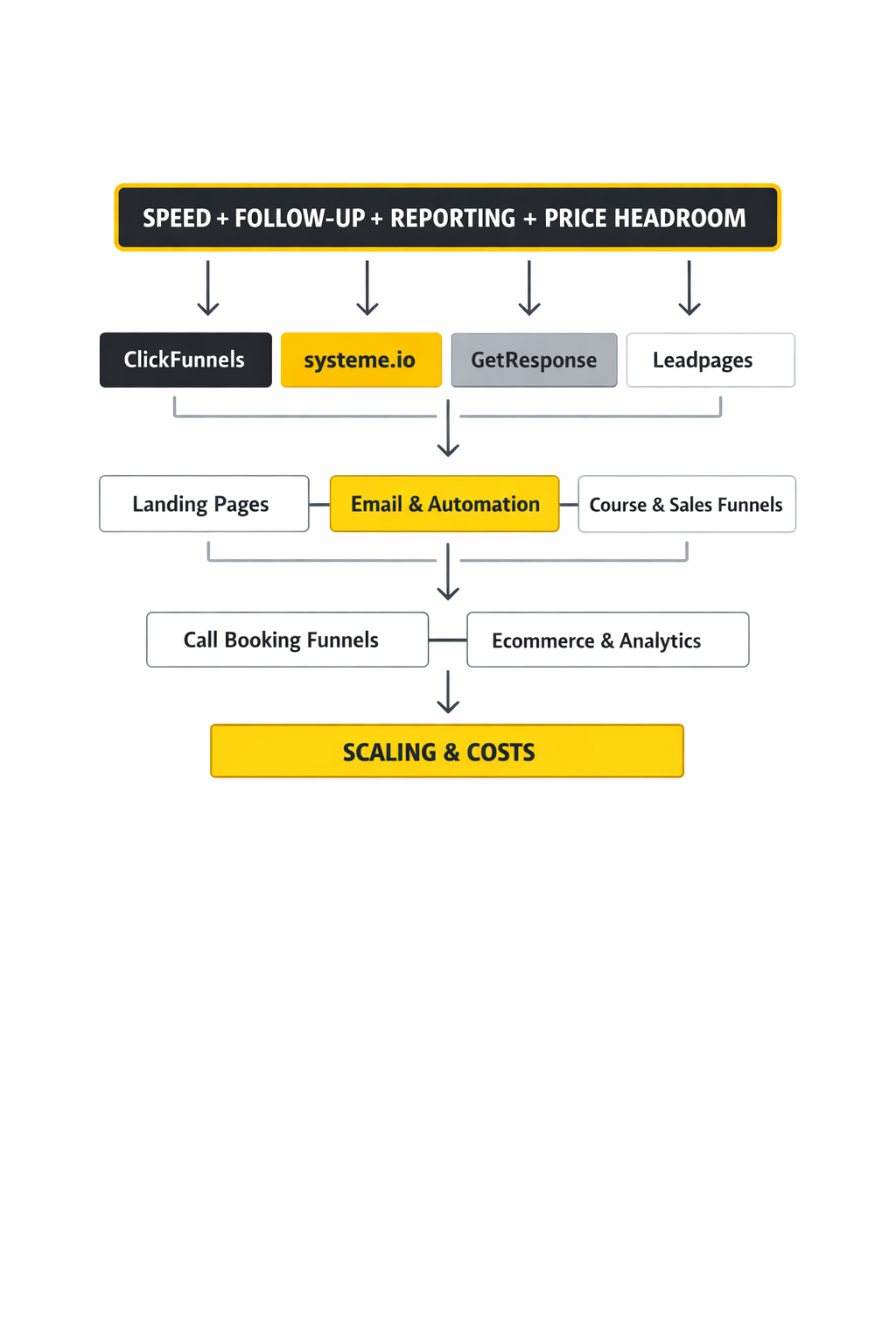
A practical framework starts with one rule: compare outcomes, not feature lists. It is easy to get distracted by template counts, AI copy tools, or shiny dashboard screenshots, but the real test is whether the platform helps you publish pages quickly, collect leads reliably, follow up automatically, and convert attention into revenue without creating a tangle of paid workarounds.
The next step is to rank your business model before you rank the tools. If you sell appointments, your ideal stack may lean toward forms, calendars, and lightweight nurturing. If you sell digital products or courses, you need to think harder about checkout flow, automations, and member delivery. If you mainly need high-converting lead capture pages, a leaner platform can outperform an expensive all-in-one simply because it keeps the workflow tighter.
After that, price should be evaluated in layers instead of a single line item. You need to look at starting cost, upgrade triggers, contact thresholds, transaction fees where relevant, domain limits, email send limits, and how many outside tools you still need after signup. That is why a platform that looks cheaper on day one can become more expensive by month three, and why a slightly higher sticker price can still be the smarter value if it removes two or three subscriptions from your stack.
This is also where free-entry tools become useful, not just attractive. Starting with a free systeme.io plan or a lower-priced tool such as GetResponse can help you validate whether your offer, funnel messaging, and follow-up sequence are strong enough to justify paying more later. If you want to compare the premium route against a lower-cost one in real conditions, you can test systeme.io here and put it beside ClickFunnels here before committing to a long-term migration path.
The final piece of the framework is speed to confidence. The right alternative is not always the one with the longest feature grid. It is the one that lets you launch a clean funnel, measure what happens, and improve from real user behavior instead of spending weeks configuring a system that is too big for the offer in front of you.
Core Components
Every serious comparison should begin with the page builder, because that is where conversion friction becomes visible first. Your cheaper ClickFunnels alternative needs to let you build pages fast, control layout without wrestling the editor, publish reliably on custom domains, and support testing once traffic starts flowing. If the page tool feels slow, unstable, or too restrictive, the lower price stops being a bargain because it costs you momentum.
The second component is automation. Many businesses do not need elaborate multi-branch logic on day one, but almost every funnel needs at least a welcome sequence, basic tagging, and a way to move leads into the next step without manual cleanup. GetResponse includes landing pages and automation in its product structure, while systeme.io builds funnels, email, and automation into the same ecosystem, which is exactly why these lower-cost tools keep showing up in the same conversation as ClickFunnels.
The third component is monetization flow. If you sell a product, book a call, run a workshop, or deliver a course, the platform has to handle the handoff elegantly after the opt-in. People often focus so hard on the first page that they forget the customer experience continues through checkout, confirmation, onboarding, and follow-up.
The fourth component is capacity. Contact limits, workspace limits, email caps, course limits, and domain rules matter more than most sales pages make them seem. ClickFunnels ties its tiers to contacts, emails, team members, and workspaces, and other alternatives do the same in their own ways, so you need to read the limits as growth signals, not as footnotes.
The fifth component is data visibility. A builder without usable reporting leaves you guessing whether the problem is traffic quality, offer clarity, form friction, or follow-up. That is especially dangerous when you are trying to save money, because lower software spend only helps if the platform still makes it obvious what to improve next.
Professional Implementation
The cleanest way to implement a switch is to avoid a dramatic rebuild unless your current funnel is fundamentally broken. Start by mapping the exact path a lead takes now, including landing page, opt-in, email sequence, checkout, thank-you page, and any manual handoffs. Once that map is visible, it becomes much easier to see which parts must be recreated exactly and which parts should be simplified during the move.
From there, move one revenue path at a time. A single lead magnet funnel, one appointment funnel, or one product funnel is usually enough to validate whether the cheaper alternative can handle your real traffic and follow-up needs. That measured rollout reduces risk, protects existing cash flow, and prevents the common mistake of migrating everything before the new setup has earned trust.
Professional implementation also means defining success before you touch the builder. You should know your baseline opt-in rate, cost per lead, email engagement pattern, and sales conversion path before you migrate, because otherwise every new tool feels promising simply because it is new. A platform change should create a business improvement you can measure, not just a dashboard that feels more exciting for a week.
There is a practical advantage here for businesses trying to stay lean. When the builder, email, and funnel logic live in one place, your team spends less time duct-taping systems together and more time improving copy, offers, and follow-up. That is where lower-cost alternatives become genuinely powerful: not when they look cheaper on a comparison page, but when they reduce the total operational drag around getting a lead from first click to final sale.
In the next part, the comparison gets more specific. We will break down the core components that separate a truly useful cheaper ClickFunnels alternative from a tool that looks affordable up front but creates expensive bottlenecks later.
A Simple Scorecard Before You Switch
The easiest way to get lost in this category is to compare shiny features instead of business outcomes. A cheaper ClickFunnels alternative only makes sense if it helps you publish pages quickly, capture leads cleanly, follow up without extra friction, and close sales without forcing you into a pile of paid add-ons. That is why the smartest framework starts with a short scorecard: page building speed, email and automation depth, checkout flow, reporting clarity, limits that affect growth, and the real monthly cost once your list starts moving.
This kind of scorecard matters because funnel tools are no longer competing in a single lane. ClickFunnels positions its entry plan at $97 per month, while systeme.io starts with a free plan, Leadpages begins at a much lower page-first price point, and GetResponse bundles email, landing pages, and automation from a lower entry tier. Once you see those offers side by side, it becomes obvious that the better question is not which tool has the longest feature list, but which one solves the bottleneck that is actually slowing your business down.
You also need a scorecard because “all-in-one” can mean very different things depending on the platform. Some tools are genuinely built to replace multiple subscriptions, while others still assume you will connect outside systems for email, scheduling, payments, or deeper automation. If you do not separate core needs from nice extras before you buy, a lower monthly price can still lead you into a more expensive stack.
Compare Total Stack Cost, Not Just Plan Price
This is where most people make the wrong move. They compare one monthly number on the pricing page, feel good about saving money, and only later realize the new setup still needs an email tool, a checkout tool, a form builder, or extra automation software. A framework that actually protects your budget has to look at the full operating stack, not just the headline subscription price.
That is exactly why cheaper ClickFunnels alternatives can be a huge win when they remove enough outside tools to keep the whole system lean. systeme.io describes itself as an all-in-one platform for funnels, email, automations, products, and courses, and you can test it here if your priority is keeping software overhead low while still covering the basics. On the other side, ClickFunnels is still worth testing here if you want to compare a premium funnel-first workflow against a leaner alternative before you commit to moving anything important.
There is another layer that matters just as much: growth triggers. ClickFunnels ties plan value to contacts, emails, workspaces, domains, and course capacity, and GetResponse explains that pricing rises as your subscriber count grows. So the right framework does not just ask what a platform costs this month; it asks what happens when your list doubles, when you add a second offer, or when a client account needs its own workspace.
Match The Platform To The Way You Sell
A platform can be affordable, popular, and still be the wrong fit for you. If your business mainly needs lead capture pages for service offers, a page-led platform can be more practical than a more complex funnel suite. That is one reason Leadpages keeps emphasizing landing pages, lead generation, and optimization rather than trying to win on complexity for its own sake.
If your business leans heavily on email nurture, webinars, digital products, or list monetization, the framework changes. In that case, you should care much more about automation logic, contact management, and what happens after the opt-in, which is why GetResponse centers its offer around email marketing, automation, and selling workflows. And if you want a lower-cost all-in-one with funnels, emails, and digital product delivery under one roof, systeme.io’s pricing structure makes it one of the most obvious places to start comparing.
Traffic source matters too. When paid traffic is expensive, you need a setup that lets you ship pages fast and improve them based on real numbers rather than gut feel. That is not a small detail when the median landing page conversion rate across industries was 6.6% in Q4 2024, because a weak builder or clumsy workflow can waste a lot of money before you even get to the follow-up sequence.
Give More Weight To Follow-Up Than Most Buyers Do
People shopping for cheaper ClickFunnels alternatives often spend most of their energy judging templates, page sections, and how pretty the editor looks. That is understandable, but it can lead to the wrong decision because the real money is often made after the first click. A platform that helps you build a page but leaves follow-up weak or fragmented can quietly underperform even if the monthly bill looks attractive.
Email is still too important to treat as an afterthought. Mailchimp says paid ecommerce users saw up to 30x ROI from email between August 2024 and August 2025, while Litmus reported in 2025 that many marketing leaders still see strong returns from email, with a meaningful share reporting double-digit revenue for every dollar spent. That is why your framework should ask a brutally simple question: once a lead opts in, does this platform make it easier or harder to continue the conversation profitably?
This is also where cheaper tools can become smarter tools. If a lower-cost platform gives you enough automation, tagging, broadcasts, and nurture flow to keep momentum going, it may be more valuable than a premium builder that shines on the front end but forces you to bolt on expensive follow-up systems later. A good framework keeps the sale in view from first click to post-purchase communication, not just from ad to opt-in.
Use A Risk Filter Before Moving Anything
Even when you know a lower-cost tool looks better on paper, you should not switch with blind enthusiasm. The real question is how much operational risk sits behind the migration. If you already have traffic flowing, automations running, products connected, and domains configured, then the framework has to include a risk filter alongside price and features.
A smart risk filter asks whether the new platform can recreate your most valuable path without breaking anything important. That means checking forms, checkout steps, email deliverability, domain setup, redirects, analytics, and the post-purchase experience before you start celebrating the lower bill. A move is only a win if the funnel survives the move intact and remains easy enough to improve after launch.
This is why I would rather see a business move one working funnel at a time than rebuild the entire machine in one dramatic push. The cheaper ClickFunnels alternative that wins in the long run is usually the one that reduces complexity while keeping your revenue path stable. In the next part, we will break the framework into specific components so you can judge each platform with a clearer eye and avoid paying for the wrong kind of “value.”
Core Components To Compare Before You Switch
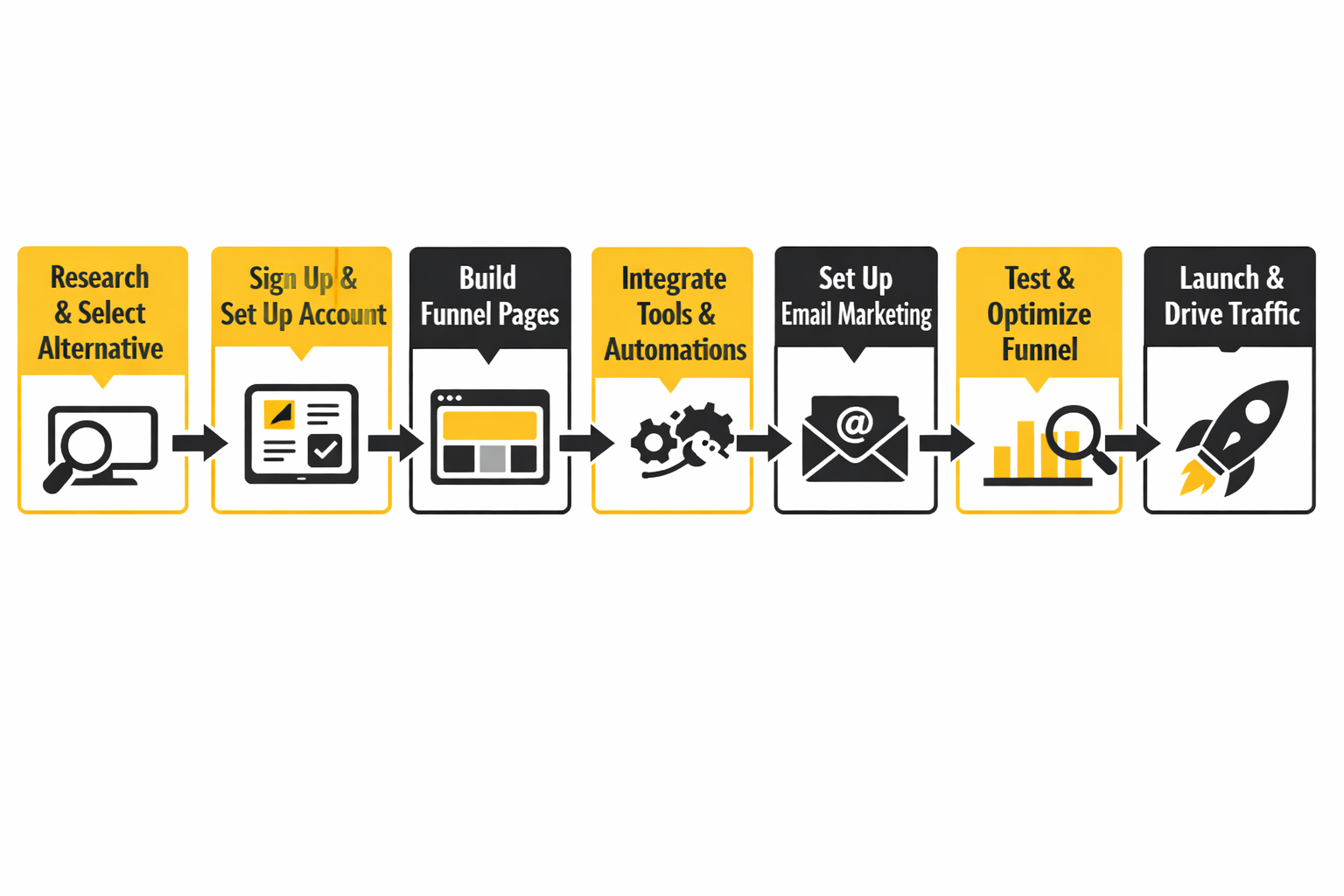
If you are seriously comparing cheaper ClickFunnels alternatives, this is the part where the decision gets real. A lot of people stay stuck because every platform claims to be easier, faster, and more complete, but the truth is that only a few core components will actually decide whether your funnels make money or quietly become another subscription you regret. Once you focus on those components, the noise drops away and the right choice becomes much easier to spot.
The biggest mistake here is assuming all funnel builders are basically the same with different colors and pricing tables. They are not. ClickFunnels positions itself as a funnel, store, CRM, email, and courses platform, while systeme.io leans hard into the all-in-one angle for entrepreneurs, GetResponse builds around email marketing and automation, and Leadpages stays much more focused on landing pages, lead generation, and conversion. That means the best cheaper alternative depends on what your business truly needs the platform to do once someone lands on the page.
So instead of asking which tool is “best,” ask which one gives you the strongest performance in the components that directly affect revenue. That is what we are going to break down now.
Page Builder And Publishing Speed
The first component is the page builder itself, because that is where your offer meets the market. If the editor feels clumsy, pages take forever to publish, mobile layouts keep breaking, or simple changes turn into a mini project, that friction spreads into everything else you do. The cheaper ClickFunnels alternative that wins here is the one that lets you go from idea to published page fast enough to actually test offers instead of endlessly “setting things up.”
This is why lower-cost options can be surprisingly powerful when they reduce complexity instead of adding it. Leadpages starts at $37 per month and leans into unlimited landing pages, traffic, and leads, which makes sense for businesses that care more about publishing and optimizing pages than building a giant all-in-one machine. By contrast, ClickFunnels starts at $97 per month on its Launch plan, so the price difference is not just a line on a pricing page; it changes how aggressively you can test pages before software costs start pressuring every decision.
Publishing speed matters even more when traffic is expensive. Unbounce reported a 6.6% median landing page conversion rate in Q4 2024 across industries, which means small improvements in clarity, layout, and load experience can materially change the economics of a campaign. If a platform makes those improvements easier to ship, that matters a lot more than a long feature list you rarely touch.
Email And Automation Depth
The next component is what happens after the opt-in, because that is where a lot of funnel math is won or lost. A page can perform well and still underdeliver if your follow-up is weak, slow, or split between too many disconnected tools. When people search for cheaper ClickFunnels alternatives, they often focus on front-end design, but the smarter move is to ask how well the platform helps you nurture, segment, and move leads toward the sale.
This is where some alternatives become much more attractive than they first appear. GetResponse starts from a lower entry price than ClickFunnels and builds around email, automation, and landing pages, while its help documentation shows that automation, webinars, and course-related capabilities vary by plan. systeme.io also builds funnels, emails, automations, and digital product support into a pricing ladder that starts with a free plan, which is exactly why it keeps coming up when budget-conscious businesses want fewer moving parts.
This component deserves more weight than most buyers give it. Mailchimp says paid ecommerce users saw up to 30x ROI from email between August 2024 and August 2025, and that is a reminder that the real value of your funnel often appears in the sequence after the first signup. So if a cheaper platform still gives you enough automation depth to keep conversations moving, it can outperform a more expensive setup that looks impressive but leaves follow-up scattered.
Checkout, Payments, And Offer Delivery
A funnel is not finished when someone clicks the button. It is finished when the payment goes through cleanly, the buyer feels confident, and the promised next step happens without confusion. That is why checkout and delivery sit right at the center of this decision, especially if you sell courses, digital products, workshops, consulting, or any offer with post-purchase fulfillment.
The reason this component matters so much is simple: messy handoffs kill momentum. ClickFunnels markets its ecosystem around funnels, stores, CRM, email, and courses, which makes it attractive for businesses that want a broad post-opt-in workflow in one place. But a cheaper alternative can still be the better choice if it handles payments and delivery well enough for your specific offer without forcing you into a premium plan before the business is ready.
You should also pay attention to how the tool fits your selling model. If you mostly capture leads and close later through calls or email, then the checkout layer may not need to be overly sophisticated. But if your business depends on direct-response product sales, order flow and fulfillment matter too much to treat as a secondary feature. In that situation, a lower monthly bill is only a win if the buying experience still feels smooth and trustworthy.
Pricing Limits And Upgrade Triggers
This is one of the least glamorous components, but it is also one of the most important. Software rarely becomes expensive all at once. It becomes expensive when your contact list grows, your email volume rises, you add another domain, launch another offer, or need a second workspace for a team member or client. In other words, the real cost usually appears right when the business starts gaining momentum.
That is why you should never judge cheaper ClickFunnels alternatives by the first number you see. ClickFunnels ties its Launch plan to 10,000 contacts, 50,000 emails per month, 3 courses, 5 custom domains, 1 workspace, and 2 team members. GetResponse states that pricing is bracketed by list size and starts at $19 per month for up to 1,000 subscribers on monthly payment plans. Leadpages also notes that moving to a lower plan can force you to remove domains, pages, or blogs that exceed plan limits.
That changes the way you should compare platforms. The right question is not just whether the platform is cheaper today, but whether it stays reasonable once you have more leads, more pages, and more revenue flowing through it. A tool that looks affordable at the start but pushes you into rapid upgrades can erase the savings that got your attention in the first place.
Integrations And Stack Simplicity
Every extra tool in your stack creates another point of failure. More logins, more zaps, more sync issues, more places for tags to break, and more moments where you are not quite sure why a lead did not get the email or why a buyer was not added to the right workflow. That is why integration depth should not be judged by how many logos a company can place on a page, but by how often you can avoid needing another integration at all.
This is one reason all-in-one tools keep gaining attention from smaller businesses. systeme.io is worth testing here if your biggest priority is reducing the number of separate subscriptions you need just to run a simple funnel. And ClickFunnels is worth testing here if you want to compare a broader premium ecosystem against that leaner approach before making a switch.
There is no universal right answer here. A more modular stack can absolutely make sense if you already have best-in-class tools you love. But if your current setup feels like you are constantly taping systems together, the cheaper ClickFunnels alternative that simplifies the stack may create more value than a tool that merely lowers one line item on your expense sheet.
Reporting And Decision Clarity
The final core component is reporting, because software only helps if it shows you what to do next. A builder that hides the important numbers, makes testing hard to interpret, or gives you a foggy picture of where leads drop off can quietly cost more than a pricier tool with better visibility. When you are trying to spend less, decision clarity becomes even more important because every wasted campaign hurts more.
That is also why page performance, email follow-up, and growth limits cannot be evaluated in isolation. You need a platform that helps you connect the dots between traffic, opt-ins, follow-up, and sales. Otherwise you are not really choosing a cheaper alternative to ClickFunnels; you are just choosing a cheaper place to guess from.
And that is the real takeaway from this part. The best cheaper ClickFunnels alternative is not the one with the lowest sticker price. It is the one that gives you the strongest combination of publishing speed, follow-up depth, delivery flow, pricing headroom, stack simplicity, and reporting clarity for the business you are building right now. In the next part, we will move from comparison into execution and talk about how to implement a switch without wrecking a funnel that is already working.
Statistics And Data
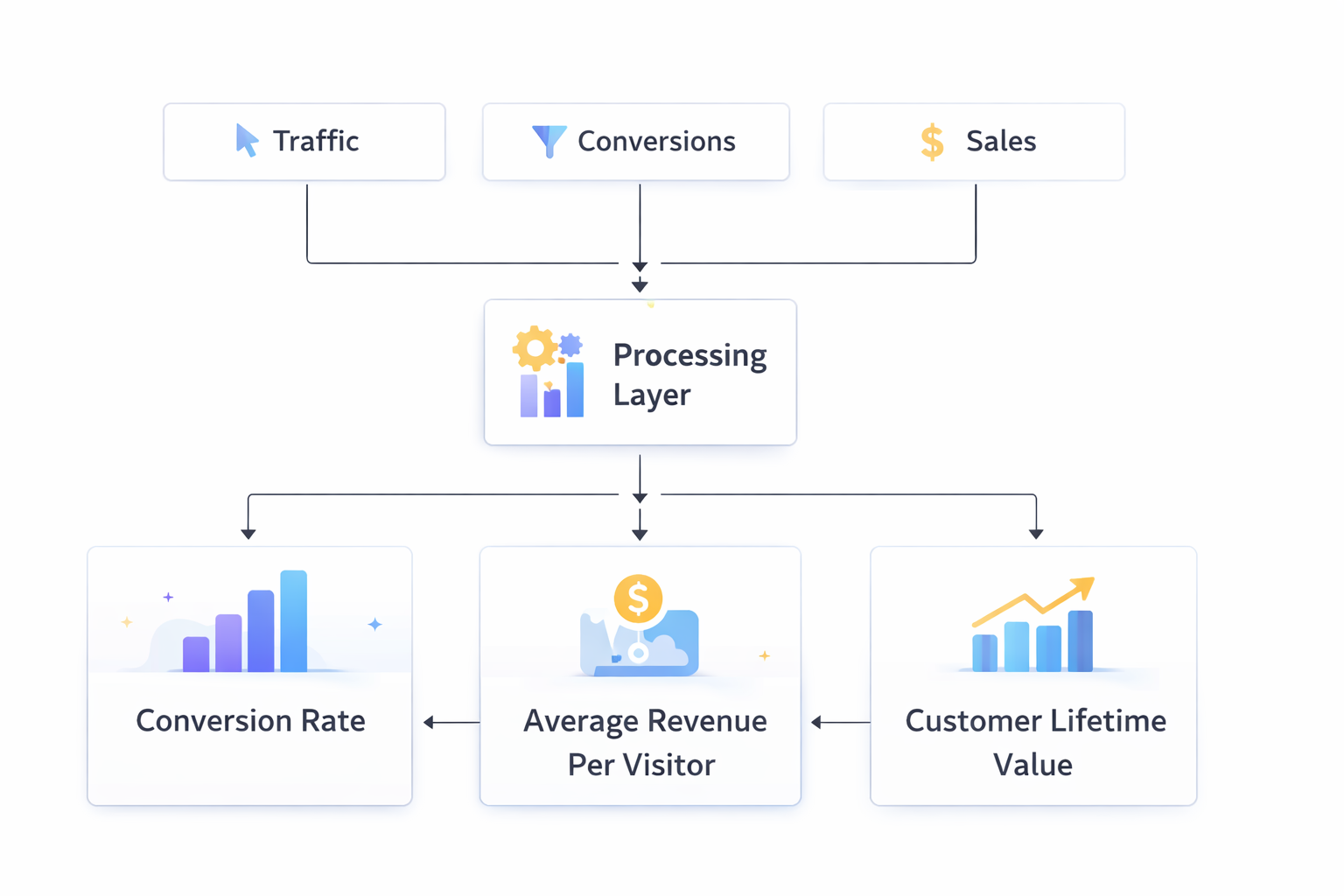
This is the part where the conversation stops being about opinions and starts being about math. When people look for cheaper ClickFunnels alternatives, they are usually reacting to a feeling first: the platform seems expensive, the stack feels heavy, or the feature set looks bigger than what they actually use. But once you put real numbers on price, conversion, email value, and plan limits, you can make a much sharper decision and avoid switching for the wrong reason.
The first data point is straightforward and impossible to ignore. ClickFunnels lists its Launch plan at $97 per month, while systeme.io offers a free plan with core features and up to 2,000 contacts, GetResponse starts from a lower-priced entry tier, and Leadpages starts at $37 per month. That does not automatically make ClickFunnels overpriced, but it does prove that cheaper alternatives exist in a very real, not theoretical, way.
Now here is where it gets more interesting. ClickFunnels says its Launch plan includes 10,000 contacts, 50,000 emails per month, 3 courses, 5 custom domains, 1 workspace, and 2 team members. systeme.io’s free plan is far more limited in funnels, automation rules, and domains, which tells you something important: the cheaper choice is not just about paying less, but about whether the lower-cost plan gives you enough room to run your current business without hitting a wall too early.
What The Pricing Data Really Shows
Pricing data is only useful if you read it like an operator instead of a shopper. A platform can look cheap because the entry plan is low, but the moment your list grows, your automations deepen, or your team needs extra access, the bill can move quickly. That is why the right comparison is never just “plan versus plan,” but “business model versus plan limits.”
Take subscriber-based pricing as an example. GetResponse frames its pricing around plan type and contact growth, and its pricing help documentation explains that monthly cost scales with list size. That means a cheaper ClickFunnels alternative can absolutely save money at the beginning, but if your list expands quickly and your funnel relies heavily on email, the long-term cost curve matters just as much as the entry point.
Leadpages tells a different story because its value is shaped more by page publishing and optimization than by becoming a giant all-in-one hub. Its pricing page emphasizes unlimited landing pages, traffic, and leads on paid plans, which makes it attractive for businesses that mainly need high-converting pages and do not want to pay premium funnel-suite pricing just to collect leads efficiently. So the pricing data is not simply showing you who is cheaper; it is showing you what each company expects you to use the product for.
Conversion Benchmarks That Change The Decision
Software cost matters, but conversion performance decides whether that cost is painful or almost irrelevant. A platform that is cheaper but slows your page creation, weakens your testing process, or makes optimization more confusing can quietly cost you more than the expensive one. That is why conversion benchmarks belong in the same conversation as monthly pricing.
Unbounce reported a 6.6% median landing page conversion rate across industries in Q4 2024, based on 57 million conversions, 464 million visitors, and 41,000 landing pages. That is not just a nice stat to quote. It gives you a practical baseline: if your pages are far below that median, the issue may not be the platform price at all. It may be messaging, offer structure, traffic quality, or follow-up.
And that is exactly why switching tools should never be treated like magic. If your funnel converts poorly, moving to one of the cheaper ClickFunnels alternatives might help if the new setup is simpler and easier to improve, but the lower monthly bill will not rescue a weak offer on its own. The data helps you stay honest by forcing you to separate tool problems from business problems.
Email ROI And The Hidden Value Of Follow-Up
A lot of buyers overweight the page builder and underweight the follow-up system. That is understandable because pages are easy to see and compare, while automation logic, tagging, and email revenue feel less glamorous until the numbers come in. But the data keeps pointing in the same direction: follow-up is where a lot of funnel value gets created.
Mailchimp says paid ecommerce users saw up to 30x ROI from email between August 2024 and August 2025. That figure should immediately change how you compare platforms, because it means a cheaper ClickFunnels alternative is only truly valuable if it still helps you capture, segment, and nurture leads effectively after the first conversion step. Saving money on the builder while weakening the email engine can be a false economy.
This is one reason lower-cost all-in-one platforms keep getting attention. systeme.io combines funnels, email, automations, and digital selling tools inside a low-entry pricing structure, while GetResponse packages email, landing pages, and automation together from a lower starting point than ClickFunnels. Those structures matter because they reduce the chance that your savings on page software get wiped out by extra follow-up tools you need to bolt on later.
Capacity Limits And Growth Pressure
One of the smartest things you can do is study what happens when your business starts working. A lot of entrepreneurs compare tools as if they will still be operating at the same size six months from now, but growth changes everything. More leads, more emails, more offers, and more domains all create pressure, and that pressure reveals whether a platform is affordable or merely temporarily affordable.
ClickFunnels ties value to clear limits around contacts, emails, courses, domains, and workspaces. Leadpages notes that plan changes can require removing domains, blogs, or pages that exceed plan limits. systeme.io also limits usage by plan, including funnels, automation rules, domains, and contacts. Once you see those capacity rules together, the lesson becomes obvious: software pricing is not a flat cost, it is a growth policy.
That is why some businesses will genuinely be better off paying more for headroom, while others should keep the stack lean for as long as possible. If your model is simple and your volume is still modest, a cheaper ClickFunnels alternative can be exactly the right move. But if your business is already pressing against limits in several categories, then choosing the lowest monthly number without looking at growth pressure can create more instability than savings.
How To Read The Data Like A Business Owner
The most useful way to read all this data is to stop thinking like a person buying software and start thinking like a person protecting margin. The numbers tell you that ClickFunnels is meaningfully more expensive at entry than several well-known alternatives. They also tell you that lower-priced platforms often come with different tradeoffs around contacts, domains, automation depth, and workflow breadth.
So the right interpretation is not “cheap is better” or “premium is better.” The right interpretation is that software price only makes sense when it is matched to conversion potential, follow-up value, and plan headroom. If a cheaper platform gives you enough speed, enough automation, and enough room to grow, then the savings are real. If not, the apparent bargain can become expensive in a slower, more frustrating way.
That is the real value of statistics and data in this decision. They cut through brand preference and help you see the situation clearly. In the next part, we will move beyond the numbers and look at how to choose the right ecosystem around your funnel so your software stack stays efficient instead of turning into a mess of tools that constantly need babysitting.
Analytics And Optimization
This is where cheaper ClickFunnels alternatives either prove their value or fall apart. A lower monthly bill looks great at the start, but if the platform makes it harder to see what is converting, where people are dropping off, or when you are about to hit plan limits, the savings can disappear fast. Good optimization is not about chasing more data for the sake of it. It is about making the next smart decision quickly and with confidence.
That is why analytics should be treated as a profit tool, not a reporting feature. ClickFunnels still commands a premium entry price at $97 per month, while systeme.io starts at $0, GetResponse starts from a lower price point built around email and automation, and Leadpages starts at $37 per month. Once the price gap is that wide, the only sensible way to compare them is to ask whether the cheaper option still gives you enough visibility to improve performance instead of guessing your way through campaigns.
If you cannot tell whether the problem is traffic quality, page clarity, offer fit, follow-up weakness, or capacity limits, then the platform is not actually helping you save money. It is just giving you a cheaper place to stay confused.
Measure The Funnel In Sequence
The best way to optimize a funnel is to stop looking at it as one big result and start measuring it in sequence. First comes the visit, then the opt-in, then the follow-up, then the click back, then the sale or booked call. When those steps are blurred together, people often blame the platform price when the real problem is sitting in one weak stage of the journey.
This is where benchmarks become useful without becoming a distraction. Unbounce reported a 6.6% median landing page conversion rate across industries in Q4 2024, based on 57 million conversions, 464 million visitors, and 41,000 landing pages. That kind of data helps you stay grounded. If your landing page is converting far below that range, switching to one of the cheaper ClickFunnels alternatives may help if the editor is easier and faster, but the bigger issue may still be messaging, traffic fit, or the offer itself.
Measuring the funnel in sequence also protects you from false wins. A platform might make it easier to publish pages and create a short-term improvement at the opt-in stage, but if the follow-up is weaker and the close rate falls later, you have not really improved the business. You have only moved the leak further down the pipe.
Follow-Up Data Deserves More Attention
Most people spend too much time staring at landing page numbers and not enough time studying what happens after the lead comes in. That is a mistake because follow-up often carries a huge share of the total revenue. If your emails are weak, delayed, poorly segmented, or disconnected from the funnel logic, a beautiful page builder will not save the economics of the campaign.
Mailchimp says paid ecommerce users saw up to 30x ROI from email between August 2024 and August 2025. That should immediately change how you judge cheaper ClickFunnels alternatives. The winner is not just the platform with the lower monthly fee. It is the one that still lets you nurture leads properly, trigger relevant messages, and keep momentum going after the first conversion event.
This is one reason email-centric or all-in-one lower-cost platforms keep showing up in serious comparisons. GetResponse ties its value to email, landing pages, and automation from a lower entry tier, while systeme.io combines funnels, email, and automation inside a pricing ladder that starts free. Those structures matter because they give you a better chance of preserving follow-up quality while spending less on the stack.
Watch Plan Limits Before They Hurt You
One of the easiest ways to ruin a smart software decision is to ignore what happens when the business starts growing. Contacts rise, email volume climbs, new offers get added, and suddenly the plan that felt cheap starts pushing you toward upgrades. That is why optimization is not just about conversion data. It is also about capacity awareness.
ClickFunnels lists clear limits on contacts, emails, domains, courses, workspaces, and team members. systeme.io also limits contacts, funnels, automation rules, domains, and other capacity by plan. GetResponse explains that pricing scales with list size, and Leadpages notes that changing plans can force you to remove domains, blogs, or pages that exceed plan allowances. Those are not minor footnotes. They are part of the optimization picture because they shape how smoothly your funnel can keep running as it gains traction.
The smartest move is to monitor the limits that matter most to your model before they become a crisis. A creator selling one core offer may care most about contacts and automation. An agency may care more about domains and sub-accounts. A service business may care most about landing pages, form flow, and email nurture. Optimization gets easier when you know which limits can actually break your momentum.
Optimize For Decision Speed, Not Dashboard Prettiness
Some dashboards look impressive and still leave you unsure what to do next. That is not useful. The real question is whether the platform helps you make better decisions faster. Can you tell which page is underperforming, which email path needs attention, and which offer angle deserves a second test? If not, the extra graphs are just decoration.
This is where simpler tools can sometimes beat more expensive ones. A lighter platform that helps you publish quickly, see the important numbers, and make the next change without friction can create more real business value than a premium setup filled with features you rarely touch. A cheaper ClickFunnels alternative becomes powerful when it removes operational drag while keeping the signal clear.
That is also why software selection and optimization should never be separated. The best platform for you is the one that makes improvement feel doable week after week. Not once during setup. Not once during the free trial. Repeatedly, calmly, and without turning every experiment into a technical project.
How To Decide When A Cheaper Tool Is Winning
You do not need a perfect platform. You need a platform that helps your business move. That means the cheaper option is winning when it keeps page publishing fast, follow-up strong, reporting usable, and upgrade pressure manageable. It loses the moment the savings start creating blind spots, bottlenecks, or stack complexity that slows down execution.
So the right way to judge these tools is brutally simple. If a lower-cost platform still gives you enough visibility to improve conversion, enough follow-up power to monetize leads, and enough headroom to grow without constant disruption, then the savings are real. If it does not, the lower sticker price is just bait for a more frustrating workflow.
In the final part, we will zoom out and look at ecosystem fit, best-use cases, and the practical recommendations that help you choose the right path instead of endlessly comparing sales pages.
Ecosystem Fit And Final Recommendations

At this point, the real question is no longer whether cheaper ClickFunnels alternatives exist. They clearly do. ClickFunnels starts at $97 per month, while systeme.io starts free, GetResponse starts from a lower-priced tier built around email and automation, and Leadpages starts at $37 per month. The smarter question is which ecosystem gives you the best balance of speed, follow-up power, reporting clarity, and pricing headroom for the kind of business you are actually running.
That matters because software decisions rarely fail on the headline price alone. They fail when the tool does not fit the workflow. A service business that mostly needs fast landing pages, forms, and simple follow-up will often judge value very differently from a creator selling courses, an ecommerce brand pushing email hard, or a consultant running a call-booking funnel with multiple nurture paths.
So let’s bring this down to earth. If your top priority is a broad premium funnel environment with deeper built-in business infrastructure, ClickFunnels can still make sense. If your top priority is lowering software overhead while keeping funnels, email, and automations in one place, systeme.io is worth trying here. If your business is strongly email-driven and you want a lower-cost platform that still leans heavily into automation, GetResponse deserves a serious look. And if you mostly care about landing pages, testing, and lead capture without paying for a full premium funnel suite, Leadpages is one of the cleanest options in the category.
Best Fit By Business Type
If you are a creator, coach, or small digital-product seller who wants fewer tools and a lower monthly bill, the all-in-one route is usually the most attractive. systeme.io positions itself as an all-in-one marketing platform and says it is powering 500,000+ entrepreneurs, which lines up with why it keeps appearing in conversations about cheaper ClickFunnels alternatives. It is built for people who do not want to stitch together a complicated software stack before the offer has fully matured.
If you are more email-centric and care deeply about nurture, automation, and the ability to grow a list intelligently, GetResponse becomes more compelling. GetResponse centers its platform around email, automation, revenue tracking, and lead conversion, and its pay-as-you-grow pricing model scales with list size. That makes it especially relevant for businesses that understand the value of follow-up and do not want email to feel like an afterthought.
If you run a service business, agency funnel, or lead-generation machine where the page itself does much of the heavy lifting, Leadpages stays highly relevant. Its paid plans emphasize unlimited landing pages, traffic, and leads, which is a strong fit when your main job is to get someone to raise a hand and enter the pipeline cleanly. And if you still want to compare a premium funnel-first environment before you decide, you can test ClickFunnels here and judge the tradeoff based on your own workflow rather than hype.
The Final Decision Filter
The cleanest way to make the final decision is to run every option through one filter: does this platform help you move faster without creating new blind spots? A tool that is cheaper but weakens follow-up, hides useful reporting, or pushes you into fast upgrades may not really be cheaper in the way that matters. On the other hand, a lower-cost platform that keeps publishing fast, follow-up strong, and costs predictable can become a serious competitive advantage.
The numbers throughout this guide point to the same conclusion. Price matters, but conversion benchmarks still matter, email economics still matter, and plan limits still matter. The best cheaper ClickFunnels alternative is not the one that simply costs less on day one. It is the one that gives you enough clarity and enough room to improve week after week without dragging your business into unnecessary complexity.
That is why the best move for most people is not to hunt for the absolute cheapest funnel builder on the internet. It is to choose the cheapest platform that still supports your real revenue path. That difference sounds small, but it changes the whole outcome.
FAQ For This Complete Guide
What is the cheapest real alternative to ClickFunnels?
If you mean the lowest entry price from a recognizable platform in this category, systeme.io’s free plan is the most obvious answer among the major options covered here. That said, “cheapest” should be judged by total stack cost, not just the first number on a pricing page. A free tool that forces you to add other subscriptions can become more expensive than it first appears.
Is ClickFunnels still worth it in 2026?
For some businesses, yes. ClickFunnels still positions itself as a platform for building, selling, delivering, and managing online offers, and its Launch plan includes 10,000 contacts, 50,000 emails per month, 3 courses, 5 custom domains, 1 workspace, and 2 team members. If you will genuinely use that broader ecosystem, the price can make sense. If not, a cheaper ClickFunnels alternative may be the sharper business decision.
Which option is best for beginners?
For most beginners, the best option is usually the one that keeps the stack simple and the monthly commitment low. That is why systeme.io’s free plan gets so much attention. It gives a new business room to test an offer before taking on premium software costs too early.
Which platform is best for email-heavy businesses?
If your business lives and dies on follow-up, GetResponse deserves serious attention because it is built around email, automation, and revenue-focused nurturing. That matters because email can produce exceptionally strong ROI in the right ecommerce contexts. In other words, the follow-up system is not a side feature. It is often where the money is made.
Are cheaper tools good enough for selling courses?
They can be, depending on how complex your business is. systeme.io includes course-related features inside its pricing structure, and ClickFunnels includes 3 courses on its Launch plan. The better question is whether you need a course business with simple delivery and follow-up, or a broader premium environment with more headroom and operational depth.
What if I only need landing pages and lead capture?
Then a full funnel suite may be more software than you need. Leadpages is especially attractive for page-focused businesses because its paid plans emphasize unlimited landing pages, traffic, and leads. If your main job is to capture qualified leads cleanly, paying for a bigger system can be unnecessary.
Should I switch just to save money?
Not by itself. The switch only makes sense if the cheaper platform still gives you enough publishing speed, enough follow-up power, and enough reporting clarity to improve the funnel over time. A lower monthly bill is helpful, but it is not worth much if the move creates new bottlenecks or weakens revenue-generating steps later in the journey.
How important are plan limits when comparing platforms?
They are far more important than most buyers realize. GetResponse scales with list size, systeme.io limits contacts, funnels, domains, and automation by plan, ClickFunnels ties value to contacts, emails, domains, workspaces, and more, and Leadpages notes that some plan changes may require removing assets that exceed the new allowance. That means pricing is really a growth policy, not just a subscription fee.
Will switching tools fix a low conversion rate?
Sometimes, but not automatically. The median landing page conversion rate Unbounce reported in Q4 2024 was 6.6%, which gives you a useful reference point. If your page is far below that, the issue may be the builder, but it may also be your offer, message, traffic source, or post-click experience. A platform switch can help, but it should never be treated like magic.
Which cheaper alternative feels most like an all-in-one?
Among the lower-cost options discussed here, systeme.io is the clearest all-in-one alternative for many small businesses because it combines funnels, email, automations, and selling tools under one roof. That is a big reason it shows up so often in this conversation. If your biggest pain is stack sprawl, that type of setup can be very attractive.
Is ClickFunnels more powerful than cheaper alternatives?
In some workflows, yes. ClickFunnels presents itself as a broader business platform, not just a page builder, and that broader scope can matter if you need more built-in infrastructure. But power only matters when you actually need it. For many smaller businesses, paying less for a platform they can fully use is the more powerful move in practice.
What is the safest way to test a switch?
The safest move is to migrate one revenue path at a time instead of rebuilding everything at once. Pick a single lead magnet funnel, one booked-call flow, or one product funnel and recreate it on the new system first. If you want to compare the two approaches directly, test systeme.io here and compare it side by side with ClickFunnels here before moving the rest of your stack.
Work With Professionals
If you are serious about building funnels that actually convert, the software matters, but the people behind the strategy matter even more. A good platform gives you tools. A good operator gives you leverage. That is why many businesses get the best results when they combine the right software with marketers who know how to shape offers, tighten messaging, and improve conversion paths without wasting months on trial and error.
That is also true from the other side. If you are the marketer, strategist, copywriter, funnel builder, or automation specialist doing this work for clients, there is real demand for people who can choose the right stack instead of just pushing the most expensive one. Businesses do not just want someone who knows the tools. They want someone who can protect margin, simplify the system, and still grow revenue.
Explore 10K+ Remote Marketing Contracts on MarkeWork.com
Most marketers spend too much time chasing clients, competing on crowded platforms, and losing a percentage of every project to middlemen.
MarkeWork gives you a better way. Browse thousands of remote marketing contracts and connect directly with companies desperate to hire skilled marketers like you without platform commissions and without unnecessary gatekeepers.
If you are serious about finding better opportunities and keeping 100% of what you earn, you can explore available contracts and create your profile for free at MarkeWork.com.
 Filip Konecny Enterprises