

Finding the best free funnel builder sounds easy until you realize that “free” can mean wildly different things. One platform gives you a forever-free tier with strict contact caps, another gives you unlimited pages but limits automation, and another gives you a free trial that feels generous right up until the bill shows up. That is why this article is not going to treat every free offer like it is the same thing, because it clearly is not.
If you want a shortcut before we go deeper, the strongest all-in-one starting point for many beginners is systeme.io, while businesses that know they want a premium ecosystem can test ClickFunnels. If your funnel strategy leans heavily on email nurture from day one, an email-first stack like Brevo can make a lot of sense. The real goal, though, is not picking the flashiest tool. It is picking a free funnel builder that lets you publish, capture leads, follow up, and measure what happens next without forcing a rebuild a month later.
Article Outline
- Part 1: Why the Best Free Funnel Builder Matters
- Part 1: A Practical Framework for Choosing the Right Free Funnel Builder
- Part 1: Core Components Every Free Funnel Builder Needs
- Part 1: How To Implement a Free Funnel Builder Like a Pro
- Part 2: Which Free Funnel Builders Actually Stand Out in 2026
- Part 3: Hidden Limits, Upgrade Triggers, Analytics, Ecosystem Fit, and Final Recommendations
Why the Best Free Funnel Builder Still Matters

The best free funnel builder matters because funnel performance is usually decided by execution, not by whether you started on a premium plan. Unbounce’s Q4 2024 benchmark found a 6.6% median landing page conversion rate after analyzing 464,000,000 visits and 57,000,000 conversions, which tells you there is plenty of room to win before paying enterprise prices. What separates useful free tools from frustrating ones is whether they let you turn a visitor into a lead and then keep the conversation moving.
That second part is where many people get burned. A landing page without forms, CRM capture, and follow-up email is not much of a funnel, which is exactly why HubSpot’s free form builder pushes contacts directly into its CRM and why its free email tools emphasize nurture and personalization. The category is moving in the same direction more broadly, with Salesforce’s latest State of Marketing report still pointing to email as one of the highest-ROI channels, so a free funnel builder that cannot support email follow-up is already behind.
There is also a practical reason this topic keeps getting hotter. Premium platforms can absolutely be worth it, but ClickFunnels currently positions its offer around paid plans with a free trial, while other tools keep permanent free tiers on the table. For a solo creator, consultant, coach, or small business trying to validate an offer without taking on more software costs, that difference is not small at all. It is the difference between testing a funnel calmly and rushing to justify a subscription before the funnel has even proven itself.
A Practical Framework for Choosing the Right Free Funnel Builder
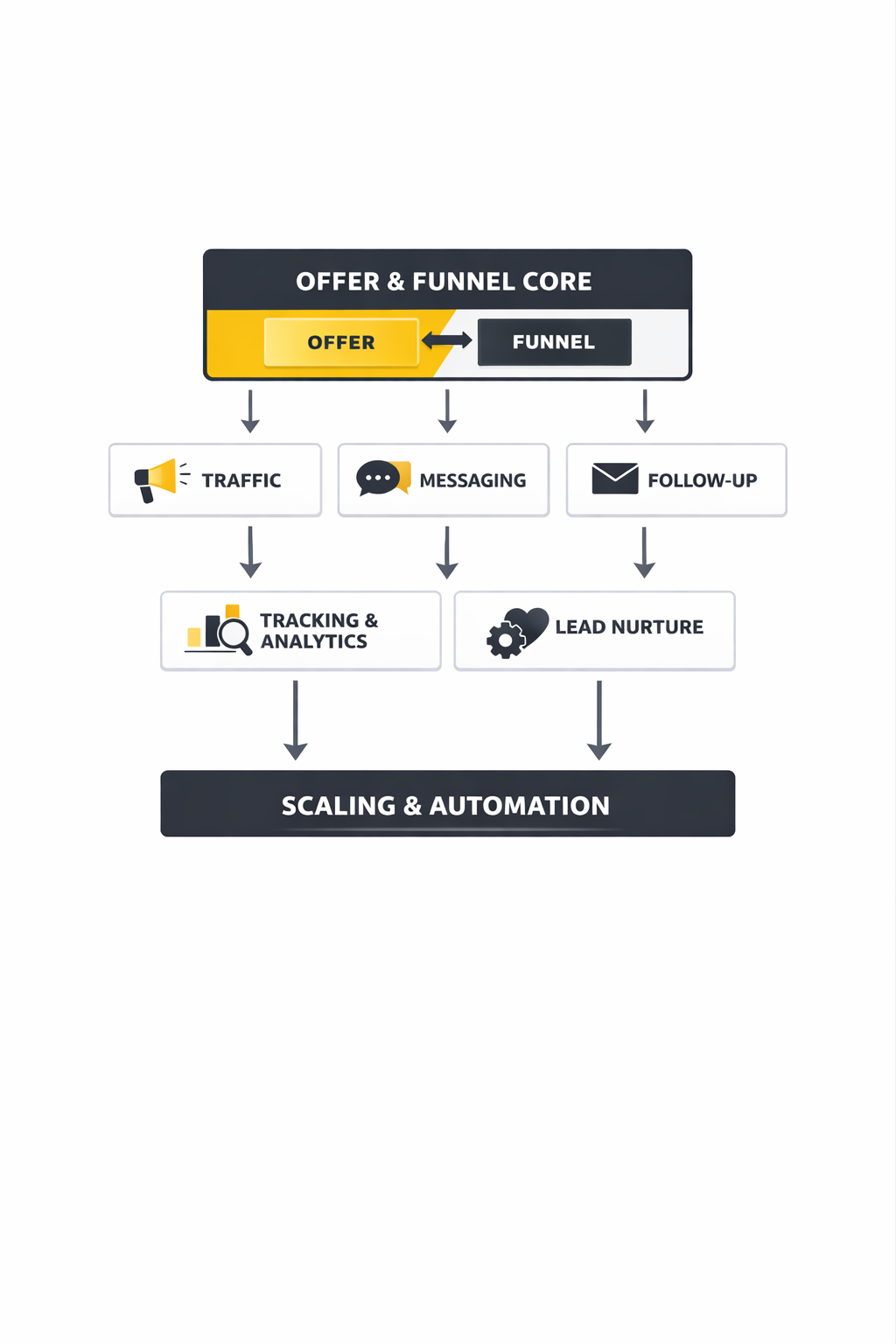
The easiest mistake is chasing “best” as if there is one universal winner. There is not. The smarter way to evaluate a free funnel builder is to ask four simple questions: can it publish pages fast, can it capture leads cleanly, can it automate follow-up, and can it show you what is converting. If any one of those pieces is weak, the tool may still be a nice page builder, but it is not doing the full job of a funnel builder.
That framework immediately clears up a lot of confusion in the market. Systeme.io’s free account is attractive because it is built around actual funnels and contact management, while Kit’s Newsletter plan is incredibly generous for audience growth with unlimited forms and landing pages plus up to 10,000 active subscribers. MailerLite’s free plan is tighter, with up to 500 subscribers and 10 landing pages, while Mailchimp’s free plan is more restrictive still with up to 250 contacts and 500 monthly sends.
Once you look through that lens, the right choice starts feeling obvious instead of overwhelming. If you want a real all-in-one funnel path without paying on day one, systeme.io deserves a hard look. If your business is email-led and list-building comes first, Moosend or Brevo may fit your workflow better, even if the page-building side is not as funnel-centric as some dedicated options. The point is to match the tool to the bottleneck you actually need to solve.
Core Components Every Free Funnel Builder Must Cover
The first core component is page creation that feels fast enough to use consistently. You should be able to publish an opt-in page, thank-you page, and simple offer page without fighting templates, code, or awkward branding limits. That is one reason HubSpot’s free landing page builder and Mailchimp’s landing page builder stay relevant in this conversation even though their free plans serve different types of users.
The second core component is lead capture that connects directly to contact records. Free tools often look good on the surface and then fall apart when you need forms, tags, basic segmentation, or a clean subscriber database. A builder starts acting like a real funnel system only when form submissions move straight into a CRM or email list, which is exactly the workflow highlighted across HubSpot’s forms, Brevo’s free marketing platform, and MailerLite’s automation-enabled free plan.
The third core component is follow-up plus measurement. A page can get attention, but revenue usually shows up after the opt-in through welcome emails, reminders, nurture sequences, and conversion tracking. That is why the best free funnel builder is rarely the one with the prettiest editor. It is the one that gives you enough automation to keep momentum after the click, then enough analytics to tell you whether the funnel is getting stronger or just getting prettier.
How To Implement a Free Funnel Builder Like a Pro
Professional implementation starts with keeping the first funnel brutally simple. One traffic source, one landing page, one form, one thank-you page, and one email sequence is more than enough to validate whether people care. The reason this works is not magic. It works because it gives you a clean line of sight from visitor to opt-in to next step, which makes optimization possible instead of messy guesswork.
The next move is choosing a platform based on your likely upgrade path, not just your day-one excitement. If you expect to live inside an all-in-one business system, starting with systeme.io or testing ClickFunnels can be logical. If your plan is to build an audience first and monetize later, a creator-friendly stack like Flick for traffic support plus Brevo or Moosend for nurture can be the smarter way to go.
Finally, act like your free funnel is already a revenue asset. Track the opt-in rate, track the click-through rate inside your follow-up emails, and track where people drop off. The best free funnel builder will not rescue a weak offer, a vague headline, or sloppy follow-up. What it will do is give you enough structure to test those things quickly, improve them intelligently, and earn the right to upgrade only when the numbers justify it.
Which Free Funnel Builders Actually Stand Out In 2026
This is where things get real, because most people looking for the best free funnel builder are not actually looking for a giant software stack. They want something they can launch this week, something that will capture leads without breaking, and something that does not force a painful migration the second momentum starts building. When you judge these platforms that way instead of getting distracted by shiny features, the leaders become a lot easier to spot.
The first standout is Systeme.io’s free plan, which gives you 2,000 contacts, 3 sales funnels, 15 funnel steps, one workflow, one automation rule, one email campaign, one blog, one course, one community, and one custom domain. That mix matters because it behaves like a real business system, not just a page builder with a free sticker on it. If you want the best free funnel builder for getting an actual funnel online without stacking five other tools, systeme.io has one of the clearest cases in the market right now.
The second standout is not a forever-free funnel platform in the same way, but it still deserves attention because of how many businesses eventually end up there. ClickFunnels currently offers a 14-day free trial and a 30-day money-back guarantee after the trial, and the platform keeps positioning itself as a full funnel ecosystem with pages, CRM, email, courses, and store functionality. So no, it is not the best free funnel builder if your definition of free means free forever, but it is absolutely one of the most important platforms to evaluate if you are testing whether a premium funnel-first ecosystem is worth it for your business.
The third cluster is made up of email-led tools that do a surprisingly strong job with landing pages and lead capture. Brevo’s free plan stays attractive for solopreneurs because it is free forever, while MailerLite’s free plan includes up to 500 subscribers, automations, a website, and 10 landing pages. GetResponse Free also keeps itself in the conversation by letting new businesses build a landing page, grow a list, and get online fast without paying on day one.

Best If You Want An All-In-One Funnel Builder For Free
If your main goal is to avoid duct-taping your business together, Systeme.io is the most compelling option in this group. The reason is simple: its free plan is built around funnels, email, automations, courses, and selling mechanics, which means you can validate an offer without immediately layering on separate tools for each job. That is a big deal when you are trying to move fast and stay focused.
This matters even more when you compare what “free” means elsewhere. Mailchimp’s free plan is capped at 250 contacts and 500 monthly sends, which can work for very early testing but starts feeling tight quickly if email is central to your funnel. HubSpot gives you a very polished free landing page builder and free forms that push contacts into its CRM, but its deeper marketing features become a different pricing conversation once your needs expand.
That is why the best free funnel builder for a beginner is often not the most famous brand. It is usually the one that lets you build the complete path from page to lead to follow-up without turning every next step into an upgrade prompt. In that specific race, systeme.io has a real edge.
Best If Your Funnel Starts With Email First
Some businesses do not need a classic sales-funnel machine on day one. They need a lead magnet, a landing page, a welcome sequence, and a clean way to stay in front of subscribers until the offer is ready. If that sounds like your situation, the best free funnel builder may actually be an email platform with strong landing page support rather than a traditional funnel brand.
Kit positions itself around newsletters, forms, landing pages, and audience growth, and its pricing page highlights automated email sequences and support for scaling creators. MailerLite’s free plan also stays highly competitive because it includes landing pages, signup forms, automation, and a website, while Brevo’s free tier remains attractive for people who care about multi-channel marketing and gradual growth rather than an aggressive funnel stack from day one.
This is where people often overcomplicate things. If your funnel is basically “get the lead, warm the lead, then sell,” an email-first platform can absolutely be the best free funnel builder for your situation. It may not feel as flashy as a dedicated funnel brand, but in many cases it is actually the cleaner and smarter way to start.
Best If You Care Most About CRM, Forms, And Sales Handoff
There is another kind of user who should not blindly follow the all-in-one funnel hype. If you run a service business, B2B company, agency, or sales-led operation, the real priority is not always the prettiest funnel pages. It is capturing qualified leads, keeping records organized, and making sure nobody falls through the cracks once a form gets filled out.
That is exactly why HubSpot’s form builder and its free CRM deserve serious respect in this conversation. When a visitor submits a form, the contact goes straight into the CRM, which is a very different experience from using a lightweight page tool and then trying to patch everything together afterward. Add HubSpot’s free landing pages, and you have a strong setup for businesses that live and die by lead management rather than one-click checkouts.
That does not automatically make HubSpot the best free funnel builder for everyone. It does mean that if sales process and contact visibility matter more than aggressive direct-response page design, HubSpot becomes much more attractive than a typical beginner would expect. A lot of businesses do not need more noise. They need a cleaner handoff from marketing to sales, and HubSpot understands that extremely well.
Best If You Intend To Upgrade Quickly
Sometimes the right answer is not a forever-free plan at all. Sometimes you already know that if the funnel works, you are going to invest, and what you really want is enough access to test the engine before committing. In that case, the conversation changes from “What is free forever?” to “What gives me the clearest shot at proving this works fast?”
ClickFunnels makes a strong argument here with its free trial and money-back window, and the platform keeps leaning into the idea that it can handle funnels, CRM, email, courses, stores, and more in one place. That is why so many marketers still keep it on the shortlist even when they are comparing truly free options. If your offer is validated, your traffic plan is ready, and you are looking for a platform that is designed around conversion paths instead of basic list building, ClickFunnels becomes a much more sensible test than people sometimes admit.
The key is honesty. A free trial is not the same as a free plan, and pretending otherwise is how people end up frustrated. But when you know what you are signing up for, a premium platform on a trial can still be the best free funnel builder experience for a short, focused validation sprint.
Hidden Limits, Upgrade Triggers, And The Next Smart Move
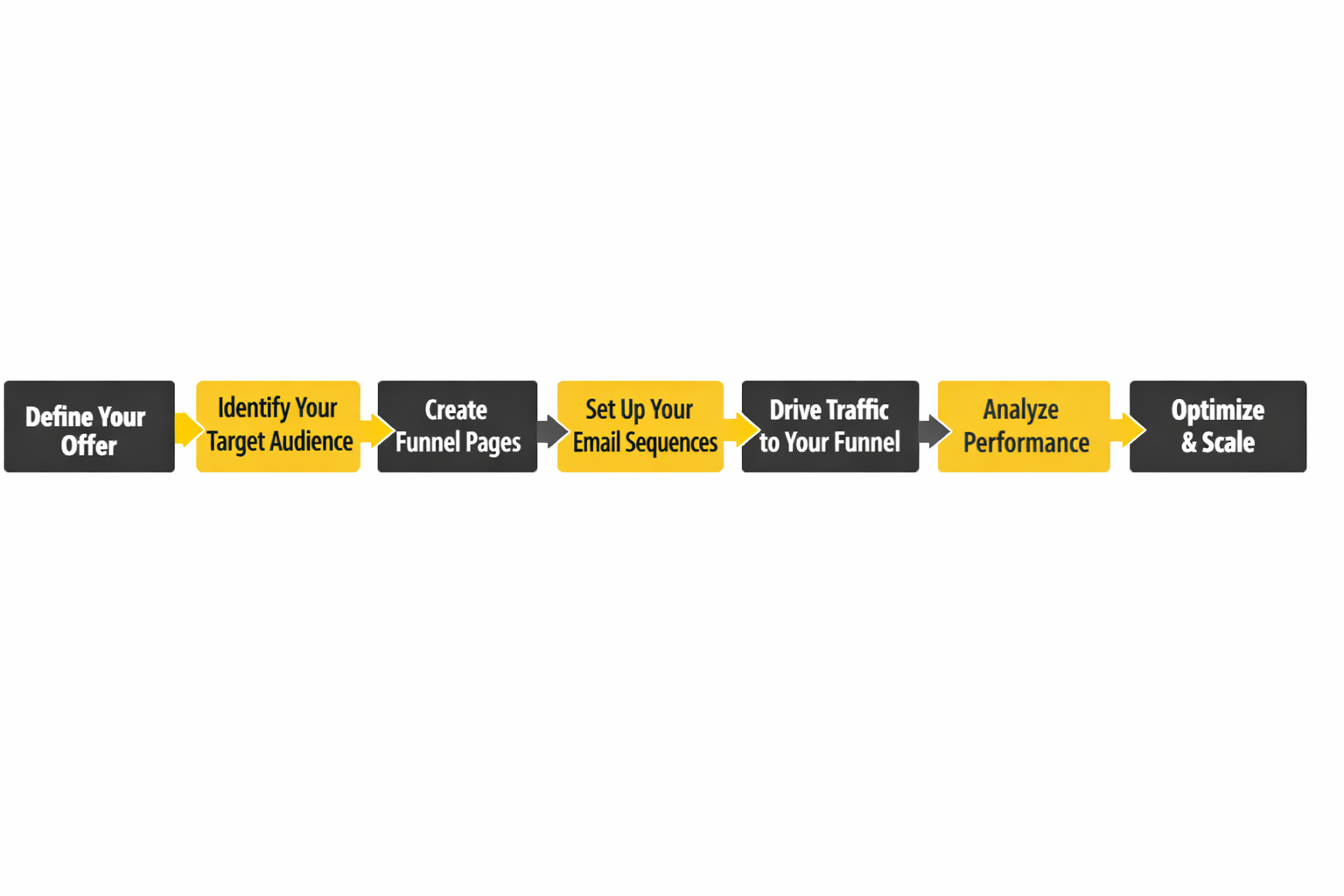
This is the part almost nobody talks about when they recommend the best free funnel builder. They show you the signup page, they show you the template library, and they act like the job is done. But the real test starts after you get traffic, because that is when hidden limits begin to mess with your momentum and force a decision you were not planning to make yet.
A free funnel builder can absolutely help you launch, validate an offer, and build real traction. At the same time, free plans are designed to create boundaries, and those boundaries usually show up around contacts, sends, automations, domains, branding, or analytics depth. So if you want to make a smart decision instead of an emotional one, you need to understand exactly where those walls are before your funnel runs into them.
The Hidden Limits Inside A Free Funnel Builder
The first limit is usually scale. Systeme.io’s free plan is strong, but it still caps you at 2,000 contacts, 3 sales funnels, 15 funnel steps, and a single workflow. That is more generous than many alternatives, which is why it keeps coming up in serious conversations, but it still means your free setup is meant for testing and early growth rather than permanent expansion.
The second limit is often email volume or list size. Mailchimp’s free plan includes up to 250 contacts and 500 monthly sends, while MailerLite’s free plan supports up to 500 subscribers and 10 landing pages. Brevo highlights 300 free emails a day and multi-step automation for up to 2,000 contacts, which sounds flexible until your funnel starts driving daily opt-ins and your follow-up sequence gets longer.
The third limit is not always obvious on the pricing table, but it can be the most annoying one in practice. Some tools technically let you build the funnel, yet keep their best automation logic, deeper testing options, or stronger reporting behind the paid plans. That matters because the best free funnel builder is not just the one that lets you publish a page. It is the one that lets you improve what happens after the page is live.
When You Should Upgrade Instead Of Waiting Too Long
A lot of people stay on a free plan longer than they should because they think upgrading means they failed at staying lean. It does not. The right time to upgrade is when the free plan starts slowing down a funnel that is already proving itself, not when you are still guessing whether anybody even wants the offer.
One clear trigger is when your contact cap starts getting close and you know new leads are coming in consistently. Another is when your follow-up needs become more serious than a basic welcome sequence. If you need better segmentation, more automation branches, cleaner reporting, or more funnels running at the same time, that is not software greed. That is your business telling you the free stage has done its job.
There is also a financial trigger that makes this decision easier. Unbounce’s latest benchmark work puts median landing page conversion at 6.6% across 41,000 landing pages, 464,000,000 visits, and 57,000,000 conversions, which means even modest traffic can generate meaningful lead volume if the page and offer are working. Once you are seeing that kind of traction, upgrading to protect speed, flexibility, and follow-up usually makes far more sense than trying to squeeze every last day out of a free account.
If you already know you want to build inside an all-in-one system and grow there, systeme.io is still one of the cleanest starting points. If your business is ready for a premium conversion stack and you want to test it with urgency, ClickFunnels is better treated as a serious validation play than as a forever-free tool.
The Analytics That Actually Matter In A Free Funnel
This is where people get distracted by vanity metrics and lose the plot. You do not need a dashboard full of colorful charts to know whether your funnel is alive. You need to know how many people visited, how many opted in, how many clicked through your follow-up emails, and how many took the next revenue-driving action.
That is why the best free funnel builder should be judged partly by how easy it is to measure simple conversion flow. If the page is getting traffic but the opt-in rate is weak, your offer or page message probably needs work. If the opt-in rate is fine but the email clicks are dead, the bottleneck has moved into your nurture. And if everything looks healthy until the offer page, then the issue is probably not traffic at all. It is the pitch.
The numbers do not need to be perfect on day one, but they do need context. A 6.6% median landing page conversion rate is a useful baseline, not a magic target. HubSpot’s latest marketing statistics page still places email among the strongest ROI channels for B2C brands, which is another reminder that free funnel tools should be evaluated on what happens after the opt-in, not just on how quickly you can drag blocks onto a page.
Choose The Ecosystem, Not Just The Funnel Builder
This may be the biggest mindset shift in the entire article. The best free funnel builder is rarely just a standalone builder decision. It is usually an ecosystem decision disguised as a page-design question. You are not only choosing where to build pages. You are choosing where your contacts live, where your emails run, where your automations branch, and how painful future migration will be.
That is why different tools make sense for different business models. HubSpot’s forms and free CRM are appealing when lead management and sales handoff matter most. MailerLite, GetResponse Free, and Brevo are easier to love when email-first growth is the strategy. And if you want a more funnel-centric all-in-one route without paying up front, systeme.io continues to make a very strong case.
So do not just ask which platform is free. Ask where you want your business to live six months from now. That one question will save you an incredible amount of frustration, because the best free funnel builder is not the one that looks cheapest today. It is the one that lets you start fast, learn fast, and grow without ripping the whole machine apart the moment things finally start working.
Statistics And Data That Put Free Funnel Builders In Context
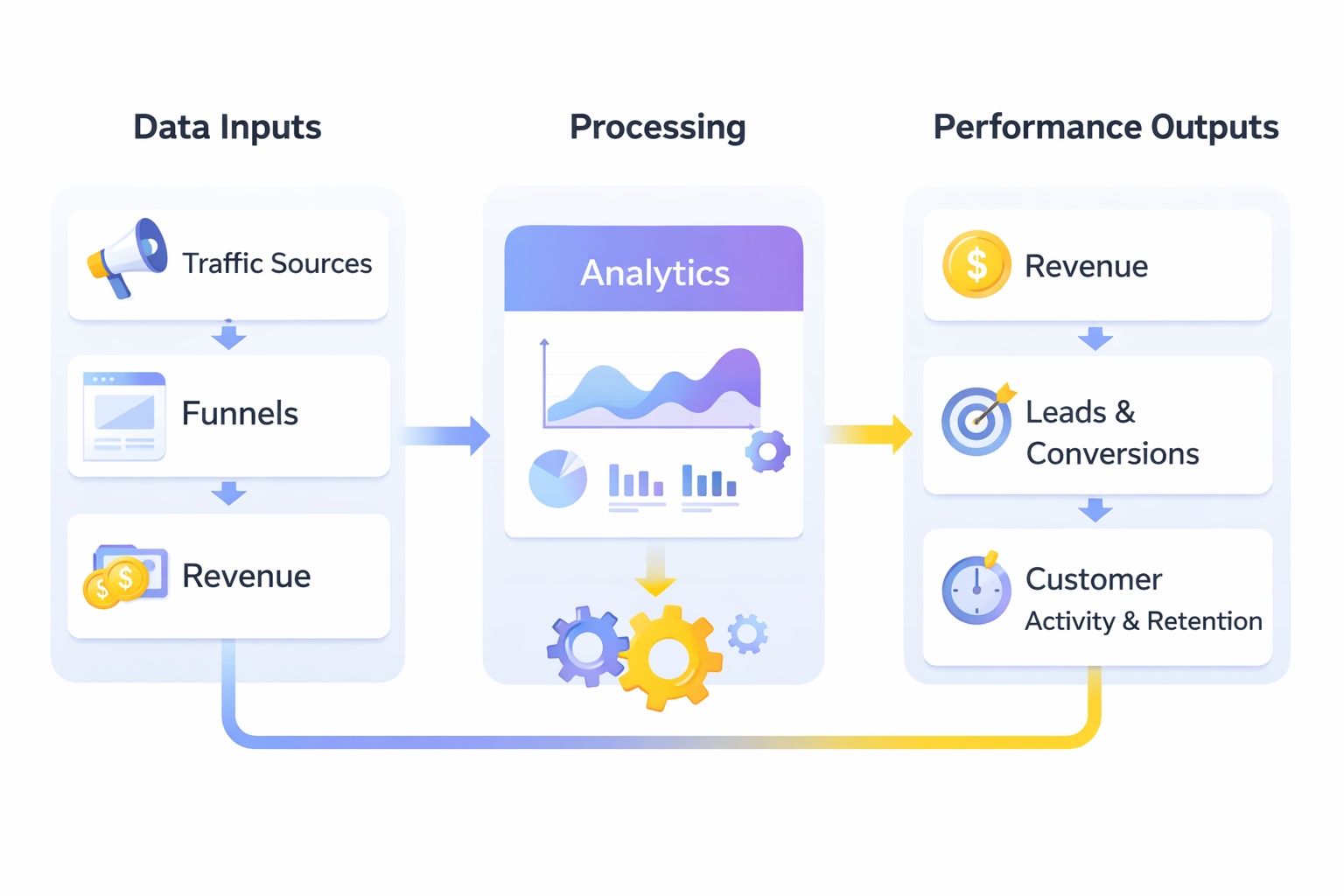
If you are trying to choose the best free funnel builder, numbers help you cut through the hype fast. Not because statistics magically choose the platform for you, but because they reveal where the real pressure points are. Once you know what typical landing page performance looks like, how email follow-up still drives serious value, and where free-plan caps kick in, you can stop guessing and start making decisions like a business owner.
The first number worth paying attention to is conversion rate. Unbounce’s Q4 2024 landing page benchmark puts the median landing page conversion rate at 6.6% after analyzing 41,000 landing pages, 464,000,000 visits, and 57,000,000 conversions. That matters because it gives you a real baseline for judging your funnel. If your page is far below that number, the issue may be your offer, your copy, or your audience match. If you are beating it, you have a strong argument for putting more traffic into the funnel instead of obsessing over switching tools again.
The second number that matters is not one big industry stat but the actual operating limits inside the platforms people compare most often. Systeme.io’s free plan includes up to 2,000 contacts, 3 funnels, 1 automation rule, and 1 custom domain. Mailchimp’s free plan includes up to 250 contacts and 500 monthly sends, while MailerLite’s free plan allows up to 500 subscribers and 12,000 monthly emails. Brevo’s free plan allows 300 email sends per day, and Kit’s Newsletter plan stays free for up to 10,000 subscribers. That is a massive spread, and it shows why the best free funnel builder depends on whether your biggest need is full-funnel structure, email volume, or pure audience growth.
What These Benchmarks Actually Mean For Your Funnel
A lot of people read benchmark numbers the wrong way. They see a 6.6% median conversion rate and assume that is the target they are supposed to hit immediately. That is not the smart way to use the data. A benchmark is there to help you diagnose the funnel, not to shame you. If your free funnel builder is helping you get traffic to a page and the page converts at 2%, you now know there is likely room to improve the page or the offer before you blame the tool.
This is also where follow-up becomes impossible to ignore. HubSpot’s current marketing statistics hub still highlights email as one of the highest-ROI marketing channels for B2C brands, which is why a funnel builder that stops at page publishing is not enough for most businesses. The best free funnel builder is the one that helps you move from click to opt-in to nurture without losing visibility into what happens at each stage.
That is why generous page-building alone is not the whole story. You can have a beautiful landing page and still have a weak funnel if contact storage is capped too low, automations are too limited, or email sending limits choke your follow-up. The raw numbers above make that painfully clear.
How Free-Plan Capacity Changes The Decision
Let’s make this practical. Suppose you are getting steady traffic from social content, SEO, or paid ads. In that situation, a limit of 250 contacts on Mailchimp’s free marketing plan can disappear far faster than most beginners expect. That does not make Mailchimp bad. It simply means it may not be the best free funnel builder if list growth is likely to happen quickly.
Now compare that with the shape of the alternatives. Systeme.io describes its account as free forever, which fits a classic all-in-one validation path. GetResponse Free focuses on getting a business online with a landing page, lead capture, and email without upfront cost. HubSpot’s free form builder automatically sends leads into its CRM, which can be more valuable than extra page templates if sales follow-up matters most.
This is exactly why “best” is never just about features on a comparison table. It is about matching platform capacity to the stage your business is actually in. A creator building a newsletter, a consultant booking leads, and a business selling a digital offer can all use a free funnel builder, but they will hit very different walls at very different speeds.
The Data Behind Why Email Follow-Up Still Matters So Much
If there is one mistake people make when choosing the best free funnel builder, it is treating the landing page like the whole game. It is not. The page gets attention, but the follow-up often does the selling. That is why tools with meaningful email functionality punch above their weight, even when they are not positioned as traditional funnel software.
HubSpot’s current data collection on email marketing continues to reinforce how central email remains for ROI, engagement, and lead nurturing. That lines up with what the strongest free options are doing in practice. MailerLite builds automation into its free plan, Brevo combines email with broader marketing functions, and Kit keeps leaning into creator-focused email growth and automation. In other words, the market itself is telling you that a funnel without follow-up is incomplete.
This changes how you should evaluate a free tool. Do not just ask whether it can make a page. Ask whether it can handle the next seven days after someone opts in. That is where a lot of free funnel builders stop being impressive, and where the better ones start separating themselves.
How To Use The Numbers Without Getting Lost In Them
Here is the smartest way to use all this data. First, benchmark your landing page against a credible baseline like Unbounce’s 6.6% median conversion figure. Then compare your chosen platform’s free-plan limits against the volume you realistically expect over the next one to three months. Finally, check whether the builder gives you enough follow-up power to capitalize on the leads you collect.
That process keeps you grounded. It stops you from picking a tool just because the homepage looks polished, and it stops you from overpaying before the funnel has earned it. The best free funnel builder is not the one with the loudest marketing. It is the one whose numbers line up with your actual growth path.
And that is the real takeaway from the statistics. The data does not just tell you which tools are popular. It tells you where friction is most likely to appear. When you understand that, you can build a free funnel with a lot more confidence and a lot less wasted motion.
Final Recommendations Based On The Kind Of Funnel You Want To Build
At this point, the best free funnel builder should be a lot clearer because the real question is no longer “Which tool is the most hyped?” It is “Which tool fits the way I actually plan to grow?” That is the question that saves you time, saves you money, and saves you from rebuilding your whole setup after a few weeks of momentum.
If you want the cleanest all-in-one path for a beginner or small business, Systeme.io’s free plan is still one of the strongest answers on the board. The reason is simple: it gives you room to build funnels, collect contacts, send emails, and automate basic follow-up without forcing you to stitch together a bunch of separate tools right away. That makes systeme.io a very strong fit for people who want to move fast and keep things simple.
If your business is more email-first than funnel-first, the smarter choice can look very different. Kit’s free Newsletter plan supports up to 10,000 subscribers, MailerLite’s free plan includes automation, a website, and 10 landing pages for up to 500 subscribers, and Brevo’s free plan stays appealing when you want email, CRM-style functions, and broader marketing flexibility in the same environment. In other words, the best free funnel builder may not even be a classic funnel brand if your real engine is lead nurture through email.
The Best Picks By Business Type
If you are a coach, creator, consultant, or small digital business selling a simple offer, the best free funnel builder is usually the one that gets you from page to opt-in to checkout or nurture with the least friction. That is why systeme.io keeps standing out. It is built for that exact motion, and the free plan gives you enough room to prove an offer before paying for scale.
If you are a newsletter operator, educator, or audience-first creator, the winning move may be to build around subscriber growth first and monetization second. Moosend, Brevo, MailerLite, and Kit all make more sense in that world than a heavier direct-response funnel stack. That is because the asset you are building is the list itself, and the funnel exists to support that growth.
If you run a service business, agency, or B2B operation where form fills need to turn into trackable sales conversations, HubSpot deserves real attention. Its free forms connect straight into the free CRM, and its landing page builder gives you a smoother handoff from marketing to sales than many lightweight funnel tools. For that use case, the best free funnel builder is often the one that handles lead management best, not the one with the flashiest page editor.
The Biggest Mistakes People Make When Choosing
The first mistake is confusing free trials with free plans. A premium tool can absolutely be worth testing, and ClickFunnels makes that case through its trial-based entry point, but that is a very different decision from choosing a platform that stays free while you validate the funnel. If you do not know which situation you are in, you can make a decision that feels smart on day one and annoying by day fourteen.
The second mistake is obsessing over page design while ignoring what happens after the opt-in. Email continues to be one of the strongest ROI channels in marketing data tracked by HubSpot, which means follow-up matters too much to be an afterthought. The best free funnel builder is not just the one that helps you publish a page quickly. It is the one that helps you continue the conversation and move the lead toward a real next step.
The third mistake is choosing a platform without thinking about the next stage. A free plan is great, but if it forces a painful migration the second your business starts working, the savings can disappear fast. That is why ecosystem fit matters so much. You are not just choosing a page builder. You are choosing where your leads, emails, automations, and sales process will live.
My Honest Bottom Line On The Best Free Funnel Builder
If I had to keep this brutally practical, I would say this. For most beginners and many small businesses, systeme.io is the most balanced place to start because it behaves like a real funnel platform while still giving you meaningful room on the free plan. That matters a lot when you need to launch, learn, and improve without bleeding money into software before the funnel is even proven.
If your business model revolves around email-first growth, I would lean harder toward Brevo, Moosend, MailerLite, or Kit depending on how much list growth, automation, and creator workflow matter to you. If your need is more sales-led and CRM-heavy, HubSpot becomes more attractive than many people expect. And if you already know you are willing to invest fast once the funnel proves itself, then testing ClickFunnels can still be a very smart move.
So what is the best free funnel builder? The honest answer is that it depends on the kind of machine you are trying to build. But if your goal is to start fast, stay lean, and still give yourself a real chance to grow, the strongest answer for most people is the platform that lets you publish, capture, follow up, and optimize without turning every next step into a roadblock. That is the standard that matters, and it is the one you should use to make the call.
FAQ For This Complete Guide

What is the best free funnel builder for most beginners?
For most beginners, Systeme.io’s free plan is one of the strongest starting points because it gives you funnels, email tools, automation, and contact storage in one place. That matters because beginners usually lose momentum when they have to connect too many tools before the funnel is even live. If you want the most balanced all-in-one starting point, systeme.io is still one of the easiest answers to justify.
Is a free funnel builder really enough to make sales?
Yes, a free funnel builder can absolutely be enough to make sales, especially when you are validating an offer or building your first lead-generation system. The key is not whether the tool is free. The key is whether it lets you publish a page, collect leads, follow up, and track what happens next. That is why a free account with serious funnel functionality can outperform a prettier tool that stops at page design.
What is the difference between a free plan and a free trial?
A free plan lets you keep using the platform at no cost within certain limits, while a free trial gives you temporary access before billing begins. That distinction matters a lot because ClickFunnels currently positions its offer around a 14-day free trial and a 30-day money-back guarantee, while tools like Brevo and Systeme.io keep free entry points available without a countdown clock. If you want to test slowly, a true free plan is usually the safer move.
Which free funnel builder is best if email marketing is the core of my strategy?
If email is the center of your business, the best free funnel builder may actually be an email platform with landing page support. Kit’s Newsletter plan stays free for up to 10,000 subscribers, MailerLite’s free plan supports up to 500 subscribers and 10 landing pages, and Brevo is attractive when you want email plus broader marketing flexibility. In that situation, email follow-up matters more than having the flashiest funnel editor.
Which free funnel builder is best for a service business or B2B company?
If you care most about forms, lead records, and sales handoff, HubSpot deserves serious attention. Its free forms push new leads into the free CRM, which is a very practical advantage for service businesses and B2B teams. In those cases, the best free funnel builder is often the one that handles lead management cleanly instead of the one with the most aggressive direct-response branding.
How many contacts can I realistically manage on a free plan?
The answer depends heavily on the platform you choose. Systeme.io’s free plan supports up to 2,000 contacts, Mailchimp’s free plan supports up to 250 contacts, and Kit’s Newsletter plan stays free up to 10,000 subscribers. That is why “best free funnel builder” is never just about features. Capacity changes the decision fast.
Are free funnel builders bad for serious businesses?
No, not at all. A serious business can use a free funnel builder very effectively during the testing and validation stage, especially if the tool supports meaningful automation and follow-up. The bigger issue is knowing when the free plan has stopped helping and started slowing you down. A serious business does not avoid free tools. It simply avoids staying stuck on the wrong free tool for too long.
What metrics should I watch first in a free funnel?
Start with the basics: visits, opt-ins, email clicks, and the next conversion action. Unbounce’s recent benchmark work shows a 6.6% median landing page conversion rate, which gives you a useful reference point for judging your page. If the page converts well but sales are weak, the issue probably lives in the follow-up or the offer itself, not in the funnel builder.
Can I build a full funnel without paying for extra tools?
Yes, in many cases you can. That is exactly why all-in-one options like Systeme.io stand out, because they let you build pages, capture leads, send emails, and automate simple flows without forcing a bigger stack right away. The moment your needs become more advanced, though, integrations or paid upgrades may start making more sense.
When should I upgrade from a free funnel builder?
You should upgrade when the free plan starts hurting a funnel that is already working. That could mean you are running into contact limits, email-send caps, automation restrictions, or reporting gaps that make optimization harder than it should be. Upgrading too early wastes money, but upgrading too late can choke a funnel that is finally gaining traction.
Is ClickFunnels the best free funnel builder?
If you mean free forever, no. ClickFunnels is a trial-based offer, not a permanent free plan. But if you already know you are willing to invest once the funnel proves itself, then ClickFunnels can still be a very smart platform to test because it is built around conversion-focused workflow from the start.
Which free funnel builder is best if I want the least technical hassle?
If simplicity matters most, all-in-one tools usually win. That is because they reduce the number of moving parts you need to connect before going live. Systeme.io is strong here, while Brevo and MailerLite make a lot of sense when your flow is more email-led and content-driven.
Work With Professionals
Choosing the best free funnel builder is a smart first move, but building the funnel is only part of the game. You still need traffic, messaging, conversion strategy, follow-up, and consistent execution if you want the funnel to actually produce leads or revenue. That is where working with professionals can save you a ridiculous amount of time and help you avoid expensive mistakes.
If you are building offers, running campaigns, or trying to grow faster without doing every piece yourself, it makes sense to connect with people who already know how funnels, email marketing, analytics, and lead generation work in the real world. The right help can tighten your funnel faster than another week of switching platforms ever will.
Explore 10K+ Remote Marketing Contracts on MarkeWork.com
Most marketers spend too much time chasing clients, competing on crowded platforms, and losing a percentage of every project to middlemen.
MarkeWork gives you a better way. Browse thousands of remote marketing contracts and connect directly with companies desperate to hire skilled marketers like you without platform commissions and without unnecessary gatekeepers.
If you’re serious about finding better opportunities and keeping 100% of what you earn, you can explore available contracts and create your profile for free at MarkeWork.com.
 Filip Konecny Enterprises