
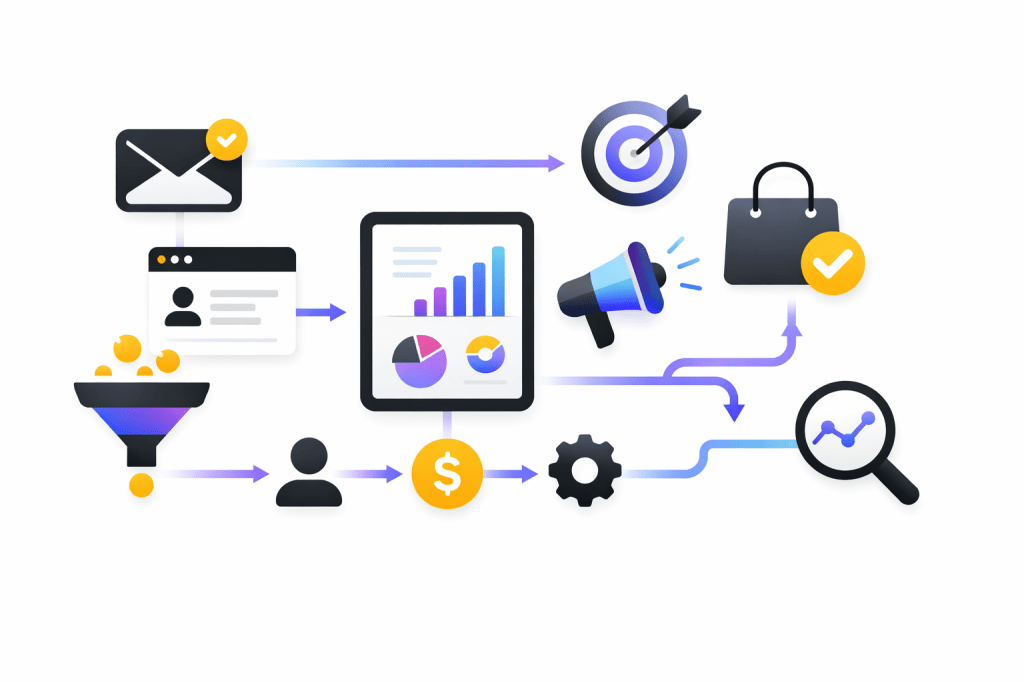
If you are serious about building a business on channels you can control, an email marketing service stops being a nice extra and starts becoming core infrastructure. Social reach can collapse with one algorithm change, paid traffic can get expensive fast, and search takes time to build. Email is different because it gives you a direct line to people who already said they want to hear from you.
That direct line matters even more now. HubSpot’s 2026 State of Marketing points to newsletters and other owned channels as places where brands can hold attention more reliably, while the DMA’s 2025 Email Benchmarking Report shows that email volume kept growing through 2024 rather than fading away. At the same time, Google’s sender guidelines made it crystal clear that professional email operations now require proper authentication, list hygiene, and easy unsubscribe handling.
So the real question is not whether email still works. The better question is what kind of email marketing service helps you grow without creating a deliverability mess, a reporting blind spot, or a bloated tech stack your team hates using. That is what this article is built to answer.
Article Outline
- Part 1: Why Email Marketing Services Matter
- Part 2: Framework Overview
- Part 3: Core Components
- Part 4: Professional Implementation
- Part 5: Analytics and Optimization
- Part 6: Ecosystem and Long-Term Growth
Why Email Marketing Services Matter
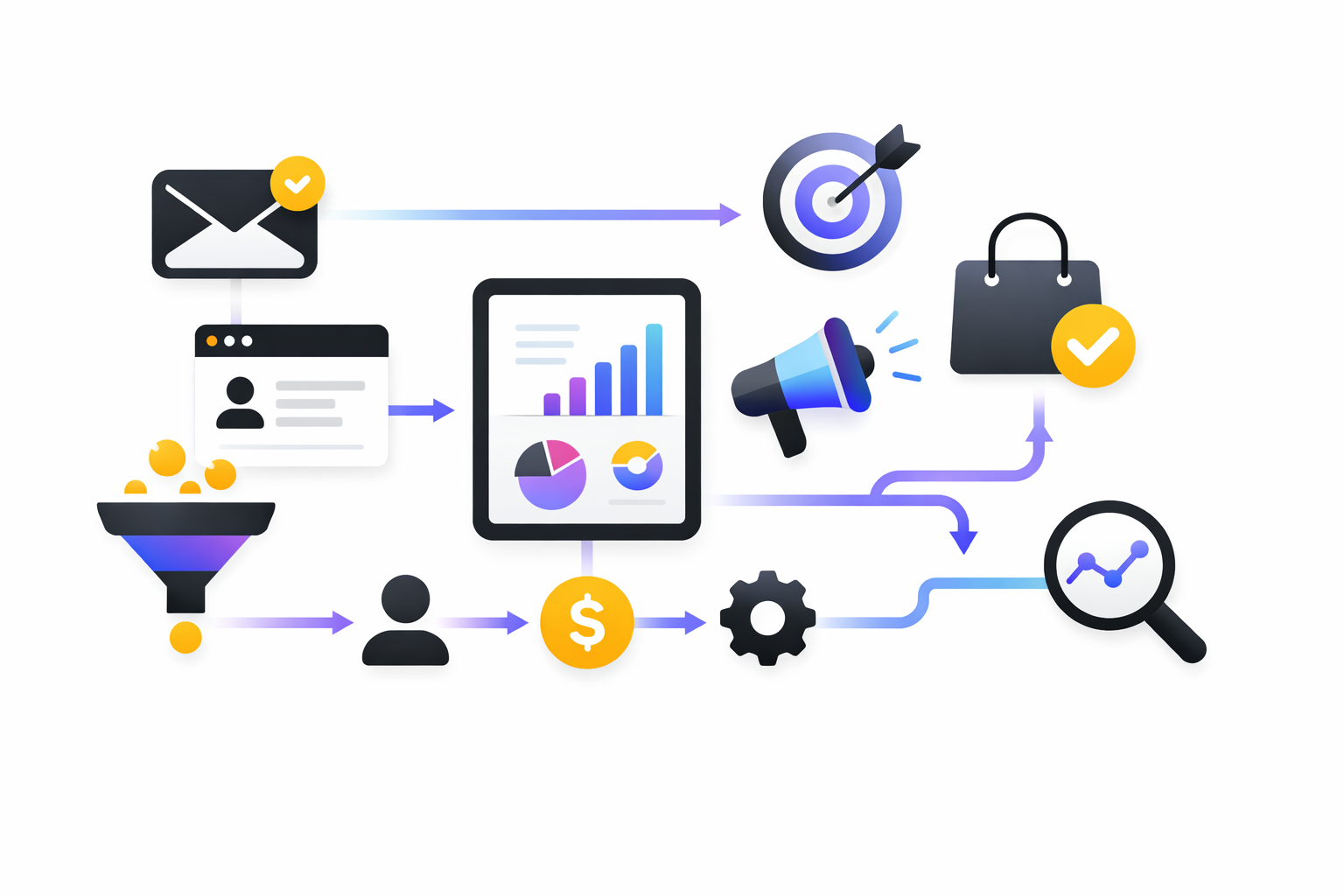
An email marketing service is not just software for sending newsletters. At a professional level, it is the system that stores consented contacts, manages segmentation, runs automated journeys, protects sender reputation, and turns campaign performance into decisions you can actually act on. When businesses treat it like a simple blast tool, they usually end up measuring vanity metrics instead of revenue, engagement quality, and retention.
The market has also matured enough that platform choice now changes outcomes in a very real way. Independent deliverability testing continues to show noticeable differences between providers, while platforms such as Mailchimp and Klaviyo have built benchmarking systems precisely because raw performance varies by industry, list quality, and sending behavior. In other words, the service you choose influences more than convenience. It can shape inbox placement, workflow depth, and how confidently you can optimize.
There is also a compliance and trust angle that many businesses underestimate until something breaks. Since February 2024, Gmail’s requirements for higher-volume senders have pushed authentication, spam complaint control, and visible unsubscribe options from best practice into operational necessity, as explained in Google’s sender guidelines FAQ and related SPF setup guidance. A real email marketing service helps you meet those expectations without forcing your team to patch together separate tools for forms, automation, domain setup, and reporting.
That is why the right platform becomes a growth lever. It lets you welcome new subscribers properly, route leads based on intent, recover abandoned journeys, re-engage cold audiences, and prove whether your messages are building demand or just filling inboxes. When the system is right, your team spends less time wrestling the mechanics and more time improving relevance.
Framework Overview
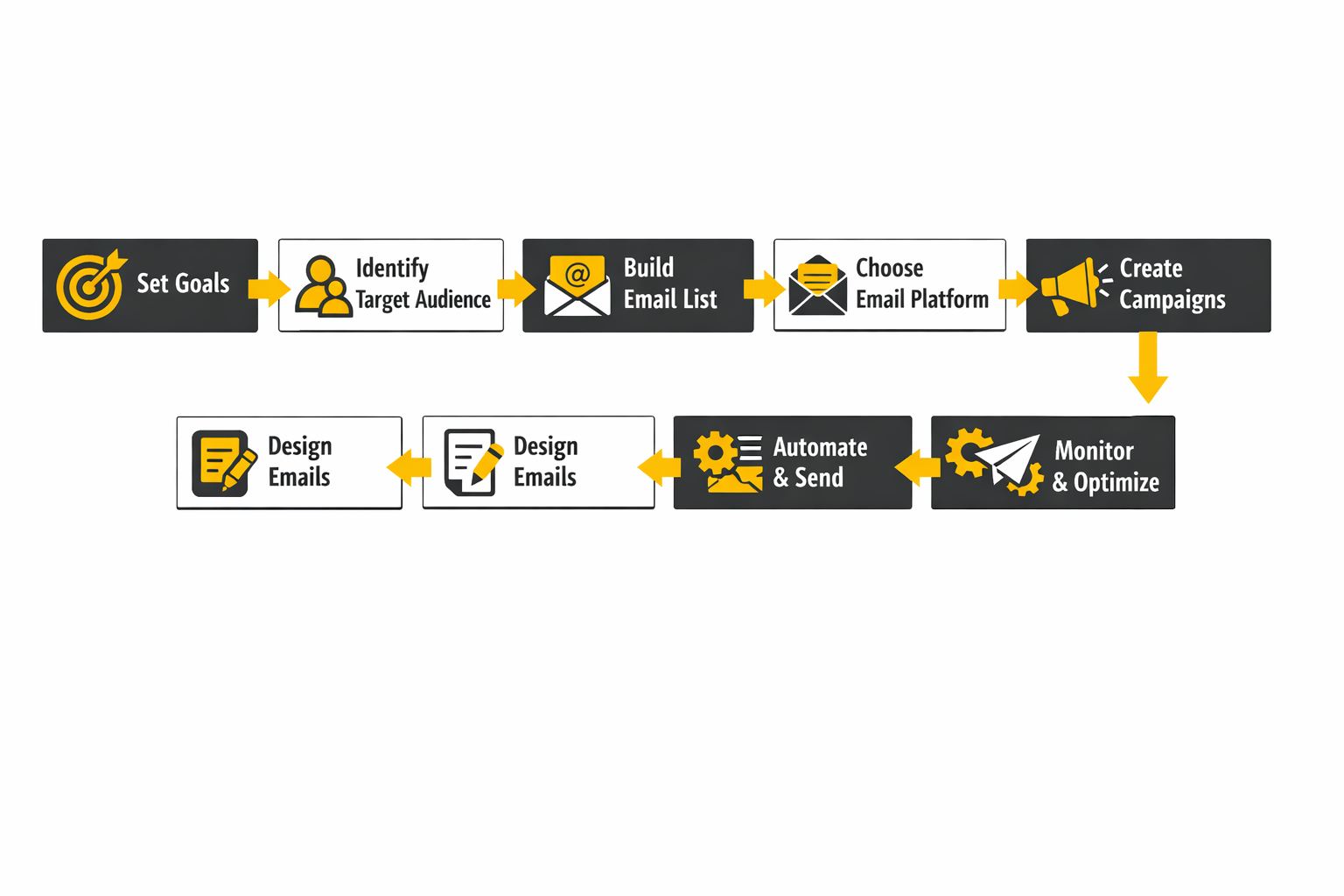
The easiest way to evaluate any email marketing service is to stop looking at feature checklists first and start with the operating model behind the tool. A strong platform supports six layers at the same time: audience capture, data quality, segmentation, automation, deliverability, and measurement. If one of those layers is weak, the entire program gets shaky no matter how polished the template builder looks.
Start with audience capture. Your platform should make it easy to collect consent through forms, landing pages, embedded signups, or integrated checkout flows. That sounds basic, but it determines the quality of everything that follows. Bad capture creates weak intent data, weak intent data creates poor segmentation, and poor segmentation leads to irrelevant sends that damage reputation over time.
Then comes data quality and structure. Modern providers increasingly position themselves as customer platforms rather than simple senders because they know email performs best when it uses behavior, preferences, and lifecycle signals. You can see that shift in how Brevo, HubSpot, and Mailchimp talk about unifying audience data, segmentation, and automation rather than treating campaigns as isolated events.
After that, the framework moves into orchestration. This is where your email marketing service should turn subscriber actions into journeys: welcome sequences, lead nurturing, abandoned browse reminders, onboarding messages, renewal prompts, post-purchase education, and win-back campaigns. A service that cannot map real customer behavior into real communication logic will eventually force you into manual work that does not scale.
Finally, the framework has to close the loop with measurement. That means connecting email activity to outcomes like replies, demos, purchases, repeat orders, or account activation, not just opens and clicks. The strongest teams use benchmarks as context, not as the end goal. That is exactly why the latest benchmark resources from Klaviyo, Mailchimp, and Brevo are useful only when paired with business-specific goals.
Core Components
Every serious email marketing service should give you a dependable foundation in four areas: contact management, segmentation, automation, and deliverability controls. Those are the components that separate professional email operations from casual sending.
Contact management is the first pillar because your list is only valuable if it is structured well. You need fields for source, consent status, lifecycle stage, engagement history, and key business attributes. If you run ecommerce, that includes purchase behavior and browsing signals. If you run B2B, it often includes company size, role, funnel stage, and sales activity. Without that structure, every campaign becomes broad, generic, and harder to improve.
Segmentation is the second pillar, and it is where relevance starts becoming measurable. Mailchimp’s segmentation tools emphasize targeting by behavior and interest, and the platform points to higher revenue potential when valuable audiences receive more tailored messaging. The idea is simple: a person who just subscribed should not receive the same message as a repeat buyer, a dormant lead, or a customer approaching renewal. The more your service helps you divide those groups intelligently, the more natural your messaging feels.
Automation is the third pillar because manual email marketing almost always breaks once volume rises. Tools like HubSpot workflows, Brevo automations, and Klaviyo browse abandonment flows all point in the same direction: performance improves when communication reacts to user behavior instead of waiting for a batch send on someone’s calendar. That does not mean every brand needs complex branching on day one, but it does mean automation should be part of the service, not an afterthought.
The fourth pillar is deliverability governance. This includes domain authentication, suppression logic, list cleaning, permission handling, sending cadence, and visibility into inbox placement risk. Google’s requirements forced many businesses to learn this the hard way, but the lesson is useful: beautiful copy means very little if your messages do not make it to the inbox. A platform that helps you manage authentication and unsubscribe expectations is not offering a bonus feature. It is protecting the channel itself.
Professional Implementation
Professional implementation starts long before the first campaign goes out. The first step is clarifying what the email marketing service is supposed to do for the business. Some companies need a clean newsletter engine with basic automation. Others need deep ecommerce flows, CRM synchronization, sales handoff logic, and multichannel coordination. If you skip that strategic definition, you can easily buy a platform that is either too limited or much more complex than your team can realistically use.
Once the role is clear, implementation should move in a deliberate order: domain setup, consent capture, data mapping, essential segments, core automations, template system, and reporting. That order matters because it keeps you from designing polished emails before your sender identity, contact fields, and automation triggers are stable. It is one of the most common mistakes in rushed setups: teams focus on appearance first, then discover later that forms are disconnected, events are missing, or the reporting cannot answer basic revenue questions.
A strong rollout also keeps the first automation layer focused. Most businesses do not need twenty journeys at launch. They need a welcome series, a nurture flow, one or two intent-driven conversion flows, and a re-engagement path for inactive contacts. That smaller foundation is easier to monitor, easier to troubleshoot, and much more likely to produce clean data that improves future decisions.
Professional implementation also means assigning ownership. Someone needs to be responsible for list health, someone for copy and offer strategy, someone for technical integrity, and someone for reporting decisions. In smaller businesses that may be one person wearing several hats, but the responsibilities still need to be defined. Email becomes messy when everybody can send but nobody owns the system.
When that ownership is combined with a platform built for segmentation, automation, and compliance, email stops feeling like a disconnected marketing task. It becomes a dependable operating channel that supports acquisition, conversion, and retention with far more control than most brands get from rented platforms.
Start With Business Fit, Not a Giant Feature List
The smartest way to choose an email marketing service is to begin with the shape of your business, not with a long comparison table. A creator sending one core newsletter, a B2B company nurturing leads through a sales cycle, and an ecommerce brand trying to recover abandoned carts do not need the same system, the same data model, or the same pricing structure. That sounds obvious, but it is exactly where many teams get trapped, because they buy based on marketing pages instead of buying based on the workflows they need to run every single week.
This is also where the market has become more demanding. Google’s updated sender guidance now makes compliance and operational discipline part of the selection process, not something you figure out later, and Sinch Mailgun’s 2025 deliverability report shows that staying out of spam remains one of the biggest headaches for senders. So when you look at any platform, ask a brutally practical question: does this service fit the way your audience signs up, the way your team works, and the way your revenue is actually generated?
Match the Data Model to the Customer Journey
A strong email marketing service should reflect the journey your customer is already taking. If you need lifecycle campaigns, lead scoring, CRM handoff, and internal routing, a platform with deeper workflow logic matters a lot more than a prettier template editor. HubSpot’s workflow documentation makes that clear by showing how one system can enroll contacts by form activity, update records, assign owners, and trigger emails from the same automation layer, which is exactly the kind of coordination a longer B2B journey usually needs.
On the other hand, if your business lives and dies on behavioral triggers, product interest, and repeat purchases, the data model has to be close to customer activity. Klaviyo’s customer stories keep coming back to the same theme: brands want one place where performance data, engagement signals, and revenue attribution sit together instead of being stitched across five tools. That matters because an email marketing service becomes far more valuable when it can react to what people actually do, not just to which list they were dumped into six months ago.

Put Deliverability and Governance Near the Top
This is the part too many businesses treat like background noise until results suddenly collapse. The truth is that deliverability is not a side issue sitting in the IT corner. It is one of the main reasons one email marketing service can outperform another, even when both seem similar on the surface.
Google’s FAQ for email sender requirements says Gmail began ramping up enforcement on non-compliant traffic in November 2025, and the same guidance points senders toward authentication and compliance monitoring in Postmaster Tools. At the same time, Sinch Mailgun’s 2025 report found that 48% of senders named staying out of spam as a top challenge, while 39% said they rarely or never conduct list hygiene. When you combine those signals, the takeaway is hard to ignore: an email marketing service needs to help you authenticate properly, suppress bad contacts, respect consent, manage unsubscribes, and monitor complaint risk before those issues start draining performance.
This is why governance belongs in the buying conversation right next to automation and design. A platform that makes sending easy but gives your team weak control over authentication, list cleanup, or suppression logic can quietly become expensive, even if the monthly subscription looks attractive. Inbox access is the whole game, so the platform has to protect it.
Check Pricing Against the Way You Actually Grow
Pricing gets distorted when people compare plans without comparing sending behavior. Some businesses carry a large database but send selectively, while others work a smaller list very aggressively through campaigns, flows, and testing. That difference changes which email marketing service feels affordable after six months, not just on day one.
Brevo’s pricing page highlights a send-based approach with pay-as-you-go credits that do not expire and a free plan that allows approved accounts to send up to 300 emails per day. Klaviyo’s pricing page frames things around active profiles and includes a free plan with up to 250 profiles and 500 emails per month, while Mailchimp’s automation guidance stresses that businesses should evaluate automation, analytics, segmentation, compatibility, and pricing together rather than isolating cost from capability. That is the right way to think about it, because cheap software becomes expensive fast if it forces you to bolt on more tools, and premium software becomes wasteful if your team only uses ten percent of what you pay for.
The best move is to estimate your future operating pattern before you buy. Look at contact growth, send frequency, automation depth, reporting needs, and whether more than one team will rely on the platform. When you do that honestly, the right email marketing service usually stops looking like a feature contest and starts looking like what it really is: an operating decision that affects growth, efficiency, and control.
Core Components of a Strong Email Marketing Service
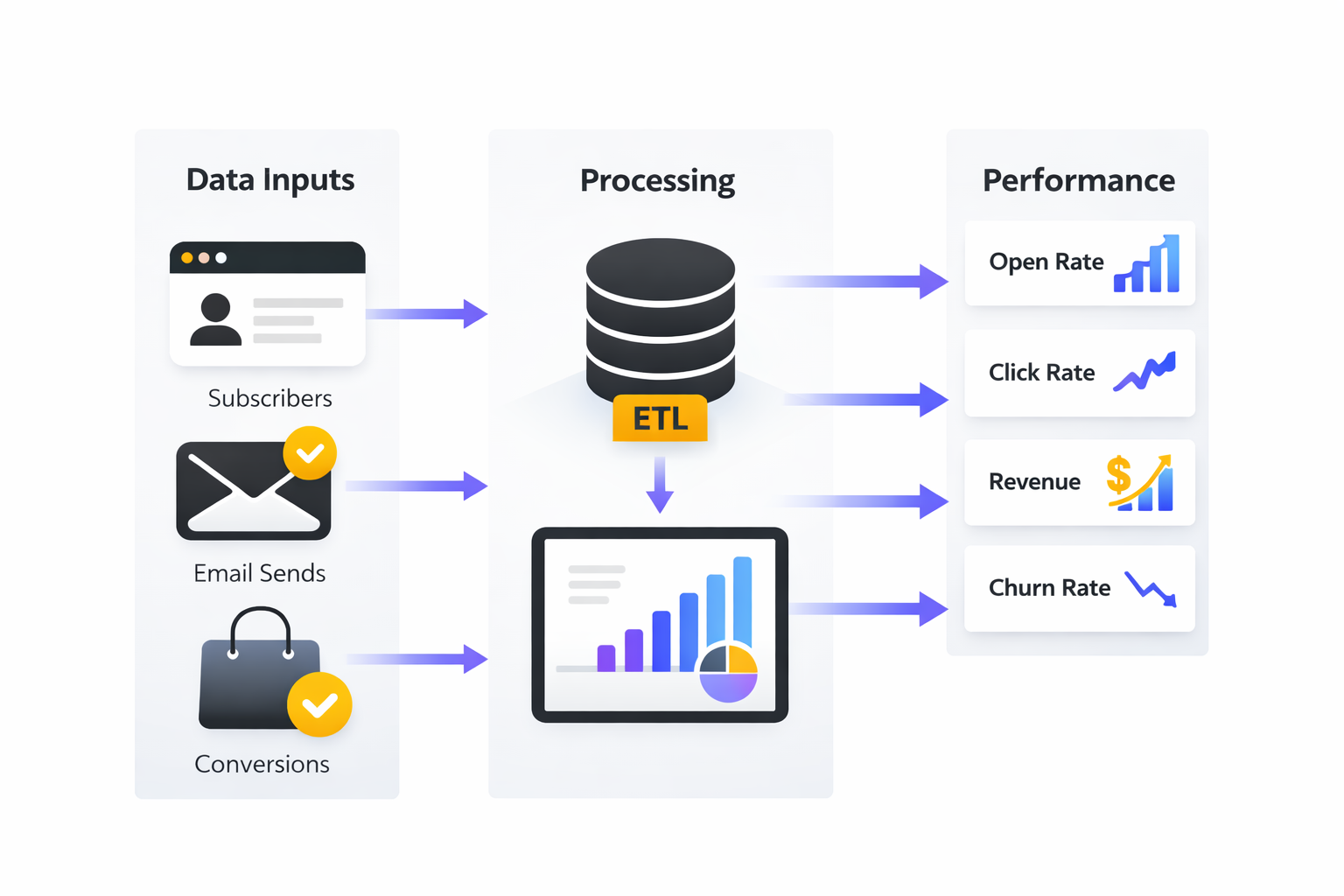
Once you get past pricing pages and shiny demos, every email marketing service comes down to a few core components that decide whether your results keep climbing or stall out. This is where things get real, because a platform can look impressive on the surface and still create friction the moment you need better targeting, cleaner data, or more reliable reporting. If you want the system to support growth instead of slowing it down, these are the components that deserve your attention.
And this matters more than ever because inbox access is not as forgiving as it used to be. Google’s sender guidelines, the related FAQ for bulk senders, and Google’s newer subscription guidance for senders all point in the same direction: the brands that win with email are the brands that treat list quality, authentication, unsubscribes, and relevance like serious operating priorities. That means your email marketing service needs to do far more than send messages on schedule.
Contact Management That Keeps Your List Useful
A healthy list is not just a big list. It is a structured list. The best email marketing service gives you a clean way to store consent details, source data, preferences, lifecycle stage, purchase history, and engagement signals so that every future campaign has some actual context behind it.
This is important because weak data quietly poisons everything downstream. If you do not know where people came from, what they asked for, or how recently they engaged, your segmentation gets sloppy and your automation turns generic fast. That is why platforms like Mailchimp’s audience tools, Brevo’s CRM features, and HubSpot’s CRM system all push some version of centralized contact structure instead of treating subscribers like simple rows in a spreadsheet.
When contact management is done well, you stop guessing. You can separate new subscribers from repeat buyers, warm leads from silent contacts, and product-specific interest from general curiosity. That is the kind of foundation that makes an email marketing service feel strategic instead of random.
Segmentation That Makes Messages Feel Timely
Segmentation is where email starts to feel personal without becoming creepy. A good email marketing service should let you create groups based on behavior, demographics, preferences, lifecycle stage, and real-time activity, because those signals are what make communication feel like it arrived for a reason.
This is not just a stylistic preference. Mailchimp explains its campaign benchmarking by using hundreds of millions of emails to compare performance across peer groups, and Klaviyo’s 2026 benchmark hub now breaks results down by industry and performance metric because email outcomes vary dramatically depending on audience quality and targeting. In plain English, one broad message to everyone will rarely outperform smart sends built around intent, timing, and lifecycle relevance.
That is why segmentation should never be treated like an optional upgrade you figure out later. It is one of the main reasons a professional email marketing service outperforms a simple newsletter sender. When the right people get the right message at the right moment, the channel starts working like it should.
Automation That Reacts to What People Actually Do
This is where a lot of businesses either unlock real scale or stay stuck sending one-off campaigns forever. An email marketing service becomes much more powerful when it can respond to behavior automatically instead of relying on someone to remember what should happen next. Welcome emails, abandoned cart reminders, onboarding flows, replenishment messages, and re-engagement sequences all exist because people do not move through the customer journey in one neat batch.
HubSpot’s automated email guidance, Brevo’s automation documentation, and Klaviyo’s browse abandonment resources all show the same larger truth: automation works best when it listens for customer signals instead of firing off rigid calendar sends. That does not mean you need a maze of complicated branches on day one. It means your email marketing service should be able to trigger timely communication when someone signs up, views a product, requests a demo, starts a trial, or goes quiet.
And there is a practical reason this matters so much. Klaviyo’s ecommerce benchmark report says the companies it analyzed attributed an average of 27% of Q4 store revenue to email. That kind of number does not come from sending the same newsletter to everyone. It usually comes from automated messages tied to actual customer movement.
Deliverability Controls That Protect the Channel
If your emails do not land in the inbox, nothing else you built really matters. That is why a serious email marketing service must include deliverability controls that help you authenticate domains, manage suppressions, track bounce patterns, respect unsubscribes, and keep complaint rates under control. These are not technical extras for advanced users. They are survival tools.
The urgency is easy to see. Google’s latest sender FAQ says Gmail ramped up enforcement on non-compliant traffic in November 2025, while Google’s Postmaster Tools guidance points senders toward compliance dashboards and diagnostics for delivery errors and spam reports. On top of that, Sinch Mailgun’s 2025 deliverability report found that 48% of senders said staying out of spam is a top challenge. That is not a fringe issue. That is the operating environment you are sending into right now.
So when you compare providers, look at what they help you prevent, not just what they help you create. A beautiful builder is nice. Deliverability controls keep the whole machine alive.
Reporting and Attribution That Connect Email to Revenue
Most businesses already have enough dashboards. What they usually do not have is a clean way to tell whether their email marketing service is driving the outcomes they actually care about. Opens and clicks can still be useful as directional signals, but they are not enough on their own, especially now that privacy changes have made open data less reliable than it once looked.
The better approach is to use reporting that connects messages to movement: purchases, lead quality, demos booked, trial activation, repeat orders, or customer retention. That is exactly why Klaviyo’s 2025 benchmark report emphasizes metrics beyond surface engagement, why Mailchimp’s benchmark resources push businesses to compare their performance by industry, and why HubSpot’s State of Marketing research continues to frame owned channels in the broader context of measurable marketing efficiency. A good email marketing service should help you answer a simple but powerful question: did this email change business results, or did it just produce activity?
When reporting is built that way, optimization becomes much easier. You stop chasing numbers that look exciting in a weekly recap and start improving the messages, audiences, and journeys that actually move revenue, retention, and customer value.
Why These Components Need to Work Together
This is the big takeaway. You do not get strong email performance from one magic feature. You get it when contact management, segmentation, automation, deliverability, and reporting reinforce one another inside the same system.
That is why choosing an email marketing service is never just a software decision. It is a decision about how your business will collect data, communicate with leads and customers, protect inbox placement, and measure results over time. When those components line up, email becomes one of the most dependable channels you have. When they do not, you feel the drag everywhere.
Statistics and Data

Now let’s get into the numbers, because this is where an email marketing service either proves its value or gets exposed fast. It is easy to fall in love with dashboards, but the real job is figuring out which numbers actually help you make better decisions. The latest benchmark data shows why that matters: DMA reported delivery rates rising to 98% in 2024, open rates reaching 35.9%, and unique click rates climbing to 2.3%, while MailerLite’s 2025 benchmark dataset, built from more than 3.6 million campaigns sent from 181,000 approved accounts, showed a 43.46% average open rate and a 2.09% click rate. Those numbers are not there to flatter anyone. They are there to remind you that email performance depends heavily on list quality, industry, sending behavior, and the way your platform measures engagement.
Deliverability Numbers Tell the Real Story First
The first number worth caring about is not open rate. It is whether your messages are getting a fair shot at the inbox in the first place. Validity’s 2025 Email Deliverability Benchmark showed a global inbox placement rate of 83.5%, spam placement of 6.7%, and a missing rate of 9.8%, and the same report shows that global sending volumes increased throughout 2024. That combination matters more than most teams realize, because higher sending pressure usually means mailbox providers get stricter, not more generous.
This is exactly why a professional email marketing service has to do more than help you design campaigns. It needs to help you protect sender reputation, manage authentication, and keep your list clean enough to avoid digging a deeper hole every month. When inbox placement sits meaningfully below 100%, you are not just losing visibility. You are losing revenue opportunities before your copy ever gets judged.
Open Rates Still Matter, But They Need Context
Open rates are still useful, but only when you treat them like a directional signal instead of the whole truth. MailerLite’s 2025 analysis shows open rates ranging from 30.1% to 55.71% depending on industry, and DMA’s 2025 benchmarking report shows the industry still using open rate as a reference point even after Apple Mail Privacy Protection changed how many opens get recorded. That should immediately tell you that one global target is the wrong way to judge an email marketing service.
What matters more is whether your numbers make sense for your audience and whether they are improving for the right reasons. MailerLite explicitly notes that real open rates are lower than dashboard figures because Apple Mail Privacy Protection inflates recorded opens. So if one provider tells you everything is wonderful because opens look high, but it cannot connect that activity to clicks, conversions, or revenue, that is not clarity. That is a false sense of comfort.
Clicks and Unsubscribes Usually Reveal More Than Vanity Metrics
If you want cleaner truth, look harder at clicks, click-to-open rate, unsubscribes, and downstream conversion data. MailerLite reported a 6.81% click-to-open rate and a 0.22% unsubscribe rate for 2025, while DMA reported unique click rates reaching 2.3%. Those numbers matter because they push the conversation away from “Did someone technically open this?” and toward “Did this email move anyone to do something meaningful?”
Unsubscribe behavior is especially useful right now because it exposes whether your targeting and frequency are earning attention or wearing people out. MailerLite ties the rise in unsubscribe rates in part to Gmail’s easier unsubscribe experience, which means a weak email marketing service cannot hide behind friction anymore. If your content is off, people can leave faster. That is painful, but it is also useful, because it forces better segmentation, better message timing, and more honest measurement.
Compliance Data Is Now Part of Performance Data
This is where the market changed in a big way. Google says that starting February 2024, senders reaching 5,000 or more messages a day to Gmail accounts must authenticate outgoing mail, avoid unwanted email, and make unsubscribing easy, and Google also says it began ramping up enforcement on non-compliant traffic in November 2025. In plain English, compliance is no longer a technical box to tick in the background. It is directly tied to whether your email marketing service can keep your campaigns moving.
The supporting data is not subtle either. Mailgun’s 2025 State of Email Deliverability report, based on a survey of 1,100 senders, found that only one quarter of surveyed senders in Validity’s benchmark were in the under-0.1% spam complaint band associated with best-practice programs, and Mailgun’s report focuses heavily on authentication, sender reputation, inbox placement, and list hygiene as the forces shaping inbox access. So when you compare platforms, ask whether the service helps you monitor the things that mailbox providers actually care about. If it does not, the reporting is incomplete no matter how pretty it looks.
Owned Audience Data Keeps Pointing Back to Email
One reason businesses keep investing in email is that owned distribution is becoming more valuable, not less. HubSpot’s 2026 State of Marketing report includes a clear push toward newsletters, podcasts, and YouTube as spaces where marketers can keep human-created content and trust intact, and HubSpot’s 2025 State of Newsletters report found that 42% of respondents ranked direct recommendations from current subscribers as the most effective way to increase newsletter subscribers. That matters because it shows growth is not just about blasting bigger lists. It is about building something people actually want to receive.
The same newsletter research also found that one-fourth of respondents experienced substantial profit growth from their newsletters over the past year, and 45% expect newsletter profits to increase significantly over the next 12 months. That does not mean every business should run email the same way. It means the right email marketing service should help you treat email like an owned asset with compounding value, not like a disposable campaign channel you only touch when you have something to promote.
What These Numbers Mean for Your Next Decision
Here is the real takeaway. A strong email marketing service should help you measure five things together: inbox placement, engagement quality, unsubscribe pressure, compliance health, and business outcomes. If you only track opens, you are missing the operational picture. If you only track clicks, you may miss the warning signs that sender reputation is weakening. And if you never connect email activity to leads, sales, renewals, or repeat purchases, you are basically scoring motion instead of progress.
So do not chase one benchmark number like it is a magic answer. Use the benchmarks to get your bearings, then use your platform to find out whether your audience is becoming more engaged, more profitable, and easier to retain over time. That is the kind of data an email marketing service should put in your hands if it is doing its job properly.
Analytics and Optimization
This is the point where an email marketing service stops being a sending tool and starts becoming a performance engine. You can have clean templates, a decent list, and solid automation, but if you do not keep learning from the data, your results eventually flatten out. The teams that keep winning with email are usually not the teams with the fanciest design. They are the teams that keep testing, keep trimming what does not work, and keep making the next send smarter than the last one.
That approach matters because the gap between average and strong performance is rarely explained by one big breakthrough. It usually comes from a long run of smaller improvements around subject lines, segmentation, timing, send frequency, and post-click experience. Mailchimp’s A/B testing guidance, HubSpot’s email testing documentation, Brevo’s split testing workflow, and Klaviyo’s A/B testing help center all point in the same direction: improvement comes from structured testing, not guesses dressed up as strategy.
Focus on Business Metrics Before You Chase Pretty Numbers
A lot of businesses still look at email reports the wrong way around. They start with opens, celebrate if those are high, glance at clicks, and then move on. That feels productive, but it can leave a ton of money on the table because the real question is whether your email marketing service is helping you produce the outcomes that matter most: purchases, booked calls, trial activations, repeat orders, upgrades, renewals, or qualified replies.
The broader market keeps pushing in that direction. HubSpot’s 2026 State of Marketing report frames owned channels as durable growth assets at a time when marketers are under pressure to prove efficiency, while DMA’s 2025 benchmark data shows strong delivery and engagement averages but still leaves plenty of room between activity and real business impact. That is why a serious email marketing service should help you connect campaign results to revenue and retention, not just to dashboard movement.
When you look at performance through that lens, your priorities change fast. You stop asking whether the last campaign “did okay” and start asking whether it improved the economics of the channel. That one shift tends to make your optimization work much sharper.
Test One Meaningful Variable at a Time
This is what keeps optimization from turning into chaos. If you change the subject line, the offer, the creative, the call to action, and the send time all at once, you may get a better result, but you will have no idea why. A better email marketing service makes disciplined testing easier by letting you isolate one variable, split the audience cleanly, and send the winning version to the rest.
The platform guidance is surprisingly aligned here. Mailchimp explains A/B tests as a way to compare small changes in marketing engagement, HubSpot notes that more complex test splits require at least 1,000 recipients, Brevo says the winning version can then be sent to the rest of the audience, and Klaviyo extends testing into flow emails so brands can compare subject lines, discounts, and even plain text against heavier HTML layouts. That tells you something important: the strongest providers are not just helping you send. They are helping you learn.
The trick is to test what can actually move behavior. Subject lines matter. Offers matter. Send time matters. But the best tests usually line up with a bottleneck you already see in the funnel. If opens are weak, test the subject line. If clicks are weak, test the core promise and the call to action. If clicks look healthy but revenue is soft, the issue may be further down the journey.
Protect List Quality Like It Is Part of Optimization, Because It Is
One of the most expensive mistakes in email is treating list quality like a cleanup task you can get to later. It is not later work. It is optimization work. A bloated, stale, or poorly consented list makes your reporting less trustworthy, damages deliverability, and quietly teaches your email marketing service the wrong lessons about what your audience actually wants.
The warning signs are already out there. Mailgun’s 2025 deliverability report says it surveyed 1,100 senders and found that inbox placement remains a major challenge, while Validity’s 2025 benchmark report showed a global inbox placement rate of 83.5% and a missing rate of 9.8%. That is a huge reminder that optimization is not just about squeezing a few more clicks out of an email. It is also about making sure the right people are still reachable in the first place.
This is why the best email marketing service helps you suppress cold contacts, honor unsubscribes cleanly, monitor complaint patterns, and stop pretending that every address on the list still belongs there. Cleaner data leads to cleaner decisions. Cleaner decisions lead to stronger performance.
Build Feedback Loops Into Every Campaign and Flow
Optimization works faster when your campaigns teach your automations something, and your automations teach your campaigns something back. If a specific subject line pattern keeps winning, that should influence your next broadcast. If a certain onboarding email keeps getting ignored, that should change how your welcome flow is written. A great email marketing service gives you enough reporting depth to spot those patterns before they become expensive habits.
This is where owned-channel research becomes useful. HubSpot’s 2025 State of Newsletters report found that 42% of respondents ranked direct recommendations from current subscribers as the most effective subscriber growth method, and the same report says 45% expect newsletter profits to increase significantly over the next 12 months. That kind of signal matters because it shows growth and profitability often come from systems that improve over time, not from one isolated campaign that got lucky.
When you build real feedback loops, the whole channel compounds. Your segments improve because your data improves. Your offers improve because your reporting improves. And your email marketing service becomes more valuable every quarter because it is learning alongside your business instead of just storing templates.
Know When to Scale and When to Slow Down
There is a moment in every email program where growth creates temptation. The list is bigger, the calendar is fuller, and somebody starts thinking the answer is simply to send more. Sometimes that is right. A lot of the time it is how performance starts slipping.
Google’s bulk sender requirements and the related enforcement updates make it clear that mailbox providers are watching authentication, complaint behavior, and unsubscribe experience much more closely now. So scaling an email marketing service is not just about increasing volume. It is about increasing volume without breaking trust, deliverability, or relevance. That usually means earning the right to send more by proving that people keep engaging when you do.
The best operators understand this instinctively. They scale what is working, but they slow down the moment the signals get worse. That is not hesitation. That is discipline, and discipline is what keeps email profitable for the long haul.
Turn Data Into Decisions, Not Into More Noise
The final goal is simple: your email marketing service should help you make better decisions faster. If the reporting leaves you with more charts but less clarity, something is off. Good analytics should make the next action obvious, whether that means rewriting a subject line strategy, tightening a segment, refreshing a landing page, pausing a weak automation, or doubling down on a flow that keeps producing revenue.
This is where a lot of email programs either become powerful or stay average. Average programs collect data. Strong programs use it. And when you use it consistently, email starts acting less like a campaign channel and more like a reliable growth system you can keep improving month after month.
Ecosystem and Long-Term Growth

The final piece of the puzzle is understanding that an email marketing service does not live on its own. It sits inside a larger ecosystem of forms, landing pages, CRM records, ecommerce events, analytics, deliverability controls, and content workflows. When those pieces are connected well, email becomes one of the few channels you can keep improving year after year without depending on somebody else’s algorithm to stay visible.
That long-term angle matters more now because owned channels keep getting more valuable. HubSpot’s 2025 State of Newsletters report found that 45% of respondents expect newsletter profits to increase significantly over the next 12 months, while Klaviyo’s 2026 benchmark hub keeps framing email around revenue per recipient, conversion rate, and order rate rather than surface-level engagement alone. That tells you exactly where the market is heading: businesses want an email marketing service that connects the whole customer journey, not one that only sends attractive campaigns.
FAQ for a Complete Guide
What is an email marketing service, really?
An email marketing service is the system that helps you collect subscribers, store contact data, segment audiences, automate messages, monitor deliverability, and measure business results. That is a much bigger job than simply sending newsletters. When you choose the right one, it becomes part of your growth infrastructure rather than another disconnected tool sitting in your stack.
Does email marketing still work in 2026?
Yes, and the strongest evidence is not hype but continued investment from brands and platforms. HubSpot’s 2025 newsletter research shows strong expectations for profit growth, and Klaviyo’s benchmark resources continue to publish current email revenue and conversion benchmarks by industry. Email still works when the list is permission-based, the targeting is relevant, and the platform supports strong automation and deliverability practices.
How do I choose the right email marketing service for my business?
Start with your business model and your customer journey. If you need CRM alignment, lead routing, and longer sales cycles, a platform with stronger workflow depth matters. If you need behavior-based ecommerce flows and revenue attribution, a provider built around customer events usually makes more sense. The key is to choose based on the work the system must do every week, not on which homepage looks the most impressive.
What features matter most in an email marketing service?
The essentials are contact management, segmentation, automation, deliverability controls, and reporting tied to real outcomes. Everything else sits on top of those basics. If your platform cannot help you structure data well, trigger messages from customer behavior, and protect inbox placement, the more glamorous features do not save you for very long.
Why is deliverability such a big deal now?
Because inbox placement is the gatekeeper for every other result you want. Google’s sender requirements FAQ makes it clear that bulk senders need proper authentication, easy unsubscribes, and low spam complaints, and Google says it began ramping up enforcement on non-compliant traffic in November 2025. If your email marketing service does not help you manage compliance and sender health, you can lose performance before your audience even sees your message.
Are open rates still reliable enough to use?
They are still useful, but they should not be treated as final truth. MailerLite’s 2025 benchmark analysis explains that Apple Mail Privacy Protection inflates opens, which means an email marketing service should also help you focus on clicks, conversions, revenue, unsubscribe trends, and engagement over time. Opens can point you in a direction, but they should not be the only number steering the car.
How many emails should I send each week?
There is no universal number that works for every audience. The right cadence depends on subscriber intent, content quality, buying cycle, and how consistently your audience keeps engaging. A strong email marketing service helps you learn that balance by watching complaint signals, unsubscribe pressure, click quality, and downstream results instead of pushing you to send more just because the calendar has empty space.
Should I ever buy an email list?
No, and this is one of the easiest mistakes to avoid. Bought lists usually create compliance problems, weak engagement, higher complaint risk, and damaged sender reputation. An email marketing service performs best when the list is built on clear consent and real interest, not on borrowed data that never asked to hear from you.
Which metrics should I watch most closely?
The best mix is inbox placement, click quality, unsubscribe rate, complaint rate, conversion rate, and revenue or pipeline impact. Validity’s 2025 benchmark report and Mailgun’s 2025 deliverability research both reinforce the idea that sender health matters just as much as visible engagement. So the smartest way to use an email marketing service is to track both audience response and infrastructure health at the same time.
Is automation necessary, or can I just send campaigns manually?
You can start manually, but manual sending becomes a bottleneck fast. The real power of an email marketing service shows up when it reacts to behavior through welcome sequences, onboarding flows, abandoned cart emails, re-engagement paths, and lifecycle messaging. Automation makes the channel timelier, more relevant, and more scalable without forcing your team to rebuild the same work every week.
Is an email marketing service worth it for a small business?
Yes, especially because small businesses need channels they can control. Social platforms and paid traffic can be useful, but both come with rising costs and less ownership. Email gives a small business a direct line to people who already care, and a good email marketing service makes it easier to turn that attention into repeat traffic, repeat purchases, and stronger customer relationships.
How long does it take to see results from email marketing?
You can often see early signals quickly from a welcome flow or a better campaign structure, but stronger results usually come from consistency. The businesses that get the most out of an email marketing service keep improving segmentation, automation, and reporting over time. So yes, you can get wins early, but the real upside comes when the system compounds month after month.
Can one email marketing service do everything I need?
Sometimes, but not always. Some businesses can run almost everything from one platform, while others need separate tools for CRM, analytics, ecommerce, or advanced data work. The goal is not to force one platform to do everything. The goal is to make sure your email marketing service handles the core channel well and connects cleanly to the rest of the systems that matter.
What is the biggest mistake businesses make with email marketing services?
The biggest mistake is treating the platform like a blast tool instead of a relationship system. That usually leads to weak segmentation, sloppy data, inconsistent sending, poor deliverability habits, and reporting that looks busy but says very little. The businesses that win with email usually take the opposite path: they care about the audience, they keep the list clean, and they use the platform to send messages that feel timely and useful.
Work With Professionals
If you want an email marketing service to become a real growth channel, there comes a point where shortcuts stop paying off. That is usually when the list is growing, the automations are multiplying, and the business needs stronger reporting, cleaner deliverability, and messaging that actually matches customer intent. At that stage, working with professionals is not about handing off responsibility. It is about speeding up execution and avoiding expensive mistakes that slow growth later.
The right help can tighten your setup, fix weak flows, improve segmentation, clean up reporting, and make the entire system easier to scale. That matters because an email marketing service is one of those assets that rewards good structure over time. Build it well, and it keeps working for you. Build it carelessly, and you keep paying for the same problems again and again.
Explore 10K+ Remote Marketing Contracts on MarkeWork.com
Most marketers spend too much time chasing clients, competing on crowded platforms, and losing a percentage of every project to middlemen.
MarkeWork gives you a better way. Browse thousands of remote marketing contracts and connect directly with companies desperate to hire skilled marketers like you without platform commissions and without unnecessary gatekeepers.
If you’re serious about finding better opportunities and keeping 100% of what you earn, you can explore available contracts and create your profile for free at MarkeWork.com.
 Filip Konecny Enterprises