
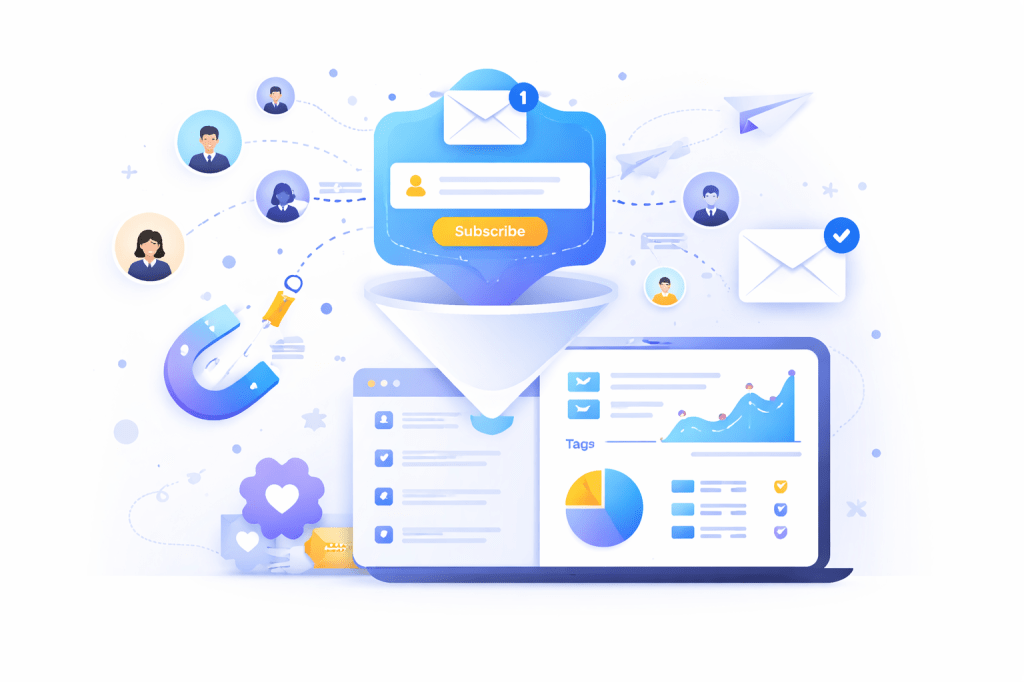
An email list for marketing is not just a database of addresses. It is one of the few channels you can still control directly, which is exactly why serious brands keep investing in it while algorithms, ad costs, and platform rules keep shifting underneath everyone else. When the list is built with permission, maintained with discipline, and connected to a real offer, it becomes a durable business asset instead of a vanity metric.
That difference matters even more now. Google’s current sender rules expect marketers to use proper authentication through SPF, DKIM, and DMARC, support one-click unsubscribe for marketing and subscribed messages, and keep spam rates below 0.10% if they want reliable placement in Gmail. So the real question is no longer whether you should build a list, but how to build one that earns trust, survives technical scrutiny, and produces revenue without burning your reputation.
Email still rewards that kind of discipline. Litmus reported that in 2025 35% of marketing leaders saw $10 to $36 back for every $1 spent on email, 30% saw $36 to $50, and 5% reported more than $50, while Mailchimp’s broad benchmark data still places the average open rate across industries at 21.33%. Those numbers do not mean every campaign wins, but they do show why a well-built email list for marketing keeps outperforming channels that depend on borrowed reach.
Article Outline
- Part 1: Why an Email List for Marketing Matters
- Part 2: Framework Overview
- Part 3: Core Components of a Healthy Marketing Email List
- Part 4: Professional Implementation
- Part 5: Analytics and Optimization
- Part 6: Ecosystem, Compliance, and FAQ
Why an Email List for Marketing Matters
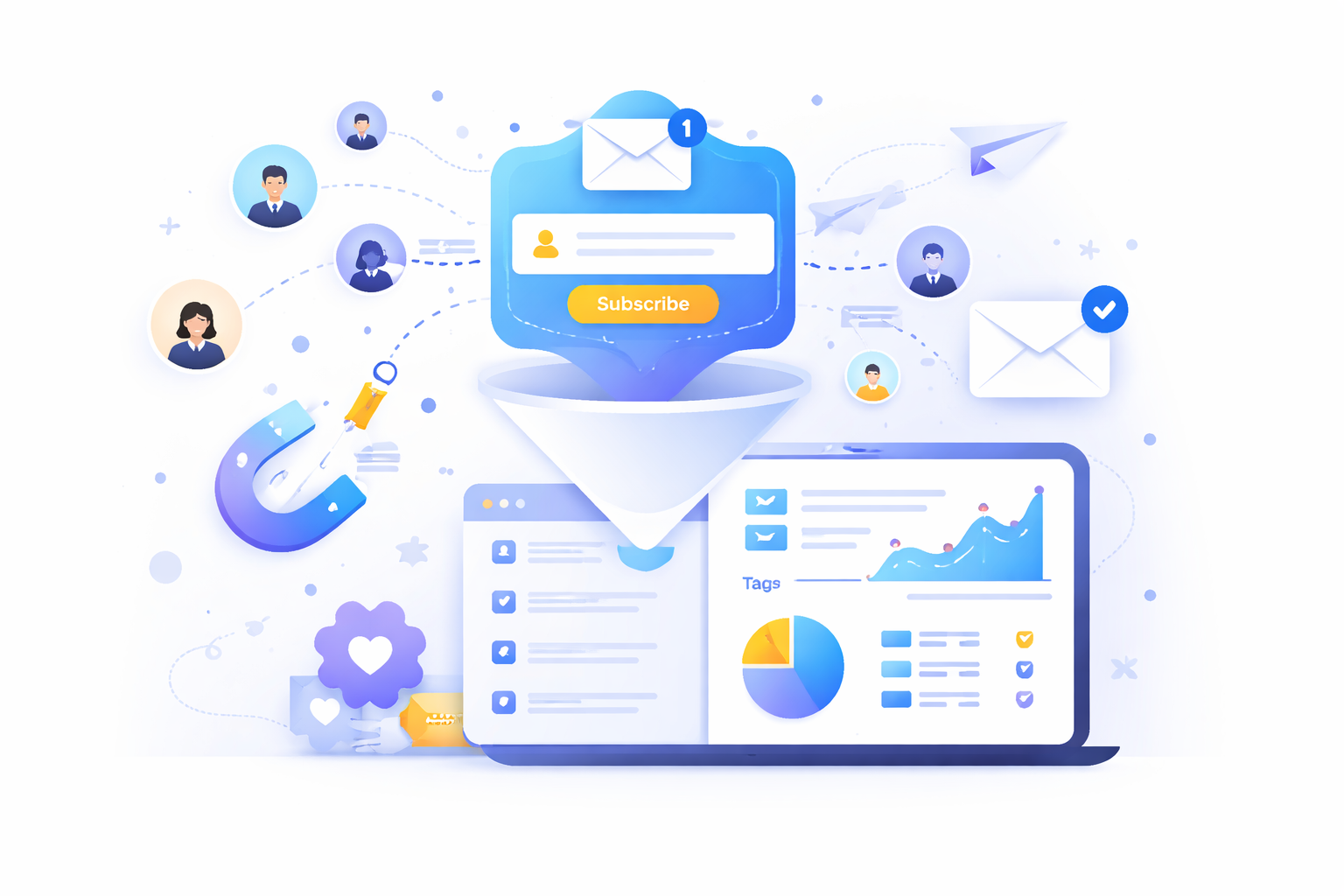
The biggest advantage of an email list for marketing is ownership. A social platform can cut your reach, raise your costs, or change what it rewards overnight, but a permission-based list gives you a direct line to people who explicitly asked to hear from you. That creates stability, and stability is what lets you compound results instead of starting over every quarter.
There is also a quality advantage. Google now treats marketing email as a category that needs cleaner infrastructure, clearer opt-outs, and better list management, while its subscription guidance recommends double confirmation, separate sending identities for subscription versus transactional messages, and honoring unsubscribes within 48 hours. In practice, that pushes marketers toward healthier lists made of interested subscribers rather than scraped or purchased contacts.
And yes, the commercial upside is real when the list is handled well. Litmus found that newsletters are among the highest-ROI email types for D2C brands and agencies, while Mailchimp’s reporting guidance keeps stressing that benchmarking open, click, and conversion performance is what turns email from a send-and-hope channel into a repeatable growth system. That is why strong operators treat list building as infrastructure, not as a side project.
Framework Overview
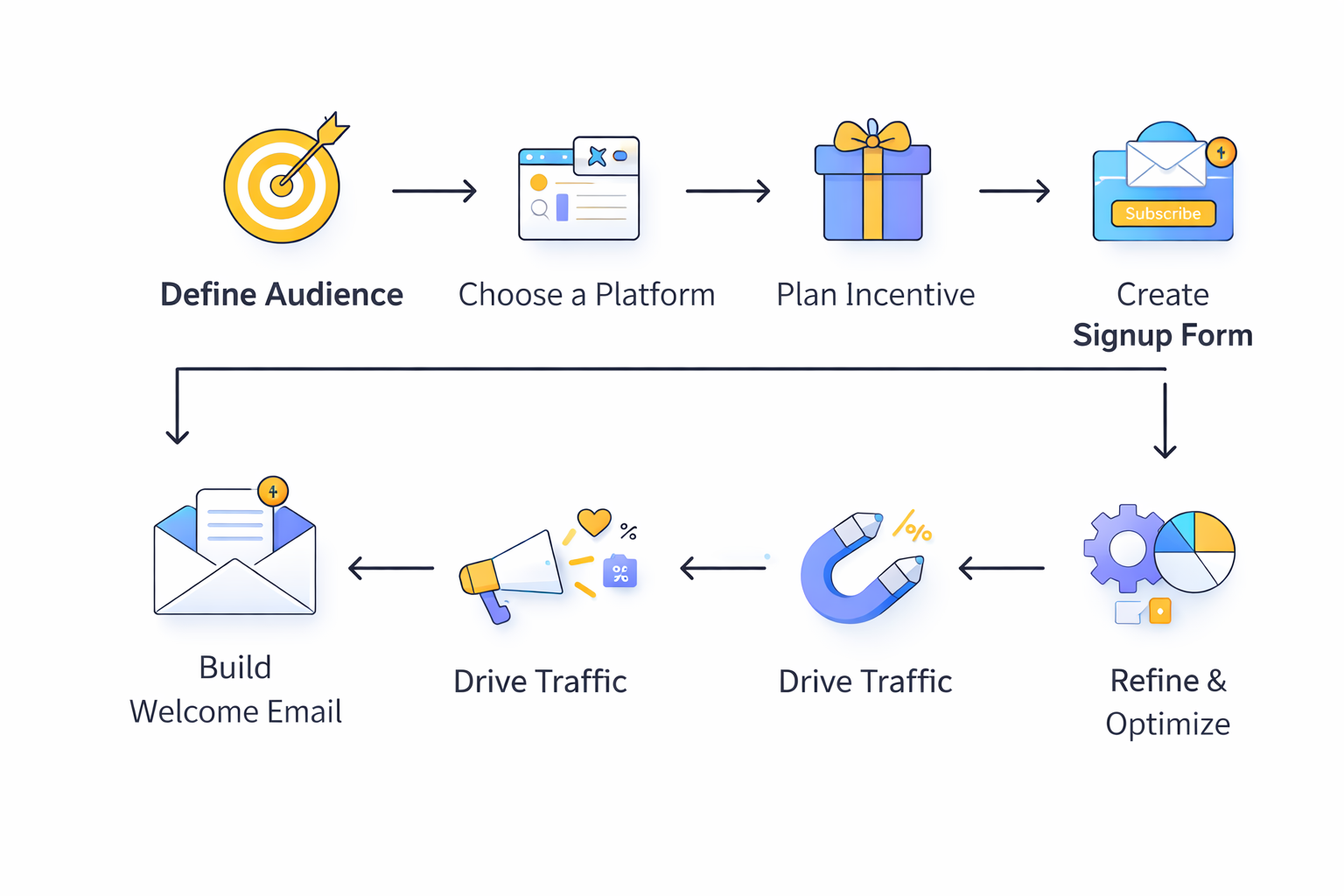
A practical framework for an email list for marketing starts with a simple sequence: attract the right person, earn the subscription, deliver immediate value, segment based on intent, and then automate the next best step. That sounds basic, but most weak email programs break because one of those steps is skipped. They either attract the wrong people, promise something vague, or send the same message to everyone until the list goes cold.
The stronger model is to think in layers. First comes acquisition, which includes the signup form, landing page, offer, and value proposition. Then comes activation, where the welcome sequence proves the subscriber made a smart choice. Only after that should you lean into promotion, because the inbox works best when trust is built before pressure is applied.
This framework also protects deliverability. Google’s sender documentation makes it clear that marketers should send only to people who want the messages, remove disengaged recipients over time, and avoid sudden volume spikes. So a good framework is not just better for conversions; it is also better for getting your campaigns delivered in the first place.
Core Components of a Healthy Marketing Email List
The first core component is permission. A marketing list only has real value when people knowingly joined it and understood what they were signing up for. That is one reason both Gmail’s subscription guidance and broader regulatory frameworks matter so much: Google recommends confirmed opt-in and clear unsubscribe handling, while the European Commission makes clear that if a business acquires contacts from another organization, it must be able to show the data was collected lawfully and may be used for direct marketing. That is a strong argument for building your own audience instead of buying one.
The second core component is structure. A good email list for marketing is segmented by source, intent, behavior, and stage, not dumped into one giant bucket. Klaviyo’s help documentation reflects this operational reality by emphasizing list growth reporting and source-level analysis, because once you know where subscribers came from and how they behave, you can stop treating every lead like they want the same thing.
The third core component is maintenance. The FTC’s guidance on commercial email says marketers must give recipients the right to stop receiving messages and comply with those requests, and Gmail adds a practical layer by warning that repeated spam complaints damage domain reputation. So list hygiene is not busywork. It is part compliance, part deliverability protection, and part profit discipline.
Professional Implementation
Professional implementation begins before the first campaign goes out. You need a signup path that makes a clear promise, a welcome flow that fulfills it quickly, and a sending setup that is technically sound from day one. That means authenticating your domain, separating marketing and transactional mail where appropriate, and making unsubscribe friction almost nonexistent, because that is exactly where mailbox providers and regulators are both heading.
From a tooling standpoint, the best setup is the one you will actually maintain. Many businesses start with platforms like Brevo, Moosend, or Systeme.io because they combine forms, automations, and campaign sending in one place, while teams building more aggressive lead-generation funnels often connect email capture to ClickFunnels. The tool can speed things up, but it cannot fix a weak offer, a muddy promise, or a list full of people who never really wanted your emails.
That is why professional implementation always comes back to process. Define exactly who the list is for, exactly what they will receive, exactly how often you will write, and exactly what should happen in the first 7, 14, and 30 days after signup. When an email list for marketing is run with that level of clarity, it stops feeling like another channel to manage and starts acting like a reliable revenue engine.
Start With Acquisition, Not Just Collection
The first stage in the framework is acquisition, and that is where a lot of email programs quietly go off the rails. Collecting an address is easy. Collecting an address from the right person, at the right moment, with the right expectation attached to it, is where the real work begins.
A strong acquisition layer makes a specific promise. Instead of asking visitors to “join our newsletter,” it gives them a clear reason to subscribe, whether that is product education, exclusive offers, early access, tools, or a genuinely useful sequence of insights. Google’s bulk email best-practices page explicitly recommends getting clear consent before sending commercial mail, which reinforces the same point: the healthiest email list for marketing starts with clarity, not tricks.
This is also where source quality matters more than raw volume. A subscriber who joins through a product quiz, a useful lead magnet, or a high-intent landing page usually behaves very differently from someone who was pushed into a vague pop-up with no real context. That is why many teams connect forms, landing pages, and opt-in offers through tools like ClickFunnels, Systeme.io, or Brevo so they can shape the signup experience around intent instead of treating every subscriber like a cold lead.
Activate New Subscribers Fast
Once somebody joins your list, the next job is activation. This is where you prove that subscribing was a smart decision, and you need to do it quickly because interest decays fast when there is no follow-through. A welcome sequence is not filler. It is the moment where trust either starts compounding or starts leaking away.
Klaviyo’s current welcome-flow guidance shows why this stage deserves more respect, with its 2025 benchmark data highlighting average open rates of 51% for welcome emails, with top-performing flows reaching 15% click rates and nearly 10% placed-order rates. Those numbers are strong because new subscribers are paying attention right after signup. If your first emails are generic, delayed, or overloaded with conflicting calls to action, you waste the exact window when people are most open to taking the next step.
The smartest activation sequences do three things well. They restate the value of the subscription, they show the subscriber what to do next, and they set expectations for what future emails will feel like. That may mean introducing your best content, surfacing your most relevant product category, inviting a reply, or moving the subscriber into a preference path that makes future segmentation easier.

Segment Before You Scale
The third layer is segmentation, and this is the point where an email list for marketing starts feeling professional instead of amateur. If everyone gets the same message, your list becomes noisy. If subscribers receive emails based on what they asked for, what they clicked, what they browsed, or where they are in the buying journey, the channel becomes far more relevant and far more profitable.
This is not theory anymore. Mailchimp’s case study on TravelOnline describes how the company improved performance by focusing on segmentation and engagement analytics, leading to a 66% improvement in open rates, a 38% reduction in unsubscribes, and a 13% improvement in email marketing ROI. That kind of result is exactly why segmentation belongs inside the framework from the beginning rather than being treated like an advanced tactic you add later.
In practical terms, the best early segments are usually simple. Separate subscribers by signup source, customer status, interest area, and engagement level first. Once that foundation is in place, you can build more nuanced paths, but you do not need a massive database to benefit from segmentation; you just need enough discipline to stop sending everything to everybody.
Use Automation to Maintain Momentum
Automation is the layer that keeps the framework moving after the first interaction. Without it, your list depends on manual effort, which means timing becomes inconsistent and important moments get missed. With it, subscribers receive the right follow-up when their intent is fresh, not two weeks later when the opportunity is gone.
That does not mean turning your email list for marketing into a robotic machine. It means deciding in advance what should happen after each important action: signup, browse, cart start, purchase, inactivity, referral, or re-engagement. Mailchimp’s case study on Willful describes how personalized automation flows helped increase conversion rates 18x, which is a strong reminder that automation works best when it is tied to customer behavior rather than to a calendar alone.
The key is to treat automation as momentum management. A welcome flow should lead somewhere. A content email should lead somewhere. A product click should lead somewhere. When every message is part of a thoughtful path, the list becomes easier to scale because you are no longer reinventing the journey every time you hit send.
Measure the System, Not Just the Send
The final piece of the framework is measurement, but not in the shallow way most marketers talk about it. Looking at one campaign open rate and one campaign click rate can tell you whether a send landed reasonably well. It cannot tell you whether the entire list-building system is getting stronger, weaker, or more expensive over time.
That is why serious operators track performance across the full lifecycle. They look at signup conversion rate, source quality, welcome-sequence engagement, unsubscribe pressure, spam complaints, revenue by segment, and reactivation rates alongside campaign metrics. Mailchimp’s benchmarking documentation explains that comparing your results against hundreds of millions of emails to build peer benchmarks helps marketers identify whether performance issues are isolated or systemic, which is exactly the mindset a framework requires.
When you measure the system instead of individual sends in isolation, decision-making gets cleaner. You stop obsessing over vanity spikes and start improving the sequence that actually creates revenue. That is how an email list for marketing stops being “a bunch of contacts” and becomes a growth asset that gets smarter over time.
Permission and Source Integrity
The first component is permission, and this is the one that separates a real email asset from a future deliverability problem. People need to know what they are signing up for, why they are receiving your messages, and how easy it will be to leave if the fit is wrong. That sounds obvious, but a surprising number of email programs still rely on vague forms, bundled consent, or contacts pulled in from places that were never built for marketing in the first place.
A stronger approach starts with source integrity. Google’s subscription guidance recommends confirmed opt-in, clear expectations about message frequency, and unsubscribe requests handled within 48 hours, while the European Commission makes clear that when a company uses data obtained from another party, it must be able to show that the information was collected lawfully and may be used for direct marketing under the relevant rules. That is why building your own list usually beats buying or inheriting one, even when the purchased shortcut looks tempting.
The practical takeaway is simple: know exactly where every subscriber came from. If you cannot explain the source, the consent path, and the promise attached to that signup, then that contact should not be treated like a trusted part of your audience. An email list for marketing only becomes valuable when every address on it represents a real relationship that began on clear terms.
Segmentation and Intent Data
The second component is segmentation, but not in the lazy sense of creating endless tiny buckets just because your platform allows it. Good segmentation starts with understanding intent. Why did this person join, what were they trying to solve, and what behavior have they shown since then?
This is where a healthy list starts to feel smarter. Someone who signed up through a product demo page should not receive the same path as someone who downloaded an educational guide, and someone who bought twice last month should not be treated like a cold lead. Mailchimp’s story on TravelOnline shows why this matters in the real world: the company used segmentation and engagement analytics to deliver a 66% lift in open rates, a 38% drop in unsubscribes, and a 13% improvement in email marketing ROI.
That kind of performance does not come from guessing. It comes from attaching data to behavior and then acting on it consistently. The best email list for marketing is not the one with the most subscribers; it is the one where you can tell who is curious, who is ready, who is loyal, and who is drifting away before the damage becomes expensive.
List Hygiene and Deliverability
The third component is hygiene, and this is the one marketers postpone until results start slipping. By then, the list is often carrying too many inactive contacts, too many questionable signups, and too many people who should have been suppressed long before the latest campaign went out. Poor hygiene does not just hurt engagement metrics. It can change how mailbox providers view your entire domain.
That is why deliverability and hygiene belong in the same conversation. Google’s email sender requirements tie sender reputation to recipient behavior, and Klaviyo’s recent deliverability guidance stresses that strong inbox placement depends on sending to engaged recipients, maintaining clean consent practices, and removing people who consistently do not interact. The FTC’s compliance guide adds the legal side of the equation by requiring marketers to offer a clear opt-out and honor unsubscribe requests promptly, which makes hygiene a compliance issue as well as a performance issue.
In practical terms, list hygiene means pruning without emotion. Remove invalid addresses. Watch complaint signals closely. Build re-engagement attempts for people who may still want to hear from you, but stop forcing messages onto contacts who have gone quiet for months and shown no sign of interest. A cleaner email list for marketing almost always performs better because it is no longer dragging dead weight into every send.
Message Fit and Value Density
The fourth component is what I would call message fit. Even if your list is permission-based and beautifully segmented, it will still underperform if the content does not match the reason people subscribed. This is where marketers often overcomplicate things. They obsess over clever copy while ignoring the bigger question: does this email feel useful, timely, and relevant to the person receiving it?
Value density matters more than volume. A shorter email that solves a problem, points to the right next step, or gives a subscriber a strong reason to act will outperform a longer email stuffed with weak points and generic promotion. Mailchimp’s industry benchmark resource keeps pointing marketers back to open rates, click performance, unsubscribe levels, and conversion behavior because those signals reveal whether your content is landing as helpful communication or as inbox clutter.
This is also where your brand voice starts earning its keep. An email list for marketing responds better when the writing sounds clear, direct, and genuinely useful rather than overly polished and vague. People stay subscribed when your emails respect their attention and consistently make good on the promise that got them onto the list in the first place.
Cadence, Expectations, and Trust
The fifth component is cadence, and this is less about sending more or less than it is about sending in a way that feels coherent. Subscribers should know what kind of rhythm to expect from you. If your frequency changes wildly, or if every message suddenly turns promotional after somebody subscribed for education, trust starts breaking even before the unsubscribe happens.
That is one reason Google’s subscription best practices emphasize clearly setting expectations during signup about the kind of mail people will receive and how often they will get it. When your cadence matches your promise, the relationship feels stable. When it does not, even a technically compliant program can feel spammy from the subscriber’s point of view.
Trust compounds when the pattern makes sense. A welcome sequence should feel like a guided beginning, not a sudden sales ambush. Regular campaigns should reinforce why the subscriber is still on the list. Promotional pushes should show up as part of a relationship, not as an interruption from a sender who only appears when it wants something. That is how an email list for marketing stays commercially effective without wearing out its audience.
Technology and Operational Control
The final core component is operational control, which is the layer many businesses do not think about until they try to scale. The platform matters because it affects forms, automation, suppression rules, segmentation logic, reporting, and how quickly your team can act on what the data is telling you. But technology only helps if it supports a clear process.
That is why the best tool is usually the one that lets you manage the full lifecycle cleanly, from opt-in to onboarding to segmentation to suppression. Some teams keep things lean with platforms like Brevo or Moosend, while others build funnel-first acquisition paths through ClickFunnels or broader all-in-one systems like Systeme.io. The tool choice matters, but not nearly as much as whether it helps you preserve source quality, execute segmentation, automate the right follow-up, and protect the health of the list over time.
That is the bigger point of this whole section. A strong email list for marketing is never just a collection of contacts. It is a managed system built on permission, relevance, hygiene, trust, and operational discipline. Get those core components right, and everything that comes next becomes easier to optimize.
Statistics and Data
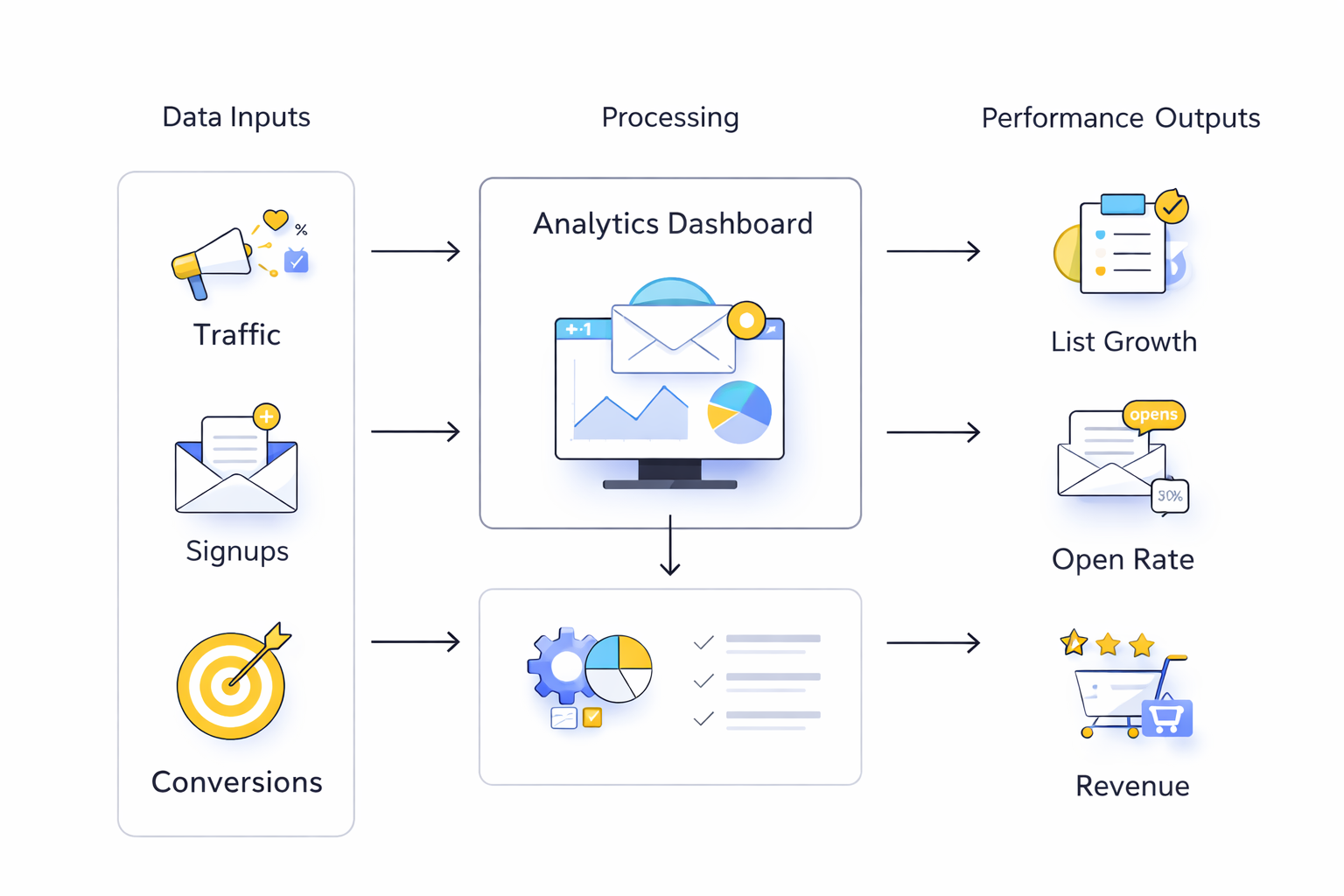
If you want to improve an email list for marketing, you need to stop treating data like decoration. Metrics are not there to make reports look impressive. They tell you whether your list is healthy, whether your message matched the moment, and whether the people joining your audience are actually the people you hoped to reach.
This is why strong operators watch patterns instead of chasing one lucky campaign. A beautiful open-rate spike can hide weak clicks, poor conversion quality, rising unsubscribes, or a list source that looked good at the top of the funnel and then quietly fell apart. The numbers only become useful when you connect them to decisions.
Email still earns that level of attention because the commercial upside is hard to ignore. Litmus reported in 2025 that 35% of marketers saw returns between $10 and $36 for every $1 spent on email, 30% reported $36 to $50, and 5% reported more than $50. That does not mean every list performs like that, but it does explain why businesses keep refining the data side of email instead of walking away from the channel.
Which Metrics Actually Matter
The first thing to understand is that not all email metrics deserve equal weight. Open rates can still be directionally useful, but privacy changes and image-loading behavior make them less reliable as a stand-alone signal than they once were. That means a serious email list for marketing should be judged through a wider lens: click rate, click-to-open rate, conversion rate, unsubscribe rate, spam complaints, bounce rate, revenue per recipient, and long-term engagement by segment.
Mailchimp’s current benchmark library keeps this broader perspective front and center by encouraging marketers to compare open rates, click performance, bounce behavior, and unsubscribe levels by industry instead of relying on one metric in isolation. HubSpot’s current statistics roundup also notes that for B2C brands, email remains one of the highest-ROI marketing channels, which is exactly why the quality of your measurement framework matters so much. If the channel is that valuable, weak measurement is expensive.
The healthiest mindset is to separate signal from vanity. A click shows curiosity. A conversion shows movement. A spam complaint shows friction. A rising unsubscribe rate tells you the promise and the experience are starting to drift apart. That is the story the numbers are trying to tell you.
Benchmark Data for Context
Benchmarks matter because performance feels different when it has context. A 25% open rate can be disappointing in one niche and excellent in another. A 2% click rate can be weak for a warm welcome flow and perfectly respectable for a broader promotional campaign. Without context, marketers either panic too early or get comfortable too fast.
That is why benchmark libraries are useful when you read them with some maturity. Mailchimp’s latest industry data shows there is no single universal “good” number because sectors behave differently, while Klaviyo’s current benchmark resources are built around performance comparisons across thousands of customer flows and its broader 2025 benchmark materials draw from billions of emails and messages across multiple industries. In other words, the benchmark is the start of the conversation, not the answer.
For a practical email list for marketing, benchmark data should do two things. First, it should help you spot whether you have a real problem or just normal variation. Second, it should push you toward the next question, which is always more useful: why is this number moving, and what changed upstream to create that shift?
Source Quality Shows Up in the Data
One of the most revealing truths in email marketing is that list quality shows up in the numbers long before most people admit the acquisition process is flawed. When subscribers come in through a strong offer with a clear promise, engagement tends to hold up better. When they come in through vague opt-ins, friction-heavy popups, or low-intent giveaways, the decay usually arrives much faster.
That is why the best analysis for an email list for marketing starts before the campaign is sent. Break performance down by source. Compare subscribers from content downloads, free trials, webinars, quizzes, checkout opt-ins, referral programs, and product pages separately. Once you do that, you often discover that the “email problem” is really a lead-quality problem wearing an email costume.
Google’s current subscription guidance reinforces this logic from the deliverability side by recommending double confirmation, clear consent, and fast unsubscribe handling. Clean sourcing does not just improve the top of the funnel. It improves sender trust, protects reputation, and creates more stable data over time because the people on the list actually intended to be there.
Engagement Metrics Tell You Where the Friction Is
Once the source is clear, engagement metrics help you locate friction. If open rates are solid but clicks are weak, the subject line may be working while the body copy or offer fails to carry the momentum. If clicks look healthy but conversions lag, the landing page, form, pricing page, or checkout step may be killing the result after the email does its job. If unsubscribes rise after a sequence change, the issue may be relevance or cadence rather than creative quality.
This is where a lot of marketers make bad calls because they react to the most visible number instead of the most meaningful one. A subject line test that lifts opens but attracts the wrong kind of attention can make the rest of the funnel worse, not better. A smaller click number tied to stronger downstream conversions can be a huge win if it is attracting the right people instead of just more curious people.
Mailchimp’s benchmarking tools and reporting resources are useful here because they push marketers to compare their own metrics against broader peer performance rather than treating every fluctuation like an emergency. That kind of discipline keeps you from optimizing the wrong stage of the journey.
Real Case Studies That Prove the Point
The numbers become a lot more meaningful when you see what happens in real businesses. TravelOnline did not improve performance by magic, and it did not happen because somebody wrote one clever subject line on a good day. The company was dealing with a crowded email environment where deliverability pressure and message fatigue could have easily turned the channel into background noise.
The backstory matters because the business already had a large volume of communication moving through the system. That meant there was enough activity to generate data, but also enough friction for underperformance to hide in plain sight. A list can look active from a distance and still be far less efficient than it should be.
The wall came when broad sending and limited insight stopped being good enough. If you do not understand which segments are engaging, which domains are responding well, and where unsubscribes are clustering, you run out of obvious levers. You can keep sending more, but you do not really know what is working.
The breakthrough came through segmentation and engagement analysis. Mailchimp’s TravelOnline case study explains that the company used tags, benchmark reporting, and domain-level performance insights to sharpen its email operation, which helped produce a 66% improvement in open rates, a 38% drop in unsubscribes, and a 13% lift in ROI. That is exactly what good data is supposed to do: it turns a vague problem into specific moves.
Another strong example comes from Willful, where the tension looked different but the lesson was similar. The company had users dropping out partway through a sensitive process tied to estate planning, which meant timing and trust were everything. A generic blast approach was not enough to bring people back when hesitation, complexity, and emotion were part of the customer journey.
The company’s progress came when automation and behavior-based follow-up replaced less targeted communication. Mailchimp’s case study explains that automated emails improved conversion rates 18x compared with previous mass communications, which is a powerful reminder that the best data work does not just measure the list. It helps reshape the journey in a way that fits human behavior.
Deliverability Metrics Are Business Metrics
Too many teams still treat deliverability as a technical side issue instead of a revenue issue. That is a mistake. If mailbox providers do not trust your domain, your best copy, your best offer, and your best segmentation work all become less effective before the subscriber ever sees the message.
Google’s sender rules make this very concrete by requiring bulk senders to use SPF, DKIM, and DMARC, support one-click unsubscribe, and keep reported spam rates under the thresholds Gmail expects. That means complaint rates, bounce patterns, unsubscribe behavior, and sender authentication are not just technical housekeeping. They are core performance data for any email list for marketing that expects to stay visible in the inbox.
This is also why cleaning your list can improve revenue even when it shrinks the audience. If you remove disengaged contacts, suppress poor-quality sources, and stop forcing sends to people who stopped caring months ago, your surface-level list size may go down. But inbox placement, engagement efficiency, and revenue quality often get stronger because the channel is finally aligned with trust instead of sheer volume.
How to Read the Dashboard Like an Operator
The smartest way to read your dashboard is to move from top-line numbers to root causes. Start with list growth, engagement, conversions, unsubscribes, complaints, and revenue by segment. Then ask what changed in acquisition, messaging, timing, frequency, landing pages, or technical setup that could explain the movement.
That habit changes everything. Instead of asking whether an email list for marketing is “doing well,” you start asking which sources are producing the best long-term subscribers, which sequences are creating actual buying intent, which campaigns are accelerating fatigue, and which segments deserve more attention. That is how data becomes operational instead of decorative.
And once you start looking at email this way, you stop making random tweaks. You begin making informed bets. That is the real power of statistics and data in email marketing: they help you see the difference between activity and progress, and that difference is where the money usually is.
Analytics and Optimization
Once your email list for marketing is built, the real game becomes optimization. This is where a lot of businesses lose momentum because they think growth comes from sending more often, writing punchier subject lines, or adding more automation for the sake of it. In reality, optimization is about making the list cleaner, the message sharper, and the path from signup to sale more intentional.
The brands that keep winning with email are usually not the ones doing the loudest things. They are the ones paying attention to what the data is really saying, protecting deliverability before it becomes a crisis, and improving each stage of the subscriber journey without wrecking the trust they worked hard to earn. That is what turns an email list for marketing from a channel you “use sometimes” into a system that compounds.
This is also where discipline beats creativity alone. Google’s sender guidance still makes it clear that bulk senders need strong authentication, one-click unsubscribe, and low spam complaint rates, which means optimization is not just about higher clicks or better conversion pages. It is also about staying welcome in the inbox.
Optimize for Subscriber Quality, Not Just Growth
The first optimization lever is subscriber quality. A lot of marketers brag about list growth without asking whether the new people joining are actually likely to buy, engage, or stick around. That is a dangerous blind spot because a bigger list can easily become a weaker asset if it is filled with low-intent signups who never wanted the emails in the first place.
The smarter move is to evaluate growth by source quality over time. Compare how subscribers from different forms, landing pages, offers, webinars, and checkout flows behave after 30, 60, and 90 days. If one source produces strong click activity, lower unsubscribe pressure, and more downstream revenue, that source deserves more attention even if it adds fewer total contacts than a broader but weaker lead magnet.
This is one reason modern platforms put so much emphasis on source-level reporting and lifecycle analysis. Klaviyo’s current benchmark materials are built around insights from billions of messages across industries, and that kind of scale reinforces a simple truth: list quality beats list size when the goal is sustainable revenue.
Use Testing to Answer Real Questions
Testing is valuable, but only when it answers a meaningful question. Too many teams run A/B tests that produce interesting-looking results without changing any important decision. If you test subject lines without understanding whether the winning line led to stronger clicks, better conversions, or worse unsubscribe behavior, you may end up optimizing for attention instead of business outcomes.
A stronger testing culture starts with better questions. Does a clearer lead-in attract more qualified clicks than a curiosity-based hook? Does a tighter welcome email move more people into the next step than a longer founder story? Does sending based on behavior outperform sending by calendar rhythm for a specific segment? Those are the kinds of tests that improve an email list for marketing because they sharpen the journey, not just the surface.
Litmus keeps stressing the value of testing and analytics as part of stronger email ROI, and that framing matters. Testing is not there to entertain the team. It is there to reduce guesswork and help you make better bets with each send.
Improve Automations Before Adding More Campaigns
One of the fastest ways to strengthen an email list for marketing is to improve the automated flows people already move through. A welcome series, browse follow-up, abandoned cart sequence, onboarding series, or reactivation flow keeps working long after the campaign calendar has moved on. When those sequences are weak, you are leaking value every day, even if your one-off campaigns look decent.
That is why mature teams often optimize flows before increasing campaign volume. Mailchimp’s case study on Willful shows how automated emails helped lift conversion rates 18x compared with its previous mass communications, which is a huge reminder that relevance and timing matter more than brute frequency. A well-timed automated email tied to real behavior is often worth more than another general blast to the whole list.
So before you add more sends to the calendar, audit the path subscribers already take. Look at where they stall, where they click but do not convert, where they unsubscribe, and where the handoff between education and promotion feels abrupt. That is usually where the biggest gains are hiding.
Reactivate Carefully or Let Go
Every list eventually accumulates quiet subscribers. Some of them are still interested but distracted. Others have mentally unsubscribed without taking the final step. The mistake is treating both groups the same and continuing to blast them indefinitely as if repeated exposure will solve the problem.
A better approach is to build a controlled reactivation strategy. Send a short sequence to inactive subscribers with a clear reason to re-engage, a direct preference option, and an easy way out. If they ignore the sequence, respect the signal and suppress them rather than dragging dead weight into future campaigns.
This is not just a cleanliness move. It protects your sender reputation. Google’s sender FAQ explains that spam rates above 0.1% already hurt inbox delivery and 0.3% or higher has an even greater negative effect, which means sending too aggressively to disengaged people can cost you visibility with the subscribers who still want your emails.
Segment by Behavior, Not Just Demographics
As an email list for marketing matures, behavior becomes a better guide than static profile data alone. Demographics can help with broad positioning, but behavior tells you what somebody is actually doing right now. That makes it far more useful for deciding what to send next.
Segmenting by clicks, purchase history, browsing patterns, time since last engagement, and signup source gives you a far more accurate picture of intent. TravelOnline’s results are a good example of why that matters. Mailchimp’s case study explains that stronger segmentation and deeper reporting helped the company achieve a 66% lift in opens, a 38% reduction in unsubscribes, and a 13% gain in ROI, which is what happens when messaging begins to reflect real audience behavior instead of a generic assumption.
This is also where many marketers finally stop overmailing the wrong people. Once you segment around current behavior, you do not need to keep hammering inactive contacts with the same message everyone else receives. You can slow down, personalize, suppress, or redirect based on evidence rather than habit.
Build a Reporting Rhythm That Drives Action
Optimization falls apart when reporting is inconsistent. If the team looks at campaign data only when something goes wrong, the list becomes reactive. If reporting is too broad, nobody sees the upstream problems that are quietly shaping performance. The goal is to create a simple rhythm that connects weekly observations to monthly decisions.
That means reviewing list growth by source, campaign engagement, flow performance, unsubscribe pressure, complaint trends, and revenue by segment on a schedule that forces clarity. Mailchimp’s benchmarking resources are useful because they keep marketers anchored to context around opens, clicks, bounces, and unsubscribes instead of letting one number dominate the conversation. Once that reporting rhythm is in place, optimization becomes less emotional and more operational.
The real value of reporting is not that it tells you what happened. It tells you what deserves action next. That could mean rewriting a welcome email, pulling back frequency for one segment, improving a landing page, or dropping a weak lead source that keeps polluting the list. When the dashboard leads to action, the list gets stronger.
Protect Trust While You Scale
Scaling an email list for marketing can be exciting, but it also creates temptation. More volume can make weak practices look efficient for a while. You may be tempted to broaden targeting, loosen the opt-in language, send more aggressively, or keep unengaged contacts around just to make the list look bigger. That usually works right up until it stops working.
The better long-term approach is to scale without breaking trust. Keep the signup promise clear. Keep unsubscribe friction low. Keep the cadence coherent. Keep segmentation tied to relevance. And keep the technical side strong enough that mailbox providers can see you are operating like a responsible sender, not a desperate one.
That is the deeper truth behind optimization. It is not about squeezing every last click out of the list. It is about making the channel more useful, more trusted, and more commercially reliable over time. When you do that well, your email list for marketing becomes harder for competitors to copy because it is built on a relationship, not just a database.
Ecosystem, Compliance, and Next Steps

By this point, the bigger picture should be clear. An email list for marketing is not just a form on a website, a welcome sequence, or a weekly newsletter. It is an ecosystem made up of acquisition, consent, deliverability, segmentation, automation, analytics, and trust, and when one of those pieces starts slipping, the whole system feels it.
That is exactly why so many businesses underperform with email even when they have decent products and decent traffic. They focus on surface-level tactics while ignoring the operating conditions that decide whether messages land, whether subscribers stay engaged, and whether the list becomes more valuable over time. Google’s current guidance keeps pushing the industry in that direction by requiring bulk senders to use authentication, easy unsubscribes, and complaint control, while Google’s subscription standards also expect senders to process unsubscribe requests within 48 hours and implement one-click unsubscribe correctly.
So the smart next step is not “send more email.” It is to tighten the system. Clean up how people join, strengthen what happens right after signup, segment more intelligently, suppress people who have gone cold, and keep measuring the health of the whole channel instead of chasing one flashy metric. When you do that, an email list for marketing becomes one of the most resilient assets in your business.
FAQ for a Complete Guide
What is an email list for marketing, really?
An email list for marketing is a permission-based audience you can reach directly through email to educate, nurture, and sell. The key phrase there is permission-based, because a list only becomes valuable when people knowingly subscribed and understand what they will receive. Google’s bulk email best-practices page still recommends getting clear consent before sending commercial email, which is a good baseline for thinking about what a real marketing list should be.
Should you ever buy an email list?
No, and not just for ethical reasons. Purchased lists usually create weak engagement, high complaint rates, and poor sender reputation, which can hurt your ability to reach even the subscribers who actually want your messages. The FTC’s CAN-SPAM business guide makes it clear that marketers are still responsible for giving recipients a way to opt out and honoring those requests, but legal compliance alone does not make a bought list a smart growth strategy.
How quickly should you email a new subscriber?
As fast as possible while the intent is still fresh. A welcome email or welcome sequence works best when it arrives soon after signup because that is the moment when attention is highest and the subscriber is most likely to remember why they joined. Klaviyo’s recent welcome-flow benchmarks highlight just how strong early engagement can be, with average open rates around 51% for welcome emails, which is why delaying that first response is such a waste.
How often should you email your list?
There is no universal number that works for every business. The better question is whether your frequency matches the promise you made at signup and whether the emails remain relevant enough that subscribers still want them. If your cadence is inconsistent or overly aggressive, the pressure usually shows up in unsubscribes, lower clicks, or higher complaints long before somebody on the team admits the rhythm is off.
Which metrics matter most for an email list for marketing?
Open rates can still be directionally useful, but they are only one piece of the picture. A stronger reporting stack includes click rate, click-to-open rate, conversion rate, unsubscribe rate, complaint rate, bounce rate, and revenue per recipient or per segment. Mailchimp’s reporting guidance explains why marketers should benchmark open rates, clicks, and related performance metrics in context, because one number on its own rarely tells the full story.
What counts as a good open rate?
That depends on the industry, audience quality, and type of email you are sending. A welcome email, a product launch, and a regular newsletter should not all be judged the same way. Mailchimp’s current reporting resource notes that the average open rate across industries sits at 21.33%, but that number is only useful when you compare it with your own source quality, segmentation, and campaign purpose.
How important is deliverability?
It is critical, because undelivered or spam-foldered emails do not get a chance to perform at all. Google’s sender FAQ says bulk senders should keep user-reported spam rates below 0.1% and avoid reaching 0.3% or higher, which makes deliverability a business issue, not just a technical issue. If mailbox providers do not trust your sending behavior, every other part of your email strategy becomes less effective.
Do you need one-click unsubscribe?
Yes, if you are sending marketing or subscription-style email at scale, you should treat one-click unsubscribe as standard practice. Google’s current sender requirements state that if you send more than 5,000 messages per day, your marketing and subscribed messages must support one-click unsubscribe. Even if you are below that threshold, making it easy to leave is still smart because it protects trust and reduces the chance that frustrated recipients use the spam button instead.
Should you use double opt-in?
For many businesses, yes. It adds a little friction at the front end, but it often improves source quality and reduces fake, mistyped, or low-intent signups. Google’s subscription guidance recommends that senders make sure recipients explicitly agreed to receive the messages and keep records of consent, and a confirmed subscription process makes that much easier to prove and maintain.
What tools are worth looking at?
The right tool depends on your business model, your technical comfort, and how much of the journey you want in one place. Teams that want an all-in-one setup often look at Brevo or Systeme.io, while marketers who want a simpler email platform may prefer Moosend. If you are building more aggressive lead-generation funnels and want tighter control over the opt-in path, ClickFunnels is often part of that stack.
How do you clean an old list without hurting revenue?
Start by identifying inactive contacts, invalid addresses, risky sources, and subscribers who have ignored your emails for an extended period. Then run a short reactivation sequence, give people a clear chance to stay, and suppress the ones who do not respond. It may feel painful to shrink the list, but a cleaner email list for marketing usually performs better because your engagement signals improve and your reputation stops getting dragged down by people who checked out months ago.
Can a small business still win with email today?
Absolutely, and in some cases smaller businesses have an advantage because they can build a more focused list and communicate with more personality. Litmus reported in 2025 that email continues to generate strong returns for many marketers, with a large share reporting double-digit revenue multiples for every dollar spent. The key is not acting like a giant brand. It is building a list that is cleaner, more relevant, and more trusted than what most competitors are sending.
Work With Professionals
If you are serious about building an email list for marketing that actually grows your business, there is a point where guessing gets expensive. The difference between a list that quietly converts and a list that slowly burns out usually comes down to execution: cleaner acquisition, sharper offers, better segmentation, stronger automation, and tighter deliverability control. That is why working with people who understand both the creative side and the operational side can save a huge amount of wasted time.
It also matters if you are a marketer selling these skills. Businesses are actively looking for people who can build better funnels, write better nurture sequences, improve inbox placement, and turn email into a revenue engine instead of an afterthought. In other words, if you know how to make an email list for marketing perform, that skill is marketable right now.
Explore 10K+ Remote Marketing Contracts on MarkeWork.com
Most marketers spend too much time chasing clients, competing on crowded platforms, and losing a percentage of every project to middlemen.
MarkeWork gives you a better way. Browse thousands of remote marketing contracts and connect directly with companies desperate to hire skilled marketers like you without platform commissions and without unnecessary gatekeepers.
If you are serious about finding better opportunities and keeping 100% of what you earn, you can explore available contracts and create your profile for free at MarkeWork.com.
 Filip Konecny Enterprises