

SEO Optimization: What Matters Now and How to Build the Right Framework
SEO optimization still gives you one of the clearest paths to compounding growth, but the way you win has changed. Search is no longer just ten blue links and a few ads. Google has expanded AI Overviews to more than 200 countries and territories in over 40 languages, while newer search experiences such as AI Mode are pushing site owners to think beyond rankings and focus on visibility, trust, and usefulness.
That is exactly why SEO optimization cannot be treated as a bag of tricks anymore. Google’s own people-first content guidance, its ranking systems documentation, and the latest page experience guidance all point in the same direction: the sites that keep winning are the ones that are easy to crawl, easy to trust, and genuinely useful to real people.
In this first part, we are going to set the foundation. You will see why SEO optimization still matters, what a modern framework looks like, which core components deserve the most attention, and how professionals actually turn all of that into a system that keeps producing results instead of random spikes.
Article Outline
- Why SEO Optimization Matters
- Framework Overview
- Core Components
- Professional Implementation
- Measurement and Analytics
- The Future of SEO Optimization and FAQ
Why SEO Optimization Matters

SEO optimization matters because it sits at the moment when demand becomes discoverable. A person has a problem, asks a search engine a question, and decides within seconds which result feels credible enough to trust. If your site does not show up there, or shows up with weak messaging, slow pages, or thin content, the opportunity usually goes somewhere else.
That matters even more now because search behavior is getting more layered, not less. Google is blending classic search results with AI-generated summaries, follow-up search paths, and richer results, yet research from BrightEdge still shows that organic search remains the primary driver of traffic and conversions for most brands, even as AI search grows. The practical takeaway is simple: strong SEO optimization is still the foundation, but it now has to earn visibility in a more competitive and more sophisticated results page.
There is also a business reason people often overlook. Paid traffic stops when budgets tighten, but a well-built search presence can keep bringing in qualified visitors long after the page is published. That does not mean SEO optimization is free, because it takes research, technical discipline, and editorial effort, but it does mean the payoff compounds in a way that many other channels simply do not.
Framework Overview
A modern SEO optimization framework works best when you stop thinking in isolated tasks and start thinking in connected layers. The first layer is discoverability, which means Google can crawl, understand, and index the right pages. The second layer is relevance, which means your content actually matches what the searcher is trying to do. The third layer is experience, which means the page is trustworthy, fast enough, easy to use, and persuasive once the visitor arrives.
Google’s explanation of how Search works makes this sequence clear. A page has to be found, processed, understood, and evaluated before it can compete well. That is why strong SEO optimization starts with site architecture and technical clarity, moves into content strategy and internal linking, and then finishes with measurement through tools such as the Performance report in Search Console, the Page Indexing report, and the Crawl Stats report.
When people skip the framework and jump straight to keywords, they usually create pages that look optimized but are hard to sustain. They publish content without a clear topical structure, chase impressions instead of outcomes, and never diagnose whether the real problem is crawling, intent mismatch, weak trust signals, or poor conversion design. A framework fixes that by forcing every page to earn its place in a larger system.
Core Components
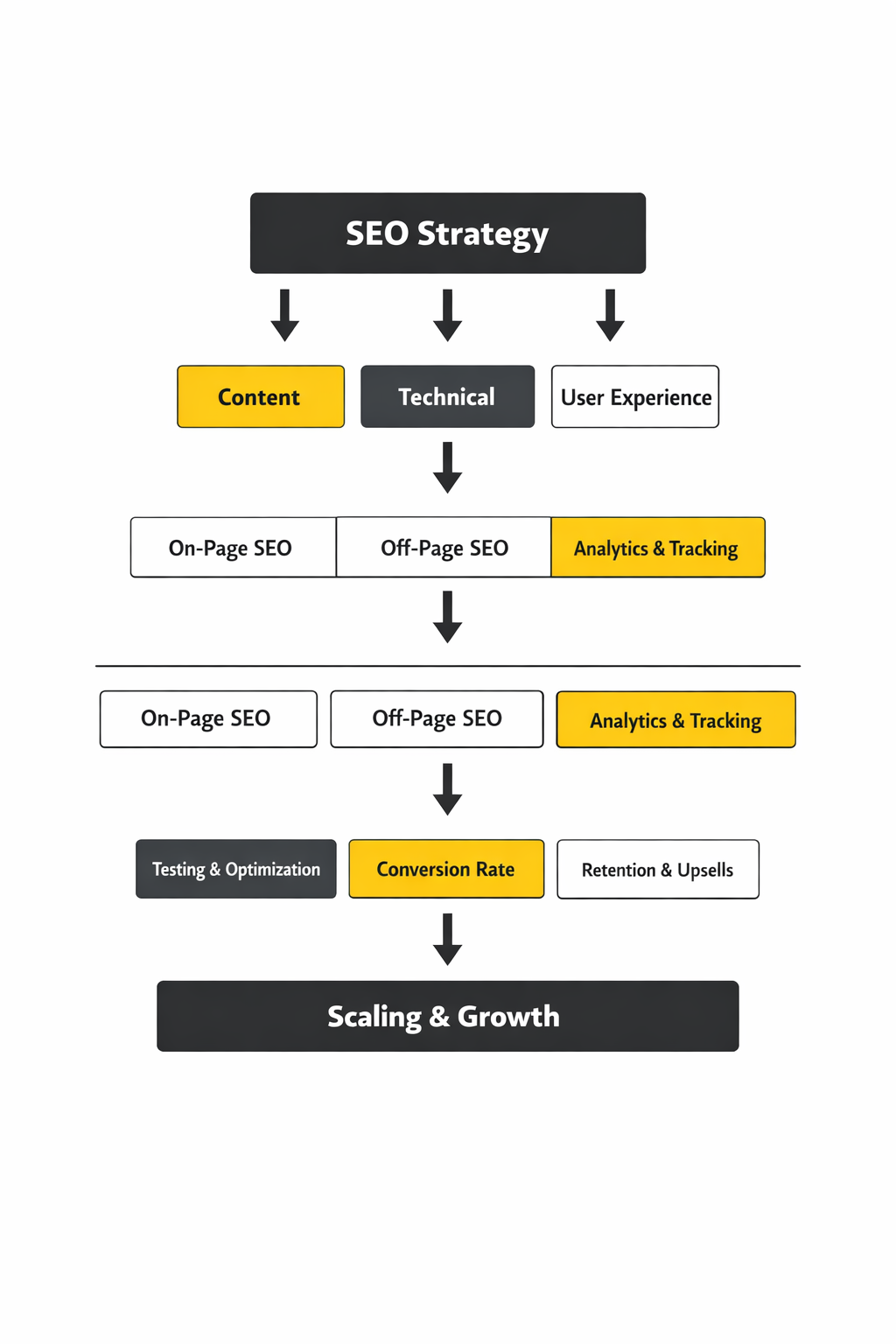
The first core component is technical clarity. Google repeatedly emphasizes in its SEO guide for web developers and crawling and indexing documentation that search engines need clean architecture, crawlable links, and predictable signals. If navigation is broken, internal links are weak, canonicals are messy, or important pages are buried, even excellent content will struggle.
The second core component is intent-driven content. The job is not to repeat a keyword as many times as possible. The job is to understand whether the searcher needs a definition, a comparison, a workflow, a category page, a tool, or proof that your business can solve the problem better than anyone else. That is why Google’s SEO Starter Guide and its helpful content guidance keep pulling site owners back toward useful, original, substantial pages instead of content built only to manipulate rankings.
The third core component is user experience. Google’s guidance on Core Web Vitals and real-user measurement makes the point well: good performance is not a vanity metric, because speed, stability, and responsiveness shape whether people stay, trust what they see, and move deeper into your site. In practice, strong SEO optimization happens when technical health, useful content, and user experience reinforce each other instead of competing for attention.
Professional Implementation
Professional implementation begins with prioritization, not with publishing volume. The smartest teams decide which pages matter most, map them to high-value intent, and then improve the entire path around those pages: the internal links pointing to them, the metadata that frames them in search results, the structure that helps Google understand them, and the conversion path that turns search demand into revenue. That is a very different mindset from posting more content and hoping something catches on.
It also means using the right stack for the right job. If your search pages need stronger conversion paths, a focused landing page funnel builder or a leaner all-in-one marketing platform can make the jump from traffic to lead much smoother. If your team needs cleaner data collection or lead capture, a flexible form workflow setup and an email platform such as Brevo can support the follow-up systems that turn rankings into actual business outcomes.
For content-heavy operations, professional SEO optimization also depends on workflow discipline. Teams often need structured publishing calendars, repeatable content briefs, distribution support through tools such as Buffer, and scalable extraction or site-audit workflows powered by tools such as Firecrawl. The point is not to collect software for the sake of it. The point is to remove friction so research, publishing, monitoring, and improvement happen consistently enough for the strategy to compound.
Measurement and Analytics
If you do not measure SEO optimization the right way, you can feel busy for months and still have no idea whether the work is actually paying off. Rankings alone are not enough, because a page can move up a few positions and still bring weak traffic, poor engagement, or no revenue at all. The better approach is to track how search visibility, click-through behavior, landing-page performance, and business outcomes connect to each other from the first impression to the final conversion.
That is why serious SEO optimization lives inside a measurement system, not a guessing game. Google’s Performance report in Search Console shows which queries and pages are generating impressions, clicks, average position, and click-through rate, while the newer Search Console Insights experience helps you spot momentum and content trends faster. When you combine that with analytics on engagement, lead generation, and sales, you can finally tell the difference between pages that merely attract attention and pages that actually move the business forward.
What To Measure First
Start with indexed pages that target real demand and tie them to outcomes that matter. In practical terms, that means monitoring impressions to understand visibility, clicks to understand actual traffic, click-through rate to understand how compelling your result looks in search, and conversions to understand whether the visit had any business value. This sounds obvious, but many sites spend too much time on vanity metrics and not enough time asking whether a page deserves more investment, a rewrite, or a stronger internal linking push.
It also helps to split your measurement by intent. Informational pages should be judged by whether they attract the right audience and move readers deeper into your ecosystem, while commercial pages should be judged much more aggressively on leads, demos, signups, or sales. That distinction keeps your SEO optimization strategy grounded, because not every page needs to close the deal immediately, but every page should have a clear job.
Technical Signals That Change The Outcome
Analytics becomes much more useful when you pair it with technical diagnostics. Google’s Page Indexing report tells you whether important URLs are being indexed properly, and the Crawl Stats report gives you a clearer picture of how Googlebot is interacting with your site. If an important page is not being crawled efficiently or is excluded from indexing, no amount of copy edits will solve the real problem.
User experience matters here too. The Core Web Vitals report relies on real-world field data, and Google’s own page experience documentation makes it clear that experience can influence how competitive your page feels in search. That does not mean every dip in traffic is a speed problem, but it does mean you should treat slow, unstable, or frustrating pages as revenue leaks, not as cosmetic issues.
Turning Data Into Decisions
The best SEO optimization teams do not stare at dashboards just to feel informed. They use the data to decide what to update, what to consolidate, what to expand, and what to stop doing. If a page has strong impressions but weak clicks, the title, angle, or search snippet may need work. If a page gets clicks but fails to convert, the issue is probably on-page clarity, trust, offer design, or the next step you are asking people to take.
This is also where tools outside of Search Console become useful. A cleaner lead capture flow built with a high-converting form system, a more focused nurture sequence inside an email platform built for follow-up, or a stronger conversion path created with a funnel builder that is easier to test can dramatically improve what your organic traffic is worth. In other words, measurement is not just there to describe performance. It is there to point you toward the next profitable move.

The Future Of SEO Optimization
The future of SEO optimization belongs to brands that can be trusted quickly. Search results are becoming more layered, more visual, and more AI-assisted, which means weak pages are easier to ignore and strong pages have to do more than just match a keyword. Google has already expanded AI Overviews to more than 200 countries and territories in more than 40 languages, and the company says the feature now reaches more than 1.5 billion users. That changes how visibility works, but it does not remove the need for SEO optimization. It raises the bar for it.
What wins now is the combination of technical accessibility, original expertise, clear structure, and content that deserves to be cited or clicked even when AI-generated summaries sit above traditional results. Google’s people-first content guidance and ranking systems guide keep pointing in the same direction: build for people, make the page easy to understand, and give search engines unambiguous signals about what the page offers and why it should be trusted. That is not flashy advice, but it is exactly the kind of advice that keeps surviving every major shift in search.
How The Winning Teams Will Adapt
The teams that keep winning with SEO optimization will be the ones that treat content, technical SEO, CRO, and brand authority as one system. They will publish fewer weak pages, improve more existing assets, and build topic depth that makes their site hard to replace. They will also invest in workflows that help them move faster without cutting corners, whether that means using a structured crawling workflow for research, a distribution tool to keep content working beyond search, or an all-in-one platform that keeps more of the funnel connected.
And this is the part that matters most: the future is not about gaming search. It is about becoming the result people are relieved to find. When your site answers the right questions, proves you know what you are talking about, and gives visitors a better next step than your competitors do, SEO optimization stops feeling like a technical chore and starts acting like a real growth engine.
Implementation Roadmap
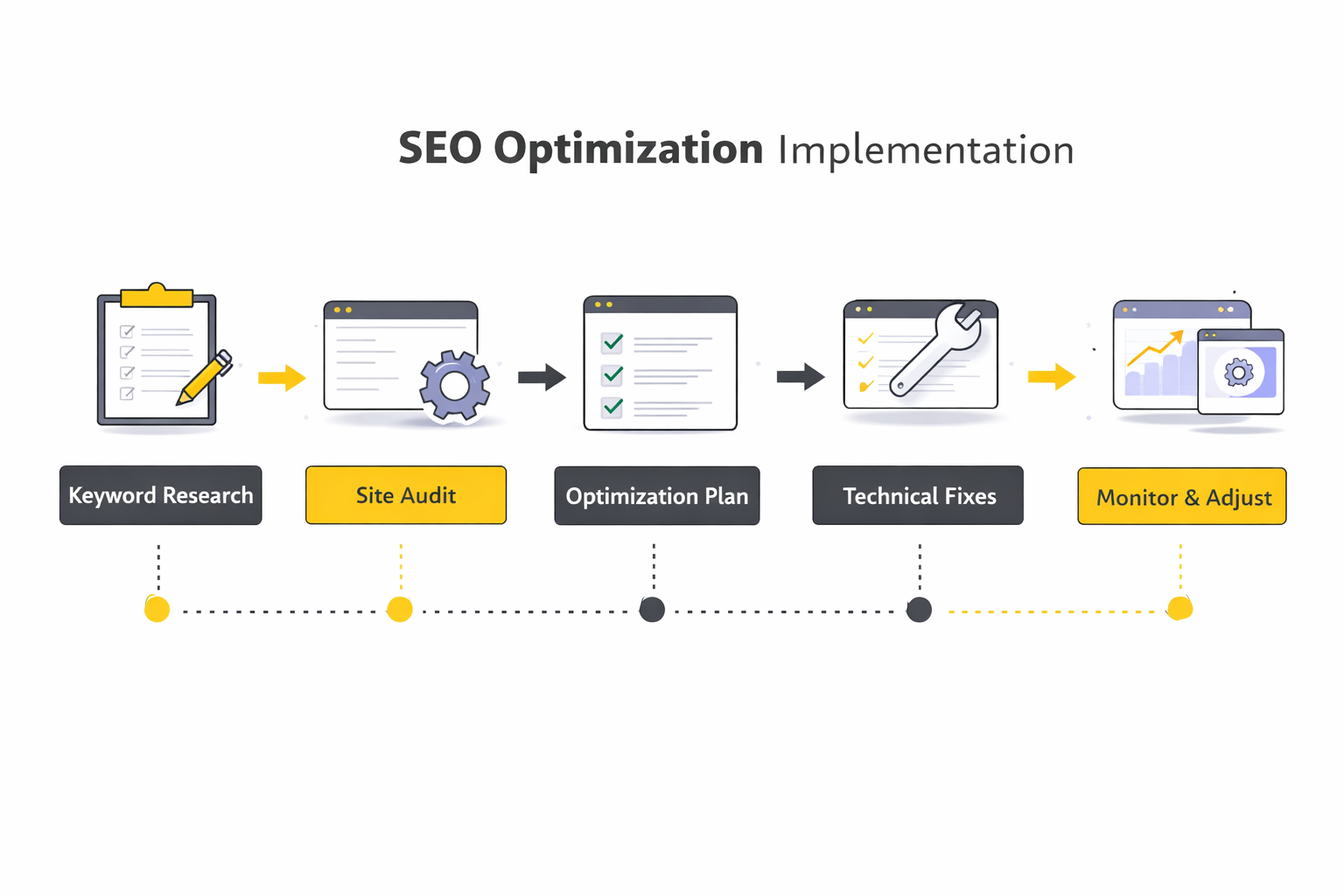
The hardest part of SEO optimization is not learning what matters. It is turning all of that knowledge into a sequence you can actually execute without creating chaos on your site. That is why the best implementation plans start with a simple rule: fix what blocks discovery first, strengthen what deserves visibility second, and scale only after the foundation stops leaking.
Google’s SEO Starter Guide and its more advanced technical SEO guidance both point in the same direction. Search engines need to find your pages, understand which version is the main version, and see a clear relationship between topics, pages, and internal links. If your SEO optimization work begins with random blog posts while important templates, canonicals, redirects, or internal link paths are still broken, you are building on sand.
A better roadmap is much more disciplined. Start by auditing indexation, crawl paths, duplicate URLs, redirect behavior, and sitemap hygiene. Then move into keyword mapping, content upgrades, structured data, and conversion improvements so every gain in visibility has a stronger chance of turning into leads, sales, or whatever outcome your business actually cares about.
Phase One: Fix Discovery And Indexation
This phase is less glamorous than publishing content, but it is the phase that keeps good work from getting buried. The Search Console platform exists for a reason: you need to know whether Google can access your pages, whether they are indexed, and whether technical issues are blocking the pages you care about most. The Page Indexing report, Crawl Stats report, and URL inspection workflow can tell you very quickly whether your visibility problem is really a content problem at all.
This is also where canonicals, redirects, and duplicate control stop being “technical details” and start acting like business priorities. Google’s guidance on consolidating duplicate URLs makes it clear that mixed signals create confusion. If your site serves multiple versions of the same intent, or if important pages keep changing URLs without clean redirect logic, SEO optimization becomes harder than it needs to be because the search engine has to guess which page deserves to rank.
Phase Two: Map Intent To Pages
Once technical discovery is under control, the next step is deciding which pages should exist and what job each one is supposed to do. This is where SEO optimization becomes strategic instead of reactive. You are no longer asking, “What keyword can I squeeze into a post?” You are asking, “What does the searcher actually need here, and which page type gives the clearest answer?”
That is an important distinction because not every valuable query should lead to an article. Some should lead to a service page, some to a category page, some to a comparison page, and some to a tool or resource. Google’s ecommerce search guidance and people-first content guidance reinforce the same idea: the page should exist because it helps the user complete a task, not because you wanted one more indexed URL.
Building Pages That Can Actually Rank
Once the map is clear, your SEO optimization work becomes much more practical. Each priority page needs a clear topic focus, a strong internal linking context, a headline that matches what people are really looking for, and body content that answers the obvious follow-up questions without wandering into fluff. In other words, the page has to earn trust quickly and keep that trust all the way down the screen.
That is why the best pages usually feel more complete, not just more optimized. Google’s guidance on AI features and your website makes this even more relevant now, because visibility is increasingly shaped by whether your content is useful enough to be surfaced, summarized, or cited across newer search experiences. Thin pages might still get indexed, but they rarely become durable assets.
And this is where many site owners finally realize that SEO optimization is not just a writing task. It is an editorial task, a UX task, and a business clarity task at the same time. If the page does not explain the topic well, does not prove credibility, and does not show the next step clearly, ranking alone will not save it.
On-Page Elements That Deserve Attention
Titles and headings matter, but not because they are magical levers. They matter because they frame relevance for both the user and the search engine. A strong title tells the reader exactly why your result is worth the click, while a clean heading structure helps the page stay readable and makes the topic easier to interpret. That sounds basic, yet weak structure is still one of the most common reasons good information feels harder to trust than it should.
Internal links deserve the same level of attention. Google’s documentation on crawlable links and site structure reflects a reality every experienced SEO eventually learns: pages do not rank in isolation. They gain context, authority, and discoverability from the pages around them. Good SEO optimization creates deliberate relationships between cornerstone pages, supporting articles, commercial pages, and navigational hubs.
Structured Data And Rich Result Readiness
Structured data is not a shortcut to rankings, but it can make a well-built page easier for search engines to understand. Google’s introduction to structured data, its search gallery of supported rich results, and its general structured data guidelines all make one thing clear: markup works best when it accurately reflects the content that is already on the page.
That matters for SEO optimization because clarity compounds. Product pages can become richer with eligible product data, article pages can become easier to classify, and well-marked content can improve how your brand appears across modern search surfaces. The catch is that structured data only helps when the page itself is already solid, so it should support the content strategy, not distract from it.
Scaling SEO Optimization With Workflows
The jump from a few good pages to a real search engine growth system happens when execution becomes repeatable. That means briefs are consistent, internal linking gets reviewed before publishing, metadata is checked, templates are kept clean, and performance is measured after launch instead of forgotten. Without that operational layer, SEO optimization usually turns into bursts of activity followed by long periods where nobody knows what is working.
This is where the right tools can remove friction instead of adding noise. A research workflow built with a site extraction tool, cleaner lead capture with a more flexible form setup, nurture automation through an email platform that can follow up properly, and conversion paths shaped inside a funnel builder can make the difference between “we got traffic” and “we built a channel that keeps producing business.”
The important thing is not the software itself. It is whether your process helps good pages get published faster, bad pages get improved sooner, and valuable traffic move into the next meaningful step. When your workflow supports that, SEO optimization stops feeling like a pile of disconnected tasks and starts acting like a disciplined revenue system.
Publishing Faster Without Cutting Corners
Speed helps, but only when it comes after standards. Search engines are getting better at recognizing pages that exist only to occupy space, while users are getting faster at abandoning pages that feel generic. Google’s helpful content guidance is direct about this: build content for people first, show genuine expertise, and make sure the page satisfies the reason someone searched in the first place.
That means the fast workflow is not the one that produces the most URLs. It is the one that makes it easy to reuse strong research, apply clear templates, maintain internal consistency, and improve winners without rebuilding everything from scratch. When you do that well, SEO optimization becomes more efficient without becoming thinner.
Keeping Search Engines Updated
Once your publishing workflow is healthy, it makes sense to help search engines find changes faster. Google still relies on its own crawling systems, sitemaps, and internal discovery patterns, while Bing also supports faster update signals through IndexNow and explains the broader visibility benefits inside its Webmaster Tools guidance. For sites that update inventory, articles, or product pages frequently, this can reduce the lag between publication and discovery.
That does not replace solid architecture or internal linking. It simply gives your SEO optimization process another operational advantage. The sites that move fastest are usually not the ones guessing harder. They are the ones with cleaner systems, clearer priorities, and fewer avoidable mistakes.
Statistics And Data
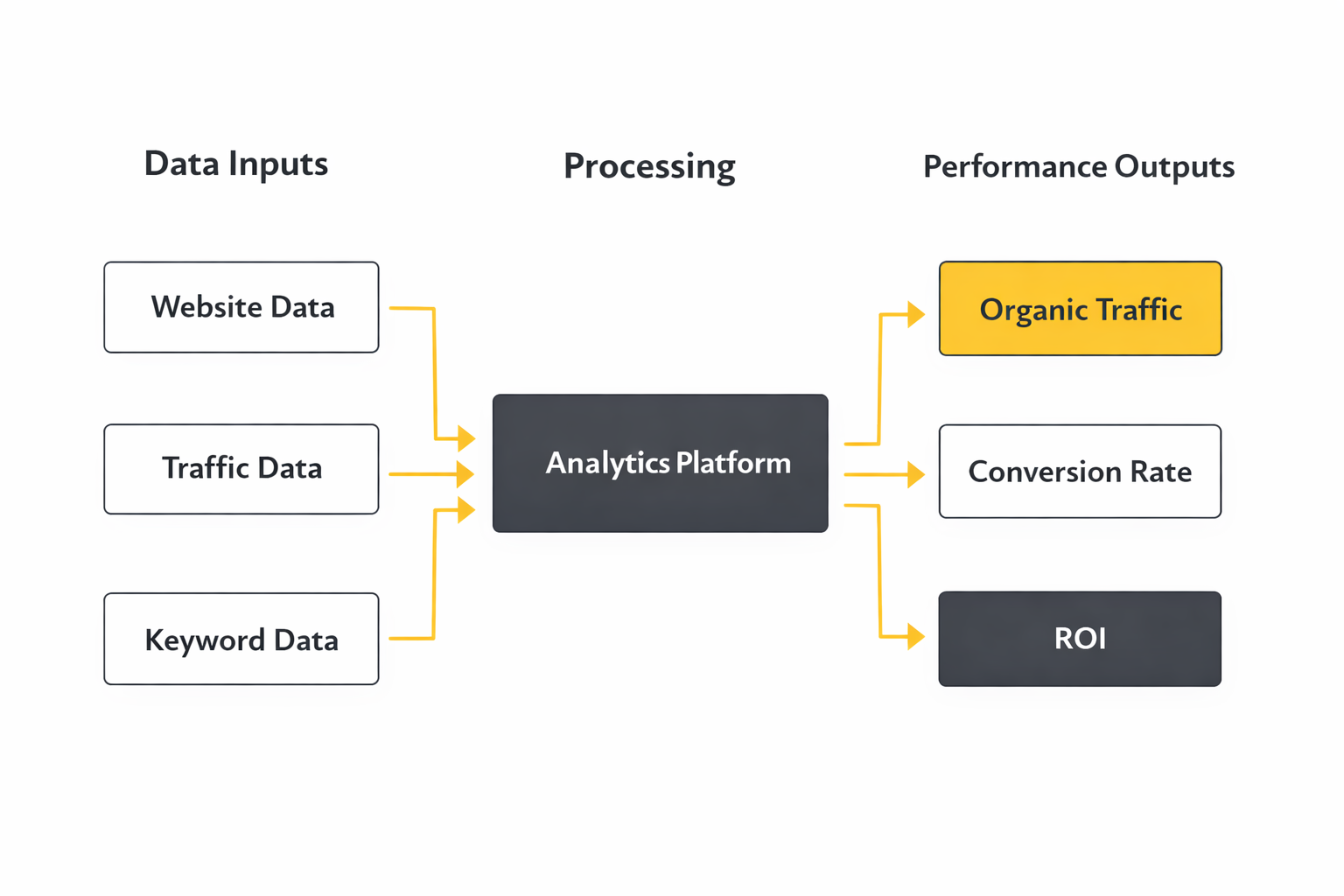
If you want to understand where SEO optimization stands right now, the numbers tell a very clear story. Search is still enormous, still commercially important, and still worth taking seriously even as AI changes the way results are presented. What has changed is not the value of SEO optimization itself, but the way visibility is earned and measured.
The first number that matters is scale. Google said in 2025 that it now sees more than 5 trillion searches a year, which is a reminder that search demand is not some shrinking side channel. It is still one of the biggest intent signals on the internet, and that is exactly why businesses that get SEO optimization right can keep pulling in attention long after the page goes live.
Search Landscape By The Numbers
Google’s position in search is still overwhelming. StatCounter’s worldwide data for February 2026 showed Google at 89.98% global search market share, with Bing at 5.01% and the rest split across much smaller players. That matters because SEO optimization still starts with understanding how Google discovers, interprets, and ranks pages, even if it makes sense to keep an eye on Bing and other discovery platforms as part of a broader visibility strategy.
Search behavior is also becoming more conversational. Google’s own Year in Search 2025 recap said searches for “Tell me about…” rose 70% year over year, while “How do I…” queries reached an all-time high with a 25% increase. That shift matters because it rewards pages that answer real questions clearly and completely instead of pages that just repeat the target phrase and hope for the best.
AI Is Changing The Click Pattern
The second group of numbers is all about how AI is changing the search experience. Google said at I/O 2025 that AI Overviews had scaled to more than 1.5 billion users, and Google also confirmed the feature had expanded to more than 200 countries and territories in over 40 languages. That is not a small experiment anymore. It is a major layer inside modern search, which means SEO optimization now has to compete for attention inside a results page that can answer more of the question before the click ever happens.
You can also see that pressure in independent research. Semrush and Datos analyzed more than 200,000 keywords and found that queries triggering AI Overviews tend to show stronger zero-click behavior, especially on informational searches. That does not mean SEO optimization is losing its value. It means the value is shifting toward pages that are distinct enough, trustworthy enough, and useful enough to earn the click when the searcher already has a partial answer on the screen.
Why Organic Search Still Deserves Budget
Here is the number that keeps many teams grounded when they start worrying that AI has already replaced traditional search. BrightEdge reported in September 2025 that AI search accounted for less than 1% of referral traffic, and Search Engine Land highlighted the same finding while noting that organic search remains the primary driver of conversions across industries. In plain English, AI discovery is rising fast, but classic organic visibility is still doing the heavy lifting for most businesses.
That is why smart SEO optimization is not built on panic. It is built on priorities. You need pages that can rank in traditional search, appear credible in AI-shaped results, and move visitors toward the next step once they land. If you miss any one of those, the numbers may look interesting, but the business impact stays weaker than it should.
The Metrics That Deserve The Most Attention
The most useful statistics are the ones that change your next decision. Google’s own documentation on Search Console performance data and Core Web Vitals makes it clear that impressions, clicks, click-through rate, indexation, and real-user page experience all belong in the same conversation. A page with strong impressions but weak clicks may need a better title and angle. A page with traffic but weak conversions may need a clearer offer, a better layout, or a more persuasive next step.
This is where SEO optimization becomes a lot more profitable, because you stop treating traffic as the finish line. If your analytics show that organic visitors are arriving but not converting, tools like a stronger lead-capture form, an email follow-up platform, or a more focused funnel builder can help you turn those visits into something the business can actually feel. That is the real point of statistics in SEO optimization. They are not there to impress you. They are there to show you where the money is leaking and where the upside still lives.
SEO Optimization In The Bigger Growth Ecosystem
SEO optimization works best when you stop treating it like a lonely traffic tactic and start treating it like the front door to everything else you do. Search brings in attention, but that attention only becomes valuable when the page connects naturally to trust, conversion, follow-up, and retention. That is why the businesses getting the best results from SEO optimization are rarely the ones publishing the most pages. They are the ones building the strongest bridge from search intent to business outcome.
The size of the opportunity still justifies that effort. Google said it now sees more than 5 trillion searches a year, while StatCounter’s global market share data continues to show Google holding the overwhelming majority of worldwide search usage. That means search remains one of the clearest places to meet demand at the exact moment someone is looking for an answer, a provider, a comparison, or a product.
What has changed is the environment around the click. Google’s own I/O update said AI Overviews have scaled to more than 1.5 billion users across 200 countries and territories, which means SEO optimization now sits inside a broader discovery system where your page may be previewed, summarized, compared, or skipped before the visitor ever arrives. That does not make SEO less important. It makes the rest of your ecosystem more important.
How Search Connects To The Rest Of Marketing
A search visitor is not just a visitor. They are a person arriving with context, urgency, and expectations. If the page solves the immediate question but gives them nowhere useful to go next, you waste a lot of the value that SEO optimization created in the first place. That is why the smartest teams connect search pages to email capture, lead magnets, demos, consultations, product trials, or deeper educational assets that match what the visitor is likely to want next.
That connection becomes even more important when click patterns get tougher. Research from BrightEdge and coverage from Search Engine Land both highlighted the same reality in 2025: AI search traffic is growing quickly, but it still accounts for less than 1% of referral traffic while organic search remains the primary driver of conversions. In plain English, SEO optimization is still doing the heavy lifting, but every click now needs to be handled better because the results page is competing harder for attention.
Why Conversion Systems Change The Value Of SEO
This is the part many site owners learn too late. A page can rank well, pull in traffic, and still underperform badly if the offer is unclear or the next step feels weak. When that happens, the problem is not that SEO optimization failed. The problem is that the business built a traffic engine without building a conversion path behind it.
That is exactly where the rest of your stack matters. A cleaner signup or inquiry path with a better form workflow, tighter follow-up through an email platform that can nurture leads properly, or a more focused offer journey inside a funnel builder can completely change what the same search traffic is worth. The ranking may stay the same, but the business result can improve dramatically because more of the right visitors finally know what to do next.
The Mistakes That Slow Everything Down
One of the most common SEO optimization mistakes is publishing content before the site has earned the right to scale. If the internal links are weak, the topical structure is scattered, and the commercial pages are not persuasive enough, publishing more often usually just creates more pages to manage. It feels productive, but it does not build momentum the way people hope it will.
Another mistake is chasing impressions without asking whether the traffic is actually qualified. Some queries bring curiosity, some bring buyers, and some bring people who will never become customers no matter how much content you publish. Good SEO optimization requires enough discipline to tell those groups apart, because the page strategy, the messaging, and the expected conversion path should not be the same for all of them.
A third mistake is thinking SEO ends when the page ranks. Search visibility creates opportunity, not certainty. The real question is whether the page builds trust, reinforces your brand, and moves people into a deeper relationship with your business after they land.
When Tools Help And When They Do Not
Tools help when they remove friction from work that already matters. They hurt when they distract you from the fundamentals. If your team is struggling to organize research, audit pages consistently, or extract structured content at scale, something like a crawling and extraction workflow can save time. If your problem is weak lead follow-up, then software built for that stage will matter much more than another ranking dashboard.
The point is simple: do not buy tools to feel sophisticated. Use them to strengthen the bottleneck that is currently keeping your SEO optimization from producing better business results. That is how you keep the system lean, practical, and profitable.
Building A Brand That Search Can Trust
The long game of SEO optimization is not just about being relevant. It is about being believable. Search engines are getting better at recognizing who actually deserves visibility, and users are getting even faster at deciding whether your page feels credible enough to keep reading. Brand signals, consistency, topical depth, and the overall quality of your site experience all shape that decision.
That is one reason AI-heavy search results will likely reward stronger brands over time. When summaries and previews become more common, the sites that still win the click are usually the ones that look authoritative before the visitor even lands. So yes, keywords still matter. But in modern SEO optimization, brand clarity, proof, and trust signals often decide who gets the attention once multiple relevant options are already on the screen.
Where The Biggest Opportunity Is Now
The biggest opportunity right now is not trying to out-publish everyone. It is building a tighter system around the demand you already have a realistic chance to win. That means choosing the right pages, answering the right questions, presenting the right proof, and making the next step so clear that the visitor does not need to think twice.
When you do that, SEO optimization becomes much more than a rankings project. It becomes the channel that feeds your list, supports your sales process, strengthens your reputation, and keeps working long after the first publish date is forgotten. That is the real power here, and it is why the businesses that stay committed to doing it right keep separating themselves from the ones looking for shortcuts.
FAQ For A Complete SEO Optimization Guide

This final section pulls everything together. If you have been wondering what matters most, what to ignore, and where SEO optimization is heading next, these are the questions people usually ask once they get serious. And that is a good sign, because the right questions are often what separate random activity from real progress.
What Is SEO Optimization, Really?
SEO optimization is the process of making your website easier for search engines to discover, understand, and trust while also making it more useful for real people. That includes technical clarity, stronger content, better internal linking, cleaner user experience, and a page structure that matches what searchers are actually trying to do. Google’s SEO Starter Guide still frames it the right way: build for users first, then help search engines access and interpret that value correctly.
Does SEO Still Work In 2026?
Yes, and the scale of search still proves why. Google said in 2025 that it now handles more than 5 trillion searches a year, while StatCounter’s global market share data continues to show Google dominating worldwide search. SEO optimization still works because people still search with intent, and intent is one of the most valuable signals in marketing.
Is SEO Dead Because Of AI Overviews And AI Search?
No, but it is evolving fast. Google said AI Overviews now reach more than 1.5 billion users, and the company has expanded them to more than 200 countries and territories in over 40 languages. That means SEO optimization is no longer just about earning a blue-link click. It is about being clear, credible, and useful enough to stand out even when the search results page gives the user more information before they visit your site.
How Long Does SEO Optimization Take To Show Results?
It usually takes longer than people hope and less time than people fear if the fundamentals are strong. Google says in its starter documentation that the impact of SEO changes can take time to appear in search results, especially when crawling, indexing, and re-evaluation are involved. In practical terms, weak sites can wait a long time for momentum, while well-structured sites often see earlier gains once the right pages are improved and internal signals become clearer.
What Should I Measure First?
Start with impressions, clicks, click-through rate, average position, indexed-page health, and conversions. Google’s Performance report documentation and its explanation of clicks, impressions, and position make it clear that these metrics tell different parts of the story. SEO optimization becomes much easier to improve when you stop obsessing over rankings alone and start asking whether visibility is turning into meaningful business outcomes.
Do Core Web Vitals Still Matter?
Yes, because speed and stability still shape user experience even when they are not the only ranking consideration. Google’s Core Web Vitals guidance and the educational resources on web.dev both make the same point: performance affects how usable your site feels in the real world. In SEO optimization, that matters because frustrated users bounce faster, trust you less, and convert less often.
How Important Is Indexing Compared With Content?
It is foundational. If Google cannot properly crawl and index the page, content quality alone will not rescue it. The Page Indexing report and Google’s broader Search Console platform exist to help you see whether your best pages are actually eligible to compete. A lot of SEO optimization problems that look like content problems are really discovery, duplication, or indexing problems underneath.
Should I Publish More Content Or Improve Existing Pages?
Most businesses should improve more before they publish more. Google’s people-first content guidance pushes site owners toward originality, depth, and usefulness rather than mass production. If your current pages are thin, outdated, poorly linked, or unclear, SEO optimization often grows faster when you strengthen what already exists instead of rushing to create dozens of new URLs that will need even more maintenance later.
Are Keywords Still Important, Or Is That Old-School SEO?
Keywords still matter, but not in the old way. They help you understand how people describe problems, compare options, and search for solutions. What has changed is that SEO optimization is no longer about forcing exact-match phrases into every paragraph. It is about understanding intent and building the right page for that intent, whether the searcher wants an explanation, a service, a comparison, or a product.
What Role Does Internal Linking Play?
Internal linking gives context, distributes authority, and helps search engines discover relationships between pages. Google’s guidance on crawlable links and its developer-facing SEO guide both reinforce how important it is for important pages to be reachable and clearly connected. Strong SEO optimization rarely happens page by page. It happens site by site.
Is Google The Only Search Engine That Matters?
Google is still the main priority for most businesses because of its overwhelming market share, but it is not the only place worth attention. Global usage data still shows Bing in a distant second place, and Microsoft’s Webmaster Guidelines make it clear that Bing search, Copilot, and related experiences are becoming more connected. Good SEO optimization usually starts with Google, then expands where it makes commercial sense.
Does IndexNow Help With SEO Optimization?
It can help with discovery on participating search engines, especially if your site changes frequently. Microsoft describes IndexNow as a way to give website owners more control over how quickly content is discovered and reflected in search results, and the official IndexNow documentation explains how implementation works. It is not a replacement for good architecture or good content, but it can be a smart operational advantage.
What Is The Biggest SEO Optimization Mistake Businesses Make?
The biggest mistake is treating SEO optimization like a publishing contest instead of a system. Businesses publish too much weak content, ignore indexing issues, forget internal linking, and then wonder why the traffic that does arrive does not convert. In most cases, the real fix is not “do more SEO.” It is “do the right SEO in the right order.”
Can SEO Work Without Conversion Optimization?
It can bring traffic without it, but it rarely brings the full business value without it. Search creates opportunity, not automatic revenue. That is why pages that attract the right people still need better forms, better follow-up, better offers, and a better next step. A stronger setup with better lead capture, smarter follow-up email flows, or more focused funnel pages can completely change what the same organic traffic is worth.
Should I Handle SEO Optimization Myself Or Work With Professionals?
That depends on your time, your technical comfort, and how important search growth is to your business. If SEO optimization is central to your growth strategy, professional help usually shortens the learning curve and reduces expensive mistakes. The right expert will not just chase rankings. They will help you fix the infrastructure, build the right pages, measure what matters, and connect search traffic to real revenue outcomes.
Work With Professionals
If this guide has shown you anything, it should be this: SEO optimization can absolutely change the trajectory of a business, but only when it is handled with discipline. The opportunity is enormous, the search demand is still massive, and the businesses that build real authority now will have an advantage that compounds for years. But that only happens when the technical foundation, content strategy, measurement, and conversion path all work together.
So if you are serious about growing through search, treat this like a real growth channel and not a side experiment. Put the work in, fix the leaks, and build the kind of site people are relieved to find when they search. That is how SEO optimization stops being another marketing task and starts becoming one of the strongest assets your business owns.
Explore 10K+ Remote Marketing Contracts on MarkeWork.com
Most marketers spend too much time chasing clients, competing on crowded platforms, and losing a percentage of every project to middlemen.
MarkeWork gives you a better way. Browse thousands of remote marketing contracts and connect directly with companies desperate to hire skilled marketers like you — without platform commissions and without unnecessary gatekeepers.
If you’re serious about finding better opportunities and keeping 100% of what you earn, you can explore available contracts and create your profile for free at MarkeWork.com.
 Filip Konecny Enterprises