
If you still call it Pardot, you are not alone. Salesforce has rebranded the platform as Marketing Cloud Account Engagement, but the old name still shows up in buying conversations, implementation plans, and search queries because most B2B teams think about the product through the lens of the Salesforce CRM it is attached to. That is exactly why the phrase pardot salesforce still matters: people are usually trying to understand not just a marketing automation tool, but the full operating model that connects lead capture, nurture, qualification, handoff, and revenue reporting.
The bigger story is that Salesforce is pushing Account Engagement deeper into a broader marketing and AI stack, while still keeping its B2B core intact. On the current pricing page, Salesforce positions Account Engagement as the B2B automation layer that aligns marketing and sales, and it now highlights access to newer Marketing Cloud capabilities alongside classic strengths such as scoring, nurturing, and analytics. So when someone searches for pardot salesforce, they usually want clarity on architecture, not just features.
This first part breaks down the foundation. You will see why the platform matters, how the framework works, which components do the heavy lifting, and what professional implementation looks like when the goal is not merely to launch campaigns, but to build a system sales teams actually trust.
Article Outline
- Why Pardot Salesforce Matters
- Pardot Salesforce Framework Overview
- Core Components of Pardot Salesforce
- Professional Pardot Salesforce Implementation
- Analytics, Attribution, and Optimization
- Ecosystem, FAQs, and Next Steps
Why Pardot Salesforce Matters
Pardot Salesforce matters because B2B growth usually breaks down at the handoff point between marketing activity and sales follow-up. Marketing can drive traffic, run webinars, publish content, and launch email sequences, but if lead quality is vague, campaign data is disconnected, or sales cannot see why someone is suddenly hot, the funnel fills up without becoming reliable pipeline. Salesforce built Account Engagement around that exact tension by tying marketing automation directly to the CRM record sales already works from.
The platform becomes more valuable as complexity rises. Once a company has multiple lead sources, different buying stages, long evaluation cycles, and several people involved in one deal, disconnected tools start creating conflicting answers about who engaged, what influenced the opportunity, and whether the campaign budget actually moved revenue. Salesforce frames Account Engagement as a way to unify customer data on one platform and scale B2B engagement with AI, while its Connected Campaigns documentation shows how engagement data can flow into Salesforce campaign records so both teams are looking at the same campaign object.
The timing also matters. In Salesforce’s latest State of Marketing report, nearly 4,500 marketing leaders described a market shaped by AI, personalization pressure, and growing expectations around data quality. That is the real backdrop for pardot salesforce today: companies do not just need more emails or more automation, they need a cleaner revenue engine that gives marketing and sales one shared interpretation of buyer intent.
Pardot Salesforce Framework Overview
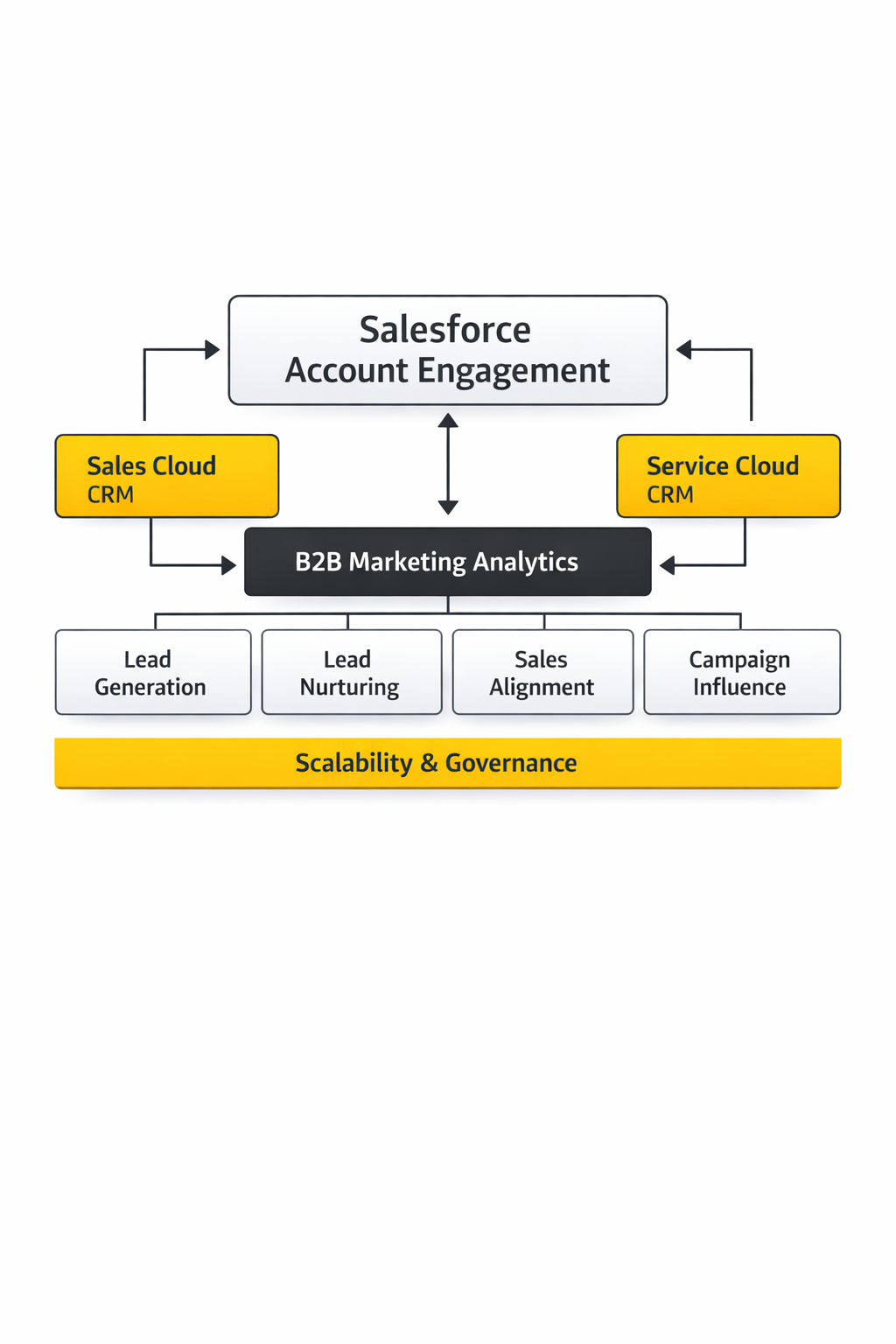
The easiest way to understand the framework is to picture four layers working together. The first layer is capture, where forms, landing pages, form handlers, and website tracking turn anonymous interest into identifiable prospects. The second layer is qualification, where scoring, grading, segmentation, and automation rules help separate curiosity from genuine buying potential.
The third layer is orchestration. That is where nurture logic comes in through tools such as Engagement Studio, which Salesforce describes as the platform’s lead nurturing engine with built-in versioning and branching logic. The fourth layer is alignment, where Salesforce CRM records, campaign membership, and engagement history let sales teams act on buyer behavior without constantly switching systems.
When companies struggle with pardot salesforce, it is usually because they skip the framework and rush to tactics. They build email templates before they define lifecycle stages, they create scores before agreeing on what qualifies as a sales-ready lead, and they launch campaigns before governance exists for naming, ownership, sync rules, and campaign structure. A professional framework reverses that order so the platform supports the business model instead of fighting it.
Core Components of Pardot Salesforce
The core components are easier to manage when you stop thinking in product menus and start thinking in jobs to be done. For capture, Salesforce supports forms, form handlers, and landing pages, which means a team can either use native assets or keep an external website stack while still routing submissions into Account Engagement. That flexibility matters for companies that want Salesforce-grade lead management without rebuilding their entire front end.
For qualification, the classic engine is still powerful. Salesforce’s documentation explains that scores measure behavioral interest, while grades measure fit against the ideal customer profile, and that distinction is one of the biggest reasons the platform remains relevant in B2B. A prospect can be highly active but poorly matched for your business, and pardot salesforce gives teams a way to see both truths at once instead of collapsing them into one misleading number.
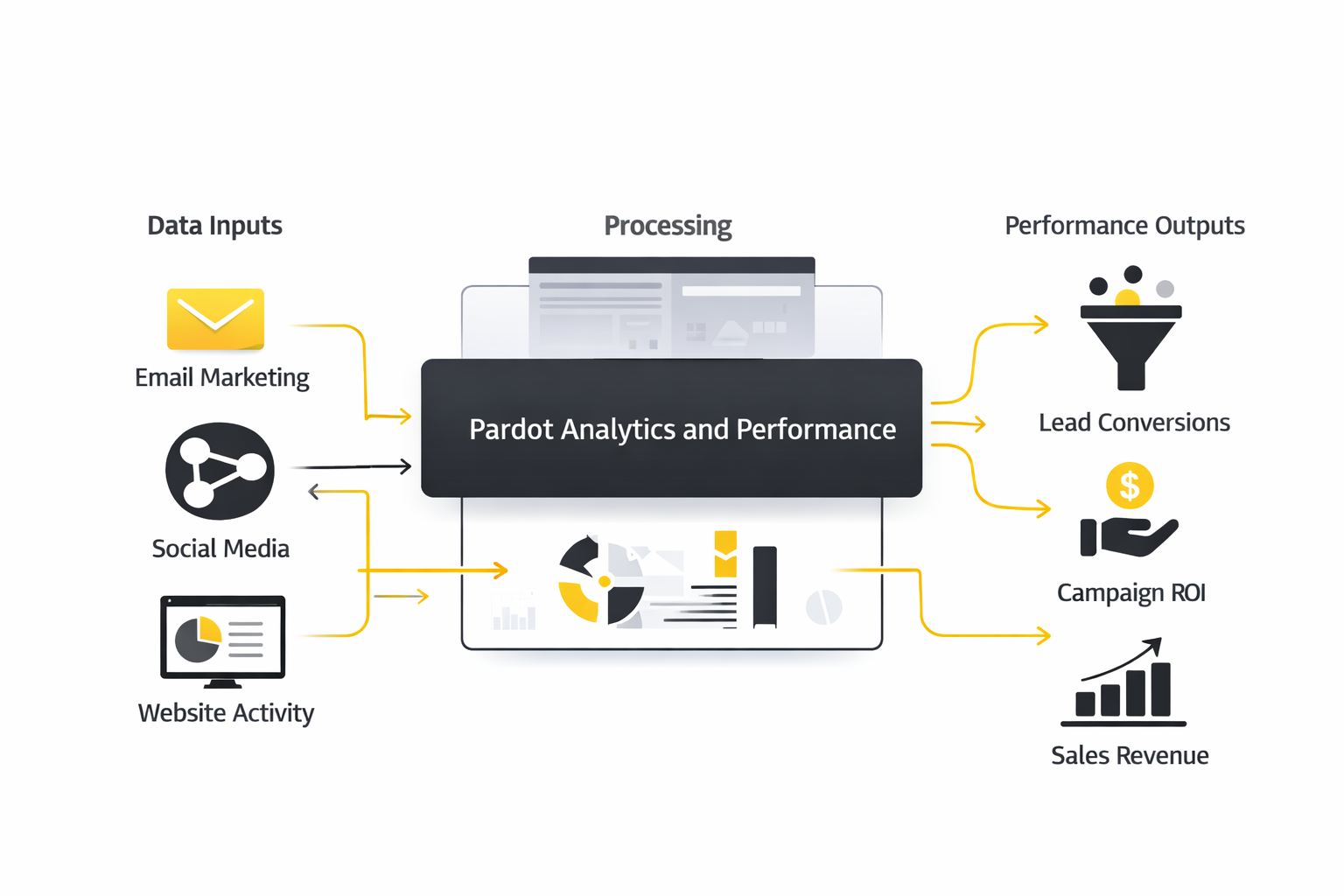
For campaign orchestration and reporting, the essential pieces are Engagement Studio, Connected Campaigns, and B2B Marketing Analytics. Salesforce explains that B2B Marketing Analytics includes prebuilt dashboards and can extend into multi-touch attribution and account-based reporting, which is where the platform starts moving from email tool to revenue system. Once those components are connected properly, marketing can trace performance with far more confidence than it can in a stack of loosely connected point solutions.
Professional Pardot Salesforce Implementation
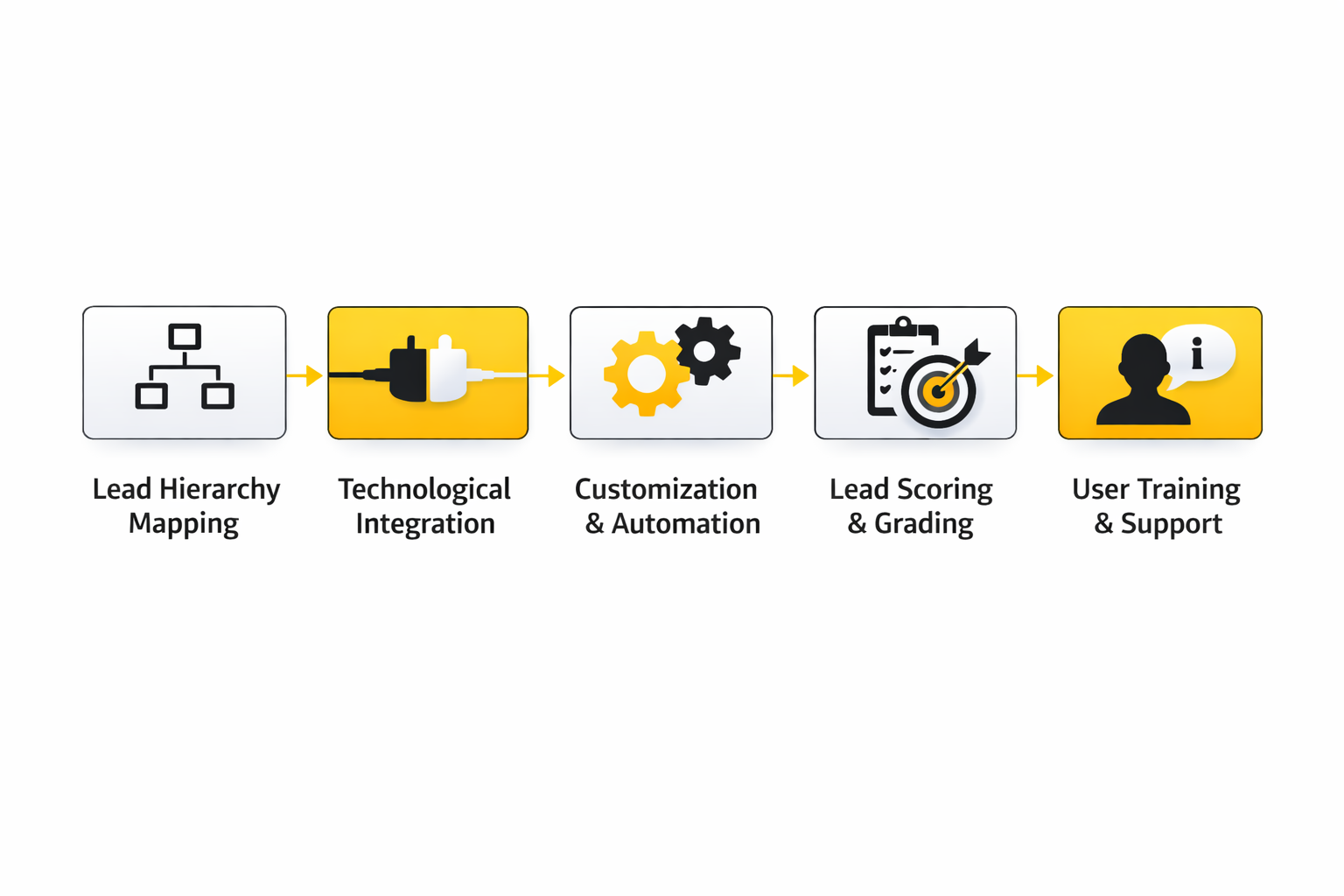
A professional implementation starts with data design, not design polish. Before the first nurture program goes live, teams need clean decisions on lifecycle stages, lead source logic, campaign hierarchy, assignment rules, scoring thresholds, field sync behavior, consent handling, and exactly when a prospect becomes visible or actionable for sales. Salesforce’s recent implementation guide reinforces that setup choices around users, business units, Salesforce sync, and domain configuration are foundational, because once automation is running, weak governance multiplies fast.
The second mark of a professional setup is restraint. Not every company needs the most advanced edition on day one, even though Salesforce currently lists plans beginning at $1,250 per org per month billed annually and expanding upward with analytics and AI-driven capabilities. Smart teams prove the lifecycle first, then layer on sophisticated scoring, attribution, and account-based motions after they know the CRM model, reporting model, and sales process are stable.
The third mark is tool discipline around the edges of Salesforce. Some teams use external form experiences such as Fillout and pass data into Account Engagement through form handlers, while smaller teams that are not yet ready for a full Salesforce-centered architecture sometimes begin with lighter platforms such as Brevo or Moosend to validate nurture offers and conversion paths. That can work, but the real advantage of pardot salesforce appears when the business is serious about CRM-native routing, shared campaign objects, deeper attribution, and tighter sales-marketing accountability.
Implementation That Sales and Marketing Will Actually Use
The hardest part of pardot salesforce is not getting the connector turned on. The hardest part is getting both teams to trust what happens after that. Salesforce makes it clear in its current implementation guide that Connected Campaigns, sync settings, user setup, business-unit structure, and domain configuration should be handled before a team starts pushing serious volume through the system, because once records, automations, and reports are live, bad decisions do not stay contained for long.
This is where a lot of teams get burned. Marketing wants speed, sales wants clarity, and both sides assume the platform will somehow force alignment on its own. It will not. If lifecycle stages are fuzzy, if campaign naming is chaotic, if assignment rules fight with the CRM owner model, or if field sync behavior is not deliberate, pardot salesforce becomes one more place where everyone can point to activity but nobody can explain revenue movement with confidence.
A strong rollout solves that by narrowing the first win. Instead of launching every possible feature, the better move is to build one clean acquisition-to-handoff path, one shared qualification model, and one reporting view the revenue team can review without arguing about definitions. Salesforce’s own guidance on connecting Salesforce and Account Engagement campaigns points in that direction, because campaign alignment is what makes engagement history, influence tracking, and shared visibility usable instead of theoretical.
Common Breakpoints in Pardot Salesforce Projects
The first breakpoint is qualification logic that looks smart on a slide deck and falls apart in the real world. Salesforce still separates score from grade for a reason: interest and fit are not the same thing. When teams collapse them into one overstuffed number, sales receives leads that look “hot” even when the company, role, timing, or use case is clearly wrong.
The second breakpoint is email ambition without deliverability discipline. Salesforce says in its updated deliverability guide that inbox placement depends on practices and behavior, not on the platform magically guaranteeing results. That matters because teams often blame pardot salesforce for underperforming email when the real issue is weak list hygiene, poor warm-up, inconsistent engagement, or sending to people who never clearly opted in.
The third breakpoint is consent. Salesforce’s own email compliance FAQ states plainly that an unsubscribe link alone is not enough and that explicit permission is required to use Account Engagement for marketing email. That single reality changes how forms, event imports, partner lists, and webinar registrations should be handled, and it is one of the clearest signs that a professional pardot salesforce implementation has to be part technical system and part operating policy.

Analytics, Attribution, and Optimization
This is the point where pardot salesforce either starts earning respect inside the company or starts looking like an expensive email tool. Salesforce positions Account Engagement analytics as the layer that helps teams connect marketing activity to sales outcomes, and that is exactly the standard serious B2B teams should hold it to. Opens and clicks are useful signals, but nobody wins executive trust with surface metrics alone.
The real advantage comes from how Salesforce lets teams bring engagement data into CRM context. Engagement History Dashboards can be embedded on campaign, account, lead, contact, person account, and opportunity records, which means sales does not have to guess whether a prospect is active or rely on a weekly screenshot from marketing. When that visibility is paired with clean campaign structure, a rep can see whether the person opening emails is casually browsing or moving through a meaningful sequence of assets tied to an active buying journey.
For deeper reporting, Salesforce explains in its latest B2B Marketing Analytics implementation guide that the product is built on CRM Analytics and combines data from Account Engagement and Salesforce. That matters because optimization decisions become sharper when a team can compare campaign performance, opportunity creation, account engagement, and influenced revenue inside one reporting environment instead of trying to reconcile several disconnected exports at the end of the quarter.
What Good Attribution Actually Looks Like
Good attribution in pardot salesforce is less about finding one perfect model and more about choosing a model the business can defend. Salesforce’s campaign influence documentation highlights out-of-the-box attribution models designed to give marketers ROI visibility through Salesforce campaigns, but those models only help if the campaign strategy itself is coherent. If webinar campaigns, paid campaigns, nurture campaigns, and content syndication campaigns are all named inconsistently or attached to opportunities carelessly, the math may still run, but the story it tells will be weak.
That is why optimization should move in layers. First, make sure campaign membership and opportunity association are believable. Next, confirm that the team can explain why certain campaigns are getting credit and others are not. Only after that does it make sense to refine influence models, build custom dashboards, or push for a more nuanced multi-touch view. Otherwise, teams spend months tuning attribution logic while the underlying data model is still wobbling.
The practical upside is huge when this is done well. Marketing gets a cleaner answer on which offers move pipeline, sales gets better timing signals, and leadership gets a more honest view of what the revenue engine is really doing. That is the moment pardot salesforce stops feeling like software and starts acting like infrastructure.
Optimization Never Ends, and That Is the Point
No serious team should expect pardot salesforce to be a one-and-done setup. Salesforce’s latest State of Marketing report, built from insights gathered from nearly 4,500 marketing leaders, keeps returning to the same pressure points: data quality, personalization, and AI-driven execution all matter more now than they did even a year ago. That means the teams getting the best results are the ones reviewing scoring logic, nurture performance, sales feedback, attribution rules, and consent handling on a regular rhythm instead of treating the initial launch as the finish line.
In practice, the healthiest optimization cadence is simple. Review funnel conversion by lifecycle stage. Review which campaigns are creating opportunity movement rather than just engagement noise. Review whether sales is actually using the engagement insights surfaced in Salesforce. Then fix the friction point that is closest to revenue instead of chasing vanity improvements.
That approach may sound less exciting than an endless stream of new automations, but it is how mature teams win. Pardot salesforce performs best when it is run like a revenue system, measured like a revenue system, and improved like a revenue system every single month.
The Pardot Salesforce Ecosystem in Practice
The moment a company gets serious about pardot salesforce, the conversation stops being about one product and starts being about an ecosystem. Salesforce describes Marketing Cloud Account Engagement as a B2B automation platform built on its CRM, and that wording matters because the real value is not trapped inside email sends or landing pages. The value shows up when marketing, sales, reporting, campaign management, and data governance all begin working from the same commercial spine instead of five disconnected tools pretending to cooperate.
This is also where the buying decision gets more honest. Some teams do not need the full ecosystem yet, and forcing it too early can create cost and complexity that the business is not ready to absorb. But once you need lead qualification, CRM-native visibility, campaign alignment, revenue reporting, sales alerts, and a path into newer Salesforce marketing capabilities, pardot salesforce starts making a lot more sense than a stack of lighter tools duct-taped together.
How Pardot Salesforce Connects to the Rest of Salesforce
Salesforce’s own guidance on using Account Engagement with Salesforce shows the bigger picture clearly. The connector is not just there to sync records. It is there to bring engagement data, sales alerts, and shared campaign activity into the environment where pipeline decisions already happen. That is why teams that implement pardot salesforce well usually see faster alignment between the person running nurture programs and the rep deciding whether a lead deserves immediate attention.
One of the most practical extensions of that ecosystem is Salesforce Engage. Salesforce frames it as part of the sales-and-marketing bridge, letting sales teams work with marketing-approved content and alerts without forcing them to become automation specialists. That sounds small until you see how much friction disappears when reps can act on engagement signals inside familiar workflows rather than waiting for someone in marketing operations to interpret them every time.
Connected Campaigns pushes the same idea further. Salesforce explains that campaign engagement data can flow onto the Salesforce campaign record, which means influence tracking and campaign visibility are not side projects anymore. They become part of the same operating system that leadership uses to review pipeline and opportunity movement.
Where Marketing Cloud Next Fits
This is one of the biggest shifts around pardot salesforce right now. Salesforce has been expanding what Account Engagement customers can access through newer Marketing Cloud capabilities, and the current pricing structure now highlights editions that include Marketing Cloud Next Growth or Advanced functionality alongside the traditional B2B automation core. In plain English, Salesforce is not treating Account Engagement as an isolated legacy product. It is treating it as one door into a broader marketing platform.
The company’s own help content on getting started with Marketing Cloud Next for Account Engagement makes that especially clear by explaining that teams should understand how the newer campaign experience differs from classic Account Engagement workflows before they start building. That warning is useful because plenty of teams assume that “more features” automatically means “better setup.” In reality, new capabilities only help when the team has already nailed campaign structure, data ownership, and the basic lifecycle model inside pardot salesforce.
The good news is that this opens up a more realistic growth path. A company can start with the familiar Account Engagement motion, prove that lead management and sales alignment are working, and then expand into newer AI-assisted campaign creation, personalization, or multi-channel options when the foundation is ready. That is a much healthier path than buying into a huge ecosystem first and figuring out the operating model later.
Business Units, Governance, and Scale
Scale changes everything in pardot salesforce. A single business unit with one team and one region can survive with a lot of informal habits. A multi-brand, multi-region, or multi-team setup cannot. Salesforce’s documentation on business unit settings and enabling Account Engagement in Salesforce shows how seriously the platform treats administrative structure, because permissions, settings, and ownership have to be intentional before scale becomes manageable.
This is one of those issues that sounds boring right up until it becomes expensive. If multiple teams share fields without clear sync rules, if consent logic differs by region, or if scoring models vary without documentation, leadership ends up comparing numbers that were never created under the same assumptions. At that point, pardot salesforce is technically live but strategically unreliable, which is a much more dangerous problem than a system that is obviously broken.
Good governance keeps the ecosystem usable. It tells teams who owns campaign creation, which fields are controlled in Salesforce versus Account Engagement, when a new business unit is justified, and how reporting should roll up. Without that discipline, the platform grows wider but not stronger.
Integration and API Reality
There is also a more technical side to the pardot salesforce ecosystem that serious operators should not ignore. Salesforce’s documentation on Account Engagement API use cases shows that the API is often used for practical work such as normalizing data, enriching records, and automating cleanup tasks that would otherwise pile up inside the system. That matters because clean automation depends on clean data, and clean data rarely happens by accident once multiple acquisition channels are feeding the same database.
At the same time, Salesforce warns in its API connector guidance that profile-level API rate limits can create failures during bulk processing. That is the kind of detail teams miss when they only think about pardot salesforce at the campaign level. A sophisticated stack is not just about what the marketer sees in the interface. It is also about what your data jobs, enrichment flows, and reporting pipelines are doing in the background.
This is why experienced teams treat integration design as part of strategy, not as cleanup work for later. Every external form, webinar platform, enrichment source, routing rule, and reporting dependency either strengthens the ecosystem or quietly weakens it. The cleaner those decisions are at the start, the easier it becomes to scale campaigns without turning the database into a maze.
What to Do Before You Expand the Stack
Before adding more tools around pardot salesforce, check whether the core system is already doing its job. Can sales see meaningful engagement history in Salesforce? Are campaign records aligned and usable? Is lead qualification trusted enough that reps do not ignore it? Can marketing explain which programs influenced pipeline without starting every sentence with a disclaimer? If the answer to those questions is shaky, the next tool will probably add noise instead of leverage.
That is why restraint is still such an advantage. Some teams will genuinely benefit from surrounding Salesforce with other specialized tools for forms, scheduling, chat, or outbound support. But the smarter move is usually to let the existing ecosystem carry more weight before adding another layer. Pardot salesforce becomes powerful when the foundation is stable enough that every additional integration has a clear job, a clear owner, and a clear revenue reason to exist.
That is the right point to move into the final stretch of the article. Once the ecosystem is in place, the next questions are no longer about what the platform is. They become more practical: what results should you expect, what mistakes should you avoid, and how do you decide whether this is the right long-term engine for your business?
Statistics and Data
If you want to understand where pardot salesforce really fits, the numbers around modern B2B buying are a great place to start. Forrester reported in December 2024 that 86% of B2B purchases stall during the buying process and 81% of buyers are dissatisfied with the providers they choose. At the same time, Google highlighted that 49% of B2B spending now happens online and 68% of buyers say they expect to increase their use of digital shopping channels. That combination is exactly why pardot salesforce matters: buyers are doing more on their own, but they are not necessarily having a smoother journey because more digital activity does not automatically create more clarity.
The pressure on marketing teams is just as intense. Salesforce built its tenth State of Marketing report from nearly 4,500 marketers worldwide, while HubSpot’s 2026 State of Marketing article says its latest report draws from more than 1,700 global B2B and B2C marketers. Those sample sizes matter because they show this is not a niche conversation anymore. When a platform like pardot salesforce is evaluated today, it is being judged in a market where data, personalization, AI, and sales alignment are no longer optional extras but part of the operating baseline.
What the Recent Research Really Says
The AI story is especially revealing because it shows both momentum and hesitation at the same time. HubSpot found that 91% of marketing leaders say employees or teams at their organization use AI to assist them in their jobs, and 79% of marketers say AI and automation help them spend less time on manual tasks. But the more grounded B2B picture from Content Marketing Institute’s 2025 benchmark research is that only 19% of B2B marketers say AI is integrated into their daily workflows, while 54% describe their approach as ad hoc experimentation.
That gap is important for anyone planning pardot salesforce seriously. It tells you that the opportunity is real, but the maturity curve is still uneven. In other words, many teams are already using AI and automation tools, but far fewer have built the process discipline, data model, and reporting habits needed to turn those tools into a consistent revenue system.
The same research also points to why analytics cannot be an afterthought. CMI found that 45% of B2B marketers lack a scalable model for content creation, and that is not just a content problem. It becomes a pardot salesforce problem the moment campaigns, nurture tracks, and handoff triggers rely on a volume and consistency of content the team cannot actually sustain.
The Product Data Behind Pardot Salesforce
When you look at Salesforce’s own product packaging, the numbers tell a clear story about how the company expects buyers to grow into the platform. On the current official pricing page, Account Engagement starts at $1,250 per org per month for Growth+, moves to $2,750 for Plus+, $4,400 for Advanced+, and reaches $15,000 for Premium+, all billed annually. Those jumps are not random. They reflect a move from core automation into deeper analytics, business-unit complexity, and enterprise governance.
The detail inside those packages matters even more than the headline price. Salesforce lists B2B Marketing Analytics in Plus+, Advanced+, and Premium+, while B2B Marketing Analytics Plus appears as an add-on in lower tiers and includes five licenses in higher tiers. The same page shows that Advanced+ includes two business units and Premium+ includes five. So when someone asks whether pardot salesforce is “worth it,” the smarter question is usually whether the business actually needs analytics depth, partitioning, and multi-team structure badly enough to justify that step up.
There is another useful data point buried in the same pricing architecture. Salesforce says all Account Engagement customers now have access to Marketing Cloud Next functionality through Account Engagement+, but it also explains that some use cases require additional Einstein, Messaging, or Data 360 credits. That means the platform is expanding, but it also means buyers need to understand consumption, not just subscription, when they map future costs.
What the Analytics Layer Is Built to Show
Salesforce’s own documentation makes the reporting intent of pardot salesforce very plain. Its analytics overview says Account Engagement analytics is designed to help teams explore the connection between marketing efforts and sales outcomes. That sounds obvious, but it is actually the dividing line between a basic automation setup and a serious revenue engine. If your dashboards stop at opens, clicks, and form fills, you are still measuring motion. Once those metrics are connected to opportunities, accounts, and campaign influence, you are measuring commercial effect.
That is why Engagement History Dashboards can be embedded on campaign, account, lead, contact, person account, and opportunity records. Salesforce did not put those dashboards on revenue-facing objects by accident. It put them there because pardot salesforce is supposed to help marketing and sales look at the same buyer behavior from inside the same system instead of emailing screenshots back and forth.
The broader analytics stack pushes this even further. Salesforce’s latest B2B Marketing Analytics implementation guide describes the app as a CRM Analytics layer that segments and visualizes marketing and sales data, and the B2B Marketing Analytics app overview says it brings Account Engagement and Sales Cloud data together in one place. For a company evaluating pardot salesforce, that is one of the strongest numbers-free truths in the whole category: the real win is not more reporting, but fewer conflicting versions of reality.
The Metrics That Actually Deserve Attention
Once the data stack is in place, the temptation is to track everything. That is usually a mistake. The best pardot salesforce setups narrow attention to the handful of numbers that reveal whether the revenue engine is actually getting healthier. You want to see how fast prospects move between lifecycle stages, which campaigns create qualified pipeline movement, how opportunity influence is distributed, and whether sales is acting on the engagement signals surfaced in Salesforce.
That focus becomes even more important when you look at what B2B marketers say is working right now. CMI found that videos were rated effective by 58% of B2B marketers, case studies and customer stories by 53%, and research reports by 45%. Those numbers should not be treated as generic content trivia. Inside pardot salesforce, they help shape what assets deserve heavier promotion, deeper nurture placement, and closer opportunity influence tracking.
Paid distribution data tells a similar story. CMI reported that 61% of B2B marketers said SEM or PPC produced the best results among paid channels, ahead of promoted social posts at 49%. That matters because a clean pardot salesforce reporting setup should make it easier to see not just which channel generated leads, but which one kept producing engaged prospects that moved into meetings, pipeline, and closed revenue.
Why These Numbers Change the Decision
All of this leads to a simple conclusion. Pardot salesforce makes the most sense when a business has crossed the line where isolated campaign metrics are no longer enough. The buying environment is more digital, more self-directed, and more likely to stall, as Forrester’s buying data makes painfully clear, and marketing teams are being pushed to automate more while still proving commercial impact, as Salesforce’s marketer survey, HubSpot’s AI research, and CMI’s B2B benchmarks all show in different ways.
That is why the statistics around pardot salesforce are useful when they are interpreted correctly. They do not just tell you that automation is growing or that AI is popular. They show that modern B2B teams need tighter data, tighter handoffs, and tighter reporting discipline than ever before. And that is exactly the kind of environment where a CRM-native marketing automation platform can either become a serious advantage or a very expensive mess, depending on how deliberately it is implemented.
Who Pardot Salesforce Is Really For
Pardot Salesforce is usually the right fit when a company has already outgrown simple email automation and is now dealing with a real revenue operation problem. That tends to happen when marketing is generating leads from several channels, sales needs to see engagement context inside the CRM, and leadership wants a cleaner view of which campaigns are actually creating pipeline. Once those conditions are in place, a CRM-native platform starts to feel less like a luxury and more like the missing infrastructure holding the go-to-market team together.
The pricing structure itself points to that intended buyer. On Salesforce’s current Account Engagement pricing page, the platform starts at $1,250 per org per month billed annually and scales upward as analytics, AI-powered scoring, and business-unit complexity increase. That is not lightweight-software pricing, and it tells you right away that pardot salesforce is built for teams that need governance, reporting depth, and shared operational visibility more than they need the absolute cheapest way to send emails.
The platform also makes more sense when the rest of Salesforce is already part of the business. Salesforce’s own Lightning App implementation guide explains that Salesforce data is shared into Account Engagement through the connector user, which means the value of the system grows when the CRM is already central to sales execution. If Salesforce is where your pipeline lives, then pardot salesforce has a much more compelling reason to exist.
When Pardot Salesforce Is Not the Right Fit
It is also important to say what a lot of sales pages will not say clearly enough: pardot salesforce is not automatically the best answer for every B2B team. If your sales process is still informal, if the CRM is barely maintained, if there is no agreed lifecycle model, or if marketing is still trying to prove the basics of offer-market fit, then a heavy platform can become a distraction. In that stage, complexity often outruns benefit.
The economics tell the story here as well. Salesforce’s pricing page shows that deeper tiers add analytics, multiple business units, and advanced functionality, while the broader Salesforce add-ons sheet also lists related extras such as Sales Emails and Alerts at $50 per user per month. None of that is unreasonable for a company that will use it properly, but it does mean the wrong implementation is not just clumsy. It gets expensive fast.
There is another red flag people often ignore: operational patience. Salesforce’s latest setup guide strongly recommends handling user sync as part of implementation, and its documentation library is packed with separate guides for business units, analytics, deliverability, email experience, engagement history, sandboxes, and campaign influence. That does not mean pardot salesforce is broken or bloated. It means the platform expects a level of operational discipline that some businesses simply are not ready to sustain yet.
The Big Mistakes That Make Pardot Salesforce Feel Like a Bad Investment
The first big mistake is buying pardot salesforce as if software alone will fix misalignment between marketing and sales. It will not. If both teams disagree on lead quality, lifecycle stages, handoff timing, and campaign ownership before the rollout, those disagreements do not disappear after implementation. They just get embedded in automation, which makes them harder to unwind later.
The second mistake is mistaking activity for maturity. A team launches forms, nurture tracks, and scoring models, then assumes the system is working because things are firing. But Salesforce’s own documentation on analytics, Connected Campaigns, and campaign influence makes it clear that the real goal is usable visibility into how marketing affects sales outcomes. If the company still cannot answer which programs moved qualified pipeline, then the platform is busy but not yet effective.
The third mistake is underestimating change management. Salesforce’s Account Engagement sandbox guide exists for a reason: serious teams test changes before pushing them into production. That may sound cautious, but it is actually what keeps pardot salesforce from turning into a fragile system where every new automation risks breaking sync behavior, reporting logic, or user trust.
A Practical Decision Framework Before You Commit
If you are deciding whether pardot salesforce is the right long-term engine, start with the simplest question: do you need one shared commercial system more than you need one more marketing tool. If your biggest pain is disconnected handoffs, weak attribution, and poor visibility between teams, the case becomes much stronger. If your biggest pain is just sending better newsletters, it probably does not.
The next question is whether your data habits are strong enough to support automation. Salesforce’s product direction keeps pulling Account Engagement deeper into a broader platform, and the current pricing and packaging now position Account Engagement+ as a way to access newer Marketing Cloud Next capabilities. That is exciting, but it also means the businesses that benefit most from pardot salesforce are the ones already thinking about governance, measurement, permissions, consent, and long-term scale.
Then ask one final question that cuts through almost everything else: will sales actually use the insights this system creates. If the answer is yes, pardot salesforce can become a serious growth asset. If the answer is no, even the best implementation will struggle to justify itself because a revenue engine only works when the people closest to revenue trust it enough to act on what it shows them.
What Should Happen Next
At this point, the most useful move is not to chase more features. It is to be brutally honest about readiness. Review the CRM structure, campaign setup, lifecycle definitions, reporting requirements, consent model, and the actual working relationship between marketing and sales. That exercise will tell you more about whether pardot salesforce will work than any polished demo ever could.
If the foundation is strong, the platform has a real chance to become the connective tissue of your B2B revenue operation. Salesforce’s own ecosystem signals, including its latest analyst-report hub, show how aggressively the company continues to position its marketing stack as a leader in the B2B automation market. But leadership status in a category is not the same thing as fit for your business, and that is why the final part of this article needs to get practical.
That is where the FAQ becomes useful. Once the strategy, pricing, implementation model, analytics, and ecosystem are clear, the remaining questions are the ones people actually ask before signing, migrating, or rebuilding their stack. And that is exactly what comes next.
FAQ for a Complete Pardot Salesforce Guide

What is Pardot Salesforce called now?
Pardot is now called Marketing Cloud Account Engagement. A lot of buyers still search for pardot salesforce because that is the name they have known for years, but Salesforce now positions it as the B2B automation layer inside its broader marketing ecosystem. That rebrand matters because it signals that the product is no longer being framed as a standalone email tool, but as part of a much larger revenue and customer-data platform.
Is Pardot Salesforce still worth it?
It is worth it when the business needs more than basic automation. If marketing and sales are already living inside Salesforce, if campaign influence matters, and if you need engagement data tied directly to leads, contacts, accounts, and opportunities, then pardot salesforce can be a serious advantage. The current Salesforce pricing and packaging also makes it clear that the platform is designed for teams that need structured reporting, deeper analytics, and long-term governance rather than the cheapest possible sending tool.
How much does Pardot Salesforce cost?
On the current official pricing page, Salesforce lists Account Engagement starting at $1,250 per org per month for Growth+, $2,750 for Plus+, $4,400 for Advanced+, and $15,000 for Premium+, billed annually. That does not include every possible add-on, so the real number can rise once you add related Salesforce products, advanced credits, or sales-side extensions. The important thing is not just the headline subscription but whether your team will actually use the analytics, business-unit structure, and CRM integration that justify the price.
What is the difference between Pardot Salesforce and Marketing Cloud?
Pardot salesforce, now Account Engagement, is designed around B2B lead management, lifecycle progression, sales alignment, and CRM-native visibility. Marketing Cloud has historically served broader B2C and cross-channel use cases, though Salesforce is increasingly connecting the product lines through Account Engagement+ and newer Marketing Cloud Next capabilities. In simple terms, if your world revolves around long sales cycles, sales handoff, and pipeline influence, pardot salesforce is usually the more natural starting point.
Does Pardot Salesforce require Salesforce CRM?
The product is built to work most powerfully with Salesforce CRM, and much of its value comes from that relationship. Salesforce explains in its connector documentation that Account Engagement and Salesforce can share data, assets, and actions through the connector, Engagement History, and sales-facing tools. Technically, you can use parts of Account Engagement without using every Salesforce object perfectly on day one, but the platform makes the most sense when Salesforce is already central to how your revenue team works.
What are Connected Campaigns, and why do they matter?
Connected Campaigns link Account Engagement campaign activity to Salesforce campaign records so both teams can work from the same campaign structure. Salesforce explains in its Connected Campaigns overview that engagement metrics are pushed to the equivalent Salesforce record, where marketers can track influence and sales can see the prospect journey. That matters because one of the fastest ways to make pardot salesforce confusing is to let marketing and sales operate with separate campaign logic.
Can Pardot Salesforce help sales teams, not just marketing?
Yes, and that is one of the biggest reasons companies invest in it. Salesforce says in its guide to best practices for sales users that reps can use marketing-approved templates and send Account Engagement emails from Salesforce lead and contact records. When that is combined with Engagement History and sales alerts, pardot salesforce becomes much more than a nurture engine. It becomes a way for sales to see real buyer activity and act on it without waiting for marketing to interpret every signal.
How do scoring and grading work in Pardot Salesforce?
Scoring is meant to measure interest, while grading is meant to measure fit. Salesforce’s scoring guidance and grading training keep those ideas separate for a good reason. A prospect can be highly engaged and still be a poor match for your product, or be a perfect fit and not yet ready to buy. Pardot salesforce works best when those two truths are not collapsed into one misleading number.
Is Pardot Salesforce good for multi-brand or multi-region teams?
It can be, especially in higher tiers where business-unit complexity becomes part of the package. Salesforce’s pricing page shows that Advanced+ includes two business units and Premium+ includes five, while its business unit settings documentation shows how administrators control settings across those environments. That makes pardot salesforce much more viable for complex organizations, but only if governance is strong enough to prevent every region or brand from inventing its own reporting logic.
What should be in place before implementation starts?
You want clean lifecycle definitions, clear ownership rules, a campaign structure that sales and marketing both accept, mapped fields, consent logic, and a realistic reporting plan. Salesforce’s latest implementation guide and email experience guide both reinforce the same idea: setup choices made early have long-term consequences. The businesses that get the most from pardot salesforce are usually the ones that treat implementation like operating-system design, not like a quick software install.
How important is email deliverability in Pardot Salesforce?
It is absolutely central. Salesforce says in its deliverability best-practices article that no email provider can guarantee results because deliverability depends on sending practices and behavior, and its latest deliverability guide goes deeper into what affects inbox placement. That means pardot salesforce cannot rescue weak list quality, poor permission habits, or disengaged databases. It can support strong practices, but it cannot replace them.
Does Pardot Salesforce handle consent and compliance?
It gives you tools and guidance, but the responsibility still sits with your business. Salesforce states in its Account Engagement email compliance FAQ that simply including an unsubscribe link is not enough and that you must obtain permission before sending marketing emails. It also provides consent-management guidance for Account Engagement. So yes, pardot salesforce can support compliant marketing, but only when your processes, forms, imports, and team behavior are designed around permission from the start.
Can Pardot Salesforce show marketing impact on revenue?
That is one of its strongest selling points when it is configured properly. Salesforce’s analytics overview says the platform is designed to help teams explore the relationship between marketing efforts and sales outcomes, and its B2B Marketing Analytics guide explains how data from Account Engagement and Salesforce can be brought together inside the CRM Analytics layer. Pardot salesforce does not magically produce perfect attribution, but it gives serious teams a much better foundation for answering pipeline questions honestly.
Should you hire experts to set up Pardot Salesforce?
For many teams, yes. Not because the platform is impossible, but because small mistakes in campaign structure, sync rules, data mapping, consent logic, and reporting can create months of hidden damage. Pardot salesforce rewards experience because experienced operators know where the expensive mistakes usually begin. If the platform is going to sit at the center of your B2B revenue engine, expert help often costs less than cleaning up a rushed implementation later.
Work With Professionals
If you are serious about making pardot salesforce perform like a revenue engine and not just another software subscription, professional support can make a massive difference. The best specialists do more than connect forms and build emails. They tighten lifecycle architecture, align campaign structure with reporting, improve sales visibility, protect deliverability, and make sure the system supports how your business actually sells.
That matters because the gap between a functional setup and a high-performing setup is huge. Plenty of companies technically “have” pardot salesforce and still cannot explain which programs create qualified pipeline, why sales ignores certain leads, or where attribution logic is quietly falling apart. Professionals help close that gap before it becomes expensive.
If you want to strengthen the rest of your marketing stack around the platform, tools such as Fillout for cleaner form experiences, Brevo for lighter email operations in simpler environments, or Moosend for teams still validating their nurture model can complement your broader workflow. But when pardot salesforce is the core system, execution quality matters more than tool count.
Explore 10K+ Remote Marketing Contracts on MarkeWork.com
Most marketers spend too much time chasing clients, competing on crowded platforms, and losing a percentage of every project to middlemen.
MarkeWork gives you a better way. Browse thousands of remote marketing contracts and connect directly with companies desperate to hire skilled marketers like you without platform commissions and without unnecessary gatekeepers.
If you’re serious about finding better opportunities and keeping 100% of what you earn, you can explore available contracts and create your profile for free at MarkeWork.com.
 Filip Konecny Enterprises