
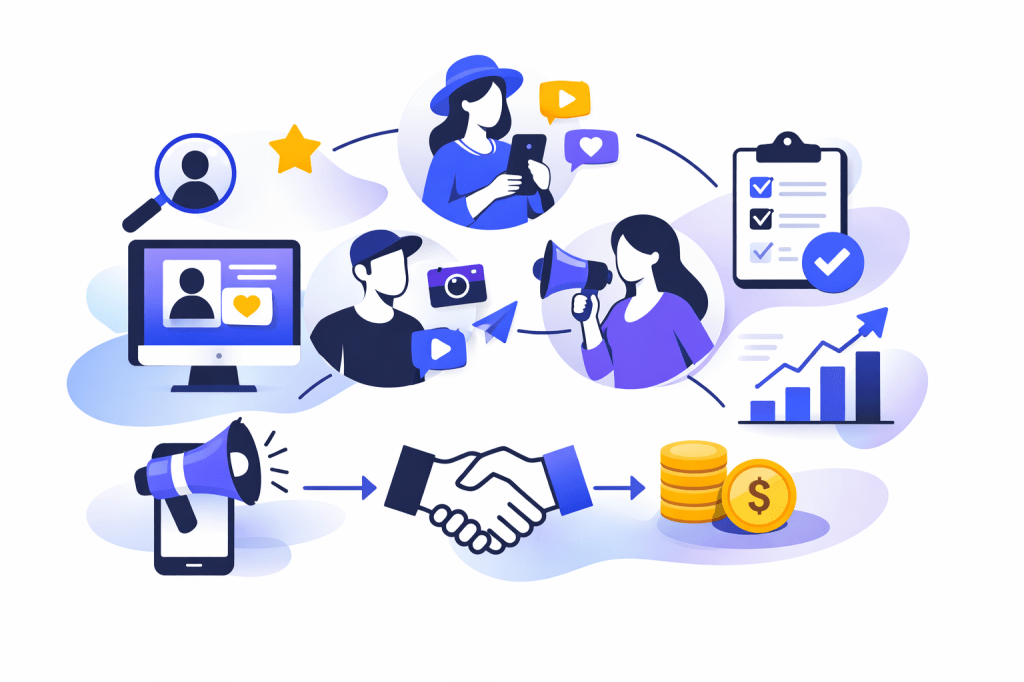
Influencer Marketing Agency Guide for Brands That Want Real Growth
An influencer marketing agency is no longer a nice-to-have for brands that want creator partnerships to work at scale. The channel has become too large, too fragmented, and too performance-driven to manage with random outreach and guesswork, especially now that U.S. influencer marketing spending is projected to reach $10.52 billion in 2025. What used to be a simple “find a creator and send a brief” process now sits inside a much bigger ecosystem of platform tools, compliance rules, paid amplification, and revenue accountability.
That shift is exactly why so many brands have started treating creator partnerships like a serious operating function instead of a side experiment. Platforms themselves are moving in that direction, with Instagram building creator discovery inside Creator Marketplace, TikTok One connecting brands with creators and agencies, and YouTube BrandConnect showing how creator content can outperform brand-made assets. When the infrastructure gets more advanced, the expectations on strategy, selection, reporting, and execution rise with it.
This first part breaks down why an influencer marketing agency matters, how the overall framework works, what its core operating pieces look like, and how professional implementation separates campaigns that feel busy from campaigns that actually move the business forward. The goal here is not to romanticize the space, but to make it easier to see what agencies really do when they are worth hiring.
Article Outline
- Why Influencer Marketing Agencies Matter
- Framework Overview
- Core Components of an Influencer Marketing Agency
- Professional Implementation for Brands
- Measurement, Analytics, and Optimization
- The Future of Influencer Marketing Agencies and FAQ
Why Influencer Marketing Agencies Matter
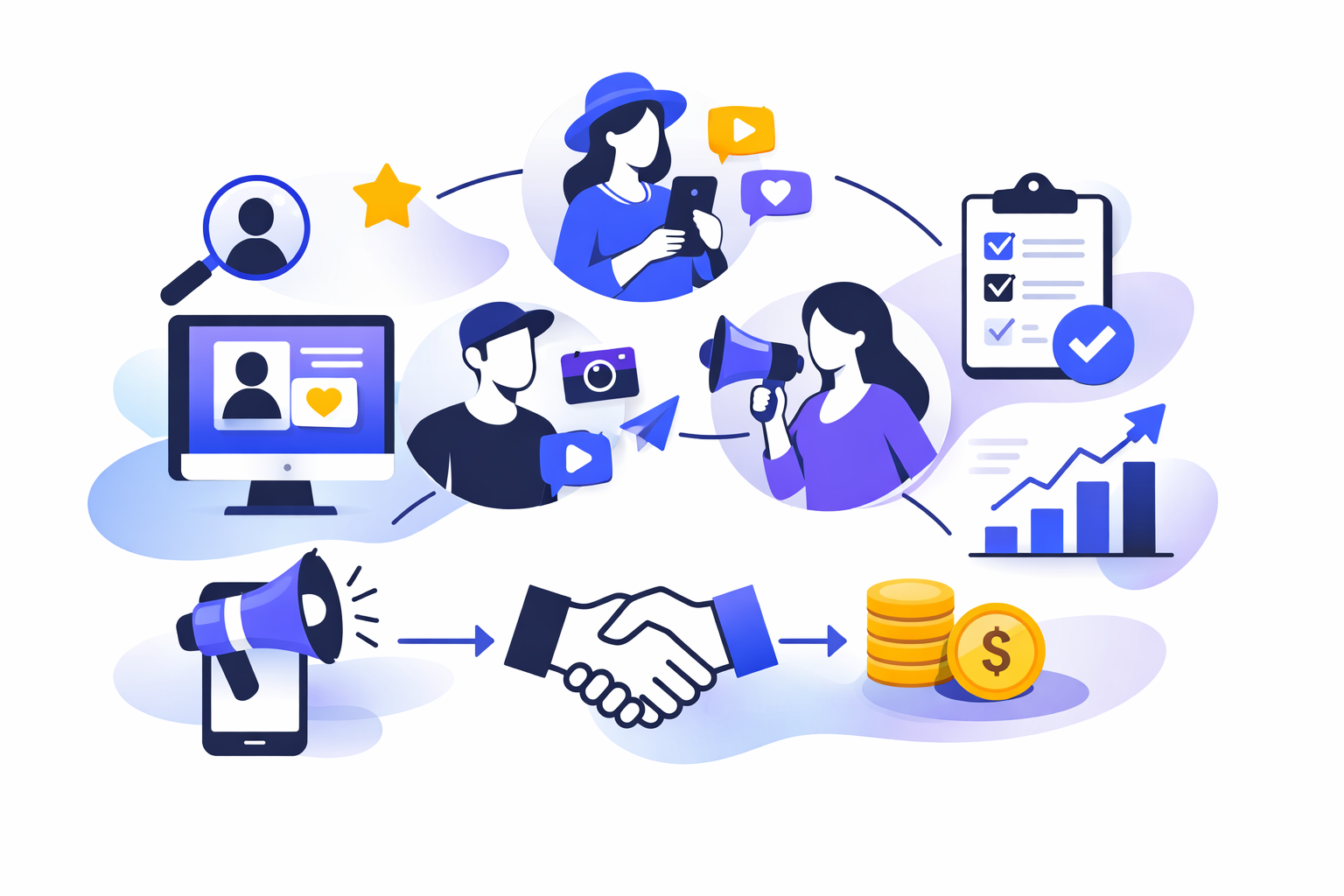
The biggest reason an influencer marketing agency matters is that creator marketing now lives at the intersection of brand building, media buying, compliance, and performance measurement. A brand may begin with a simple goal like reaching a younger audience or launching a product with more credibility, but the work quickly expands into creator vetting, deal structure, usage rights, approvals, disclosures, content timelines, whitelisting, and post-campaign reporting. Without a system, even good creative can get buried under operational friction.
There is also a legal and reputational reason for taking the channel seriously. The FTC’s Endorsement Guides and its guidance on endorsements, influencers, and reviews make it clear that material connections must be disclosed and that endorsements cannot be misleading. That means brands do not just need people who can spot creative talent; they need people who understand how to build campaigns that hold up commercially and legally.
Agencies also matter because the creator economy is professionalizing fast. EMARKETER’s 2025 creator economy outlook points to tougher measurement standards, while platform updates from YouTube, TikTok, and Meta show that creator work is being woven directly into broader advertising systems. In practice, that means the best influencer marketing agencies are not just booking talent; they are building a repeatable commercial engine that turns creator relationships into measurable business outcomes.
Framework Overview
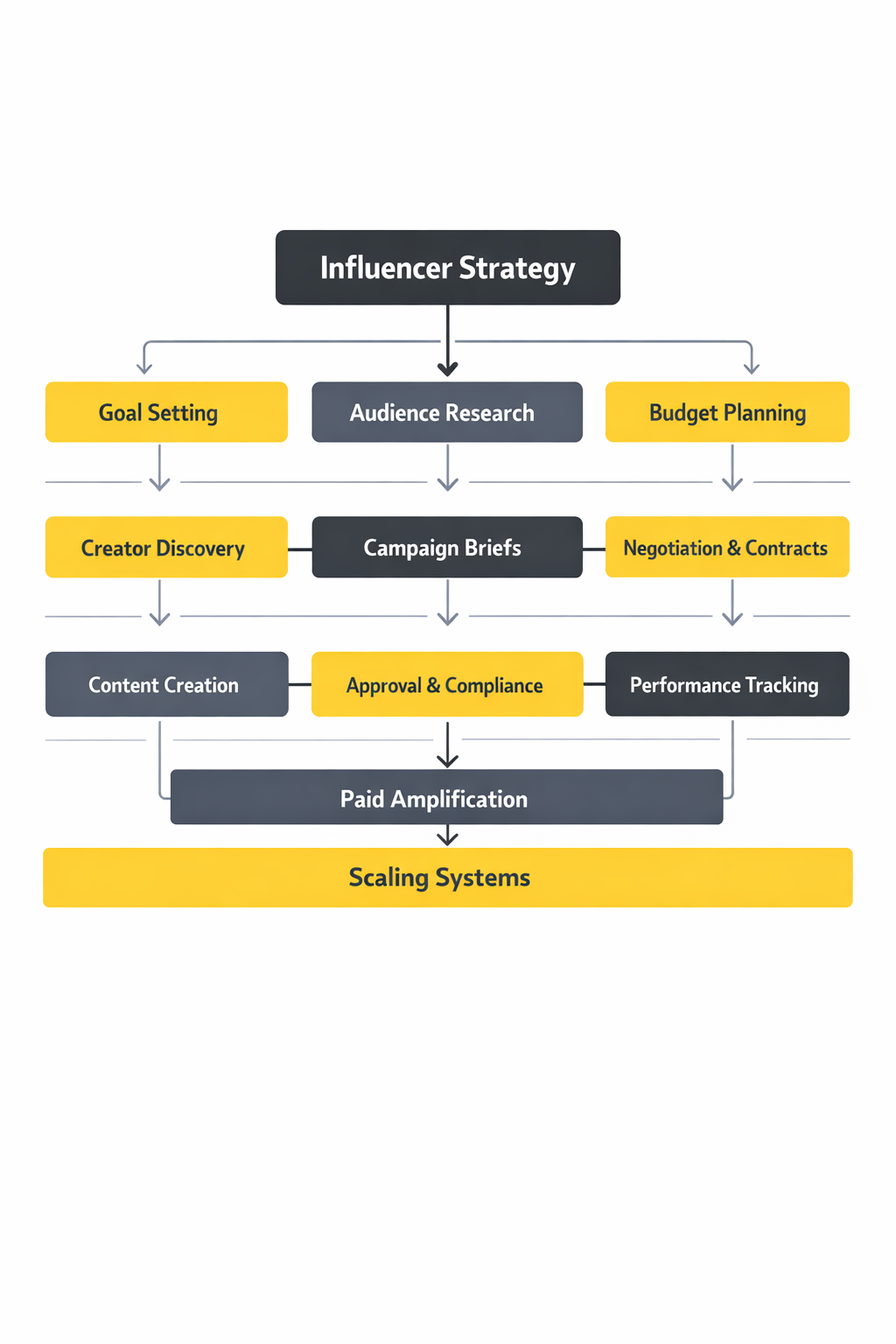
A strong influencer marketing agency framework starts with strategic alignment, not creator selection. Before anybody sends a DM or requests media kits, the agency needs clarity on what the brand is really trying to accomplish: awareness, product education, retail velocity, lead generation, community growth, lower-cost creative production, or a mix of those outcomes. When that foundation is missing, campaigns often look active on the surface but fail because the creators, content format, and reporting model were chosen for the wrong objective.
From there, the framework moves into creator mapping and channel design. This is where agencies decide whether the right move is a handful of high-reach creators, a deeper bench of micro-creators, a hybrid paid-and-organic structure, or a platform-specific approach built around tools like YouTube BrandConnect, TikTok One, or Instagram Creator Marketplace. The framework matters because every one of those choices changes how the campaign will be briefed, tracked, optimized, and expanded.
The final layer is operational governance. That includes contracts, content rights, disclosure controls, review workflows, paid media permissions, and the performance model the brand will use to decide whether to scale or stop. The agencies that earn trust are the ones that can connect all three layers together so the campaign does not break when it moves from strategy into real execution.
Core Components of an Influencer Marketing Agency
The core components of an influencer marketing agency usually fall into four connected areas: strategy, talent sourcing, campaign operations, and measurement. Strategy translates business priorities into a creator plan. Talent sourcing turns vague ideas about “the right influencers” into a shortlist built around audience fit, content quality, category credibility, and the kind of partnership structure the brand can actually support.
Campaign operations are where agencies prove whether they are professionals or just middlemen. This part includes outreach, negotiation, deliverable management, review processes, publication scheduling, disclosure oversight, asset collection, and repurposing content into broader distribution. It sounds unglamorous, but this is the machinery that keeps creator work from collapsing under missed deadlines, confused approvals, or content that never gets reused beyond one post.
Measurement is the component that now decides whether an agency keeps growing with a client or gets replaced. That is why the conversation has shifted away from vanity numbers alone and toward fuller evaluation models shaped by broader advertising standards, including ideas reflected in IAB’s recent attention measurement framework and Nielsen’s 2024 marketing report on ROI in a fragmented media world. In other words, a modern influencer marketing agency has to understand not only who can create attention, but how that attention connects to business impact.
Professional Implementation for Brands
Professional implementation is where the theory gets tested. A brand might think it needs creators with the biggest audiences in its niche, but the real answer often comes from sharper matching, cleaner briefs, stronger rights management, and better post-campaign distribution. That is why experienced agencies spend so much time on workflow discipline: they know the quality of the operating system usually determines whether the creative opportunity is fully captured or quietly wasted.
You can see that principle in how major brands are now approaching creator-led work. L’Oréal Canada described creator partnerships on Meta as a way to build authentic connections that fit each brand’s DNA, while Unilever’s Vaseline Verified campaign generated 63 million social interactions by turning community-sourced product hacks into a creator-friendly, science-backed idea that people actually wanted to share. Those wins did not come from treating influencer marketing like random sponsorships; they came from treating it like a disciplined brand system.
For smaller brands, professional implementation usually means building a stack that keeps communication, content flow, and follow-up organized from day one. That may include scheduling and coordination tools such as Buffer, audience and hashtag workflow support through Flick, and email capture or lifecycle follow-up with Brevo once creator-driven traffic starts arriving. The point is not the software itself; it is the fact that a real influencer marketing agency builds a process that can survive growth instead of improvising every campaign from scratch.
Measurement, Analytics, and Optimization
This is where an influencer marketing agency either earns its fee or exposes itself. Plenty of campaigns look impressive in screenshots, but a smart brand does not pay for screenshots. It pays for movement, and that means the agency has to connect creator output to business outcomes like qualified traffic, branded search lift, conversion rate, customer acquisition efficiency, retail momentum, or at the very least a meaningful rise in consideration.
That is also why measurement in creator campaigns has become much more disciplined over the last two years. Nielsen’s 2024 Annual Marketing Report makes the broader point that marketers are under intense pressure to prove ROI across fragmented media, while IAB’s attention measurement framework draws a useful line between basic delivery and deeper exposure quality. Put those two ideas together and the message is clear: a serious influencer marketing agency cannot stop at reach, impressions, and likes, because those numbers tell you that content was seen, not whether it changed anything that mattered.
The strongest agencies build measurement before the campaign starts. They decide what the primary success signal is, what secondary signals support it, how tracking links and promo codes will work, which content can be repurposed into paid media, and how results will be reviewed without pretending every sale came from a last-click link. That kind of planning sounds less exciting than creator casting, but it is the difference between a campaign you can learn from and a campaign you only remember because the content looked nice.
Metrics That Actually Matter
The right metrics depend on the job the campaign is supposed to do. If the goal is awareness, then an influencer marketing agency should look at qualified reach, video completion patterns, engagement depth, brand lift studies, and the quality of audience fit instead of bragging about raw impressions alone. If the goal is conversion, the conversation shifts toward landing page behavior, assisted conversions, promo-code redemption, creator-specific revenue, and the difference between organic creator content and paid amplification performance.
Platform infrastructure is making this easier, but only if the agency uses it properly. YouTube BrandConnect now emphasizes centralized creator discovery and performance measurement inside Google Ads, while TikTok One positions itself as a single environment for creator discovery, creative insights, and agency collaboration. Those developments matter because they push an influencer marketing agency to operate less like a talent broker and more like a media partner that can compare creators, formats, and results inside one system.
There is another layer brands should watch closely: content utility. CreatorIQ’s 2024 Influencer Marketing Trends Report found that sponsored digital ads featuring creators were viewed by surveyed marketers as the most impactful creator-led strategy, which is a major clue for brands deciding how to judge campaign success. A good influencer marketing agency does not just ask whether a creator post performed well on its own page; it also asks whether the content can keep working across paid social, landing pages, email flows, and retargeting campaigns after the original post goes live.

Attribution Without Fooling Yourself
One of the fastest ways to ruin influencer reporting is to force the entire channel into a last-click model and then act surprised when the numbers look incomplete. Creator work often shapes discovery, trust, and intent before the customer ever types a brand name into search, clicks a retargeting ad, or buys inside a retailer’s ecosystem. That is why an experienced influencer marketing agency usually combines direct-response signals with softer but still meaningful indicators such as brand search growth, lift studies, new-customer mix, audience quality, and repeatable creative performance.
The platforms themselves are nudging brands toward that fuller view. TikTok Brand Lift Studies are built to measure incremental brand impact beyond simple click behavior, and TikTok’s 2025 product updates continue to frame creator activity inside a broader full-funnel model. On the consumer side, Deloitte’s creator economy research found that three out of five consumers surveyed were likely to engage positively with a brand when the recommendation came from the right creator, which helps explain why creator influence often shows up in branded demand before it appears in neat attribution columns.
The practical takeaway is simple. If an influencer marketing agency reports only what is easiest to count, the brand will underinvest in the content that is actually shaping demand. If the agency builds a blended measurement model instead, the brand gets a much clearer picture of what creator partnerships are doing across awareness, consideration, and conversion together.
The Optimization Cycle That Improves Results
Optimization is not something you do after the campaign is over and the budget is already gone. The best influencer marketing agency teams optimize in motion by looking at creator responsiveness, content hooks, thumbnail strength, watch-time patterns, comment sentiment, landing-page behavior, and how well each asset survives when it is turned into paid media. Small adjustments at those points often do more for outcomes than replacing the whole creator roster every month.
This is also where brands start to see why structure beats hype. Deloitte Digital’s 2025 State of Social research notes that creators took the largest share of social media marketing budget priorities for the brands it studied, yet many brands still were not seeing the return they wanted because their strategies were not disciplined enough. An influencer marketing agency that keeps testing creator tiers, tightening briefs, refreshing hooks, and repackaging top-performing assets is far more valuable than one that keeps promising bigger names and louder numbers.
That is the real game. The agency learns which creators generate trust fastest, which formats lower friction on the path to conversion, which messages deserve paid support, and which assets should be retired before more budget gets wasted on them. When that loop is working, influencer marketing stops feeling like a gamble and starts behaving like a system you can improve every quarter.
What Brands Should See in Agency Reporting
A brand should never have to guess whether its influencer marketing agency understands the business. The report should make it obvious by showing what happened, why it happened, what the agency learned, and what needs to change next. If the reporting deck is just a pile of creator screenshots, vanity totals, and generic praise, the agency is asking for trust it has not earned.
Strong reporting usually includes creator-by-creator performance, asset-level analysis, audience-fit commentary, rights status, paid-media recommendations, and a clear separation between direct revenue signals and upper-funnel influence. It should also flag operational lessons, because delays in approvals, weak briefs, or bad landing-page continuity can quietly destroy performance even when the creators did their jobs well. That level of honesty is one of the clearest signs that an influencer marketing agency is serious about building a long-term growth channel instead of selling one more campaign and disappearing.
In the next part, the conversation moves beyond campaign reporting and into the wider ecosystem around an influencer marketing agency, because execution gets much easier once you understand how agencies, creators, platforms, paid media, and owned channels are supposed to work together.
How the Influencer Marketing Agency Ecosystem Works
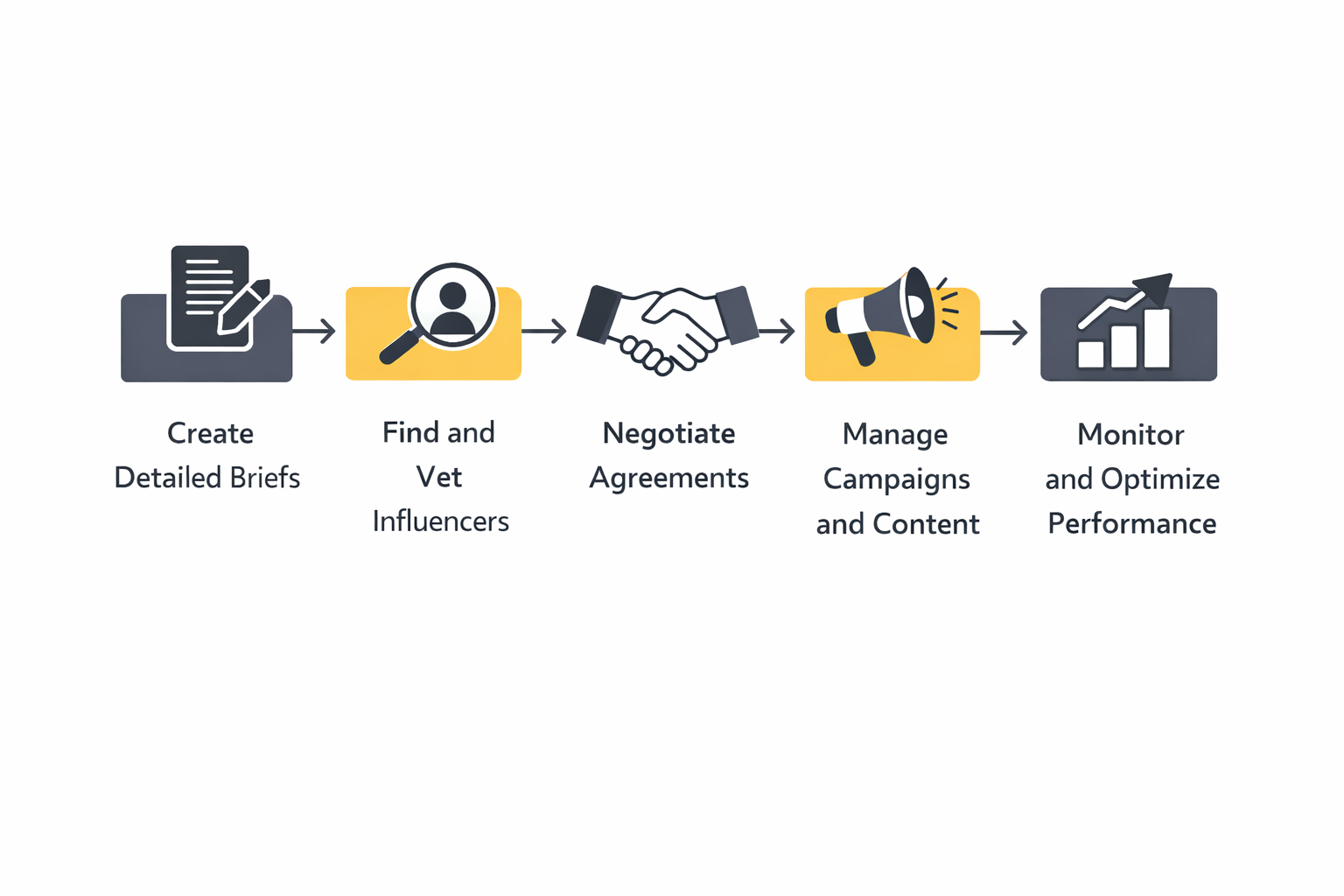
An influencer marketing agency does not operate in a vacuum anymore. It sits in the middle of a fast-moving ecosystem that includes creators, talent managers, social platforms, paid media teams, legal reviewers, ecommerce operators, and customer retention channels. Once you see that clearly, it becomes much easier to understand why some campaigns feel smooth and compounding while others fall apart under missed approvals, weak tracking, and content that never gets a second life.
The broader market is moving in exactly that direction. CreatorIQ’s 2025-2026 State of Creator Marketing report shows that brands, agencies, and creators are working inside a far more mature environment than they were just a few years ago, while Deloitte Digital’s 2025 State of Social research makes the bigger point that social is no longer being treated as a side channel. That matters because an influencer marketing agency now has to connect creator work to the whole customer journey, not just to the first post that goes live.
If you are hiring an agency or building one, this is the part you cannot afford to ignore. A campaign can look creative on the surface and still fail because the surrounding ecosystem was weak. The real leverage appears when the agency knows how to make every player in that system support the same commercial outcome.
Creators Are One Part of the System, Not the Whole System
The easiest mistake in influencer marketing is to assume the creator is the entire strategy. The creator matters, of course, but a good influencer marketing agency knows that creator fit is only one layer of the result. The brief, the offer, the landing-page continuity, the rights package, the timing, the platform format, and the paid-media plan all shape whether that creator partnership turns into growth or just a burst of engagement.
That is one reason platform-owned creator products have become so important. YouTube BrandConnect is built around helping brands find creators and turn those partnerships into measurable campaigns, while TikTok One brings creator discovery, collaboration, and performance workflow into one environment. Those tools do not replace the need for an influencer marketing agency, but they do raise the bar by making it easier to compare creators and harder to hide behind vague reporting.
The practical takeaway is simple. If the agency only talks about follower count or how “on brand” a creator feels, the conversation is too shallow. A serious operator asks how that creator fits the platform, the product, the stage of demand, and the business model the brand is actually trying to grow.
Platforms Now Shape How Agencies Build Campaigns
Every major platform is quietly pushing influencer marketing agencies toward more structured execution. TikTok World 2025 introduced a fuller funnel set of advertiser tools, which matters because creator campaigns on TikTok are increasingly expected to support not only discovery but also consideration and conversion. Meta has kept expanding creator collaboration infrastructure as well, and its creator-focused product updates show how closely creator partnerships are now tied to the broader ad ecosystem on Instagram and Facebook.
That changes the agency’s job in a big way. It is no longer enough to run outreach, negotiate fees, and collect posts. An influencer marketing agency has to understand how creator assets behave inside platform-native ad systems, how they can be amplified, and how those platforms want brands to structure collaboration from the start.
This is also why campaigns often perform better when they are designed natively for the channel instead of copied across channels with minor edits. What works on YouTube because of deeper viewing intent is not automatically going to work on TikTok, and what feels natural on Instagram can look strangely formal in a short-form video environment. Agencies that understand platform behavior at that level give brands a huge advantage before a single piece of content is published.
Why Paid Media and Owned Media Have to Connect
One of the biggest signs that an influencer marketing agency has matured is how it handles distribution after the creator post goes live. The old model treated the creator upload as the finish line. The modern model treats that upload as the starting signal for a wider system that includes paid boosting, retargeting, site merchandising, email follow-up, and in many cases retail support.
This is not theory anymore. Google’s work around YouTube creator partnerships leans heavily into the idea that creator collaborations can support broader brand goals, and recent creator marketing research keeps reinforcing that brands are investing more aggressively when creator content can travel across channels instead of staying trapped in one feed. That makes an influencer marketing agency far more valuable when it knows how to build a content supply chain rather than a one-post campaign.
Owned media matters here more than many brands realize. If creator-led traffic reaches a weak landing page, a stale email sequence, or a checkout flow with too much friction, the agency can do everything right and still get blamed for poor results. That is why the best agencies ask hard questions about the full journey, because they know creator performance is often limited by what happens after the click.
Compliance, Operations, and Rights Are Part of the Ecosystem Too
This is the unglamorous side of influencer marketing, but it is one of the most important. A brand can have the perfect creator lineup and still run into expensive problems if it does not handle disclosures, content approvals, music usage, licensing terms, exclusivity windows, or paid usage rights correctly. That is why a real influencer marketing agency builds process around the campaign instead of pretending creative instinct alone will carry the result.
The compliance side is not optional. The FTC’s guidance on endorsements, influencers, and reviews makes the expectations around material connections and truthful endorsements very clear, and agencies that ignore that reality put both creators and brands in a dangerous position. On top of that, usage rights now matter more because brands increasingly want to extend creator assets into paid social, retail media, and web experiences long after the original collaboration goes live.
Operations matter for another reason too: speed. In a platform environment where attention shifts fast, delays kill momentum. An influencer marketing agency that can keep contracting, briefing, reviewing, approving, and publishing moving without chaos becomes more than a service provider. It becomes part of the brand’s growth infrastructure.
What a Healthy Agency Ecosystem Looks Like
A healthy influencer marketing agency ecosystem feels connected from end to end. Creators know what they are being asked to do and why it matters. The brand knows what success looks like before the campaign starts. Paid media, ecommerce, and retention teams are not surprised after launch because they were brought into the plan early enough to support it.
You can think of it as alignment instead of activity. The creators create the spark, the agency builds the system around that spark, the platforms distribute it, and the brand’s owned channels turn the attention into something durable. When those pieces are working together, influencer marketing stops being a trendy tactic and starts behaving like a serious revenue and brand-building engine.
That is the lens worth keeping as we move forward. The next part goes deeper into where this space is heading, because the future of any influencer marketing agency will be shaped by the agencies that can adapt faster than the platforms, protect authenticity while using more automation, and keep translating creator attention into business results that are impossible to ignore.
Statistics and Data
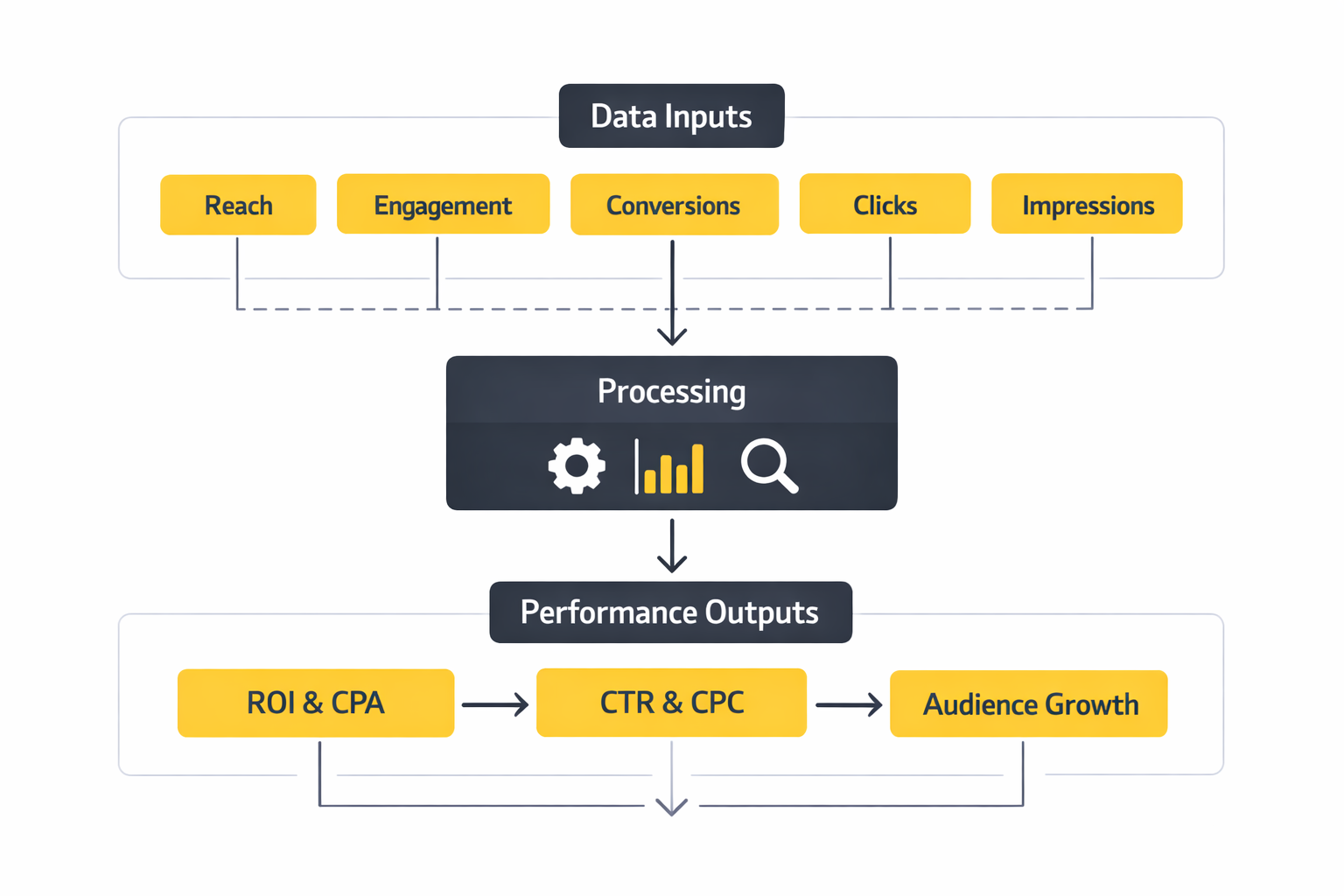
If you want to understand where an influencer marketing agency fits in today’s market, the data tells a very clear story. This is no longer a niche experiment living on the edge of a media plan. EMARKETER’s March 2025 forecast shows U.S. influencer marketing spending reaching $10.52 billion in 2025, and that matters because budgets do not move like that unless brands believe creator partnerships are becoming a core growth channel.
The scale of creator output is another reason agencies matter more than they did just a few years ago. In CreatorIQ’s 2025-2026 State of Creator Marketing study of 1,723 respondents across brands, agencies, and creators, the volume of creator content mentioning brands had reached 32 times what leading brands could produce on their own social channels. Once the output gap gets that wide, an influencer marketing agency stops being just a coordinator and starts becoming the operating layer that helps brands handle scale without losing control.
There is also strong evidence that the channel is getting more demanding, not less. The same CreatorIQ research shows agencies are under pressure around creator vetting, AI disruption, faster content production, and measurable ROI, which is exactly why brands keep asking more from agency partners. The opportunity is getting bigger, but so is the need for structure.
What the Market Size Really Tells You
A big top-line market number is easy to repeat, but the more important question is what it means in practice. When U.S. sponsored content spending moves past $10 billion in 2025, it signals that brands are no longer treating creator work like an occasional awareness play. They are putting real money behind it and expecting it to perform alongside other channels that already face heavier scrutiny.
That is why an influencer marketing agency increasingly gets pulled into strategy conversations that go far beyond influencer outreach. Once budgets rise, brands want better forecasting, cleaner attribution, stronger compliance, and a clearer view of which creator assets deserve paid amplification. Growth in spend creates growth in expectations, and that is the environment agencies now have to operate in.
The data also points to a healthier long-term picture than many people assume. EMARKETER notes that the industry is maturing and diversifying, which helps explain why the strongest agencies are not chasing short-lived hype. They are building systems that can survive platform shifts, budget pressure, and more demanding executive teams.
What the Data Says About Creator Selection
One of the most useful shifts in recent research is the move away from celebrity obsession and toward creator fit. HubSpot’s 2025 social media marketing report says marketers are seeing more success with small influencers, defined there as creators with fewer than 100,000 followers. That lines up with what many experienced teams already know from execution: an influencer marketing agency usually gets better performance when it matches the message to a trusted niche audience instead of paying a premium for broad but weaker relevance.
Deloitte Digital’s 2025 State of Social research pushes the same point further. The report says creators accounted for 24% of total yearly social media marketing spend on average in 2024, and it also shows that social-first brands were far more likely to prioritize micro creators at 84% and mid-tier creators at 87%. That is a huge clue for any brand wondering what a sharp influencer marketing agency should be optimizing for: relatability, trust, and action, not just audience size.
The trust angle matters because it changes how brands should interpret performance. Deloitte found that 83% of consumers say the influencers or creators they follow are trusted sources of information. When an influencer marketing agency understands that trust is the real asset, it begins to choose creators differently, brief them differently, and measure outcomes with more discipline.
What the Data Says About ROI and Operations
The data does not just say that creator marketing is growing. It also says brands are still working hard to make it more efficient. In CreatorIQ’s 2024 Influencer Marketing Trends Report, 52% of brand marketers cited inadequate budget, 48% cited inadequate personnel, and difficulty measuring influencer performance remained one of the top roadblocks. Those numbers explain why brands lean on agencies in the first place. They do not just need creator contacts. They need operational relief and better decision-making.
The same report also showed something encouraging for brands trying to build momentum instead of one-off bursts. Recurring partnerships with creators increased for 51% of brands year over year. That is a strong sign that the channel works better when relationships deepen, which is exactly where a good influencer marketing agency can compound value over time by keeping creator knowledge, performance history, and workflow discipline in one place.
Deloitte’s 2025 research adds another useful layer here. It found that 48% of social-first brands say creator and influencer partnerships deliver the highest ROI of all their social media tactics, compared with 38% of low-maturity brands. That gap is important because it suggests the channel does not magically produce better results on its own. It performs better when the strategy around it is more mature.
What the Data Says About AI and the Future of Agency Work
AI is clearly becoming part of the workflow, but the numbers suggest brands still want humans making the most sensitive decisions. In CreatorIQ’s 2025-2026 report, 95% of brands and 97% of agencies said they had used AI in marketing over the past year. That tells you automation is already here, especially for research, brainstorming, organization, and content operations.
At the same time, the same study shows where the line still is. Managing creator relationships was the job marketers least wanted AI to replace, and 41% of creators said their voice or likeness should never be replaced. That matters because it shows where an influencer marketing agency can still create its biggest edge: judgment, trust, negotiation, brand safety, and the human side of collaboration.
So the statistics do not point to a future where agencies disappear. They point to a future where weak agencies get automated away and strong ones become even more valuable. The numbers keep pulling in the same direction: bigger budgets, more content, more pressure on ROI, more need for creator fit, and more demand for teams that can turn all of that complexity into repeatable performance.
Where the Best Influencer Marketing Agencies Are Headed
The future of an influencer marketing agency is not about doing more of the same with a little extra automation on top. It is about becoming more accountable, more integrated, and much harder to replace. The agencies that keep winning will be the ones that can blend creator relationships, paid media logic, sharper measurement, faster production, and real commercial judgment into one system that brands can trust.
The direction of the market makes that pretty obvious. IAB’s 2025 Creator Economy Ad Spend & Strategy Report projects U.S. creator ad spend at $37 billion in 2025, while EMARKETER’s 2025 creator economy outlook says the next phase of growth will be driven by tougher measurement standards and content that stretches beyond social feeds into broader media ecosystems. In other words, the money is getting bigger, but so is the expectation that an influencer marketing agency can prove what it is doing.
That is why the strongest agencies are starting to look less like campaign coordinators and more like strategic growth partners. They are not just finding creators anymore. They are helping brands build repeatable creator systems that can support launches, performance campaigns, retail moments, community growth, and long-term brand positioning without reinventing the process every month.
AI Will Change the Work, but Not Replace the Best Agencies
AI is already changing how an influencer marketing agency works behind the scenes. Research, creator discovery, clustering, workflow management, briefing support, asset tagging, reporting, and content adaptation are all getting faster. That matters because agencies that ignore those tools will become slower and more expensive than agencies that know how to use them well.
Still, the real edge is staying human where it counts. CreatorIQ’s 2025-2026 State of Creator Marketing report shows that 95% of brands and 97% of agencies used AI in marketing over the past year, yet the same study found that managing creator relationships was the task marketers least wanted AI to replace. That split says a lot. Brands want speed, but they still need judgment, negotiation, trust, brand safety, and the human instinct to know when a partnership will actually work.
So the future does not belong to the agency that uses the most AI. It belongs to the influencer marketing agency that uses AI to remove friction and then reinvests that time into better strategy, better creator matching, and better decision-making. That is a very different position from a commodity service provider, and it is exactly where the market is heading.
The Relationship Model Is Changing Fast
Brands are getting less interested in one-off influencer stunts and more interested in partnerships that can grow over time. That shift changes how an influencer marketing agency should think about creator recruitment, contracting, onboarding, performance reviews, and renewal strategy. If the goal is only to fill a campaign roster, short-term thinking can work. If the goal is to build a trusted network of creators who can keep producing results, the whole operating model has to become more deliberate.
The data is already moving in that direction. CreatorIQ’s 2024 Influencer Marketing Trends Report found that recurring creator partnerships increased for 51% of brands year over year. That matters because repeated collaboration usually leads to better brand fluency, better content, smoother production, and stronger audience trust than a rotating cast of disconnected sponsorships.
A smart influencer marketing agency will lean into that trend instead of fighting it. The agency of the future will spend less time on random creator volume and more time on relationship depth, content continuity, usage rights, and systems that help the brand get more value from creators who have already proven they can move the needle.
How to Choose an Influencer Marketing Agency Without Getting Burned
This is where a lot of brands make expensive mistakes. They get impressed by creator rosters, flashy decks, and screenshots of big engagement numbers, then realize later that the agency has no clean process for rights management, no serious measurement model, and no real thinking behind why certain creators were chosen in the first place. An influencer marketing agency should make the work feel clearer, not more mysterious.
The fastest way to judge an agency is to listen to what it emphasizes. If the conversation stays locked on follower size, celebrity access, and vague talk about “buzz,” you are probably looking at a team that still sells the old version of influencer marketing. If the agency talks about audience fit, creative angle, paid usage rights, post-campaign distribution, conversion path continuity, and what success will look like before launch, you are in much safer hands.
The broader research supports that more mature view. Deloitte Digital’s 2025 State of Social research found that 48% of social-first brands said creator and influencer partnerships deliver the highest ROI of their social tactics. That is not a signal to hire any influencer marketing agency. It is a signal to hire one that operates with maturity, because better systems tend to produce better returns.
Questions Worth Asking Before You Sign
Ask how the agency selects creators, but do not stop there. Ask how it validates audience fit, how it handles disclosures, what usage rights it typically negotiates, how it approaches testing, how it reports on assisted impact versus direct-response impact, and what happens to high-performing creator assets after the original post goes live. A capable influencer marketing agency should have direct, confident answers to all of that without hiding behind jargon.
You should also ask how the agency works with the rest of your marketing stack. If creator content performs well, can the team help extend it into paid media? Does it coordinate with ecommerce, email, landing pages, or retention teams? Can it explain how creator content fits your funnel rather than pretending the influencer post exists in isolation?
Those questions matter because the channel has grown up. The FTC’s endorsement guidance, TikTok One, and YouTube BrandConnect all point in the same direction: creator work is becoming more formalized, more measurable, and more connected to broader advertising infrastructure. An influencer marketing agency that still behaves like an informal talent broker is already behind.
Red Flags That Should Make You Walk Away
There are a few warning signs that deserve immediate attention. One is when the agency cannot explain its measurement approach beyond impressions and engagement. Another is when it avoids the topic of rights, approvals, or compliance as if those things are annoying side notes instead of core parts of the work. A third is when every case study sounds inflated, polished, and suspiciously impossible to verify.
You should also be careful when an influencer marketing agency promises certainty where the channel is naturally probabilistic. Good agencies can improve the odds dramatically through better creator fit, better testing, better creative systems, and better distribution. What they cannot do is guarantee that every creator partnership will perform exactly the same way across every launch, audience, and platform.
The agency worth hiring is usually the one that sounds the most grounded. It will talk about process, experimentation, learning speed, and commercial discipline. It will make the channel feel exciting, yes, but it will also make it feel controlled.
What a Strong Agency Partnership Actually Looks Like
A strong relationship with an influencer marketing agency should feel like momentum, not chaos. You should know what the team is testing, what it has learned, which creators are gaining trust with your audience, which assets deserve extra budget, and where the friction is inside your own funnel. Over time, the agency should help you make better decisions faster because it is building institutional knowledge rather than starting from zero with every campaign.
That is also why the best brand-agency relationships tend to improve after the first few months rather than peak immediately. The agency starts seeing patterns in creator performance. The brand gets better at approvals and feedback. The content becomes more native, the reporting gets sharper, and the system starts compounding.
When that happens, an influencer marketing agency stops feeling like an outsourced service. It starts feeling like a serious growth lever with its own operating rhythm, its own learning loop, and its own ability to push the business forward. The final part will wrap this up with practical answers to the questions brands ask most often when they are deciding whether to hire, scale, or replace an agency.
FAQ Built for the Complete Guide

What does an influencer marketing agency actually do?
An influencer marketing agency helps brands plan, launch, manage, measure, and improve creator partnerships instead of leaving the whole process to random outreach and guesswork. That usually includes strategy, creator sourcing, negotiation, briefs, approvals, disclosure support, usage rights, reporting, and paid amplification planning. When the channel is growing as fast as EMARKETER’s 2025 U.S. spending forecast suggests, that level of structure stops being optional for brands that want consistent results.
When should a brand hire an influencer marketing agency instead of managing creators in-house?
A brand usually benefits from hiring an influencer marketing agency when creator partnerships become too important, too frequent, or too operationally messy to run casually. If the internal team is struggling with creator discovery, approvals, reporting, or paid usage rights, an agency can remove friction fast. The pressure is real, especially now that CreatorIQ’s 2025-2026 research shows brands and agencies are dealing with greater demands around ROI, speed, and brand safety.
How much does an influencer marketing agency usually charge?
There is no honest universal price because fees depend on scope, creator tier, content volume, reporting depth, geography, and whether the agency also handles paid media or only creator management. Some agencies charge flat retainers, some take campaign fees, and some use hybrids that add creator spend and production costs separately. The smarter question is not “What is the cheapest agency?” but “Can this influencer marketing agency create more value than it costs through better execution, better creator fit, and stronger reuse of content?”
Are micro influencers usually better than celebrity influencers?
Not always, but they are often a better fit for brands that care about trust, relevance, and efficient performance. HubSpot’s 2025 social media marketing report points to stronger marketer success with smaller creators, and Deloitte’s 2025 State of Social research shows mature brands heavily favor micro and mid-tier creators. A good influencer marketing agency knows the real question is not creator size by itself, but whether the creator’s audience, tone, and platform behavior match the job the campaign needs to do.
How do agencies choose the right influencers for a campaign?
The best influencer marketing agency teams do not pick creators just because they look popular or polished. They look at audience fit, content quality, engagement patterns, brand alignment, category credibility, platform-native behavior, prior partnerships, and whether the content can travel into paid media after the original post. The agency should be able to explain why each creator belongs in the plan and what role each one is expected to play.
Can an influencer marketing agency help with compliance and disclosure rules?
Yes, and that is one of the most underrated reasons to work with professionals. The FTC’s guidance on endorsements, influencers, and reviews makes it clear that material connections must be disclosed and endorsements cannot be misleading. A strong influencer marketing agency builds those standards into briefs, review workflows, and approval processes so the campaign is not only effective, but also safer for the brand.
How should brands measure whether an influencer marketing agency is doing a good job?
You should look beyond screenshots, likes, and vague claims about awareness. The better test is whether the influencer marketing agency can show what happened, why it happened, what it learned, and what it is changing next across traffic quality, conversion support, creator content performance, paid reuse, and business impact. That standard lines up with the market shift described by IAB’s 2025 creator economy research and Nielsen’s 2024 marketing report, both of which reflect stronger pressure on measurable ROI.
Do agencies only work on awareness campaigns, or can they support sales too?
A modern influencer marketing agency should be able to support both, but the campaign has to be designed for the right outcome from the beginning. Creator content can drive discovery, education, conversion, and even post-purchase trust when it connects cleanly to the landing page, offer, and follow-up experience. That is also why TikTok One and YouTube BrandConnect are becoming more important, because platforms are building more direct links between creator work and full-funnel advertising systems.
What is the biggest mistake brands make when hiring an influencer marketing agency?
The biggest mistake is falling in love with surface-level signals and ignoring operating quality. A flashy deck can hide weak reporting, weak rights management, weak creator logic, and weak post-campaign distribution, which means the brand ends up paying for activity instead of progress. The influencer marketing agency worth hiring is usually the one that sounds the most grounded about process, testing, and commercial outcomes.
Will AI replace influencer marketing agencies?
AI will absolutely change how an influencer marketing agency works, but it is far more likely to reshape the workflow than erase the role. CreatorIQ’s 2025-2026 report says AI use is already widespread across brands and agencies, yet creator relationship management remains one of the least replaceable tasks. That makes sense, because automation can speed up research and reporting, but trust, judgment, negotiation, and brand instinct are still deeply human advantages.
How long does it take to see results from an influencer marketing agency?
Some brands see traction quickly, especially when the offer is strong and the creator fit is obvious, but the deeper gains usually come as the system matures. Over time, the influencer marketing agency learns which creators perform best, which hooks work, which assets deserve paid support, and where friction inside the funnel is killing momentum. That compounding effect is one reason CreatorIQ reported more recurring creator partnerships year over year, because brands often get better results once the relationship stops resetting from scratch.
What should a brand ask before signing with an influencer marketing agency?
Ask how creators are selected, how success is measured, how paid usage rights are negotiated, how disclosure compliance is handled, and what the reporting process looks like after launch. Ask what happens to winning creator assets once they are published and whether the agency can help extend them into other channels. If an influencer marketing agency cannot answer those questions clearly, it is probably not ready to manage a serious budget.
Work With Professionals
If you have made it this far, you already know the real issue is not whether creator marketing works. It is whether you have the discipline, systems, and commercial clarity to make it work consistently. A strong influencer marketing agency brings exactly that by turning creator partnerships into a repeatable growth channel instead of a pile of disconnected sponsorships.
The brands that win over the next few years will not be the ones that chase every trend first. They will be the ones that build better systems for creator selection, measurement, paid reuse, compliance, and long-term relationship management. With IAB projecting U.S. creator economy ad spend at $37 billion in 2025, the opportunity is enormous, but only for teams that treat the channel seriously.
If your brand is ready to stop guessing and start building something that can scale, working with professionals is the smartest next move. The right influencer marketing agency will not just help you find creators. It will help you build a system that keeps getting better every time you use it.
Explore 10K+ Remote Marketing Contracts on MarkeWork.com
Most marketers spend too much time chasing clients, competing on crowded platforms, and losing a percentage of every project to middlemen.
MarkeWork gives you a better way. Browse thousands of remote marketing contracts and connect directly with companies desperate to hire skilled marketers like you without platform commissions and without unnecessary gatekeepers.
If you’re serious about finding better opportunities and keeping 100% of what you earn, you can explore available contracts and create your profile for free at MarkeWork.com.
 Filip Konecny Enterprises