

Email marketing jobs keep showing up across startups, ecommerce brands, publishers, SaaS companies, agencies, and large enterprise teams because email still sits at the center of owned audience growth. The work is not just about writing subject lines anymore. Employers want people who can connect strategy, segmentation, automation, deliverability, reporting, and revenue in one system.
That shift is easy to understand when you look at the market itself. The U.S. Bureau of Labor Statistics shows market research analysts and marketing specialists are projected to grow 7% from 2024 to 2034, with about 87,200 openings each year and a 2024 median pay of $76,950, while Litmus reports that 35% of companies see email ROI of 36:1 or more. When a channel can still produce that kind of commercial value, companies do not treat email marketing jobs as a side function. They hire for them because the inbox influences acquisition, retention, and customer lifetime value.
There is another reason these roles have become more serious. Google says that bulk senders to Gmail must authenticate mail, avoid unwanted email, and make unsubscribing easy, with stronger enforcement on non-compliant traffic beginning in November 2025. That means a modern email marketer is expected to understand customer psychology and technical compliance at the same time, which is exactly why specialized email marketing jobs have become more valuable.
Article Outline
This article is organized into six parts so you can move directly to the section that matches where you are right now in your career research or hiring process.
- Part 1: Why Email Marketing Jobs Matter
- Part 2: Framework Overview
- Part 3: Core Components
- Part 4: Professional Implementation
- Part 5: Analytics and Career Growth
- Part 6: The Email Marketing Job Ecosystem
Why Email Marketing Jobs Matter

Email marketing jobs matter because email remains one of the few channels a brand actually controls. Algorithms can change, ad costs can spike, and referral traffic can disappear overnight, but a healthy email list gives a company direct access to subscribers, buyers, members, and leads. That is why teams keep investing in specialists who can build and protect that channel.
The role also matters because businesses no longer judge email by vanity metrics alone. Litmus notes that 44% of marketers use lifecycle emails to activate, engage, and retain customers, which tells you employers see email as a full-journey function rather than a newsletter-only task. In practice, that means the person hired for an email role often affects onboarding, abandoned cart recovery, product adoption, renewal, win-back campaigns, and retention strategy.
The job is becoming more valuable because the skill mix is getting harder to replace. The American Marketing Association explains in its 2025 marketing skills report, based on 1,200-plus marketers, 450-plus job postings, and expert interviews, that the field now demands stronger AI, privacy, and channel-specific execution skills. In other words, companies are not just looking for someone who can send emails. They want someone who can make email profitable, compliant, and measurable.
Framework Overview
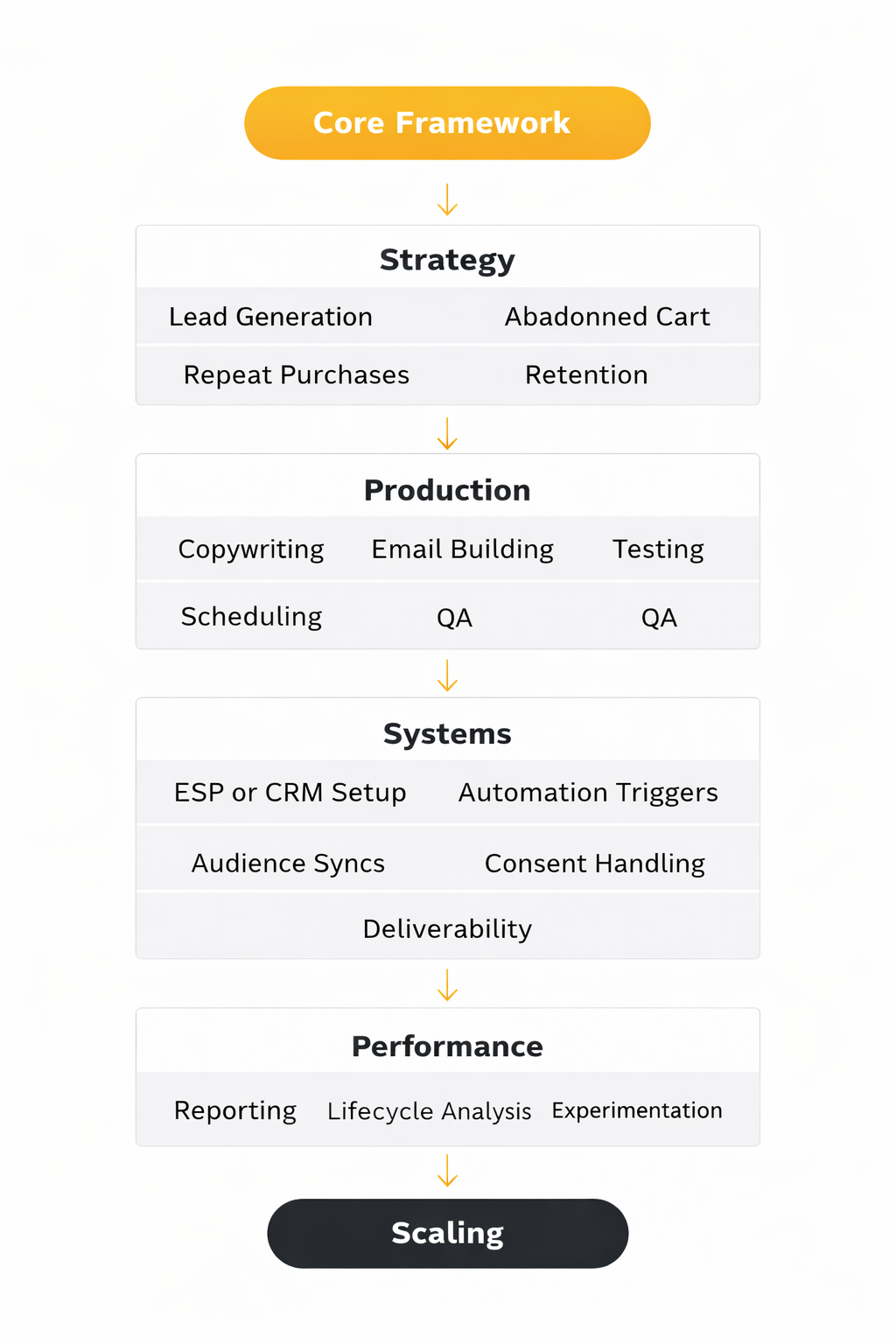
The easiest way to understand email marketing jobs is to split them into four layers: strategy, execution, systems, and performance. Strategy covers audience goals, lifecycle planning, offers, and messaging architecture. Execution covers copy, design briefs, scheduling, segmentation, testing, and campaign launches. Systems cover CRM connections, ESP setup, automation logic, data hygiene, and deliverability. Performance covers reporting, experimentation, and revenue impact.
Once you look at the field through that framework, job titles make more sense. A coordinator usually helps with execution. A specialist often owns campaign production and reporting. A manager is expected to shape strategy, work across teams, and improve system performance. A lifecycle or CRM marketer usually goes even deeper into behavior-based automation and retention.
This is also why companies often write messy job descriptions for email marketing jobs. They may advertise for one role, but they really need parts of three roles at once. A smart candidate can read between the lines and identify whether the employer truly needs a campaign operator, a lifecycle strategist, a deliverability-minded systems thinker, or a hybrid who can do all of them reasonably well.
Core Components
The core components behind strong email marketing jobs are not mysterious, but they are interconnected. First comes audience understanding, because bad segmentation ruins even strong copy. Then comes messaging, because the inbox is crowded and relevance matters more than cleverness. After that comes automation, because businesses want repeatable systems instead of one-off efforts. Finally, analytics ties the whole function together by showing what actually moved revenue, retention, or engagement.
Official occupation data backs up that broader skill mix. O.NET shows that related marketing roles increasingly use tools such as Google Analytics, HubSpot, Marketo, Canva, Adobe Creative Cloud, Microsoft Excel, and CRM platforms including Oracle Eloqua and Salesforce. That matters because email marketing jobs rarely live in isolation. The person in the role is usually working inside a broader tech stack, not in a standalone email tool.
The technical side has also become non-negotiable. Google’s sender guidance makes it clear that authentication, low spam rates, and one-click unsubscribe are part of staying inbox-safe at scale. So when employers ask for experience with deliverability, list hygiene, and compliance, they are not padding the description. They are telling you the job now extends beyond creative work into operational reliability.
Professional Implementation
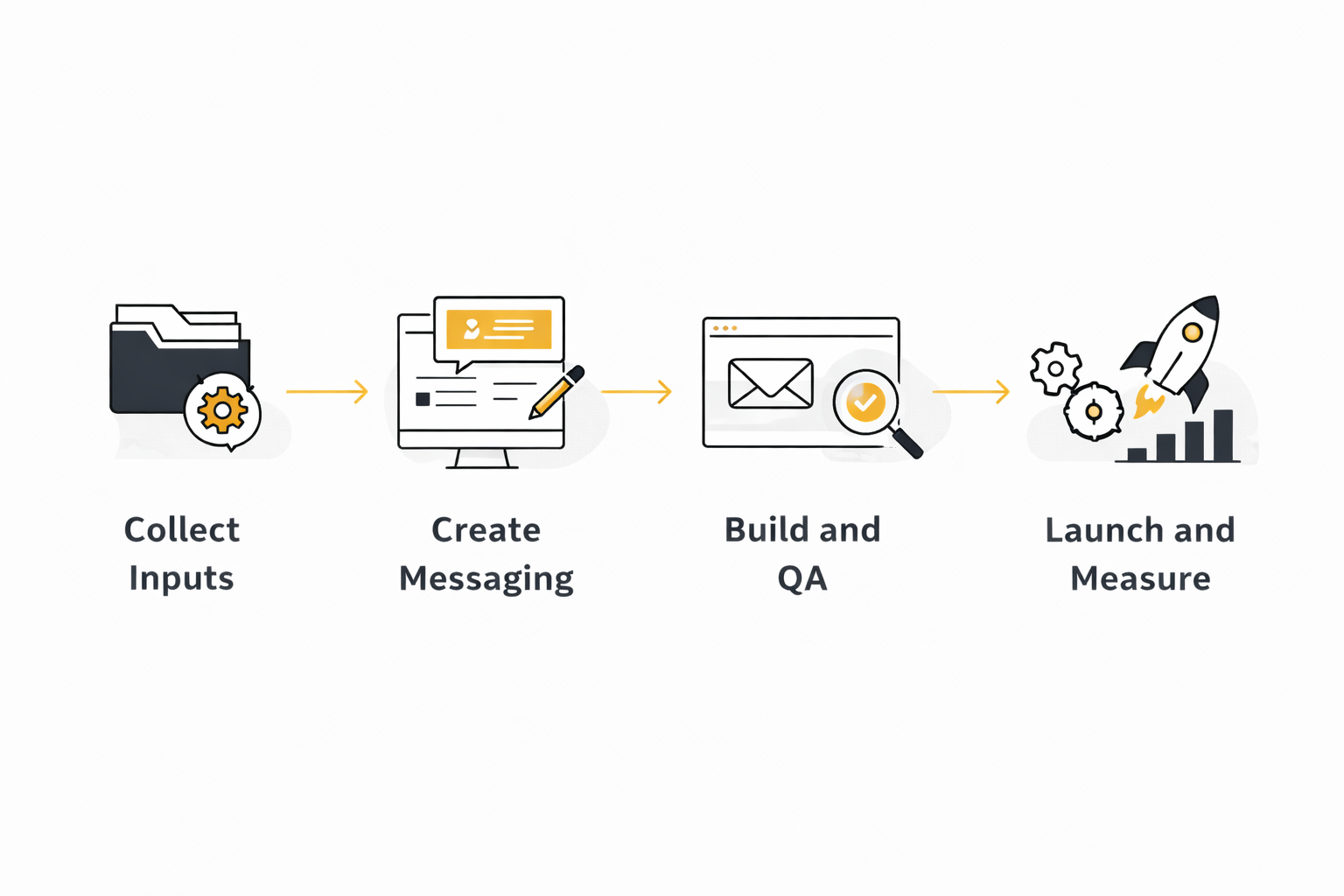
Professional implementation is where email marketing jobs stop sounding simple and start looking like real business roles. A company does not hire someone just to “send campaigns.” It hires them to create a reliable operating rhythm: brief the campaign, pull the right segment, build the message, QA the send, monitor deliverability, report the result, and turn the lesson into the next experiment. That repeatable process is what makes an email marketer valuable.
A real example helps here. English National Opera’s Campaign Monitor case study shows a team using segmented campaigns, testing, and audience-specific newsletters as part of a larger audience development strategy, and the organization reported 30% growth in tickets sold and overall revenue generated by student members. That story matters because it reflects how the job works in the real world: audience insight, targeted communication, testing, and commercial impact all sit inside one email function.
At a more advanced level, professional implementation also means choosing the right platform for the environment you are working in. Teams hiring for email marketing jobs often expect familiarity with tools for automation, CRM, landing pages, and list growth, which is why it helps to know platforms such as Brevo, Moosend, Systeme.io, and outreach-focused infrastructure like ScaledMail. You do not need to master every platform at once, but you do need to understand why different employers choose different stacks and how those stacks shape the day-to-day job.
That is also why the best candidates present themselves less like “email senders” and more like operators. If you can explain how you protect sender reputation, improve segmentation, build lifecycle flows, and report business outcomes clearly, you immediately stand out. Employers are looking for someone who can turn email from a recurring task into a dependable growth system.
The Four Layers Behind Modern Email Marketing Jobs
If you want to understand email marketing jobs without getting lost in random job titles, start with the four layers that usually sit behind the role: strategy, production, systems, and performance. Strategy is where the business decides what email is supposed to do, whether that means bringing in more leads, recovering abandoned carts, increasing repeat purchases, or improving retention. Production is the part most people picture first, but it is only one layer: writing the copy, building the campaign, QAing the email, scheduling the send, and making sure the message actually looks right across devices and inboxes.
Systems is where the role gets more serious and more valuable. That layer includes the ESP or CRM setup, audience syncs, automation triggers, consent handling, deliverability, suppression rules, and the infrastructure that keeps campaigns from turning into a mess. Performance sits on top of all of it, because even a beautifully written campaign means very little if nobody can explain what it changed in the business, which is exactly why teams lean on reporting, lifecycle analysis, and experimentation rather than just celebrating opens and clicks.
That framework also explains why email marketing jobs keep evolving. The American Marketing Association’s 2025 skills research based on more than 1,200 marketers and 450-plus job postings shows that channel execution alone is no longer enough, because employers increasingly need people who can handle data, privacy, ROI, and technology at the same time. In plain English, the inbox has become a business system, not just a communication channel, and the jobs around it have grown up fast because of that.
How Employers Usually Break These Roles Apart
One of the most confusing things about email marketing jobs is that companies often use different titles for work that overlaps. A coordinator or assistant is usually brought in to help execute campaigns, manage calendars, update templates, and support list operations. A specialist or CRM marketer is more often expected to own segmentation, campaign logic, testing, and recurring performance reviews. A manager typically adds strategy, cross-functional leadership, and responsibility for commercial outcomes.
Once you move further up, the titles change again because the business becomes more complex. Ecommerce brands may hire lifecycle marketers, retention marketers, or CRM managers because they care deeply about flows tied to browsing behavior, purchase history, loyalty, and repeat revenue. SaaS companies often lean toward lifecycle or customer marketing roles because onboarding, activation, expansion, and renewal matter more than promo blasts. Agencies may collapse several of these responsibilities into one hire, which is why many job descriptions for email marketing jobs look ambitious to the point of being slightly unreasonable.
Government career data helps explain why that happens. The U.S. Bureau of Labor Statistics places closely related work inside the broader marketing specialist category, where the 2024 median annual pay was $76,950 and projected employment growth for 2024 to 2034 is 7%. Employers know the commercial upside is real, so they often try to hire someone who can cover more ground than a narrow title suggests. That is frustrating when you are applying, but it becomes useful once you know how to read the role beneath the headline.
What Hiring Managers Are Really Looking For
Most hiring managers are not secretly hoping for a “creative email person” in the vague way people talked about marketing ten years ago. They want someone who can make the channel dependable. That means understanding audience behavior, building relevant messages, handling segmentation cleanly, and proving that the work helped move a real business number rather than just producing activity. The candidate who can connect those dots usually feels much stronger than the one who only talks about subject line creativity.
You can see that expectation reflected across the tools tied to adjacent marketing roles. O*NET’s profile for marketing specialists points to common software across the field, including Google Analytics, HubSpot, Marketo, Oracle Eloqua, Salesforce applications, Canva, Adobe Creative Cloud, and spreadsheet-heavy reporting workflows. That is a useful reminder that email marketing jobs rarely sit on an island. Employers usually expect the person in the role to work across analytics, creative, CRM data, and campaign operations instead of living inside a single sending platform all day.
The strongest candidates also show that they understand how modern email work has shifted toward personalization and data activation. Salesforce’s latest State of Marketing report says 83% of marketers recognize the move toward more personalized, two-way engagement, while only one in four are satisfied with how they use data to power those moments. That gap creates opportunity. If you can show that you know how to translate customer data into useful lifecycle messaging, you immediately become more attractive in a crowded field of applicants.

Why Systems Knowledge Changes Everything
This is the part many people underestimate when they first look into email marketing jobs. It is easy to assume the role is mostly copy and campaign setup, but the real leverage often comes from understanding the machinery behind the send. If a list is poorly segmented, if consent records are sloppy, if automation logic is broken, or if authentication is weak, the entire channel starts leaking performance before the copy ever gets a fair chance.
That is one reason platforms keep talking less about one-off newsletters and more about orchestrated customer journeys. Mailchimp describes modern email work around automation, segmentation, and deliverability basics such as authentication and list hygiene, while Klaviyo’s 2025 B2C marketing report built from more than 1,500 marketers frames growth around retention, platform unification, and smarter customer experiences. That is not vendor fluff in the way some people assume. It reflects the reality that employers increasingly value marketers who can operate inside a system instead of only producing campaigns.
Google’s own sender rules make that even clearer. Its Gmail guidance for bulk senders states that authentication, low spam rates, and easy unsubscribing are baseline requirements, with stronger enforcement beginning in November 2025. So when a hiring manager asks whether you understand deliverability, they are not trying to sound technical for fun. They are trying to avoid revenue loss, reputation damage, and inbox placement problems that can wreck an otherwise strong email program.
How To Tell Which Version Of The Role Fits You Best
Not all email marketing jobs are built for the same kind of operator, and this is where a lot of smart people waste time applying to roles that do not suit them. If you love execution, calendars, copy refinement, and getting campaigns out the door cleanly, you may thrive in coordinator or specialist roles. If you enjoy architecture more than volume, lifecycle, CRM, or automation-heavy jobs may fit better because they reward structured thinking, audience logic, and long-term optimization.
The company type matters just as much as the title. Ecommerce teams usually care more about revenue per recipient, promotional cadence, and post-purchase flows. SaaS teams care more about activation, usage, expansion, and churn prevention. Nonprofits and publishers often put more weight on engagement, fundraising, membership, or subscriber retention. You are still looking at email marketing jobs in each case, but the day-to-day work can feel completely different depending on which business model sits underneath it.
That is why the best move is not to chase titles blindly. Read the role through the framework instead: what is the business trying to achieve, which layer is most important, and what kind of operator are they really asking for? Once you start thinking that way, email marketing jobs become much easier to evaluate, and you stop applying like a generalist and start positioning yourself like someone who actually understands where the value is created.
The Platform Question Employers Quietly Care About
Most employers will say they care more about principles than platforms, and that is partly true, but only partly. In real hiring decisions, familiarity with the stack still matters because it reduces ramp time and lowers risk. Someone who already understands how automation, forms, segments, reporting, and suppression work inside a live platform can usually contribute faster than someone who only knows the theory.
That does not mean you need to know every tool on the market. It does mean you should be comfortable learning the logic behind the systems companies already use, whether that points you toward Brevo, Moosend, Systeme.io, or more outbound-oriented infrastructure like ScaledMail. A hiring manager does not need you to worship their software choice. They need confidence that you can think clearly inside a platform, protect the channel, and turn the tool into measurable business output.
That is the deeper point of this whole framework. Email marketing jobs are no longer defined by a single task, and they are not won by sounding vaguely enthusiastic about email as a channel. They are won by showing that you understand the moving parts, the commercial stakes, and the operating rhythm behind the role. Once you can do that, the title matters a lot less, because employers start seeing you as someone who can actually carry the work.
Core Components of Email Marketing Jobs
Audience Understanding and Segmentation
The first thing that separates strong email marketing jobs from weak ones is audience understanding. Anybody can send the same message to a giant list, but the people who get hired and keep growing in this field know that the real money is in relevance. That means understanding who is on the list, why they joined, what they have done since joining, what stage of the customer journey they are in, and what kind of message actually makes sense for them right now.
This is why segmentation keeps showing up inside serious email roles. It is not some fancy extra that only enterprise teams care about. It is the foundation that decides whether a campaign feels helpful or annoying, and whether a brand earns trust or burns attention. Resources from Mailchimp’s platform guidance, Klaviyo’s B2C marketing research, and Salesforce’s marketing research all point in the same direction: marketers are under pressure to use customer data more intelligently, because generalized messaging simply does not hold up as well as it used to.
If you are looking at email marketing jobs and wondering what employers secretly care about, start here. They want to know whether you can think through audience logic instead of just building sends. When you can explain how you would treat new subscribers differently from repeat buyers, or inactive leads differently from highly engaged customers, you sound like someone who understands the business side of email rather than just the tool.
Copy, Messaging, and Offer Positioning
Great copy still matters, but not in the shallow way people often talk about it. The goal is not to sound clever for five seconds and hope somebody clicks. The goal is to connect the message to the moment, make the value feel obvious, reduce friction, and move the reader toward one clear next step. That is why good email marketers think about message-market fit inside the inbox, not just word choice in isolation.
This is also where many email marketing jobs become more strategic than outsiders expect. A strong operator is not just writing subject lines and body copy. They are deciding which pain point to lead with, which proof to emphasize, which objection needs to be softened, and which call to action deserves the most attention. In practice, that means the best people in these roles often borrow as much from customer psychology and sales thinking as they do from classic campaign execution.
The work becomes even more valuable when the messaging is tied to business context. A welcome email should not sound like a last-chance sales promotion. A post-purchase email should not read like a cold acquisition campaign. A re-engagement sequence should not pretend the relationship is brand new. When employers look for people who can handle email marketing jobs at a high level, they are really looking for people who understand that the right message depends on the right moment.
Automation and Lifecycle Thinking
This is where email marketing jobs stop being about one-off campaigns and start becoming much more interesting. Lifecycle thinking means you are not simply asking, “What should we send this week?” You are asking, “What should happen after someone subscribes, browses, buys, upgrades, goes inactive, or gets close to leaving?” Once you start thinking like that, email becomes an operating system for customer relationships rather than a calendar of broadcasts.
That shift is why automation experience is so attractive to employers. Guides from Mailchimp on automations and broader lifecycle work across platforms like Brevo, Moosend, and Systeme.io all reflect the same reality: companies want repeatable journeys that keep working even when the team is focused elsewhere. A welcome flow, onboarding flow, abandoned cart series, win-back sequence, or renewal reminder is valuable because it keeps the business moving without depending on somebody manually rebuilding the wheel every week.
For anyone pursuing email marketing jobs, this is one of the best places to build leverage. If you can map triggers, set entry and exit rules, write the sequence, and explain why each step exists, you immediately move into a more valuable category. Employers are not just hiring for output. They are hiring for systems that keep producing output with less friction over time.
Deliverability, Consent, and Trust
This part is less glamorous, but it can make or break the entire role. You can have strong offers, clean design, sharp copy, and well-built automations, but if the messages do not reliably land in the inbox, the program starts bleeding value fast. That is why deliverability and compliance are no longer side topics. They are core components of modern email marketing jobs, especially for brands sending at scale.
The rules have become more visible in the last couple of years. Google’s requirements for bulk senders to Gmail put authentication, easy unsubscribing, and spam-rate discipline right in the spotlight, while Mailchimp’s deliverability guidance keeps reinforcing the basics of sender reputation, list hygiene, and permission-based sending. None of that is optional background knowledge anymore. It is part of the job, because a company that ignores these fundamentals can damage both performance and brand trust at the same time.
This matters for career growth too. The email marketer who understands consent management, authentication, suppression logic, and complaint risk is simply more useful than the one who only knows how to build pretty campaigns. Employers know that inbox trust takes time to build and can be damaged quickly, so they put real value on people who can protect the channel while still pushing it to perform.
Analytics and Optimization
One of the biggest mistakes people make when they look at email marketing jobs is assuming the work ends when the campaign goes out. In strong teams, that is where another important phase begins. Somebody has to look at performance, compare segments, identify friction, interpret behavior, and decide what needs to change next. Otherwise the team is just producing motion, not progress.
That is why optimization matters more than isolated metrics. Open rate on its own does not explain enough. Click rate without context can be misleading. Revenue without knowing which audience received which message does not teach the team much either. The people who get trusted in email marketing jobs are usually the ones who can look beyond surface metrics and ask smarter questions about journey quality, conversion intent, subscriber fatigue, and what the data says about audience fit.
Tools listed in the O*NET profile for marketing specialists, from analytics platforms to CRM systems and reporting tools, reinforce how measurement-heavy this field has become. Email is not judged in a vacuum. It is judged in the context of acquisition cost, retention, customer value, and commercial performance. The more clearly you can connect inbox behavior to business outcomes, the stronger you become in the market for email marketing jobs.
Cross-Functional Execution Is a Core Skill Too
There is one more component that does not always show up neatly in a skills list, but it absolutely affects success in email marketing jobs: cross-functional execution. Email touches design, data, product, sales, customer success, ecommerce, legal, and leadership more often than people expect. That means the role is not just about individual ability. It is also about how well you can work across teams without turning every campaign into a bottleneck.
A real email operator often spends part of the day getting audience definitions from data, part of the day refining messaging with brand or product teams, part of the day checking automation logic, and part of the day explaining performance to stakeholders who do not live inside the platform. That mix is exactly why the role can become such a strong career path. It teaches you how a business really communicates with its customers at scale, and that is valuable far beyond the inbox itself.
So when you think about the core components of email marketing jobs, do not reduce the role to writing and sending. The real role is broader than that. It sits at the intersection of audience insight, persuasive messaging, automation logic, trust, measurement, and operational execution. Once you understand those components clearly, the whole career path starts making a lot more sense.
Statistics and Data
Why the Numbers Matter in Email Marketing Jobs
If you want to understand where email marketing jobs are headed, you have to look at the numbers behind the work, not just the job titles. Businesses hire more aggressively when a channel keeps producing measurable returns, and email still earns that kind of respect. Litmus continues to show that many teams report email ROI at 36:1 or higher, which explains why employers keep treating the inbox as a revenue channel rather than a support task that somebody handles on the side.
That commercial weight changes the way these roles are evaluated. When a company believes email can help drive acquisition, retention, reactivation, and repeat purchases, the person running that channel is not judged on activity alone. They are judged on whether they can protect performance, make better decisions with data, and keep the system producing reliable results month after month.
That is also why the analytics side of email marketing jobs matters so much. If a marketer cannot explain what happened after the send, what changed between audience segments, and what the next test should be, they become easier to replace. The operator who can translate numbers into action becomes much harder to ignore.
Job Market Growth and Salary Signals
The broader labor market still gives a useful picture of why email marketing jobs remain attractive. The U.S. Bureau of Labor Statistics shows that market research analysts and marketing specialists are projected to grow 7% from 2024 to 2034, with about 87,200 openings each year and 2024 median pay of $76,950. Email roles sit inside that larger commercial and digital marketing ecosystem, so those figures matter because they show the field is not shrinking into irrelevance.
Salary data only tells part of the story, though. What makes email marketing jobs especially interesting is that compensation often rises when the role touches more revenue-critical work. A coordinator who mainly supports sends will usually be paid differently from a lifecycle marketer who owns automations, retention flows, deliverability health, and revenue reporting. The more directly a role is tied to business outcomes, the more valuable it tends to become.
This is why employers keep asking for hybrids instead of narrow specialists. They want somebody who can think commercially, handle systems, and explain performance clearly. Once you understand that, the salary conversation around email marketing jobs starts to make a lot more sense.
Personalization, Data, and the Expectation Gap
One of the clearest trends in modern email marketing jobs is that businesses expect more personalization, but many teams still struggle to use data well enough to deliver it consistently. Salesforce’s latest State of Marketing report says 83% of marketers recognize the move toward more personalized, two-way engagement, while only one in four are satisfied with how they use data to power those moments. That gap is not just an interesting industry talking point. It is a hiring signal.
When a company knows it should be more relevant but cannot operationalize that relevance, it starts looking for people who can close the gap. That is where email marketing jobs become more strategic than they look from the outside. The role is no longer just about sending messages. It is about turning customer signals into better timing, better segmentation, and better journeys.
For candidates, this is one of the best opportunities in the whole market. The person who can combine audience logic with clean execution is far more useful than the person who only knows how to build a template and press send. That difference becomes obvious the moment a hiring manager starts talking about lifecycle performance instead of campaign volume.
The Tool Stack Behind the Role
Another important data point is that email marketing jobs rarely live inside one platform anymore. The work now touches analytics tools, CRM systems, design software, spreadsheets, testing workflows, and reporting environments. The O*NET profile for marketing specialists lists tools such as Google Analytics, HubSpot, Marketo, Oracle Eloqua, Salesforce applications, Adobe Creative Cloud, Canva, and Microsoft Excel, which gives a pretty honest picture of how broad the day-to-day environment has become.
That matters because the job market rewards people who can move comfortably across systems. A marketer who only understands one sending platform may still find work, but the person who can connect audience data, automation logic, creative execution, and reporting across tools will usually be trusted with more responsibility. That trust often turns into better opportunities, stronger positioning, and a clearer path upward.
You can also see this trend in the way companies describe open roles. They do not simply ask whether you know email. They ask whether you can work inside the stack they already use and improve how the stack performs. In other words, technical fluency has become part of the value equation for email marketing jobs, even when the title sounds creative on the surface.
Deliverability Pressure Is Now Part of the Data Story
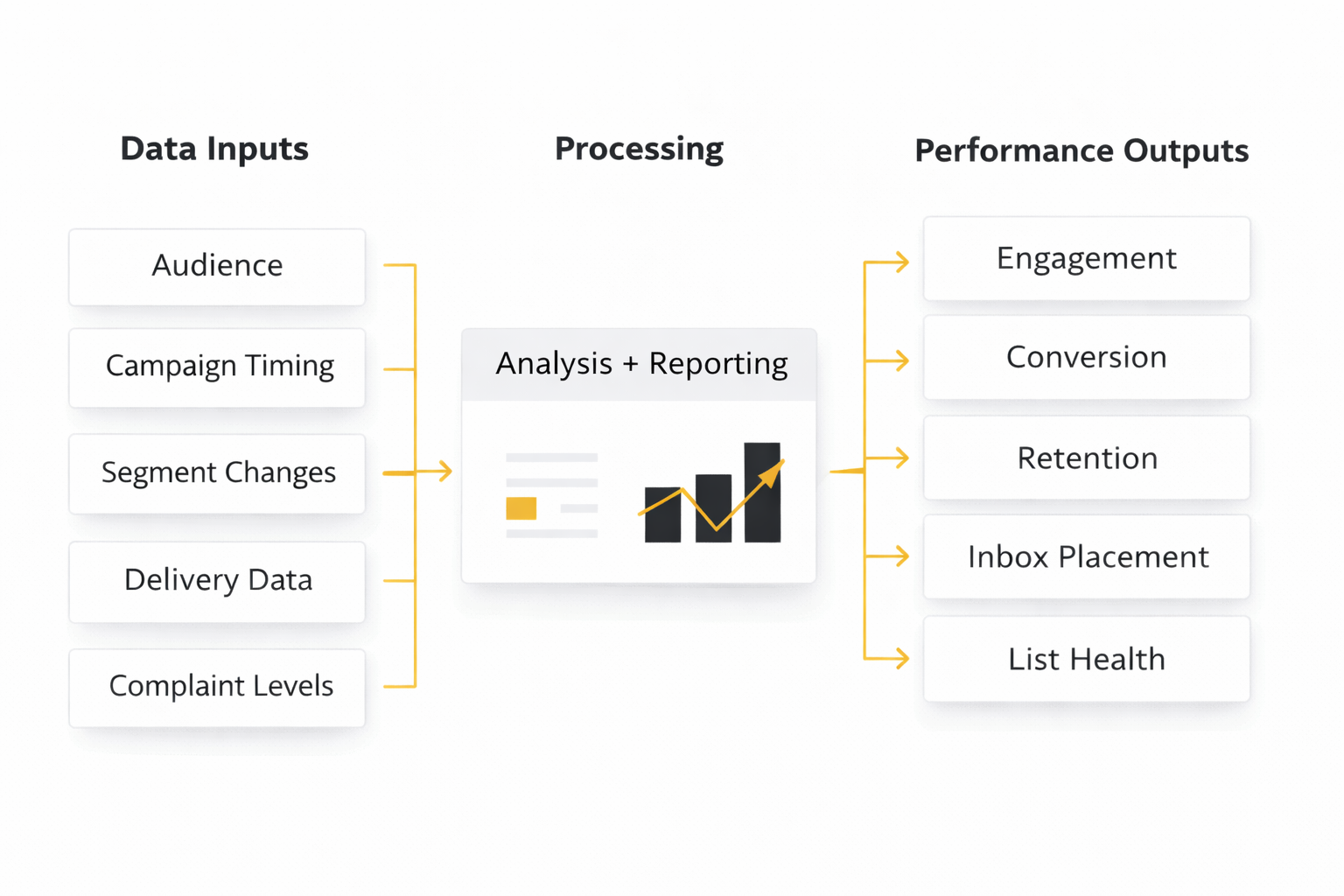
There is another reason analytics matter more now than they used to: inbox placement has become a business risk, not just a technical concern. Google’s requirements for bulk senders to Gmail make authentication, easy unsubscribing, and low spam rates baseline expectations, with stronger enforcement on non-compliant traffic beginning in November 2025. That means performance data is no longer just about clicks and conversions. It is also about reputation, complaint risk, and whether the channel remains viable at scale.
This changes what employers look for in email marketing jobs. They do not just want somebody who can produce output quickly. They want somebody who understands how list quality, sending behavior, consent management, and complaint levels affect future performance. A marketer who ignores those signals can quietly damage the whole program even while short-term campaign reports still look acceptable.
That is why deliverability awareness now belongs inside any real conversation about email career growth. The more a role touches scale, automation, and revenue, the more the numbers behind inbox health start to matter. Businesses know this, which is exactly why they increasingly value people who can read the warning signs early and act before the channel gets weaker.
Retention Data Keeps Pushing These Roles Forward
One of the strongest arguments for email marketing jobs is that email does not stop at acquisition. It keeps showing its value after the first conversion, which is where many businesses make their real money. Litmus has highlighted how lifecycle email is used to activate, engage, and retain customers, while Klaviyo’s recent B2C marketing research keeps reinforcing how important retention and customer experience have become for growth-minded brands.
This is a huge reason the market for email marketing jobs keeps maturing. When companies see email as a retention engine instead of a weekly newsletter machine, the role becomes much more important. Suddenly the person in charge of welcome flows, onboarding, post-purchase messaging, churn prevention, and re-engagement is influencing customer lifetime value, not just open rates.
That shift has a direct career impact. It creates room for more advanced titles, more strategic responsibilities, and stronger compensation over time. The inbox becomes a place where business value compounds, and the jobs attached to it become more serious because of that.
What Smart Candidates Should Actually Measure
If you want to grow inside email marketing jobs, the best move is to become the person who looks at data in context. That means understanding not just whether a message was opened, but whether the audience was right, whether the timing was right, whether the friction points were obvious, and whether the result helped the business move toward a real goal. Good measurement is less about collecting dashboard screenshots and more about learning what to do next.
The strongest candidates can talk about metrics in layers. They understand engagement, conversion, retention, list health, and deliverability together rather than treating each one like a separate universe. That makes them more persuasive in interviews because they sound like operators who can manage a system instead of technicians who only know one narrow slice of the work.
And that is really the main story hidden inside the statistics. The data does not just show that email is still valuable. It shows why email marketing jobs now reward people who can think commercially, operate technically, and interpret performance with clarity. When you can do all three, you stop looking like somebody who sends emails and start looking like somebody who helps a business grow.
The Email Marketing Job Ecosystem

Email marketing jobs do not exist in isolation anymore. They sit inside a much bigger ecosystem that includes ecommerce, SaaS, media, education, agencies, consulting, outbound infrastructure, CRM operations, analytics, and customer retention. That is exactly why this career path keeps staying relevant even while other marketing roles get reshaped by platform changes and rising acquisition costs.
The numbers behind that ecosystem are still hard to ignore. Litmus shows that many teams still report email ROI in the 10:1 to 36:1 range, with another meaningful share reaching 36:1 to 50:1, while the U.S. Bureau of Labor Statistics projects 7% growth from 2024 to 2034 for market research analysts and marketing specialists, with about 87,200 openings each year. When a channel keeps producing commercial returns and the wider marketing field still needs skilled operators, the ecosystem around those roles naturally keeps expanding.
That expansion also explains why email marketing jobs now show up under different names and in different business models. One company may call the role email marketing specialist, another may call it CRM manager, lifecycle marketer, retention strategist, or marketing automation manager. The title matters less than the underlying responsibility, which is helping a business communicate with the right people at the right time in a way that produces measurable results.
FAQ for This Complete Guide
What are email marketing jobs, really?
Email marketing jobs are roles focused on growing, engaging, and retaining an audience through email campaigns, automations, and customer lifecycle messaging. In a smaller company, that can mean one person handles strategy, copy, setup, segmentation, testing, and reporting. In a larger company, the work is often split across specialists in CRM, lifecycle, analytics, deliverability, or retention.
Are email marketing jobs still in demand?
Yes, and one big reason is that email remains an owned channel that businesses control directly instead of renting from an ad platform. The broader labor market still points to strong demand in adjacent marketing categories, with BLS projecting 7% growth through 2034 and tens of thousands of annual openings. When you combine that with email ROI numbers that remain strong across industries, it becomes clear why employers keep hiring for these roles.
What skills do employers want most?
Employers usually want a mix of audience understanding, segmentation, copywriting, automation logic, reporting, and platform fluency. They also increasingly care about trust and compliance because inbox placement is no longer something teams can ignore. Google’s sender requirements for Gmail make authentication, low spam rates, and easy unsubscribing part of the modern operating standard, so technical awareness is now a real career advantage.
Do I need to know coding to get into email marketing jobs?
No, you do not need to become a software engineer to break into this field. That said, a basic understanding of HTML email structure, template troubleshooting, tracking setup, and how systems connect will make you more useful and easier to hire. The stronger your technical comfort level becomes, the more likely you are to move beyond entry-level production work into higher-value roles.
Which industries hire for these roles most often?
Ecommerce brands hire heavily because email affects promotions, abandoned carts, repeat purchases, and post-purchase retention. SaaS companies hire because onboarding, activation, expansion, and renewal all depend on timely lifecycle communication. Agencies, publishers, education companies, nonprofits, B2B service businesses, and media brands also create email marketing jobs because email remains one of the most cost-effective ways to nurture a relationship over time.
What is the difference between email marketing jobs and CRM jobs?
Email marketing jobs often focus more visibly on campaigns, newsletters, promotions, automations, and send performance. CRM jobs usually go deeper into customer data, lifecycle design, personalization logic, and cross-channel orchestration. In real life, the line between them is often blurry, which is why many companies use titles like lifecycle marketer or CRM manager for work that still relies heavily on email execution.
What tools should I learn first?
Start with one email platform, one analytics environment, and one CRM-style workflow so you understand how the pieces fit together. For many people, that means building familiarity with tools like Brevo, Moosend, Systeme.io, spreadsheets, and reporting tools such as Google Analytics. The best platform to learn first is usually the one that helps you understand segmentation, automation, forms, reporting, and list hygiene in one practical environment.
How important is personalization now?
It is extremely important, but not in the shallow sense of inserting a first name into a subject line. Real personalization means using behavior, timing, lifecycle stage, and customer context to make messages feel relevant. Salesforce reports that 83% of marketers recognize the shift toward more personalized, two-way engagement, while only one in four are satisfied with how they use data to power those moments, which tells you there is still a major opportunity for skilled operators.
Can I work remotely in email marketing?
Yes, and this is one of the strongest advantages of the field. Much of the work happens inside tools, dashboards, calendars, and communication systems that are already built for distributed teams. Remote roles are especially common in SaaS, ecommerce, agency, consulting, and contract-based environments where results matter far more than where your laptop happens to be.
How do I stand out without years of experience?
The fastest way is to prove that you can think through the work instead of only talking about it in vague marketing language. Build sample flows, audit public email programs, rewrite weak campaigns, create a small portfolio, and show that you understand segmentation, timing, and measurement. Employers do not always need a long resume as much as they need evidence that you can walk onto the battlefield and actually do the job.
What should I measure if I want to grow fast in these roles?
Measure performance in context rather than obsessing over one vanity number. That means looking at engagement, conversions, retention, list quality, complaint signals, and what changed between audience segments instead of celebrating opens in a vacuum. The people who grow fastest in email marketing jobs are usually the ones who can turn performance data into the next smart decision.
Is deliverability really that important, or is it just a technical side issue?
It is absolutely that important because the entire email program depends on messages actually reaching the inbox. If sender reputation drops, authentication is weak, or complaint rates rise, even strong campaigns can underperform for reasons that have nothing to do with the offer or the copy. That is why deliverability knowledge has moved from a niche technical concern into a real differentiator for modern email marketing jobs.
Work With Professionals
If you are serious about building a career around email marketing jobs, surround yourself with people and systems that already understand how the market works. The fastest progress usually happens when you can see how strong operators build flows, analyze performance, protect deliverability, and position their skills in front of companies that are ready to hire. You do not need more random noise. You need better opportunities and a clearer path to the people who actually value what you do.
That matters even more in a market where businesses are asking for a strange mix of strategy, execution, systems thinking, and commercial awareness all at once. The better your environment is, the easier it becomes to sharpen those skills and turn them into paid work. And when you start thinking that way, email marketing jobs stop looking like scattered listings and start looking like a career with real leverage behind it.
Explore 10K+ Remote Marketing Contracts on MarkeWork.com
Most marketers spend too much time chasing clients, competing on crowded platforms, and losing a percentage of every project to middlemen.
MarkeWork gives you a better way. Browse thousands of remote marketing contracts and connect directly with companies desperate to hire skilled marketers like you without platform commissions and without unnecessary gatekeepers.
If you’re serious about finding better opportunities and keeping 100% of what you earn, you can explore available contracts and create your profile for free at MarkeWork.com.
 Filip Konecny Enterprises