
Email Blast Service: What It Is, Why It Works, and How to Build It Right
An email blast service can look simple from the outside. You upload a list, write a message, hit send, and expect traffic, leads, or sales to show up. In reality, the difference between a campaign that lands in the inbox and one that gets filtered, ignored, or complained about usually comes down to the system behind that send.
That is why serious marketers do not treat bulk email like a one-off task inside a personal inbox. They use a purpose-built email blast service that handles subscriber permissions, list hygiene, sender authentication, reporting, and scale. That approach matters even more now that Gmail permanently classifies senders that hit roughly 5,000 messages to personal Gmail accounts in a day as bulk senders and has been increasing enforcement on non-compliant traffic since November 2025.
In plain English, an email blast service is the operational backbone for sending the right campaign to the right people without destroying deliverability or trust. When you build it properly, it becomes one of the few channels you truly control, and that is a big reason HubSpot’s latest marketing data shows email marketing as the top ROI channel for B2C brands.
Article Outline
- Part 1: Why Email Blast Services Matter
- Part 2: Framework Overview
- Part 3: Core Components
- Part 4: Professional Implementation
- Part 5: Analytics and Optimization
- Part 6: Ecosystem, Vendor Choices, and FAQ
Why Email Blast Services Matter
The phrase “email blast” sometimes makes people think of outdated spray-and-pray marketing, but the channel itself is far from dead. The DMA’s 2025 Email Benchmarking Report says 2024 saw a record number of emails sent, and that same momentum makes sense when you look at performance data from major platforms. Mailchimp’s benchmark page shows an all-user average open rate of 35.63%, a click rate of 2.62%, and an unsubscribe rate of 0.22%, which is exactly why good operators keep investing in the channel instead of abandoning it.
The real reason an email blast service matters, though, is control. Social reach changes when algorithms change. Paid traffic gets more expensive when competition heats up. A healthy email program gives you direct access to people who already know you, and that is one reason HubSpot places email at the top of ROI-producing channels for B2C brands.
There is also a compliance and infrastructure angle that too many businesses learn the hard way. The FTC makes clear that the CAN-SPAM Act covers commercial messages broadly, not just classic bulk spam, and violations can carry penalties of up to $53,088 per email. In the UK, the ICO’s guidance explains that PECR governs electronic mail marketing, while the European Commission notes that direct marketing under GDPR still has to respect the ePrivacy rules and the individual’s right to object. A real email blast service helps you operationalize those rules instead of hoping your team remembers them manually.
Framework Overview

The easiest way to think about an email blast service is as a six-layer framework. First comes audience acquisition, where subscribers join through forms, checkout flows, lead magnets, webinars, demos, or booking pages. Second comes consent and data quality, because a list without clean permissions is not an asset at all. Third comes campaign production, where templates, copy, offers, and segmentation turn raw contacts into targeted sends. Fourth comes delivery infrastructure, where authentication and sender reputation decide whether your message actually reaches the inbox. Fifth comes measurement, where you separate vanity metrics from business outcomes. Sixth comes optimization, where each campaign teaches the next one how to perform better.
That structure matters because most email problems are not creative problems alone. Poor results often start much earlier, with weak signup intent, vague opt-ins, bad domain setup, or disconnected reporting. Once you see email blast service work as a system rather than a tool, decisions get much easier because you can diagnose the actual bottleneck instead of rewriting subject lines forever.
This is also the point where choosing the right platform becomes strategic rather than cosmetic. If you need a straightforward all-in-one option with automation, forms, and multichannel features, Brevo is a practical place to start. If your priority is a lighter newsletter-focused setup, Moosend can make early execution easier. If your email growth plan depends heavily on opt-in funnels and landing pages, tools like ClickFunnels or Systeme.io can play a useful role before the send even happens.
Core Components
The first core component is audience management. A professional email blast service should let you separate subscribers by source, lifecycle stage, engagement, geography, product interest, and buying intent. That sounds technical, but it changes everything because a welcome series for new subscribers should not look anything like a reactivation campaign for dormant buyers or a product launch email for loyal customers.
The second component is campaign orchestration. You need templates, scheduling, dynamic content, suppression lists, A/B testing, and reporting in one place so your team can move quickly without making expensive mistakes. That is one reason platform providers keep pushing beyond simple newsletters into broader customer relationship workflows, and it lines up with how Brevo describes email as the foundation of digital marketing in its 2025 benchmark materials and how Klaviyo frames its 2025 benchmark resources around comparing performance against similar businesses.
The third component is deliverability infrastructure. Google’s current sender guidance means that if you send at meaningful scale, authentication is not optional anymore. Gmail’s bulk sender FAQ, Google Workspace guidance on SPF, DKIM, and DMARC, and Yahoo’s sender best practices for SPF and DKIM all point in the same direction: mailbox providers want authenticated, permission-based, low-complaint email from accountable domains. An email blast service worth paying for should make those requirements easier to implement, monitor, and maintain.
Professional Implementation
Professional implementation starts before you send a single campaign. You want a dedicated sending domain or subdomain, clear signup language, a visible unsubscribe process, preference options, and a content calendar that matches audience intent. The legal framework is part of implementation too, because the FTC requires honest header information, non-deceptive subject lines, and a functioning opt-out mechanism, while the ICO makes it clear that organizations sending electronic mail marketing must comply with PECR requirements.
From there, build the system in layers. Start with your lead capture flow, because weak acquisition ruins downstream performance no matter how polished the campaigns look. If you need faster deployment of forms, quiz-style qualification, or application pages, Fillout can help tighten data capture, and if your goal is to turn opt-ins into booked calls or demo requests, Cal.com can connect that email journey to an actual sales conversation.
Then move into sender reputation and process discipline. Warm up volume sensibly, suppress disengaged contacts, watch complaint signals, and avoid treating every campaign like a giant blast just because the software allows it. If you are growing quickly and need infrastructure built for higher-volume outbound or operational sending, ScaledMail is worth evaluating as part of the stack. Part 2 will build on this foundation and show how to turn a basic email blast service into a repeatable framework that supports segmentation, automation, and long-term revenue growth.
How the Email Blast Service Framework Works
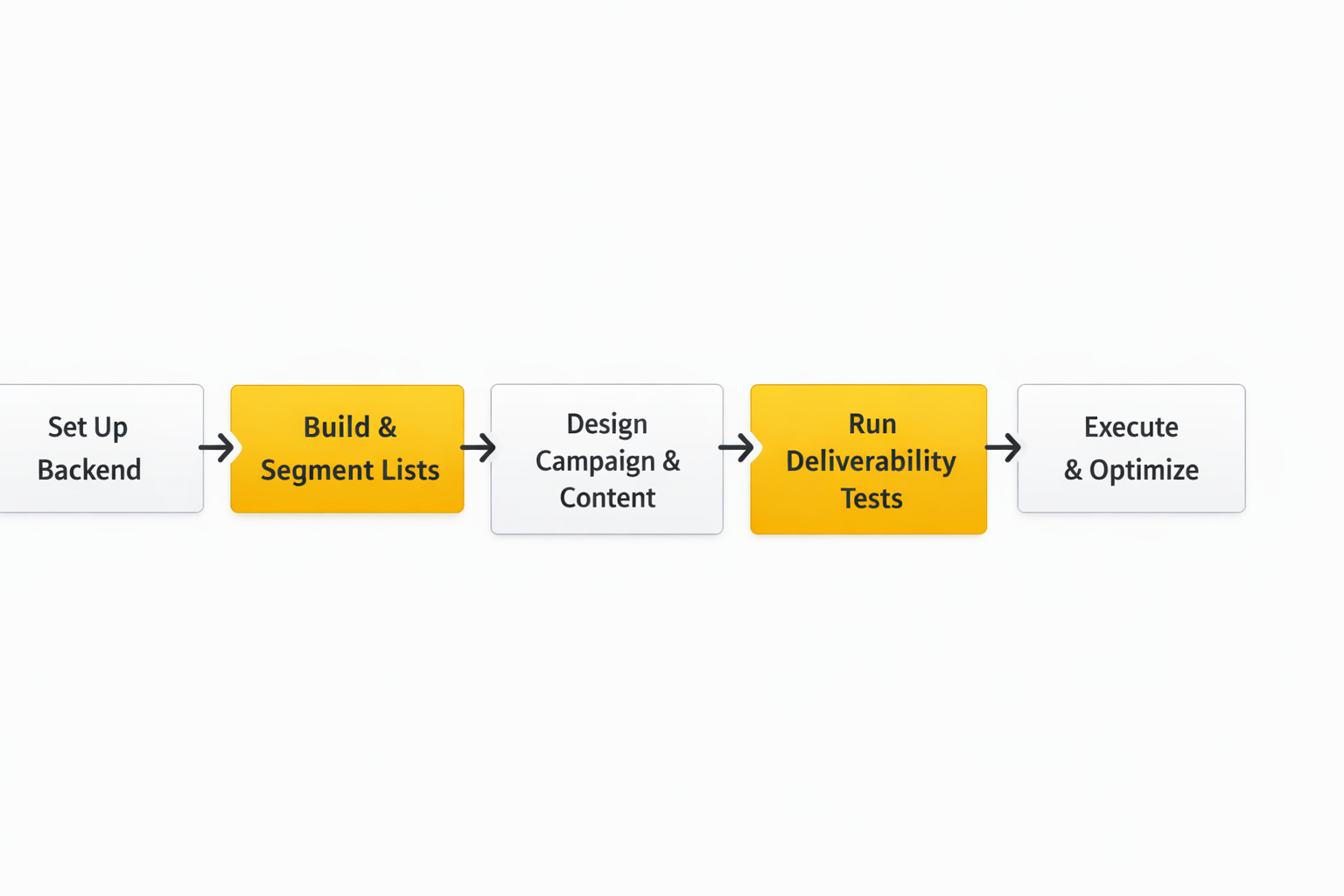
A strong email blast service framework is not built around how many messages you can send. It is built around how clearly you can match the right message to the right person at the right moment without burning trust or deliverability. That is the shift that separates brands that keep squeezing one-off sends out of a list from brands that turn email into a reliable revenue engine.
The framework also has to reflect how mailbox providers and regulators see the channel now. Google’s current sender requirements for bulk email, Yahoo’s sender best practices, the FTC’s CAN-SPAM guidance, and the ICO’s rules for direct marketing by electronic mail all point to the same reality: blasting a database without structure is not just sloppy marketing anymore. It is an operational risk.
So here is the better way to think about it. Your email blast service should move through a sequence: permission, data structure, segmentation, campaign logic, automation, deliverability control, and revenue measurement. When those pieces work together, your campaigns stop feeling random and start compounding.
Build From Permission, Not Volume
This is where most people get it backward. They think the goal of an email blast service is to gather as many contacts as possible, as fast as possible, then “monetize the list.” That mindset creates weak intent, poor engagement, higher complaint rates, and a sender reputation problem you then spend months trying to repair.
A better framework starts with permission quality. The ICO’s guidance makes clear that responsibility sits with the sender or instigator of the message, while the FTC requires a working opt-out process and honest identification. When people join because they know what they are signing up for, the rest of your framework gets stronger because every later decision is built on real intent instead of a forced list.
That is also why lead capture tools matter more than many marketers admit. The form, funnel, or booking flow is not some side detail before “real email marketing” begins. It is the front door to your whole system. If you need a cleaner way to qualify leads before they ever hit your email blast service, Fillout, ClickFunnels, and Systeme.io can all help you build that first layer with more intention.
Start With List Architecture Before You Write a Single Email
Once someone opts in, your next job is not writing a subject line. It is deciding how your data will be organized so the platform can actually make intelligent sending decisions later. A messy contact database turns even the best email blast service into a blunt instrument because the software has no context for who people are, what they asked for, or how engaged they have been.
That means using consistent fields, tagging rules, source tracking, suppression logic, and lifecycle states from day one. Someone who downloaded a lead magnet yesterday should not be treated the same as a repeat buyer, a pricing-page visitor, or a subscriber who has ignored the last twenty campaigns. The framework only becomes powerful when the list has shape.
This is one reason serious teams choose platforms that do more than send newsletters. Brevo’s automation stack is built around trigger-based journeys such as abandoned cart reminders and behavioral follow-up, and Mailchimp positions its platform around audience learning, personalized campaigns, and automation. The point is not the logo on the dashboard. The point is that your email blast service should understand contact context well enough to avoid treating everyone like the same lead.

Use Segmentation Before You Obsess Over Copy
Good copy matters. Of course it does. But the framework breaks down when marketers spend hours polishing wording for a message that should never have gone to the full list in the first place. In a healthy email blast service, segmentation comes before the copy deck because the audience determines the angle, the offer, the tone, and even the send time.
You can see why this matters in current benchmark resources. Mailchimp’s latest benchmark data puts the all-user average open rate at 35.63% and the average click rate at 2.62%, while Klaviyo’s 2025 benchmark report is built around comparing performance by industry and use case rather than pretending every list behaves the same way. Those numbers are not there to impress you. They are there to remind you that performance only becomes meaningful when you compare like with like.
So instead of thinking, “What should we email this week?” think, “Which segment has a reason to care right now?” That one question makes your email blast service more relevant immediately. It also lowers the odds that disengaged subscribers will ignore you repeatedly, which is exactly the behavior that weakens sender reputation over time.
Balance Broadcast Campaigns With Automation
One of the biggest framework mistakes is relying on blasts for everything. Broadcast campaigns still have a place. Product launches, major announcements, seasonal pushes, and timely offers often need that format. But if your entire email blast service is powered by manual sends, you are forcing the team to recreate the wheel every week.
Automation fixes that by handling the moments that happen over and over again: welcome sequences, abandoned cart reminders, post-purchase follow-up, onboarding, re-engagement, and event reminders. Brevo says businesses often see a 10% to 15% revenue increase from abandoned cart automation alone, which is a practical reminder that behavior-based email usually outperforms generic sending because it matches timing and intent more closely.
This is where the framework becomes efficient. Campaigns create spikes. Automation creates consistency. A mature email blast service needs both, because one keeps you responsive while the other keeps you scalable.
Protect Deliverability at Every Step
You can have solid copy, decent offers, and a well-designed template, and still fail because the message never reaches the inbox. That is why deliverability is not a technical footnote in the framework. It is a core operating principle. Every signup source, every segment, every send pattern, and every inactive-contact rule affects deliverability in some way.
Google requires bulk senders to authenticate mail and make unsubscribing easy, while Yahoo explicitly recommends separating bulk or marketing traffic from transactional mail because each IP and DKIM domain builds its own reputation. That means a professional email blast service should have clean authentication, clear sending separation, complaint monitoring, and list hygiene built into the routine rather than patched in after inbox placement drops.
This is also why smart operators avoid hanging onto disengaged subscribers forever just because a bigger list looks better in a dashboard screenshot. A smaller, healthier list can outperform a bloated one because mailbox providers see engagement signals, not vanity. If you need more robust sending infrastructure as volume grows, ScaledMail is worth a look for teams that are serious about supporting higher-volume operations without guessing their way through setup.
Connect the Email Blast Service to Revenue, Not Just Activity
The last piece of the framework is measurement, and this is where weak teams fool themselves. They celebrate send volume, opens, and maybe clicks, but they never really connect the email blast service to pipeline, booked calls, orders, retention, or customer lifetime value. When that happens, email becomes busywork dressed up as marketing.
The better approach is to track the whole path. HubSpot’s 2025 State of Marketing data still places email at the top of ROI-producing channels for B2C brands, but that only matters if your own setup can show where revenue came from and why. If your email system is moving prospects toward conversations rather than just pageviews, tools like Cal.com can help bridge campaigns to meetings, and if you need stronger customer tracking after opt-in, Copper can help connect relationship data to the rest of your sales process.
That is the framework in its simplest and most useful form. Start with permission, shape the data, segment with intent, blend campaigns with automation, guard deliverability like crazy, and measure business outcomes instead of dashboard noise. In Part 3, we will break down the core components of an email blast service so you can see exactly which building blocks deserve the most attention first.
Core Components of an Email Blast Service
If you want an email blast service to perform at a high level, you need to stop thinking of it as just a sending tool. The platform is only one piece of the machine. What actually drives results is the set of components working together behind the scenes, because that is what determines whether your emails reach the inbox, feel relevant, and turn attention into revenue.
This matters even more now because mailbox providers are forcing senders to get serious. Google’s sender rules for bulk email and Yahoo’s current best practices both make it clear that authentication, low complaint rates, and easy unsubscribes are not “nice extras.” They are part of the operating standard for any business using an email blast service at scale.
So let’s break down the components that actually matter. These are the building blocks that make the difference between a setup that looks impressive in a sales demo and one that can keep producing leads, sales, and customer relationships month after month.
Subscriber Acquisition Is the First Component
The first component is how people enter the system. If your list is built with vague promises, weak lead magnets, or sketchy acquisition tactics, the rest of your email blast service is already compromised before the first campaign goes out. That is why serious marketers pay close attention to forms, landing pages, application flows, webinar registrations, checkout opt-ins, and booking pages.
You do not need more random subscribers. You need more of the right subscribers. When the opt-in process is clear and the offer is compelling, people know why they joined, which makes later engagement easier and reduces the chance of complaints or cold-list behavior that drags down sender reputation.
This is exactly where a funnel-focused stack can help. If you want to build an acquisition path that guides people naturally into your email blast service, ClickFunnels, Systeme.io, and Fillout can all make that front-end experience tighter and more intentional.
Permission and Compliance Protect the Whole System
The second component is permission. This is where a lot of businesses get lazy because they assume that if a contact exists in the database, sending is fair game. That is not how this works. If people did not knowingly opt in, or if the unsubscribe path is buried or broken, the problem is not just moral. It is operational and legal.
The FTC’s guidance on the CAN-SPAM Act lays out requirements such as accurate header information, honest subject lines, clear identification, and a functioning opt-out mechanism. The ICO’s electronic mail guidance explains how PECR applies to direct marketing by email. A professional email blast service should help you support those standards instead of leaving everything to manual memory and internal guesswork.
This component is not glamorous, but it protects everything else. When permission is weak, performance becomes unreliable because the audience never fully wanted the relationship in the first place. When permission is strong, your campaigns start from a much healthier foundation.
List Management Gives the Database Shape
The third component is list management, and this is where your email blast service either becomes intelligent or stays blunt. A clean database should tell you where the contact came from, what they asked for, what they clicked, what they bought, how recently they engaged, and whether they belong in active campaigns, automations, or suppression segments.
Without that structure, every send starts to look the same. That is how brands end up emailing new subscribers with the same tone and offer they use for loyal buyers or inactive leads, then wondering why metrics drift downward. Relevance does not begin with copy. It begins with the shape of your data.
That is part of why modern platforms lean so hard into audience management. Mailchimp positions its platform around audience insights, personalized campaigns, and automation, while Brevo’s automation features are built around trigger-based journeys that depend on clean segmentation and contact logic. Your email blast service needs that depth if you want the message to fit the moment.
Segmentation Turns Bulk Sending Into Relevant Sending
Segmentation is the component that keeps an email blast service from becoming what people fear it is: a noisy, generic blast machine. Once you can divide people by behavior, source, lifecycle stage, geography, purchase history, interest, or engagement level, you stop writing one email for everyone and start creating campaigns that actually make sense.
You can see why that matters when you look at current benchmarks. Mailchimp’s latest benchmark data shows an all-user average open rate of 35.63%, a click rate of 2.62%, and an unsubscribe rate of 0.22%. Those numbers are useful, but not because they give you a magic target. They matter because they remind you that performance depends heavily on audience quality and campaign fit.
So do not obsess over sending “more.” Obsess over sending more precisely. When segmentation improves, your email blast service starts feeling less like a megaphone and more like a direct conversation with the right person at the right time.
Content and Creative Shape the Experience
The next component is content, but not in the shallow way most people talk about it. Yes, you need strong subject lines, solid copy, clear calls to action, and decent design. But the real job of content inside an email blast service is to create momentum. Every email should move the reader somewhere meaningful, whether that is a click, a reply, a purchase, a booking, or a deeper level of trust.
That is why the message has to fit both the segment and the stage of the relationship. The best email blast service in the world cannot rescue an offer that is wrong for the audience or an email that talks at people instead of guiding them. Great content feels like it belongs in that inbox because it matches what the subscriber already cares about.
If your campaigns are tied to forms, bookings, or sales conversations, that journey also needs continuity after the click. For businesses using email to drive appointments or sales calls, Cal.com can help carry the momentum from the email into a scheduled conversation instead of letting that intent leak away.
Automation Creates Consistency Without Manual Chaos
Automation is one of the most valuable components because it turns recurring customer moments into a repeatable system. Welcome sequences, onboarding, abandoned cart reminders, post-purchase follow-up, lead nurturing, review requests, reactivation campaigns, and event reminders should not depend on somebody remembering to set up another one-time blast every week.
This is also where the revenue case for an email blast service becomes much easier to see. Brevo says abandoned cart automation can increase revenue by 10% to 15%, which makes perfect sense because timely, behavior-based email is naturally more relevant than a broad campaign sent to everyone. Automation lets you capture those high-intent moments while the interest is still alive.
The beauty of this component is that it compounds. A single well-built automation can keep working quietly in the background long after a broadcast campaign is forgotten. That is one of the clearest signs that your email blast service is maturing into a real system.
Deliverability Infrastructure Keeps You Out of Trouble
You can build strong segments, write persuasive emails, and set up elegant automations, and still fail if deliverability is ignored. That is why infrastructure is one of the most critical components in any email blast service. Domain authentication, sending reputation, complaint monitoring, bounce handling, warm-up strategy, suppression logic, and unsubscribe processing all belong here.
Google’s sender FAQ and Google Workspace guidance on SPF, DKIM, and DMARC make it very clear that authenticated sending is now the baseline. Yahoo also recommends separating marketing mail from transactional mail because reputation is built at the IP and DKIM-domain level. In other words, your email blast service needs technical discipline, not just creative energy.
If you expect to send at higher volume, or if you need more serious outbound and operational email infrastructure, ScaledMail is one option worth looking at. The bigger point is that infrastructure should be treated like a profit protector. It keeps your best campaigns from dying before subscribers ever see them.
Analytics Show You What Is Actually Working
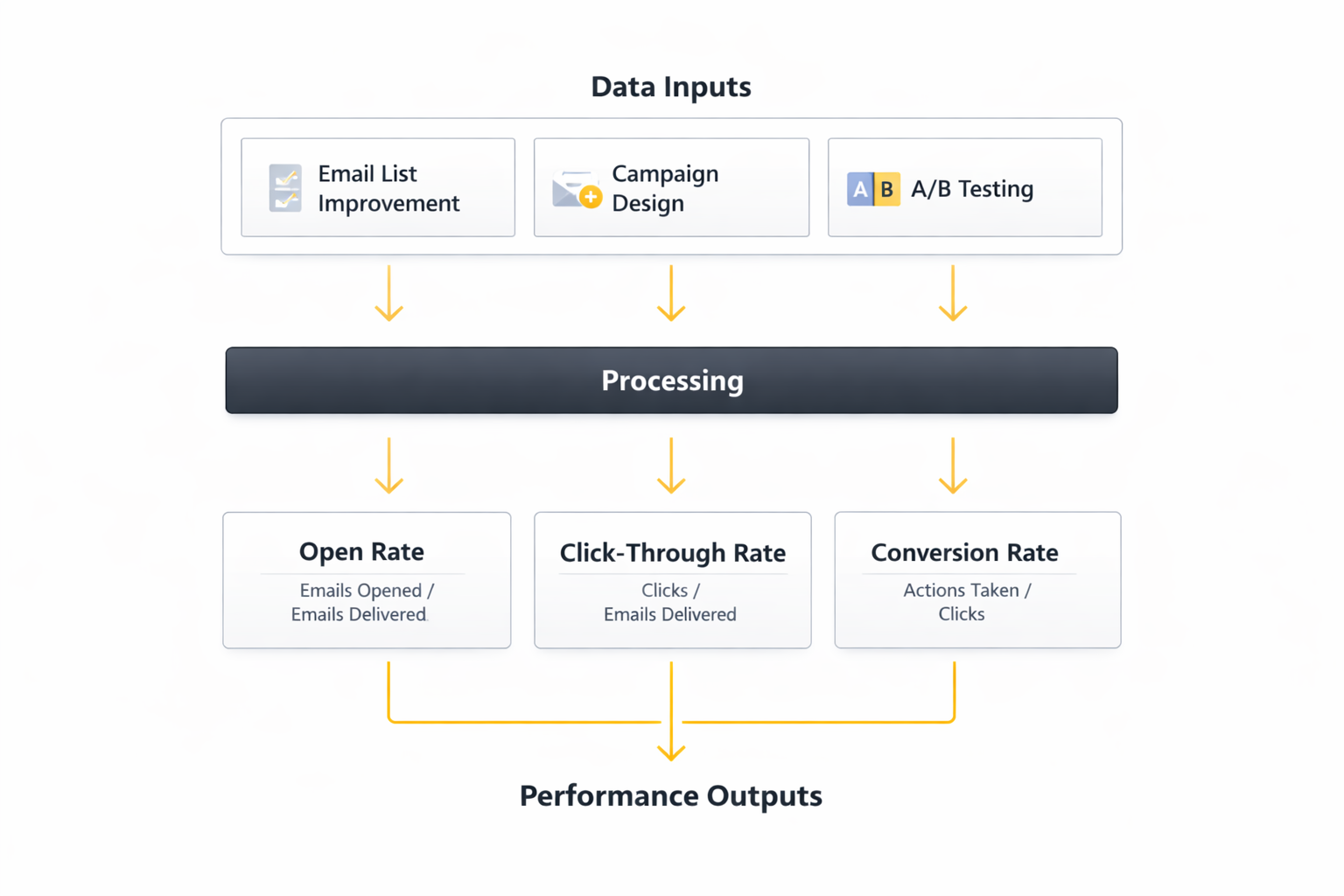
The final core component is analytics. Not vanity analytics. Real analytics. An email blast service should show you what happened at every stage of the journey, from delivery and opens to clicks, replies, conversions, orders, bookings, and longer-term retention. If the reporting stops at surface-level engagement, you are missing the part that actually matters.
This is why more marketers now think in terms of business outcomes rather than activity for activity’s sake. HubSpot’s latest marketing data still ranks email as the top ROI channel for B2C brands, but that insight only helps if your own reporting can connect campaigns to revenue and customer movement. Otherwise, the team ends up celebrating strong open rates while revenue stays flat.
The smarter approach is simple: track what leads to money, track what leads to trust, and track what leads to churn. Once your email blast service does that well, it stops being just another software subscription and starts becoming one of the strongest assets in your whole marketing stack.
Why These Components Have to Work Together
Each component matters on its own, but the real power shows up when they work together. Strong acquisition without list management creates chaos. Great copy without segmentation creates waste. Good automation without deliverability creates invisible campaigns. Clean reporting without a clear offer creates a polished way to measure nothing.
That is why the best email blast service is never just “the best platform.” It is the best combination of acquisition, permission, structure, segmentation, creative, automation, infrastructure, and measurement for your business model. When those pieces click, email stops feeling random and starts feeling dependable.
In Part 4, we will move from the components themselves into professional implementation, because knowing what matters is one thing. Building it properly in the real world is where the game really begins.
Statistics and Data
When people talk about an email blast service, they usually jump straight to software features. But the numbers tell a much more important story. The data shows that email is still one of the most powerful channels you can own, yet the way you measure it has changed dramatically because inbox providers, privacy updates, and user behavior have all shifted the rules.
That is why you cannot judge an email blast service by send volume alone. You have to look at what the metrics actually mean, where they become misleading, and how they connect to revenue. Once you see the numbers in context, you stop chasing vanity and start building a system that is much harder to fool.
What the Latest Email Benchmarks Really Show
The most useful benchmark data right now shows two things at the same time: email still performs, and performance varies wildly by audience quality and industry fit. MailerLite’s 2025 benchmark analysis, built on more than 3.6 million campaigns from 181,000+ approved accounts, put the average open rate at 43.46%, the average click rate at 2.09%, the median click-to-open rate at 6.81%, and the median unsubscribe rate at 0.22%.
Those numbers sound strong, but they are not a promise that every business should hit them. They are a reminder that an email blast service only performs well when the list is permission-based, the segmentation is sharp, and the content fits the moment. Klaviyo’s current benchmark materials make the same point from a different angle by comparing open rates, click rates, order rates, and revenue per recipient by industry, which is exactly how serious operators should think about performance.
The lesson is simple. Benchmarks are helpful, but only when they lead to better decisions. A healthy email blast service does not ask, “Are we above average?” It asks, “Are we improving against the right benchmark for our audience, offer, and business model?”
Why Open Rates Can No Longer Carry the Whole Conversation
This is where a lot of marketers get trapped. They see a strong open rate and assume the campaign worked, even though the deeper data may be saying something very different. That used to be less dangerous than it is now, but privacy changes have made open-rate-only thinking a bad habit you need to break.
Litmus reports that Apple represented 46.56% of tracked opens in January 2026, while Gmail accounted for another 25.45%. That matters because Apple Mail Privacy Protection has changed how opens are recorded, and MailerLite explicitly notes that real open rates are lower than many dashboards suggest because Apple Mail can automatically mark messages as opened.
So yes, open rate still has value. It can help you compare subject lines, send times, and top-level audience interest. But if your email blast service is being judged mainly on opens, you are reading a distorted signal and calling it clarity. In today’s environment, opens are a clue, not a verdict.
Which Metrics Deserve More Attention Now
If open rates are less reliable than they used to be, where should your attention go? Start with click rate, click-to-open rate, unsubscribe rate, conversion rate, revenue per recipient, and list growth quality. Those numbers give you a much clearer picture of whether people cared enough to act, not just whether a platform counted the email as opened.
MailerLite says click rate is currently the most accurate indicator of newsletter engagement because it does not rely on open tracking, and that is a smart way to look at it. Campaign Monitor also frames modern email reporting around two lenses at once: campaign performance metrics such as opens, clicks, unsubscribes, and deliverability, plus subscriber activity and list health. That combination is much harder to game and much more useful when you are trying to improve an email blast service over time.
You should also connect your reporting to money, not just motion. HubSpot’s latest marketing data still puts email marketing at the top of ROI-producing channels for B2C brands, which is great, but only if your own tracking can show how campaigns contribute to bookings, orders, repeat purchases, or pipeline movement. Otherwise, your reporting may look polished while the business impact stays fuzzy.
What the Data Says About Automation Versus One-Off Blasts
This is one of the most important shifts in the data, and it is exactly where many businesses leave money on the table. They use an email blast service mainly for manual campaigns even though behavior-based automation often produces far more efficient revenue. That approach feels productive because there is always another send to prepare, but the numbers increasingly favor smarter flows over constant broadcasting.
Klaviyo reports that while campaigns drive 94.7% of send volume, flows generate nearly 41% of total email revenue from just 5.3% of sends, with average revenue per recipient nearly 18 times higher than campaigns. That is a MASSIVE signal. It tells you that a mature email blast service should not be measured only by how often it sends, but by how well it reacts to intent through welcome sequences, abandoned cart reminders, post-purchase follow-up, and re-engagement flows.
This is also where picking the right platform can make implementation easier. If you want a tool built around automation journeys and multichannel follow-up, Brevo is worth a serious look. If you want a cleaner entry point for newsletters and lightweight automation, Moosend can be a practical option. The key is not the brand name alone. The key is whether the email blast service helps you turn repeated customer moments into measurable revenue.
Unsubscribe and Complaint Data Matter More Than Most People Think
Too many marketers see unsubscribes as a bad look and try to bury them in reports. That is a mistake. Unsubscribes and complaints are some of the clearest signals you will ever get about list quality, message fit, and whether your email blast service is respecting the subscriber relationship.
Google’s sender guidelines say bulk senders should keep their user-reported spam rate below 0.1% and prevent it from reaching 0.3% or higher. The FTC also requires opt-out requests to be honored within 10 business days. On top of that, MailerLite’s latest data shows unsubscribe rates rose in 2025, which it links to Gmail making it easier for people to leave promotional lists. In other words, the inbox is getting more user-friendly, and that means weak email programs get exposed faster.
This is not bad news if your system is solid. In fact, it is helpful. A healthy email blast service treats unsubscribes as feedback, not failure. If the wrong people leave, that often improves list quality. If the right people leave, that tells you exactly where your promise, segmentation, or frequency needs work.
How to Read Email Statistics Without Fooling Yourself
The best way to read email data is to stop looking for one magic metric. You need a stack of signals working together. Start with deliverability and complaint health, move into click behavior and conversion, and then connect those numbers to business outcomes like revenue per recipient, booked calls, repeat purchase rate, or customer retention.
That also means comparing like with like. A welcome flow should not be benchmarked against a general newsletter. A flash sale should not be judged the same way as a thought-leadership email. An email blast service only becomes easier to optimize when you split your data by intent, not when you throw every campaign into one giant average and hope it tells the truth.
If you do this right, the data becomes energizing instead of confusing. You start seeing where the money is really coming from, which segments are fading, which automations deserve more attention, and which campaigns are just making noise. That is the point where your email blast service stops being another marketing tool and starts becoming a decision-making asset.
Analytics and Optimization for Email Blast Services
This is the point where an email blast service either becomes a serious growth channel or stays stuck as a glorified send button. Plenty of businesses send campaigns every week, watch a few surface-level numbers move around, and tell themselves they are “doing email marketing.” But the real wins come when you know how to read the signals, find the bottleneck, and make the next send smarter than the last one.
That matters because modern email performance is no longer simple. MailerLite’s 2025 benchmark analysis, based on more than 3.6 million campaigns from 181,000+ approved accounts shows strong median results overall, yet those numbers vary hard by industry, region, and list quality. In other words, optimization inside an email blast service is not about chasing one universal magic number. It is about understanding what your audience is telling you and acting on it FAST.
Start With the Metrics That Actually Matter
The first optimization mistake most businesses make is tracking too much noise and not enough truth. They stare at send totals, celebrate open rates in isolation, and barely connect campaigns to clicks, conversions, replies, meetings, orders, or customer lifetime value. That is how an email blast service starts to feel busy without necessarily becoming profitable.
A better approach is to build your reporting around a small group of decision-making metrics. Campaign Monitor’s reporting guidance focuses on opens, clicks, deliverability, and list health together, which is a much more useful lens than looking at any one metric alone. Once those signals are tied back to money, your email blast service stops producing dashboard theater and starts producing business clarity.
This is also where your platform choice starts to matter in a practical way. If you want deeper automation and contact-level logic while you optimize, Brevo is worth a look. If you want something lighter that still gives you solid campaign and engagement reporting, Moosend can be a clean place to start.
Treat Open Rates as a Signal, Not the Scoreboard
Open rates still have value, but they are no longer trustworthy enough to carry the whole conversation. Too many marketers still treat them like the headline stat, even though privacy features have changed what an “open” really means. If you build your optimization process around opens alone, your email blast service can look healthier than it really is.
Litmus reports that Apple represented 46.56% of tracked opens in January 2026, with Gmail accounting for another 25.45%. That matters because Apple Mail Privacy Protection affects open tracking, and MailerLite explicitly notes that real open rates are lower than dashboards suggest because Apple Mail can register messages as opened automatically. So yes, you can still use open rates to compare subject lines and top-level audience interest, but your email blast service should never be judged on that metric alone.
The smarter move is to use opens as an early indicator and then move quickly to click behavior, conversion behavior, and revenue behavior. That is where the truth is. And once you get used to reading email that way, you start making much sharper decisions.
Optimize for Clicks, Conversions, and Revenue Per Recipient
If opens tell you whether curiosity existed, clicks and conversions tell you whether desire existed. That is why the next level of optimization inside an email blast service has to focus on the actions people took after seeing the message. Did they click? Did they reply? Did they book? Did they buy? That is the layer where surface engagement turns into actual business movement.
Klaviyo’s current benchmark materials focus on open rates, click rates, order rates, and revenue per recipient by industry, and that shift is important. It reflects how serious operators are now thinking about email: not just as a communications channel, but as a revenue engine. If your email blast service is not tracking the path from send to sale, then you are still looking at the shadow instead of the object.
This is especially important for service businesses and sales-led teams. If your emails are meant to drive demos, consultations, or discovery calls, connect the click to the next step. Tools like Cal.com can help bridge that gap so your email blast service is not just generating interest, but turning that interest into booked conversations.
Use Automation Data to Find the Easiest Wins
One of the biggest opportunities in optimization is figuring out whether your best results are coming from campaigns or from automations. Many businesses keep pouring energy into weekly blasts while ignoring the flows that are quietly doing the heavy lifting. That is backward, and the data keeps proving it.
Klaviyo reports that campaigns account for 94.7% of send volume but flows generate nearly 41% of total email revenue from just 5.3% of sends, with average revenue per recipient nearly 18 times higher than campaigns. That is a HUGE clue for anyone trying to improve an email blast service. It tells you to audit welcome flows, abandoned cart sequences, post-purchase emails, re-engagement programs, and lead-nurture paths before you assume the problem is “we just need better newsletters.”
That also means your optimization work should start where intent is strongest. If your forms or funnels are weak, fix the intake first. Tools like Fillout and ClickFunnels can help tighten that path before contacts even reach your email blast service, which makes every downstream metric easier to improve.
Watch Unsubscribes and Spam Complaints Like a Hawk
This is one of those areas people ignore until it becomes painful. They keep mailing disengaged contacts, pushing frequency higher, and assuming the worst thing that can happen is a few unsubscribes. In reality, poor complaint control can weaken deliverability fast, and then even your best campaigns start landing in the wrong place.
Google’s sender guidelines say bulk senders should keep user-reported spam rates below 0.1% and avoid ever hitting 0.3% or higher. On top of that, the FTC requires a functioning opt-out process and timely processing of unsubscribe requests. A healthy email blast service treats unsubscribes as useful feedback and spam complaints as an emergency warning, because those are the signals that tell you whether your content, targeting, and frequency are still aligned with the relationship.
This is also why list cleanup should be part of optimization, not an afterthought. A smaller list full of people who still care will outperform a giant list full of dead weight more often than most marketers want to admit. And if you are sending at higher scale, infrastructure-focused tools such as ScaledMail can help support the operational side of a more disciplined email blast service.
Segment More Deeply Before You Send More Often
When performance stalls, many teams assume the answer is to send more. Sometimes that works for a minute. More often, it just speeds up the damage because the real issue was that the audience was too broad, the intent was mixed, or the offer did not fit the segment receiving it. That is why segmentation is one of the highest-leverage optimization moves you can make in an email blast service.
Mailchimp’s benchmark resources are structured around industry-specific comparisons, and that same principle applies inside your own list. New subscribers should not get the same tone and offer as repeat buyers. Dormant contacts should not get the same frequency as recent clickers. The more precisely your email blast service reflects behavior and relationship stage, the less you have to rely on brute force to get results.
This is where CRM and email need to talk to each other cleanly. If you want stronger visibility into customer history and sales context while segmenting campaigns, Copper can help connect that relationship layer to the way you communicate. Better segmentation usually makes everything else easier: subject lines, offers, timing, and even deliverability.
Run Tests That Change Decisions, Not Just Reports
Testing is valuable, but only when it is focused enough to teach you something real. Too many businesses run shallow A/B tests that change five variables at once, get a tiny difference in opens, and call it optimization. That is not learning. That is decoration.
The better way to optimize an email blast service is to test the things most likely to move behavior: offer angle, audience segment, email structure, CTA placement, sequence timing, and follow-up logic. Sometimes a smaller change in positioning will beat a bigger change in design because the message finally matches what that segment wanted to hear. And once you start testing one meaningful variable at a time, the results become much easier to trust.
This mindset also protects you from constantly rewriting copy when the real problem sits somewhere else in the system. Maybe the offer is weak. Maybe the landing page leaks intent. Maybe the signup flow is attracting the wrong people. Optimization becomes much more powerful when your email blast service is tested as a complete journey rather than a single isolated message.
Turn Reporting Into a Weekly Operating Rhythm
The final step is simple, but this is where consistency separates real operators from casual senders. Your analytics should not live in a dashboard that nobody looks at until the monthly meeting. They should feed a weekly rhythm: what improved, what slipped, which segment changed, which flow deserves more traffic, which campaigns underperformed, and what gets tested next.
HubSpot’s latest marketing data still places email marketing at the top of ROI-producing channels for B2C brands, and that is exactly why this rhythm matters. When a channel can drive that much value, it deserves a real optimization process, not occasional guesswork. A well-run email blast service compounds because every campaign leaves behind data that makes the next decision sharper.
That is the real advantage. You stop hoping the next email works and start engineering why it should. In Part 6, we will zoom out and look at the broader email blast service ecosystem, how to choose the right tools around the core platform, and the key questions people still ask before they commit to building this channel seriously.
Email Blast Service Ecosystem

By the time you get to this stage, the big realization is hard to miss: an email blast service is never just one tool. It sits inside an ecosystem that includes list growth, forms, landing pages, CRM, scheduling, deliverability infrastructure, analytics, and the compliance layer that keeps the whole thing from breaking. When those pieces fit together well, email becomes one of the few channels you can scale without feeling like you are renting every bit of your audience from somebody else.
The ecosystem also matters because mailbox providers have made the operating standard much stricter. Google’s current bulk sender guidance pushes senders toward authentication, easy unsubscribes, and low complaint rates, while Yahoo’s sender best practices reinforce the same core principles around SPF, DKIM, and reputation. So when you choose an email blast service, you are not just picking a dashboard. You are choosing how the whole marketing system will behave under pressure.
This is why smart businesses stop asking, “What is the cheapest tool that can send emails?” and start asking, “What stack helps us attract the right people, segment them properly, automate the right moments, and measure revenue clearly?” That question leads to much better decisions, and it is the one that turns an email blast service from a commodity into a serious business asset.
How to Think About the Ecosystem
The simplest way to think about the ecosystem is to break it into five layers. The first layer is audience acquisition, where people enter through lead magnets, funnels, forms, referrals, webinars, bookings, or product purchases. The second layer is the email blast service itself, where segmentation, campaign creation, automation, and reporting live. The third layer is infrastructure, where sender authentication, domain setup, warm-up, reputation, and suppression rules protect deliverability. The fourth layer is data and workflow, where CRM records, lead status, customer history, and scheduling systems create context. The fifth layer is optimization, where analytics tell you what to improve next.
Once you see the system that way, platform selection becomes much easier. If you are still early and need a clean all-in-one option, Brevo can cover a lot of ground with automation and multichannel messaging. If you want a simpler newsletter-first environment, Moosend is a reasonable way to get moving. If your growth depends heavily on lead capture before anyone even reaches the email blast service, ClickFunnels and Systeme.io can help you build that front-end path more intentionally.
The important thing is not to buy tools just because they sound impressive. The goal is to make the ecosystem tighter. Every extra handoff, every broken sync, and every vague opt-in creates friction, and friction is exactly what weakens an email blast service over time.
Which Supporting Tools Matter Most
If you already have the core sending platform in place, the next question is which supporting tools deserve attention first. In most cases, the highest-leverage additions are the ones that improve data quality and speed to action. That means better forms, better qualification, better booking flows, and better customer context, not random add-ons you will never really use.
For lead capture and qualification, Fillout is useful when you want cleaner intake and better structured data before contacts land inside your email blast service. For turning intent into scheduled calls, Cal.com can keep momentum alive after a subscriber clicks. For relationship management and sales visibility, Copper can help connect customer context to the campaigns and automations you send.
Then there is the infrastructure side, which many businesses ignore until they run into inboxing problems. If you are planning higher sending volume or you need a more deliberate approach to outbound and operational email, ScaledMail is worth evaluating as part of the ecosystem. It is much easier to protect a growing email blast service early than to rebuild trust after deliverability starts slipping.
How to Pick the Right Stack Without Overcomplicating It
The best stack is usually simpler than people think. You do not need ten overlapping tools to run a strong email blast service. You need one core platform that handles segmentation and automation well, one reliable way to capture and qualify leads, one clear bridge into sales or customer success, and a reporting process that tells you what is actually making money.
This is also where the latest benchmark data helps keep your head straight. HubSpot’s current marketing statistics still put email at the top of ROI-producing channels for B2C brands, while Klaviyo’s benchmark materials show how dramatically revenue efficiency changes when flows and segmentation are used well. The takeaway is not that you need every tool they mention. It is that the stack should help you create relevance, speed, and repeatability.
If your stack does that, great. If it creates more busywork than clarity, it is too complicated. A strong email blast service should make execution cleaner, not heavier.
FAQ – Built for the Complete Guide
What is an email blast service?
An email blast service is a platform or system designed to send marketing or informational emails to groups of subscribers at scale. The best ones do much more than send bulk messages. They handle segmentation, automation, reporting, suppression rules, templates, and deliverability support so your campaigns reach the right people in a more controlled way.
That difference matters because inbox providers increasingly expect responsible sending. Google’s sender guidance and Yahoo’s sender guidance both show that bulk email now lives inside a stricter technical and behavioral framework. So a real email blast service is not just a convenience tool. It is part of your operating infrastructure.
Is an email blast service still effective?
Yes, but only when it is used intelligently. Email is still one of the highest-return channels available, which is why HubSpot continues to rank email among the best ROI channels for B2C brands. The reason it keeps performing is simple: it gives you direct access to people who already know you, instead of forcing you to fight an algorithm every time you want attention.
What no longer works well is sloppy list blasting. A modern email blast service performs best when it is tied to permission-based growth, strong segmentation, useful automation, and clean analytics. That is the difference between sending more email and building a real email business asset.
What is the difference between email blasts and email marketing?
An email blast usually refers to one message sent to a larger group at the same time. Email marketing is the broader strategy around that action. It includes list building, welcome flows, lifecycle campaigns, reactivation, promotions, analytics, testing, compliance, and customer retention.
In practice, a professional email blast service should support both. You still need broadcasts for launches, announcements, and timely offers. But the real money often comes from the deeper email marketing system around those sends, especially when automation handles the moments that repeat again and again.
How many emails can I send safely?
There is no universal number because safe volume depends on list quality, sender reputation, authentication, complaint rate, and engagement history. What matters more than raw volume is whether your sending pattern matches subscriber expectations and stays inside the standards mailbox providers care about. Google tells bulk senders to keep spam complaint rates below 0.1%, which is a much more useful number to monitor than “messages sent” in isolation.
So the safe answer is this: send as much as your audience wants and your reputation can support. If performance weakens as frequency rises, your email blast service is telling you something important. Listen to it before inbox placement gets worse.
Do I need SPF, DKIM, and DMARC?
Yes. If you are serious about using an email blast service, authentication is no longer optional. Google’s email sender guidelines and Yahoo’s DMARC documentation make it clear that proper authentication helps receivers verify your mail and decide what to do when it fails those checks.
Without that setup, you are making deliverability harder than it needs to be. Authentication protects reputation, reduces spoofing risk, and gives mailbox providers stronger signals that your email blast service is being run responsibly.
What metrics should I watch most closely?
The most useful metrics are the ones closest to business outcomes: click rate, click-to-open rate, unsubscribe rate, complaint rate, conversion rate, revenue per recipient, and list growth quality. Open rates still matter, but they should be treated more carefully because privacy features can distort them. MailerLite’s latest benchmark analysis is useful here because it emphasizes multiple performance layers rather than treating opens as the whole story.
The best way to manage an email blast service is to track a stack of metrics, not one favorite number. When you do that, it becomes much easier to tell whether the problem is subject line curiosity, offer strength, segment fit, landing page leakage, or deeper deliverability trouble.
Are automations better than campaign blasts?
They are not better in every situation, but they are often more efficient. Broadcast campaigns are still powerful for launches, seasonal promotions, and announcements. But automations tend to perform better when they are tied to clear behavior and timing, because the message arrives when the subscriber is already showing interest.
Klaviyo’s benchmark materials highlight how flows can dramatically outperform campaigns on revenue efficiency. That does not mean you should abandon campaigns. It means your email blast service should not rely on them alone.
Is buying an email list ever a good idea?
For most serious businesses, no. Purchased lists usually create weak engagement, higher complaints, and more compliance risk, which makes them one of the fastest ways to damage an email blast service. They also create a trust problem right out of the gate because the people receiving the message often never asked for the relationship.
From a rules standpoint, this gets messy fast. The ICO’s guidance on electronic mail marketing makes it clear that legal direct marketing requires a valid basis such as consent or a properly applied soft opt-in. Even when a purchased list looks tempting, it rarely helps build a healthy email blast service over the long term.
How often should I email my list?
The right frequency depends on the promise you made, the type of audience you serve, and how much genuine value you can deliver consistently. Some brands can send several times a week and still perform well because the content is timely and wanted. Others do better with weekly or even less frequent communication because the buying cycle is slower and the audience needs more selectivity.
The mistake is choosing a frequency based on what feels aggressive enough rather than what your audience actually rewards. A healthy email blast service watches engagement, unsubscribes, and complaint signals closely. If those numbers start drifting the wrong way, the answer may not be “write better subject lines.” It may be “send less often or segment more carefully.”
What is a good unsubscribe rate?
There is no single perfect benchmark, but generally lower is better as long as you are still reaching the right people. MailerLite’s latest benchmark report places the median unsubscribe rate at 0.22%, which gives you a reasonable directional reference. But context matters a lot. A re-engagement campaign or a highly promotional send may naturally produce a different result than a welcome sequence or educational newsletter.
In a strong email blast service, unsubscribes are not something to hide from. They are feedback. If uninterested people leave, that can actually strengthen list quality. The danger is when highly relevant subscribers start leaving, because that usually points to a deeper mismatch in promise, offer, or frequency.
Which type of business benefits most from an email blast service?
Almost any business that depends on repeat attention can benefit from an email blast service. E-commerce brands use it for launches, promotions, and post-purchase follow-up. Service businesses use it to nurture leads and drive calls. Publishers use it to keep audience attention. SaaS companies use it for onboarding, education, upgrades, and retention. The model changes, but the core logic stays the same.
The biggest winners are usually the businesses that already have some kind of audience attention but are not yet managing it systematically. That is where email can feel like a cheat code because it turns scattered interest into a channel you can actually control.
Do I need a CRM connected to my email blast service?
Not always on day one, but eventually it becomes incredibly useful. The more your business depends on lead qualification, sales conversations, repeat buying, or account history, the more valuable customer context becomes. When a CRM is connected properly, your email blast service can segment and trigger messages based on real relationship data instead of just clicks and opens.
That is especially important for businesses with longer sales cycles. If that is your world, a CRM like Copper can make your ecosystem more intelligent by helping email reflect what is actually happening in the customer relationship.
Should I use one tool for everything?
Sometimes yes, sometimes no. If you are early, an all-in-one setup can reduce complexity and help you move faster. That is why tools like Brevo or Systeme.io appeal to a lot of growing businesses. But as the system matures, you may want best-in-class tools for specific jobs such as forms, scheduling, or infrastructure.
The real rule is to keep the ecosystem coherent. Your email blast service should get stronger as you add tools, not more fragile. If every new tool creates more manual work, more broken syncs, or less visibility, the stack is growing in the wrong direction.
Work With Professionals
If reading this made one thing clear, it is that building a strong email blast service is not about pressing send harder. It is about putting the right system in place, respecting the rules of the inbox, and making sure your campaigns are connected to real business outcomes. That takes strategy, implementation discipline, and the kind of day-to-day attention that separates average operators from the people who keep winning.
If you want to sharpen that edge faster, it helps to be around marketers who are already in the trenches. The best opportunities usually go to people who can think beyond surface-level tactics and build systems that actually move revenue. That is exactly why serious marketers keep looking for better places to find stronger clients, better projects, and more direct relationships.
Explore 10K+ Remote Marketing Contracts on MarkeWork.com
Most marketers spend too much time chasing clients, competing on crowded platforms, and losing a percentage of every project to middlemen.
MarkeWork gives you a better way. Browse thousands of remote marketing contracts and connect directly with companies desperate to hire skilled marketers like you — without platform commissions and without unnecessary gatekeepers.
If you’re serious about finding better opportunities and keeping 100% of what you earn, you can explore available contracts and create your profile for free at MarkeWork.com.
 Filip Konecny Enterprises