
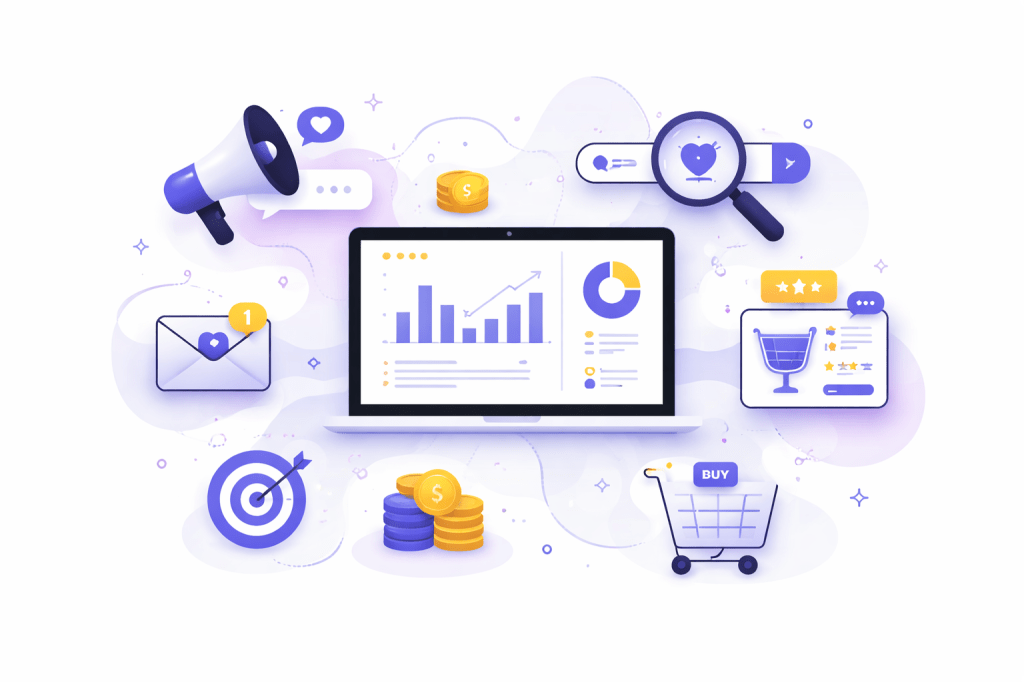
Digital marketing services are no longer a nice add-on for ambitious brands. They sit at the center of how people discover products, compare options, build trust, and decide who deserves their money. When Google says it now handles more than 5 trillion searches annually, it becomes obvious why serious businesses cannot afford to treat online visibility as an afterthought.
What makes this topic more important in 2026 is not just audience size, but audience behavior. The Digital 2025 Global Overview Report shows how deeply internet use, social platforms, mobile activity, and online shopping are woven into everyday life, while Google continues to expand the places where people discover brands through Search, Maps, YouTube, Lens, and AI-driven experiences. That means digital marketing services have to do more than generate traffic; they need to connect visibility, persuasion, conversion, and measurement into one system.
In this first part, we will define the structure of the full article, explain why digital marketing services matter right now, walk through a practical framework, and break down the core components that turn scattered tactics into coordinated growth. The later parts will move deeper into channel execution, analytics, and the wider ecosystem that supports long-term performance.
Article Outline
- Part 1: Why Digital Marketing Services Matter
- Part 2: Framework Overview
- Part 3: Core Components
- Part 4: Professional Implementation
- Part 5: Analytics And Optimization
- Part 6: The Digital Marketing Ecosystem
Why Digital Marketing Services Matter
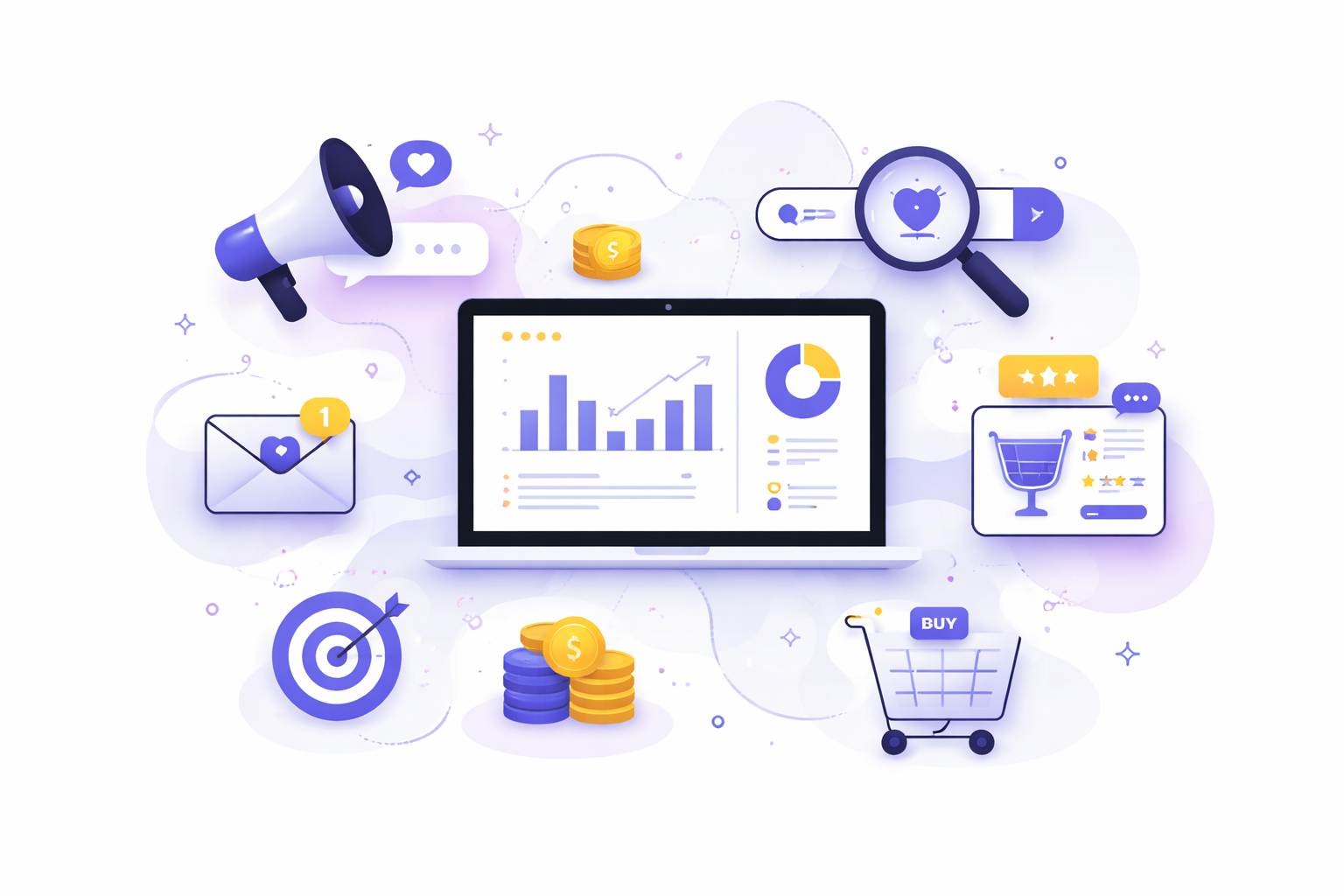
The strongest reason digital marketing services matter is simple: buyer attention is fragmented, but buying intent is still incredibly visible if you know where to look. Google has described Search and its AI experiences as continuing to send billions of clicks to the web every day, while its own product updates show that AI-enhanced search is creating new surfaces where brands can be discovered earlier and in more conversational ways. A business that shows up clearly at those moments has a real advantage over a business that waits for referrals and hopes people remember the brand name later.
The money flowing into the market tells the same story. The IAB and PwC full-year 2024 report, echoed by coverage from Marketing Brew and Marketing Dive, put U.S. digital ad revenue at roughly $259 billion for the year. Businesses do not keep moving budgets into digital channels at that scale unless those channels influence demand, pipeline, and revenue in a meaningful way.
There is also a practical trust dimension that often gets ignored. Google’s own guidance on local ranking and Business Profile performance makes it clear that accurate business information, reviews, content, and engagement all shape how customers find and evaluate a company. In other words, digital marketing services matter because they do not just drive awareness; they shape the first impression, the proof layer, and the buying path all at once.
Framework Overview
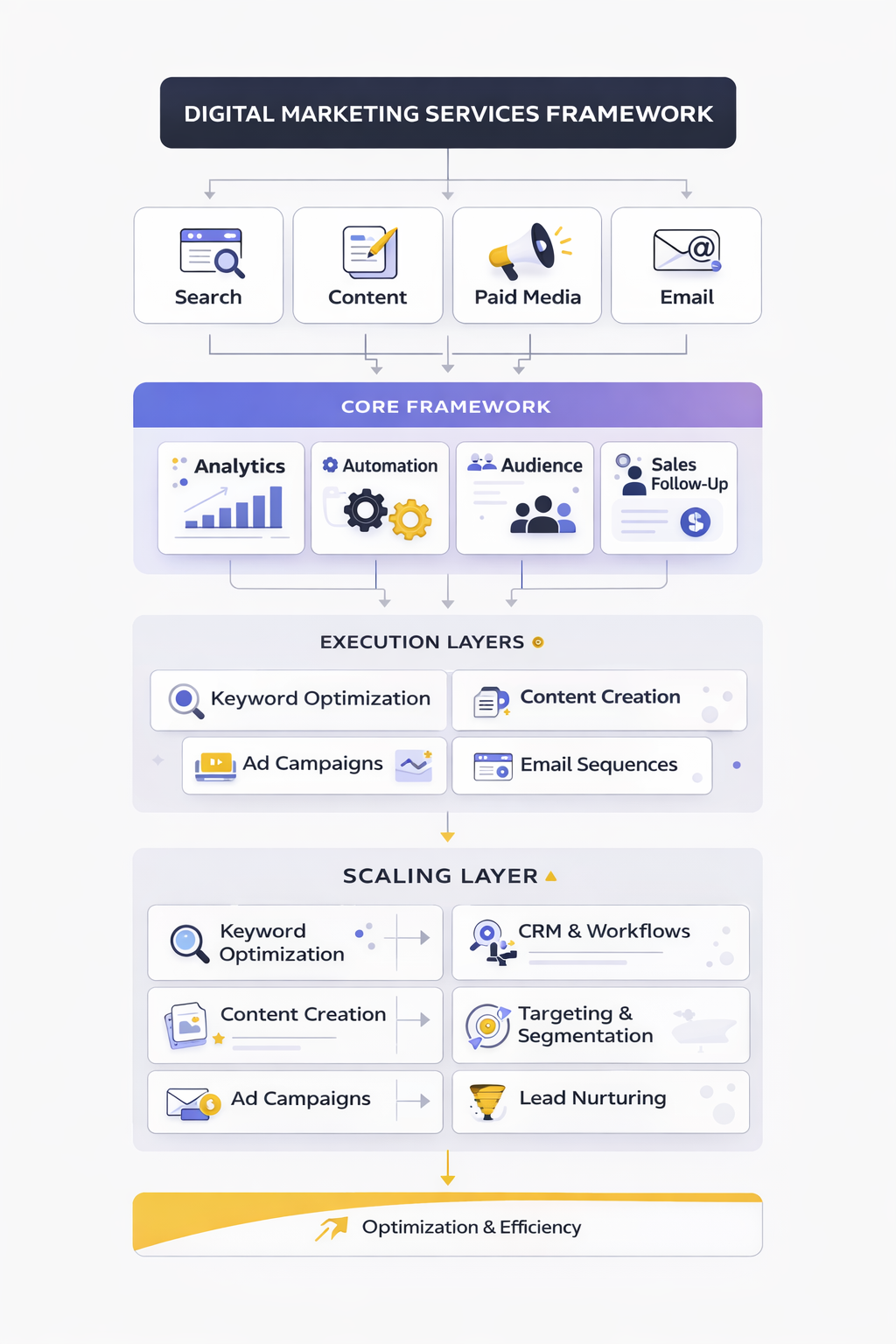
A useful way to think about digital marketing services is as a connected framework rather than a menu of unrelated tactics. The framework begins with visibility, moves into trust-building, then into conversion, and finally into retention and measurement. If one of those layers is weak, the whole system underperforms no matter how much effort goes into the others.
Visibility means your business can be found when real demand appears. That includes organic search, paid search, local presence, social discovery, creator-driven reach, video, and referral pathways. Google’s recent marketing updates around Search, YouTube, and AI make this especially important because discovery now happens across more formats, more query types, and more decision moments than it did even a year ago.
Trust-building comes next because attention alone does not create revenue. Your site, your offer, your reviews, your email experience, your creative, and your follow-up system all have to confirm that the click was worth taking. That is why the best digital marketing services do not stop at traffic generation; they build a path from curiosity to confidence.
Conversion is where strategy becomes accountable. This is the stage where landing pages, lead magnets, demos, checkout flows, remarketing, and email automation do the hard work of turning interest into action. Then retention and measurement close the loop by showing which channels bring valuable customers, which campaigns waste budget, and where lifetime value can be improved rather than reset from zero every month.
Core Components Of Digital Marketing Services
The first core component is search visibility, because many buying journeys still start with a question, a need, or a comparison. That includes SEO, paid search, local SEO, and content designed to match real intent instead of chasing random traffic. When Google says commercial queries are growing and search behavior is expanding through AI-enabled experiences, businesses need content and campaigns that are built for those higher-intent moments instead of generic brand messaging.
The second component is content and creative production. Content gives every other channel something to distribute, rank, test, and repurpose, while creative determines whether people stop, care, and remember. HubSpot’s current State of Marketing positioning and Google’s 2025 marketing strategy guidance both point in the same direction: teams that blend strong creative thinking with measurement and automation are in a far better position than teams that publish constantly without a system.
The third component is lifecycle communication, especially email and remarketing. Email remains one of the few owned channels where brands can deepen relationships without renting access from an algorithm, and tools like Mailchimp’s benchmark resources and Litmus’ recent email ROI research show why experienced marketers still treat it as a core profit lever rather than an old channel. In practical terms, that means digital marketing services should include segmentation, automation, lead nurturing, re-engagement, and post-purchase communication instead of stopping at the first conversion.
The fourth component is analytics and attribution. Without disciplined tracking, a business cannot tell whether growth is coming from brand demand, paid efficiency, stronger offers, better creative, seasonal changes, or simple luck. That is why serious digital marketing services always include measurement architecture, reporting logic, and decision rules, not just campaign execution.
Professional Implementation
Professional implementation is the difference between doing digital marketing activities and operating a digital marketing system. A professional setup starts with business goals, maps those goals to channels, builds the right assets, installs measurement properly, and only then scales spend or content volume. That order matters because even strong channels fail when the offer is weak, the handoff is messy, or the reporting cannot show what is actually working.
In practice, professional implementation often means combining strategy with the right delivery stack. A business might use landing page and funnel tools such as ClickFunnels or Systeme.io, email delivery through Brevo or Moosend, and social scheduling with Buffer or audience workflow support through Flick. The exact stack can change, but the principle stays the same: tools should support a clear strategy, not replace one.
The best professional implementation also respects the fact that modern marketing is cross-functional. Search, paid media, content, CRM, email, social, analytics, and sales follow-up all affect results, so the work has to be coordinated instead of handled as isolated tasks. That is why businesses that invest in well-structured digital marketing services usually get more than campaigns; they get a repeatable operating model for growth.
How The Framework Works In Practice
A strong framework for digital marketing services starts by separating two jobs that often get blurred together: capturing existing demand and creating new demand. Search, local discovery, high-intent paid campaigns, and comparison content are built to catch people who are already looking, while social content, video, creator partnerships, and email nurturing help move people from awareness to action over time. That distinction matters even more now that Google says it handles more than 5 trillion searches annually and that AI Overviews are driving over 10% growth in usage for the query types that show them in major markets.
Once that is clear, the next move is to connect attention to a real conversion path. A business may get traffic from SEO, paid media, social posts, referral mentions, or video, but if those visitors land on weak pages with vague offers, the channel gets blamed for a problem that actually belongs to the conversion system. That is why the best digital marketing services are built like a sequence: attract the right people, help them understand the offer quickly, remove friction, and then follow up before interest goes cold.
The financial side of the market shows why this kind of structure is not optional anymore. The IAB and PwC Internet Advertising Revenue Report put U.S. digital ad revenue at roughly $259 billion in 2024, which means businesses are competing inside an environment where attention is expensive and mistakes compound fast. If the framework is sloppy, more spend simply exposes the weakness faster.

Demand Capture And Demand Creation Need Different Plays
One of the biggest mistakes businesses make with digital marketing services is expecting one channel to do everything. Search campaigns and bottom-of-funnel SEO can be incredible when people already know what they want, but they are not designed to do the same job as trust-building content, repeated social exposure, or email education. Google’s recent updates around new ad experiences across Search and YouTube reinforce this point: discovery is spreading across more surfaces, which means strategy has to match the stage of awareness instead of forcing every campaign to behave like a direct-response ad.
This is also why digital marketing services should never be sold as a bundle of tactics with no hierarchy. Some businesses need to win demand that already exists in the market, while others need to create the market conversation first because buyers are not yet searching with urgency. When you know which of those realities you are in, your messaging, budget allocation, and performance expectations start to make sense.
Conversion Architecture Is Where Strategy Becomes Real
The framework only works when there is a deliberate conversion architecture behind it. That means clear landing pages, strong positioning, proof that lowers risk, forms that do not create unnecessary resistance, and follow-up sequences that continue the conversation after the first click. A lot of businesses think they need more traffic when what they really need is a better bridge between curiosity and commitment.
This is where professional digital marketing services earn their keep. Instead of asking whether SEO, paid media, or social is “best,” they ask a much better question: what happens after the visitor arrives, and how many chances do we have to continue the relationship if they do not buy today. When that question is handled properly, the same traffic source can suddenly look much more profitable without any dramatic increase in spend.
Choosing The Right Mix Of Digital Marketing Services
There is no serious business case for choosing channels based on hype alone. The right mix of digital marketing services depends on sales cycle length, average order value, buying intent, margin structure, brand familiarity, and how quickly the business needs feedback. A local service business, a SaaS company, an ecommerce store, and a B2B consultancy may all use the same broad channel categories, but the weighting should look completely different.
That is exactly why generic advice causes so much waste. A company with strong search intent and weak visibility usually needs search, local optimization, and conversion work before it needs a heavy brand-awareness push. A company entering a crowded market with little branded demand may need more creative distribution and remarketing before search volume alone can carry growth.
When SEO And Search-Led Services Should Lead
SEO should lead when buyers already search for the problem, the solution, or the category. In that situation, digital marketing services built around search visibility can keep producing value long after a campaign is launched because they align with existing intent instead of trying to manufacture it from scratch. Google’s own updates show that Search is not shrinking into irrelevance; it is expanding through AI Mode, AI Overviews in more than 200 countries and territories, and richer commercial discovery experiences.
That does not mean SEO should work alone. It works best when content, technical fixes, strong category pages, comparison pages, and lead capture are coordinated, because rankings without persuasion are just expensive vanity. Good digital marketing services treat SEO as a revenue pathway, not a publishing hobby.
When Paid Media Should Lead
Paid media should lead when speed matters, when search demand exists but competition is intense, or when the business needs fast signal gathering on offers and creative. The advantage is obvious: you can put an offer in front of a defined audience quickly and learn what resonates before waiting months for organic compounding. The danger is just as obvious: if the economics or the conversion path are weak, paid traffic scales the problem instead of solving it.
That is why the best digital marketing services use paid media as both a growth engine and a diagnostic tool. Fast feedback from paid campaigns can reveal whether the message is unclear, the audience is too broad, the pricing is off, or the page is simply not persuasive enough. When used that way, paid media becomes a way to sharpen the whole framework rather than a desperate attempt to buy results.
When Email, CRM, And Retention Should Lead
Some businesses are already sitting on the most valuable asset they own and still ignore it: their existing audience. When a brand has traffic, leads, or customers but weak follow-up, digital marketing services should often shift toward email, CRM workflows, segmentation, remarketing, and post-purchase communication before piling more budget into acquisition. That is especially true in categories where buyers need more than one touch before they trust the decision.
The broader industry keeps pointing in this direction. Salesforce’s ninth State of Marketing report draws on insights from nearly 5,000 marketers and highlights unified data, personalization, loyalty, and AI activation as central priorities, while McKinsey’s recent work on personalization points to 10% to 20% more efficient marketing and a 10% to 30% uplift in revenue and retention when personalization is implemented well. In plain English, keeping and growing the audience you already earned is often the most underused part of digital marketing services.
What Strong Execution Looks Like
Strong execution is not flashy. It is organized, measurable, consistent, and fast enough to learn before the market changes again. Businesses usually feel the difference immediately because reporting gets cleaner, creative gets sharper, and each channel begins supporting the others instead of competing for credit.
That kind of execution matters more now because the gap between disciplined teams and scattered teams is widening. Bain’s 2025 marketing analysis found that leading marketers are seeing median revenue growth six times higher than competitors and four times higher return on marketing investment, with AI maturity playing a major role. That does not happen because one team found a magical tactic; it happens because their systems are tighter.
Shared Data And Measurement Come First
If different channels are working from different definitions of success, digital marketing services will eventually drift into politics instead of performance. One team will celebrate reach, another will celebrate clicks, another will celebrate leads, and nobody will be able to explain which activity actually produced profitable customers. Shared measurement fixes that by aligning traffic, conversion, pipeline, and retention around the same business outcome.
This is why so many current industry reports keep circling back to data quality and measurement discipline. Google’s 2025 marketing strategy guidance puts measurement near the center of modern marketing, and Deloitte’s 2025 CMO Survey coverage reflects how closely marketing leaders are now tying AI, profitability, and operational accountability together. Clean measurement is not the boring part of digital marketing services; it is what makes the exciting part trustworthy.
Creative Iteration And Speed Still Matter
Even the best targeting cannot rescue weak creative for long. People still respond to clear promises, strong hooks, convincing proof, good design, and messaging that feels like it understands their problem. Digital marketing services work better when the team can produce, test, and refine creative quickly instead of treating each asset like a museum piece.
That is one reason current marketing research keeps emphasizing adaptability. HubSpot’s latest State of Marketing research based on 1,200 marketing leaders and its more recent 2026 marketing trends reporting built from 1,700-plus global marketers both point toward teams that are using AI and faster testing cycles to improve output, not just inflate content volume. Speed matters, but only when it is tied to judgment.
Where Businesses Usually Get Stuck
Most businesses do not fail with digital marketing services because they picked one obviously terrible channel. They get stuck because they try to shortcut the framework, expecting awareness campaigns to convert cold audiences instantly, expecting paid media to fix a weak offer, or expecting SEO to carry the whole business without email, remarketing, or sales follow-up. The result is usually frustration that feels like a channel problem but is really a system problem.
Another common trap is confusing activity with traction. Teams publish more, launch more, and spend more, yet still cannot explain what is actually moving the numbers that matter. When that happens, the smartest move is not adding another tactic; it is rebuilding the decision logic underneath the digital marketing services already in play.
Core Components Of High-Performing Digital Marketing Services
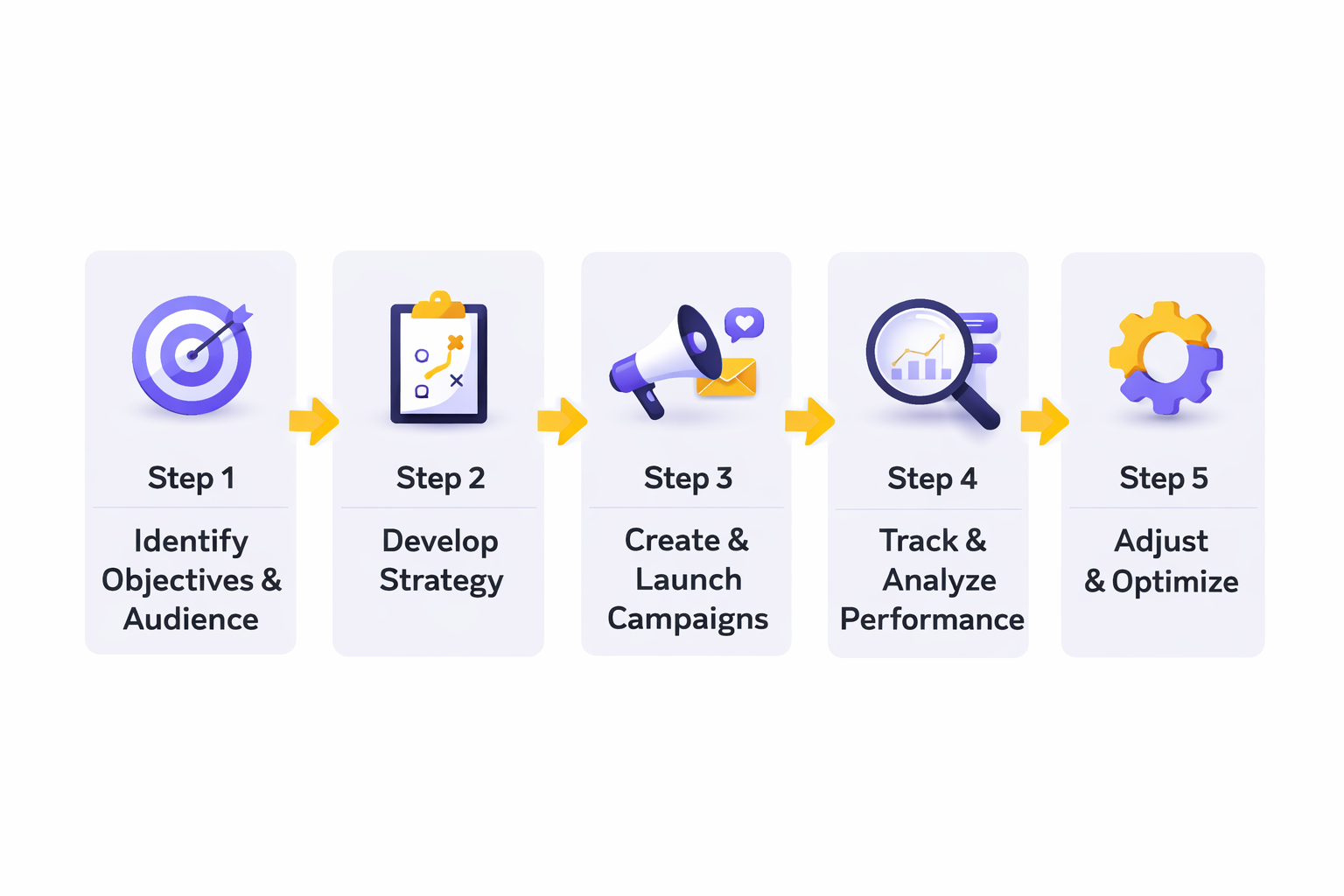
Once you move past the surface, digital marketing services stop looking like a random list of channels and start looking like a machine with a few critical moving parts. If one of those parts is missing, the whole thing gets weaker. You can drive traffic without conversions, publish content without reach, collect leads without follow-up, or spend on ads without learning anything useful, and every one of those mistakes is painfully common.
That is why the core components matter so much. Google says it now sees more than 5 trillion searches a year, while the latest IAB and PwC revenue report shows digital advertising reached $259 billion in the U.S. in 2024. There is a huge amount of opportunity in the market, but there is also a huge amount of competition, which means businesses need digital marketing services that are built to work together rather than fight each other.
So now let’s get practical. These are the components that usually separate businesses that are merely active online from businesses that are actually building momentum.
Search And Intent Mapping
The first core component is search and intent mapping. This is the part of digital marketing services that helps a business understand what people are already looking for, how those searches change across the buyer journey, and where the brand needs to show up with the right answer. Without that foundation, a company can end up creating content and campaigns that sound good internally but miss the exact language customers use when they are ready to act.
This matters even more now because search behavior is evolving, not disappearing. Google’s recent updates around AI-powered Search and YouTube experiences and its broader 2025 marketing guidance make it clear that discovery is becoming more fluid, more visual, and more conversational. In plain English, digital marketing services have to cover classic keyword intent, local discovery, product discovery, and the newer AI-shaped pathways that influence how people compare brands.
When this component is handled properly, the rest of the strategy becomes much easier to build. You know which pages deserve the most attention, which topics can pull qualified traffic, which offers match high-intent searches, and where paid support should be used to speed up results. It brings discipline to decisions that would otherwise be based on guesses.
Paid Media And Creative Testing
The second core component is paid media paired with fast creative testing. A lot of people talk about ads as if media buying is the whole game, but it is not. The real value of paid digital marketing services is that they allow a business to test messaging, offers, audiences, and landing pages quickly enough to learn what the market responds to before months of budget disappear.
This is where many businesses either get smart or get burned. The same market that made digital ad revenue surge to record levels also punishes weak positioning and lazy creative with brutal efficiency. If the offer is generic, the hook is forgettable, or the landing page feels vague, no targeting trick will save it for long.
Strong digital marketing services use paid media for more than lead generation. They use it as a laboratory. They test short-form creative against longer educational messaging, compare problem-aware offers with product-aware offers, and keep refining the path until the numbers begin to make sense. That is how paid media stops being an expense line that causes stress and starts becoming a source of market intelligence.
Content And Conversion Assets
The third core component is content supported by conversion assets. Content gets talked about constantly, but too often it gets treated like an obligation instead of an asset class. In reality, content inside good digital marketing services should do specific work: answer buying questions, build authority, overcome objections, improve organic visibility, support social distribution, and give paid campaigns stronger landing environments.
That is also where conversion assets come in. A blog post, category page, lead magnet, webinar page, product page, booking page, or case-study page should not exist just to fill space. Each one should move the visitor one step closer to trust and action. When digital marketing services are well built, the content is not floating around disconnected from the funnel. It feeds the funnel.
This is exactly why current research keeps emphasizing relevance and personalization instead of raw publishing volume. Salesforce’s ninth State of Marketing report, based on insights from nearly 5,000 marketers, shows how strongly teams are focusing on AI, unified data, loyalty, and personalization. McKinsey’s research on personalization at scale points to marketing that can become 10% to 20% more efficient, with potential uplifts of 10% to 30% in revenue and retention when personalization is fully implemented. That only happens when content is connected to the customer journey instead of being published for its own sake.
Email, CRM, And Automation
The fourth component is email, CRM, and automation. This is the part many businesses postpone because it feels less exciting than traffic generation, but that is a mistake. When someone visits your site, joins your list, starts a trial, requests a quote, or buys once, digital marketing services should not leave the relationship sitting there unattended. They should continue the conversation in a way that feels timely, useful, and relevant.
This is where the difference between rented attention and owned attention becomes painfully obvious. Social reach can fluctuate, ad costs can rise, and algorithms can change, but a strong email and CRM system gives a business a direct line to the audience it already worked hard to earn. That is why email keeps showing up as a foundational channel in resources like Mailchimp’s benchmark library, Litmus’ State of Email reports, and Brevo’s 2025 benchmark research.
The businesses that win here do not just blast promotions. They build welcome flows, lead nurturing, abandoned cart recovery, sales follow-up, reactivation campaigns, and post-purchase sequences that make customers feel guided instead of chased. This is one of the most profitable parts of digital marketing services because it improves the value of traffic you are already paying for.
Analytics And Decision Systems
The fifth core component is analytics tied to decision-making. A dashboard by itself is not strategy. What matters is whether the reporting helps you understand which channels attract the right people, which pages convert them, which campaigns produce quality pipeline, and where money is being wasted. Without that, digital marketing services turn into a collection of opinions dressed up as performance reviews.
This is one reason measurement keeps getting elevated in current leadership research. Deloitte’s 2025 CMO Survey coverage shows how strongly marketing leaders are being pushed toward profitability, AI adoption, and operational accountability, while Google’s 2025 strategy guidance keeps returning to the same theme: better measurement leads to better decisions. That sounds obvious, but many teams still operate as if reporting exists only to make campaigns look busy.
The best digital marketing services use analytics to answer uncomfortable questions early. Is this traffic relevant. Is this creative producing quality interest or empty clicks. Is the sales team following up quickly enough. Is the offer strong enough to justify more spend. Once those questions are answered honestly, scaling becomes a lot safer.
The Technology Stack And Execution Layer
The sixth component is the execution layer itself: the software, workflows, and operating rhythm that turn strategy into repeatable action. This is where digital marketing services become real on a weekly basis. Pages have to be built, campaigns launched, leads routed, emails scheduled, reports reviewed, tests prioritized, and content distributed without everything collapsing into chaos.
That is also why the tool stack matters, even though it should never be confused with strategy. A business might build funnels and landing pages in ClickFunnels or Systeme.io, run email and automation through Brevo or Moosend, and keep social publishing organized with Buffer or Flick. The point is not to worship tools. The point is to make execution easier, cleaner, and more consistent.
When all six components are present, digital marketing services stop feeling scattered. Search brings in demand, paid media accelerates learning, content builds trust, email deepens the relationship, analytics sharpen decisions, and the stack keeps everything moving. That is the difference between doing a little online marketing and building a serious growth system.
Statistics And Data
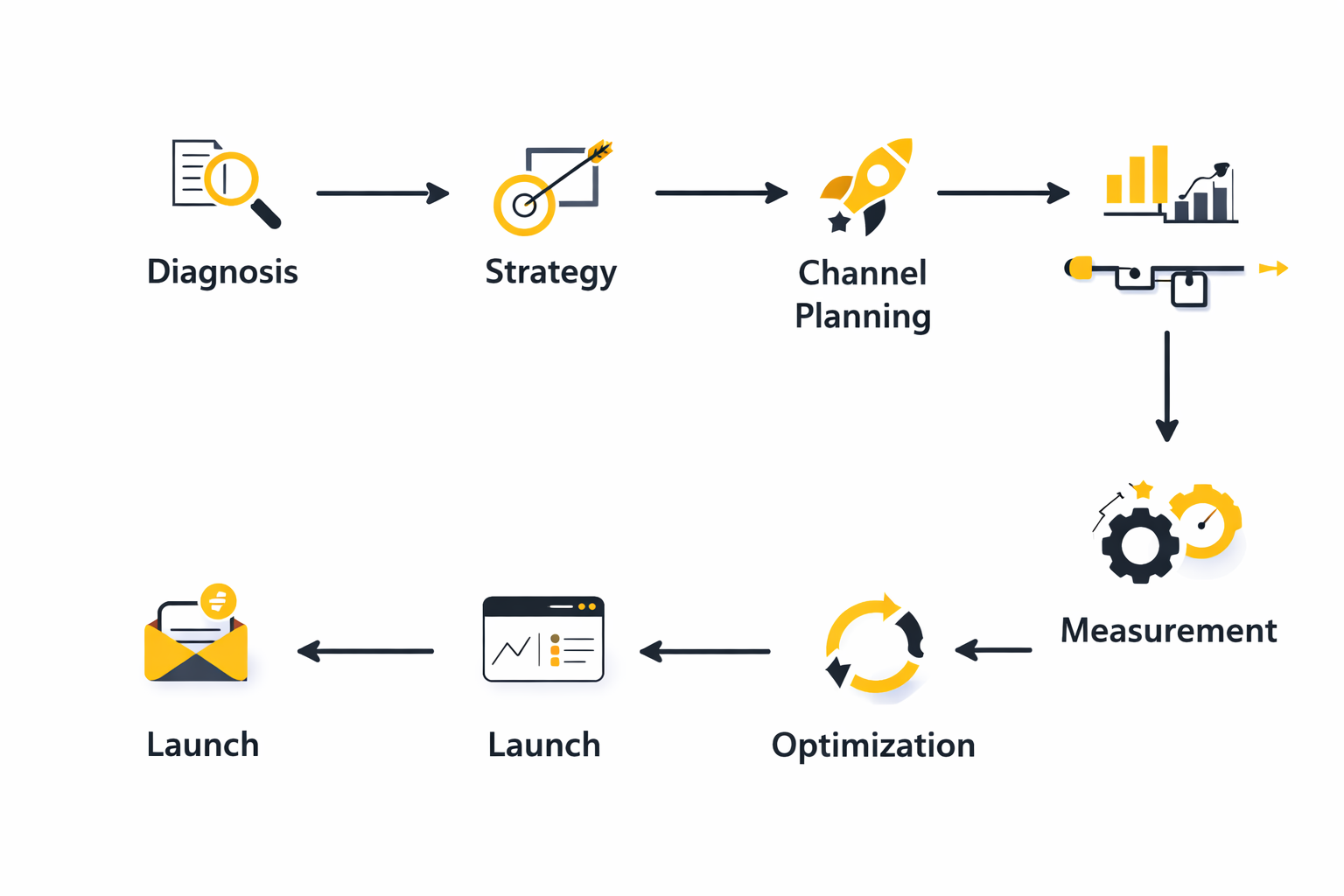
If you want to understand whether digital marketing services are worth serious investment, start with the size of the market and the speed at which the landscape is changing. The IAB and PwC full-year 2024 report, reinforced by coverage from Marketing Brew and ANA, shows that U.S. digital advertising revenue reached about $259 billion in 2024, up roughly 15% year over year. That is not the kind of number you see in a channel businesses are casually experimenting with. It is the kind of number you see when digital marketing services have become part of the operating system of modern growth.
The search layer is just as revealing. Google has repeatedly said it now sees more than 5 trillion searches annually, and its 2025 Search updates explain that AI Overviews have scaled to more than 1.5 billion users across 200 countries and territories. Google also says those AI Overviews are driving over 10% growth in usage for the query types where they appear, especially in major markets. That matters because digital marketing services are no longer competing for attention only in classic blue-link search results. They now have to perform across a wider discovery environment that is more visual, more conversational, and more commercially dynamic.
What The Numbers Actually Say
The most useful statistics are the ones that change how you make decisions. A market worth $258.6 billion in annual digital ad revenue tells you competition is intense, but it also tells you businesses continue to see returns large enough to justify heavier investment. A search engine handling over 5 trillion searches a year tells you intent is still visible at enormous scale, even as buyer behavior gets more fragmented.
At the same time, newer research is making it clear that execution quality now creates a wider performance gap than ever. Bain’s 2025 analysis of 1,200 senior marketing executives worldwide found that leading marketers were achieving median revenue growth six times higher than competitors while generating four times higher return on marketing investment. That is a powerful reminder that digital marketing services do not fail because the internet stopped working. They fail when the business behind them lacks the measurement, experimentation, and coordination needed to compete well.
Measurement Is Not Optional Anymore
One of the clearest patterns in current data is that marketers are under pressure to prove value much more directly than before. Deloitte’s 2025 CMO Survey, based on input from more than 250 marketing leaders, frames the conversation around profitability, AI, operational leadership, and the need to demonstrate marketing’s business value more convincingly. That lines up with Google’s own 2025 measurement guidance, which pushes marketers toward cleaner data, stronger experimentation, and better decision-making rather than vanity reporting.
That shift is exactly why digital marketing services now need better analytics architecture than many businesses are used to. Google’s official guidance on Business Profile performance shows how even local visibility can now be measured through views, searches, calls, directions, website clicks, bookings, and product interactions across Search and Maps. Once you start seeing that level of detail, it becomes much harder to justify vague reporting that says a campaign “did well” without showing how it moved actual business outcomes.
Email And Owned Audience Data Still Matter
There is another set of numbers that tends to get overlooked whenever everyone becomes obsessed with ad platforms: owned audience performance. Brevo’s 2025 benchmark study analyzed roughly 44 billion emails from more than 80,000 companies worldwide, which is a useful reminder that email is still a massive operational channel, not a relic from an earlier internet. Litmus continues to frame email as a critical performance channel in its State of Email research, while Salesforce’s latest State of Marketing report highlights how marketers are investing in data, AI, personalization, and loyalty rather than treating retention as an afterthought.
This matters because digital marketing services should never be judged only by how many clicks they buy. They should also be judged by how well they capture attention, keep it, and turn it into repeatable communication with prospects and customers you can reach again without paying for every impression from scratch. That is one reason owned channels remain so valuable even while acquisition costs rise.
Personalization And Efficiency Metrics
When the conversation moves from channels to economics, personalization becomes hard to ignore. McKinsey’s research on personalization at scale points to marketing that can become 10% to 20% more efficient, with a potential 10% to 30% uplift in revenue and retention when personalization is implemented well. Those are serious numbers, and they explain why so many modern digital marketing services are now built around segmentation, behavioral triggers, customer data, and content journeys instead of one-size-fits-all messaging.
Deloitte’s 2025 marketing investment trends research, based on 1,395 U.S. marketing leaders, adds another layer to that idea by showing that organizations investing more in martech than in working media saw 18% greater sales lift from marketing and 7% greater revenue growth overall. That does not mean software magically creates growth. It means the right infrastructure can make digital marketing services smarter, faster, and more accountable when the strategy behind it is sound.
How To Read The Data Correctly
The smartest way to read all of this data is not to cherry-pick one impressive percentage and hope it applies to every business. The better lesson is that digital marketing services now reward integration. Search behavior, ad spend, owned audience performance, AI-enabled discovery, local interactions, and measurement discipline are all connected. When one part improves, it often makes the others more profitable.
That is also why weak reporting can be so dangerous. If you only look at surface-level traffic or top-line impressions, you can miss the deeper story about whether the business is building trust, lowering acquisition friction, improving retention, and learning faster than competitors. The numbers only become useful when they are tied to the real job digital marketing services are supposed to do: bring in the right people, move them toward action, and create growth that can be repeated instead of guessed at.
Analytics And Optimization
This is the point where digital marketing services either become a real growth engine or stay stuck as a collection of activities that look busy but never fully prove themselves. Traffic on its own is not enough. Reach is not enough. Even leads are not enough if nobody can explain which channels produced the right customers, what moved them to act, and where the next round of growth should come from.
That matters more now than it did a few years ago because the discovery environment is getting more complex, not simpler. Google says it now sees more than 5 trillion searches a year, and its 2025 updates show that AI Overviews have scaled to more than 1.5 billion users across 200 countries and territories. When buyer journeys stretch across classic search, AI-generated discovery, local results, social touchpoints, video, email, and remarketing, digital marketing services need analytics strong enough to connect those signals instead of treating every click as an isolated event.
That is why optimization deserves its own place in the framework. It is not a nice extra. It is the discipline that tells you what to keep, what to cut, what to test next, and how to get more value from the attention you already worked hard to earn.
What You Should Actually Measure
The biggest reporting mistake businesses make with digital marketing services is measuring whatever is easiest to pull into a dashboard instead of measuring what actually changes decisions. Impressions, clicks, followers, and sessions can be useful signals, but they are not the finish line. The stronger approach is to measure the chain from visibility to action: qualified traffic, lead quality, conversion rate, sales velocity, retention, and revenue contribution.
This is exactly why current leadership research keeps pulling marketing toward tighter accountability. Deloitte’s 2025 CMO Survey shows how closely marketing leaders are being judged on profitability, operational leadership, and the ability to tie marketing to business outcomes. Google’s 2025 measurement guidance pushes in the same direction by emphasizing stronger data foundations, better experimentation, and more reliable decision-making.
For digital marketing services, that usually means every channel should answer a few simple but serious questions. Did it bring in the right audience. Did that audience do something meaningful. Did the business capture enough information to continue the relationship. And did the value created justify the time and spend required to generate it.
Attribution Without Fooling Yourself
Attribution sounds technical, but the core idea is very human: giving credit fairly. That is much harder than it looks because customers rarely move in a straight line anymore. They might discover a brand through a social post, search it later on Google, come back from a retargeting ad, join an email list, and only convert after reading a case study or seeing a review. If digital marketing services only credit the last click, the business ends up starving the very activities that created demand in the first place.
The answer is not pretending attribution can be perfect. The answer is building a decision system that is honest enough to notice patterns across channels. Google’s expanding mix of Search, Lens, AI Overviews, Maps, and AI Mode already shows that discovery is happening in more places and in more formats than many legacy reporting models were built for. That means digital marketing services have to use attribution as a guide for better judgment, not as a false promise of mathematical certainty.
When teams understand that, they stop asking which single channel “caused” the result and start asking which combination of touchpoints reliably moves people forward. That is a far more useful question, and it usually leads to smarter budget decisions.
Testing And Iteration Are Where Growth Compounds
The businesses that get the most out of digital marketing services are rarely the ones that guess right the first time. They are the ones that learn faster. They test headlines, offers, landing pages, email sequences, creative hooks, audience segments, and conversion paths, then they keep what works and refine what almost works. That process sounds simple, but in practice it creates a huge gap between teams that improve every month and teams that keep recycling the same assumptions.
That performance gap is showing up in current research. Bain’s 2025 analysis of 1,200 senior marketing executives worldwide found that leading companies were generating median revenue growth six times higher than competitors while achieving four times higher return on marketing investment. That is not a sign that they found one secret tactic. It is a sign that better systems, better data, and better optimization habits compound over time.
This is also why creative testing matters so much. You can buy traffic quickly, but you cannot force weak messaging to perform forever. Good digital marketing services improve because they treat the market like a conversation, listen carefully to how people respond, and then adapt before the budget gets wasted.
Owned Data And Retention Make Optimization Smarter
One of the most overlooked advantages in digital marketing services is owned data. When a business captures leads, segments customers, tracks lifecycle behavior, and keeps communication going through email or CRM, it gets far more context for optimization than it ever could from anonymous clicks alone. Instead of asking only which ad produced the lowest cost per lead, the team can ask which sources created the highest-quality customers, the strongest repeat purchase patterns, and the best long-term value.
This is one reason email and CRM performance still deserve serious attention. Brevo’s 2025 benchmark research is built on billions of emails sent in 2024, while Litmus continues to publish ongoing State of Email research focused on how marketers improve engagement, personalization, and ROI. The point is not that email replaces other channels. The point is that digital marketing services become easier to optimize when the business owns more of the customer relationship instead of renting every interaction from an algorithm.
Retention data also makes acquisition smarter. Once you know which traffic sources create customers who stay longer, buy more, or convert faster, you stop optimizing for shallow wins and start optimizing for business quality. That shift alone can completely change how a budget should be allocated.
Local Performance And Funnel Performance Both Count
Optimization is not just for large brands running sophisticated media programs. Local businesses need it too, and often more urgently. Google’s official guidance on Business Profile performance makes it clear that companies can now track how people discover their profile and what they do next through actions like calls, website clicks, direction requests, bookings, and product interactions. That kind of visibility turns local presence from a passive listing into an active part of digital marketing services.
The same logic applies inside the funnel. A landing page is not really performing well just because it converts. It is performing well when it converts the right people at a sustainable cost and hands them off into a sales or nurturing process that keeps momentum alive. Strong digital marketing services pay attention to every one of those transitions because that is where good traffic often gets lost.
When businesses optimize both the front end and the follow-through, results start to feel less random. Search visibility improves the first visit, the funnel makes the next step easy, and the follow-up system makes sure interest does not disappear the moment the visitor leaves the page.
The Best Teams Optimize On A Rhythm
Optimization works best when it stops being a rescue mission and becomes a routine. That means digital marketing services need a rhythm for reviewing performance, spotting patterns, prioritizing tests, and making decisions before problems drag on for months. Weekly checks help teams catch fast-moving issues, while monthly reviews are better for channel mix, creative themes, conversion performance, and budget allocation.
This is where the operational side of marketing becomes a real advantage. Deloitte’s 2025 marketing investment trends research, based on 1,395 U.S. marketing leaders, found that organizations investing more in martech than in working media saw 18% greater sales lift from marketing and 7% greater revenue growth overall. That does not mean software deserves the credit by itself. It means teams with stronger infrastructure tend to review, learn, and act with more consistency.
And that is the real heart of optimization. Great digital marketing services are not built on isolated wins. They are built on a repeatable process of measuring honestly, learning quickly, and improving relentlessly until the whole system gets stronger.
The Digital Marketing Services Ecosystem
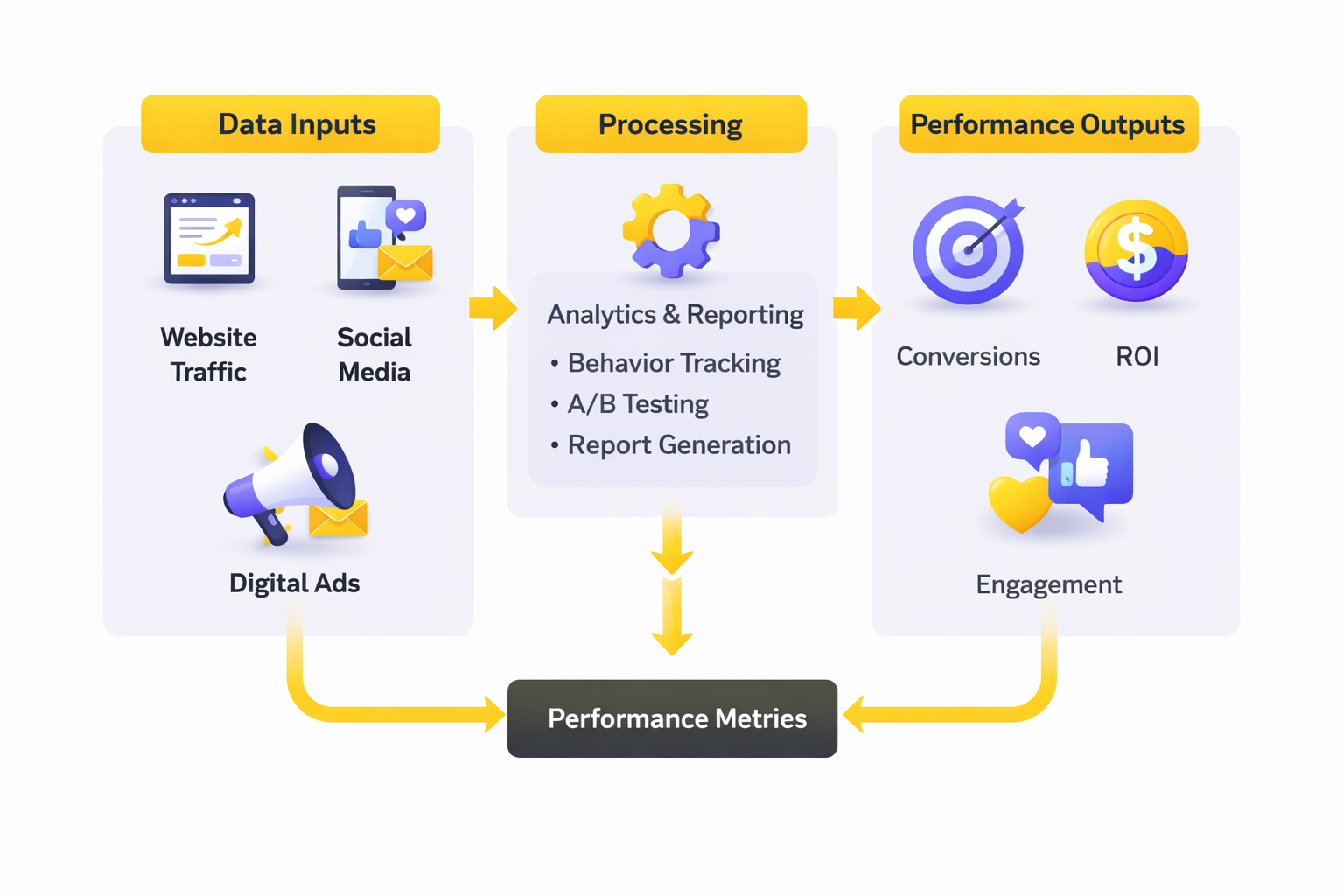
By the time you reach the end of this guide, one thing should be clear: digital marketing services do not work best as isolated tactics. They work best as an ecosystem where search, content, paid media, email, analytics, automation, and sales follow-up reinforce each other instead of competing for attention and credit. That is the real difference between a business that keeps scrambling for the next lead and a business that builds a system that keeps producing opportunities month after month.
The market keeps pushing in that direction. Google has said it now sees more than 5 trillion searches annually, while the IAB and PwC full-year 2024 report shows U.S. digital advertising reached roughly $259 billion in revenue. That kind of scale creates enormous opportunity, but it also punishes disconnected marketing. If your digital marketing services are not coordinated, the market usually exposes the weakness fast.
The encouraging part is that businesses do not need to master everything at once. They do need to understand how the pieces connect. Once that clicks, decisions get cleaner, reporting gets more honest, and growth becomes much less random.
FAQ For A Complete Guide
What are digital marketing services, really?
Digital marketing services are the professional activities, systems, and tools used to help a business get discovered online, earn trust, generate leads or sales, and improve customer retention. That usually includes a mix of SEO, paid advertising, content marketing, email, CRM automation, social media, analytics, and landing page optimization. The reason the category keeps expanding is simple: buyer attention is spread across more places than ever, and Google’s newer search environment now includes AI-driven discovery on top of the classic results people are already used to.
Why do businesses need digital marketing services now more than ever?
Because buyer behavior is deeply digital even when the final purchase happens offline. A person might discover a brand in search, read reviews, compare offers, check social proof, join an email list, and only then decide to call or buy. When Google says it sees more than 5 trillion searches annually, it highlights just how often buying journeys begin with digital intent signals that businesses can either capture or miss.
Which digital marketing services matter most?
That depends on the business model, but the strongest foundation usually starts with search visibility, conversion-focused pages, lifecycle follow-up, and analytics. A local service brand may lean harder on local SEO, reviews, and lead handling, while a SaaS company may need more content, demos, remarketing, and onboarding flows. The mistake is assuming one channel is always the answer. The better move is to choose the digital marketing services that match how your customers actually make decisions.
How long do digital marketing services take to work?
Some parts move quickly and some do not. Paid media, landing page testing, and email improvements can generate signal fast, while SEO, authority building, and content compounding usually take longer. What matters is not chasing instant gratification but building digital marketing services that create both short-term feedback and long-term leverage.
Are digital marketing services basically just paid ads?
No, and that misunderstanding costs businesses a lot of money. Paid ads are one part of the system, but they work best when they send people into a stronger environment with better messaging, better proof, cleaner offers, and better follow-up. The latest IAB and PwC revenue data shows the scale of digital ad investment, but scale alone does not mean ads should carry the entire growth strategy by themselves.
How should digital marketing services be measured?
They should be measured against business outcomes, not vanity metrics. Useful reporting usually connects visibility, qualified traffic, conversion rate, lead quality, sales velocity, retention, and revenue contribution. Research from the 2025 CMO Survey shows how tightly marketing leaders are being pushed toward profitability and operational accountability, which is exactly why better measurement is now part of good digital marketing services rather than an optional extra.
Do small businesses really need digital marketing services?
Yes, often even more than larger companies, because smaller brands usually cannot afford wasted attention. They need to be visible when demand appears, convert that attention efficiently, and keep relationships warm without losing momentum. Google’s Business Profile performance guidance shows how even small local businesses can now track calls, clicks, direction requests, bookings, and other signals that make digital marketing services far more actionable than they used to be.
What role does email play in digital marketing services?
Email plays a much bigger role than many businesses assume. It turns rented attention into owned attention, which means you can continue the conversation after someone visits, subscribes, asks for a quote, starts a trial, or buys once. Brevo’s 2025 benchmark study built on roughly 44 billion emails is a good reminder that email is still a huge operational channel, not some outdated tactic people keep using out of habit.
Is SEO still worth it when AI is changing search?
Yes, but the standard is getting higher. SEO is still one of the most valuable parts of digital marketing services because it aligns with existing demand, but it now has to work inside a search environment that is more dynamic, more visual, and more AI-shaped. That is exactly why generic content is getting weaker while useful, intent-matched, conversion-aware content is becoming more valuable.
Can digital marketing services help with retention, not just acquisition?
Absolutely, and that is one of the most underused advantages in the category. Good digital marketing services do not stop after the first lead or first purchase. They continue through onboarding, education, upsell timing, reactivation, loyalty, and personalized communication. Salesforce’s ninth State of Marketing report keeps pointing toward AI, personalization, loyalty, and unified data because retention is now too important to leave disconnected from acquisition.
What is the biggest mistake businesses make with digital marketing services?
The biggest mistake is treating channels like independent workers instead of part of one system. A business runs ads without fixing the page, publishes content without a distribution plan, collects leads without follow-up, or stares at a dashboard that cannot explain which actions produced valuable customers. The result feels like a channel problem, but it is usually an ecosystem problem.
How important is personalization inside digital marketing services?
It is increasingly important because buyers expect relevance. McKinsey’s work on personalization at scale points to marketing that can become 10% to 20% more efficient, with possible uplifts of 10% to 30% in revenue and retention when personalization is done well. That does not mean every message has to feel robotic and hyper-targeted. It means digital marketing services should reflect where the customer is, what they care about, and what they are most likely to need next.
How do you choose the right provider for digital marketing services?
Look for someone who can explain the full system, not just sell a favorite tactic. A strong provider should be able to talk clearly about goals, channel roles, conversion paths, measurement, testing priorities, and how they will decide what to improve next. If the conversation is all hype and no operating logic, the digital marketing services will usually feel that way once the work begins too.
Work With Professionals
If you are serious about growth, the smartest move is to stop thinking about digital marketing services as separate line items and start treating them like a coordinated business function. That means working with people who understand how search, content, paid media, email, analytics, and conversion architecture influence each other. The businesses that improve fastest are rarely the ones doing the most random activity. They are the ones making the clearest decisions.
That matters even more now because the performance gap is widening. Bain’s 2025 analysis of 1,200 senior marketing executives worldwide found that leading marketers were achieving median revenue growth six times higher than competitors and four times higher return on marketing investment. Strong digital marketing services are not about doing trendy things. They are about building a system that learns, adapts, and compounds.
If you want better outcomes, work with professionals who can connect strategy to execution and execution to numbers that actually mean something. That is where momentum begins. And once momentum begins, everything gets easier to scale.
Explore 10K+ Remote Marketing Contracts on MarkeWork.com
Most marketers spend too much time chasing clients, competing on crowded platforms, and losing a percentage of every project to middlemen.
MarkeWork gives you a better way. Browse thousands of remote marketing contracts and connect directly with companies desperate to hire skilled marketers like you without platform commissions and without unnecessary gatekeepers.
If you’re serious about finding better opportunities and keeping 100% of what you earn, you can explore available contracts and create your profile for free at MarkeWork.com.
 Filip Konecny Enterprises