

A branding agency is not there to make a company look prettier for a week. It exists to help a business become clearer, more memorable, and more valuable in the minds of the people who actually decide whether to buy, stay loyal, or move on. That matters even more now, because Gartner found marketing budgets holding at 7.7% of company revenue in 2025, which means leaders have less room for vague positioning, disconnected campaigns, and expensive creative work that never turns into commercial momentum.
The stronger reason businesses hire a branding agency is that brand is no longer a soft layer sitting on top of operations. Harvard Business Review, drawing on McKinsey research, argues that companies treating branding and advertising as a core growth strategy outperform firms that do not. At the same time, Interbrand’s 2024 analysis said the world’s biggest brands have left at least $3.5 trillion in unrealized value on the table since 2000, largely because short-term performance thinking crowded out long-term brand building. That is exactly the kind of problem a serious branding agency is hired to solve.
A good agency brings outside perspective, but it should never work like an outsider guessing from a mood board. The best work happens when strategy, category insight, customer understanding, verbal identity, visual systems, and rollout discipline all connect into one commercial story. This first part breaks down why a branding agency matters, what framework strong firms use, which components define quality work, and how professional implementation separates expensive design from a brand system that can actually scale.
Article Outline
- Part 1: Why a Branding Agency Matters
- Part 1: Framework Overview
- Part 1: Core Components
- Part 1: Professional Implementation
- Part 2: Measurement and Optimization
- Part 3: Brand Ecosystem and Growth
Why a Branding Agency Matters

Most companies do not hire a branding agency because they suddenly care about fonts. They do it because something feels off in the market: leads are coming in but not converting, pricing power is weaker than it should be, the business looks inconsistent across channels, or the company has changed faster than its public identity. In those moments, the issue is rarely just visual design. The issue is that the business no longer has a sharp, credible way to explain who it is, why it matters, and why the right customer should choose it.
That problem is getting harder, not easier. Edelman’s 2025 brand trust research across 15 countries and 15,000 respondents shows that trust is shifting toward personal relevance, optimism, and emotional connection. In plain English, people are not rewarding brands for sounding polished. They are rewarding brands that feel useful, believable, and aligned with real needs in everyday life. A branding agency matters because it helps turn that expectation into a clear market position instead of leaving it as a vague aspiration in a boardroom deck.
There is also a hard financial angle here. Kantar’s Meaningful, Different and Salient framework was independently verified by MASB to connect brand metrics to commercial outcomes, and Kantar also notes that fewer than a third of organizations use brand equity metrics at board level. That gap explains why many businesses underinvest in brand until growth slows down. A strong branding agency closes that gap by translating identity work into pricing power, market share logic, customer memory, and future growth potential rather than presenting branding as decoration with a strategic accent.
Framework Overview
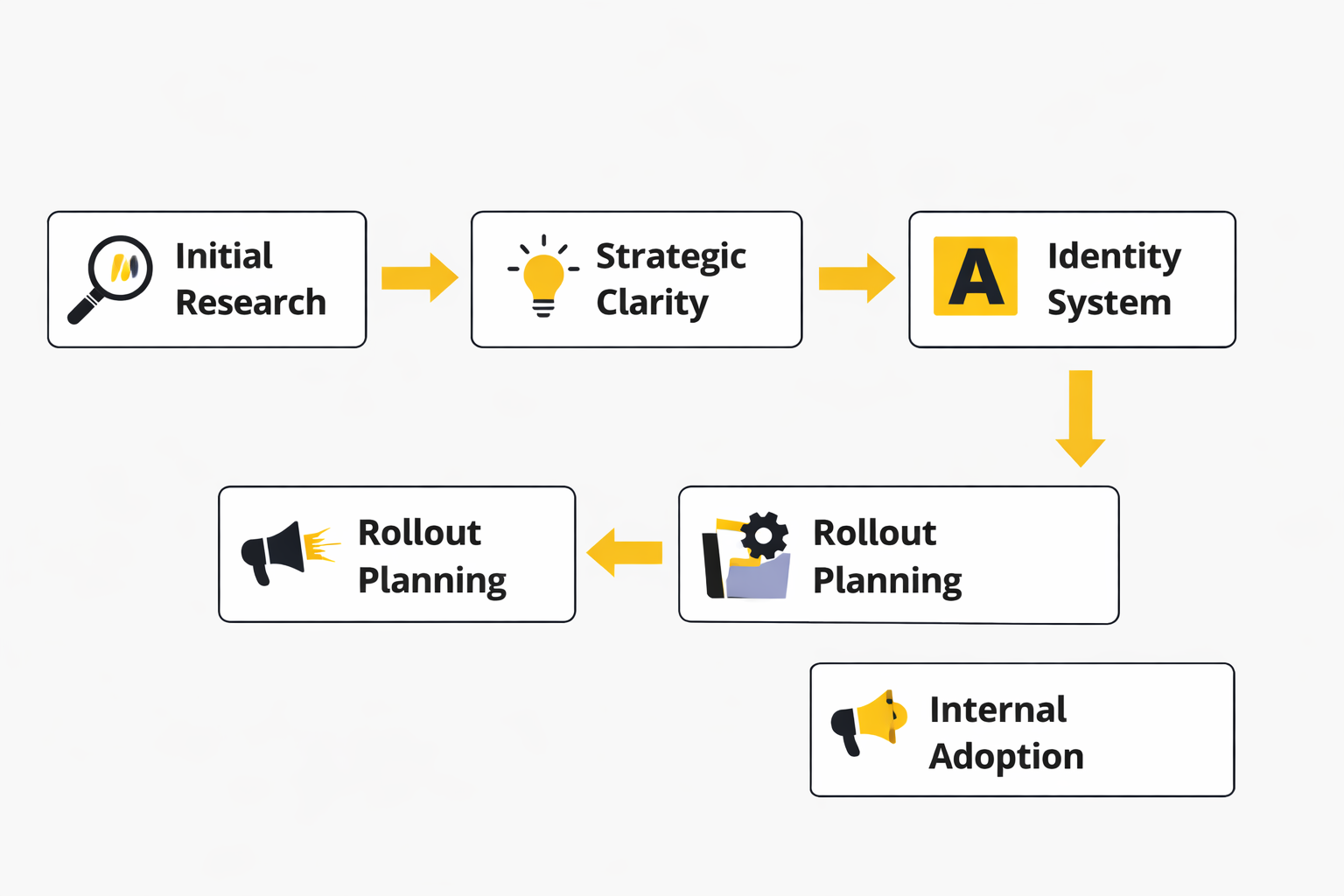
The simplest way to understand a branding agency is to stop thinking about isolated deliverables and start thinking in layers. First comes diagnosis: category pressure, audience behavior, internal misalignment, and the difference between what the company says about itself and what buyers actually perceive. Then comes strategy: positioning, value proposition, audience priorities, competitive distinction, and the language that frames the brand in a way the market can understand quickly. Only after that should design systems and rollout plans come into view.
This order matters because rushing to visuals creates a fragile brand. Nielsen’s 2024 Annual Marketing Report emphasizes the importance of measuring both brand-building and sales impact together. That principle applies before campaigns ever launch. If the strategic foundation is weak, even attractive creative work will struggle to support both long-term memory and short-term conversion. A branding agency earns its keep by building the base layer first so later execution does not become a costly exercise in inconsistency.
Seen this way, the framework is practical rather than mysterious. A branding agency should help a company answer six questions in sequence: who are we for, what problem do we own, how are we different, what should people remember, how should the brand look and sound everywhere it appears, and how do we implement it without breaking the business. When those answers are clear, branding stops being subjective. It becomes a decision system the whole company can use.
Core Components
The first core component is positioning, because everything else depends on it. Positioning is where a branding agency defines the territory a company can credibly own, the audience it wants to attract, and the language that sharpens that distinction. Without that, messaging turns generic fast, especially in categories where everyone claims quality, innovation, trust, or customer focus. Those words are not useless, but they are far too weak to carry a brand unless the agency gives them a specific meaning tied to the market and the customer’s decision process.
The second component is identity, which includes verbal and visual systems working together. Verbal identity covers naming logic, messaging hierarchy, tone of voice, brand story, and the phrases that should repeat across sales, web, and campaign environments. Visual identity covers logo behavior, typography, color, image direction, layout principles, motion rules, and the practical standards that keep the brand recognizable across teams. This is where many businesses make the mistake of judging the work too early, because identity only looks powerful when it clearly expresses a strong position underneath it.
The third component is governance. A branding agency that stops at guidelines has only done half the job. The real test is whether teams can use the system consistently in product launches, paid campaigns, investor materials, recruitment, proposals, sales decks, and social content. That matters because Kantar’s Brand Footprint work tracks tens of thousands of brands across dozens of markets, which is another way of saying customers are making choices in a crowded environment where confusion gets punished quickly. The point of core components is not to make a brand look organized on paper. It is to make the business easier to understand everywhere it shows up.
Professional Implementation
Professional implementation is where branding agencies either prove their value or expose that they were only hired for presentation theatre. A professional rollout starts with prioritization. Not every asset needs to change on day one, and trying to update everything at once usually creates internal resistance, budget waste, and public inconsistency. A good agency helps leadership decide what must change immediately, what can transition over time, and which internal teams need training before the new brand goes live.
This stage also requires operational realism. The strongest agencies work across marketing, sales, product, HR, and leadership so the brand does not fracture the first time a real deadline hits. That is why implementation plans usually include launch sequencing, asset libraries, template systems, approval workflows, messaging playbooks, and ownership rules. When that discipline is missing, even expensive rebrands start to look watered down within a quarter because every department improvises its own version of the brand.
The commercial side cannot be ignored either. With marketing budgets still under pressure, businesses need implementation that improves clarity and efficiency at the same time. That means a branding agency should reduce waste, not add layers of it. The best outcome is not simply a more attractive brand. It is a brand system that shortens decision-making, improves consistency, supports stronger campaigns, and gives the business a more defensible position when it goes after growth.
Measurement and Optimization
A branding agency should never ask a company to trust the process blindly. If the work is serious, it has to be measured in a way that connects brand perception with commercial outcomes, because that is where leadership teams decide whether the investment was worth it. The challenge is that many businesses still separate brand from performance even though Nielsen’s 2024 Annual Marketing Report makes it clear that marketers are under intense pressure to prove ROI while balancing long-term brand building with short-term revenue targets.
That is exactly why measurement needs to be built into the engagement before the first redesign file is approved. A strong branding agency defines what success looks like early, whether that means improved awareness in a specific market, stronger consideration among a buying committee, better pricing confidence, more direct traffic, stronger conversion from branded search, or higher consistency across customer touchpoints. Kantar’s MASB-certified brand equity framework matters here because it gives companies a more disciplined way to connect brand strength with real commercial outcomes rather than relying on a vague sense that the business now looks more modern.
What gets measured also shapes how teams behave after launch. If a company only tracks short-term clicks, the brand will slowly get pulled toward whatever is cheapest this quarter. If it tracks memory, distinction, consideration, conversion quality, retention, and category momentum together, the branding agency has a much better shot at proving that the new system is helping the business grow instead of just creating a prettier set of assets.
What a Branding Agency Should Measure
The first thing to measure is market clarity. Can customers quickly understand what the company does, who it is for, and why it is different from the alternatives they are comparing? That sounds basic, but it is where many rebrands fail. They look sharper but still leave buyers doing too much interpretive work, which weakens every later stage of the funnel.
The second thing is distinctive brand memory. Kantar’s brand guidance work and its broader BrandZ data set keep returning to the same commercial truth: brands grow more effectively when they are meaningful, different, and salient. In practice, that means a branding agency should be asking whether the new identity helps the company stick in the mind, not just whether it wins internal approval during launch week.
The third thing is business impact across the full customer path. That includes branded search behavior, lead quality, sales conversion by segment, pricing resilience, repeat purchase, and even internal adoption if the rebrand depends on teams using the system correctly. LinkedIn’s brand lift testing framework is useful as a reference point because it shows how awareness, familiarity, and consideration can be measured directly instead of guessed at after a campaign has already ended.

How Optimization Should Work
Optimization does not mean endlessly tweaking a logo until everyone is tired. It means using live market feedback to improve the parts of the brand system that shape real customer decisions. Sometimes that is messaging on the homepage. Sometimes it is the structure of category pages, the hierarchy inside a sales deck, or the way product benefits are described in paid campaigns. A branding agency that understands growth knows the brand lives inside these operating details, not only inside the visual identity file.
This is also where many businesses overcorrect. They launch a new brand, watch one underperforming campaign, and immediately assume the identity is the problem. In reality, weak media targeting, poor landing-page structure, clumsy offer framing, or inconsistent sales follow-up may be doing the damage. The Fall 2024 CMO Survey shows marketing budgets as a share of revenue falling to 7.7%, which makes disciplined optimization even more important because companies do not have the luxury of throwing money at confusion and hoping it sorts itself out later.
The best branding agency treats optimization like controlled learning. It protects the strategic core of the brand while improving the execution around it. That distinction matters because if the team changes the core message every time performance dips, the market never gets a stable signal long enough for memory and trust to build.
A Real Example of Measurement in Practice
The drama in a real branding project rarely shows up as a cinematic crisis on the day of launch. More often, it appears as a slower commercial decline that becomes impossible to ignore. That was the tension behind Kellogg’s packaging transformation, where the brand had lost visual sharpness on shelf and its difference was being eroded by competitors. Landor describes the business problem plainly in its official case study: the brand was fading fast, and the old packaging was no longer helping it stand apart in the way an iconic packaged-goods brand should.
The backstory matters because this was not a cosmetic refresh done for novelty. Kellogg’s had decades of recognition, but recognition alone does not save a brand when a retail environment becomes more crowded and consumers make faster visual choices. The redesign simplified the packs dramatically, refreshed key brand assets, and removed visual clutter so the product and brand cues could work harder at the shelf. That is exactly the kind of decision a branding agency should make only when it understands what the brand must preserve and what it must change.
The wall came when familiarity was no longer enough. A legacy brand can coast on recognition for a while, but once its packaging system starts blending into the category, shelf impact weakens and the business pays for it quietly across countless purchase decisions. Kellogg’s could not solve that problem by saying more. It had to become more immediately legible and more distinctive in the moment of choice.
The epiphany was not that the brand needed to look trendy. It was that the design system needed to do less and communicate more. Landor’s work simplified the visual language and made the brand easier to process at speed, which is exactly how a smart branding agency should think about identity in a crowded physical or digital environment.
The journey that followed was grounded in testing rather than internal taste. Landor’s Kellogg’s case study explains that research using Simstore methodology showed a 6% lift in purchase rate for the new pack design. That detail matters because it turns the conversation from “the packaging looks cleaner” into “the packaging performed better in a decision environment that resembles the real world.”
The final conflict in projects like this is always the same: once a new brand system starts proving itself, the temptation is to overextend it, dilute it, or let different teams interpret it in their own way. A branding agency still has work to do after early wins because consistency is what converts a good redesign into durable brand memory. Without that follow-through, even positive test results can fade as execution drifts.
The dream outcome is not just better-looking packaging. It is a brand system that becomes easier to recognize, easier to buy, and easier to scale across touchpoints without losing its edge. That is why this example matters in a section about measurement and optimization. It shows how a branding agency earns credibility when creative decisions are linked to observable commercial movement instead of being left in the realm of taste and opinion.
Brand Ecosystem and Growth

A branding agency creates far more than a logo system or a cleaner website. The real job is to build a brand ecosystem, which means the company shows up with the same strategic logic across its site, product experience, sales materials, retail presence, hiring, customer support, partnerships, and campaigns. That is where growth starts to feel easier, because the business stops introducing itself from scratch every time a customer meets it in a new place.
This matters because the market is rewarding brands that behave like connected systems, not scattered channels. Kantar BrandZ’s 2025 global ranking describes record total brand value driven by tech-enabled disruptors and notes that retail brand value rose 48%, which is a strong reminder that growth follows brands that stay relevant, recognizable, and easy to choose. A branding agency earns its fee when it helps a company create that kind of coherence instead of leaving each team to improvise its own version of the brand.
Once you look at brand this way, growth becomes less mysterious. A business does not scale because one campaign happened to work. It scales because the brand carries the same meaning across touchpoints, so trust compounds instead of resetting every time the buyer moves from ad to landing page, from sales call to proposal, or from store shelf to post-purchase email.
How a Branding Agency Builds an Ecosystem
A serious branding agency starts by mapping the full customer journey, not just the marketing funnel. That includes what people see before they buy, what they experience while they are deciding, and what confirms or weakens trust after the purchase. If those moments feel disconnected, the company may still generate attention, but it will struggle to turn that attention into preference and repeat business.
The operational side of this is easy to underestimate. Google’s 2024 omnichannel retail analysis created with Impact Commerce benchmarked 368 retailers across six Northern European markets and more than 25,000 customer touchpoints. That study found that 84% of omnichannel retailers let store assistants access stock data from other stores and online, which tells you something important about modern brand building: consistency is no longer just visual. It is operational, because customers experience the brand through access, convenience, and clarity as much as through messaging.
That is why a branding agency has to think beyond campaign launches. It should shape the rules that connect content, commerce, service, product communication, and customer experience. When that does not happen, the business ends up with a polished front end and a messy middle, and customers feel the gap immediately even if they cannot explain it in branding language.
Why Internal Alignment Matters Just as Much
One of the fastest ways to weaken a rebrand is to treat it like an external announcement instead of an internal operating system. A branding agency can create brilliant strategy and design, but if leadership, sales, HR, product, and customer teams are not aligned around the same message, the brand starts drifting almost immediately. What the market sees is not the guideline file. It is the sum of what the company repeatedly says and does.
This is where internal brand work becomes commercial, not cosmetic. Interbrand’s work with Adobe describes a cohesive employer brand that united the company’s global workforce by aligning internal and external communications. That kind of alignment matters because it reduces friction inside the business while making the outside story stronger and more believable. The same Interbrand portfolio notes that Allianz Commercial launched globally with a clear name, consistent identity, and stronger market presence, boosting trust, brand perception, and sales, which is exactly the kind of outcome businesses want when they hire a branding agency in the first place.
There is a simple lesson in that. If the internal story and the external story do not match, scale becomes harder than it should be. If they do match, the brand starts behaving like leverage, because every department helps reinforce the same promise instead of quietly diluting it.
A Real Example of Brand Ecosystem Growth
The pressure on Saudia was enormous before the brand transformation fully took flight. The airline was carrying history, national symbolism, modern tourism ambitions, and intense competitive expectations all at once. That kind of situation can go wrong fast, because once a legacy carrier starts modernizing, it risks losing emotional familiarity before it earns a new kind of relevance.
The backstory made the assignment even more delicate. Saudia was not just another airline looking for a cleaner identity. It was deeply tied to Saudi Arabia’s story, and Landor’s official case study makes clear that the brand had to honor that heritage while building something ready for the future. Instead of copying the same polished international airline codes everyone else was using, the rebrand leaned into national identity, heritage, language, sonic cues, and a broader group architecture that could support future expansion.
The wall was obvious: a brand of this scale could not afford a partial refresh. If the new identity only lived in advertising, customers would feel the disconnect immediately. If it only updated the aircraft paint and ignored the wider experience, the company would spend heavily without creating a system that people could actually recognize and trust across touchpoints.
The turning point came when the work expanded beyond a visual redesign into a full ecosystem decision. Landor’s Saudia case study explains that the rebrand extended across subsidiary companies, cabins, lounges, uniforms, onboard interfaces, the website, the app, and other key customer touchpoints. That is what a branding agency is supposed to do when the stakes are real. It should connect the brand across the places where customers, staff, and partners actually experience it.
The journey was broad and demanding because every element had to carry the same strategic signal. The identity drew on Saudi culture through color, pattern, typography, sound, and tone of voice while also reshaping the brand architecture for clarity across the wider group. In other words, the company did not just redesign its face. It reorganized how the brand could work across the business.
The final conflict in transformations like this is always implementation pressure. Once the new identity begins spreading across digital products, physical environments, uniforms, and service experiences, the complexity becomes real. That is where many branding projects lose force, because execution becomes fragmented and teams revert to old habits. Saudia did not have much room for that kind of slippage because the transformation was so visible and so closely tied to broader national growth ambitions.
The dream outcome is what happened next. Landor reports that within two years Saudia’s brand value rose 80% to $797.4 million, while passenger numbers and sales increased by more than 20% and profitability jumped 88%. That does not mean branding alone created every result, and it would be unserious to pretend it did. But it is a strong real-world example of what can happen when a branding agency helps a business build a connected brand ecosystem instead of stopping at surface-level design.
Ecosystem Thinking Creates Staying Power
The businesses that get the most from a branding agency are usually the ones that stop asking, “Do we need a rebrand?” and start asking, “Does our entire brand ecosystem help people choose us, trust us, and remember us?” That is a much better question because it forces the company to look at what buyers actually experience instead of what executives wish the brand stood for. It also makes the agency’s job harder in the best way, because the answer has to work in the real world.
There is a strong customer expectation behind this shift. Google’s omnichannel findings highlight that 71% of consumers expect companies to understand their preferences. That expectation is not satisfied by better ad creative alone. It is satisfied when the entire brand feels connected, relevant, and easy to deal with across channels and moments.
That is the bigger point of ecosystem thinking. A branding agency helps a company become more than recognizable. It helps the company become dependable in how it shows up, scalable in how it operates, and harder to ignore in a market where fragmented brands waste attention every single day.
Statistics and Data
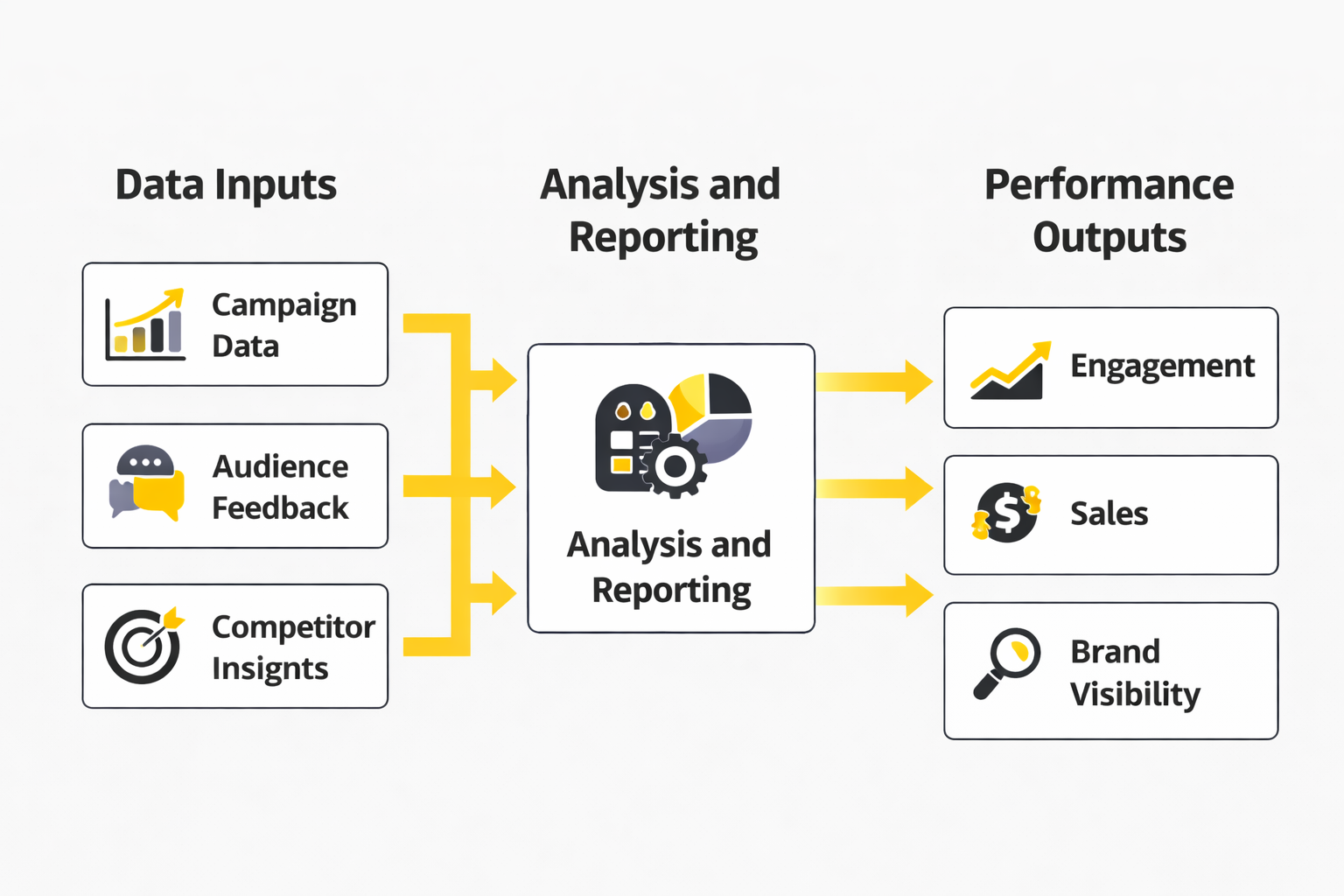
If you want to understand whether hiring a branding agency is a smart move, the cleanest place to look is the data. Not because statistics replace judgment, but because they help you see the commercial environment a brand now has to survive in. When budgets tighten, channels fragment, and buyers expect a seamless experience across every touchpoint, brand work stops being a nice extra and starts looking a lot more like business infrastructure.
That pressure shows up clearly in current market research. Gartner reported in May 2025 that marketing budgets remained flat at 7.7% of company revenue, while the Fall 2024 CMO Survey also found marketing budgets at 7.7% of company revenue. That kind of budget pressure changes the standard for a branding agency. It is no longer enough to deliver creative work that looks polished in a presentation. The work has to improve clarity, reduce waste, and make every campaign, page, pitch, and customer touchpoint work harder.
The same pattern appears in media measurement. Nielsen’s 2024 Annual Marketing Report found that 72% of global marketers expected ad budgets to increase, yet only 38% said they measure holistic ROI across both digital and traditional media together. That gap matters because a branding agency is often hired to fix a problem the company cannot fully see yet. If the business measures in silos, it will keep underestimating how much brand consistency, recall, and trust influence performance later in the funnel.
The Most Useful Branding Statistics
- Budget pressure is real: Gartner’s 2025 CMO Spend Survey and the Fall 2024 CMO Survey both landed at 7.7% of revenue, which tells you companies are being asked to grow without much room for waste.
- Media is heavily digital: Nielsen found that about two-thirds of media budgets now go to digital channels, which means a branding agency has to build systems that hold together across more formats, placements, and moments than ever before.
- Measurement is still incomplete: The same Nielsen study showed only 38% of marketers evaluate holistic ROI across digital and traditional marketing together, which helps explain why many businesses still underestimate the financial effect of stronger brand strategy.
- Trust has become more personal: Edelman’s 2025 special report on brand trust found that people increasingly want optimism, support, and emotional connection from the brands they choose, which pushes a branding agency to think beyond visual identity and into lived customer relevance.
- The value of top brands keeps climbing: Kantar BrandZ said the Top 100 most valuable global brands reached a record $10.7 trillion in 2025, which is a sharp reminder that brand equity is not a fluffy concept sitting outside finance.
- Retail growth rewards strong brand systems: Kantar also reported that retail brand value rose 48% in the 2025 global ranking, showing how powerfully brand, convenience, and customer experience can combine when the system is coherent.
- Value is still being left on the table: Interbrand’s 2024 Best Global Brands analysis argued that many major brands have missed enormous value creation because they failed to invest with enough long-term consistency, which is exactly the kind of gap a serious branding agency is supposed to close.
- Customers expect connected experiences: Google’s 2024 omnichannel retail report found that 71% of consumers expect companies to understand their preferences, which turns brand consistency into an operational requirement, not just a creative one.
- Operational consistency now matters at store level too: the same Google research found that 84% of omnichannel retailers allow store assistants to access stock data from other stores and online, which shows how the brand experience increasingly depends on service design and data access, not only on messaging.
- Brand lift is measurable, not mystical: LinkedIn’s brand lift testing documentation makes it clear that awareness, consideration, familiarity, and favorability can be measured directly, giving a branding agency a more concrete way to prove progress.
What the Data Really Means
Put those numbers together and a pretty clear picture emerges. Businesses are operating with tighter budgets, more fragmented media, higher customer expectations, and stronger pressure to prove commercial impact. In that environment, a branding agency is most valuable when it helps a company become easier to understand, easier to trust, and easier to remember across the entire buying journey.
The data also points to a mistake a lot of companies still make. They treat brand and performance as separate decisions, then wonder why campaigns feel expensive and inconsistent. But when Nielsen reported that 70% of marketers planned to increase performance spend while reducing brand-building investment, it exposed the exact tension many leadership teams are dealing with right now. A branding agency is often brought in because that imbalance eventually starts hurting efficiency, pricing power, and customer memory all at once.
That is why the best agencies do not sell branding as decoration. They sell it as alignment. The numbers support that view. Strong brands are capturing more value, weak measurement is still common, and customers now expect consistency that reaches far beyond advertising. If a business wants growth that compounds instead of constantly resetting, the data makes a strong case for treating branding as a commercial system rather than a creative side project.
How to Choose a Branding Agency
Choosing a branding agency is one of those decisions that looks simple from the outside and gets expensive very quickly when it is handled badly. A lot of companies still hire based on surface chemistry, a beautiful portfolio, or the false comfort of picking the biggest name in the room. That is risky, because the real question is not whether the agency can make impressive work. The real question is whether it can understand your business deeply enough to create a brand system that helps you grow, stay consistent, and hold up when real commercial pressure hits.
The strongest starting point is to look for strategic fit before creative flair. The IPA and ISBA guidance on agency search and selection makes the point clearly: the process should be fair, transparent, and built to create a long-term relationship that produces work which delivers results and builds brands. That matters because the ANA and 4As reported in 2025 that client-agency relationship tenure keeps shrinking, and that creates financial strain, repeated pitching, and less continuity just when companies need more consistency, not less.
A good branding agency should be able to explain how it works before it ever starts showing creative directions. It should have a clear point of view on research, positioning, messaging, stakeholder alignment, identity systems, rollout planning, and measurement. If the conversation stays stuck at the level of logos, color palettes, and mood boards, you are probably talking to a design vendor, not a true branding agency.
What to Look for in a Branding Agency
First, look for strategic depth. The agency should ask better questions than you expected, because that is one of the clearest signs you are dealing with people who know how to uncover the real problem. They should want to understand your category, your margins, your sales motion, your audience, your internal politics, and the difference between how you describe the company and how the market actually sees it. A branding agency that does not press into those details is likely to create work that feels polished but generic.
Second, look for system thinking. Branding now has to function across websites, social channels, sales materials, product experiences, employer branding, customer support, and often physical environments as well. Google’s 2024 omnichannel retail research showed how deeply customer expectations are tied to connected experiences, not just isolated messages. That means the right branding agency should talk as comfortably about rollout, templates, governance, and operational adoption as it does about identity.
Third, look for evidence that the agency can build trust, not just attention. Edelman’s 2025 brand trust research shows that people want brands to feel personally relevant, optimistic, and emotionally grounded. So when you evaluate a branding agency, ask yourself whether its work makes brands easier to believe, not only easier to notice. Those are not the same thing, and a lot of expensive branding work confuses them.
Questions to Ask Before You Hire
You do not need a giant procurement process to ask smart questions. You need a few questions that expose how the agency thinks when the conversation moves past the portfolio. Ask how it approaches stakeholder interviews, how it handles disagreement inside a leadership team, how it separates research findings from executive opinion, and how it protects strategic clarity when feedback starts pulling the work in too many directions. A serious branding agency will welcome those questions because they get to the heart of whether the work will survive real business conditions.
Ask what the implementation actually looks like. Not in vague terms, but in concrete ones. Who owns rollout? How are templates built? What happens to old assets? How do sales, HR, product, and marketing teams learn the system? Forrester’s 2025 view of B2B brand and communications agency investments points to shrinking budgets and agency shortcomings, which makes this even more important. A branding agency that cannot explain how the work gets adopted is asking you to pay for a launch without a landing.
Ask how success will be measured. That does not mean forcing every agency to promise neat percentages before it has done the work. It means checking whether the team understands what should improve after the engagement. Better recall, better clarity, more coherent messaging, stronger conversion from branded traffic, improved pricing confidence, cleaner internal adoption, or more effective campaign performance are all reasonable areas to discuss. If the agency resists measurement entirely, that is a warning sign.
Red Flags to Avoid
The first red flag is when a branding agency tries to impress you before it tries to understand you. That usually sounds exciting in the room. The ideas are dramatic, the visuals are stylish, and everybody feels like progress is happening fast. Then the trouble starts later, because the work was built on assumptions instead of sharp diagnosis. When that happens, the brand may launch loudly and still fail to create clarity where it counts.
The second red flag is overpromising certainty. No serious branding agency should pretend it can guarantee exact revenue outcomes from identity work alone, because branding affects growth through multiple channels, teams, and time horizons. What it should do is explain the mechanism. It should show how better positioning, stronger distinctiveness, clearer architecture, and cleaner implementation improve the conditions for growth. That is a credible commercial argument. Fantasy metrics are not.
The third red flag is a weak process around feedback. A branding project becomes dangerous when everyone can change the strategy after every meeting. The right branding agency will have a way to gather input without letting the work get diluted by internal politics, personal taste, or last-minute rewrites from stakeholders who were not close to the problem in the first place.
A Real Example of Getting the Fit Right
Channel 4 did not go into its transformation because it wanted a fresh coat of paint. The pressure was much heavier than that. The broadcaster was facing a landscape reshaped by streaming giants, fragmented attention, and viewers increasingly meeting its content through digital platforms without the same built-in relationship to its legacy. That is the kind of moment where a brand can slowly lose meaning while still looking familiar on the surface, which is one of the most dangerous positions any company can be in.
The backstory explains why the agency fit mattered so much. Pentagram’s Channel 4 case study describes a long heritage of bold, progressive design and a public-service identity tied to championing unheard voices. But heritage alone was not enough anymore. The business had to rethink how the brand worked across broadcasting, digital products, social platforms, and its streaming service if it wanted to stay culturally relevant instead of becoming nostalgic.
The wall came when the old structure no longer matched the way audiences actually experienced the brand. Channel 4’s leadership recognized that the company needed transformation after reviewing its branding, marketing, digital products, and guidelines. That is important, because it shows the problem was not isolated to one campaign or one screen. The whole brand system needed to become more unified without losing the rebellious energy that made it distinct in the first place.
The breakthrough was choosing a branding partner that thought in principles and systems, not just isolated assets. Pentagram built a masterbrand approach that brought the broadcaster’s content, channel brands, and streaming service together, including the decision to rename the streaming player as “Channel 4” so the service would be clearly connected to the masterbrand. That is exactly the kind of move a smart branding agency makes when it understands that brand architecture is a business decision, not just a naming exercise.
The journey from there was not just visual. Pentagram explains that the work covered brand architecture, naming tools, tone of voice, motion principles, layout behavior, and a flexible system designed to create consistency across product, marketing, on-screen presentation, and social platforms. In other words, the project succeeded because the branding agency was solving for how the brand had to behave in the real world, not just how it should look in a reveal deck.
The final conflict in projects like this is always the same: once a flexible system is introduced, it can either become a source of strength or collapse into inconsistency if the rules are too weak. Channel 4 needed both cohesion and creative freedom, which is a very difficult balance to hit. The reason this example matters is that the system was designed around principles that could travel across formats and still feel like one brand. That is much harder than creating a set of attractive assets.
The dream outcome is not only that the work wins design praise. It is that the brand becomes easier to recognize, easier to navigate, and more capable of carrying the business into a different competitive era. That is what businesses should be looking for when they choose a branding agency. Not the team that can make the most noise in the room, but the one that can build a system strong enough to keep working when the room goes quiet and the market starts judging the result.
The Best Choice Is Usually Clearer Than It Seems
In the end, hiring a branding agency is not really about picking the most creative people. It is about picking the team most likely to help your business become clearer, more consistent, and more commercially powerful over time. That often means the best choice is the agency that combines strategic rigor with creative strength and has enough process discipline to carry the work from research to rollout without losing the plot halfway through.
If you remember one thing from this part, let it be this: the right branding agency should make the business easier to understand and easier to scale. It should help your company say one strong thing instead of fifty weak things. And when you find a team that can do that with strategic depth, operational realism, and creative force, you are not just hiring an agency. You are giving the business a better chance to grow without tearing its story apart every quarter.
FAQ for a Complete Guide to Choosing a Branding Agency
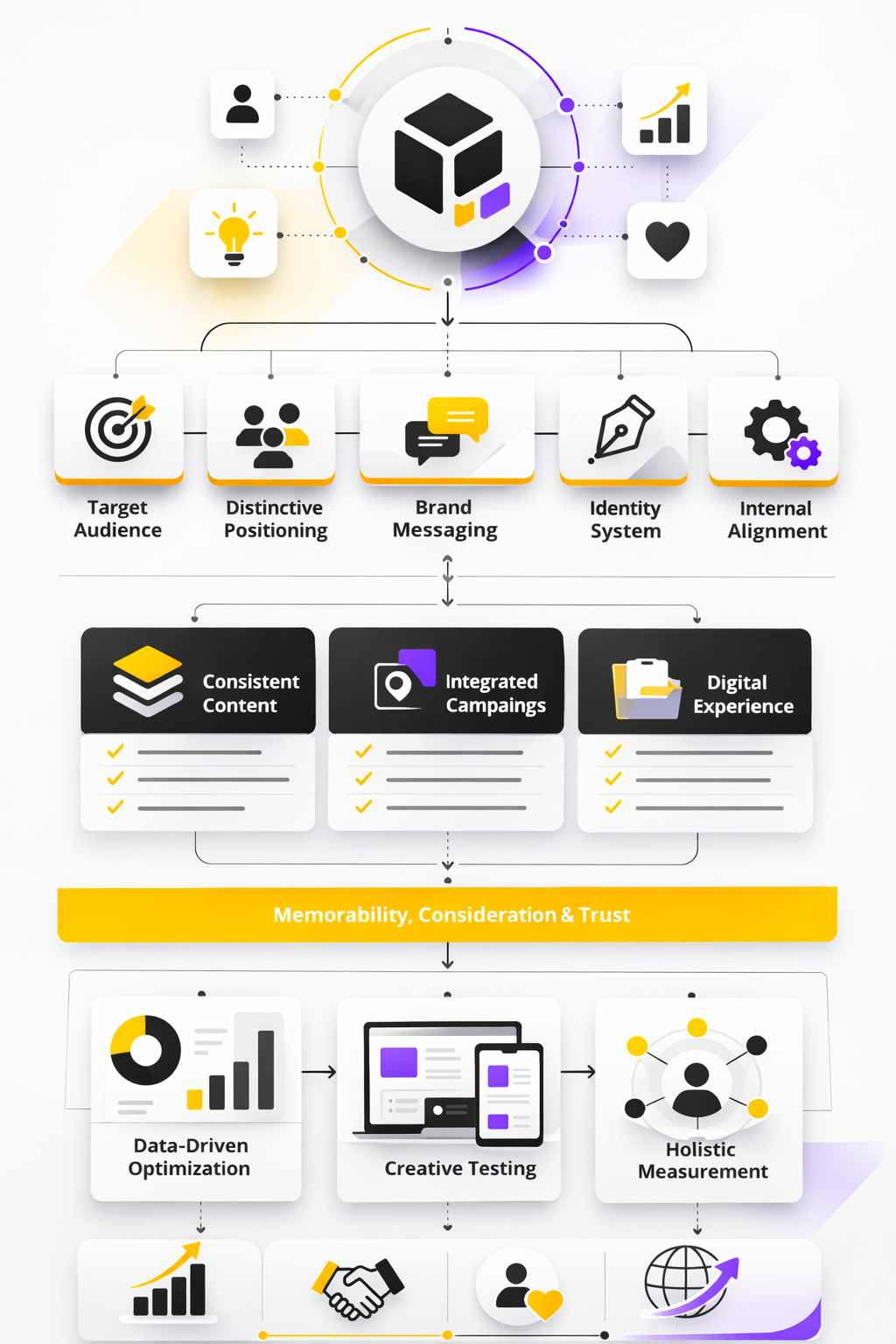
By this point, you have seen what a branding agency really does, how strong agencies measure success, why brand ecosystems matter, and what separates strategic work from expensive surface-level design. The final step is answering the questions businesses usually ask right before they commit budget, time, and internal attention to a branding project. These answers are meant to help you think more clearly before you hire, brief, or evaluate a branding agency.
What does a branding agency actually do?
A branding agency helps a business define how it should be understood in the market and then builds the system that makes that understanding stick. That usually includes positioning, messaging, verbal identity, visual identity, brand architecture, guidelines, rollout planning, and internal adoption support. The important part is not the list of deliverables. It is whether the agency helps the business become clearer, more distinctive, and more commercially effective over time.
When should a business hire a branding agency?
The right time is usually when growth starts feeling harder than it should, when the company has evolved faster than its public identity, or when internal teams are telling different versions of the same story. It can also make sense before a major expansion, a category shift, a merger, a product launch, or a move upmarket. With marketing budgets staying flat at 7.7% of company revenue in Gartner’s 2025 CMO Spend Survey, businesses have less room to waste money on fragmented messaging and disconnected execution.
Is a branding agency different from a marketing agency?
Yes, although there is often overlap. A marketing agency usually focuses on campaigns, channels, media, lead generation, and ongoing growth execution. A branding agency works further upstream by defining the strategic logic and identity system that make all of those marketing efforts more coherent. If marketing is how you drive attention and action, branding is what gives that attention and action a consistent meaning.
How long does a branding project take?
It depends on how complex the business is and how much internal alignment is required. A focused positioning and identity engagement may take a few months, while a broader rebrand involving architecture, naming, digital rollout, and internal enablement can take much longer. The real mistake is rushing a branding agency to produce creative work before the business has agreement on the problem it is actually trying to solve.
How much does a branding agency cost?
Costs vary widely because the work itself varies widely. A smaller company with a tight scope may need a narrow strategic and identity engagement, while a larger company may need research, stakeholder interviews, brand architecture, extensive system design, and multi-team implementation support. The better question is not whether the cheapest branding agency is affordable. It is whether the chosen agency can create enough clarity, consistency, and leverage to justify the investment.
Can a branding agency improve sales?
Yes, but not by magic and not in isolation. A branding agency can improve the conditions that make sales easier by sharpening positioning, strengthening distinctiveness, improving trust, clarifying value, and making the business easier to remember. That matters because Nielsen found in its 2024 Annual Marketing Report that only 38% of marketers measure traditional and digital ROI together, which means many companies still underestimate how brand strength supports later commercial outcomes.
What should a branding agency deliver?
At minimum, it should deliver strategic clarity and a usable brand system. That often includes positioning, audience framing, messaging hierarchy, tone of voice, visual identity, usage rules, and launch guidance. In stronger engagements, the branding agency also helps with internal education, templates, governance, content direction, and rollout priorities so the work survives contact with the real business.
How do you measure the success of a branding agency?
You measure it by looking at whether the brand is becoming easier to understand, easier to remember, easier to trust, and easier to scale across touchpoints. That can include awareness, consideration, branded search behavior, lead quality, conversion efficiency, pricing confidence, retention, and internal adoption. LinkedIn’s brand lift testing framework is a useful reminder that awareness, familiarity, and consideration can be measured directly instead of being treated like vague creative outcomes.
Should a startup work with a branding agency?
Sometimes yes, sometimes no. A startup should work with a branding agency when it needs sharper positioning, a more credible identity for fundraising or enterprise sales, or a stronger system before scaling customer acquisition. But a startup that is still unclear on product-market fit may not need a full brand program yet. In that case, the smartest move may be a lighter strategic engagement rather than an oversized identity project.
Does a branding agency only work on logos?
No, and that is one of the biggest misconceptions in the market. The logo is only one symbol inside a much larger system. A real branding agency works on meaning, memory, differentiation, messaging, architecture, and the rules that keep the brand coherent everywhere it appears. If an agency conversation is dominated by logo options before strategy is clear, that should make you cautious.
What red flags should you watch for?
Watch for agencies that talk more about taste than business outcomes, push design before diagnosis, resist measurement, or cannot explain how implementation will work after launch. Be cautious if the branding agency promises exact revenue gains without understanding the business deeply enough to make that claim responsibly. It is also a warning sign when the process has no clear way to manage stakeholder input, because branding projects can get diluted very quickly when every opinion carries equal weight.
How important is trust in branding?
It is central. Brand trust affects whether people believe the promise, pay attention to the message, and stay loyal after the first purchase. Edelman’s 2025 brand trust research shows that people increasingly want brands to feel personally relevant, optimistic, and emotionally grounded. That means a branding agency should never focus only on visibility. It should also help the brand feel believable and useful in everyday decision-making.
Why does consistency matter so much?
Because buyers rarely experience a company in one neat, controlled moment. They move from search to site, from ad to landing page, from sales call to proposal, and from purchase to service experience. If those moments feel disconnected, trust weakens. Google’s 2024 omnichannel retail research found that 71% of consumers expect companies to understand their preferences, which is another way of saying the brand has to feel connected across the whole experience, not just inside a campaign.
Can an internal team handle branding without an agency?
Yes, sometimes. A strong internal team with clear leadership, category knowledge, research capability, and enough distance from internal politics can do excellent work. But many companies bring in a branding agency because an outside partner can challenge assumptions, create alignment across teams, and give the business a structured process that is harder to maintain internally when everyone is already overloaded.
Work With Professionals
If there is one takeaway from this guide, it is that a branding agency should help a business become more than attractive. It should help the business become sharper, more trustworthy, easier to scale, and more consistent across every point where a buyer or customer interacts with it. That is why the right agency relationship can be such a powerful growth decision. It gives the company a system instead of a scattered collection of messages and assets.
The businesses that benefit most are usually the ones willing to do the deeper work. They are ready to challenge old assumptions, clarify what they truly want to own in the market, and commit to implementation after the excitement of launch fades. That is where the real payoff shows up. Not in a reveal deck, but in the day-to-day way the company communicates, sells, hires, and grows.
If you are serious about working with professionals, judge every branding agency by the same simple standard. Can this team help your business say one strong thing clearly, repeatedly, and profitably across the full customer experience? If the answer is yes, you are not just buying design. You are investing in a stronger commercial identity that can keep paying back long after the first launch announcement is over.
Explore 10K+ Remote Marketing Contracts on MarkeWork.com
Most marketers spend too much time chasing clients, competing on crowded platforms, and losing a percentage of every project to middlemen.
MarkeWork gives you a better way. Browse thousands of remote marketing contracts and connect directly with companies desperate to hire skilled marketers like you without platform commissions and without unnecessary gatekeepers.
If you’re serious about finding better opportunities and keeping 100% of what you earn, you can explore available contracts and create your profile for free at MarkeWork.com.
 Filip Konecny Enterprises