

B2B lead generation is no longer a game of throwing more names into a funnel and hoping sales can sort it out later. Buyers have changed faster than many teams have, with Gartner reporting that 61% of B2B buyers prefer a rep-free buying experience and McKinsey showing that buyer interactions are now spread across in-person, remote, and digital self-service channels. That changes everything about how attention is earned, how trust is built, and how pipeline gets created.
What makes this more urgent is that the old shortcuts are breaking down at the same time. Forrester found that 81% of buyers end a “successful” purchase dissatisfied with the provider they chose, while Salesforce found that 73% of B2B buyers actively avoid sellers who send irrelevant outreach. In other words, modern B2B lead generation has to be more precise, more useful, and far more aligned with the real buying journey than most teams are used to.
This article is built to help you do exactly that. Rather than drowning you in random tactics, we are going to walk through a practical six-part structure that shows why B2B lead generation matters, how the framework works, what the core building blocks are, how to implement it professionally, how to measure what is actually working, and how to create an ecosystem that keeps generating demand even as channels and buyer behavior keep shifting.
Article Outline
- Part 1: Why B2B Lead Generation Matters
- Part 2: Framework Overview
- Part 3: Core Components
- Part 4: Professional Implementation
- Part 5: Measurement and Optimization
- Part 6: Building a Future-Ready Lead Generation Ecosystem
Why B2B Lead Generation Matters

B2B lead generation matters because pipeline quality is now a strategic advantage, not just a marketing KPI. When buyers want more control, more research, and fewer low-value interruptions, the companies that win are the ones that show up early with clear positioning, relevant proof, and an easy next step. That is why HubSpot’s latest State of Marketing data says websites, blogs, and SEO remain the most impactful channels for B2B companies: the market is rewarding brands that make discovery and education easy.
It also matters because the cost of getting it wrong keeps rising. Long sales cycles do not just slow revenue; Salesforce reports that 57% of sales professionals say the sales cycle is getting longer, which means weak targeting, vague messaging, and poor qualification now create even more drag than they used to. A bad lead generation system does not simply waste budget; it quietly steals time from sales, operations, and leadership.
There is also a trust issue hiding inside the numbers. If buyers are avoiding irrelevant outreach and finishing supposedly successful purchases disappointed, then lead generation cannot stop at capturing contact details. It has to shape the full pre-sales experience so the right accounts feel understood before the first serious conversation ever happens.
Framework Overview
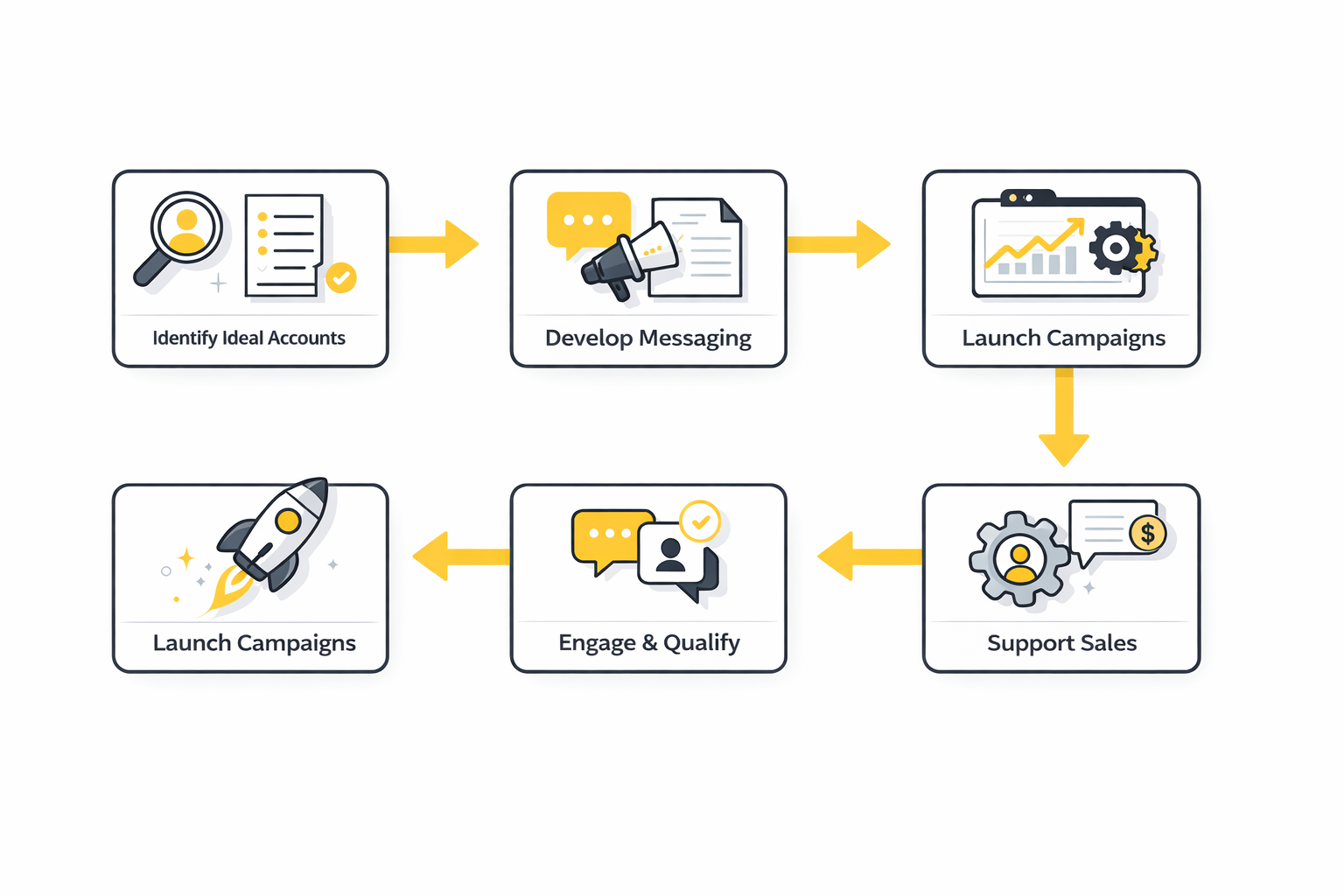
A strong B2B lead generation framework starts with a simple truth: buyers do not move in a straight line, so your system cannot be built like a straight line either. The framework that works now connects demand creation, demand capture, qualification, nurturing, and sales handoff into one operating model. It is less about one perfect campaign and more about creating repeated moments where the right account can discover you, trust you, and move forward.
The first layer is market understanding. That means defining the accounts, buying roles, pains, triggers, and objections that actually shape purchase decisions instead of relying on generic personas. Forrester’s research on more than 16,000 global business buyers makes this impossible to ignore, because buyer dissatisfaction usually shows up when providers misunderstand what matters during the decision process.
The second layer is channel design. Since McKinsey shows buyers are comfortable moving across remote, digital self-service, and in-person channels, your framework has to connect content, search, paid distribution, outbound, email, and sales conversations instead of treating them like separate departments. Real B2B lead generation happens when those touchpoints reinforce each other and make the next step feel natural.
The third layer is conversion architecture. This is where most teams either create momentum or kill it. Your forms, landing pages, offers, qualification rules, routing logic, and follow-up workflows should make it easy for serious buyers to raise a hand without forcing low-intent visitors into the same journey.
Core Components
The core components of B2B lead generation are audience clarity, useful content, conversion points, nurturing logic, and tight sales alignment. Leave out one of those pieces and the whole machine starts to wobble. You may still generate names, but you will not generate dependable revenue.
Audience clarity comes first because relevance beats volume every single time. When your offer, proof, and messaging are built around a real buying problem, the lead generation system gets sharper at every stage, from targeting to email response to call quality. That matters even more now that buyers prefer independent research and punish generic outreach faster than ever.
Useful content is the next pillar because buyers need a reason to trust you before they need a reason to talk to you. Yet content operations are still messy inside many organizations, with Content Marketing Institute reporting that 45% of B2B marketers lack a scalable model for content creation. That is a major problem for B2B lead generation, because if your team cannot consistently produce sharp pages, strong case studies, clear comparison content, and sales-enablement assets, your funnel will always feel thinner than it should.
Conversion points turn attention into action. This includes high-intent pages, demo requests, consultation flows, webinar registrations, newsletter entry points, calculators, audit offers, and other moments where the buyer feels the next click is worth it. The goal is not to gate everything; the goal is to create the right invitation for the right stage of awareness.
Nurturing logic keeps good accounts from going cold just because they were not ready on day one. That piece is badly underbuilt in many teams, which helps explain why Demand Gen Report found that 51% of respondents believed their lead nurturing initiatives needed improvement. Professional B2B lead generation does not stop when a form is filled out; it keeps earning trust until timing, need, budget, and confidence line up.
Professional Implementation
Professional implementation begins with choosing a model you can actually operate every week, not one that only looks impressive in a strategy deck. That means setting clear ownership for targeting, messaging, campaign execution, lead routing, follow-up speed, and reporting. If those responsibilities are fuzzy, the lead generation system will create internal friction long before it creates pipeline.
The smartest implementation approach is to build around a small number of tightly connected plays. One example could be a search-led content engine for demand capture, a paid retargeting layer for re-engagement, and a highly personalized outbound motion for high-value accounts already showing buying signals. That kind of structure matches the reality of modern buying behavior better than relying on one channel to do all the work.
You also need operational discipline around data, privacy, and workflow design. Demand Gen Report’s 2024 lead generation research highlights how privacy regulation and the decline of third-party cookies are complicating lead generation programs, which means first-party data, consent-aware capture, and cleaner enrichment processes matter far more now. Professional B2B lead generation is not just about reaching people; it is about building a system that remains useful, compliant, and measurable as the market keeps changing.
Finally, implementation becomes truly professional when marketing and sales agree on what a good lead actually looks like. The handoff cannot be based on hope, and it cannot be based on vanity metrics. When qualification criteria, outreach standards, and feedback loops are shared, lead generation stops being a fight over lead volume and starts becoming a serious revenue function.
Start With The Buyer Journey Before You Start Capturing Leads
A lot of teams start with forms, ads, and outreach lists because those are the visible parts of lead generation. The smarter move is to begin earlier and map the path that buyers take before they ever convert. When 6sense reports that buyers usually wait until they are more than two-thirds through their journey before contacting vendors, that is a warning shot for every company still acting like the first touchpoint is the first meaningful moment.
In practice, this means your framework should account for dark-funnel behavior, peer validation, category education, internal buying committee conversations, and the silent comparison process that happens long before a demo request. The brands that win are not always the ones with the loudest campaigns. They are often the ones that have already answered the buyer’s biggest questions before the buyer even thinks about contacting them.
This is also why content and positioning cannot sit off to the side as “supporting assets.” In a serious B2B lead generation framework, they are part of the engine itself. If your content does not reduce uncertainty, sharpen understanding, and make your differentiation easier to explain internally, it is not helping the sale move forward.
The Five-Layer Framework That Holds The System Together
The cleanest way to think about B2B lead generation is through five connected layers: visibility, interest, conversion, qualification, and progression. Visibility is how you get discovered through search, referrals, paid media, events, partnerships, outbound, and thought leadership. Interest is what happens when the message actually lands and the buyer feels understood enough to keep going.
Conversion is the moment the buyer chooses a meaningful next step, whether that is booking a call, requesting a demo, downloading a high-value asset, subscribing, or joining a webinar. Qualification is where the system decides what kind of opportunity this is and how it should be handled. Progression is what keeps the conversation moving after the initial capture through nurturing, sales engagement, retargeting, remarketing, and proof-based follow-up.
Each layer depends on the one before it. That sounds obvious, but many companies still try to compensate for weak visibility with aggressive follow-up, or weak messaging with more ad spend, or poor qualification with more SDR activity. A framework works because every layer strengthens the next one instead of forcing one department to clean up another department’s mess.
Why Thought Leadership Belongs In The Framework
Thought leadership is not some fluffy extra for executives who like posting on LinkedIn. Inside a modern B2B lead generation framework, it plays a direct role in creating demand before intent becomes visible in your CRM. Edelman and LinkedIn found that 75% of B2B decision-makers and C-suite leaders researched a product or service they were not previously considering after consuming a strong piece of thought leadership. That is a massive shift because it shows influence is often created before formal vendor evaluation begins.
The important part is that this only works when the thinking is genuinely useful. Buyers are drowning in recycled advice, vague AI content, and empty personal-brand posts that say nothing. If your thought leadership does not help them understand the market better, avoid risk, or explain the decision internally, it will not support lead generation in any meaningful way.
That is why the best framework treats authority as a revenue lever. Thought leadership pulls high-fit buyers into the conversation earlier, improves conversion on branded search and direct traffic, and makes outbound work better because the brand already feels familiar when the message arrives.
How Channels Should Work Together
One of the biggest mistakes in B2B lead generation is treating channels like isolated bets instead of connected touchpoints. Search should capture active demand. Paid media should amplify visibility and bring high-fit accounts back. Email should continue the conversation. Outbound should feel informed by behavior, not random. Organic social should reinforce authority. Retargeting should remind serious buyers why they were interested in the first place.
That cross-channel view matters because B2B buyers do not experience your brand through a neat org chart. They see a search result, a founder post, a case study, a retargeting ad, a webinar invite, a review site, and then maybe an email from sales. McKinsey’s omnichannel research shows that customer interactions are effectively divided across three modes: in-person, remote human, and digital self-service, which is exactly why disconnected channel planning weakens lead generation so fast.
The framework should make those touchpoints feel like one conversation instead of six separate campaigns. When the language, proof, offer, and audience targeting line up across channels, lead generation becomes easier because trust compounds instead of resetting with every new interaction.
What Qualification Should Really Do
Qualification is not there to make your dashboard look organized. Its real job is to protect time, prioritize real opportunities, and move each lead into the next best action without forcing every contact through the same path. That is especially important now that 73% of buyers actively avoid suppliers that send irrelevant outreach. When qualification is weak, irrelevance spreads everywhere.
A healthy framework distinguishes between curiosity, exploration, active evaluation, and sales readiness. Some leads need education. Some need proof. Some need nurturing because timing is off. Some are ready for a serious conversation now. If your system cannot tell the difference, it will either rush people too early or ignore them until momentum is gone.
This is where intent signals, page behavior, source quality, firmographic fit, and conversion context all matter. The goal is not to label people for the sake of labels. The goal is to respond in a way that matches what they actually need next.
Where Most Frameworks Break
Most B2B lead generation frameworks do not fail because companies lack tools. They fail because the handoffs are weak, the messaging is generic, and the system is built around internal convenience instead of buyer movement. Demand Gen Report found that 82% of marketers say generating responses from lead nurturing programs is somewhat or very challenging, which tells you the problem is rarely just top-of-funnel volume.
The break usually happens in the middle. A buyer shows interest, but the follow-up is slow, the message is too broad, the offer is misaligned with intent, or sales reaches out without enough context. Momentum disappears, and the team blames the channel when the real issue was architecture.
That is why framework thinking matters so much. You are not just trying to collect more leads. You are building a system that guides serious buyers from first signal to meaningful conversation without wasting their attention or your team’s energy.
Once that framework is clear, the next step is to look at the specific building blocks that make it work in the real world. That is where B2B lead generation becomes less theoretical and much more operational.
Audience Definition And Market Fit
The first core component is knowing exactly who you are trying to attract and why they should care. That sounds basic, but it is still one of the biggest failure points in B2B lead generation because companies often target broad industries instead of specific buying situations, roles, triggers, and pains. When the targeting is too loose, everything downstream gets weaker, including the copy, the offer, the content, and the outreach.
The reason this matters so much is simple: modern buyers are doing more of the work before they ever speak to a vendor. 6sense found that 81% of buyers already have a preferred vendor in mind before first contact, which means your lead generation system has to reach the right people early enough and clearly enough to shape preference before the formal sales process begins. If your market fit is blurry, somebody else will define the category in the buyer’s mind before you get your shot.
This is why strong audience definition should go deeper than company size and job title. The best B2B lead generation programs are built around what changed in the buyer’s world, what pressure they are under, what risks they need to avoid, and what internal questions they need answered before they can move. Get that right and your whole pipeline gets sharper.
Messaging That Creates Trust
The second core component is messaging that makes people feel like you understand their situation better than the average competitor does. This is not about clever taglines. It is about being able to explain the problem, the stakes, the tradeoffs, and the desired outcome in language that feels specific enough to matter.
That is especially important in B2B lead generation because most buyers do not want more noise. They want clarity. When Salesforce highlights that 73% of B2B buyers avoid sellers who send irrelevant outreach, it is really describing a messaging problem as much as an outreach problem. Buyers are not rejecting contact just because contact exists; they are rejecting contact that makes them feel unseen.
Good messaging also has to travel well across channels. The wording on your site, your paid ads, your outbound emails, your webinar pages, and your sales deck should feel like parts of the same argument, not five disconnected voices. When that consistency is missing, trust drops because the buyer has to keep reinterpreting who you are and what exactly you help with.
Content That Moves Buyers Forward
The third core component is content, but not content for content’s sake. B2B lead generation needs content that helps the buyer think more clearly, not just content that helps the brand publish more often. The real job of content is to reduce confusion, answer objections, show proof, and move buyers one step closer to action.
That is harder than it sounds, and the data shows plenty of teams are still struggling with it. Content Marketing Institute found that 45% of B2B marketers do not have a scalable model for content creation, which explains why so many lead generation programs feel inconsistent even when the strategy sounds good in meetings. If you cannot produce valuable content consistently, you cannot support discovery, nurture, retargeting, and sales enablement at the level modern buyers now expect.
The content mix also needs balance. Some assets should capture active demand, such as solution pages, category pages, comparison pages, use-case pages, and case studies. Other assets should build demand earlier, including insight-driven articles, webinars, short-form authority content, calculators, benchmark pieces, and buying guides. B2B lead generation gets stronger when content is treated like a system of trust-building assets instead of a blog calendar.
Conversion Paths That Respect Intent
The fourth core component is the conversion path. This is where attention turns into action, and it is also where many otherwise solid programs lose momentum. A conversion path should match the buyer’s level of intent instead of forcing every visitor into the same form and the same CTA.
Some buyers are ready for a demo. Some want a pricing conversation. Some want to see proof before they give up their details. Some are interested but not close to a sales conversation yet. If your B2B lead generation setup treats all of them the same way, the experience starts to feel clumsy, and your data becomes less useful because it mixes very different signals into one bucket.
This is where serious teams separate low-friction and high-intent paths. A newsletter, webinar, benchmark, or template can work well for earlier-stage engagement, while a consultation request, demo form, or assessment offer is better for buyers with more urgency. The goal is not to capture everyone as quickly as possible. The goal is to create a next step that feels natural for the stage they are actually in.
Nurturing And Follow-Up Discipline
The fifth core component is what happens after the lead comes in. This is the part that sounds operational, but it has a huge strategic impact because good leads often die from poor follow-up rather than poor acquisition. Many teams still assume the hard part is generating the lead, when in reality the harder part is continuing the conversation in a way that fits timing, context, and level of interest.
That is why nurturing remains such a big issue across the market. Demand Gen Report found that 51% of respondents believed their lead nurturing initiatives needed improvement, and 82% of marketers said generating responses from nurturing programs was somewhat or very challenging. That tells you the weakness is not usually in knowing nurturing matters. The weakness is in actually doing it with enough relevance and consistency.
Strong nurturing is not just sending more emails. It is sequencing proof, insights, reminders, retargeting, and sales touchpoints in a way that keeps trust alive without becoming annoying. In practical terms, B2B lead generation gets much stronger when follow-up reflects source, behavior, persona, and intent instead of dropping every contact into the same automated lane.
Sales Alignment And Routing
The last core component is alignment between marketing and sales. This is where B2B lead generation either becomes a revenue engine or turns into a blame game. If marketing is optimizing for volume while sales is judging quality with different standards, the handoff will always feel broken no matter how many leads come in.
Alignment starts with shared definitions. Both teams need to agree on what counts as a qualified lead, what signals matter most, when a contact should be routed to sales, and what follow-up standard is expected once that handoff happens. Without that agreement, marketing celebrates form fills while sales complains those leads were never serious.
The strongest teams remove ambiguity here. They define qualification rules clearly, connect source and behavior data to routing logic, and create a feedback loop so messaging and targeting improve over time. That is when B2B lead generation stops being a marketing activity and starts acting like a pipeline system the whole company can trust.
Once these core components are in place, the next challenge is execution. A framework can look brilliant on paper and still fail in the real world if the implementation is messy, the ownership is unclear, or the workflows do not hold up under pressure. That is exactly where we are headed next.
Statistics And Data
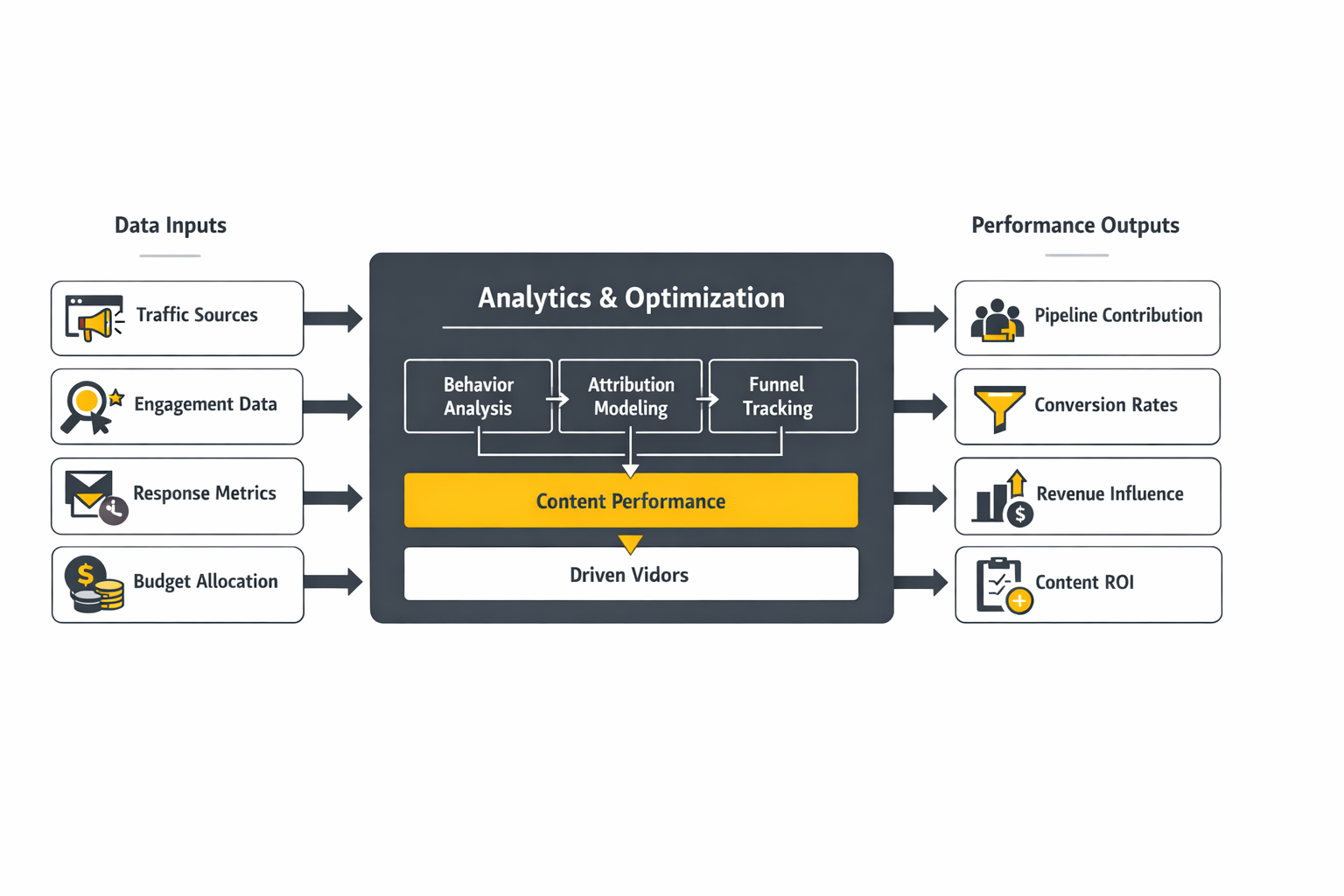
If you want to get serious about B2B lead generation, you need to look at the numbers in a way that actually changes decisions. Too many teams track activity because it is easy, not because it is useful. The better approach is to focus on the data that reveals how buyers behave, where trust is breaking down, and which parts of the system are creating pipeline instead of just creating motion.
The clearest signal is that buyers are taking more control than ever before. Gartner found that 61% of B2B buyers prefer a rep-free buying experience, and the same research showed that 73% actively avoid suppliers who send irrelevant outreach. Those two numbers alone should force a reset in how lead generation is measured, because they tell you that pressure-based tactics and broad outreach are becoming less effective right when buyers are demanding more relevance and more control.
What The Buying Data Is Really Saying
The most important statistics in B2B lead generation are not just about channel performance. They are about timing and buyer readiness. 6sense reported in its 2025 B2B Buyer Experience Report that 94% of buyers rank their shortlist before engaging with sellers, and the vendor ranked first wins 77% of the time. That means your lead generation system has to shape preference before sales conversations begin, not after.
This is exactly why early-stage influence matters so much. If buyers are already narrowing their options long before the hand raise, then B2B lead generation has to be judged by how well it builds familiarity, authority, and trust during the research phase. Waiting to optimize until a form gets filled out is often too late because the real decision-making work has already been happening in the background.
There is another shift hiding inside channel behavior too. McKinsey’s latest B2B Pulse research shows that e-commerce now generates more than one-third of revenue for organizations that offer it, while buyer comfort with remote and digital self-service continues to rise, even for large purchases. That matters because lead generation is no longer just about getting a meeting booked. It is increasingly about helping buyers move confidently through more of the journey on their own.
The Metrics That Actually Deserve Attention
The numbers worth tracking in B2B lead generation are the ones that help you answer practical questions. Are the right accounts discovering you? Are they engaging with the right assets? Are they moving closer to revenue, or are they just creating noise inside the CRM? Once you think that way, vanity metrics lose their shine very quickly.
Traffic still matters, but only when it is segmented with intent and fit. Form fills matter, but only when you know which sources produce qualified conversations rather than low-value inquiries. Conversion rate matters, but only when you separate high-intent offers from lower-friction engagement paths. Pipeline contribution matters most because it tells you whether the system is creating sales opportunities that the business actually wants.
This is where many teams need more discipline. Salesforce’s State of Sales research highlights that longer sales cycles and higher buyer expectations are creating more pressure on teams to prioritize well. When the cycle gets harder, weak metrics become even more dangerous because they make underperforming channels look healthy and mask the places where serious prospects are actually getting stuck.
Why Response And Nurture Data Matter
One of the most overlooked parts of B2B lead generation analytics is what happens after the initial conversion. Marketers often celebrate the hand raise and then move on, but the response pattern after that moment tells you whether your system is built for real buying behavior or for internal reporting. If your follow-up feels generic, slow, or disconnected from the buyer’s context, the numbers will eventually expose it.
That is already happening across the market. Demand Gen Report found that 51% of respondents believed their lead nurturing initiatives needed improvement, while 33% identified declining response rates as a key challenge and 41% pointed to timing and workflow problems. Those are not minor operational issues. They are proof that many B2B lead generation programs are still losing momentum in the middle of the journey.
That is why response data, nurture progression, meeting-set rate, opportunity creation rate, and sales acceptance rate deserve far more attention than top-line lead volume alone. These are the numbers that show whether you are building trust over time or simply collecting contacts faster than your team can meaningfully handle them.
How Budget Data Should Shape Strategy
Budget data can also tell you where the market is placing its bets. TrustRadius reported in its 2025 demand generation research that vendors allocate 53% of discretionary budget to demand generation and 38% to brand awareness. That split is useful because it shows something smart teams already understand: B2B lead generation performs better when demand capture and brand-building support each other instead of competing for resources.
If all your investment goes into bottom-funnel capture, you may hit short-term targets while slowly shrinking future demand. If all your investment goes into awareness without enough conversion architecture, the business struggles to translate interest into revenue. The numbers point toward balance, which is exactly where the strongest systems tend to win.
This also explains why channel reporting should not be handled in isolation. A branded search lift, stronger direct traffic, higher webinar attendance, improved outbound reply quality, and more returning visitors may all be connected. Good B2B lead generation analytics looks for those relationships instead of pretending every win came from one last-click interaction.
Content Performance Data That Cannot Be Ignored
Content data matters because modern B2B lead generation leans heavily on self-education. Buyers want to understand the problem, compare options, and pressure-test claims before they talk to anyone. If your content is weak, thin, or inconsistent, the damage shows up long before a lost deal is formally labeled in the CRM.
Content Marketing Institute found that 45% of B2B marketers lack a scalable model for content creation, and 58% rate their content strategy as only moderately effective. That tells you the issue is not whether content matters. The issue is whether teams are producing the kind of content system that can reliably support search visibility, nurture flows, retargeting, sales conversations, and category authority all at once.
So when you review content performance, do not stop at pageviews. Look at assisted conversions, return visits, time-to-conversion, deal influence, sales usage, and which assets appear most often before qualified opportunities are created. Those are the signals that tell you whether the content is actually helping B2B lead generation do its job.
The Numbers That Should Guide Your Next Move
The point of statistics is not to make your article smarter or your dashboard prettier. The point is to help you make better choices. If buyers prefer self-service, invest more seriously in pages, tools, proof, and educational content. If irrelevant outreach is being punished, tighten segmentation and raise the bar for personalization. If nurture performance is weak, fix the middle of the journey before demanding more top-of-funnel volume.
That is how B2B lead generation becomes more predictable. You stop obsessing over random spikes and start reading the data as a story about buyer movement, friction, and trust. Once you do that, the next step becomes obvious: build an ecosystem where all these channels, assets, signals, and workflows reinforce each other instead of operating like disconnected parts.
Measurement And Optimization
B2B lead generation gets expensive fast when the team cannot tell the difference between activity and progress. That is why measurement matters so much here. You are not building reports to impress people in a meeting; you are building a feedback system that shows where buyers are engaging, where trust is breaking, and where revenue is actually being created.
The challenge is that modern buyer journeys are messy by default. 6sense shows that buyers usually build preferences well before they talk to sales, while McKinsey continues to show that buying interactions now move across self-service, remote, and in-person channels. So if your B2B lead generation reporting is still focused on single-touch conversion snapshots, you are probably seeing only a fraction of what is really driving pipeline.
What You Should Measure First
The smartest place to start is not with dozens of metrics. It is with a small group of numbers tied directly to movement through the funnel. For B2B lead generation, that usually means qualified pipeline created, opportunity rate by source, conversion rate by offer type, sales acceptance rate, speed to first response, and revenue influenced by key content or campaigns.
This matters because different traffic sources do very different jobs. Some channels create awareness. Some capture active demand. Some re-engage high-fit accounts that were already in motion. If you lump all of that together, the data becomes noisy and optimization turns into guesswork.
The goal is clarity. Once you can see which sources consistently produce serious conversations, which offers attract low-fit contacts, and which campaigns help deals move faster, your B2B lead generation strategy starts getting sharper almost automatically.
Why Attribution Keeps Confusing Teams
Attribution sounds simple until you try to use it in a real buying journey. A buyer may discover you through search, come back through retargeting, read a case study, join a webinar, mention you internally, and only then fill out a form or reply to sales. That is exactly why B2B lead generation breaks when teams get obsessed with the last click and ignore everything that created trust before it.
The market is clearly struggling with this. Revsure’s 2025 attribution research points to serious gaps in anonymous visitor tracking, buying-group visibility, and full-funnel forecasting, while CaliberMind’s 2025 marketing attribution report focuses on the same core issue of proving revenue impact across a fragmented journey. That should be a wake-up call for any team still acting like one dashboard view can tell the whole story.
A better approach is to treat attribution as directional intelligence rather than absolute truth. Use it to see patterns, identify influential touchpoints, and understand the mix of channels that tends to create qualified demand. That way your B2B lead generation decisions become grounded in reality instead of false precision.

How To Build A Real Optimization Loop
Optimization only works when the team reviews the right things at the right speed. If you wait a full quarter to learn that a campaign was attracting the wrong accounts, you already paid too much for the lesson. A strong B2B lead generation system needs a weekly rhythm for tactical signals and a monthly rhythm for deeper funnel analysis.
The weekly review should focus on movement. Look at conversion quality, response rates, follow-up speed, landing-page behavior, meetings booked, and whether sales is accepting or rejecting the leads being created. The monthly review should go deeper into sourced pipeline, influenced pipeline, content contribution, channel efficiency, and which audience segments are starting to outperform others.
This is where real progress happens. Instead of asking whether lead volume went up, you start asking better questions. Are the right accounts getting through? Are we helping deals move faster? Are certain offers producing more noise than value? That is how B2B lead generation improves without the team constantly chasing random tactics.
Testing Without Wasting Time
Testing matters, but only when it is tied to meaningful hypotheses. A lot of teams test tiny cosmetic details because they are easy to change, even while bigger strategic problems go untouched. B2B lead generation usually improves faster when you test messaging, offer framing, audience segmentation, page structure, follow-up logic, and qualification thresholds before you worry about tiny design tweaks.
That is especially important now because buyers are becoming harder to impress with surface-level optimization. Gartner’s latest buyer research shows a stronger preference for self-directed journeys and a lower tolerance for irrelevant outreach. That means the best tests are the ones that help the buyer feel understood faster, not the ones that simply try to squeeze a little more performance out of a weak experience.
A practical testing mindset keeps the team honest. If a page is underperforming, ask whether the promise is strong enough, whether the CTA matches buyer intent, and whether the proof on the page actually reduces risk. That kind of testing makes B2B lead generation stronger because it improves the substance of the experience, not just the decoration around it.
Why Speed And Sales Feedback Matter
Measurement is not just about marketing dashboards. Some of the most valuable optimization signals come from how quickly leads are handled and what sales says after the first real conversations happen. If a lead source looks healthy in platform reporting but sales keeps saying the conversations are weak, the data is telling you something important.
This is one reason alignment matters so much. Salesforce’s sales research continues to show pressure from longer and more complex cycles, which makes wasted follow-up even more costly than before. Slow routing, vague qualification, and generic outreach do not just hurt efficiency; they damage momentum right when the buyer is deciding whether your brand deserves serious attention.
So the feedback loop has to include sales. Ask which sources produce better conversations, which pages prospects mention on calls, which objections show up early, and where intent is being misread. When that input gets fed back into campaigns, offers, and content, B2B lead generation becomes much harder to derail.
Using AI And Automation Without Losing Judgment
AI and automation can speed up analysis, scoring, reporting, and workflow routing, but they do not replace judgment. That is becoming more obvious as teams scale their stacks. Demandbase’s 2025 State of B2B Marketing report highlights the push toward data unification, workflow automation, and using AI to turn scattered signals into faster decisions, while Adobe’s 2025 AI and Digital Trends in B2B Journeys report centers on using AI to improve content effectiveness, personalization, and measurable business outcomes.
That is powerful, but it only works when the underlying thinking is solid. If the audience targeting is weak, if the offers are misaligned, or if the handoff to sales is broken, automation will just help the team make mistakes faster. B2B lead generation gets better with AI when AI sharpens insight and execution, not when it becomes a substitute for strategy.
The winning mindset is simple. Let automation handle repetition, pattern detection, and speed. Keep humans focused on judgment, positioning, prioritization, and buyer empathy. That balance is where optimization becomes both scalable and trustworthy.
The Real Purpose Of Measurement
The real purpose of measurement is not to prove that marketing was busy. It is to help the team make better choices with less ego and more clarity. When B2B lead generation is measured properly, you stop arguing about opinions and start responding to signals that show where growth is actually coming from.
That changes the whole operating model. You invest more confidently, cut weak motions faster, and build campaigns around what serious buyers are actually responding to. Once that discipline is in place, the final step is to zoom out and look at the bigger picture, because the strongest lead generation systems are never just a collection of tactics. They are ecosystems.
Building A Future-Ready Lead Generation Ecosystem

The final step in B2B lead generation is thinking bigger than campaigns. A campaign can create a spike. An ecosystem creates consistency. That matters more than ever because 6sense found that buyers now lock in shortlist preferences before most sellers ever get a real shot, while Gartner found that 61% of B2B buyers prefer a rep-free buying experience. If buyers want to research on their own and decide earlier, your brand has to show up across the entire journey, not just at the point of capture.
That is why the strongest B2B lead generation systems are built like ecosystems. Content supports search. Search supports demand capture. Paid media supports recall and retargeting. Email supports nurturing. Sales conversations support conversion. Customer proof supports trust. Analytics supports smarter decisions. When all of that works together, the business stops relying on one channel to save the quarter.
This is also where a lot of teams either pull ahead or stay stuck. They keep asking which tactic will work best when the better question is how every touchpoint can reinforce the same message, the same value, and the same promise. That is what makes B2B lead generation harder to disrupt when channels shift, algorithms change, or buyer behavior keeps evolving.
What A Real Ecosystem Looks Like
A real ecosystem for B2B lead generation is not a pile of disconnected tools. It is a connected operating model where the buyer gets a coherent experience no matter where they start. Someone may find you through search, see a founder post, click a retargeting ad, read a case study, join a webinar, and only then book a call. McKinsey’s B2B Pulse work shows customer interactions are now effectively spread across in-person, remote human, and digital self-service channels, which makes that kind of connected experience non-negotiable.
In other words, the ecosystem should make every touchpoint stronger than it would be on its own. Your content should make outbound warmer. Your proof should make paid traffic convert better. Your nurture should make sales follow-up more welcome. Your CRM data should make future targeting sharper. The whole point of B2B lead generation at this stage is compounding trust, not just collecting contacts.
That is also why consistency matters so much. Buyers notice when the website says one thing, the ads say another, and the sales team shows up with a third version of the story. A strong ecosystem removes that friction and helps the buyer feel like they are moving through one thoughtful journey instead of bumping into different departments.
Why Brand And Demand Belong Together
Some teams still act as if brand and demand are separate worlds. That is a mistake. Brand is what makes your demand generation easier, and demand generation is what turns brand attention into measurable opportunities. TrustRadius reported in 2025 that vendors dedicate 53% of discretionary budget to demand generation and 38% to brand awareness, which shows the market is already funding both sides of the equation because one without the other creates weakness.
When brand is missing, lead generation gets more expensive because every click has to do too much work. When demand capture is missing, attention has nowhere useful to go. The best B2B lead generation programs combine both so the buyer has a reason to remember you and an easy way to act when the time is right.
This is especially important now that trust is built earlier and more quietly. A useful article, a smart comparison page, a strong webinar, a memorable point of view, or a well-distributed case study may influence the eventual deal long before the form fill ever happens. That is how ecosystems create leverage.
How AI Fits Into The Ecosystem
AI belongs in the ecosystem, but not as a replacement for strategy. Its best role is to make a good system faster, more responsive, and easier to scale. Adobe’s 2025 AI and Digital Trends in B2B Journeys report centers on using AI to improve content effectiveness, personalization, and measurable business outcomes, while Demandbase’s 2025 State of B2B Marketing report points toward data unification and smarter workflow automation as major priorities for modern teams.
That is useful because ecosystems get messy fast when data is scattered and manual work piles up. AI can help with scoring, routing, summarizing intent signals, clustering topics, accelerating content operations, and surfacing patterns humans might miss. But it only improves B2B lead generation when the inputs are clean and the team knows what “better” actually means.
The danger is using AI to mass-produce more generic noise. Buyers already have enough of that. The winning move is to use AI to strengthen relevance, not dilute it. If the ecosystem gets smarter but less human, it will not perform the way you want.
How To Keep The Ecosystem Adaptable
A future-ready ecosystem has to stay flexible because B2B lead generation will keep changing. Search behavior is shifting. AI discovery is growing. Buyer committees are getting more complex. Privacy pressure keeps reshaping data practices. And channels that look strong today may weaken faster than expected tomorrow.
This is exactly why rigid systems struggle. If your pipeline depends on one acquisition source, one offer type, one ad platform, or one follow-up motion, the business becomes fragile. The better way is to build B2B lead generation so it can absorb change: strong first-party data, clear positioning, reusable proof assets, multiple demand sources, tight measurement, and a team that reviews signals often enough to adapt before performance drops too far.
The market is already rewarding that kind of flexibility. Content Marketing Institute’s 2025 B2B content research shows many teams still lack scalable content operations, which creates an opening for companies that can consistently publish, distribute, and repurpose high-value material without losing quality. Adaptability is no longer a nice extra. It is part of the competitive edge.
The Final Takeaway
If there is one thing to remember, it is this: B2B lead generation works best when it is treated as a system of trust, not a system of capture. Leads do not appear because a form exists. They appear because the buyer sees enough relevance, enough proof, and enough clarity to believe the next step is worth taking.
That is why the whole article points in one direction. Start with why it matters. Build the framework. Strengthen the core components. Measure what moves pipeline. Optimize the right things. Then pull it all together into an ecosystem that can keep working even when the market shifts.
Do that well and B2B lead generation stops feeling random. It starts feeling like an asset the business can actually rely on.
FAQ For A Complete B2B Lead Generation Guide
What Is B2B Lead Generation?
B2B lead generation is the process of attracting companies or decision-makers who may eventually buy your product or service. In practice, that means using content, search, paid distribution, outbound, referrals, events, email, and sales conversations to move the right accounts toward a meaningful next step. It works best when it is built around buyer intent and trust instead of just trying to collect as many contact details as possible.
Why Is B2B Lead Generation So Important?
It matters because pipeline does not appear on its own. A business needs a reliable way to get discovered, build authority, and create opportunities before competitors do. That is even more important now that many buyers prefer self-directed research and actively avoid irrelevant outreach, which means you cannot depend on old-school interruption tactics the way some teams used to.
What Are The Best B2B Lead Generation Channels?
There is no one best channel for every company. Search is powerful for capturing active intent. Content is powerful for building trust earlier. Paid media is useful for visibility and retargeting. Outbound can work well when it is relevant and well-timed. Referrals, partnerships, webinars, communities, and email can all play major roles too. The strongest B2B lead generation systems usually combine several channels so each one strengthens the others.
Is SEO Still Worth It For B2B Lead Generation?
Yes, because search remains one of the clearest signals of active demand. When someone is already looking for answers, vendors, comparisons, or solutions, your content can meet them at the exact moment interest becomes visible. SEO also supports the rest of the ecosystem by giving paid campaigns better landing pages, giving sales stronger proof assets, and giving the brand more authority over time.
How Long Does B2B Lead Generation Take To Work?
Some motions can create results quickly, especially paid campaigns, remarketing, or well-targeted outbound. Others, like content, brand authority, and SEO, take longer but often create stronger compounding returns. The real answer depends on your offer, market maturity, deal size, sales cycle, and how much trust the buyer needs before moving. B2B lead generation is usually faster when the market already understands the problem and slower when education is required first.
How Do You Qualify B2B Leads Properly?
The best way is to combine fit and intent. Fit includes things like company type, role, size, geography, and use case. Intent includes the actions that show seriousness, such as visiting high-intent pages, requesting a demo, attending a relevant webinar, or returning repeatedly to key proof assets. Qualification should help your team respond correctly, not just label people for reporting purposes.
What Content Works Best For B2B Lead Generation?
The content that tends to work best is the content that reduces uncertainty. That includes case studies, comparison pages, category education, use-case pages, buying guides, benchmark reports, webinars, founder insights, and detailed articles that answer real commercial questions. Content Marketing Institute’s 2025 research makes it clear that many teams still struggle to scale strong content operations, which is exactly why useful, specific content remains such an advantage.
Should B2B Lead Generation Focus On Volume Or Quality?
Quality should win, especially if the sales cycle is long or the product requires thoughtful buying decisions. High volume looks exciting until sales has to sort through weak-fit leads that were never likely to convert. Strong B2B lead generation is about getting the right buyers into the system and moving them forward with intent, not inflating a dashboard.
How Important Is Follow-Up Speed?
It is very important, but speed alone is not enough. Fast follow-up only helps when the message matches the buyer’s context and the next step feels useful. A quick but generic response can still kill momentum. The right goal is fast, relevant, and well-routed follow-up that reflects what the buyer actually showed interest in.
Can AI Improve B2B Lead Generation?
Yes, when it is used to improve the system rather than replace the thinking behind it. AI can help with workflow automation, lead scoring, data enrichment, content assistance, personalization, and signal analysis. Adobe’s 2025 B2B journeys report and Demandbase’s 2025 marketing research both point toward smarter personalization and data use, but the teams that win are still the ones with sharp positioning and strong buyer understanding.
How Do You Measure B2B Lead Generation Success?
Measure it by movement toward revenue, not just top-of-funnel activity. Useful metrics include qualified pipeline created, opportunity rate by source, sales acceptance rate, conversion rate by offer, response quality, influenced revenue, and content contribution across the buying journey. The point of measurement is to help you invest more confidently and improve faster, not just produce bigger reports.
What Is The Biggest Mistake In B2B Lead Generation?
One of the biggest mistakes is treating it like a collection of isolated tactics instead of a connected system. Another is relying on generic outreach and weak messaging in a market where buyers already expect more control and more relevance. When the strategy lacks alignment between audience, offer, content, qualification, and follow-up, the whole system becomes harder and more expensive than it needs to be.
Work With Professionals
If your company wants B2B lead generation that feels structured, credible, and built for real pipeline, working with professionals can save an enormous amount of wasted time. The difference is rarely just execution speed. It is the ability to connect positioning, content, traffic, conversion design, nurturing, analytics, and sales alignment into one serious system.
That matters because buyers have become more selective, more self-directed, and less forgiving of sloppy experiences. The good news is that this creates a huge opening for brands willing to do the work properly. When the strategy is clear and the execution is consistent, B2B lead generation becomes a growth engine instead of a constant source of guesswork.
Explore 10K+ Remote Marketing Contracts on MarkeWork.com
Most marketers spend too much time chasing clients, competing on crowded platforms, and losing a percentage of every project to middlemen.
MarkeWork gives you a better way. Browse thousands of remote marketing contracts and connect directly with companies desperate to hire skilled marketers like you without platform commissions and without unnecessary gatekeepers.
If you’re serious about finding better opportunities and keeping 100% of what you earn, you can explore available contracts and create your profile for free at MarkeWork.com.
 Filip Konecny Enterprises