

Klaviyo Pricing: What You Need to Know Before You Scale
Klaviyo pricing looks simple when you first land on the product page, but it gets more strategic the moment your list grows, your flows start converting, and SMS enters the picture. That is why smart operators do not treat Klaviyo as just another monthly software bill. They treat it as a revenue system whose cost should be measured against list quality, automation depth, and how efficiently each message turns attention into sales.
That framing matters even more now because Klaviyo has become a much bigger platform than a basic email tool. The company reported more than 193,000 customers and $1.234 billion in full-year 2025 revenue, while its current benchmark data is built from more than 183,000 Klaviyo customers across industries. In other words, when you evaluate Klaviyo pricing, you are not evaluating a niche tool anymore. You are evaluating a mature B2C CRM platform that sits directly on top of your customer data, retention engine, and margin structure.
There is also a practical reason this topic deserves a careful breakdown. Klaviyo’s public pricing includes a free tier with up to 250 active profiles, 500 emails per month, and 150 mobile message credits, but ongoing cost decisions are shaped by active profiles, email usage behavior, SMS credit consumption, billing preferences, and how aggressively you let the platform auto-upgrade when you hit limits. If you understand that framework before you buy, you are far less likely to overpay later.
Article Outline
- Part 1: Why Klaviyo Pricing Matters
- Part 2: Framework Overview
- Part 3: Core Components
- Part 4: Professional Implementation
- Part 5: Analytics and Cost Control
- Part 6: Ecosystem Fit and FAQ
This first part builds the foundation. We are going to look at why Klaviyo pricing deserves serious attention, the framework you should use to evaluate it, the cost drivers most businesses miss, and how professionals implement Klaviyo without letting software spend quietly outrun retention gains.
Why Klaviyo Pricing Matters

Most brands do not struggle with Klaviyo pricing because the invoice is confusing. They struggle because they connect price to list size, while the real driver of value is how well that list is managed and monetized. A large but sloppy database can make the platform feel expensive fast, while a disciplined retention program can make the same spend look tiny compared with the revenue it produces.
That is exactly why the pricing conversation belongs next to performance data. Klaviyo’s 2026 benchmark report shows that while campaigns account for most email volume, flows generate nearly 41% of total email revenue from just 5.3% of sends, with revenue per recipient nearly 18 times higher than campaigns. When automated messages are that much more efficient, the right question is not merely “What does Klaviyo cost?” but “What part of my customer journey is paying for Klaviyo?”
The broader channel context strengthens that point. Email remains one of the most attractive channels for marketers, with returns often cited around $36 for every $1 spent, while the DMA’s 2024 benchmarking work highlighted 381 billion emails sent globally in 2023. So when a brand reviews Klaviyo pricing, it is not just auditing software overhead. It is deciding how much to invest in a channel that is still deeply embedded in revenue generation, lifecycle marketing, and owned-audience strategy.
There is a second reason this matters: Klaviyo pricing is operational. Active profiles, sends, credits, and upgrade settings are all influenced by your own behavior. If you let inactive contacts pile up, fail to suppress low-quality records, and blast broad campaigns instead of building precise flows, your costs rise without any real improvement in business performance. Klaviyo pricing rewards operators who treat database hygiene, segmentation, and automation as financial disciplines rather than technical chores.
Klaviyo Pricing Framework Overview
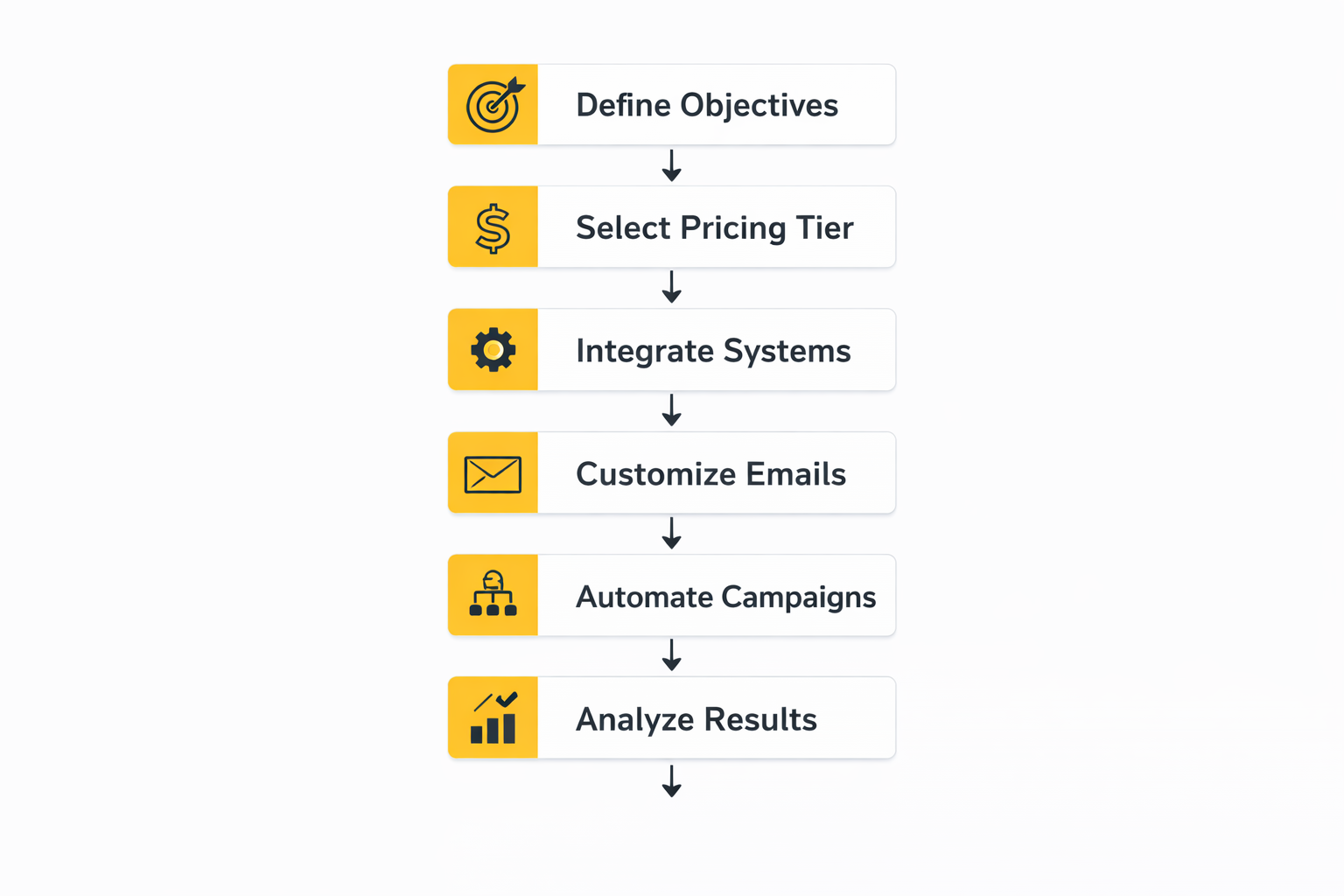
The cleanest way to think about Klaviyo pricing is to split it into four layers: who counts, what you send, how often you hit limits, and which extra products you turn on. That sounds basic, but most pricing mistakes happen because teams mix all four together and then assume the platform is “too expensive” when the issue is really account design.
The first layer is audience economics. Klaviyo defines an active email profile as a profile that can be emailed through the platform, and its usage reporting makes clear that suppressed, unsubscribed, and deleted profiles do not count as active profiles. That means your monthly spend is affected by whether you maintain a healthy, contactable audience or let dormant records remain billable longer than they should.
The second layer is message economics. Email and mobile do not behave the same way. Klaviyo’s help documentation explains that mobile messaging uses a credit system where usage varies by country and channel, and WhatsApp draws from that broader mobile pool as well. So an account can look cheap on the email side and still surprise you on the mobile side if you expand internationally or shift heavily into SMS, MMS, or WhatsApp without modeling credit usage first.
The third layer is billing behavior. Klaviyo now gives account owners multiple ways to handle limits, including automatic upgrades, flexible overages, or stopping sends until a manual change is made. In practice, that setting changes the emotional experience of the platform. One business sees Klaviyo as smooth and scalable because sending never stops, while another sees it as unpredictable because it upgrades into a higher tier without the team realizing how quickly usage was climbing.
The fourth layer is platform scope. Klaviyo is no longer only an email-and-SMS tool. Its pricing page now positions analytics, service, support, and additional platform capabilities alongside core messaging, which means the real cost conversation may include more than one line item over time. For brands that want a leaner stack around forms, landing pages, and funnels while they compare lifecycle tools, platforms such as Systeme.io, Brevo, and ClickFunnels often enter the comparison set because software cost is usually a stack question, not a single-tool question.
Core Components of Klaviyo Pricing
Active Profiles and the Billable Audience
The first core component is the number of profiles that remain actively marketable in your account. Klaviyo’s own help center states that any profile that can be emailed through the system counts as active, while suppressed contacts do not. That sounds like a small distinction, but financially it is the line between paying for a living audience and paying for digital clutter.
This is why list cleaning is not merely a deliverability best practice. It is a pricing control mechanism. When a brand keeps disengaged or low-intent contacts active for months, the platform bill rises before revenue does, which creates the false impression that Klaviyo pricing is inherently inflated.
Email Sends and Revenue Efficiency
The second component is send volume, but send volume only matters when paired with message quality. Klaviyo’s own benchmark work shows that flows materially outperform campaigns on revenue efficiency, click rates, and placed-order rates. That means brands that rely too heavily on broad campaigns can drive up usage without extracting the higher-value behavior that usually justifies the software cost.
Put differently, not every extra email is equal. A disciplined welcome flow, abandoned-cart sequence, browse-abandonment flow, and post-purchase path can make a higher-tier account look sensible because the output scales with the spend. Random campaign volume usually does the opposite.
SMS, MMS, and Mobile Credits
The third component is mobile messaging, and this is where many first-time buyers underestimate complexity. Klaviyo’s documentation is explicit that mobile usage is governed by credits, and those credits vary based on destination country and message type. That means the cost of your text program is not just a toggle you switch on beside email. It is a separate economic model that becomes more important as you expand geographies, test multimedia, or layer in WhatsApp.
For that reason, SMS should never be budgeted with a vague rule of thumb. It needs its own forecast tied to list size, send cadence, geography, and expected conversion value. Otherwise a high-performing mobile channel can still feel financially messy because nobody modeled the credits properly before launch.
Upgrade Preferences and Operating Control
The fourth component is operational control over billing. Klaviyo allows owners to choose whether the account automatically upgrades, uses flexible overages, or stops sending when limits are reached. That choice is not administrative trivia. It is a risk setting that determines whether growth shows up as a smooth transition, a one-time charge, or a campaign interruption at the worst possible moment.
Teams that run aggressive promotional calendars usually prefer continuity, while margin-sensitive operators often want tighter control and better alerting. Either way, the key is to choose intentionally. A default billing preference should never be allowed to decide your retention budget for you.
Professional Implementation
Professional implementation starts with finance, not templates. Before anyone builds a single flow, the team should define a target cost structure by audience size, expected monthly sends, planned SMS usage, and the minimum revenue contribution lifecycle marketing needs to produce. That turns Klaviyo pricing into a forecastable operating model instead of an after-the-fact surprise.
The next move is to build the account around efficiency. Keep the database clean, suppress unqualified profiles decisively, route high-intent journeys into flows, and use campaigns where they actually add value rather than as a default communication habit. This is also where broader workflow tools can help because software cost rarely lives in isolation; if your launch process also involves landing pages, intake forms, scheduling, and social publishing, tools such as Fillout, Cal.com, and Buffer can make the rest of the system more efficient while you keep Klaviyo focused on retention and revenue.
Finally, professionals review Klaviyo pricing on a cadence, not just when the bill goes up. They monitor profile growth, suppression rates, campaign mix, flow contribution, mobile credit consumption, and billing preferences together. When those inputs are reviewed as one system, pricing becomes much easier to control, and the platform is judged on what really matters: whether it is helping the business create more profitable customer relationships over time.
How the Klaviyo Pricing Framework Really Works
If you want to make a smart decision about Klaviyo pricing, you need a framework that is a little more disciplined than simply looking at the monthly number on the pricing page. Klaviyo’s current public setup starts with a free plan that includes up to 250 profiles, 500 emails per month, and 150 mobile message credits, but that entry point only tells you how to start. It does not tell you how the platform behaves once your list grows, your automation becomes more sophisticated, and your team starts leaning on email and mobile at the same time.
The better way to think about it is this: Klaviyo pricing is built around audience eligibility, message volume, channel mix, and billing behavior. Once you see those four levers clearly, the whole model stops feeling vague. You can then judge the platform the way an operator should judge it, which is by asking whether the revenue engine you are building is scaling faster than the software cost attached to it.

How the Base Plan Is Structured
The foundation of Klaviyo pricing is the Profile and Email plan, and Klaviyo’s own billing documentation makes it clear that this base plan is tied to both the number of active profiles in your account and the emails sent during the current billing cycle. That point matters more than many buyers realize because it means cost is not driven by list size alone. It is driven by the number of people who remain eligible to be emailed and by how aggressively you communicate with them once they are inside the system.
That creates a very different financial picture from tools that feel more flat or simplistic on the surface. With Klaviyo pricing, your audience and your sending behavior are connected, which is why cheap-looking accounts can become expensive when they are unmanaged. The businesses that get the best value out of Klaviyo usually understand this early and build the account around profitable activity, not vanity growth.
This is also the point where software comparisons start becoming more strategic than emotional. Some businesses will still prefer broader all-in-one funnel stacks such as ClickFunnels or leaner email-first alternatives such as Brevo or Moosend when they want a different balance of simplicity, funnels, and messaging. But if your business depends on customer data depth, segmented retention, and automation that behaves like a real revenue engine, the Klaviyo pricing model makes more sense once you understand what it is actually charging you for.
Why Active Profiles Change Everything
The most important concept in this entire framework is the active profile. Klaviyo explains that any profile that can be emailed through the platform counts as active, even if that person has not explicitly subscribed in the traditional newsletter sense. That means a checkout lead, an engaged contact, or another reachable profile can still affect your pricing even before that contact turns into a high-value subscriber.
Now here is the part that separates careful operators from everyone else. Klaviyo also states in its profile management and suppression guidance that suppressed profiles do not contribute toward your billing plan’s profile count and that suppressed profiles are no longer considered active. In plain English, that means list hygiene is not just a deliverability concern. It is directly tied to how much you pay.
This changes how you should think about growth. A bigger database is not automatically better if a large share of it is stale, weakly engaged, or unlikely to convert. Klaviyo pricing rewards businesses that prune aggressively, segment intelligently, and treat active profiles like a financial asset rather than a trophy number.
How Email, SMS, and WhatsApp Shift the Cost
Once you move beyond the base email plan, Klaviyo pricing becomes even more nuanced because mobile messaging runs on a credit system rather than a simple flat send count. Klaviyo’s documentation explains that credit usage varies by country and by whether the message is SMS or MMS. That is why a mobile program can feel inexpensive in one market and far more demanding in another, even when send volume looks similar on paper.
The details get even more interesting when WhatsApp enters the mix. Klaviyo states that WhatsApp uses the same shared credit system as SMS, and the cost changes based on destination country and message type. So the moment your retention strategy becomes truly omnichannel, Klaviyo pricing stops being one number and starts behaving like a portfolio of communication decisions.
This is exactly why you should never forecast the platform with a lazy estimate. If you are planning to scale mobile alongside email, you need to model where your customers live, what kind of messages you plan to send, and how often those sends need to happen to justify the credit burn. Otherwise the platform can look more expensive than it really is simply because the forecast was sloppy from the beginning.
How Billing Preferences Affect Real-World Cost
One of the most overlooked parts of the framework is what happens when you hit your limits. Klaviyo’s billing preferences now allow owners to choose between automatic upgrades, flexible overages, or stopping sends until a manual change is made. That sounds like a small administrative choice, but in reality it can change your actual spend pattern and your operating stress level in a very real way.
Flexible overages are useful when you occasionally need more capacity without committing to a permanently higher tier, but Klaviyo is quite direct that flexing is typically more expensive than upgrading when overages become frequent. The same help documentation also notes that auto-upgrade moves you into the next tier and keeps you there until you downgrade, while flexible overages let you stay on the current plan. That distinction matters because one option is built for occasional spikes and the other is built for sustained growth.
There is another operational detail that deserves attention here. Klaviyo’s billing guide says your plan must remain compliant with your active profile count and that if you want to avoid a profile-based plan change, you need to reduce that count at least 24 hours before the next billing cycle. In other words, waiting until the last second to clean the account is not a strategy. It is how teams drift into higher costs and then blame the tool for behavior that was completely predictable.
The Right Way to Evaluate Value
The final step in the framework is to stop treating Klaviyo pricing like an isolated software fee and start treating it like a revenue efficiency decision. Klaviyo’s current benchmark dataset is built from more than 183,000 customers, and its 2026 benchmark report shows that flows generate nearly 41% of total email revenue from only 5.3% of sends, with revenue per recipient nearly 18 times higher than campaigns. Those numbers tell you exactly where the value conversation belongs: in automation quality, segmentation precision, and how effectively you turn customer data into timely messages.
The company’s scale also helps explain why the pricing model has become more layered. Klaviyo reported more than 193,000 customers and $1.234 billion in 2025 revenue, which reflects a platform that is no longer playing the role of a simple newsletter tool. It is operating as a broader B2C CRM, and the pricing reflects that wider ambition.
So the right question is not whether Klaviyo is cheap. The right question is whether your team can use the platform well enough to make the cost look small compared with the retention revenue it unlocks. If the answer is yes, the framework becomes a competitive advantage. If the answer is no, then even a lower monthly bill elsewhere can end up costing you more in missed growth.
Core Components That Drive Klaviyo Pricing
Now we get into the part that really decides whether Klaviyo pricing feels fair or frustrating. The surface-level price is only the beginning, because the real cost is shaped by how your account is structured, how often you send, and how disciplined you are with the audience sitting inside the platform. If you understand these core components before you scale, you can keep control of the bill without crippling the performance that made you consider Klaviyo in the first place.
Klaviyo itself makes that clear in its billing documentation, where the base Profile and Email plan is tied to both active profiles and email sends during the current billing cycle. That means pricing is never just about software access. It is directly connected to how your business collects customer data, how that data is maintained, and how often you decide to turn that data into messages.
Active Profile Count Is the First Cost Driver
The first and biggest lever in Klaviyo pricing is your active profile count. Klaviyo explains that active email profiles include subscribers and other profiles that can still be emailed because they engaged or provided an email address through interactions. That matters because a contact does not need to feel like a classic newsletter subscriber to still affect your bill.
This is where many brands quietly lose control. They celebrate growth at the top of the funnel, keep every captured contact in the account, and only notice the financial consequences once the account crosses into a higher tier. At that point, Klaviyo pricing can look aggressive, but the truth is usually simpler: the database grew faster than the team’s discipline.
Klaviyo also gives you a way to solve that problem if you act early enough. Its help center explains that suppressing disengaged profiles reduces the number of billable profiles, and separate suppression guidance confirms that suppressed profiles are no longer considered active. That is why list cleaning is not a side task for an intern. It is one of the most important cost-control habits in the entire Klaviyo pricing model.
Email Volume Is the Second Cost Driver
The second component is email volume, and this is where the platform forces you to think like a strategist instead of a sender. Klaviyo’s public pricing page still begins with a free tier that includes 250 active profiles and 500 email sends per month, which is helpful for getting started. But once you outgrow that level, volume starts to matter in a much more meaningful way because the platform is charging you not only for access to profiles, but also for how often you use the channel.
That makes email efficiency more important than email enthusiasm. If you are blasting broad campaigns every few days without a tight reason, Klaviyo pricing will feel heavier because you are creating cost without building much leverage. On the other hand, when your sending is driven by segmentation, behavior, and timing, the same platform cost can look very reasonable because each send has a real job to do.
This is one reason strong operators sometimes pair their retention stack with tools that handle adjacent parts of the journey more efficiently. A business that needs simpler newsletter infrastructure may compare Klaviyo with Brevo or Moosend, while a funnel-heavy brand may also look at ClickFunnels. But if your business wins on lifecycle depth and customer data precision, Klaviyo pricing often makes more sense because that is exactly what the platform is built to monetize well.
Mobile Credits Add a Separate Layer
The third core component is mobile messaging, and this is where Klaviyo pricing gets more nuanced. Klaviyo’s mobile credit documentation explains that SMS and MMS use credits that vary by country and message type, so the cost of a mobile program is not flat across markets. A brand texting mostly domestic customers with plain SMS can have a very different credit burn from a brand sending multimedia or operating internationally.
WhatsApp adds another layer rather than a separate billing universe. Klaviyo states that WhatsApp uses the same shared credit system as SMS and those credits can be used across channels in combination. That sounds convenient, and it is, but it also means one mobile channel can start affecting the economics of another if you are not monitoring usage closely.
This is why businesses that jump into SMS too casually often feel like the platform changed on them. In reality, the pricing model was always telling the truth; they just treated mobile as a simple add-on instead of a second communication economy inside the same account. If you forecast list growth, geography, send cadence, and expected conversion before launch, the mobile side of Klaviyo pricing becomes much easier to manage.
Billing Preferences Change How Cost Shows Up
The fourth component is not about who you message. It is about what happens when you hit the wall. Klaviyo now lets account owners choose among automatic upgrades, flexible overages, or no upgrade preference at all, and each option changes how cost appears in the real world.
This matters because businesses do not experience pricing only through rates. They experience pricing through surprises, interruptions, and bad timing. Klaviyo’s own guidance notes that flexible overages are typically more expensive than upgrading when you need the extra capacity frequently, while the plan-change documentation explains that upgrades take effect immediately and downgrades apply in the next billing cycle. So the question is not merely which option exists. The question is which option matches the way your business actually grows.
There is also a timing issue that smart teams take seriously. Klaviyo’s billing rules state that if your account is over the active-profile limit, you need to reduce that count at least 24 hours before the next billing cycle if you want to avoid being moved to a profile-compliant plan. That means waiting until the end of the month and hoping everything works out is not a system. It is wishful thinking dressed up as budgeting.
Usage Visibility Is the Hidden Component
There is one more component that deserves attention because it quietly shapes every other one: visibility into account usage. Klaviyo’s usage reporting shows businesses how plan consumption is tracking, but its help center also notes that for non-contracted accounts, usage data is not real-time and reflects the previous day. That detail may sound minor, yet it matters when you are pushing volume hard around promotions, launches, or seasonal spikes.
If your team assumes the dashboard is instant when it is not, you can make decisions based on stale information and drift into overages or forced plan changes faster than expected. This is one of those behind-the-scenes realities that separates casual users from disciplined operators. Klaviyo pricing becomes much more manageable when you build internal review habits around what the account is actually consuming rather than what you assume it is consuming.
That is the bigger lesson from all of these components taken together. Klaviyo pricing is not random, and it is not mysterious once you stop looking at it like a flat SaaS fee. It behaves more like an operating model, which means the businesses that win are usually the ones that manage profiles, sending behavior, mobile usage, and billing preferences with the same seriousness they bring to revenue forecasting.
Statistics and Data
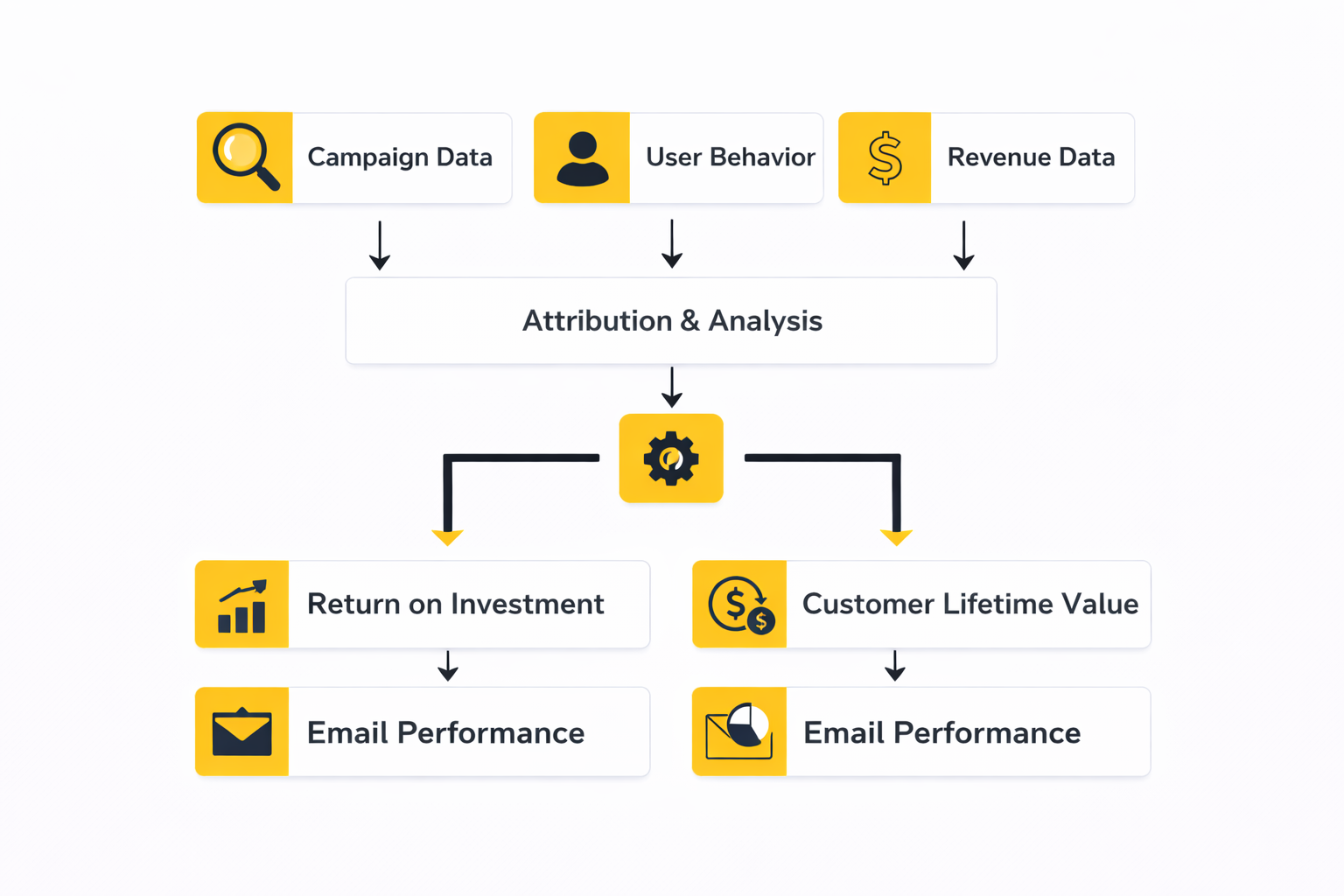
If you really want to understand Klaviyo pricing, you cannot stop at the monthly charge. You need to look at the operating data behind it. Once you do that, the platform starts to make a lot more sense because the bill is tied to profiles, message volume, credit usage, and the quality of the revenue engine sitting underneath all of it.
The scale of the platform matters here. Klaviyo’s 2026 benchmark material is built from more than 183,000 customers, and its broader 2026 omnichannel benchmark report draws on data from more than 110,000 brands. That gives you a much better lens for judging whether Klaviyo pricing is justified, because you are not evaluating the platform in a vacuum. You are evaluating it against a very large body of real-world marketing performance.
What the Platform’s Scale Tells You
Klaviyo is no longer a lightweight email tool competing on simplicity alone. In its full-year 2025 results, the company reported more than 193,000 customers at the end of fiscal year 2025, up from more than 167,000 a year earlier. The same release also showed that fiscal year 2025 revenue reached $1.234 billion, up 32% year over year.
Those numbers matter because they tell you something important about Klaviyo pricing. The company has grown into a much broader operating system for B2C brands, which is why the pricing structure is no longer built like a flat newsletter subscription. It is priced more like infrastructure, and the data shows that the market is still accepting that trade when the retention and customer-data engine is strong enough.
The Numbers That Matter Most for ROI
The cleanest performance data in this entire discussion comes from Klaviyo’s own 2026 email benchmarks. The report shows that campaigns account for 94.7% of send volume, while flows generate nearly 41% of total email revenue from only 5.3% of sends. It also shows that average revenue per recipient for flows is nearly 18 times higher than campaigns.
That is a huge clue for anyone trying to judge Klaviyo pricing rationally. If most of your revenue is being pushed by automation while only a tiny share of sends comes from those flows, then the platform is rewarding precision, not noise. Brands that set up Klaviyo well often make the cost look reasonable because a relatively small portion of their messaging workload is doing a disproportionate amount of the heavy lifting.
This is also why weak implementations often misread the tool. If your team sends too many broad campaigns and does not build flows deeply enough, you are using the expensive parts of the model without unlocking the most productive parts of the model. Klaviyo pricing starts looking much better when the account is built around welcome, browse abandonment, cart abandonment, post-purchase, replenishment, and win-back logic instead of a constant stream of generic blasts.
The Data Behind Billable Growth
The billing mechanics explain why some accounts scale cleanly and others spiral. Klaviyo’s billing documentation states that the base Profile and Email plan is based on both active profiles and emails sent during the current billing cycle. The same documentation also explains that any profile that can be emailed through Klaviyo counts as active, even if the person shared an email at checkout without fully opting into a newsletter.
That one detail changes the economics of the whole platform. It means your database can become more expensive even when your subscriber story feels healthy on the surface, simply because more reachable profiles are sitting inside the account than your team realizes. Klaviyo pricing is very sensitive to operational discipline, and the businesses that understand that early have a much easier time keeping the bill aligned with performance.
There is a positive side to that structure, too. Klaviyo’s active profile management guidance explains that suppressing people who have not engaged for a sustained period helps reduce the number of billable profiles, and its suppression documentation confirms that suppressed profiles are no longer considered active. So the data says very clearly that list hygiene is not just a nice technical habit. It is one of the most direct pricing levers you have.
Mobile Messaging by the Numbers
Mobile can make Klaviyo pricing more powerful or more unpredictable, depending on how carefully it is managed. Klaviyo’s billing guide explains that mobile messaging plans are based entirely on message credits, and those credits depend on where subscribers are located, what type of message you send, and how many message segments are used. That is why one brand can run SMS profitably at a modest cost while another burns through credits faster than expected.
The platform has also become more cross-channel on the mobile side. Klaviyo’s billing documentation says that WhatsApp uses the same overall mobile messaging credit system as SMS and MMS. So if you are evaluating Klaviyo pricing for a more advanced retention setup, you need to stop thinking in terms of a single SMS toggle and start thinking in terms of a shared mobile budget that moves across channels.
The company’s own growth data suggests that more customers are moving in that direction. Klaviyo reported that the number of SMB+ customers using text messaging and WhatsApp grew to 29.6% at the end of fiscal year 2025, up from 26.1% a year earlier. That trend matters because it shows the pricing conversation is becoming more omnichannel over time, not less.
A Real Example of Analytics Changing the Economics
There is a practical lesson in how analytics can change the value equation, and Klaviyo has published a clear example. In its case study on GourmetGiftBaskets.com, Klaviyo says that after the brand adopted Marketing Analytics and started using RFM segmentation, email revenue per recipient jumped 42% month over month and SMS revenue per recipient jumped 88% month over month in June 2025. The same story highlights an 81x ROI tied to Marketing Analytics.
That does not mean every company will see numbers that dramatic, and it would be irresponsible to pretend otherwise. What it does show is that the economics of Klaviyo pricing can shift fast when better analysis helps a team stop messaging everyone and start prioritizing the people most likely to convert. In that situation, the bill may stay similar while the revenue quality improves enough to make the platform feel dramatically cheaper.
You see a similar pattern in other recent customer stories. Klaviyo says Rebecca Minkoff increased SMS revenue 23% year over year in its first 70 days with Klaviyo SMS, while Mixtiles attributes almost 40% of all revenue to email and SMS and says 40% of owned revenue is automated. These are the kinds of numbers that make a pricing model easier to defend, because they show the platform earning its place through measurable contribution rather than through vague promises.
What This Data Means for Your Decision
Put all of this together and the pattern becomes clear. Klaviyo pricing is most attractive when your team treats profiles like assets, treats flows like the primary revenue engine, and treats mobile credits like a forecastable budget instead of an afterthought. The data does not support a lazy setup. It supports a disciplined one.
That is why the smartest way to evaluate the platform is not to ask whether the monthly number feels high in isolation. Ask whether your automation depth, segmentation quality, and retention strategy are strong enough to make the software cost feel small next to the revenue it can influence. If the answer is yes, the statistics tell a pretty compelling story. If the answer is no, then even a cheaper tool can become expensive once missed conversions and poor targeting start piling up.
Cost Control and Long-Term Strategy
Once you understand how Klaviyo pricing works, the next move is simple: stop reacting to the bill and start managing the levers behind it. That is where a lot of businesses lose the plot. They wait until the invoice feels bigger than expected, then start blaming the platform, when the smarter move is to build a system that keeps profile growth, send volume, and mobile usage under control before the next billing cycle ever arrives.
Klaviyo’s own billing guidance makes that very clear because the platform ties its core plan to active profiles and email sends in the current cycle, and it also notes that if you want to avoid being pushed into a profile-compliant plan, you need to reduce that count at least 24 hours before the next billing cycle. In other words, Klaviyo pricing rewards operators who are paying attention. It punishes the teams that let account growth happen in the dark.
Why Cost Control Starts With List Quality
If there is one habit that pays for itself over and over again, it is ruthless list hygiene. Klaviyo explains that suppressing unengaged profiles helps reduce billable profiles, and its suppression rules confirm that suppressed profiles are no longer considered active. That means every stale contact you keep around without a clear reason has the potential to increase cost without increasing revenue.
This is why smart brands stop bragging about raw database size and start caring about reachable, responsive audience quality. A smaller, healthier list can make Klaviyo pricing feel dramatically better because the people left in the account are the ones most likely to open, click, buy, and justify the software spend. A bloated list does the opposite. It makes the platform look more expensive while quietly weakening the performance that should be paying for it.
If your broader marketing engine also depends on cleaner lead capture and better qualification before contacts ever reach your email platform, tools like Fillout can help you keep low-intent submissions from muddying the database in the first place. That matters because Klaviyo pricing gets easier to control when bad data never enters the system.
How to Send Less and Earn More
One of the biggest mistakes businesses make is assuming that more sending creates more value. Sometimes it does. Very often it just creates more cost. Klaviyo’s 2026 benchmark data shows that flows generate nearly 41% of total email revenue from only 5.3% of sends, which is a powerful reminder that the highest-value messages are usually the ones triggered by behavior, timing, and intent rather than by habit.
That changes the whole conversation around Klaviyo pricing. The goal is not to squeeze every possible email out of the platform because you are paying for it anyway. The goal is to make every send matter more. When your account is built around welcome flows, cart recovery, browse abandonment, replenishment, post-purchase education, and smart win-back logic, the platform cost starts looking much more efficient because each message is connected to a clear commercial purpose.
This is one reason some brands compare Klaviyo with alternatives such as Brevo or Moosend if their needs are simpler. But when the real opportunity is deeper automation and customer-data-driven retention, Klaviyo pricing often makes more sense than a cheaper-looking tool because stronger flows can close the gap fast.
How to Keep Mobile Costs From Creeping Up
Mobile is where many teams get caught off guard, not because the pricing is hidden, but because they treat it too casually. Klaviyo’s mobile documentation explains that SMS and MMS credits vary by country and message type, and its WhatsApp billing guide says that WhatsApp draws from the same shared credit system. That means mobile spend is not a simple side note attached to the email plan. It is a second budget that needs real forecasting.
The easiest way to stay in control is to model the channel before you scale it. Look at where your audience lives, how often you truly need to text them, whether MMS is necessary, and what kind of conversion value each mobile touchpoint is expected to create. Without that discipline, Klaviyo pricing can feel like it changed overnight when what really happened is that the business expanded into a credit-based channel without doing the math first.
There is also a stack question here. Some teams need better automation across messaging, sales, and follow-up beyond what they are doing inside Klaviyo alone. In those cases, tools like ScaledMail, Copper, or Chatbase can support adjacent workflows so Klaviyo stays focused on the retention motions it handles best.
The Best Billing Setting Depends on How You Grow
Klaviyo pricing is not just about list size and credits. It is also about how you choose to handle growth when you hit the ceiling of your current plan. The company now gives owners the choice between automatic upgrades, flexible overages, or stopping sends until a manual change is made. That setting changes whether growth feels smooth, stressful, or expensive at exactly the wrong moment.
Flexible overages can be useful when your volume spikes occasionally, but Klaviyo is direct that flexing is typically more expensive than upgrading if you need the extra capacity often. So the right decision depends on your growth pattern. If you are growing steadily, moving up a tier can be cleaner and cheaper. If your demand comes in short bursts, an overage approach may buy you flexibility without locking you into a permanently higher plan.
This is the sort of detail that separates a casual setup from a professional one. Billing preferences should be reviewed alongside your campaign calendar, promotional peaks, seasonal swings, and projected audience growth. Otherwise you are letting account settings make strategic decisions for you.
How to Build a Stack That Makes the Pricing Work
Sometimes Klaviyo pricing feels high because the platform is being asked to do too much around the edges. Businesses often need forms, funnels, landing pages, social scheduling, appointment booking, AI workflows, and CRM coordination on top of lifecycle messaging. When all of that is messy, Klaviyo can end up absorbing friction that really belongs elsewhere in the stack.
That is why it can make sense to pair Klaviyo with complementary tools depending on your model. A funnel-first brand might lean on ClickFunnels or Systeme.io for acquisition architecture. A content-heavy team may prefer Buffer or Flick to keep social publishing organized. A business building AI-assisted processes around research or internal workflows may find value in Firecrawl, Wispr Flow, or Comp AI.
The point is not to collect tools for fun. The point is to make sure Klaviyo is doing the work that actually justifies Klaviyo pricing. The cleaner the rest of your system becomes, the easier it is for the platform to do what it does best: turn customer data and automation into repeat revenue.
The Practical Rule for Deciding Whether It Is Worth It
Here is the simplest rule I would use if I were evaluating Klaviyo pricing for a real business. If your team has the discipline to manage profiles, build serious flows, control mobile usage, and monitor billing behavior, the platform can absolutely be worth the money. The data behind flows, customer growth, and recent case studies points in that direction.
If your team is not going to do those things, then the monthly number matters a lot more because you are paying for capacity you are not truly using well. In that case, the smarter choice may be to simplify first, tighten the operation, and only then graduate into a more sophisticated retention engine. The right platform is not the cheapest one on the screen. It is the one your business can actually use well enough to turn cost into growth.
Klaviyo Pricing in the Bigger Ecosystem

By this point, the real story behind Klaviyo pricing should be clear. You are not simply buying email sends. You are choosing how much you want to invest in customer data, automation, segmentation, mobile messaging, reporting, and the systems that turn repeat buyers into a much bigger share of your revenue.
That is why Klaviyo pricing makes the most sense when you evaluate it inside your broader stack. Klaviyo’s own billing documentation now covers multiple products beyond core Profile and Email, including Mobile Messaging, Reviews, Service, Customer Hub, Analytics, and Data Platform offerings. In other words, the platform is designed to expand with your business, which can be a huge advantage if you want fewer disconnected tools, but it also means you need to be intentional about what you actually need right now.
This is where a lot of businesses go wrong. They either underbuy and expect miracles from a basic setup, or they overcomplicate everything and end up paying for power they are not yet ready to use. The sweet spot is choosing the version of Klaviyo pricing that matches your operational maturity, then surrounding it with the right tools and people so the platform actually drives profitable growth instead of becoming one more software bill you resent.
For some brands, that broader system may include lead capture and intake tools such as Fillout, funnel builders such as ClickFunnels or Systeme.io, newsletter and email alternatives such as Brevo or Moosend, and publishing tools such as Buffer. The point is not to bolt on extra software for fun. The point is to make sure Klaviyo is focused on the high-value retention work that best justifies Klaviyo pricing.
FAQ for a Complete Guide
Is Klaviyo free to start?
Yes. Klaviyo’s public pricing page says the free tier includes up to 250 active profiles, 500 email sends per month, and 150 mobile message credits. That makes it a realistic way to test the platform, build a few essential flows, and decide whether the economics of Klaviyo pricing make sense for your business before you commit to a paid plan.
What does Klaviyo actually charge for?
The base plan is built around two things: the number of people you can actively email and the number of emails you send in the current cycle. Klaviyo’s billing guide states that Profile and Email plans are based on active profiles and emails sent during the billing cycle. That is why Klaviyo pricing is not a flat software fee. It changes as your reachable audience and messaging activity change.
What counts as an active profile?
Klaviyo explains that active email profiles include both subscribers and other profiles that can still be emailed because they shared an email address or engaged with your business. This matters because some businesses assume only newsletter subscribers affect pricing, but that is not how the model works. If a profile can still receive email from your account, it can affect Klaviyo pricing.
Do suppressed profiles affect pricing?
No, and this is one of the most important levers you have. Klaviyo’s active profile management documentation says that suppressing unengaged people helps reduce billable profiles, and its suppression guidance confirms that suppressed profiles are no longer considered active. So if you want to keep Klaviyo pricing under control, list hygiene is not optional. It is a core financial habit.
When does Klaviyo upgrade your plan?
That depends on your billing preference. Klaviyo says you can choose among automatically upgrade, flexible overages, or none when you reach certain messaging limits. It also notes in its billing rules that if your active profile count is above your current plan’s limit, your account can be moved to a compliant plan in the next billing cycle unless you reduce that count in time.
Can you avoid a plan change before renewal?
Yes, but you need to move early. Klaviyo’s billing guide says you need to reduce your active profile count to fit your current plan at least 24 hours before the next billing cycle if you want to avoid a profile-based change. Waiting until the last minute is one of the most common ways businesses lose control of Klaviyo pricing.
Are flexible overages better than automatic upgrades?
They can be, but only in the right situation. Klaviyo explains that flexible overages are typically more expensive than upgrading if you need the extra capacity often. So if your demand spikes occasionally, flexible overages may be useful. If your growth is steady, a higher tier often makes more financial sense than repeatedly paying overage-style costs.
How do SMS and WhatsApp affect Klaviyo pricing?
Mobile messaging introduces a separate credit-based system. Klaviyo states that SMS and MMS credits vary by country and message type, and it also explains that WhatsApp uses the same shared mobile messaging credit system. That means the mobile side of Klaviyo pricing is not something you should estimate casually. It needs a proper forecast based on geography, cadence, and expected revenue per send.
Is Klaviyo worth it for small businesses?
It can be, but only if the business actually uses the platform the way it was designed to be used. Klaviyo’s own benchmark data shows that flows generate nearly 41% of total email revenue from only 5.3% of sends, which tells you that the value is usually in automation quality rather than sheer volume. For a small business with serious retention ambitions, Klaviyo pricing can be justified quickly. For a business that only wants to send occasional newsletters, a simpler tool may be the smarter fit.
How can you monitor usage before costs jump?
Klaviyo provides account usage reporting, but you need to understand how it works. The Help Center explains that for many accounts, usage reporting is not real-time and reflects the previous day. That means you should not treat it like a live control panel during a heavy send period. Good operators review usage regularly, not just when the invoice arrives.
Can you downgrade or cancel later?
Yes. Klaviyo’s billing support documentation says you can downgrade to free, cancel a specific plan, or close your account, but those actions have different consequences for access, billing, and data retention. That is helpful because it means Klaviyo pricing does not trap you forever, but it also means you should understand what each exit path changes before making a quick decision.
Does Klaviyo offer support on free and paid plans?
Yes, although support experience can vary by plan and situation. Klaviyo’s support article says that free and paid users can access support through the support page once logged in, and the Help Center also notes that paid plans include broader support options and expanded capabilities. That matters because support quality can be part of the value equation when you evaluate Klaviyo pricing.
Should you hire help to manage Klaviyo?
If your account is growing fast, the answer is often yes. Klaviyo maintains an official directory where businesses can connect with agency partners for strategy and implementation support, and its partner pages also make it easy to request help for setup, integration work, and ongoing account management. For a lot of teams, professional help pays for itself because it keeps Klaviyo pricing aligned with revenue instead of letting poor setup quietly create waste.
How do you know if Klaviyo is paying for itself?
You know by measuring contribution, not by staring at the invoice. Klaviyo offers reporting and conversion tools that help teams analyze attributed conversions and revenue through its conversion overview dashboard. If your flows, segments, and mobile programs are creating repeat purchases and profitable retention, Klaviyo pricing is doing its job. If they are not, the problem is usually strategy or execution long before it is the price itself.
Work With Professionals
There comes a point where trying to manage everything alone starts costing more than getting expert help. Klaviyo’s ecosystem now includes official partner pathways, support resources, analytics products, and implementation guidance that make it easier to scale the platform the right way. The biggest mistake is waiting until costs rise, deliverability slips, or automation performance stalls before bringing in someone who knows how to fix the account.
If you want a faster path, use people and systems that already understand how Klaviyo pricing behaves in the real world. That can mean hiring through Klaviyo’s official partner directory, tightening the rest of your stack with tools like Comp AI, Wispr Flow, Firecrawl, Chatbase, or Copper, and making sure the platform is being used to drive retention instead of just sending messages. The real win is not getting the cheapest software bill. The real win is building a machine that reliably turns customer attention into revenue.
Explore 10K+ Remote Marketing Contracts on MarkeWork.com
Most marketers spend too much time chasing clients, competing on crowded platforms, and losing a percentage of every project to middlemen.
MarkeWork gives you a better way. Browse thousands of remote marketing contracts and connect directly with companies desperate to hire skilled marketers like you without platform commissions and without unnecessary gatekeepers.
If you’re serious about finding better opportunities and keeping 100% of what you earn, you can explore available contracts and create your profile for free at MarkeWork.com.
 Filip Konecny Enterprises