

Freelance Marketing Work: How to Build a Service Business Clients Actually Need
Freelance marketing work is no longer the backup plan people choose after a layoff or during a career pivot. It has become a serious operating model for companies that need sharper execution, faster experimentation, and specialized expertise without the fixed overhead of a full in-house team. That shift is visible in the market itself: Upwork’s 2025 research shows that more than three in four executives believe skilled freelancers add more value than degree-only hires, while Fiverr’s 2025 economic report estimates 6.9 million skilled independent workers in the United States generated $319 billion in revenue in 2024.
That creates a real opportunity, but it also raises the bar. Clients do not just want a generalist who can “help with marketing.” They want somebody who understands positioning, channels, measurement, workflow, and business outcomes well enough to step into a moving company and produce traction quickly. The freelancers who win are the ones who treat their work like a professional system instead of a collection of disconnected gigs.
This first part lays the foundation. It explains why freelance marketing work matters right now, what a practical framework looks like, which components make the work valuable, and how to implement everything in a way that feels reliable to clients from day one.
Article Outline
- Part 1: Why Freelance Marketing Work Matters
- Part 2: Framework Overview
- Part 3: Core Components
- Part 4: Professional Implementation
- Part 5: Analytics and Client Retention
- Part 6: Scaling Freelance Marketing Work Sustainably
Why Freelance Marketing Work Matters

The reason freelance marketing work matters so much right now is simple: companies need flexibility, but they still need results. In Content Marketing Institute’s 2025 B2B research, most teams said they do have dedicated content resources, yet those teams are often small, which means execution pressure builds fast when campaigns, reporting, SEO, email, and social all need attention at once. A good freelance marketer fills that gap without forcing a business into a slow hiring cycle or a long-term payroll commitment.
The second reason is that marketing itself has become more specialized. Upwork’s 2025 in-demand skills list put social media marketing, SEO, lead generation, search engine marketing, email marketing, marketing automation, and marketing strategy among the fastest-rising marketing capabilities on its platform. That tells you something important: clients are not just shopping for labor anymore. They are shopping for very specific outcomes.
There is also a deeper business shift underneath all of this. McKinsey’s 2025 global AI survey found that 88% of respondents say their organizations now use AI in at least one business function, and marketing remains one of the functions where adoption is most common. For freelance marketers, that means the work is becoming more valuable at the strategic level, not less, because clients increasingly need someone who can combine human judgment, brand understanding, and AI-assisted speed without flooding the market with forgettable content.
Framework Overview
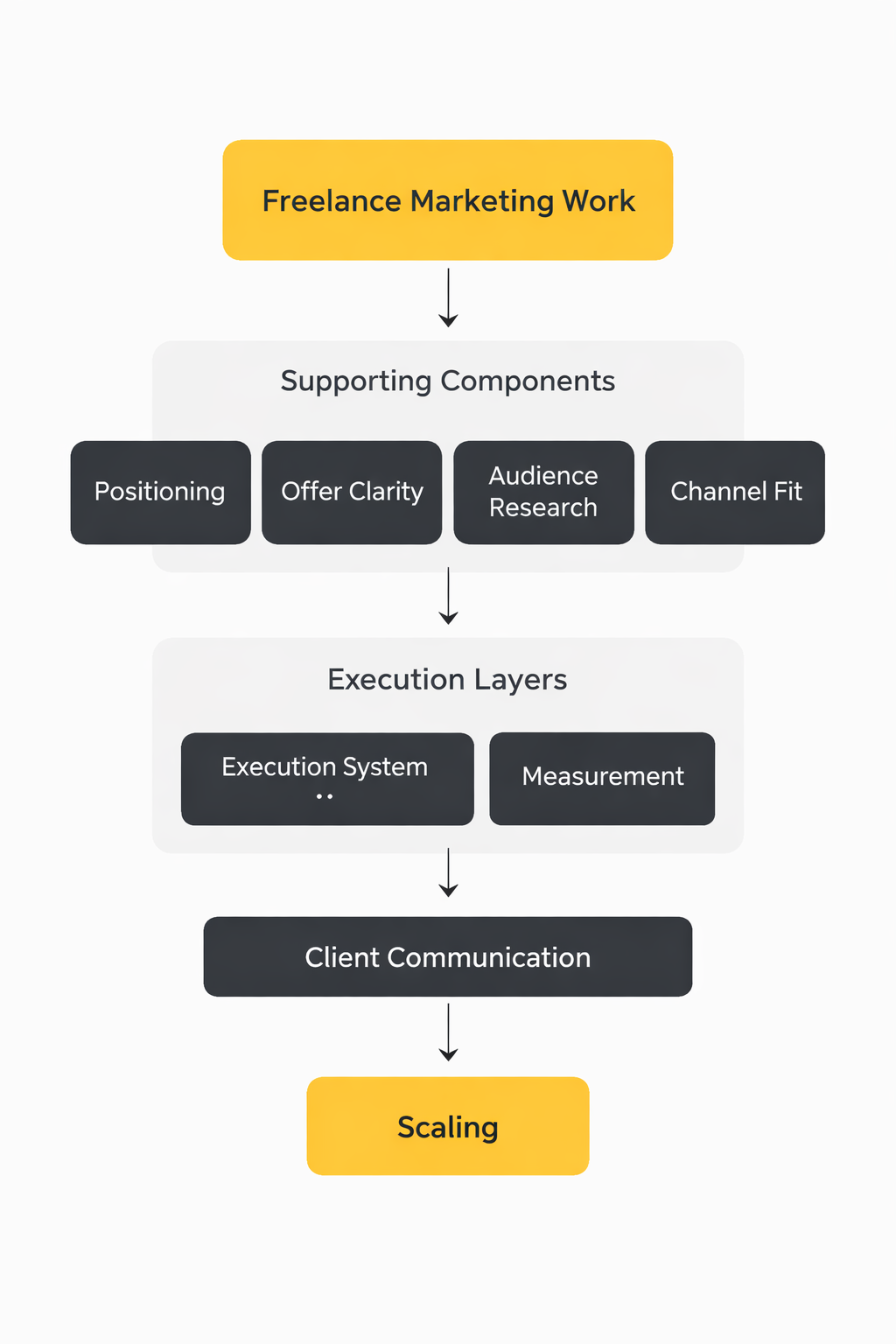
The most useful way to think about freelance marketing work is as a four-layer framework: business context, growth priorities, channel execution, and measurement. Business context comes first because no campaign makes sense until you understand the offer, the sales cycle, the margin structure, and the kind of customer the company actually wants. Growth priorities come next because the right work depends on whether the client needs pipeline, awareness, retention, or faster conversion from existing traffic.
Only after those layers are clear should channel execution begin. That is where most freelancers live, but it is also where many lose credibility, because they jump straight into writing posts, launching ads, or rebuilding email flows before they know what success is supposed to look like. Strong freelance marketing work feels calmer than that. It starts by reducing noise, then connects every task to a commercial reason the client can understand.
The last layer is measurement, and it is the one that turns a freelancer into a long-term partner. IAB’s State of Data 2025 report found that only 30% of agencies, brands, and publishers have fully integrated AI across the media campaign lifecycle, and nearly two-thirds cite data quality, data protection, and tool fragmentation as major barriers. In practice, that means many clients do not need more dashboards. They need somebody who can make the existing data usable, trustworthy, and tied to decisions.
Core Components of Freelance Marketing Work
The core components of freelance marketing work usually fall into five buckets: strategy, messaging, acquisition, conversion, and retention. Strategy defines where the opportunity is and what should happen first. Messaging makes the offer clear enough that people understand why they should care. Acquisition brings qualified attention into the system. Conversion turns that attention into leads, calls, demos, or sales. Retention keeps the relationship alive so the client earns more from customers they already worked hard to win.
What makes this especially important is that clients rarely buy all five buckets as separate line items. They may hire you for SEO, paid social, or email, but they judge you by the total business effect. That is why freelancers who understand the full system are easier to trust. They can explain why a landing page is weak, why a lead magnet is attracting the wrong audience, or why a content calendar is busy but commercially empty.
Channel selection also has to reflect how the market is moving. Sprout Social’s 2025 Index shows that social teams are operating in an environment where audience behavior, platform expectations, and executive pressure are all changing at once, while HubSpot’s AI research shows marketers increasingly use AI for content creation but still edit heavily before publishing. That combination matters because it rewards freelance marketers who can produce work that is both faster and more distinct, instead of faster and more generic.
Professional Implementation of Freelance Marketing Work
Professional implementation starts with how the work is packaged. Clients want clarity before they want creativity, which means your service should have a clear scope, a clear communication rhythm, and a clear definition of success. The easiest way to make freelance marketing work feel premium is to remove uncertainty around what happens next, what you need from the client, how priorities will be set, and how progress will be reported.
That usually means building a lightweight operating system around your service. A scheduling tool such as Cal.com can make discovery and review calls painless, a structured intake form in Fillout can gather brand assets and goals before kickoff, and a reliable publishing workflow through Buffer or email execution inside Brevo can keep delivery consistent. None of those tools replace good thinking, but they do make your work easier to buy because they reduce friction for the client.
The bigger point is that implementation should make you look dependable, not busy. IAB’s 2025 findings show that half of the industry still lacks a strategic roadmap for AI, and that gap is exactly where disciplined freelancers can stand out. When you combine a tight process, channel-specific expertise, and reporting that connects effort to revenue, freelance marketing work stops looking like outsourced help and starts looking like commercial leverage.
Start With Business Context Before Tactics
Before you touch a single channel, you need to understand the client’s economics. That means getting clear on the offer, the margin, the average deal size, the sales cycle, the buying objections, and the difference between the customer they want and the one they usually attract. When freelance marketing work starts there, strategy becomes sharper because you are not guessing what success should look like.
This is also the point where you decide whether the business needs demand creation, demand capture, better conversion, or stronger retention. Those are very different problems, and they should never be treated as if one tactic can solve them all. Upwork’s 2025 in-demand skills report makes that even clearer because the fastest-rising marketing skills span strategy, SEO, lead generation, search marketing, email, and automation, which tells you clients are buying specialized outcomes rather than vague help.
Define One Commercial Goal for the First Win
One of the easiest ways to make freelance marketing work feel valuable is to anchor the first engagement to a single commercial goal. That goal might be more qualified demo requests, better conversion from existing traffic, improved lead nurturing, or stronger reactivation of cold prospects. What matters is that the goal is close enough to revenue that the client can immediately see why it deserves attention.
Freelancers often lose momentum because they promise growth in general terms. A client hears that and assumes everything will improve at once, which is rarely how good work happens in the real world. It is much smarter to say, “We are going to improve this one part of the system first,” then build trust through a visible result.

Choose Channels Based on How People Actually Buy
Channel selection should come from buyer behavior, not from whatever platform is getting the most hype this month. Some offers win through search because intent is already there. Others need email because trust must be built over time. Others still need social content, creator partnerships, or direct outreach because the buyer is not actively searching yet and has to be educated first.
This is where a lot of mediocre freelance marketing work goes off track. A freelancer sees that short-form video is popular or that AI tools can generate ten times more content, so they assume volume will solve the problem. But the 2025 Sprout Social Index, built from surveys of more than 4,000 consumers and 1,200 marketers, shows that brands are dealing with shifting audience expectations, rising pressure for relevance, and a growing need to connect social output to business impact. In other words, more activity is not the same thing as better channel fit.
Once the channel is chosen, the work becomes much easier to prioritize. Search-driven offers may need stronger landing pages, clearer commercial pages, and tighter CRM follow-up. Offer-led businesses selling info products or lead magnets may need a smoother funnel in ClickFunnels or Systeme.io. Relationship-heavy service businesses may get farther by publishing consistently through Buffer, turning interest into booked calls with Cal.com, and keeping lead capture organized inside Copper.
Build a Repeatable Delivery System
Freelance marketing work becomes much easier to sell when clients feel that delivery will be calm, organized, and consistent. That does not require a giant agency-style operation. It simply means your framework should include a standard intake, a clear kickoff process, a reporting rhythm, a place for approvals, and a defined path from idea to execution.
That operating layer matters more now because AI has raised the floor on speed, but it has not raised the floor on judgment. HubSpot reported in 2024 that 74% of marketers were already using at least one AI tool at work, up from 35% the year before, and SAS found in its 2025 marketer study that 85% were using generative AI. That means speed is becoming normal. What still feels premium to a client is a freelancer who can use that speed without creating chaos.
A practical delivery system can be surprisingly simple. You can capture requirements in Fillout, draft faster with Wispr Flow, automate research workflows with Firecrawl, handle newsletters in Brevo or Moosend, and track shared links and campaign attribution with Dub. The exact stack matters less than the fact that the client can feel a real system behind the service.
Measure Outcomes Instead of Activity
The final part of the framework is measurement, and this is where great freelance marketing work separates itself from busywork. Clients do not need another spreadsheet proving that posts were published or emails were sent. They need to understand whether the work improved lead quality, lowered friction in the buying journey, increased conversion, shortened the sales cycle, or created more revenue from existing demand.
That focus is becoming more important as the industry tries to make better use of fragmented tools and messy data. IAB’s State of Data 2025 report, based on input from more than 500 industry experts, shows AI adoption is accelerating across media workflows, but full integration is still uncommon and operational barriers remain stubborn. That is good news for serious freelancers because it means many businesses do not need more software first. They need clearer interpretation and smarter decisions.
When you report results, tie every number back to a business question. Do not just say traffic improved. Explain whether that traffic came from the right people, whether it moved deeper into the funnel, and whether sales teams or founders felt the difference. That is how freelance marketing work becomes indispensable instead of replaceable.
What This Framework Looks Like in Practice
In practice, the framework is straightforward. You diagnose the business first, choose one commercial priority, match channels to real buying behavior, build a dependable delivery system, and measure progress in terms the client can connect to money. That sequence keeps you from overcomplicating the work and protects the relationship from the confusion that usually appears when everyone is doing “marketing” but nobody can explain what should happen next.
It also makes it easier to scale your own business. Once you can repeat this framework across projects, you stop reinventing your service every time a new client shows up. And that is when freelance marketing work starts to feel less like hustling for gigs and more like running a business with a real engine underneath it.
Positioning Is the First Component
The first core component is positioning. Before a client needs more traffic, they need a clear reason for the right people to care. If the market cannot quickly understand what the business does, who it helps, and why it is different, then freelance marketing work turns into an expensive attempt to force attention onto a weak message.
This is why positioning is not just a branding exercise. It shapes ad performance, organic content, landing pages, outbound messaging, and conversion rates all at once. In practical terms, strong positioning gives every other marketing decision a backbone, and without it, even high-output teams often end up publishing a lot while saying very little.
Offer Clarity Turns Attention Into Action
The second component is offer clarity. Plenty of businesses get attention, but they still struggle because the next step feels vague, low-value, or too risky. Good freelance marketing work improves that moment by helping the client make the offer easier to understand, easier to trust, and easier to say yes to.
This is where a freelancer becomes commercially valuable. You are no longer just creating assets. You are identifying friction in the buying decision and removing it. That could mean rewriting a service page, tightening the promise on a lead magnet, restructuring a funnel in ClickFunnels, or simplifying the handoff between marketing and sales so prospects do not disappear after showing interest.
Audience Research Keeps the Work Grounded
The third component is audience research, and this is where a lot of weak freelance marketing work quietly falls apart. It is easy to make assumptions about what buyers care about. It is much harder, and much more profitable, to study the words people use, the objections they repeat, the alternatives they compare, and the triggers that make them start looking for help in the first place.
That kind of research matters even more now because marketing teams are producing more content with AI assistance, which makes sameness easier to create at scale. HubSpot reported in September 2024 that 74% of marketers were already using at least one AI tool at work, and SAS found in its 2025 marketer study that 85% were using generative AI. When more people can publish quickly, the freelancers who win are the ones who understand the audience deeply enough to say something that still feels human.
Channel Fit Makes the Work Efficient
The fourth component is channel fit. Not every business needs the same mix of SEO, email, social, paid media, creator partnerships, or outbound systems. Good freelance marketing work respects that reality and chooses channels based on how people actually discover, evaluate, and buy.
This sounds obvious, but it gets missed all the time. A business with strong search intent may need commercial content and conversion-focused landing pages far more than daily social posts. A relationship-led service may get better results from consistent email and social proof than from trying to outbid competitors in paid search. Upwork’s 2025 skill rankings show rising demand across SEO, social media marketing, lead generation, search engine marketing, email marketing, marketing automation, and marketing strategy, which is another way of saying the right channel depends on the problem being solved.
Execution Systems Create Consistency
The fifth component is execution. This is where freelance marketing work becomes real because ideas only matter if they are shipped consistently. Clients do not just want a smart freelancer. They want somebody who can keep projects moving, gather approvals, hit deadlines, and make progress feel visible week after week.
This is one reason process has become a competitive advantage. IAB’s State of Data 2025, built on feedback from more than 500 experts across agencies, brands, and publishers, shows AI adoption is rising fast while full workflow integration remains limited. So the opportunity is not just to use better tools. It is to create a smoother working system than the client already has.
That system can stay lean. You might collect onboarding details in Fillout, schedule calls through Cal.com, manage email campaigns in Brevo or Moosend, organize publishing through Buffer, and keep relationship data cleaner inside Copper. The point is not the software itself. The point is that the client feels momentum instead of confusion.
Measurement Proves the Value
The sixth component is measurement. Freelance marketing work becomes much easier to retain when the client can see what changed and why it matters. That does not mean drowning them in dashboards. It means choosing a few numbers that reflect the actual business objective and explaining them in plain language.
For one client, that might be booked calls from qualified leads. For another, it might be pipeline sourced from email, lower acquisition costs from organic content, or better retention from lifecycle campaigns. The 2025 B2B benchmarks from Content Marketing Institute show that teams are still under pressure to demonstrate results while operating with constrained resources, which makes outcome-focused reporting far more persuasive than activity summaries.
Client Communication Is a Core Component Too
One part of freelance marketing work that people underestimate is communication. Clients are not only buying execution. They are buying confidence, clarity, and the feeling that someone competent is paying attention. If updates are vague, reactive, or overly technical, even good work can feel uncertain.
Clear communication fixes that. It helps you explain trade-offs, reset expectations before problems grow, and show the reasoning behind your recommendations. In practice, that means your ability to communicate can have just as much impact on retention as your ability to write a great campaign.
Why These Components Work Together
Each of these components matters on its own, but freelance marketing work gets powerful when they work together. Positioning sharpens the message. Offer clarity gives the audience a reason to act. Research keeps the work grounded in reality. Channel fit directs effort where it has the best chance to pay off. Execution systems create consistency. Measurement proves value. Communication keeps the relationship healthy.
Miss one or two of those pieces and results can still happen, but they usually feel fragile. Get them working together and your service becomes much harder to replace. That is the real goal, because the strongest freelance marketing work is not just about landing clients. It is about becoming so useful that the client does not want to imagine operating without you.
Statistics and Data
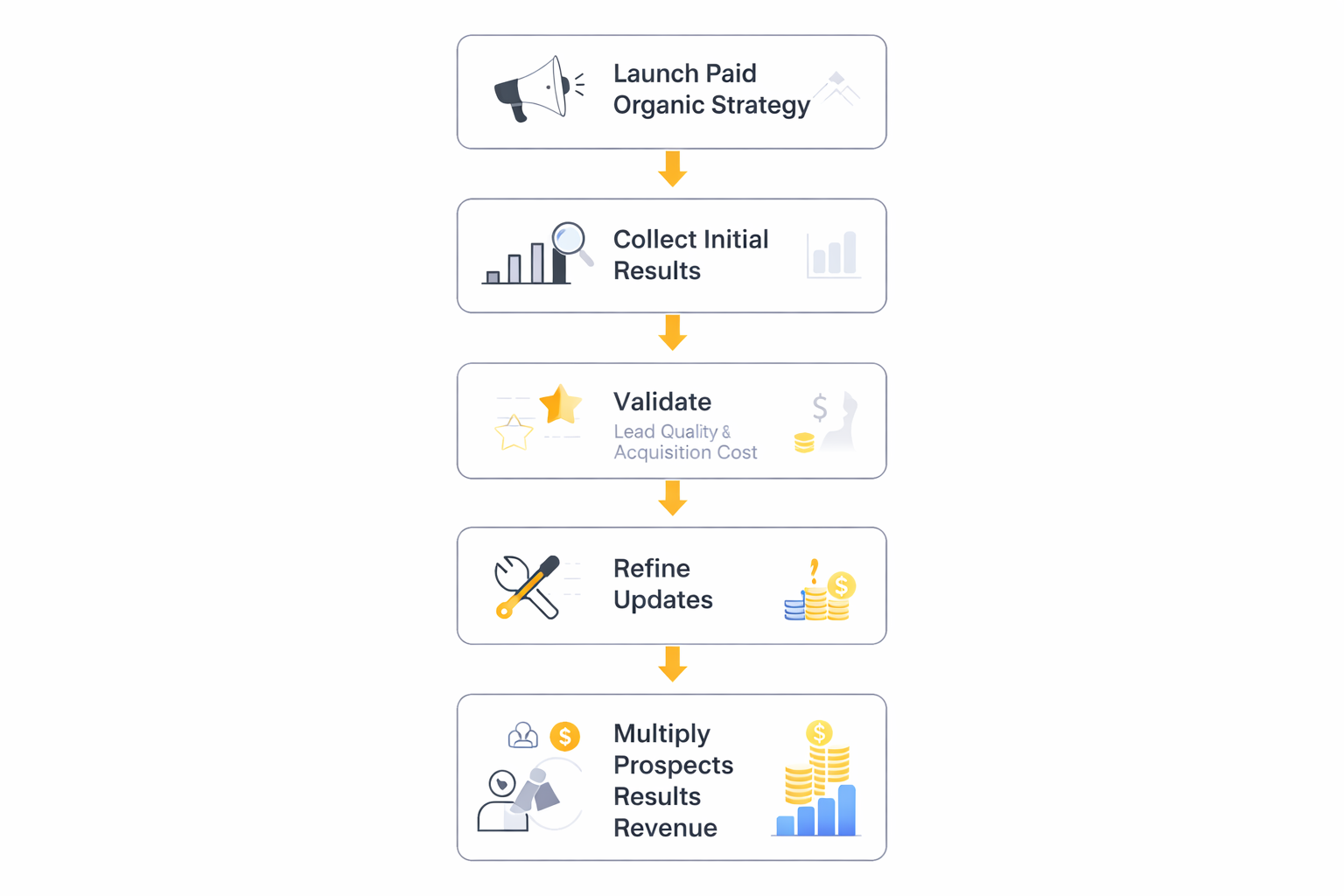
Freelance marketing work gets much easier to sell when you can explain the market with real numbers instead of vague enthusiasm. Businesses are not just buying tasks anymore. They are buying speed, specialization, and measurable business movement, which is why the data matters so much before you ever pitch a service package.
The strongest signal is demand for specialized skills. Upwork’s 2025 in-demand skills report lists social media marketing, search engine optimization, lead generation, search engine marketing, email marketing, marketing automation, and marketing strategy among the fastest-growing marketing skills on the platform. That tells you something important right away: freelance marketing work is not growing because clients want random help; it is growing because they want specific outcomes tied to specific capabilities.
What the Market Data Says
The broader marketing environment supports that same conclusion. Content Marketing Institute’s 2025 B2B research shows that many teams still operate with small groups while being asked to produce stronger content performance, better measurement, and more strategic output. That gap between expectations and internal capacity is exactly where freelance marketing work becomes valuable, because a business does not always need a full new department to move faster. Sometimes it just needs one sharp operator who can step in and fix a problem that is costing money every week.
AI adoption adds even more pressure to that equation. HubSpot reported in late 2024 that 74% of marketers were already using at least one AI tool at work, while SAS found in its 2025 marketer study that 85% of surveyed marketers were using generative AI. That does not make freelance marketing work less important. It actually makes it more important, because when more companies can create content quickly, the real advantage shifts to judgment, positioning, channel selection, and clean execution.
Why These Numbers Matter to Clients
Clients rarely care about data in isolation. They care about what the data means for risk, revenue, and wasted effort. When a founder or marketing lead sees rising demand for SEO, email, automation, and lead generation, they are not just looking at a trend line. They are seeing proof that freelance marketing work is becoming a normal way to fill skill gaps without making a permanent hire.
This is also why positioning yourself as a vague “full-service marketer” is usually weaker than naming the business problem you solve. If the market is clearly rewarding specialized work, then your messaging should reflect that reality. A freelancer who helps B2B companies improve pipeline from content, or service businesses convert more inbound leads, is much easier to understand than someone who claims to do everything for everyone.
The Data Problem Inside Modern Marketing
There is another side to this that matters just as much: most businesses are still not using their data as well as they think they are. IAB’s State of Data 2025 report says only 30% of agencies, brands, and publishers have fully integrated AI across the media campaign lifecycle, even though adoption is moving quickly. The same report highlights that data quality, tool fragmentation, and privacy complexity remain major barriers.
That creates a huge opening for freelance marketing work that is built around clarity. Many clients do not need another platform, another dashboard, or another disconnected experiment. They need someone who can look at the mess, decide what numbers actually matter, and turn activity into decisions the business can act on.
Metrics That Actually Belong in Freelance Marketing Work
The most useful metrics depend on the business model, but the principle stays the same. You should track the numbers that reveal whether commercial momentum is improving, not just whether marketing assets are being shipped. That usually means tying your work to lead quality, booked calls, sales-qualified opportunities, customer acquisition cost, retention, or revenue influenced by the campaigns you are running.
This is where many freelancers accidentally weaken their own value. They report on impressions, post counts, and email sends because those are easy to present, but those numbers rarely settle the real question in the client’s mind. The real question is whether the business is moving closer to more sales, better customers, and more efficient growth because of your work.
How to Use Statistics Without Sounding Like a Robot
Numbers should support your thinking, not replace it. The easiest way to use data well in freelance marketing work is to connect each statistic to a practical business implication. If specialized marketing skills are rising in demand, explain that clients should expect stronger competition and should package their expertise more precisely. If AI usage is becoming normal, explain that output alone is no longer enough and that differentiation has to come from sharper insight and stronger execution.
That is what makes data persuasive. You are not dumping facts into the conversation just to sound informed. You are helping the client understand what the market is rewarding and how to adapt before they waste time on work that looks busy but does not move the business.
A Simple Benchmark for Better Decisions
A useful benchmark for freelance marketing work is this: every recurring activity should answer one of three questions. Is it bringing in the right people? Is it helping more of those people convert? Or is it increasing the value of people who already became customers? If an activity does not clearly serve one of those purposes, it is probably a distraction dressed up as marketing.
That benchmark becomes even more valuable in a market flooded with tools, templates, and AI-generated output. SAS’s 2025 report makes it clear that enthusiasm for AI is high, but maturity still varies a lot from one organization to another. So the real opportunity for freelancers is not to promise magic. It is to bring discipline to a space where many companies still have plenty of motion but not enough control.
Turning Data Into Better Positioning
When you understand the statistics behind the market, your positioning improves almost automatically. You stop describing freelance marketing work as general support and start describing it as a way for businesses to access scarce expertise quickly, improve execution without bloating payroll, and make better use of the demand they already have. That is a much stronger commercial story because it is grounded in what companies are already doing.
It also gives you better language for your proposals, sales calls, and website copy. Instead of saying you help with marketing, you can show that businesses are actively seeking specialized freelance capabilities, that internal teams are stretched, and that the real bottleneck is often not effort but focus. Once you frame it that way, the value of your service becomes much easier for a client to understand.
What to Do With These Insights
The data points in this part are not here to impress anybody. They are here to help you make sharper choices. Use them to narrow your offer, choose services the market already values, build reporting around business outcomes, and explain why focused freelance marketing work can be more useful than a scattered in-house effort with no clear operating system.
That is the bigger takeaway. The numbers are pointing in the same direction: demand is moving toward specialists, AI is raising the baseline for speed, and many businesses still struggle to turn data into action. If you can solve those problems clearly and consistently, freelance marketing work stops being just another service and starts becoming something clients are willing to pay serious money to keep.
Analytics and Client Retention for Freelance Marketing Work
At some point, every freelancer learns the same hard lesson. Getting a client is exciting, but keeping that client is where the real money is made. The strongest freelance marketing work is not just about proving you can launch something once. It is about showing that you can create momentum, explain what is happening clearly, and make the client feel safer with you involved than without you.
That matters even more now because companies are leaning harder into specialized freelance talent. Upwork’s 2025 research shows that proven expertise is carrying more weight with executives, while Fiverr’s 2025 economic report says skilled independent workers generated $319 billion in revenue in 2024. When the market is moving this way, retention becomes a competitive edge because the freelancer who can stay embedded in the business ends up building much more value than the one who is constantly starting over.
Why Retention Beats Constant Client Chasing
There is a huge difference between being hired for a project and becoming part of how a business grows. Project work can pay well, but retained work creates stability, better strategy, and deeper trust. When your freelance marketing work stays connected to the same client over time, you learn the buyer, the offer, the objections, the weak spots in the funnel, and the internal politics that usually stay invisible during the first month.
That is where better decisions start to happen. You stop guessing what matters and start seeing patterns earlier than the client can see them on their own. Over time, your value shifts from doing tasks to helping the business avoid expensive mistakes.
The Right Way to Handle Analytics
Analytics should never feel like homework the client has to pretend to care about. In strong freelance marketing work, reporting exists to answer business questions, not to decorate a monthly meeting with charts. The client wants to know whether more of the right people are arriving, whether they are moving closer to buying, and whether your work is improving the economics of growth.
This is why simple reporting usually beats bloated dashboards. IAB’s State of Data 2025 report highlights how often data quality, fragmented tools, and weak integration still get in the way of useful decision-making. So if you can take messy performance signals and turn them into a few sharp conclusions, your freelance marketing work immediately feels more valuable than a dozen disconnected reports nobody knows how to use.
Which Metrics Actually Help Retain Clients
The best metrics depend on the service, but the rule stays the same: measure what helps the client make a decision. For lead generation work, that might mean qualified calls booked, cost per qualified lead, close rates from inbound leads, or speed-to-contact after conversion. For content and email work, it may be more useful to look at pipeline influenced, sales conversations started, reactivation of old leads, or revenue tied to lifecycle campaigns.
That is a much stronger way to present freelance marketing work than saying posts were published, emails were sent, or traffic went up. Those numbers can matter, but only if they lead somewhere commercially useful. Content Marketing Institute’s 2025 B2B benchmarks make it clear that teams are still under pressure to prove business impact with limited resources, so reporting has to move beyond surface activity and toward outcomes that a founder or marketing lead can actually act on.
Communication Is Part of Retention
A lot of freelancers lose clients even when the work itself is solid. The problem is not performance. The problem is that the client never feels fully oriented. They are unsure what is happening, unsure what changed, unsure what comes next, and that uncertainty slowly erodes trust.
The fix is not complicated, but it does require discipline. Good freelance marketing work includes a predictable communication rhythm, a clean summary of wins and problems, and clear decisions that need client input. When that structure is in place, the client stops feeling like they have to chase you for clarity, and that alone makes the relationship much easier to keep.
How to Make Reporting Feel Useful
The easiest way to make reporting useful is to organize it around four parts: what happened, why it happened, what it means, and what should happen next. That structure keeps freelance marketing work from sounding reactive or overly technical. It also shows the client that you are not hiding behind data. You are interpreting it.
This matters in a market where AI is making content production and execution faster for almost everyone. HubSpot reported in 2024 that 74% of marketers were already using at least one AI tool at work, and SAS reported in 2025 that 85% of surveyed marketers were using generative AI. When speed becomes normal, clients do not stay for speed alone. They stay for interpretation, prioritization, and judgment.
Retention Gets Easier When the Client Feels Progress
One reason clients leave is that progress feels abstract. They may intellectually understand that marketing takes time, but if the work does not feel like it is building toward something, they start questioning the investment. That is why effective freelance marketing work creates visible milestones along the way, even before the biggest outcome lands.
Sometimes that milestone is a cleaner offer, a better-performing landing page, stronger lead quality, improved follow-up, or a sharper reporting system that finally makes the numbers usable. Those wins matter because they help the client feel that the business is becoming easier to operate. Retention often has less to do with one dramatic spike and more to do with a steady reduction in confusion.
Build Systems That Make You Harder to Replace
The most durable freelance marketing work is supported by systems the client can feel every week. That might mean using Fillout to standardize intake, Cal.com to remove scheduling friction, Brevo or Moosend to run email communication cleanly, Buffer to keep publishing organized, and Dub to track and manage campaign links more cleanly. The exact stack is not the real point. The real point is that the client feels order instead of chaos.
Once that happens, replacing you becomes harder for a very practical reason. The client is no longer comparing one freelancer against another on price alone. They are comparing a trusted operating system against the risk of losing momentum and rebuilding the whole process from scratch.
How to Expand Without Feeling Salesy
Retention often leads naturally into expansion if you pay attention to where the next bottleneck appears. A client may hire you for content, but the real wall might be poor conversion on the landing page. They may bring you in for lead generation, but the real issue could be weak nurture sequences or inconsistent follow-up after someone books a call. When you understand that, your freelance marketing work can grow without feeling forced.
The key is to recommend the next step only when the evidence is already visible in the work. That makes expansion feel like good stewardship instead of upselling. Clients are far more open to deeper engagement when they can see the logic for it in the results and friction points you have already uncovered together.
The Long Game of Freelance Marketing Work
The long game is simple, even if it is not always easy. Win the client with expertise, keep the client with clarity, and grow the relationship with results that make sense to the business. That is how freelance marketing work becomes sustainable instead of exhausting.
And that is really the point of this whole section. Analytics are not there to impress people, and retention is not just about sending a polished recap once a month. Both exist to help the client feel that the business is moving in the right direction, that someone capable is steering key parts of the work, and that staying with you is the safer, smarter choice.
Scaling Freelance Marketing Work Sustainably
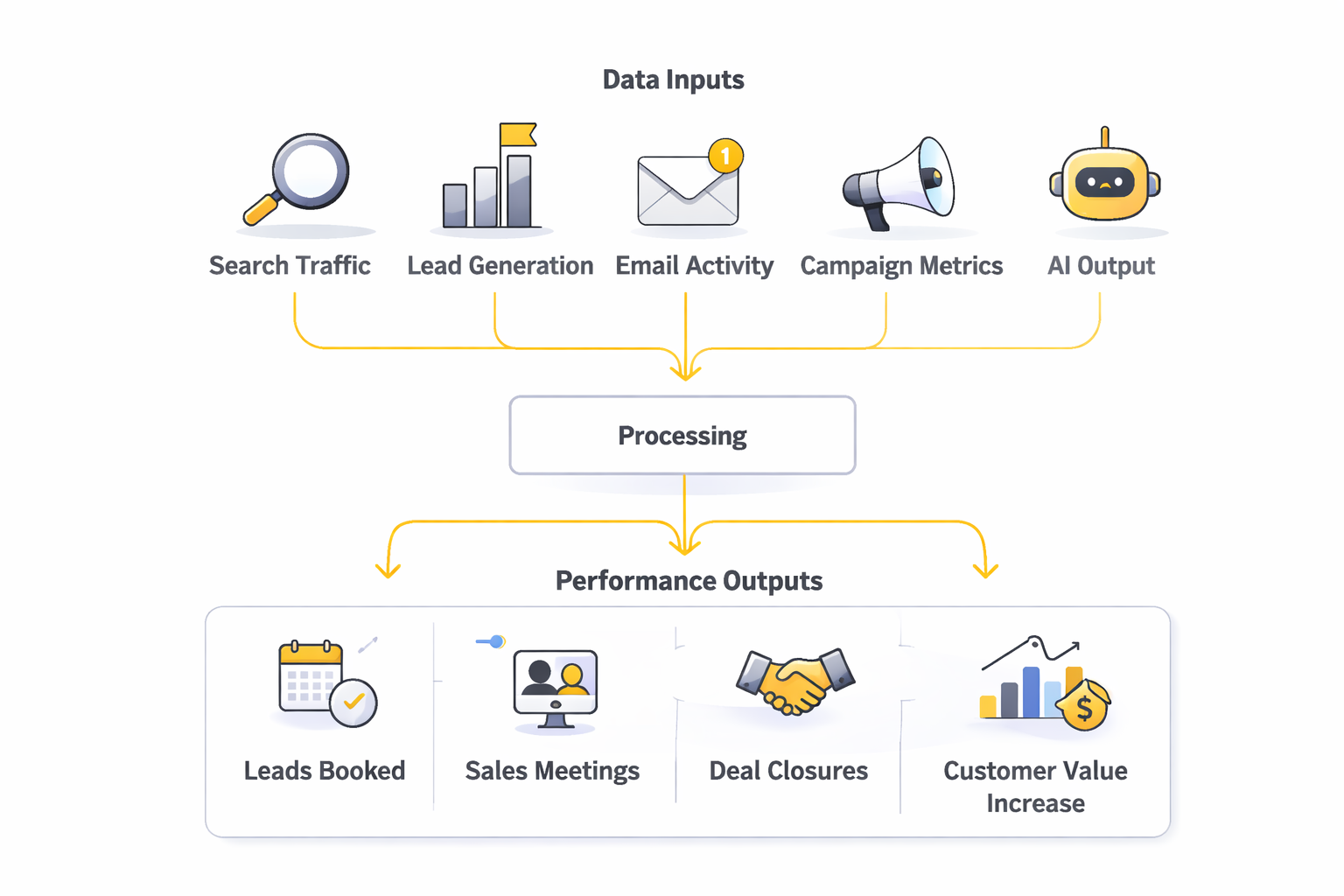
The last step is where freelance marketing work either becomes a real business or stays stuck as a tiring cycle of pitching, delivering, and starting over. If you want more income without more chaos, you need systems that let you attract better clients, standardize delivery, and protect your time. That is especially important in a market where Upwork says 76% of executives believe freelancers add more value than degree-holding employees, because stronger demand is useful only if you are set up to handle it well.
Sustainable growth does not mean turning yourself into a bloated agency overnight. It means tightening your positioning, building repeatable workflows, and choosing tools that help you serve clients without letting every project feel custom from scratch. When freelance marketing work is structured that way, growth becomes much more predictable.
FAQ – Built for the Complete Guide
What is freelance marketing work, really?
Freelance marketing work is when an independent specialist helps businesses grow through strategy, content, SEO, email, paid campaigns, lead generation, analytics, or funnel improvement without joining the company as a full-time employee. The reason it has become so attractive is that companies can bring in focused expertise quickly instead of making a long-term hire for every skill gap. You can see that shift clearly in Upwork’s 2025 skills research, where specialized marketing capabilities continue to rank among the fastest-growing areas of demand.
Is freelance marketing work still worth it in 2026?
Yes, but only if you treat it like a business and not like casual side income. There is real demand, and Fiverr’s 2025 economic release says skilled independent workers in the United States generated an estimated $319 billion in revenue in 2024, which shows how serious this market has become. The opportunity is strong, but clients are much more likely to pay well when your freelance marketing work is specialized, measurable, and easy to trust.
What services sell best in freelance marketing work?
The services that usually sell best are the ones closest to a business outcome. That includes SEO tied to qualified traffic, email marketing tied to pipeline or sales, lead generation, paid search, conversion-focused funnel work, and marketing automation that removes friction in follow-up. Upwork’s 2025 ranking of in-demand skills points in the same direction, showing demand for SEO, social media marketing, lead generation, search engine marketing, email marketing, automation, and strategy rather than vague general help.
Do I need to specialize to make good money?
In most cases, yes. Generalists can still win work, but specialization usually makes freelance marketing work easier to explain, easier to price, and easier for the right clients to buy. A freelancer who helps SaaS companies improve demo conversion or service businesses turn inbound traffic into booked calls feels much more valuable than somebody who simply says they do marketing.
How do beginners get started if they do not have clients yet?
Beginners should start by picking one problem they want to solve, building a small proof-of-skill portfolio around it, and learning how to explain the commercial value of the work. That may mean creating teardown content, offering a focused starter package, or improving a real business asset such as a landing page, welcome sequence, or local SEO page to show what you can do. The biggest mistake is trying to offer everything at once, because beginner freelance marketing work becomes much stronger when it is built around one clear outcome.
How should I price freelance marketing work?
The best pricing model depends on how directly your work connects to results, but in general, fixed monthly retainers or project fees are easier to scale than hourly billing. Hourly pricing can make sense early on, yet it often punishes efficient freelancers because better systems reduce the hours while increasing value. Once your freelance marketing work has a repeatable process and a clear business purpose, pricing around scope and outcomes usually makes much more sense.
Can AI replace freelance marketing work?
AI can absolutely speed up parts of the work, but it does not remove the need for judgment, positioning, prioritization, and client communication. HubSpot reported in 2024 that 74% of marketers were already using at least one AI tool at work, and SAS found in its 2025 marketer study that 85% were using generative AI. That means AI is becoming normal, not magical, so the freelancers who win are the ones who use it to move faster while still producing work that feels sharper, safer, and more strategic than automated output alone.
What tools help the most when building a freelance marketing work system?
The right stack depends on your service, but the best tools are the ones that reduce friction for both you and the client. For example, Cal.com can simplify scheduling, Fillout can make intake cleaner, Buffer can organize publishing, Brevo can support email execution, and Copper can help keep client and lead information more structured. Good freelance marketing work rarely depends on one magic tool. It depends on using a few useful tools inside a clean operating system.
How do I keep clients longer?
You keep clients longer by making the work easier to understand and easier to trust. That means consistent communication, reporting that focuses on business outcomes, and recommendations that clearly connect to what the company is trying to achieve. IAB’s State of Data 2025 report shows that many organizations still struggle with fragmented tools and messy data, which gives freelancers a huge opportunity to stand out simply by bringing clarity and direction to the process.
What metrics should I track in freelance marketing work?
Track the numbers that help the client make a business decision, not just the numbers that prove activity happened. Depending on the project, that may include qualified leads, booked calls, close rates, customer acquisition cost, reactivation of old leads, revenue from email, or conversion rate improvements on important pages. The reason this matters so much is that Content Marketing Institute’s 2025 B2B research shows marketing teams are still under pressure to demonstrate real impact while operating with limited resources, so surface-level reporting is usually not enough.
Where do I find better clients for freelance marketing work?
Better clients usually come from strong positioning, direct outreach, referrals, authority content, and platforms that align with serious buyers instead of bargain hunters. The real goal is to place your freelance marketing work in front of companies that already understand the cost of weak marketing and are willing to pay for sharper execution. That is why building a clear offer and publishing useful proof of expertise often works better over time than blending into crowded marketplaces where everyone looks interchangeable.
Should I build a personal brand around my freelance marketing work?
Yes, because trust compounds. A personal brand gives your future clients repeated evidence that you understand the problems you claim to solve, and it makes your freelance marketing work feel more credible before the first sales call happens. It does not have to mean becoming an influencer. It simply means showing your thinking often enough that the right people start associating your name with a useful outcome.
Work With Professionals
If you are serious about making freelance marketing work more profitable, the smartest move is to stop treating every client search like a fresh emergency. Build an offer that solves a real problem, tighten your systems, and put yourself in front of companies that already want serious marketing help. That is how you move away from random gigs and toward work that compounds.
Most marketers spend far too much time chasing clients, competing on crowded platforms, and giving away margin to marketplaces that sit between them and the company paying for the work. A better path is to put your expertise where qualified buyers are already looking and where direct relationships are easier to build. If that is the direction you want, browse remote opportunities and create your profile at MarkeWork.com.
Explore 10K+ Remote Marketing Contracts on MarkeWork.com
Most marketers spend too much time chasing clients, competing on crowded platforms, and losing a percentage of every project to middlemen.
MarkeWork gives you a better way. Browse thousands of remote marketing contracts and connect directly with companies desperate to hire skilled marketers like you without platform commissions and without unnecessary gatekeepers.
If you are serious about finding better opportunities and keeping 100% of what you earn, you can explore available contracts and create your profile for free at MarkeWork.com.
 Filip Konecny Enterprises