
Facebook Advertising: The Strategic Guide to Reach, Conversion, and Scalable Growth
Facebook advertising is still one of the few channels that can combine mass reach, detailed targeting, creative testing, and measurable conversion data inside one operating system. That matters more now than ever because Meta reported $200.97 billion in revenue for full-year 2025, while its filed annual report makes clear that advertising remains the core engine behind that scale. When a platform continues to grow ad impressions and price at the same time, smart marketers pay attention because that usually signals durable demand rather than a fading opportunity.
The audience side is just as important. Facebook ads reached 2.28 billion people worldwide in January 2025, and 68% of U.S. adults say they use Facebook, which helps explain why the platform keeps showing up in real media plans instead of being treated like yesterday’s network. For brands that need to influence awareness, capture demand, and retarget buyers without stitching together five disconnected tools, that combination is hard to ignore.
This first part sets the foundation so the rest of the article can move with purpose. We will start with why Facebook advertising still matters, then map the framework you need before you spend a dollar, and later move into the mechanics, execution standards, measurement discipline, and the broader ecosystem that turns campaigns into a real growth asset. If you want a channel that rewards both creative instinct and operational rigor, Facebook advertising deserves a serious look.
Article Outline
- Part 1: Why Facebook Advertising Matters
- Part 2: Facebook Advertising Framework Overview
- Part 3: Core Components of Facebook Advertising
- Part 4: Professional Implementation
- Part 5: Measurement and Analytics
- Part 6: Ecosystem and Next Steps
Why Facebook Advertising Matters
Facebook advertising matters because it sits at the intersection of attention, intent, and automation. Meta’s own results for 2025 show ad impressions rising 12% for the full year and average price per ad rising 9%, which is a strong signal that advertisers are still finding enough value to keep spending more into the system. In plain English, businesses do not increase bids on a platform at this scale unless it continues to drive outcomes they care about.
It also matters because Facebook is not just a top-of-funnel awareness engine anymore. Meta’s simplified objective system is built around awareness, traffic, engagement, leads, app promotion, and sales, which means the platform is designed to support the full customer journey instead of only one stage of it. That is why disciplined advertisers can use the same environment to introduce a brand, qualify interest, recover abandoned demand, and close revenue without constantly rebuilding their strategy from scratch.
There is also a technical reason Facebook advertising still deserves serious budget. Meta said on its Q2 2025 earnings call that newer AI-powered recommendation models drove roughly 3% more ad conversions on Facebook, and its engineering team later explained how Andromeda improves ad retrieval for personalized delivery. That does not mean the machine will save a weak offer or lazy creative, but it does mean the platform is getting better at matching strong campaigns with the right people. The advertisers who benefit most are usually the ones who understand that Facebook advertising is not a magic trick; it is an auction-driven system that rewards clear signals, strong inputs, and relentless testing.
Facebook Advertising Framework Overview
A useful Facebook advertising framework starts before campaign setup. You need a clear business goal, a defined audience, a conversion path that actually works, and a measurement plan that tells you whether the campaign produced profitable movement or just vanity metrics. Without that foundation, even strong targeting and beautiful creative can create the illusion of progress while your budget quietly leaks away.
From there, think of the framework as five connected decisions: objective, audience signal, offer, creative angle, and destination. Meta explains in its ad auction guidance that delivery is based on the ad most likely to maximize total value, not simply the highest bidder, which is why weak creative or a mismatched landing page can sabotage performance even when spend is aggressive. This is also why many serious advertisers pair Facebook traffic with a focused funnel stack such as ClickFunnels or systeme.io when they need tighter control over lead capture, offer sequencing, and follow-up conversion.
The rest of this article expands that framework into execution you can actually use. Next, we will break down the core components that make Facebook advertising work in practice, from campaign architecture and audience inputs to creative formats and conversion signals. After that, we will move into professional implementation, analytics, and the surrounding ecosystem so you can treat Facebook advertising like a real operating channel rather than a button you press when sales feel slow.
Framework Overview for Facebook Advertising
The easiest way to waste money on Facebook advertising is to jump straight into Ads Manager and start clicking buttons before the strategy is clear. The framework that works begins much earlier than campaign setup. You need to know what business result matters most, what action proves the campaign is working, and what kind of path a cold prospect has to take before becoming a buyer.
That is even more important now because Meta’s system is built around six simplified objectives, and the platform keeps leaning harder into automation as delivery improves. The company’s 2025 results showed ad impressions rising 12% for the full year while average price per ad rose 9%, which tells you the auction is active, competitive, and still attracting serious demand. In a market like that, the advertisers who win are not the ones with the prettiest dashboard screenshots; they are the ones with a clean framework that gives Meta the right inputs.
So here is the practical way to think about it. Strong Facebook advertising rests on three layers that have to work together: the business objective, the conversion architecture, and the optimization system. Once those layers are aligned, the platform becomes far more useful because it is no longer guessing what success looks like.
Start With the Outcome, Not the Ad
A lot of campaigns go sideways because the advertiser starts by asking, “What kind of ad should I run?” when the better question is, “What outcome am I trying to buy?” If the real goal is booked calls, qualified leads, purchases, or app installs, then everything else should be built backward from that moment. Facebook advertising gets dramatically clearer when you stop chasing vague attention and start choosing a result that can actually move the business.
That sounds simple, but it changes everything. Meta’s auction is designed to show the ad that creates the most total value for both the user and the advertiser, not just the one with the biggest budget, as the company explains in its ad auction guidance. In other words, if your campaign objective is muddy, your optimization signal is weak, and your offer is unclear, the system has very little chance of helping you. The framework starts by defining one primary goal, one main conversion event, and one offer strong enough to deserve the click.
That is also why serious advertisers do not treat traffic as the finish line unless traffic itself is the product. If the goal is revenue, the framework has to connect the ad to a page, a form, a product, or a booking flow that was designed to convert. For brands that want more control over that journey, tools like ClickFunnels or systeme.io are often used to keep the message consistent from the first impression to the final action.
Build the Signal Path Before You Scale
The second layer of the framework is the signal path. This is the part most people ignore because it is less exciting than writing headlines or picking creative, but it is the part that tells Meta what a valuable user actually looks like. If your event tracking is broken, incomplete, or too shallow, Facebook advertising starts optimizing around noise instead of genuine business outcomes.
That is why Meta has spent so much time pushing advertisers toward a stronger measurement setup with the Meta Pixel and Conversions API working together. The company’s own implementation guidance for the Conversions API makes the logic clear: server-side data helps improve event resilience and gives the system better feedback for optimization. Put simply, if you want the algorithm to find more buyers, you need to feed it cleaner evidence of who your buyers are.
This part of the framework should also shape how you think about landing pages and follow-up. A click is not worth much when the page loads slowly, the form asks for too much too soon, or the lead disappears because nobody followed up. That is why advertisers who care about the full funnel often connect Facebook advertising to email and CRM systems such as Brevo or Copper, because the ad only creates the opportunity and the backend system is what turns that opportunity into money.
Use Automation Without Giving Away the Strategy
The third layer is where many advertisers get emotionally stuck. Meta is clearly moving toward more automation, and that can make experienced buyers nervous because it feels like control is being taken away. But the real shift is not that strategy matters less. It is that strategy has moved upstream, while the machine handles more of the delivery decisions inside the auction.
You can see that direction in Meta’s own disclosures. During the company’s Q2 2025 earnings call, leadership said its newer AI recommendation systems were driving roughly 3% more ad conversions on Facebook Feed and 5% more on Instagram, and Meta’s engineering team has also explained how Andromeda improves personalized ad retrieval at scale. The message is hard to miss: the platform is getting better at deciding who should see an ad and when, but it still depends on the advertiser to provide the offer, the angle, the signal quality, and the creative variety.
That is the heart of a modern Facebook advertising framework. You do not try to out-micro-manage the machine on every tiny lever. You decide what matters, define the conversion path, feed the system strong data, and give it creative that speaks to real human motivation. Once those pieces are in place, automation stops feeling like a threat and starts feeling like leverage.
In the next part, we will move from the framework into the core components of Facebook advertising itself. That is where campaign structure, audiences, placements, creative formats, budgets, and optimization choices begin to matter in a very practical way, because now the strategic foundation is already in place.
Core Components of Facebook Advertising
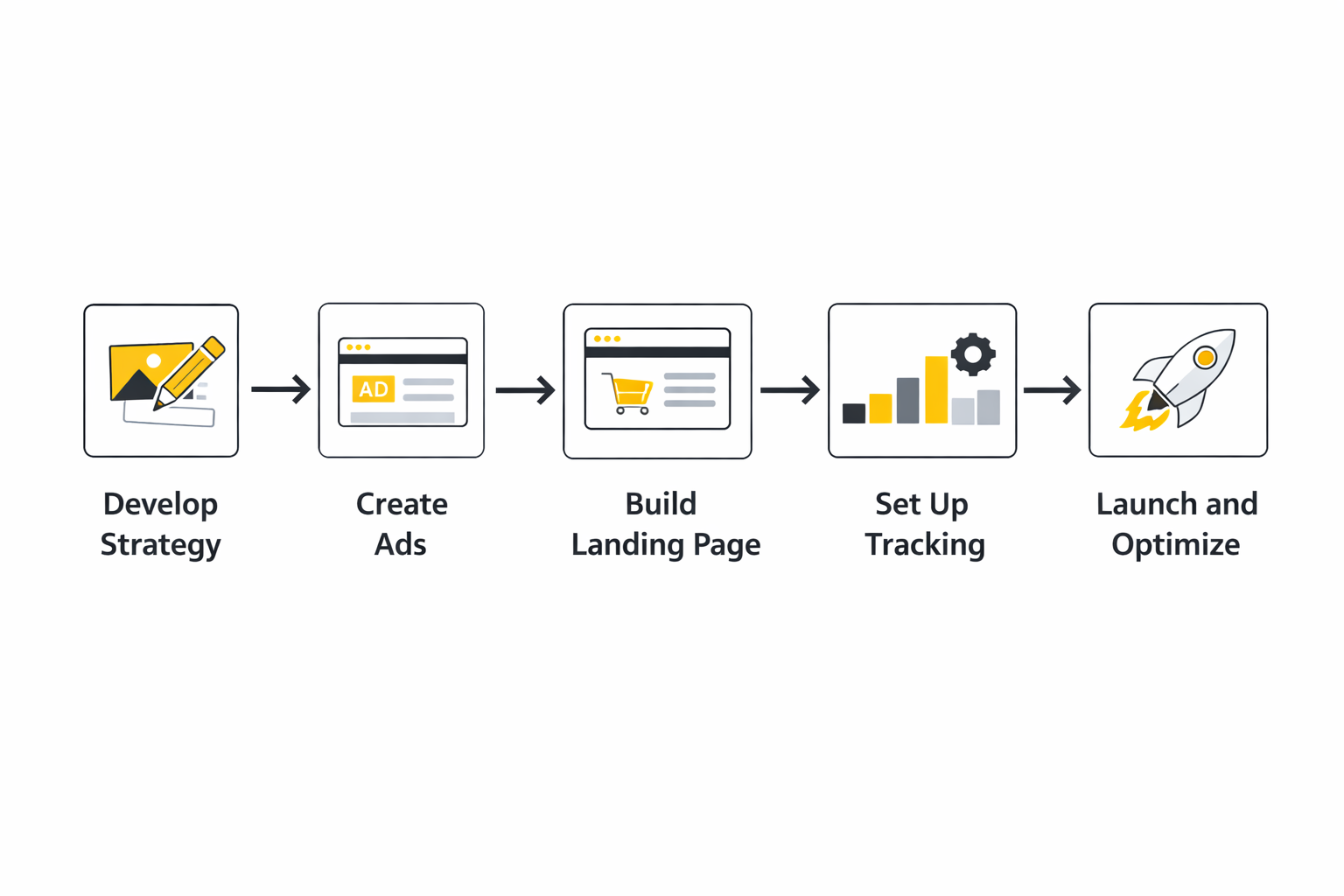
Once the framework is clear, Facebook advertising becomes much easier to manage because you can finally see the parts that actually drive performance. Most losing campaigns do not fail because Facebook ads “stopped working.” They fail because one core component is weak, and that weak point drags down everything else. A brilliant ad cannot rescue broken tracking, and perfect tracking cannot save an offer nobody wants.
That is why it helps to think about Facebook advertising as a system made of connected parts rather than isolated tactics. Meta itself structures campaigns around three levels in Ads Manager: campaign, ad set, and ad. That is not just a technical detail. It is the backbone of how objectives, audiences, budgets, placements, creative, and optimization all fit together.
Get these components right and the platform starts working with you instead of against you. Get them wrong and you can burn through a budget while convincing yourself you only need “better creatives” or “a broader audience.” Let’s break down the parts that matter most so Facebook advertising starts making sense at the level where real results are built.
Campaign Structure Sets the Direction
The first core component is campaign structure. Meta’s own guidance on the structure of ads created in Meta Ads Manager explains that the campaign level sets the objective, the ad set level controls things like audience and delivery settings, and the ad level holds the creative itself. That matters because Facebook advertising works best when each level has one clear job and is not overloaded with conflicting decisions.
This is also where many advertisers make their first expensive mistake. They throw too many audiences, too many messages, and too many offers into one campaign, then wonder why the reporting feels muddy and the platform struggles to find traction. A cleaner structure gives you cleaner learning. If one campaign is built for lead generation and another is built for sales, you can judge each one by the outcome it was actually supposed to produce instead of blending everything into one confusing mess.
Budget choice sits inside this same structural decision. Meta says Advantage campaign budget distributes spend across ad sets in real time to capture the best opportunities, which can be powerful when your ad sets are strategically sound. But that only helps if the campaign was organized with intention in the first place. Automation amplifies structure. It does not fix sloppy structure.
Audience Components Determine Who Sees the Message
The second core component is the audience layer, and this is where Facebook advertising still has a real edge when it is used intelligently. Meta supports several audience approaches, including custom audiences, website custom audiences, and lookalike audiences. That means you are not limited to guessing interests and hoping for the best. You can build from actual business signals, actual visitors, and actual customers.
This is where the quality of your source data starts to matter more than the size of the audience. A list of recent buyers is usually more valuable than a huge list of casual visitors because the signal is stronger. A lookalike built from high-value customers can often outperform one built from shallow traffic because Meta has better evidence about what a meaningful prospect looks like. In practical terms, Facebook advertising becomes much stronger when the audience strategy is built from intent and value instead of vanity reach.
Retargeting is part of this audience layer too, and it is one of the biggest reasons the platform stays useful across the full funnel. When someone visits a product page, engages with a video, opens a lead form, or adds something to cart, that behavior creates a second chance. Meta’s audience tools are designed to help you act on that second chance with much more precision than a cold prospecting campaign ever could.
Creative Components Decide Whether Anyone Cares
The third core component is creative, and this is where Facebook advertising becomes brutally honest. The platform can help you reach the right person, but it cannot force that person to care. If the opening visual is weak, the promise is vague, or the offer feels ordinary, performance usually collapses long before optimization has a fair shot.
Meta supports a range of ad formats, including image, video, carousel, collection, and Instant Experience ads. Each one has a different job. A single image ad can deliver a sharp promise fast. A carousel can show product range or step-by-step logic. A collection ad can work beautifully for commerce because it combines attention with browsing behavior inside the same experience. The right question is not which format is “best.” The right question is which format best matches the sales conversation you need to create.
Creative also has to respect placement behavior. Meta provides placement-specific asset customization options and separate guidance for safe zones in Stories and Reels, and that should tell you something important: one-size-fits-all creative usually leaves money on the table. A message that works in Feed may feel cramped or awkward in Stories. A polished square image may not carry the same energy as a vertical creative built for quick mobile attention. In Facebook advertising, strong creative is not just persuasive. It is native to the environment where it appears.
Placements and Delivery Shape Efficiency
The fourth core component is where your ads show up and how Meta chooses to deliver them. Meta says placements can include Facebook, Messenger, Instagram, and Meta Audience Network, and its help documentation consistently recommends Advantage+ placements in many cases because the system can look for the most efficient opportunities across surfaces. That sounds simple, but it has serious strategic implications.
It means Facebook advertising is no longer about manually forcing every impression into the same narrow slot unless you have a very specific reason to do that. The platform is trying to find lower-cost, higher-response opportunities wherever user behavior suggests they exist. When the creative is flexible and the objective is clear, that can work extremely well. When the creative only fits one environment, automatic delivery becomes much less helpful because the ad itself is doing part of the damage.
This is why advertisers who want professional results watch placement performance without obsessing over it too early. The goal is not to control every inch of delivery on day one. The goal is to give the system room to learn, then step in when the data shows a structural mismatch between the creative, the placement, and the outcome you are trying to buy.
Measurement Components Tell the System What Success Looks Like
The fifth core component is measurement, and without it Facebook advertising becomes guesswork dressed up as strategy. Meta’s guidance on setting up the Meta Pixel makes it clear that the pixel helps measure actions, build audiences, and unlock optimization tools. The Conversions API extends that idea by sending data directly from the server side, which helps preserve event quality when browser-based tracking is incomplete.
This component matters because Facebook advertising learns from feedback. If the platform receives clean purchase events, qualified lead signals, or meaningful downstream actions, it gets better at finding more of the same. If it receives weak signals, duplicate events, or incomplete reporting, optimization becomes less trustworthy. That is why measurement is not a boring technical task you postpone until later. It is one of the main engines behind campaign quality.
It also changes how you think about scale. A campaign should not be scaled because the click-through rate looked exciting for two days. It should be scaled when the measurement setup gives you confidence that the business result is real, repeatable, and profitable enough to deserve more spend. That is the difference between activity and performance, and Facebook advertising punishes anyone who confuses the two for very long.
Why These Components Have to Work Together
The real power of Facebook advertising does not come from mastering one component in isolation. It comes from making the components support each other. A sharp campaign structure helps the algorithm understand intent. Better audience inputs make creative more relevant. Stronger creative improves delivery efficiency. Better measurement teaches the system what a real win looks like. Once those pieces connect, performance becomes much easier to improve because you know where the friction actually is.
This is also why random tactics rarely produce durable gains. You cannot patch over a weak offer with better placements forever, and you cannot hide broken event tracking behind beautiful videos forever either. The platform may be sophisticated, but the logic is still human. Facebook advertising works best when the message is compelling, the path is clear, the audience signal is strong, and the feedback loop is clean.
In the next part, we will move into professional implementation. That is where strategy becomes operations, and where the difference between a casual advertiser and a serious operator becomes impossible to miss.
Professional Implementation: Statistics and Data
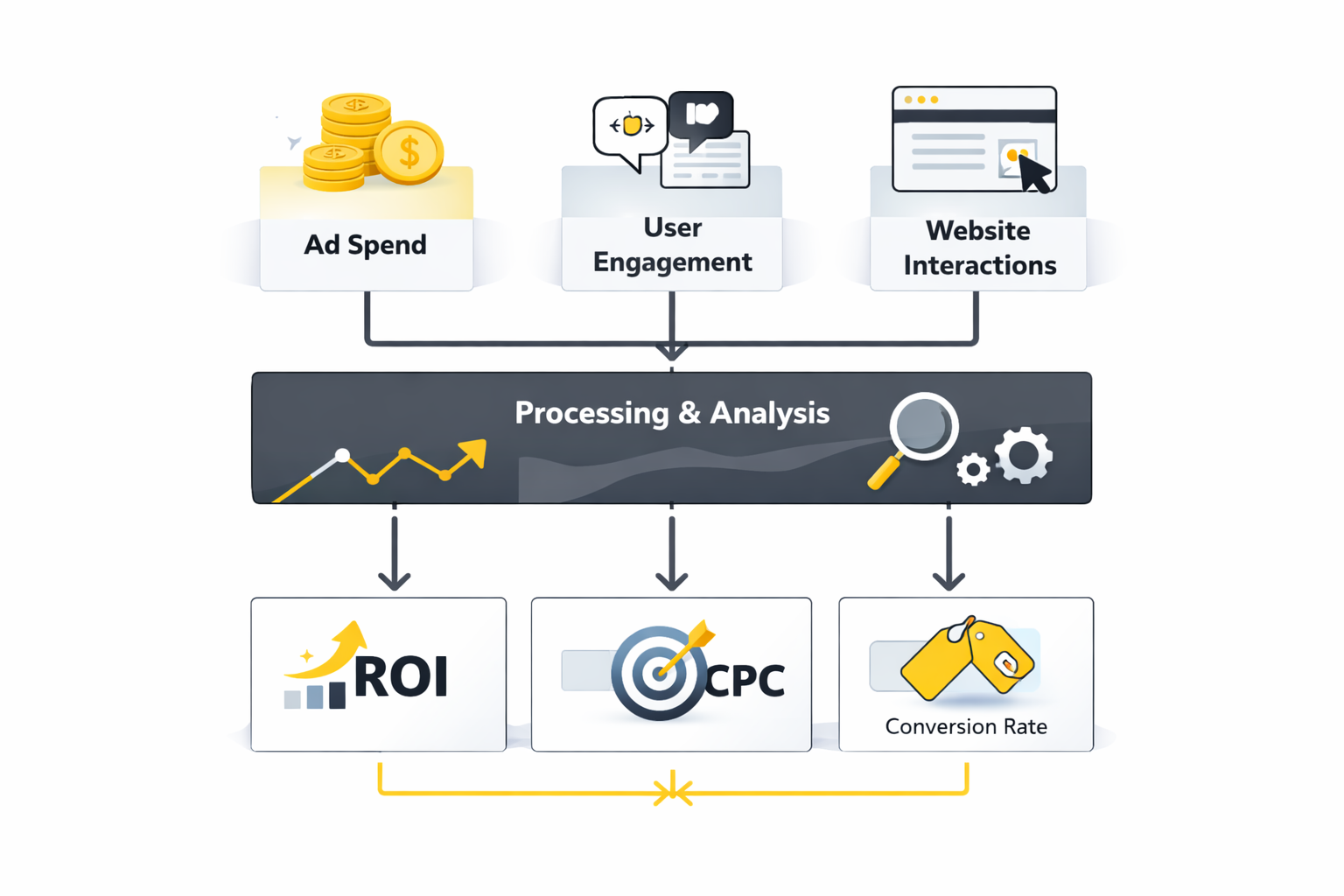
If you want Facebook advertising to perform like a real acquisition channel instead of an expensive guessing game, you have to get serious about statistics and data. This is where a lot of advertisers fall apart. They stare at reach, clicks, and random spikes in activity, feel good for a day, and then wonder why revenue never follows. Professional implementation starts when you stop asking whether the ads are “getting attention” and start asking whether the numbers prove the campaign is moving the business forward.
The scale of the platform alone is why this matters. Meta reported $200.97 billion in revenue for full-year 2025, and its filed 2025 annual report shows just how central advertising still is to the business. In the same reporting cycle, Meta said ad impressions increased 12% for the full year while average price per ad increased 9%. Those numbers matter because they tell you two things at once: the platform still has massive delivery capacity, and competition for quality inventory is not getting cheaper just because someone wants it to.
That is why professional Facebook advertising requires more than clever copy and fresh creative. You need a measurement discipline that tells you whether rising costs are being offset by stronger conversion rates, better average order values, healthier lead quality, or faster sales velocity. If you are not measuring those things, then you are not really managing the campaign. You are just watching it happen.
What Data Matters Most in Facebook Advertising
The first thing to understand is that not all data deserves equal respect. Some numbers are directional and useful for diagnosis, while others tell you whether the campaign is actually worth keeping alive. In Facebook advertising, the metrics that deserve the most attention are the ones tied directly to business outcomes: qualified leads, purchases, booked calls, cost per acquisition, conversion rate, revenue per visitor, and return on ad spend when revenue tracking is reliable.
That does not mean supporting metrics are useless. Click-through rate can tell you whether the message is creating curiosity. Landing page view volume can reveal whether page load issues are destroying momentum after the click. Cost per click can help you spot creative fatigue or audience mismatch. But none of those numbers should be allowed to pretend they are the final score. A campaign with an exciting click-through rate and a weak conversion rate is still weak. Facebook advertising becomes far more manageable when you treat early-stage metrics as clues and bottom-line metrics as verdicts.
This is also where maturity shows up. Less experienced advertisers tend to celebrate movement. Better advertisers look for profitable movement. The difference sounds small, but it changes every decision that follows.
Platform Scale Changes How You Read the Numbers
Facebook advertising exists inside a platform of enormous size, and that scale shapes the data you see. Meta said Family daily active people reached 3.58 billion on average for December 2025. That is a staggering amount of user activity, but it does not mean your campaign automatically deserves cheap distribution or reliable performance. It means the opportunity is massive and the auction is active.
When ad impressions rise at the same time average ad prices rise, as Meta disclosed for 2025 in both its earnings release and SEC filing, the takeaway is not simply that ads are more expensive. The deeper lesson is that advertisers are still finding enough value to keep competing hard inside the system. In practical terms, Facebook advertising rewards operators who improve conversion quality, creative relevance, and signal integrity faster than the auction becomes more demanding.
That is why you should never read your data in a vacuum. A higher cost per click is not automatically a crisis if lead quality rose and close rate improved. A lower CPM is not automatically a win if the audience became colder and the conversion rate collapsed. Professional implementation means reading the numbers as a chain, not as isolated trophies.
Measurement Infrastructure Decides Whether the Data Is Trustworthy
Here is the part many people want to skip because it feels technical. If the measurement infrastructure is weak, the rest of the data becomes less trustworthy. Meta’s own documentation on the Meta Pixel explains that it helps you measure actions, build audiences, and optimize campaigns. Its guidance for the Conversions API makes the next step clear by emphasizing server-side event sharing to improve event reliability.
That is not a side note. It is the backbone of serious Facebook advertising. If your browser-side tracking misses conversions, duplicates events, or loses match quality, the platform gets weaker feedback and your optimization gets worse. You can have a fantastic offer and still make bad decisions if the data feeding the system is incomplete. This is one of the biggest reasons professional advertisers obsess over implementation details that casual advertisers dismiss as boring.
It is also why your reporting should not end inside Ads Manager. Facebook advertising works better when its data is checked against what your funnel, checkout, CRM, and email systems are reporting. If the ad platform says leads are cheap but the CRM shows that most of them go nowhere, the CRM is telling you a truth the ad dashboard cannot see by itself.
How to Read Performance Like an Operator
A professional does not react to every daily swing as if the campaign has suddenly died. Facebook advertising is an auction-based environment, which means performance naturally moves with audience saturation, day-of-week behavior, creative freshness, competitor pressure, and the amount of data the system has collected so far. That is why good operators read data in context. They look for patterns across a meaningful time window, then investigate where the friction is actually happening.
For example, if impressions are healthy but click-through rate drops, the creative or message may be losing relevance. If click-through rate holds but landing page views fall off, the issue may be page speed or site friction. If traffic is steady and conversions weaken, the problem may sit with the offer, the sales process, or lead quality rather than the ad itself. That kind of reasoning is what separates management from panic.
Meta’s structure for campaign, ad set, and ad levels in Ads Manager helps with this because it gives you a practical way to isolate problems. Campaign-level data helps you judge the objective and broad efficiency. Ad set data helps you compare audiences, placements, and delivery choices. Ad-level data shows whether the creative is doing its job. When you read those layers together, Facebook advertising becomes a lot less mysterious.
Why Better Data Makes Meta’s AI More Useful
Meta has made it very clear that automation and AI are becoming even more important inside Facebook advertising. During its Q2 2025 earnings call, the company said its AI recommendation work was driving roughly 3% more conversions on Facebook Feed and 5% more on Instagram. Meta’s engineering team also described how Andromeda improved personalized ad retrieval to help surface better ads faster.
The important point is not that AI replaces strategy. It does not. The important point is that better data gives the system a better chance to do useful work on your behalf. When Facebook advertising receives clear signals from purchases, qualified leads, or meaningful downstream actions, the algorithm has something real to learn from. When the signal is noisy, delayed, or incomplete, the machine becomes less impressive very quickly.
This is why data quality is leverage. It allows automation to support your strategy instead of wandering away from it. The advertisers who win with Facebook advertising in an AI-heavy environment are usually the ones who feed the platform clean inputs, not the ones who scream the loudest about the algorithm.
Turning Data Into Better Decisions
Statistics only matter when they lead to a better decision. That means every reporting cycle should answer a few brutally practical questions. Is the campaign producing the right kind of action? Is the cost of that action sustainable? Is the quality of that action improving or deteriorating? And if performance changed, did the change begin in the ad, the audience, the landing page, or the sales process?
That is where Facebook advertising starts to feel less like media buying and more like operating a growth system. Sometimes the right move is refreshing the creative. Sometimes it is tightening the offer. Sometimes it is sending traffic into a more focused funnel built with ClickFunnels or systeme.io so the conversion path stops leaking. Sometimes the ad is not the main problem at all, and the smartest thing you can do is improve lead nurturing with Brevo.
That is the real value of statistics and data in Facebook advertising. They do not exist to make reports look impressive. They exist to help you make the next right move with confidence. In the next part, we will step out from pure measurement and look at the wider ecosystem around Facebook advertising, because the campaigns that scale best are almost never operating alone.
Measurement and Analytics in Facebook Advertising
Once Facebook advertising is live and the technical setup is stable, the game changes. At that point, success is no longer about getting campaigns launched. It is about reading performance correctly, spotting what is actually holding results back, and scaling only when the data says the business can handle more volume without turning profitable growth into expensive noise.
This is where many advertisers get trapped. They see a few encouraging numbers, assume the campaign has cracked the code, and push budget too fast. Then performance slips, cost per acquisition rises, and they blame the platform instead of the decision-making. Measurement and analytics exist to stop that from happening. They help you understand whether Facebook advertising is producing durable results or just giving you a brief rush of activity.
The platform is big enough to tempt people into reckless optimism. Meta’s latest full-year reporting showed ad impressions up 12% and average price per ad up 9% in 2025, which tells you the auction is active and competitive at the same time. That means better analytics are not optional. They are how you protect margin when more advertisers are fighting for attention.
Analyze the Full Funnel, Not Just the Ad Click
One of the smartest shifts you can make in Facebook advertising is to stop judging the campaign at the moment of the click. A click is just permission to continue the conversation. It is not proof that the ad worked in any meaningful business sense. What matters is what happens next: did the visitor stay, opt in, book, buy, respond, or disappear?
That is why strong analytics follow the full funnel. The ad creates curiosity, the page carries the argument, the form captures intent, the follow-up process builds trust, and the sale turns attention into revenue. If you only look at front-end numbers, you can easily reward the wrong creative or the wrong audience. A flashy ad may drive cheap traffic that never converts, while a calmer ad may bring fewer clicks but far better buyers.
This is also where Facebook advertising becomes much easier to optimize. When you can see where prospects drop off, you stop making random guesses. You know whether the friction is in the message, the page, the form, the nurture sequence, or the sales process itself.
Know the Difference Between Leading and Lagging Metrics
Good analysts treat metrics in layers. Leading metrics tell you whether the campaign is creating momentum. Lagging metrics tell you whether that momentum is translating into something the business can keep. Facebook advertising becomes far more manageable when you respect both without confusing them.
Leading metrics include things like thumb-stop rate, outbound click-through rate, landing page views, and early engagement signals. These numbers are useful because they tell you whether people care enough to pay attention and take the first step. But they are still early signs, not final proof. Lagging metrics such as qualified lead rate, purchase conversion rate, cost per acquisition, average order value, and pipeline contribution carry more business weight because they tell you what the campaign actually produced.
If you treat leading metrics like a victory lap, you will scale bad traffic. If you ignore them completely, you will miss early warnings that the campaign is going stale. Facebook advertising rewards the operator who can use both layers together without letting either one distort reality.
Use Reporting Windows With Context
Another major mistake in Facebook advertising is overreacting to short reporting windows. A single day can look amazing or terrible for reasons that have very little to do with the true health of the campaign. Weekday behavior changes, auctions fluctuate, creative fatigue shows up unevenly, and some conversions take time to appear. That is why serious analysis uses context instead of emotional snapshots.
Meta’s own measurement environment reflects that complexity. Its business tools are built to help advertisers compare delivery, conversion behavior, and attribution patterns across different time windows inside Ads Manager and related reporting workflows. The point is not to stare at more dashboards. The point is to judge performance over a window large enough to reveal a pattern but small enough to let you act quickly when something real changes.
In practice, that means daily checks for operational problems, weekly reviews for pattern recognition, and longer trend analysis for scaling decisions. Facebook advertising gets expensive when you confuse normal variance with structural decline. It also gets expensive when you ignore a real decline because one lucky day temporarily covered it up.
Watch for Creative Fatigue and Signal Decay
Campaigns rarely collapse without warning. In Facebook advertising, fatigue often shows up first as subtle decay rather than sudden disaster. Click-through rate softens, frequency rises, cost per result starts creeping up, and conversion efficiency weakens even when the audience size still looks healthy. Those signals matter because they tell you the message is losing its force.
Signal decay can be just as dangerous. Meta’s Conversions API guidance makes the case for a direct connection between marketing data and Meta’s optimization systems because stronger event sharing helps the platform measure outcomes and improve delivery. If the feedback loop weakens, the system has a harder time finding the right people. That means performance issues are not always creative issues. Sometimes the ad looks guilty when the real problem is degraded measurement quality.
That is why analytics should always ask two questions at the same time. Has the message lost relevance, or has the quality of the optimization signal slipped? Facebook advertising becomes much easier to fix when you separate those two problems instead of treating every downturn like a copywriting emergency.
Scale With Discipline, Not Adrenaline
Scaling sounds exciting, but this is where discipline matters most. The right time to scale Facebook advertising is not when the dashboard looks fun for forty-eight hours. It is when the campaign has enough data, enough consistency, and enough downstream proof that more spend is likely to create more profit rather than just more exposure.
Meta’s ad system keeps getting more sophisticated. In the company’s Q2 2025 earnings call, leadership said newer recommendation systems were already driving roughly 3% more conversions on Facebook and 5% more on Instagram. That makes scaling even more tempting because the system can help good campaigns travel farther. But automation does not remove the need for judgment. It just makes judgment more valuable.
The best scaling decisions usually come from clean evidence. Conversion rate holds. Lead quality remains strong. Sales follow-up keeps pace. Customer support does not break. Cash flow can support the spend. When those conditions are in place, Facebook advertising has room to grow. When they are not, scaling too early can turn a promising campaign into a painful lesson.
Turn Insights Into Operational Improvements
The biggest payoff from analytics is not the report itself. It is the operational improvement that follows. If the data shows high-intent users are dropping out on the landing page, fix the page. If leads are coming in but sales conversations are weak, improve the follow-up. If the offer is attracting curiosity but not commitment, tighten the promise or the qualification step. Facebook advertising becomes dramatically more powerful when insights lead to concrete changes outside the ad account.
This is one reason many advertisers connect campaign data to dedicated funnel, CRM, and automation tools. A cleaner conversion path built in ClickFunnels or systeme.io can make the post-click experience far easier to diagnose. Better lifecycle messaging through Brevo can reveal whether the campaign is attracting the right prospects but losing them later in the buying journey. That is not a side issue. It is part of what modern analytics is supposed to uncover.
In other words, the ad account should not be treated like an isolated island. Facebook advertising performs best when measurement informs the whole system around it. The more connected your reporting is to the actual customer journey, the less likely you are to optimize for the wrong thing.
Analytics Is What Prepares You for the Bigger Ecosystem
At some point, every serious advertiser realizes the same thing: Facebook advertising is powerful, but it is not meant to do every job alone. It can create demand, capture intent, and accelerate conversions, but the best results usually come when it is supported by email, content, landing pages, sales systems, and stronger customer data. Analytics is what shows you where those supporting pieces matter most.
That is why this part of the process is so important. Measurement and analytics are not there to make you feel more sophisticated. They are there to reveal where leverage lives. Once you can see that clearly, Facebook advertising stops feeling like a mysterious platform and starts behaving like a growth engine you can actually manage.
In the next part, we will look at that broader ecosystem directly. That is where Facebook advertising connects with the surrounding tools, channels, and decision points that turn campaigns from isolated wins into a long-term system for growth.
The Facebook Advertising Ecosystem and Next Steps

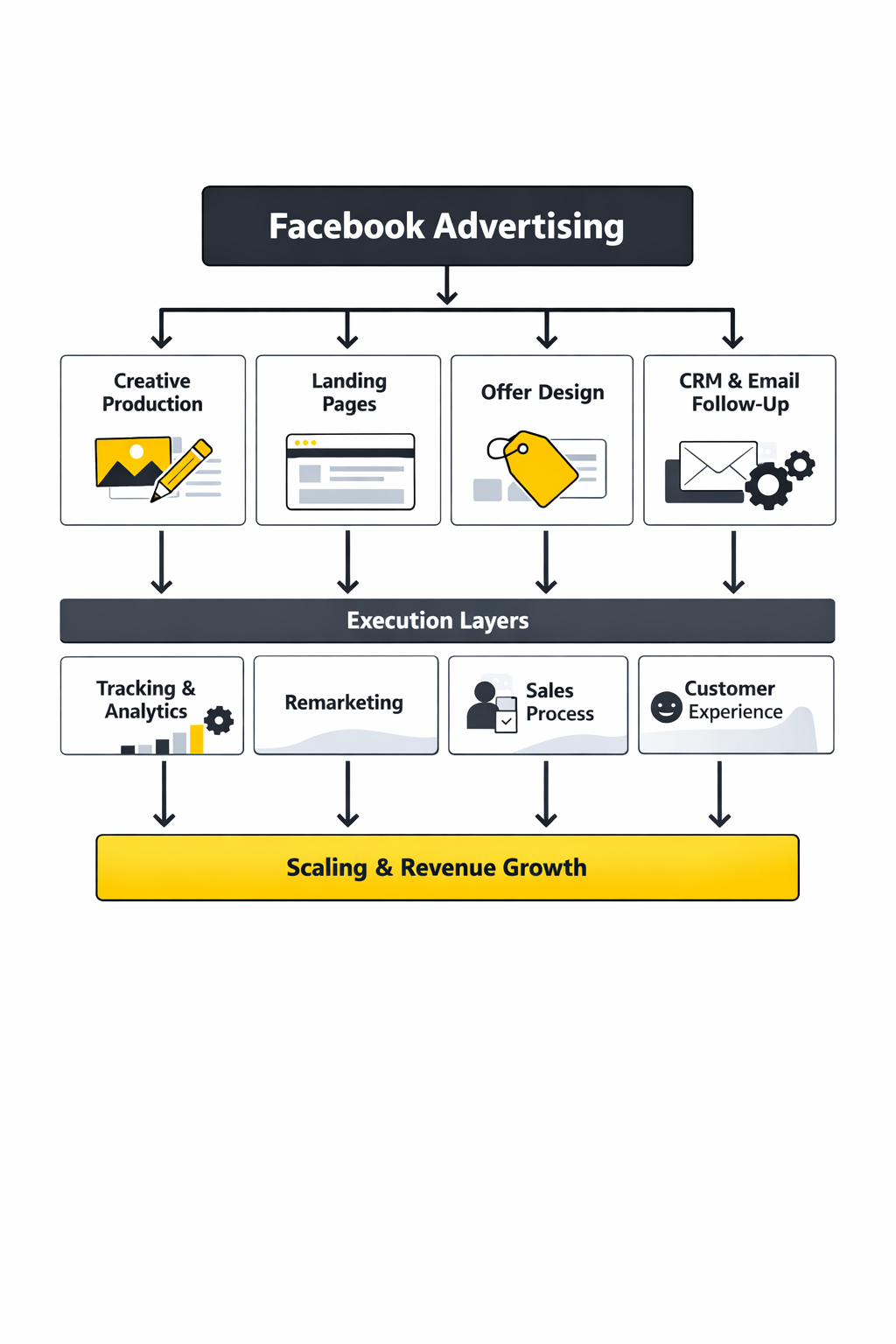
By the time you get to this stage, one thing should be obvious: Facebook advertising is powerful, but it does not live alone. It performs inside a broader ecosystem made up of creative production, landing pages, CRM workflows, email follow-up, offer design, measurement infrastructure, and the business model behind the campaign. When those parts work together, Facebook advertising can become one of the strongest growth engines a company has. When they are disconnected, even strong ad performance can feel strangely disappointing because the rest of the system is quietly leaking value.
The scale of Meta’s ad machine is one reason this bigger-picture thinking matters so much. Meta reported $200.97 billion in revenue in 2025, while the company’s filed annual report and investor materials show full-year ad impressions up 12% and average price per ad up 9%. That combination tells you the platform still offers huge opportunity, but it also tells you something else: the ecosystem around your ads has to be sharp enough to justify competing in that auction.
That is why the final step in mastering Facebook advertising is not learning one more button inside Ads Manager. It is learning how the channel connects to everything that happens before and after the click. Once you understand that, you stop treating Facebook advertising like a single tactic and start using it like a system that can drive awareness, capture demand, recover lost prospects, and scale revenue with far more consistency.
How the Ecosystem Around Facebook Advertising Connects
The ecosystem starts with attention, but it only pays off when attention is routed somewhere useful. A strong ad opens the door. A focused landing page continues the conversation. A clear offer gives the prospect a reason to act. Then email, sales follow-up, remarketing, and customer experience determine whether that action turns into actual value. Facebook advertising is often blamed for failures that really belong to weak pages, clumsy qualification, slow follow-up, or offers that were never compelling enough to begin with.
This is one reason many advertisers pair their campaigns with dedicated funnel and automation tools. A cleaner conversion experience in ClickFunnels or systeme.io can reduce friction between the ad click and the conversion. Better lead nurturing through Brevo can keep high-intent prospects from going cold too early. None of that replaces Facebook advertising. It makes Facebook advertising more valuable because the rest of the journey finally supports the traffic you paid for.
The same principle applies to reporting. Meta’s own guidance on the Conversions API and its six simplified campaign objectives points toward a world where signal quality and business alignment matter even more than they used to. That means the ecosystem is not just operational. It is strategic. Every part of it influences how well Facebook advertising can learn, optimize, and scale.
Why This Channel Still Deserves Serious Attention
There is a reason advertisers keep returning to Facebook advertising even as new channels appear every year. It still combines reach, intent shaping, retargeting depth, creative flexibility, and machine learning at a level most channels struggle to match in one place. Meta’s latest reporting put Family daily active people at 3.58 billion on average for December 2025, which is hard to ignore if your business needs scale.
The platform is also becoming more capable on the delivery side. In Meta’s Q2 2025 earnings call, leadership said newer recommendation systems were driving roughly 3% more ad conversions on Facebook and 5% more on Instagram. That does not mean results are effortless. It means the upside for well-run campaigns is still very real, especially when the advertiser feeds the system better data, better creative, and a stronger post-click journey.
So yes, Facebook advertising still deserves serious attention. But it deserves serious execution too. The platform is sophisticated enough to reward strong operators and ruthless enough to punish lazy ones. That is exactly why the businesses that learn it properly keep getting ahead while others bounce between tactics and wonder why nothing sticks.
FAQ for This Complete Guide
Is Facebook advertising still worth it in 2026?
Yes, but only when it is treated like a real system instead of a quick fix. Meta’s own results show the platform is still enormous, with 3.58 billion Family daily active people in December 2025 and rising ad demand reflected in higher impressions and higher average ad prices. That tells you businesses still see results there. What has changed is that weak offers, poor tracking, and generic creative get exposed faster than they used to.
How much should a beginner spend on Facebook advertising?
There is no magic number that works for everyone because the right budget depends on your margin, conversion rate, and sales cycle. The smarter approach is to spend enough to generate meaningful learning without risking money you cannot afford to lose. In practical terms, Facebook advertising works better when the starting budget is tied to the cost of getting statistically useful feedback, not to a random round number that simply feels comfortable.
What is the best campaign objective for Facebook advertising?
The best objective is the one that matches the business result you actually want. Meta’s objective system is organized around awareness, traffic, engagement, leads, app promotion, and sales, and choosing the wrong one can distort both delivery and reporting. If you want purchases, optimize for sales. If you want qualified leads, use the objective that supports that path. Facebook advertising gets clearer when the optimization goal and the business goal are the same thing.
Do I need the Meta Pixel and Conversions API together?
In most serious setups, yes. Meta’s business documentation recommends using the Conversions API to strengthen event sharing, while the Meta Pixel remains important for browser-based tracking, audience building, and optimization. Facebook advertising becomes more reliable when both are implemented well and deduplicated properly, because the system receives better feedback about what users actually did.
Why are my Facebook ads getting clicks but not conversions?
This usually means the ad is doing its job but the rest of the journey is not. The offer may be weak, the landing page may be slow or confusing, the form may ask for too much too early, or the follow-up process may be failing after the lead comes in. Facebook advertising often gets blamed for problems that actually happen after the click. That is why full-funnel analysis matters so much.
How long does Facebook advertising need before I judge performance?
You should not judge it after a few emotional hours or one lucky day. Because Facebook advertising runs inside a live auction, daily numbers naturally move around. It is better to watch for early operational issues quickly, then judge performance over a longer window that shows pattern rather than panic. The exact window depends on your budget and conversion volume, but the principle stays the same: do not confuse noise with evidence.
Should I use broad targeting or very specific audiences?
That depends on the strength of your signal, the quality of your creative, and how much conversion data the account has. Meta supports custom audiences and lookalike audiences, which can be extremely effective when they are built from strong source data. Broad targeting can also work well when the offer is clear and the system has enough feedback to learn. Facebook advertising is rarely about picking one ideology forever. It is about choosing the audience structure that fits the current stage of the account.
What causes creative fatigue in Facebook advertising?
Creative fatigue happens when the audience has seen the message too many times or stopped responding to it with the same intensity. You often notice it when click-through rate weakens, cost per result rises, and frequency climbs without a matching lift in conversions. Facebook advertising needs creative variety because even strong messages lose force when they are repeated too often without a fresh angle, stronger proof, or a sharper offer.
Can AI improve Facebook advertising results?
Yes, but only when the campaign gives the system something useful to work with. Meta said in its Q2 2025 earnings call that newer recommendation systems were already driving roughly 3% more ad conversions on Facebook and 5% more on Instagram. That is real leverage, but it does not rescue bad strategy. Facebook advertising benefits from AI most when the offer is strong, the signal path is clean, and the creative clearly communicates value.
What metrics matter most in Facebook advertising?
The metrics that matter most are the ones tied to business outcomes. Purchases, qualified leads, booked calls, cost per acquisition, conversion rate, revenue per visitor, and return on ad spend deserve far more respect than surface-level vanity metrics. Supporting numbers like CTR and CPC still matter, but only as clues. Facebook advertising becomes easier to manage when you treat outcome metrics as the verdict and everything else as diagnostic evidence.
Should I send Facebook ad traffic to my website or to a funnel?
You should send it to whichever destination creates the clearest path to the next action. For some brands, that is a strong product page on the main site. For others, a more focused funnel in ClickFunnels or systeme.io performs better because it removes distractions and keeps the message tight. Facebook advertising does not reward complexity for its own sake. It rewards clarity.
What is the biggest mistake people make with Facebook advertising?
The biggest mistake is treating it like an ad problem when it is really a systems problem. They obsess over targeting or headlines while ignoring the offer, the page, the follow-up, the CRM, or the data quality feeding the algorithm. Facebook advertising can absolutely drive growth, but it works best when it is part of a complete acquisition system rather than a lonely tactic expected to save the whole business by itself.
Work With Professionals
If this guide did its job, you can probably feel the truth by now: Facebook advertising is not hard because the buttons are confusing. It is hard because real performance comes from getting many moving parts to work together at the same time. Strategy, creative, tracking, offer design, funnel flow, CRM discipline, and analytics all have to line up. That is exactly why skilled operators are valuable and why businesses keep paying for people who can make these systems work.
The demand is not imaginary. Meta’s ad engine continues to expand, automation continues to improve, and companies still need marketers who can turn all of that capability into profitable outcomes. If you can build, manage, optimize, and explain Facebook advertising in a way that produces real business movement, you are not just learning a platform. You are building a professional skill set companies will continue to need.
That is also why working with professionals can save enormous time and money. Whether you are hiring help or becoming the person who provides it, the upside comes from experience, better judgment, and cleaner execution. The businesses that win with Facebook advertising usually are not the ones guessing harder. They are the ones working with people who understand how the whole ecosystem fits together.
Explore 10K+ Remote Marketing Contracts on MarkeWork.com
Most marketers spend too much time chasing clients, competing on crowded platforms, and losing a percentage of every project to middlemen.
MarkeWork gives you a better way. Browse thousands of remote marketing contracts and connect directly with companies desperate to hire skilled marketers like you without platform commissions and without unnecessary gatekeepers.
If you’re serious about finding better opportunities and keeping 100% of what you earn, you can explore available contracts and create your profile for free at MarkeWork.com.
 Filip Konecny Enterprises