

Affiliate Marketing Programs: How to Choose, Structure, and Launch Them the Right Way
Affiliate marketing programs look simple from the outside. A brand gives someone a special link, the partner promotes a product, and a commission gets paid when a sale happens. In practice, the programs that actually grow are built on clear economics, trustworthy tracking, strong partner fit, and a customer journey that makes conversion feel natural instead of forced.
That is why this topic matters so much right now. The Performance Marketing Association reported that U.S. affiliate marketing spending reached $13.62 billion in 2024, while Shopify’s roundup of current industry data shows the broader channel continuing to expand globally. Growth like that attracts attention, but it also creates noise, copycat offers, and weak programs that never turn into a dependable revenue engine.
If you want affiliate marketing programs to work, you need more than a signup page and a commission promise. You need the right structure, the right partners, the right systems, and a practical way to manage quality without making the program so rigid that nobody wants to join. This first part lays that foundation, so the rest of the article can go deeper without losing the big picture.
Article Outline
- Why Affiliate Marketing Programs Matter
- Framework Overview
- Core Components of Affiliate Marketing Programs
- Professional Implementation of Affiliate Marketing Programs
- Measurement and Optimization
- Ecosystem and Long-Term Growth
Why Affiliate Marketing Programs Matter

Well-run affiliate marketing programs give brands a way to grow through recommendation instead of interruption. That difference is important because buyers are often far more willing to act on advice from a creator, reviewer, publisher, educator, or niche expert they already trust than on a cold ad that appears without context. In other words, the channel works best when it feels like guidance, not pressure.
It also matters because the economics are attractive when the program is designed properly. Many brands like affiliate because it is tied to measurable outcomes, and platforms such as impact.com, CJ, and Awin have built their value around discovery, tracking, optimization, and payments that make performance-based partnerships easier to manage at scale. That does not mean the channel is risk free, but it does mean brands can build something far more accountable than broad awareness campaigns that are difficult to connect to revenue.
The publisher side matters just as much. For creators and media businesses, affiliate marketing programs create a path to monetize genuine expertise without turning every recommendation into a sponsorship pitch. The best programs reward relevance, consistency, and buyer trust, which is exactly why the FTC keeps emphasizing clear disclosure of material connections: once trust breaks, the entire model starts to collapse.
Framework Overview
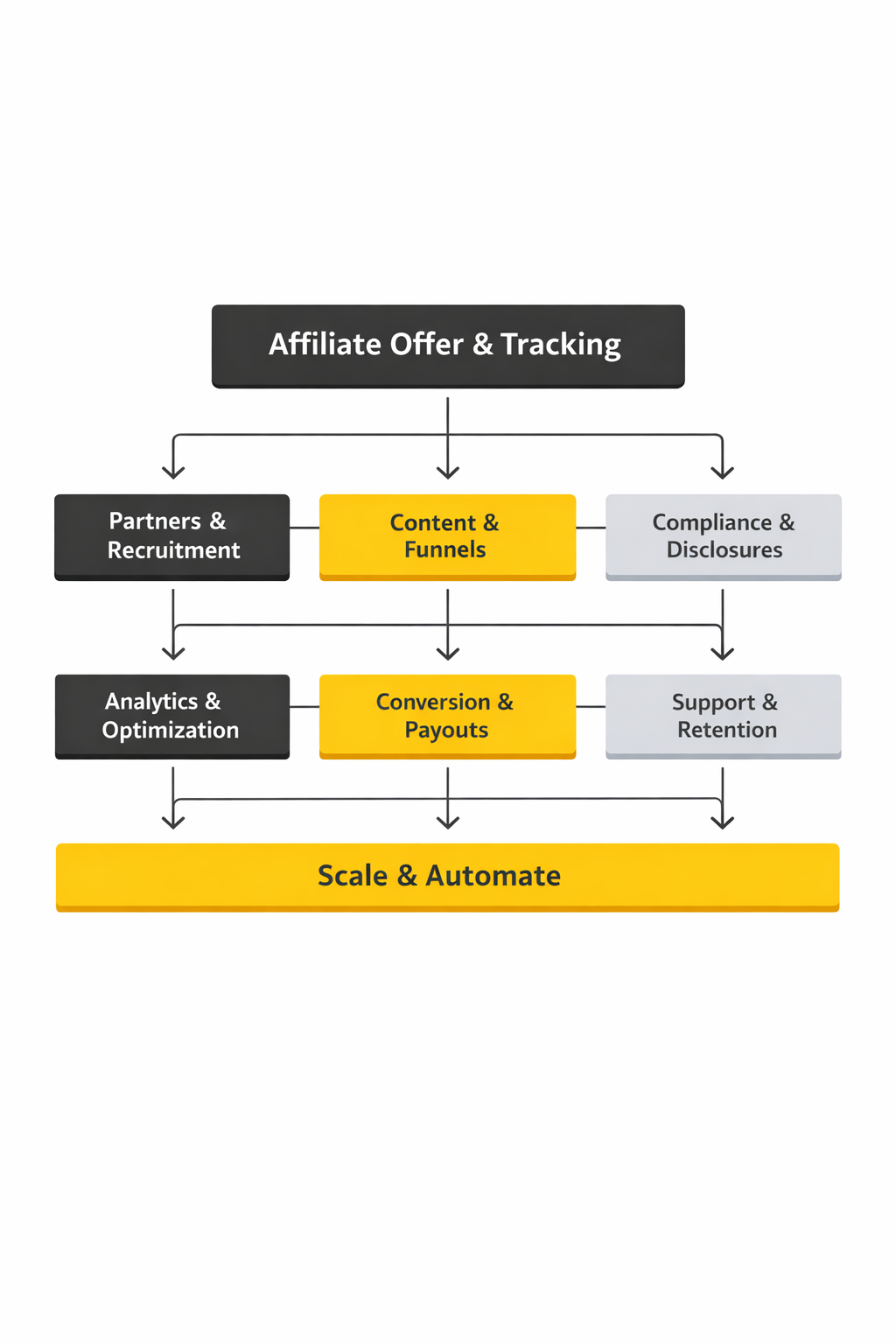
The easiest way to understand affiliate marketing programs is to see them as a framework with five moving parts: the offer, the partner, the tracking system, the conversion path, and the payout model. Most weak programs focus on only one of those pieces, usually the commission rate, and then wonder why quality partners do not stay engaged. Strong programs work because all five pieces support one another.
The offer is the first filter. Even an aggressive commission cannot save a weak product, a confusing sales message, or a buying experience that feels clumsy on mobile. The partner is the second filter, because traffic only becomes valuable when it comes from someone whose audience already has a believable reason to care.
The tracking system is where professionalism starts to show. Shopify explains that its affiliate program runs on Impact for third-party tracking, reporting, and monthly payments, which reflects a bigger truth across the industry: serious affiliate marketing programs rely on reliable attribution and clean reporting, not guesswork. Once those systems are in place, the payout model becomes a strategic lever rather than a random percentage chosen because it “sounds competitive.”
That framework is also useful because it prevents expensive mistakes. If a program is attracting signups but not producing sales, the problem may not be recruitment at all. It could be a poor landing page, a slow checkout, weak audience alignment, or unclear terms that make top partners avoid the offer before they ever test it.
Core Components of Affiliate Marketing Programs
The first core component is partner fit. Not every affiliate is equally valuable, and chasing volume usually creates clutter before it creates growth. A small publisher with a tight niche and credible product education can outperform a much larger account that sends broad, indifferent traffic with almost no buyer intent.
The second core component is tracking integrity. Brands need to know which clicks, leads, trials, and sales actually came from affiliate activity, while partners need confidence that valid conversions will be credited fairly. That is one reason tools like Shopify Collabs and its built-in creator payment workflows matter so much for smaller merchants: they reduce operational friction that would otherwise make the program too messy to sustain.
The third core component is commission design. Flat fees, recurring revenue shares, one-time bounties, tiered incentives, and coupon-based structures can all work, but they do not solve the same problem. Recurring models often make more sense for software or memberships, while one-time payouts can be cleaner for physical products with tighter margins and return risk.
The fourth core component is program governance. Terms need to be clear about promotion methods, brand usage, bidding restrictions, disclosure expectations, refund handling, and payment timing. When those details are vague, good partners hesitate because they do not want to build content around an offer that could become unstable later.
Professional Implementation
Professional implementation starts before recruitment. A brand should know what kind of partner it wants, what action deserves a commission, what margin is available after fulfillment and support costs, and what kind of customer journey converts best. Without those answers, affiliate marketing programs drift into a cycle of random outreach, inconsistent approvals, and disappointing performance reviews.
It also helps to build the operating stack early. A polished funnel from tools such as ClickFunnels or Systeme.io, a dependable email follow-up layer through Brevo or Moosend, and content distribution support through tools like Buffer or Flick can make the difference between traffic that disappears and traffic that compounds. Partners notice quickly when a merchant has thought through the post-click experience and when it clearly has not.
There is also a strong case for making applications and communication easier than most brands do. A simple intake process built with something like Fillout, transparent scheduling through Cal.com, and clean partner tracking links managed with Dub reduce friction at exactly the points where promising affiliates often lose momentum. Professional implementation is rarely about looking fancy; it is about removing avoidable reasons for a good partner to walk away.
Finally, implementation should respect the relationship between trust and conversion. If your affiliates need better landing pages, live chat support, or faster answers to pre-sale objections, tools such as Chatbase can strengthen the buying path without forcing partners to carry the whole burden themselves. The brands that win with affiliate marketing programs are usually the ones that treat affiliates like serious growth partners, not like disposable traffic sources.
Measurement and Optimization
Most affiliate marketing programs do not fail because the commission is too low. They fail because the brand cannot clearly see which partners are creating real demand, which ones are simply collecting credit at the end of the journey, and where the customer path starts to leak revenue. Once that happens, smart affiliates lose confidence, weak affiliates keep taking up oxygen, and the program starts to look busy without actually becoming profitable.
That is why measurement needs to go further than a basic dashboard. impact.com’s 2025 research shows that 94% of brands are already experimenting with or planning to adopt alternative attribution models, and Rakuten Advertising’s 2025 travel intelligence report makes the same point in plain language when it says last-click alone will not explain how people actually research and book. That matters because affiliate marketing programs often involve creators, review sites, media partners, coupon partners, loyalty platforms, and browser-based tools that influence different parts of the journey in very different ways.
What to Measure Beyond Last-Click
The first thing to measure is contribution quality. A click is not the same as a useful visit, and a sale is not always incremental growth. You want to know which affiliates bring in new customers, which ones support conversion in the middle of the journey, which ones mostly capture intent that already existed, and which ones are generating refund-heavy orders that look good for a week and weak six weeks later.
The second thing to measure is partner role. The same 2025 impact.com report explains that leading brands usually work with three to four partner types instead of leaning on just one. That is a useful reminder because affiliate marketing programs become fragile when one category dominates the account and everyone else is treated as an afterthought.
The third thing to measure is partner efficiency over time. A partner that converts well in one month but cannot repeat performance, cannot follow brand rules, or only wins by closing the very last click is not nearly as valuable as a partner who steadily introduces qualified buyers and keeps doing it quarter after quarter. This is where clean link routing from Dub, structured attribution notes inside a CRM like Copper, and compliance workflows supported by Comp AI can make the back end of affiliate marketing programs feel far more dependable.
A Real Story About Optimization Under Pressure
There is a reason measurement becomes emotional when real money is on the line. In the TransferWise case study published by impact.com, the company was operating in a financial services market that was both highly competitive and heavily regulated, which meant growth pressure was intense and mistakes were expensive. They were not in a position where they could casually guess which partners were useful and hope things sorted themselves out later.
The backstory makes the tension clearer. TransferWise, now Wise, had already enjoyed rapid early growth, but the company wanted to expand its reach and build a global affiliate program under the leadership of Inez Miedema. That sounds exciting until you realize what it actually means in practice: more partners, more geographies, more internal scrutiny, and far more pressure to prove that every decision deserves budget.
Then they hit the wall that trips up a lot of ambitious affiliate marketing programs. The team needed deep and accurate insights into partner performance, flexibility to support rapid expansion, and reporting strong enough to keep stakeholders informed without confusion. In a regulated category, weak tracking is not just annoying; it turns every budget conversation into a fight you are not fully prepared to win.
The epiphany in the story was not some magical traffic hack. It was the realization that the program had to be built on stronger partner relationships, granular tracking, and reporting that made the value of the channel visible to the rest of the business. That is such an important lesson because many brands still try to optimize affiliate marketing programs from the surface, while the real leverage is sitting inside tracking design and partner management.
The journey that followed was methodical. The case study explains that TransferWise focused on building direct relationships with suitable media partners, used the platform’s payment capabilities to compensate performance on time, and relied on real-time data to track results by campaign, partner, and location. They also pre-selected reports and set them to go out automatically, which meant internal stakeholders were not left waiting for scattered updates every time someone wanted proof.
Of course, even with the right infrastructure, there was still the final conflict that every scaling program faces. Better visibility forces you to confront what is really happening, and that means reallocating budget, defending those choices, and accepting that some partners deserve more support while others do not. Optimization feels clean in theory, but in reality it often means making decisions that expose weak assumptions and push the team to be more disciplined.
The dream outcome is why the story still matters. The case study says the affiliate channel achieved 15% to 20% month-over-month sales growth, and it credits strong partnerships, granular analytics, and transparent reporting as central pieces of that progress. That is the kind of result that changes how leadership sees affiliate marketing programs, because the channel stops looking like an experiment and starts looking like a serious growth asset.

The Optimization Rhythm That Keeps Improving Results
Once a program is live, optimization should happen on a rhythm instead of in random bursts of panic. Weekly reviews are useful for traffic quality, conversion problems, and broken links. Monthly reviews are better for partner tiers, commission adjustments, and landing-page issues, while quarterly reviews are where affiliate marketing programs should be assessed for incrementality, partner mix, and whether the current model still matches the company’s goals.
This is also where funnel quality becomes impossible to ignore. If affiliates are doing their job but the post-click experience is weak, the merchant is the bottleneck. A stronger application or lead capture flow built with Fillout, smarter page journeys in ClickFunnels, or a streamlined all-in-one setup in Systeme.io can often improve the economics of affiliate marketing programs faster than simply recruiting more partners.
Good optimization is not about squeezing harder every month. It is about seeing the truth faster, rewarding the partners who genuinely move the business forward, and fixing the parts of the customer journey that are quietly wasting the demand your affiliates already worked hard to create.
Ecosystem and Long-Term Growth
The strongest affiliate marketing programs do not operate like isolated campaigns. They behave more like ecosystems, where different partner types support different moments in the buying journey and make the entire program more resilient. That matters because a channel built on only one kind of traffic can look strong for a season and then break the moment platform rules change, search behavior shifts, or a top partner leaves.
Long-term growth starts when a brand understands that not every affiliate should be recruited for the same reason. Some partners are brilliant at discovery. Others are better at education, comparison, retargeting, or closing the sale once intent already exists. Affiliate marketing programs get much stronger when those roles are recognized instead of flattened into a single leaderboard.
Building a Balanced Partner Ecosystem
A balanced ecosystem usually includes a mix of creators, editorial publishers, review sites, niche educators, deal or loyalty partners, and trusted technology layers that support measurement or activation. impact.com’s 2025 report points out that top brands diversify across three to four partner types, which is a practical way to avoid becoming over-reliant on one source of demand. It also aligns with the wider shift toward creator-led performance, with 59% of brands planning to allocate at least a quarter of their affiliate budgets to creators.
That shift does not mean every brand should suddenly chase influencers and ignore everyone else. It means affiliate marketing programs are becoming more layered, and creators now sit alongside more traditional partners instead of remaining on the edges of the channel. When that happens, brands get a healthier blend of awareness, trust, and conversion support.
There is also a practical upside to diversification that people overlook. If one partner class slows down, the rest of the ecosystem can keep the program moving. That creates stability, and stability is what gives you room to experiment without feeling like one bad month will destroy the whole channel.
Trust, Compliance, and Relationship Depth
Long-term growth is impossible when trust is weak. Buyers need to trust the affiliate, affiliates need to trust the merchant, and the brand needs to trust that the promotion methods used in its name will not create regulatory or reputational problems later. That is why the FTC’s disclosure guidance for influencers and endorsers matters so much for affiliate marketing programs that rely on creators, product recommendations, and review content.
Compliance is not just a legal box to tick at the end. It shapes the quality of the whole ecosystem. Awin’s recent discussion of Soft Click and fair attribution also shows how networks are trying to reduce cases where late-stage tools overwrite the value created by upper-funnel partners. That is important because partner trust disappears quickly when a program says it values creators, educators, and reviewers but still lets credit get stolen at the final moment.
Relationship depth matters just as much as rules. Affiliates who feel informed, paid on time, and supported with useful assets are far more likely to keep creating content, testing placements, and giving honest feedback about what buyers are asking. A simple communication stack with Brevo, editorial coordination through Buffer, and clearer internal notes captured by voice with Wispr Flow can help keep affiliate marketing programs organized without burying the team in admin work.
How Affiliate Marketing Programs Scale Without Breaking
Scaling well is different from scaling fast. A program scales well when onboarding is clean, partner expectations are clear, landing pages convert, and the reporting model still makes sense after the tenth new partner joins. A program scales badly when recruitment outruns operations and everyone ends up working from incomplete data, vague terms, and outdated assets.
This is why the best affiliate marketing programs keep their infrastructure boring in the best possible way. They use repeatable onboarding, shared briefs, approved creative, transparent payout windows, and a predictable review cadence. That kind of discipline may not sound flashy, but it is exactly what lets a program grow from a handful of affiliates into a real revenue channel without collapsing under its own complexity.
The long game is simple to describe and hard to execute. Bring in the right partners, measure them fairly, protect trust, make conversion easier, and keep improving the system long after the launch excitement fades. When affiliate marketing programs are built that way, they stop being a side tactic and start becoming one of the most durable growth engines a business can own.
Partner Recruitment and Onboarding
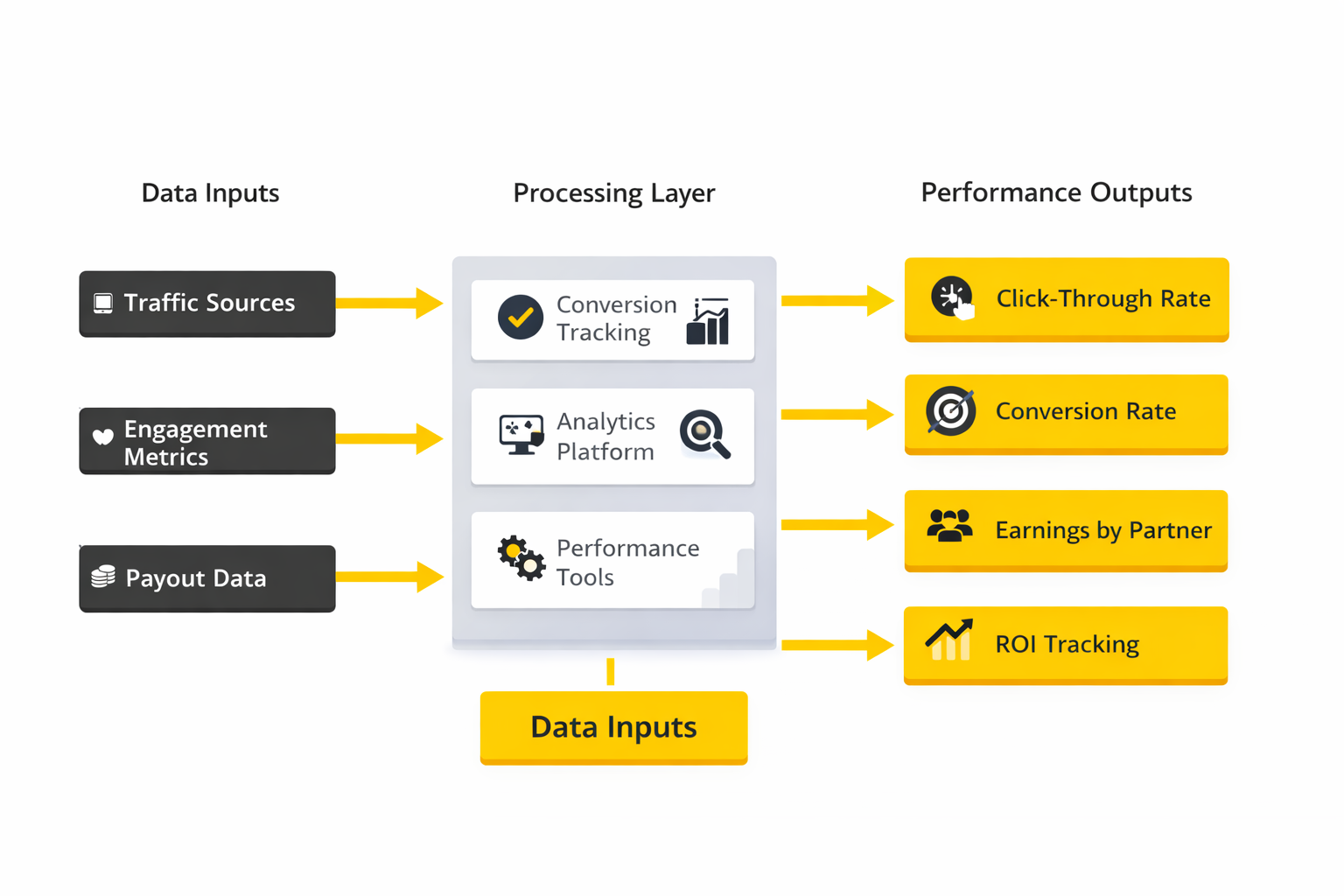
This is the stage where a lot of affiliate marketing programs quietly win or lose. If you recruit anybody with a pulse, you end up with a bloated program full of inactive accounts, weak traffic, and endless management overhead. If you recruit too narrowly, you miss the creators, educators, and niche publishers who could have turned the program into something special.
The better approach is to treat recruitment like matchmaking, not list building. Shopify Collabs is built around recruiting and managing creators through a structured merchant workflow, while Awin’s Partner Discovery tools focus on filtering publishers by fit rather than pushing advertisers toward blind mass outreach. That tells you something important right away: the brands that take affiliate marketing programs seriously are not just trying to collect applications; they are trying to find the right partners for a specific audience and offer.
Who You Should Actually Recruit
The first people to recruit are partners who already speak to your ideal buyer in a believable way. That might mean comparison publishers, creators who teach a relevant workflow, newsletter operators with a loyal niche readership, or communities built around a specific business problem. What matters is not the vanity size of the audience, but whether the audience trusts the person making the recommendation and can see why your offer belongs in the conversation.
That is one reason broad outreach usually underperforms. impact.com’s 2025 audience targeting guide keeps coming back to audience alignment because affiliate marketing programs only become powerful when the partner is speaking to the right crowd in the right context. A creator with fewer followers but stronger relevance can drive better traffic than a much larger account that has no real reason to talk about your product.
You also want to think in partner roles, not just partner names. Some affiliates are great at discovery. Some are excellent at education. Others help buyers compare options right before a decision. When you see the ecosystem that way, recruitment becomes more strategic, and affiliate marketing programs stop depending on one category to do everything.
How Onboarding Shapes Performance
Onboarding is where expectations either become clear or start breaking down. If a new affiliate joins and has no idea who the product is for, what promises they can make, which pages convert best, how long tracking lasts, or when payments go out, then you have not really onboarded them. You have just approved them and hoped for the best.
Great onboarding makes people feel like they can move immediately. A practical welcome flow might include the program terms, the most effective landing pages, approved messaging angles, disclosure guidance, payout timing, top objections buyers raise, and direct contact information for support. That sounds basic, but it is amazing how many affiliate marketing programs skip these steps and then blame partners for underperforming.
This is also the moment to make compliance feel normal instead of scary. The FTC’s current Endorsement Guides FAQ and its disclosure guide for influencers make it very clear that material connections need to be clearly disclosed. If your affiliates are creating content, especially on social platforms, then a professional onboarding process should show them how to stay transparent without making their content awkward or robotic.
A Real Story About Building the Right Affiliate Base
The pressure gets real when growth is expected fast and the partner mix is still messy. In impact.com’s case study on TransferWise, the company was trying to scale its affiliate activity in a category where trust, accuracy, and financial compliance mattered a lot more than hype. That meant every recruitment decision had consequences far beyond a simple traffic test.
The backstory is what makes the story worth paying attention to. TransferWise had already become a well-known name in international money transfers, but global expansion created a new challenge: the company needed partners in multiple markets, better reporting, and a structure that could keep pace without becoming chaotic. This was not about collecting random affiliates and seeing what happened. It was about finding the right media relationships and building a system that leadership could take seriously.
Then the wall showed up. The company needed more growth from the channel, but it also needed visibility into which partners were actually contributing value, which markets deserved focus, and how to support expansion without losing control. That is the moment when weak affiliate marketing programs usually start to wobble, because they have more ambition than infrastructure.
The epiphany was straightforward, even if the work was not. The program had to lean into direct partner relationships, cleaner performance visibility, and consistent communication rather than treating affiliates like faceless traffic sources. That shift matters because it changes the whole tone of affiliate management from passive approval to active partnership building.
The journey after that was operational, not glamorous. The case study explains that the team used the platform to track partner performance by campaign and geography, automate payments, and create reporting that internal stakeholders could actually use. They also focused on stronger media partnerships, which is exactly the kind of move that gives affiliate marketing programs a healthier backbone over time.
Even then, there was a final conflict. Better visibility means tougher decisions, and tougher decisions mean some partners get more support while others stop fitting the strategy. That can be uncomfortable, especially when a company is trying to grow quickly, but it is also how serious programs avoid becoming crowded with activity that looks impressive and produces very little.
The dream outcome is why this case still belongs in the conversation. The published results point to 15% to 20% month-over-month sales growth from the affiliate channel, and that did not happen because the team got lucky. It happened because recruitment, reporting, and relationship management were treated like core business work instead of side tasks.
Content Assets and Conversion Systems
Once the right affiliates are in the program, the next question is whether they have anything strong enough to work with. A good partner can open the door, but if the landing page is weak, the signup flow is clumsy, the copy is vague, or the follow-up dies after the first click, the program starts wasting the exact attention it worked hard to earn. This is where affiliate marketing programs become operational, because now the discussion moves from who joined to what happens after they send traffic.
The brands that get this right do not force every affiliate to invent the full sales process from scratch. They provide clean destination pages, strong offers, clear messaging angles, and follow-up systems that help visitors keep moving toward a decision. That does not mean affiliates should sound scripted, but it does mean the merchant should carry its share of the load once the visitor arrives.
Why the Post-Click Experience Changes Everything
A lot of merchants underestimate how quickly buyers judge the quality of the recommendation after they click. If the page feels confusing, slow, or generic, the trust borrowed from the affiliate starts disappearing almost immediately. That is why affiliate marketing programs need to treat the post-click experience as part of the partnership itself, not as a separate website problem.
This becomes even more important when buyer behavior is more cautious. impact.com’s 2025 affiliate benchmark found that clicks rose 2% year over year while transactions fell 5% and conversion rates declined 6%, which suggests buyers are doing more research and taking longer to decide. In that kind of environment, every landing page, email sequence, FAQ block, and call to action inside affiliate marketing programs has to work harder because the buyer is no longer acting on impulse alone.
The solution is not always to shout louder or slash prices. Sometimes the better move is to make the next step feel more obvious and less risky. A well-structured funnel in ClickFunnels, a simpler all-in-one setup in Systeme.io, or a cleaner lead qualification step built with Fillout can make affiliate traffic perform better without asking affiliates to send more of it.
The Assets Affiliates Actually Need
Affiliates usually need more than a logo pack and a raw link. They need persuasive assets that help them explain the product honestly and move buyers toward the next action. That includes short positioning statements, product comparisons, objection handling, approved screenshots, demo access when appropriate, seasonal hooks, and examples of what kinds of content convert best.
They also need follow-up support from the merchant side. If someone clicks and does not buy immediately, there should be a path that brings them back. Email automation through Brevo or Moosend, editorial scheduling with Buffer, and audience-focused content repurposing with Flick can help affiliate marketing programs keep momentum after that first visit instead of leaving everything to chance.
And then there is support. Buyers often arrive with questions that the affiliate has already answered once, but they still want reassurance before they commit. A responsive system, whether that is live chat, fast email replies, or an AI assistant like Chatbase, can protect the conversion path and make the partner look smarter for recommending the offer in the first place.
Building Systems That Scale Without Drama
The final piece is consistency. Affiliate marketing programs become fragile when every partner gets a different experience, every campaign uses different terms, and every landing page tells a slightly different story. That kind of inconsistency creates friction for buyers and confusion for affiliates, which is the opposite of what you want when the channel is supposed to scale.
A calmer system is better. Give partners a clean application process, a clear approval path, a simple briefing structure, and predictable access to creative assets. If internal coordination is getting messy, tools like Cal.com for scheduling, Wispr Flow for fast voice-to-note documentation, and Comp AI for keeping processes organized around compliance can help the operational side of affiliate marketing programs stay sane.
That may not sound flashy, but this is the kind of work that separates programs that flash for a few months from programs that keep compounding. When recruitment is thoughtful, onboarding is clear, and the post-click system actually converts, affiliate marketing programs stop feeling like scattered promotions and start acting like a real growth machine.
Statistics and Data

If you are serious about building affiliate marketing programs, you need to look at the numbers with a cool head. Big growth headlines are exciting, but they only matter if you understand what is actually growing, where the pressure is building, and which metrics help you make better decisions instead of giving you a false sense of momentum. This is where the channel stops being a trendy idea and starts becoming something you can manage like a real business asset.
The strongest headline in the market right now comes from the 2025 PMA industry study, which shows that U.S. affiliate marketing spend climbed to $13.62 billion in 2024 after rising 49.8% since 2021. The same release explains that affiliate investment drove $113 billion in U.S. e-commerce sales and 9.4% of all U.S. e-commerce sales, which is exactly why more leadership teams are starting to view affiliate marketing programs as a core revenue channel rather than a side experiment.
But the story gets more interesting when you look beneath that top-line growth. impact.com’s 2025 benchmark data found that clicks increased 2% year over year while transactions fell 5% and conversion rates dropped 6%. In plain English, that means buyers are still engaging, but they are taking longer, comparing more options, and behaving more carefully before they commit.
Why These Affiliate Statistics Matter
That combination of growth and caution tells you something important. Affiliate marketing programs are not getting weaker. They are getting more competitive, more complex, and more dependent on trust, partner quality, and post-click conversion strength. If clicks are holding up but conversions are getting harder, then the brands that win will be the ones that reduce friction instead of assuming more traffic alone will save them.
The partner mix is changing too. The State of Affiliate Marketing 2025 report from impact.com found that 59% of brands plan to allocate at least 25% of their affiliate budgets to creator partnerships. That is a big signal that affiliate marketing programs are moving further into creator-led performance, where trust, storytelling, and audience fit matter just as much as raw media buying discipline.
There is also a structural shift in how brands think about measurement. The same 2025 impact.com research shows that 94% of brands are already experimenting with or planning to adopt alternative attribution models. That is not a minor detail. It tells you that last-click is losing its status as the only lens that matters, especially in affiliate marketing programs that include creators, editorial publishers, cashback partners, and comparison sites all influencing the buyer at different moments.
The Numbers Behind Partner Diversification
One of the smartest lessons hidden inside recent data is that healthy affiliate marketing programs are rarely built on one partner type alone. impact.com’s 2025 report notes that leading brands commonly work across three to four partner types. That matters because diversification is not just about reaching more people. It is about making sure discovery, education, comparison, and conversion all have enough support inside the channel.
Shopify’s current affiliate marketing statistics roundup reinforces that point from another angle. It highlights that 56% of U.S. marketers use affiliate marketing at the awareness stage, 58% at the consideration stage, and 50% at the conversion stage. That is useful because it shows affiliate marketing programs are not just about closing a sale at the very end. They are increasingly being used across the journey, which makes partner mix far more important than it used to be.
That is also why fair attribution matters more now than it did when programs were simpler. Awin’s recent explanation of Soft Click is basically an argument for protecting the value created earlier in the journey, especially when browser tools or last-second clicks threaten to hijack the credit. If your data model rewards only the closest click to the finish line, affiliate marketing programs can become distorted in ways that quietly punish the partners doing the hardest and most valuable work.
A Real Story Told Through the Data
The numbers become a lot more vivid when you look at a real company living through them. In impact.com’s published case study on TransferWise, the company was under the kind of pressure that makes every dashboard feel personal. Growth was expected. Multiple markets had to be supported. And the affiliate channel had to prove it could scale without becoming a black box that nobody inside the business trusted.
The backstory matters because the company was not starting from zero. TransferWise had already built strong brand recognition in international money movement, but that only raised the stakes. Once a company reaches that level, affiliate marketing programs are no longer judged as side experiments. They are judged by whether they can support expansion, hold up under scrutiny, and justify bigger investment.
Then came the wall. The team needed clearer reporting, more granular partner visibility, and a way to understand performance across different markets and campaigns. That is the part people often skip in casual conversations about affiliate marketing programs, but it is where the real stress lives, because scale without clarity creates noise much faster than it creates confidence.
The epiphany was not dramatic on the surface, but it changed everything. The program needed direct partner relationships, cleaner data, better reporting flows, and a structure strong enough to make the channel legible to internal stakeholders. That is what separates mature affiliate marketing programs from messy ones: they do not just collect data, they turn it into trust.
The journey that followed was operational and disciplined. The case study explains that the team used real-time reporting, campaign-level visibility, partner-level insights, and automated reporting to keep internal stakeholders informed. They also made partner payments more manageable through the platform, which sounds administrative until you remember that trust inside affiliate marketing programs often rises or falls on whether the basics are handled well.
There was still a final conflict, of course. Better analytics always force harder choices. Once the team could see performance more clearly, they had to act on it, which meant backing stronger partners more aggressively and refusing to let weak assumptions hide behind vague averages.
The dream outcome is why this story deserves space in a statistics section. The published case study credits the program with 15% to 20% month-over-month sales growth. That is not just an impressive figure. It is proof that the right data, used the right way, can turn affiliate marketing programs from a reporting headache into a serious growth engine.
The Metrics That Deserve Your Attention
Some metrics look important because they are easy to screenshot. Others matter because they help you make better decisions. In affiliate marketing programs, the second group is the one that deserves your energy. Click volume matters, but only when it is paired with conversion quality, new-customer contribution, average order value, refund rate, and the role that specific partners play in the buying journey.
You also want to watch how buyers behave after the first touch. If traffic is increasing but transactions are softening, as impact.com’s 2025 benchmark data suggests, then your program may not have a traffic problem at all. It may have a friction problem. In that case, stronger destination pages in ClickFunnels, a more streamlined setup in Systeme.io, or sharper lead-handling with Brevo can make more difference than recruiting another wave of affiliates.
The smartest operators also measure stability. They want to know whether performance is broad-based or dangerously dependent on a handful of partners. They want to know whether creators are influencing high-value new customers or just creating surface-level engagement. And they want to know whether affiliate marketing programs are building a durable ecosystem or simply riding a short-term spike that will be hard to repeat.
How to Read the Data Without Fooling Yourself
The hardest part of analytics is not collecting numbers. It is refusing to let flattering numbers trick you. Growth in spend is not proof of program quality. Rising clicks are not proof of buying intent. And a strong month is not proof that the system is healthy if the results came from one partner, one offer, or one temporary promotion.
That is why affiliate marketing programs need context around every important metric. Ask whether the traffic was incremental. Ask whether the buyers were new. Ask whether margins remained healthy after commissions, discounts, and support costs. Ask whether the same performance can be repeated next month without heroic effort.
If you keep reading the data that way, you start to see the channel more clearly. You stop chasing vanity and start seeing where the real leverage lives. And that is exactly what strong affiliate marketing programs need, because the winners are rarely the ones with the prettiest dashboard. They are the ones that know what the dashboard is actually trying to tell them.
FAQ Built for the Complete Guide
What are affiliate marketing programs, really?
Affiliate marketing programs are structured partnerships where a business rewards external partners for driving a measurable action, usually a sale, lead, trial, or booked demo. On the surface, that sounds simple, but the real value comes from the fact that the recommendation is carried by someone the audience already trusts. That is why the channel has become so important, with the latest PMA industry study showing U.S. affiliate marketing spend reached $13.62 billion in 2024.
How do affiliate marketing programs make money for brands?
They make money when the economics are designed intelligently. A brand pays a commission only when a meaningful action happens, so the program can become a more accountable growth channel than many top-of-funnel campaigns. That said, affiliate marketing programs only stay profitable when margins, conversion rates, refund patterns, and partner quality are all monitored together instead of treating commission percentage as the only variable that matters.
Are affiliate marketing programs good for beginners?
Yes, but beginners usually need to be more patient than they expect. It is easy to join a program and grab a link, but it is much harder to build the audience trust and content quality that lead to real conversions. That is why beginners often do better when they choose affiliate marketing programs connected to products they can explain clearly, rather than chasing random offers with high payouts and no authentic fit.
What makes one affiliate program better than another?
The best affiliate marketing programs are not always the ones with the highest commission. The better ones usually have a stronger product, clearer positioning, fair terms, reliable tracking, timely payments, and landing pages that convert without making the partner do all the work. A strong program also makes room for real partnership by giving affiliates useful assets, realistic communication, and a buying journey that does not feel broken after the click.
How important is disclosure in affiliate marketing?
It is critical. If someone has a financial relationship with a brand, that connection needs to be disclosed clearly so the audience can judge the recommendation honestly. The FTC’s Endorsement Guides FAQ and the FTC’s disclosure guide for influencers both make that point very clearly, and strong affiliate marketing programs treat disclosure as part of trust building, not as an annoying legal afterthought.
How many affiliates do you actually need before a program works?
You usually need fewer than people think, but they need to be the right ones. A small group of relevant creators, publishers, educators, or comparison partners can outperform a huge program filled with inactive or low-fit affiliates. That lines up with the 2025 State of Affiliate Marketing research from impact.com, which shows that leading brands tend to diversify across several partner types instead of depending on volume alone.
Is last-click attribution enough for affiliate marketing programs?
Not anymore, at least not if you want a realistic picture. Many affiliate marketing programs now involve creators, editorial publishers, cashback partners, loyalty sites, and other partners who influence different stages of the buyer journey. The 2025 research from impact.com shows that 94% of brands are already experimenting with or planning to use alternative attribution models, which tells you the market is moving past the idea that the final click should automatically get all the credit.
Why do some affiliate programs get clicks but not sales?
Because traffic and conversion are not the same thing. Sometimes the affiliate is sending the wrong audience, but very often the real problem is the merchant side of the experience: weak landing pages, unclear messaging, confusing offers, poor mobile UX, or no useful follow-up after the first visit. That is especially relevant now because impact.com’s 2025 benchmark found that clicks rose 2% while transactions fell 5% and conversion rates dropped 6%, which suggests buyers are still engaging but behaving more cautiously.
Should creators be part of affiliate marketing programs?
Absolutely, but only when the fit is real. Creator-led affiliate marketing programs can be powerful because creators often bring trust, narrative, and product context that more transactional affiliates cannot offer. That shift is already visible in current market behavior, with the 2025 impact.com report showing that 59% of brands plan to allocate at least a quarter of their affiliate budgets to creators.
What should brands measure first in affiliate marketing programs?
Start with contribution quality, not just raw activity. You want to know which partners bring qualified traffic, which ones drive new customers, which ones influence higher-value orders, and which ones generate refunds or low-intent conversions. If you only watch clicks or gross sales, affiliate marketing programs can look healthier than they really are.
How long do affiliate marketing programs take to work?
They can produce early signs of life quickly, but real momentum usually takes longer because partnerships need time to mature. Affiliates have to understand the product, test placements, build content, and learn what actually converts. The programs that last are usually the ones that accept that growth comes from structure, iteration, and trust rather than expecting instant scale from day one.
Can small businesses run affiliate marketing programs successfully?
Yes, and in some ways smaller companies can move faster because they make changes without layers of internal drag. The catch is that small businesses need tighter focus. They cannot afford messy tracking, vague terms, or broad recruitment that produces little value. When a small company keeps the offer strong and the operations clean, affiliate marketing programs can become one of the most practical ways to grow without betting everything on paid ads.
What kind of tools help affiliate marketing programs run better?
The useful tools are the ones that reduce friction after the partnership starts. Better funnels in ClickFunnels, a more streamlined setup in Systeme.io, cleaner email follow-up through Brevo or Moosend, and clearer link handling through Dub can all improve the way affiliate marketing programs perform without forcing partners to compensate for operational weakness.
How do you keep affiliate marketing programs fair for different partner types?
You keep them fair by recognizing that different partners create value in different ways. Some generate discovery, some educate, some compare options, and some help convert buyers who are nearly ready. That is part of why fair attribution has become such a major topic, and why Awin’s recent Soft Click discussion matters. If a program constantly lets late-stage behaviors steal all the credit, it quietly discourages the partners doing the hardest work upstream.
What is the biggest mistake beginners make with affiliate marketing programs?
The biggest mistake is treating affiliate marketing like link dropping instead of trust building. Beginners often join too many programs, promote products they barely understand, and then wonder why nobody buys. The better path is slower and much more effective: pick offers that make sense, understand the audience deeply, explain the product honestly, and improve the journey after every piece of feedback you get.
Work With Professionals
If you want affiliate marketing programs to become a serious growth channel, the smartest move is to treat them like a professional system from the start. That means choosing the right partners, protecting trust, measuring the right numbers, and tightening every part of the buying journey instead of hoping volume alone will rescue weak execution. The brands and marketers who do that are the ones who keep compounding results while everyone else keeps starting over.
There is also a practical opportunity here for marketers who understand how partnership growth really works. Businesses need people who can recruit partners, improve funnels, manage attribution, coordinate creator relationships, and make affiliate marketing programs more profitable without turning them into a compliance nightmare. That skill set is becoming more valuable, not less, as the channel matures.
Explore 10K+ Remote Marketing Contracts on MarkeWork.com
Most marketers spend too much time chasing clients, competing on crowded platforms, and losing a percentage of every project to middlemen.
MarkeWork gives you a better way. Browse thousands of remote marketing contracts and connect directly with companies desperate to hire skilled marketers like you without platform commissions and without unnecessary gatekeepers.
If you’re serious about finding better opportunities and keeping 100% of what you earn, you can explore available contracts and create your profile for free at MarkeWork.com.
 Filip Konecny Enterprises